Article

Influence of Carbon and Oxygen on the Core Structure and Peierls Stress of Screw Dislocation in Molybdenum

1
Department of Physics, Beihang University, Beijing 100191, China
2
Beijing Key Laboratory of Advanced Nuclear Materials and Physics, Beihang University, Beijing 100191, China
*
Authors to whom correspondence should be addressed.
Metals 2022, 12(3), 507; https://doi.org/10.3390/met12030507
Submission received: 10 February 2022 / Revised: 9 March 2022 / Accepted: 14 March 2022 / Published: 16 March 2022
(This article belongs to the Section Computation and Simulation on Metals)

Abstract

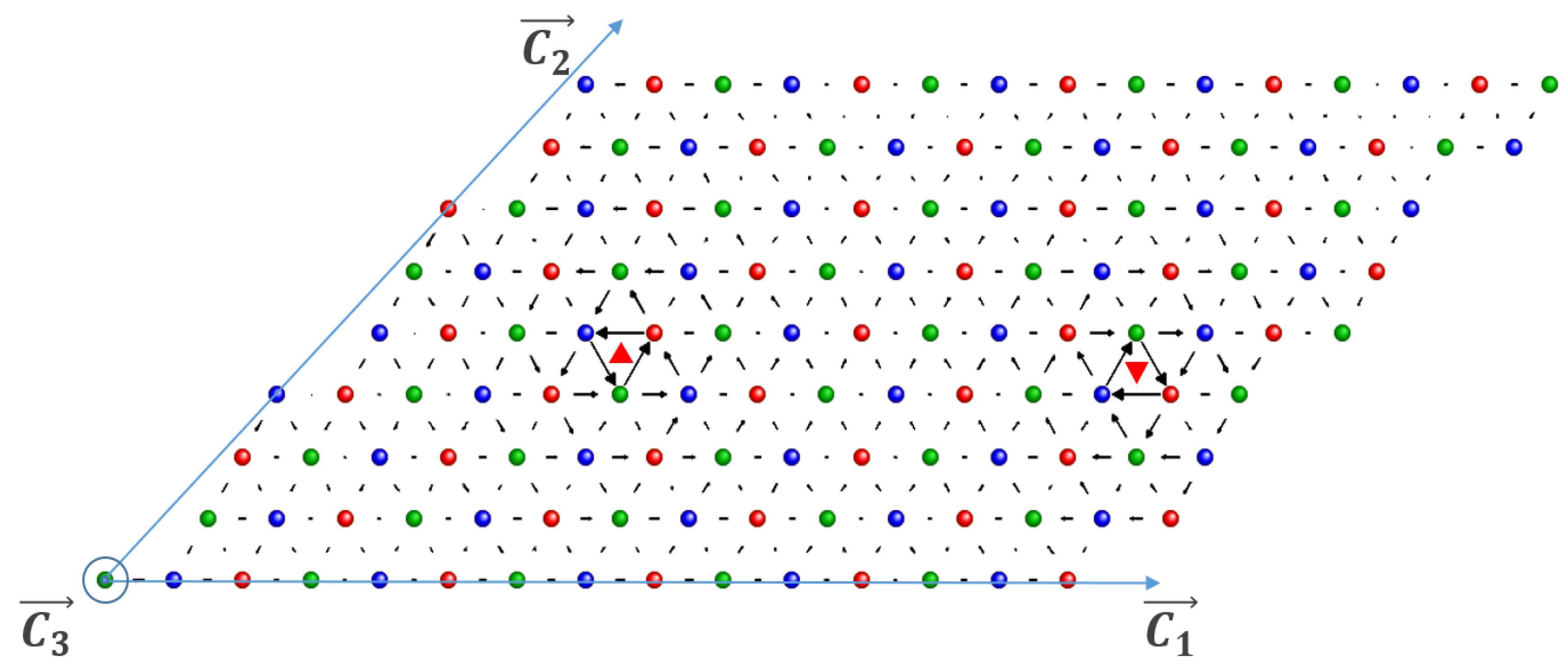
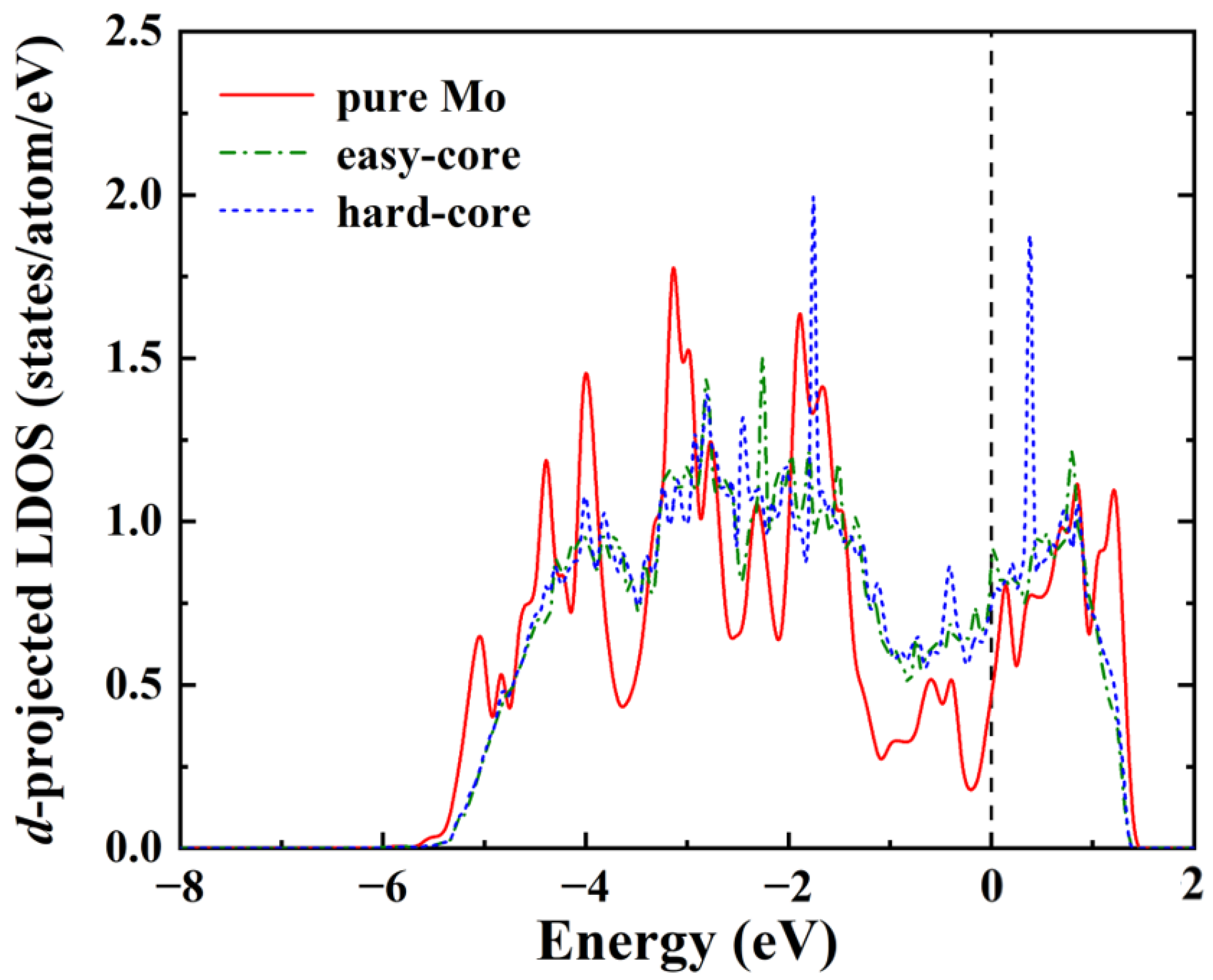
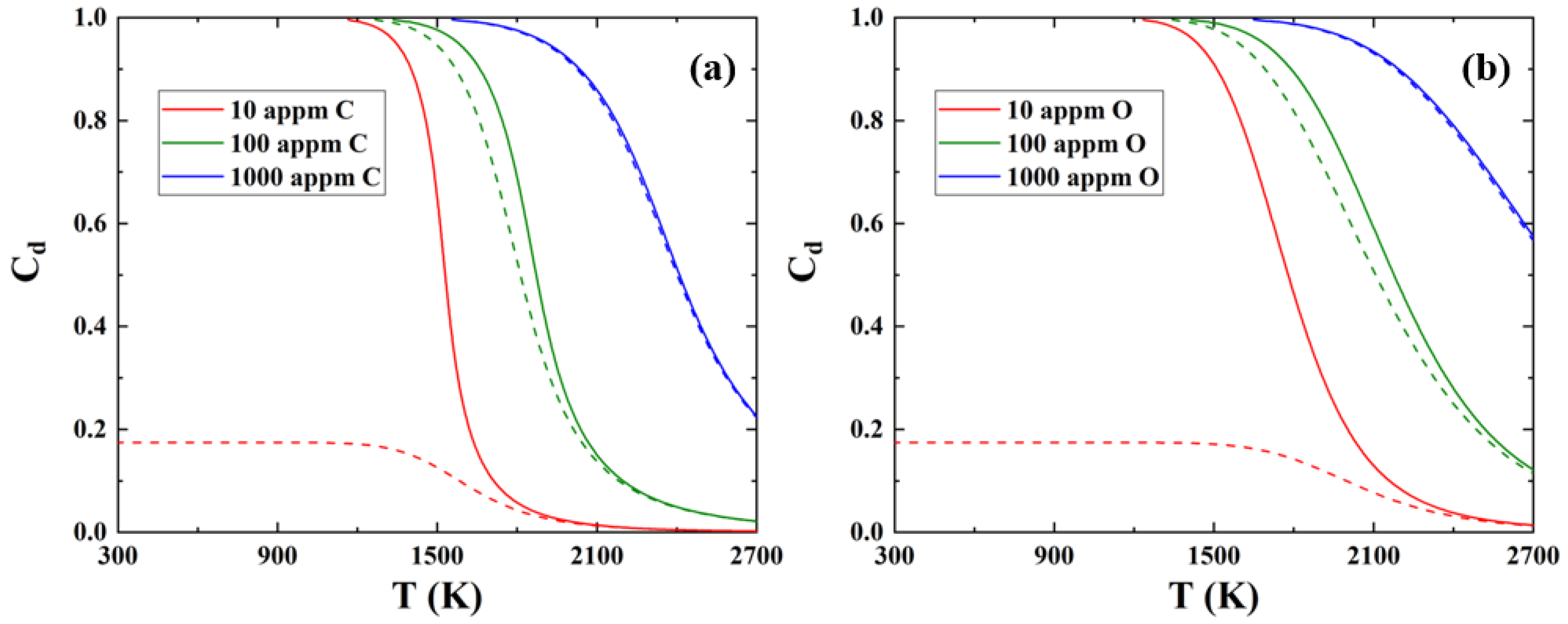
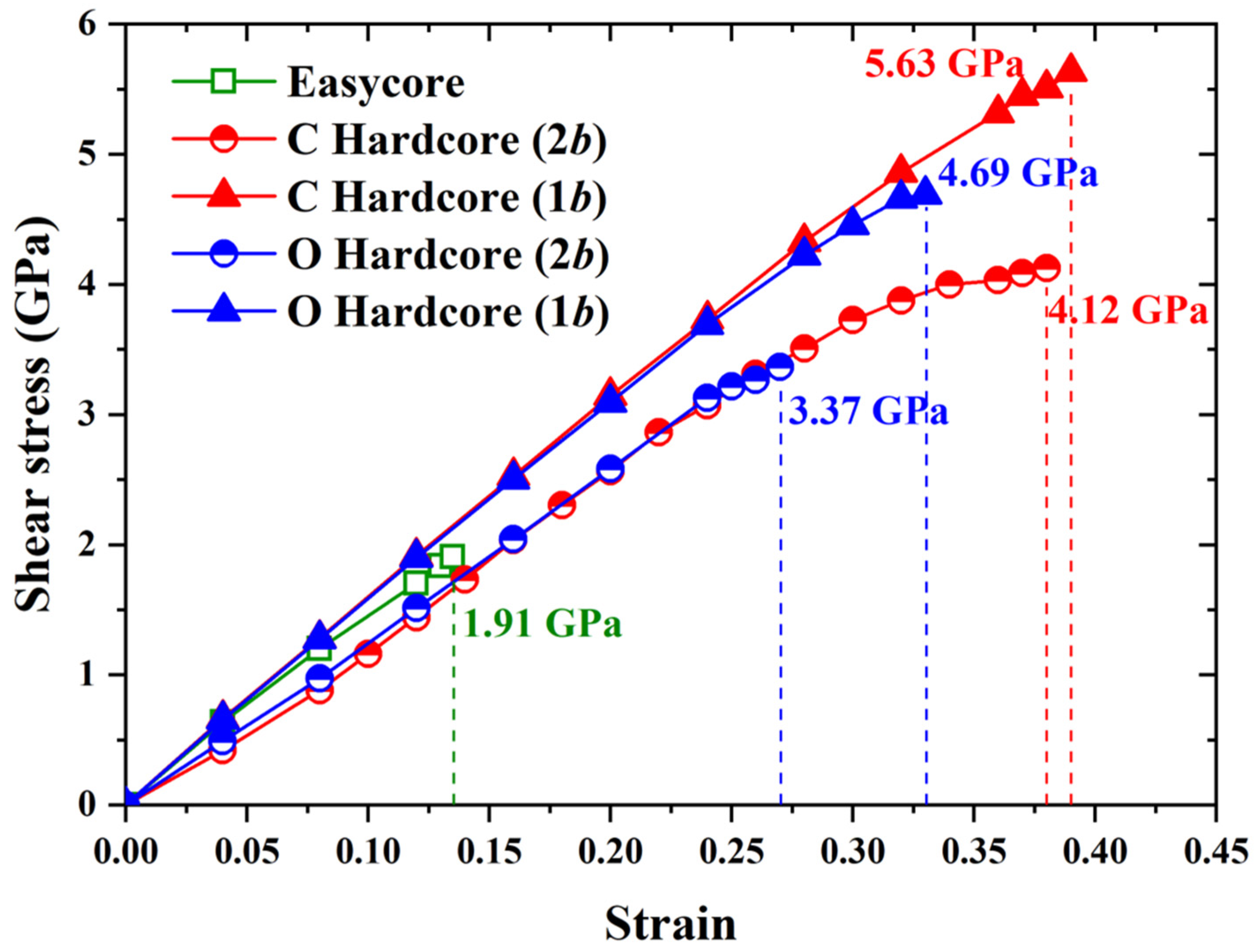
The plasticity and hardness of metals are largely dependent on how dislocation interacts with solute atoms. Here, taking bcc molybdenum (Mo) as the example, the interaction of interstitial solutes carbon (C) and oxygen (O) with screw dislocation, and their influences on the dislocation motion, have been determined using first-principles calculations and thermodynamic models. Due to the incompact atomic structure and variation of electronic states in the dislocation core, C and O will segregate from the bulk system to the dislocation region. Notably, the presence of C/O at the dislocation induces the reconstruction of the core structure, from an easy-core to hard-core configuration. This originates from the fact that the hard-core structure provides a larger available volume at the interstitial site than the easy-core structure and, thus, facilitates the dissolution of C and O. More importantly, the addition of C/O in the dislocation significantly increases the Peierls stresses and double-kink formation enthalpies of screw dislocation in Mo, from 1.91 GPa and 1.18 eV for C/O-free dislocation to 5.63/4.69 GPa and 1.77/1.58 eV for C/O-saturated dislocation. Therefore, these interstitial solutes have a pinning effect on the dislocation motion, and this effect becomes stronger with higher segregating levels. This work reveals the profound effect of interstitial solutes on the properties of the dislocation core and provides a fundamental factor to account for the interstitial solutes-related phenomena in bcc metals.
Keywords: carbon and oxygen; screw dislocation; core structure; bcc molybdenum carbon and oxygen; screw dislocation; core structure; bcc molybdenum