Article

Effects of Electrode Negative Pulsing Ratio in Direct Energy Deposition via Variable-Polarity Cold Metal Transfer Process on the Deposition Behavior and Microstructural Characteristics
1
Advanced Joining & Additive Manufacturing R&D Department, Korea Institute of Industrial Technology, Incheon 21999, Korea
2
Department of Mechanical Design Engineering, Hanyang University, Seoul 04763, Korea
3
Department of Mechanical and Materials Engineering, Portland State University, Portland, OR 97207, USA
*
Author to whom correspondence should be addressed.
Metals 2022, 12(3), 475; https://doi.org/10.3390/met12030475
Submission received: 10 February 2022 / Revised: 2 March 2022 / Accepted: 8 March 2022 / Published: 11 March 2022
(This article belongs to the Special Issue Advances in Additive Manufacturing and Their Applications)

Abstract

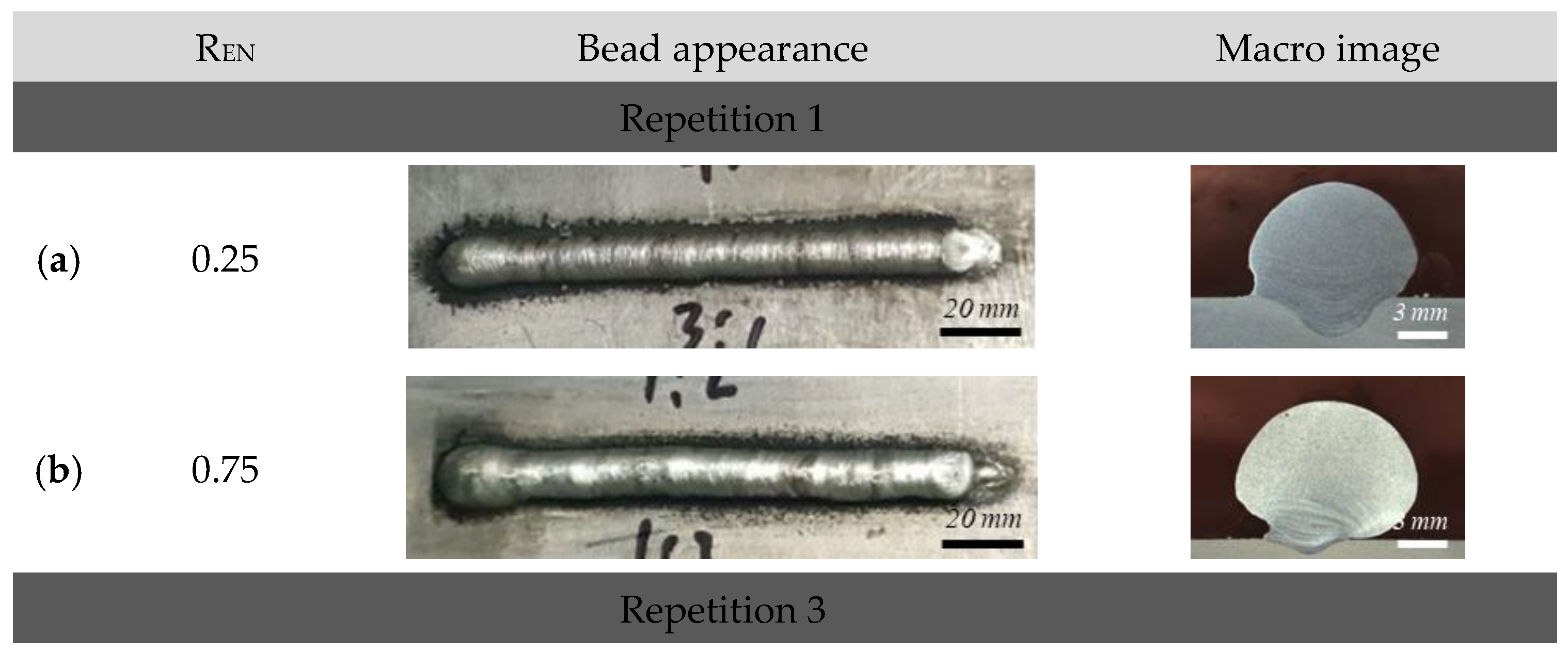
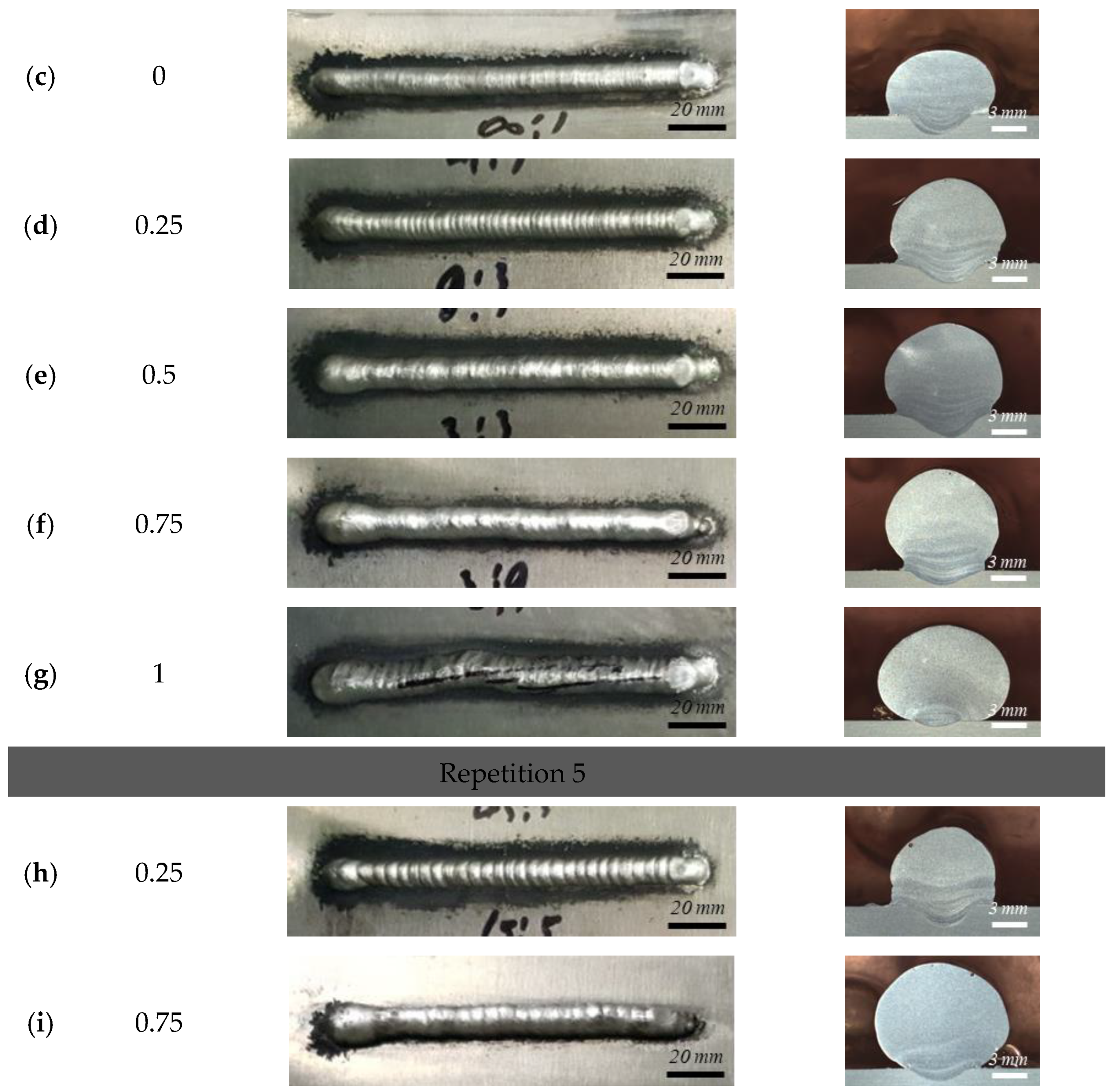
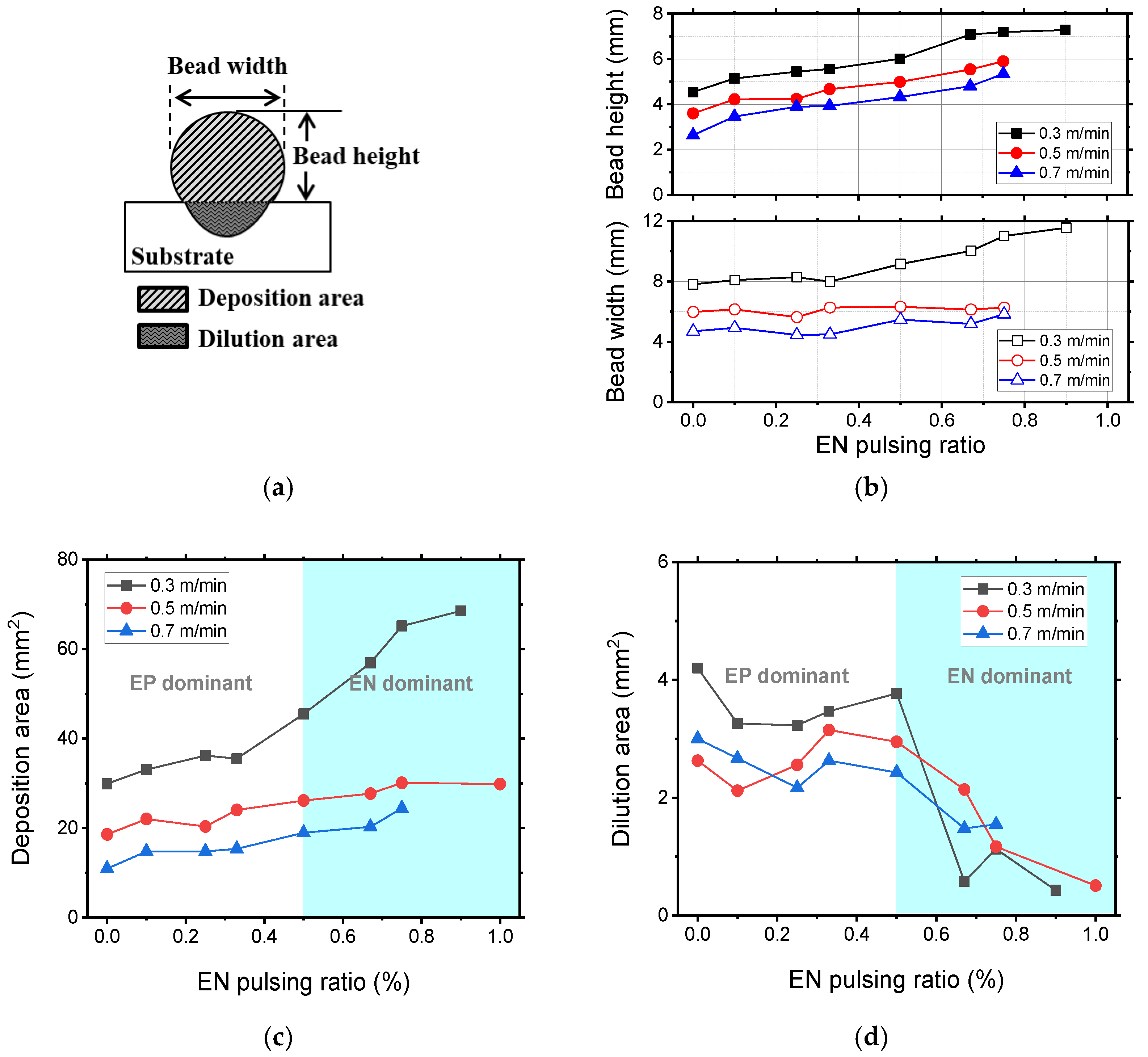
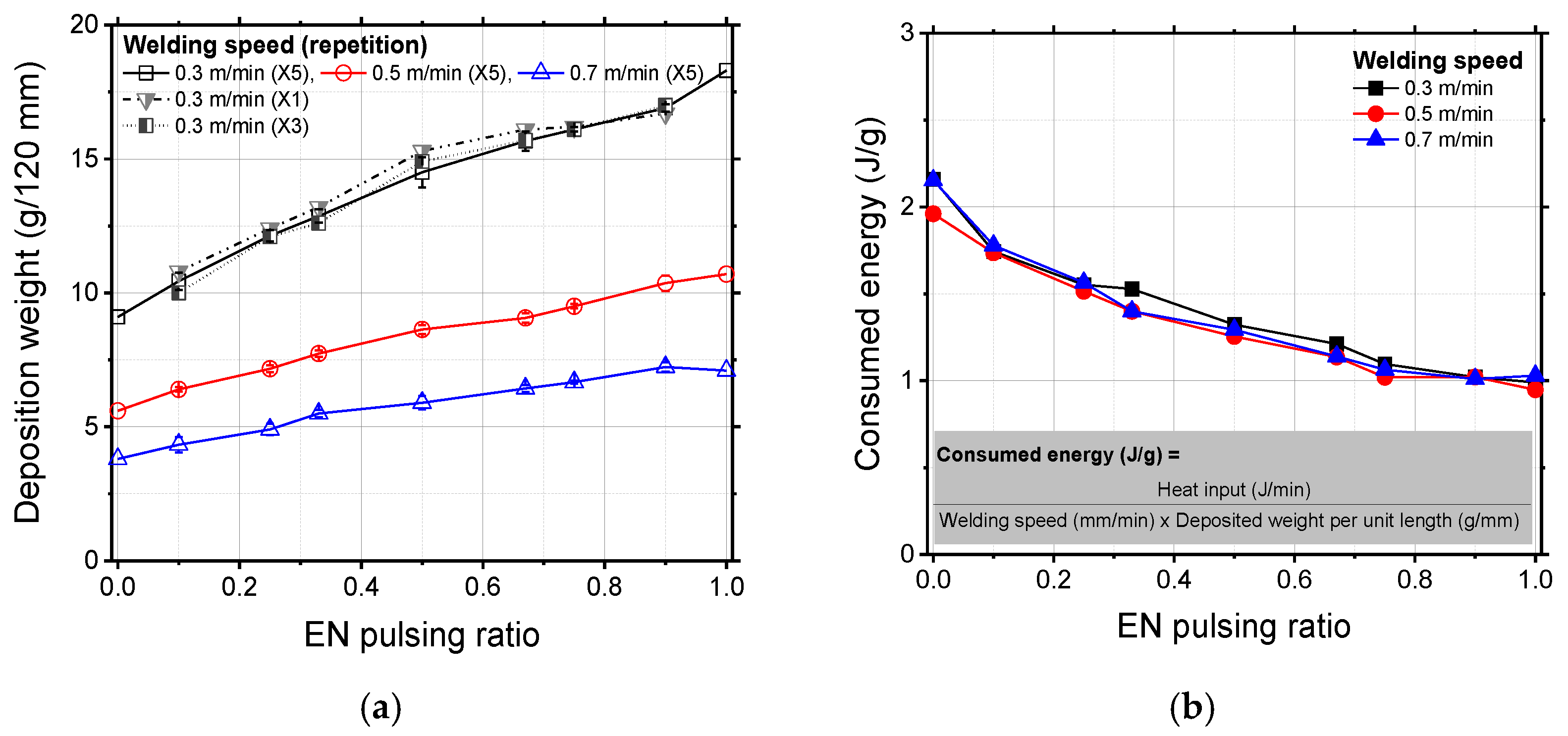
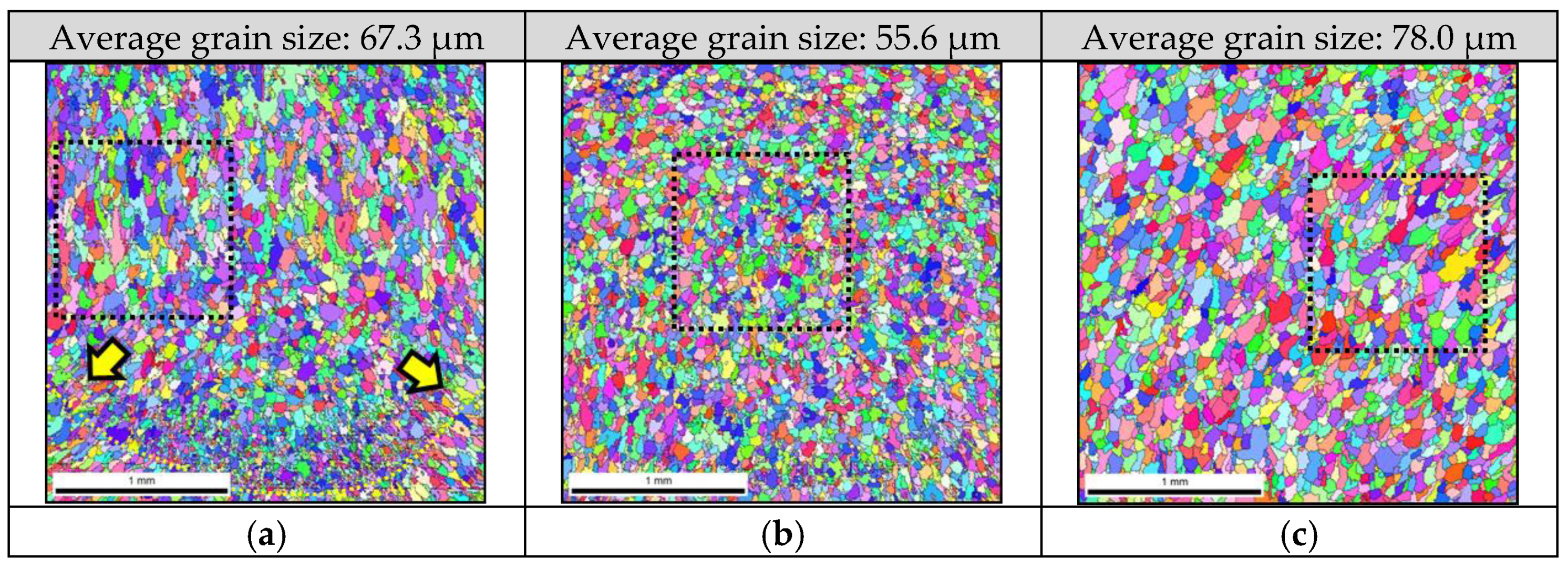
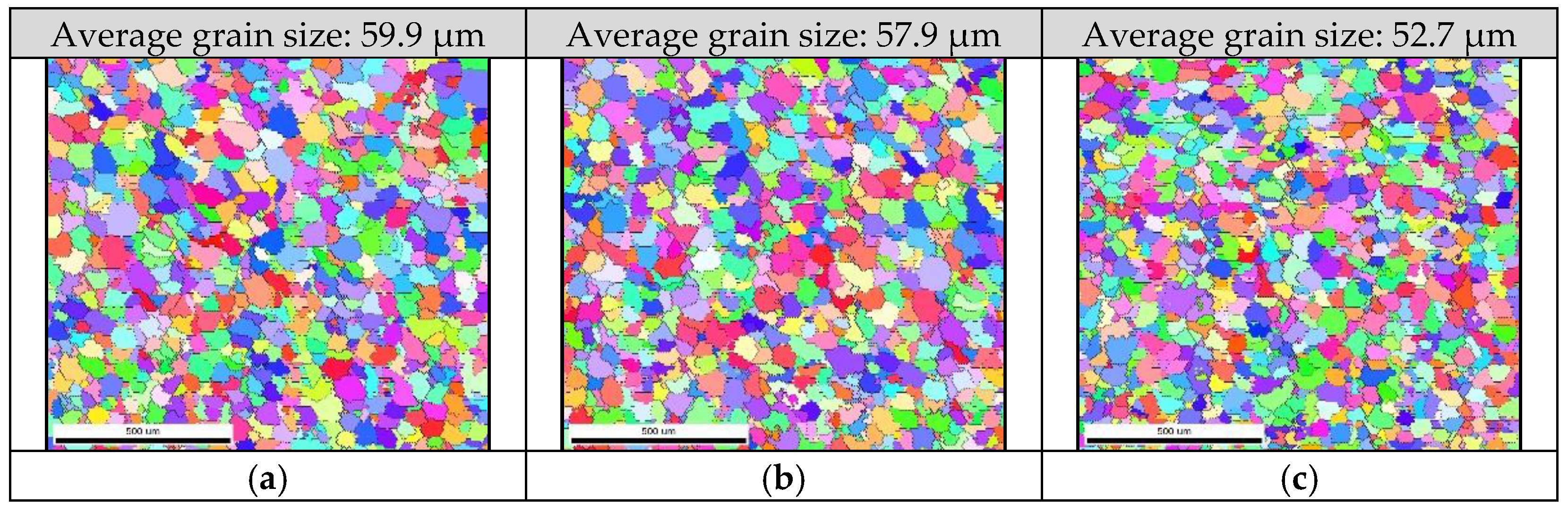
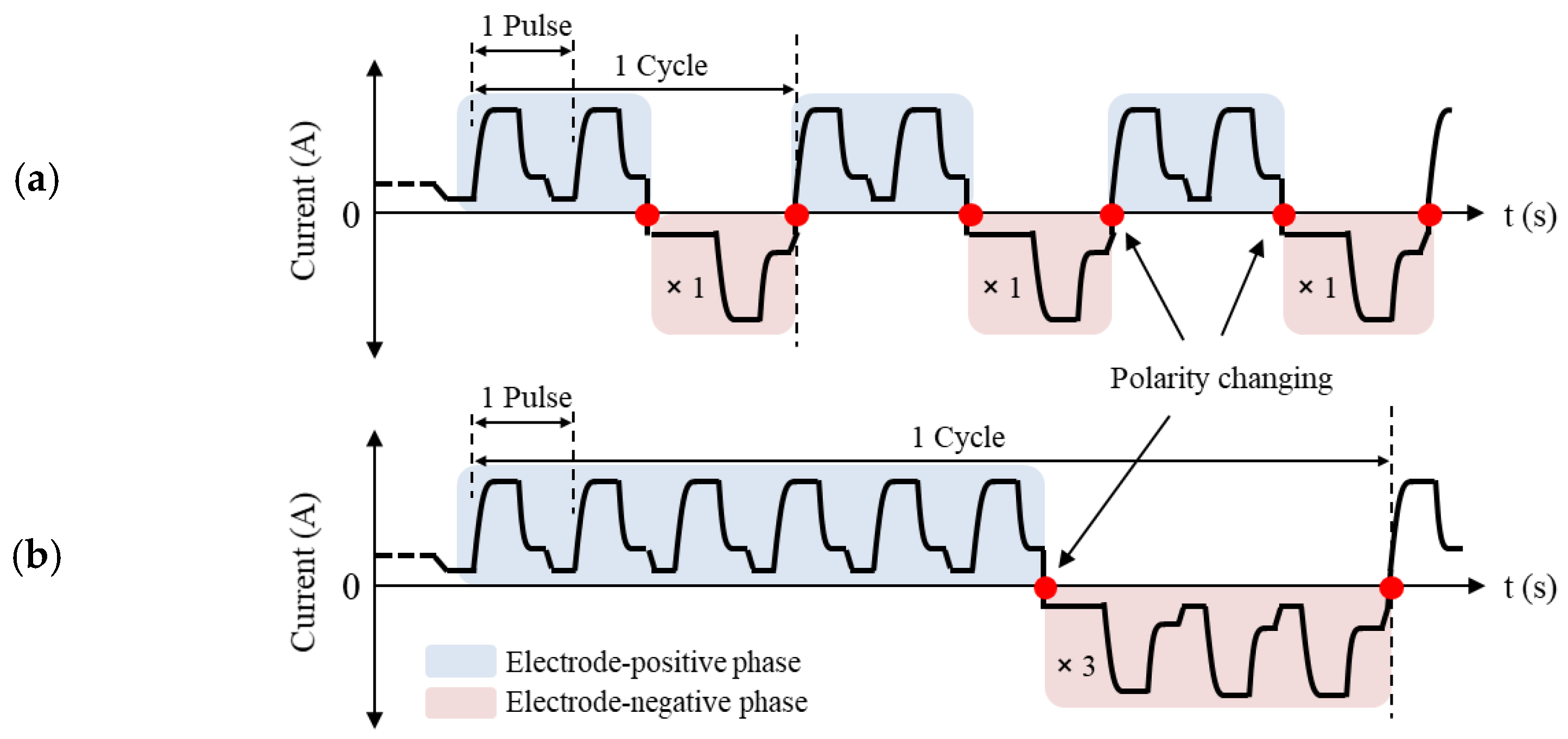
Interest in research on the application of variable-polarity cold metal transfer mode in wire-based direct energy deposition has been growing; particularly popular are investigations into the respective influences of polarity, amplitude of the arc current, and polarity variation sequence on the quality of the final product manufactured via additive manufacturing. The application of the electrode-negative phase is more capable of yielding relatively large droplets and increasing the weight of the deposited material. However, the proportions of the electrode positive phase are typically larger than those of the electrode-negative phase because it maintains arc stability and droplet transfer. This discrepancy has prevented the accurate evaluation of the effects of the polarity mode and polarity sequences on the deposition characteristics associated with variable-polarity cold metal transfer. In this study, variable-polarity cold metal transfer was performed using a tuned waveform, and the effects of the electrode-negative pulsing ratio and pulse repetition on the geometrical features and deposition rate were assessed. The weight tended to increase with decreasing welding speed and increasing electrode-negative pulsing ratio. The number of repetitions influenced molten pool behavior, and when sufficiently high, induced ripple formation via droplet accumulation below the electrode. In addition, the effects of the electrode-negative pulsing ratio and repetition on the microstructure formation were analyzed. It was revealed that the average grain size was related to the amount of supplied energy and polarity switching during grain formation.
Keywords: variable-polarity cold metal transfer; electrode-negative pulsing ratio; repetition; droplet transfer; molten pool behavior; microstructure variable-polarity cold metal transfer; electrode-negative pulsing ratio; repetition; droplet transfer; molten pool behavior; microstructure