Article

Prediction of Upper Surface Roughness in Laser Powder Bed Fusion
1
George W. Woodruff School of Mechanical Engineering, Georgia Institute of Technology, 801 Ferst Drive NW, Atlanta, GA 30332, USA
2
School of Materials Science and Engineering, Georgia Institute of Technology, 771 Ferst Drive NW, Atlanta, GA 30332, USA
*
Authors to whom correspondence should be addressed.
Metals 2022, 12(1), 11; https://doi.org/10.3390/met12010011
Submission received: 21 October 2021 / Revised: 30 November 2021 / Accepted: 7 December 2021 / Published: 22 December 2021
(This article belongs to the Special Issue Innovations in Metal Additive Manufacturing)

Abstract

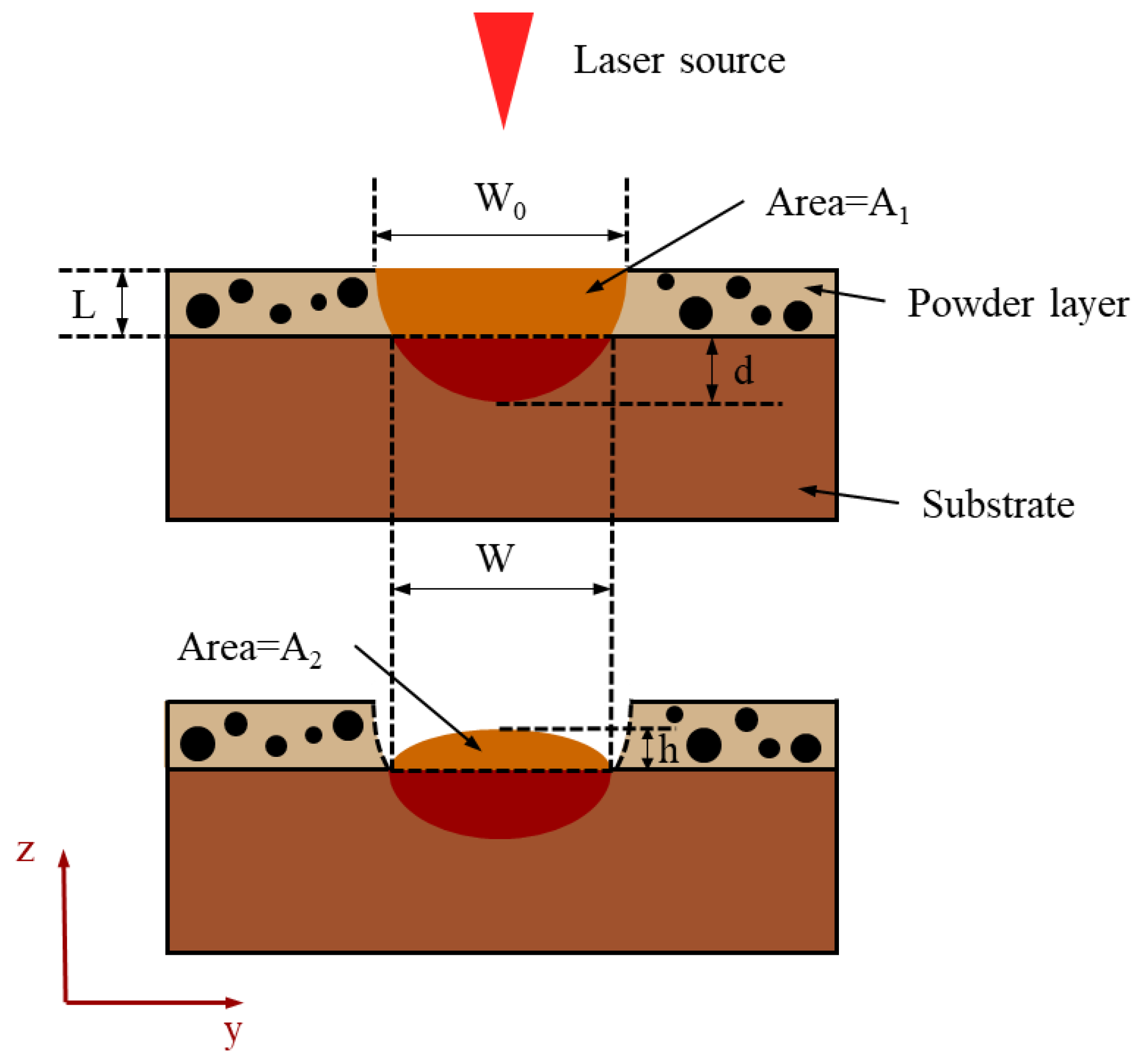
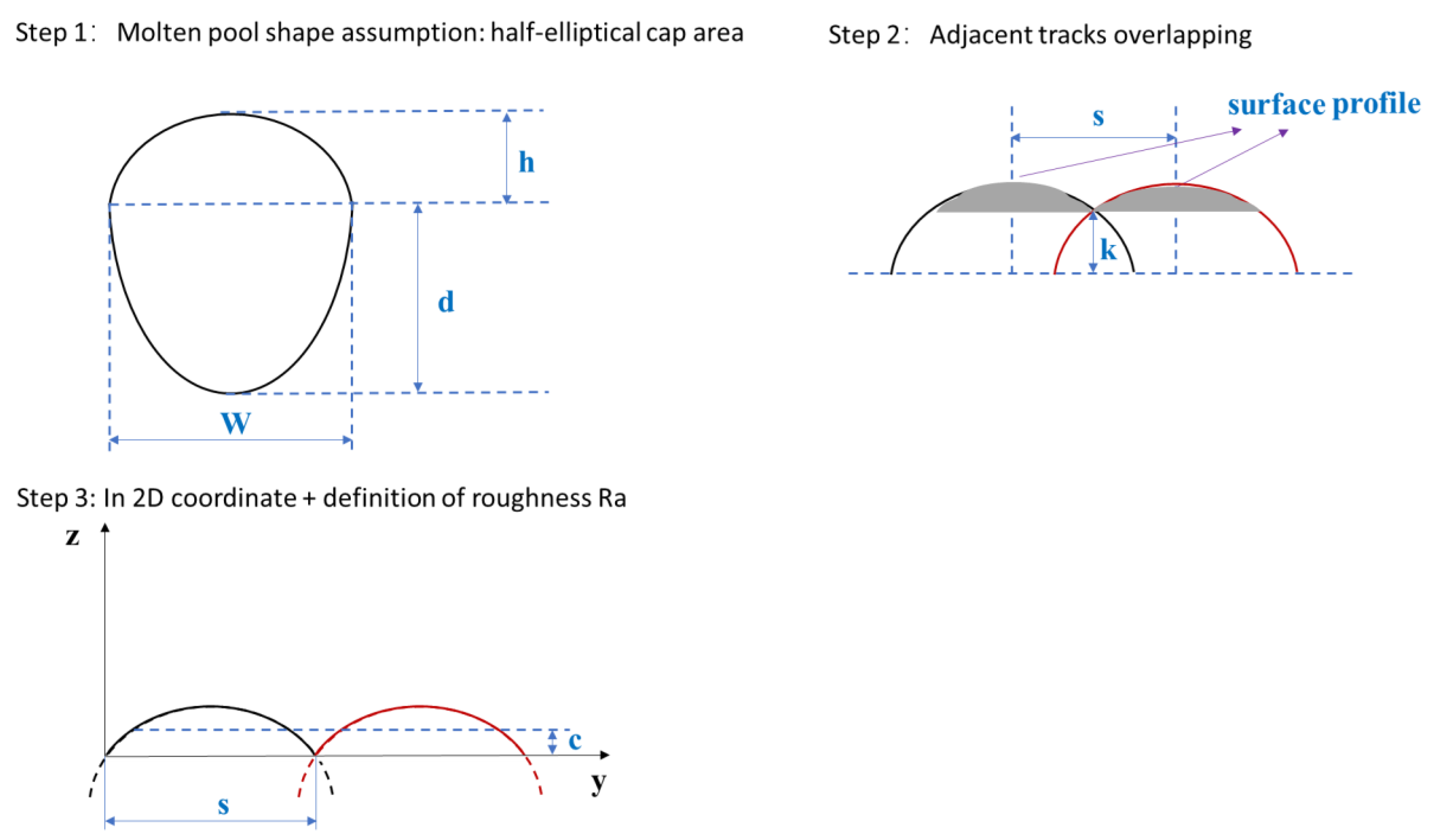
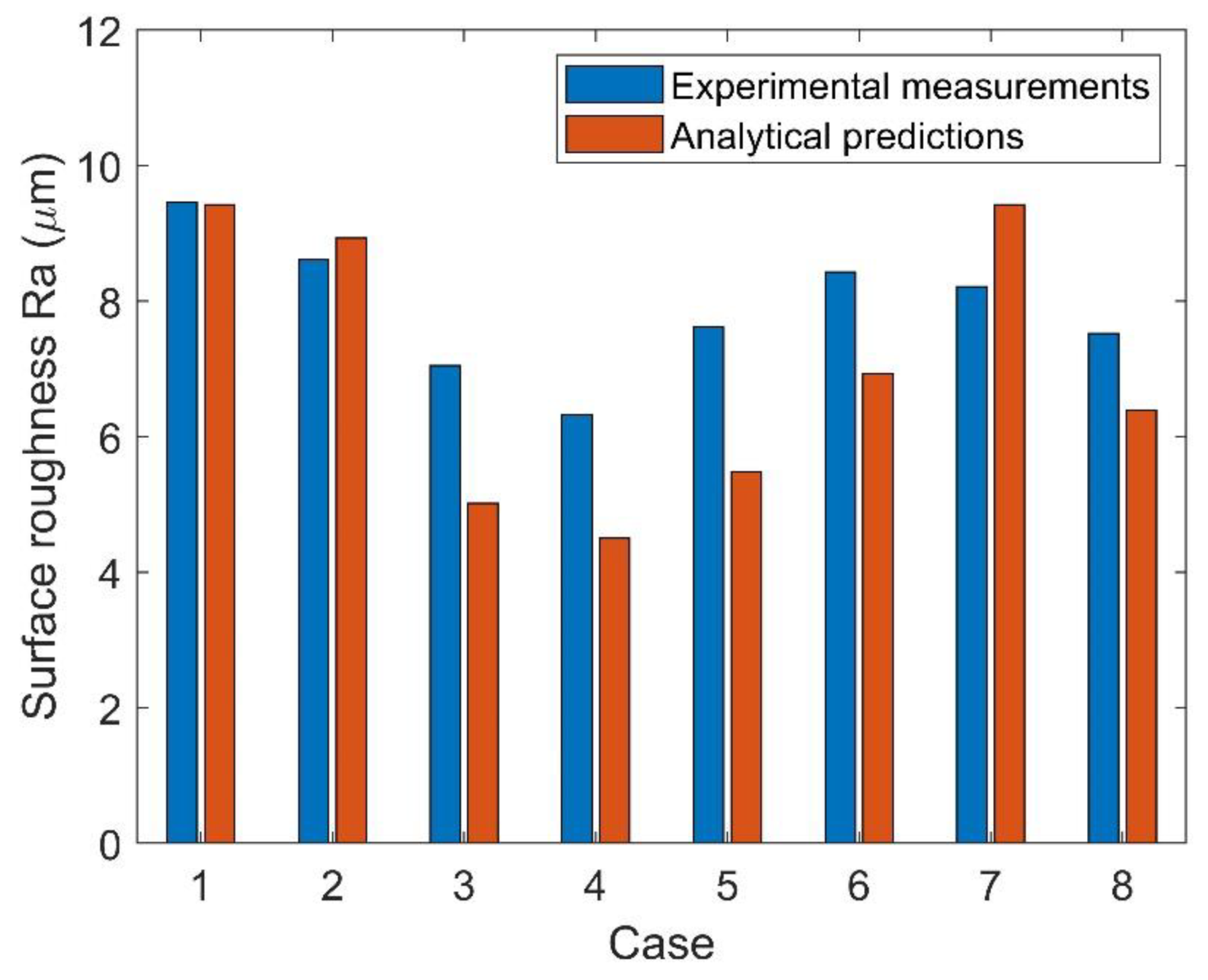
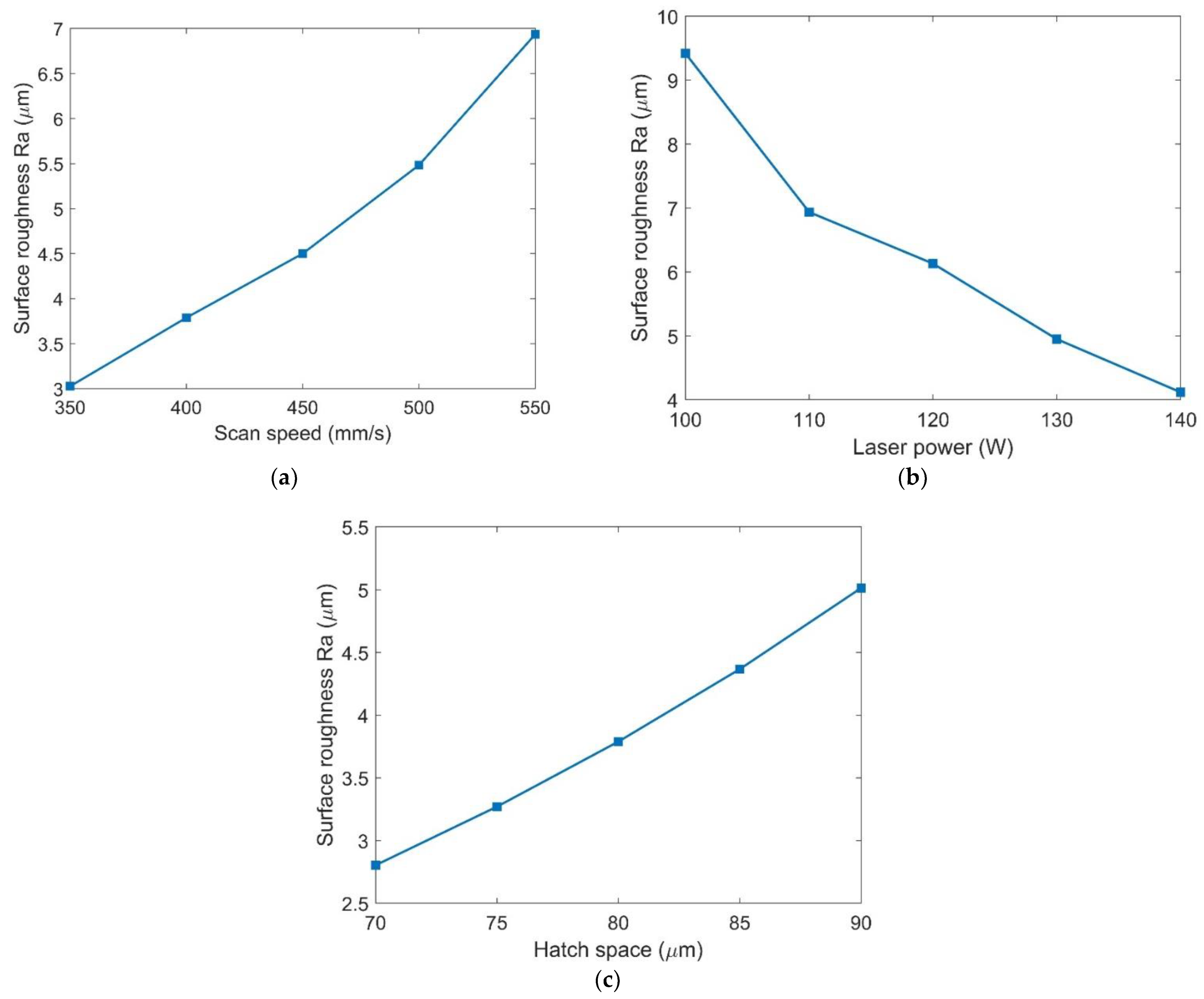
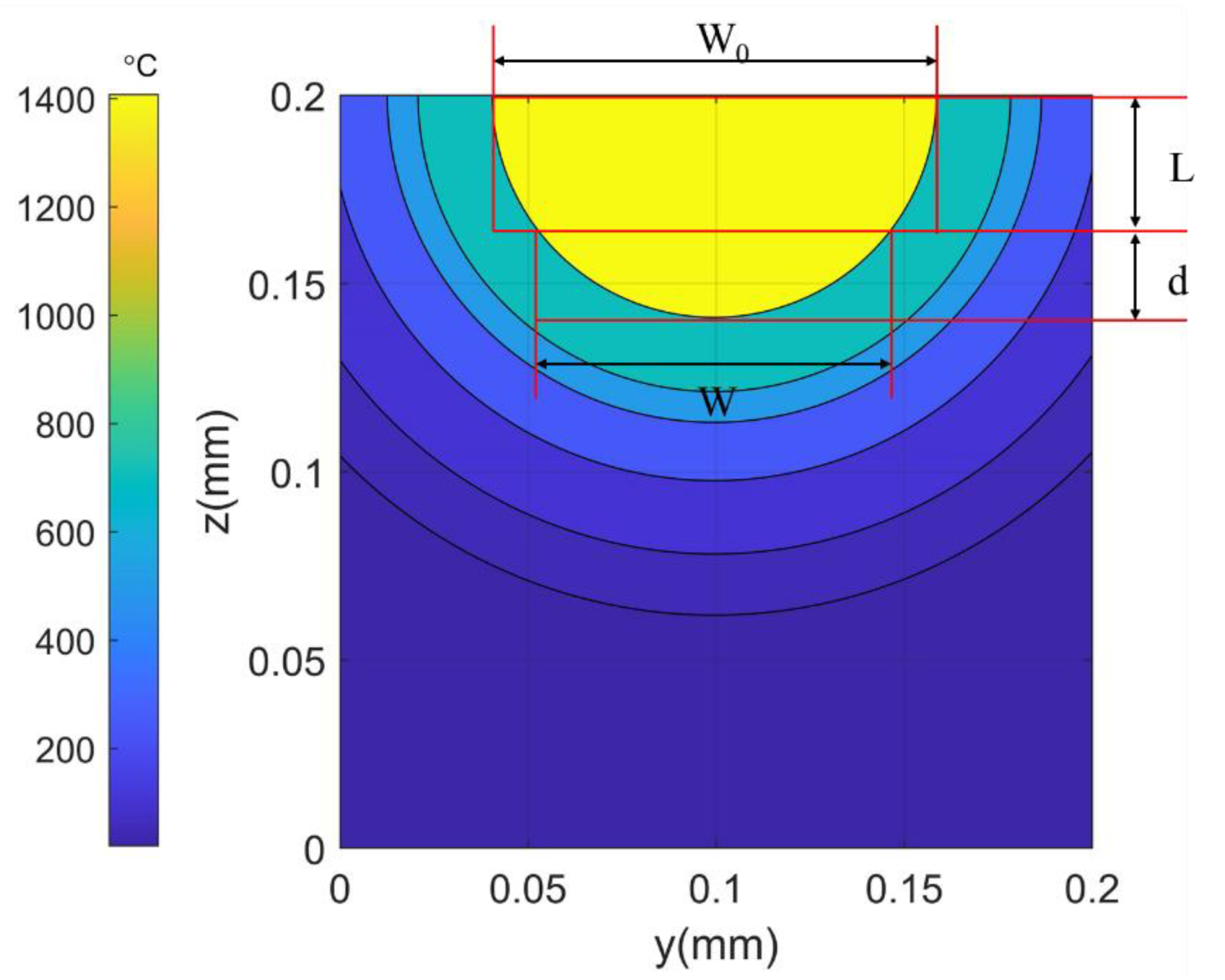
In this study, a physics-based analytical method was proposed for the prediction of upper surface roughness in laser powder bed fusion (LPBF). The temperature distribution and molten pool shape in the melting process were first predicted by an analytical thermal model. The cap area of the solidified molten pool was assumed to be half-elliptical. Based on this assumption and the principle of mass conservation, the cap height and the specific profile of the cap area were obtained. The transverse overlapping pattern of adjacent molten pools of upper layer was then obtained, with given hatch space. The analytical expression of the top surface profile was obtained after putting this overlapping pattern into a 2D coordinate system. The expression of surface roughness was then derived as an explicit function of the process parameters and material properties, based on the definition of surface roughness (Ra) in the sense of an arithmetic average. The predictions of surface roughness were then compared with experimental measurements of 316L stainless steel for validation and show acceptable agreement. In addition, the proposed model does not rely on numerical iterations, which ensures its low computational cost. Thus, the proposed analytical method can help understand the causes for roughness in LPBF and guide the optimization of process conditions to fabricate products with good quality. The sensitivity of surface roughness to process conditions was also investigated in this study.
Keywords: analytical model; surface roughness; laser powder bed fusion; molten pool size; heat source model analytical model; surface roughness; laser powder bed fusion; molten pool size; heat source model