1. Introduction
Video games have become the largest cultural industry in the world. It is estimated that 3.3 billion people play video games globally [
1], and their cultural perception has evolved accordingly [
2]. A substantial body of research has highlighted the positive attributes of video games, including enhancing cognitive functions [
3], problem-solving skills [
4], reading [
5], collaborative skills [
6], and hand–eye coordination [
7]. Game applications have been designed to support children with autism [
8], pain relief treatments for hospitalised burn victims [
9], improvement in self-perception in adolescents, including burn survivors [
10,
11], and broader cognitive benefits [
12].
At the same time, video games have also been portrayed in the news and academia as a potentially dangerous medium. The stereotypical over-representation and promotion of violence has frequently been the focus of debate by media scholars as well as social scientists [
13], at least until an extensive study conducted by the University of Oxford fundamentally debunked this premise [
14]. Another recent negative topic has been video game addiction [
15,
16], which in fact prompted responses, including the adoption of specific legislation, from the Chinese [
17] and Belgian governments [
18].
Nonetheless, video games have been widely explored for educational purposes, such as language learning [
19]. The use of specifically designed video games as educational or training tools has been prevalent for decades and in various domains, from cultural heritage [
20] to military simulations [
21]. Products designed for the purpose of education and training are often referred to as serious games or edutainment. Edutainment is also defined as “any kind of education that also entertains even though it is usually associated with video games with educational aims” [
22], again binding the entertainment factor to these products, which is generally not strictly related to serious games, despite the term itself. Although the term “game” implies an entertaining activity, serious games do not necessarily encapsulate this factor. Magnenat-Thalmann and Kasap define serious games as “applications that are developed using computer game technology and game design principles but rather used for ‘non-entertainment’ purposes” [
23]. Thus, it is the “non-entertainment” purpose that differentiates serious games from edutainment, despite the lack of an official definition of the former. In fact, the expression “serious games” is intended as a broad canvas of tools used for purposes that lie outside mere entertainment while based on the very same technical and design principles.
Although serious games, as well as games and applications specifically designed for learning or for use by cultural institutions such as museums, have increased over the past two decades and are rather widespread, it is evident that the vast majority of the public plays commercial off-the-shelf (COTS) video games; hence, this article focuses on the latter. At the same time, COTS games differ substantially from serious games, particularly when applied within the educational sector (see
Table 1). Owing to their nature as entertainment products, COTS games do not readily align with formal educational curricula. Their design may incentivise actions that are not necessarily linked to the educational aim; conversely, actions that are detrimental in gameplay terms may be associated with educational objectives. As such, COTS games require interpretation and media literacy to be used appropriately in an educational setting [
24].
While this article argues that COTS video games hold significant potential for cultural heritage education, it is necessary to consider the nature and scope of the cultural awareness they typically foster. Cultural heritage in games is most frequently designed to engage players with recognisable elements, such as historical events, architectural monuments, canonical literary traditions, and the archetypes of well-established mythologies. Consequently, the cultures most readily represented in mainstream commercial titles tend to be those already mediated through longstanding traditions of historiography, classical scholarship, or globally circulated popular mythology.
Although this situation is gradually changing as emerging markets establish a stronger presence in the global video game industry [
25], communities whose heritage has not been similarly popularised remain substantially underrepresented. When such cultures do appear, their representation is often shaped by the interpretive priorities of external developers rather than by the communities themselves.
This distinction is significant for media literacy education and constitutes one component of the analytical framework proposed in this article. In this context, cultural sensitivity requires not only that players develop media literacy with regard to video games, questioning anachronisms, design compromises, and representational choices, but also that stakeholders recognise the difference between heritage as a spectacular backdrop and heritage as living, contested, community-held identity. Rather than presenting new empirical data, this article draws together existing scholarship in media literacy, game studies, and cultural heritage in order to develop a conceptual framework that offers a new perspective on their intersection. Its contribution lies in the synthesis and reconfiguration of established theoretical models, rather than in primary data collection, with the aim of generating new insight into how media literacy, cultural heritage, and commercial video games relate to one another.
2. Video Games and Media Literacy
In the two largest video game markets in the world, China and the United States, the majority of players are adults, at 60% [
26] and 76% [
27] respectively. While it is sensible for media literacy education research to focus on younger audiences in relation to media use [
28,
29], and especially video games, a substantial share of its users, i.e., adults, remains under-researched. Most of the research on media literacy education has focused on how players—mainly children and adolescents—use video games, and how parents and teachers can supervise, guide, or employ these games for educational purposes. Delwiche explains that the media literacy literature on video games mainly applies tools borrowed from television and film to critique games and that in the context of education, games are seen as vehicles to teach other subjects, thereby lacking a “conceptual framework for dissecting video games” [
30]. He suggests an “Interpretative Framework” to analyse video games: “Immersion”; “Engagement”; “Interactivity”; and “Identification”. These four aspects are what characterises video games as an interactive medium and set them apart from other continuous media such as films [
30]. It is in the field of training simulators and serious games that we can find more analyses of how game mechanisms can be used to deliver educational benefits. Research demonstrates how training delivered through games can be more effective than traditional teaching methods [
31,
32]. Yet, the platforms that are taken into consideration are still educational games or simulators specifically designed for the task, rather than COTS games. As mentioned, COTS games are already used to teach a variety of subjects [
33], which demonstrates that even without being designed as specific educational or training instruments, video games can be effective educational tools. In this regard, COTS games have the potential to teach and promote cultural heritage without resorting to specifically designed educational or serious games.
Media literacy scholars such as Hobbs [
34] and Potter [
35] highlight the benefits of media production experience in fostering a deeper understanding of media, which is fundamental for the discussion at hand. To fully understand video games, it is essential for all stakeholders to gain insight into their creation processes and tools. Delwiche suggests providing students with hands-on experience in game production [
30], and video games themselves can serve as authorial platforms to create other media, thereby offering a glimpse into their components, processes, and modes of communication [
36]. Simultaneously, game creators must be cognisant of the unique characteristics of the media they are producing [
37].
Potter identifies a series of emotional and cognitive “Information-Processing Traits”, which affect how individuals filter and organise information, and by extension their media literacy [
35]. For video games, several of these traits are particularly relevant. “Field Independency” is the capability of discerning the signal from the noise in any message, understanding information and messages through symbols and images. This trait allows a player to identify critical gameplay indicators amidst a cluttered graphical user interface, for instance. “Fluid Intelligence” is “the ability to be creative and make leaps of insight as well as perceive things in a fresh and novel manner” [
35]. In video games, this trait is required to solve puzzles or to navigate in open-world environments. “Emotional Intelligence” is the trait that concerns the ability to understand and control one’s emotions. In games, due to their nature as a challenging activity, this trait helps manage the frustration or aggression often associated with competitive play. On the other hand, Hobbs situates media literacy within a broader sociological and political context, prioritising media creation as a key pedagogical practice to empower learners for critical participation and to analyse the economic, political, and social forces shaping media representations [
34]. Moreover, she places strong emphasis on the creation aspect of media, video games included, in order to understand their inner workings.
3. Methodology
This article adopts a normative–prescriptive conceptual methodology [
38] to provide value-based recommendations, constructed through a critical synthesis of existing theoretical models rather than derived from primary empirical data. The conceptual analysis draws principally on Delwiche [
30] to develop and position the multi-stakeholder framework presented in the following section in relation to its applicability to the specific characteristics of COTS video games and cultural heritage contexts.
An interpretive case study methodology [
39] is applied to a selection of COTS games to illustrate how the framework operates in practice. Case selection was guided by theoretical relevance rather than statistical representativeness: each game was chosen because it exhibits a distinctive relationship with cultural heritage and informs a specific dimension of the multi-stakeholder model.
Assassin’s Creed II [
40] serves as the primary case study owing to the breadth of documented evidence regarding its cultural impact, including its effects on real-world heritage tourism and its reception in educational settings [
41,
42,
43].
Comparative illustration is employed across the case analyses to highlight contrasting approaches to heritage representation and stakeholder collaboration. Secondary sources provide the evidential basis. This methodological combination reflects the interdisciplinary nature of this research, which sits at the intersection of game studies, media literacy education, and cultural heritage studies. This article does not claim generalisability in a statistical sense, but rather seeks theoretical transferability in the sense that the framework and its analytical dimensions are intended to be applicable, with appropriate contextual adaptation, to a broad range of COTS games and heritage contexts beyond those examined here.
4. Media Literacy Education Framework for COTS Video Games
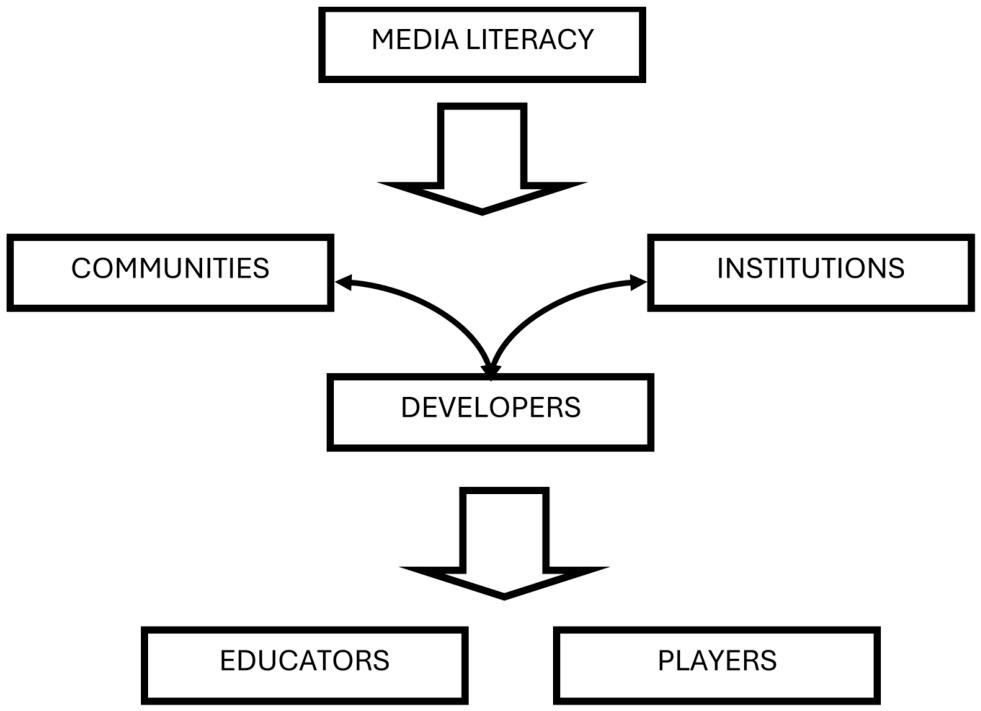
For the purpose of this analysis, Delwiche’s framework is adopted as the primary point of reference, as it is explicitly oriented towards video games. In addition, the proposed framework examines how COTS video games can be employed in the teaching of cultural heritage, highlighting the central role of media literacy education in this context. This article proposes a framework applicable to all stakeholders, thereby extending its scope beyond formal educational settings (see
Figure 1). It should be noted that the framework is deliberately generic in scope, designed to apply across the full breadth of cultural heritage that COTS games may engage with, from tangible heritage such as architecture and artefacts to intangible heritage such as oral traditions, ritual practices, and performing arts. The specific semiotic dimensions through which heritage is encoded in any given game—iconographic traditions, linguistic and idiomatic registers—are culturally and contextually variable, and their identification necessarily falls to the educators, researchers, and community representatives who constitute three of the five stakeholder groups. The framework provides the structural conditions for that contextual expertise to operate; it does not seek to prescribe the cultural knowledge that no single generic model could adequately anticipate. The framework considers the following five points:
The education of game developers and designers on how the media they are creating can also be used to teach and promote cultural heritage.
The ongoing education of players on how to critically examine video games and their content.
The education of represented communities, if present, to ensure that they can actively participate in the portrayal of their culture.
The education of public and cultural institutions on how to best implement and promote their cultural heritage through video games.
The education of educators and researchers on potential best practices in the use of video games in a teaching environment, as well as how these tools can be incorporated into their research.
Figure 1.
Media literacy education chart for COTS video games.
Figure 1.
Media literacy education chart for COTS video games.
4.1. Players
Delwiche resorts to the Eight Key Concepts of Media Literacy provided by the Association for Media Literacy in Canada, translating them to video games and arriving at the conclusion that “students are most likely to reach these objectives when they have the opportunity to behave as game creators. Across all forms of media, true literacy is about more than mere consumption of messages; it also requires a basic understanding of how messages are produced” [
30]. He therefore emphasises the importance of agency in teaching players not simply to apply codes, but to understand their meaning and purpose and to participate in their unfolding. Unlike continuous media such as film, which may play regardless of viewer comprehension, the video game medium compels demonstrated comprehension, forcing players to make constant decisions in response to stimuli [
35]. This interactive requirement transitions the player from a passive receptor to a creator of their own narrative, a process fundamental to active literacy. Lo and Mok suggest that media literacy as it relates to video games extends beyond the primary software to include “paratexts”—external artefacts such as walkthroughs, online tutorials, fan art, and community discussions. These productions operate through dual discourses of consumption and production [
19].
4.2. Developers
We assume that game developers understand how the medium they are working with operates and that they envision its potential impact. Indeed, the commercial success of a game implies that the developers have appropriately exploited its characteristics. However, this is not always the case, and most importantly, when it comes to commercial products, it is often the mechanisms that create an economically successful game that are mastered, but not necessarily other potentially beneficial mechanisms, thereby giving rise to the issues mentioned at the beginning of this paper, such as addiction and violence.
Indeed, it is important to consider how the pedagogical aspect can be implemented in a way that is neither detrimental to the enjoyment of the games for ordinary players, nor harmful to the potential success of the game as a commercial product. Developers should be aware of how these features can be implemented successfully, and at the same time, governmental and cultural institutions should be educated to promote and provide resources to developers and game designers who wish to take part in this endeavour.
Video games, as the name implies, are interactive and ludic, and, accordingly, developers and game designers tend to focus mostly on these aspects. However, it would be disingenuous to believe that players are not interested in how games look as well. Tavinor affirms that video games are not a unique isolated medium, for they are contiguous with non-video games, as well as other arts and imaginative activities. Moreover, video games’ artistic status is intrinsically linked to their visual aspect. Players are attracted to video games in the same way art appreciators are attracted to traditional art [
44]. This is based on Walton’s Prop Theory [
45]. The basic thesis is that any representative art is made of “props” that prompt us to specific imagery; i.e., in a painting, we look at coloured oils on canvas and we see a landscape. Naturally, in games, these props usually also serve a gameplay purpose, on top of a purely visual one, but they are nonetheless the most prominent aspect of the medium. These props act as semiotic signs that guide and influence players’ experiences in the virtual environment, as well as eliciting emotions from them [
46,
47].
4.3. Educators and Researchers
COTS video games can be employed in the classroom both in person and online. However, media literacy is especially important in the context of instructors sharing games with students. While information present in the games can be helpful and relatively accurate, such as
Kingdom Come: Deliverance’s [
48] Codex, academics and researchers also play a key role in contextualising the information provided in-game, as well as explaining any inaccuracies and why they are present. They can also offer expertise in the importance of depicting communities appropriately. Media literacy possesses profound potential for fostering learner autonomy, defined as the student’s ability to take charge of their own learning, as well as promoting digital citizenship, defined as understanding the legal and social dimensions of media environments. Games provide a unique platform for this development, and educators can use these experiences to facilitate critical discussions [
19].
4.4. Represented Communities
Another important group of stakeholders in media literacy education comprises the communities whose heritage and history are represented in the game. There are increasing concerns regarding the appropriateness of displaying culturally sensitive artefacts in museum settings. For instance, following the adoption of the new Native American Graves Protection and Repatriation Act (NAGPRA) [
49] in the United States, which requires informed consent from descendants or representatives before the display of human remains or cultural items, major institutions such as the American Museum of Natural History in New York have begun removing or covering cases displaying sacred and funerary artefacts [
50]. Accordingly, the communities concerned should be actively involved in video game development in suggesting and approving depictions to ensure accuracy and avoid stereotypes. For example,
Never Alone [
51] was developed in partnership with the Cook Inlet Tribal Council, representing indigenous groups in Alaska. These communities should be involved from the beginning of game development, including with regard to storyline, narratology and interactive features.
4.5. Cultural Institutions
In most cases, game developers and cultural institutions have worked separately. This is due to several factors, including access to finance, legal constraints, and conflicting goals—namely between partners focused on profit and those focused on heritage preservation—as well as “a lack of substantive knowledge and a tendency to depreciate the video game industry as marginal and peripheral”, including on the part of policymakers [
52]. In this respect, cultural institutions require media literacy training to understand how games operate, what attracts players, and how game developers design them, including technical and financial limitations, in order to make the most of this medium’s potential and select the most appropriate venue of diffusion for the heritage represented.
4.6. Framework
The benefit of the present framework lies in its multi-stakeholder scope. Existing media literacy models for video games have largely concentrated on players, particularly children and adolescents, or on formal educational settings in which teachers deploy games as instructional tools. The framework proposed here departs from this focus by distributing media literacy responsibilities and competencies across five distinct stakeholder groups: players, developers, educators and researchers, represented communities, and cultural institutions. This distribution reflects the reality that the educational and cultural potential of COTS games is not determined by any single actor in isolation, but emerges from the relationships and interactions among all five groups. A game’s capacity to promote cultural heritage appropriately and effectively depends on decisions made at the design stage, the literacy of the audience consuming it, the guidance provided by educators, the input of the communities whose heritage is at stake, and the engagement of the institutions responsible for preserving that heritage.
This framework incorporates Delwiche’s video game-specific “Interpretive Framework”—centred on immersion, engagement, interactivity, and identification—as its primary analytical lens, recognising that video games constitute a distinct medium that cannot be adequately addressed through tools originally developed for continuous, non-interactive media such as film or television [
30]. Moreover, it considers Hobbs’ emphasis on media production as a key pedagogical instrument, whereby understanding how media artefacts are made is treated as inseparable from the capacity to critically consume them [
34].
The interactions among the five stakeholder groups are generative of both educational and cultural outcomes. When developers collaborate with represented communities during the design phase, as in the case of
Never Alone, developed in partnership with the Cook Inlet Tribal Council, the result is a game whose cultural content is both appropriate and meaningful, thereby enhancing its educational validity before it reaches the classroom. When educators engage with COTS games to contextualise their content, they are able to supplement incidental learning with authoritative historical and cultural knowledge, translating a commercially motivated product into a pedagogically valid resource. When players develop sufficient media literacy to critically interrogate the representations they encounter—recognising, for example, the deliberate anachronisms in
Assassin’s Creed II—they become active participants in the meaning-making rather than passive recipients of it, a process that aligns directly with Hobbs’ model of critical media engagement [
34].
Furthermore, the interactions between cultural institutions and developers are particularly consequential for outcomes at the level of heritage promotion. However, this impact is largely contingent on how well the stakeholders involved understand the medium and one another’s constraints and objectives. Institutions that lack media literacy are ill-equipped to negotiate effectively with developers, or to leverage a game’s reach for educational purposes. Conversely, developers who are unaware of the sensitivities attached to certain heritage sites risk producing content that is culturally harmful.
Taken together, the five stakeholder groups form an interdependent system in which each actor’s media literacy reinforces and enables that of the others. In doing so, it offers a more comprehensive and actionable account of how media literacy can unlock the educational and cultural potential of commercial video games.
5. COTS Video Games and Heritage Education
Cultural heritage is relatively difficult to define and has changed considerably over the past decades. The 1972 World Heritage Convention, which forms the base for how the term is usually interpreted, defines cultural heritage as monuments, groups of buildings, and sites, including natural ones, of “outstanding universal value” [
53]. In 2003, the Convention for the Safeguarding of the Intangible Cultural Heritage added the “practices, representations, expressions, knowledge, skills—as well as the instruments, objects, artefacts and cultural spaces associated therewith—that communities, groups and, in some cases, individuals recognise as part of their cultural heritage” [
54]. Since then, the term cultural heritage has been intended to include both tangible and intangible heritage by most organisations, including the International Council on Monuments and Sites (ICOMOS), the International Centre for the Study of the Preservation and Restoration of Cultural Property (ICCROM), and the International Union for Conservation of Nature (IUCN) [
55]. Consequently, the concept of cultural heritage has expanded noticeably in the past few decades, going solely from monuments and the visual arts to include elements such as performing arts, rituals, and traditional crafts. For the current analysis, we consider cultural heritage to encompass all cultural forms and expressions, visual or otherwise, which are inherited and passed on, but also contemporary practices in which cultural groups take part. In relation to video games, it can be represented by the reconstruction of tangible heritage such as buildings or clothing, but also performances and visual styles.
Therefore, based on its current understanding, most video games carry depictions of cultural heritage, visually or otherwise. Whether through the cultural upbringing or indirect inspiration of game artists and writers, or precise locations, texts, or events portrayed in games, it is hard for a game to be completely devoid of cultural influences and connotations. Indeed, it can be argued that most successful games are rich in cultural heritage representations [
56]. Depending on the game genre and design, cultural heritage can be implemented in different ways and to various extents. This ranges from fantasy games that draw only on vague hints and allusions to real-world cultures to fully fledged historical reconstructions [
25]. The principal case study presented in this article examines the representation of tangible architectural heritage in
Assassin’s Creed II [
40]; however, the proposed framework is readily applicable to other forms of both tangible and intangible heritage in video games.
Institutions have been increasingly recognising the potential of COTS video games for education. For instance, the Council of Europe has established a Video Game Culture Working Group with the objective of promoting video game culture among different stakeholders, including educators, within the framework of Digital Citizenship Education, which is aimed at providing media literacy to young people. The working group supports the Council of Europe in carrying out actions to promote Video Game Culture initiatives and to build and empower a network of professionals working in this area. This reflects the Council of Europe’s view that promoting a positive video game culture means generating pedagogical reflection around video games, thinking about them as cultural tools able to foster not only enjoyment but also cognition, learning, and personal development [
57]. In the United States, the American Library Association (ALA) created the Games and Gaming Round Table in 2011 with the mission of providing a space for exchanging ideas and promoting education about games and gaming in libraries [
58].
Video games themselves are recognised as cultural artefacts. Institutions such as the Netherlands Institute for Sound and Vision host a video game collection [
59], and the European Federation of Video Game Archives, Museums and Preservation projects (EFGAMP) is a network of institutions working to preserve video games as digital heritage [
60]. Lately, these institutions partnered with Europeana, the leading EU initiative for digital heritage to explore the potential of video games for disseminating cultural heritage, as well as heritage per se [
61]. Ultimately, the video game environment serves as a “cultural classroom” where specialised ludolects, paratextual practices, and robust social structures enable sophisticated critical engagement and foster self-directed learning far beyond simple content mastery. There are in fact examples of commercially successful video games that have also proven to be effective tools of education and promotion of cultural heritage [
62]. For instance,
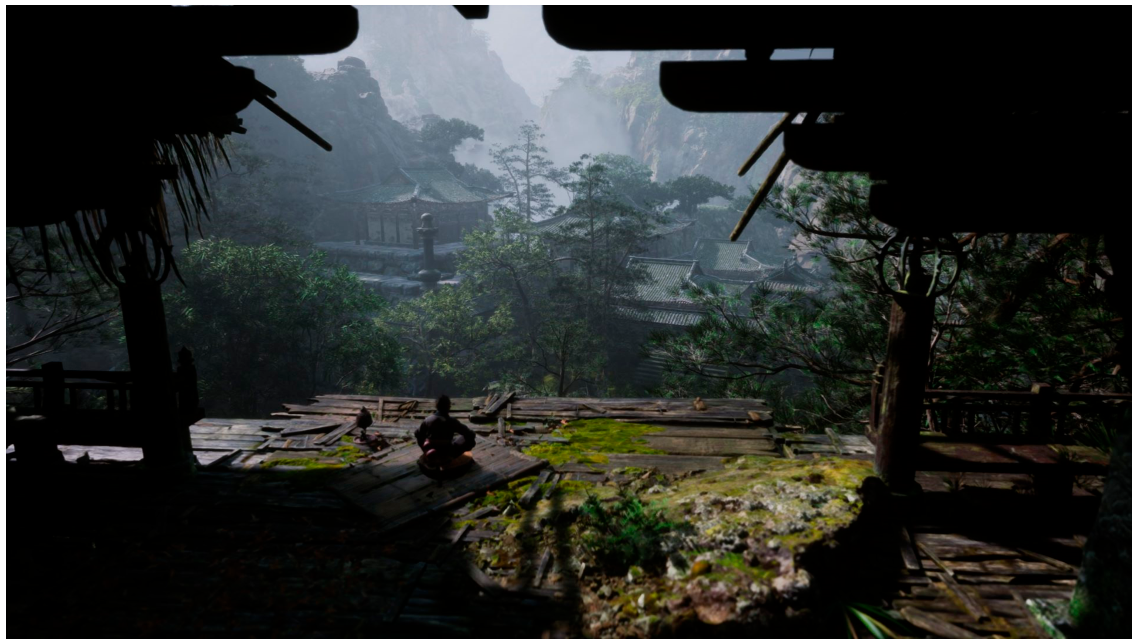
Black Myth: Wukong [
63] (see
Figure 2) is a video game developed in China that has achieved resounding worldwide success. While this is not the first instance of a Chinese game attaining commercial success in Western markets,
Black Myth has attracted particular attention for its rich presentation of Chinese culture, both visually and narratively. The game reinterprets the Chinese literary classic
Journey to the West, and has been used as a pedagogical tool to introduce students to Chinese culture and literature, as well as to broader themes such as the cultural and social impact of games that prominently feature cultural heritage [
64].
However, the most famous example of a video game making cultural heritage its centrepiece is undoubtedly the extremely popular
Assassin’s Creed series [
65] (see
Figure 3), a 3D action-adventure game developed in Canada by Ubisoft that sees the player guide members of titular Assassins Brotherhood through various ages and locations to fight the Templars to control powerful artefacts called the Fruits of Eden. The framework of the story itself puts history and architectural heritage front and centre. In the frame story, the protagonist uses a device called the Animus to revive the memories of his/her ancestors and access information about their lives. This way, the developers are able to set the games in different locations and time periods while remaining within the same story line. The conflict between Assassins and Templars portrayed in the game is strictly intertwined with historical events; thus, particular care has been taken to create a quasi-accurate historical reconstruction in the games. This aspect of the games received so much attention that, starting with
Assassin’s Creed Origins [
66], set in Ptolemaic Egypt, Ubisoft added a game mode called Discovery Tour that allows players to explore the scenario without being interrupted by normal game activities such as combat, and offers guided tours of the game’s locations for a purely educational experience.
5.1. Assassin’s Creed II and Architectural Heritage
In
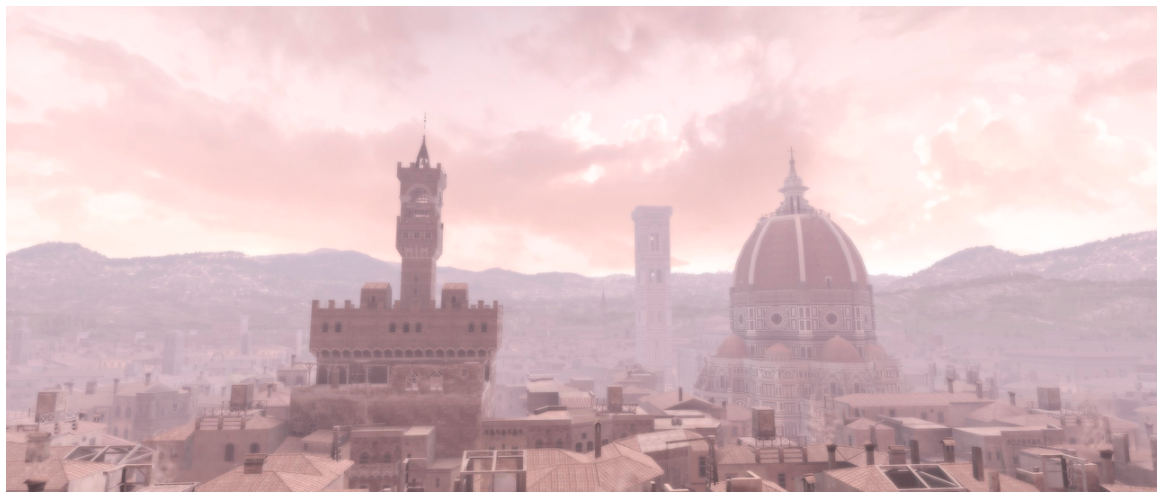
Assassin’s Creed II [
40], the second entry of the series set in 15th-century Renaissance Italy, the player assumes the role of the Florentine Ezio Auditore in an adventure across the country that will bring him to visit iconic locations and monuments, such as the Cathedral of Santa Maria del Fiore in Florence, or the Basilica of St. Mark in Venice. In many games, settings and locations often serve merely as a backdrop for the action. Despite the fact that the art component and the level design constitute a substantial part of video games’ budgets and development, and arguably contribute to the commercial appeal and success of a game, it is rarely considered by players, at least on a conscious level.
5.1.1. Developer Decision-Making and Constraints
In
Assassin’s Creed II, the game mechanics enable players to develop a more direct relationship with the architecture represented in the game and to interact with it directly. One of the main game mechanics is the possibility of climbing any building represented and travelling across the cities jumping from rooftop to rooftop to move undetected or run away from pursuers. Moreover, players can advance in the game and discover new areas by observing them from high vantage points, usually—as is the case in most Italian cities—from bell towers or the tops of church domes. The highest “Viewpoints” thus usually correspond to the most important monuments, and reaching the top is a challenging task, more so than climbing ordinary Viewpoints, with the result being that players have a direct relationship with the building in question through game mechanics. This is obviously not the only feature that accounts for the success of the game; an enthralling story and charismatic protagonist are other elements that ensure that
Assassin’s Creed II, after more than a decade and another dozen
Assassin’s Creed games, is still regarded as one of the best games in the series [
67] and its protagonist Ezio Auditore, the favourite of critics and players alike [
68]. Scholars such as Kirkpatrick [
69], Upton [
70] and Papale [
71] affirm that aspects other than pure gameplay are necessary for players to be involved in the game, and that the action would be meaningless without an engaging story or setting.
Additionally, Ezio’s actions are deeply embedded in the real historical events that are portrayed in the game, as much as the architecture within which they are set. Real historical characters, such as Lorenzo de’ Medici, Niccolò Machiavelli and Leonardo da Vinci, are part of the game and are involved in Ezio’s story and actions. The game sees the player actively participate in events such as the Pazzi conspiracy in front of the Santa Maria del Fiore cathedral in Florence—although in reality, the assassination attempt against Lorenzo de’ Medici happened inside the church, but the fighting nonetheless continued well outside in the city—the burning at the stake of Girolamo Savonarola and the siege of the city of Forlì, even if set eleven years prior to the real event. Real locations are also used as part of the fictional plot of the game, such as the Albergaccio, a ‘high security’ prison cell located on the bell tower of the Palazzo della Signoria that still exists and was indeed used to hold high-profile prisoners. During the game, Ezio’s father is captured, and the player is prompted to climb the tower to free him.
All the events and monuments in
Assassin’s Creed are accompanied by a “Codex” entry, that, often written in a facetious tone, but with generally correct information, briefly explains to players what they are and their history. Notably,
Assassin’s Creed II is not an accurate historical or architectural reconstruction, as it takes many liberties to provide an entertaining experience to players. There are many anachronisms in the game, both regarding some of the aforementioned historical events and some of the buildings, which did not exist at the time of the game, such as the Vasari Corridor on top of the Ponte Vecchio or the Cappella dei Principi next to San Lorenzo, and some existing buildings are not represented, such as the Baptistery of San Giovanni and Orsanmichele [
41].
5.1.2. Media Literacy Implications for Players
This is one of the reasons why media literacy is important for players, just as they can dissect and understand video games, they can also question and understand why certain choices are made, and assume that not everything and everyone depicted is accurate, not because of malice or laziness on the developers’ part, but because of their nature as games. In fact,
Assassin’s Creed II has been used as a teaching tool in history of architecture courses, but it is argued that its—as well as most games—use should always be combined with clarifications from the instructor in order to make clear what differs from reality and for what reasons [
42].
Especially in
Assassin’s Creed II, the locations and historical reconstructions portrayed in the game not only contributed to its critical acclaim and commercial success, but had repercussions on the real-life locations it depicts, a fact not that uncommon when it comes to video games [
72]. Interest in cultural representation in video games is longstanding and present in various countries. For instance, the state of Texas in the United States excludes from public grants video games that “portray Texas or Texans in a negative fashion” [
73], underlining how much of an impact video games can have on public image. At the same time, many countries resorted to the use of popular media, especially film and television, to promote their culture, not just because of the pervasiveness of the media, but also because of their format, as they can deliver more comprehensive and elaborate messages by virtue of their length, compared to short advertisements [
74]. For instance, Canada hired Weber Shandwick, one of the biggest public relations firms in the world, to promote tourism to the country through television and films [
75], and the Tourism Agency of Catalonia in Spain developed a promotional virtual reality game in collaboration with Sony called
Legends of Catalonia [
76]. Video games can deliver even more comprehensive messages, as unlike the short duration of films and TV shows, players commonly spend dozens of hours on a single game.
5.1.3. Institutional Collaborations
Considering this, such a complex medium would warrant a deeper media literacy approach to be fully understood by players as well as more effectively used by game developers. Returning to
Assassin’s Creed II, scholars Dubois and Gibbs affirm that there is enough evidence to demonstrate that numerous tourists visited Florence as a result of having played the game [
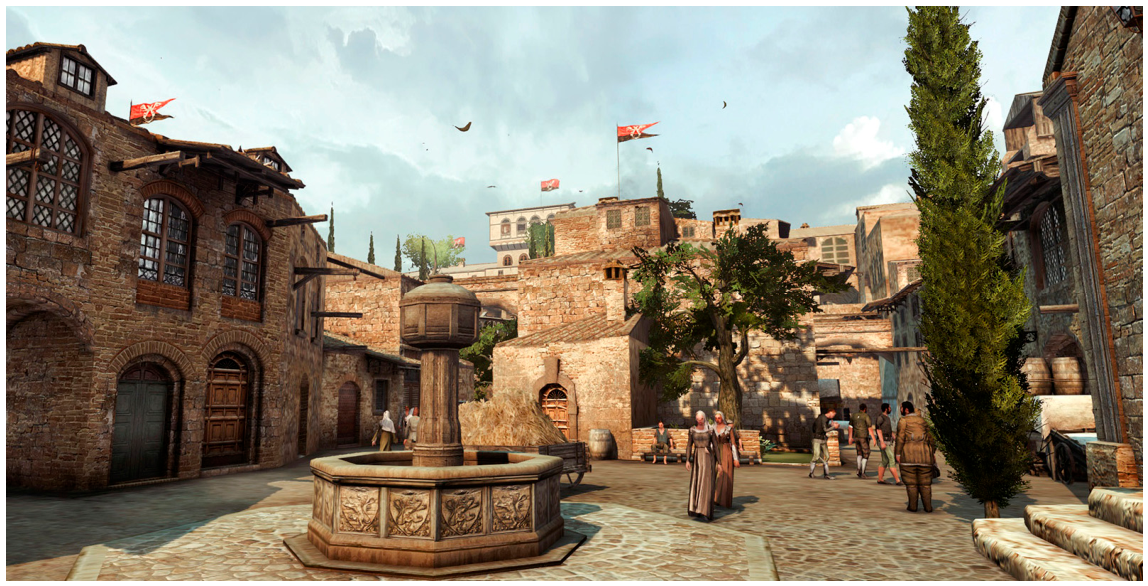
43]. Florence was already an established international touristic destination when the game was released; however, what is most noticeable is the impact that the game had on the small hamlet of Monteriggioni. In
Assassin’s Creed II, Monteriggioni is the headquarters of protagonist Ezio, located in a walled hamlet in the countryside of Tuscany, not far from Florence (see
Figure 4).
In reality, there is no Villa Auditore in the hamlet, but its appearance is rather appropriate to the location. Moreover, during the game, players can visit Monteriggioni both as Ezio Auditore in the 15th century, as well as Desmond Miles, his descendant, in the present day. Rossana Giannettoni, assessor of tourism to Monteriggioni, affirmed that
Assassin’s Creed II “has given the castle great visibility and the possibility to be known in many places that it would have been hard for us to reach with our promotional activity. To give you an idea, The Cloisters, the Metropolitan Museum of Art of New York branch devoted on the middle ages, requested a miniature model of our castle, known through the video game” [
77].
In 2016, a survey showed that more than 10% of the interviewed visitors discovered Monteriggioni thanks to
Assassin’s Creed II [
78]. The specific case of Monteriggioni was mostly coincidental, as Ubisoft discovered the location by chance during the early development of the game, but the idea of infusing the game with history and culture was well planned. Alberto Coco, marketing director of Ubisoft Italia, affirms that for the reconstruction of Monteriggioni, the development team focused on archival information, including literature, to recreate the ancient town. Moreover, he continues, Ubisoft, as a French company and major European game developer, with studios all over the world, always tries to instil European culture in their games and present itself as the third centre after the United States and Japan [
78]. It is worthwhile noting that both Monteriggioni and Florence, but also the other cities depicted in
Assassin’s Creed II today, look very similar to how they look in the game. Save for the licences the developers had to take to create a functional game and the changes that obviously occurred in the past 500 years, a tourist can orientate in the real Florence after having played the game, and would be able to recognise all the major landmarks. This is undoubtedly a factor that very much contributed to the success of their promotion through the game, compared, for example, to the pre-Hausmann Paris of
Assassin’s Creed Unity [
79], which shows a Paris noticeably different from what can be seen today, and without several of the most important landmarks.
COTS video games employed for the promotion of cultural heritage can thus be very effective in both teaching about history as well as promoting under-represented cultures and communities. In this context, it can be argued that they fall under the broader international definition of education under the International Covenant on Economic, Social and Cultural Rights (ICESCR, New York, adopted on 16 December 1966, entered into force on 3 January 1976, 993 UNTS 3) and UN Convention on the Rights of the Child (CRC, New York, adopted on 20 November 1989, entered into force on 2 September 1990, 1577 UNTS 3). As noted by Chapdelaine-Feliciati, the right to education is itself a prerequisite for the promotion of human rights and fundamental freedoms more broadly, both for children and adults, and it is thus argued that the promotion of cultural heritage can act as a conduit for the ICESCR’s aim to ‘promote understanding, tolerance and friendship among nations and all racial, ethnic or religious groups’ (art. 13(1)) and the CRC’s objective to direct ‘the development of respect for the child’s parents, his or her own cultural identity, language and values (…) and for civilizations different from his or her own’ (art. 29(1)c)) [
80].
6. Challenges and Limitations with Video Games and Cultural Heritage
The recent controversy involving
Assassin’s Creed Shadows [
81] brought worldwide attention to cultural sensitivity in video games. The latest instalment of the
Assassin’s Creed series is set in feudal Japan, and the environment can be destroyed by the player during combat. This included sacred shrines, an act that has been deemed distasteful by a considerable number of Japanese players, so much so that it prompted a governmental hearing, particularly on the grounds that it could inspire destructive behaviour in real life [
82]. Following this hearing, developer Ubisoft quickly released a patch to the game in order to make shrines indestructible [
83]. In light of this and other similar episodes, media literacy education should be aimed at developers as much as cultural and public institutions to foster collaboration for the promotion of cultural heritage. As mentioned, the portrayal of cultural heritage is a delicate matter, and this is why media literacy education in this regard is important for all actors participating in its creation.
Moreover, COTS games present unique challenges when used within an educational environment [
24]. Many video games require a substantial time investment to play, and selectively replaying a specific scene or exploring a particular location can prove challenging, or even impossible. In addition, COTS games might have hardware requirements that are not always easily accessible, such as the need for high-performance PCs or current generation consoles for the latest titles; compatibility issues may also arise with older games. Furthermore, most COTS games involve a financial cost. Although prices vary, unlike most educational games, there is usually a purchase cost associated with their use.
Dubois and Gibbs find several possible hurdles in the collaboration between cultural public and private entities, and video game developers. First, there might be restrictions on how buildings and locations can be represented. For example, a city government could allow a location to be only represented faithfully, without modification. That might create problems for the developers, as sometimes completely realistic reconstructions might be detrimental to the game. Case in point, in
Assassin’s Creed II, the scale of cities and buildings is noticeably reduced in order to give players reasonable travel time between locations and allow the character to jump between buildings [
41]. In
Spider-Man: Miles Morales [
84], the owner of the Chrysler Building denied the rights to recreate their property in the virtual New York City of the game [
85]. Another factor that is to be taken into consideration when developing games with the intention of promoting a particular city or location is how much of it is still visible and recognisable. This does not mean that reconstruction of now lost architecture is less desirable; on the contrary, it is one of the most interesting aspects and possibilities given by the real-time 3D technology of video games, but an aspect to be taken into account nonetheless. As fascinating as it is to visit ancient sites in video games, there is a high possibility that potential visitors would be less interested in actually visiting the location if they know that there is nothing left of what they saw in the game. Still, precisely because video games and 3D reconstructions offer us the possibility of bringing now lost architecture back to life, they can be invaluable educational tools.
For these reasons, literacy in the medium is especially important on the part of the agency interested in promoting its cultural heritage, to understand possible limitations, or where compromises must be reached. Knowing how video games work can help in establishing guidelines on how reality can be modified so as to accommodate gameplay while clarifying which fundamental parts of a certain heritage cannot be modified so that developers can make the necessary adjustments.
Second, Dubois and Gibbs mention how ‘destinations may have to deal with undesired behaviours (trespassing, climbing on buildings, etc.) or be reluctant to be associated with a violent game’ [
43]. Again, clear guidelines would assist both parties in limiting these kinds of issues so that certain game genres may be prohibited at specific sites, or features can be incorporated in the game. For instance, in
Assassin’s Creed II, a game that indeed features violence, the killing of innocent people is prohibited as players get ‘desynchronised’ when they attempt to do so, or in
Skyrim [
86], the killing of the children present in the game is made impossible by not implementing the possibility altogether. Undesirable behaviours in real life, even if not inherently harmful in themselves, such as climbing buildings, can be discouraged by reminders within the game. To these issues, I would add that another possible problem in relation to the representation of architectural heritage is that whole cities and expansive environments rich in details are labour-intensive and expensive to produce, but these are not the only possibility to advertise a place or a culture. More limited reconstructions, such as single buildings or groups of buildings, can be equally effective. This problem is however mitigated when dealing with intangible cultural heritage, or more limited artefacts.
8. Conclusions
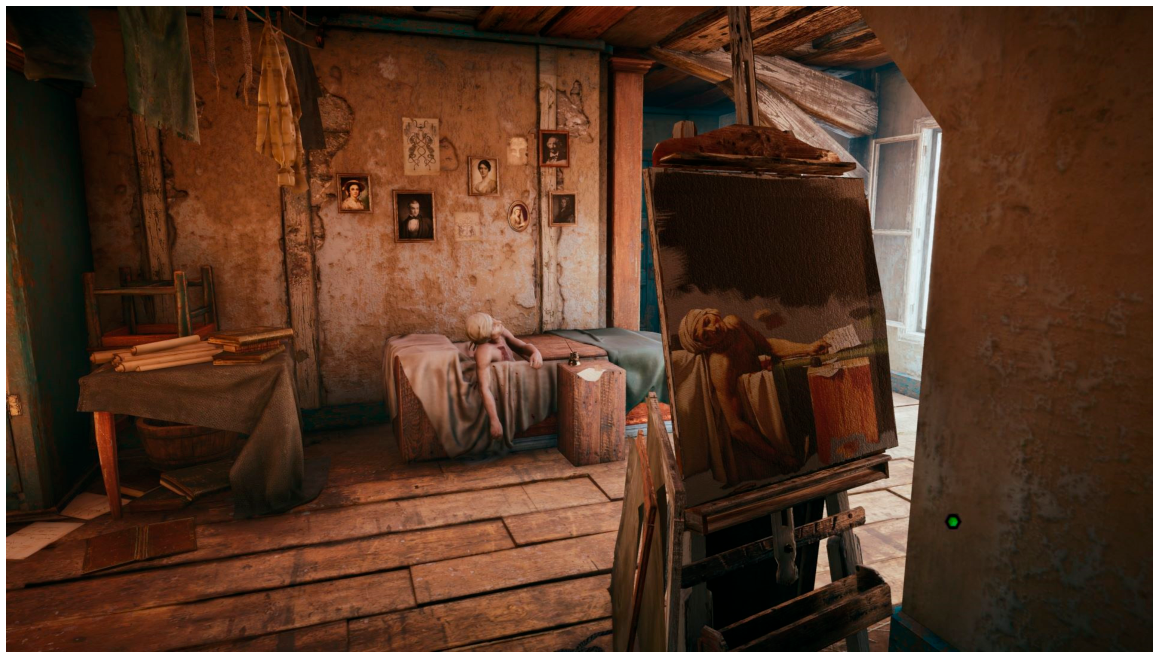
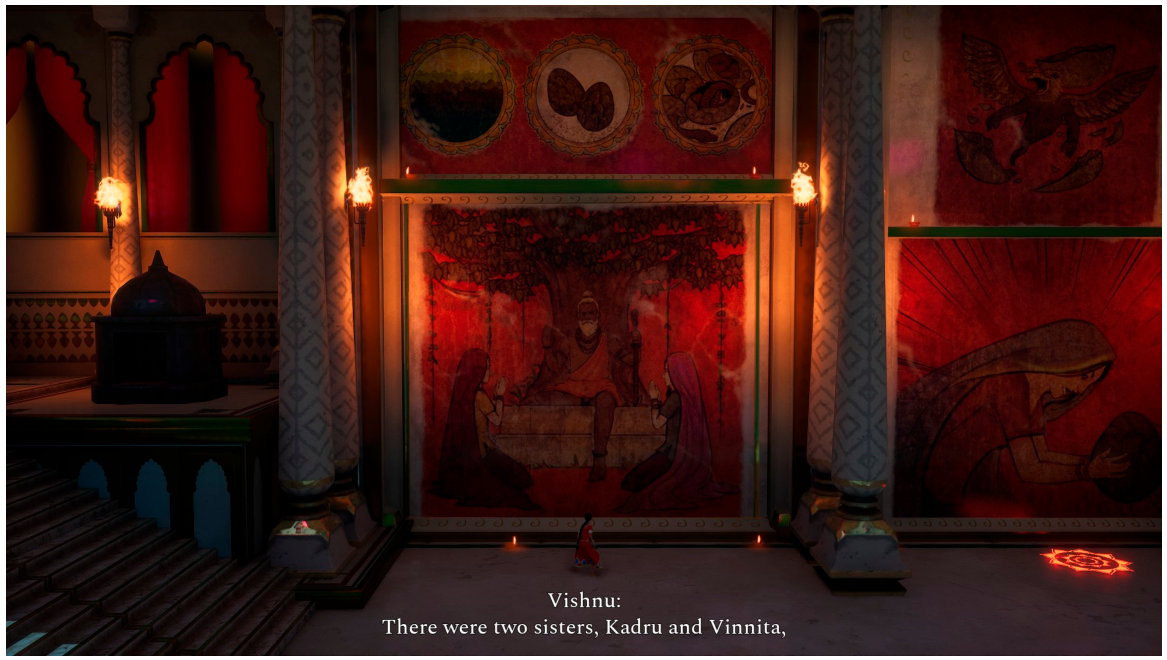
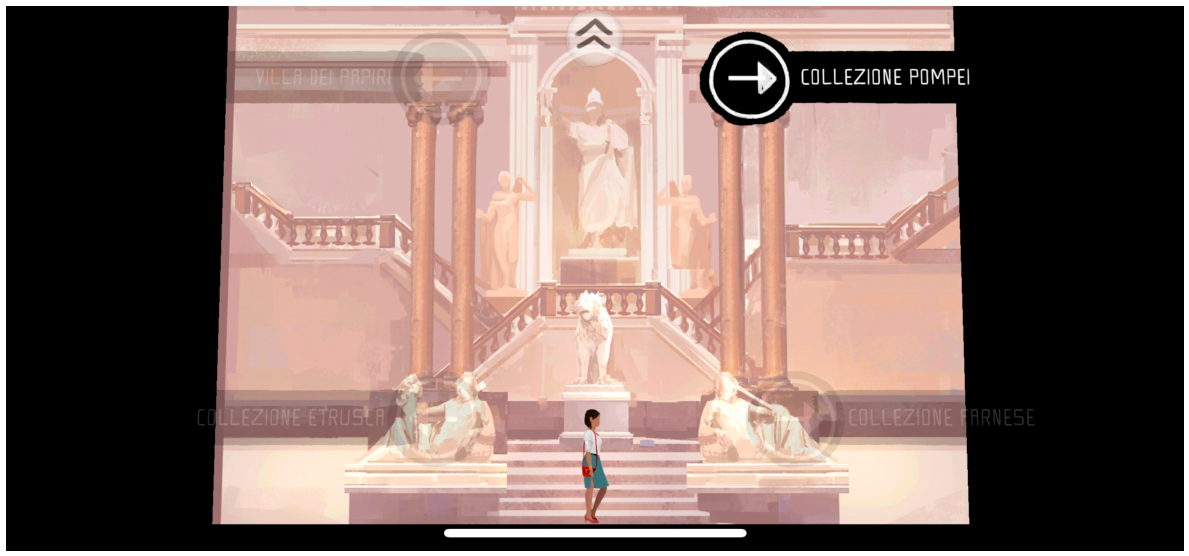
This article has examined the role of media literacy in unlocking the potential of COTS video games for cultural heritage education, using Assassin’s Creed II as its principal case study alongside Raji and Father and Son. The multi-stakeholder framework proposed here suggests that this potential is not automatic. It depends on informed decisions made by developers, communities, the contextualising role of educators, and the critical engagement of players. When these relationships function well, as in the collaboration behind Never Alone, the result is a product that is culturally grounded and commercially viable. When they break down, as the Assassin’s Creed Shadows controversy illustrates, the consequences extend beyond the game itself to affect real communities and cultural institutions.
Further research should focus on strengthening structured partnerships between the game industry, cultural institutions, scholars, and the communities whose heritage is represented. Such collaborations could enable more appropriate reconstructions, more diverse narrative perspectives, and new design practices that integrate research and community knowledge directly into development pipelines. Future work should also focus on developing frameworks that allow cultural heritage content in games to be evaluated, curated, and contextualised across different environments, including classrooms, museums, and online learning spaces. Rather than functioning only as entertainment products that incidentally include historical material, COTS games could increasingly operate as hybrid cultural platforms, linking gameplay with archives, scholarly interpretation, and community storytelling.
Moreover, as generative AI tools become increasingly integrated into game development pipelines, the question of who determines representational decisions, and on what basis, is becoming more pressing, particularly for communities whose heritage has historically been mediated by external narratives. Additionally, the framework proposed here, while grounded in existing cases, requires empirical validation: longitudinal studies examining how players’ heritage knowledge and critical literacy develop through sustained engagement with culturally rich COTS games would significantly strengthen the evidence base. The framework’s primary contribution at this stage is to open new lines of enquiry rather than to close existing ones. The empirical questions identified above are offered as a starting point for further research.
Finally, the growing intersection of video games and digital heritage preservation, as pursued by institutions such as Europeana, also opens new venues for formalising the kind of developer–institution collaboration this article advocates. By fostering these connections, future projects can move beyond simple historical depiction toward more participatory and critically informed forms of digital heritage engagement.