Article

An Overview of the Socioeconomic and Biodemographic Aspects of the Vietnamese Fishing Crews

1
Nha Trang University, 2 Nguyen Dinh Chieu, Nha Trang City 650000, Vietnam
2
NTT Hi-Tech Institute, Nguyen Tat Thanh University, Ho Chi Minh City 70000, Vietnam
3
Nguyen Tat Thanh University Center for Hi-Tech Development, Saigon Hi-Tech Park, Ho Chi Minh City 70000, Vietnam
4
Fisheries and Oceans Canada, St. John’s, NL A1C 5X1, Canada
*
Author to whom correspondence should be addressed.
These authors contributed equally to this work and share first authorship.
Societies 2026, 16(4), 133; https://doi.org/10.3390/soc16040133
Submission received: 6 January 2026 / Revised: 15 April 2026 / Accepted: 16 April 2026 / Published: 21 April 2026
(This article belongs to the Section The Social Nature of Health and Well-Being)

Abstract

The current study provides a comprehensive overview of the socioeconomic and sociodemographic conditions of Vietnamese fishing crews, who form the backbone of the nation’s marine capture fisheries but remain among the most vulnerable labor groups. Based on interviews with 2037 captains and crew members across six coastal provinces, the study examines demographic characteristics, education, working conditions, legal arrangements, and income determinants. Results show that the fishing labor force is entirely male, predominantly middle-aged, and characterized by limited formal education and long occupational experience. Employment relationships are largely informal and verbal, leaving crews without labor protection, social or health insurance, or contractual stability. Statistical analysis revealed significant income disparities between captains and crew members, between inshore and offshore fleets, and among fisheries and provinces. Fishing experience and professional certification were positively correlated with income, highlighting the importance of skill development. The findings underscore the urgent need for socioeconomic policies that formalize labor contracts, expand insurance coverage, promote vocational training, and modernize fishing technologies. These measures, combined with income diversification and community welfare programs, are critical to improving the well-being, safety, and resilience of Vietnam’s fishing workforce and advancing sustainable marine economic development. This study provides valuable baseline information on an underrepresented segment of the commercial fishing industry, informing fisheries managers and policymakers in designing future development programs that account for the socioeconomic and demographic conditions of fishing crews.

1. Introduction

Vietnam has a long coastline of more than 3260 km, containing lagoons, bays, fjords, estuaries, and archipelagos, which provide a diverse ecosystem [1]. Among the 2599 species reported, about 150 species have been commercially exploited [2,3]. In Vietnam, marine fisheries have an important role with regard to livelihoods, employment, foreign exchange, national food security, and are a source of unique macronutrients, micronutrients, polyunsaturated, and omega-3 fatty acids [4]. Resolution No. 09-NQ/TW of the Party Central Committee, adopted in 2007, aims to make Vietnam a strong marine-based nation, increase the marine economy’s contribution to national GDP to 53–55%, and strive toward the goal of becoming a developed country by 2035, with marine fisheries being one of the most important components of the nation’s sustainable development [5]. Marine landings increased at 5.4% per annum and remained a top ten country for marine capture in the world during the past four decades [6]. In 2024, total marine landings were 3.86 million tonnes, increasing 0.6% compared to 2023. The export values accounted for 5.7 billion USD and contributed approximately 1.3% to the gross domestic product [4], confirming that marine fishing is a primary economic driver of the national economy. Some important export products included tuna species, crustacean (e.g., shrimp, crab), and cephalopod (e.g., octopus, squid). According to the National Statistics Office of Vietnam, the fishing sector employs more than 830 thousand people, which excludes another four million temporary workers working in fish value chains such as seafood processing and fisheries services [4,6,7,8]. However, the marine fisheries have experienced an alarming reduction in fish stock, particularly inshore resources, due to dramatically increasing numbers of fishing boats and ineffective management [3,8,9].
Marine fisheries in Vietnam are divided into inshore and offshore subsectors. Fishing boats that have a length of overall (LOA) ≥ 15 m are defined as offshore boats, which fish outside the continuous zone within the nation’s Exclusive Economic Zone (EEZ) and can operate in the neighboring countries’ EEZs under legal contracts and approvals. In contrast, the inshore fishing boats included those that have an LOA < 15 m and fish within territorial and continuous waters [10]. There were 55,953 inshore and 34,825 offshore boats in 2023, using various fishing methods such as trawl, gillnet, purse seine, longline, stick-held falling net, and trap [6,11,12,13,14]. Inshore fisheries include both artisanal and subsistence, and substantially contribute to the total landings [4]. Due to declining catch rates in some areas and increasing economic pressures, certain offshore vessels have taken the risk of operating beyond Vietnamese waters and entering the EEZs of neighboring countries such as Indonesia, Malaysia, and Thailand. These incursions have resulted in vessel arrests in recent years and contributed to the European Commission issuing a “yellow card” warning on all Vietnamese seafood products in 2017 [15,16]. Once an arrest has been made, significant issues related to crew health, morale, and income of crews and their families arise. Importantly, this illegal, unreported, and unregulated (IUU) fishing greatly affects sustainable fisheries development and causes huge challenges in the seafood export of Vietnam, particularly to the EC’s market. The government of Vietnam has made significant efforts to combat IUU fishing to remove the yellow card by 2025 [16]. In addition to ~1% offshore fleet involving composite and steel boats, a majority of Vietnamese fishing boats are made of wood [6,17]. Because most spaces onboard are used to store fishing gear, ropes, baskets, tools, and catch products, the crews often work in poor environments within limited spaces and accommodations [6]. However, subsequent subsidy programs that have been introduced by the government since 1997 significantly help the boat owners equip entertainment and safety equipment, e.g., satellite television, distance communication systems, ICOM, and mobile kits, and improve working conditions [6].
As an important socioeconomic contributor, substantial studies have been conducted in various aspects of Vietnamese fisheries, such as fishing technology [13,18,19], economic performance [20,21,22,23], fisheries management [9,24,25], and others. However, most studies focus on fisheries in general and fishing boat owners, with very little information available on the fishing crews, while their numbers are much greater than those of boat owners. To our best knowledge, the only piece of work on the fishing crew is to report fishing labor shortages [26], masculine feature [17], accidents and injuries [27], and training status [7,8] of the fishing crew in the Vietnamese offshore fishing fleets. Inadequate information on the status of the fishing crew results in difficulties in understanding the fishery management process and making suitable policies to improve the social welfare of the hundred thousand fishing workers.
The labor of fisheries in Vietnam is divided into two lines and has a masculine feature [17]. While men are directly involved in fishing onboard from daily or weekly trips for inshore and subsistence fishing to months for offshore fishing, women work on post-harvest, logistics, and on-land services such as processing, sewing nets, preparing food, and medication for the fishing trips [17,26,28]. In addition, the fishing industry of Vietnam is experiencing the challenge of labor shortages because of unstable income, harsh working environment, and the increase in land-based jobs [8,9,26]. Other than that, very little information on socioeconomic, biodemographic, and educational aspects of crews who directly work on the Vietnamese fishing boats is available. This makes them particularly vulnerable to economic shocks and unexpected occurrences.
To guide the analysis and improve the clarity of the study’s objectives, this research addresses the following questions: (1) What are the key sociodemographic, educational, and governance characteristics of Vietnamese fishing crews across major fisheries and provinces? (2) What are the working conditions, well-being indicators, and levels of social and health insurance coverage among fishing crews? (3) How do biodemographic factors, occupational characteristics, and fleet types influence the income of captains and crew members? and (4) Which socioeconomic and professional factors are most strongly associated with income disparities within and across fisheries? These questions frame the two main components of the study: the first provides baseline information on the sociodemographic characteristics, well-being, and governance conditions of Vietnamese fishing crews, while the second examines the factors influencing their income across key fisheries provinces. Together, these analyses aim to help fisheries managers and policymakers better understand how management actions affect fishing crews and to strengthen future socioeconomic impact assessments for fishery management plans.

2. Methodologies

2.1. Experimental Design and Data Collection

The study employed a descriptive cross-sectional sampling method, similar to [29,30,31]. The research content obtained approval from the scientific committee of the Institute of Marine Science and Fishing Technology and the Faculty of Social Sciences and Humanities of Nha Trang University. A consent form was signed by each voluntary respondent who had agreed to participate in the survey to ensure informed consent (Appendix A). However, interviewees’ names were anonymous and excluded from the analysis and any public reports. This survey focused on fishing crews who are working on the fishing boats, including captains and crew members. According to the Circular no. 27/VBHN-BNNMT dated 4 August 2025 of the Ministry of Agriculture and Environment of Vietnam, the captain of a fishing boat is the highest-ranking officer on board, serving under the authority of the chief officer. The captain is legally responsible to the vessel owner for the management and operation of the vessel, directing the crew in tasks related to the exploitation and protection of aquatic resources, as well as the purchase, processing, transportation, and transshipment of aquatic products in accordance with regulations, while ensuring safe and efficient production. The crew member of a fishing boat works under the management and supervision of the captain, carrying out tasks related to the operation and use of machinery, equipment, fishing gear, and tools on deck as assigned, and other tasks under agreement.
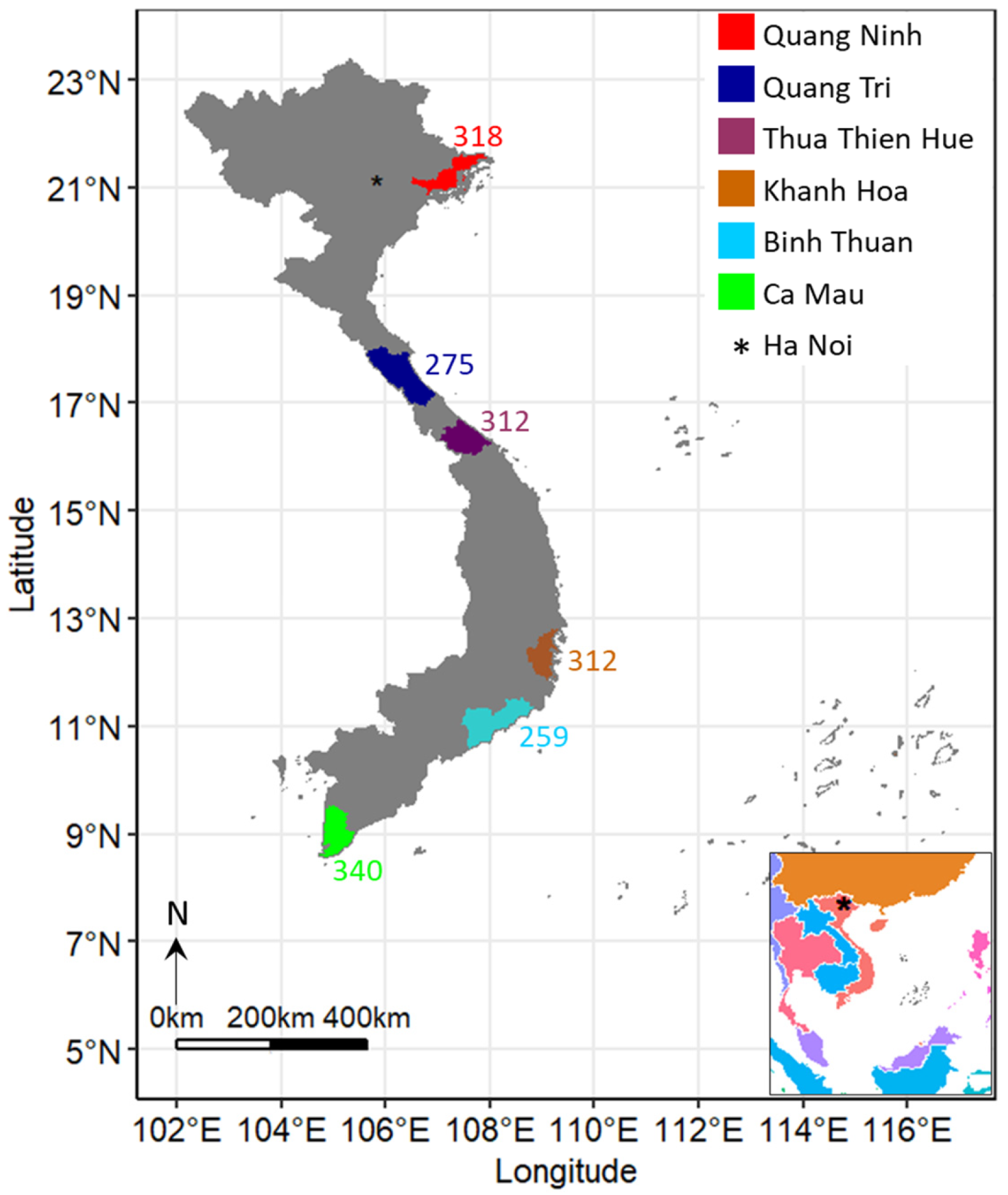
The survey was conducted in six provinces located from the north to the south of Vietnam, including Quang Ninh, Quang Tri, Thua Thien Hue, Khanh Hoa, Binh Thuan, and Ca Mau (Figure 1) from February to June, 2024. Those locations were chosen because of their historical fishing industry and high contribution to the national total marine landings [4]. The survey focused on gillnet, purse seine, squid jigging, stick-held falling net, and trawl fisheries because these are among the most common and representative fishing methods in Vietnam. The cross-sectional survey was conducted by trained research assistants using multiple questionnaires to obtain the needed information through face-to-face interviews with fishing crews at the fishing ports or at home when the participants were available. Appendix B provides the detailed survey questionnaire for the Vietnamese fishing crew study. The questionnaire included basic information on biodemographic, socioeconomic, well-being, income, and other aspects. To evaluate the effect of sociodemographic factors on the income of crews, the income was collected over the three nearest fishing trips or months, as income from fishing is highly variable [23]. The income data were collected at the same time to improve comparability across fisheries, locations, and other conditions. To enhance the representativeness of the sample, surveys were conducted across multiple fishing harbors and villages within each province. Because Vietnam lacks a formal registry of fishing crews, respondents were selected through random on-site interviews that accounted for seasonal activity patterns and geographic diversity. Randomization followed a systematic selection procedure: at each port or village, research assistants approached every second vessel or every second available crew member to minimize interviewer bias. Sampling took place at different times of day and over several weeks to capture seasonal fluctuations in fishing effort. This strategy ensured that respondents were chosen independently of vessel size, fishing method, or crew role, thereby improving representativeness despite the absence of an official crew list. Interviews were conducted individually or in small groups, and each session was completed within approximately 15 min.

2.2. Statistical Analysis

The data preparation, figures, and statistics were performed using R (V4.1.2) [32]. For the baseline information of crews, we conducted an appropriate statistical analysis where it was applicable.
A Multiple Linear Regression (MLR) model was used to analyze the determinants of fishing income because it allows for the simultaneous evaluation of multiple categorical and continuous predictors on a continuous outcome variable. This approach is well-suited for cross-sectional socioeconomic data where the goal is to estimate the independent effect of each factor while controlling for others. Alternative modeling frameworks, such as generalized linear models or mixed-effect models, were considered; however, the data did not exhibit hierarchical nesting or non-normal error structures that would necessitate these approaches. The MLR model was therefore selected as the most parsimonious and interpretable method for assessing income disparities. All model assumptions were evaluated and satisfied, as shown in the Supplementary Materials.
In the income analysis, the Multiple Linear Regression Model (MLRM) was used to examine the relationship between the income of crews and independent variables, where independent factors included: Fisheries (five categories: Gillnet, purse seine, squid jigging, stick-held falling net, and trawl), Provinces (six categories: Binh Thuan, Ca Mau, Khanh Hoa, Quang Ninh, Quang Tri, and Thua Thien Hue), Fishing Fleets (two categories: Inshore and offshore), Occupation (two categories: Captain and crew member), Education Grade (ratio scale); Education Level (four categories: Illiterate, elementary, secondary high school, and senior high school), Academic Skill (two categories: trained and non-trained), Age (ratio scale), and Seafaring Experience (ratio scale). The dependent variable was the income. Fishing income is highly variable due to seasonality, catch fluctuations, weather conditions, and market prices. To reduce potential bias and ensure comparability, income was standardized to the three most recent fishing trips or months, following common practice in fisheries socioeconomic surveys. Although this approach does not eliminate all temporal variability, it provides a consistent reference period across respondents and provinces. We acknowledge that short-term fluctuations may still influence reported income; however, the large sample size and broad geographic coverage help mitigate these effects and support the robustness of the regression results. The MLRM allows for the simultaneous evaluation of multiple categorical and continuous predictors on a continuous outcome variable. This approach is well-suited for cross-sectional socioeconomic data where the goal is to estimate the independent effect of each factor while controlling for others. Alternative modeling frameworks, such as generalized linear models or mixed-effect models, were considered; however, the data did not exhibit hierarchical nesting or non-normal error structures that would necessitate these approaches. The MLRM was therefore selected as the most parsimonious and interpretable method for assessing income disparities. To employ the model, the assumptions of linearity of the data, homogeneity of variance, and normality of residuals were checked before conducting the statistical analysis. The analysis excluded the outliers using Cook’s distance [33] via the CookD function in the package predictmeans [34].

3. Results

3.1. Sampling Data

A total of 2037 valid respondents, including 796 captains and 1241 crew members, were interviewed from six provinces located in the southern, central, and northern parts of Vietnam (Figure 1; Table 1). 652 and 1385 people were working on inshore and offshore fishing boats, respectively. By fisheries, 515, 268, 481, 281, and 492 people worked in gillnet, purse seine, squid jigging, stick-held falling net, and trawl fisheries, respectively (Table 1). Ca Mau had the highest number of respondents (561 people), followed by Quang Ninh (318 people), Khanh Hoa (312 people), and Thua Thien Hue (312 people). Quang Tri and Binh Thuan had 275 and 259 respondents, respectively. In this analysis, we excluded the incomplete samples and outlier data to reduce the variation and inaccurate outputs.

3.2. Social-Demographic Features

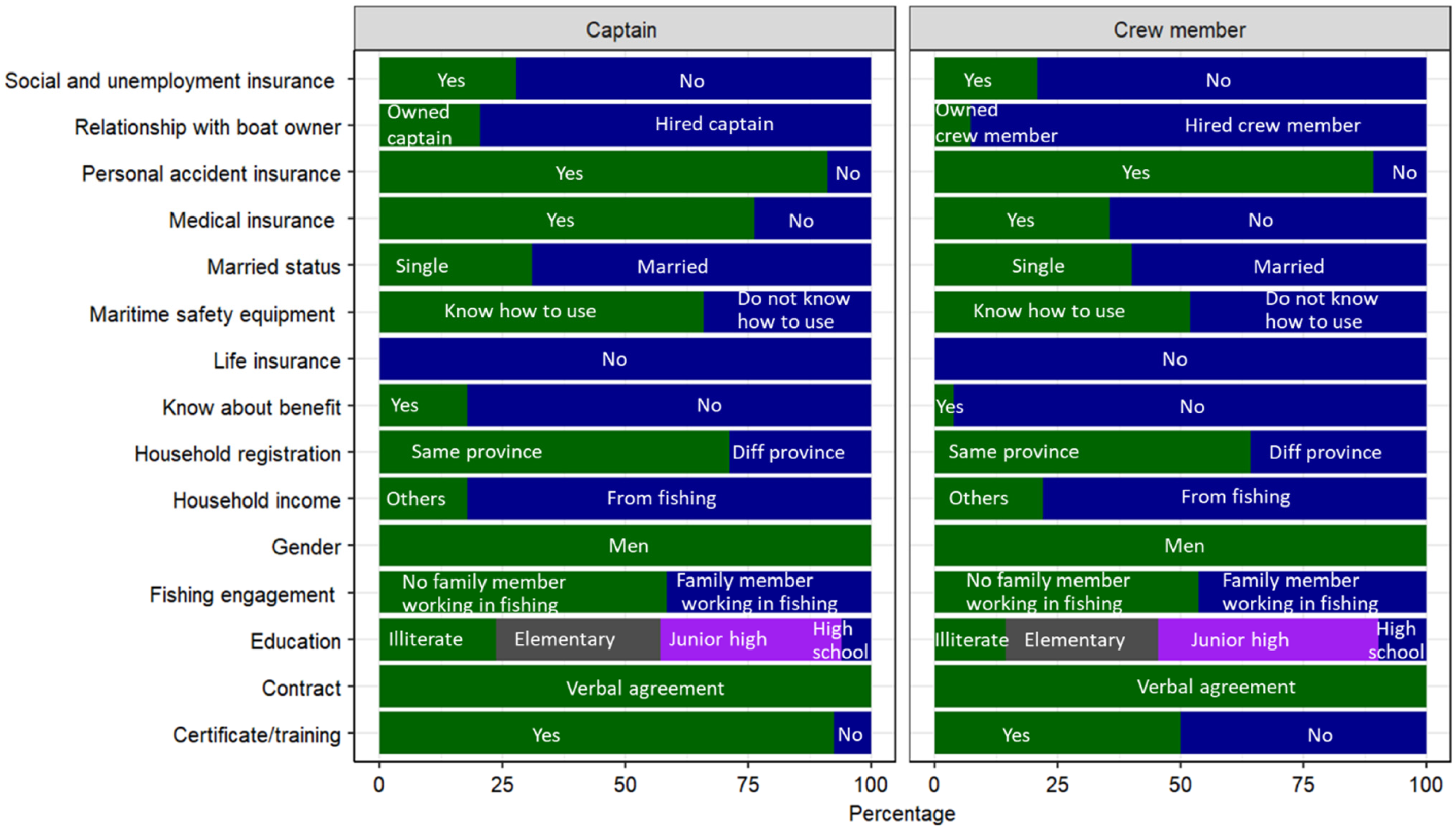
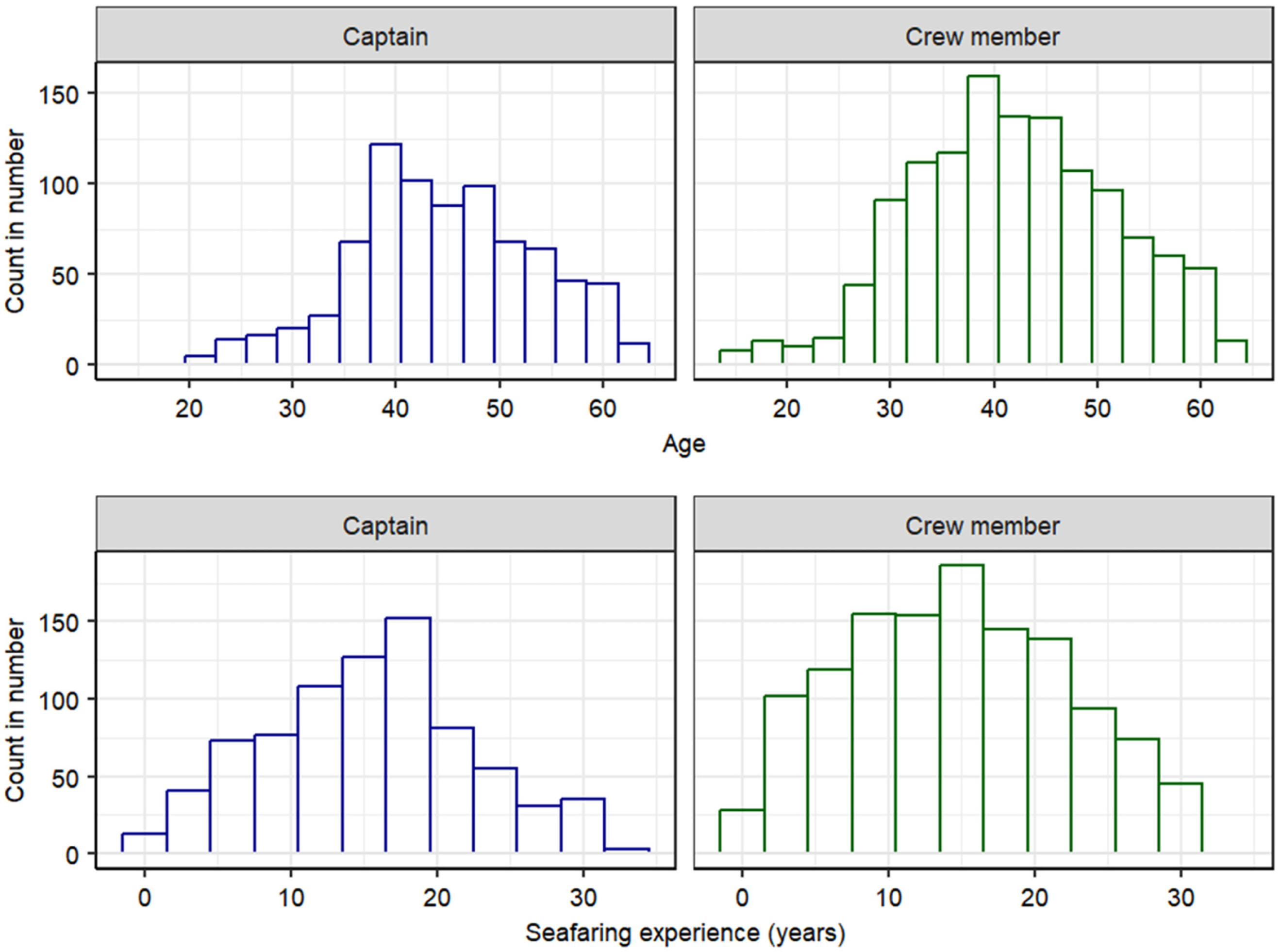
Fishing jobs naturally excluded women from the position at sea, and this was socially accepted throughout the Vietnamese fishermen community, resulting in 100% captains and crew members in this survey being men. Across fisheries (e.g., gillnet, purse seine, stick-held falling nets, squid jigging, and trawl) and respondent groups (e.g., captain and crew member), 64.9% interviewees were married, leaving 35.1% single, which was statistically significant (χ2 = 180.88, p-value < 0.001). Boat owners employed 71.3% captains and 64.2% crew members, who live in the same province or within 100 km apart. This was significantly larger than outside the province (χ2 = 234.4, p-value < 0.001) (Figure 2). 44.6% respondents had another family member engaging in fishing, and 24.1% brothers or fathers and sons who worked on the same fishing boat. A majority of offshore captains (87.9%) were hired captains (who are not the boat owner, but hired as the captain, χ2 = 320.29, p-value < 0.001), whereas 59.7% inshore captains were owned captains (who are the boat owner and captain in their boat, χ2 = 8.82, p-value = 0.003). Most crews were from 30 to 50 years old and had 10–20 years of fishing experience (Figure 3). There was no difference in age distribution between captains and crew members (KS test, D = 0.14, p-value < 0.001—indicating two samples come from the same distribution). The average age for captain and crew members was 45 (range between 20 and 62) and 43 (range between 16 and 62), corresponding to the 16 (range between 1 and 33) and 15 (range between 1 and 31) years of fishing experience, respectively.
Most captains and crew members across fisheries had an elementary education level (36.7% for captain and 45% for crew member), followed by junior high school (33.5% for captain and 31.1% for crew member), and senior high school (23.7% for captain and 14.4% for crew member), which were statistically insignificant between groups (χ2 = 0.04, p-value = 0.99) (Figure 2). No captains or crew members graduated post-high school (e.g., college, university, and equivalent). By contrast, 6% captains, mostly inshore captains, and 9.5% crew members had no education (illiterate) (Figure 2). There were no differences in education between fisheries for either captains or crew members (χ2 = 0.06, p-value = 0.87). Most captains obtained appropriate certificates, accounting for 92.6%, which was significantly different from non-certified captains (χ2 =577.49, p-value < 0.001) (Figure 2). Among trained captains, 97.3% offshore captains had suitable certificates, compared to 82% of inshore captains. Whereas, 49.9% crew members did not experience any training courses in fishing technology and maritime safety, which was insignificantly more than trained crew members (χ2 = 0.007, p-value = 0.93) (Figure 2).

3.3. Governance

The Circular no. 27/VBHN-BNNMT, dated 4 August 2025, of the Ministry of Agriculture and Environment of Vietnam regulates fishing crew members working on fishing boats and government-regulated boats [35], requires a fishing crew; (1) be of legal working age (≥15 years); (2) possess valid health certificates issued by authorized medical facilities; and (3) hold an official identification document issued by the government or authorities. This regulation also specifies mandatory work titles and minimum crew numbers for different vessel categories (Table 2). Boat owners and captains may adjust crew composition according to boat characteristics and fishing operations to ensure safety and efficiency at sea. Title-specific qualification and certification requirements for key positions, including captain, chief officer, chief engineer, mechanic, and seafarer, are detailed in Table 2. A holder of a Class I captain or chief engineer certificate may serve in equivalent or lower-class positions (Classes II and III), while Class II certificate holders are qualified for Class III roles. Additionally, a captain with a Class II certificate may assume the position of chief officer on Class I boats.

3.4. Well-Being

As a traditional fishing practice, the agreement between Vietnamese fishing boat owners and crews was implemented orally, resulting in no written and/or formal contracts being conducted among 796 captains and 1241 crew members interviewed (Figure 2). 22% of captains and 61% of crew members had ever worked in at least four different fishing boats within the last five years, indicating that the bond between boat owners and crews was vague and weak due to a lack of a formal contract. While 100% offshore crews had personal accident insurance, which is supported by the subsidy programs [6] 31% inshore crews (29% for the captain and 42% for crew members) were not covered by this insurance. Notably, the crew accident insurance is not available for inshore crews [6]. A majority of the crews did not participate in the medical insurance, with 67% and 59% of offshore and inshore crews, respectively (Figure 2). Of 1050 medical-covered crews, only 142 people were self-paid or boat owner-paid, and 908 other workers were supported by the government under various programs because of poor and near-poor households [6]. Similarly, 72% offshore crews and 78% inshore crews did not participate in the social insurance and unemployment insurance (Figure 2). None of the respondents owned life insurance (Figure 2). Beyond salary agreements, 91% of crew members were unaware of their social protection and insurance benefits (Figure 2). Fishing largely contributed to the crew’s household income, which was 82% and 78% for captains and crew members, respectively.
An estimated 45% of crew members were unable to properly operate the maritime safety equipment (Figure 2). Particularly, 25% respondents were not aware of where the basic safety equipment, such as life jackets and lifebuoys, was. Additionally, 56% respondents reported that there was no first aid kit in their boat. Most crew members said that they had to prepare their essential medicines, e.g., paracetamol, sumatriptan, and aspirin. None of the crews wore gloves, boots, and/or a hard hat while working on the deck due to the inconvenience.

3.5. Fishing Income

There are three primary payment systems for fishing labor in Vietnam, including the flat wage, share payment, and mixed scheme. Under the flat wage system, crews received a fixed amount of money per period or fishing trip, which is often applied to inshore fisheries. In the share payment system, crews are paid a percentage of the gross revenue or profit from each fishing trip. The mixed scheme, which is the most prevalent in this study, combines elements of both systems: crew members receive a modest fixed wage per fishing day or per trip, with the remainder of their income determined by a share of the catch or performance-based bonuses.
The simple Pearson correlation result showed that the correlation among the predictor variables was statistically insignificant, indicating no multicollinearity in our multiple linear regression model. The residuals vs. fitted plot showed no fitted pattern, indicating the linearity of the data was met (Figure S1). The spread-location plot confirmed that the assumption of homogeneity of variance was met (Figure S1). Finally, the quantile-quantile (Q-Q) plot of residuals showed that the data met the assumption of the normality of residuals (Figure S1). The model adjusted R2 equals 0.76, indicating that the majority of the variation in independent variables (76%) could be explained by the model and that the model was well fitted.
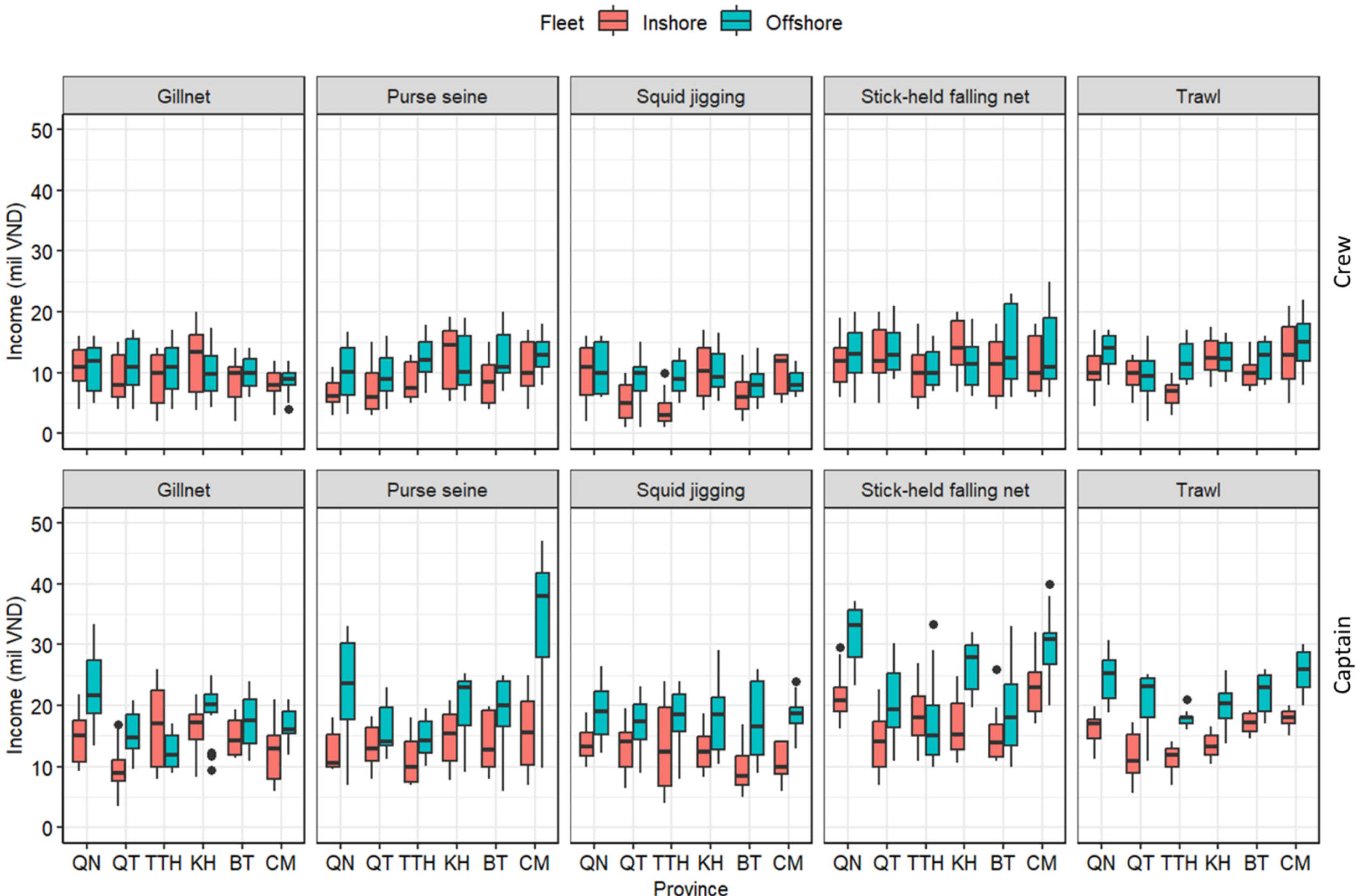
As expected, the results showed that the captains had a significantly higher income than the crew members (mean of 19.22 mil VND vs. 10.65 mil VND; 1 USD = 25,485 VND in 2024) (Figure 4; Table 3). Offshore crews earned an average of 15.4 mil VND per month (21.55 mil VND for captains and 11.27 mil VND for crew members), and significantly higher salaries than inshore crews with 11 mil VND (13.82 mil VND for captains and 10.04 mil for crew members) (Table 3). The average income was significantly different between provinces (Table 3). Specifically, the crew’s income in Ca Mau was highest (23.66 and 11 mil VND per month for captains and crew members, respectively), followed by Khanh Hoa (14.59 mil VND per month), Quang Ninh (14.55 mil VND per month), Binh Thuan (13.14 mil VND per month), Quang Tri (12.1 mil VND per month), and finally Thua Thien Hue with an average of 11.7 mil VND per month (Figure 4).
There were significant differences in the income between fisheries (Table 3). Specifically, crew who worked in the stick-held falling net fishery had the highest monthly income with an average of 18.13 mil VND (25.15 mil VND for captains and 12.97 mil VND for crew members) (Figure 4). In the purse seine fishery, captains and crew members earned 24.77 and 11.86 mil VND monthly, respectively, which was the second-highest income in all fisheries (Figure 4). The trawl fishery came third with an average of 14.43 mil VND per month (18.53 mil VND for captains and 11.7 mil VND for crew members). The gillnet and squid jigging fisheries came last with an average of 12.13 and 11.37 mil VND per month, respectively (Figure 4).
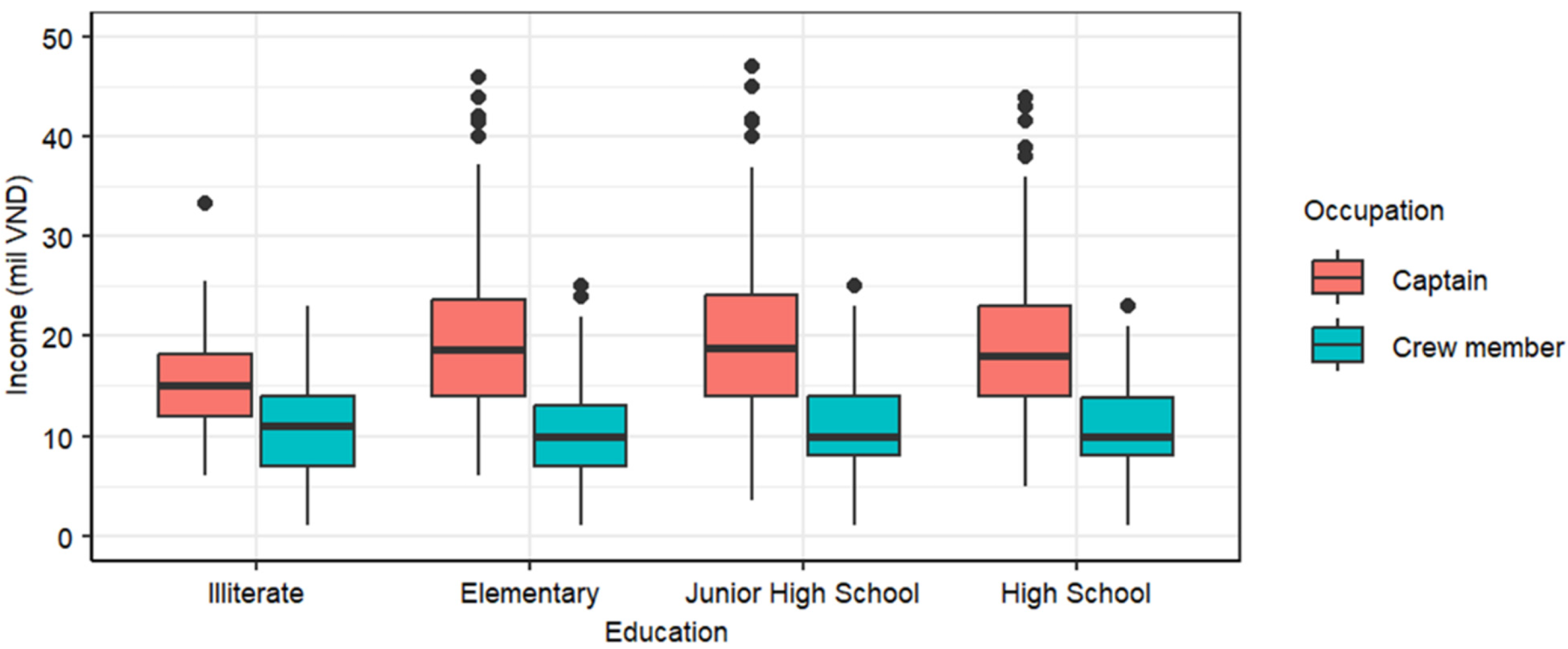
The education factor (e.g., grade 0–12) did not affect the income of the crews (Table 3). However, a pairwise comparison between education levels (Illiterate, Elementary, Junior High School, and High School) indicated that the illiterate crew had the lowest income (15.58 mil VND per month for the captains and 10.6 mil VND per month for crew members), which was statistically significant (Table S1). Except for the illiterate group, there were no differences in income between other education levels (Figure 5, Table S1).
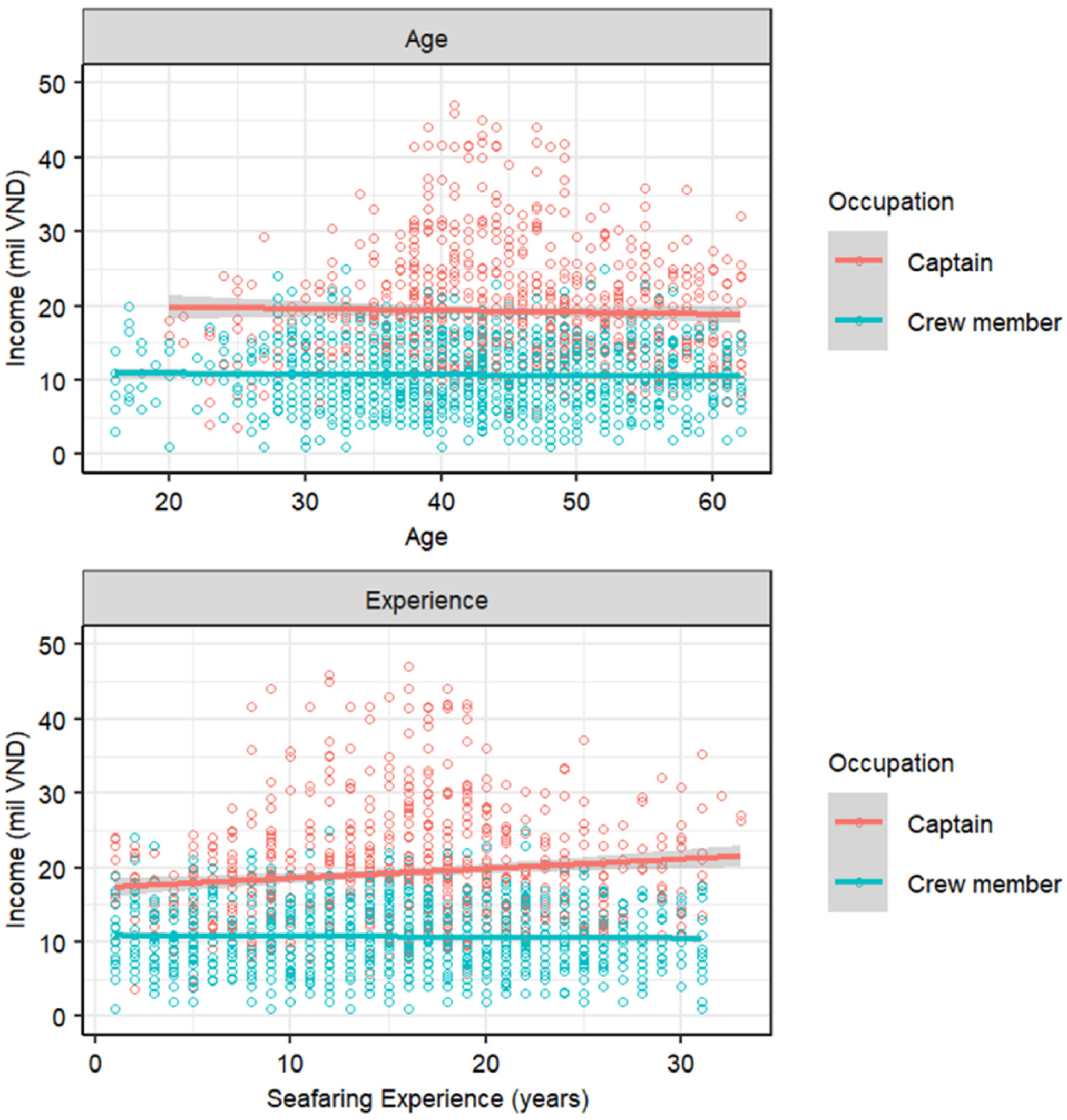
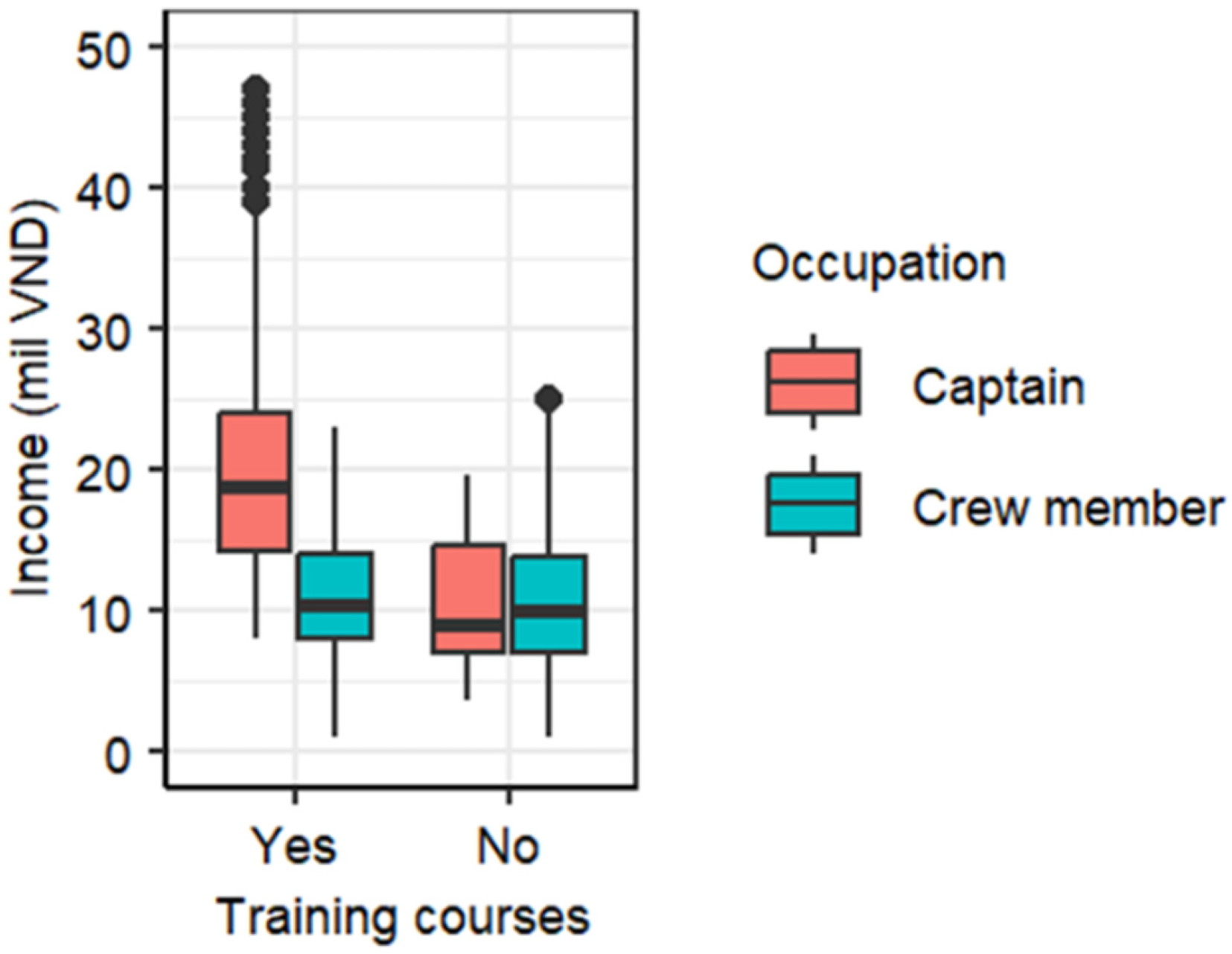
The income was independent of age, but significantly associated with the fishing experience (Figure 6; Table 3). The monthly income by 10-year bins was 11.12 mil VND for the group of ≤20 years old, 11.98 mil VND for the group of 21–30 years old, 13.94 mil VND for the group of 31–40 years old, 14.74 mil VND for the group of 41–50 years old, 13.94 mil VND for the group of 51–60 years old, and 13.37 mil VND for the group of >60 years old. A pairwise comparison showed that the fishing experience factor only affected the captain position, while there was no relationship between income and fishing experience for crew members (Figure 6; Table S2). The captains who had appropriate certificates (trained) earned a significantly higher salary (average of 19.91 mil VND per month) than those who did not (average of 10.66 mil VND per month) (Figure 7; Table 3). However, the income of crew members was independent of certificates (Figure 7).

4. Discussion

This study provides new insights into the socioeconomic conditions of Vietnamese fishing crews and offers critical baseline information for policy and management. Our results indicate multiple factors, such as fishing technology, spatial distribution, capacity, and seafaring experience, influencing the income of fishing crews. Given an important industry, the fishing sector provides substantial employment opportunities to millions of households throughout the coastal communities [4,7,8,26], therefore, any future social-economic policies and programs must consider their broad effects on this vulnerable population.
Our study shows that Vietnam’s fishing industry has a strongly gendered structure, where seafaring roles are exclusively held by men. This reflects longstanding cultural behaviors that associate fishing at sea with masculinity, working environment, and physical endurance, leading to the complete absence of women among captains and crew members. This result is consistent with previous studies, indicating a masculine feature [17,26] as well as other countries [28,31,36]. Most respondents are married (64.9%), middle-aged (30–50 years old), and have extensive fishing experience (15–16 years), indicating that fishing is a long-term, family-based livelihood. However, their incomes are largely dependent on multiple factors, resulting in vulnerable conditions [23]. Crews also have low education and work in a “hereditary” occupation, based on family experience without formal and full-time training, particularly for crew members. Although nearly all captains (92.6%) were certified, about half of the crew members lacked formal training in fishing technology or maritime safety, revealing critical gaps in skill development and low working efficiency [26]. Because of offshore fishing labor shortages, the boat owners reluctantly hire crews without fishing experience [26]. These findings note the traditional, male-dominated, and locally embedded nature of Vietnamese fisheries and highlight the need for improved education and safety training to support modernization and sustainability. This situation has been documented and requires suitable policies to improve fishing efficiency and safety [8,26]. Fortunately, the Vietnamese government has had support programs to train fishing labor on boat operation, fishing technology, and product preservation techniques during the past few years [6,8]. This is expected to improve fishing labor quality and working environment to meet the Work in Fishing Convention of the International Labor Organization [37].
Labor contracts between fishing vessel owners and crew members in Vietnam reveal a significant legal gap, leaving vast numbers of fishing workers vulnerable. While the Labor Code recognizes employers and employees [38], the Fisheries Law of 2017 [39] does not mandate written contracts, addressing only crew qualifications, duties, and vessel registration (Table 2). As a result, most employment relationships are informal or verbal, exposing crew members, including captains, engineers, mechanics, and crew members, to unpaid wages, lack of social and health insurance, unsafe conditions, and limited recourse in disputes or accidents. Work at sea is hazardous, seasonal, and unpredictable, yet protections remain weaker than those for seafarers under the Maritime Code [40] and requirements of the Work in Fishing Convention of the International Labor Organization [37], who are covered by detailed regulations on contracts, wages, insurance, and occupational safety. This informal system also disadvantages boat owners, who face crew instability and limited legal recourse when agreements are broken [26]. Although Vietnam has ratified international conventions such as the ILO Maritime Labor Convention (2006) and the UN Convention on the Law of the Sea (1982), domestic implementation for fishing labor remains weak. To address this, legal reforms should mandate written labor contracts between vessel owners and crew members and be supported by a government regulation detailing contract content, duration, wages, working and rest hours, insurance, dispute resolution, and emergency procedures. In addition, integrating electronic contracts into the national Vietnam Electronic Identification system would improve transparency, monitoring, and enforcement, while empowering fishing unions to mediate disputes and educate workers would strengthen compliance and collective protection [41]. By formalizing labor relations through legal amendments, digital tools, and institutional support, Vietnam can safeguard workers’ rights, promote fair and transparent employment, reduce disputes, and foster a sustainable, professional, and resilient fisheries sector aligned with international labor standards.
Vietnam is a signed member of several international conventions, including those of the United Nations (UN), the International Labor Organization (ILO), and the International Maritime Organization (IMO). These organizations establish legal frameworks aimed at safeguarding the rights of maritime workers, including fishers, and ensuring safe working conditions and adequate living standards aboard fishing boats (Table 4). To comply with these international obligations, the Government of Vietnam has promulgated several laws and regulations governing the rights and responsibilities of fishing crews, as well as their working conditions, composition, and roles on board (Table 4). However, the current legal framework lacks specific provisions requiring written or formal contracts between boat owners and crew. This absence of binding agreements often leads to disputes and inequitable outcomes, particularly in cases involving accidents or other unforeseen incidents. In fact, a large percentage of interviewees in this study responded that they did not know what benefits that they could have besides salary. Many unexpected conflicts between boat owners and crews have happened because of vague verbal agreements. For example, crews have to work onboard in lengthy fishing trips (e.g., up to six months at sea) that they have not been informed about and expected. Conversely, boat owners face difficulties in maintaining crew members, as some workers leave boats abruptly to join other fishing operations [26]. In many cases, it is also common for crews to request financial advances from boat owners to prepare for fishing trips, such as for purchasing personal supplies, only to withdraw from the prepared trips at the last minute, causing delays or cancellations [26,42]. The implementation of formal, enforceable contracts specifying the rights and obligations of both parties would help mitigate these issues and promote greater accountability within the sector [42].
One of the challenges of Vietnam’s fishing industry is the labor shortage, particularly for offshore fleets [26]. Despite being an important sector to support the national food security and rural livelihoods, marine fishing has become increasingly unattractive for most young people because of hazardous working conditions, unstable income, and limited social protection [7,8]. The occupation’s “three D” characteristics: difficult, dirty, and dangerous, deter younger generations, who favor industrial, service, or tourism jobs, while demographic shifts and parental preferences further reduce the pool of skilled fishers [26]. Fisheries modernization policies have intensified labor pressures: offshore fishing programs and larger, technologically advanced vessels have increased demand for trained crews, but training institutions have failed to supply sufficient qualified workers [7,8]. Informal labor arrangements and weak enforcement of crew certification exacerbate workforce instability, leading to high turnover and financial losses. In response, vessel owners often recruit inexperienced labor or operate with understaffed crews, increasing accident risks and reducing efficiency, while temporary measures like advance payments or profit-sharing fail to address underlying shortages. Regional comparisons reveal similar trends in Southeast and East Asia [36,43,44,45], where declining domestic participation and growing reliance on migrant labor are evident, yet Vietnam lacks systematic labor migration policies or professionalization initiatives for fishers. Technological innovations, such as mechanized gear-handling and vessel automation, can partially alleviate labor shortages, but must be coupled with vocational training, safety programs, and equitable government support [6]. Ultimately, addressing Vietnam’s fishing labor shortage requires integrated policies that strengthen labor rights, enforce safety standards, professionalize training, and balance economic modernization with social sustainability, ensuring workforce stability, productivity, and the continued contribution of fisheries to food security and coastal livelihoods [9].
The income analysis shows clear and statistically significant disparities between occupational positions, fishing grounds, and fisheries types, reflecting the hierarchical and spatial dynamics of Vietnam’s fishing sector. Expectedly, captains earn considerably higher incomes than crew members, consistent with their managerial responsibilities, risk exposure, and higher levels of technical expertise [23]. Offshore crew also receives significantly higher salaries than inshore fishers, likely due to the longer duration of offshore trips, higher catch values, and increased operational risks associated with deep-sea operations. Spatially, income differences across provinces were evident, with Ca Mau recording the highest average income, followed by Khanh Hoa and Quang Ninh, while Thua Thien Hue exhibits the lowest income levels. These regional variations may reflect differences in fish stock availability, infrastructure, fishing ground, and market access, as well as local variations in investment and technological adoption [18,19]. Overall, the findings suggest that income distribution in Vietnam’s fisheries is strongly influenced by geographic and operational conditions, as well as occupational hierarchy within fishing crews.
Significant variation was also observed among different fisheries. The stick-held falling net and purse seine fisheries provided the highest average monthly incomes, followed by trawl, gillnet, and squid jigging fisheries, consistent with prior studies linking income to gear types and fishing efficiency [18,19,20,46]. These differences likely result from variations in target species value, capital investment, and vessel capacity, as the former two fisheries typically exploit high-value pelagic resources [20]. Sociodemographic factors played a comparatively minor role in determining income. Education level showed no significant effect except for the illiterate group, which had the lowest income, suggesting that practical experience outweighs formal schooling in determining economic returns from fishing [46]. Age was not significantly associated with income, but fishing experience was positively correlated, particularly among captains, underscoring the importance of accumulated knowledge and operational expertise [47]. Captains holding professional certificates earned substantially higher incomes than those without, while crew members’ income remained unaffected by certification, indicating that specialized training and skill recognition are more financially rewarded in leadership roles. These results collectively highlight the importance of professionalization, skill development, and technological investment to improve labor productivity and income equity in Vietnam’s fisheries sector [46].

5. Conclusions

The findings show that Vietnam’s fishing workforce remains socially and economically vulnerable, despite its critical role in the national marine economy. Most crews are middle-aged men with limited formal education and long occupational experience, yet they work under informal, non-contractual arrangements that provide little protection or stability. Access to insurance, health care, and social welfare is uneven and largely dependent on government subsidy programs, with inshore crews particularly disadvantaged. Training and certification rates are low, especially among crews, constraining professional development and safety awareness. To enhance the social welfare and income security of fishing crews, targeted socioeconomic policies and programs are essential. Formalizing labor relations through enforceable contracts and extending social and health insurance coverage would provide a basic safety net for workers. Expanding vocational training, certification programs, and safety education, especially for younger fishers, would strengthen professional capacity and reduce occupational risks. In parallel, credit and subsidy programs should be redesigned to prioritize modernization of fishing equipment, vessel safety, and onboard preservation technologies rather than focusing solely on vessel capacity. Diversifying livelihoods through alternative or supplementary income sources, such as aquaculture, coastal tourism, and seafood processing, can also stabilize household earnings and reduce dependence on seasonal fishing income. Finally, broader community policies promoting education, family planning, and equitable access to welfare services will help improve living standards and promote social sustainability in fishing communities. Strengthening these social and economic programs will not only enhance the welfare of fishing crews but also contribute to Vietnam’s long-term goals of a modern, resilient, and sustainable marine economy.

Supplementary Materials

The following supporting information can be downloaded at: https://www.mdpi.com/article/10.3390/soc16040133/s1, Figure S1: Assumption checks; Table S1: Post-hoc pairwise comparison; Table S2: Relationships between income and seafaring experience.

Author Contributions

Conceptualization, P.V.L., M.-H.T., K.Q.N. and L.T.N.; Investigation, P.V.L., M.-H.T., K.Q.N. and H.V.N.; Methodology, P.V.L., M.-H.T. and K.Q.N.; Validation, P.V.L., M.-H.T. and K.Q.N.; Formal analysis, P.V.L., M.-H.T., K.Q.N. and N.K.V.; Data curation, P.V.L., M.-H.T. and K.Q.N.; Visualization, P.V.L., M.-H.T., K.Q.N. and H.V.N.; Writing—Original Draft Preparation, P.V.L., M.-H.T., K.Q.N., L.T.N., H.V.N., T.P.H.L. and N.K.V.; Writing—Review and Editing, P.V.L., M.-H.T., K.Q.N., L.T.N., H.V.N., T.P.H.L. and N.K.V. All authors have read and agreed to the published version of the manuscript.

Funding

This research received funding from the Ministry of Education and Training (MOET) of Vietnam awarded to Phuong Viet Le under project: Theoretical and Practical Foundations for Improving Labor Law Relations between Fishing Vessel Owners and Crew Members in Vietnam (Cơ sở lý luận và thực tiễn hoàn thiện quan hệ pháp luật lao động giữa chủ tàu cá và thuyền viên tàu cá tại Việt Nam hiện nay), grant number B2026-TSN-24; Nha Trang University for Science and Technology under grant number 39/QĐ-ĐHNT, dated 1 May 2024; and Nguyen Tat Thanh University.

Institutional Review Board Statement

The study was conducted in accordance with the Declaration of Helsinki and approved by the research ethics committee of the Institute of Marine Science and Fishing Technology and the Faculty of Social Sciences and Humanities of Nha Trang University (Protocol code 32A/QĐ-VKTTS, date of approval 11 January 2024).

Informed Consent Statement

Informed consent was obtained from all subjects involved in the study.

Data Availability Statement

The data that support the results of this study are available from the corresponding author upon reasonable request.

Acknowledgments

We thank the Department of Science and Technology of Nha Trang University for great support during the project application. Several staff members of the Institute of Marine Science and Fishing Technology and the Faculty of Social Sciences and Humanities helped with data collection. We used ChatGPT (V5.3) to improve our English and phrases. Finally, we appreciate the Editor and anonymous Reviewers for their reviews and comments, which have meaningfully improved the manuscript. This paper could not have been done without all of those contributions and support.

Conflicts of Interest

There are no conflicts of interest that we are aware of.

Appendix A

Informed Consent Form for Research Participants
(This form has been translated from Vietnamese to English)
Project: Survey on the Socioeconomic and Biodemographic Aspects of Vietnamese Fishing Crews
Institutions: Nha Trang University
Principal Investigator: Dr. Phuong Viet Le (phuonglv@ntu.edu.vn)
1. Purpose of the Study
You are invited to participate in a research study that examines the socioeconomic, demographic, and working-condition characteristics of fishing crews in Vietnam. The goal is to better understand the living and working conditions of captains and crew members and to support future policies that improve the well-being of fishing workers. Before you decide, please read the following information carefully.
2. Why You Were Selected
You are being asked to participate because you currently work as a captain or crew member on a Vietnamese fishing vessel. Your experience is important for understanding the realities of fishing labor in Vietnam.
3. What Participation Involves
If you agree to participate, you will take part in a face-to-face interview lasting approximately 10–15 min. You will be asked questions about:
  • Your age, education, and fishing experience
  • Your working conditions and income
  • Your access to training, insurance, and safety equipment
  • Labor contract
  • Your household and livelihood situation
  • No biological samples or photographs will be collected.
4. Voluntary Participation
Your participation is completely voluntary. You may:
  • Decline to answer any question
  • Stop the interview at any time
  • Withdraw from the study without giving a reason
  • There are no penalties or negative consequences for choosing not to participate.
5. Risks and Discomforts
This study involves minimal risk. Some questions may feel personal (e.g., income, marital status, and household situation). You may skip any question you do not wish to answer.
6. Benefits
There may be no direct personal benefit to you. However, your participation will help researchers and policymakers better understand the needs of fishing crews and improve future programs related to safety, training, insurance, and livelihoods.
7. Confidentiality and Data Protection
  • Your identity will remain anonymous.
  • Your name will not be recorded.
  • No identifying information will appear in any report or publication.
  • Data will be stored securely and used only for research purposes.
  • Only the research team will have access to the data.
  • Results will be reported in aggregate form (e.g., by province or fishery type).
8. Compensation
There is no payment for participating in this study. You will not incur any costs by participating.
9. Contact Information
If you have questions about the study, please contact: Dr. Phuong Viet Le (phuonglv@ntu.edu.vn; Phone number: 02583833969), the Faculty of Social Sciences and Humanities of Nha Trang University, 2 Nguyen Dinh Chieu, Nha Trang, Vietnam. If you have concerns about your rights as a participant, you may contact the ethics committee of Nha Trang University.
10. Ethical Approval
This study has been approved by:
  • Research Ethics Committee of the Institute of Marine Science and Fishing Technology
  • Faculty of Social Sciences and Humanities, Nha Trang University(Approval Code: 32A/QĐ-VKTTS, dated 11 January 2024)
11. Consent Statement
Please read the statement below and indicate your agreement.
By signing or verbally agreeing, I confirm that:
  • I have read (or have had read to me) the information above.
  • I understand the purpose and procedures of the study.
  • I understand that my participation is voluntary and that I may withdraw at any time.
  • I understand that my identity will remain anonymous.
  • I agree to participate in this study.
Date: _____________________
Participant’s Name (optional): ___ Signature or Verbal Consent: ___
Interviewer’s Name: ___________ Interviewer’s Signature: ________

Appendix B

Survey Questionnaire for Vietnamese Fishing Crew Study
Project: Survey on the Socioeconomic and Biodemographic Aspects of Vietnamese Fishing Crews
Institutions: Nha Trang University
Principal Investigator: Dr. Phuong Viet Le (phuonglv@ntu.edu.vn)
(Face-to-face interview format; approx. 15 min; The form has been translated from Vietnamese to English)
Please read the Consent Form for Research Participants carefully before answering the research questions.
Section A. Respondent Information
1. Role on the vessel
  • Captain
  • Crew member
2. Age (years): _______
3. Marital status
  • Single
  • Married
  • Divorced/Widowed
4. Place of residence
  • Same province as the landing site
  • Different province (specify):
5. Family involvement in fishing
  • Yes, at least one family member
  • No
  • If yes:
    Works on the same boat (father/son/brother): Yes/No
Section B. Education and Training
6. Highest education level completed
  • Illiterate
  • Elementary school
  • Junior high school
  • Senior high school
7. Have you completed any formal training in fishing technology or maritime safety?
  • Yes
  • No
8. If captain: Do you hold a valid captain’s certificate?
  • Yes (Class I/Class II/Class III)
  • No
Section C. Fishing Experience and Employment
9. Years of fishing experience: _______
10. Fishing fleet type
  • Inshore (<15 m LOA)
  • Offshore (≥15 m LOA)
11. Primary fishing method
  • Gillnet
  • Purse seine
  • Squid jigging
  • Stick-held falling net
  • Trawl
12. Are you the boat owner?
  • Yes
  • No
13. Number of different boats you have worked on in the past 5 years:
  • 1
  • 2–3
  • ≥4
14. Type of employment agreement with the boat owner
  • Verbal agreement
  • Written contract
  • No agreement
Section D. Insurance, Safety, and Well-Being
15. Do you have personal accident insurance?
  • Yes
  • No
16. Do you have medical insurance?
  • Yes (self-paid/boat-owner-paid/government-supported)
  • No
17. Do you participate in social insurance or unemployment insurance?
  • Yes
  • No
18. Do you know your employment benefits beyond salary?
  • Yes
  • No
19. Is there a first-aid kit on your boat?
  • Yes
  • No
20. Do you know how to correctly use maritime safety equipment (life jackets, lifebuoys, fire extinguishers)?
  • Yes
  • No
21. Do you wear protective equipment (gloves, boots, hard hat) while working?
  • Always
  • Sometimes
  • Never
Section E. Income Information
22. Payment system used on your boat
  • Flat wage
  • Share payment
  • Mixed system
23. Income from the three most recent fishing trips or months
  • Trip/month 1: ______ VND (from date…. to date….)
  • Trip/month 2: ______ VND (from date… to date…)
  • Trip/month 3: ______ VND (from date… to date…)
24. Fishing income as a percentage of total household income:
  • <50%
  • 50–75%
  • 75%
Section F. Additional Comments (Optional)
25. Do you have any concerns about working conditions, safety, or income stability?
  • Open-ended response: ________________________
Thank you very much for your time!

References

  1. Lappe, R.; Ullmann, T.; Bachofer, F. State of the Vietnamese coast—assessing three cecades (1986 to 2021) of coastline dynamics using the landsat archive. Remote Sens. 2022, 14, 2476. [Google Scholar] [CrossRef]
  2. Uyen, N.T. Fisheries Country Profile: Vietnam. Regional Fisheries Policy Network (RFPN) Member for Viet Nam. 2017. Available online: http://www.seafdec.org/fisheries-country-profile-viet-nam/ (accessed on 16 September 2025).
  3. Nghĩa, N.V.; Hà, V.V.; Huy, P.Q.; Minh, N.H.; Thành, N.C. A Comprehensive Assessment of Marine Resources in the Vietnamese Waters from 2016 to 2020; Technical Report; Research Institute for Marine Fisheries: Hai Phong, Vietnam, 2020; 229p. [Google Scholar]
  4. National Statistics Office. Statistical Yearbook of Vietnam 2024; Statistical Publishing House: Hanoi, Vietnam, 2024. [Google Scholar]
  5. Le, D.T. Vietnam marine economy strategy until 2030, with a vision until 2045: An analysis. Russ. J. Vietnamese Stud. 2021, 5, 7–29. [Google Scholar]
  6. Le, P.V.; Nguyen, L.T.; Nguyen, K.Q. An overview of financial subsidy programs in Vietnamese fisheries during the past 25 years: An evaluation and recommendations towards improved future mechanisms. World Dev. Perspect. 2025, 39, 100704. [Google Scholar] [CrossRef]
  7. Bình, T.T.; Cường, N.M.; Hải, N.T. Current status and solutions for human resource training and development in Vietnam’s fisheries sector. Vietnam J. Sci. Technol. 2025, 67, 34–39. [Google Scholar]
  8. Nguyen, K.Q.; Tran, P.D.; Le, P.V.; Nguyen, L.T.; Van To, P. Advancing fishing technology education and research: A 65-year legacy at Nha Trang University, Vietnam. J. Fish. 2024, 12, 123501. [Google Scholar] [CrossRef]
  9. Nguyen, D.B.; Momtaz, S.; Zimmerman, K.; Pham, T.H.N. Effectiveness of formal institutions in managing marine fisheries for sustainable fisheries development: A case study of a coastal commune in Vietnam. Ocean Coast. Manag. 2017, 137, 175–184. [Google Scholar] [CrossRef]
  10. Nguyen, P.X. Decree No. 26/2019/ND-CP Dated March 08, 2019 of the Government on Detailing a Number of Articles of, and Measures to Implement the Law on Fisheries. 2019. Available online: https://vanban.chinhphu.vn/default.aspx?pageid=27160&docid=196438 (accessed on 20 January 2025).
  11. Nguyen, L.T.; Nguyen, T.P.; Do, T.V.; Nguyen, K.Q. Light-emitting diode (LED) lights reduce the fuel consumption and maintain the catch rate of stick-held falling net fisheries. Reg. Stud. Mar. Sci. 2022, 55, 102542. [Google Scholar] [CrossRef]
  12. Nguyen, K.Q.; Nguyen, B.V.; Phan, H.T.; Nguyen, L.T.; To, P.V.; Tran, H.V.A. A comparison of catch efficiency and bycatch reduction of tuna pole-and-line fisheries using Japan tuna hook (JT-hook) and circle-shaped hook (C-hook). Mar. Freshw. Res. 2022, 73, 662–677. [Google Scholar] [CrossRef]
  13. Nguyen, K.Q.; Do, M.D.; Phan, H.T.; Nguyen, L.T.; To, P.V.; Vu, N.K.; Tran, P.D. Catch composition and codend selectivity of inshore trawl fishery with the legal minimum mesh size. Reg. Stud. Mar. Sci. 2021, 47, 101977. [Google Scholar] [CrossRef]
  14. Tran, P.D.; Nguyen, L.T.; To, P.V.; Nguyen, K.Q. Effects of the trap entrance designs on the catch efficiency of swimming crab Charybdis feriata fishery. Fish. Res. 2020, 232, 105730. [Google Scholar] [CrossRef]
  15. Phuong, T.V.; Pomeroy, R.S. Combating Illegal, Unreported and Unregulated (IUU) fishing and removing yellow card from European Commission (EC): Vietnam’s determined actions. Asian Fish. Sci. 2022, 35, 13–25. [Google Scholar] [CrossRef]
  16. Phuong, T.V.; Pomeroy, R.S. Addressing Illegal, Unreported and Unregulated Fishing of Vietnamese fishing vessels in foreign waters. Asian Fish. Sci. 2023, 36, 24–36. [Google Scholar] [CrossRef]
  17. Alonso, G. Managing masculinities: Dynamics of offshore fishing labour in Vietnam. Gender Place Cult. 2022, 29, 1677–1693. [Google Scholar] [CrossRef]
  18. Phuong, D.T.; Long, N.T.; Khai, H.V. Technical efficiency of fishing activities: A case study of small-scale trawling in the Mekong Delta, Vietnam. Int. J. Ecol. 2023, 2023, 947377. [Google Scholar] [CrossRef]
  19. Nguyen, T.V.; Simioni, M.; Le Quyen, C. Productivity, technical efficiency, and technological change in Vietnamese oceanic tuna fisheries. Fish. Res. 2022, 248, 106202. [Google Scholar] [CrossRef]
  20. Pham, T.D.T.; Huang, H.W.; Chuang, C.T. Finding a balance between economic performance and capacity efficiency for sustainable fisheries: Case of the Da Nang gillnet fishery, Vietnam. Mar. Policy 2014, 44, 287–294. [Google Scholar] [CrossRef]
  21. Long, L.K.; Flaaten, O.; Anh, N.T.K. Economic performance of open-access offshore fisheries-The case of Vietnamese longliners in the South China Sea. Fish. Res. 2008, 93, 296–304. [Google Scholar] [CrossRef]
  22. Pham, T.T.T.; Flaaten, O.; Nguyen, T.K.A. Remuneration systems and economic performance: Theory and Vietnamese small-scale purse seine fisheries. Mar. Resour. Econ. 2013, 28, 19–41. [Google Scholar] [CrossRef]
  23. Hoang, H.H.; Vu, T.B.; Ho, H.V.; Vu, H.T.; Nguyen, Q.D. Factors affecting offshore fishing households’ income in the southern central coast of Vietnam. Manag. Sci. Lett. 2020, 10, 1369–1376. [Google Scholar] [CrossRef]
  24. Nguyen, T.V.; Tran, T.Q. Management of multispecies resources and multi-gear fisheries: The case of oceanic tuna fisheries in Vietnam. Reg. Stud. Mar. Sci. 2023, 63, 103021. [Google Scholar] [CrossRef]
  25. Pomeroy, R.; Thi Nguyen, K.A.; Thong, H.X. Small-scale marine fisheries policy in Vietnam. Mar. Policy 2009, 33, 419–428. [Google Scholar] [CrossRef]
  26. Phuong, T.V.; Pomeroy, R.S. Vietnam’s capture fisheries labor shortage explored: Difficulties and responses. J. Fish. 2025, 13, 132205. [Google Scholar] [CrossRef]
  27. Nguyen, V.T.; Nguyen, B.N.; Nguyen, T.S.; Tran, T.Q.C.; Ho, V.H.; Nguyen, T.H.H. Prevalence of accidents and injuries and related factors of fishermen fishing offshore in the North of Vietnam. Int. J. Occup. Saf. Health 2024, 14, 228–236. [Google Scholar] [CrossRef]
  28. Harper, S.; Sumaila, R. Distributional Impacts of Fisheries Subsidies and Their Reform: Case Studies of Senegal and Vietnam; IIED: London, UK, 2019; Available online: https://www.iied.org/sites/default/files/pdfs/migrate/16655IIED.pdf (accessed on 17 October 2025).
  29. Silva, B.K.R.; Figueiredo FWdos, S.; Maciel Eda, S.; Quaresma, F.R.P.; Adami, F. Factors associated with perceived quality of life in artisanal fishermen: A cross-sectional study. BMC Res. Notes 2019, 12, 479. [Google Scholar] [CrossRef]
  30. Barrow, A.; Kongira, A.; Nget, M.; Sillah, S.O.; Jatta, S.P.S.; Badjie, M.; Kuye, R.A. Epidemiology of occupational hazards and injuries among fishermen at Tanji fishing site in The Gambia: An analytical cross-sectional study design. Environ. Health Insights 2022, 16, 11786302221088699. [Google Scholar] [CrossRef]
  31. Henry, A.E.; Olson, J.A. An overview of the survey on the socio-economic aspects of commercial fishing crew in the northeast. In NOAA Technical; 2014; 48p. Available online: https://repository.library.noaa.gov/view/noaa/4862 (accessed on 20 January 2025).
  32. R Development Core Team. R: A Language and Environment for Statistical Computing; R Foundation for Statistical Computing: Vienna, Austria, 2021; Available online: http://www.R-project.org (accessed on 20 January 2025).
  33. Cook, R.D. Influential observations in linear regression. J. Am. Stat. Assoc. 1979, 74, 169–174. [Google Scholar] [CrossRef]
  34. Luo, D.; Ganesh, S.; Koolaard, J. Package ‘Predictmeans’: Predicted Means for Linear and Semi-Parametric Models. 2022. Available online: https://CRAN.R-project.org/package=predictmeans (accessed on 20 January 2025).
  35. Phung, D.T. Circular No. 27/VBHN-BNNMT Dated 04-08-2025 of the Ministry of Agriculture and Environment of Vietnam Regulated About Fishing Crew Members Working on Fishing Boats and Official Boats. 2025. Available online: https://datafiles.chinhphu.vn/cpp/files/vbpq/2025/8/27-vbhn-bnnmt.pdf (accessed on 10 September 2025).
  36. Ahmad, A.T.; Salim, K.; Ean, C.P.; Maung, B.; Pinang, P. An Overview of the Socioeconomic Status of Fisheries in Malaysia. In Assessment, Management and Future Directions for Coastal Fisheries in Asian Countries. WorldFish Center Conference Proceedings, Pulau Pinang, Malaysia; Silvestre, G., Garces, L., Stobutzki, I., Ahmed, M., Valmonte-Santos, R.A., Luna, C., Lachica-Aliño, L., Munro, P., Christensen, V., Pauly, D., Eds.; 2003; pp. 517–542. Available online: https://digitalarchive.worldfishcenter.org/server/api/core/bitstreams/1e71e925-3cf1-4abc-9613-2be3b8b55b2a/content (accessed on 25 October 2025).
  37. ILO. Work in Fishing Convention. 2007. Available online: https://normlex.ilo.org/dyn/nrmlx_en/f?p=NORMLEXPUB:12100:0::NO::P12100_ILO_CODE:C188 (accessed on 20 September 2025).
  38. Nguyen, T.K.N. Law No. 45/2019/QH14 on Labor Code of Vietnam. 2019. Available online: https://www.economica.vn/Content/files/LAW%20%26%20REG/Labor%20Code%202019%20ENG.pdf (accessed on 20 September 2025).
  39. Nguyen, T.K.N. Law No. 18/2017/QH14: Law on Fisheries. 2017. Available online: https://vanban.chinhphu.vn/default.aspx?pageid=27160&docid=192336 (accessed on 20 September 2025).
  40. Nguyen, V.A. Law No: 40/2005/QH11: Vietnam Maritime Code. 2005. Available online: https://www.wto.org/english/thewto_e/acc_e/vnm_e/wtaccvnm43_leg_9.pdf (accessed on 20 September 2025).
  41. Nguyen, T.T.M. Digital transformation in public administration in Vietnam: Current status, challenges, and policy implications. VNU J. Sci. Policy Manag. Stud. 2025, 41, 70–83. [Google Scholar] [CrossRef]
  42. Alonso, G.; Marschke, M. Blue boats in deep waters: How aspects of IUU policy impact Vietnamese fish workers. Marit. Stud. 2023, 22, 14. [Google Scholar] [CrossRef]
  43. Belton, B.; Marschke, M.; Vandergeest, P. Fisheries development, labour and working conditions on Myanmar’ s marine resource frontier. J. Rural Stud. 2019, 69, 204–213. [Google Scholar] [CrossRef]
  44. Kim, J.H.; Jeong, E.S.; Moon, S.B.; Kim, J.G.; Lee, S.W. Investigation into occupational disease of fishing crew. J. Korean Navig. Port Res. 2006, 30, 405–414. [Google Scholar] [CrossRef]
  45. Yue, X.; Yang, L.; Ning, Y. Research on the legal problems of crew management of ocean going fishing vessels. OAJRC Soc. Sci. 2022, 3, 242–246. [Google Scholar] [CrossRef]
  46. Pham, T.T.T.; Flaaten, O.; Nguyen, L.T.; Vu, N.K. Subsidies—Help or hurt? A study from Vietnamese fisheries. Mar. Resour. Econ. 2021, 36, 369–387. [Google Scholar] [CrossRef]
  47. Long, N.T.; Van, M.V.; Dinh, T.D.; Hien, H.V.; Tojo, N. Evaluation of fishing activities in the Mekong Delta. CTU J. Sci. 2018, 54, 102–109. [Google Scholar] [CrossRef]
Figure 1. Map of Vietnam, located in Southeast Asia, showing the study locations. Values indicate the number of samples in each province.
Societies 16 00133 g001
Figure 2. Summary of sociodemographic features of Vietnamese fishing crews.
Societies 16 00133 g002
Figure 3. Distribution of age (top panels) and seafaring experience (bottom panel) of Vietnamese fishing crews.
Societies 16 00133 g003
Figure 4. The monthly income of the captain and crew members across the fisheries and the province. Abbreviations include provinces of QN—Quang Ninh, QT—Quang Tri, TTH—Thua Thien Hue, KH—Khanh Hoa, BT—Binh Thuan, and CM—Ca Mau. 1 USD = 25,485 VND in 2024.
Societies 16 00133 g004
Figure 5. The effect of education on the income of Vietnamese fishing crews. 1 USD = 25,485 VND in 2024.
Societies 16 00133 g005
Figure 6. The relationship between age and income, seafaring experience, and income of Vietnamese fishing crews. 1 USD = 25,485 VND in 2024.
Societies 16 00133 g006
Figure 7. The effect of professional training on the income of Vietnamese fishing crews. 1 USD = 25,485 VND in 2024.
Societies 16 00133 g007
Table 1. Summary of samples by provinces and fisheries.
ProvincesGillnet Purse Seine Squid Jigging Stick–Held Falling Net Trawl Total
Captain CrewCaptain CrewCaptain CrewCaptain CrewCaptain CrewCaptain Crew
Binh Thuan2341122018391520284396163
Ca Mau48814449509440463970221340
Khanh Hoa33461322324520203843136176
Quang Ninh26551123294613303253111207
Quang Tri27481420233714232643104171
Thua Thien Hue40471327244417233443128184
Total1973181071611763051191621972957961241
Table 2. The working titles, minimum crew numbers required on fishing vessels, and the classification of certification by a group of fishing vessels. NA is not applicable.
RequirementsTitleGroup of Boats
6–<12 m LOA12–<15 m LOA15–<24 m LOA≥24 m LOA
Minimum crew numbers requiredCaptain1111
Chief officer0001
Chief engineer0111
Mechanic0011
Seafarer/worker/fisher1112
Total2346
Required certificates of the crewCaptainNACaptain class IIICaptain class IICaptain class I
Chief officerNANANACaptain class II
Chief engineerNAChief Engineer class IIIChief Engineer class IIChief Engineer class I
MechanicNANANAFishing vessel mechanic
Seafarer/worker/fisherNANANANA
Table 3. Statistical analysis of the effect of biodemographic factors on the monthly income of Vietnamese fishing crews.
VariablesEstimateSEt-Valuep
Intercept12.650.8215.41<0.001
Purse seine3.480.408.73<0.001
Squid jigging−0.930.32−2.890.004
Stick–held falling net4.340.3911.08<0.001
Trawl2.200.326.89<0.001
Ca Mau2.360.386.16<0.001
Khanh Hoa0.900.432.100.036
Quang Ninh1.690.433.98<0.001
Quang Tri−1.080.44−2.460.014
Thua Thien Hue−1.590.43−3.71<0.001
Offshore2.380.278.80<0.001
Crew−7.840.26−30.15<0.001
Education0.050.021.660.097
Elementary0.880.432.040.042
Junior high school1.000.442.260.024
High school1.050.482.200.028
Experience0.040.022.680.007
Age0.010.010.380.703
Certificate1.070.273.98<0.001
Table 4. Summary of international and national regulations related to fishing labor.
LevelRegulations Year Signed
InternationalConvention on the International Regulations for Preventing Collisions at Sea (COLREG 1972)1990
International Convention for the Safety of Life at Sea (SOLAS 1974) Convention1991
Convention on the Law of the Sea (UNCLOS 1982)1994
ILO C100-Equal Remuneration Convention1997
ILO C111-Discrimination (Employment and Occupation) Convention1997
ILO C182-Worst Forms of Child Labor Convention2000
ILO C138-Minimum Age Convention2003
ILO C029-Forced Labor Convention2007
International Convention on Standards of Training, Certification and Watchkeeping for Seafarers (STCW)2013
ILO Maritime Labor Convention (MLC 2006)2013
ILO C098-Right to Organize and Collective Bargaining Convention2019
ILO C105-Abolition of Forced Labor Convention2000
NationalLaw No: 40/2005/QH11: Vietnam Maritime Code2005
Decree no. 121/2014/ND-CP of the Government, dated 24 December 2014, Regulating the Maritime Labor
Convention in 2006 for the employment conditions of seafarers working on board a cargo ship
2014
Law no. 18/2017/QH14: Law on Fisheries2017
Circular no. 22/2018/TT-BNNPTNT of the Ministry of Agriculture and Rural Development, dated 15 November 2018, on regulations on crew members and fishing vessels2018
Law no. 45/2019/QH14: Labor Code of Vietnam2019
Decree no. 26/2019/ND-CP of the Government, dated 8 March 2019, on guiding the implementation of the Fisheries Law2019
Circular no. 01/2022/TT-BNNPTNT of the Ministry of Agriculture and Rural Development, dated 18 January 2022, on regulating amendments to circulars in fisheries2022
Disclaimer/Publisher’s Note: The statements, opinions and data contained in all publications are solely those of the individual author(s) and contributor(s) and not of MDPI and/or the editor(s). MDPI and/or the editor(s) disclaim responsibility for any injury to people or property resulting from any ideas, methods, instructions or products referred to in the content.