Article

Group Environment Questionnaire (GEQ): Validation in Mexican University Athletes

by
Faviola Corvera-Velarde
*,
Abril Cantú-Berrueto
,
Francisco Javier Mendoza-Farias
and
Jeanette M. López-Walle
Facultad de Organización Deportiva, Universidad Autónoma de Nuevo León, San Nicolás de los Garza 66455, Nuevo León, Mexico
*
Author to whom correspondence should be addressed.
Societies 2025, 15(9), 259; https://doi.org/10.3390/soc15090259
Submission received: 25 June 2025 / Revised: 28 August 2025 / Accepted: 12 September 2025 / Published: 16 September 2025
(This article belongs to the Special Issue Innovative and Multidisciplinary Approaches to Healthcare)

Abstract

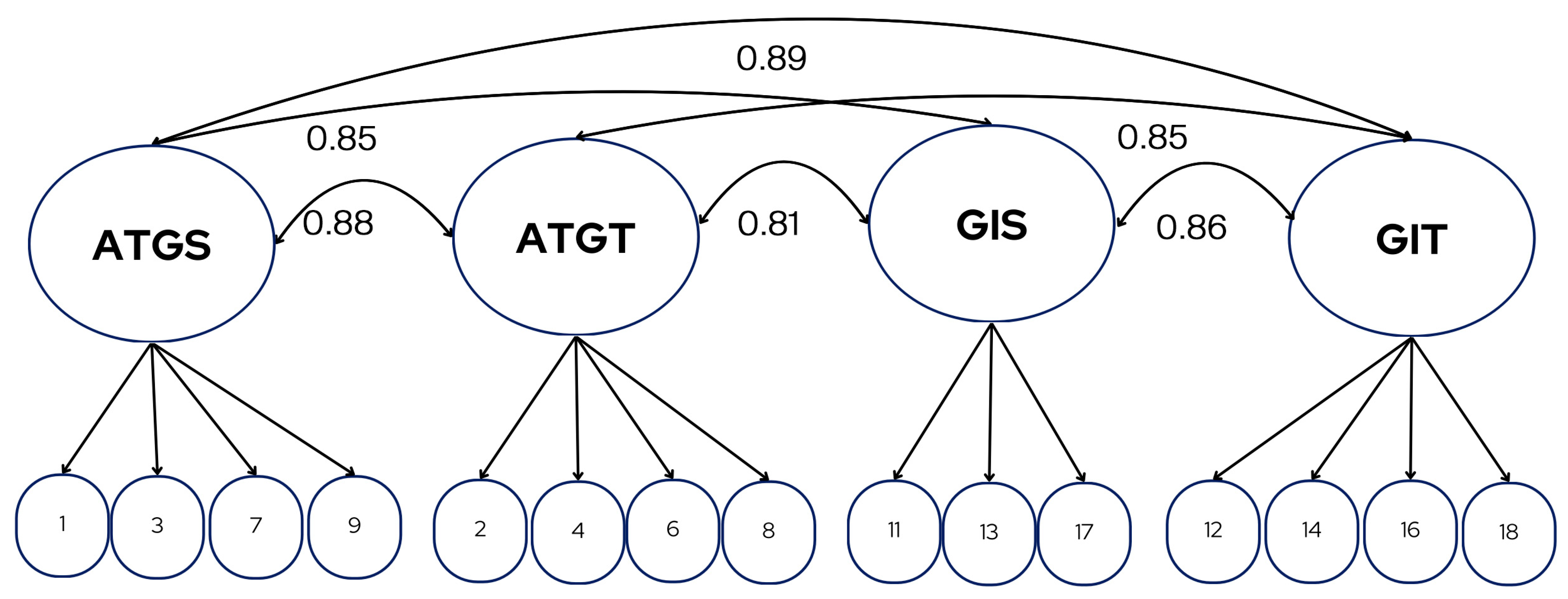
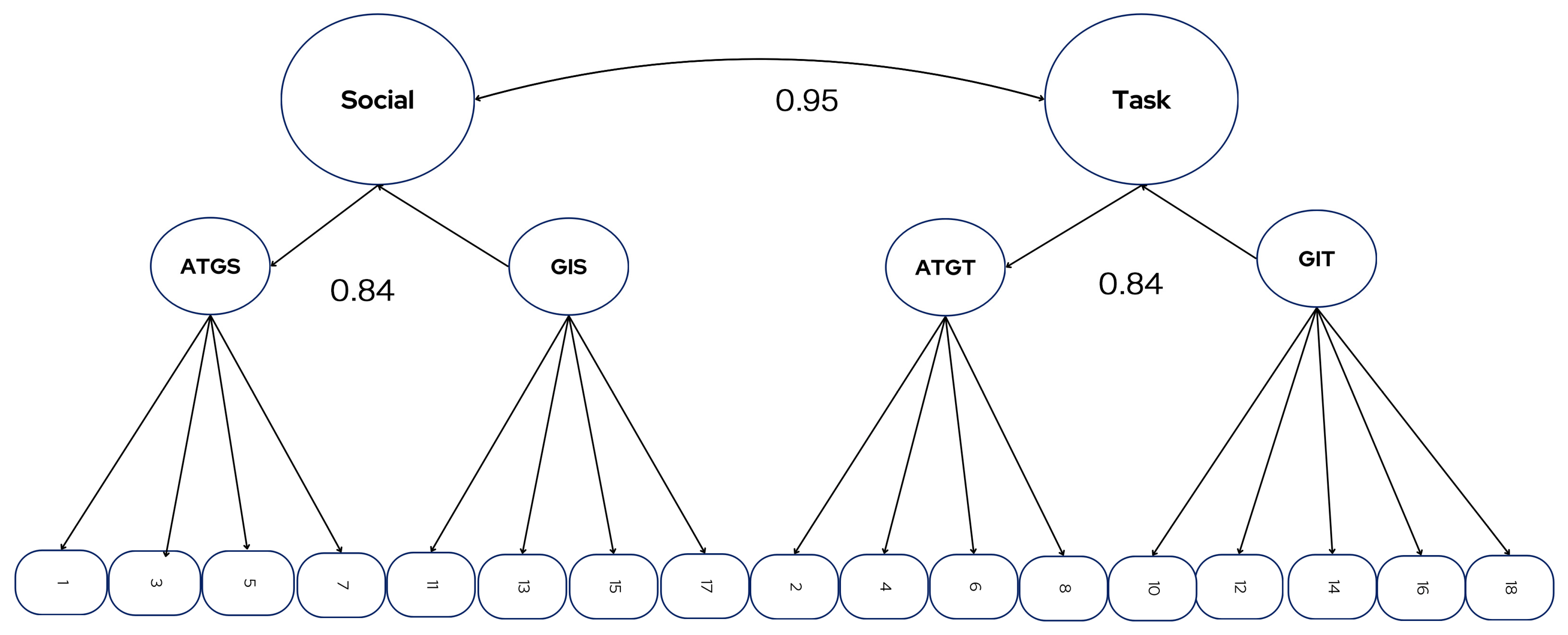
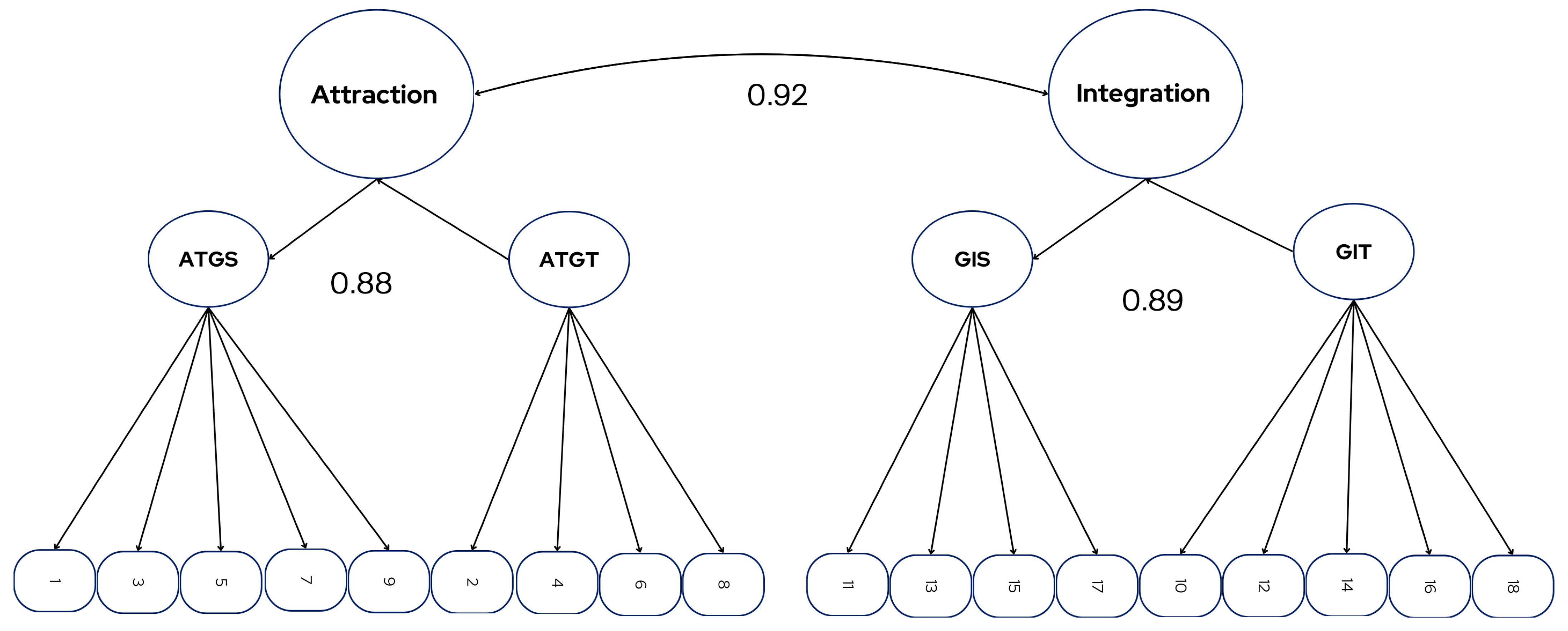
From the psychology of sport, the impact of group cohesion on sports performance has been studied extensively; therefore, it is considered important to measure this variable to design interventions that improve collective work to achieve goals together. This study adapted and validated the Group Environment Questionnaire (GEQ) for Mexican university athletes. In a cross-sectional instrumental design, 226 athletes from various team sports completed the scale. Internal consistency statistics and confirmatory factor analyses Goodness-of-Fit Index (GFI), Comparative Fit Index (CFI), and Root Mean Square Error of Approximation (RMSEA) evaluated psychometrics. After removing three items with weak loadings, three structural models were tested as follows: (a) unidimensional, (b) task vs. social cohesion, and (c) attraction vs. integration. The unidimensional model showed the best fit (χ2 = 177.33; GFI = 0.90; CFI = 0.92; RMSEA = 0.07) and high reliability, indicating that cohesion can be treated as a single overarching construct. Task items exhibited higher consistency than social items. In conclusion, the adapted version of the GEQ is a useful tool for the evaluation of cohesion in Mexican university sports, although it is recommended to improve social items and expand its application in different disciplines and competitive levels.
Keywords: group cohesion; psychometric properties; university athletes; group environment; questionnaire group cohesion; psychometric properties; university athletes; group environment; questionnaire