Systematic Review

Exercise Interventions and Attentional Performance in Children and Adolescents: Evidence from Randomized Controlled Trials


by
María del Carmen Carcelén-Fraile
1,2,3,*,
María Luisa Montánchez-Torres
1,4 and
Daniela Cecic-Mladinic
1
1
Department of Educational Sciences, Faculty of Social Sciences, University of Atlántico Medio, 35017 Las Palmas de Gran Canaria, Spain
2
International Scientific Association on Innovation in Education and Health (ACIINES), 23007 Jaén, Spain
3
International Network of Educational Law, 35017 Las Palmas de Gran Canaria, Spain
4
Department of Educational Sciences, Faculty of Education, International University of La Rioja, 26006 Logroño, Spain
*
Author to whom correspondence should be addressed.
Sports 2026, 14(4), 139; https://doi.org/10.3390/sports14040139
Submission received: 14 February 2026 / Revised: 23 March 2026 / Accepted: 26 March 2026 / Published: 1 April 2026

Abstract

Background: Physical exercise has been increasingly recognized as a potential strategy to enhance cognitive development during childhood and adolescence. Among cognitive functions, attention plays a critical role in academic performance, behavioral regulation, and information processing. However, evidence regarding the specific effects of physical exercise on attentional performance in youth remains heterogeneous. Objective: This systematic review aimed to examine the effects of physical exercise interventions on attentional performance in children and adolescents. Methods: A systematic literature search was conducted in PubMed, Web of Science, Scopus, and CINAHL databases. Randomized controlled trials evaluating the effects of physical exercise interventions on attentional outcomes in participants aged 8 to 17 years were included. Study selection followed PRISMA guidelines. Nine studies met the inclusion criteria and were analyzed qualitatively. Results: The included studies consistently reported improvements in attentional performance following physical exercise interventions. Positive effects were observed across several attentional domains, including concentration, selective attention, sustained attention, processing speed, and response accuracy. Both acute and chronic exercise programs demonstrated cognitive benefits, although longer interventions appeared to produce more stable improvements. Coordinative and cognitively demanding exercise modalities tended to generate greater attentional gains compared with traditional physical activity programs. Conclusions: Physical exercise appears to be an effective non-pharmacological intervention for enhancing attentional performance in children and adolescents. Structured and cognitively engaging exercise programs may provide additional benefits for attentional development. Further research is needed to determine optimal exercise characteristics and to clarify the neurophysiological mechanisms underlying exercise-related attentional improvements.

1. Introduction

Childhood represents a critical stage for the development of fundamental cognitive processes, including attentional control [1]. During this period, attentional capacities such as selective attention, sustained attention, and attentional shifting progressively improve as a result of brain maturation and increasing environmental demands [2]. Neurodevelopmental research indicates that early attentional skills are closely linked to the development of executive functions and academic learning, particularly in areas such as reading, problem solving, and behavioral self-regulation [3]. These early attentional processes provide the cognitive foundation upon which more complex cognitive abilities continue to develop during adolescence. Adolescence represents a developmental period characterized by significant biological, psychological, and social transformations that directly influence the reorganization and maturation of the central nervous system [4,5]. During this stage, the development of higher cognitive functions becomes especially relevant, as these skills allow individuals to adapt to increasingly complex academic, social, and emotional demands [6]. Among these functions, attention is an essential cognitive process that enables the selection, focus, and maintenance of relevant information, as well as the inhibition of distracting stimuli [7]. The proper regulation of attentional processes is fundamental for learning, problem solving, behavioral control, and academic performance [8,9].
From a neuropsychological perspective, the development of attention during adolescence is closely associated with the progressive maturation of brain structures such as the prefrontal cortex, the parietal system, and the frontoparietal networks involved in cognitive control [10]. This maturational process promotes improved sustained attention, selective attention, and the ability to shift attentional focus between different tasks [11]. However, this stage is also characterized by a high vulnerability to environmental and behavioral factors that can influence the efficiency of attentional mechanisms [12].
In recent decades, various changes in the lifestyles of the adolescent population have generated concern regarding cognitive development [13]. The increase in sedentary behavior, the reduction in levels of physical activity, the increase in screen time, and changes in sleep patterns have been identified as factors that can interfere with the ability to concentrate and with attentional self-regulation [14]. These trends have driven the search for preventive and health promotion strategies that can support cognitive development during this stage of the life cycle [15].
In this context, physical exercise has been proposed as a potentially effective intervention to optimize brain and cognitive function [16]. Several theoretical models suggest that physical activity can influence cognitive processes through multiple neurobiological and psychological mechanisms [17]. Among these benefits are increased cerebral blood flow, the release of neurotransmitters related to attentional regulation, the stimulation of neurotrophic factors associated with neuronal plasticity, and improved functional connectivity between brain regions involved in cognitive control [18]. Furthermore, exercise can promote psychological processes such as emotional regulation, motivation, and physiological arousal, all of which have been shown to play a significant role in attentional performance [19,20].
Scientific interest in analyzing the relationship between physical exercise and cognitive function has increased considerably in recent years [21]. Numerous studies have examined the impact of different types of exercise on various cognitive functions, including working memory, inhibitory control, cognitive flexibility, and processing speed [22,23]. However, attention, despite being a fundamental component of the executive system and a prerequisite for the proper functioning of other cognitive processes, has frequently been evaluated as part of global cognitive constructs, which limits the specific understanding of its relationship with physical activity [24].
In addition, the existing literature exhibits considerable methodological heterogeneity [25]. Research differs in terms of the type of exercise applied, the intensity and duration of the interventions, the characteristics of the samples, and the instruments used to assess attentional processes [26,27]. These variations make it difficult to compare studies and generate results that, in some cases, show consistent positive effects, while in others they show limited or inconclusive effects [28]. This situation highlights the need for systematic reviews that allow for the integration and critical analysis of the available evidence [29].
On the other hand, it is especially relevant to focus the analysis on the adolescent population, given that this period constitutes a key window of opportunity for the development of cognitive functions and for the acquisition of healthy habits that can be maintained into adulthood [30]. Identifying effective interventions aimed at improving attentional performance could have important implications in the educational, sports, and healthcare fields, contributing to the design of programs that promote cognitive development and psychological well-being [31]. Given these premises, a rigorous synthesis of the scientific evidence is necessary to specifically examine the effect of exercise-based interventions on attentional performance in children and adolescents [32].
Consequently, the objective of this study is to systematically analyze the available scientific evidence on the effect of physical exercise on attentional performance in children and adolescents by reviewing experimental studies that evaluate this relationship.

2. Materials and Methods

2.1. Information Sources

A systematic search of the scientific literature was conducted to identify experimental studies analyzing the effect of physical exercise on attentional performance in adolescents. The search was performed in the electronic databases PubMed, Web of Science, Scopus, and CINAHL, selected for their broad coverage in the fields of psychology, neuroscience, sports science, and education. The search was conducted in February 2026. No initial restrictions were placed on the country where the studies were conducted. In addition, a manual review of the reference lists of the selected articles and of related systematic reviews was carried out to identify potentially relevant studies that had not been detected in the electronic search. This systematic review was registered in the PROSPERO database under the registration number CRD420261305299. The review was conducted in accordance with the registered protocol, and no deviations from the original PROSPERO protocol occurred during the review process.

2.2. Search Strategy

The search strategy was developed by combining terms related to physical exercise, attention, and adolescents. Boolean operators (AND, OR) were used, and the terms were adapted to the specific descriptors of each database. The general search string used was as follows: (“physical activity” OR “exercise” OR “physical training” OR “aerobic exercise” OR “motor intervention”) AND (“attention” OR “attentional performance” OR “sustained attention” OR “selective attention” OR “cognitive attention”) AND (“adolescent” OR “young adult” OR “adolescent”). Where possible, filters related to participant age, type of experimental study, and studies conducted in human populations were applied.

2.3. Inclusion Criteria

The following selected studies had to meet the criteria: (i) Experimental or quasi-experimental designs evaluating interventions based on physical exercise; (ii) participants aged between 8 and 17 years; (iii) interventions focused exclusively on structured physical exercise programs or planned physical activity; (iv) evaluation of outcomes specifically related to attentional processes, including sustained, selective, divided, or attentional control; (v) use of neuropsychological instruments, cognitive tests, or validated questionnaires for measuring attention.

2.4. Exclusion Criteria

Studies with any of the following characteristics were excluded: (i) observational studies without experimental intervention; (ii) studies that evaluate global cognitive functions without reporting specific attention-related outcomes; (iii) interventions that combine physical exercise with pharmacological, psychological, or other therapies without allowing isolation of the effect of exercise; (iv) studies conducted in adult or child populations outside the established age range; (v) review articles, case studies, editorials, or brief communications.

2.5. Study Selection Process

The selection process was carried out following the guidelines established by the PRISMA statement. In the first phase, duplicate records from the various databases were removed. Subsequently, titles and abstracts were reviewed to identify potentially relevant studies based on the eligibility criteria. Articles that met the initial criteria were assessed through full-text reading to confirm their inclusion. This procedure was carried out independently by two researchers. Any discrepancies were resolved by consensus with a third reviewer.

2.6. Data Extraction

Data extraction was carried out systematically to collect relevant information from each of the studies included in the review. A data collection form was designed to gather variables related to the general characteristics of the studies, including authorship, year of publication, and country of origin. Methodological aspects such as experimental design, sample size, mean age of participants, and the distribution of experimental and control groups were also recorded. Regarding the interventions, data were extracted on the type of physical exercise program applied, its total duration, weekly frequency, intensity, and application context. Information was also collected on the instruments used to assess attentional processes, as well as the specific domains of attention analyzed, such as sustained attention, selective attention, and attentional control. Finally, the main results obtained in relation to attentional performance were recorded, including the changes observed after the intervention and the statistical data reported by the authors. The data extraction process was performed independently by two researchers, and any discrepancies were resolved by consensus to ensure the reliability of the collected information.

2.7. Data Synthesis

A quantitative meta-analysis was initially considered during the review process. However, due to substantial heterogeneity across studies in terms of intervention characteristics (acute vs. chronic exercise, exercise modality, intensity and duration), comparator conditions, and the wide variety of neuropsychological instruments used to assess different attentional domains (e.g., d2 Test, Stroop Test, Trail Making Test, Letter Cancelation Test), pooling effect sizes was considered methodologically inappropriate. Therefore, a qualitative synthesis of the evidence was conducted.

2.8. Methodological Quality Assessment

The methodological quality of the studies included in this review was assessed using the PEDro scale, a widely used tool for evaluating clinical trials in research related to exercise-based interventions [33]. This scale allows for the analysis of fundamental aspects of experimental design, such as the randomization of participants, initial comparability between groups, blinding procedures, participant follow-up, statistical analysis, and the appropriate presentation of results. The total score on the scale ranges from 0 to 10 points, allowing studies to be classified into different levels of methodological quality: low quality (0–3 points), moderate quality (4–5 points), good quality (6–8 points), and excellent quality (9–10 points) [34]. The quality assessment was carried out independently by two reviewers with experience in scientific research, and any discrepancies were resolved by consensus to ensure the objectivity and rigor of the process.

3. Results

3.1. Study Selection Process

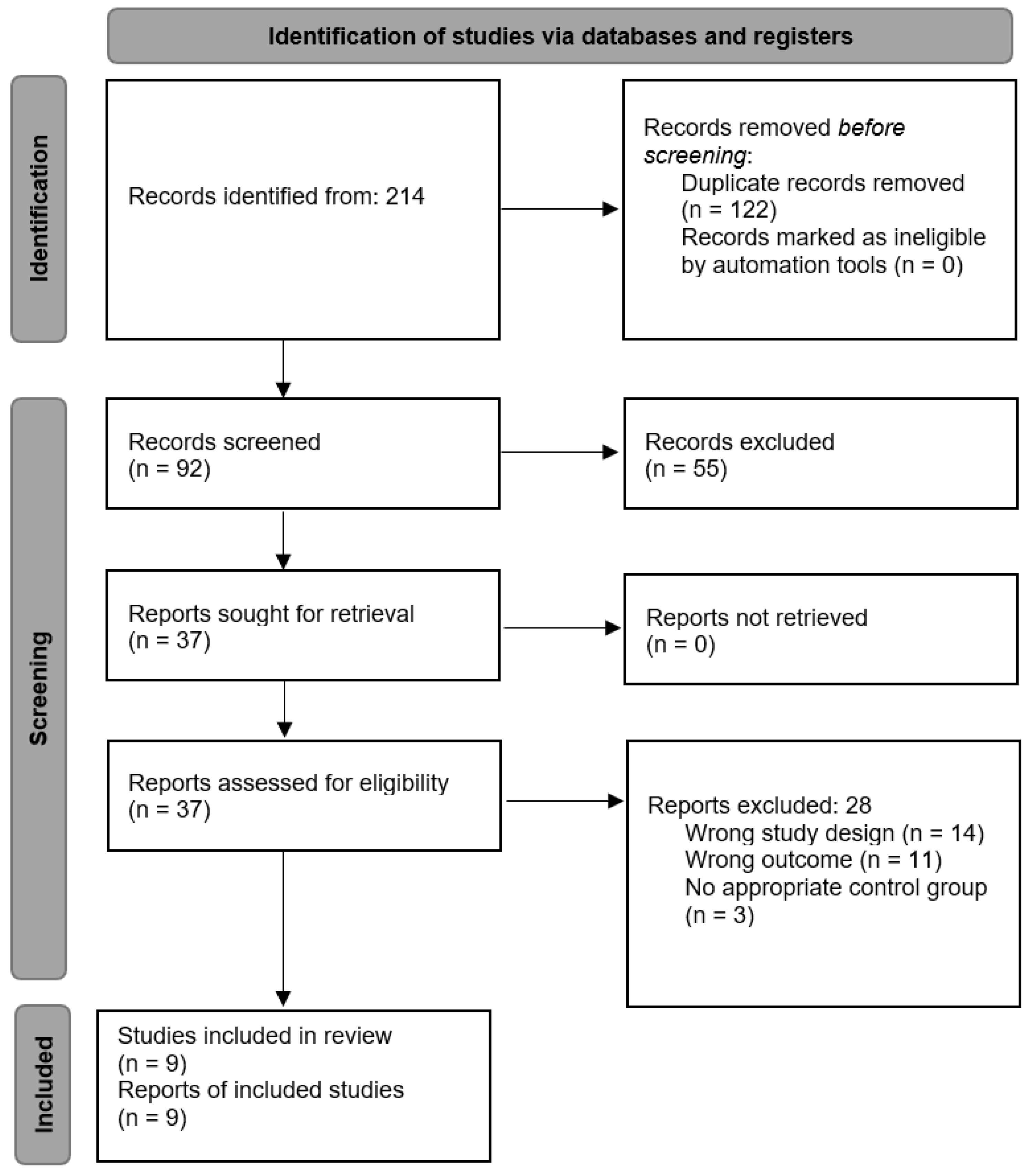
A total of 214 records were initially identified through searches conducted across the selected electronic databases. Following the application of predefined filters related to study design (randomized controlled trials), publication language (English and Spanish), and target population (children and adolescents), 146 records remained. After removing duplicate entries, 92 unique studies were retained for further screening. During the initial screening phase, titles and abstracts were reviewed to determine their relevance to the research question. This process resulted in the exclusion of 55 studies that did not meet the inclusion criteria, primarily due to the absence of physical exercise interventions or lack of specific assessment of attentional outcomes. Consequently, 37 articles were considered eligible for full-text evaluation. Following full-text analysis, 28 studies were excluded for reasons including inappropriate study design, evaluation of global cognitive performance without reporting specific attentional measures, inclusion of adult populations, or combined interventions that did not allow isolation of the effects of physical exercise. Ultimately, 9 studies met all eligibility criteria and were included in the qualitative synthesis of this systematic review. The study selection process was conducted in accordance with the PRISMA 2020 guidelines (Appendix A) and is summarized in Figure 1.

3.2. Study Selection Process

The methodological quality of the included studies was assessed using the PEDro scale, the results of which are shown in Table 1. Scores ranged from 4 to 7 out of a maximum of 10, with an overall mean of 5.33, indicating moderate overall methodological quality. Most of the included studies scored 5/10, such as the works by Altermann and Gröpel [35], Subramanian et al. [36] and Ranjani et al. [37] achieved scores of 6/10, demonstrating adequate experimental design and randomization procedures, although with limitations in aspects related to blinding and complete follow-up of participants. Similarly, Gallotta et al. [38], Budde et al. [39], Vhavle et al. [40], and Altenburg et al. [41] also obtained scores of 5/10. In these cases, although randomized experimental designs were used and statistical comparisons between groups were performed with adequate reporting of results, they presented methodological limitations, mainly related to the lack of blinding of participants, therapists, and evaluators, as well as the lack of information on allocation concealment. The study with the highest methodological quality was that of Telles et al. [42], which scored 7/10, standing out for its adequate allocation concealment procedures, baseline similarity between groups, and blinding of evaluators. The study with the lowest score was that of Da Silva et al. [43], which obtained 4/10, mainly due to high loss to follow-up and the absence of intention-to-treat analysis, which could increase the risk of bias in the estimation of results. Overall, all studies met the criteria for randomization, statistical comparison between groups, and presentation of point and variability measures. However, none of the studies managed to blind participants or therapists, which is expected given the nature of exercise-based interventions. Likewise, blinding evaluators and concealing the allocation were criteria that were less frequently met.

3.3. Characteristics of the Included Studies

A total of nine randomized controlled trials were included in this systematic review. The studies were conducted across diverse geographical contexts, including Austria [32], India [36,37,42], Australia [40], Germany [39], Brazil [43], Italy [38] and the Netherlands [41]. All investigations examined the effects of structured physical activity or exercise-based interventions on attentional performance among children and adolescents. Across the included studies, participants ranged in age from 8 to 17 years. The total number of participants varied substantially between studies, from small experimental samples such as Da Silva et al. [43], which included 20 participants who completed the intervention, to large cluster trials such as Ranjani et al. [37], which involved approximately 2000 adolescents. Several studies reported balanced or mixed gender distributions, although some investigations did not specify detailed sex distribution [37,40]. The exercise interventions demonstrated considerable heterogeneity in design, modality, and duration. Some studies examined acute exercise effects, such as Budde et al. [39], Vhavle et al. [40] and Altenburg et al. [41], which implemented single-session interventions lasting between 10 and approximately 20 min. Notably, Altenburg et al. [41] investigated the differential effects of one versus two moderate-intensity physical activity bouts performed during a school morning, providing additional evidence regarding the influence of exercise frequency on attentional outcomes. In contrast, other investigations implemented longitudinal training programs ranging from 8 weeks to 6 months. For example, Da Silva et al. [43] applied an 8-week swimming training program with two weekly sessions, whereas Subramanian et al. [36] conducted a 6-month structured physical activity intervention consisting of six weekly sessions lasting approximately two hours each. Similarly, Gallotta et al. [38] implemented a 5-month school-based physical activity program with two weekly sessions of 60 min. The types of physical activity interventions also varied considerably across studies. Aerobic and multicomponent exercise programs were commonly implemented, including high-intensity interval training, strength circuits, and coordinative training as reported by Altermann and Gröpel [35]. Several studies emphasized structured physical activity programs designed according to international guidelines or educational curricula [36,38]. Other interventions focused on specific activity modalities such as swimming training [43] or yoga-based programs integrating breathing exercises, postures, meditation, and relaxation techniques [36,38]. Additionally, Budde et al. [39] specifically evaluated coordinative exercise protocols requiring complex motor control, balance, and reaction tasks.
Control conditions varied across studies but generally consisted of either usual school activities, non-structured physical education lessons, educational programs, or no additional intervention. For instance, Altermann and Gröpel [35] used regular school activities as a control condition, whereas Vhavle et al. [40] implemented a non-exercise indoor control group. Similarly, Altenburg et al. [41] used a seated classroom-based condition as the control group when examining the effects of one or two exercise bouts. In other studies, such as Subramanian et al. [36], comparisons were performed between structured and unstructured physical activity programs rather than between exercise and non-exercise conditions. Attentional performance was assessed using a variety of validated neuropsychological instruments. The d2 Test of Attention and its revised version were among the most frequently used measures [35,38,39]. Other studies employed tasks targeting different attentional domains, including the Stroop Color-Word Test and teacher-based attention ratings [36], the Letter Cancelation Test [36,37], and computerized cognitive assessments such as Rapid Visual Information Processing and Spatial Working Memory tasks [40]. Additionally, Da Silva et al. [43] used the Cancelation Attention Test combined with cognitive flexibility assessments, whereas Altenburg et al. [41] assessed selective attention using the Sky Search subtest from the Test of Everyday Attention for Children (Table 2).
Overall, the findings across studies consistently indicated beneficial effects of physical exercise interventions on attentional performance. Improvements were reported in several attentional domains, including concentration, processing speed, selective attention, sustained attention, and error reduction. Some studies suggested that specific exercise modalities may produce differential cognitive benefits. For example, coordinative training interventions were associated with greater improvements in concentration accuracy [38,39], while structured physical activity programs demonstrated superior gains in processing speed and task completion efficiency [36]. Similarly, yoga-based interventions showed improvements in attentional control and concentration compared with educational control conditions [37,42]. Moreover, Altenburg et al. [41] demonstrated that repeated moderate-intensity physical activity bouts during the school day may produce greater improvements in selective attention than a single exercise bout, highlighting the potential importance of exercise frequency in cognitive enhancement.

3.4. Study Results

All included studies reported outcomes related to attentional performance following physical exercise interventions. Although the interventions differed substantially in duration, intensity, and modality, most studies demonstrated improvements in at least one attentional domain. The studies included in this review covered a relatively broad developmental range, with participants aged between 8 and 17 years, encompassing both late childhood and adolescence.
Several studies evaluating chronic physical activity interventions reported consistent positive effects on attention. For example, Subramanian et al. [36] studied adolescents aged approximately 12–17 years and observed significant improvements in attention-related cognitive performance following both structured and unstructured physical activity programs, with greater benefits reported for structured interventions, particularly in processing speed and task completion. Similarly, Gallotta et al. [38] examined children aged approximately 8–11 years and found that both traditional and coordinative physical activity interventions enhanced attentional performance, although coordinative training produced greater improvements in concentration accuracy, whereas traditional physical activity improved processing speed. Comparable findings were reported by Ranjani et al. [37], who included adolescents aged 13–15 years, demonstrating significant increases in attention and concentration following a school-based yoga intervention, with improvements exceeding those observed in the educational control condition.
Additional evidence supporting long-term exercise effects was provided by Da Silva et al. [43], who investigated children aged approximately 11–14 years, reporting significant improvements in selective attention and cognitive flexibility following an eight-week swimming training program, while the control group showed no comparable changes. Likewise, Telles et al. [42], who examined children with a mean age of approximately 10.5 years, reported improvements in attentional control and interference processing following both yoga and physical exercise interventions, as demonstrated by enhanced performance on Stroop-based measures and teacher-reported attention assessments.
Studies investigating acute exercise effects also demonstrated positive outcomes. Budde et al. [39], who studied adolescents aged approximately 13–16 years, found that a single session of coordinative exercise significantly improved concentration, processing speed, and error reduction compared with standard physical education activities. Similarly, Altermann and Gröpel [35], whose sample consisted of adolescents with a mean age of approximately 16.5 years, reported that acute exercise interventions including high-intensity interval training, strength circuit training, and coordinative training improved attentional performance, with participants demonstrating enhanced concentration and information processing accuracy compared with baseline values. Furthermore, Altenburg et al. [41], who examined children aged 10–13 years, demonstrated that repeated moderate-intensity physical activity bouts performed during a school morning significantly improved selective attention compared with both a single exercise bout and a sedentary control condition, suggesting that exercise frequency may play an important role in optimizing attentional outcomes.
However, not all acute interventions produced consistent effects across conditions. Vhavle et al. [40], who included adolescents with a mean age of approximately 14.3 years, observed improvements in sustained attention accuracy following exercise sessions, but no significant differences were found between exercise environments, suggesting that contextual environmental factors may have limited influence on attentional outcomes.
Overall, the findings suggest that physical exercise interventions contribute to improvements in multiple attentional domains across both childhood and adolescence, including sustained attention, selective attention, concentration performance, processing speed, and response accuracy. In addition, several studies indicated that exercise modality may influence the magnitude and type of attentional benefits, with coordinative or cognitively demanding motor activities frequently demonstrating superior effects on concentration and attentional control compared with more traditional aerobic or general physical activity interventions. Moreover, evidence suggests that not only exercise type but also exercise frequency during the school day may influence attentional performance.

4. Discussion

The present systematic review aimed to examine the effects of physical exercise interventions on attentional performance in children and adolescents. Overall, the findings indicate that physical exercise represents an effective non-pharmacological strategy for improving attentional functioning across different developmental stages. Despite the variability observed in intervention characteristics, duration, and exercise modalities, most included studies reported improvements in attentional domains such as concentration, processing speed, sustained attention, and selective attention.
One of the most consistent findings across studies is the positive impact of both acute and chronic exercise interventions on attentional performance [44]. Acute exercise protocols demonstrated immediate cognitive benefits, particularly in tasks requiring rapid information processing and attentional accuracy [45]. For example, coordinative exercise interventions were shown to enhance concentration and reduce error rates shortly after exercise sessions [46]. These findings are consistent with theoretical models proposing that short-term exercise may induce transient increases in cortical activation, cerebral blood flow, and neurotransmitter release. Although these mechanisms were not directly measured in the studies included in this review, previous research has suggested that such neurophysiological responses may contribute to improvements in attentional regulation and executive control processes [7]. Emerging evidence also suggests that not only exercise modality and duration but also the distribution of exercise bouts throughout the school day may influence attentional outcomes. Recent findings indicate that repeated moderate-intensity exercise bouts may produce greater improvements in selective attention compared with a single exercise session, highlighting the importance of exercise frequency in sustaining acute cognitive benefits.
Chronic exercise interventions, on the other hand, appeared to produce more stable and long-lasting attentional improvements [47]. Longitudinal programs lasting several weeks or months consistently reported significant enhancements in cognitive performance [48]. These improvements may be explained by structural and functional neuroadaptations associated with repeated physical activity exposure [49]. Previous research suggests that regular exercise may promote neuroplasticity, increase brain-derived neurotrophic factor (BDNF) levels, and enhance synaptic connectivity within frontoparietal networks responsible for attentional control. However, it should be noted that the studies included in this review did not directly assess these neurobiological mechanisms, and therefore these explanations should be interpreted as theoretical frameworks derived from the broader literature. Such adaptations may facilitate more efficient neural processing and cognitive resource allocation, particularly during adolescence, a developmental period characterized by ongoing maturation of prefrontal cortical regions [18,50]. Furthermore, repeated exposure to exercise stimuli may contribute to maintaining neurophysiological activation across the school day, potentially extending the duration of cognitive benefits typically observed following single acute exercise sessions. Therefore, while these neurobiological mechanisms provide a plausible explanatory framework for the cognitive benefits of exercise, future studies should incorporate neurophysiological and neuroimaging measures to directly examine the mechanisms underlying exercise-induced improvements in attentional performance.
Another relevant finding of this review is the potential influence of exercise modality on attentional outcomes. Coordinative and cognitively demanding motor activities appeared to produce greater improvements in concentration accuracy and attentional control compared with traditional aerobic exercise programs [51]. These findings align with the hypothesis that complex motor tasks requiring decision-making, spatial orientation, and motor planning simultaneously stimulate multiple neural networks, including cerebellar and prefrontal regions. The integration of cognitive and motor demands during coordinative exercise may therefore enhance neural efficiency and promote executive functioning development [52].
Similarly, structured physical activity programs based on educational or clinical guidelines also demonstrated significant cognitive benefits, particularly in improving processing speed and task completion efficiency [53]. Structured interventions often provide progressive overload, task variation, and repeated cognitive–motor engagement, which may contribute to enhanced attentional performance [54]. Additionally, exercise programs such as swimming training and yoga-based interventions showed positive effects on attentional functioning [55]. Yoga interventions, in particular, may combine physical movement with breathing control, relaxation techniques, and mindfulness elements, which have been associated with improved attentional regulation and emotional control [56].
Another important aspect highlighted by this review is the effectiveness of physical exercise in diverse populations. Improvements in attentional performance were observed not only in typically developing children but also in participants with specific cognitive or behavioral characteristics, such as those with attention-deficit hyperactivity disorder [43]. Studies conducted in large and heterogeneous school samples have also demonstrated consistent benefits of physical exercise on attention [36,37,38,42]. This suggests that physical exercise interventions could represent a universally applicable strategy for promoting cognitive development, with potential implications for educational and clinical settings.
From an applied perspective, the results of this review support the integration of structured physical activity programs into school curricula and youth health promotion strategies. Exercise interventions that incorporate coordinative, cognitively demanding, and varied motor tasks may be particularly effective in enhancing attentional performance and academic readiness [57]. Schools represent an optimal environment for implementing such interventions due to their accessibility, structured routines, and potential for long-term behavioral habit formation [58]. In addition, the available evidence suggests that distributing multiple short physical activity breaks throughout the school day may enhance attentional regulation more effectively than isolated exercise sessions, supporting the implementation of active breaks within academic schedules [59]. From a practical perspective, these findings suggest that schools could incorporate short bouts of moderate physical activity (e.g., 10–20 min) before or between academic lessons to promote attentional readiness. Teachers may also integrate coordinative or cognitively engaging motor tasks within physical education classes or classroom-based active breaks to stimulate both motor and cognitive engagement. At the policy level, educational institutions could consider promoting school-wide physical activity programs or structured movement breaks as part of strategies aimed at improving students’ cognitive functioning, classroom engagement, and learning outcomes.
Despite these promising findings, several limitations should be considered when interpreting the results. First, considerable heterogeneity was observed across studies in terms of intervention characteristics, exercise intensity, duration, and assessment tools used to measure attention. This variability may limit direct comparisons between studies and complicate the identification of optimal exercise protocols. Second, some studies included relatively small sample sizes, which may reduce statistical power and generalizability. Third, the use of different neuropsychological instruments across studies introduces variability in attentional domain assessment, potentially affecting the consistency of reported outcomes. Additionally, variability in exercise frequency and distribution across studies limits the ability to determine optimal scheduling strategies for maximizing attentional benefits. These sources of heterogeneity also limited the feasibility of conducting a robust quantitative meta-analysis across the included trials.
In addition to the variability in intervention protocols and outcome measures, the methodological quality assessment revealed several potential sources of bias across the included trials. Although most studies used randomized designs and reported appropriate statistical comparisons, several methodological limitations were identified, particularly related to the absence of participant and therapist blinding, limited reporting of allocation concealment, and incomplete follow-up in some studies. While blinding procedures are often difficult to implement in exercise-based interventions, these factors may increase the risk of performance and detection bias and should be considered when interpreting the reported cognitive effects.
Furthermore, although randomized controlled trials provide strong methodological evidence, future research should incorporate longitudinal follow-up designs to determine the persistence of exercise-induced attentional benefits over time. Additional studies examining dose–response relationships, exercise intensity thresholds, and neurophysiological mechanisms underlying cognitive improvements are also warranted. The integration of neuroimaging and neurobiological markers may provide deeper insights into the mechanisms linking physical exercise and attentional development.

5. Conclusions

The findings of this systematic review indicate that physical exercise is an effective non-pharmacological strategy for improving attentional performance in children and adolescents. Across the included studies, exercise interventions demonstrated consistent positive effects on several attentional domains, including concentration, selective attention, sustained attention, processing speed, and response accuracy. Both acute and chronic exercise programs were associated with cognitive improvements, although longer interventions appeared to produce more stable and sustained attentional benefits. In addition, emerging evidence suggests that the frequency and distribution of exercise bouts throughout the school day may influence the magnitude and duration of attentional improvements, with repeated short exercise sessions potentially providing greater cognitive benefits than isolated activity bouts. In particular, studies examining multiple exercise bouts within a school morning reported greater improvements in selective attention compared with single exercise sessions, highlighting the potential importance of exercise scheduling in educational contexts. Furthermore, the results suggest that exercise modality may play a relevant role in attentional development. Interventions incorporating coordinative, structured, and cognitively engaging motor activities tended to produce greater improvements in attentional control compared with traditional physical activity programs. Taken together, the available evidence indicates that exercise modality, duration, and frequency interact to determine attentional outcomes in youth populations. These findings highlight the potential value of integrating structured exercise programs into educational and youth health settings as a strategy to support cognitive development and academic performance. Educational strategies incorporating multiple short physical activity breaks during the school day may represent an effective approach to optimize attentional regulation and learning readiness. Future research should focus on identifying optimal exercise parameters and clarifying the neurophysiological mechanisms underlying exercise-induced attentional improvements. Further investigations examining dose–response relationships, exercise scheduling, and long-term cognitive retention are also warranted.

Author Contributions

Conceptualization, M.d.C.C.-F. and D.C.-M.; methodology, M.d.C.C.-F. and M.L.M.-T.; writing—original draft preparation, M.d.C.C.-F. and D.C.-M.; writing—review and editing, M.L.M.-T. and M.d.C.C.-F.; supervision, M.d.C.C.-F., M.L.M.-T. and D.C.-M. All authors have read and agreed to the published version of the manuscript.

Funding

This research received no external funding.

Institutional Review Board Statement

Not applicable.

Informed Consent Statement

Not applicable.

Data Availability Statement

No new data were created or analyzed in this study.

Conflicts of Interest

The authors declare no conflicts of interest.

Abbreviations

The following abbreviations are used in this manuscript:
RCTRandomized Controlled Trial
IGIntervention Group
CGControl Group
SPAStructured Physical Activity
USPAUnstructured Physical Activity
HIITHigh-Intensity Interval Training
TMT-A/BTrail Making Test A and B
TACCancelation Attention Test

Appendix A. PRISMA Checklist

Section and TopicItem #Checklist ItemLocation Where Item Is Reported
TITLE
Title 1Identify the report as a systematic review.1
ABSTRACT
Abstract 2See the PRISMA 2020 for Abstracts checklist.1
INTRODUCTION
Rationale 3Describe the rationale for the review in the context of existing knowledge.2-3
Objectives 4Provide an explicit statement of the objective(s) or question(s) the review addresses.3
METHODS
Eligibility criteria 5Specify the inclusion and exclusion criteria for the review and how studies were grouped for the syntheses.3-4
Information sources 6Specify all databases, registers, websites, organisations, reference lists and other sources searched or consulted to identify studies. Specify the date when each source was last searched or consulted.3
Search strategy7Present the full search strategies for all databases, registers and websites, including any filters and limits used.3
Selection process8Specify the methods used to decide whether a study met the inclusion criteria of the review, including how many reviewers screened each record and each report retrieved, whether they worked independently, and if applicable, details of automation tools used in the process.4
Data collection process 9Specify the methods used to collect data from reports, including how many reviewers collected data from each report, whether they worked independently, any processes for obtaining or confirming data from study investigators, and if applicable, details of automation tools used in the process.4
Data items 10aList and define all outcomes for which data were sought. Specify whether all results that were compatible with each outcome domain in each study were sought (e.g., for all measures, time points, analyses), and if not, the methods used to decide which results to collect.4
10bList and define all other variables for which data were sought (e.g., participant and intervention characteristics, funding sources). Describe any assumptions made about any missing or unclear information.4
Study risk of bias assessment11Specify the methods used to assess risk of bias in the included studies, including details of the tool(s) used, how many reviewers assessed each study and whether they worked independently, and if applicable, details of automation tools used in the process.4
Effect measures 12Specify for each outcome the effect measure(s) (e.g., risk ratio, mean difference) used in the synthesis or presentation of results.4
Synthesis methods13aDescribe the processes used to decide which studies were eligible for each synthesis (e.g., tabulating the study intervention characteristics and comparing against the planned groups for each synthesis (item #5)).3-4
13bDescribe any methods required to prepare the data for presentation or synthesis, such as handling of missing summary statistics, or data conversions.3-4
13cDescribe any methods used to tabulate or visually display results of individual studies and syntheses.3-4
13dDescribe any methods used to synthesize results and provide a rationale for the choice(s). If meta-analysis was performed, describe the model(s), method(s) to identify the presence and extent of statistical heterogeneity, and software package(s) used.3-4
13eDescribe any methods used to explore possible causes of heterogeneity among study results (e.g., subgroup analysis, meta-regression).3-4
13fDescribe any sensitivity analyses conducted to assess robustness of the synthesized results.3-4
Reporting bias assessment14Describe any methods used to assess risk of bias due to missing results in a synthesis (arising from reporting biases).3-4
Certainty assessment15Describe any methods used to assess certainty (or confidence) in the body of evidence for an outcome.3-4
RESULTS
Study selection 16aDescribe the results of the search and selection process, from the number of records identified in the search to the number of studies included in the review, ideally using a flow diagram.4-15
16bCite studies that might appear to meet the inclusion criteria, but which were excluded, and explain why they were excluded.4-5
Study characteristics 17Cite each included study and present its characteristics.5-12
Risk of bias in studies 18Present assessments of risk of bias for each included study.5-6
Results of individual studies 19For all outcomes, present, for each study: (a) summary statistics for each group (where appropriate) and (b) an effect estimate and its precision (e.g., confidence/credible interval), ideally using structured tables or plots.13
Results of syntheses20aFor each synthesis, briefly summarise the characteristics and risk of bias among contributing studies.13
20bPresent results of all statistical syntheses conducted. If meta-analysis was done, present for each the summary estimate and its precision (e.g., confidence/credible interval) and measures of statistical heterogeneity. If comparing groups, describe the direction of the effect.-
20cPresent results of all investigations of possible causes of heterogeneity among study results.5-12
20dPresent results of all sensitivity analyses conducted to assess the robustness of the synthesized results.5-12
Reporting biases21Present assessments of risk of bias due to missing results (arising from reporting biases) for each synthesis assessed.5-12
Certainty of evidence 22Present assessments of certainty (or confidence) in the body of evidence for each outcome assessed.5-12
DISCUSSION
Discussion 23aProvide a general interpretation of the results in the context of other evidence.14-15
23bDiscuss any limitations of the evidence included in the review.15
23cDiscuss any limitations of the review processes used.15
23dDiscuss implications of the results for practice, policy, and future research.15
OTHER INFORMATION
Registration and protocol24aProvide registration information for the review, including register name and registration number, or state that the review was not registered.3
24bIndicate where the review protocol can be accessed, or state that a protocol was not prepared.3
24cDescribe and explain any amendments to information provided at registration or in the protocol.3
Support25Describe sources of financial or non-financial support for the review, and the role of the funders or sponsors in the review.16
Competing interests26Declare any competing interests of review authors.16
Availability of data, code and other materials27Report which of the following are publicly available and where they can be found: template data collection forms; data extracted from included studies; data used for all analyses; analytic code; any other materials used in the review.16
From: ref. [60]. This work is licensed under CC BY 4.0. To view a copy of this license, visit https://creativecommons.org/licenses/by/4.0/.

References

  1. Karakaş, S. A Review of Childhood Developmental Changes in Attention as Indexed in the Electrical Activity of the Brain. Brain Sci. 2024, 14, 458. [Google Scholar] [CrossRef]
  2. Ramos, C.; Pereira, A.F.; Feher, A.; Baptista, J. How does sensitivity influence early executive function? A critical review on hot and cool processes. Infant Behav. Dev. 2023, 73, 101895. [Google Scholar] [CrossRef]
  3. Southon, C. The relationship between executive function, neurodevelopmental disorder traits, and academic achievement in university students. Front. Psychol. 2022, 13, 958013. [Google Scholar] [CrossRef]
  4. Favini, A.; Lunetti, C.; Tommaselli, M.C.; Quarto, T. Psychosocial Adjustment During Adolescence: The Role of Individual Differences. Encyclopedia 2025, 5, 166. [Google Scholar] [CrossRef]
  5. Larsen, B.; Luna, B. Adolescence as a neurobiological critical period for the development of higher-order cognition. Neurosci. Biobehav. Rev. 2018, 94, 179–195. [Google Scholar] [CrossRef]
  6. Garber, J.; Frankel, S.A.; Herrington, C.G. Developmental demands of cognitive behavioral therapy for depression in children and adolescents: Cognitive, social, and emotional processes. Annu. Rev. Clin. Psychol. 2016, 12, 181–216. [Google Scholar] [CrossRef] [PubMed]
  7. Mackie, M.A.; Van Dam, N.T.; Fan, J. Cognitive control and attentional functions. Brain Cogn. 2013, 82, 301–312. [Google Scholar] [CrossRef] [PubMed]
  8. Draheim, C.; Pak, R.; Draheim, A.A.; Engle, R.W. The role of attention control in complex real-world tasks. Psychon. Bull. Rev. 2022, 29, 1143–1197. [Google Scholar] [CrossRef]
  9. Commodari, E.; La Rosa, V.L.; Foti, F. Attention skills, learning and academic abilities in children and adolescents with genetic disorders: A systematic review. Front. Psychol. 2025, 16, 1677418. [Google Scholar] [CrossRef]
  10. Chung, Y.S.; Hyatt, C.J.; Stevens, M.C. Adolescent maturation of the relationship between cortical gyrification and cognitive ability. Neuroimage 2017, 158, 319–331. [Google Scholar] [CrossRef] [PubMed]
  11. Thillay, A.; Roux, S.; Gissot, V.; Carteau-Martin, I.; Knight, R.T.; Bonnet-Brilhault, F.; Bidet-Caulet, A. Sustained attention and prediction: Distinct brain maturation trajectories during adolescence. Front. Hum. Neurosci. 2015, 9, 519. [Google Scholar] [CrossRef]
  12. Homberg, J.R.; Brivio, P.; Greven, C.U.; Calabrese, F. Individuals Being High in Their Sensitivity to the Environment: Are Sensitive Period Changes in Play? Neurosci. Biobehav. Rev. 2024, 159, 105605. [Google Scholar] [CrossRef]
  13. Mastorci, F.; Lazzeri, M.F.L.; Vassalle, C.; Pingitore, A. The Transition from Childhood to Adolescence: Between Health and Vulnerability. Children 2024, 11, 989. [Google Scholar] [CrossRef]
  14. Alonso-Martínez, A.M.; Ramírez-Vélez, R.; García-Alonso, Y.; Izquierdo, M.; García-Hermoso, A. Physical Activity, Sedentary Behavior, Sleep and Self-Regulation in Spanish Preschoolers during the COVID-19 Lockdown. Int. J. Environ. Res. Public Health 2021, 18, 693. [Google Scholar] [CrossRef] [PubMed]
  15. Sabayan, B.; Doyle, S.; Rost, N.S.; Sorond, F.A.; Lakshminarayan, K.; Launer, L.J. The role of population-level preventive care for brain health in ageing. Lancet Healthy Longev. 2023, 4, e274–e283. [Google Scholar] [CrossRef]
  16. Bai, J.; Huang, H.; Ouyang, H. Effects of group-play moderate to vigorous intensity physical activity intervention on executive function and motor skills in 4- to 5-year-old preschoolers: A pilot cluster randomized controlled trial. Front. Psychol. 2022, 13, 847785. [Google Scholar] [CrossRef]
  17. Dwojaczny, B.; Bejtka, M. Influence of physical activity on cognitive functions -Potential mechanisms and benefits. J. Educ. Health Sport 2023, 13, 181–185. [Google Scholar] [CrossRef]
  18. Romero Garavito, A.; Díaz Martínez, V.; Juárez Cortés, E.; Negrete Díaz, J.V.; Montilla Rodríguez, L.M. Impact of physical exercise on the regulation of brain-derived neurotrophic factor in people with neurodegenerative diseases. Front. Neurol. 2025, 15, 1505879. [Google Scholar] [CrossRef] [PubMed]
  19. Martín-Rodríguez, A.; Gostian-Ropotin, L.A.; Beltrán-Velasco, A.I.; Belando-Pedreño, N.; Simón, J.A.; López-Mora, C.; Navarro-Jiménez, E.; Tornero-Aguilera, J.F.; Clemente-Suárez, V.J. Sporting Mind: The Interplay of Physical Activity and Psychological Health. Sports 2024, 12, 37. [Google Scholar] [CrossRef]
  20. Mahindru, A.; Patil, P.; Agrawal, V. Role of Physical Activity on Mental Health and Well-Being: A Review. Cureus 2023, 15, e33475. [Google Scholar] [CrossRef]
  21. Mandolesi, L.; Polverino, A.; Montuori, S.; Foti, F.; Ferraioli, G.; Sorrentino, P.; Sorrentino, G. Effects of Physical Exercise on Cognitive Functioning and Wellbeing: Biological and Psychological Benefits. Front. Psychol. 2018, 9, 509. [Google Scholar] [CrossRef]
  22. Zhang, M.; Jia, J.; Yang, Y.; Zhang, L.; Wang, X. Effects of Exercise Interventions on Cognitive Functions in Healthy Populations: A Systematic Review and Meta-Analysis. Ageing Res. Rev. 2023, 92, 102116. [Google Scholar] [CrossRef]
  23. Gomez-Pinilla, F.; Hillman, C. The influence of exercise on cognitive abilities. Compr. Physiol. 2013, 3, 403–428. [Google Scholar] [CrossRef] [PubMed]
  24. Caamaño-Navarrete, F.; Latorre-Román, P.Á.; Párraga-Montilla, J.; Jerez-Mayorga, D.; Delgado-Floody, P. Selective Attention and Concentration Are Related to Lifestyle in Chilean Schoolchildren. Children 2021, 8, 856. [Google Scholar] [CrossRef]
  25. Shaheen, N.; Shaheen, A.; Ramadan, A.; Hefnawy, M.T.; Ramadan, A.; Ibrahim, I.A.; Hassanein, M.E.; Ashour, M.E.; Flouty, O. Appraising systematic reviews: A comprehensive guide to ensuring validity and reliability. Front. Res. Metr. Anal. 2023, 8, 1268045. [Google Scholar] [CrossRef]
  26. Collado-Mateo, D.; Lavín-Pérez, A.M.; Peñacoba, C.; Del Coso, J.; Leyton-Román, M.; Luque-Casado, A.; Gasque, P.; Fernández-del-Olmo, M.Á.; Amado-Alonso, D. Key Factors Associated with Adherence to Physical Exercise in Patients with Chronic Diseases and Older Adults: An Umbrella Review. Int. J. Environ. Res. Public Health 2021, 18, 2023. [Google Scholar] [CrossRef]
  27. Dinu, L.M.; Singh, S.N.; Baker, N.S.; Georgescu, A.L.; Singer, B.F.; Overton, P.G.; Dommett, E.J. The Effects of Different Exercise Approaches on Attention Deficit Hyperactivity Disorder in Adults: A Randomised Controlled Trial. Behav. Sci. 2023, 13, 129. [Google Scholar] [CrossRef]
  28. Odgaard-Jensen, J.; Vist, G.E.; Timmer, A.; Kunz, R.; Akl, E.A.; Schünemann, H.; Briel, M.; Nordmann, A.J.; Pregno, S.; Oxman, A.D. Randomisation to protect against selection bias in healthcare trials. Cochrane Database Syst Rev. 2011, 2011, MR000012. [Google Scholar] [CrossRef]
  29. Mancin, S.; Sguanci, M.; Andreoli, D.; Soekeland, F.; Anastasi, G.; Piredda, M.; De Marinis, M.G. Systematic review of clinical practice guidelines and systematic reviews: A method for conducting comprehensive analysis. MethodsX 2023, 12, 102532. [Google Scholar] [CrossRef] [PubMed]
  30. Steinbeis, N.; Crone, E.A. The Link between Cognitive Control and Decision-Making across Child and Adolescent Development. Curr. Opin. Behav. Sci. 2016, 10, 28. [Google Scholar] [CrossRef]
  31. Slattery, E.J.; O’Callaghan, E.; Ryan, P.; Fortune, D.G.; McAvinue, L.P. Popular Interventions to Enhance Sustained Attention in Children and Adolescents: A Critical Systematic Review. Neurosci. Biobehav. Rev. 2022, 137, 104633. [Google Scholar] [CrossRef]
  32. Dastamooz, S.; Sadeghi-Bahmani, D.; Farahani, M.H.D.; Wong, S.H.; Yam, J.C.; Tham, C.C.; Sit, C.H. The efficacy of physical exercise interventions on mental health, cognitive function, and ADHD symptoms in children and adolescents with ADHD: An umbrella review. ClinicalMedicine 2023, 62, 102137. [Google Scholar] [CrossRef]
  33. Cashin, A.G.; McAuley, J.H. Clinimetrics: Physiotherapy Evidence Database (PEDro) Scale. J. Physiother. 2020, 66, 59. [Google Scholar] [CrossRef] [PubMed]
  34. de Morton, N.A. The PEDro Scale Is a Valid Measure of the Methodological Quality of Clinical Trials: A Demographic Study. Aust. J. Physiother. 2009, 55, 129–133. [Google Scholar] [CrossRef]
  35. Altermann, W.; Gröpel, P. Effects of acute endurance, strength, and coordination exercise interventions on attention in adolescents: A randomized controlled study. Psychol. Sport Exerc. 2023, 64, 102300. [Google Scholar] [CrossRef]
  36. Subramanian, S.K. Effect of structured and unstructured physical activity training on cognitive functions in adolescents—A randomized control trial. J. Clin. Diagn. Res. 2015, 9, CC04–CC09. [Google Scholar] [CrossRef]
  37. Ranjani, H.; Jagannathan, N.; Rawal, T.; Vinothkumar, R.; Tandon, N.; Vidyulatha, J.; Mohan, V.; Gupta, V.; Anjana, R.M. The impact of yoga on stress, metabolic parameters, and cognition of Indian adolescents: A cluster randomized controlled trial. Integr. Med. Res. 2023, 12, 100979. [Google Scholar] [CrossRef]
  38. Gallotta, M.C.; Emerenziani, G.P.; Iazzoni, S.; Meucci, M.; Baldari, C.; Guidetti, L. Impacts of coordinative training on normal weight and overweight/obese children’s attentional performance. Front. Hum. Neurosci. 2015, 9, 577. [Google Scholar] [CrossRef]
  39. Budde, H.; Voelcker-Rehage, C.; Pietraßyk-Kendziorra, S.; Ribeiro, P.; Tidow, G. Acute coordinative exercise improves attentional performance in adolescents. Neurosci. Lett. 2008, 441, 219–223. [Google Scholar] [CrossRef]
  40. Vhavle, S.P.; Rao, R.M.; Manjunath, N.K. Comparison of Yoga versus Physical Exercise on Executive Function, Attention, and Working Memory in Adolescent Schoolchildren: A Randomized Controlled Trial. Int. J. Yoga. 2019, 12, 172–173. [Google Scholar] [CrossRef] [PubMed] [PubMed Central]
  41. Altenburg, T.M.; Chinapaw, M.J.; Singh, A.S. Effects of one versus two bouts of moderate intensity physical activity on selective attention during a school morning in Dutch primary schoolchildren: A randomized controlled trial. J. Sci. Med. Sport 2016, 19, 820–824. [Google Scholar] [CrossRef]
  42. Telles, S.; Singh, N.; Bhardwaj, A.K.; Kumar, A.; Balkrishna, A. Effect of yoga or physical exercise on physical, cognitive and emotional measures in children: A randomized controlled trial. Child Adolesc. Psychiatry Ment. Health 2013, 7, 37. [Google Scholar] [CrossRef]
  43. Da Silva, L.A.; Doyenart, R.; Salvan, P.H.; Rodrigues, W.; Lopes, J.F.; Gomes, K.; Thirupathi, A.; De Pinho, R.A.; Silveira, P.C. Swimming training improves mental health parameters, cognition and motor coordination in children with Attention Deficit Hyperactivity Disorder. Int. J. Environ. Health Res. 2019, 30, 584–592. [Google Scholar] [CrossRef]
  44. Liang, X.; Li, R.; Wong, S.H.S.; Sum, R.K.W.; Sit, C.H.P. The impact of exercise interventions concerning executive functions of children and adolescents with attention-deficit/hyperactive disorder: A systematic review and meta-analysis. Int. J. Behav. Nutr. Phys. Act. 2021, 18, 68. [Google Scholar] [CrossRef]
  45. Anders, J.P.V.; Kraemer, W.J.; Newton, R.U.; Post, E.M.; Caldwell, L.K.; Beeler, M.K.; DuPont, W.H.; Martini, E.R.; Volek, J.S.; Häkkinen, K.; et al. Acute Effects of High-intensity Resistance Exercise on Cognitive Function. J. Sports Sci. Med. 2021, 20, 391–397. [Google Scholar] [CrossRef] [PubMed]
  46. Scharf, C.; Koschutnig, K.; Zussner, T.; Fink, A.; Tilp, M. Twelve weeks of physical exercise breaks with coordinative exercises at the workplace increase the sulcal depth and decrease gray matter volume in brain structures related to visuomotor processes. Brain Struct. Funct. 2024, 229, 63–74. [Google Scholar] [CrossRef]
  47. Guzmán-Muñoz, E.; Concha-Cisternas, Y.; Jofré-Saldía, E.; Castillo-Paredes, A.; Molina-Márquez, I.; Yáñez-Sepúlveda, R. Physical Activity and Its Effects on Executive Functions and Brain Outcomes in Children: A Narrative Review. Brain Sci. 2025, 15, 1238. [Google Scholar] [CrossRef] [PubMed]
  48. Zhu, F.; Zhu, X.; Bi, X.; Kuang, D.; Liu, B.; Zhou, J.; Yang, Y.; Ren, Y. Comparative effectiveness of various physical exercise interventions on executive functions and related symptoms in children and adolescents with attention deficit hyperactivity disorder: A systematic review and network meta-analysis. Front. Public Health 2023, 11, 1133727. [Google Scholar] [CrossRef]
  49. Gates, N.J.; Rutjes, A.W.; Di Nisio, M.; Karim, S.; Chong, L.Y.; March, E.; Martínez, G.; Vernooij, R. Computerised cognitive training for 12 or more weeks for maintaining cognitive function in cognitively healthy people in late life. Cochrane Database Syst. Rev. 2020, 2, CD012277. [Google Scholar] [CrossRef]
  50. Herold, F.; Törpel, A.; Schega, L.; Müller, N.G. Functional and/or structural brain changes in response to resistance exercises and resistance training lead to cognitive improvements—A systematic review. Eur. Rev. Aging Phys. Act. 2019, 16, 10. [Google Scholar] [CrossRef] [PubMed]
  51. Sanaeifar, F.; Pourranjbar, S.; Pourranjbar, M.; Ramezani, S.; Rostami Mehr, S.; Wadan, A.-H.S.; Khazeifard, F. Beneficial Effects of Physical Exercise on Cognitive-Behavioral Impairments and Brain-Derived Neurotrophic Factor Alteration in the Limbic System Induced by Neurodegeneration. Exp. Gerontol. 2024, 195, 112539. [Google Scholar] [CrossRef]
  52. Latino, F.; Tafuri, F.; Maisuradze, M.; Tafuri, M.G. Complex Motor Schemes and Executive Functions: A School-Based Dual-Challenge Intervention to Enhance Cognitive Performance and Academic Success in Early Adolescence. J. Intell. 2025, 13, 151. [Google Scholar] [CrossRef]
  53. Jiang, S.; Zeng, N.; Ng, J.Y.Y.; Chong, K.H.; Zeng, T.; Leung, S.K.Y.; Ha, A.S. Effects of physical activity interventions on fundamental movement skills and cognitive function in early childhood: A systematic review and network meta-analysis. J. Sport Health Sci. 2026, 15, 101085. [Google Scholar] [CrossRef]
  54. Mao, F.; Liu, Z.; Fang, Q.; Liu, Y. Efficacy of game-based interventions on cognitive performance in children and adolescents with attention-deficit/hyperactivity disorder: A systematic review and meta-analysis. BMC Psychiatry 2025, 25, 1174. [Google Scholar] [CrossRef]
  55. Skalidou, S.; Anestis, A.; Bakolas, N.; Tsoulfa, G.; Papadimitriou, K. Swimming activity alleviates the symptoms of attention-deficit/hyperactivity disorder (ADHD): A case report. Healthcare 2023, 11, 1999. [Google Scholar] [CrossRef]
  56. Khunti, K.; Boniface, S.; Norris, E.; De Oliveira, C.M.; Shelton, N. The effects of yoga on mental health in school-aged children: A systematic review and narrative synthesis of randomised control trials. Clin. Child Psychol. Psychiatry 2023, 28, 1217–1238. [Google Scholar] [CrossRef] [PubMed]
  57. Wang, H.; Chen, Y.; Xu, L.; Sun, H. Cognitively engaging running enhances inhibitory control and prefrontal activation in children with ADHD: The moderating role of physical self-efficacy. Sci. Rep. 2025, 15, 44313. [Google Scholar] [CrossRef] [PubMed]
  58. Efthymiou, E.; Katsarou, D.V.; Sofologi, M.; Megari, K.; Papadopoulou, S.; Mantsos, E.; Daiban, S. A systematic review of school-based behavioral interventions and the symbolic labor of inclusion for children with chronic illness. Healthcare 2025, 13, 1968. [Google Scholar] [CrossRef] [PubMed]
  59. Infantes-Paniagua, Á.; Silva, A.F.; Ramirez-Campillo, R.; Sarmento, H.; González-Fernández, F.T.; González-Víllora, S.; Clemente, F.M. Active school breaks and students’ attention: A systematic review with meta-analysis. Brain Sci. 2021, 11, 675. [Google Scholar] [CrossRef]
  60. Page, M.J.; McKenzie, J.E.; Bossuyt, P.M.; Boutron, I.; Hoffmann, T.C.; Mulrow, C.D.; Shamseer, L.; Tetzlaff, J.M.; Akl, E.A.; Brennan, S.E.; et al. The PRISMA 2020 statement: An updated guideline for reporting systematic reviews. BMJ 2021, 372, n71. [Google Scholar] [CrossRef]
Figure 1. Study selection process flow chart.
Sports 14 00139 g001
Table 1. Methodological quality of the included articles.
Study1234567891011Total (0–10)
Altermann and Gröpel [35]110100010115
Subramanian et al. [36]111100100116
Ranjani et al. [37]111000011116
Gallotta et al. [38]110100010115
Telles et al. [42]111100110117
Budde et al. [39]110100010115
Da Silva et al. [43]110100000114
Vhavle et al. [40]110000011115
Altenburg et al. [41]110100010115
Scoring criteria: (1) eligibility specified; (2) random allocation; (3) concealed allocation; (4) comparable groups at baseline; (5) participant blinding; (6) therapist blinding; (7) assessor blinding; (8) adequate follow-up; (9) intention-to-treat analysis; (10) between-group statistical comparisons. Each item is scored as Yes = 1 or No = 0.
Table 2. Summary of the characteristics of the included studies. 
AuthorsCountryStudy
Design
AgeParticipants (M/F)Sample Size (N)Control GroupIntervention GroupSession DurationSession FrequencyOutcome MeasuresMain Results
Altermann and Gröpel [35]AustriaRCT16.5 ± 1.1280 (39/41)IG = 60; CG = 20Regular school activities/no structured physical training interventionHigh-intensity interval training (HIIT), bodyweight strength circuit, and coordinative training25 minNot specifiedD2 Test of AttentionPhysical exercise interventions were associated with improvements in attentional performance, reflected by enhanced concentration and processing accuracy compared to baseline values, while control participants showed no comparable improvement.
Subramanian et al. [36]IndiaRCT12–17 years (median ≈ 14 years)439 recruited (250 males/189 females); 347 completedSPA = 136; USPA = 139 (per-protocol)Unstructured physical activity (USPA): supervised recreational and sport activities freely chosen by participantsStructured physical activity (SPA) based on WHO guidelines including aerobic, muscle-strengthening, stretching, and sport-based activitiesApproximately 2 h per session6 sessions/week for 6 monthsDigit Span Test (Wechsler Intelligence Scale)
Trail Making Test A and B (TMT-A/B)
Both structured and unstructured physical activity significantly improved attention-related cognitive performance. However, structured physical activity produced greater improvements in attentional measures, particularly processing speed and task completion time.
Ranjani et al. [37]IndiaRCT13–15 yearsNot specified2000 participantsEducation-based healthy lifestyle program including monthly awareness sessions and stretching exercisesStandardized school-based yoga program including pranayama, yoga postures, meditation, relaxation exercises, and reflective discussions~45 min17 sessions over approximately 5–6 months (≈once per week)Stroop Color-Word TestThe yoga intervention significantly improved attention and concentration performance, showing an 18% increase in LCT scores compared with a 7% increase in the control group.
Gallotta et al. [38]ItalyRCT8–11 yearsNot fully specified (Normal weight and overweight/obese children included)156 participantsControl group not attending any structured physical activity programTwo physical activity interventions: Traditional physical activity (endurance, strength, flexibility, circuit training) and Coordinative physical activity (sports games, rhythmic activities, gymnastics, and fitness-based coordinative exercises)60 min2 sessions/week for 5 monthsD2 Test of AttentionBoth physical activity interventions significantly improved attention performance compared with control. Coordinative training produced greater improvements in concentration.
Telles et al. [42]IndiaRCT10.5 ± 1.398 total (60 boys/38 girls)Yoga = 49; Physical Exercise = 49Yoga intervention (comparison group for physical exercise analysis)Physical exercise including jogging-in-place, rapid bending movements, spinal twisting, relay races, and games45 min5 sessions/weekStroop Color–Word TestBoth yoga and physical exercise significantly improved Stroop task performance and teacher-rated attention scores after the intervention. Physical exercise also showed improvements in interference control measures, suggesting enhanced attentional processing and response inhibition.
Budde et al. [39]GermanyRCT13–16 years (Mean ≈ 15 years)99 participants analyzed (80 males/19 females)Experimental = 47; Control = 52Normal sport lesson performed at moderate intensity without coordinative emphasisAcute bilateral coordinative exercise involving balance, reaction, and multi-limb coordination tasks10 minSingle acute sessiond2 Test of AttentionBoth exercise conditions improved attentional performance; however, coordinative exercise produced significantly greater improvements in concentration, processing speed, and error reduction compared with the control sport lesson.
Da Silva et al. [43]BrazilRCT11–14 years20 completed (Trained = 10; Control = 10)Initially 33 participantsUntrained group maintaining usual activities without swimming trainingSwimming-learning training program including aquatic adaptation exercises, propulsion drills, breathing training, and swimming coordination tasks~45 min2 sessions/week for 8 weeks (16 sessions total)Cancelation Attention Test (TAC)
Trail Making Test A and B (TMT-A/B)
Swimming training significantly improved selective attention and cognitive flexibility compared with baseline, while no significant changes were observed in the control group.
Vhavle et al. [40]AustraliaRCT14.3 ± 0.05Not specified90 studentsNon-exercise indoor control groupExercise circuit including aerobic and bodyweight resistance activities performed in different environmental conditions (indoor, outdoor moderate nature, outdoor high nature)~20 minSingle acute sessionTrail Making Test A and B (TMT-A/BExercise sessions produced improvements in sustained attention accuracy in some exercise and control conditions; however, no significant differences were found between exercise environments, suggesting limited influence of environmental context on attentional outcomes.
Altenburg et al. [41]NetherlandsRCT10–13 years56 (30 boys/26 girls)56 participantsSeated classroom-based condition involving simulated school tasks without physical activityModerate-intensity aerobic physical activity using video-based dance exercises comparing one versus two exercise bouts20 minOne or two acute sessions performed within a single school morningd2 Test of AttentionRepeated moderate-intensity physical activity bouts significantly improved selective attention compared with a single exercise bout or sedentary control condition, suggesting that exercise frequency may influence attentional performance.
RCT: randomized controlled trial; IG: intervention group; CG: control group; SPA: structured physical activity; USPA: unstructured physical activity; HIIT: high-intensity interval training; TMT-A/B: Trail Making Test A and B; TAC: Cancelation Attention Test; Session duration refers to the length of each exercise session, while session frequency indicates the number of sessions performed within the intervention period.
Disclaimer/Publisher’s Note: The statements, opinions and data contained in all publications are solely those of the individual author(s) and contributor(s) and not of MDPI and/or the editor(s). MDPI and/or the editor(s) disclaim responsibility for any injury to people or property resulting from any ideas, methods, instructions or products referred to in the content.