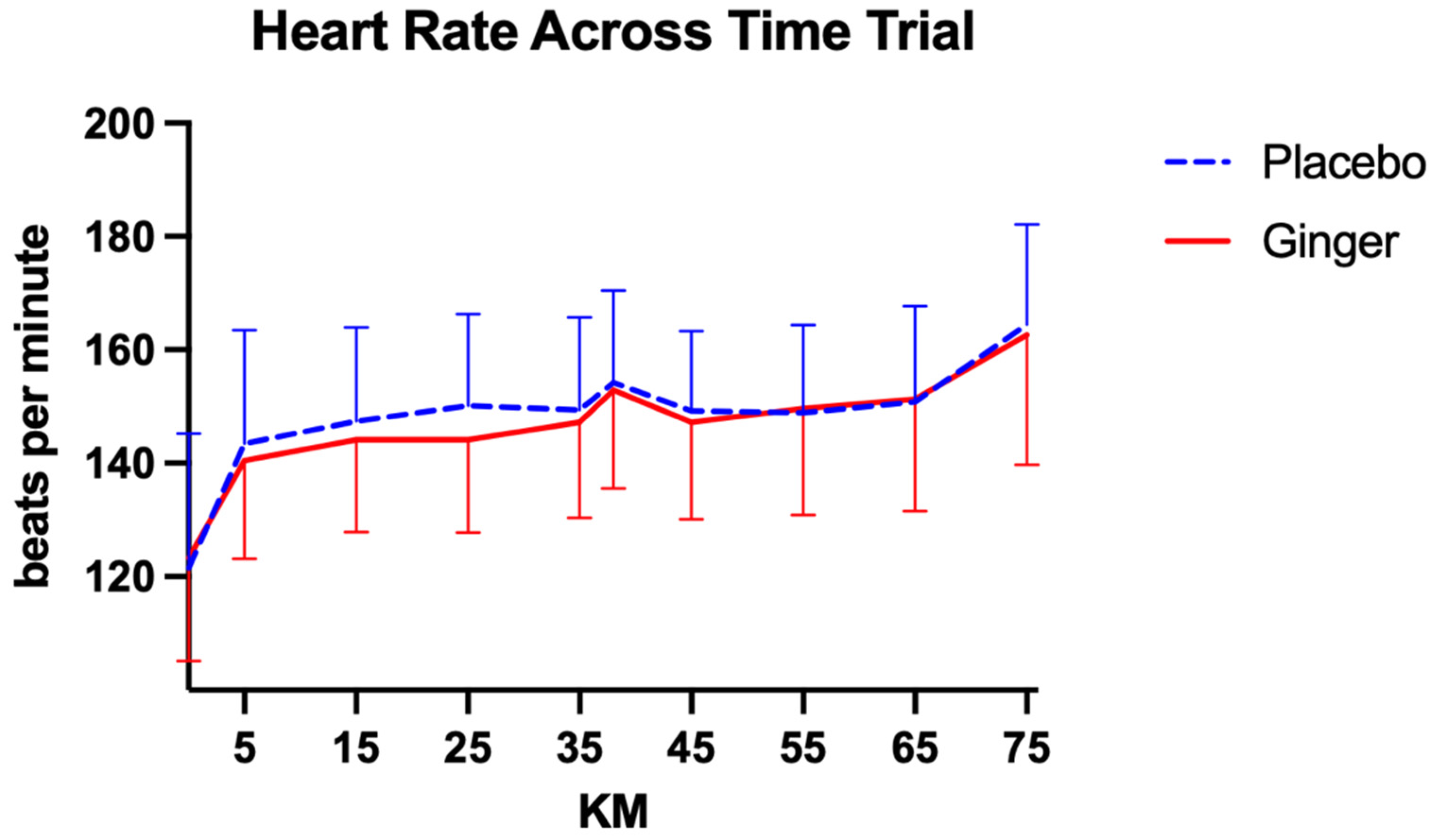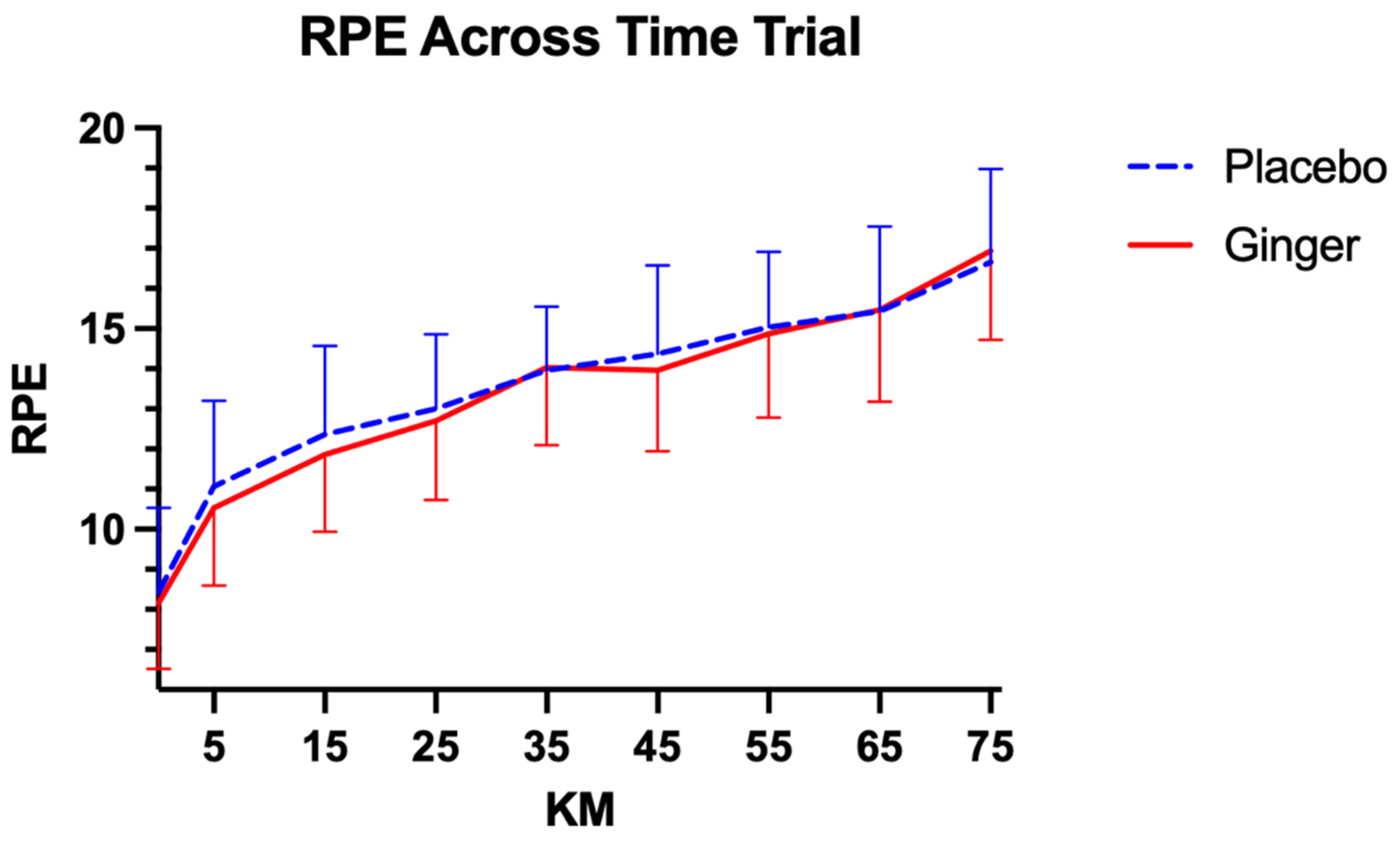


The Influence of Ginger Supplementation on Cycling Performance

Abstract
1. Introduction
2. Materials and Methods
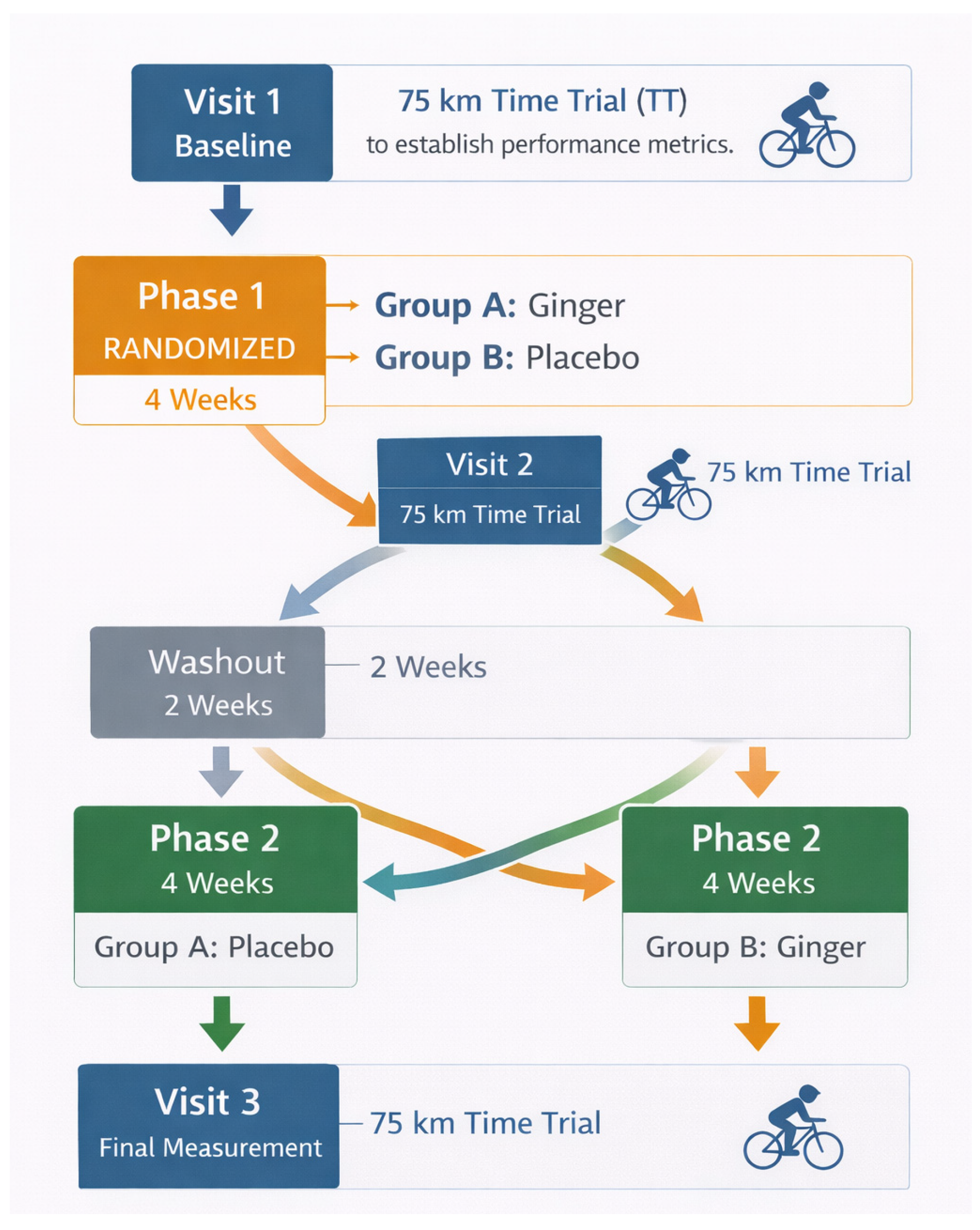
2.1. Study Design
2.2. Participants
2.3. Procedures
2.3.1. Visit 1: Baseline Testing
2.3.2. Supplementation
2.3.3. Visit 2: Post-Supplementation (First Condition)
2.3.4. Washout Period
2.3.5. Visit 3: Post-Supplementation (Second Condition)
2.4. Statistical Analysis
3. Results
3.1. Study Participant Demographics and Anthropometrics
3.1.1. Diet and Performance
3.1.2. Gastrointestinal Distress
4. Discussion
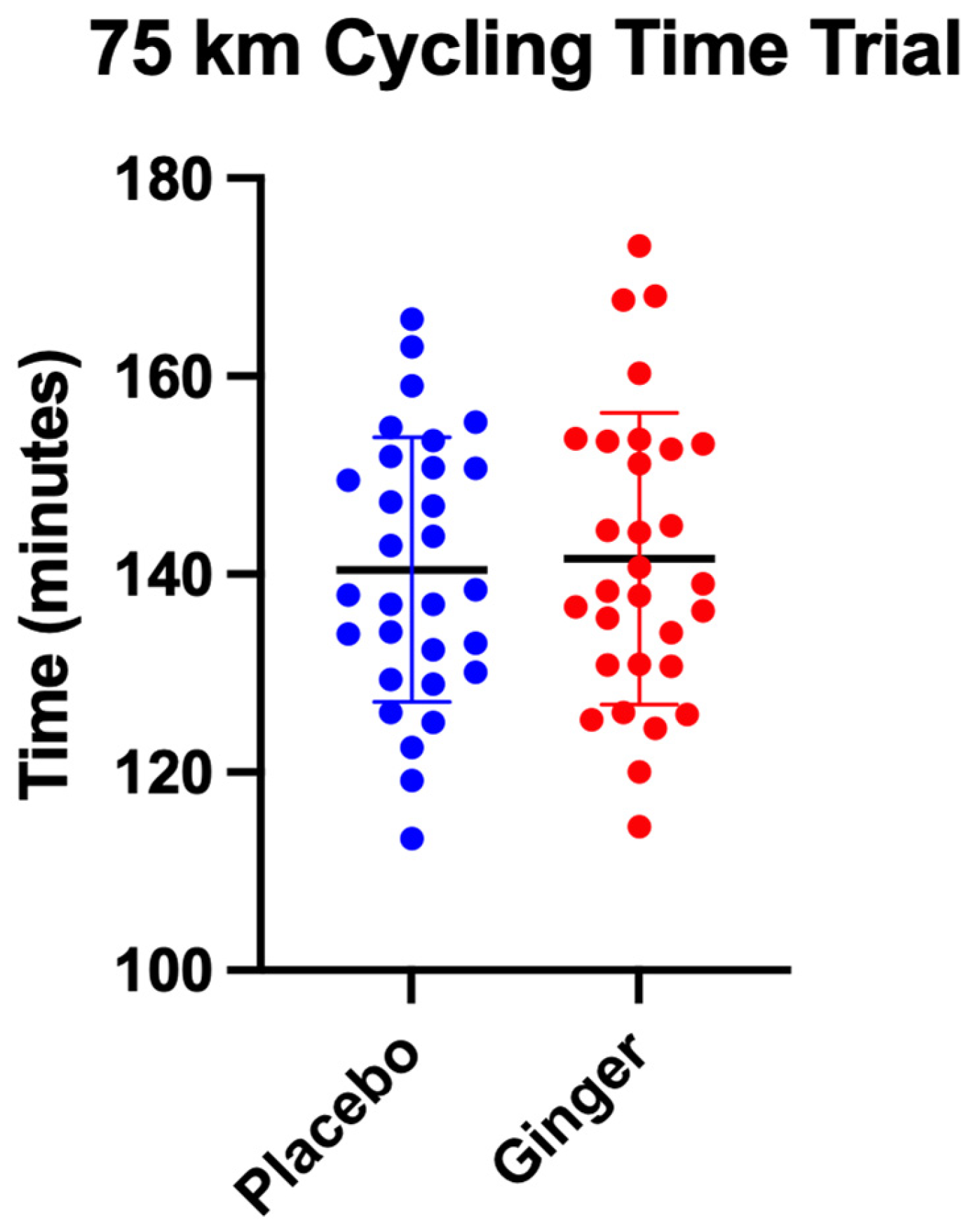
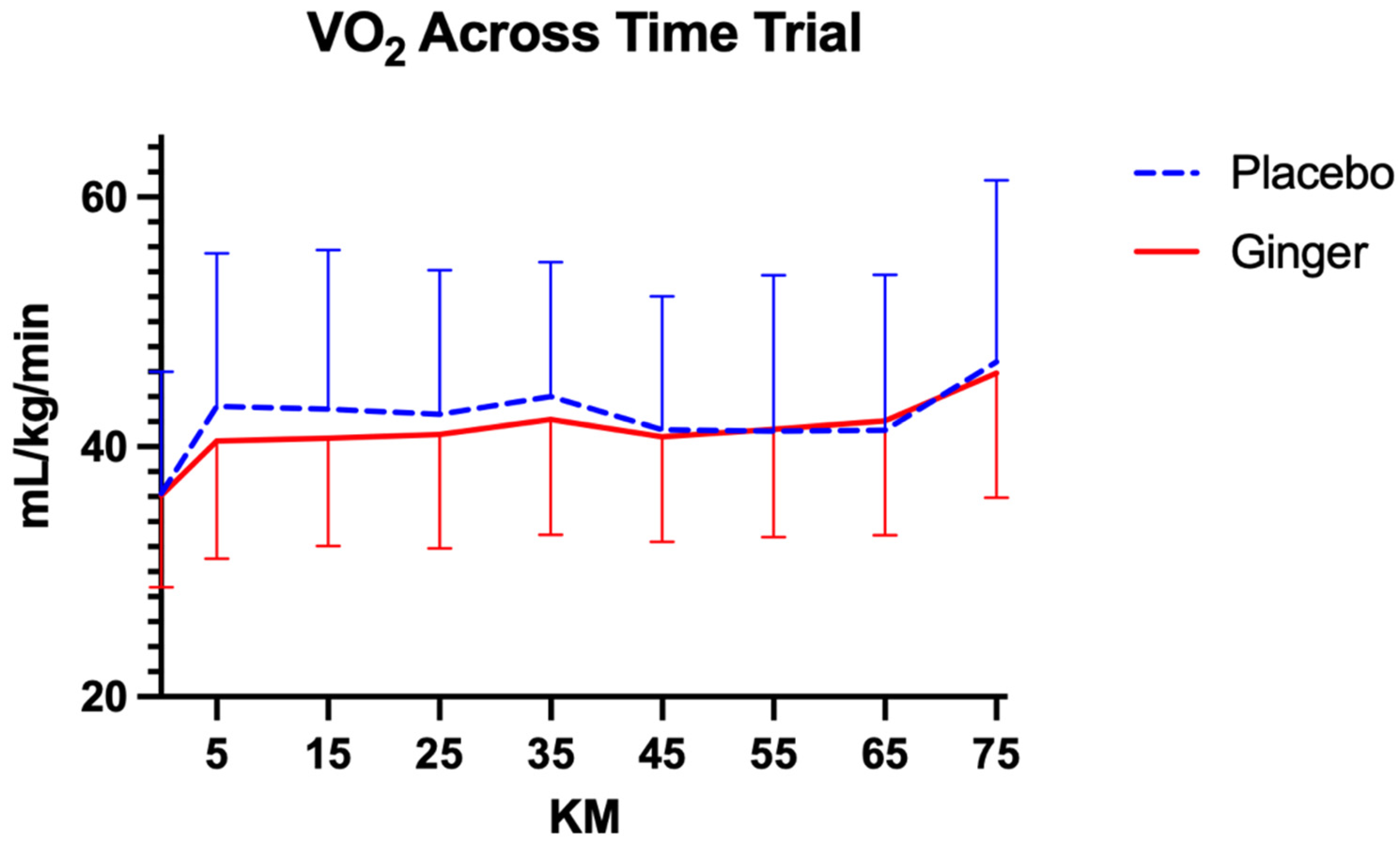
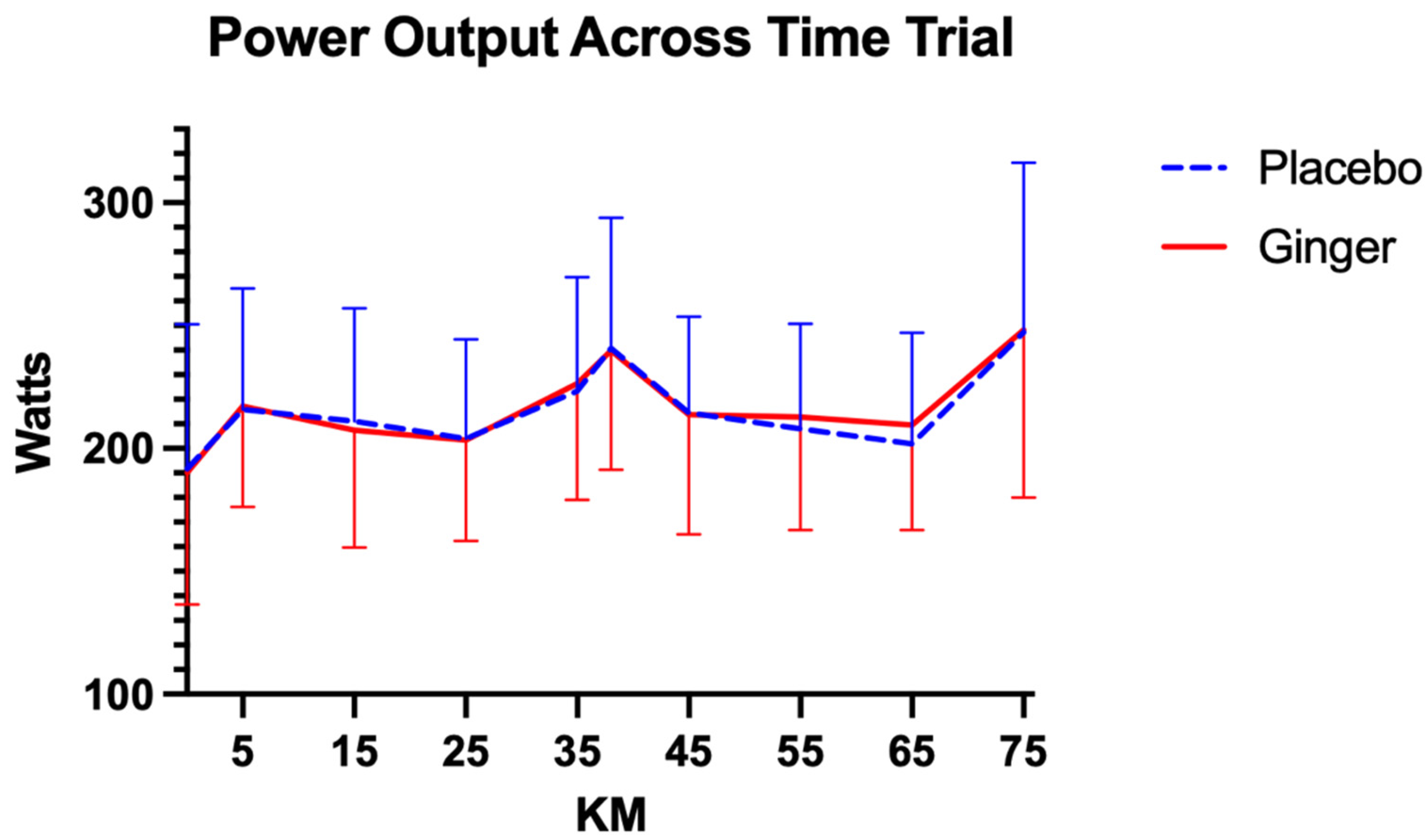
4.1. Performance Outcomes
4.2. Age Effects on Performance Variables
4.3. Hydration
4.4. Nutritional Effects
5. Conclusions
Author Contributions
Funding
Institutional Review Board Statement
Informed Consent Statement
Data Availability Statement
Acknowledgments
Conflicts of Interest
References
- Connolly, D.; McHugh, M.; Padilla-Zakour, O. Efficacy of a tart cherry juice blend in preventing the symptoms of muscle damage. Br. J. Sports Med. 2006, 40, 679–683. [Google Scholar] [CrossRef] [Scilit] [PubMed]
- Mashhadi, N.S.; Ghiasvand, R.; Askari, G.; Hariri, M.; Darvishi, L.; Mofid, M.R. Anti-oxidative and anti-inflammatory effects of ginger in health and physical activity: Review of current evidence. Int. J. Prev. Med. 2013, 4, S36. [Google Scholar] [PubMed]
- McAnulty, L.S.; Miller, L.E.; Hosick, P.A.; Utter, A.C.; Quindry, J.C.; McAnulty, S.R. Effect of resveratrol and quercetin supplementation on redox status and inflammation after exercise. Appl. Physiol. Nutr. Metab. 2013, 38, 760–765. [Google Scholar] [CrossRef] [Scilit] [PubMed]
- McAnulty, S.R.; McAnulty, L.S.; Nieman, D.C.; Dumke, C.L.; Morrow, J.D.; Utter, A.C.; Henson, D.A.; Proulx, W.R.; George, G.L. Consumption of blueberry polyphenols reduces exercise-induced oxidative stress compared to vitamin C. Nutr. Res. 2004, 24, 209–221. [Google Scholar] [CrossRef] [Scilit]
- Trombold, J.R.; Reinfeld, A.S.; Casler, J.R.; Coyle, E.F. The effect of pomegranate juice supplementation on strength and soreness after eccentric exercise. J. Strength Cond. Res. 2011, 25, 1782–1788. [Google Scholar] [CrossRef] [Scilit]
- Cao, G.; Zuo, J.; Wu, B.; Wu, Y. Polyphenol supplementation boosts aerobic endurance in athletes: Systematic review. Front. Physiol. 2024, 15, 1369174. [Google Scholar] [CrossRef] [Scilit]
- Clauss, M.; Skattebo, Ø.; Rasen Dæhli, M.; Ditta Valsdottir, T.; Ezzatkhah Bastani, N.; Ivar Johansen, E.; Jensen Kolnes, K.; Steen Skålhegg, B.; Jensen, J. Carbohydrate ingestion during prolonged cycling improves next-day time trial performance and alters amino acid concentrations. Med. Sci. Sports Exerc. 2023, 55, 2228–2240. [Google Scholar] [CrossRef] [Scilit]
- Muros, J.J.; Sánchez-Muñoz, C.; Campos, D.; Hinojosa-Nogueira, D.; Rufián-Henares, J.Á.; Mateo-March, M.; Zabala, M. Nutritional habits of professional cyclists during pre-season. Nutrients 2022, 14, 3695. [Google Scholar] [CrossRef] [Scilit]
- García-Rovés, P.M.; Terrados, N.; Fernández, S.; Patterson, A.M. Comparison of dietary intake and eating behavior of professional road cyclists during training and competition. Int. J. Sport Nutr. Exerc. Metab. 2000, 10, 82–98. [Google Scholar] [CrossRef] [Scilit]
- Thomas, D.T.; Erdman, K.A.; Burke, L.M. American College of Sports Medicine Joint Position Statement. Nutrition and Athletic Performance. Med. Sci. Sports Exerc. 2016, 48, 543–568. [Google Scholar] [CrossRef] [Scilit]
- Ballester, P.; Cerdá, B.; Arcusa, R.; Marhuenda, J.; Yamedjeu, K.; Zafrilla, P. Effect of ginger on inflammatory diseases. Molecules 2022, 27, 7223. [Google Scholar] [CrossRef] [Scilit] [PubMed]
- Black, C.D.; O’Connor, P.J. Acute effects of dietary ginger on muscle pain induced by eccentric exercise. Phytother. Res. 2010, 24, 1620–1626. [Google Scholar] [CrossRef] [Scilit] [PubMed]
- Matsumura, M.D.; Zavorsky, G.S.; Smoliga, J.M. The effects of pre-exercise ginger supplementation on muscle damage and delayed onset muscle soreness. Phytother. Res. 2015, 29, 887–893. [Google Scholar] [PubMed]
- Wilson, P.B. A randomized double-blind trial of ginger root for reducing muscle soreness and improving physical performance recovery among experienced recreational distance runners. J. Diet. Suppl. 2020, 17, 121–132. [Google Scholar]
- Hattori, S.; Omi, N.; Yang, Z.; Nakamura, M.; Ikemoto, M. Effect of ginger extract ingestion on skeletal muscle glycogen contents and endurance exercise in male rats. Phys. Act. Nutr. 2021, 25, 15. [Google Scholar] [CrossRef] [Scilit]
- Ghayur, M.N.; Gilani, A.H. Ginger lowers blood pressure through blockade of voltage-dependent calcium channels. J. Cardiovasc. Pharmacol. 2005, 45, 74–80. [Google Scholar] [CrossRef] [Scilit]
- McKay, A.K.; Stellingwerff, T.; Smith, E.S.; Martin, D.T.; Mujika, I.; Goosey-Tolfrey, V.L.; Sheppard, J.; Burke, L.M. Defining Training and Performance Caliber: A Participant Classification Framework. Int. J. Sports Physiol. Perform. 2022, 17, 317–331. [Google Scholar] [CrossRef] [Scilit]
- Bowtell, J.; Kelly, V. Fruit-derived polyphenol supplementation for athlete recovery and performance. Sports Med. 2019, 49, 3–23. [Google Scholar] [CrossRef] [Scilit]
- Duracinsky, M.; Archbold, S.; Lobo, B.; Bessonneau, P.; Thonon, F.; Santos, J.; Guagnozzi, D.; Payakachat, N.; Coffin, B.; Azpiroz, F. The Intestinal Gas Questionnaire (IGQ): Psychometric validation of a new instrument for measuring gas-related symptoms and their impact on daily life among general population and irritable bowel syndrome. Neurogastroenterol. Motil. 2022, 34, e14202. [Google Scholar]
- Lichtenstein, A.H.; Petersen, K.; Barger, K.; Hansen, K.E.; Anderson, C.A.M.; Baer, D.J.; Lampe, J.W.; Rasmussen, H.; Matthan, N.R. Perspective: Design and Conduct of Human Nutrition Randomized Controlled Trials. Adv. Nutr. 2020, 12, 4–20. [Google Scholar] [CrossRef] [Scilit]
- Nieman, D.; Valacchi, G.; Wentz, L.; Ferrara, F.; Pecorelli, A.; Woodby, B.; Sakaguchi, C.; Simonson, A. Mixed Flavonoid Supplementation Attenuates Postexercise Plasma Levels of 4-Hydroxynonenal and Protein Carbonyls in Endurance Athletes. Int. J. Sport Nutr. Exerc. Metab. 2019, 30, 112–119. [Google Scholar] [CrossRef] [Scilit]
- Nieman, D.C.; Scherr, J.; Luo, B.; Meaney, M.P.; Dréau, D.; Sha, W.; Dew, D.A.; Henson, D.A.; Pappan, K.L. Influence of Pistachios on Performance and Exercise-Induced Inflammation, Oxidative Stress, Immune Dysfunction, and Metabolite Shifts in Cyclists: A Randomized, Crossover Trial. PLoS ONE 2014, 9, e113725. [Google Scholar] [CrossRef] [Scilit]
- Salgado, R.M.; Caldwell, A.R.; Coffman, K.E.; Cheuvront, S.N.; Kenefick, R.W. Endurance test selection optimized via sample size predictions. J. Appl. Physiol. 2020, 129, 467–473. [Google Scholar] [CrossRef] [Scilit]
- Stone, M.R.; Thomas, K.; Wilkinson, M.; Stevenson, E.; St Clair Gibson, A.; Jones, A.M.; Thompson, K.G. Exploring the performance reserve: Effect of different magnitudes of power output deception on 4000 m cycling time-trial performance. PLoS ONE 2017, 12, e0173120. [Google Scholar] [CrossRef] [Scilit] [PubMed]
- Dantas, J.L.; Pereira, G.; Nakamura, F.Y. Five-kilometers time trial: Preliminary validation of a short test for cycling performance evaluation. Asian J. Sports Med. 2015, 6, e23802. [Google Scholar] [CrossRef] [Scilit] [PubMed]
- MacRae, H.S.; Mefferd, K.M. Dietary antioxidant supplementation combined with quercetin improves cycling time trial performance. Int. J. Sport Nutr. Exerc. Metab. 2006, 16, 405–419. [Google Scholar] [CrossRef] [Scilit] [PubMed]
- Cook, M.D.; Myers, S.D.; Blacker, S.D.; Willems, M.E.T. New Zealand blackcurrant extract improves cycling performance and fat oxidation in cyclists. Eur. J. Appl. Physiol. 2015, 115, 2357–2365. [Google Scholar] [CrossRef] [Scilit]
- Roberts, J.D.; Roberts, M.G.; Tarpey, M.D.; Weekes, J.C.; Thomas, C.H. The effect of a decaffeinated green tea extract formula on fat oxidation, body composition and exercise performance. J. Int. Soc. Sports Nutr. 2015, 12, 1. [Google Scholar] [CrossRef] [Scilit]
- Hooper, D.R.; Orange, T.; Gruber, M.T.; Darakjian, A.A.; Conway, K.L.; Hausenblas, H.A. Broad spectrum polyphenol supplementation from tart cherry extract on markers of recovery from intense resistance exercise. J. Int. Soc. Sports Nutr. 2021, 18, 47. [Google Scholar] [CrossRef] [Scilit]
- Trinity, J.D.; Pahnke, M.D.; Trombold, J.R.; Coyle, E.F. Impact of polyphenol antioxidants on cycling performance and cardiovascular function. Nutrients 2014, 6, 1273–1292. [Google Scholar] [CrossRef] [Scilit]
- Black, C.D.; Oconnor, P.J. Acute effects of dietary ginger on quadriceps muscle pain during moderate-intensity cycling exercise. Int. J. Sport Nutr. Exerc. Metab. 2008, 18, 653–664. [Google Scholar] [CrossRef] [Scilit] [PubMed]
- Demirli, A.; Ulupınar, S.; Terzi, M.; Özbay, S.; Özkara, A.B.; Gençoğlu, C.; Ouergui, I.; Ardigò, L.P. Synergistic Effects of Green Tea Extract and Ginger Supplementation on Endurance Performance and Thermal Perception in Normothermic and Cold Environments: A Randomized, Placebo-Controlled, Double-Blind Crossover Trial. Nutrients 2025, 17, 2949. [Google Scholar] [CrossRef] [Scilit] [PubMed]
- Sanchez Diaz, M.; Martin-Castellanos, A.; Fernandez-Elias, V.E.; Lopez Torres, O.; Lorenzo Calvo, J. Effects of polyphenol consumption on recovery in team sport athletes of both sexes: A systematic review. Nutrients 2022, 14, 4085. [Google Scholar] [CrossRef] [Scilit] [PubMed]
- Ferrara, L.; D’Angelo, S. Post-exercise fatigue, lactate, and natural nutritional strategy. J. Phys. Educ. Sport 2023, 23, 2274–2283. [Google Scholar]
- Arrese, A.L.; Ostáriz, E.S.; Mallen, J.C.; Izquierdo, D.M. The changes in running performance and maximal oxygen uptake after long-term training in elite athletes. J. Sports Med. Phys. Fit. 2005, 45, 435. [Google Scholar]
- Tanaka, H.; Seals, D.R. Endurance exercise performance in Masters athletes: Age-associated changes and underlying physiological mechanisms. J. Physiol. 2008, 586, 55–63. [Google Scholar] [CrossRef] [Scilit]
- Lepers, R.; Stapley, P.J. Master Athletes Are Extending the Limits of Human Endurance. Front. Physiol. 2016, 7, 613. [Google Scholar] [CrossRef] [Scilit]
- Fleg, J.L.; Morrell, C.H.; Bos, A.G.; Brant, L.J.; Talbot, L.A.; Wright, J.G.; Lakatta, E.G. Accelerated Longitudinal Decline of Aerobic Capacity in Healthy Older Adults. Circulation 2005, 112, 674–682. [Google Scholar] [CrossRef] [Scilit]
- Christou, D.D.; Seals, D.R. Decreased maximal heart rate with aging is related to reduced β-adrenergic responsiveness but is largely explained by a reduction in intrinsic heart rate. J. Appl. Physiol. 2008, 105, 24–29. [Google Scholar] [CrossRef] [Scilit]
- Coyle, E.F. Physiological determinants of endurance exercise performance. J. Sci. Med. Sport 1999, 2, 181–189. [Google Scholar] [CrossRef] [Scilit]
- Matusiak-Wieczorek, E.; Pyciarz, L.; Drobniewski, M.; Borowski, A. An assessment of the dietary habits among road cyclists competing in amateur races. Food Sci. Nutr. 2023, 11, 428–433. [Google Scholar] [CrossRef] [Scilit]
- Stearns, R.L.; Emmanuel, H.; Volek, J.S.; Casa, D.J. Effects of ingesting protein in combination with carbohydrate during exercise on endurance performance: A systematic review with meta-analysis. J. Strength Cond. Res. 2010, 24, 2192–2202. [Google Scholar] [CrossRef] [Scilit]
- Kinney, A.R.; Eakman, A.M.; Graham, J.E. Novel effect size interpretation guidelines and an evaluation of statistical power in rehabilitation research. Arch. Phys. Med. Rehabil. 2020, 101, 2219–2226. [Google Scholar] [CrossRef] [Scilit]
- Kluboito, Y.; Mintah, J.K.; Essien-Baidoo, S.; Arthur, N.A. Effect of acute supplementation of hibiscus-ginger drink on university athletes’ aerobic power and blood lactate. N. Afr. J. Food Nutr. Res. 2024, 8, 89–95. [Google Scholar] [CrossRef] [Scilit]
- Pérez, D.I.V.; Mozer, R.L.; dos Santos, D.A.; Silva, E.F.; Queiroz, A.C.C.; Miarka, B.; Brito, C.J.; Quintana, M.S. Suplementação aguda de substrato de gengibre não aumenta o metabolismo em repouso e durante o exercício. Motricidade 2020, 16, 38–45. [Google Scholar]
- Zehsaz, F.; Farhangi, N.; Mirheidari, L. Clinical immunology The effect of Zingiber officinale R. rhizomes (ginger) on plasma pro-inflammatory cytokine levels in well-trained male endurance runners. Cent. Eur. J. Immunol. 2014, 39, 174–180. [Google Scholar] [CrossRef] [Scilit]



| Nutrient | Baseline TT | Ginger TT | Placebo TT | Significance (p-Value) |
|---|---|---|---|---|
| Energy (Kcal) | 3203 ± 961 | 3206 ± 978 | 3377 ± 947 | 0.50 |
| Kcal/kg BM | 41.8 ± 12.9 | 42.4 ± 15.5 | 44.8 ± 15.2 | 0.41 |
| Carbohydrates (g) | 389 ± 137 | 383 ± 134 | 383 ± 146 | 0.81 |
| Carbohydrate g/kg BM | 5.1 ± 1.9 | 5.1 ± 2.1 | 5.1 ± 2.2 | 0.84 |
| Protein (g) | 127 ± 56 | 124 ± 46 | 145 ± 50 | 0.10 |
| Protein g/kg BM | 1.6 ± 0.7 | 1.6 ± 0.6 | 1.9 ± 0.8 | 0.09 |
| Fat (g) | 126 ± 47 | 128 ± 54 | 139 ± 59 | 0.35 |
| Saturated Fat (g) | 41 ± 18 | 42 ± 23 | 46 ± 22 | 0.58 |
| Cholesterol (mg) | 439 ± 389 | 370 ± 323 | 401 ± 274 | 0.56 |
| Omega-3 Fatty Acid (mg) | 1091 ± 2170 | 1291 ± 2295 | 2013 ± 4091 | 0.39 |
| Omega-6 Fatty Acid (mg) | 5996 ± 5485 | 6814 ± 6598 | 6588 ± 8146 | 0.87 |
| Fiber (g) | 35 ± 14 | 32 ± 15 | 32 ± 15 | 0.267 |
| Nutrient | Baseline TT | Ginger TT | Placebo TT | Significance (p-Value) |
|---|---|---|---|---|
| Vitamin A (mg) | 1156 ± 654 | 1063 ± 600 | 1363 ± 1359 | 0.32 |
| Thiamin (mg) | 3.0 ± 1.2 | 3.1 ± 1.5 | 2.9 ± 1.3 | 0.84 |
| Riboflavin (mg) | 3.5 ± 1.4 | 3.3 ± 1.4 | 3.5 ± 1.3 | 0.63 |
| Niacin (mg) | 40 ± 19 | 42 ± 20 | 45 ± 19 | 0.53 |
| Vitamin B6 (mg) | 3.5 ± 1.7 | 3.3 ± 1.3 | 3.5 ± 1.7 | 0.68 |
| Folate (μg) | 897 ± 479 | 902 ± 465 | 850 ± 512 | 0.67 |
| Vitamin B12 (μg) | 6.2 ± 4.3 | 7.1 ± 4.2 | 8.2 ± 6.2 | 0.11 |
| Vitamin C (mg) | 173 ± 126 * | 127 ± 106 | 118 ± 101 | 0.00 * |
| Vitamin D (IU) | 269 ± 198 | 365 ± 388 | 463 ± 522 | 0.11 |
| Calcium (mg) | 1498 ± 734 | 1510 ± 629 | 1785 ± 735 | 0.06 |
| Iron (mg) | 23 ± 10 | 23 ± 8.7 | 22 ± 9 | 0.76 |
| Zinc (mg) | 17 ± 7 | 17 ± 6 | 18 ± 6 | 0.50 |
| Phosphorus (mg) | 2133 ± 789 | 2155 ± 744 | 2398 ± 768 | 0.14 |
| Magnesium (mg) | 570 ± 231 | 581 ± 258 | 552 ± 191 | 0.79 |
| Potassium (mg) | 3994 ± 1435 | 4058 ± 1729 | 4257 ± 1436 | 0.48 |
| Sodium (mg) | 4547 ± 1577 | 4802 ± 2109 | 4994 ± 1695 | 0.42 |
| Nutrient | Baseline TT | Ginger TT | Placebo TT | STATS (p-Value) |
|---|---|---|---|---|
| Energy (Kcal) | 272 ± 201 | 303 ± 302 | 261 ± 349 | 0.53 |
| Kcal/kg BM | 3.8 ± 3.1 | 4.1 ± 4.3 | 3.6 ± 4.9 | 0.57 |
| Carbohydrates (g) | 56 ± 41 | 62 ± 55 | 53 ± 62 | 0.52 |
| Carbohydrate g/kg BM | 0.8 ± 0.6 | 0.9 ± 0.8 | 0.7 ± 0.9 | 0.55 |
Disclaimer/Publisher’s Note: The statements, opinions and data contained in all publications are solely those of the individual author(s) and contributor(s) and not of MDPI and/or the editor(s). MDPI and/or the editor(s) disclaim responsibility for any injury to people or property resulting from any ideas, methods, instructions or products referred to in the content. |
© 2026 by the authors. Licensee MDPI, Basel, Switzerland. This article is an open access article distributed under the terms and conditions of the Creative Commons Attribution (CC BY) license.
Share and Cite
Kurtz, J.A.; Watson, M.; Robinson, B.; Edmondson, C.; Wentz, L. The Influence of Ginger Supplementation on Cycling Performance. Sports 2026, 14, 126. https://doi.org/10.3390/sports14040126
Kurtz JA, Watson M, Robinson B, Edmondson C, Wentz L. The Influence of Ginger Supplementation on Cycling Performance. Sports. 2026; 14(4):126. https://doi.org/10.3390/sports14040126
Chicago/Turabian StyleKurtz, Jennifer A., Mabry Watson, Briana Robinson, Casey Edmondson, and Laurel Wentz. 2026. "The Influence of Ginger Supplementation on Cycling Performance" Sports 14, no. 4: 126. https://doi.org/10.3390/sports14040126
APA StyleKurtz, J. A., Watson, M., Robinson, B., Edmondson, C., & Wentz, L. (2026). The Influence of Ginger Supplementation on Cycling Performance. Sports, 14(4), 126. https://doi.org/10.3390/sports14040126