
Sex-Specific Fatigue and Muscle Activation Responses During Single-Leg Side-Hop and Pelvic Stability Assessments Among Active Young Adults

 , , , ,
  and
and
Abstract
1. Introduction
2. Materials and Methods
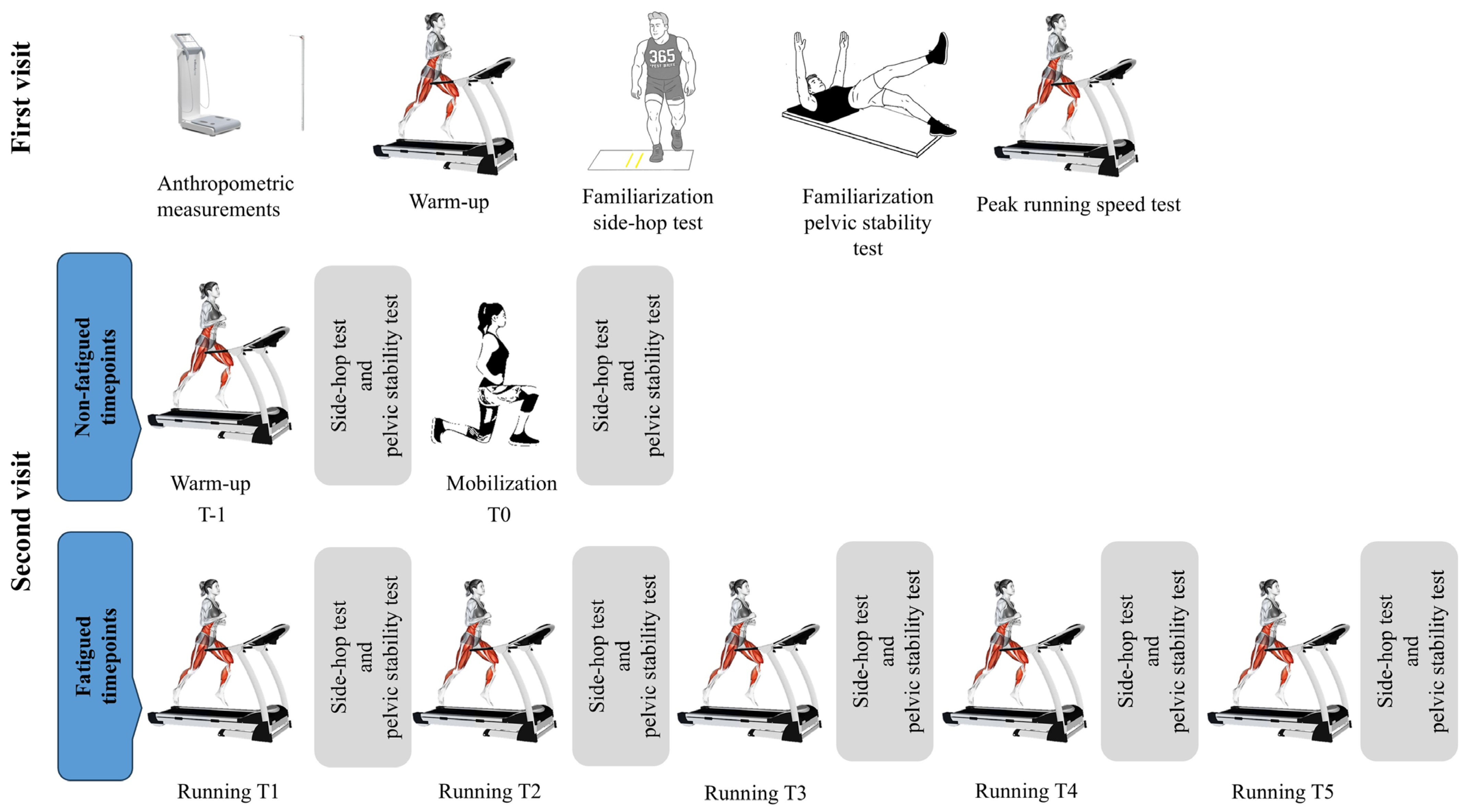
2.1. Design
2.2. Participants
2.3. Procedures
2.3.1. Side-Hop Test
2.3.2. Pelvic Stability Test
2.3.3. Muscle Activity
2.4. Statistical Analyses
3. Results
3.1. Participant Characteristics
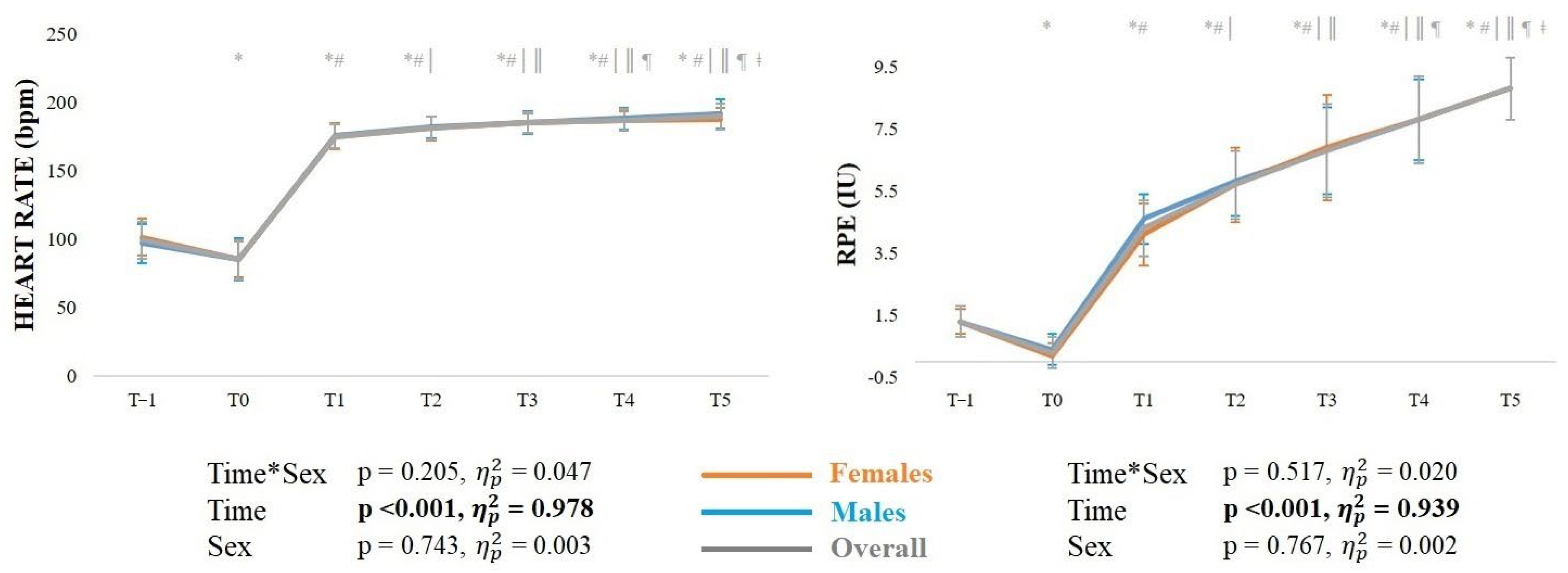
3.2. Fatigue Protocol Demands
3.3. Side-Hop and Pelvic Stability Test Performance
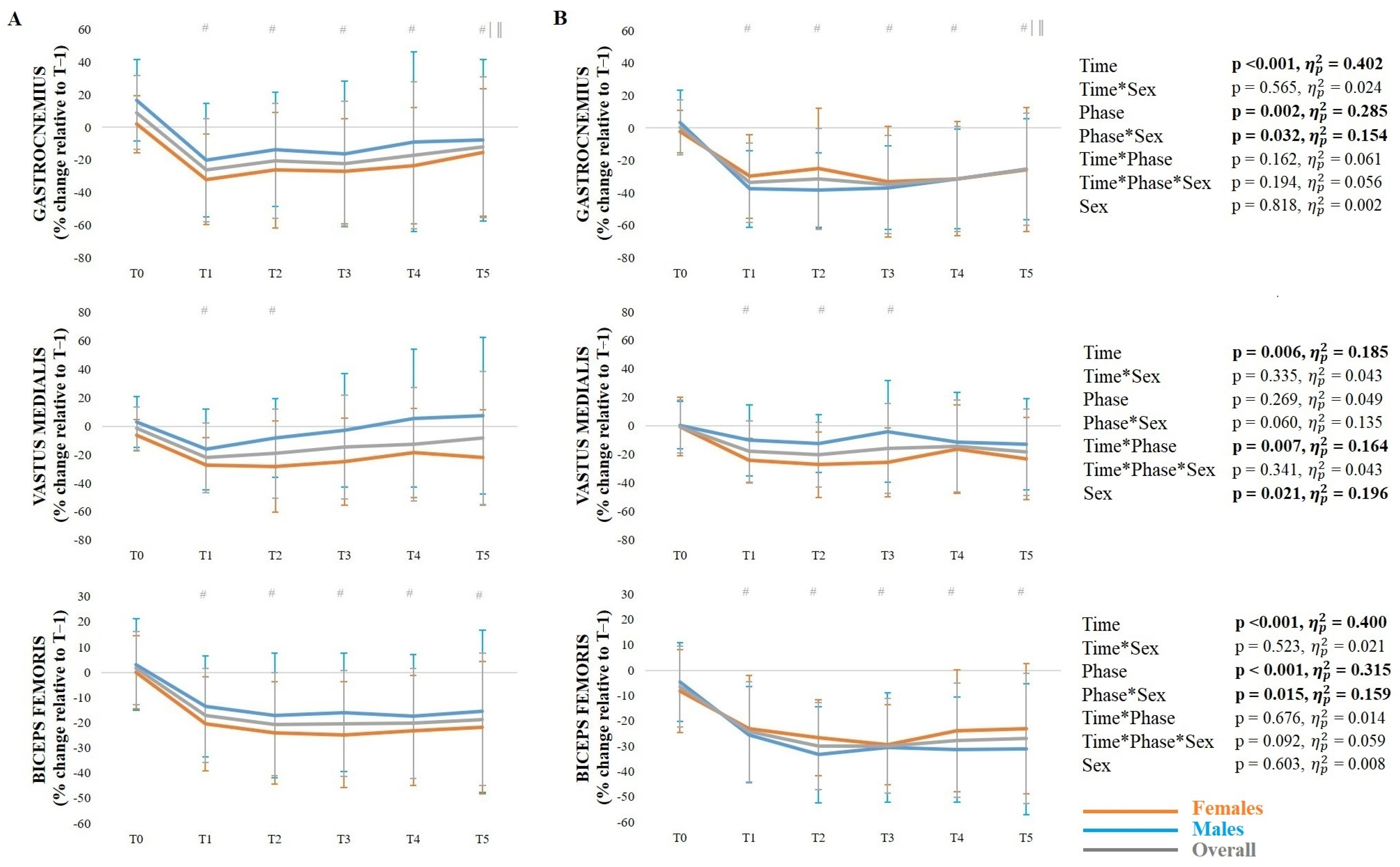
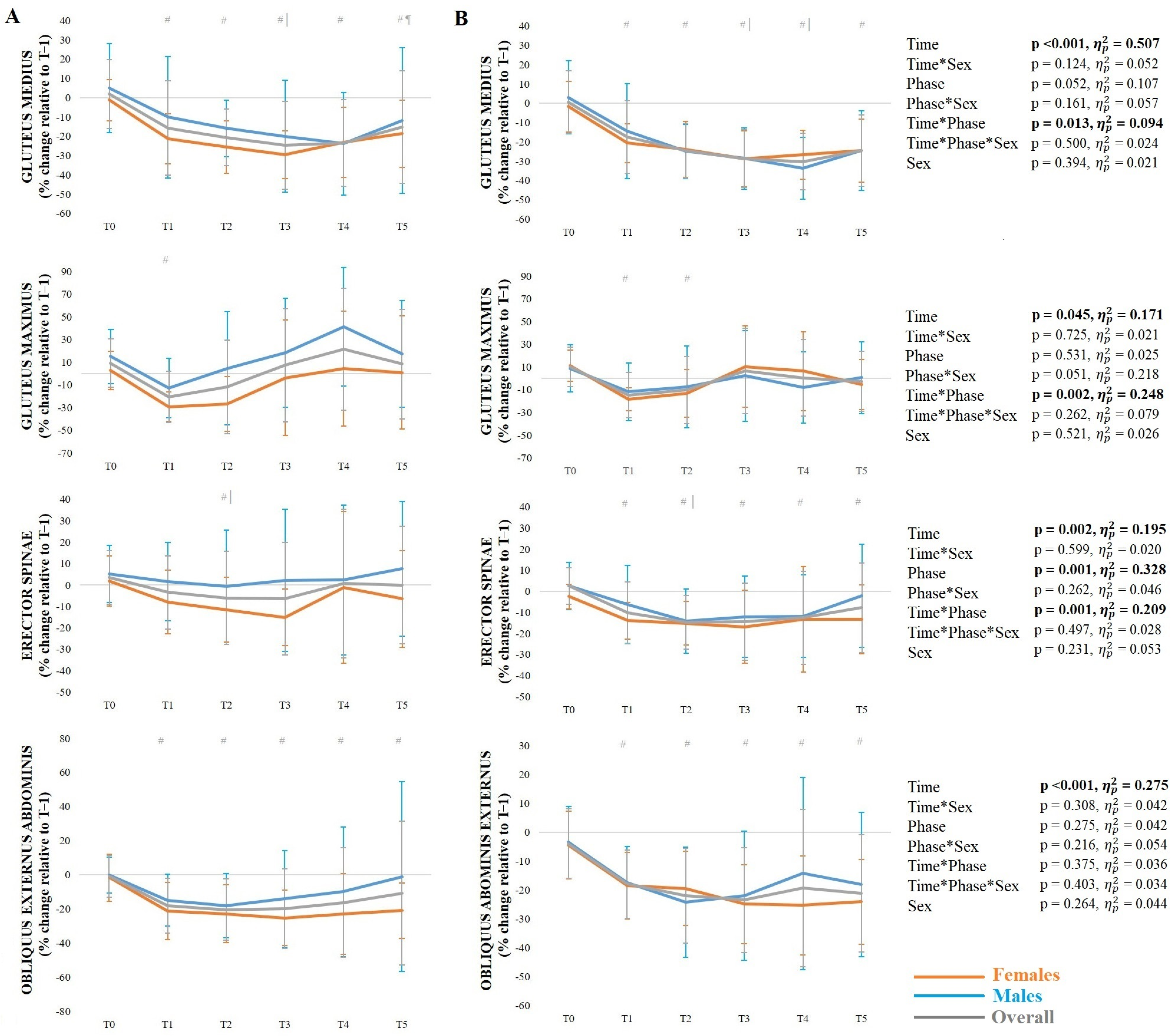
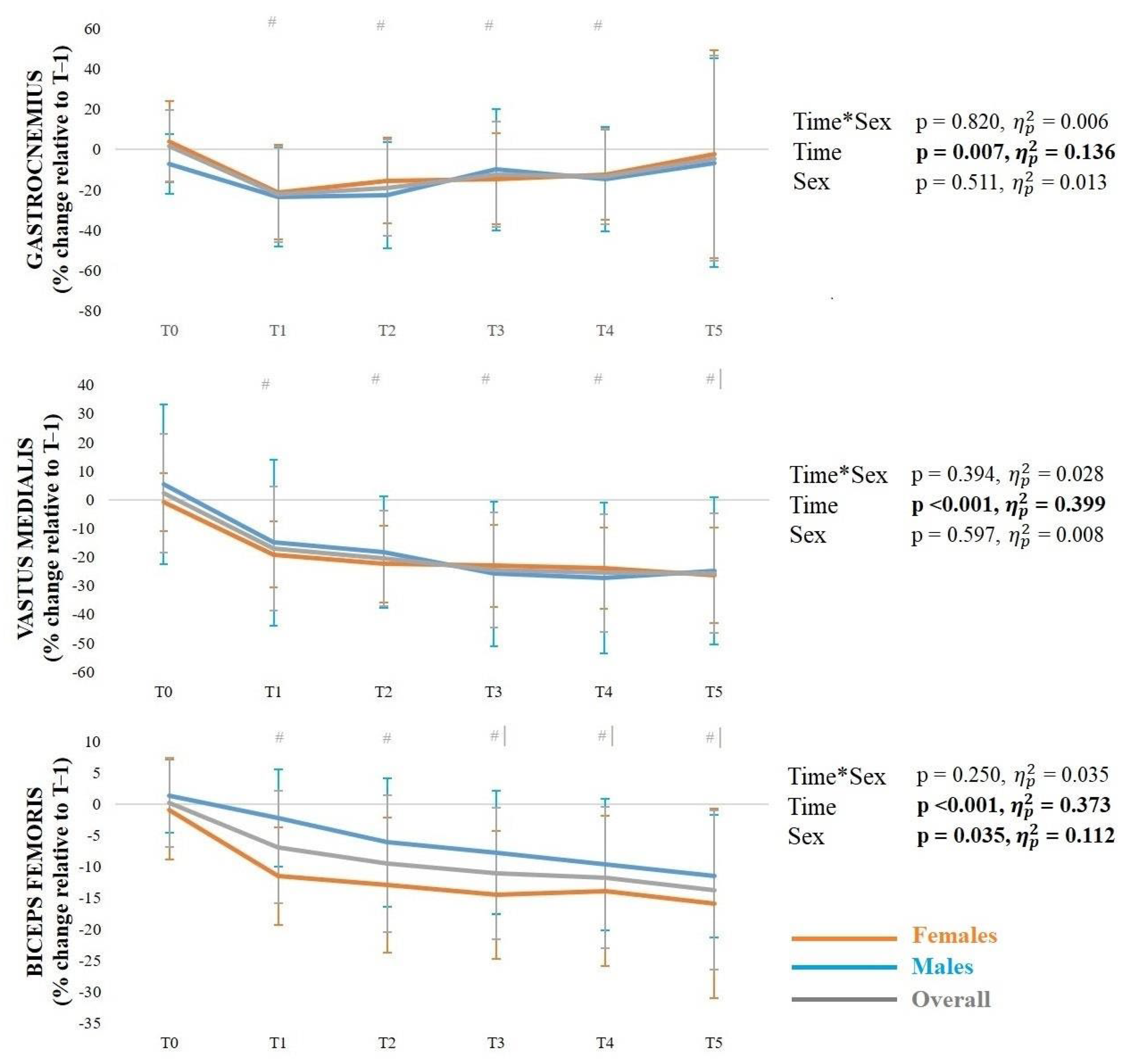
3.4. Muscle Activation During the Side-Hop Test
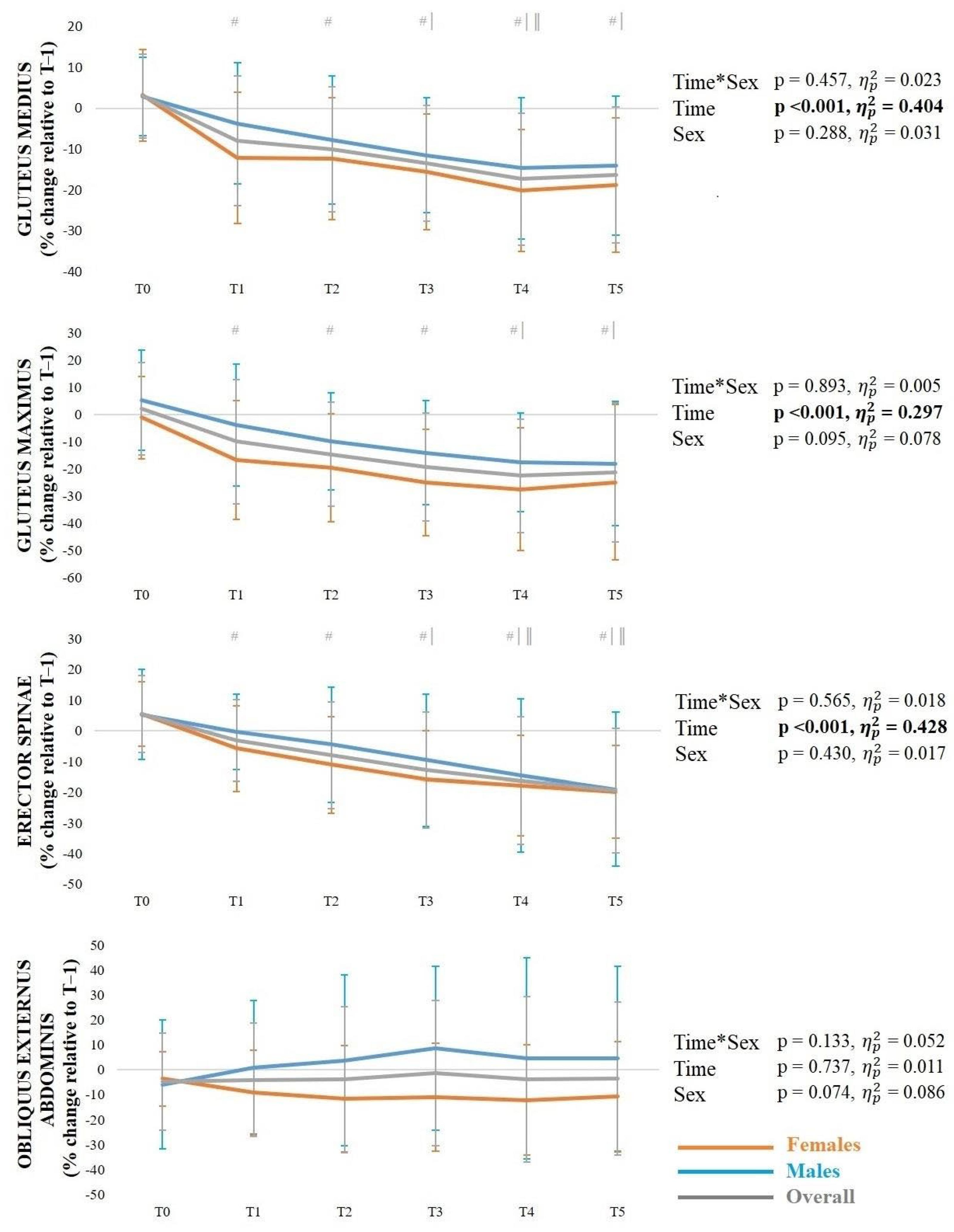
3.5. Muscle Activation During the Pelvic Stability Test
4. Discussion
5. Conclusions
Author Contributions
Funding
Institutional Review Board Statement
Informed Consent Statement
Data Availability Statement
Acknowledgments
Conflicts of Interest
Abbreviations
| ACL | Anterior cruciate ligament |
| EMG | Electromyography |
| ICC | Intraclass correlation coefficient |
| SEM | Standard error of measurement |
| RPE | Rating of perceived exertion |
| HR | Hear rate |
| DBB | Deadbug bridging test |
| ANOVA | Analyses of variance |
Appendix A
Appendix A.1. The Experimental Setup for the Side-Hop Test

Appendix A.2. The Experimental Setup for the Pelvic Stability Test

Appendix A.3. The Setup for Electromyography Assessment

Appendix A.4. Raw and Processed Electromyography Data from a Representative Participant During Single-Leg Side-Hop and Pelvic Stability Assessments at T1

- Note: raw (A) and processed (B) electromyography data during single-leg side-hop assessment; in the single-leg side-hop test, the vertical colored lines indicate successive foot contacts, first recorded on the right plate (Fz1; left plate Fz2), with EMG signals from the corresponding muscles and a total recording duration of 10 s; raw (C) and processed (D) electromyography data during pelvic stability assessment; in the pelvic stability test red markers indicate a left supporting leg, and green markers indicate a right supporting leg; each side was performed three times (up to 3 s each, from the first event—when the hip marker was at its highest point—to the second event—when the lifted leg was placed back on the force plate), always starting with the left leg.
References
- Sundberg, A.; Högberg, J.; Tosarelli, F.; Buckthorpe, M.; Della Villa, F.; Hägglund, M.; Samuelsson, K.; Hamrin Senorski, E. Sport-Specific Injury Mechanisms and Situational Patterns of ACL Injuries: A Comprehensive Systematic Review. Sports Med. 2025, 44, 2489–2527. [Google Scholar] [CrossRef]
- Sanders, T.L.; Maradit Kremers, H.; Bryan, A.J.; Larson, D.R.; Dahm, D.L.; Levy, B.A.; Stuart, M.J.; Krych, A.J. Incidence of anterior cruciate ligament tears and reconstruction: A 21-year population-based study. Am. J. Sports Med. 2016, 44, 1502–1507. [Google Scholar] [CrossRef] [PubMed]
- Cheung, E.C.; Boguszewski, D.V.; Joshi, N.B.; Wang, D.; McAllister, D.R. Anatomic factors that may predispose female athletes to anterior cruciate ligament injury. Curr. Sports Med. Rep. 2015, 14, 368–372. [Google Scholar] [CrossRef] [PubMed]
- Todd, M.S.; Lalliss, S.; Garcia, E.S.; DeBerardino, T.M.; Cameron, K.L. The relationship between posterior tibial slope and anterior cruciate ligament injuries. Am. J. Sports Med. 2010, 38, 63–67. [Google Scholar] [CrossRef]
- Pfeifer, C.E.; Beattie, P.F.; Sacko, R.S.; Hand, A. Risk factors associated with non-contact anterior cruciate ligament injury: A systematic review. Int. J. Sports Phys. Ther. 2018, 13, 575–587. [Google Scholar] [CrossRef]
- Yu, B.; Garrett, W.E. Mechanisms of non-contact ACL injuries. Br. J. Sports Med. 2007, 41, i47–i51. [Google Scholar] [CrossRef]
- Kiapour, A.; Murray, M. Basic science of anterior cruciate ligament injury and repair. Bone Joint Res. 2014, 3, 20–31. [Google Scholar] [CrossRef]
- Gabbett, T.J. Incidence of injury in junior and senior rugby league players. Sports Med. 2004, 34, 849–859. [Google Scholar] [CrossRef] [PubMed]
- Nagle, K.; Johnson, B.; Brou, L.; Landman, T.; Sochanska, A.; Comstock, R.D. Timing of lower extremity injuries in competition and practice in high school sports. Sports Health 2017, 9, 238–246. [Google Scholar] [CrossRef]
- Rahnama, N.; Reilly, T.; Lees, A. Injury risk associated with playing actions during competitive soccer. Br. J. Sports Med. 2002, 36, 354–359. [Google Scholar] [CrossRef]
- Shultz, S.J.; Schmitz, R.J.; Cone, J.R.; Henson, R.A.; Montgomery, M.M.; Pye, M.L.; Tritsch, A.J. Changes in fatigue, multiplanar knee laxity, and landing biomechanics during intermittent exercise. J. Athl. Train. 2015, 50, 486–497. [Google Scholar] [CrossRef]
- Abutaleb, E.E.; Mohamed, A.H. Effect of induced fatigue on dynamic postural balance in healthy young adults. Bull. Fac. Phys. Ther. 2015, 20, 161–167. [Google Scholar] [CrossRef]
- Hiemstra, L.A.; Lo, I.K.; Fowler, P.J. Effect of fatigue on knee proprioception: Implications for dynamic stabilization. J. Orthop. Sports Phys. Ther. 2001, 31, 598–605. [Google Scholar] [CrossRef] [PubMed]
- Johnston, R., 3rd; Howard, M.E.; Cawley, P.W.; Losse, G.M. Effect of lower extremity muscular fatigue on motor control performance. Med. Sci. Sports Exerc. 1998, 30, 1703–1707. [Google Scholar] [CrossRef] [PubMed]
- Wojtys, E.M.; Wylie, B.B.; Huston, L.J. The effects of muscle fatigue on neuromuscular function and anterior tibial translation in healthy knees. Am. J Sports Med. 1996, 24, 615–621. [Google Scholar] [CrossRef]
- Mclean, S.G.; Fellin, R.E.; Suedekum, N.; Calabrese, G.; Passerallo, A.; Joy, S. Impact of fatigue on gender-based high-risk landing strategies. Med. Sci. Sports Exerc. 2007, 39, 502–514. [Google Scholar] [CrossRef]
- Orishimo, K.F.; Kremenic, I.J. Effect of fatigue on single-leg hop landing biomechanics. J. App. Biomech. 2006, 22, 245–254. [Google Scholar] [CrossRef]
- Ortiz, A.; Olson, S.L.; Etnyre, B.; Trudelle-Jackson, E.E.; Bartlett, W.; Venegas-Rios, H.L. Fatigue effects on knee joint stability during two jump tasks in women. J. Strength Cond. Res. 2010, 24, 1019–1027. [Google Scholar] [CrossRef]
- Pappas, E.; Sheikhzadeh, A.; Hagins, M.; Nordin, M. The effect of gender and fatigue on the biomechanics of bilateral landings from a jump: Peak values. J. Sports Sci. Med. 2007, 6, 77–84. [Google Scholar]
- Zebis, M.K.; Bencke, J.; Andersen, L.L.; Alkjaer, T.; Suetta, C.; Mortensen, P.; Kjaer, M.; Aagaard, P. Acute fatigue impairs neuromuscular activity of anterior cruciate ligament-agonist muscles in female team handball players. Scand. J. Med. Sci. Sports 2011, 21, 833–840. [Google Scholar] [CrossRef]
- Lesinski, M.; Prieske, O.; Demps, M.; Granacher, U. Effects of fatigue and surface instability on neuromuscular performance during jumping. Scand. J. Med. Sci. Sports 2016, 26, 1140–1150. [Google Scholar] [CrossRef]
- Padua, D.A.; Arnold, B.L.; Perrin, D.H.; Gansneder, B.M.; Carcia, C.R.; Granata, K.P. Fatigue, vertical leg stiffness, and stiffness control strategies in males and females. J. Athl. Train. 2006, 41, 294–304. [Google Scholar]
- Kim, H.; Son, S.; Seeley, M.; Hopkins, J. Functional fatigue alters lower-extremity neuromechanics during a forward-side jump. Int. J. Sports Med. 2015, 36, 1192–1200. [Google Scholar] [CrossRef] [PubMed]
- Gehring, D.; Melnyk, M.; Gollhofer, A. Gender and fatigue have influence on knee joint control strategies during landing. Clin. Biomech. 2009, 24, 82–87. [Google Scholar] [CrossRef] [PubMed]
- Phillips, D.A.; Buckalew, B.R.; Keough, B.; Alencewicz, J.S. Preparing to Land: Hamstring Preactivation Is Higher in Females and Is Inhibited by Fatigue. J. Appl. Biomech. 2023, 39, 370–376. [Google Scholar] [CrossRef]
- Kellis, E.; Kouvelioti, V. Agonist versus antagonist muscle fatigue effects on thigh muscle activity and vertical ground reaction during drop landing. J. Electromyogr. Kinesiol. 2009, 19, 55–64. [Google Scholar] [CrossRef] [PubMed]
- Lessi, G.C.; Dos Santos, A.F.; Batista, L.F.; de Oliveira, G.C.; Serrao, F.V. Effects of fatigue on lower limb, pelvis and trunk kinematics and muscle activation: Gender differences. J. Electromyogr. Kinesiol. 2017, 32, 9–14. [Google Scholar] [CrossRef]
- Hewett, T.E.; Ford, K.R.; Hoogenboom, B.J.; Myer, G.D. Understanding and preventing acl injuries: Current biomechanical and epidemiologic considerations-update 2010. N. Am. J. Sports Phys. Ther. 2010, 5, 234–251. [Google Scholar]
- McKay, A.K.; Stellingwerff, T.; Smith, E.S.; Martin, D.T.; Mujika, I.; Goosey-Tolfrey, V.L.; Sheppard, J.; Burke, L.M. Defining training and performance caliber: A participant classification framework. Int. J. Sports Physiol. Perform. 2021, 17, 317–331. [Google Scholar] [CrossRef]
- Hewett, T.E.; Myer, G.D. The mechanistic connection between the trunk, hip, knee, and anterior cruciate ligament injury. Exerc. Sport Sci. Rev. 2011, 39, 161–166. [Google Scholar] [CrossRef]
- McLester, C.N.; Nickerson, B.S.; Kliszczewicz, B.M.; McLester, J.R. Reliability and Agreement of Various InBody Body Composition Analyzers as Compared to Dual-Energy X-Ray Absorptiometry in Healthy Men and Women. J Clin. Densitom. 2020, 23, 443–450. [Google Scholar] [CrossRef]
- Lemire, M.; Falbriard, M.; Aminian, K.; Millet, G.P.; Meyer, F. Level, uphill, and downhill running economy values are correlated except on steep slopes. Front. Physiol. 2021, 12, 697315. [Google Scholar] [CrossRef]
- Howley, E.T.; Bassett, D.R.; Welch, H.G. Criteria for maximal oxygen uptake: Review and commentary. Med. Sci. Sports Exerc. 1995, 27, 1292–1301. [Google Scholar] [CrossRef] [PubMed]
- Bourne, M.N.; Webster, K.E.; Hewett, T.E. Is fatigue a risk factor for anterior cruciate ligament rupture? Sports Med. 2019, 49, 1629–1635. [Google Scholar] [CrossRef] [PubMed]
- Mirković, S.V.; Đurić, S.; Sember, V.; Knezevic, O.M.; Pajek, M.; Mirković, M.M.; Mirkov, D.M. Evaluation of the Limb Symmetry Index: The Side Hop Test. Front. Physiol. 2022, 13, 874632. [Google Scholar] [CrossRef]
- Taylor, J.B. Differential Biomechanical Effects of an ACL Injury Prevention Program in Women’s Basketball and Soccer Players. Ph.D. Thesis, The University of North Carolina, Greensboro, NC, USA, 2016. [Google Scholar]
- Ellenberger, L.; Jermann, J.; Fröhlich, S.; Frey, W.O.; Snedeker, J.G.; Spörri, J. Biomechanical quantification of deadbug bridging performance in competitive alpine skiers: Reliability, reference values, and associations with skiing performance and back overuse complaints. Phys. Ther. Sport 2020, 45, 56–62. [Google Scholar] [CrossRef] [PubMed]
- Selkowitz, D.M.; Beneck, G.J.; Powers, C.M. Which exercises target the gluteal muscles while minimizing activation of the tensor fascia lata? Electromyographic assessment using fine-wire electrodes. J. Orth. Sports Phys. Ther. 2013, 43, 54–64. [Google Scholar] [CrossRef]
- Sorbie, G.G.; Williams, M.J.; Boyle, D.W.; Gray, A.; Brouner, J.; Gibson, N.; Baker, J.S.; Easton, C.; Ugbolue, U.C. Intra-session and inter-day reliability of the Myon 320 electromyography system during sub-maximal contractions. Front. Physiol. 2018, 9, 309. [Google Scholar] [CrossRef]
- Stegeman, D.; Hermens, H. Standards for surface electromyography: The European project Surface EMG for non-invasive assessment of muscles (SENIAM). Enschede Roessingh Res. Dev. 2007, 10, 8–12. [Google Scholar]
- Mrdakovic, V.; Ilic, D.B.; Jankovic, N.; Rajkovic, Z.; Stefanovic, D. Pre-activity modulation of lower extremity muscles within different types and heights of deep jump. J. Sports Sci. Med. 2008, 7, 269. [Google Scholar]
- Helm, M.; Ritzmann, R.; Gollhofer, A.; Freyler, K. Anticipation modulates neuromechanics of drop jumps in known or unknown ground stiffness. PLoS ONE 2019, 14, e0211276. [Google Scholar] [CrossRef]
- Ferguson, C.J. An effect size primer: A guide for clinicians and researchers. Prof. Psychol. Res. Pract. 2016, 40, 532–538. [Google Scholar] [CrossRef]
- Viitasalo, J.T.; Hämäläinen, K.; Mononen, H.V.; Salo, A.; Lahtinen, J. Biomechanical effects of fatigue during continuous hurdle jumping. J. Sports Sci. 1993, 11, 503–509. [Google Scholar] [CrossRef]
- Rodacki, A.L.F.; Fowler, N.E.; Bennett, S.J. Vertical jump coordination: Fatigue effects. Med. Sci. Sports Exerc. 2002, 34, 105–116. [Google Scholar] [CrossRef] [PubMed]
- Myer, G.D.; Ford, K.R.; Hewett, T.E. The effects of gender on quadriceps muscle activation strategies during a maneuver that mimics a high ACL injury risk position. J. Electromyogr. Kinesiol. 2005, 15, 181–189. [Google Scholar] [CrossRef] [PubMed]
- Morgan, K.D.; Donnelly, C.J.; Reinbolt, J.A. Elevated gastrocnemius forces compensate for decreased hamstrings forces during the weight-acceptance phase of single-leg jump landing: Implications for anterior cruciate ligament injury risk. J. Biomech. 2014, 47, 3295–3302. [Google Scholar] [CrossRef]
- Buckthorpe, M.; Pain, M.T.; Folland, J.P. Central fatigue contributes to the greater reductions in explosive than maximal strength with high-intensity fatigue. Exp. Physiol. 2014, 99, 964–973. [Google Scholar] [CrossRef]
- Begalle, R.L.; DiStefano, L.J.; Blackburn, T.; Padua, D.A. Quadriceps and hamstrings coactivation during common therapeutic exercises. J. Athl. Train. 2012, 47, 396–405. [Google Scholar] [CrossRef]
- Jeong, J.; Choi, D.-H.; Shin, C.S. The Effect of Strength Training Targeting Medial Thigh Muscles on Neuromuscular and Biomechanical Risk Factors for Anterior Cruciate Ligament Injury: A Randomized Controlled Trial. Sports Med.—Open 2025, 11, 5. [Google Scholar] [CrossRef]



| Outcomes | Males (n = 20) | Females (n = 20) |
|---|---|---|
| Age (years) | 24.8 ± 3.2 | 24.4 ± 3.0 |
| Height (cm) | 179.9 ± 6.3 | 167.7 ± 5.9 |
| Body mass (kg) | 75.5 ± 7.5 | 60.2 ± 4.7 |
| Body fat (%) | 9.6 ± 2.3 | 18.8 ± 4.6 |
| Weekly training volume (min) | 457 ± 204 | 551 ± 348 |
| Outcome Measure | Interaction | Time | Sex | |||
|---|---|---|---|---|---|---|
| p | , Interpretation | p | , Interpretation | p | , Interpretation | |
| Side-hop test | ||||||
| Total hops left | 0.104 | 0.054, small | 0.002 | 0.129, medium | <0.001 | 0.317, large |
| Total hops right | 0.319 | 0.031, small | <0.001 | 0.228, large | <0.001 | 0.324, large |
| Valid hops left | 0.189 | 0.227, large | 0.148 | 0.244, large | 0.273 | 0.032, small |
| Valid hops right | 0.191 | 0.040, small | 0.048 | 0.060, medium | 0.222 | 0.040, small |
| Ground contact time left | 0.019 | 0.090, medium | 0.212 | 0.040, small | 0.016 | 0.146, large |
| Ground contact time right | 0.225 | 0.038, small | 0.001 | 0.141, large | 0.004 | 0.199, large |
| Pelvic stability test | ||||||
| Hip drop left supporting | 0.788 | 0.119, medium | 0.092 | 0.354, large | 0.828 | 0.002, no effect |
| Hip drop right supporting | 0.351 | 0.037, small | 0.253 | 0.045, small | 0.858 | 0.001, no effect |
| Outcome Measure | Sex | Timepoint | ||||||
|---|---|---|---|---|---|---|---|---|
| T-1 | T0 | T1 | T2 | T3 | T4 | T5 | ||
| Side-hop test | ||||||||
| Total hops left (count) | Males # | 30.1 ± 6.3 | 30.9 ± 2.6 | 31.5 ± 2.6 | 31.6 ± 2.3 | 31.3 ± 3.0 | 31.2 ± 3.4 | 30.9 ± 3.6 |
| Females | 26.6 ± 2.1 | 27.4 ± 2.2 | 27.5 ± 2.7 | 28.1 ± 2.3 | 28.0 ± 2.6 | 28.4 ± 2.9 | 28.9 ± 2.7 | |
| Overall | 28.4 ± 2.9 | 29.1 ± 3.0 * | 29.4 ± 3.3 * | 29.8 ± 2.9 * | 29.6 ± 3.3 * | 29.8 ± 3.4 * | 29.9 ± 3.3 * | |
| Total hops right (count) | Males # | 29.8 ± 2.8 | 31.3 ± 3.1 | 31.7 ± 2.8 | 31.8 ± 2.8 | 31.8 ± 3.3 | 31.4 ± 3.8 | 31.7 ± 3.4 |
| Females | 26.2 ± 2.1 | 27.3 ± 2.0 | 27.8 ± 2.8 | 27.7 ± 2.7 | 27.7 ± 2.9 | 28.2 ± 3.2 | 28.9 ± 3.5 | |
| Overall | 28.0 ± 3.0 | 29.2 ± 3.3 * | 29.7 ± 3.4 * | 29.7 ± 3.4 * | 29.7 ± 3.7 * | 29.8 ± 3.8 * | 30.3 ± 3.7 * | |
| Valid hops left (count) | Males | 24.8 ± 3.7 | 26.1 ± 4.8 | 25.3 ± 5.4 | 25.5 ± 5.3 | 24.9 ± 5.2 | 24.3 ± 5.2 | 23.4 ± 5.7 |
| Females | 21.9 ± 3.3 | 23.4 ± 3.5 | 23.7 ± 3.0 | 24.0 ± 3.6 | 23.5 ± 2.7 | 24.2 ± 3.5 | 24.0 ± 2.6 | |
| Overall | 23.4 ± 3.8 | 24.7 ± 4.4 | 24.5 ± 4.4 | 24.7 ± 4.5 | 24.2 ± 4.2 | 24.2 ± 4.4 | 23.7 ± 4.4 | |
| Valid hops right (count) | Males | 24.1 ± 5.3 | 26.3 ± 4.3 | 26.2 ± 5.3 | 25.7 ± 6.0 | 25.0 ± 5.7 | 25.1 ± 7.3 | 24.6 ± 7.2 |
| Females | 22.1 ± 3.4 | 23.2 ± 3.9 | 23.4 ± 3.7 | 23.7 ± 3.3 | 23.8 ± 3.8 | 23.5 ± 3.3 | 24.6 ± 3.2 | |
| Overall | 23.1 ± 4.5 | 24.7 ± 4.4 * | 24.7 ± 4.7 * | 24.7 ± 4.9 | 24.4 ± 4.8 | 24.3 ± 5.7 | 24.6 ± 5.5 | |
| Ground contact time left (s) | Males | 0.21 ± 0.02 # | 0.20 ± 0.02 # | 0.20 ± 0.02 # | 0.20 ± 0.02 # | 0.21 ± 0.03 # | 0.21 ± 0.03 | 0.21 ± 0.04 |
| Females | 0.23 ± 0.02 | 0.23 ± 0.02 | 0.23 ± 0.03 | 0.23 ± 0.02 | 0.23 ± 0.03 | 0.22 ± 0.03 | 0.22 ± 0.02 | |
| Overall | 0.22 ± 0.02 | 0.21 ± 0.02 | 0.21 ± 0.03 | 0.21 ± 0.03 | 0.22 ± 0.03 | 0.22 ± 0.03 | 0.22 ± 0.03 | |
| Ground contact time right (s) | Males # | 0.21 ± 0.02 | 0.21 ± 0.02 | 0.20 ± 0.02 | 0.20 ± 0.02 | 0.21 ± 0.03 | 0.21 ± 0.03 | 0.21 ± 0.03 |
| Females | 0.24 ± 0.03 | 0.23 ± 0.02 | 0.23 ± 0.03 | 0.23 ± 0.03 | 0.23 ± 0.03 | 0.23 ± 0.03 | 0.23 ± 0.03 | |
| Overall | 0.23 ± 0.03 | 0.22 ± 0.03 * | 0.21 ± 0.03 * | 0.21 ± 0.03 * | 0.22 ± 0.03 * | 0.22 ± 0.03 * | 0.22 ± 0.03 * | |
| Pelvic stability test | ||||||||
| Hip drop left supporting (cm) | Males | 31.5 ± 7.2 | 31.0 ± 6.8 | 32.4 ± 7.3 | 33.9 ± 7.3 | 31.8 ± 10.9 | 32.0 ± 11.4 | 31.1 ± 11.0 |
| Females | 28.8 ± 11.7 | 28.0 ± 11.7 | 33.5 ± 11.6 | 32.1 ± 8.9 | 30.4 ± 10.3 | 31.6 ± 9.3 | 30.9 ± 12.6 | |
| Overall | 30.1 ± 9.7 | 29.5 ± 9.5 | 33.0 ± 9.6 | 33.0 ± 8.1 | 31.2 ± 10.5 | 31.8 ± 10.3 | 31.0 ± 11.7 | |
| Hip drop right supporting (cm) | Males | 30.9 ± 9.4 | 30.9 ± 9.7 | 32.9 ± 10.0 | 31.1 ± 9.0 | 33.4 ± 11.4 | 31.3 ± 9.6 | 28.3 ± 10.3 |
| Females | 30.1 ± 8.7 | 29.4 ± 7.7 | 33.2 ± 11.6 | 29.7 ± 8.6 | 29.7 ± 8.7 | 27.2 ± 12.3 | 31.1 ± 10.3 | |
| Overall | 30.5 ± 8.9 | 30.1 ± 8.7 | 33.1 ± 10.7 | 30.4 ± 8.7 | 31.7 ± 10.2 | 29.3 ± 11.0 | 29.7 ± 10.3 | |
Disclaimer/Publisher’s Note: The statements, opinions and data contained in all publications are solely those of the individual author(s) and contributor(s) and not of MDPI and/or the editor(s). MDPI and/or the editor(s) disclaim responsibility for any injury to people or property resulting from any ideas, methods, instructions or products referred to in the content. |
© 2026 by the authors. Licensee MDPI, Basel, Switzerland. This article is an open access article distributed under the terms and conditions of the Creative Commons Attribution (CC BY) license.
Share and Cite
Stojanović, E.; Faude, O.; Ferrauti, A.; Radovanović, D.; Scanlan, A.T.; Roth, R. Sex-Specific Fatigue and Muscle Activation Responses During Single-Leg Side-Hop and Pelvic Stability Assessments Among Active Young Adults. Sports 2026, 14, 56. https://doi.org/10.3390/sports14020056
Stojanović E, Faude O, Ferrauti A, Radovanović D, Scanlan AT, Roth R. Sex-Specific Fatigue and Muscle Activation Responses During Single-Leg Side-Hop and Pelvic Stability Assessments Among Active Young Adults. Sports. 2026; 14(2):56. https://doi.org/10.3390/sports14020056
Chicago/Turabian StyleStojanović, Emilija, Oliver Faude, Alexander Ferrauti, Dragan Radovanović, Aaron T. Scanlan, and Ralf Roth. 2026. "Sex-Specific Fatigue and Muscle Activation Responses During Single-Leg Side-Hop and Pelvic Stability Assessments Among Active Young Adults" Sports 14, no. 2: 56. https://doi.org/10.3390/sports14020056
APA StyleStojanović, E., Faude, O., Ferrauti, A., Radovanović, D., Scanlan, A. T., & Roth, R. (2026). Sex-Specific Fatigue and Muscle Activation Responses During Single-Leg Side-Hop and Pelvic Stability Assessments Among Active Young Adults. Sports, 14(2), 56. https://doi.org/10.3390/sports14020056