Article

The Effects of a Short-Term Supplemental Breathwork Protocol on the Aerobic Performance of Recreational Runners


1
Department of Kinesiology and Nutrition Sciences, University of Nevada, Las Vegas, NV 89154, USA
2
College of Applied Health Sciences, University of Illinois Chicago, Chicago, IL 60607, USA
3
Emeritus, Department of Kinesiology & Nutrition, University of Illinois Chicago, Chicago, IL 60607, USA
*
Author to whom correspondence should be addressed.
Sports 2025, 13(2), 31; https://doi.org/10.3390/sports13020031

Submission received: 19 December 2024 / Revised: 11 January 2025 / Accepted: 21 January 2025 / Published: 23 January 2025

Abstract

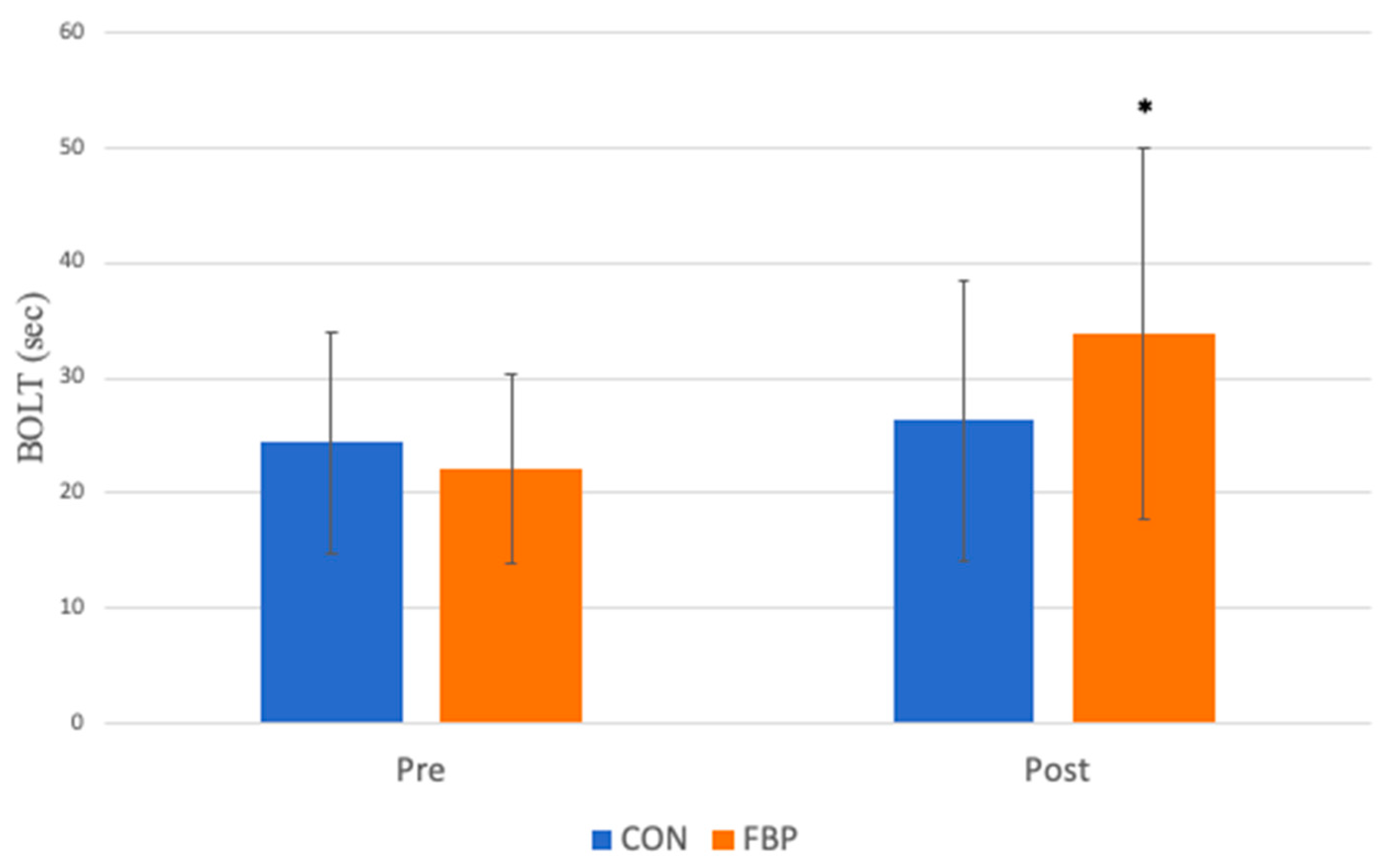
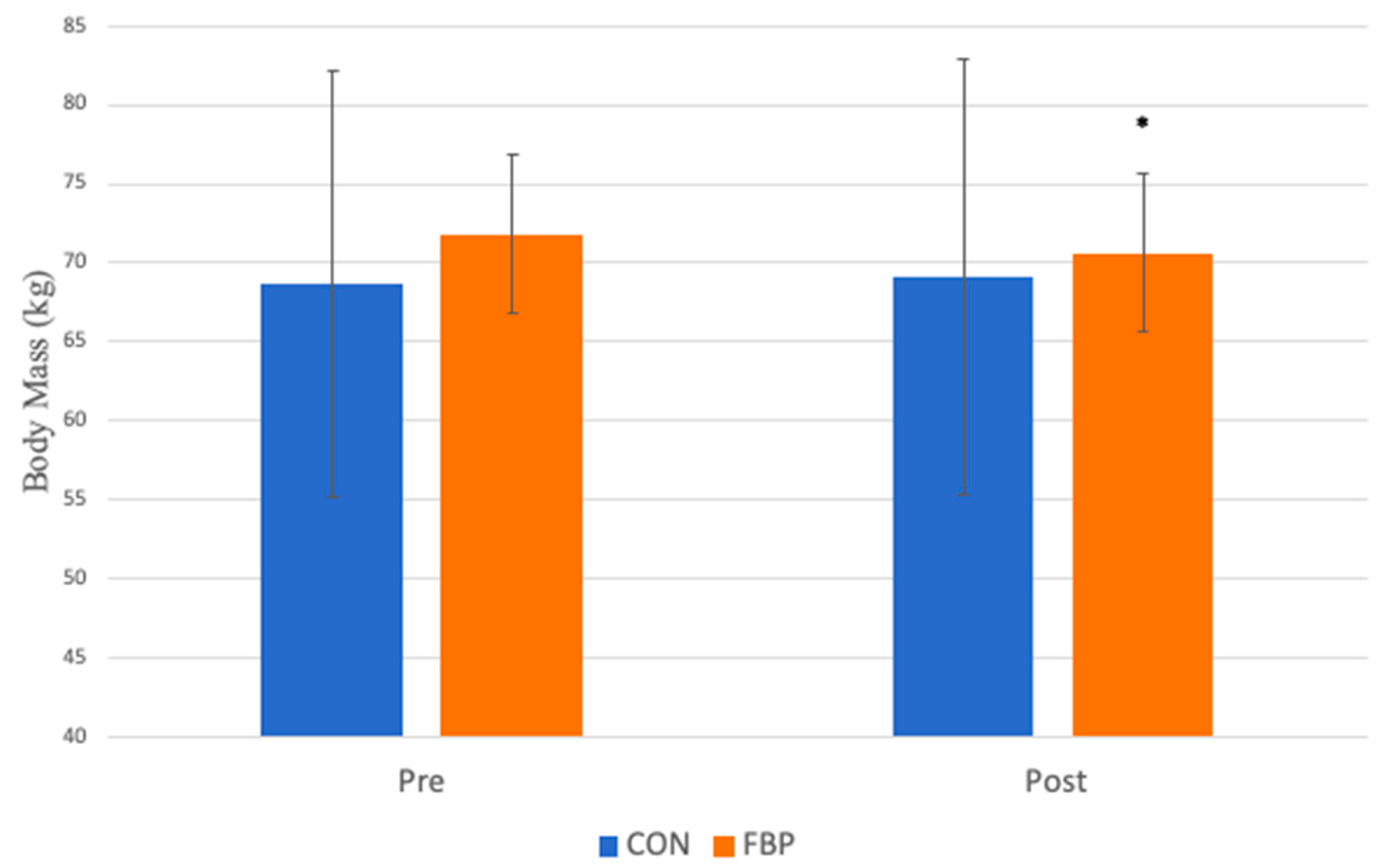
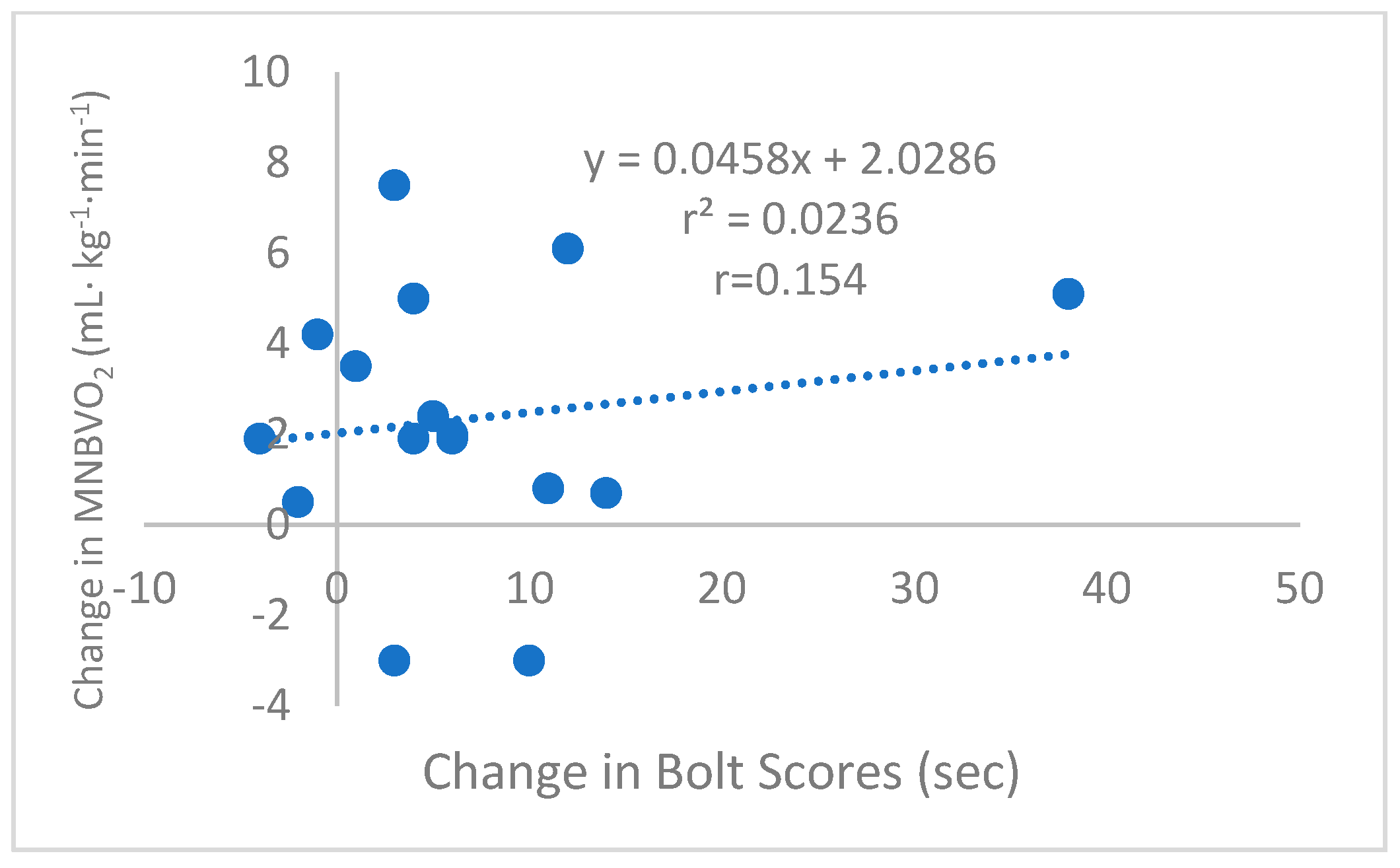
We investigated the effects of a functional breathing program on the aerobic performance of recreational runners. Runners participated in an aerobic endurance training program with functional breathing (FBP; n = 8, 34.8 ± 5.1 yrs, 25.3 ± 2.5 kg·m2) or without functional breathing (CON; n = 8, 29 ± 5 yrs, 23 ± 2 kg·m2). The treatment group underwent daily breathing exercises, and nasal-only breathing during low-intensity sessions of the training program. The primary outcome variables measured before and after the program included the following: the breath-hold time at rest, the duration and VO2max with nasal-only breathing, and the VO2max with normal breathing during a graded running test. The data were analyzed using two-way ANOVA (p < 0.05). We found a significant group x time interaction for breath-hold time (∆ from PRE: +1.9 s [CON], +11.7 s [FBP]; p = 0.04; d = 1.13). However, the changes in the time and VO2max with nasal-only breathing, and in the VO2max with normal breathing, did not differ between the FBP and CON groups. A small but significant time (main) effect for the increase in VO2max (~3.0%, p < 0.05) suggested that both groups had adequate stimuli for physiological adaptations. The four-week supplementary functional breathing protocol increased the breath-hold time, but not the maximum nasal-only breathing time, nasal-only breathing VO2max, or VO2max, in recreational runners.
Keywords: functional breathing; breathing exercise; breathing pattern; nasal breathing; aerobic training; VO2max functional breathing; breathing exercise; breathing pattern; nasal breathing; aerobic training; VO2max