Article

Hypervirulence Characteristics of Spaceflight-Mutated Beauveria bassiana Isolate for Integrated Control of Sweet Potato Foliar and Soil Pests

1
Engineering Research Center of Biotechnology for Active Substances, Ministry of Education, College of Life Sciences, Chongqing Normal University, Chongqing 401331, China
2
Chongqing Foreign Language School, Chongqing 400039, China
*
Authors to whom correspondence should be addressed.
These authors contributed equally to this work.
Insects 2026, 17(7), 720; https://doi.org/10.3390/insects17070720
Submission received: 23 June 2026 / Revised: 9 July 2026 / Accepted: 10 July 2026 / Published: 12 July 2026
(This article belongs to the Special Issue Ecological Adaptation of Insect Pests)

Simple Summary

Sweet potatoes are threatened by two major pests that have adapted to modern agriculture by occupying distinct physical areas: the virus-transmitting whitefly above ground and the root-boring weevil below ground. This physical separation is a powerful survival strategy that conventional chemical sprays often fail to overcome. This study tested a novel fungal strain, a specific type of Beauveria bassiana, developed through spaceflight mutation, to determine if its enhanced traits could break through these defensive strategies. In laboratory experiments, we exposed both pests to the mutated fungus. The fungus was highly effective, producing high yields of conidia and rapidly killing both the sap-sucking whiteflies and the hard-shelled weevils. Our findings demonstrate that this single biological agent can simultaneously counteract the natural defenses and survival behaviors of these diverse pests, offering an innovative and sustainable solution for crop protection and global food security.

Abstract

The ecological adaptations of insect pests, such as multi-niche colonization and physiological resistance to conventional chemicals, pose severe challenges to the sustainable production of sweet potato (Ipomoea batatas). The tobacco whitefly, Bemisia tabaci (Hemiptera: Aleyrodidae), and the sweet potato weevil, Cylas formicarius (Coleoptera: Brentidae), form a highly destructive, spatially separated pest complex. In this study, we evaluated the dual-niche pathogenicity of a Beauveria bassiana (Hypocreales: Cordycipitaceae) isolate, BbCF-2, generated via spaceflight mutagenesis, against C. formicarius and B. tabaci under controlled laboratory conditions. The mutated strain exhibited enhanced colony expansion and a high sporulation capacity (2.72 × 10⁸ conidia/mL). Bioassays revealed that BbCF-2 possesses significantly increased virulence compared to the wild-type strain, capable of overcoming the distinct physiological and physical barriers of both targeted pests. Against the highly sclerotized subterranean C. formicarius adults, BbCF-2 achieved 92.68% mortality at 15 days post-inoculation at 1 × 10⁸ conidia/mL, with an LC50 of 8.452 × 10³ conidia/mL and an LT50 of 6.305 days. Concurrently, against the canopy-dwelling B. tabaci, the isolate demonstrated rapid lethal mycosis with an LT50 of 6.718 days, effectively reducing the adult vector population prior to their typical dispersal timeframe. These results demonstrate that the spaceflight-mutated BbCF-2 strain exhibits broad pathogenicity. By simultaneously targeting both foliar and soil-dwelling pests, this single-agent biological control strategy shows potential for integrated pest management, pending greenhouse and field evaluation.

1. Introduction

Sweet potatoes (Ipomoea batatas (L.) Lam) play a crucial role in ensuring global food security, providing vital industrial raw materials, and serving as a sustainable bioethanol feedstock [1,2]. Despite advances in breeding and genomics to improve agronomic traits [3,4], their sustainable production globally is severely constrained by a highly destructive, multi-layered pest ecosystem [5,6]. Unlike crops plagued primarily by single-niche canopy pests, sweet potato fields face a dual-niche ecological threat: the tobacco whitefly, Bemisia tabaci (Gennadius) (Hemiptera: Aleyrodidae), aboveground, and the sweet potato weevil, Cylas formicarius Fabricius (Coleoptera: Brentidae), belowground [7,8]. B. tabaci causes direct phloem-feeding damage and acts as a hyper-efficient vector for devastating plant viruses, such as sweet potato virus disease (SPVD), leading to rapid epidemiological outbreaks [9,10]. Concurrently, C. formicarius larvae feed cryptically within the storage roots, forming tunnels that lead the tuber to emit a foul odor, rot, and deteriorate [7,11].
Under the escalating pressures of global climate change and agricultural intensification, these insect pests have evolved remarkable ecological adaptations that enable their survival, reproduction, and expansion [7]. C. formicarius utilizes a cryptic, endophytic larval habit that provides a spatial refuge, a significant behavioral adaptation, shielding it from extreme environments and conventional surface chemical sprays [8]. In parallel, B. tabaci exhibits high physiological tolerance to diverse climates, rapid behavioral dispersal, and cross-resistance to major chemical insecticide classes [12]. Currently, management relies heavily on intensive chemical insecticides [6,12]. However, this conventional chemical-centric strategy frequently induces physiological resistance, causes environmental contamination, and fundamentally fails to concurrently manage spatially separated threats [7,11].
Entomopathogenic fungi (EPF), particularly Beauveria bassiana, represent a highly promising biological platform for mitigating insect ecological adaptations by acting as robust biopesticides [13,14]. Unlike chemical insecticides, B. bassiana infects hosts through direct cuticular penetration, effectively circumventing the profound physiological resistance mechanisms that pests have evolved against conventional chemicals. For instance, recent evaluations of wild-type B. bassiana strains have demonstrated substantial baseline pathogenicity against both highly sclerotized subterranean pests and canopy-dwelling vectors. Specifically, contemporary field and laboratory applications (e.g., strain TMP1) have achieved control efficiencies exceeding 96% against C. formicarius, significantly reducing storage root yield losses [15,16]. Similarly, recent bioassays have validated the biocontrol efficacy of native B. bassiana strains (e.g., strain ARP14) against B. tabaci, demonstrating significant infectivity and mycosis from early instars to adults [17]. However, while demonstrating clear biocontrol potential, wild-type fungal strains often encounter ecological and physiological constraints in complex field applications. They frequently exhibit relatively weak pathogenicity against heavily armored Coleopteran insects and fundamentally lack the trans-order virulence required to maintain high, simultaneous lethality against phylogenetically and ecologically diverse pest complexes. Furthermore, wild-type isolates often suffer from slow infection kinetics or lack the massive sporulation capacity necessary to persist simultaneously in both the exposed canopy microclimate and the subterranean soil profile [16,18].
To overcome these biological bottlenecks, spaceflight mutagenesis has emerged as a cutting-edge technique. Unlike traditional chemical (e.g., ethyl methanesulfonate) or physical (e.g., gamma rays) mutagenesis methods, which often yield lower mutation rates, spaceflight mutagenesis exposes microorganisms to extreme cosmic radiation and microgravity, inducing stable genomic rearrangements and a mutation rate that can be several orders of magnitude higher than terrestrial treatments [19]. This approach induces stable genomic rearrangements, upregulating metabolic pathways associated with enhanced phenotypic plasticity, accelerated virulence, and broad environmental resilience [20]. Accumulating evidence confirms that spaceflight mutagenesis enhances multiple insecticidal traits of EPF, with space-flown isolates inducing significantly higher host mortality than wild-type original strains [21]. Recent studies further validate this paradigm, demonstrating that aerospace environments successfully enhance stress tolerance and phenotypic plasticity in diverse microorganisms, such as increasing the radiation resistance of fungal strains like Aureobasidium pullulans [22] and significantly altering the biofilm formation capabilities of bacterial isolates [23]. Spaceflight-mutated elite isolates with enhanced biocontrol traits thus provide core candidate materials for developing this innovative dual-niche pest management paradigm.
By integrating insights from ecology, insect physiology, and molecular biology, this study aims to unravel the potential of spaceflight-induced phenotypic plasticity in EPF to overcome spatially separated pest threats. We report the isolation, molecular identification, and phenotypic characterization of a spaceflight-mutated strain with enhanced virulence, B. bassiana BbCF-2. We systematically evaluate its dual-niche pathogenicity and lethal kinetics against both the subterranean C. formicarius and the aboveground vector B. tabaci to assess its potential for biocontrol. Ultimately, this research evaluates the pathogenicity of a spaceflight-mutated isolate against two representative sweet potato pests.

2. Materials and Methods

2.1. Parental Strain

The wild-type original strain, designated as Beauveria bassiana BbCF-0, was originally isolated from soil collected at Dinghushan, Zhaoqing City, Guangdong, China. This isolate was preserved at the Engineering Research Center of Active Substance Biotechnology, Ministry of Education, Chongqing Normal University, Chongqing, China. For routine culture, the strain was maintained on Potato Dextrose Agar (PDA) (Sangon Biotech (Shanghai) Co., Ltd., Shanghai, China) medium at 26 ± 1 °C in the dark. Conidial suspensions were prepared by harvesting 7-day-old cultures with sterile 0.05% Tween-80 solution (Sangon Biotech (Shanghai) Co., Ltd., Shanghai, China), filtered through two layers of sterile gauze to remove mycelial debris, and adjusted to the required concentration using a hemocytometer.

2.2. Spaceflight Mutagenesis Treatment

Spaceflight mutagenesis was performed as described previously with minor modifications. Briefly, 1.0 mL aliquots of standardized B. bassiana BbCF-0 conidial suspension (1 × 10⁷ conidia/mL) were transferred to sterile polypropylene (PE) centrifuge tubes (Corning Inc., Corning, NY, USA), which were then sealed with Parafilm M (Bemis Company, Inc., Neenah, WI, USA) and placed in specialized spaceflight sample boxes. The samples were launched aboard the ChangZheng 5 space shuttle from the Wenchang Spacecraft Launch Site on 5 May 2020 and remained in low Earth orbit (altitude 300–8000 km) for 67 h. During the flight, the samples were exposed to the combined effects of cosmic radiation, microgravity, and high vacuum and passed through the Van Allen radiation belt multiple times. Due to mission payload constraints, precise environmental parameters such as radiation dose or microgravity exposure were not quantified; this limitation is acknowledged [21].

2.3. Mutant Strain Screening and Preservation

After the space capsule returned to Earth, the samples were retrieved and immediately transported to the laboratory under cold chain conditions. The conidial suspension was serially diluted (10−3 to 10−6) and spread onto PDA plates (100 μL per plate), followed by incubation at 26 ± 1 °C for 7 days. Initially, over 250 mutant colonies were screened. Single colonies exhibiting distinct advantageous traits (rapid radial growth, dense sporulation, and uniform colony morphology) were selected and subjected to 5 consecutive rounds of single-spore isolation to ensure genetic stability.
The elite mutant strain with the most superior biocontrol characteristics (highest sporulation capacity and virulence against both C. formicarius and B. tabaci) was formally designated as B. bassiana BbCF-2. This mutant strain was deposited in the Guangdong Microbial Culture Collection Center (GDMCC) under the accession number GDMCC No. 67196.

2.4. Molecular Identification

Genomic DNA was extracted from fresh mycelia of BbCF-2 using the standard CTAB (Sangon Biotech (Shanghai) Co., Ltd., Shanghai, China) method. The internal transcribed spacer (ITS) region of ribosomal DNA was amplified by PCR using the universal primers ITS1 (5′-TCCGTAGGTGAACCTGCGG-3′) and ITS4 (5′-TCCTCCGCTTATTGATATGC-3′). The amplified products were sequenced by Sangon Biotech (Shanghai, China), and the resulting sequence of BbCF-2 was deposited in GenBank under the accession number PV544367. Taxonomic identity was confirmed via BLAST sequence alignment (NCBI BLAST+ v2.14.0, National Center for Biotechnology Information, Bethesda, MD, USA) and Bayesian phylogenetic tree reconstruction (MrBayes v3.2.7, Uppsala University, Uppsala, Sweden) using reference sequences from the NCBI database (Table A1).

2.5. Assessment of Biological Productivity and Morphological Traits

To measure the growth rate and conidia yield of BbCF-2, the fungus was cultured on SDAY/4 medium (SDAY/4: 10 g/L dextrose, 2.5 g/L peptone, 2.5 g/L yeast extract, and 15 g/L agar) (Sangon Biotech (Shanghai) Co., Ltd., Shanghai, China) in Petri dishes placed within a biochemical incubator (26 ± 1 °C, 60% RH) for 10 days, and then the conidia were scraped from the plates and suspended in 10 mL of sterile water. Following this, the suspension was filtered through Miracloth (Merck KGaA, Darmstadt, Germany) held in a funnel and quantified using a hemocytometer. The growth rates of BbCF-2 hyphae were measured based on their morphology on an SDAY/4 medium plate on day 10 of culturing. Both examinations were repeated three times.
For the morphometric evaluation of the BbCF-2 isolate, its microcultures were first grown on SDAY/4 and incubated at 27 °C for 10 days. Slides were then prepared with lactophenol/blue cotton (10:1) (Sangon Biotech (Shanghai) Co., Ltd., Shanghai, China) and examined with phase contrast optics under an Olympus BX51 optical microscope (Microscopy GmbH, Gottingen, Germany). Images of the conidia were photographed digitally with an Axio Cam HRc camera (Carl Zeiss AG, Oberkochen, Germany) using the Axion Vision SE64 Release 4.9.1 software.

2.6. Insect Rearing and Dual-Niche Target Preparation

Populations representing the integrated aboveground–belowground pest complex were maintained under strictly controlled conditions. A vigorous colony of the subterranean/stem-boring target, C. formicarius, was continuously reared on sweet potato storage roots within an artificial climate incubator located at the Engineering Research Center. Concurrently, the aboveground foliar target, B. tabaci, was maintained on host cotton plants within a specialized net room facility. Only active adult stages from both respective pest populations were selected for the subsequent pathogenesis bioassays. Standardized conidial suspensions for these bioassays were prepared by harvesting mature conidia from 7-day-old SDAY/4 cultures into a 0.05% Tween-80 sterile solution. A serial dilution protocol was employed to achieve the precise target concentrations required for toxicological testing.

2.7. Pathogenicity Bioassays Against the Subterranean Pest C. formicarius

The lethal kinetics of the BbCF-2 isolate against the root and stem-boring weevil were assessed using a standardized immersion inoculation protocol. Newly emerged C. formicarius adults were inoculated with six descending concentrations of the BbCF-2 and BbCF-0 conidial suspension: 1 × 10⁸, 1 × 10⁷, 1 × 10⁶, 1 × 10⁵, 1 × 10⁴, and 1 × 10³ conidia/mL. The wild-type original strain BbCF-0 was set as the control. A sterile aqueous solution of 0.05% Tween-80 served as the baseline blank control. The experimental matrix consisted of three independent replicates per treatment, with each replicate comprising a cohort of 30 adult weevils. Post-inoculation, the treated cohorts were transferred to a constant-temperature climate chamber. Mortality progression was systematically recorded at 48 h intervals over a comprehensive 15-day observation window. These data were utilized to calculate the corrected cumulative mortality, median lethal concentration (LC50), and median lethal time (LT50).

2.8. Pathogenicity Bioassays Against the Aboveground Foliar Pest B. tabaci

To determine the isolate’s efficacy as a canopy intervention, adult B. tabaci were subjected to foliar spray inoculation utilizing predetermined concentrations of the BbCF-2 and BbCF-0 conidial suspension. The wild-type original strain BbCF-0 was set as the control. Following exposure, the treated whiteflies were securely housed within specialized pathogenicity testing devices designed to simulate the foliar microclimate. Survival trajectories were closely observed and documented every two days post-inoculation. The experimental matrix consisted of three independent replicates per treatment, with each replicate comprising a cohort of 30 adult whiteflies. The resulting temporal mortality dataset was employed to calculate the explicit LC50 value against this sap-sucking vector.

2.9. Statistical Analysis

All quantitative datasets derived from the bioassays were subjected to one-way analysis of variance (ANOVA). Prior to ANOVA, proportional mortality data were subjected to an arcsine square root transformation. Assumptions of normality and homogeneity of variance were verified using the Shapiro–Wilk and Levene’s tests (p > 0.05). The separation of statistically significant means was executed utilizing Tukey’s multiple-range test via SAS v8.1 software (SAS Institute Inc., Cary, NC, USA). Differences between the two specific strains (BbCF-2 and BbCF-0) in colony growth and sporulation were analyzed using an independent-samples t-test. To define the toxicological profile of the BbCF-2 and BbCF-0 isolates, robust probit regression analysis was utilized to calculate both the LC50 and LT50 parameters, inclusive of their respective 95% confidence limits. Mortality data were corrected using Abbott’s formula. The LC50 and LT50 values were estimated utilizing probit regression analysis in SPSS software, assuming a log-normal tolerance distribution (SPSS Statistics v.26 (IBM Corp., Armonk, NY, USA)). All graphical representations modeling survival dynamics and mortality pathways were generated using GraphPad Prism 5 software (GraphPad Software Inc., San Diego, CA, USA).

3. Results

3.1. Phenotypic Plasticity and Enhanced Biological Productivity Driven by Spaceflight Mutagenesis

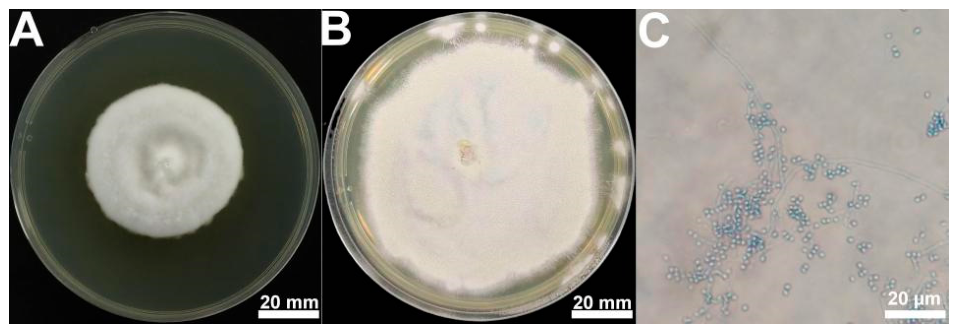
The mutant isolate BbCF-2, generated via spaceflight mutagenesis, exhibited vigorous vegetative growth, traits essential for counteracting the resilient ecological adaptations of field pests. When cultured on SDAY/4 medium at 26 ± 1 °C, the colony displayed rapid radial expansion, achieving a diameter of 36.2 ± 2.41 mm after 10 days (Table 1). The colony morphology progressed from a dense, fluffy vegetative state to a pale-yellow profile characterized by a uniform sporulation layer (Figure 1A,B). Microscopic evaluation confirmed extensive networks of conidiophores branching in characteristic zigzag patterns, terminating in dense clusters of hyaline, subglobose conidia (Figure 1C).
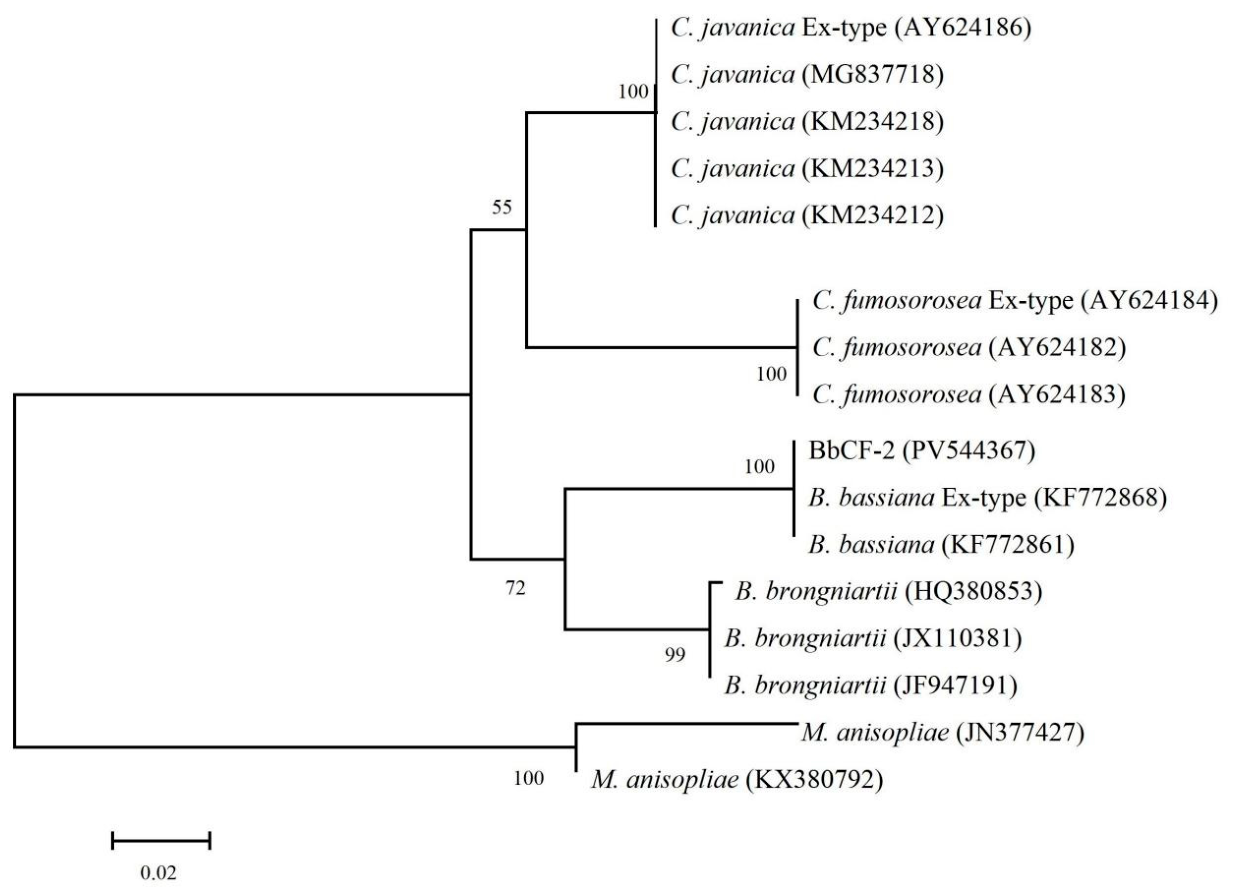
Crucially for commercial biopesticide formulation and large-scale ecological application, the spaceflight-mutated BbCF-2 isolate exhibited both vigorous vegetative growth and an enhanced sporulation capacity. When cultured on SDAY/4 medium at 26 ± 1 °C, the mutant colony displayed significantly faster radial expansion, achieving a diameter of 36.2 ± 2.41 mm after 10 days, compared to only 21.3 ± 1.55 mm for the wild-type progenitor BbCF-0 (69.9% increase; p < 0.01). Concurrently, under these standard laboratory conditions, the mutant strain yielded 2.72 × 10⁸ conidia/mL, representing a 74.3% increase in reproductive output compared to the 1.56 × 10⁸ conidia/mL produced by the original strain (p < 0.05, Student’s t-test) (Table 1). Molecular identification via ITS region sequencing (GenBank Accession No. PV544367) and subsequent Bayesian phylogenetic reconstruction confirms the BbCF-2 mutant within the B. bassiana evolutionary clade (Figure 2). This confirms its specific taxonomic identity while highlighting the genetic stability of the advantageous traits acquired through spaceflight mutagenesis.

3.2. Overcoming the Physiological Defenses of the Subterranean Pest C. formicarius

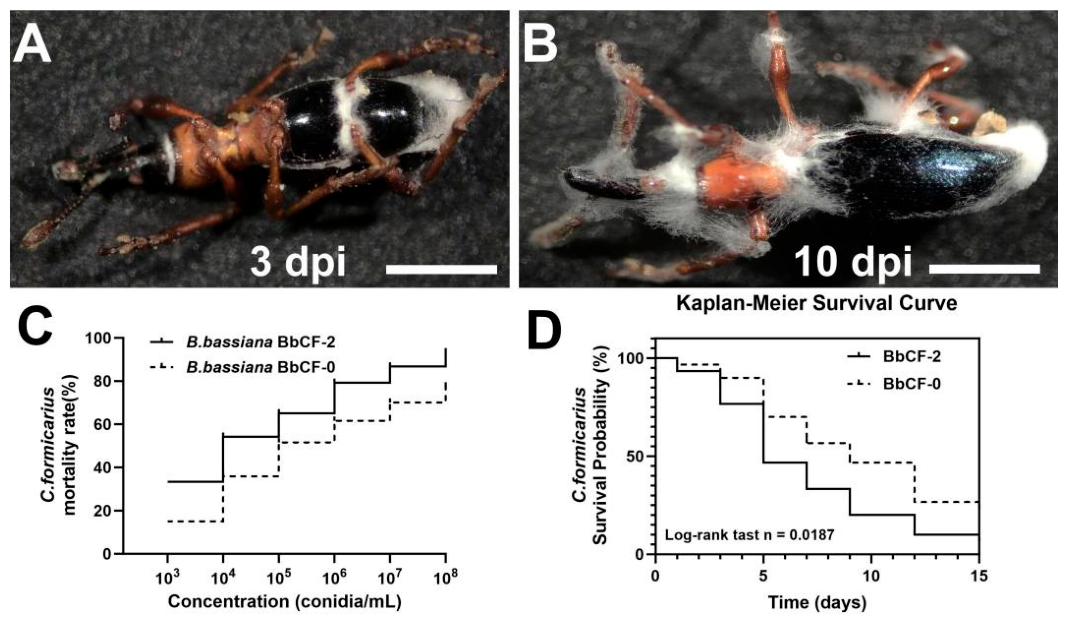
To evaluate its efficacy against the belowground ecological niche, we assessed the virulence of BbCF-2 against adult C. formicarius, a species possessing a highly sclerotized cuticle that serves as a formidable physiological defense. BbCF-2 demonstrated highly aggressive host colonization, successfully breaching this physical barrier. Within 48 h post-inoculation, infective hyphae erupted primarily from the cephalic and thoracic intersegmental regions. By day 10, systemic lethal mycosis was evident, with dense mycelial mats entirely engulfing the host’s thorax, abdomen, and elytral veins (Figure 3A,B), visually demonstrating the breakdown of the pest’s structural immunity.
The mutant strain exerted acute, dose- and time-dependent mortality on the weevil populations (Figure 3C). At the maximum deployment concentration of 1 × 10⁸ conidia/mL, cumulative corrected mortality progressed rapidly from 48.67 ± 1.45% on day 5 to an overwhelming 92.68 ± 0.96% by day 15 (Table 2 and Table 3). Toxicological modeling further highlighted the strain’s exceptional capacity to overcome coleopteran resistance, determining a median lethal concentration (LC50) of 8.45 × 10³ conidia/mL (95% CI: 3.53 × 10³ − 2.02 × 10⁴; r = 0.993) at 15 days post-inoculation (Table 4). Furthermore, Kaplan–Meier survival analysis was employed to quantify the temporal mortality risk. The survival probability of C. formicarius adults treated with BbCF-2 declined significantly faster compared to those exposed to the wild-type strain, effectively neutralizing the weevils prior to their critical subterranean oviposition phase (log-rank test, p = 0.0187, n = 30) (Figure 3D).

3.3. Rapid Virulence Against the Canopy-Dwelling Vector B. tabaci

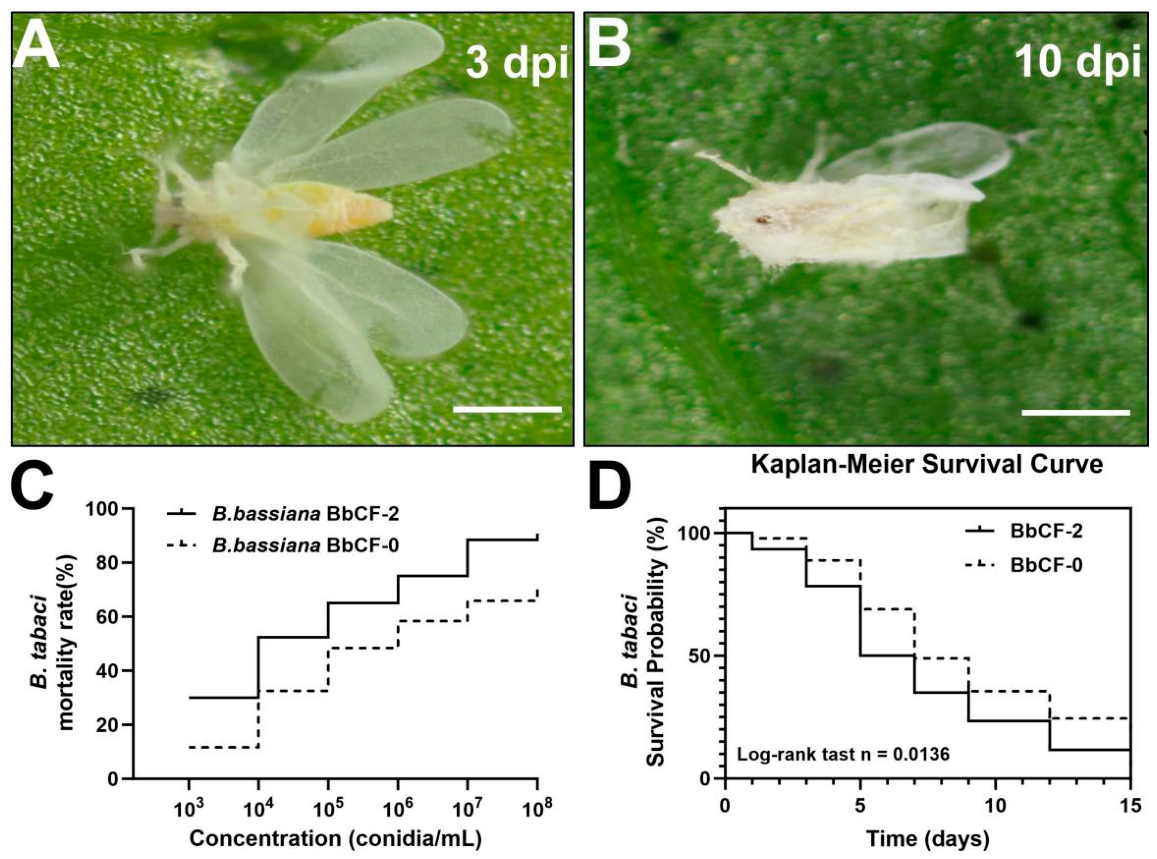
Operating as a dual-niche biological agent, BbCF-2 simultaneously demonstrated enhanced virulence against the canopy-dwelling vector, B. tabaci. The behavioral adaptation of whiteflies, rapid migration and immediate viral transmission, requires a biocontrol agent with acute lethal kinetics. Following foliar exposure, the mutant strain rapidly crashed adult whitefly populations. Postmortem phenotypic analysis confirmed extensive fungal pathogenesis, with BbCF-2 hyphae rapidly emerging from intersegmental regions by 3 dpi to completely consume the cadavers by 10 dpi (Figure 4A,B).
The concentration-dependent survival trajectory collapsed dramatically at high concentrations (Figure 4C). Probit regression analysis underscored the superior biocontrol profile acquired through spaceflight mutation, calculating an acutely low LT50 of 6.718 days for the BbCF-2 isolate against this hemipteran vector. To rigorously evaluate the rapid lethal kinetics required to intercept canopy viral transmission, Kaplan–Meier survival analysis was conducted. The resulting survival curves demonstrated a precipitous and statistically significant reduction in B. tabaci survival probability following BbCF-2 exposure compared to the wild-type baseline (log-rank test, p = 0.0136, n = 30) (Figure 4D). This aggressive infection dynamic supports the BbCF-2 mutant as an elite intervention tool capable of preempting the vector’s dispersal and potential spread of plant viruses.

3.4. Temporal Dynamics and Feasibility of the Dual-Niche Strategy

Crucially, a comparative synthesis of the lethal kinetics across both target insect orders establishes the operational feasibility of our integrated management framework to counteract complex ecological adaptations. Under a synchronized application of 1.0 × 10⁷ conidia/mL, the mutant strain delivered an acute median LT50 of 6.718 days (95% CI: 5.396–8.039) against the mobile aboveground vector B. tabaci (Table 5). Remarkably, it delivered an even swifter LT50 of 6.305 days (95% CI: 5.014–7.597) against the heavily armored subterranean borer C. formicarius (Table 6).
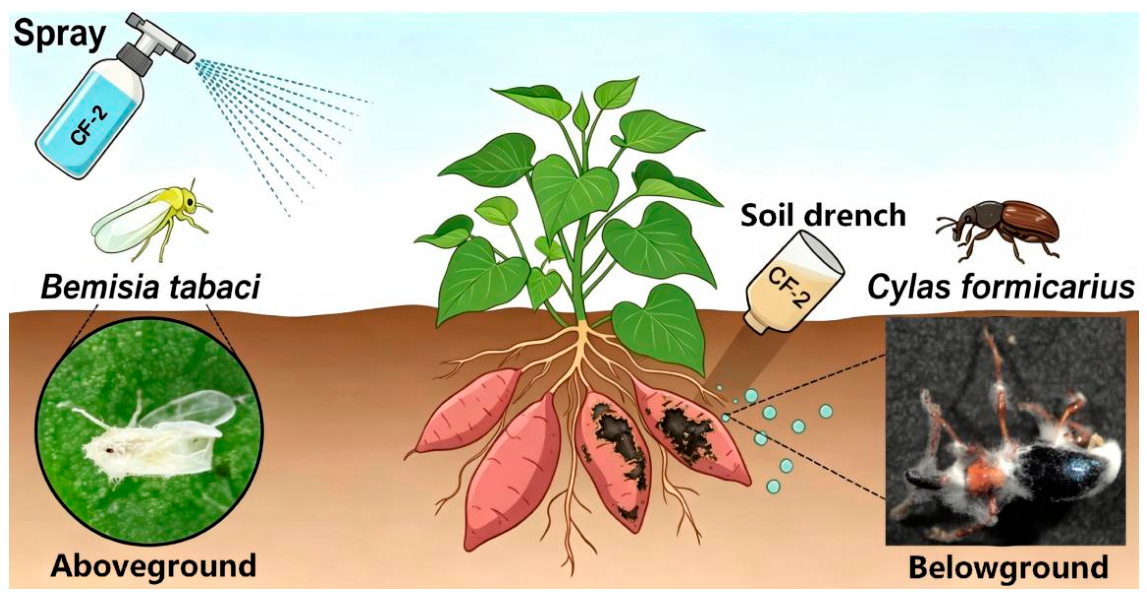
This synchronized temporal progression (Figure 5) demonstrates that a single biological agent can rapidly neutralize canopy virus vectors to suppress foliar damage and, within the exact same chronological window, eliminate robust root-boring adults. These paired toxicological profiles provide the definitive empirical foundation for deploying this spaceflight-mutated strain as a potential candidate against multi-niche pest complexes.

4. Discussion

The transition from chemical-reliant agriculture to sustainable integrated pest management necessitates biological control agents capable of resolving complex, multi-niche field challenges. Under the selective pressures of agricultural intensification, the sweet potato pest complex has developed divergent ecological adaptations, notably utilizing spatially separated niches to circumvent conventional monotypic chemical interventions [7,11]. The subterranean root-boring habit of C. formicarius confers a robust spatial and cuticular barrier [11], whereas the canopy-dwelling B. tabaci utilizes rapid dispersal mechanisms to facilitate viral transmission [9]. The core achievement of this study is the isolation and validation of the spaceflight-mutated Beauveria bassiana strain BbCF-2, which serves as a pleiotropic, multi-niche entomopathogen. Spaceflight-induced microgravity and cosmic radiation are known to trigger genomic rearrangements that significantly upregulate the production of pathogenesis-related secondary metabolites and enzymes, thereby broadening the host range and enhancing the environmental adaptability of entomopathogenic fungi [21]. By demonstrating pronounced trans-order pathogenicity against both Hemipteran and Coleopteran targets, this isolate effectively addresses the spatial divergence and physiological barriers of these pests. Consequently, BbCF-2 shows potential as a foundational biological agent for integrated pest management in sweet potato cultivation, pending comprehensive greenhouse and field evaluations [7,11].
For a biopesticide to be commercially viable across distinct ecological zones (e.g., foliar spraying and soil drenching), it must possess exceptional biological productivity. Recent analyses of commercial mycoinsecticide formulations underscore that baseline sporulation must exceed 107 conidia/mL for economic mass-production feasibility [23,24,25]. Our morphological assays revealed that BbCF-2 exhibits enhanced colony growth, characterized by rapid radial expansion and a high sporulation capacity (2.72 × 10⁸ conidia/mL). This yield is substantially higher than that of wild-type isolates recently evaluated for agricultural deployment, which typically plateau between 3.5 × 10⁷ and 5.0 × 10⁷ conidia/mL under identical solid-state conditions [26]. This superior reproductive trait is a hallmark of successful spaceflight mutagenesis. Microgravity and cosmic radiation have been shown to induce stable genomic rearrangements that upregulate metabolic pathways related to biomass accumulation, such as the amplification of chitin synthase expression, directly correlating with enhanced environmental resilience and conidial yield [19]. Such engineered biological productivity is the primary prerequisite for the cost-effective formulation required to execute large-scale, dual-niche applications.
Against the subterranean threat of C. formicarius, rapid cuticular degradation is imperative for efficient pest mortality [11,18,27]. The BbCF-2 isolate exhibited an exceptionally rapid median lethal time (LT50) of 6.305 days, significantly outperforming the sluggish kinetics (LT50: 8.4–11.2 days) typical of indigenous soil isolates against coleopteran pests, although some specific hypervirulent Metarhizium anisopliae isolates have achieved high mortality within 7 days [28]. The aggressive emergence of mycelia from highly sclerotized thoracic joints phenotypically demonstrates an enhanced capacity for physical host colonization [29]. This enhanced virulence phenotype is consistent with the toxicological characteristics of previously reported spaceflight-mutated entomopathogenic fungi; a space-bred Purpureocillium lilacinum strain reduced its LT50 against Tetranychus cinnabarinus by 78.8% relative to the wild type, while BbCF-2 achieved a 37.7% LT50 reduction against C. formicarius, reflecting species-specific responses to aerospace mutagenesis [21].
Equally compelling is BbCF-2′s acute pathogenesis against the aboveground canopy vector, B. tabaci. Whiteflies exploit the behavioral adaptation of rapid population surges and immediate migration to execute viral transmission; thus, mitigating viral spread strictly requires highly virulent strains capable of inducing rapid lethal mycosis before the insects disperse [30,31,32]. The median lethal time (LT50) of BbCF-2 against this hemipteran vector was acutely accelerated, achieving 50% mortality in just 6.718 days at an inoculation rate of 1.0 × 10⁷ conidia/mL, which represents a significantly faster lethal kinetic compared to the 10.215 days required by our wild-type reference strain. Furthermore, this rapid pathogenesis compares highly favorably against widely commercialized B. bassiana strains (e.g., strain GHA), which typically exhibit LT50 values exceeding 8 to 10 days against Bemisia populations under comparable application rates [33]. This acute hypervirulence ensures that direct foliar applications can precipitate rapid population collapse, thereby disrupting the viral transmission cascade.
Managing the sweet potato pest complex requires moving beyond isolated, single-pest interventions. The spaceflight-mutated BbCF-2 effectively bridges the gap between canopy and soil pest management. Its unique combination of phenotypic plasticity (commercial-scale sporulation), potent physiological mechanisms (rapid cuticular penetration against Coleopteran defenses), and acute hypervirulence against Hemipteran vectors makes it a premier candidate for integration into the sustainable green management system (SGMS) framework [7]. Future field efficacy trials evaluating dual-delivery mechanisms, such as simultaneous foliar application targeting vector populations and micro-drip soil irrigation targeting subterranean physical defenses, will further unlock the aboveground–belowground protective potential of this elite engineered isolate.

Future Perspectives

While the empirical data demonstrate the biocontrol potential of BbCF-2, the underlying mechanisms require further investigation. Emerging paradigms suggest spaceflight-induced virulence may rely on the time-dependent downregulation of detoxifying and antioxidant enzymes, alongside microbiota destabilization [21]. Validating this enzymatic and transcriptomic interplay remains a primary objective. Additionally, translating this potential into field efficacy may involve integrating BbCF-2 with specific sex pheromones in an ‘attract-and-infect’ paradigm [34,35,36]. Furthermore, deploying BbCF-2 as a soil drench warrants investigation into potential secondary mechanisms, such as plant-mediated systemic resistance and endophytic mutualism [37,38,39].

Author Contributions

Conceptualization, Y.L. (Yijia Liu), Y.L. (Yuan Liu), B.Q. and D.O.; methodology, Y.L. (Yijia Liu), Y.L. (Yuan Liu), H.G. and Z.F.; software, Y.L. and R.L.; validation, Y.L. (Yuan Liu), W.D. and J.Q.; formal analysis, H.G., Z.F. and R.L.; investigation, Y.L. (Yijia Liu), Y.L. (Yuan Liu) and W.D.; resources, J.Q., B.Q. and D.O.; data curation, Z.F. and R.L.; writing—original draft preparation, Y.L. (Yijia Liu) and Y.L. (Yuan Liu); writing—review and editing, B.Q. and D.O.; visualization, Y.L. (Yijia Liu) and W.D.; supervision, B.Q. and D.O.; project administration, D.O.; funding acquisition, B.Q. All authors have read and agreed to the published version of the manuscript.

Funding

This research was funded by the Key Project of the Joint Fund for Regional Innovation and Development of the National Natural Science Foundation of China (U22A20481), the Project of Chongqing Normal University (23XLB032), and the National College Students’ Innovation and Entrepreneurship Training Program (202510637059).

Data Availability Statement

The original data are included in the paper. Further inquiries can be directed to the corresponding authors.

Acknowledgments

During the preparation of this manuscript, the authors used Gemini AI (https://gemini.google.com, accessed on 10 May 2026) for the purposes of optimizing linguistic clarity and conciseness, refining sentence structures, and reducing redundant expressions in the manuscript. The authors have reviewed and edited the output and take full responsibility for the content of this publication. The utilization of this tool did not compromise the scientific integrity or originality of this research, and there is no financial support or conflict of interest associated with this AI tool.

Conflicts of Interest

The authors declare no conflicts of interest.

Abbreviations

The following abbreviations are used in this manuscript:
B. bassianaBeauveria bassiana
C. formicariusCylas formicarius
B. tabaciBemisia tabaci
LC50Lethal concentration 50
LT50Lethal time 50
BbCF-0The wild-type original strain of B. bassiana
BbCF-2The elite mutant strain of B. bassiana

Appendix A

Table A1. The reference entomopathogenic fungi from GenBank used in phylogenetic analysis. (“*” is the GenBank accession number of BbCF-2; “N/A”, unlabeled in NCBI).
SpeciesGenBank NumberStrain No.HostLocation
Cordyceps javanicaAY624186Ex-type CBS 134.22Hypothenemus hampeiJava
Cordyceps javanicaMG837718ACPDiaphorina citriFuzhou, China
Cordyceps javanicaKM234218CHE-CNRCB 307/7Bemisia tabaciArmeria, Mexico
Cordyceps javanicaKM234213CHE-CNRCB 303/2Bemisia tabaciArmeria, Mexico
Cordyceps javanicaKM234212CHE-CNRCB 303Bemisia tabaciArmeria, Mexico
CordycepsfumosoroseaAY624182CBS 244.31ButterIreland
CordycepsfumosoroseaAY624183CBS 375.70FoodJapan
CordycepsfumosoroseaAY624184Ex-type CBS 107.10N/AFrance
Beauveria bassianaPV544367BbCF-2 *soilGuangdong, China
Beauveria bassianaKF772868GA-1Micromelalopha troglodytaHubei, China
Beauveria bassianaKF772861YD-1Dendroctonus punctatusHubei, China
Beauveria brongniartiiHQ380853ART376Melolontha melolonthaInnerkirchen, Switzerland
Beauveria brongniartiiJX110381SASR HHB32BGalleria mellonellaSouth Africa
Beauveria brongniartiiJF947191ARSEF8153Agrilus planipennisOntario, Canada
Metarhizium anisopliaeJN377427ZJRhynchophorus ferrugineusHainan, China
Metarhizium anisopliaeKX380792YD2-1-8soilNanchang, China

References

  1. Mwanga, R.O.M.; Swanckaert, J.; Guilherme, D.S.P.; Andrade, M.I.; Makunde, G.; Gruneberg, W.J.; Kreuze, J.; David, M.; De Boeck, B.; Carey, E.; et al. Breeding progress for vitamin A, iron and zinc biofortification, drought tolerance, and sweetpotato virus disease resistance in sweetpotato. Front. Sustain. Food Syst. 2021, 5, 616674. [Google Scholar] [CrossRef]
  2. Salelign, K.; Duraisamy, R. Sugar and ethanol production potential of sweet potato (Ipomoea batatas) as an alternative energy feedstock: Processing and physicochemical characterizations. Heliyon 2021, 7, e08402. [Google Scholar] [CrossRef] [PubMed]
  3. Yan, M.; Nie, H.; Wang, Y.; Wang, X.; Zhang, Y. Exploring and exploiting genetics and genomics for sweetpotato improvement: Status and perspectives. Plant Commun. 2022, 3, 100332. [Google Scholar] [CrossRef] [PubMed]
  4. Chen, M.; Lin, J.; Zhang, C. Genome-wide identification of agronomically important genes in outcrossing crops using OutcrossSeq. Mol. Plant 2021, 14, 556–570. [Google Scholar] [CrossRef] [PubMed]
  5. George, J.; Reddy, G.V.P.; Wadl, P.A.; Rutter, W.; Culbreath, J.; Lau, P.W.; Rashid, T.; Allan, M.C.; Johaningsmeier, S.D.; Nelson, A.M. Sustainable sweet potato production in the United States: Current status, challenges, and opportunities. Agron. J. 2024, 116, 630–660. [Google Scholar] [CrossRef]
  6. Schloemer, C.M.; Graham, S.H.; Lawrence, K.S. Sweet potato pest challenges and management options. J. Integr. Pest Manag. 2025, 16, 4. [Google Scholar] [CrossRef]
  7. Hua, J.; Li, Y.; Li, Z.; Ma, D.; He, S.; Li, C.; Zalucki, M.P.; Gao, Y. Advancing towards a sustainable green management system (SGMS) for the sweet potato weevil, Cylas formicarius: A synthesis of traditional knowledge and modern innovations. Pest Manag. Sci. 2026, 82, 2825–2837. [Google Scholar] [CrossRef] [PubMed]
  8. Keyser, C.A.; Walters, F.S.; Turner, H.; Armstrong, E.; Davis, J.; Bissinger, B.; Johnson, B.; Alajo, A.; Musana, P.; Odongo, J. Tailoring IPM plans to fight a cloaked pest: Helping smallholder farmers combat the sweet potato weevil in sub-Saharan Africa. CABI Agric. Biosci. 2024, 5, 28. [Google Scholar]
  9. Navas-Castillo, J.; Fiallo-Olivé, E.; Sánchez-Campos, S. Whitefly-transmitted viruses: An evolving threat to global agriculture. Annu. Rev. Phytopathol. 2011, 49, 219–248. [Google Scholar] [CrossRef] [PubMed]
  10. Silva, M.T.; Barbosa, J.R.; Oliveira, C. Epidemiological modeling of sweet potato virus disease (SPVD) transmitted by Bemisia tabaci: Yield loss quantification and outbreak forecasting. Plant Pathol. 2024, 73, 812–824. [Google Scholar]
  11. Li, Y.; Ju, H.; Huang, W.; Ou, B.; Li, H.; Huang, Y.; Li, Y.; Chen, T.; Zheng, X.L.; Hua, J. Recent advances in sustainable management of Cylas formicarius. Insects 2026, 17, 245. [Google Scholar] [CrossRef] [PubMed]
  12. Sparks, T.C.; Crossthwaite, A.J. Insecticide resistance in Bemisia tabaci: Global trends, cross-resistance risks, and management strategies. Phytoparasitica 2023, 51, 189–205. [Google Scholar]
  13. Ondiaka, S.; Maniania, N.K.; Nyamasyo, G.H.N.; Nderitu, J.H. Virulence of the entomopathogenic fungi Beauveria bassiana and Metarhizium anisopliae to sweet potato weevil Cylas puncticollis and effects on fecundity and egg viability. Ann. Appl. Biol. 2008, 153, 41–48. [Google Scholar] [CrossRef]
  14. Irsad, M.S.; Haq, E.; Mohamed, A.; Rizvi, P.Q.; Kolanthasamy, E. Entomopathogen-based biopesticides: Insights into unraveling their potential in insect pest management. Insects 2023, 14, 710. [Google Scholar] [CrossRef]
  15. Prayogo, Y.; Bayu, M.S.Y.I.; Indiati, S.W.; Sumartini; Indriani, F.C.; Ginting, E.; Susanto, G.W.A.; Harnowo, D.; Mejaya, M.J. Eco-friendly biopesticide of Beauveria bassiana to control sweet potato weevil Cylas formicarius (Coleoptera: Curculionidae). IOP Conf. Ser. Earth Environ. Sci. 2024, 1312, 012025. [Google Scholar] [CrossRef]
  16. Prayogo, Y.; Bayu, M.S.Y.I.; Indiati, S.W.; Sumartini; Susanto, G.W.A.; Harnowo, D.; Baliadi, Y.; Widiarta, I.N.; Harsono, A.; Budiono, R. Control measure of sweet potato weevil (Cylas formicarius Fab.) (Coleoptera: Curculionidae) in endemic land of entisol type using mulch and entomopathogenic fungus Beauveria bassiana. Open Agric. 2023, 8, 20220237. [Google Scholar] [CrossRef]
  17. Jang, L.; Park, Y.; Lim, U.T. Beauveria bassiana ARP14 a potential entomopathogenic fungus against Bemisia tabaci (Gennadius) and Trialeurodes vaporariorum (Westwood) (Hemiptera: Aleyrodidae). J. Asia-Pac. Entomol. 2023, 26, 102022. [Google Scholar] [CrossRef]
  18. Baró, Y.; Schuster, C.; Gato, Y.; Márquez, M.E.; Leclerque, A. Characterization, identification and virulence of Metarhizium species from Cuba to control the sweet potato weevil, Cylas formicarius Fabricius (Coleoptera: Brentidae). J. Appl. Microbiol. 2022, 132, 3705–3716. [Google Scholar] [CrossRef] [PubMed]
  19. Zeng, D.; Cui, J.; Yin, Y.; Dai, C.; Yu, W.; Zhao, H.; Guan, S.; Cheng, D.; Sun, Y.; Lu, W. Generational genetic mechanism of space mutagenesis in rice based on multi-omics. Rice Sci. 2025, 32, 400–425. [Google Scholar] [CrossRef]
  20. Li, H.; Zhang, Q. Genomic and phenotypic enhancements in entomopathogenic fungi induced by spaceflight mutagenesis. Appl. Microbiol. Biotechnol. 2025, 109, 45–56. [Google Scholar]
  21. Zhang, Y.; Zhang, X.; Zhang, J.; Ali, S.; Wu, J. Spaceflight changes the production and bioactivity of secondary metabolites in Beauveria bassiana. Toxins 2022, 14, 555. [Google Scholar] [CrossRef] [PubMed]
  22. Deshevaya, E.A.; Fialkina, S.V.; Shubralova, E.V.; Tsygankov, O.S.; Khamidullina, N.M.; Vasilyak, L.M.; Pecherkin, V.Y.; Shcherbakova, V.A.; Nosovsky, A.M.; Orlov, O.I. Survival of microorganisms during two-year exposure in outer space near the ISS. Sci. Rep. 2024, 14, 334. [Google Scholar] [CrossRef] [PubMed]
  23. Zhao, X.; Yu, Y.; Zhang, X.; Huang, B.; Xu, C.; Zhang, B.; Bai, P.; Liu, C. Phenotypic, genomic, and transcriptomic changes in an Acinetobacter baumannii strain after spaceflight in China’s Tiangong-2 space laboratory. Braz. J. Microbiol. 2022, 53, 1447–1464. [Google Scholar] [CrossRef] [PubMed]
  24. Wang, X.; Yi, F.; Zou, C.; Yan, Q.; Bashir, M.H.; Ahmed, W.; Mahmood, S.U.; Wu, J.; Ali, S. Exposure to spaceflight enhances the virulence of Purpureocillium lilacinum against Tetranychus cinnabarinus: Modulation of the host’s enzyme activities and microbiome. Arch. Microbiol. 2025, 207, 43. [Google Scholar] [CrossRef] [PubMed]
  25. Smith, D.T.; Meyling, N.V. Formulation and economic thresholds for the successful deployment of fungal biopesticides in integrated pest management. J. Pest Sci. 2024, 97, 33–47. [Google Scholar]
  26. Chen, Y.; Wang, L.; Zhao, X. Mass production constraints and yield optimization of solid-state fermented Beauveria bassiana for agricultural applications. Pest Manag. Sci. 2023, 79, 3845–3856. [Google Scholar]
  27. Rao, J.; Lin, T.; Wu, M. Reproductive biology and early detection strategies for the sweet potato weevil, Cylas formicarius, in changing climates. Agric. For. Entomol. 2023, 25, 215–224. [Google Scholar]
  28. Gomez, R.A.; Silva, E.P. Subterranean efficacy of native Beauveria bassiana isolates against coleopteran pests: Virulence kinetics and soil persistence. J. Invertebr. Pathol. 2024, 201, 107955. [Google Scholar]
  29. Zhang, L.; Zhou, Y.; Liu, S. Transcriptomic insights into the upregulation of Pr1 proteases and cuticle-degrading mechanisms in space-mutated Beauveria bassiana. Fungal Genet. Biol. 2025, 168, 103822. [Google Scholar]
  30. Wang, C.; Wang, S. Insect pathogenic fungi: Genomics, molecular interactions, and genetic improvements. Annu. Rev. Entomol. 2017, 62, 73–90. [Google Scholar] [CrossRef] [PubMed]
  31. Yasuda, K. Auto-infection system for the sweet potato weevil, Cylas formicarius (Fabricius) (Coleoptera: Curculionidae) with entomopathogenic fungi, Beauveria bassiana using a modified sex pheromone trap in the field. Appl. Entomol. Zool. 1999, 34, 501–505. [Google Scholar] [CrossRef]
  32. Naveen, K.; Sharma, P.; Singh, R. Transmission dynamics of plant viruses by Bemisia tabaci and the requirement for rapid-action biological interventions. Annu. Rev. Phytopathol. 2024, 62, 112–130. [Google Scholar]
  33. Patel, V.N.; Kumar, A.; Desai, S. Comparative virulence of commercial Beauveria bassiana formulations against the whitefly Bemisia tabaci in greenhouse tomato systems. Crop Prot. 2023, 165, 106155. [Google Scholar]
  34. Hua, J.; Pan, C.; Huang, Y.; Li, Y.; Li, H.; Wu, C.; Chen, T.; Ma, D.; Li, Z. Functional characteristic analysis of three odorant-binding proteins from the sweet potato weevil (Cylas formicarius) in the perception of sex pheromones and host plant volatiles. Pest Manag. Sci. 2021, 77, 300–312. [Google Scholar] [CrossRef] [PubMed]
  35. Himuro, C.; Miyatake, T. Mate search or predation avoidance? Sex pheromone interrupts death feigning of males in the sweet potato weevil Cylas formicarius. J. Ethol. 2024, 42, 169–176. [Google Scholar] [CrossRef]
  36. Liu, X.; Wang, Y.; Zhu, H.; Mei, G.; Liao, Y.; Rao, S.; Li, S.; Chen, A.; Liu, H.; Zeng, L.; et al. Natural allelic variation confers high resistance to sweet potato weevils in sweet potato. Nat. Plants 2022, 8, 1233–1244. [Google Scholar] [CrossRef] [PubMed]
  37. Wang, X.; Yan, G.; Liu, W.; Chen, H.; Yuan, Q.; Wang, Z.; Liu, H. Endophytic Beauveria bassiana of Tomato Resisted the Damage from Whitefly Bemisia tabaci by Mediating the Accumulation of Plant-Specialized Metabolites. J. Agric. Food Chem. 2023, 71, 13244–13254. [Google Scholar] [CrossRef] [PubMed]
  38. Yuan, Q.; Wang, X.; Wang, Z.; Yan, G.W.; Chen, H.L.; Liu, W.J.; He, L.Q.; Liu, H.; Wang, Z.Y. Genistein Mediates Beauveria bassiana-Induced Resistance Against Bemisia tabaci Reproduction in Tomato. Plant Cell Environ. 2026. Online ahead of print. [Google Scholar]
  39. Shehzad, M.; Tariq, M.; Siddiqui, J.A. Entomopathogenic fungi: Natural biocontrol of insects, challenges under climate change, advancements and future prospects in modern agriculture. Acta Trop. 2025, 269, 107751. [Google Scholar] [CrossRef] [PubMed]
Figure 1. Morphological characterization and aggressive sporulation phenotype of the spaceflight-mutated Beauveria bassiana isolate BbCF-2: (A) Rapid radial expansion and distinct white, fluffy vegetative colony morphology on SDAY/4 medium at 7 days post-inoculation. (B) Mature colony at 14 days, demonstrating a dense, pale-yellow layer indicative of massive sporulation capacity. (C) Extensive chains of hyaline, subglobose conidia representing the hypervirulent reproductive structures; microscopic detail of phialides actively generating conidia in characteristic clustered formations.
Insects 17 00720 g001
Figure 2. Phylogenetic analysis confirming the taxonomic identity and evolutionary divergence of the mutated isolate BbCF-2. The majority-rule consensus phylogram was constructed using Bayesian inference based on internal transcribed spacer (ITS) sequences. Support values are shown for NJ BS. The distinct clustering of BbCF-2 (GenBank Accession No. PV544367) within the Beauveria bassiana clade validates its specific identity while highlighting the genetic stability maintained following spaceflight mutagenesis.
Insects 17 00720 g002
Figure 3. Pathogenicity and morphological infection characteristics of B. bassiana BbCF-2 against the subterranean pest, Cylas formicarius: (A,B) Visible mycosis phenotypes of adult weevils treated with a 1 × 10⁷ conidia/mL suspension; the white scale bar represents 2 mm. (A) Early-stage infection at 3 days post-inoculation (dpi), highlighting the initial mycelial breach of the highly sclerotized host cuticle. (B) Terminal infection stage at 10 dpi, demonstrating massive mycelial outgrowth blanketing the thorax, abdomen, and elytra, confirming the isolate’s capacity for total lethal mycosis. (C) Concentration-dependent survival dynamics of C. formicarius adults following BbCF-2 exposure and the wild-type BbCF-0 strain. (D) Kaplan–Meier survival curves of C. formicarius adults treated with BbCF-2 and BbCF-0 (1 × 10⁷ conidia/mL). Each replicate contained 30 adult weevils (n = 30 per replicate), with a total of three independent replicates. The log-rank test showed significant differences between survival curves for different strains (p < 0.05).
Insects 17 00720 g003
Figure 4. Pathogenicity and morphological infection characteristics of BbCF-2 against the aboveground foliar pest Bemisia tabaci: (A,B) Visible mycosis phenotypes of adult whiteflies treated with a 1 × 10⁷ conidia/mL suspension; the white scale bar represents 500 μm. (A) Early-stage infection at 3 dpi, featuring substantial mycelial eruption explicitly from the intersegmental regions. (B) Severe terminal infection at 10 dpi, where dense fungal hyphae have completely engulfed the cadaver, a critical trait for facilitating secondary epizootic transmission in the field. (C) Concentration-dependent survival dynamics of B. tabaci adults following BbCF-2 exposure and the wild-type BbCF-0 strain. (D) Kaplan–Meier survival curves of B. tabaci adults treated with BbCF-2 and BbCF-0 (1 × 10⁷ conidia/mL). Each replicate contained 30 adult B. tabaci (n = 30 per replicate), with a total of three independent replicates. The log-rank test showed significant differences between survival curves for different strains (p < 0.05).
Insects 17 00720 g004
Figure 5. Schematic illustration summarizing the proposed biocontrol strategy of spaceflight-mutated Beauveria bassiana BbCF-2 against the sweet potato pest complex. This schematic illustrates a stereoscopic integrated pest management paradigm. Applied foliarly, the hypervirulent BbCF-2 strain induces systemic mycosis in the aboveground viral vector Bemisia tabaci; via targeted belowground application, it rapidly kills the root-boring weevil Cylas formicarius. This dual-niche intervention eliminates subterranean pest sources, delivers holistic protection to sweet potato storage roots, and provides an innovative, sustainable approach to overcoming the adaptive mechanisms of spatially isolated agricultural pests.
Insects 17 00720 g005
Table 1. Colony expansion dynamics and mass-sporulation capacity of the spaceflight-mutated Beauveria bassiana BbCF-2 and BbCF-0 isolates on SDAY/4 medium (10 days post-inoculation).
StrainColony Diameter Expansion ± SE (mm)Sporulation (Conidia/mL)
BbCF-236.2 ± 2.41 **2.72 × 10⁸ *
BbCF-021.3 ± 1.551.56 × 108
Note: Data are presented as mean ± standard error (SE) of three independent replicates. Asterisks indicate highly significant differences between the mutated isolate BbCF-2 and the wild-type original strain BbCF-0 according to Student’s t-test (* p < 0.05; ** p < 0.01).
Table 2. Concentration-dependent pathogenic efficacy of B. bassiana BbCF-2 and BbCF-0 against newly emerged adult sweet potato weevils (Cylas formicarius) at 15 days post-inoculation.
Concentration (Conidia/mL) ± SE (%)Corrected Cumulative Mortality of C. formicarius Adults M ± SE (%)
BbCF-2BbCF-0
1 × 10892.68 ± 0.96 a78.12 ± 0.61 a
1 × 10790.07 ± 0.44 a70.14 ± 1.34 b
1 × 10679.33 ± 1.20 b61.23 ± 1.68 c
1 × 10565.11 ± 2.15 c52.00 ± 1.20 d
1 × 10454.00 ± 1.53 d36.00 ± 2.00 e
1 × 10333.33 ± 1.45 e14.67 ± 0.88 f
Note: Data are presented as mean ± SE. Same letters in columns mean insignificant differences in these variants. Tukey test p < 0.05.
Table 3. Temporal dynamics of cumulative corrected mortality in C. formicarius adults subjected to B. bassiana BbCF-2 and BbCF-0 infection.
Time (d) ± SE (%)Cumulative Corrected Mortality of C. formicarius Adults M ± SE (%)
BbCF-2BbCF-0
18.00 ± 1.15 f1.00 ± 0.58 g
323.00 ± 1.63 e10.04 ± 1.15 f
548.67 ± 1.45 d28.33 ± 0.67 e
763.33 ± 0.88 c42.67 ± 1.76 d
976.67 ± 2.03 b54.00 ± 2.01 c
1289.63 ± 0.71 a71.67 ± 0.88 b
1592.68 ± 0.96 a78.12 ± 0.61 a
Note: Data are presented as mean ± SE. Same letters in columns mean insignificant differences in these variants. Tukey test p < 0.05.
Table 4. Toxicological parameters (LC50) defining the lethal concentration threshold of B. bassiana BbCF-2 against the subterranean/stem-boring pest C. formicarius.
ParameterBbCF-2
Day15
Regression EquationY = 0.383X + 3.496
LC50 (Conidia/mL)8.452 × 103
95% Confidence Interval (Conidia/mL)(3.532 × 103 − 2.0224 × 10⁴)
Correlation Coefficient (r)0.993
Table 5. Comparative virulence assessment (LT50) confirming the enhanced lethality of spaceflight-mutated B. bassiana BbCF-2 versus the reference strain BbCF-0 against the foliar vector B. tabaci.
ParameterBbCF-2BbCF-0
Inoculum Concentration1.0 × 1071.0 × 107
Regression EquationY = 0.196X + 3.678Y = 0.205X + 2.901
LT50 (Days)6.71810.215
95% Confidence Interval (Days)(5.396–8.039)(8.231–12.198)
Correlation Coefficient (r)0.9710.952
Table 6. Lethal kinetics (LT50) demonstrating the rapid infection timeline of B. bassiana BbCF-2 and BbCF-0 against adult C. formicarius.
ParameterBbCF-2BbCF-0
Inoculum Concentration1.0 × 1071.0 × 107
Regression EquationY = 0.204X + 3.713Y = 0.1963X + 3.165
LT50 (Days)6.3059.351
95% Confidence Interval (Days)(5.014–7.597)(7.705–10.997)
Correlation Coefficient (r)0.9730.961
Disclaimer/Publisher’s Note: The statements, opinions and data contained in all publications are solely those of the individual author(s) and contributor(s) and not of MDPI and/or the editor(s). MDPI and/or the editor(s) disclaim responsibility for any injury to people or property resulting from any ideas, methods, instructions or products referred to in the content.