

Bactrocera dorsalis and Its Gut Microbiota: An Emerging Insect Model




Simple Summary
Abstract
1. Introduction
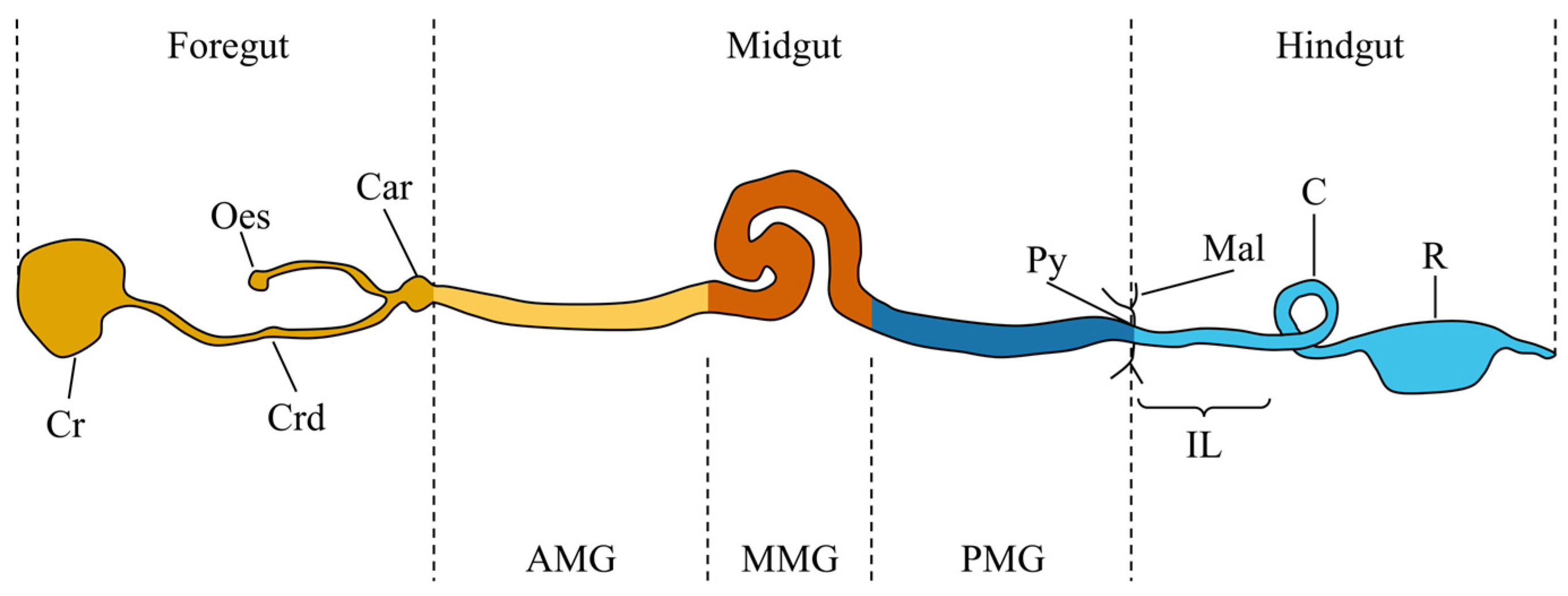
2. The B. dorsalis Gut Exhibits Compartmentalized pH Regions Shaping Microbial Niches
3. B. dorsalis Maintains an Enterobacteriaceae-Dominated Microbiota
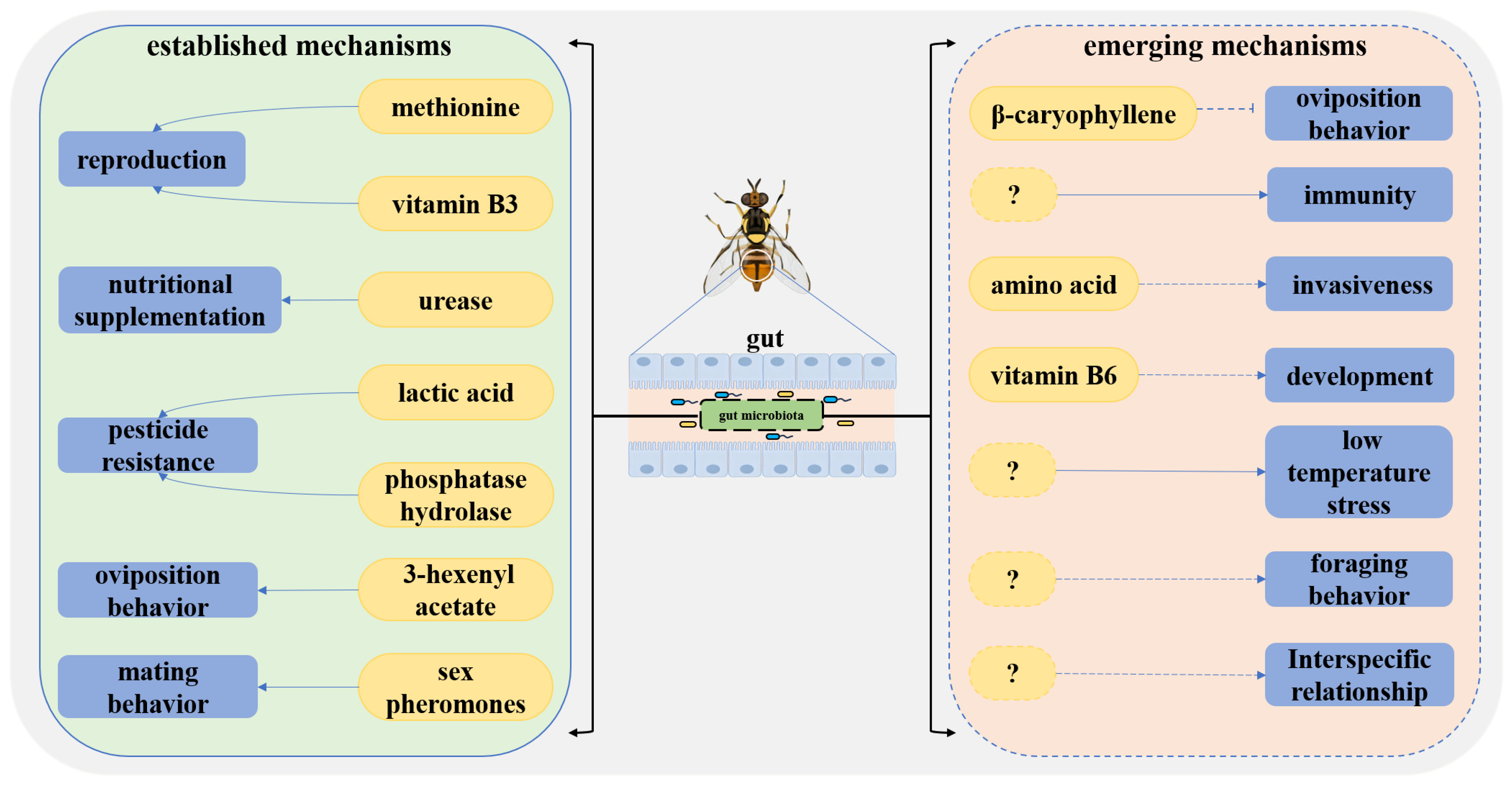
4. Case Studies on the Functions of Gut Microbiota in B. dorsalis
4.1. Gut Microbiota Mediate Nitrogen Recycling and Essential Nutrient Provisioning in B. dorsalis
4.2. Microbial Metabolites Regulate Development and Reproduction via Different Signaling in B. dorsalis
4.3. Symbionts Enhance SIT Efficacy in B. dorsalis
4.4. Symbionts Enhance Environmental Adaptation in B. dorsalis
4.5. Bacteria Modulate Behaviors Through Metabolites in B. dorsalis
4.6. Gut Microbes Confer Pesticide Resistance via Detoxification Pathways in B. dorsalis
4.7. Microbiota-Immune Crosstalk Coordinates Defense Responses in B. dorsalis
4.8. Specific Symbionts Modulate Natural Enemy Interactions in B. dorsalis

| Function | Microbial Taxon/Strain | Experimental Approach | Phenotype | Mechanism | Strength of Evidence | Reference |
|---|---|---|---|---|---|---|
| Provide nitrogen | Morganella morganii and Klebsiella oxytoca | Metagenomics, metatranscriptomics sequencing technologies and in vitro verification tests | Promote urea hydrolysis | Nitrogenous waste recycling | In vitro validation | [64] |
| Polysaccharide degradation | PSG1 and PSG3 | In situ and in vitro assay of enzymes | Promote pectin and xylan hydrolysis | - | Correlation analysis | [68] |
| Supply of amino acids and B vitamins | Klebsiella michiganensis BD177 | Whole-genome sequencing and comparative genome analysis | - | - | Correlation analysis | [71] |
| Influence host development | Enterobacteriaceae cloacae | Gnotobiotic host, genome-wide association study, and construction of bacterial mutant strains | Increase larval length and weight | Vitamin B6 biosynthesis | Strain supplementation/knockout assay | [37] |
| Influence host development | Hanseniaspora uvarum | Gnotobiotic host | Shorten larval development duration; increased adult wing length; increased the body size and weight of both pupa and adult. | - | Strain supplementation assay | [38] |
| Promote host reproduction | Enterobacter hormaechei | RNAi; construction of bacterial mutant strains; western blot; dot blot; UHPLC−MS/MS; RNA sequencing (RNA-seq) and Methylated RNA Immunoprecipitation-m6A-sequencing (MeRIP-m6A-seq) analysis | Contributes to host ovarian development and egg laying | Methionine- RNA m6A methylation- insulin receptor | Multi-system cross validation | [82] |
| Promote host reproduction | Enterobacter hormaechei | RNAi; construction of bacterial mutant strains; western blot; LC–MS/MS analysis; Prokaryotic expression; Chromatin immunoprecipitation; proteomic and ubiquitinome mass spectrometry | Contributes to host ovarian development, egg laying and egg hatching | Nicotinic acid- ubiquitin–proteasome system- Lolal-dpp | Multi-system cross validation | [83] |
| Enhance SIT efficacy | Klebsiella oxytoca BD177 | Radiation treatment and behavioral experiment | Restore the mating competition, longevity, flight parameters, food intake, levels of sugar and amino acids in the hemolymph of IR male flies. | - | Strain supplementation assay | [86] |
| Enhance host environmental adaptation. | Klebsiella michiganensis BD177 | RNAi | Increase the survival rate of the host under low temperature stress | Arginine and proline metabolism pathway | Multi-system cross validation | [95] |
| Influence host mating behavior | Bacillus sp. | GC-MS, GC-EAD analysis | Enhance attraction to mature virgin females | Produce sex pheromones | Multi-system cross validation | [98] |
| Influence host oviposition behavior | Citrobacter sp. (CF-BD) | Fluorescence in situ hybridization (FISH), scanning electron microscopy (SEM), competitive binding assays in vitro, RNAi and EAG analysis | Oviposition preference | Olfactory genes expressed in ovipositor bind to 3-hexenyl acetate | Multi-system cross validation | [100] |
| Enhance host pesticide resistance. | Citrobacter sp. (CF-BD) | FISH, GC-MS, Whole-genome sequencing and comparative genome analysis | Decrease host sensitivity to trichlorphon | Produce organophosphorus hydrolase | Multi-system cross validation | [108] |
| Enhance host pesticide resistance. | Enterococcus casseliflavus, Lactococcus lactis | Dual-luciferase reporter gene assay and RNAi | Decrease host sensitivity to β-cypermethrin | Lactic acid- NOX5- ROS- CncC pathway | Multi-system cross validation | [109] |
| Affect host immunity | Gut commensal bacteria | RNAi, TEM and FITC-dextran staining | Maintaining PM structural homeostasis | Duox- ROS-PM-Imd pathway | Multi-system cross validation | [114] |
5. Host Immune Mechanisms Maintain Microbiota Homeostasis in B. dorsalis
6. Limitations and Outlook
Author Contributions
Funding
Data Availability Statement
Acknowledgments
Conflicts of Interest
References
- Cundell, A.M. Microbial Ecology of the Human Skin. Microb. Ecol. 2018, 76, 113–120. [Google Scholar] [CrossRef] [Scilit] [PubMed]
- Jia, G.; Zhi, A.; Lai, P.F.H.; Wang, G.; Xia, Y.; Xiong, Z.; Zhang, H.; Che, N.; Ai, L. The Oral Microbiota—A Mechanistic Role for Systemic Diseases. Br. Dent. J. 2018, 224, 447–455. [Google Scholar] [CrossRef] [Scilit] [PubMed]
- Li, Y.; Chang, L.; Xu, K.; Zhang, S.; Gao, F.; Fan, Y. Research Progresses on the Function and Detection Methods of Insect Gut Microbes. Microorganisms 2023, 11, 1208. [Google Scholar] [CrossRef] [Scilit] [PubMed]
- Otti, O. Genitalia-associated Microbes in Insects. Insect Sci. 2015, 22, 325–339. [Google Scholar] [CrossRef] [Scilit] [PubMed]
- Donaldson, G.P.; Lee, S.M.; Mazmanian, S.K. Gut Biogeography of the Bacterial Microbiota. Nat. Rev. Microbiol. 2016, 14, 20–32. [Google Scholar] [CrossRef] [Scilit] [PubMed]
- Hu, Y.; Moreau, C.S. Nutritional Symbiosis Between Ants and Their Symbiotic Microbes. Annu. Rev. Entomol. 2025, 71, 35–49. [Google Scholar] [PubMed]
- Shan, L.; Fan, H.; Guo, J.; Zhou, H.; Li, F.; Jiang, Z.; Wu, D.; Feng, X.; Mo, R.; Liu, Y.; et al. Impairment of Oocyte Quality Caused by Gut Microbiota Dysbiosis in Obesity. Genomics 2024, 116, 110941. [Google Scholar] [CrossRef] [Scilit] [PubMed]
- Sharon, G.; Sampson, T.R.; Geschwind, D.H.; Mazmanian, S.K. The Central Nervous System and the Gut Microbiome. Cell 2016, 167, 915–932. [Google Scholar] [CrossRef] [Scilit] [PubMed]
- Yang, T.; Hu, X.; Cao, F.; Yun, F.; Jia, K.; Zhang, M.; Kong, G.; Nie, B.; Liu, Y.; Zhang, H.; et al. Targeting Symbionts by Apolipoprotein L Proteins Modulates Gut Immunity. Nature 2025, 643, 210–218. [Google Scholar] [CrossRef] [Scilit] [PubMed]
- Abdullateef, R.; Ibekwe, J.P.; Oyoyo, H.; Ogbodo, S. Applications and Challenges of Drosophila melanogaster as a Laboratory Model in Human Cancer Research: A Narrative Review. Discov. Onc. 2025, 17, 132. [Google Scholar] [CrossRef] [Scilit] [PubMed]
- Meyerowitz, E.M. Prehistory and History of Arabidopsis Research. Plant Physiol. 2001, 125, 15–19. [Google Scholar] [CrossRef] [Scilit] [PubMed]
- Müller, B.; Grossniklaus, U. Model Organisms—A Historical Perspective. J. Proteom. 2010, 73, 2054–2063. [Google Scholar] [CrossRef] [Scilit] [PubMed]
- Zheng, H.; Steele, M.I.; Leonard, S.P.; Motta, E.V.S.; Moran, N.A. Honey Bees as Models for Gut Microbiota Research. Lab. Anim. 2018, 47, 317–325. [Google Scholar] [CrossRef] [Scilit] [PubMed]
- Cho, K.H.; Kang, S.O. The Gut Microbiota of Drosophila melanogaster: A Model for Host–Microbe Interactions in Metabolism, Immunity, Behavior, and Disease. Microorganisms 2025, 13, 2515. [Google Scholar] [CrossRef] [Scilit] [PubMed]
- Broderick, N.A.; Buchon, N.; Lemaitre, B. Microbiota-Induced Changes in Drosophila melanogaster Host Gene Expression and Gut Morphology. mBio 2014, 5, e01117-14. [Google Scholar] [CrossRef] [Scilit] [PubMed]
- Pais, I.S.; Valente, R.S.; Sporniak, M.; Teixeira, L. Drosophila melanogaster Establishes a Species-Specific Mutualistic Interaction with Stable Gut-Colonizing Bacteria. PLoS Biol. 2018, 16, e2005710. [Google Scholar] [CrossRef] [Scilit] [PubMed]
- Virgilio, M.; De Meyer, M.; White, I.M.; Backeljau, T. African Dacus (Diptera: Tephritidae: Molecular Data and Host Plant Associations Do Not Corroborate Morphology Based Classifications. Mol. Phylogenet. Evol. 2009, 51, 531–539. [Google Scholar] [CrossRef] [Scilit] [PubMed]
- Raza, M.F.; Yao, Z.; Bai, S.; Cai, Z.; Zhang, H. Tephritidae Fruit Fly Gut Microbiome Diversity, Function and Potential for Applications. Bull. Entomol. Res. 2020, 110, 423–437. [Google Scholar] [CrossRef] [Scilit] [PubMed]
- Amores, G.R.; Zepeda-Ramos, G.; García-Fajardo, L.V.; Hernández, E.; Guillén-Navarro, K. The Gut Microbiome Analysis of Anastrepha obliqua Reveals Inter-Kingdom Diversity: Bacteria, Fungi, and Archaea. Arch. Microbiol. 2022, 204, 579. [Google Scholar] [CrossRef] [Scilit] [PubMed]
- Akami, M.; Andongma, A.A.; Zhengzhong, C.; Nan, J.; Khaeso, K.; Jurkevitch, E.; Niu, C.-Y.; Yuval, B. Intestinal Bacteria Modulate the Foraging Behavior of the Oriental Fruit Fly Bactrocera dorsalis (Diptera: Tephritidae). PLoS ONE 2019, 14, e0210109. [Google Scholar] [CrossRef] [Scilit] [PubMed]
- Wang, A.; Yao, Z.; Zheng, W.; Zhang, H. Bacterial Communities in the Gut and Reproductive Organs of Bactrocera minax (Diptera: Tephritidae) Based on 454 Pyrosequencing. PLoS ONE 2014, 9, e106988. [Google Scholar] [CrossRef] [Scilit] [PubMed]
- Andongma, A.A.; Wan, L.; Dong, Y.-C.; Wang, Y.-L.; He, J.; Niu, C.-Y. Assessment of the Bacteria Community Structure across Life Stages of the Chinese Citrus Fly, Bactrocera minax (Diptera: Tephritidae). Scand. J. Trauma. Resusc. Emerg. Med. 2019, 19, 285. [Google Scholar] [CrossRef] [Scilit] [PubMed]
- Yao, Z.; Ma, Q.; Cai, Z.; Raza, M.F.; Bai, S.; Wang, Y.; Zhang, P.; Ma, H.; Zhang, H. Similar Shift Patterns in Gut Bacterial and Fungal Communities Across the Life Stages of Bactrocera minax Larvae from Two Field Populations. Front. Microbiol. 2019, 10, 2262. [Google Scholar] [CrossRef] [Scilit] [PubMed]
- Majumder, R.; Sutcliffe, B.; Taylor, P.W.; Chapman, T.A. Next-Generation Sequencing Reveals Relationship between the Larval Microbiome and Food Substrate in the Polyphagous Queensland Fruit Fly. Sci. Rep. 2019, 9, 14292. [Google Scholar] [CrossRef] [Scilit] [PubMed]
- Woruba, D.N.; Morrow, J.L.; Reynolds, O.L.; Chapman, T.A.; Collins, D.P.; Riegler, M. Diet and Irradiation Effects on the Bacterial Community Composition and Structure in the Gut of Domesticated Teneral and Mature Queensland Fruit Fly, Bactrocera tryoni (Diptera: Tephritidae). BMC Microbiol. 2019, 19, 281. [Google Scholar] [CrossRef] [Scilit] [PubMed]
- Malacrinò, A.; Campolo, O.; Medina, R.F.; Palmeri, V. Instar- and Host-Associated Differentiation of Bacterial Communities in the Mediterranean Fruit Fly Ceratitis capitata. PLoS ONE 2018, 13, e0194131. [Google Scholar] [CrossRef] [Scilit] [PubMed]
- Mason, C.J.; Auth, J.; Geib, S.M. Gut Bacterial Population and Community Dynamics Following Adult Emergence in Pest Tephritid Fruit Flies. Sci. Rep. 2023, 13, 13723. [Google Scholar] [CrossRef] [Scilit] [PubMed]
- Noman, M.S.; Shi, G.; Liu, L.; Li, Z. Diversity of Bacteria in Different Life Stages and Their Impact on the Development and Reproduction of Zeugodacus tau (Diptera: Tephritidae). Insect Sci. 2021, 28, 363–376. [Google Scholar] [CrossRef] [Scilit] [PubMed]
- Hadapad, A.B.; Shettigar, S.K.G.; Hire, R.S. Bacterial Communities in the Gut of Wild and Mass-Reared Zeugodacus cucurbitae and Bactrocera dorsalis Revealed by Metagenomic Sequencing. BMC Microbiol. 2019, 19, 282. [Google Scholar] [CrossRef] [Scilit] [PubMed]
- Choudhary, J.S.; Naaz, N.; Prabhakar, C.S.; Das, B.; Singh, A.K.; Bhatt, B.P. High Taxonomic and Functional Diversity of Bacterial Communities Associated with Melon Fly, Zeugodacus cucurbitae (Diptera: Tephritidae). Curr. Microbiol. 2021, 78, 611–623. [Google Scholar] [CrossRef] [Scilit] [PubMed]
- Hou, Q.-L.; Chen, E.-H.; Dou, W.; Wang, J.-J. Assessment of Bactrocera dorsalis (Diptera: Tephritidae) Diets on Adult Fecundity and Larval Development: Insights into Employing the Sterile Insect Technique. J. Insect Sci. 2020, 20, 7. [Google Scholar] [CrossRef] [Scilit] [PubMed]
- Michel, A.D.K.; Fiaboe, K.K.M.; Kekeunou, S.; Nanga, S.N.; Kuate, A.F.; Tonnang, H.E.Z.; Gnanvossou, D.; Hanna, R. Temperature-Based Phenology Model to Predict the Development, Survival, and Reproduction of the Oriental Fruit Fly Bactrocera dorsalis. J. Therm. Biol. 2021, 97, 102877. [Google Scholar] [CrossRef] [Scilit] [PubMed]
- Liu, H.; Zhang, D.; Xu, Y.; Wang, L.; Cheng, D.; Qi, Y.; Zeng, L.; Lu, Y. Invasion, Expansion, and Control of Bactrocera dorsalis (Hendel) in China. J. Integr. Agric. 2019, 18, 771–787. [Google Scholar] [CrossRef] [Scilit]
- Zhao, Z.; Carey, J.R.; Li, Z. The Global Epidemic of Bactrocera Pests: Mixed-Species Invasions and Risk Assessment. Annu. Rev. Entomol. 2024, 69, 219–237. [Google Scholar] [CrossRef] [Scilit] [PubMed]
- Nugnes, F.; Russo, E.; Viggiani, G.; Bernardo, U. First Record of an Invasive Fruit Fly Belonging to Bactrocera dorsalis Complex (Diptera: Tephritidae) in Europe. Insects 2018, 9, 182. [Google Scholar] [CrossRef] [Scilit] [PubMed]
- Guo, Z.; Lu, Y.; Yang, F.; Zeng, L.; Liang, G.; Xu, Y. Transmission Modes of a Pesticide-Degrading Symbiont of the Oriental Fruit Fly Bactrocera dorsalis (Hendel). Appl. Microbiol. Biotechnol. 2017, 101, 8543–8556. [Google Scholar] [CrossRef] [Scilit] [PubMed]
- Gu, J.; Yao, Z.; Lemaitre, B.; Cai, Z.; Zhang, H.; Li, X. Intestinal Commensal Bacteria Promote Bactrocera dorsalis Larval Development through the Vitamin B6 Synthesis Pathway. Microbiome 2024, 12, 227. [Google Scholar] [CrossRef] [Scilit] [PubMed]
- Guo, Q.; Yao, Z.; Cai, Z.; Bai, S.; Zhang, H. Gut Fungal Community and Its Probiotic Effect on Bactrocera dorsalis. Insect Sci. 2022, 29, 1145–1158. [Google Scholar] [CrossRef] [Scilit] [PubMed]
- Liu, W.; Lin, Q.; Wang, Q.; Liu, W.; Jia, J.; Zhang, J.; Yang, L.; Lu, Y.; Cui, P.; Wang, G. Telomere-to-Telomere Genome Assembly of the Dipteran Bactrocera dorsalis from a Single Individual. Nat. Commun. 2025, 16, 10861. [Google Scholar] [CrossRef] [Scilit] [PubMed]
- Kempraj, V.; Auth, J.; Cha, D.H.; Mason, C.J. Impact of Larval Food Source on the Stability of the Bactrocera dorsalis Microbiome. Microb. Ecol. 2024, 87, 46. [Google Scholar] [CrossRef] [Scilit] [PubMed]
- Zheng, W.; Li, Q.; Sun, H.; Ali, M.W.; Zhang, H. CRISPR/Cas9-Mediated Mutagenesis of the Mew Gene Induces Muscle Weakness and Flightlessness in Bactrocera dorsalis (Diptera: Tephritidae). Insect Mol. Biol. 2019, 28, 222–234. [Google Scholar] [CrossRef] [Scilit] [PubMed]
- Hai, Q.; Li, D.; Huang, T.; Dang, X.; Xu, J.; Ma, Z.; Zhou, Z. The Honeybee Gut Microbiome: A Novel Multidimensional Model of Antimicrobial Resistance Transmission and Immune Homeostasis from Environmental Interactions to Health Regulation. FEMS Microbiol. Rev. 2026, 50, fuag001. [Google Scholar] [CrossRef] [Scilit] [PubMed]
- Liu, H.; Yin, J.; Huang, X.; Zang, C.; Zhang, Y.; Cao, J.; Gong, M. Mosquito Gut Microbiota: A Review. Pathogens 2024, 13, 691. [Google Scholar] [CrossRef] [Scilit] [PubMed]
- Strand, M.R. Composition and Functional Roles of the Gut Microbiota in Mosquitoes. Curr. Opin. Insect Sci. 2018, 28, 59–65. [Google Scholar] [CrossRef] [Scilit] [PubMed]
- Engel, P.; Moran, N.A. The Gut Microbiota of Insects—Diversity in Structure and Function. FEMS Microbiol. Rev. 2013, 37, 699–735. [Google Scholar] [CrossRef] [Scilit] [PubMed]
- Yao, Z.; Cai, Z.; Ma, Q.; Bai, S.; Wang, Y.; Zhang, P.; Guo, Q.; Gu, J.; Lemaitre, B.; Zhang, H. Compartmentalized PGRP Expression along the Dipteran Bactrocera dorsalis Gut Forms a Zone of Protection for Symbiotic Bacteria. Cell Rep. 2022, 41, 111523. [Google Scholar] [CrossRef] [Scilit] [PubMed]
- Fitt, G.P.; O’Brien, R.W. Bacteria Associated with Four Species of Dacus (Diptera: Tephritidae) and Their Role in the Nutrition of the Larvae. Oecologia 1985, 67, 447–454. [Google Scholar] [CrossRef] [Scilit] [PubMed]
- Miguel-Aliaga, I.; Jasper, H.; Lemaitre, B. Anatomy and Physiology of the Digestive Tract of Drosophila melanogaster. Genetics 2018, 210, 357–396. [Google Scholar] [CrossRef] [Scilit] [PubMed]
- Gui, S.; Xie, L.; Wang, Z.; Chen, Y.; Xiao, Y.; Lin, Z.; Chen, J.; Lu, Y.; Keller, L.; Cheng, D. Alkaline–Acid Intestine Environment Controlled by A Carbonic Anhydrase Gene Influences Synthesis of Sex Pheromone by Symbionts. Adv. Sci. 2025, 12, e11723. [Google Scholar] [CrossRef] [Scilit] [PubMed]
- Bai, Z.; Liu, L.; Noman, M.S.; Zeng, L.; Luo, M.; Li, Z. The Influence of Antibiotics on Gut Bacteria Diversity Associated with Laboratory-Reared Bactrocera dorsalis. Bull. Entomol. Res. 2019, 109, 500–509. [Google Scholar] [CrossRef] [Scilit] [PubMed]
- Wang, H.; Jin, L.; Zhang, H. Comparison of the Diversity of the Bacterial Communities in the Intestinal Tract of Adult Bactrocera dorsalis from Three Different Populations: Bacterial Communities in B. dorsalis Gut. J. Appl. Microbiol. 2011, 110, 1390–1401. [Google Scholar] [CrossRef] [Scilit] [PubMed]
- Andongma, A.A.; Wan, L.; Dong, Y.-C.; Li, P.; Desneux, N.; White, J.A.; Niu, C.-Y. Pyrosequencing Reveals a Shift in Symbiotic Bacteria Populations across Life Stages of Bactrocera dorsalis. Sci. Rep. 2015, 5, 9470. [Google Scholar] [CrossRef] [Scilit] [PubMed]
- Liu, L.J.; Martinez-Sañudo, I.; Mazzon, L.; Prabhakar, C.S.; Girolami, V.; Deng, Y.L.; Dai, Y.; Li, Z.H. Bacterial Communities Associated with Invasive Populations of Bactrocera dorsalis (Diptera: Tephritidae) in China. Bull. Entomol. Res. 2016, 106, 718–728. [Google Scholar] [CrossRef] [Scilit] [PubMed]
- Liu, S.-H.; Chen, Y.; Li, W.; Tang, G.-H.; Yang, Y.; Jiang, H.-B.; Dou, W.; Wang, J.-J. Diversity of Bacterial Communities in the Intestinal Tracts of Two Geographically Distant Populations of Bactrocera dorsalis (Diptera: Tephritidae). J. Econ. Entomol. 2018, 111, 2861–2868. [Google Scholar] [CrossRef] [Scilit] [PubMed]
- Zhu, Y.; Han, R.; Zhang, T.; Yang, J.; Teng, Z.; Fan, Y.; Sun, P.; Lu, Y.; Ren, Y.; Wan, F.; et al. The Food Source and Gut Bacteria Show Effects on the Invasion of Alien Pests—A Case of Bactrocera dorsalis (Hendel) (Diptera: Tephritidae). Insects 2024, 15, 530. [Google Scholar] [CrossRef] [Scilit] [PubMed]
- Nikolouli, K.; Augustinos, A.A.; Stathopoulou, P.; Asimakis, E.; Mintzas, A.; Bourtzis, K.; Tsiamis, G. Genetic Structure and Symbiotic Profile of Worldwide Natural Populations of the Mediterranean Fruit Fly, Ceratitis capitata. BMC Genet. 2020, 21, 128. [Google Scholar] [CrossRef] [Scilit] [PubMed]
- Yong, H.-S.; Song, S.-L.; Eamsobhana, P.; Pasartvit, A.; Lim, P.-E. Differential Abundance and Core Members of the Bacterial Community Associated with Wild Male Zeugodacus cucurbitae Fruit Flies (Insecta: Tephritidae) from Three Geographical Regions of Southeast Asia. Mol. Biol. Rep. 2019, 46, 3765–3776. [Google Scholar] [CrossRef] [Scilit] [PubMed]
- Mattson, W.J. Herbivory in Relation to Plant Nitrogen Content. Annu. Rev. Ecol. Syst. 1980, 11, 119–161. [Google Scholar] [CrossRef] [Scilit]
- Hu, Y.; Sanders, J.G.; Łukasik, P.; D’Amelio, C.L.; Millar, J.S.; Vann, D.R.; Lan, Y.; Newton, J.A.; Schotanus, M.; Kronauer, D.J.C.; et al. Herbivorous Turtle Ants Obtain Essential Nutrients from a Conserved Nitrogen-Recycling Gut Microbiome. Nat. Commun. 2018, 9, 964. [Google Scholar] [CrossRef] [Scilit] [PubMed]
- Kiefer, J.S.T.; Bauer, E.; Okude, G.; Fukatsu, T.; Kaltenpoth, M.; Engl, T. Cuticle Supplementation and Nitrogen Recycling by a Dual Bacterial Symbiosis in a Family of Xylophagous Beetles. ISME J. 2023, 17, 1029–1039. [Google Scholar] [CrossRef] [Scilit] [PubMed]
- Yang, Y.; Hu, L.; Li, X.; Wang, J.; Jin, G. Nitrogen Fixation and Diazotrophic Community in Plastic-Eating Mealworms Tenebrio molitor L. Microb. Ecol. 2023, 85, 264–276. [Google Scholar] [CrossRef] [Scilit] [PubMed]
- Aharon, Y.; Pasternak, Z.; Ben Yosef, M.; Behar, A.; Lauzon, C.; Yuval, B.; Jurkevitch, E. Phylogenetic, Metabolic, and Taxonomic Diversities Shape Mediterranean Fruit Fly Microbiotas during Ontogeny. Appl. Environ. Microbiol. 2013, 79, 303–313. [Google Scholar] [CrossRef] [Scilit] [PubMed]
- Ben-Yosef, M.; Pasternak, Z.; Jurkevitch, E.; Yuval, B. Symbiotic Bacteria Enable Olive Flies (Bactrocera oleae) to Exploit Intractable Sources of Nitrogen. J. Evol. Biol. 2014, 27, 2695–2705. [Google Scholar] [CrossRef] [Scilit] [PubMed]
- Ren, X.; Cao, S.; Akami, M.; Mansour, A.; Yang, Y.; Jiang, N.; Wang, H.; Zhang, G.; Qi, X.; Xu, P.; et al. Gut Symbiotic Bacteria Are Involved in Nitrogen Recycling in the Tephritid Fruit Fly Bactrocera dorsalis. BMC Biol. 2022, 20, 201. [Google Scholar] [CrossRef] [Scilit] [PubMed]
- Watanabe, H.; Tokuda, G. Cellulolytic Systems in Insects. Annu. Rev. Entomol. 2010, 55, 609–632. [Google Scholar] [CrossRef] [Scilit] [PubMed]
- Vera-Ponce De León, A.; Jahnes, B.C.; Duan, J.; Camuy-Vélez, L.A.; Sabree, Z.L. Cultivable, Host-Specific Bacteroidetes Symbionts Exhibit Diverse Polysaccharolytic Strategies. Appl. Environ. Microbiol. 2020, 86, e00091-20. [Google Scholar] [CrossRef] [Scilit] [PubMed]
- Zheng, H.; Perreau, J.; Powell, J.E.; Han, B.; Zhang, Z.; Kwong, W.K.; Tringe, S.G.; Moran, N.A. Division of Labor in Honey Bee Gut Microbiota for Plant Polysaccharide Digestion. Proc. Natl. Acad. Sci. USA 2019, 116, 25909–25916. [Google Scholar] [CrossRef] [Scilit] [PubMed]
- Saha, P.; Ray, R.R. Production of Polysaccharide Degrading Enzymes by the Gut Microbiota of Leucinodes orbonalis and Bactrocera dorsalis. J. Entomol. Zool. Stud. 2015, 3, 122–125. [Google Scholar]
- Serrato-Salas, J.; Gendrin, M. Involvement of Microbiota in Insect Physiology: Focus on B Vitamins. mBio 2023, 14, e02225-22. [Google Scholar] [CrossRef] [Scilit] [PubMed]
- Wilson, A.C.C.; Duncan, R.P. Signatures of Host/Symbiont Genome Coevolution in Insect Nutritional Endosymbioses. Proc. Natl. Acad. Sci. USA 2015, 112, 10255–10261. [Google Scholar] [CrossRef] [Scilit] [PubMed]
- Cai, Z.; Guo, Q.; Yao, Z.; Zheng, W.; Xie, J.; Bai, S.; Zhang, H. Comparative Genomics of Klebsiella michiganensis BD177 and Related Members of Klebsiella Sp. Reveal the Symbiotic Relationship with Bactrocera dorsalis. BMC Genet. 2020, 21, 138. [Google Scholar] [CrossRef] [Scilit] [PubMed]
- Coon, K.L.; Vogel, K.J.; Brown, M.R.; Strand, M.R. Mosquitoes Rely on Their Gut Microbiota for Development. Mol. Ecol. 2014, 23, 2727–2739. [Google Scholar] [CrossRef] [Scilit] [PubMed]
- Morimoto, J.; Nguyen, B.; Tabrizi, S.T.; Lundbäck, I.; Taylor, P.W.; Ponton, F.; Chapman, T.A. Commensal Microbiota Modulates Larval Foraging Behaviour, Development Rate and Pupal Production in Bactrocera tryoni. BMC Microbiol. 2019, 19, 2–8. [Google Scholar] [CrossRef] [Scilit] [PubMed]
- Shin, S.C.; Kim, S.-H.; You, H.; Kim, B.; Kim, A.C.; Lee, K.-A.; Yoon, J.-H.; Ryu, J.-H.; Lee, W.-J. Drosophila Microbiome Modulates Host Developmental and Metabolic Homeostasis via Insulin Signaling. Science 2011, 334, 670–674. [Google Scholar] [CrossRef] [Scilit] [PubMed]
- Zheng, H.; Powell, J.E.; Steele, M.I.; Dietrich, C.; Moran, N.A. Honeybee Gut Microbiota Promotes Host Weight Gain via Bacterial Metabolism and Hormonal Signaling. Proc. Natl. Acad. Sci. USA 2017, 114, 4775–4780. [Google Scholar] [CrossRef] [Scilit] [PubMed]
- Hassan, B.; Siddiqui, J.A.; Xu, Y. Vertically Transmitted Gut Bacteria and Nutrition Influence the Immunity and Fitness of Bactrocera dorsalis Larvae. Front. Microbiol. 2020, 11, 596352. [Google Scholar] [CrossRef] [Scilit] [PubMed]
- Gichuhi, J.; Khamis, F.; Van Den Berg, J.; Mohamed, S.; Ekesi, S.; Herren, J.K. Influence of Inoculated Gut Bacteria on the Development of Bactrocera dorsalis and on Its Susceptibility to the Entomopathogenic Fungus, Metarhizium anisopliae. BMC Microbiol. 2020, 20, 321. [Google Scholar] [CrossRef] [Scilit] [PubMed]
- Chu, B.; Ge, S.; He, W.; Sun, X.; Ma, J.; Yang, X.; Lv, C.; Xu, P.; Zhao, X.; Wu, K. Gut Symbiotic Bacteria Enhance Reproduction in Spodoptera frugiperda (J.E. Smith) by Regulating Juvenile Hormone III and 20-Hydroxyecdysone Pathways. Microbiome 2025, 13, 132. [Google Scholar] [CrossRef] [Scilit] [PubMed]
- Yao, Y.-L.; Ma, X.-Y.; Wang, T.-Y.; Yan, J.-Y.; Chen, N.-F.; Hong, J.-S.; Liu, B.-Q.; Xu, Z.-Q.; Zhang, N.; Lv, C.; et al. A Bacteriocyte Symbiont Determines Whitefly Sex Ratio by Regulating Mitochondrial Function. Cell Rep. 2023, 42, 112102. [Google Scholar] [CrossRef] [Scilit] [PubMed]
- Ben-Yosef, M.; Aharon, Y.; Jurkevitch, E.; Yuval, B. Give Us the Tools and We Will Do the Job: Symbiotic Bacteria Affect Olive Fly Fitness in a Diet-Dependent Fashion. Proc. R. Soc. B. 2010, 277, 1545–1552. [Google Scholar] [CrossRef] [Scilit] [PubMed]
- Goane, L.; Salgueiro, J.; Medina Pereyra, P.; Arce, O.E.A.; Ruiz, M.J.; Nussenbaum, A.L.; Segura, D.F.; Vera, M.T. Antibiotic Treatment Reduces Fecundity and Nutrient Content in Females of Anastrepha fraterculus (Diptera: Tephritidae) in a Diet Dependent Way. J. Insect Physiol. 2022, 139, 104396. [Google Scholar] [CrossRef] [Scilit] [PubMed]
- Zhang, Q.; Deng, Z.; Li, X.; Qiao, J.; Li, Z.; Liu, P.; Handler, A.M.; Lemaitre, B.; Zheng, W.; Zhang, H. Gut Commensal Bacteria-Derived Methionine Is Required for Host Reproduction by Modulating RNA m6A Methylation of the Insulin Receptor. Cell Rep. 2024, 44, 115911. [Google Scholar] [CrossRef] [Scilit]
- Qiao, J.; Li, Z.; Zheng, W.; Zhang, Q.; Zheng, C.; Li, X.; Zhang, H. The Lolal-Dpp Axis Mediates the Regulation of Host Reproduction by Gut Symbionts in Insects. Nat. Commun. 2026, 17, 2260. [Google Scholar] [CrossRef] [Scilit] [PubMed]
- Msaad Guerfali, M.; Charaabi, K.; Hamden, H.; Zidi, O.; Hamdi, M.; Fadhl, S.; Kouidhi, S.; Cherif, A.; Mosbah, A. Exploring the Metabolic Changes of Ceratitis capitata Vienna 8 Strain across Three Developmental Stages through Probiotic Larval Diet Supplementation. PLoS ONE 2024, 19, e0313894. [Google Scholar] [CrossRef] [Scilit] [PubMed]
- Shuttleworth, L.A.; Khan, M.A.M.; Osborne, T.; Collins, D.; Srivastava, M.; Reynolds, O.L. A Walk on the Wild Side: Gut Bacteria Fed to Mass-Reared Larvae of Queensland Fruit Fly [Bactrocera tryoni (Froggatt)] Influence Development. BMC Biotechnol. 2019, 19, 95. [Google Scholar] [CrossRef] [Scilit] [PubMed]
- Cai, Z.; Yao, Z.; Li, Y.; Xi, Z.; Bourtzis, K.; Zhao, Z.; Bai, S.; Zhang, H. Intestinal Probiotics Restore the Ecological Fitness Decline of Bactrocera dorsalis by Irradiation. Evol. Appl. 2018, 11, 1946–1963. [Google Scholar] [CrossRef] [Scilit] [PubMed]
- Lin, J.; Ding, W.; Chen, J.; Yue, G.; Wang, B.; Ji, Q. Effects of X-Ray Irradiation on the Biological Parameters, Gut Microbiota, and Gene Expression of Bactrocera dorsalis: Implications for the Sterile Insect Technique. Evol. Appl. 2025, 18, e70158. [Google Scholar] [CrossRef] [Scilit] [PubMed]
- Zhang, Q.; Cai, P.; Wang, B.; Liu, X.; Lin, J.; Hua, R.; Zhang, H.; Yi, C.; Song, X.; Ji, Q.; et al. Manipulation of Gut Symbionts for Improving the Sterile Insect Technique: Quality Parameters of Bactrocera dorsalis (Diptera: Tephritidae) Genetic Sexing Strain Males After Feeding on Bacteria-Enriched Diets. J. Econ. Entomol. 2021, 114, 560–570. [Google Scholar] [CrossRef] [Scilit] [PubMed]
- Khan, M.; Seheli, K.; Bari, M.A.; Sultana, N.; Khan, S.A.; Sultana, K.F.; Hossain, M.A. Potential of a Fly Gut Microbiota Incorporated Gel-Based Larval Diet for Rearing Bactrocera dorsalis (Hendel). BMC Biotechnol. 2019, 19, 94. [Google Scholar] [CrossRef] [Scilit] [PubMed]
- Ceja-Navarro, J.A.; Vega, F.E.; Karaoz, U.; Hao, Z.; Jenkins, S.; Lim, H.C.; Kosina, P.; Infante, F.; Northen, T.R.; Brodie, E.L. Gut Microbiota Mediate Caffeine Detoxification in the Primary Insect Pest of Coffee. Nat. Commun. 2015, 6, 7618. [Google Scholar] [CrossRef] [Scilit] [PubMed]
- Tang, C.; Hu, X.; Tang, J.; Wang, L.; Liu, X.; Peng, Y.; Xia, Y.; Xie, J. The Symbiont Acinetobacter baumannii Enhances the Insect Host Resistance to Entomopathogenic Fungus Metarhizium anisopliae. Commun. Biol. 2024, 7, 1184. [Google Scholar] [CrossRef] [Scilit] [PubMed]
- Cao, S.; Ren, X.; Zhang, G.; Wang, H.; Wei, B.; Niu, C. Gut Microbiota Metagenomics and Mediation of Phenol Degradation in Bactrocera minax (Diptera, Tephritidae). Pest Manag. Sci. 2024, 80, 3935–3944. [Google Scholar] [CrossRef] [Scilit] [PubMed]
- Bernardo, U.; Nugnes, F.; Ascolese, R.; Carbone, C.; Miele, F.; Innangi, M.; Di Febbraro, M. Predicting the Invasion Risk of Bactrocera dorsalis in Italy under Climate and Land Cover Change. Sci. Rep. 2025, 15, 35096. [Google Scholar] [CrossRef] [Scilit] [PubMed]
- Ayyasamy, A.; Kempraj, V.; Pagadala Damodaram, K.J. Endosymbiotic Bacteria Aid to Overcome Temperature Induced Stress in the Oriental Fruit Fly, Bactrocera dorsalis. Microb. Ecol. 2021, 82, 783–792. [Google Scholar] [CrossRef] [Scilit] [PubMed]
- Raza, M.F.; Wang, Y.; Cai, Z.; Bai, S.; Yao, Z.; Awan, U.A.; Zhang, Z.; Zheng, W.; Zhang, H. Gut Microbiota Promotes Host Resistance to Low-Temperature Stress by Stimulating Its Arginine and Proline Metabolism Pathway in Adult Bactrocera dorsalis. PLoS Pathog. 2020, 16, e1008441. [Google Scholar] [CrossRef] [Scilit] [PubMed]
- Wang, Y.; Li, Z.; Zhao, Z. Population Mixing Mediates the Intestinal Flora Composition and Facilitates Invasiveness in a Globally Invasive Fruit Fly. Microbiome 2023, 11, 213. [Google Scholar] [CrossRef] [Scilit] [PubMed]
- Aburto, M.R.; Cryan, J.F. Gastrointestinal and Brain Barriers: Unlocking Gates of Communication across the Microbiota–Gut–Brain Axis. Nat. Rev. Gastroenterol. Hepatol. 2024, 21, 222–247. [Google Scholar] [CrossRef] [Scilit] [PubMed]
- Ren, L.; Ma, Y.; Xie, M.; Lu, Y.; Cheng, D. Rectal Bacteria Produce Sex Pheromones in the Male Oriental Fruit Fly. Curr. Biol. 2021, 31, 2220–2226.e4. [Google Scholar] [CrossRef] [Scilit] [PubMed]
- Damodaram, K.J.P.; Ayyasamy, A.; Kempraj, V. Commensal Bacteria Aid Mate-Selection in the Fruit Fly, Bactrocera dorsalis. Microb. Ecol. 2016, 72, 725–729. [Google Scholar] [CrossRef] [Scilit] [PubMed]
- He, M.; Chen, H.; Yang, X.; Gao, Y.; Lu, Y.; Cheng, D. Gut Bacteria Induce Oviposition Preference through Ovipositor Recognition in Fruit Fly. Commun. Biol. 2022, 5, 973. [Google Scholar] [CrossRef] [Scilit] [PubMed]
- Li, H.; Ren, L.; Xie, M.; Gao, Y.; He, M.; Hassan, B.; Lu, Y.; Cheng, D. Egg-Surface Bacteria Are Indirectly Associated with Oviposition Aversion in Bactrocera dorsalis. Curr. Biol. 2020, 30, 4432–4440.e4. [Google Scholar] [CrossRef] [Scilit] [PubMed]
- Akami, M.; Ren, X.-M.; Qi, X.; Mansour, A.; Gao, B.; Cao, S.; Niu, C.-Y. Symbiotic Bacteria Motivate the Foraging Decision and Promote Fecundity and Survival of Bactrocera dorsalis (Diptera: Tephritidae). BMC Microbiol. 2019, 19, 229. [Google Scholar] [CrossRef] [Scilit] [PubMed]
- Li, H.-F.; Dong, B.; Peng, Y.-Y.; Luo, H.-Y.; Ou, X.-L.; Ren, Z.-L.; Park, Y.; Wang, J.-J.; Jiang, H.-B. The Neuropeptide Sulfakinin, a Peripheral Regulator of Insect Behavioral Switch between Mating and Foraging. eLife 2024, 13, RP100870. [Google Scholar] [CrossRef]
- Maccollom, G.B.; Lauzon, C.R.; Sjogren, R.E.; Meyer, W.L.; Olday, F. Association and Attraction of Blueberry Maggot Fly Curran (Diptera: Tephritidae) to Pantoea (Enterobacter) agglomerans. Environ. Entomol. 2009, 38, 116–120. [Google Scholar] [CrossRef] [Scilit] [PubMed]
- Piper, A.M.; Farnier, K.; Linder, T.; Speight, R.; Cunningham, J.P. Two Gut-Associated Yeasts in a Tephritid Fruit Fly Have Contrasting Effects on Adult Attraction and Larval Survival. J. Chem. Ecol. 2017, 43, 891–901. [Google Scholar] [CrossRef] [Scilit] [PubMed]
- Wang, H.; Jin, L.; Peng, T.; Zhang, H.; Chen, Q.; Hua, Y. Identification of Cultivable Bacteria in the Intestinal Tract of Bactrocera dorsalis from Three Different Populations and Determination of Their Attractive Potential: Bacterial Communities and Function in B. dorsalis Gut. Pest Manag. Sci. 2014, 70, 80–87. [Google Scholar] [CrossRef] [Scilit] [PubMed]
- Duan, Y.; Li, A.; Zhang, L.; Yin, C.; Li, Z.; Liu, L. Attractant Potential of Enterobacter cloacae and Its Metabolites to Bactrocera dorsalis (Hendel). Front. Physiol. 2024, 15, 1465946. [Google Scholar] [CrossRef] [Scilit] [PubMed]
- Cheng, D.; Guo, Z.; Riegler, M.; Xi, Z.; Liang, G.; Xu, Y. Gut Symbiont Enhances Insecticide Resistance in a Significant Pest, the Oriental Fruit Fly Bactrocera dorsalis (Hendel). Microbiome 2017, 5, 13. [Google Scholar] [CrossRef] [Scilit] [PubMed]
- Zeng, T.; Fu, Q.; Luo, F.; Dai, J.; Fu, R.; Qi, Y.; Deng, X.; Lu, Y.; Xu, Y. Lactic Acid Bacteria Modulate the CncC Pathway to Enhance Resistance to β-Cypermethrin in the Oriental Fruit Fly. ISME J. 2024, 18, wrae058. [Google Scholar] [CrossRef] [Scilit] [PubMed]
- Cai, T.; Nadal-Jimenez, P.; Gao, Y.; Arai, H.; Li, C.; Su, C.; King, K.C.; He, S.; Li, J.; Hurst, G.D.D.; et al. Insecticide Susceptibility in a Planthopper Pest Increases Following Inoculation with Cultured Arsenophonus. ISME J. 2024, 18, wrae194. [Google Scholar] [CrossRef] [Scilit] [PubMed]
- Kikuchi, Y.; Hayatsu, M.; Hosokawa, T.; Nagayama, A.; Tago, K.; Fukatsu, T. Symbiont-Mediated Insecticide Resistance. Proc. Natl. Acad. Sci. USA 2012, 109, 8618–8622. [Google Scholar] [CrossRef] [Scilit] [PubMed]
- Li, L.; Yang, Q.; Liu, M.; Lin, S.; Hua, W.; Shi, D.; Yan, J.; Shi, X.; Hoffmann, A.A.; Zhu, B.; et al. Symbiotic Bacteria Mediate Chemical-Insecticide Resistance but Enhance the Efficacy of a Biological Insecticide in Diamondback Moth. Curr. Biol. 2025, 35, 4494–4508.e3. [Google Scholar] [CrossRef] [Scilit] [PubMed]
- Bai, S.; Yao, Z.; Raza, M.F.; Cai, Z.; Zhang, H. Regulatory Mechanisms of Microbial Homeostasis in Insect Gut. Insect Sci. 2021, 28, 286–301. [Google Scholar] [CrossRef] [Scilit] [PubMed]
- Bai, S.; Yao, Z.; Cai, Z.; Ma, Q.; Guo, Q.; Zhang, P.; Zhou, Q.; Gu, J.; Liu, S.; Lemaitre, B.; et al. Bacterial-Induced Duox-ROS Regulates the Imd Immune Pathway in the Gut by Modulating the Peritrophic Matrix. Cell Rep. 2025, 44, 115404. [Google Scholar] [CrossRef] [Scilit] [PubMed]
- Frago, E.; Dicke, M.; Godfray, H.C.J. Insect Symbionts as Hidden Players in Insect–Plant Interactions. Trends Ecol. Evol. 2012, 27, 705–711. [Google Scholar] [CrossRef] [Scilit] [PubMed]
- Frago, E.; Mala, M.; Weldegergis, B.T.; Yang, C.; McLean, A.; Godfray, H.C.J.; Gols, R.; Dicke, M. Symbionts Protect Aphids from Parasitic Wasps by Attenuating Herbivore-Induced Plant Volatiles. Nat. Commun. 2017, 8, 1860. [Google Scholar] [CrossRef] [Scilit] [PubMed]
- Oliver, K.M.; Russell, J.A.; Moran, N.A.; Hunter, M.S. Facultative Bacterial Symbionts in Aphids Confer Resistance to Parasitic Wasps. Proc. Natl. Acad. Sci. USA 2003, 100, 1803–1807. [Google Scholar] [CrossRef] [Scilit] [PubMed]
- Gwokyalya, R.; Weldon, C.W.; Herren, J.K.; Gichuhi, J.; Makhulu, E.E.; Ndlela, S.; Mohamed, S.A. Friend or Foe: Symbiotic Bacteria in Bactrocera dorsalis–Parasitoid Associations. Biology 2023, 12, 274. [Google Scholar] [CrossRef] [Scilit] [PubMed]
- Ha, E.-M.; Oh, C.-T.; Bae, Y.S.; Lee, W.-J. A Direct Role for Dual Oxidase in Drosophila Gut Immunity. Scinece 2005, 310, 847–850. [Google Scholar] [CrossRef] [Scilit]
- Oliveira, G.D.A.; Lieberman, J.; Barillas-Mury, C. Epithelial Nitration by a Peroxidase/NOX5 System Mediates Mosquito Antiplasmodial Immunity. Science 2012, 335, 856–859. [Google Scholar] [CrossRef] [Scilit] [PubMed]
- Ryu, J.-H.; Ha, E.-M.; Lee, W.-J. Innate Immunity and Gut–Microbe Mutualism in Drosophila. Dev. Comp. Immunol. 2010, 34, 369–376. [Google Scholar] [CrossRef] [Scilit] [PubMed]
- Yao, Z.; Wang, A.; Li, Y.; Cai, Z.; Lemaitre, B.; Zhang, H. The Dual Oxidase Gene BdDuox Regulates the Intestinal Bacterial Community Homeostasis of Bactrocera dorsalis. ISME J. 2016, 10, 1037–1050. [Google Scholar] [CrossRef] [Scilit] [PubMed]
- Zeng, T.; Su, H.; Liu, Y.; Li, J.; Jiang, D.; Lu, Y.; Qi, Y. Serotonin Modulates Insect Gut Bacterial Community Homeostasis. BMC Biol. 2022, 20, 105. [Google Scholar] [CrossRef] [Scilit] [PubMed]
- Liu, Y.; Luo, R.; Bai, S.; Lemaitre, B.; Zhang, H.; Li, X. Pathobiont and Symbiont Contribute to Microbiota Homeostasis through Malpighian Tubules–Gut Countercurrent Flow in Bactrocera dorsalis. ISME J. 2024, 18, wrae221. [Google Scholar] [CrossRef] [Scilit] [PubMed]
- Zeng, T.; Wu, J.; Yang, T.; Fu, R.; Song, J.; Xu, Y. BdNOX5 Mediates Gut Microbiota Homeostasis via ROS Regulation in Bactrocera dorsalis. Pest Manag. Sci. 2026, 82, 3884–3893. [Google Scholar] [CrossRef] [Scilit] [PubMed]
- Zhang, P.; Yao, Z.; Bai, S.; Zhang, H. The Negative Regulative Roles of BdPGRPs in the Imd Signaling Pathway of Bactrocera dorsalis. Cells 2022, 11, 152. [Google Scholar] [CrossRef] [Scilit] [PubMed]
- Huang, H.; Li, H.; Ren, L.; Cheng, D. Microbial Communities in Different Developmental Stages of the Oriental Fruit Fly, Bactrocera dorsalis, Are Associated with Differentially Expressed Peptidoglycan Recognition Protein-Encoding Genes. Appl. Environ. Microbiol. 2019, 85, e00803-19. [Google Scholar] [CrossRef] [Scilit] [PubMed]
- Gu, J.; Zhang, P.; Yao, Z.; Li, X.; Zhang, H. BdNub is Essential for Maintaining Gut Immunity and Microbiome Homeostasis in Bactrocera dorsalis. Insects 2023, 14, 178. [Google Scholar] [CrossRef] [Scilit] [PubMed]
- Wu, J.; Wang, Q.; Wang, D.; Wong, A.C.N.; Wang, G.-H. Axenic and Gnotobiotic Insect Technologies in Research on Host–Microbiota Interactions. Trends Microbiol. 2023, 31, 858–871. [Google Scholar] [CrossRef] [Scilit] [PubMed]
- Li, X.; Dong, X.; Zou, C.; Zhang, H. Endocytic Pathway Mediates Refractoriness of Insect Bactrocera dorsalis to RNA Interference. Sci. Rep. 2015, 5, 8700. [Google Scholar] [CrossRef] [Scilit] [PubMed]
- Peng, W.; Yu, S.; Handler, A.M.; Tu, Z.; Saccone, G.; Xi, Z.; Zhang, H. miRNA-1-3p Is an Early Embryonic Male Sex-Determining Factor in the Oriental Fruit Fly Bactrocera dorsalis. Nat. Commun. 2020, 11, 932. [Google Scholar] [CrossRef] [Scilit] [PubMed]
- Liu, P.; Yu, S.; Zheng, W.; Zhang, Q.; Qiao, J.; Li, Z.; Deng, Z.; Zhang, H. Identification and Functional Verification of Y-chromosome-specific Gene Typo-gyf in Bactrocera dorsalis. Insect Sci. 2024, 31, 1270–1284. [Google Scholar] [CrossRef] [Scilit] [PubMed]
- Gao, H.; Bai, L.; Jiang, Y.; Huang, W.; Wang, L.; Li, S.; Zhu, G.; Wang, D.; Huang, Z.; Li, X.; et al. A Natural Symbiotic Bacterium Drives Mosquito Refractoriness to Plasmodium Infection via Secretion of an Antimalarial Lipase. Nat. Microbiol. 2021, 6, 806–817. [Google Scholar] [CrossRef] [Scilit] [PubMed]
- Lang, H.; Wang, H.; Wang, H.; Zhong, Z.; Xie, X.; Zhang, W.; Guo, J.; Meng, L.; Hu, X.; Zhang, X.; et al. Engineered Symbiotic Bacteria Interfering Nosema Redox System Inhibit Microsporidia Parasitism in Honeybees. Nat. Commun. 2023, 14, 2778. [Google Scholar] [CrossRef] [Scilit] [PubMed]
- Wang, S.; Dos-Santos, A.L.A.; Huang, W.; Liu, K.C.; Oshaghi, M.A.; Wei, G.; Agre, P.; Jacobs-Lorena, M. Driving Mosquito Refractoriness to Plasmodium falciparum with Engineered Symbiotic Bacteria. Science 2017, 357, 1399–1402. [Google Scholar] [CrossRef] [Scilit] [PubMed]
- Zhang, L.; Wang, D.; Shi, P.; Li, J.; Niu, J.; Chen, J.; Wang, G.; Wu, L.; Chen, L.; Yang, Z.; et al. A Naturally Isolated Symbiotic Bacterium Suppresses Flavivirus Transmission by Aedes Mosquitoes. Science 2024, 384, eadn9524. [Google Scholar] [CrossRef] [Scilit] [PubMed]


| Tephritids | Life Stage | Dominant Bacterial Families | Research Method | Reference |
|---|---|---|---|---|
| Anastrepha obliqua | 3rd instar larvae | Acetobacteraceae, Rhizobiaceae, Erwiniaceae, Enterobacteriaceae, Alcaligenaceae, Lactobacillaceae, Rhodanobacteraceae, Leuconostocaceae | PCR-DGGE fingerprinting | [19] |
| Adult | Enterobacteriaceae, Rhizobiaceae, Pseudomonadaceae, Alcaligenaceae, Moraxellaceae, Xanthomonadaceae, Acetobacteraceae, Erwiniaceae, Lactobacillaceae, Halomonadaceae | |||
| Bactrocera dorsalis | Egg | Enterococcaceae, Comamonadaceae, Enterobacteriaceae, Streptococcaceae, Flavobacteriaceae, Porphyromonadaceae, Pseudomonadaceae, Moraxellaceae | 454 pyrosequencing | [20] |
| 1st instar larvae | Enterococcaceae, Comamonadaceae, Enterobacteriaceae, Streptococcaceae, Flavobacteriaceae, Porphyromonadaceae, Pseudomonadaceae, Moraxellaceae | |||
| 3rd instar larvae | Enterococcaceae, Comamonadaceae, Enterobacteriaceae, Streptococcaceae, Flavobacteriaceae, Porphyromonadaceae, Pseudomonadaceae, Moraxellaceae | |||
| Pupae | Comamonadaceae, Enterobacteriaceae, Pseudomonadaceae, Moraxellaceae | |||
| Adult | Enterococcaceae, Enterobacteriaceae, Streptococcaceae, Flavobacteriaceae, Porphyromonadaceae | |||
| Bactrocera minax | Egg, Pupae, Adult | Enterobacteriaceae, Lactobacillaceae, Enterococcaceae | 454 pyrosequencing | [21,22,23] |
| Larvae | Enterobacteriaceae, Lactobacillaceae, Enterococcaceae, Acetobacteraceae, Leuconostocaceae | High-throughput technologies | ||
| Bactrocera tryoni | Larvae | Acetobacteraceae, Leuconostocaceae, Enterobacteriaceae, Halomonadaceae, Xanthomonadaceae | Next-generation sequencing technology | [24] |
| Adult | Enterobacteriaceae, Acetobacteraceae | [25] | ||
| Ceratitis capitata | 1st instar larvae | Enterobacteriaceae, Moraxellaceae, Streptococcaceae, Pseudomonadaceae, Methylobacteriaceae, Xanthomonadaceae | 16S rDNA sequence analysis | [26,27] |
| 3rd instar larvae, Pupae, Adult | Enterobacteriaceae, Acetobacteraceae, Moraxellaceae, Streptococcaceae, Pseudomonadaceae, Methylobacteriaceae, Xanthomonadaceae | |||
| Zeugodacus tau | Larvae | Enterobacteriaceae, Pseudomonadaceae, Enterococcaceae, Bacillaceae, Micrococcaceae, Paneibacillaceae | High-throughput technologies | [28] |
| Pupae, Adult | Enterobacteriaceae, Pseudomonadaceae, Brucellaceae, Alcaligenaceae | |||
| Zeugodacus cucurbitae | Larvae | Enterobacteriaceae, Mycoplasmataceae, Moraxellaceae, Enterococcaceae | High-throughput technologies | [29,30] |
| Pupae | Mycoplasmataceae, Enterobacteriaceae, Caulobacteraceae, Moraxellaceae, Streptomycetaceae, Enterococcaceae | |||
| Adult | Enterobacteriaceae, Rhizobiaceae, Mycoplasmataceae, Streptomycetaceae, Enterococcaceae |
| Organism | Acquisition of Microbiota | Microbiota Characteristics | Representative Species | Research Method | Reference |
|---|---|---|---|---|---|
| B. dorsalis | Vertical transmission via egg-surface smearing and environment | Primary microbiota less environmentally affected | Enterobacteriaceae | RNAi, gnotobiotic host and gene knockout | [37,40,41] |
| D. melanogaster | Vertical transmission via egg-surface smearing and environment | Instability and low diversity | Lactobacillus plantarum, L. brevis, Acetobacter pomorum | Reporter Genes in the host, gnotobiotic host, RNAi, UAS-Gal4 system and gene editing | [14] |
| A. mellifera | Social interactions | Simplification, high stability and host specificity | Lactobacillus Firm-4, Bifidobacterium spp., Gilliamella apicola and Snodgrassella alvi | Engineered strains, gnotobiotic host, RNAi and gene editing | [13,42] |
| mosquitoes | Environment | High variability and significant environmental impact | Enterobacter, Aeromonas | Engineered strains, gnotobiotic host, RNAi and gene editing | [43,44] |
| Class | Family | Genera Detected | Life Stage |
|---|---|---|---|
| Firmicutes | Bacillaceae | Bacillus | Larva |
| Firmicutes | Streptococcaceae | Lactococcus | Larva, female adult, male adult |
| Firmicutes | Lactobacillaceae | Lactobacillus | Larva |
| Firmicutes | Exiguobacteriaceae | Exiguobacterium | Larva |
| Firmicutes | Bacillaceae | Geobacillus | Larva |
| Gammaproteobacteria | Moraxellaceae | Acinetobacter | Larva, male adult |
| Gammaproteobacteria | Pseudomonadaceae | Pseudomonas | Larva, female adult, male adult |
| Alphaproteobacteria | Caulobacteraceae | Brevundimonas | Larva |
| Firmicutes | Streptococcaceae | Streptococcus | Larva |
| Firmicutes | Leuconostocaceae | Leuconostoc | Larva |
| Firmicutes | Lactobacillaceae | Carnobacterium | Larva |
| Gammaproteobacteria | Vibrionaceae | Enhydrobacter | Larva |
| Gammaproteobacteria | Enterobacteriaceae | Citrobacter | Female adult |
| Gammaproteobacteria | Enterobacteriaceae | Enterobacter | Female adult, male adult |
| Gammaproteobacteria | Enterobacteriaceae | Leclercia | Female adult |
| Gammaproteobacteria | Enterobacteriaceae | Serratia | Male adult |
| Gammaproteobacteria | Morganellaceae | Achromobacter | Male adult |
Disclaimer/Publisher’s Note: The statements, opinions and data contained in all publications are solely those of the individual author(s) and contributor(s) and not of MDPI and/or the editor(s). MDPI and/or the editor(s) disclaim responsibility for any injury to people or property resulting from any ideas, methods, instructions or products referred to in the content. |
© 2026 by the authors. Licensee MDPI, Basel, Switzerland. This article is an open access article distributed under the terms and conditions of the Creative Commons Attribution (CC BY) license.
Share and Cite
Zhou, Q.; Li, X.; Zheng, W.; Zhang, H. Bactrocera dorsalis and Its Gut Microbiota: An Emerging Insect Model. Insects 2026, 17, 662. https://doi.org/10.3390/insects17070662
Zhou Q, Li X, Zheng W, Zhang H. Bactrocera dorsalis and Its Gut Microbiota: An Emerging Insect Model. Insects. 2026; 17(7):662. https://doi.org/10.3390/insects17070662
Chicago/Turabian StyleZhou, Qi, Xiaoxue Li, Weiwei Zheng, and Hongyu Zhang. 2026. "Bactrocera dorsalis and Its Gut Microbiota: An Emerging Insect Model" Insects 17, no. 7: 662. https://doi.org/10.3390/insects17070662
APA StyleZhou, Q., Li, X., Zheng, W., & Zhang, H. (2026). Bactrocera dorsalis and Its Gut Microbiota: An Emerging Insect Model. Insects, 17(7), 662. https://doi.org/10.3390/insects17070662