


Simple Summary
This study investigates the peptidoglycan recognition protein OfPGRP-B in Ostrinia furnacalis, a pest that impacts maize production. The OfPGRP-B gene was successfully expressed in Escherichia coli, and a series of functional assays were conducted. Results showed that OfPGRP-B exhibited weak antibacterial effects but significantly promoted bacterial agglutination and displayed amidase activity. It also enhanced the activation of the prophenoloxidase cascade in the presence of bacterial peptidoglycan but did not affect melanization. These findings suggest that OfPGRP-B plays an essential role in the immune response of Ostrinia furnacalis and could provide insights for developing biological control strategies targeting host immune mechanisms.
Abstract
To elucidate the role of the peptidoglycan recognition protein OfPGRP-B in the innate immunity of Ostrinia furnacalis, a recombinant expression system was established using a prokaryotic expression strategy. The recombinant plasmid encoding OfPGRP-B was constructed and expressed in Escherichia coli, and the target protein was successfully obtained after induction. Purification and Western blot analysis confirmed that the molecular weight of the recombinant protein was consistent with the predicted value. The immune functions of OfPGRP-B were further investigated through antibacterial activity assays, bacterial agglutination tests, amidase activity assays, phenoloxidase (PO) cascade activation, and in vivo melanization assays. The results showed that OfPGRP-B alone exhibited weak direct antibacterial activity against the tested bacteria but significantly promoted bacterial agglutination and was capable of degrading peptidoglycan derived from E. coli and Staphylococcus aureus. In the presence of bacterial peptidoglycan, OfPGRP-B enhanced the activation of the PO cascade, but had no significant effect on in vivo melanization. These findings suggest that OfPGRP-B may function as an immunomodulatory factor involved in the humoral immune response of O. furnacalis, providing a theoretical basis for the development of biological control strategies based on host immune mechanisms.
1. Introduction
The Asian corn borer, Ostrinia furnacalis (Lepidoptera: Crambidae), is one of the most destructive stem-boring pests affecting maize production in China and many other Asian regions, occurring in nearly all major maize-growing regions except the Qinghai–Tibet Plateau [1]. Larvae feed on maize stalks, leaf sheaths, and ears, causing direct damage such as plant lodging and poor grain development. In addition, feeding wounds facilitate the invasion of pathogenic microorganisms, resulting in further declines in both yield and quality [2]. It has been reported that yield losses caused by O. furnacalis can reach approximately 10% in normal outbreak years and exceed 30% during severe infestations, posing a persistent threat to food security [3,4].
Chemical pesticides have long been the primary method for controlling O. furnacalis. However, their extensive and repeated use has led to a range of issues, including increased insecticide resistance, adverse effects on non-target organisms, and environmental pollution [5]. Under these circumstances, biological control strategies based on entomopathogenic microorganisms have gained increasing attention. Studies have widely reported the application of Bacillus thuringiensis for the control of O. furnacalis, with its insecticidal activity mainly depending on Cry toxins that disrupt the larval midgut epithelium [1,6,7,8]. In addition, the entomopathogenic fungus Beauveria bassiana has also been extensively used as a microbial control agent against O. furnacalis, infecting insects through cuticle penetration and suppression of host immune responses [9,10]. Nevertheless, the efficacy of microbial control agents depends not only on their intrinsic virulence but also on the immune response of the host insect [11]. Therefore, elucidating the mechanisms by which O. furnacalis recognizes and responds to pathogenic microorganisms is essential for improving the effectiveness of biological control.
Unlike vertebrates, insects lack adaptive immunity and rely primarily on innate immune systems to defend against pathogen invasion [12]. Pattern recognition receptors (PRRs) play a central role in recognizing pathogen-associated molecular patterns (PAMPs). Among them, peptidoglycan recognition proteins (PGRPs) are key PRRs that specifically recognize bacterial peptidoglycan and are widely distributed in insects and other invertebrates [13]. In Drosophila, PGRP-LC and PGRP-LE recognize peptidoglycan from Gram-negative bacteria, thereby activating the immune deficiency (IMD) signaling pathway and inducing antimicrobial peptide expression. These mechanisms have become classical models for studying antibacterial immunity in insects [14,15]. In addition, PGRPs exhibit functional diversification; some members not only participate in immune signaling but also possess amidase activity, enabling them to degrade peptidoglycan directly and thereby regulate immune responses and maintain immune homeostasis [16].
In recent years, the functions of PGRP family members have been increasingly characterized in various agricultural pests. For example, specific PGRPs in Plutella xylostella, Aedes aegypti, and Bombyx mori have been shown to participate in antibacterial defense, regulate gut microbiota homeostasis, and even influence host susceptibility to microbial insecticides [17,18,19]. In contrast, studies on the PGRP family in O. furnacalis remain limited, and their specific roles in immune responses have not been systematically elucidated.
Based on previous transcriptomic analyses, we found that the expression of the OfPGRP-B gene was significantly upregulated in response to bacterial challenge, suggesting that it may be involved in bacterial recognition and immune signaling. In addition, our previous study systematically analyzed the bioinformatic characteristics of OfPGRP-B, including its gene structure, conserved domains, and evolutionary relationships. Therefore, in the present study, we focused on the experimental validation of its biological functions rather than repeating the bioinformatic analyses [20].
However, gene expression data alone are insufficient to fully elucidate the biological role of OfPGRP-B, and functional validation at the protein level is therefore necessary. Understanding the immune-related functions of this protein is important for clarifying the molecular mechanisms underlying host immune regulation in O. furnacalis. Previous studies have demonstrated that PGRPs participate in insect immunity through multiple mechanisms. First, some PGRPs exhibit direct antibacterial activity, either independently or in cooperation with metal ions [21]. Second, PGRPs can promote bacterial agglutination, thereby limiting pathogen dissemination [11]. Third, amidase-active PGRPs can degrade peptidoglycan and modulate immune signaling input [22]. Finally, PGRPs may also participate in humoral immune processes such as the prophenoloxidase (proPO) cascade and melanization responses [23,24,25].
Therefore, in this study, the recombinant OfPGRP-B protein was obtained through prokaryotic expression, and its potential immune functions were systematically investigated. A series of functional assays, including antibacterial activity, bacterial agglutination, amidase activity, proPO cascade activation, and in vivo melanization assays, were conducted to comprehensively elucidate the role of OfPGRP-B in the innate immune response of O. furnacalis. This work aims to provide a theoretical basis for understanding host–pathogen interactions and the immune functions of OfPGRP-B in O. furnacalis.
2. Materials and Methods
2.1. Insect Rearing
Larvae of O. furnacalis were obtained from the insect-rearing facility of Anhui Science and Technology University, Chuzhou, China, and maintained under controlled laboratory conditions in an artificial climate chamber. The rearing conditions were as follows: temperature of (28 ± 1) °C, relative humidity of approximately 80%, and a photoperiod of 16 h light and 8 h dark (L:D = 16 h:8 h) [26].
2.2. Experimental Materials
The main reagents used in this study included TRIzol® Reagent, ddH2O, GoldView nucleic acid stain (10,000×), 50× TAE buffer, and E. coli DH5α competent cells (Sangon Biotech, Shanghai, China). The 2× Es Taq SuperMix kit, DNA loading buffer, and DNA marker were purchased from TransGen Biotech (Beijing, China). The bacterial strains used in this study were provided by Beijing Beina Chuanglian Biotechnology Co., Ltd. (Beijing, China). DNA gel purification was performed using the AxyPrep DNA Gel Extraction Kit (Axygen, Union City, CA, USA), and ligation reactions were conducted using the pGEM-T Easy Vector System (Promega, Madison, WI, USA).
2.3. Construction of Recombinant Prokaryotic Expression Plasmid
Total RNA was extracted from O. furnacalis larvae using TRIzol reagent (Invitrogen, Carlsbad, CA, USA) according to the manufacturer’s instructions. RNA samples from the three biological replicates were reverse-transcribed using the One-Step gDNA Removal and cDNA Synthesis SuperMix kit (TransGen Biotech, Beijing, China) according to the manufacturer’s instructions. The coding sequence of the OfPGRP-B gene was amplified by polymerase chain reaction (PCR) using the synthesized cDNA as a template and subsequently used for the construction of the prokaryotic expression vector [27]. The PCR was performed in a 20 μL mixture containing 10 μL of 2× Taq PCR Master Mix (blue dye), 1 μL of forward primer, 1 μL of reverse primer, 1 μL of cDNA template, and 7 μL of ddH2O. The amplification conditions consisted of an initial denaturation at 94 °C for 3 min, followed by 30 cycles of 94 °C for 30 s, 60 °C for 30 s, and 72 °C for 30 s, with a final extension at 72 °C for 10 min and storage at 4 °C. The PCR products were analyzed by 1% agarose gel electrophoresis in 1× TAE buffer at 120 V for 30 min and stained with GoldView nucleic acid stain. A single distinct band corresponding to the expected size of the OfPGRP-B coding sequence was observed, indicating successful amplification. The PCR products were then purified using the AxyPrep DNA Gel Extraction Kit (Axygen, Union City, CA, USA). The purified fragments were ligated into the pGEM-T Easy Vector System (Promega, Madison, WI, USA) and transformed into E. coli DH5α competent cells for plasmid propagation and amplification. Positive clones were screened by colony PCR, and recombinant plasmids were extracted and sent to Sangon Biotech (Shanghai, China) for sequencing verification.
2.4. Expression, Purification, and Western Blot Analysis of Recombinant Protein
The verified recombinant plasmid was subsequently transformed into E. coli BL21 (DE3) competent cells for recombinant protein expression. A single colony was inoculated into LB liquid medium and cultured overnight at 37 °C with shaking at 220 rpm. Protein expression was induced by adding Isopropyl β-D-thiogalactopyranoside (IPTG) to a final concentration of 0.5 mM, followed by continued incubation for 4 h [28].
After induction, the bacterial culture was centrifuged at 1110× g for 10 min to collect the cell pellet, which was then resuspended in buffer. The cells were lysed by ultrasonication. The lysate was centrifuged to separate the supernatant and pellet fractions, which were subsequently analyzed by SDS-PAGE. Protein expression was analyzed by 12% sodium dodecyl sulfate–polyacrylamide gel electrophoresis (SDS-PAGE).
The target protein was subsequently purified using Ni2+-NTA metal affinity chromatography. Eluted fractions were collected and dialyzed overnight against phosphate-buffered saline (PBS) buffer using a dialysis membrane. The dialyzed protein samples were analyzed again by SDS-PAGE, and purified proteins were stored at −80 °C until further use. Finally, the recombinant OfPGRP-B protein was specifically identified by Western blot analysis.
2.5. Functional Characterization of Recombinant OfPGRP-B Protein
2.5.1. Antibacterial Activity
Three bacterial species, E. coli, B. thuringiensis, and S. aureus, were selected as representative Gram-negative and Gram-positive bacteria commonly used in insect immune studies. The bacteria were cultured in liquid medium at 37 °C with shaking at 200 rpm until reaching an optical density of OD600 = 0.6. Reaction mixtures were prepared in 1.5 mL Eppendorf tubes (see Table 1). Bacterial suspensions were mixed with different treatment solutions in Luria–Bertani (LB) medium, in which Zn2+ was supplemented in the corresponding treatment group because previous studies demonstrated that the bactericidal activity of PGRPs is Zn2+ dependent, with Zn2+ primarily functioning as a cofactor facilitating PGRP-mediated antibacterial activity, and incubated in a shaker at 37 °C and 200 rpm for 2 h [29]. After incubation, the bacterial cultures were diluted 104-fold, and 20 μL of each dilution was evenly spread onto solid agar plates. Plates were incubated upside down at 37 °C overnight. BSA was used as a non-specific protein control, whereas PBS served as a blank control. Each treatment was performed in triplicate, and antibacterial activity was evaluated by counting colony-forming units (CFUs).
Table 1.
Antibacterial activity detection reaction system.
2.5.2. Bacterial Agglutination Assay of Recombinant Protein
Activated bacteria were inoculated into fresh medium and cultured until the cell density reached OD600 = 1.0. Subsequently, 20 μL of bacterial suspension was mixed with 20 μL of recombinant OfPGRP-B protein or BSA (0.5 mg/mL), together with 4 μL of CaCl2 (100 mM). Ca2+ was included because previous studies have demonstrated that Ca2+ facilitates carbohydrate recognition and bacterial binding during lectin-like agglutination processes, whereas Zn2+ mainly functions as a catalytic cofactor for amidase activity [30]. The mixture was incubated at 28 °C with shaking at 100 r/min for 1 h [31].
After incubation, 10 μL of the reaction mixture was placed onto a glass slide, and bacterial aggregation was observed using a confocal microscope (SMZ168-TL, Motic, Xiamen, China) to evaluate the agglutination activity of the recombinant protein.
2.5.3. Amidase Activity
Insoluble peptidoglycan (PGN) derived from E. coli, B. thuringiensis, and S. aureus was diluted in PBS to a final concentration of 1 mg/mL. In a 96-well plate, 10 μL of PGN suspension (1 mg/mL) was mixed with either 4 μL of OfPGRP-B protein (200 μg/mL) or 4 μL of BSA (200 μg/mL). The reaction volume was adjusted to 60 μL using PBS containing 15 mM ZnCl2. The absorbance at 540 nm was measured at 0, 1, 2, 3, 4, and 5 h using a microplate reader, with shaking prior to each measurement. The degradation of PGN was used to evaluate the amidase activity of the recombinant protein [22,32]. Each treatment was performed with three independent replicates. The absorbance values are presented as the mean ± SD, and statistical differences among treatments were analyzed using one-way ANOVA followed by Tukey’s multiple comparison test.
2.5.4. Prophenoloxidase Cascade
Fifteen fifth-instar larvae on the third day after molting were selected. The larvae were surface-sterilized with 70% ethanol and anesthetized on ice for approximately 15 min. Hemolymph was collected by cutting the proleg and transferred into pre-chilled 1.5 mL Eppendorf tubes. The samples were centrifuged at 16,000× g for 30 s at 4 °C to remove hemocytes, and the supernatant, referred to as hemolymph plasma, was collected.
The reaction system was prepared according to Table 2. Hemolymph plasma was mixed with PBS, recombinant OfPGRP-B protein, and bacterial PGN. The reaction mixture was then gently mixed and incubated on ice for 2 min. The mixture was then centrifuged at 10,000× g for 1 min. Subsequently, 5 μL of the supernatant was transferred into a 96-well plate, and 100 μL of dopamine solution (2 mM; Macklin, Shanghai, China) was added to each well simultaneously [24]. The absorbance at 490 nm was measured immediately after dopamine addition using a Tecan Infinite 200 Pro microplate reader to monitor the formation of dopachrome, which reflects phenoloxidase activity and was used as an indicator of proPO cascade activation.
Table 2.
Reaction mixtures for the prophenoloxidase cascade assay.
2.5.5. Melanization
Sephadex DEAE A-25 beads were washed three times with PBS and resuspended to a concentration of approximately 100–200 beads/μL. A total of 10 μL of bead suspension was incubated with 150 μL of recombinant OfPGRP-B protein (500 μg/mL) and gently mixed, followed by slow shaking at room temperature overnight. BSA and PBS treatments were used as controls.
After incubation, the beads were gently washed six times with PBS to remove unbound protein and resuspended to a concentration of approximately 100–120 beads/μL. Using a microinjector (PDE 0003, Burkard, Rickmansworth, UK), 5 μL of bead suspension was injected into the hemocoel of fifth-instar O. furnacalis larvae, with six replicates per group [33]. After injection, the larvae were maintained in an incubator at 28 ± 1 °C and approximately 80% relative humidity for 24 h. The larvae were then dissected, and the beads were recovered. The degree of melanization was evaluated under a stereomicroscope according to the proportion of bead surface covered by melanin, as previously described: level 0, no melanization; level 1, approximately 1–50% melanized; level 2, 50–90% melanized; and level 3, 90–100% melanized. Beads classified as levels 2–3 were considered heavily melanized, and the melanization rate was calculated as the percentage of heavily melanized beads among the total recovered beads [34].
2.6. Statistical Analysis
All experimental data were analyzed using SPSS 25.0 software (IBM Corp., Armonk, NY, USA). Gene expression data are presented as the mean ± standard deviation (mean ± SD) based on three biological replicates. Differences among treatment groups were assessed using one-way analysis of variance (ANOVA), followed by Tukey’s multiple comparison test. A p-value < 0.05 was considered to indicate statistical significance.
3. Results
3.1. Expression, Purification, and Identification of Recombinant OfPGRP-B
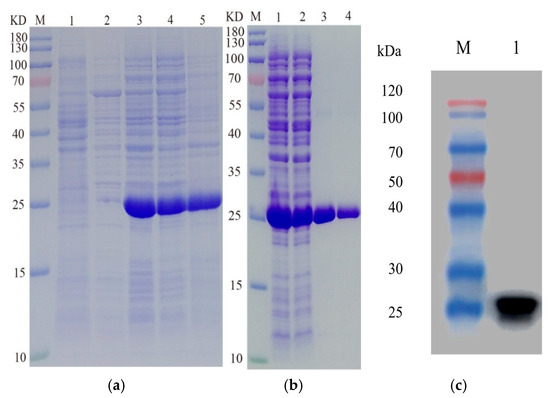
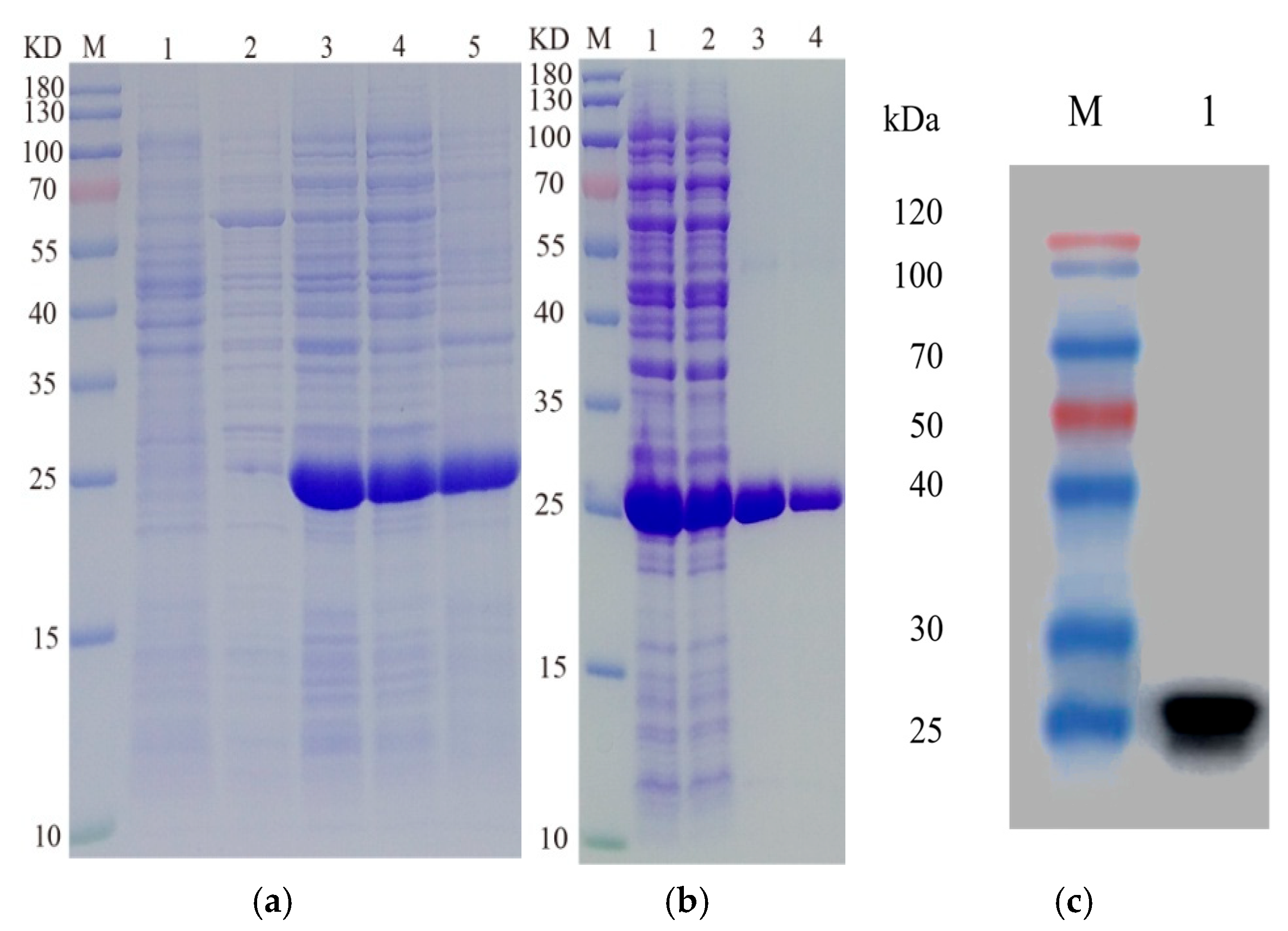
The recombinant OfPGRP-B protein was successfully expressed after induction, as shown in lane 3 of Figure 1a. The protein was detected in both the supernatant (lane 4) and the pellet (lane 5) after cell lysis, with an apparent molecular weight of approximately 25 kDa. After purification, the recombinant protein appeared as a single distinct band (lanes 3–4 in Figure 1b). Western blot analysis further confirmed the identity of the purified protein, showing a clear and specific band (lane 1 in Figure 1c). These results indicate that the molecular weight of the expressed protein is consistent with the predicted size of the target protein.
Figure 1.
Induced expression of Recombinant protein PGRP-B. Note: (a) SDS-PAGE analysis for protein expression identification: M—Protein molecular quality standards, 1—Induced empty pCZN1 vector control (no recombinant protein expression), 2—Not induced, 3—After induction, 4—Supernatant after sonication, 5—Pellet after sonication; (b) SDS-PAGE analysis for protein purification: M—Protein molecular quality standards, 1—Crude lysate, 2—Flow-through fraction, 3—Elution fraction 1, 4—Elution fraction 2; (c) Protein Western Blot Identification Analysis: M—Protein molecular quality standards, 1—Purified sample.
3.2. Antibacterial Activity Assay
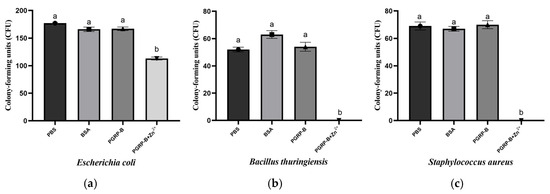
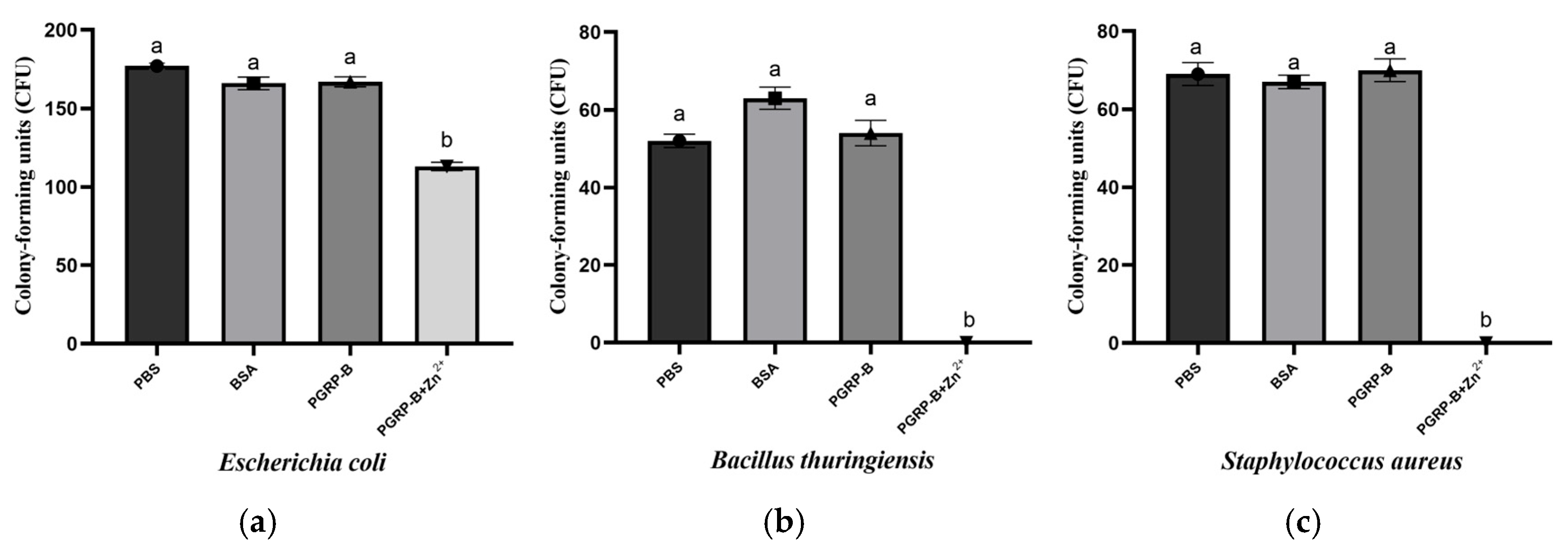
The antibacterial activity of OfPGRP-B was evaluated by CFU assays against E. coli, B. thuringiensis, and S. aureus (Figure 2). For E. coli, no significant differences in CFU counts were observed among the PBS, BSA, and OfPGRP-B groups, with average CFU counts of 177, 161, and 167, respectively (p > 0.05). This result indicates that OfPGRP-B alone did not exhibit obvious antibacterial activity against E. coli under these experimental conditions. Addition of Zn2+ significantly reduced the CFU count to 113, representing a 32.3% decrease compared with the OfPGRP-B group (p < 0.05). For B. thuringiensis, no significant differences were observed among the PBS, BSA, and OfPGRP-B groups, with average CFU counts of 52, 63, and 54, respectively (p > 0.05). In contrast, no colonies were detected after OfPGRP-B + Zn2+ treatment. A similar trend was observed for S. aureus. The PBS, BSA, and OfPGRP-B groups showed comparable CFU counts (69, 67, and 70, respectively; p > 0.05), whereas no colonies were observed in the OfPGRP-B + Zn2+ group.
Figure 2.
Antibacterial activity of recombinant OfPGRP-B against the tested bacteria. Antibacterial activity was evaluated by counting colony-forming units (CFU) after treatment. Data are shown as the mean ± SD from three independent replicates. Different letters indicate significant differences (p < 0.05). (a) Escherichia coli; (b) Bacillus thuringiensis; (c) Staphylococcus aureus.
3.3. Bacterial Agglutination Assay
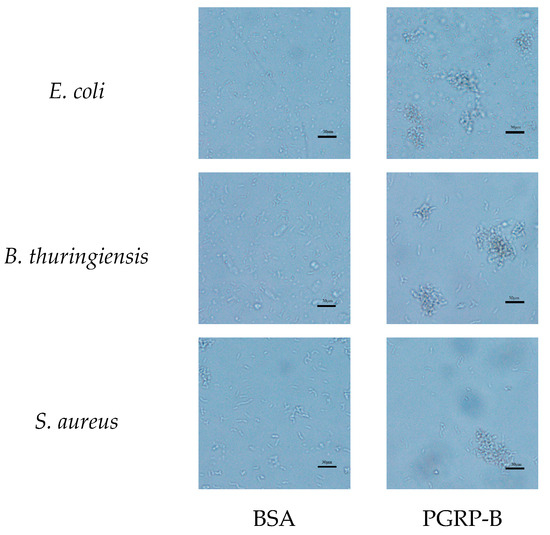
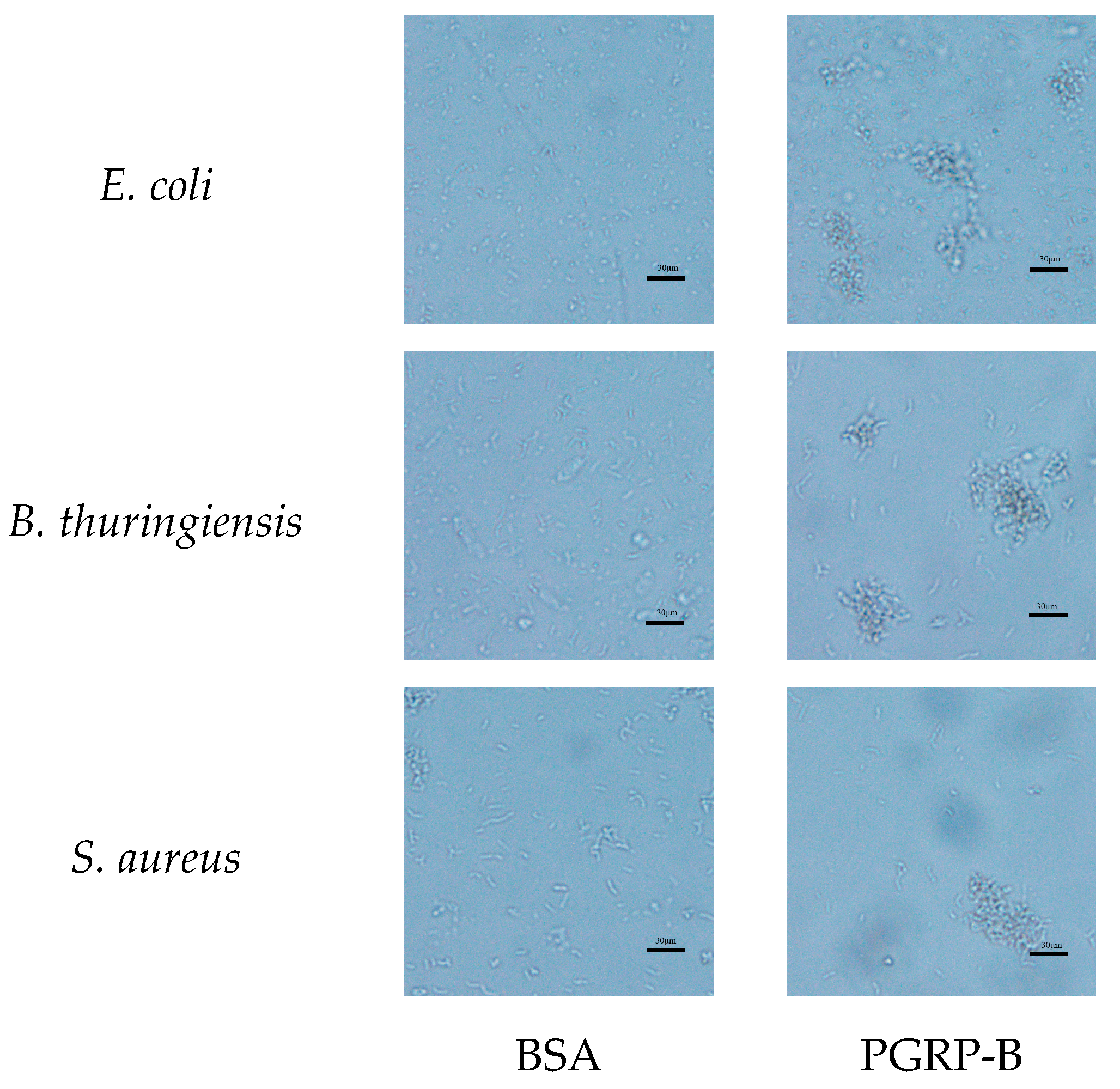
Diluted suspensions of E. coli, B. thuringiensis, and S. aureus were incubated with BSA or recombinant PGRP-B protein, respectively, and bacterial agglutination was observed. As shown in Figure 3, compared with the BSA control, recombinant OfPGRP-B induced visible agglutination of E. coli, B. thuringiensis, and S. aureus, with a relatively more pronounced agglutination effect observed for S. aureus.
Figure 3.
Agglutination of the tested bacteria by recombinant OfPGRP-B. BSA was used as the control.
3.4. Amidase Activity Assay
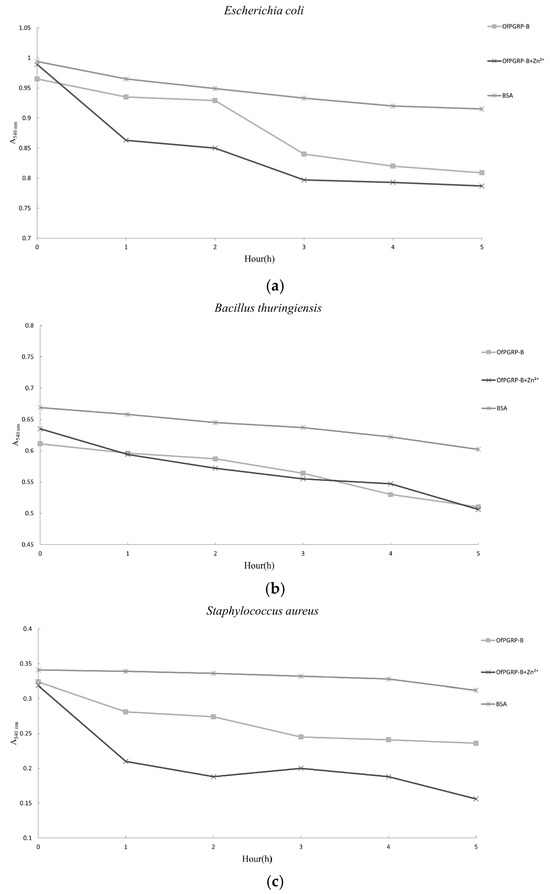
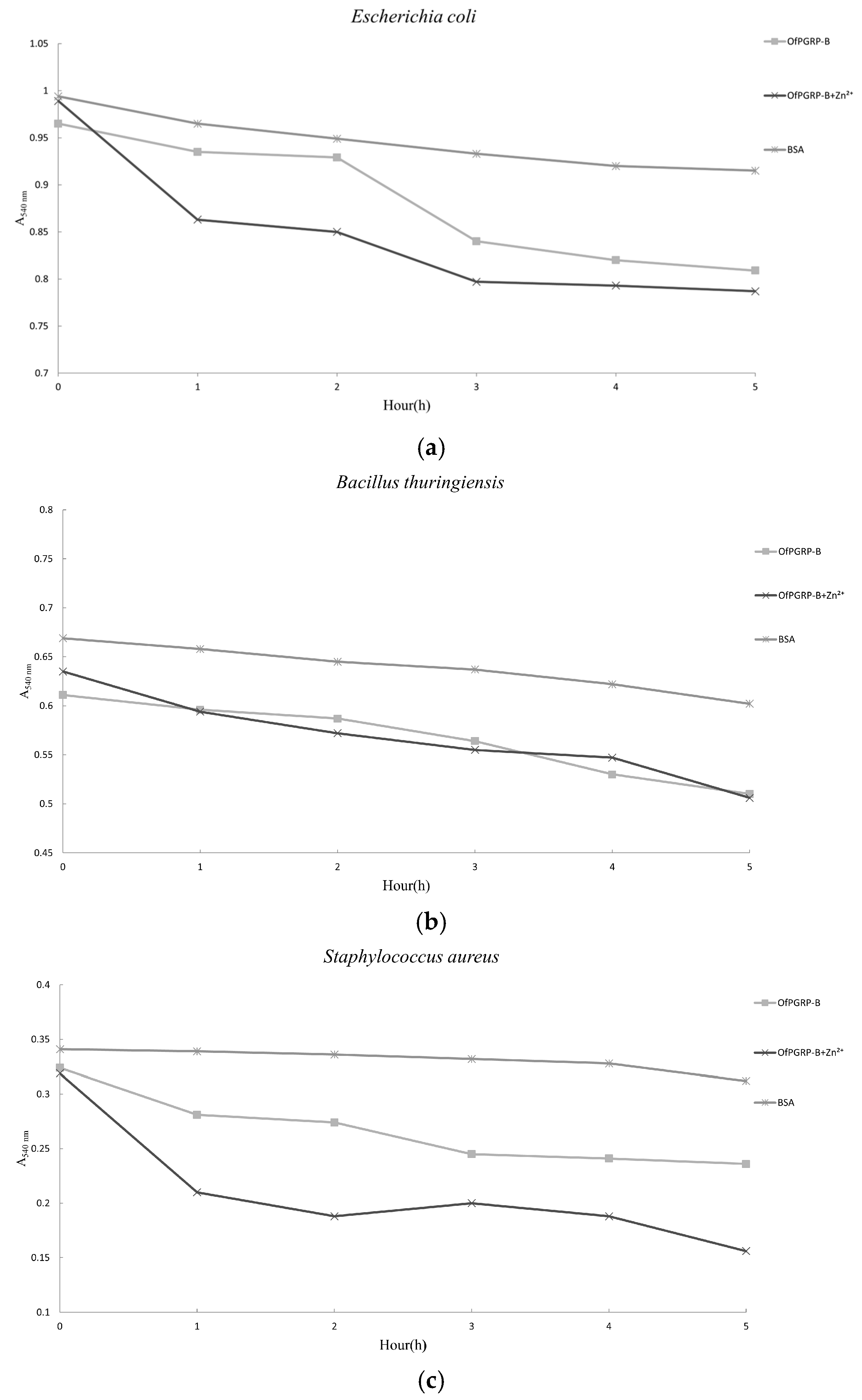
The amidase activity of recombinant OfPGRP-B was evaluated using insoluble PGN from E. coli, B. thuringiensis, and S. aureus as substrates (Figure 4). In the E. coli and S. aureus groups, the A540 values gradually decreased during incubation with OfPGRP-B, and a greater decrease was observed after Zn2+ addition. After 5 h, the A540 values decreased from 0.965 to 0.809 for E. coli PGN and from 0.324 to 0.236 for S. aureus PGN in the OfPGRP-B groups, whereas the OfPGRP-B + Zn2+ groups decreased further to 0.787 and 0.156, respectively. In contrast, the BSA groups showed only slight changes during incubation. A similar reduction trend was observed for B. thuringiensis-derived PGN. The A540 values decreased from 0.611 to 0.510 in the OfPGRP-B group and from 0.635 to 0.506 in the OfPGRP-B + Zn2+ group, while the BSA control remained relatively stable throughout the incubation period.
Figure 4.
Amidase activity assay of recombinant OfPGRP-B. PGN derived from (a) E. coli, (b) B. thuringiensis, and (c) S. aureus was incubated with recombinant OfPGRP-B, recombinant OfPGRP-B plus Zn2+, or BSA. Absorbance was measured at 540 nm and expressed as A540.
3.5. Prophenoloxidase Cascade Assay
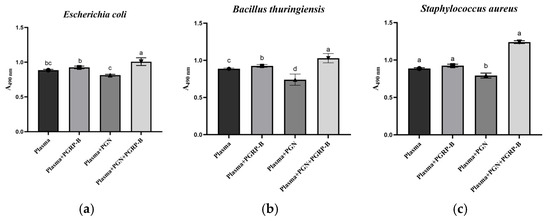
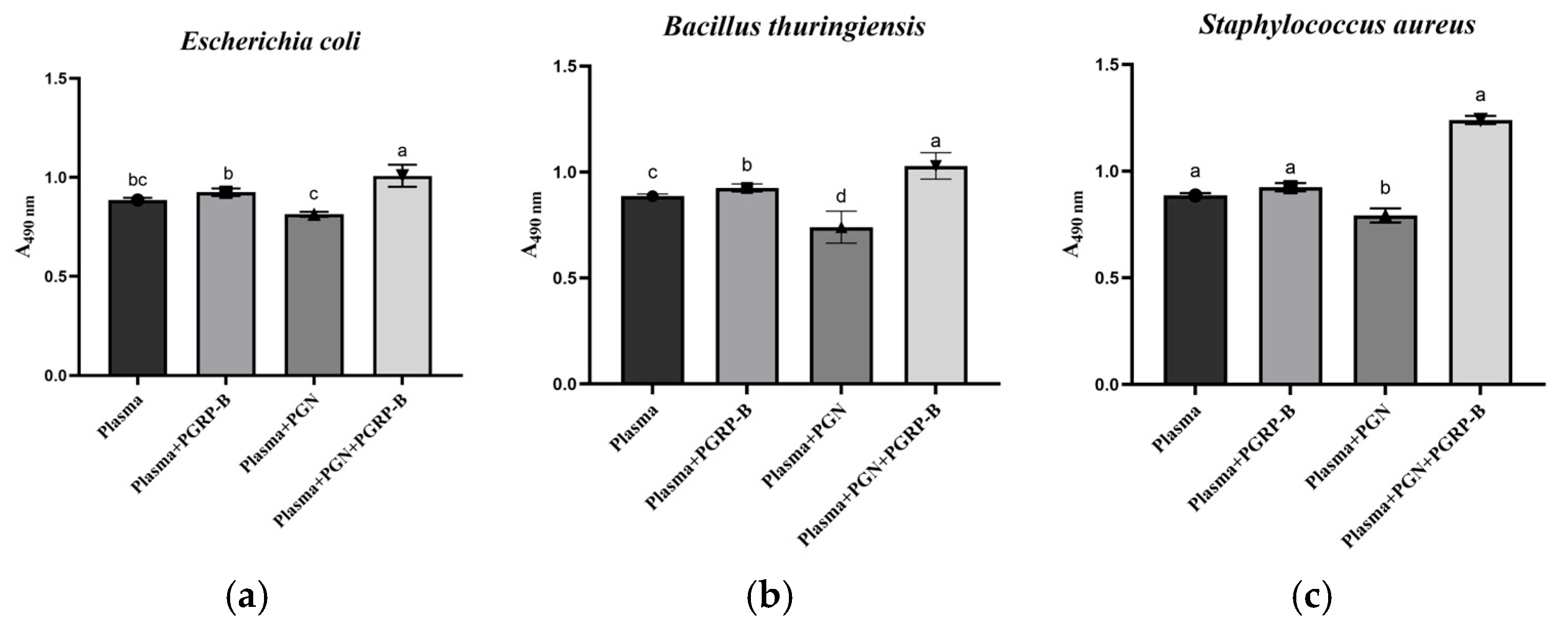
As shown in Figure 5, OfPGRP-B alone had little effect on PO activity. In contrast, co-incubation with PGN markedly increased PO activity in all three bacterial groups. For E. coli, the A490 value increased from 0.814 in the Plasma + PGN group to 1.008 in the Plasma + PGN + OfPGRP-B group. Similar increases were observed for B. thuringiensis and S. aureus, with A490 values increasing from 0.740 to 1.029 and from 0.792 to 1.240, respectively. The highest A490 value was observed in the S. aureus group.
Figure 5.
proPO cascade activation assay. Plasma indicates hemolymph plasma, i.e., the supernatant obtained from hemolymph after removal of hemocytes by centrifugation. Dopachrome formation was monitored at 490 nm as an indicator of phenoloxidase activity. Note: (a) E. coli; (b) B. thuringiensis; (c) S. aureus; Different letters indicate significant differences (p < 0.05).
3.6. Melanization Assay
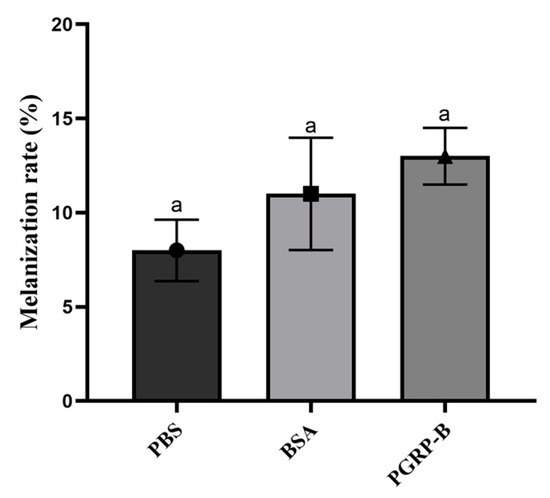
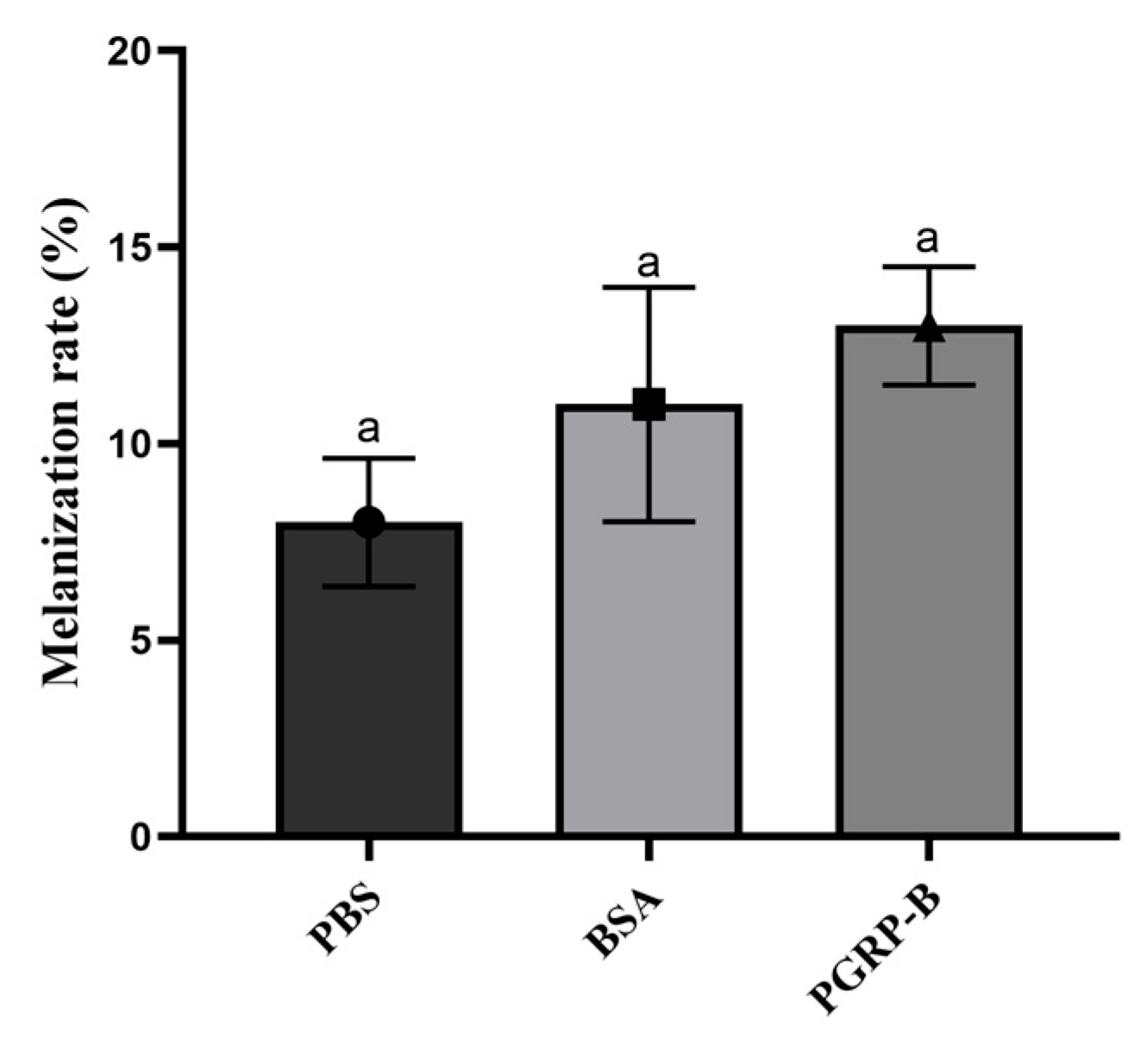
Sephadex beads pre-incubated with PBS, BSA, or PGRP-B were injected into the hemocoel of O. furnacalis larvae. After 24 h, the larvae were dissected, and the beads were recovered to determine the melanization rate. The proportion of heavily melanized beads recovered from larvae injected with OfPGRP-B-treated beads was 13%, which was not significantly different from that of the PBS- and BSA-treated control groups (8% and 11%, respectively) (Figure 6).
Figure 6.
In vivo melanization assay of Sephadex beads. Melanization rate represents the percentage of heavily melanized beads (levels 2–3) among the total recovered beads. Different letters indicate significant differences (p < 0.05), whereas bars sharing the same letter are not significantly different (p > 0.05).
4. Discussion
PGRPs have been widely reported to participate in bacterial recognition and immune regulation in insects. However, the functional properties of OfPGRP-B in O. furnacalis at the protein level remain insufficiently characterized. In the present study, recombinant OfPGRP-B was shown to mediate bacterial agglutination, exhibit peptidoglycan-degrading activity, and enhance PGN-dependent proPO cascade activation, suggesting that OfPGRP-B contributes to humoral immune responses in O. furnacalis [35].
In this study, based on prior transcriptomic analysis, the OfPGRP-B gene, which showed significant responsiveness to bacterial stimulation, was identified. Recombinant OfPGRP-B protein was successfully expressed and purified using a prokaryotic expression system, providing a solid foundation for subsequent functional characterization. A series of functional assays were conducted to systematically investigate the potential role of OfPGRP-B in the innate immune response of O. furnacalis.
In the antibacterial activity assay, OfPGRP-B exhibited limited direct inhibitory effects on the tested bacteria in the absence of cofactors. However, its antibacterial activity was markedly enhanced in the presence of Zn2+, particularly against B. thuringiensis and S. aureus. Previous studies have shown that Zn2+ is required for the bactericidal activity of PGRPs and primarily acts as a cofactor facilitating PGRP-mediated antibacterial function rather than directly targeting bacteria under physiological conditions. Some amidase-type PGRPs depend on Zn2+ to maintain their catalytic conformation, thereby enabling peptidoglycan degradation or immune regulatory functions. Zhang et al. [32] reported in Plutella xylostella that short-type PGRPs not only participate in pathogen recognition but also regulate immune signaling intensity through amidase activity. Similarly, Yang et al. [36] demonstrated in mussels that the catalytic activity of amidase-type PGRPs is closely associated with metal ion binding. The Zn2+ dependence observed for OfPGRP-B in this study suggests that its functional mechanism may be similar to that of previously reported amidase-type PGRPs [12]. These findings further support the potential role of OfPGRP-B as a Zn2+-dependent immune effector involved in antibacterial defense in O. furnacalis.
The bacterial agglutination assay demonstrated that OfPGRP-B promoted the aggregation of the three tested bacteria, namely E. coli, B. thuringiensis, and S. aureus. Previous studies suggest that PGRP-mediated bacterial agglutination helps restrict pathogen dissemination and enhances the efficiency of pathogen clearance by the host humoral immune system. Since bacterial agglutination is closely associated with pathogen recognition and surface binding processes, Ca2+ was supplemented in the assay because it has been widely reported to facilitate carbohydrate recognition and lectin-like binding interactions, whereas Zn2+ mainly functions as a catalytic cofactor for amidase-active PGRPs. Kaneko et al. [31] reported in Drosophila that PGRP recognition of bacterial peptidoglycan can induce pathogen aggregation and is closely associated with activation of the Imd pathway. Subsequently, Zhang et al. [32] observed similar phenomena in Lepidopteran insects and proposed that agglutination serves as an auxiliary mechanism in humoral immunity by restricting pathogen dissemination and facilitating pathogen clearance by immune effectors [37]. The ability of OfPGRP-B to agglutinate different bacterial species further supports its functional role in the humoral immune defense of O. furnacalis.
In the amidase activity assay, OfPGRP-B exhibited the ability to degrade peptidoglycan from certain bacterial sources, which is consistent with the functional characteristics of amidase-type PGRPs reported in various insects and invertebrates. It has been suggested that amidase-active PGRPs not only directly degrade pathogen components but also contribute to immune homeostasis by reducing immune signaling input, thereby preventing excessive immune responses [23]. In addition, some PRRs may indirectly promote proPO activation by enhancing pathogen signal input or amplifying immune responses [36]. Based on these findings, OfPGRP-B may possess dual functions in both pathogen recognition and immune regulation [38].
The proPO cascade is an important component of insect humoral immunity [24]. In this study, OfPGRP-B enhanced proPO cascade activation only when co-present with peptidoglycan, whereas its effect alone was minimal. This suggests that OfPGRP-B may function as a cooperative regulator rather than a direct activator in this process.
Unlike the enhanced proPO cascade activation observed in vitro, no significant differences were observed in the in vivo melanization assay [25]. Previous studies have shown that different PGRP members exhibit distinct functional hierarchies in immune responses, with some primarily involved in pathogen recognition or immune homeostasis rather than directly mediating melanization. Song et al. [33] reported in mosquitoes that certain PGRPs regulate host immunity by modulating gut microbiota homeostasis but do not directly participate in melanization. Similarly, Song et al. [18] suggested that the in vivo functions of immune recognition molecules often depend on specific tissue environments and stimulation intensity. The results of this study indicate that OfPGRP-B may not be a key regulator of melanization in O. furnacalis.
5. Conclusions
In this study, the peptidoglycan recognition protein OfPGRP-B from O. furnacalis was successfully identified, cloned, and expressed. Expression profiling revealed that OfPGRP-B is predominantly expressed in immune-related tissues and is significantly induced upon bacterial challenge, suggesting its involvement in host defense. The recombinant protein was successfully produced in a prokaryotic system, providing a basis for functional characterization. Our results indicate that OfPGRP-B likely participates in the recognition of bacterial components and may contribute to the regulation of immune responses in O. furnacalis. These findings enhance our understanding of the innate immune functions of OfPGRP-B in O. furnacalis.
Author Contributions
Conceptualization: Z.W.; Methodology: Z.W. and X.J.; Data curation: Z.W.; Formal analysis: C.H. and X.L.; Investigation: X.J., L.Z. and Y.M.; Project administration: Z.W.; Resources; Supervision: Z.W.; Validation: Z.W.; Visualization: C.H. and X.L.; Writing—original draft: X.J.; Funding acquisition: Z.W.; Writing—review and editing: Z.W. All authors have read and agreed to the published version of the manuscript.
Funding
This research was partially supported by the following grants: 2025 Fengyang County Science and Technology Plan Project (2025YS-01); Anhui Provincial Academician Workstation, Filing Document No.: WKCM〔2024〕369 (Collaborating Academician: PAN Canping, Russian Academy of Engineering).
Data Availability Statement
The original contributions presented in this study are included in the article. Further inquiries can be directed to the corresponding author.
Conflicts of Interest
The authors declare no conflicts of interest.
References
- Wang, Z.Y.; Zhang, T.T.; Wang, Z.X.; Guo, J.F.; Wang, Y.Q.; Xu, L.N. Progress in research on the Asian corn borer (Ostrinia furnacalis) in China since the beginning of the 21st century. Chin. J. Appl. 2025, 62, 1210–1227. (In Chinese) [Google Scholar]
- Gao, J.L.; Yang, L.L.; Liu, Y. Research progress on the occurrence and control of Asian corn borer (Ostrinia furnacalis). Chin. J. Plant Prot. 2024, 44, 22–28+40. (In Chinese) [Google Scholar]
- Li, X.Y. Functional Exploration of Molting Hormone Biosynthesis Genes and Its Receptor in Ostrinia furnacalis. Master’s Thesis, Anhui Agricultura University, Hefei, China, 2023. (In Chinese) [Google Scholar]
- Wang, Y.; Liu, X.L.; Wang, K.Q. Technology Optimization of Trichogramma dendrolimi Controlling Asian Corn Borer in Maize Field. Heilongjiang Agric. Sci. 2022, 4, 39–43. (In Chinese) [Google Scholar]
- Jia, J.Z.; Sun, S.J.; Ye, Y.X. Indoor Toxicity Determination and Field Efficacy Evaluation of Five Insecticides Against Ostrinia furnacalis (Guenée) in Maize-Producing Areas of Xinjiang. Maize Sci. 2026, 34, 104–110+117. (In Chinese) [Google Scholar]
- Mohamed, A.F.M. The Effect of Sublethal Concentration Bacillus thuringiensis on Development and Immunity of Ostrinia furnacalis. Ph.D. Thesis, Yangzhou University, Yangzhou, China, 2022. (In Chinese) [Google Scholar]
- Tan, S.Y.; Cayabyab, B.F.; Alcantara, E.P.; Ibrahim, Y.; Huang, F.; Blankenship, E.; Siegfried, B. Comparative susceptibility of Ostrinia furnacalis, Ostrinia nubilalis and Diatraea saccharalis (Lepidoptera: Crambidae) to Bacillus thuringiensis Cry1 toxins. Crop Prot. 2011, 30, 1184–1189. [Google Scholar] [CrossRef] [Scilit]
- Bravo, A.; Likitvivatanavong, S.; Gill, S.S.; Soberón, M. Bacillus thuringiensis: A story of a successful bioinsecticide. Insect Biochem. Mol. Biol. 2011, 41, 423–431. [Google Scholar] [CrossRef] [Scilit]
- Batool, R.; Umer, M.J.; Wang, Y.; He, K.; Zhang, T.; Bai, S.; Zhi, Y.; Chen, J.; Wang, Z. Synergistic Effect of Beauveria bassiana and Trichoderma asperellum to Induce Maize (Zea mays L.) Defense against the Asian Corn Borer, Ostrinia furnacalis (Lepidoptera, Crambidae) and Larval Immune Response. Int. J. Mol. Sci. 2020, 21, 8215. [Google Scholar] [CrossRef] [Scilit] [PubMed]
- Feng, M.; Zhang, Y.; Coates, B.S.; Du, Q.; Gao, Y.; Li, L.; Yuan, H.; Sun, W.; Chang, X.; Zhou, S.; et al. Assessment of Beauveria bassiana for the biological control of corn borer, Ostrinia furnacalis, in sweet maize by irrigation application. BioControl 2023, 68, 49–60. [Google Scholar] [CrossRef] [Scilit]
- Wang, Z.X.; Zhou, W.; Tu, M.Y. Expression and functional analysis of Ostrinia furnacalis peptidoglycan recognition proteins of PGRP-SA. J. Anhui Sci. Technol. Univ. 2023, 37, 43–49. (In Chinese) [Google Scholar]
- Guan, R.; Hu, S.; Li, X.; An, S.; Miao, X.; Li, H. A TIL-Type Serine Protease Inhibitor Involved in Humoral Immune Response of Asian Corn Borer Ostrinia furnaculis. Front. Immunol. 2022, 13, 900129. [Google Scholar] [CrossRef] [Scilit]
- Chen, K.; Lu, S.; Song, J.; Dou, X.; Wei, X.; Wang, X.; Liu, X.; Feng, C. The selective regulation of immune responses by matrix metalloproteinase MMP14 in Ostrinia furnacalis. Insect Sci. 2023, 30, 1622–1636. [Google Scholar] [CrossRef] [Scilit]
- Neyen, C.; Poidevin, M.; Roussel, A.; Lemaitre, B. Tissue- and ligand-specific sensing of gram-negative infection in Drosophila by PGRP-LC isoforms and PGRP-LE. J. Immunol. 2012, 189, 1886–1897. [Google Scholar] [CrossRef] [Scilit]
- Kurata, S. Extracellular and intracellular pathogen recognition by Drosophila PGRP-LE and PGRP-LC. Int. Immunol. 2010, 22, 143–148. [Google Scholar] [CrossRef] [Scilit]
- Yu, S.C.; Peng, X.L.; Chen, L.X.; Cai, Y.S.; Huang, E.J. Function of Aedes aegypti protein AaPGRP-SC2 in resistance to insecticidal crystal protein Cry4Ba and Cry11Aa of Bacillus thuringiensis subsp. Israelensis. J. Fuj. Agric. For. Univ. (Nat. Sci. Ed.) 2025, 54, 26–35. (In Chinese) [Google Scholar]
- Zheng, Z.H.; Xu, X.X.; Yu, J. A peptidoglycan recognition protein (PxPGRP-SA) regulating the expression of antimicrobial peptides in Plutella xylostella (Lepidoptera: Plutellidae). Acta Entomol. Sin. 2016, 59, 489–499. [Google Scholar]
- Song, Y.; Fan, L.L.; ShenTu, X.P. Regulatory mechanism of intestinal microbial homeostasis in insects. Acta Entomol. Sin. 2023, 66, 1404–1414. (In Chinese) [Google Scholar]
- Liang, Y.B.; Wang, T.; Yang, W.Y.; Chen, Z.; Li, Q.; Swevers, L.; Liu, J. Silencing of the immune gene BmPGRP-L4 in the midgut affects the growth of silkworm (Bombyx mori) larvae. Insect Mol. Biol. 2023, 32. [Google Scholar] [CrossRef] [Scilit] [PubMed]
- Wang, Z.; Zhou, W.; Huang, B.; Gao, M.; Li, Q.; Tao, Y.; Wang, Z. Molecular and functional characterization of peptidoglycan recognition proteins OfPGRP-A and OfPGRP-B in Ostrinia furnacalis (Lepidoptera: Crambidae). Insects 2022, 13, 417. [Google Scholar] [CrossRef] [Scilit]
- OuYang, D.C.; Li, Z.Y. Progress on antibacterial and inflammatory immunity of peptidoglycan recognition proteins. Prog. Microbiol. Immunol. 2019, 47, 75–80. (In Chinese) [Google Scholar]
- Dziarski, R.; Gupta, D. A balancing act: PGRPs preserve and protect. Cell Host Microbe 2018, 23, 149–151. [Google Scholar] [CrossRef] [Scilit]
- Chen, K.K.; Lv, Z.Q. Peptidoglycan recognition proteins (PGRPs) in insects. Acta Entomol. Sin. 2014, 57, 969–978. (In Chinese) [Google Scholar]
- Tang, Z.; Gao, G.; Xia, Z.; Yang, C.; Zhang, C. Integrated multi-omics analysis and RNAi reveal Toll signaling pathway and melanization as key defenses in Ostrinia furnacalis against Meteorus pulchricornis parasitism. Comp. Biochem. Physiol. D 2025, 56, 101537. [Google Scholar] [CrossRef] [Scilit]
- Liu, X.; Guo, W.; Wang, Z.; Li, S.; Bi, H.; Feng, C. The involvement of Apolipophorin-III in orchestrating prophenoloxidase activation and NO production in Ostrinia furnacalis larvae. Insect Sci. 2026, 33, 987–1002. [Google Scholar] [CrossRef] [Scilit] [PubMed]
- Rahayu, T.; Trisyono, Y.A.; Witjaksono. Fitness of Asian corn borer, Ostrinia furnacalis (Lepidoptera: Crambidae) reared in an artificial diet. J. Asia-Pac. Entomol. 2018, 21, 823–828. [Google Scholar] [CrossRef] [Scilit]
- Chong, L. Nota Bene: A Last Hurrah and New Directions. Science 2001, 292, 446. [Google Scholar] [CrossRef] [Scilit]
- Studier, F.W. Protein production by auto-induction in high-density shaking cultures. Protein Expr. Purif. 2005, 41, 207–234. [Google Scholar] [CrossRef] [Scilit]
- Wang, M.; Liu, L.H.; Wang, S.; Li, X.; Lu, X.; Gupta, D.; Dziarski, R. Human peptidoglycan recognition proteins require zinc to kill both gram-positive and gram-negative bacteria and are synergistic with antibacterial peptides. J. Immunol. 2007, 178, 3116–3125. [Google Scholar] [CrossRef] [Scilit]
- Yang, J.; Wang, L.; Zhang, H.; Qiu, L.; Wang, H.; Song, L. C-type lectin in Chlamys farreri (CfLec-1) mediating immune recognition and opsonization. PLoS ONE 2011, 6, e17089. [Google Scholar] [CrossRef] [Scilit]
- Kaneko, T.; Goldman, E.W.; Mellroth, P.; Steiner, H.; Fukase, K.; Kusumoto, S.; Harley, W.; Fox, A.; Golenbock, D.; Silverman, N. Monomeric and Polymeric Gram-Negative Peptidoglycan but Not Purified LPS Stimulate the Drosophila IMD Pathway. Immunity 2004, 20, 637–649. [Google Scholar] [CrossRef] [Scilit]
- Zhang, Z.; Kong, J.; Mandal, D.S.; Li, S.; Zheng, Z.; Jin, F.; Xu, X. An immune-responsive PGRP-S1 regulates the expression of antibacterial peptide genes in diamondback moth, Plutella xylostella (L.). Int. J. Biol. Macromol. 2020, 142, 114–124. [Google Scholar] [CrossRef] [Scilit] [PubMed]
- Song, X.M.; Wang, M.F.; Dong, L.; Zhu, H.; Wang, J. PGRP-LD mediates A. stephensi vector competency by regulating homeostasis of microbiota-induced peritrophic matrix synthesis. PLoS Pathog. 2018, 14, e100689. [Google Scholar] [CrossRef] [Scilit]
- Chun, J.; Riehle, M.; Paskewitz, S.M. Effect of mosquito age and reproductive status on melanization of sephadex beads in Plasmodium-refractory and-susceptible strains of Anopheles gambiae. J. Invertebr. Pathol. 1995, 66, 11–17. [Google Scholar] [CrossRef] [Scilit] [PubMed]
- Ratcliffe, A.N.; Mello, B.C.; Castro, C.H.; Dyson, P.; Figueiredo, M. Immune Reactions of Vector Insects to Parasites and Pathogens. Microorganisms 2024, 12, 568. [Google Scholar] [CrossRef] [Scilit] [PubMed]
- Yang, Z.X.; Wang, H.D.; He, Z.Q. Molecular Characterization and Functional Analysis of Anamide Type Peptidoglycan Recognition Protein from Mytilus coruscus. Acta Hydrobiol. Sin. 2025, 49, 118–130. (In Chinese) [Google Scholar]
- Yu, X.Q.; Kanost, M.R. Immulectin-2, a pattern recognition receptor that stimulates hemocyte encapsulation and melanization in the tobacco hornworm, Manduca sexta. Dev. Comp. Immunol. 2004, 28, 891–900. [Google Scholar] [CrossRef] [Scilit] [PubMed]
- Ji, J.Y.; Yin, Z.H.; Zhang, S.; Shen, D.; An, C. PLA2 mediates the innate immune response in Asian corn borer, Ostrinia furnacalis. Insect Sci. 2022, 29, 245–258. [Google Scholar] [CrossRef] [Scilit]

Disclaimer/Publisher’s Note: The statements, opinions and data contained in all publications are solely those of the individual author(s) and contributor(s) and not of MDPI and/or the editor(s). MDPI and/or the editor(s) disclaim responsibility for any injury to people or property resulting from any ideas, methods, instructions or products referred to in the content. |
© 2026 by the authors. Licensee MDPI, Basel, Switzerland. This article is an open access article distributed under the terms and conditions of the Creative Commons Attribution (CC BY) license.