Article

LsToll Gene Mediates Antibacterial Immunity and Developmental Regulation in Loxostege sticticalis


1
College of Forestry, Inner Mongolia Agricultural University, Hohhot 010019, China
2
National Orientation Observation and Research Station of Saihanwula Forest Ecosystem in Inner Mongolia, Chifeng 025000, China
3
Inner Mongolia Forestry and Grassland General Station, Hohhot 010020, China
4
Dandong Forestry and Grassland Discovery Service Center, Dandong 118000, China
*
Authors to whom correspondence should be addressed.
Insects 2026, 17(6), 581; https://doi.org/10.3390/insects17060581

Submission received: 28 March 2026 / Revised: 27 May 2026 / Accepted: 1 June 2026 / Published: 3 June 2026
(This article belongs to the Section Insect Molecular Biology and Genomics)

Simple Summary

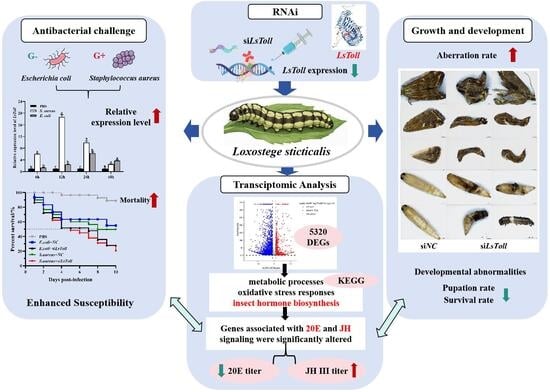
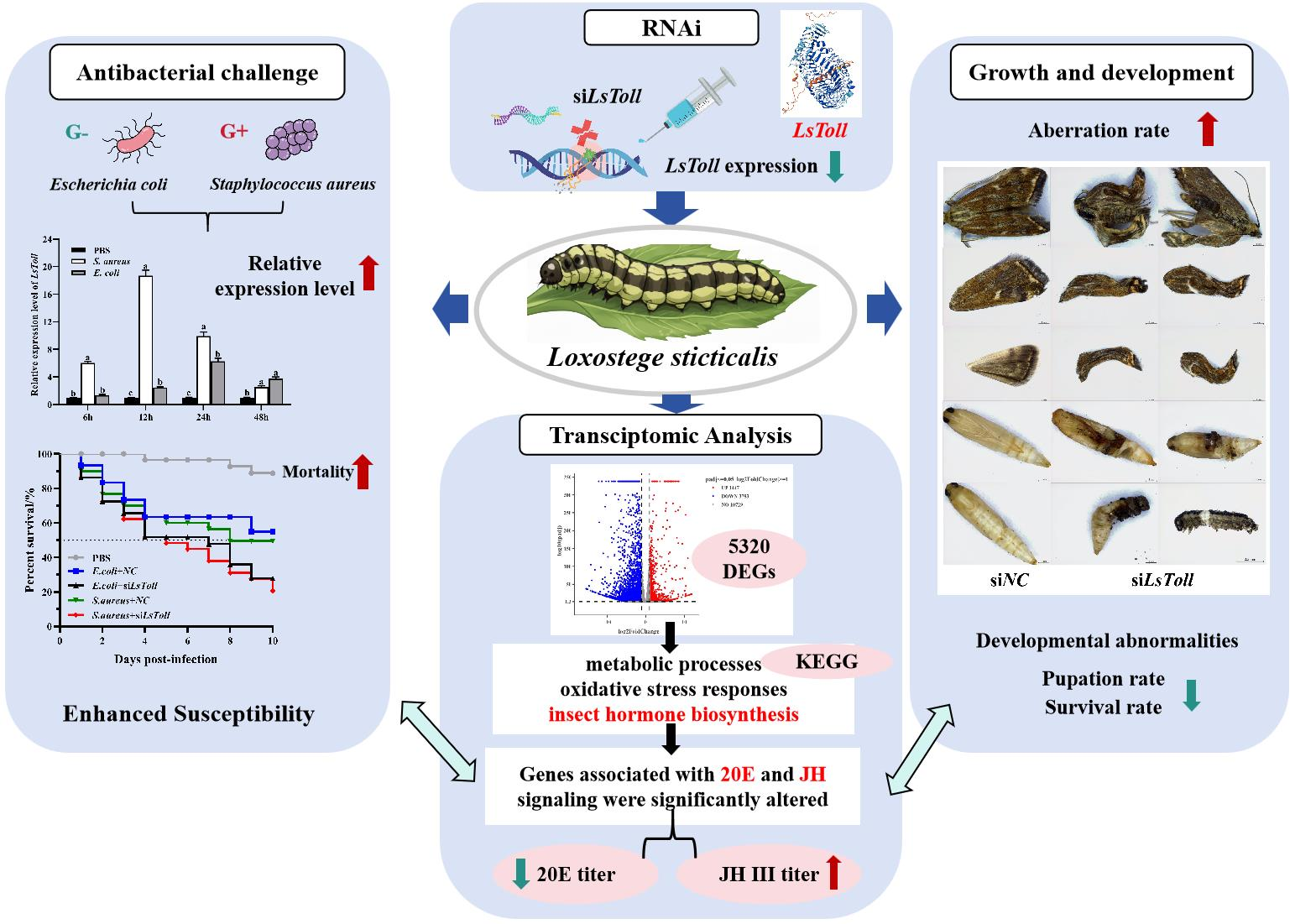
The beet webworm, Loxostege sticticalis, is a destructive migratory pest. Long-term reliance on chemical control has led to increasingly serious problems, including insecticide resistance and environmental pollution. In this study, we identified and cloned a Toll-like receptor gene, LsToll, from L. sticticalis. LsToll expression was significantly induced under bacterial challenge. RNA interference (RNAi)-mediated suppression of LsToll reduced the antibacterial capacity of larvae and increased mortality. Moreover, LsToll silencing caused severe developmental defects, including molting obstruction, pupation failure, and wing deformities in newly emerged adults. Transcriptome analysis identified differentially expressed genes (DEGs) following LsToll knockdown, which were significantly enriched in metabolic pathways and insect hormone biosynthesis pathways. Biochemical assays further showed that LsToll silencing decreased the 20-hydroxyecdysone (20E) titer and increased the juvenile hormone III (JH III) titer. This research elucidates the dual roles of LsToll in immunity and development, providing new insights into Toll receptor genes as potential targets for sustainable pest management.

Abstract

Toll-like receptors (TLRs) are conserved pattern recognition receptors essential to insect innate immunity. However, the functions of TLRs in Loxostege sticticalis, a destructive agricultural pest, remain poorly characterized. In this study, the full-length coding sequence of the L. sticticalis Toll receptor (LsToll) was identified and characterized to analyze its molecular features. Structural analysis showed that LsToll possesses typical Toll family features, including an extracellular domain containing 19 leucine-rich repeats (LRRs), a transmembrane helix, and a highly conserved intracellular Toll/interleukin-1 receptor (TIR) domain. LsToll transcript levels were significantly upregulated after bacterial challenge. RNAi-mediated silencing of LsToll significantly reduced larval tolerance to bacterial infection and increased mortality. Notably, LsToll suppression also induced severe developmental abnormalities, including molting obstruction, pupation failure, and defects in wing expansion in newly emerged adults. Transcriptome analysis after RNAi identified 5230 differentially expressed genes (DEGs), which were significantly enriched in insect hormone biosynthesis and metabolic pathways. Biochemical assays further confirmed that LsToll knockdown decreased 20-hydroxyecdysone (20E) titers and increased juvenile hormone III (JH III) titers. These results suggest that LsToll contributes to antibacterial defense and normal development in L. sticticalis. Its involvement in both survival and development indicates that LsToll may serve as a promising molecular target for sustainable pest management strategies.

Graphical Abstract

1. Introduction

Insects rely exclusively on innate immunity, as they lack the adaptive immune system characteristic of vertebrates. Innate immunity plays a fundamental role in protecting insects from diverse pathogenic challenges through the coordinated action of cellular and humoral responses [1]. Cellular immunity is primarily mediated by hemocytes, which eliminate pathogens through processes such as phagocytosis, encapsulation, and nodulation [2]. In contrast, humoral immunity is initiated by the recognition of pathogen-associated molecular patterns (PAMPs) by pattern recognition receptors (PRRs), leading to the induction of antimicrobial peptides (AMPs) in the hemolymph. This process is mainly regulated by conserved immune signaling pathways, including Toll, immune deficiency (IMD), and Janus kinase/signal transducer and activator of transcription (JAK/STAT) pathways [3].
The Toll pathway is an evolutionarily conserved innate immune pathway that plays a pivotal role in insect defense against fungal, bacterial, and viral pathogens [4,5]. This pathway is centered on transmembrane Toll-like receptors (TLRs), a conserved family of pattern recognition receptors. These receptors contain extracellular leucine-rich repeat (LRR) domains involved in ligand recognition and intracellular Toll/interleukin-1 receptor (TIR) domains that mediate downstream signal transduction [6]. The first Toll receptor, Toll1, was identified in the dipteran Drosophila melanogaster, where it was shown to be indispensable for both embryonic dorsoventral patterning and immune responses [7,8]. Subsequent studies identified TLRs in mammals, demonstrating that Toll/TLR-mediated signaling is deeply conserved; however, receptor activation mechanisms differ substantially between insects and mammals, reflecting lineage-specific functional specialization [9,10]. Unlike mammalian TLRs, which directly bind microbial PAMPs, insect Toll receptors (Tolls) are generally activated indirectly through the cysteine-knot cytokine Spätzle, which undergoes proteolytic cleavage upon infection to become a functional ligand [11]. Beyond pathogen defense, Tolls are also involved in diverse physiological processes, including AMP production, phagosome regulation, and inflammatory signaling [12]. In the dipteran Anopheles gambiae, four Toll genes have been characterized, among which AgToll9 is notably upregulated following challenge with Escherichia coli [13]. In lepidoptera, Toll signaling has been extensively studied in the lepidopteran Bombyx mori, in which fourteen Toll genes have been identified [14]. Functional studies revealed that overexpression of BmToll9-1 in Bm5 cells upregulates Dicer-2, a core component of the RNA interference (RNAi) machinery. Under lipopolysaccharide (LPS) stimulation, BmToll9-1 overexpression suppresses the expression of AMPs and immune effector genes associated with the IMD and JAK/STAT pathways. Furthermore, RNAi-mediated silencing of BmToll9-2 significantly impairs larval growth and body weight, and this phenotype can be reversed after bacterial infection when BmToll9-2 expression is restored. These observations suggest that Toll genes can contribute to both innate immunity and growth regulation [15].
The beet webworm, Loxostege sticticalis (Lepidoptera: Pyralidae), is a destructive migratory pest that inflicts severe ecological and economic damage across North America, Eastern Europe, and Asia [16,17]. As an extensively polyphagous species, L. sticticalis feeds on over 200 plant species spanning 35 families, posing a substantial threat to global crop production [18,19]. Current research on L. sticticalis has primarily focused on migratory behavior, outbreak forecasting, and the effects of environmental stressors on development and reproduction [20,21,22,23]. With the recent completion of a chromosome-level genome assembly for this species, research has progressively expanded from ecological and physiological studies to molecular investigations, particularly in relation to olfactory perception and stress resistance [24,25,26]. Despite these advances, the immunobiology of L. sticticalis remains poorly understood, and existing studies are limited mainly to the preliminary characterization of individual genes, such as lysozyme [16]. Consequently, the molecular mechanisms governing the innate immune signaling network in L. sticticalis have not been systematically elucidated. Targeting innate immune signaling may provide a strategy for biological pest control, as suppression of key immune genes can increase insect susceptibility to pathogens and enhance the efficacy of microbial control agents [27,28].
In the present study, a Toll receptor gene from L. sticticalis, designated LsToll, was identified and characterized using publicly available genomic and transcriptomic datasets (BioProject number: PRJNA1118492) [29]. The expression profiles of LsToll across different developmental stages and tissues, as well as its transcriptional response to bacterial challenge, were quantified using real-time quantitative PCR (RT-qPCR). The functional involvement of LsToll in growth, development, and immune defense was further evaluated through RNAi-mediated knockdown. In addition, RNA sequencing (RNA-seq), RT-qPCR validation of selected differentially expressed genes (DEGs), and hormone titer measurements were performed to explore downstream changes associated with LsToll silencing. Together, these analyses provide insight into the roles of LsToll in antibacterial immunity and developmental regulation in L. sticticalis.

2. Materials and Methods

2.1. Insect Strains, Rearing, and Sample Collection

In June 2025, more than 1000 second- to fifth-instar larvae of L. sticticalis were collected from Hohhot, Inner Mongolia, China (40°82′17″ N, 111°71′58″ E). The larvae were reared on fresh Chenopodium album under controlled laboratory conditions at 22 ± 1 °C, 75 ± 5% relative humidity, and a photoperiod of 16 h light:8 h dark (L:D). Last-instar larvae were transferred to plastic containers containing clean sandy soil maintained at approximately 15% humidity to facilitate pupation. Newly emerged adults were supplied with a 5% honey solution and allowed to oviposit on young C. album plants.
To analyze the expression profiles of LsToll at different developmental stages, eggs, larvae from the first to fifth instars, male and female pupae, and male and female adults of L. sticticalis were collected. For tissue-specific expression analysis, day-1 fifth-instar larvae were dissected to obtain the head, integument, fat body, foregut, midgut, hindgut, Malpighian tubules, and hemolymph. All tissues were dissected in cold phosphate-buffered saline (PBS, pH 7.4), immediately frozen in liquid nitrogen, and stored at −80 °C until RNA extraction. Each treatment included three biological replicates, with each replicate containing at least three individuals.

2.2. Bacterial Challenge

Staphylococcus aureus and Escherichia coli were purchased from InvivoGen (San Diego, CA, USA). Both strains were cultured overnight in Luria–Bertani broth at 37 °C with shaking at 200 rpm and then subcultured to the mid-logarithmic phase (OD600 = 0.5). Bacterial cells were collected by centrifugation, washed twice with sterile PBS, and resuspended in PBS to a final concentration of approximately 1.0 × 10⁷ cells/mL.
Newly molted third-instar larvae were starved for 24 h and then individually fed standardized leaf disks coated with 10 μL of bacterial suspension. Control larvae were fed leaf disks treated with sterile PBS. The larvae were maintained under standard rearing conditions. Each treatment included three biological replicates, with 20 larvae per replicate. Whole larvae were collected at 6, 12, 24, and 48 h post-feeding, rapidly frozen in liquid nitrogen, and stored at −80 °C before RNA extraction.

2.3. RNA Interference (RNAi) and Biological Assays

Based on the coding sequence of LsToll, four siRNAs (siLsToll-888, siLsToll-946, siLsToll-1298, and siLsToll-1695) and a negative control siRNA (siNC) were designed using the siRNA design service provided by Cenix BioScience (Cenix BioScience GmbH, Dresden, Germany) and synthesized by GenePharma (Shanghai GenePharma Co., Ltd., Shanghai, China) (Table A1). Fourth-instar larvae were microinjected with 1 μL of siRNA (500 ng/μL) into the penultimate abdominal segment using a MICROLITER™ 65 microinjector equipped with a 33-gauge needle (Hamilton, Reno, NV, USA) under ice anesthesia. The larvae were subsequently reared under standard conditions. Larvae were collected at 24, 48, and 72 h post-injection for RNA extraction. Each treatment included three biological replicates, with 30 larvae per replicate. The most effective siRNA was selected based on gene-silencing efficiency determined by RT-qPCR.
For growth and developmental assays, fourth-instar larvae injected with siLsToll or siNC were monitored daily for survival, molting, and pupation for 10 days after siRNA injection. Fifty larvae were used in each group to assess survival rates. For antibacterial assays, thirty healthy larvae at 24 h post-injection were randomly selected from each group and subjected to bacterial challenge as described in Section 2.2. Following bacterial challenge, larval mortality was recorded at 24 h intervals for 10 days.

2.4. Transcriptome Sequencing and Analysis

Based on the RNAi efficiency assessment, the lowest LsToll transcript levels were observed at 48 h post-injection. Accordingly, larvae from the siLsToll and siNC groups were collected at this time point for transcriptome sequencing. Three independent biological replicates were prepared for each group, and each replicate consisting of three larvae. Transcriptome sequencing was performed by Novogene (Novogene, Beijing, China). Raw reads were filtered to obtain high-quality clean reads, and quality metrics, including Q20, Q30, and GC content were assessed. Clean reads were aligned to the L. sticticalis reference genome using HISAT2 (v0.6.1). Transcript assembly was performed using Trinity, and unigenes were obtained after removing redundant sequences. Functional annotation was conducted by comparison with the Swiss-Prot, Gene Ontology (GO), Kyoto Encyclopedia of Genes and Genomes (KEGG), and Pfam databases. DEGs between the siLsToll and siNC groups were identified using the DESeq package (v1.18.0) in R software (v4.6.0). p-values were adjusted using the Benjamini–Hochberg method, and genes with |log2(fold change)| ≥ 1 and False Discovery Rate (FDR) ≤ 0.05 were considered significantly differentially expressed. KEGG enrichment analyses were performed using clusterProfiler (v8.1), with FDR ≤ 0.05 as the significance threshold. To validate the transcriptome results, five DEGs were selected for RT-qPCR analysis. The RNA samples used for RT-qPCR were identical to those used for transcriptome sequencing (Table A1).

2.5. Determination of 20E and JH III Titers

To determine whether LsToll silencing altered endocrine hormone homeostasis, the titers of 20-hydroxyecdysone (20E) and juvenile hormone III (JH III) were measured in larvae from the siLsToll and siNC groups at 48 h post-injection. The levels of 20E and JH III were determined using commercial ELISA kits (Gelatins, Shanghai, China) according to the manufacturer’s instruction [30]. Briefly, larvae were collected on ice after RNAi treatment, homogenized in PBS (pH 7.2–7.4), and centrifuged at 5000× g. The supernatants were collected for ELISA analysis. Standards and samples were added to hormone antibody-coated microplates, followed by HRP-labeled detection antibodies. After washing, 3,3′,5,5′-tetramethylbenzidine (TMB) substrate was added for color development, and absorbance (OD value) was measured at 450 nm using a microplate reader. Hormone titers were calculated according to the corresponding standard curves. Each treatment included three biological replicates, and each sample was measured with three technical replicates.

2.6. Statistical Analysis

All quantitative data are presented as the mean ± standard error of the mean (SEM). Prior to statistical analysis, data were assessed for normality using the Shapiro–Wilk test and for homogeneity of variance using Levene’s test. Data that did not meet the assumptions of normality or homogeneity of variance were log-transformed before further analysis. Comparisons between two groups were performed using an unpaired Student’s t-test, whereas comparisons among multiple groups were conducted using one-way analysis of variance (ANOVA) followed by Tukey’s multiple-comparison test. Survival data were analyzed using the Kaplan–Meier method, and differences between groups were assessed using the log-rank test. All statistical analyses were performed using SPSS version 25.0 (IBM Corp., Chicago, IL, USA), and figures were generated using GraphPad Prism 8.3 (GraphPad Software Inc., La Jolla, CA, USA). Differences were considered statistically significant at p < 0.05.

3. Results

3.1. Sequence Analysis of LsToll

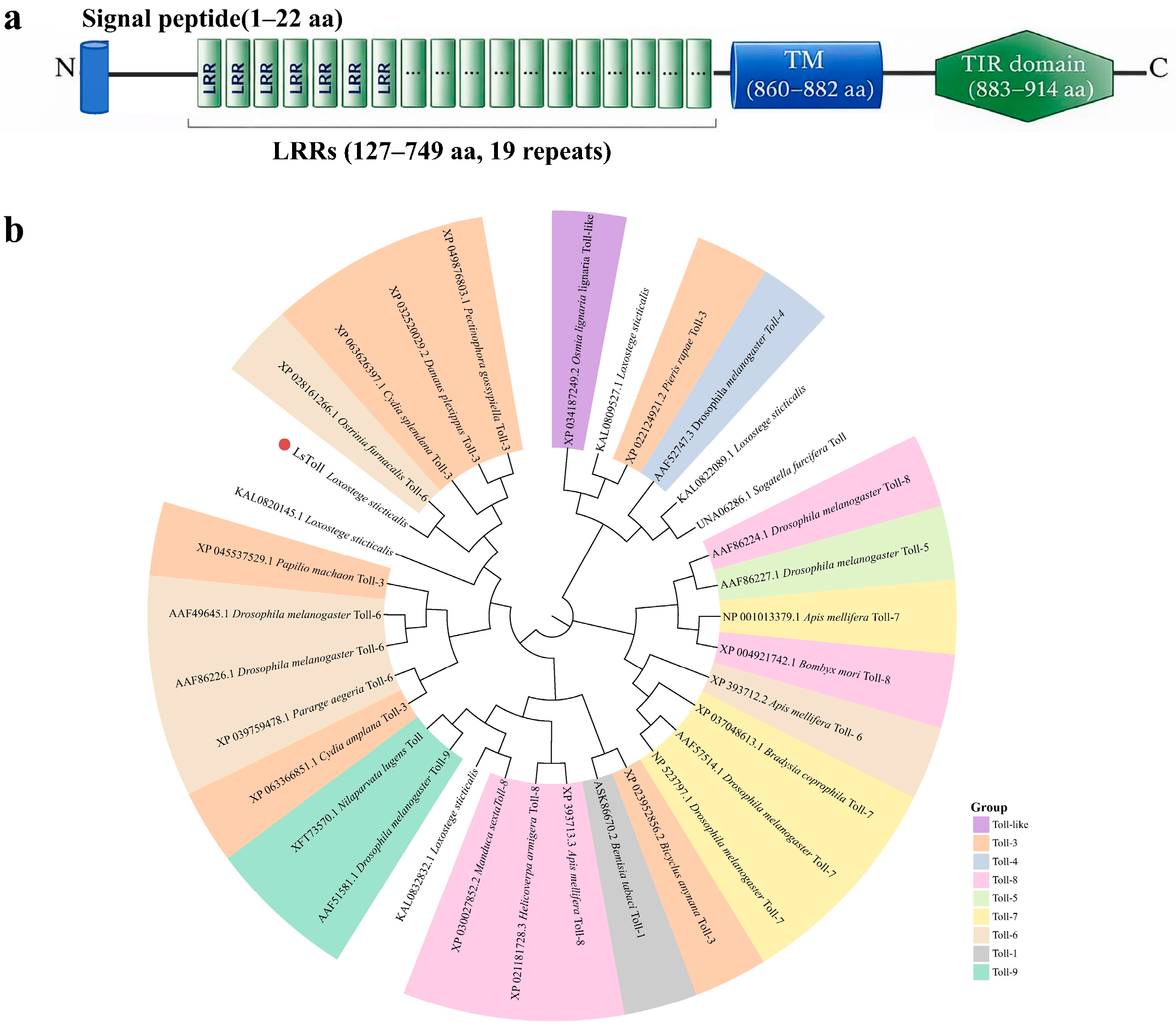
The full-length coding sequence of LsToll (GenBank accession no. KAL0820158.1) was identified and comprises 2745 bp, encoding a protein of 915 amino acids with a predicted molecular weight of 103.6 kDa and an isoelectric point of 6.75. Structural analysis revealed that LsToll exhibits the characteristic features of a TLR, including an N-terminal signal peptide (amino acids 1–22), an extracellular region containing 19 LRR motifs (amino acids 127–749), a single transmembrane helix (860–882 aa), and a conserved C–terminal TIR domain (883–914 aa) (Figure 1a).
The phylogenetic tree was constructed using five Toll sequences from L. sticticalis (LsToll, KAL0809527.1, KAL0820145.1, KAL0822089.1, and KAL0832832.1), together with homologous Toll protein sequences from Lepidoptera, Diptera, Hymenoptera, and other insect groups. The phylogenetic results showed that these L. sticticalis Toll proteins did not form a single monophyletic clade but were distributed across different evolutionary branches. Notably, LsToll was clustered most closely with Toll6 from lepidopteran Ostrinia furnacalis (Figure 1b).

3.2. Developmental and Tissue-Specific Expression Profiles of LsToll

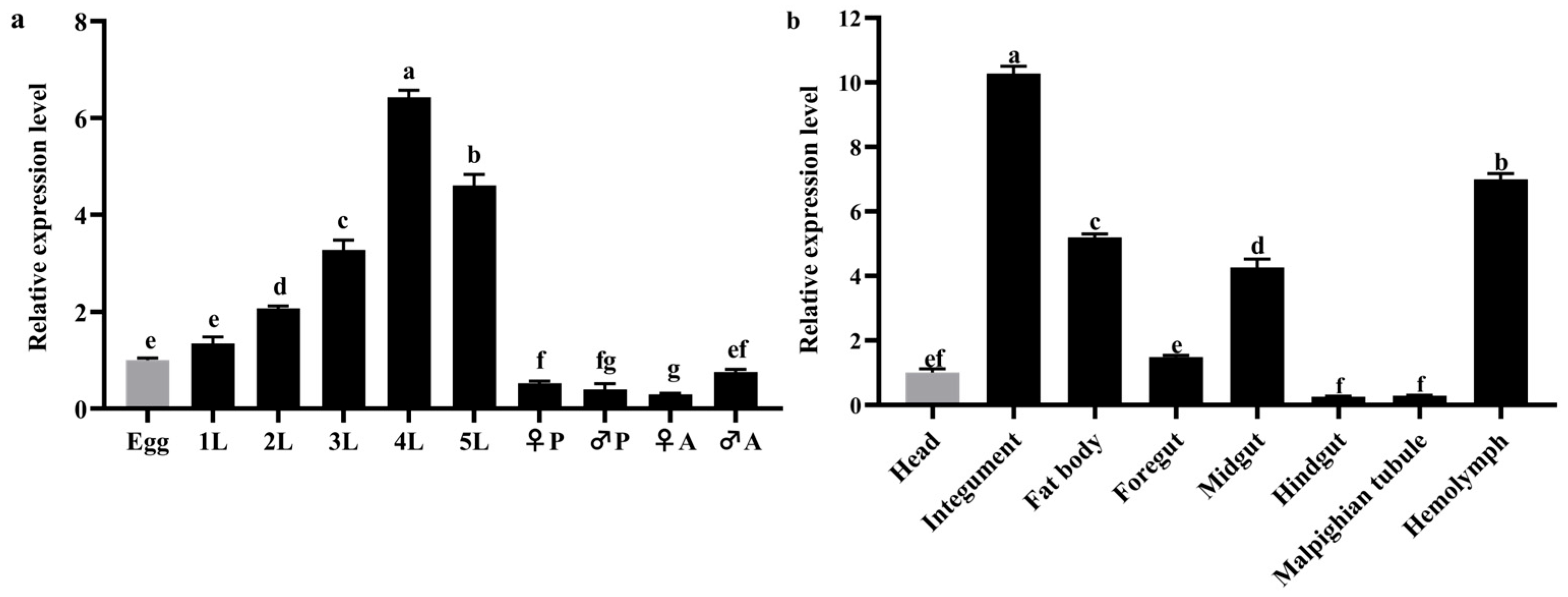
The developmental and tissue-specific expression patterns of LsToll in L. sticticalis were quantified by RT-qPCR (Figure 2). Transcripts of LsToll were detected at all examined developmental stages, including eggs, larvae, pupae, and adults, indicating constitutive expression throughout the life cycle. Notably, the expression of LsToll was significantly elevated in fourth- and fifth-instar larvae, showing 7.62- and 4.65-fold increases, respectively, compared with the egg stage (Figure 2a).
Tissue-specific expression analysis in fifth-instar larvae showed that LsToll was expressed in all tested tissues, including the head, integument, fat body, foregut, midgut, hindgut, Malpighian tubules, and hemolymph. The highest transcript level was detected in the integument, which was 10.17-fold higher than that in the head, followed by the hemolymph, where expression was 8.75-fold higher than that in the head. In contrast, relatively low expression levels were observed in the hindgut and Malpighian tubules, corresponding to 0.31- and 0.37-fold of the expression level in the head, respectively (Figure 2b).

3.3. Transcriptional Response of Toll Signaling Pathway Genes Following Oral Bacterial Challenge

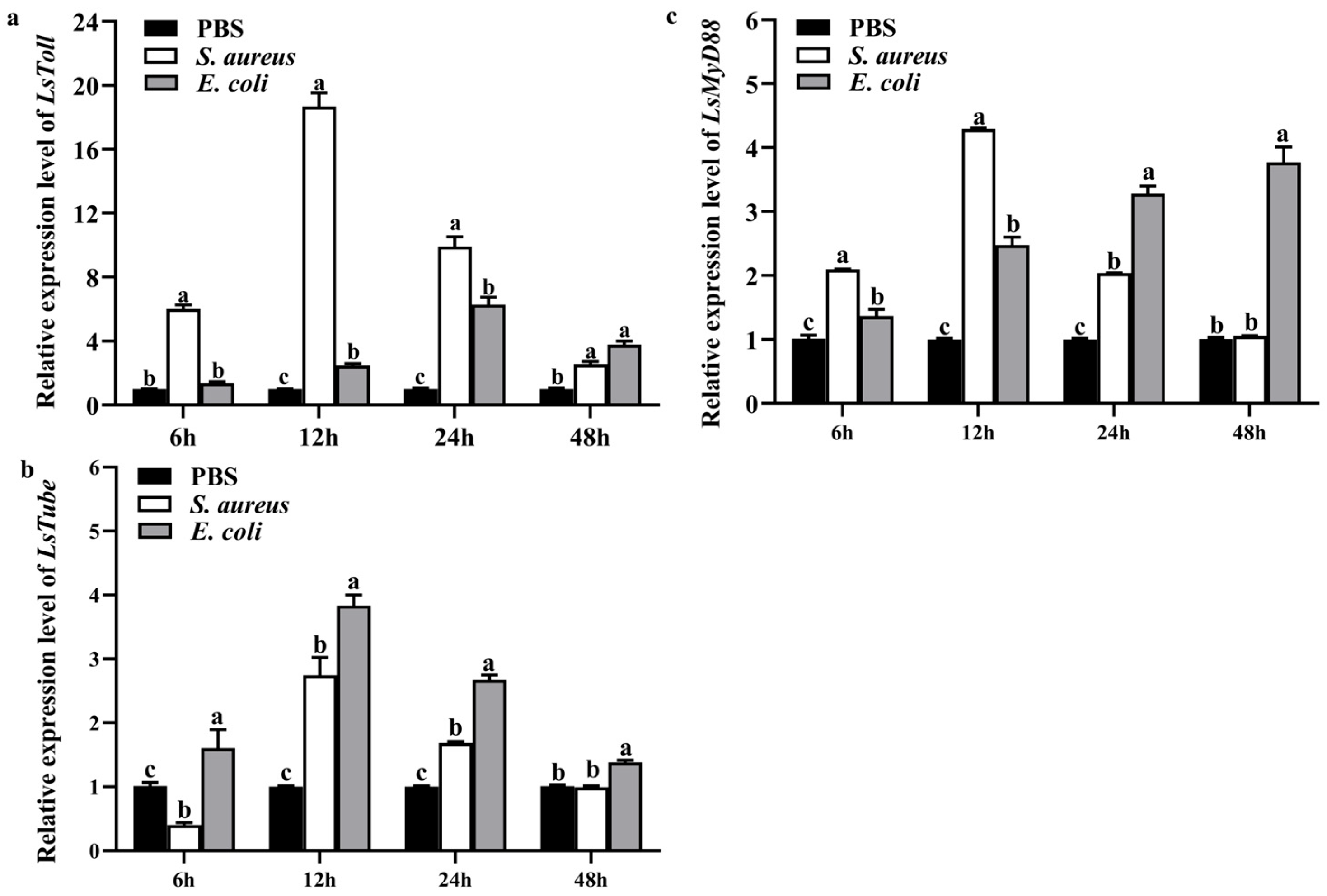
The temporal expression patterns of LsToll, LsMyD88, and LsTube following oral bacterial challenge were examined by RT-qPCR after exposure to S. aureus and E. coli (Figure 3). Overall, the three genes showed distinct but inducible responses to bacterial stimulation. After S. aureus challenge, LsToll was rapidly and strongly upregulated, increasing 6.03-fold at 6 h and peaking at 18.62-fold at 12 h. LsMyD88 showed a similar early response pattern, with expression increasing to approximately 2.10-fold at 6 h and peaking at 4.29-fold at 12 h. In contrast, LsTube was initially downregulated at 6 h but was subsequently induced, reaching its highest level of approximately 2.74-fold at 12 h.
Following E. coli challenge, the induction patterns of these genes were generally delayed compared with those induced by S. aureus. LsToll showed moderate induction at early time points and peaked at 24 h, reaching 9.93-fold relative to the control. LsMyD88 exhibited a sustained increase after E. coli challenge, rising from approximately 1.37-fold at 6 h to 3.77-fold at 48 h. LsTube was also induced by E. coli, with expression peaking at approximately 3.83-fold at 12 h and remaining elevated at 24 h.

3.4. Optimization of siRNA Selection for LsToll

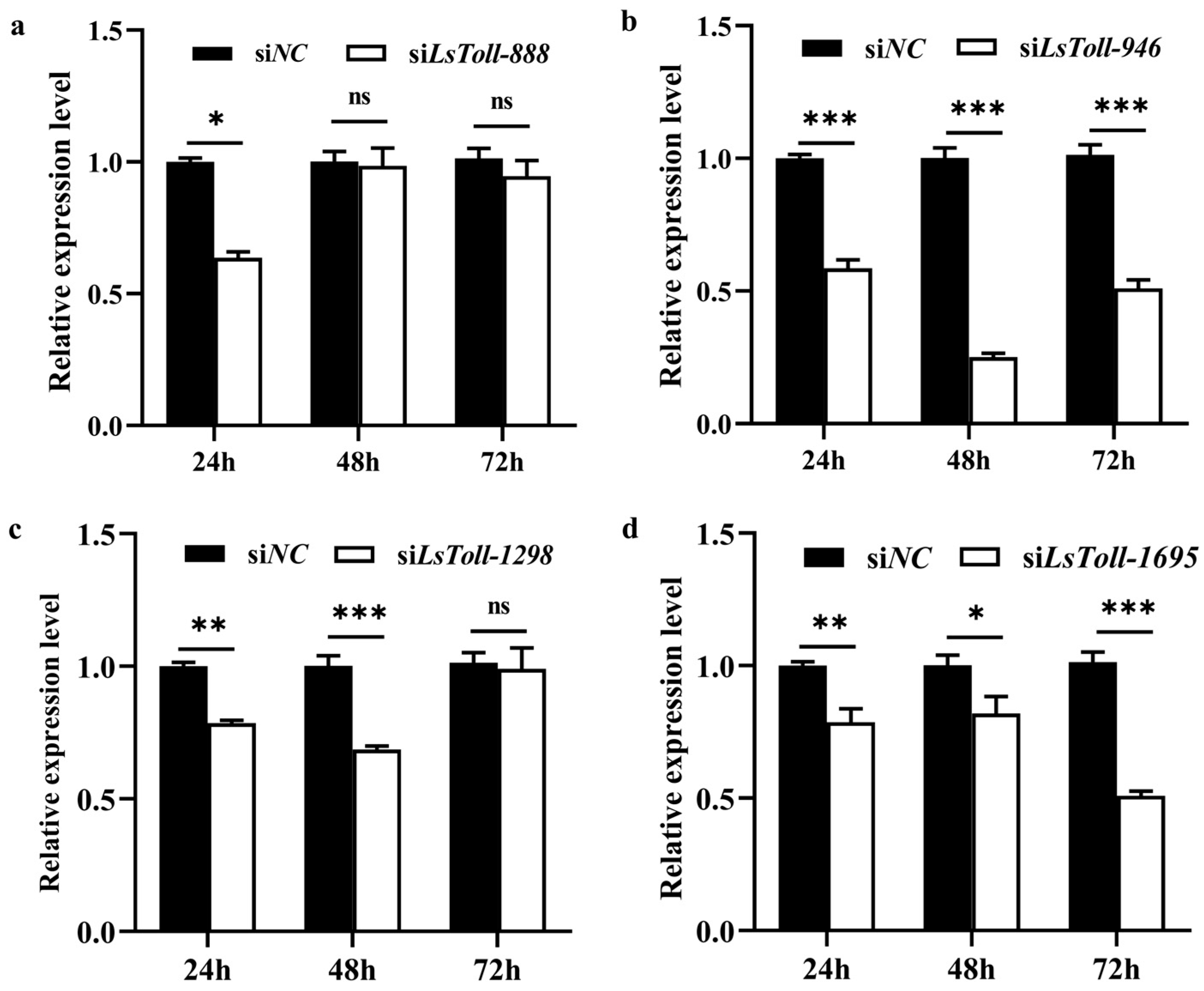
Four siRNAs targeting LsToll (siLsToll-888, siLsToll-946, siLsToll-1298, and siLsToll-1695) were synthesized and injected into fourth-instar larvae of L. sticticalis to evaluate gene-silencing efficiencies. Injection of siLsToll-888 resulted in a significant reduction in LsToll expression only at 24 h post-injection, reaching 0.64-fold of the control level, whereas no significant silencing was detected at 48 or 72 h (Figure 4a). In contrast, siLsToll-946 significantly reduced LsToll expression at 24, 48, and 72 h post-injection, with transcript levels decreasing to 0.58-, 0.25-, and 0.51-fold of the control level, respectively (Figure 4b). For siLsToll-1298, moderate silencing was observed at 24 h (0.79-fold) and 48 h (0.69-fold), but no significant reduction was detected at 72 h (Figure 4c). Injection of siLsToll-1695 resulted in significant suppression of LsToll expression at all three time points, with transcript levels decreasing to 0.79-, 0.82-, and 0.51-fold at 24, 48, and 72 h, respectively (Figure 4d). Based on its consistent silencing efficiency, siLsToll-946 was selected for subsequent functional analyses.

3.5. Functions of LsToll Revealed by RNAi

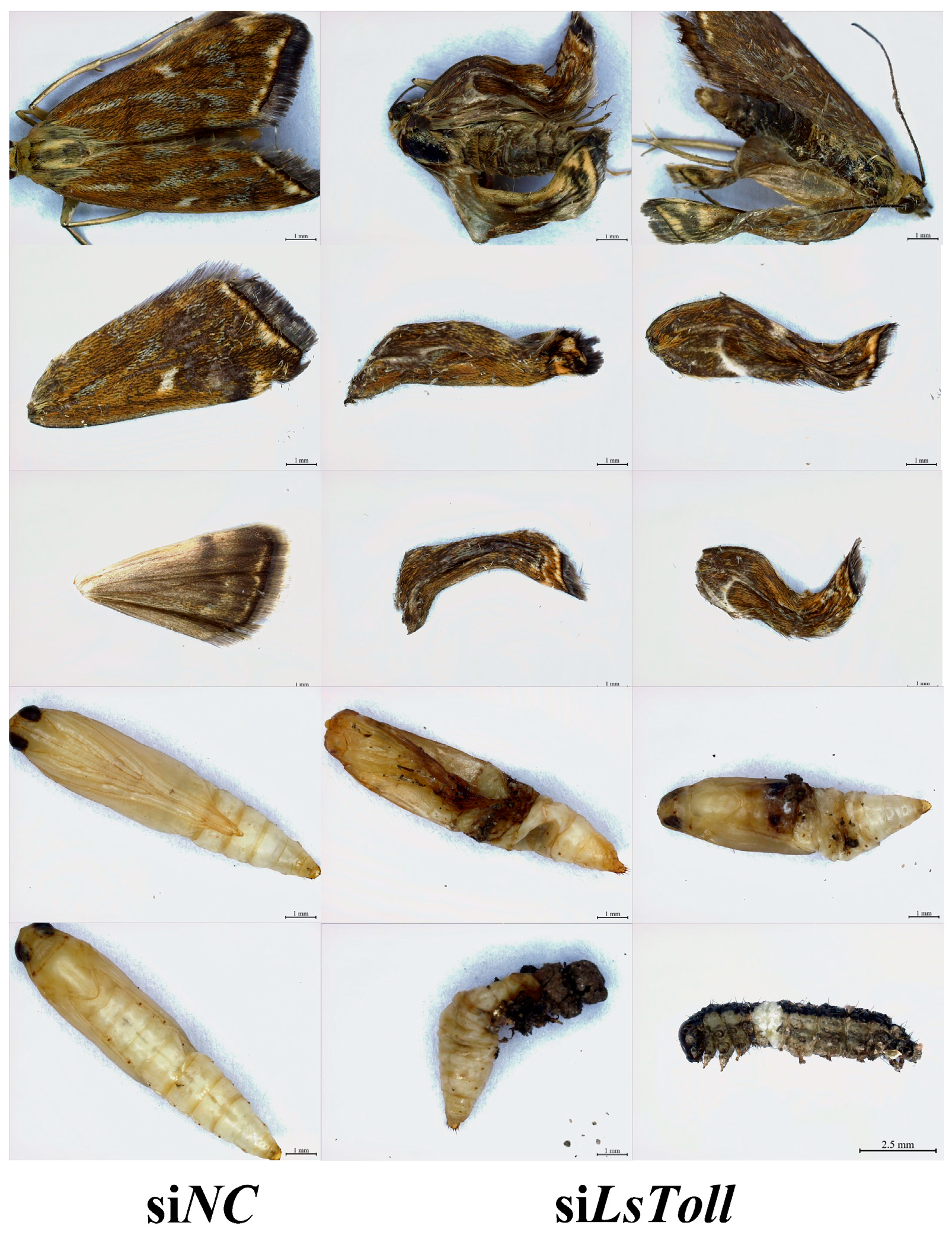
Compared with larvae injected with siNC, LsToll silencing significantly reduced both pupation and survival rates, with pupation decreasing to 58% and survival decreasing to 34% (Table 1). Furthermore, larvae exhibited pronounced developmental abnormalities during the prepupal stage, including incomplete pupation and malformed pupal cases, ultimately leading to death (Figure 5). The malformation rate was 5.56% in the siNC group, whereas it increased significantly to 31.81% in the siLsToll group (Table 1). In addition, adults emerging from the siLsToll group displayed defects in wing expansion, including wing curling and folding (Figure 5). The effects of LsToll silencing on the expression of the Toll pathway genes LsMyD88 and LsTube are shown in Supplementary Figure S1.
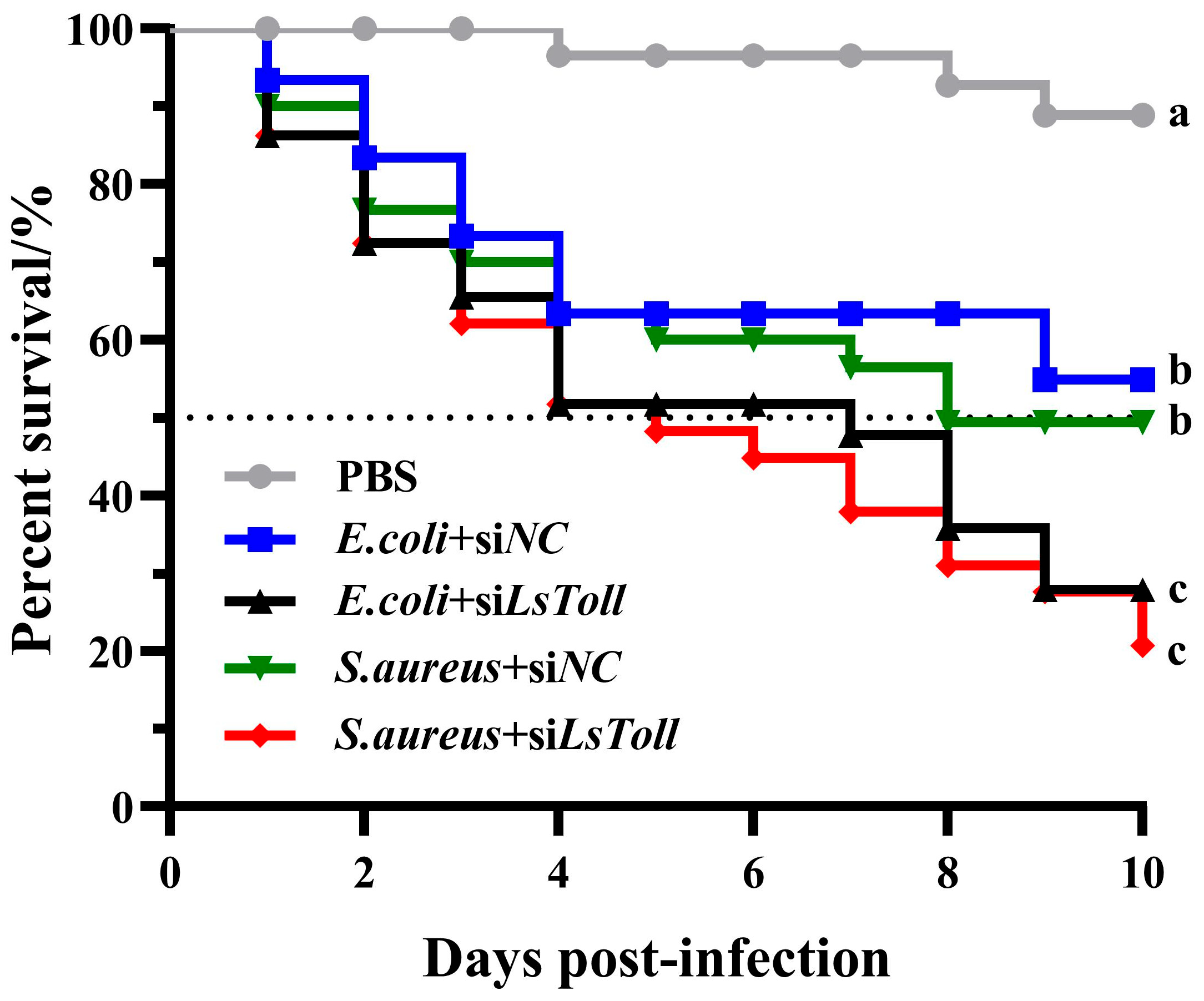
To assess the role of LsToll in antibacterial defense, larval survival was examined following bacterial challenge after RNAi treatment. Larvae injected with siLsToll showed significantly reduced survival compared with the corresponding NC groups after infection with either E. coli or S. aureus (Figure 6). In the absence of infection, mortality in the NC group was low (10.0%). Following challenge with E. coli, mortality increased to 43.33% in the NC group and further rose to 66.67% in the larvae with LsToll silenced. A similar pattern was observed after infection with S. aureus, with mortality reaching 50.00% in the NC group and increasing to 76.67% in the larvae treated with siLsToll.

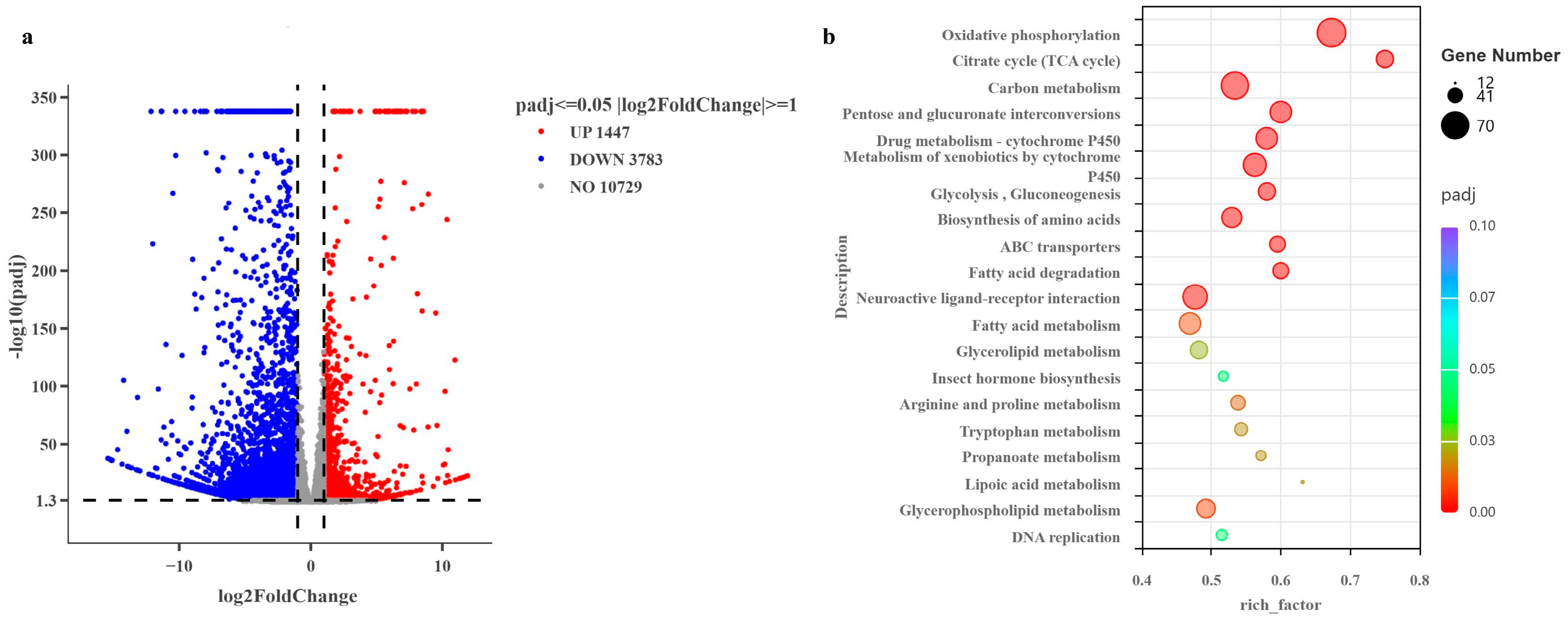
3.6. DEGs Analysis Following LsToll RNAi

A total of 5230 DEGs were identified, including 1447 upregulated and 3783 downregulated genes (Figure 7a). KEGG pathway enrichment analysis revealed that these DEGs were primarily associated with metabolic and oxidative stress-related pathways, particularly those involved in carbon and fatty acid metabolism. Notably, the insect hormone biosynthesis pathway was significantly enriched, and multiple genes involved in 20E and JH signaling exhibited marked expression changes (Figure 7b).

3.7. Changes in 20E and JH III Titers and Validation of DEGs After LsToll Silencing

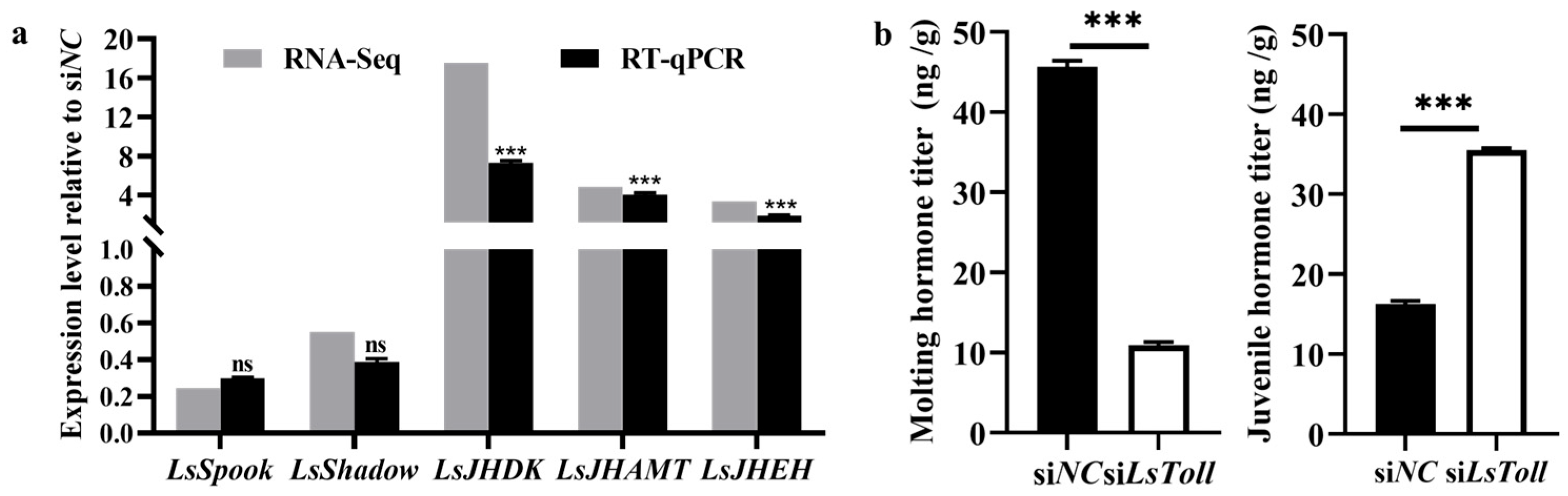
The RT-qPCR results showed expression trends consistent with those observed in the RNA-seq analysis. In RNA-seq dataset, the normalized expression levels of LsSpook and LsShadow in siLsToll group were 0.24- and 0.55-fold of those in siNC group, respectively. Consistently, RT-qPCR analysis showed that their relative expression levels were approximately 0.30- and 0.39-fold of those in siNC group, respectively. In contrast, LsJHAMT, LsJHDK, and LsJHEH were upregulated after LsToll silencing. Their normalized expression levels in RNA-seq dataset were 4.86-, 17.55-, and 3.32-fold of those in siNC group, respectively, while RT-qPCR analysis showed corresponding relative expression levels of approximately 4.04-, 7.29-, and 1.88-fold of those in siNC group, respectively (Figure 8a). Although the magnitude of the expression changes detected by RT-qPCR differed from that observed in RNA-seq data, the overall expression trends were consistent, supporting the reliability of transcriptomic analysis.
Compared with the siNC group, LsToll knockdown significantly decreased the 20E titer by approximately 34.72% (Figure 8b). In contrast, JH III exhibited the opposite trend; its titer was significantly elevated in the siLsToll group by approximately 2.18-fold relative to the control (Figure 8b).

4. Discussion

TLRs serve as pivotal PRRs within the innate immune system [31]. Since the discovery of Toll1 in D. melanogaster, multiple Toll genes have been identified in diverse insect species, including the A. gambiae [32], the hymenopteran Apis mellifera [33], the coleopterans Tribolium castaneum [34], Tenebrio molitor [35], and Leptiontarsa decemlineata [36,37]. In the present study, a Toll gene was identified in L. sticticalis. Sequence analysis confirmed that LsToll is a typical member of the TLR superfamily, characterized by conserved domain [38]. Structurally, LsToll is predicted to be a single-pass type I transmembrane protein, containing an extracellular domain with multiple LRRs, a single transmembrane helix, and a conserved C-terminal TIR domain. The LRR region may contribute to ligand recognition, whereas the TIR domain is essential for downstream signal transduction through the recruitment of cytosolic adaptor proteins [38]. Furthermore, phylogenetic analysis demonstrated that LsToll clusters closely with Lepidopteran Tolls, particularly Toll6 from O. furnacalis, suggesting that this gene is evolutionarily conserved within Lepidoptera.
In the present study, LsToll was expressed throughout all examined developmental stages, a pattern consistent with NlToll1 in the hemipteran Nilaparvata lugens and AgToll/AgToll9 in A. gambiae [13,39]. The elevated LsToll transcript levels in fourth- and fifth-instar larvae are noteworthy because these stages involve rapid biomass accumulation and physiological preparation for metamorphosis [40]. This stage-specific expression suggests that LsToll may be associated with developmental processes in addition to its potential role in innate immunity. Tissue-specific expression analysis revealed that LsToll was predominantly expressed in the integument, hemolymph, fat body, and midgut. These tissues are important immune-related sites in insects and are involved in pathogen recognition, AMP synthesis, barrier defense, and systemic immune regulation [41,42]. While expression levels were comparatively lower in the hindgut and Malpighian tubules, the overall tissue distribution aligns with patterns observed in other species. For instance, NlToll1 is highly expressed in the fat body and gut of N. lugens [39]. In T. molitor, TmToll8 and TmToll9 are predominantly expressed in the gut, whereas TmToll10 is enriched in hemocytes [24]. Similarly, BmToll9 in B. mori is enriched in the gut but is barely detectable in specialized tissues such as the silk glands [43].
To clarify the immune function of LsToll, its transcriptional profile was analyzed under oral bacterial challenge. LsToll was significantly induced by both S. aureus and E. coli, supporting its involvement in antibacterial immune responses. Similar inducible expression patterns have been reported in other insects. In B. mori, BmToll9-2 is responsive to bacterial stimulation, particularly to E. coli and its cell wall component LPS [44]. In addition, BtToll is induced by both E. coli and S. aureus in the hemipteran Bemisia tabaci [45], whereas MsToll shows hemocyte-specific upregulation after E. coli challenge in lepidopteran Manduca sexta [46]. Notably, LsToll showed a stronger and earlier response to S. aureus than to E. coli, whereas the peak induction after E. coli treatment occurred later. This difference may reflect distinct PAMP exposure patterns and upstream immune-recognition mechanisms between Gram-positive and Gram-negative bacteria. Gram-positive bacterial cell walls are generally enriched in lysine (Lys)-type peptidoglycan, which can be recognized by upstream recognition molecules such as PGRP-SA and PGRP-SD, thereby activating the Spätzle-dependent Toll signaling cascade [47]. In contrast, Gram-negative bacteria mainly contain meso-diaminopimelic acid (DAP)-type peptidoglycan, whose recognition is usually associated with activation of the IMD pathway [48]. Therefore, the early immune response induced by E. coli may be primarily reflected in IMD-related genes or effectors rather than in rapid LsToll transcriptional induction [49]. Activation of the Toll pathway by E. coli may occur at later stages of infection, particularly during bacterial persistence or under higher immune pressure. This may explain why the LsToll expression peak after E. coli treatment appeared later than that after S. aureus treatment.
Increasing evidence indicates that Toll genes can also contribute to insect growth and development [50]. The inhibition of NlToll1 in N. lugens leads to a significant reduction in nymphal survival rates [41], while interference with LgToll in Leguminivora glycinivorella hinders normal metamorphosis from the larval to pupal stage [51]. Similarly, ingestion of dsRNA targeting Toll6 results in high mortality in thysanopteran Frankliniella occidentalis [52]. In the present study, LsToll silencing interfered with normal development in L. sticticalis, affecting larval survival, pupation, and adult emergence. The observed defects, including molting obstruction, incomplete pupation, malformed pupae, and abnormal wing expansion, suggest that LsToll is associated with developmental regulation. However, these phenotypes should be interpreted as evidence of functional involvement rather than proof that LsToll alone controls these developmental transitions.
In insects, 20E and JH are two major endocrine signals that coordinate molting and metamorphosis. 20E promotes molting and stage transitions, whereas JH helps maintain larval characteristics and modulates the developmental outcome of 20E signaling in a stage-dependent manner [53,54]. In this study, LsToll knockdown was associated with reduced 20E levels and elevated JH III levels. These hormone changes may provide a plausible physiological explanation for the observed molting obstruction, pupation failure, and adult wing expansion defects. Consistently, transcriptomic and RT-qPCR analyses showed that LsSpook and LsShadow, two genes associated with the 20E biosynthetic pathway, were downregulated after LsToll silencing, whereas LsJHAMT, LsJHDK, and LsJHEH, genes related to JH biosynthesis or metabolism, were upregulated. Because JH-related genes include both biosynthetic and degradation-associated components, these changes should be interpreted as a disruption of JH homeostasis rather than simple activation of JH biosynthesis. Previous studies have shown extensive interactions between endocrine hormones and insect immunity. Much of the current evidence focuses on how hormonal signals regulate immune responses, including the effects of 20E and JH on AMP expression and immune competence in D. melanogaster, A. gambiae, A. aegypti, and B. mori [55,56,57,58]. The present study provides evidence that knockdown of an immune-related Toll gene is accompanied by altered expression of hormone-related genes and changes in hormone titers. These results provide a basis for further investigation of Toll-mediated immune–endocrine interactions and may help identify molecular targets for sustainable pest management. Nevertheless, these results do not yet demonstrate that LsToll directly regulates 20E or JH biosynthesis. Further studies, including hormone rescue assays and promoter-level regulatory analyses, are needed to clarify the underlying regulatory mechanisms.

Supplementary Materials

The following supporting information can be downloaded at: https://www.mdpi.com/article/10.3390/insects17060581/s1, Figure S1: Effects of LsToll silencing on the expression of Toll pathway-related genes in L. sticticalis.

Author Contributions

Conceptualization, L.Y.; methodology, Y.B.; software, Y.B., W.X. and Y.Z.; validation, P.Z. and J.W.; formal analysis, L.Y., P.Z., W.X., Y.Z. and X.W.; investigation, Y.B., J.W., W.X. and Y.Z.; resources, P.Z.; data curation, Y.B., L.Z. and X.W.; writing—original draft preparation, L.Y.; writing—review and editing, L.Y. and H.J.; visualization, J.W.; supervision, X.W. and H.J.; project administration, L.Y., L.Z. and H.J.; funding acquisition, L.Y. All authors have read and agreed to the published version of the manuscript.

Funding

This research was funded by Natural Science Foundation of Inner Mongolia (Grant No. 2025QN03167), Inner Mongolia Autonomous Region’s Directly Affiliated University Basic Scientific Research Business Fee Project (Inner Mongolia Agricultural University Young Teachers Research Capability Enhancement Project) (Grant No. BR230106), Inner Mongolia Agricultural University, Internally Funded Research Project of the First-Level Discipline of Forestry (Grant No. LX20250625-2), and Inner Mongolia Agricultural University High-Level/Outstanding PhD Talent Introduction Research Startup Project (Grant No. NDYB2024-30).

Data Availability Statement

The original contributions presented in this study are included in the article/Supplementary Materials. Further inquiries can be directed to the corresponding authors.

Acknowledgments

We are grateful for the Green Pest Management Team for Forest and Grass Pests, College of Forestry, Inner Mongolia Agricultural University. We thank the anonymous reviewers for valuable comments on the manuscript.

Conflicts of Interest

The authors declare no conflicts of interest. The funders had no role in the design of the study; in the collection, analyses, or interpretation of data; in the writing of the manuscript; or in the decision to publish the results.

Appendix A

Table A1. Primers used in this study.
Primer NameSequence (5′ to 3′)Title 3
LsToll-FATGGTAATGTACATCATATGGTCTCGTRT-PCR
LsToll-RTTAGTTTAGTAGGTCGCTATAACATTC
siLsToll-888-FGAGCUACAAUAGCAAUUUATTsiRNA synthesis
siLsToll-888-RUAAAUUGCUAUUGUAGCUCT
siLsToll-946-FGGAGAUUCAACGUUUAAAUTT
siLsToll-946-RAUUUAAACGUUGAAUCUCCTT
siLsToll-1298-FCCGUCCCUAAAGAUAUAUUTT
siLsToll-1298-RAAUAUAUCUUUAGGGACGGTT
siLsToll-1695-FGCUUCUUCUAAGCUAUAAUTT
siLsToll-1695-RAUUAUAGCUUAGAAGAAGCTT
siNC-FUUCUCCGAACGUGUCACGUTT
siNC-RACGUGACACGUUCGGAGAATT
qLsToll-FTGATTACAGCCGTCCCTAAAGRT-qPCR
qLsToll-RCTGGACTGAAGACGCCATCT
qLsMyD88-FCTTCATCCTCAGCATCTGGC
qLsMyD88-RTTGAGATGTCGAAGCGTAGG
qLsTube-FCAGGTTCAACAGACTCAGAG
qLsTube-RGACAGGCTAGTCAGAACCAA
qLsSad-FAACTGTTGGCAGCAGGGAG
qLsSad-RTGGCTCAGGCAAAATGTGCG
qLsSpo-FACACGAGTCACCGTTCCAGG
qLsSpo-RAGGTCTTCCCCCGAAGAACT
qLsJHDK-FTCCACGTCTTCACGACGTTC
qLsJHDK-RGCATCAGCACCTTGGAGACC
qLsJHAMT-FAACGCGGAACTCTACCAGGG
qLsJHAMT-RGGCACATACTCCCGAAGAAGG
qLsJHEH-FCACCGAAGCAAGCTTGACG
qLsJHEH-RACGACCCAAGTGGGAACTG

References

  1. Hoffmann, J.A.; Kafatos, F.C.; Janeway, C.A.; Ezekowitz, R.A. Phylogenetic perspectives in innate immunity. Science 1999, 284, 1313–1318. [Google Scholar] [CrossRef]
  2. Hong, M.; Hwang, D.; Cho, S. Hemocyte morphology and cellular immune response in termite (Reticulitermes speratus). J. Insect Sci. 2018, 18, 46. [Google Scholar] [CrossRef] [PubMed]
  3. Sun, Y.; Yuan, J.; Han, S.; Wang, Q.; Akhtar, M.R.; Xia, X. PxSpätzle3 regulates the Toll pathway to affect Bacillus thuringiensis susceptibility of Plutella xylostella. J. Agric. Food Chem. 2025, 73, 5129–5139. [Google Scholar] [CrossRef]
  4. Chauhan, M.; Martinak, P.E.; Hollenberg, B.M.; Goodman, A.G. Drosophila melanogaster Toll-9 elicits antiviral immunity against Drosophila C virus. J. Virol. 2024, 99, e0221424. [Google Scholar] [CrossRef]
  5. Zambon, R.A.; Nandakumar, M.; Vakharia, V.N.; Wu, L.P. The Toll pathway is important for an antiviral response in Drosophila. Proc. Natl. Acad. Sci. USA 2005, 102, 7257–7262. [Google Scholar] [CrossRef]
  6. Kawai, T.; Akira, S. The role of pattern-recognition receptors in innate immunity: Update on Toll-like receptors. Nat. Immunol. 2010, 11, 373–384. [Google Scholar] [CrossRef]
  7. Nüsslein-Volhard, C.; Lohs-Schardin, M.; Sander, K.; Cremer, C. A dorso-ventral shift of embryonic primordia in a new maternal-effect mutant of Drosophila. Nature 1980, 283, 474–476. [Google Scholar] [CrossRef]
  8. Tauszig, S.; Jouanguy, E.; Hoffmann, J.A.; Imler, J.L. Toll-related receptors and the control of antimicrobial peptide expression in Drosophila. Proc. Natl. Acad. Sci. USA 2000, 97, 10520–10525. [Google Scholar] [CrossRef]
  9. Chaudhary, P.M.; Ferguson, C.; Nguyen, V.; Nguyen, O.; Massa, H.F.; Eby, M.; Jasmin, A.; Trask, B.J.; Hood, L.; Nelson, P.S. Cloning and characterization of two Toll/interleukin-1 receptor-like genes TIL3 and TIL4: Evidence for a multi-gene receptor family in humans. Blood 1998, 91, 4020–4027. [Google Scholar] [CrossRef] [PubMed]
  10. Rock, F.L.; Hardiman, G.; Timans, J.C.; Kastelein, R.A.; Bazan, J.F. A family of human receptors structurally related to Drosophila Toll. Proc. Natl. Acad. Sci. USA 1998, 95, 588–593. [Google Scholar] [CrossRef] [PubMed]
  11. Parthier, C.; Stelter, M.; Ursel, C.; Fandrich, U.; Lilie, H.; Breithaupt, C.; Stubbs, M.T. Structure of the Toll-Spatzle complex, a molecular hub in Drosophila development and innate immunity. Proc. Natl. Acad. Sci. USA 2014, 111, 6281–6286. [Google Scholar] [CrossRef] [PubMed]
  12. Chilton, P.M.; Embry, C.A.; Mitchell, T.C. Effects of differences in lipid A structure on TLR4 pro-inflammatory signaling and inflammasome activation. Front. Immunol. 2012, 3, 154. [Google Scholar] [CrossRef]
  13. Luna, C.; Wang, X.; Huang, Y.; Zhang, J.; Zheng, L. Characterization of four Toll related genes during development and immune responses in Anopheles gambiae. Insect Biochem. Mol. Biol. 2002, 32, 1171–1179. [Google Scholar] [CrossRef]
  14. Cheng, T.; Zhao, P.; Liu, C.; Xu, P.; Gao, Z.; Xia, Q.; Xiang, Z. Structures, regulatory regions, and inductive expression patterns of antimicrobial peptide genes in the silkworm Bombyx mori. Genomics 2006, 87, 356–365. [Google Scholar] [CrossRef]
  15. Liu, J.; Kolliopoulou, A.; Smagghe, G.; Swevers, L. Modulation of the transcriptional response of innate immune and RNAi genes upon exposure to dsRNA and LPS in silkmoth-derived Bm5 cells overexpressing BmToll9-1 receptor. J. Insect Physiol. 2014, 66, 10–19. [Google Scholar] [CrossRef] [PubMed]
  16. Hull, J.J.; Kong, H.; Lv, M.; Mao, N.; Wang, C.; Cheng, Y.; Zhang, L.; Jiang, X.; Luo, L. Molecular characterization of a lysozyme gene and its altered expression profile in crowded beet webworm (Loxostege sticticalis). PLoS ONE 2016, 11, e0161070. [Google Scholar] [CrossRef]
  17. Wen, M.; Li, E.; Chen, Q.; Kang, H.; Zhang, S.; Li, K.; Wang, Y.; Jiao, Y.; Ren, B. A herbivore-induced plant volatile of the host plant acts as a collective foraging signal to the larvae of the meadow moth, Loxostege sticticalis (Lepidoptera: Pyralidae). J. Insect Physiol. 2019, 118, 103941. [Google Scholar] [CrossRef]
  18. Feng, H.; Wu, K.; Cheng, D.; Guo, Y. Spring migration and summer dispersal of Loxostege sticticalis (Lepidoptera: Pyralidae) and other insects observed with radar in northern China. Environ. Entomol. 2004, 33, 1253–1265. [Google Scholar] [CrossRef]
  19. Zhang, M.; Zhao, S.; Xue, Z.; Sun, J.; Hao, J.; Deng, F.; Huang, J.; Du, C.; Du, Y. Identification of candidate olfactory genes in the antennal transcriptome of Loxostege sticticalis trapped by three different sex pheromone blends. Insects 2025, 16, 152. [Google Scholar] [CrossRef]
  20. Cheng, Y.; Wang, K.; Sappington, T.W.; Luo, L.; Jiang, X. Response of reproductive traits and longevity of beet webworm to temperature, and implications for migration. J. Insect Sci. 2015, 15, 154. [Google Scholar] [CrossRef]
  21. Lin, X.; Zeng, J.; Wang, B.; Yao, Y.; Du, Y. Characterization of ovary genes of beet webworm, Loxostege sticticalis, through de novo transcriptome analysis and its potential application in ovary grading. Entomol. Exp. Appl. 2016, 161, 193–202. [Google Scholar] [CrossRef]
  22. Tang, J.; Cheng, Y.; Sappington, T.W.; Jiang, X.; Zhang, L.; Luo, L. Egg hatch and survival and development of beet webworm (Lepidoptera: Crambidae) larvae at different combinations of temperature and relative humidity. J. Econ. Entomol. 2016, 109, 1603–1611. [Google Scholar] [CrossRef]
  23. Mamut, M.; Wang, H.Q.; Li, J.; Ji, R.; Chen, X. Source area of the immigrant population of beet webworm (Lepidoptera: Crambidae) in northern Xinjiang, China. J. Econ. Entomol. 2023, 116, 127–135. [Google Scholar] [CrossRef]
  24. Tian, Z.; Qiao, Y.; Xie, D.; Puqian, A.; Zhang, L.; Cheng, Y.; Jiang, X.; Michaud, J.P. Trehalose metabolism mediates trade-offs between reproduction and survival in beet webworm, Loxostege sticticalis, under heat stress. Pest Manag. Sci. 2024, 81, 903–911. [Google Scholar] [CrossRef]
  25. Zhang, J.; Yang, Q.; Zhao, Z.; Yu, X.; Wei, J.; Cheng, H.; Zhao, X.; Yang, M.; Jin, B.; Hanna, R. The spatiotemporal patterns of the beet webworm (Lepidoptera: Crambidae) in China and possible dynamics under future climate scenarios. J. Insect Sci. 2024, 24, 1705. [Google Scholar] [CrossRef]
  26. Zhang, Y.; Li, Y.; Han, H.; Wang, X.; Gao, S.; Zhao, Q.; Bieerdebieke, H.; Xu, L.; Zang, Q.; Wang, H.; et al. Identification of miRNAs involved in olfactory regulation in antennae of beet webworm, Loxostege sticticalis (Lepidoptera: Pyralidae). Life 2024, 14, 1705. [Google Scholar] [CrossRef]
  27. Bulmer, M.S.; Bachelet, I.; Raman, R.; Rosengaus, R.B.; Sasisekharan, R. Targeting an antimicrobial effector function in insect immunity as a pest control strategy. Proc. Natl. Acad. Sci. USA 2009, 106, 12652–12657. [Google Scholar] [CrossRef]
  28. Liu, F.; Huang, W.; Wu, K.; Qiu, Z.; Huang, Y.; Ling, E. Exploiting innate immunity for biological pest control. Adv. Insect Physiol. 2017, 52, 199–230. [Google Scholar] [CrossRef]
  29. Zhang, Y.; Li, Y.; Shan, Y.; Han, H.; Bai, P.; Xu, L.; Zhao, Q.; Liu, N.; Wang, Y.; Wang, Y.; et al. A chromosome-level genome assembly of beet webworm, Loxostege sticticalis Linnaeus (Lepidoptera: Pyralidae). Sci. Data 2025, 12, 54. [Google Scholar] [CrossRef]
  30. Yang, M.; Li, G.; Yu, L.; Du, S.; Jiang, D.; Chu, X.; Wang, K.; Wu, S.; Wang, R.; Zhang, F. Temperature and metal ions regulate larval diapause termination via the 20-hydroxyecdysone and juvenile hormone pathways in Monochamus alternatus. Pest Manag. Sci. 2023, 79, 437–446. [Google Scholar] [CrossRef]
  31. Moresco, E.M.; LaVine, D.; Beutler, B. Toll-like receptors. Curr. Biol. 2011, 21, R488–R493. [Google Scholar] [CrossRef]
  32. Christophides, G.K.; Zdobnov, E.; Barillas-Mury, C.; Birney, E.; Blandin, S.; Blass, C.; Brey, P.T.; Collins, F.H.; Danielli, A.; Dimopoulos, G.; et al. Immunity-related genes and gene families in Anopheles gambiae. Science 2002, 298, 159–165. [Google Scholar] [CrossRef]
  33. Evans, J.D.; Aronstein, K.; Chen, Y.P.; Hetru, C.; Imler, J.L.; Jiang, H.; Kanost, M.; Thompson, G.J.; Zou, Z.; Hultmark, D. Immune pathways and defence mechanisms in honey bees Apis mellifera. Insect Mol. Biol. 2006, 15, 645–656. [Google Scholar] [CrossRef]
  34. Zou, Z.; Evans, J.D.; Lu, Z.; Zhao, P.; Williams, M.; Sumathipala, N.; Hetru, C.; Hultmark, D.; Jiang, H. Comparative genomic analysis of the Tribolium immune system. Genome Biol. 2007, 8, R177. [Google Scholar] [CrossRef]
  35. Kojour, M.M.; Jang, H.A.; Vasantha-Srinivasan, P.; Lee, Y.S.; Jo, Y.H.; Han, Y.S. Expression pattern analysis of transmembrane receptor TmToll-8, −9, and −10 in the coleopteran insect Tenebrio molitor following systemic infection. Entomol. Res. 2024, 54, 2. [Google Scholar] [CrossRef]
  36. Kryukov, V.Y.; Kosman, E.; Slepneva, I.; Vorontsova, Y.L.; Polenogova, O.; Kazymov, G.; Alikina, T.; Akhanaev, Y.; Sidorenko, D.; Noskov, Y.A.; et al. Involvement of bacteria in the development of fungal infections in the Colorado potato beetle. Insect Sci. 2025, 32, 600–620. [Google Scholar] [CrossRef]
  37. Kryukov, V.; Antonets, M.; Rotskaya, U.; Kabirova, E.; Slepneva, I.; Vorontsova, Y.; Noskov, Y.; Kamanova, E.; Yaroslavtseva, O.; Fishman, V.; et al. Divergent immune strategies of Colorado potato beetle larvae against the entomopathogenic fungi Metarhizium robertsii and Beauveria bassiana: A comparative transcriptomic analysis. Insect Mol. Biol. 2026, 35, 338–358. [Google Scholar] [CrossRef]
  38. Leulier, F.; Lemaitre, B. Toll-like receptors-taking an evolutionary approach. Nat. Rev. Genet. 2008, 9, 165–178. [Google Scholar] [CrossRef]
  39. Shao, Z.L.; Lan, C.P.; Yu, X.P.; Wang, Z.L. RNAi-mediated suppression of toll-like receptor NlToll1 enhances Nilaparvata lugens susceptibility to entomopathogenic fungal infection. Biol. Control 2025, 205, 105771. [Google Scholar] [CrossRef]
  40. Gao, X.; Zhang, J.; Wu, P.; Shu, R.; Zhang, H.; Qin, Q.; Meng, Q. Conceptual framework for the insect metamorphosis from larvae to pupae by transcriptomic profiling, a case study of Helicoverpa armigera (Lepidoptera: Noctuidae). BMC Genom. 2022, 23, 591. [Google Scholar] [CrossRef]
  41. Brey, P.T.; Lee, W.J.; Yamakawa, M.; Koizumi, Y.; Perrot, S.; Francois, M.; Ashida, M. Role of the integument in insect immunity: Epicuticular abrasion and induction of cecropin synthesis in cuticular epithelial cells. Proc. Natl. Acad. Sci. USA 1993, 90, 6275–6279. [Google Scholar] [CrossRef]
  42. Caccia, S.; Casartelli, M.; Tettamanti, G. The amazing complexity of insect midgut cells: Types, peculiarities, and functions. Cell Tissue Res. 2019, 377, 505–525. [Google Scholar] [CrossRef]
  43. Liu, J.; Yang, W.; Liao, W.; Huang, Y.; Chen, W.; Bu, X.; Huang, S.; Jiang, W.; Swevers, L. Immunological function of Bombyx Toll9-2 in the silkworm (Bombyx mori) larval midgut: Activation by Escherichia coli/lipopolysaccharide and regulation of growth. Arch. Insect Biochem. Physiol. 2024, 116, e22130. [Google Scholar] [CrossRef]
  44. Wu, S.; Zhang, X.; Chen, X.; Cao, P.; Beerntsen, B.T.; Ling, E. BmToll9, an Arthropod conservative Toll, is likely involved in the local gut immune response in the silkworm, Bombyx mori. Dev. Comp. Immunol. 2010, 34, 93–96. [Google Scholar] [CrossRef]
  45. Zhang, C.; Yan, S.Q.; Shen, B.B.; Ali, S.; Wang, X.M.; Jin, F.L.; Cuthbertson, A.G.S.; Qiu, B.L. RNAi knock-down of the Bemisia tabaci Toll gene (BtToll) increases mortality after challenge with destruxin A. Mol. Immunol. 2017, 88, 164–173. [Google Scholar] [CrossRef]
  46. Ao, J.Q.; Ling, E.; Yu, X.Q. A Toll receptor from Manduca sexta is in response to Escherichia coli infection. Mol. Immunol. 2008, 45, 543–552. [Google Scholar] [CrossRef]
  47. Jiang, L.; Liu, W.; Guo, H.; Dang, Y.; Cheng, T.; Yang, W.; Sun, Q.; Wang, B.; Wang, Y.; Xie, E.; et al. Distinct functions of Bombyx mori peptidoglycan recognition protein 2 in immune responses to bacteria and viruses. Front. Immunol. 2019, 10, 776. [Google Scholar] [CrossRef]
  48. WanWang, Q.; Ren, M.; Liu, X.; Xia, H.; Chen, K. Peptidoglycan recognition proteins in insect immunity. Mol. Immunol. 2019, 106, 69–76. [Google Scholar] [CrossRef]
  49. Liu, W.; Liu, J.; Lu, Y.; Gong, Y.; Zhu, M.; Chen, F.; Liang, Z.; Zhu, L.; Kuang, S.; Hu, X.; et al. Immune signaling pathways activated in response to different pathogenic microorganisms in Bombyx mori. Mol. Immunol. 2015, 65, 391–397. [Google Scholar] [CrossRef]
  50. Bingsohn, L.; Knorr, E.; Billion, A.; Narva, K.E.; Vilcinskas, A. Knockdown of genes in the Toll pathway reveals new lethal RNA interference targets for insect pest control. Insect Mol. Biol. 2016, 26, 92–102. [Google Scholar] [CrossRef]
  51. Ran, R.; Li, T.; Liu, X.; Ni, H.; Li, W.; Meng, F. RNA interference-mediated silencing of genes involved in the immune responses of the soybean pod borer Leguminivora glycinivorella (Lepidoptera: Olethreutidae). PeerJ 2018, 6, e4931. [Google Scholar] [CrossRef]
  52. Han, S.H.; Kim, J.H.; Kim, K.; Lee, S.H. Selection of lethal genes for ingestion RNA interference against western flower thrips, Frankliniella occidentalis, via leaf disc-mediated dsRNA delivery. Pestic. Biochem. Physiol. 2019, 161, 47–53. [Google Scholar] [CrossRef]
  53. Ekoka, E.; Maharaj, S.; Nardini, L.; Dahan-Moss, Y.; Koekemoer, L.L. 20-Hydroxyecdysone (20E) signaling as a promising target for the chemical control of malaria vectors. Parasit. Vectors 2021, 14, 86. [Google Scholar] [CrossRef]
  54. Jindra, M.; Palli, S.R.; Riddiford, L.M. The juvenile hormone signaling pathway in insect development. Annu. Rev. Entomol. 2013, 58, 181–204. [Google Scholar] [CrossRef]
  55. Tian, L.; Guo, E.; Diao, Y.; Zhou, S.; Peng, Q.; Cao, Y.; Ling, E.; Li, S. Genome-wide regulation of innate immunity by juvenile hormone and 20-hydroxyecdysone in the Bombyx fat body. BMC Genom. 2010, 11, 549. [Google Scholar] [CrossRef]
  56. Kim, I.H.; Castillo, J.C.; Aryan, A.; Martin-Martin, I.; Nouzova, M.; Noriega, F.G.; Barletta, A.B.F.; Calvo, E.; Adelman, Z.N.; Ribeiro, J.M.C.; et al. A mosquito juvenile hormone binding protein (mJHBP) regulates the activation of innate immune defenses and hemocyte development. PLoS Pathog. 2020, 16, e1008288. [Google Scholar] [CrossRef]
  57. Reynolds, R.A.; Kwon, H.; Smith, R.C. 20-Hydroxyecdysone primes innate immune responses that limit bacterial and malarial parasite survival in Anopheles gambiae. mSphere 2020, 5, e00983-19. [Google Scholar] [CrossRef]
  58. Keith, S.A. Steroid hormone regulation of innate immunity in Drosophila melanogaster. PLoS Genet. 2023, 19, e1010782. [Google Scholar] [CrossRef]
Figure 1. Sequence analysis of LsToll. (a) Domain organization of LsToll predicted by the SMART program. LRR, leucine-rich repeat domain; TM, transmembrane domain; TIR, Toll/interleukin-1 receptor domain. (b) Phylogenetic tree of LsToll and other insect Toll proteins constructed from protein sequences using the neighbor-joining method. Numbers at the nodes indicate bootstrap support values (%) from 1000 replicates. GenBank accession numbers are provided in parentheses. The red dot represents the protein of the target species in this study.
Insects 17 00581 g001
Figure 2. Developmental and tissue-specific expression profiles of LsToll. (a) Developmental expression levels of the LsToll in L. sticticalis. Developmental stages: 1–5 L, first- to fifth-instar larvae; ♀P, female pupae; ♂P male pupae; ♀A, female adults; ♂A, male adults. (b) Tissue-specific expression levels of LsToll in fifth-instar larvae of L. sticticalis. Data are expressed as mean ± SEM (n = 3). Different lowercase letters above the columns indicate significant differences at p < 0.05.
Insects 17 00581 g002
Figure 3. Whole-body expression profiles of Toll signaling pathway genes after oral bacterial challenge. (a) LsToll (b) LsMyD88 (c) LsTube expression of genes following S. aureus and E. coli challenges in fourth-instar L. sticticalis larvae. Data are expressed as mean ± SEM (n = 3). Different lowercase letters above the columns indicate significant differences at p < 0.05.
Insects 17 00581 g003
Figure 4. Efficiency of siRNA-mediated silencing of LsToll. (a) siLsToll-71, (b) siLsToll-888, (c) siLsToll-1298, (d) siLsToll-1695. Data are expressed as mean ± SEM (n = 3). Statistical significance was determined by the unpaired Student’s t-test (*, p < 0.05; **, p < 0.01; ***, p < 0.001). Values marked with “ns” are not significantly different (p > 0.05).
Insects 17 00581 g004
Figure 5. Abnormal phenotypes resulting from the silencing of LsToll mediated by RNAi.
Insects 17 00581 g005
Figure 6. Effects of LsToll silencing on the survival of L. sticticalis larvae following bacterial challenge. Fourth-instar larvae injected with siLsToll or siNC were challenged with E. coli or S. aureus, and larval survival was recorded daily for 10 days post-infection. Larvae treated with PBS served as the control group. Survival curves were generated using the Kaplan–Meier method, and differences among groups were analyzed using the log-rank test followed by Holm correction for multiple comparisons. Different lowercase letters adjacent to the endpoints of the survival curves indicate significant differences among groups (p < 0.05), whereas groups sharing the same letter are not significantly different. The dotted line in the survival curve represents the 50% survival rate reference line.
Insects 17 00581 g006
Figure 7. Transcriptomic analysis of LsToll-silenced larvae. (a) Volcano plot of DEGs. Each dot represents a gene: gray dots indicate genes with no significant difference; red dots indicate significantly upregulated genes; blue dots indicate significantly downregulated genes (|log2FoldChange| ≥ 1, padj ≤ 0.05). (b) KEGG pathway enrichment analysis of DEGs. Bubble size corresponds to the number of genes in each pathway, and color reflects adjusted padj.
Insects 17 00581 g007
Figure 8. Effects of LsToll silencing on hormone-related gene expression and endocrine hormone titers in L. sticticalis larvae. (a) RT-qPCR validation of DEGs. Two 20E pathway-related genes, LsSpook and LsShadow, were downregulated after LsToll knockdown, whereas three JH pathway-related genes, LsJHAMT, LsJHDK, and LsJHEH, were upregulated. The expression trends detected by RT-qPCR were consistent with the RNA-seq data. (b) Changes in 20E and JH III titers at 48 h after siRNA injection. LsToll knockdown significantly reduced the 20E titer and increased the JH III titer compared with the siNC group. Data are expressed as mean ± SEM (n = 3). Significant differences were calculated using an unpaired Student’s t-test (***, p < 0.001). Values marked with “ns” are not significantly different (p > 0.05).
Insects 17 00581 g008
Table 1. The phenotype and survival rate of L. sticticalis microinjected by siLsToll.
TreatmentNumber of LarvaePupation Rate% (Pupae)Aberration Rate of Pupae% (Individual)Survival Rate% (Individual)Aberration Rate of Adults% (Individual)
siNC5076% (38)5.56% (2)70% (35)0 (0)
siLsToll5058% (29)31.81% (7)34% (17)35.30% (6)
Note: Pupation rate = the number of pupation/the number of RNAi larvae; Aberration rate of pupae = the number of aberrational pupae/the number of pupation; Survival rate = the number of all surviving adults/the number of RNAi larvae; Aberration rate of adults = the number of aberrational adults/the number of surviving adults.
Disclaimer/Publisher’s Note: The statements, opinions and data contained in all publications are solely those of the individual author(s) and contributor(s) and not of MDPI and/or the editor(s). MDPI and/or the editor(s) disclaim responsibility for any injury to people or property resulting from any ideas, methods, instructions or products referred to in the content.