1. Introduction
Liriomyza sativae Blanchard (Diptera: Agromyzidae) is a global pest of vegetables and ornamental plants, characterized by high fecundity and short generation time [
1,
2,
3]. The females puncture the leaves to suck leaf sap and oviposit within these punctures. The hatched larvae feed on leaf tissue, forming tunnels on the leaf surface that can reduce the photosynthetic capacity of the plant, and even cause death of the whole plant in severe cases [
4,
5,
6]. This pest is responsible for yield losses of up to 15% in melon (
Cucumis melo) in the Rio Grande do Norte state [
7]. Presently, chemical control is the primary method used to mitigate its damage both domestically and internationally [
8]. Most importantly, the long-term and frequent use of certain insecticides has led to significant resistance to multiple insecticides among pests [
9,
10,
11]. For instance,
L. sativae has developed 34.53-fold resistance to the new insecticide chlorantraniliprole [
12]. Consequently, there is an urgent need for alternative strategies that are both eco-friendly to delay the development of insecticide resistance.
Plant essential oils (EOs) represent a compelling alternative in this regard. Essential oils are secondary metabolites produced in plant metabolism, rich in monoterpenes, sesquiterpenes, and phenylpropanoids [
13,
14]. They possess diverse insecticidal bioactivities and are capable of disrupting critical physiological homeostasis and interfering with the metabolic pathways of arthropod pests [
15,
16,
17,
18,
19,
20].
Artemisia scoparia is an aromatic perennial herb commonly found in Asia and Europe [
21]. The essential oil from
A. scoparia exhibits fumigant, contact, and repellent actions against a range of pests. For example, it exhibits both repellent and larvicidal activity against
Aedes aegypti females [
22]. Furthermore, it exhibits toxicity towards stored-product pests, specifically
Callosobruchus maculatus,
Sitophilus oryzae, and
Tribolium castaneum, with LC
50 values of 1.46, 1.87, and 2.05 μL/L air, respectively [
23].
While traditional toxicological assays prioritize acute lethal effects, these metrics frequently underestimate the broader demographic consequences of botanical insecticides. In contrast, the age-stage, two-sex life table provides a more robust framework for evaluating sublethal effects, as it integrates survival, development, and fecundity to project long-term population dynamics. For example, Braga et al. (2025) used the age-stage, two-sex life table methodology and found that treatment with
Melaleuca alternifolia essential oil significantly reduced the intrinsic growth rate of
Tuta absoluta populations, demonstrating its potential for population suppression [
24]. Shirvani et al. (2023) employed the same methodology to demonstrate that sublethal concentrations of
Rosmarinus officinalis essential oil significantly affected the biological and population growth parameters of
Amblyseius swirskii [
25]. Such a comprehensive evaluation is essential for determining the efficacy of
A. scoparia essential oil as a sustainable tool within Integrated Pest Management programs (IPM).
Research regarding the insecticidal effects on the L. sativae is currently scarce, and studies on its sublethal effects are also rarely reported. In this context, the present study therefore aims to investigate the components of A. scoparia essential oil and evaluate its insecticidal activity against L. sativae. We will also use the age-stage, two-sex life table methodology to explore the impact of the essential oil on the growth and development of L. sativae. These findings lay a scientific foundation for the development of effective and eco-friendly control strategies against L. sativae.
4. Discussion
The
L. sativae is a globally significant pest of vegetables and ornamental plants, characterized by rapid reproduction and severe damage [
1,
2,
3]. Long-term reliance on chemical control has led to the development of resistance and environmental pollution [
8,
9,
10,
11]; therefore, green pest management technologies centered on natural products such as plant essential oils have become a research focus [
15,
16,
17,
18,
19,
20]. In the current study, we found that
A. scoparia essential oil exhibited potent insecticidal effects against
L. sativae, inhibiting its growth, development, and reproduction while reducing population parameters. It is expected that the results will provide a green management strategy for
L. sativae control.
Essential oils are composed of complex and diverse chemical components, demonstrating various biological activities against pests [
30,
31]. Therefore, they are not susceptible to pest resistance [
32,
33,
34]. In this study, the chemical analysis of
A. scoparia essential oil revealed that the main components are agropyrene (18.96%), o-cymene (12.60%), caryophyllene oxide (11.35%), and methyl eugenol (6.94%). Ickovski et al. (2020) found that agropyrene was the main compound in
A. scoparia essential oil [
35]. However, some earlier studies have indicated that the main component of
A. scoparia oil is 1-phenyl-penta-2,4-diyne or citronellal [
36,
37]. Variations in the chemical constituents of essential oils could be attributed to various factors, such as climate, geography, and the conditions of cultivation, collection, and storage [
38,
39].
The insecticidal activity of
A. scoparia essential oil has been demonstrated in previous studies. For instance,
A. scoparia essential oil exhibits strong insecticidal activity against
A. aegypti [
22],
C. maculatus,
S. oryzae and
T. castaneum [
23]. Our results indicated that
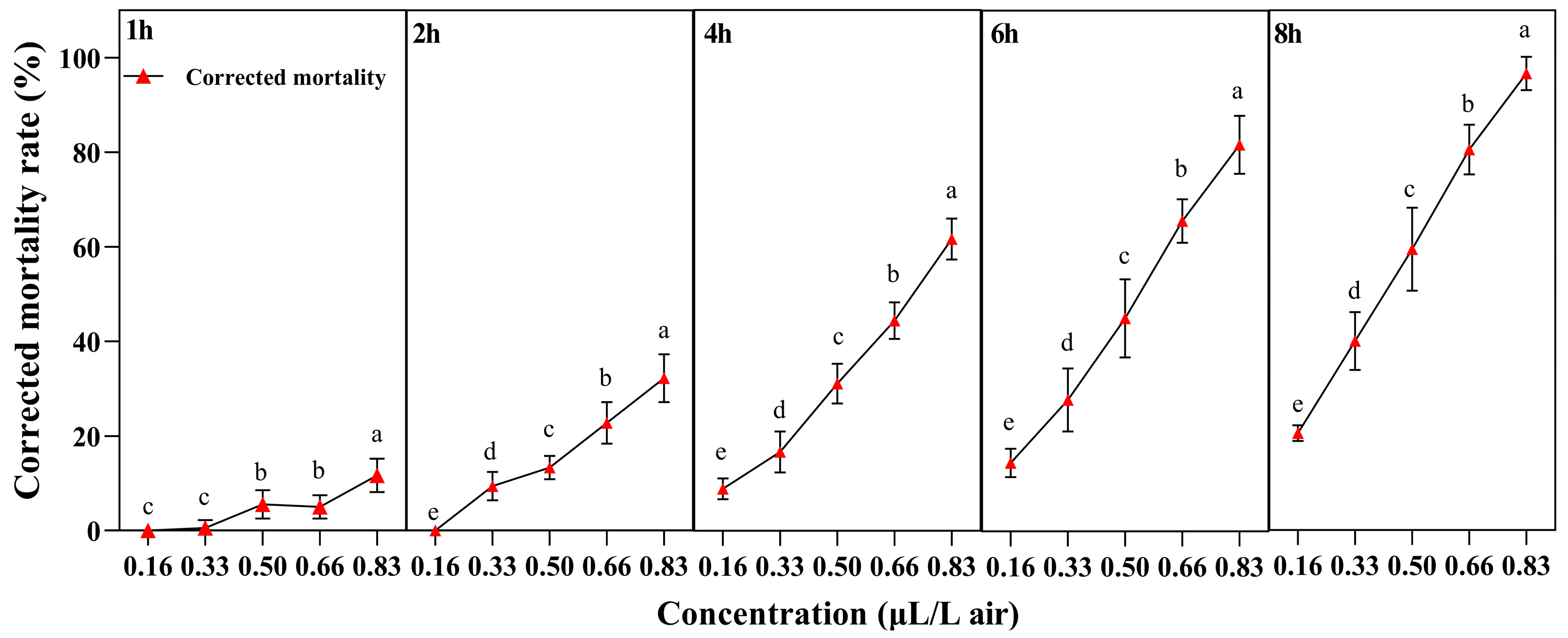
A. scoparia essential oil exhibited significant fumigation activity on
L. sativae adults. Specifically, the LC
50 value was found to be 0.40 µL/L air after 8 h exposure. Additionally, other essential oils also exhibit certain insecticidal activity against
L. sativae. For instance, the LC
50 values of the essential oil from
Salvia rosmarinus were found to be 79.1 mg/L for larvae, 47.1 mg/L for adult females, and 47.8 mg/L for adult males after a 48 h treatment [
40]. This study identified the main chemical components of
A. scoparia essential oil as o-cymene, caryophyllene oxide, and methyl eugenol. Previous studies have demonstrated that these compounds exhibit significant fumigant or contact insecticidal effects against various pests. For instance, o-cymene shows good insecticidal activity against
T. castaneum and
Liposcelis bostrychophila [
41]; caryophyllene oxide against
Dermanyssus gallinae and
Plutella xylostella [
42,
43]; and methyl eugenol against
Blattella germanica [
44]. Furthermore, although present in lower concentrations within
A. scoparia essential oil, components such as terpinen-4-ol have been reported to exert contact toxicity against
B. germanica and strong fumigant activity against
T. castaneum [
44,
45]. In summary, the potent fumigant insecticidal efficacy demonstrated by
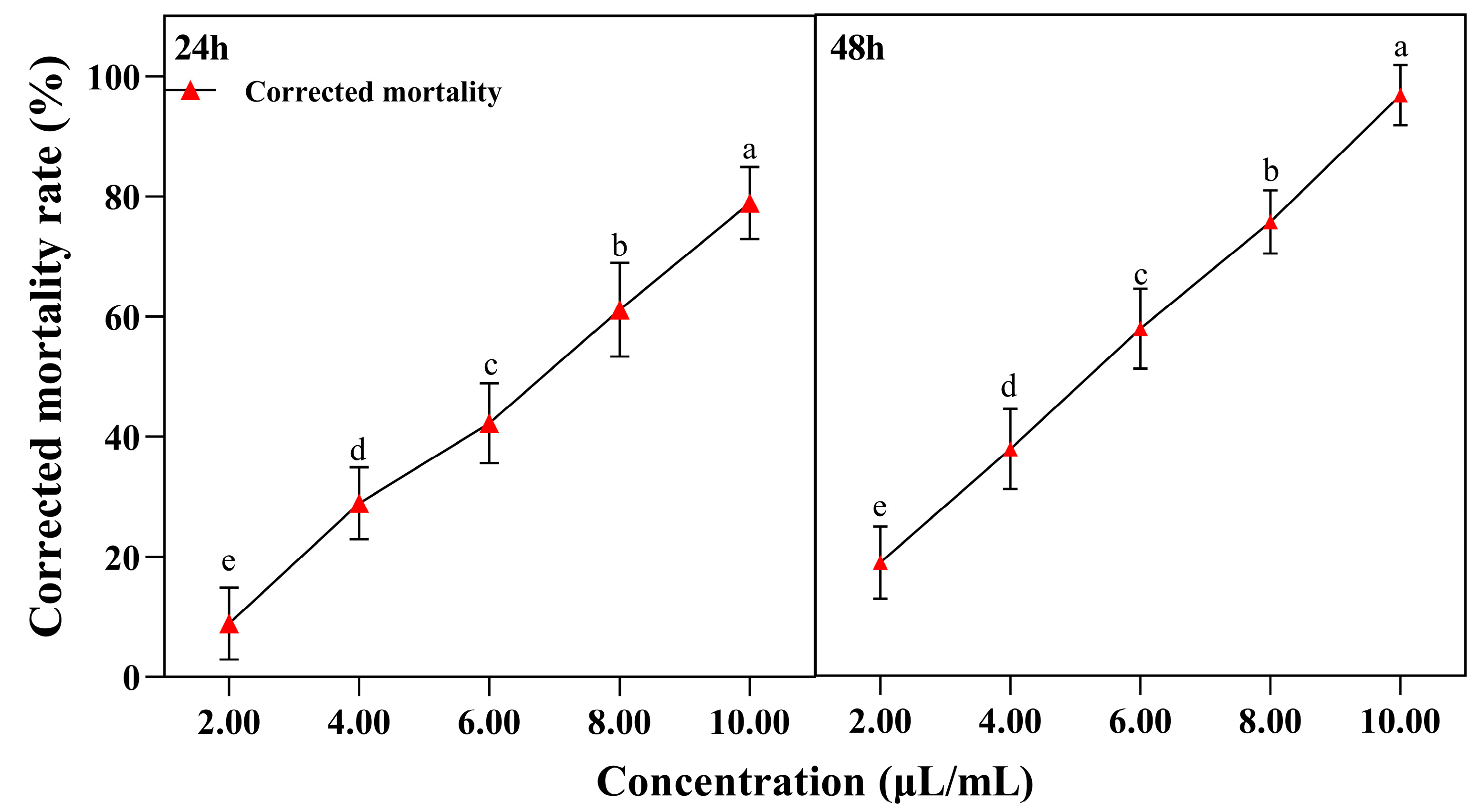
A. scoparia essential oil may not be dominated by any single component, but rather results from the synergistic interaction of its multiple insecticidal chemical components. It is noteworthy that in experiments treating larvae via the dipping method, relatively high insecticidal concentrations were required. This may be attributed to the partial physical protection afforded to these leaf-boring insects by leaf tissue, limiting direct contact with the essential oil. This further indicates that the insecticidal efficacy of
A. scoparia essential oil is closely related to its application method and the ecological habits of the target pest.
Plant essential oils not only have insecticidal activity against pests but also inhibit their growth and development [
15,
16,
17,
46,
47,
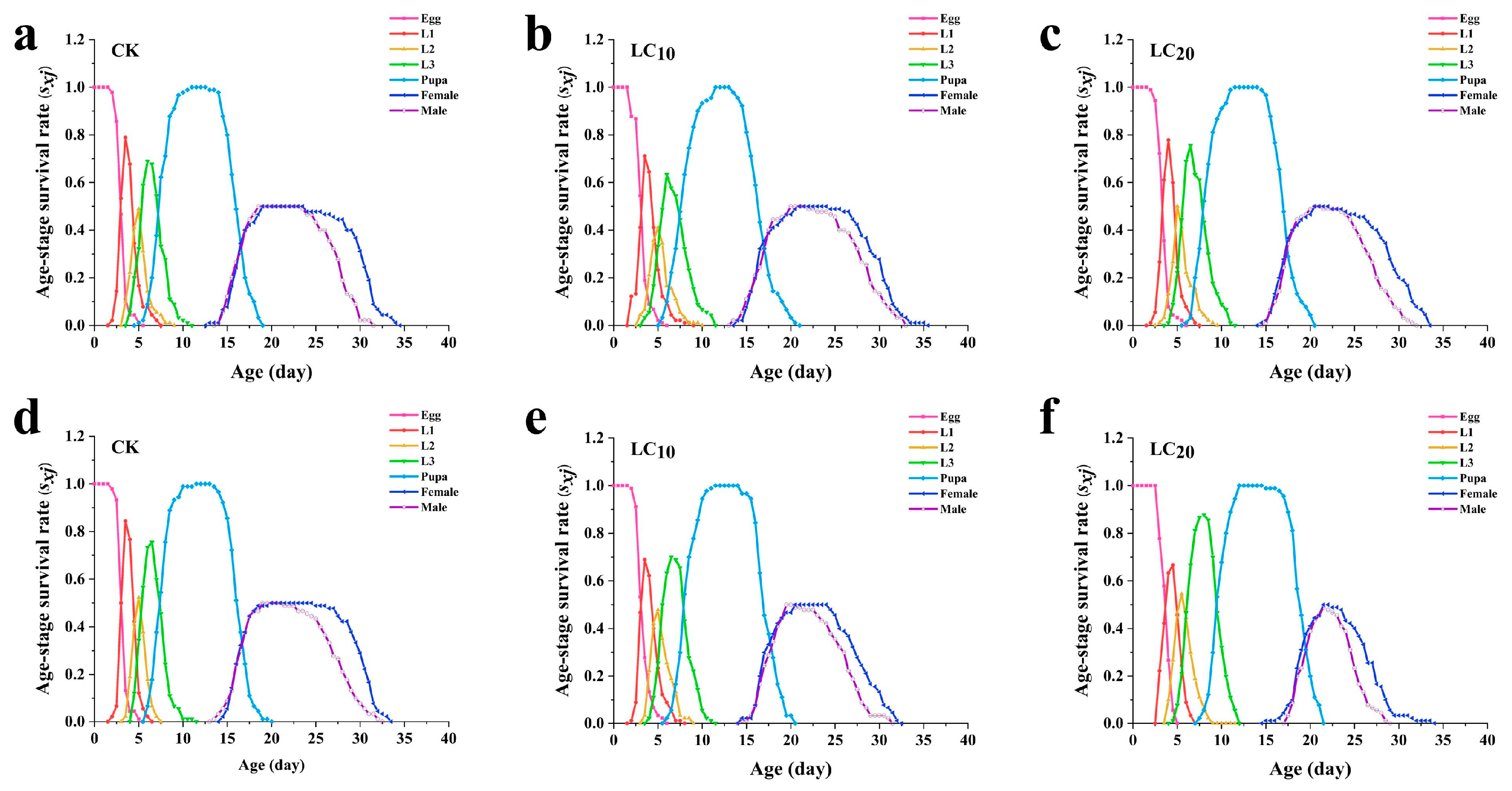
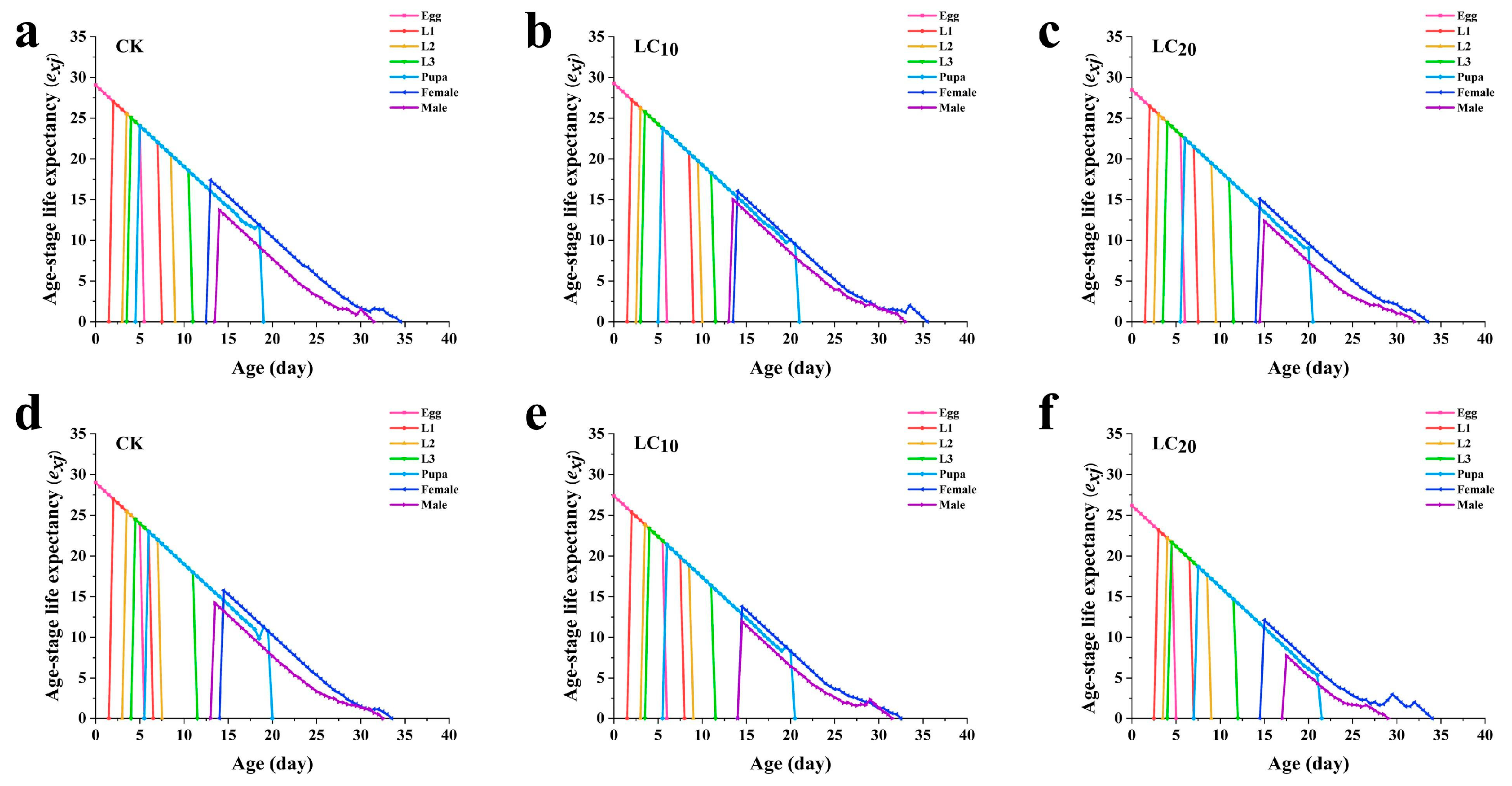
48]. In our study, it was observed that treatment with
A. scoparia essential oil significantly extended the developmental period of
L. sativae offspring. Additionally, the life span of adults was shortened. Furthermore, as the concentration of the
A. scoparia essential oil increased, the development time of
L. sativae larvae was extended. In addition, similar effects of plant essential oils on other insects have been reported in previous studies. For example, in treatment with LC
30 concentration of
A. khorassanica and
A. sieberi essential oils, the larval developmental period of
Sitotroga cerealella was significantly prolonged, and the adult life span of both males and females was reduced [
49]. Treatment with essential oils from
A. khorassanica and
Vitex pseudo-negundo prolonged the larval development time of
Plodia interpunctella while reducing its survival rate and longevity [
50]. Additionally, essential oils have an impact on insect fertility. The LC
20 concentration of
Eucalyptus camaldulensis and
Mentha piperita essential oils reduced the fecundity of
Trogoderma granarium by 62.4% and 74.9%, respectively [
51]. The same was also found in the treatment of
S. cerealella with
A. khorassanica and
A. sieberi essential oils [
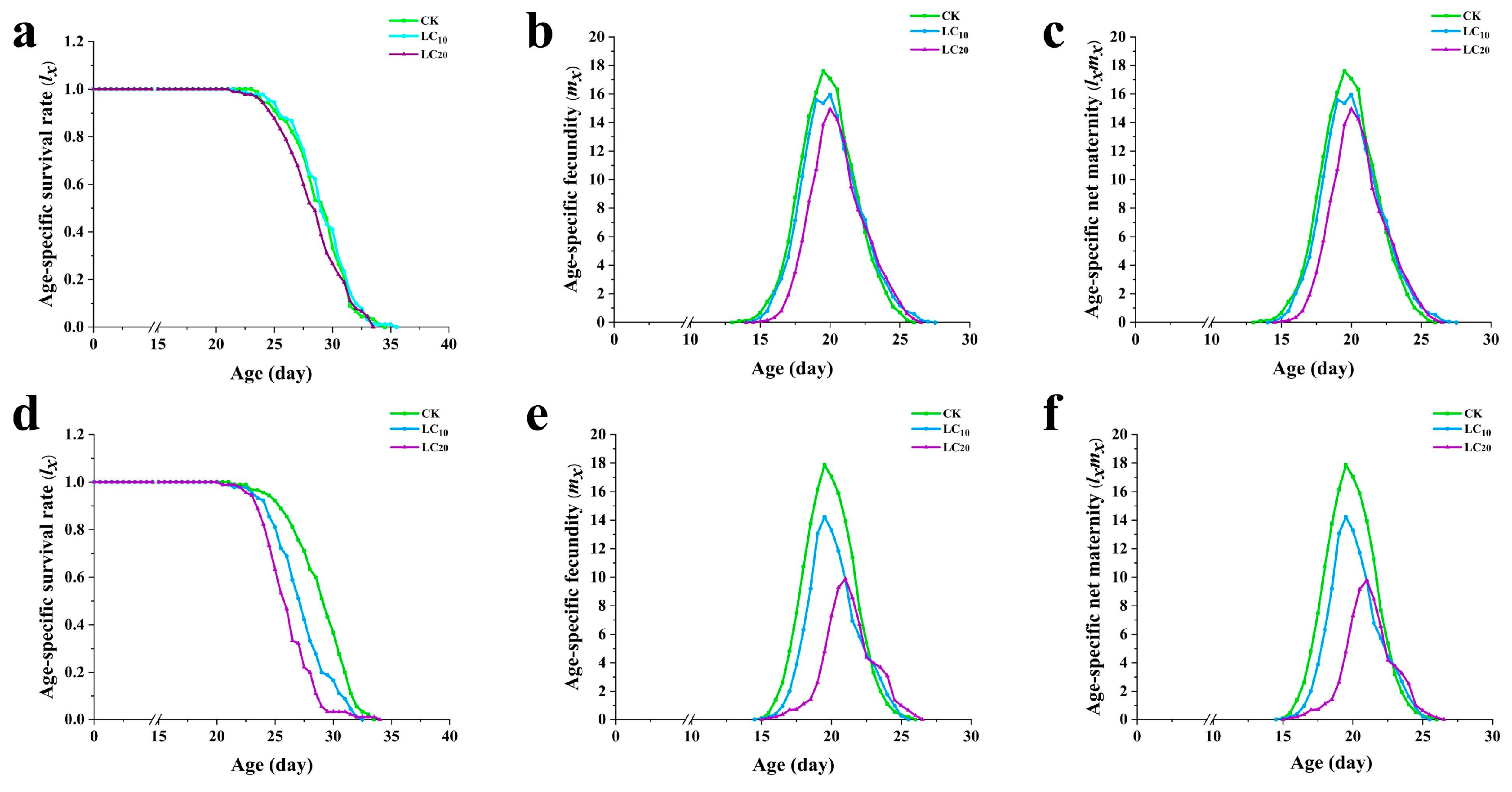
49]. In this study, the longevity of female adults of the treated group was significantly lower compared to the control. Additionally, the total pre-oviposition period of females was significantly longer than that of the control group. The fumigation and dipping treatment with
A. scoparia essential oil at LC
20 concentration reduced the fecundity of
L. sativae offspring by 23.36% and 55.04%, respectively. As fecundity plays an important role in population of the next generation, its reduction could suppress the population growth of the insects.
Age-stage, two-sex life table analysis is a valuable tool for understanding the population growth potential of a species in future generations. This understanding is pivotal for effectively devising Integrated Pest Management strategies [
52]. In this study,
r and
λ of the test insects were significantly decreased when the concentration of
A. scoparia essential oil fumigation and dipping treatments were increased. The life table parameters, especially the
r, is the most useful parameter to evaluate the population growth potential of insect species [
53]. In this study, the lower
r value is mainly attributed to the lower survivorship, longer developmental time of immature stages, and lower fecundity of the pest. Reduction in this parameter signifies a negative impact on population growth of
L. sativae. Similar results were reported by Borzoui et al. for
P. interpunctella exposed to
A. khorassanica and
V. pseudo-negundo essential oils [
50]. Sublethal concentration of
Zataria multiflora essential oil caused a decrease in demographic parameters such as
R0,
r, and
λ in populations of
A. swirskii with more pronounced effects at higher concentrations [
54]. Furthermore,
T was prolonged after treatment with
A. scoparia essential oil in this study. Similarly, treatment of
Myzus persicaev with
Citrus limon,
C. sinensis,
Allium sativum, and
Brassica nigra essential oils resulted in a decrease in
R0,
r, and
λ, along with a prolonged
T [
55]. The above studies have shown that essential oils have significant effect on the population parameters of pests. Although varying degrees of impact on population parameters were observed in the two treatment groups subjected to sublethal concentrations of
A. scoparia essential oil, suggesting potential effects on F
1 generation population growth, it is noteworthy that life table parameter analysis revealed no significant differences between the control group and the
A. scoparia essential oil fumigation treatment group in terms of
R0 and
GRR parameters. The fumigation treatment did not significantly reduce
R0 or
GRR of offspring to the same extent as the dipping treatment. This difference may stem from differing sites of action and delivery efficiency between the two treatment modalities. Volatile compounds generated by fumigation primarily impact adult respiratory metabolism, potentially exerting limited direct effects. Conversely, the persistent systemic absorption of essential oil components through the cuticle during the larval stage is more likely to disrupt developmental programming and reproductive organ formation. This systemic stress consequently reduces the
R0 and
GRR of adults post-eclosion.
Plant essential oils hold significant potential as natural and effective alternatives to conventional pesticides. Despite their promising prospects, practical applications remain hindered by issues such as volatility and short residual efficacy. Recent research proposes encapsulating essential oils within a sodium alginate/polyethylene glycol dipropyl acrylate (SA/PEGDA) matrix [
56]. This approach effectively achieves oil entrapment and controlled release, with the sustained-release period extending beyond 60 days, offering the prospect of significantly extending efficacy duration and enhancing utilization efficiency. This strategy provides a novel technical direction for formulation improvement and sustainable application of plant essential oil-based insecticides, warranting further exploration and optimization in future research.
The non-target effects of plant essential oils, particularly their impact on natural enemy insects, are crucial for assessing the safety of their application. Existing research provides reference points; for instance,
A. campestris essential oil is considered compatible with natural enemies [
57]. Experiments demonstrated that releasing parasitic wasps
Dinarmus basalis and
Triaspis luteipes six days after oil application still yielded parasitism rates of 13.6% and 80.3% against pests
Callosobruchus maculatus and
Bruchus rufimanus, respectively. Consequently, future research may further investigate the potential impacts of
A. scoparia essential oil on non-target organisms as examined in this study.