Anise and Fennel Essential Oils and Their Combination as Natural and Safe Housefly Repellents
by
Hataichanok Passara
1, 
Sirawut Sittichok
2,
Cheepchanok Puwanard
1,
Jirisuda Sinthusiri
3,
Tanapoom Moungthipmalai
4,
Kouhei Murata
5 and
Mayura Soonwera
1,* 1
Office of Administrative Interdisciplinary Program on Agricultural Technology, School of Agricultural Technology, King Mongkut’s Institute of Technology Ladkrabang, Ladkrabang, Bangkok 10520, Thailand
2
School of Agriculture and Cooperatives, Sukhothai Thammathirat Open University, Nonthaburi 11120, Thailand
3
Community Public Health Program, Faculty of Public and Environmental Health, Huachiew Chalermprakiet University, Samut Prakan 10540, Thailand
4
Department of Plant Production Technology, School of Agricultural Technology, King Mongkut’s Institute of Technology Ladkrabang, Ladkrabang, Bangkok 10520, Thailand
5
School of Agriculture, Tokai University, Kumamoto 862-8652, Japan
*
Author to whom correspondence should be addressed.
Insects 2025, 16(1), 23; https://doi.org/10.3390/insects16010023
Submission received: 22 November 2024
/
Revised: 26 December 2024
/
Accepted: 29 December 2024
/
Published: 29 December 2024
(This article belongs to the Special Issue Surveillance and Control of Arthropod-Borne Diseases)
Simple Summary
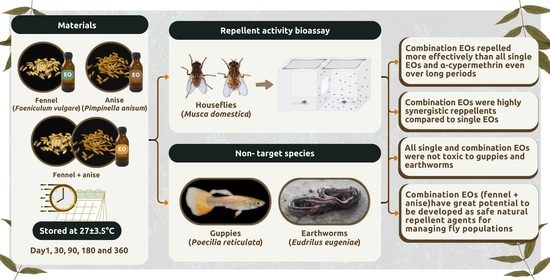
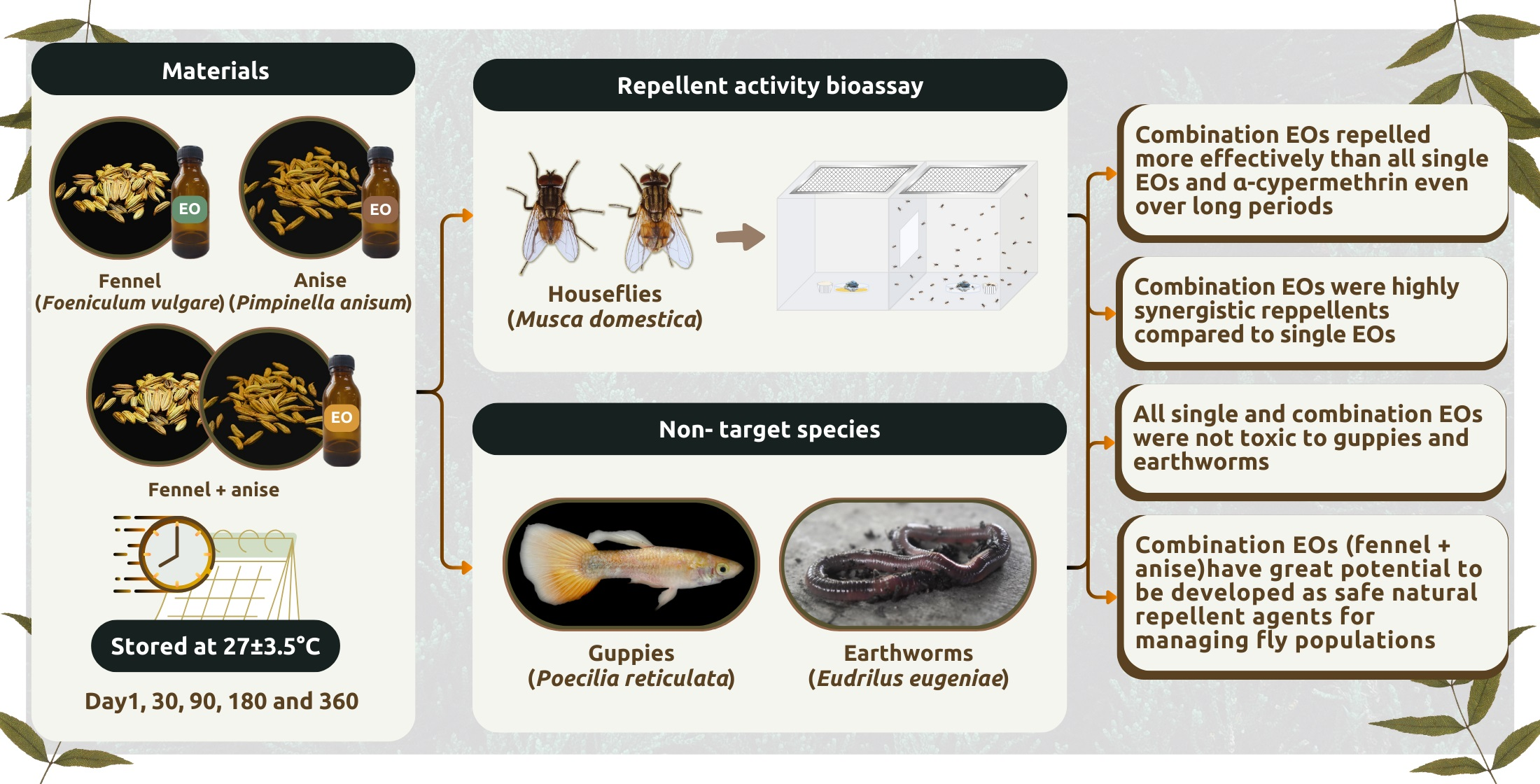
Houseflies (Musca domestica L.) are an important medical and livestock pest that not only annoy animals and humans but can also transmit several human and animal diseases. Synthetic chemical repellents have been the first option for fly management, but most have negative impacts on humans, non-target organisms, and the environment generally. Plant essential oils are active against repelling insect pests and affecting their life cycles. Repellents from these oils are an important strategy as a new, effective, and environmentally friendly alternative for housefly management and reducing disease transmission. We investigated the housefly repellency and storage stability of fennel (Foeniculum vulgare) and anise (Pimpinella anisum) EOs and their combinations using the repellency of α-cypermethrin as a reference. Combinations (fennel + anise; 1:1) were the most effective and stable and more stable repellents than single EOs and α-cypermethrin. Most significantly, all single and combination essential oils were safe for two non-target species: guppies (Poecilia reticulata) and earthworms (Eudrilus eugeniae). The combinations make excellent, natural, and stable repellents for housefly management and are suitable to be developed into environmentally friendly products.
Abstract
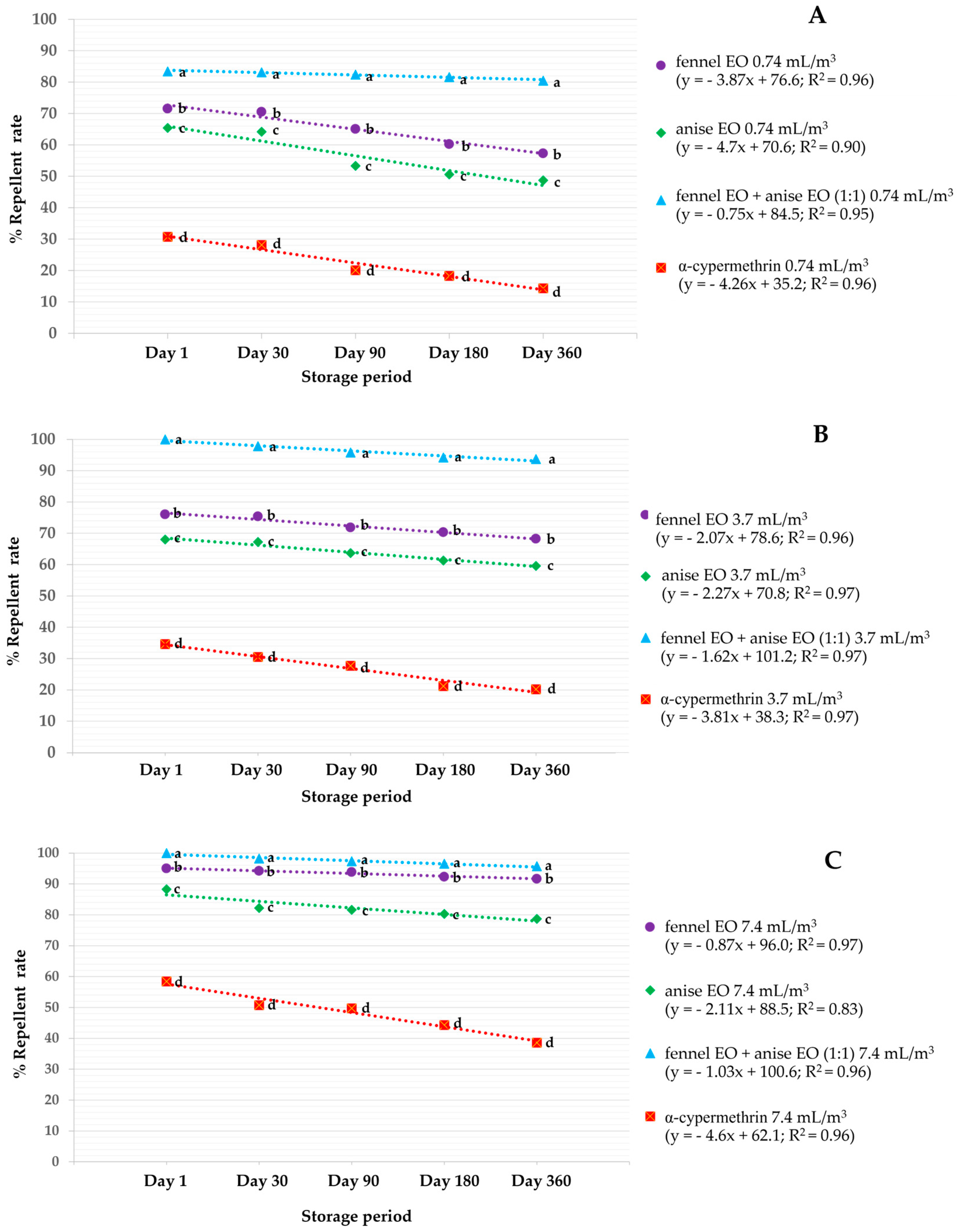
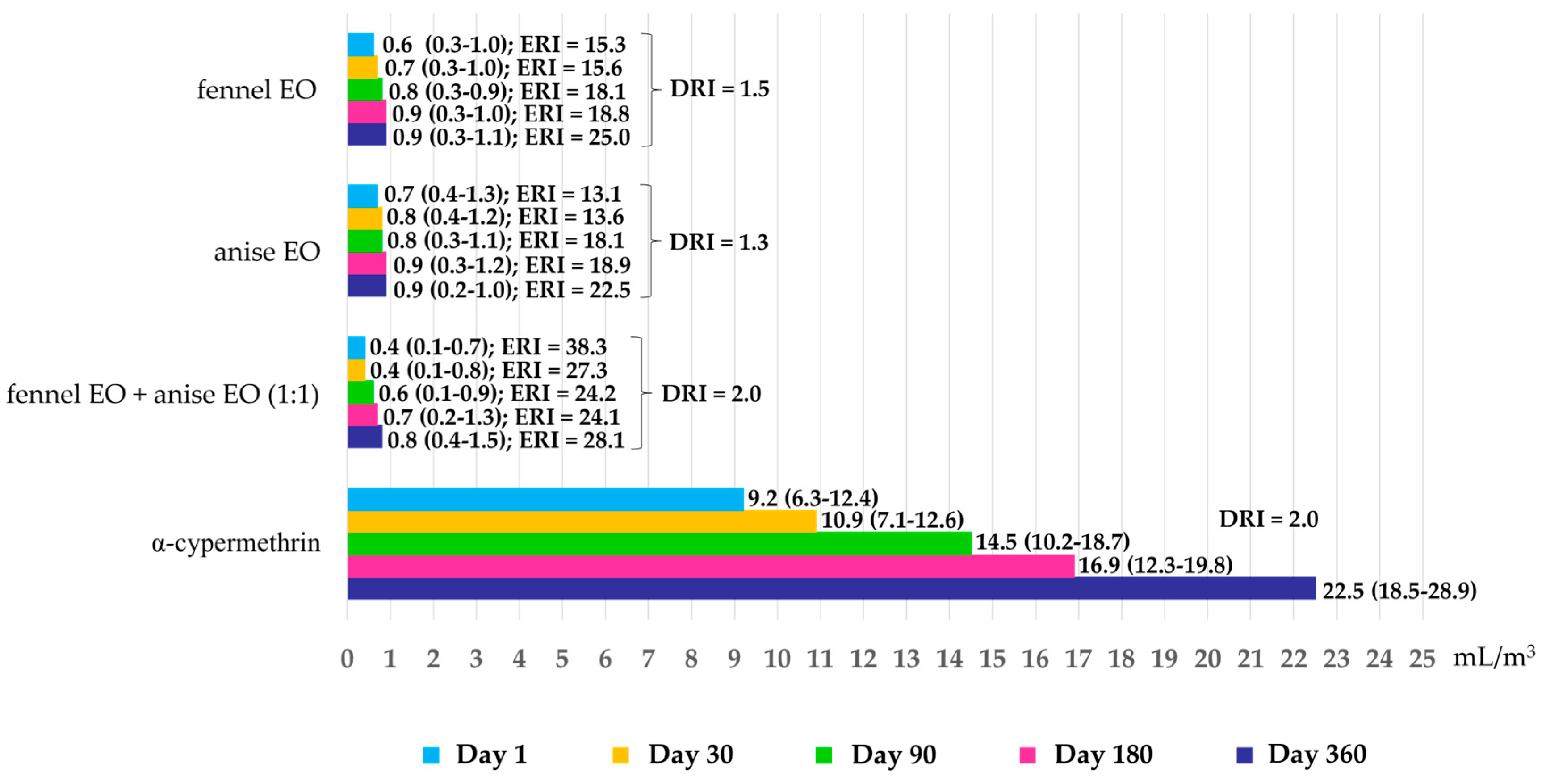
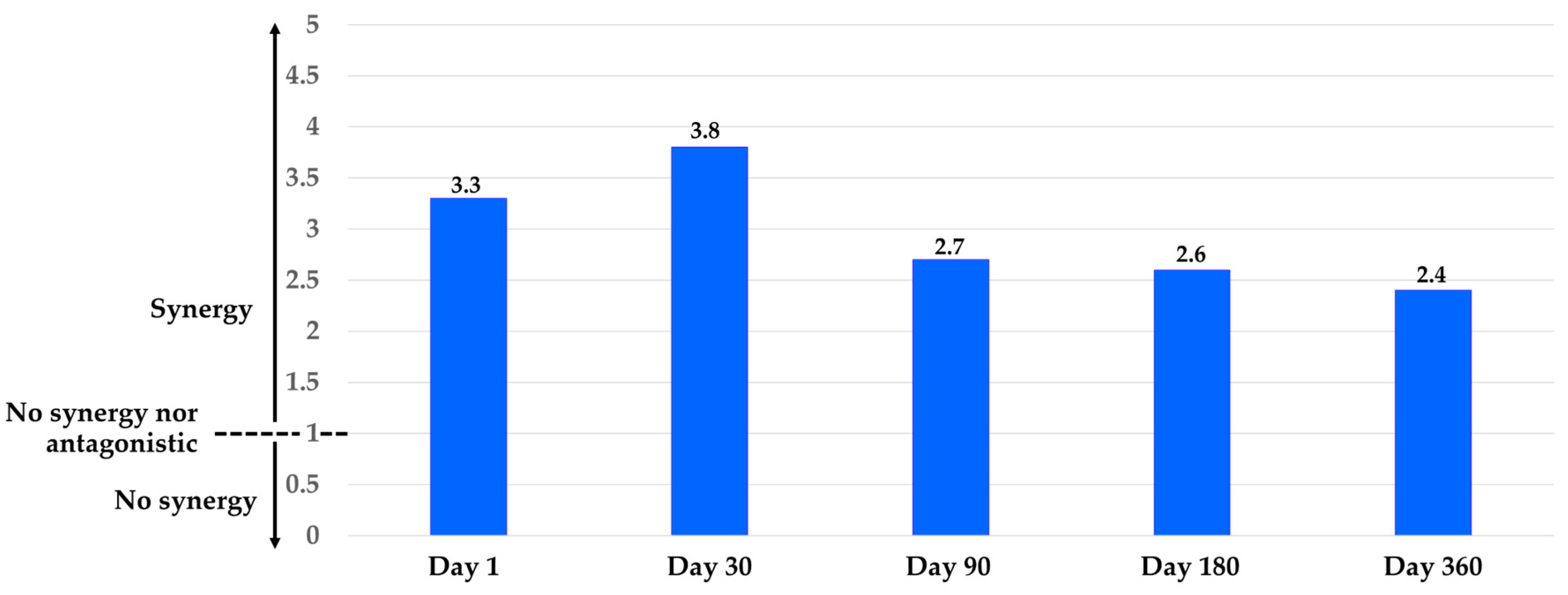
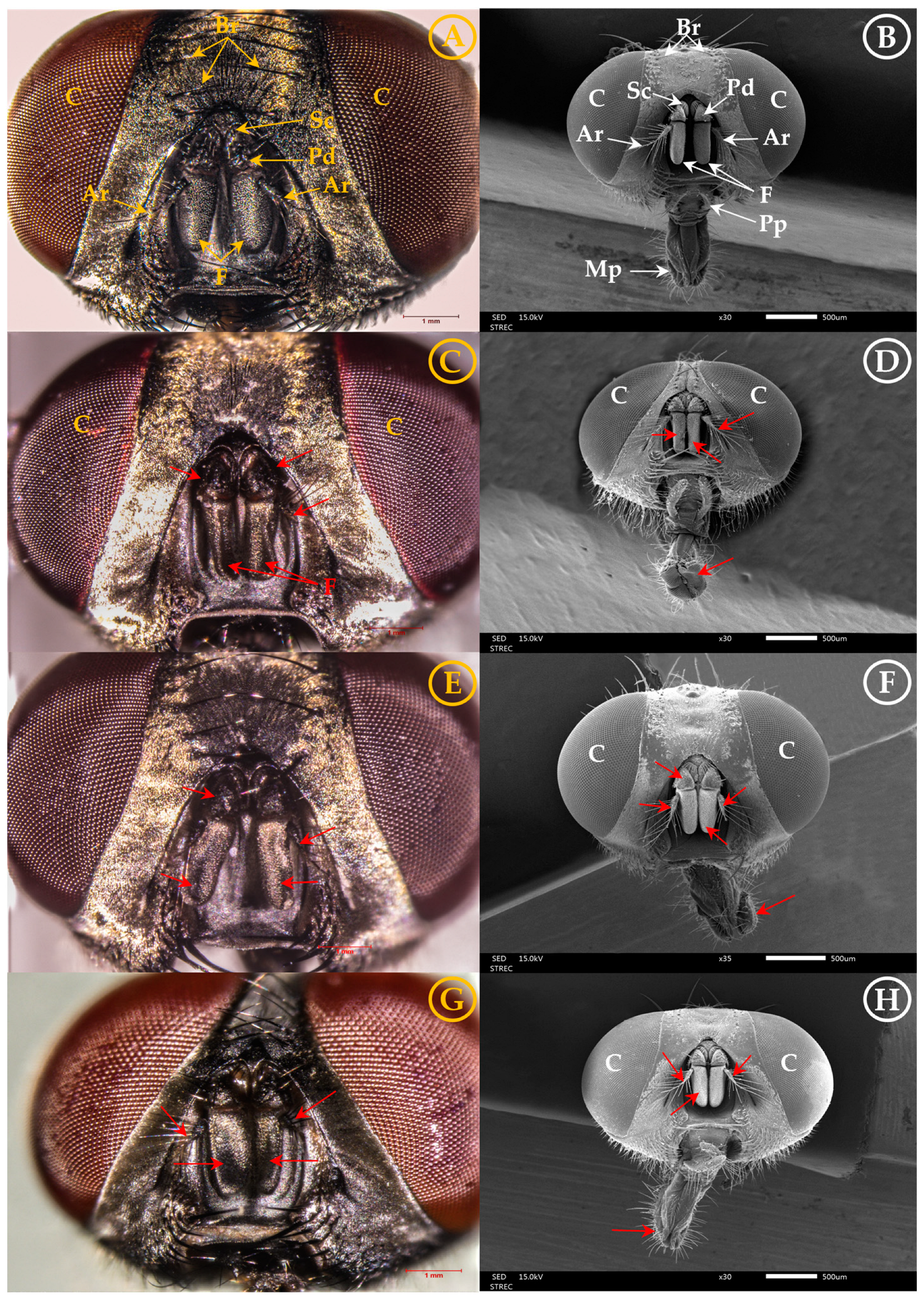
Essential oils (EOs) are effective repellents and eco-friendly alternatives. We tested single and combination EOs of fennel and anise for repellency and stability against houseflies. All treatments were stored at 27 °C for up to 360 days. Efficacies were compared against α-cypermethrin as a reference. Safety bioassay used on two representative non-target species (guppies and earthworms) confirmed safety. The strongest repellency and stability, 100% repellency and RC50 of 0.4 mL/m3 on day 1, was achieved by a fennel + anise EO combination (1:1). After 360 days, these combinations remained effective (95% repellency), and RC50 = 0.8 mL/m3. The EO combinations were more effective than all single EOs and α-cypermethrin at all times, showing strong synergy with a synergistic repellent index of 2.4 to 3.3. This fennel + anise EO combination was more than 24 times more effective as a repellent than α-cypermethrin. Morphological damage included damaged antennae with twisted flagella and abnormal aristae. All single and combination EOs were not toxic to the non-targets and could be considered safe, whereas α-cypermethrin was highly toxic to them. Thus, the fennel + anise EO combination has great potential to be developed as a safe, natural repellent for managing housefly populations.