Effects of Color and Light Intensity on the Foraging and Oviposition Behavior of Culex pipiens biotype molestus Mosquitoes

1
Institute for Parasitology, Center for Infection Medicine, University of Veterinary Medicine Hannover, 30559 Hannover, Germany
2
Research Center for Emerging Infections and Zoonoses, University of Veterinary Medicine Hannover, 30559 Hannover, Germany
3
Department of Biometry, Epidemiology and Information Processing, University of Veterinary Medicine Hannover, 30559 Hannover, Germany
*
Authors to whom correspondence should be addressed.
Insects 2022, 13(11), 993; https://doi.org/10.3390/insects13110993
Submission received: 20 September 2022
/
Revised: 21 October 2022
/
Accepted: 25 October 2022
/
Published: 29 October 2022
(This article belongs to the Special Issue Vector-Borne Diseases in a Changing World)
Simple Summary
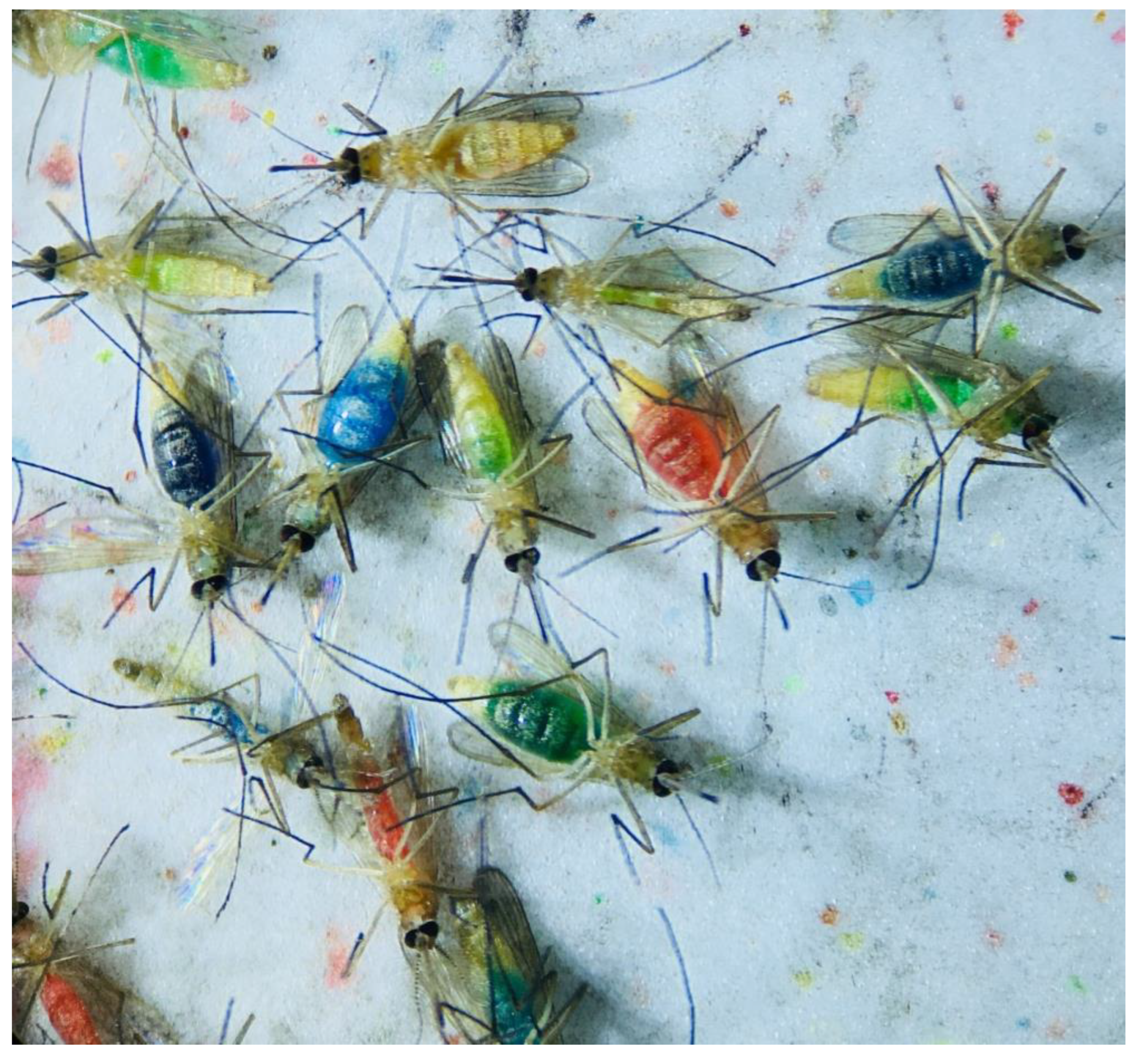
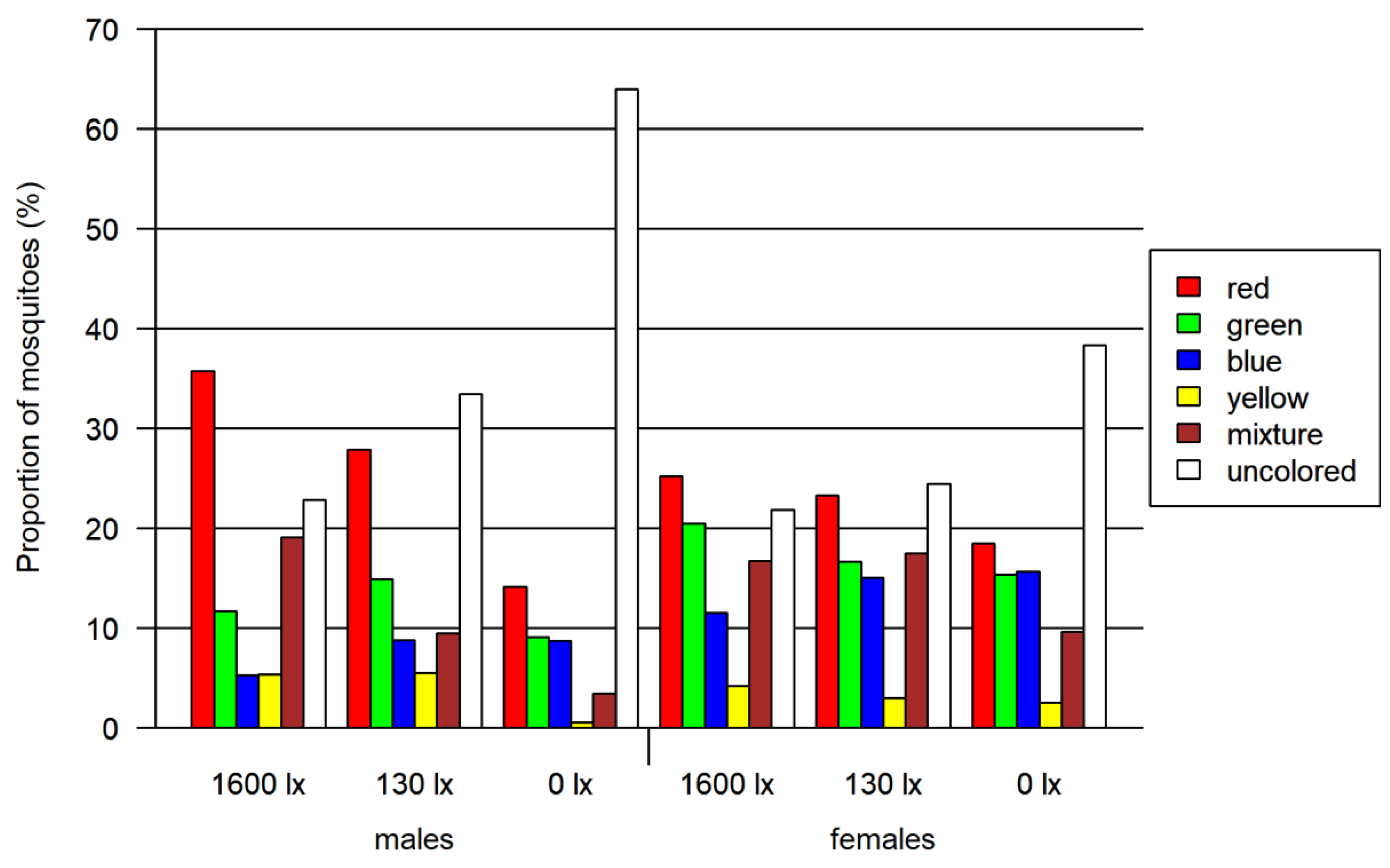
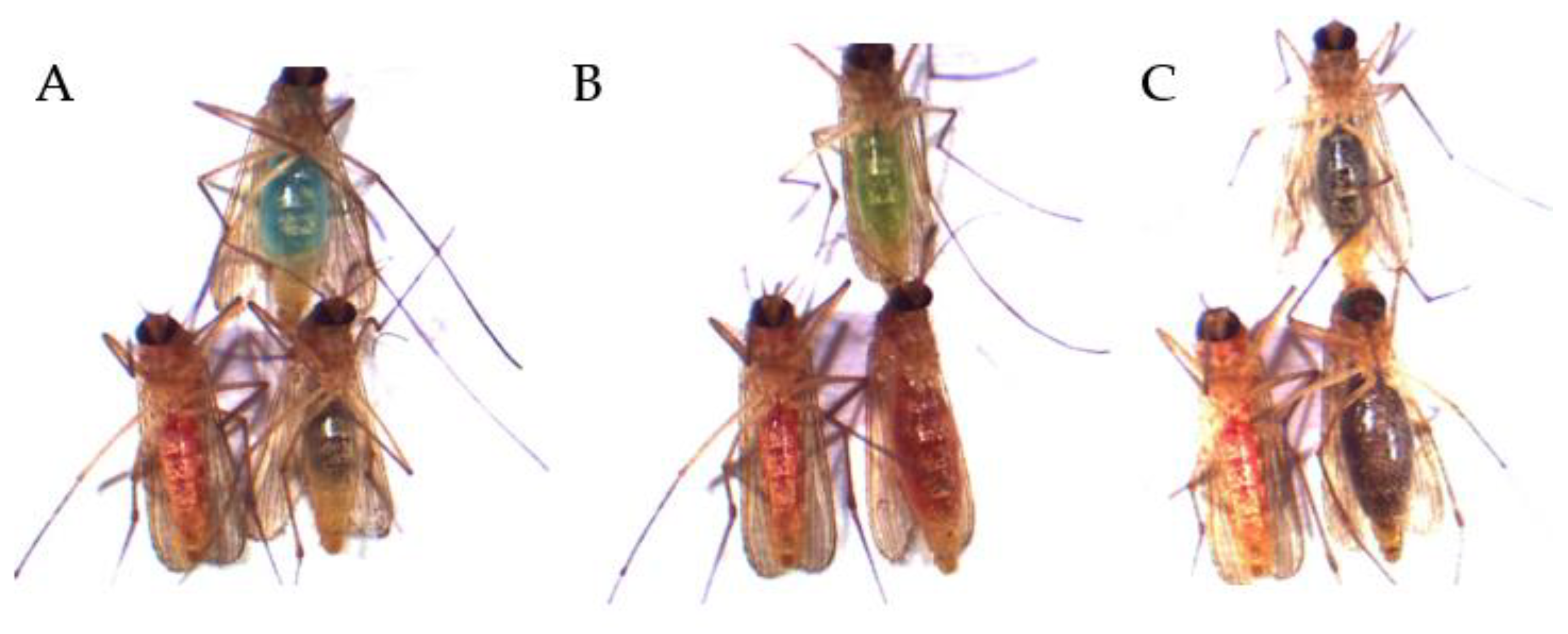
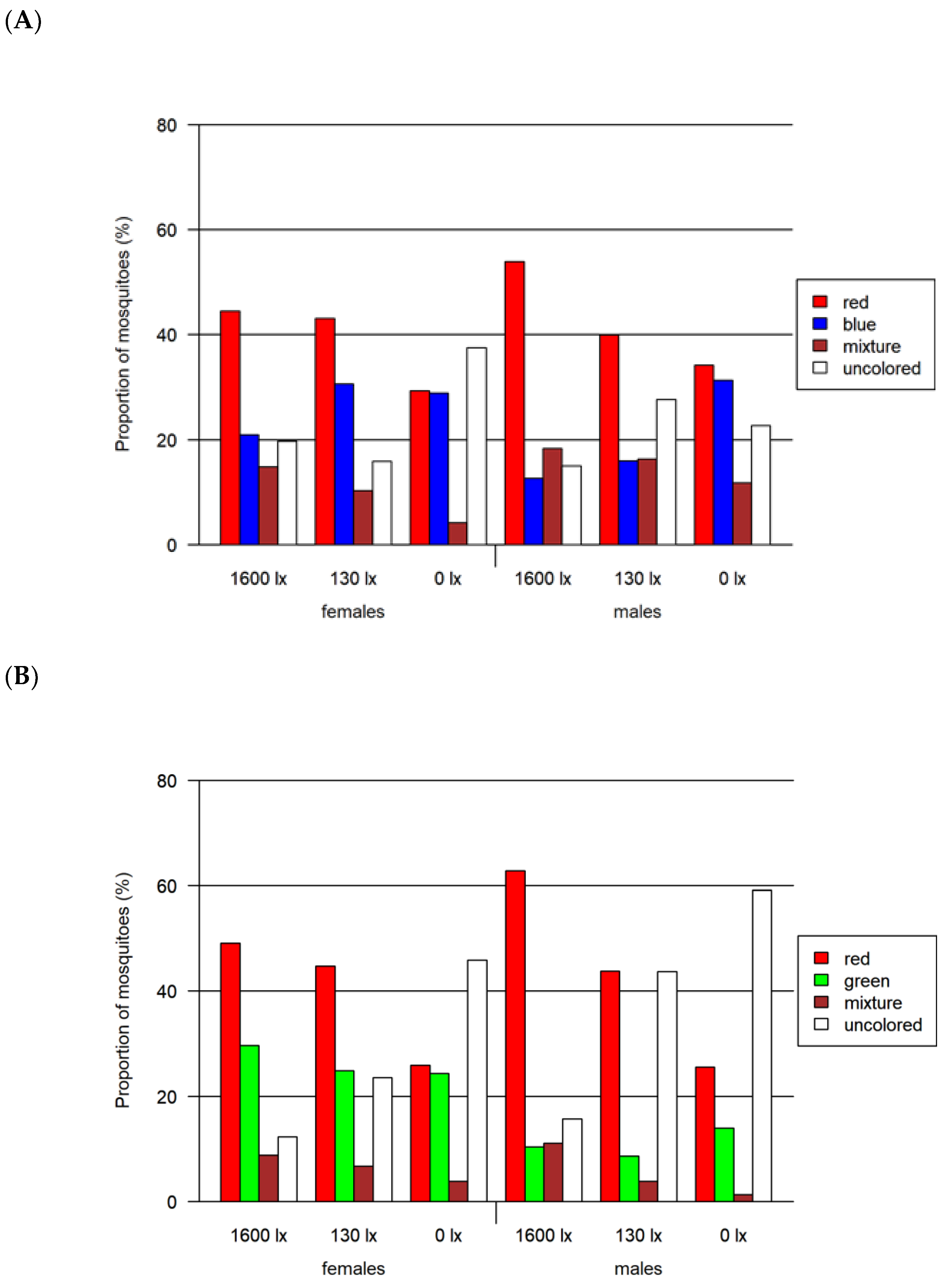
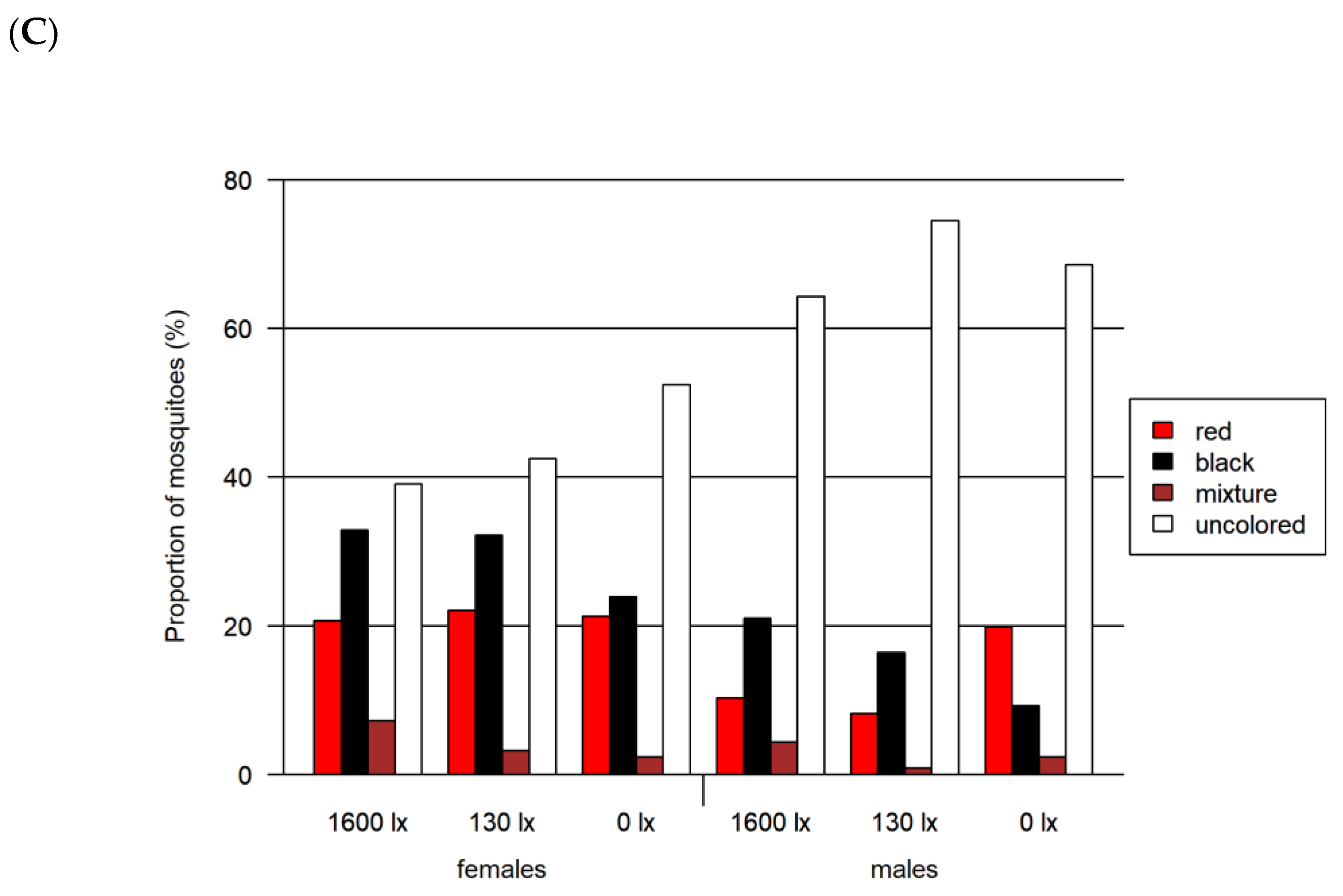
Mosquitoes are involved in the transmission of many pathogens leading to diseases in humans and animals. Such so-called vector populations must be controlled to prevent and contain mosquito-borne disease outbreaks. For this reason, it is of great importance to understand the mechanisms by which mosquitoes locate hosts and choose oviposition sites. The present study investigated the effect of colors on foraging and oviposition behavior. Our study demonstrated that Culex pipiens biotype molestus mosquitoes are attracted by the color (for human eyes) red, if blue, green and yellow are provided as alternatives. We could also observe that the color black has a stronger attraction than red when mosquitoes are searching for food. This knowledge can be used as a new inexpensive and simple mosquito food preference-tracking method, as well as for improvement of oviposition traps for mosquitoes.
Abstract
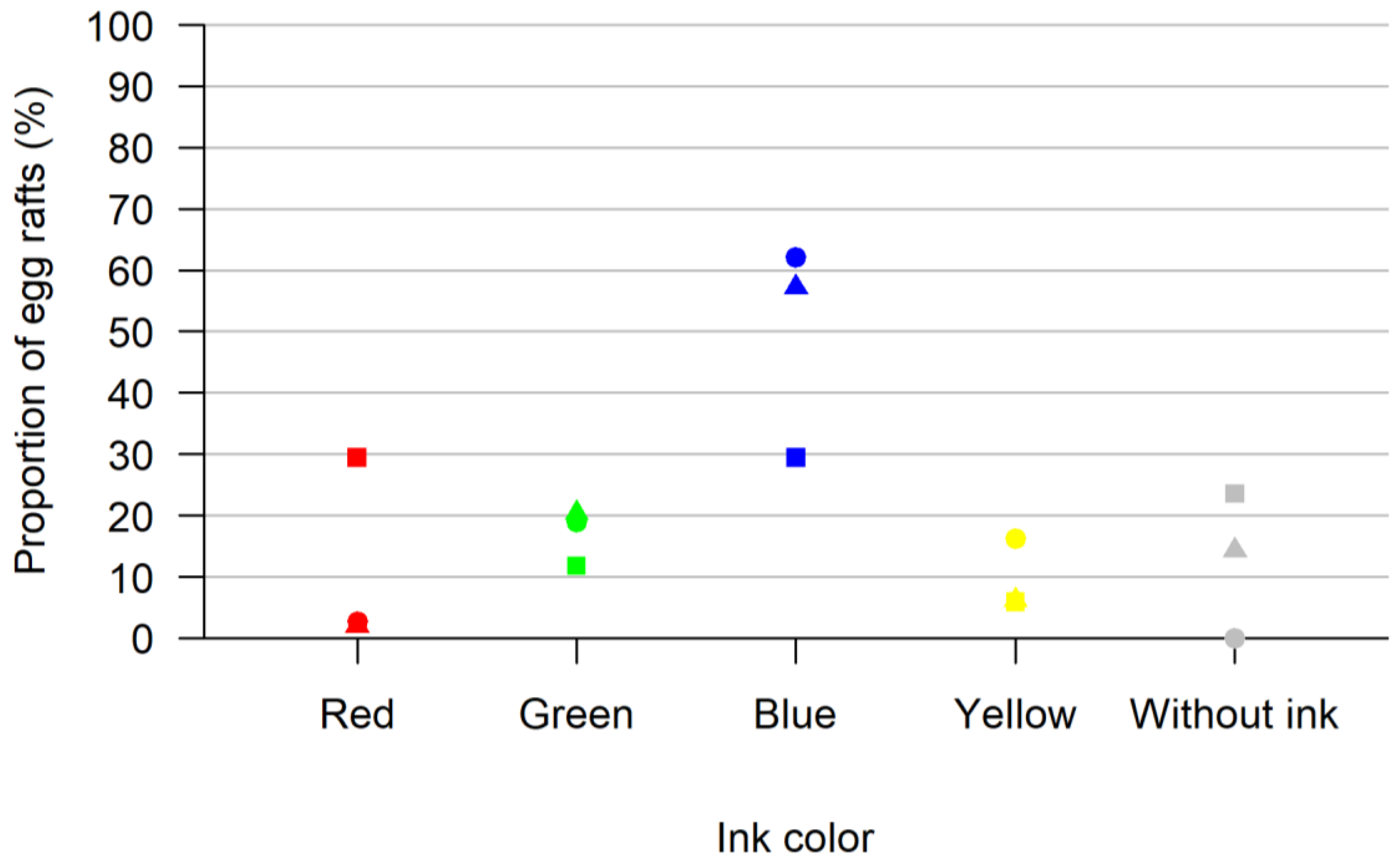
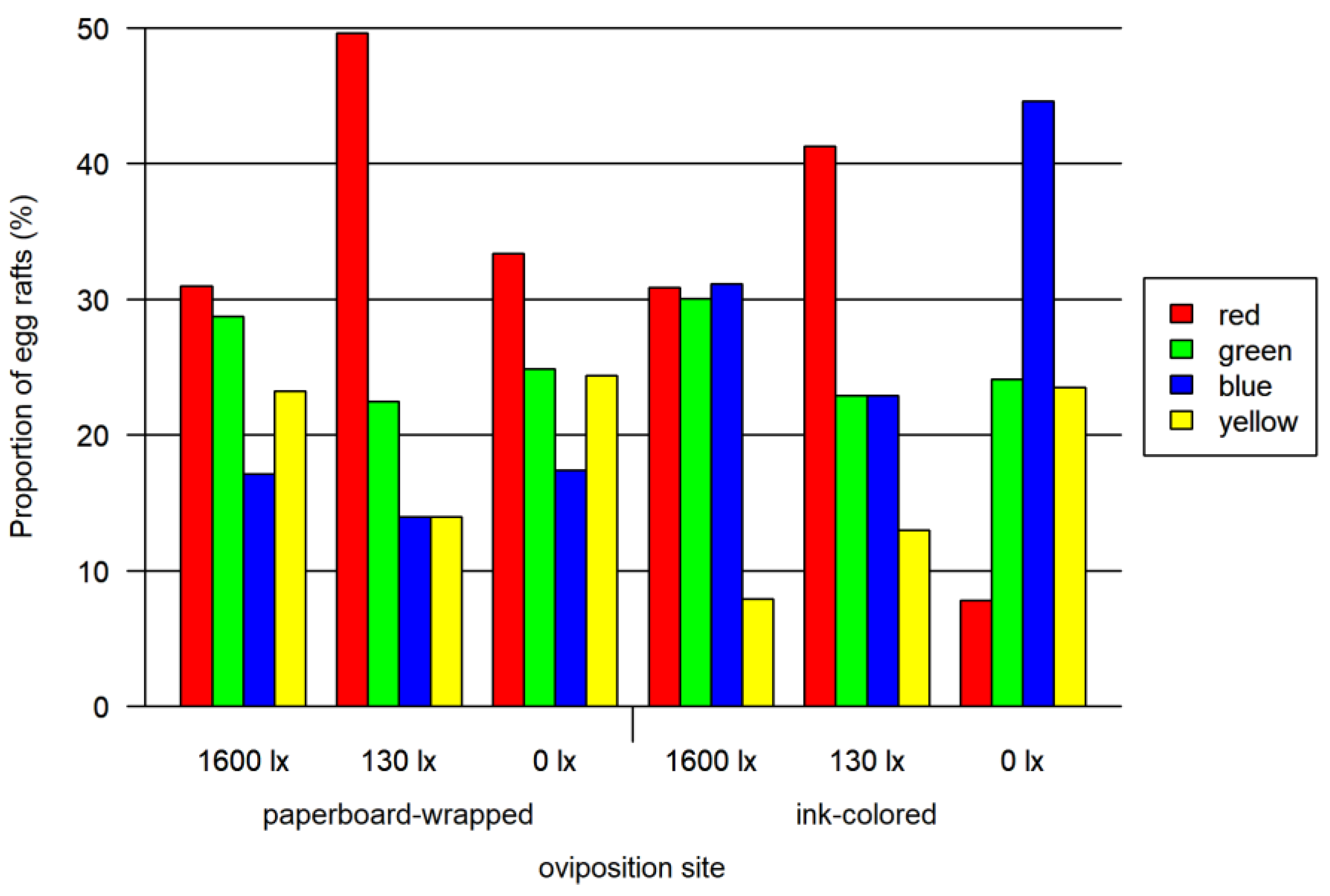
Mosquitoes are the most important vector of arboviruses; thus, controlling mosquito population is a key point for controlling these diseases. Two major factors that influence mosquito population size are the availability of blood hosts and suitable oviposition sites. Behavioral mechanisms by which Culex pipiens biotype molestus mosquitoes locate their hosts or oviposition sites are influenced by physical and chemical factors. The present study evaluated the impact of the colors (for human eyes) red, green, blue and yellow in combination with different light intensities on preferences for oviposition and foraging sites under laboratory conditions. We identified the color red as the overall favored color for both target behaviors, which was only surpassed by black as the foraging stimulus. Altogether, we described two new inexpensive and simple bioassays, which can be used as a mosquito-tracking method for behavioral tests and as an oviposition trap to monitor Culex pipiens biotype molestus populations.
Keywords:
Culex pipiens biotype molestus; colors; behavioral mechanism