Nutritional Composition of Honey Bee Drones of Two Subspecies Relative to Their Pupal Developmental Stages


1
Agriculture Science and Technology Research Institute, Andong National University, Andong 36729, Korea
2
Institute of Natural Resource Sciences, Zürich Campus Grueental, University of Applied Sciences (ZHAW), 8820 Waedenswil, Switzerland
3
Department of Genetics and Ecology, Oulu University, 90140 Oulu, Finland
4
Department of Plant Medicals, Andong National University, Andong 36729, Korea
*
Author to whom correspondence should be addressed.
Insects 2021, 12(8), 759; https://doi.org/10.3390/insects12080759
Submission received: 27 July 2021
/
Revised: 20 August 2021
/
Accepted: 20 August 2021
/
Published: 23 August 2021
Simple Summary
Despite the use of honey bee brood as food among several communities of the world, the nutritional potential of drones remained unexplored for a long time. In the recent past some scientific endeavour, including our own previous work, has been undertaken to explore the nutrient quality of this food source. Due to their limited socio-biological role, honey bee drones would be a suitable candidate to compare their nutrient content with that of worker honey bees. We therefore investigated the nutrient composition of honey bee drones belonging to two subspecies, namely Apis mellifera carnica and A. m. mellifera covering their pupal developmental period. To possess information of the drones’ nutritional value during their development would help in choosing the most suitable developmental stage for the commercial production of drone brood as food.
Abstract
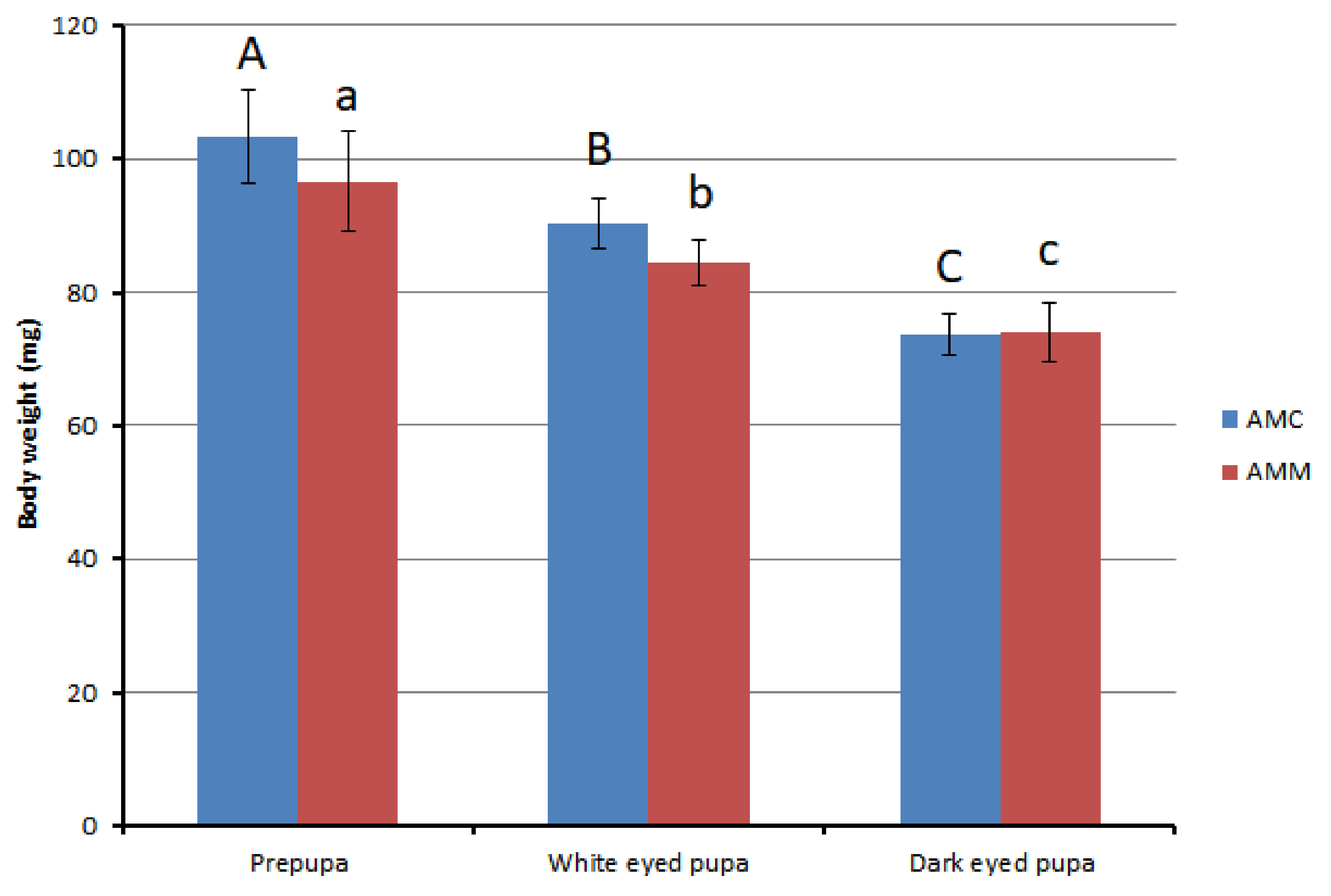
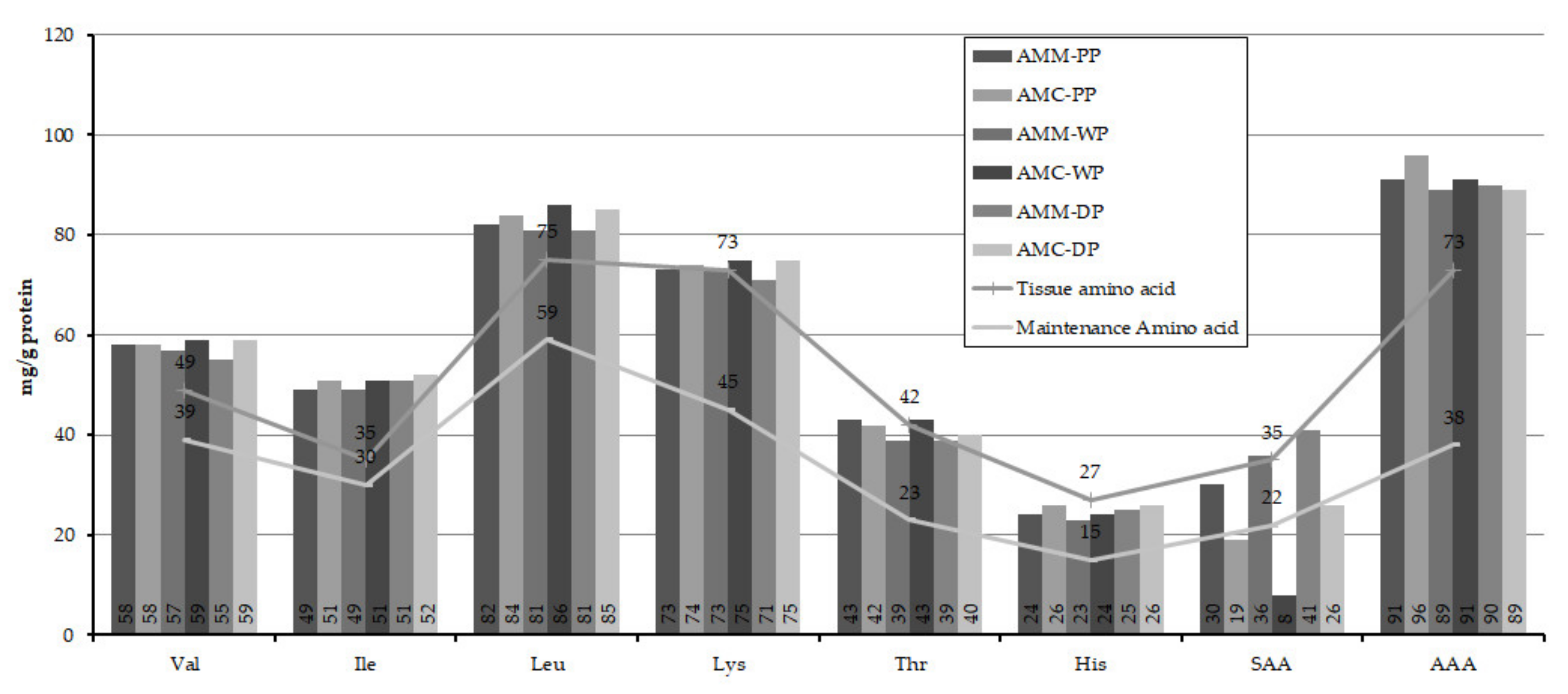
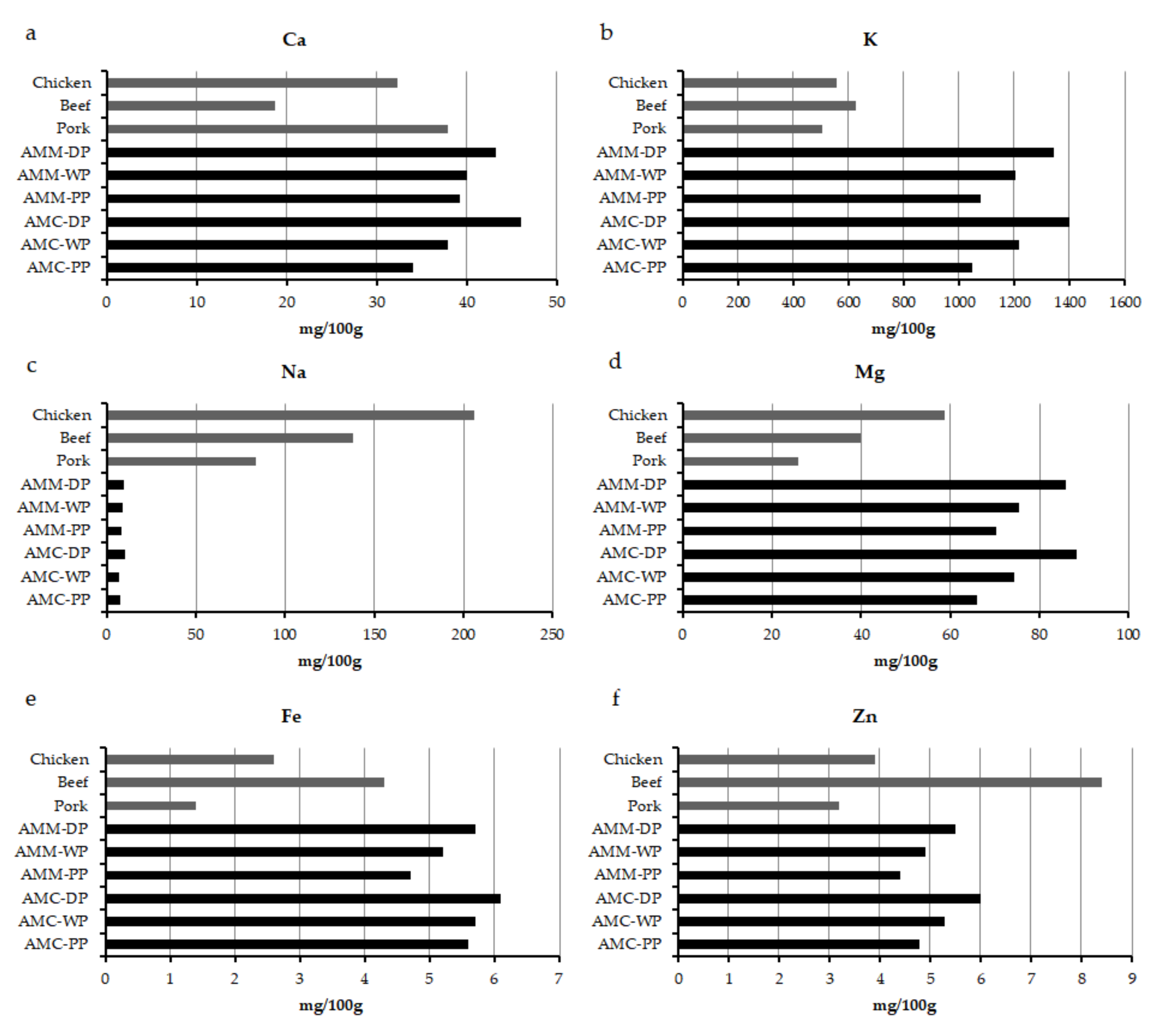
We examined the contents of nutritional importance, i.e., amino acids, fatty acids and minerals of different developmental stages of drones of two honey bee subspecies, namely Apis mellifera carnica and A. m. mellifera. The results revealed that, in general, individual amino acid amounts and therefore the total protein increased along with the developmental stages of the drones. No statistically significant differences were found between the same developmental stages of the two subspecies. The reverse, i.e., a decrease with developmental stage occurred in relation to the fatty acid composition. Most of the minerals were higher at advanced developmental stages. Overall, the high protein content (31.4–43.4%), small amount of fat (9.5–11.5%) and abundance of minerals such asiron and zinc, make drones a suitable nutritional resource. Even though nutrient content, especially protein, was higher in the pupae than the prepupae, we propose prepupae also as a commercial product based on their higher biomass production. Provided standard production protocols maintaining hygiene and safety will be adhered to, we propose that drone honey bees can be utilized as human food or animal feed.