Enhancement of the Diversity of Pollinators and Beneficial Insects in Intensively Managed Vineyards
by
 , , ,
, , ,
Francisco Javier Peris-Felipo
1,* ,
,
Fernando Santa
1,
Oscar Aguado
2,
José Vicente Falcó-Garí
3,
Alicia Iborra
3,
Michael Schade
1,
Claire Brittain
4,
Vasileios Vasileiadis
1 and
Luis Miranda-Barroso
5 1
Syngenta Crop Protection, Rosentalstrasse 67, 4058 Basel, Switzerland
2
Andrena Iniciativas y Estudios Medioambientales S.L., Calle Gabilondo 16bis, 47007 Valladolid, Spain
3
Laboratory of Entomology and Pest Control, Institute Cavanilles of Biodiversity and Evolutionary Biology, Calle Catedrático José Beltrán 2, Paterna, 46980 Valencia, Spain
4
Jeallot’s Hill International Research Centre, Syngenta, Bracknell RG42 6EY, UK
5
Agricultura Sostenible Syngenta España, Calle de la Ribera del Loira, 8, 10, 28042 Madrid, Spain
*
Author to whom correspondence should be addressed.
Insects 2021, 12(8), 740; https://doi.org/10.3390/insects12080740
Submission received: 29 May 2021
/
Revised: 3 August 2021
/
Accepted: 16 August 2021
/
Published: 18 August 2021
(This article belongs to the Special Issue Improving Functional Biodiversity in Vineyards)
Simple Summary
The continuous intensification of agricultural production has resulted in higher yields and more yield security. However, these achievements went along with the substitution of heterogeneous agricultural landscapes by homogeneous ones with poor crop diversity, short crop rotations, and thanks to the high efficacy of modern herbicides and also to minimum in-crop diversity. A severe increase in plot size led to the elimination of ecologically valuable structural elements that had provided floral resources and nesting sites. Over the few last decades, several studies have been conducted to try to find solutions against insect decline and to preserve biodiversity. In the present study, the integration of cover plants between the lines of the vineyards to enhance biodiversity is shown. The benefits of the cover plants use are presented based on the results achieved on five intensive wine farms in Spain. Our findings suggest that the use of cover plants provide a wide range of enhancements in the insect community with a significant increase both in the number of species and the number of individuals showing an important influence over time, which would tend to have a significant conservation impact thanks to its effect as a reservoir of species.
Abstract
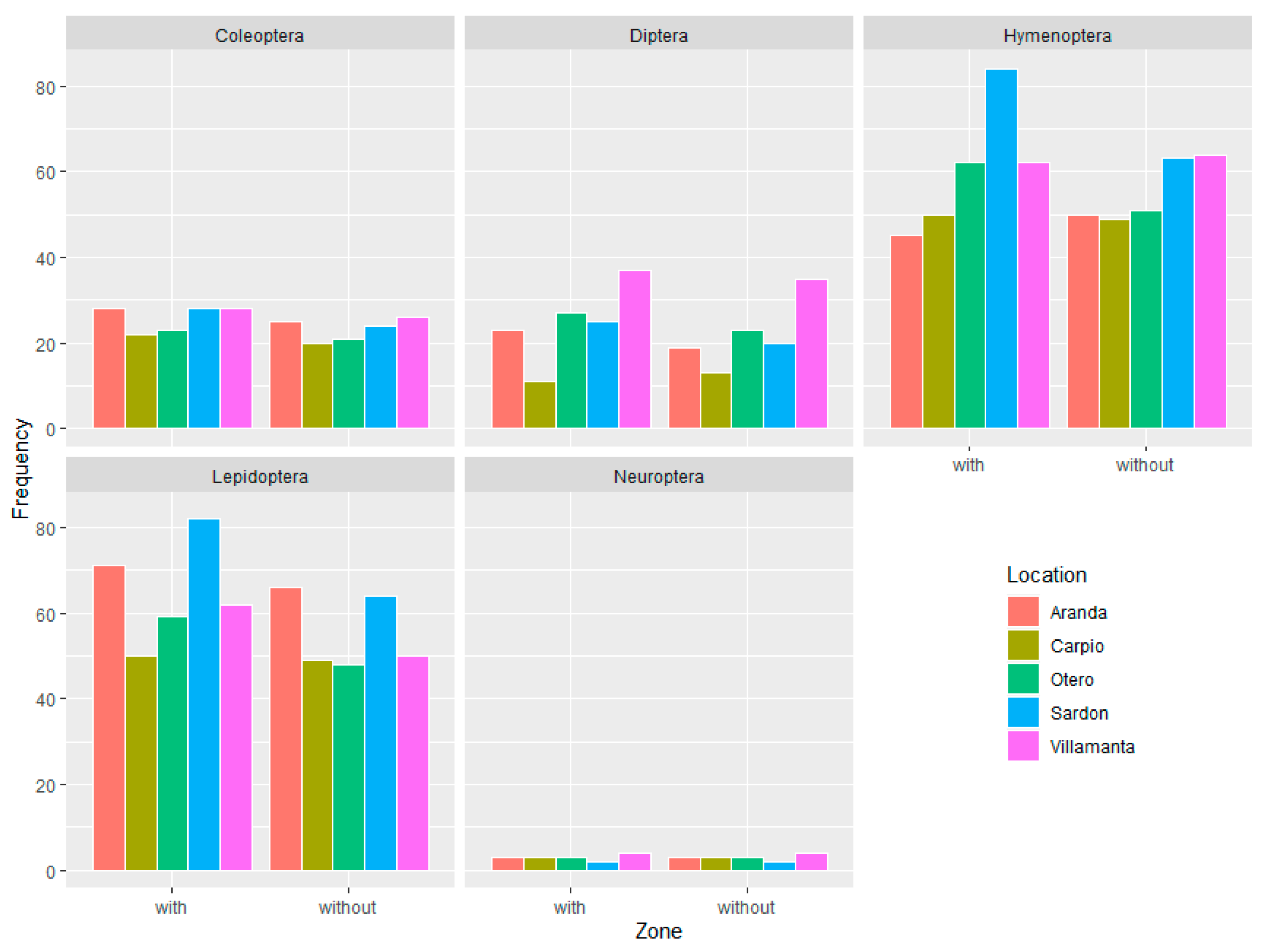
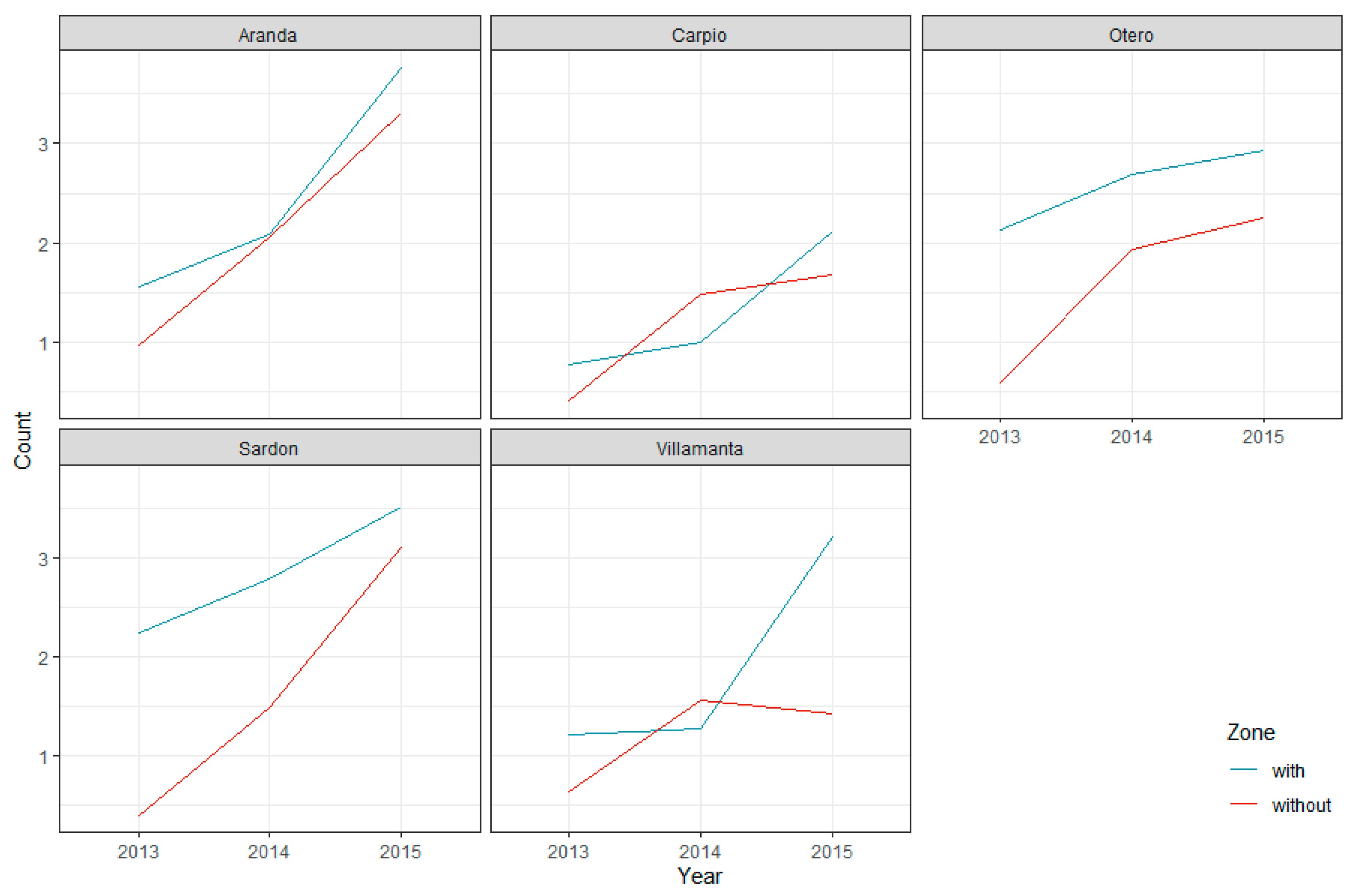
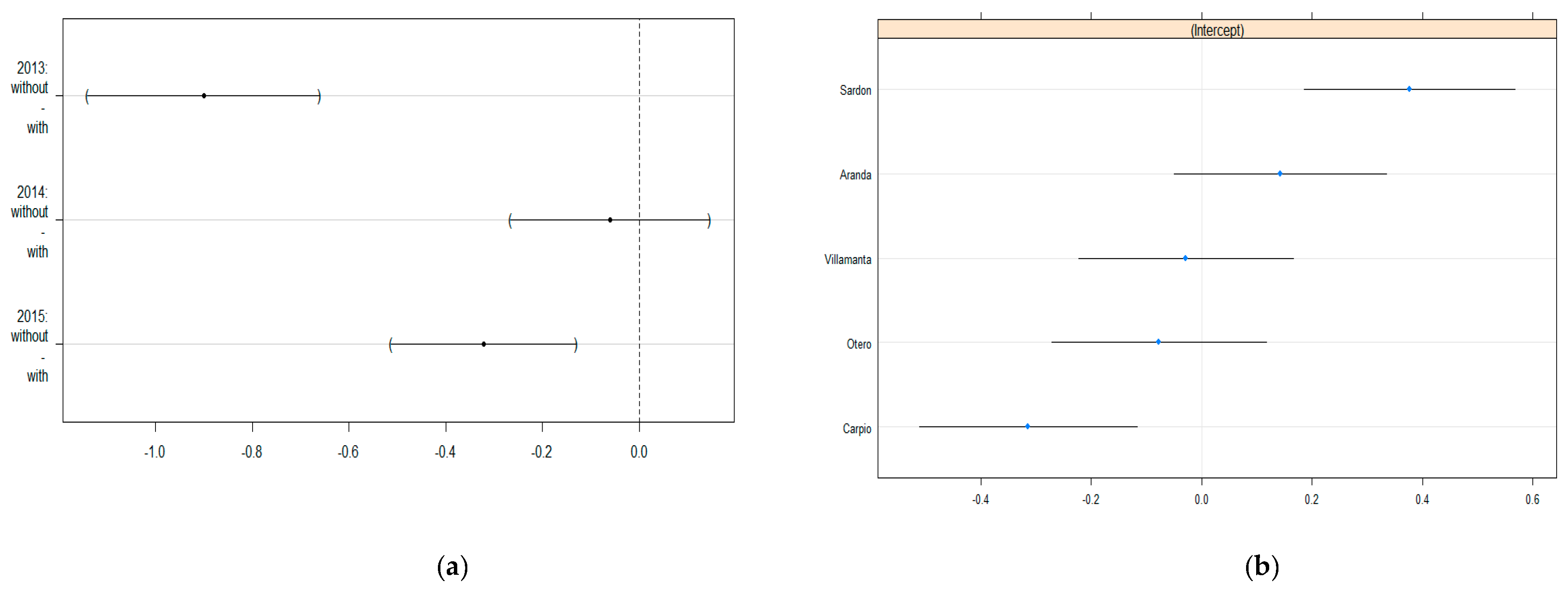
(1) Modern, intensive agricultural practices have been attributed to the loss of insect biodiversity and abundance in agroecosystems for the last 80 years. The aim of this work is to test whether there are statistically significant differences in insect abundance between different zones and over time on the vineyard field. (2) The study was carried out in five intensive wine farms in Spain over a three-year period (2013–2015). Each field was divided into two zones, one where cover plants were planted, and another remained unchanged (without cover). (3) A clear trend to increase the average number of insect species and individuals throughout the years in all farms was observed. Moreover, the zones with cover plants showed a significant difference with respect to the zones without. (4) The use of permanent cover plants allows creating areas of refuge for the insects favouring their conservation and reducing the agriculture impact in the insect decline.