


Simple Summary
Spittlebugs produce foam in either nodes or internodes on stems of Theporsia purpurae (100%) and Mimosa pudica (100%), to establish and protect their young. However, this reduces the photosynthetic capacity of the plants. The surface area of the foam is higher for Lawsonia inermis (18.15 cm2) than other plants. The number of nymphs in each piece of foam varied from 1 to 3 in this study. The foam was cooler than the external environment for all the tested plants (p < 0.0001), except T. purpurae and M. pudica (p > 0.05). The biofoam consists of carbohydrates, amino acids, proteins and fatty acids. A saturated fatty acid, octadecanoic acid, was more abundant (88.33%) in the biofoam of Poophilus costalis. The biofoam showed strong antibacterial activity against Staphylococcus aureus than that of other species, similar to that of chloramphenicol against Pseudomonas fluorescens.
Abstract
The foam produced by nymphs of Poophilus costalis on eleven different host plants belonging to eight families on St. Xavier’s College campus in India was studied over five months. The chemical composition and antimicrobial activity of these biofoams were investigated. The results revealed that P. costalis preferred Theporsia purpurea and Mimosa pudica for laying their eggs and producing foam, over the other tested plants. P. costalis produce their foam on either nodes or internodes on monocotyledons (30%) (p < 0.05), whereas on dicotyledons, they produce more foam on the stems (63.8%) than on the leaves (6.2%) (p < 0.01). The number of nymphs in each piece of foam from P. costalis varied from 1 to 3 (mean = 1.8 per plant). They produced their foam (5.7 to 45.2 cm) from the ground level on a plant. The length and breadth of a piece of foam ranged from 1.0 to 3.9 cm and 0.6 to 4.7 cm, respectively. The foam tended to be cooler than the environment. Qualitative profiling showed that the foam consists of carbohydrates, including maltose; trypsin; amino acids; protease. The foam was also analyzed using a spectrophotometer, Fourier transform infrared spectroscopy (FT-IR), gas chromatography–mass spectroscopy (GC-MS), and high-performance liquid chromatography (HPLC). The antimicrobial activity of the biofoam was the greatest against Staphylococcus aureus, the growth of which was reduced by 55.9 ± 3.9%, suggesting that the foam could be used as an antimicrobial product. However, no activities were observed against Fusarium oxysporum and Candida albicans.
1. Introduction
The spittlebug Poophilus costalis (Walker) (Hemiptera: Aphrophoridae) is an important crop pest widely distributed in African and Asian regions that feeds on more than 37 plant species [1]. This xylem-feeding pest has been observed to severely damage lavender [2], common sorrel [3] and medicinal and aromatic plants [4] in India, and sorghum in some West and Central African countries [5,6]. Ajayi and Oboite [5] noted that heavy infestation by P. costalis could kill seedlings and cause the stunting of mature plants. In addition, this spittlebug has the potential to act as a vector of plant diseases [7] and has been reported as a vector of rice yellow mottle disease [8]. Several methods including the use of synthetic chemical insecticides and biopesticides have been used to control this pest [6]. However, the foaming substance produced by the spittlebug nymphs, which protects them against predators and parasitoids and acts as thermal insulation [9], is an important obstacle in their management [10]. Indeed, the chemical composition of and beneficial organisms contained in the foam produced by spittlebugs protect the nymphs [11,12]. Moreover, [13] showed that the foam of spittlebugs has a thermoregulatory role, allowing these pests to resist extreme temperatures. Therefore, it would be interesting to evaluate the role of thermoregulation by the foam produced by P. costalis.
Very limited information is available about the chemical composition of the foam produced by spittlebug nymphs. A study [13] showed that palmitic acid, stearic acid, carbohydrates and protein were the main compounds of the foam produced by nymphs of the froghopper Mahanarva fimbriolata (Stål) (Hemiptera: Cercopidae). However, there is very little information on the biochemical composition of the foam of P. costalis; knowledge of such will permit the development of efficient strategies for fighting this pest. In addition, the identification and quantification of the chemical compounds of the foam produced by P. costalis nymphs will help to elucidateits diverse functions. In fact, some studies have shown that the foam produced by spittlebugs has diverse biological activities and can act as a repellent [11], antibiotic [12], antifungal and chitinase agent [14]. It would also be interesting to evaluate the antimicrobial activity of the foam of P. costalis nymphs to explore the possibility of using entomopathogenic organisms in the management of this pest.
Spittlebugs feed on various plants, and most them select specific plants for their development [15,16]. Although 37 potential host plants have been revealed for P. costalis [1], there is little information on the distribution and preferential exploitation of these host plants by its nymphal stages. This information is essential for the determination of the host plants allowing the development and abundance of Philaenus spumarius spittlebug [16]. Good knowledge about the plant selection of P. costalis is important for designing efficient strategies for managing this spittlebug. Therefore, this study aimed to record (1) the distribution of the foam of P. costalis in across various host plants (Boehmeria cylindrical L. (Urticaceae), Cynodondactylon L. (Poaceae), Eragrostis amabilis L. (Poaceae), Ocimum americanum L. (Lamiaceae), Corchorus olitorius L. (Malvaceae), Lawsonia inermis L. (Lythraceae), Tridax procumbens L. (Asteraceae), Phyllanthus amarus L. (Euphorbiaceae), Clitoria ternatea L. (Fabaceae), Mimosa pudica L. (Fabaceae), and Tephrosia purpurea L. (Fabaceae) present on St. Xavier’s College campus; (2) the occurrence and size of the foam produced by P. costalis in different organs of host plants; (3) the chemical composition of the foam produced by P. costalis; (4) the temperature between the environment and inner side of the foam produced by P. costalis; and (5) the antimicrobial activity of the foam produced by P. costalis on Escherichia coli, Xanthomonas malvacearum, Xanthomonas citri, Staphylococcus aureus, Pseudomonas fluorescens, Fusarium oxysporum and Candida albicans.
2. Materials and Methods
2.1. Field Work
The experiment was conducted inside St. Xavier’s College campus (Tamil Nadu, India) from November 2019 to March 2020. During the study period, the temperature ranged from 28 °C to 32 °C, and the humidity ranged between 71 and 84%. The light cycle was 13 h of light and 11 h of dark (L:D). The individual plants were monitored, and the populations of P. costalis were continuously recorded on 11 plant species bellowing to 8 families for at least three months. Uponeach observation, the following parameters were recorded: the height of the plant (cm) and the height (cm) at which the spittlebug produced its foam. The number of nymphs per spittle was assessed per individual host plant and per host-plant taxon, together with the position of the nymphs on the individual host plant (stem, node, and internode; leaf surface—upper or lower). The spittlebug samplings were conservative, and each instar was determined directly in the field based on the size and morphology of the nymphs. The length and breadth (cm) of the foam were recorded by using a 30 cm-length Camelin scale with a graduation of 10 mm. The amount of foam present in a plant and the spittlebug nymph stages dwelling in the foam were determined. The third, fourth and fifth nymphal instars were 2.5, 4.0 and 6.0 mm in size, respectively. The natural enemies (if any) of P. costalis nymphs under natural conditions were also recorded during the investigation period.
2.2. Ecophysiology of Foam and Spittlebug
Using a laboratory thermometer with a ±0.1 accuracy (Lab world, Hyderabad, India), the temperatures were recorded both inside and outside the foam found in the various plants. For recording the temperature inside the foam, the thermometer was slightly inserted into the foam, and after a minute, the temperature was noted. Any foam adhering to the thermometer was removed using paper before inserting it into another foam. The external temperature and humidity within a 5–7 cm radius of the foam were measured between 12 noon and1.00 p.m. Observations were made for 31 plants each for T. purpurea and M. pudica, whereas for the other plants, observations were made for six plants each.
2.3. Collection of Foam and Preservation
The foam produced by P. costalis nymphs was collected from various plants in Eppendorf tubes (1.5 mL capacity) and kept in a laminar air-flow chamber for 5–10 min, in order to sterilize the foam with UV-C germicidal lamp. The foam (usually 10 mL) was mixed with 10 mL of high-performance liquid chromatography (HPLC) water combined with acetone at a 1:1 ratio and then filtered through Whatman paper No. 1, before being stored at −20 °C until use.
2.4. Chemistry of Foam
2.4.1. Qualitative Profiling of Carbohydrates
Four tests (Bial, Benedict, mucic acid, and Fehling) were performed to detect the presence of carbohydrates in the foam produced by P. costalis. Bial’s test was performed to detect the presence of pentoses: 5 mL of Bial’s reagent was added to 2–3 mL of solution, and the mixture was gently warmed under a low flame. The appearance of a blue color indicated the presence of pentoses. Benedict’s test was used to detect reducing sugars: five drops of concentrated hydrochloric acid were added to 5 mL of test solution and heated (50 °C) for 5 min in boiling water. Then, 10% sodium hydroxide solution was added to the mixture to produce a slightly alkaline solution (tested with red litmus paper). Benedict’s test was then carried out on this hydrolyzed solution. A red or yellow appearance indicated the presence of carbohydrates. The mucic acid test was performed to detect the presence of galactose: 0.2 mL of concentrated nitric acid was added to the test solution, which was then placed in a boiling water bath until the acid fumes were expelled. A few drops of water were then added. The formation of crystals indicated the presence of galactose. The Fehling test was performed to detect the presence of reducing sugars and non-reducing sugars: 1 mL of Fehling’s solution A (an aqueous solution of CuSO4) and 1 mL of Fehling solution B (a solution of potassium tartrate) were added to 2 mL of the test solution, mixed well and boiled. The formation of a reddish-brown precipitate indicated the presence of reducing sugars.
2.4.2. Qualitative Profiling of Amino Acids
Six tests were performed for the detection of protein and amino acids (the Biuret reaction, the xanthoproteic reaction ninhydrin test, Hopkin’s Cole Test, the Sakaguchi reaction, and the sulfur test) [17] in the foam produced by P. costalis. The Biuret reaction was performed to detect the presence of a peptide bond: 2 mL of 10% sodium hydroxide and two drops of 0.1% copper sulfate solution were added to 2 mL of the test solution. A violet or pink color revealed the presence of proteins. The ninhydrin test was performed to detect the presence of amines: 1 mL of 0.1% ninhydrin solution was added to 4 mLof the solution at neutral pH and boiled for 2–3 min. A purple color indicated the presence of amines (e.g., proline). The xanthoproteic reaction was used to detect the presence of soluble protein:1 mL of nitric acid was added to 5mL of the test solution, which was then boiled. After cooling it, an excess of 40% sodium hydroxide was added to the mixture, and an orange color indicated the presence of phenylalanine. Hopkin’s Cole reaction was performed to detect the presence of tryptophan in proteins: 2 mL of glacial acetic acid and then 2 mL of sulfuric acid were added to 2 mL of the test solution. Color changes at the junction of the two liquids indicated the presence of tryptophan. The Sakaguchi reaction was performed to detect the presence of arginine in proteins: 1 mL of 10% sodium hydroxide solution and 1mL of 0.02% α-naphthol solution were added to 5 mL of the solution cooled on ice. After 3 min, 10 drops of alkaline hypobromide solution was added to the mixture, and the formation of a violet ring at the junction indicated the presence of arginine. Sulphur test was done to detect the presence of sulphur amino acids such as cysteine and cystine. For that, 2 mL of 40% sodium hydroxide and 10 drops of 2% lead acetate solution were added to 2 mL of the test solution. The mixture was boiled for a minute and then cooled. A black precipitate indicated the presence of sulfur-containing amino acids.
2.4.3. Qualitative Enzyme Profiling
The presence or absence of trypsin, pepsin, protease, and polypeptidase [18], and invertase, lipase, and maltase [19] was determined using standard procedures.
2.4.4. Gas Chromatography–Mass Spectroscopy (GC-MS)
GC-MS analysis was carried out on column chromatographic fractions. The analysis of the fractions and formulations was performed using the GC Clarus 500 Perkin Elmer system comprising an AOC-20i auto sampler and gas chromatographer interfaced to a mass spectrometer instrument equipped with an Elite-5MS fused capillary column (length: 300 m, diameter: 0.25 m, and film thickness: 0.25 μm). For GC-MS detection, an electron ionization energy of 70 eV was used. Helium (99.9%) was used as the carrier gas at a constant flow rate of 30 cm/second, and an injection volume of 3 μL was employed (split ratio: 10:1). The injector and ion-source temperature were 250 and 280 °C, respectively. The oven temperature was programmed to start at 110 °C (isothermal for 2 min), and then increase at 10 °C/min to 200 °C, before changing at 5 °C/minto 280 °C, ending with an isothermal condition at 280 °C for the acquisition of mass spectra and chromatograms with a Turbomass 5.2 (PerkinElmer, Inc., Shelton, CT, USA).
2.4.5. Fourier Transform Infrared Spectroscopy (FT-IR)
Fourier transform infrared spectroscopy was used to identify the characteristic functional group present in the crystal. The solid crystal was analyzed by making transparent potassium bromide (KBr) pellets in order to prepare a translucent sample disc. Then, the disc was placed in a sample cup of diffuse reflectance. The infrared spectrum was obtained using an infrared spectrometer (FT-IR-8400S, Shimadzu, Columbia, MD, USA), and the sample was scanned in the range of 4000 to 400 cm, with a resolution of 4 cm.
2.4.6. High-Performance Liquid Chromatography (HPLC)
Prior to HPLC analysis, an extracted dye solution was prepared using analytical grade solvents. The dyes were extracted from fibers of about 1 cm of dyed thread according to the procedure appropriate for each chemical class of dye. A red dye from a mordant dye from a plant or insect source was treated for a few minutes with equal portions of 3 mol hydrochloric acid and methanol at 100 °C. The dye solution was then evaporated to remove the acid and then resolved in about 0.25 mL of methanol for plant dyeing or purple molluscan dyeing. The yarn was treated for about 1 min with near-boiling NN-dimethyl formamide (DMF) to strip the vat dye. Each extracted dye solution was subsequently filtered through a 0.45 μm PTFE or nylon syringe filter. A 1μLfoam sample was mixed with 1 μL of HPLC water and injected, and the absorbance was read at 246 nm. A similar methodology was followed for the standard palmitic acid. The peaks were identified by their retention times (RTs) in comparison to the RT for palmitic acid.
2.5. Antimicrobial Activity
2.5.1. Preparation of Potato Agar Medium (PDA)
Mycological agent agar (20 g) and 10 g of dextrose (HiMedia, Mumbai, India) were added to the filtrate, and the mixture was stirred until the dextrose was completely dissolved. The suspension was diluted with tap water, making it up to 1 L, and the final medium was autoclaved at 121 °C/15 LBS for 15 min. Cooled chloramphenicol (1g/L) was added to suppress bacterial growth.
2.5.2. Microbial Culture
Various bacteria, such as Xanthomonas axonopodis pv. malvacearum, and Xanthomonas citri responsible for plant diseases; Escherichia coli and Staphylococcus aureusis, which are important causes of human infections; and the non-pathogenic bacterium Pseudomonas fluorescens were obtained from the Crop Protection Research Centre (CPRC) and maintained on nutrient agar slants with sub-culture for antibacterial activity. Fusarium oxysporum, the agent of a soil-borne plant disease, and Candida albicans, an agent of human disease, were obtained from the available stock of CPRC. The cultures were maintained on potato dextrose agar (PDA) slants and sub-cultured in Petri dishes prior to testing for antifungal activity.
2.5.3. Agar Well Plate Method—Zone of Inhibition
The microbial activity was evaluated using the agar well diffusion technique [20]. For growth inhibition studies, sterile Petri plates (9 cm diameter and 1 cm height) were prepared with 20 mL each of sterile Mueller–Hinton agar (MHA) and potato dextrose agar (PDA). The medium was poured into Petri plates. After solidifying the media, 100 μL of various bacteria of E. coli, S. aureus, X. malvacearum, X. citri and P. fluorescens were used to inoculate separate MHA medium, and two different fungi, C. albicans and F. oxysporum, were used to inoculate separate PDA medium at normal room temperature using a sterile L-rod. After inoculating the media, 6 mm-sized wells were made using a sterile cork borer under aseptic conditions. A 100 μL test sample (12.5, 25, 50 and 100% of foam) and positive and negative controls were added. Standard antimicrobial agents and the standard antibiotic chloramphenicol (0.03%) were used as the antibacterial and antifungal agents, respectively. The negative control was acetone. Three replicates were performed for each concentration. The formation of clear zones of inhibition was recorded after 24 h for the bacteria and 72 h for the fungi. The cultures were maintained at 27 ± 2 °C in a BOD incubator (Kemi, Mudickal, India). The relative percentage inhibitions (PIs) for the test extract with respect to the positive control were calculated by using the following formula [21]:
where
- x = the total area of inhibition for the test extract;
- y = the area of inhibition for the negative control;
- z = the area of inhibition for the positive control.
2.6. Statistical Analysis
The data for the foam positions for various plants, foam size on various plants, and temperature differences between the outside and inside of the foam were subjected to ANOVA, and their significance is expressed at the 5% level. The normality and homogeneity of the variances of the data were first tested, and data not meeting these criteria were log- or arcsin-transformed. The responses of different concentrations of spittlebug foam (100, 50, 25 and 12.5%) to E. coli, X. malvacearum, X. citri, S. aureus, P. fluorescens, C. albicans, F. oxysporum, chloramphenicol and acetone were also subjected to ANOVA, and their significance is expressed at the 5% level. The biofoam length and breadth, production height and surface area were correlated and the R2 was calculated using the same software. The software IBM SPSS Statistics version 25 (IBM Corp, Armonk, NY, USA) was used for the data analysis.
3. Results
3.1. Distribution of Foam Onvarious Plants and Their Parts
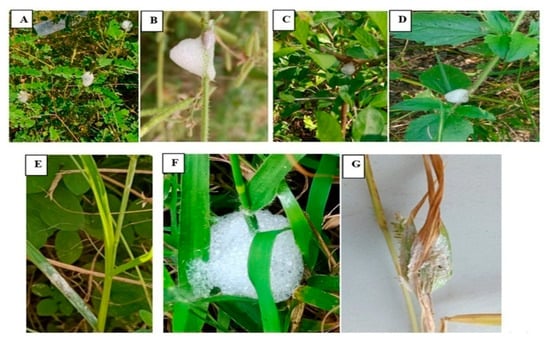
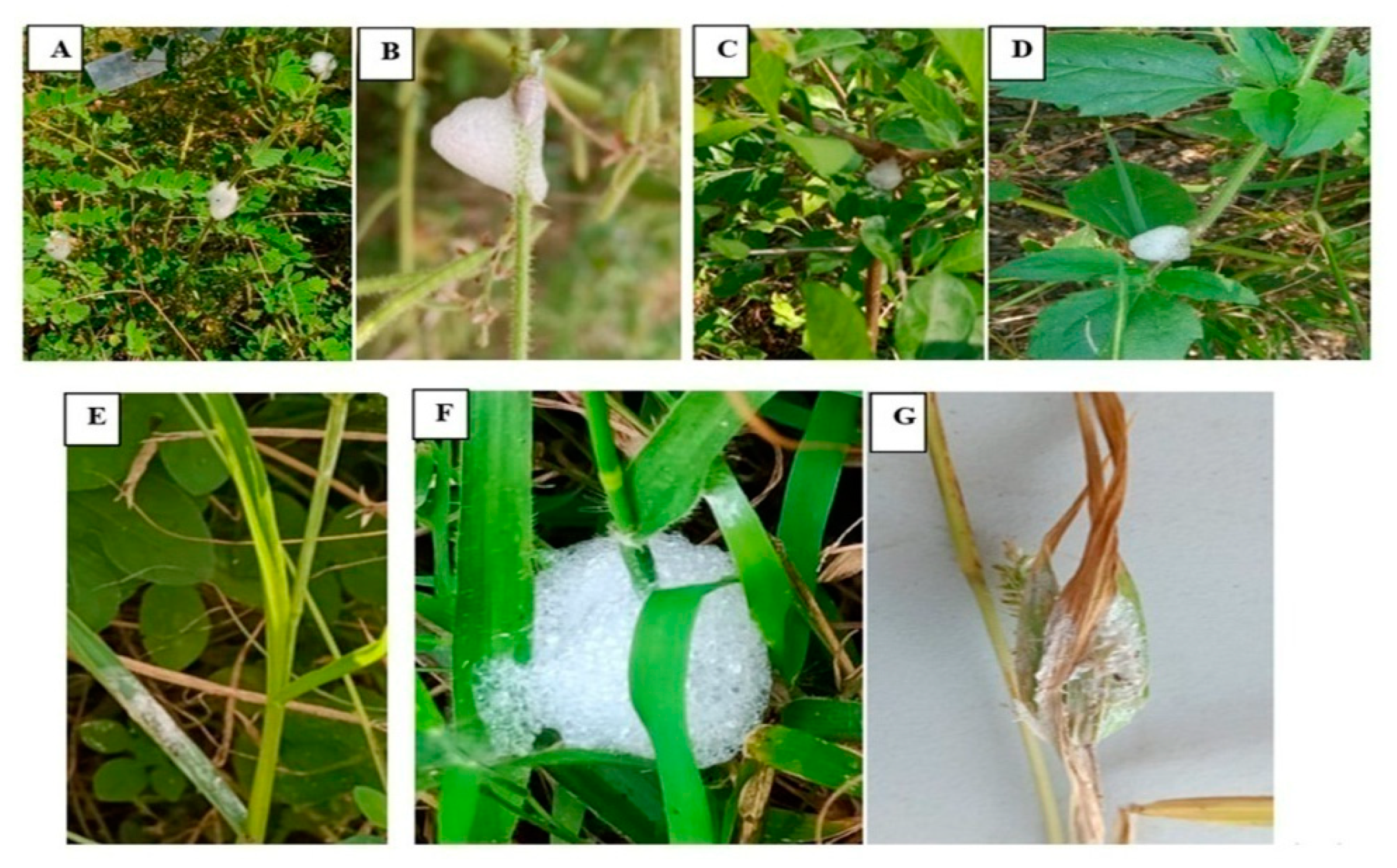
The foam produced by P. costalis nymphs on11 plant species was recorded. The nymphs of this spittlebug produced their foams at the stems (Figure 1A–D), leaves, and nodes of B. cylindrica, C. dactylon, C. olitorius, L. inermis, P. amarus, C. ternatea, T. purpurea (Figure 1A,B), M. pudica (Figure 1C), T. procumbens (Figure 1D), O. americanum and E. amblilies (Table 1). In grasses, P. costalis nymphs produced foam on leaf blades (Figure 1E), nodes (Figure 1E) or the inflorescence (Figure 1F). The foam affects plant growth by reducing photosynthetic areas (Figure 1F,G). However, P. costalis’ foam was most commonly observed on Fabaceae plants such as T. purpurea and M. pudica (15.42% of each).
Figure 1.
Production of foam by nymphal stages of P. costalis on T. purpurea (A,B), M. pudica (C), T. procumbens (D), and grasses (E–G). Discoloration of grass leaf blades (E) and joining of both leaf blades and inflorescence (F).
Table 1.
Locations of P. costalis foam on different plants. N indicates number of spittle specimens observed.
Most of the foams included the fourth instar nymphs (92.5%) of P. costalis. Some of the temperature data were taken for foams containing fifth instar nymphs (7.5%) of P. costalis. The P. costalis spittle was significantly (p < 0.000) more abundant at the stems (64%) than the nodes (30%), and leaf and internode regions (6%) of the plants observed. The plant preference of spittlebugs depends on different factors, of which feed is one (Table 1).
Even the height at which the spittlebug produced the foam varied from plant to plant. Similarly, the length (1.00 ± 0.11 to 3.88 ± 0.77 cm), breadth (0.61 ± 0.10 to 4.68 ± 0.34 cm) and size (0.61 to 7.84 cm2) of the spittle also varied (Table 2). In L. inermis a tall shrub plants, P. costalis made much foam in the nodes and stems, because of its glabrous and multi branched nature and also a type of chemical interaction between the plant and insect. A significantly positive correlation (R2 = 0.912) was observed between the length and breadth of the foam produced by P. costalis on various plant species. However, the height of the site at which the foam was produced, and the surface area showed more correlation (R2 = 0.0005). This shows that P. costalis nymphs feed systematically without discriminating between plants and positions.
Table 2.
Length and breadth (cm) of foam produced by P. costalis on various plants available on St. Xavier’s College campus.
3.2. Ecophysiology of Foam and Spittlebug
In most of the plants, the temperatures outside the foam produced by P. costalis and in the external environment were significantly different (df = 3,212; F = 374.58; p < 0.0001) (Table 3). The results revealed a significant temperature variation between the outside and inside of the foam produced by nymphs of P. costalis (df = 53; F = 5.3972; p < 0.0001). However, this was not the case for Fabaceae such as T. purpurea (df = 1,30; F = 0.7009; p > 0.05) and M. pudica (df = 1,30; F = 0.6990; p > 0.05).
Table 3.
Foam inner temperature (°C) in relation to environmental humidity (%) and temperatures (°C).
3.3. Chemical Composition of Foam
The carbohydrates, amino acids, proteins and enzymes were qualitatively profiled, and the results are presented in Table 4, from which it is very clear that carbohydrates, proteins, amino acids (phenylalanine) and enzymes (lipase, trypsin, maltose and protease) are present in the spittlebug foam.
Table 4.
Qualitative chemical screening of the foam produced by P. costalis nymphs.
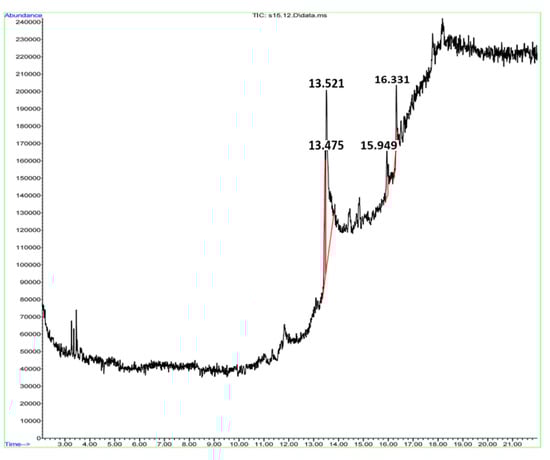
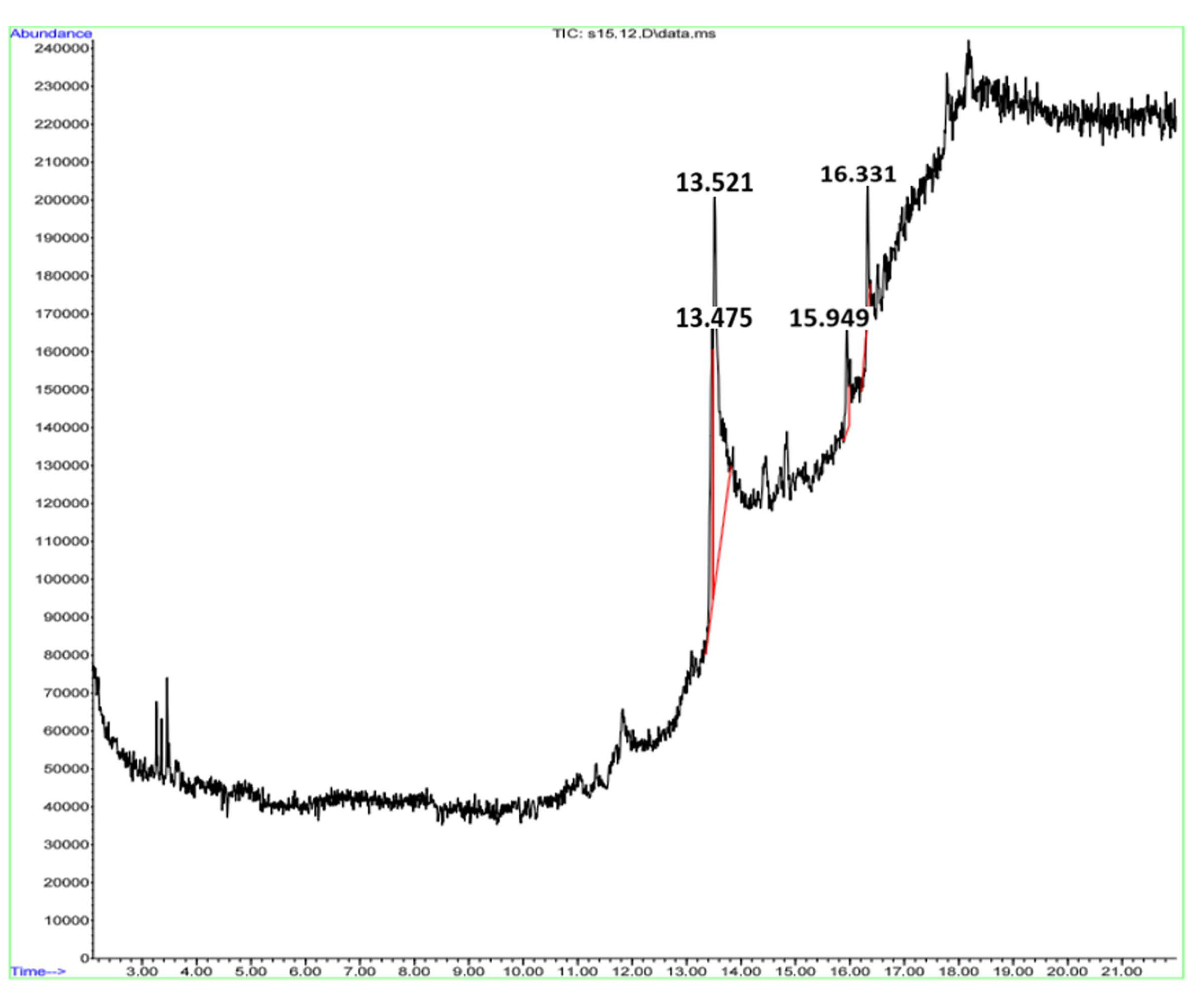
GC-MS analyses showed the presence of long chain fatty acids (88.33%) along with other minor compounds (Table 5 and Figure 2). The highest proportions were found for long-chain fatty acids such as 6-octadecanoic acid,(E)-(68.43%) and octadec-9-enoic acid (19.90%), a biomolecule practically insoluble (in water) and acidic.
Table 5.
GC-MS analysis of spittlebug P. costalis foam.
Figure 2.
Gas chromatography–mass spectrum of P. costalis foam.
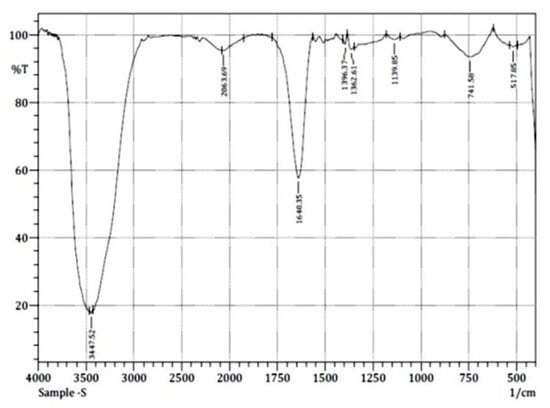
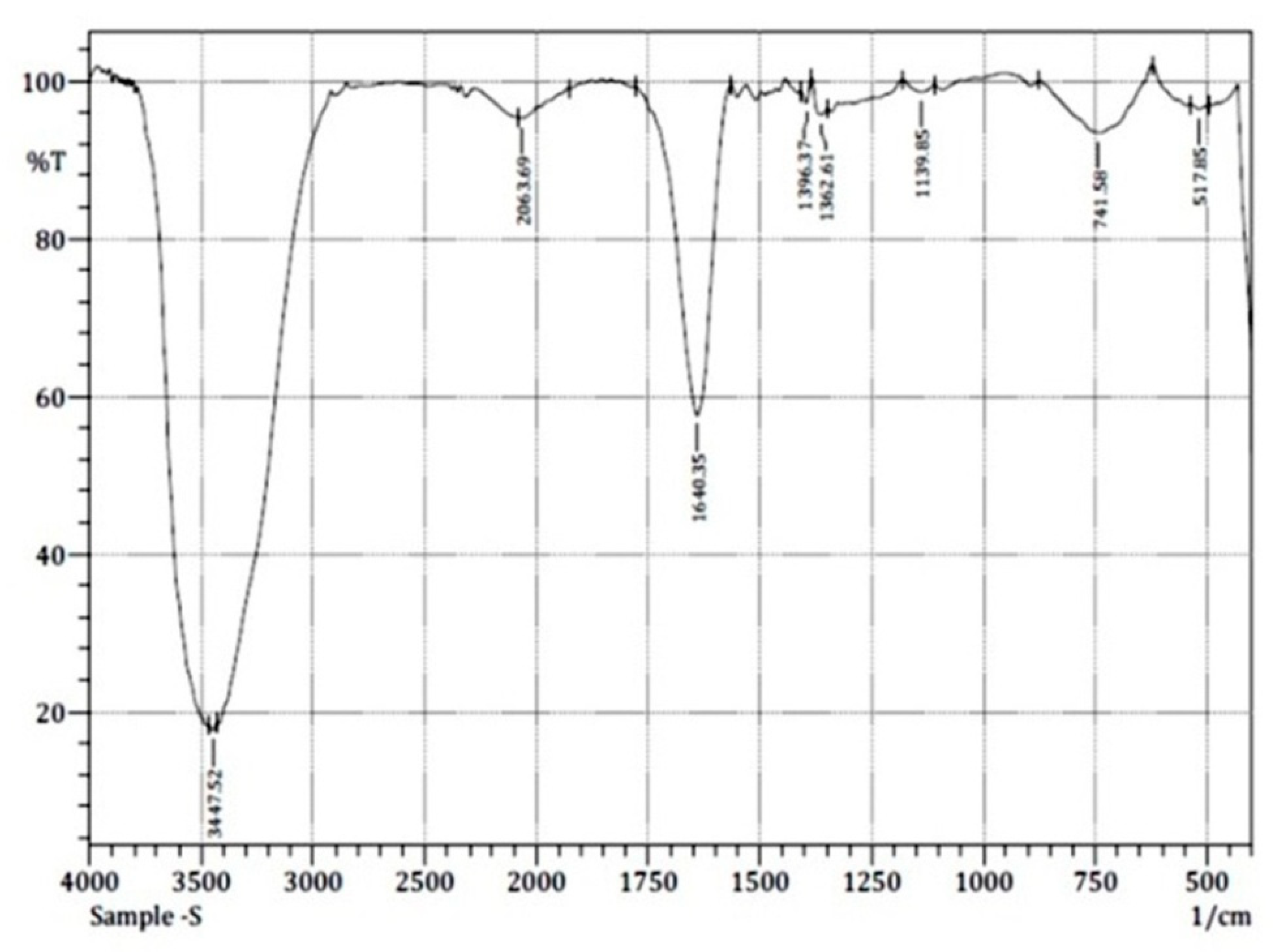
The above-mentioned compounds’ functional groups were confirmed by FT-IR analyses (Table 6 and Figure 3) with the vibrations from 517.85 cm−1 to 3447.52 cm−1. 9-Octodecanoic acid,(E)- and 6-Octodecanoic acid,(E)-(C18H34O2) (common name, stearic acid) (C18) constitute the major compounds of the foam (88.33%) (Table 6).
Table 6.
FT-IR analyses of spittlebug P. costalis foam.
Figure 3.
Fourier transform infrared spectroscopy spectrum of P. costalis foam.
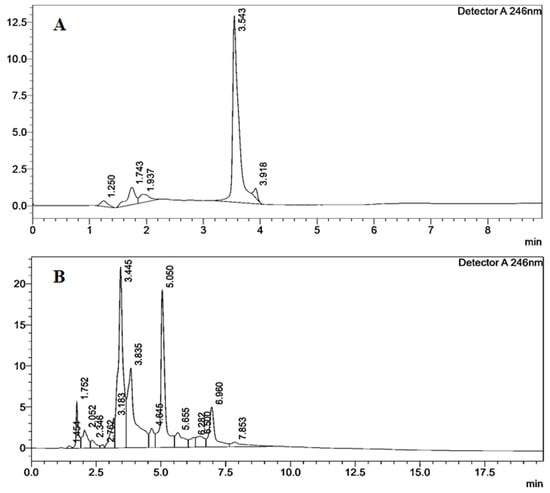
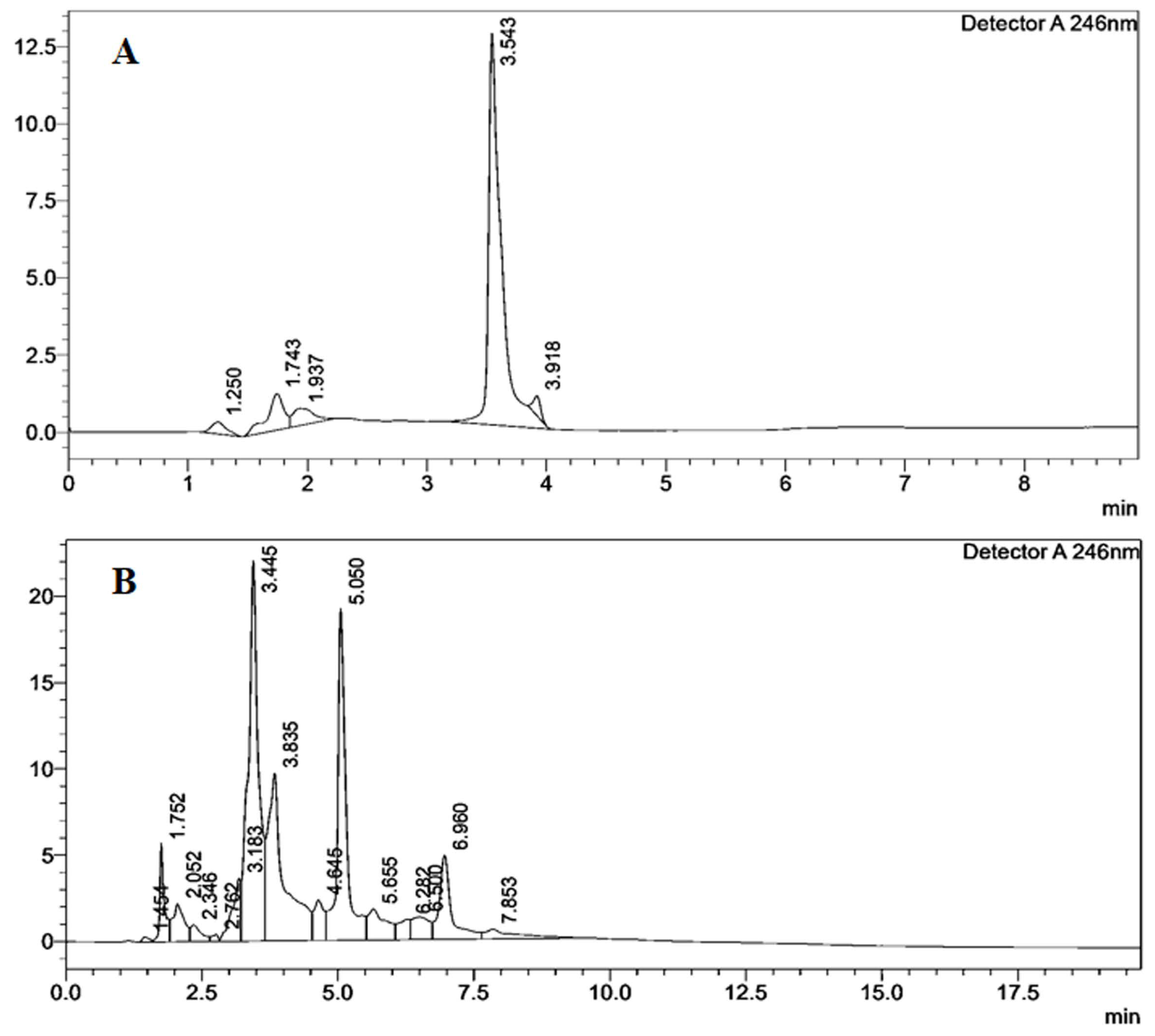
The HPLC spectra reveal the presence of many fatty acids in spittlebug foam with RTs ranging from 1.454 to 7.853 min (Table 7; Figure 4).
Table 7.
High-performance liquid chromatography (HPLC) analysis of palmitic acid and spittlebug P. costalis foam at 246 nm.
Figure 4.
High-performance liquid chromatography (HPLC) chromatogram of palmitic acid (A) and spittlebug biofoam P. costalis (B) at 246 nm.
3.4. Antimicrobial Activity of the Foam
3.4.1. Human Pathogens
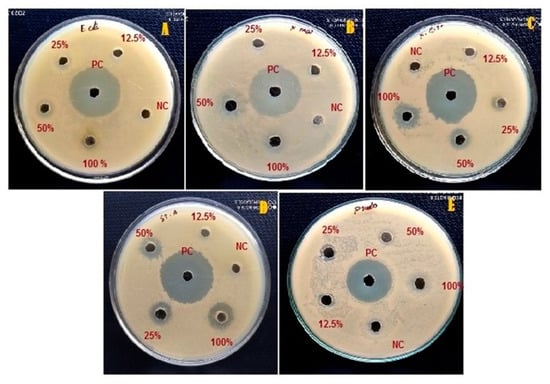
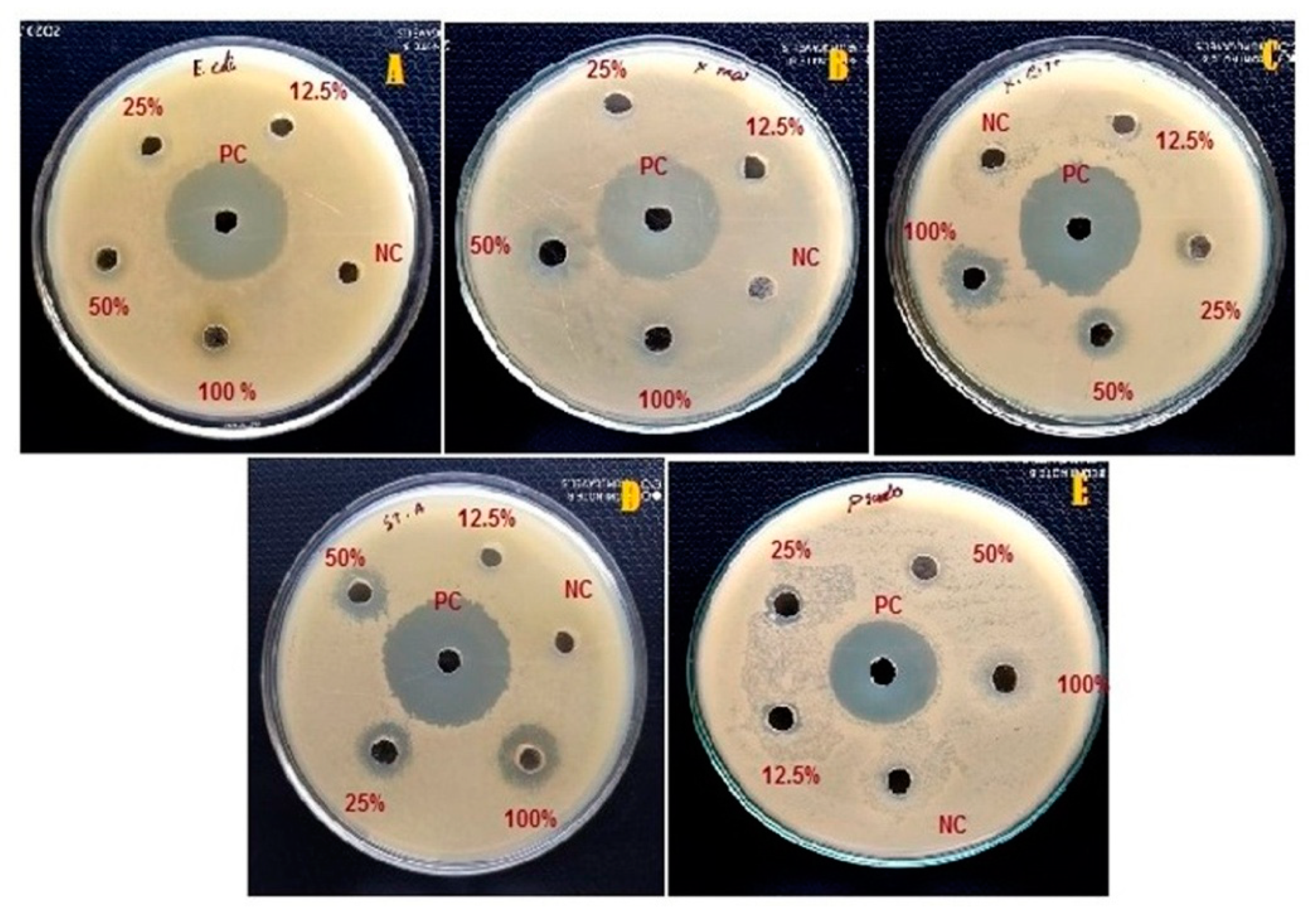
In the present investigation, the antibacterial activity of the foam produced by P. costalis nymphs was observed (Table 8 and Table 9; Figure 5). Pure foam (100%) caused a significant (df = 3,8; F = 14.17; p < 0.001) reduction in E. coli, with 43.26 ± 1.18% growth inhibition, and its effect gradually declined as the foam concentration decreased. S. aureus isa major bacterial human pathogen that causes a wide variety of clinical manifestations. This study showed that a higher concretion (100%) of foam reduced the growth of S. aureus by 55.89 ± 3.85%. However, more studies are needed before this material can be utilized for S. aureus management. All the tested concentrations of P. costalis foam did not affect the growth of Fusarium oxysporum and Candida albicans. Furthermore, comparisons between 100% and 50% (p < 0.01), 100% and 25% (p < 0.01), 100% and 12.5% (p < 0.01), 50% and 12.5% (p < 0.01) and 25% and 12.5% (p < 0.05) foam showed significant differences (p < 0.05).
Table 8.
Impact of different concentrations of P. costalis foam (100, 50, 25 and 12.5%) on antibacterial activity against Escherichia coli, Xanthomonas malvacearum, Xanthomonas citri, Staphylococcus aureus and Pseudomonas fluorescens. Chloramphenicol was the positive control, whereas acetone was the negative control. Same lowercase alphabet for each microbes was statistically significant at 5%.
Table 9.
Impact of P. costalis foam concentrations (100, 50, 25 and 12.5%) on the growth of chosen pathogenic microbes.
Figure 5.
Impact of P. costalis foam concentrations (12.5, 25, 50 and 100%) on the growth of Escherichia coli (A), Xanthomonas malvacearum (B), Xanthomonas citri (C), Staphylococcus aureus (D) and Pseudomonas fluorescens (E).
3.4.2. Plant Phytopathogens
Spittlebug foam dose-dependently reduced the growth of Xanthomonas axonopodis pv. malvacearum at concentrations ranging from 100% (46.74 ± 2.09%) to 12.5% (10.65 ± 3.43%) (Table 9).
3.4.3. Biosafety to a Bacterium
Spittlebug foam liquid suppressed P. fluorescens growth in a dose-dependent manner (Table 8 and Table 9). For instance, the zone of inhibition for 100% foam was 16.0 ± 1.0 cm, and that for 12.5% was 5.33 ± 0.7 cm (Table 9). The ANOVA results show a significant reduction in P. fluorescens by spittlebug foam (df = 3,8; F = 79.7; p < 0.0001).
4. Discussion
It is known that P. costalis nymphal stages are highly polyphagous feeds on 37 host plants of 10 families, but they prefer plants of the Asteraceae [1]. Spittlebugs prefer grass, herbaceous species, bushes and trees [4] for the production of foams, as observed in this study. Furthermore, it has been reported that the host-plant preference of nymphs varies according to the region and nymphal instar for Philaenus spumarius L., Neophilaenus campestris (Fallén), and Aphrophora alni (L.) [16], as well as varying over time. Volatile compounds from grasses also influence the feeding of Mahanarva spectabilis (Distant) [22].
The difference between the interior foam temperature and external temperature might be due to the favorable humidity prevalent around this family of plants. A similar observation was also recorded for Mahanarva fimbriolata, and it was reported that the foam is useful for thermoregulation or defense in the spittlebugs [13]. Future investigations on the physical properties of the foam, especially optical reflection and heat dissipation, will provide further insights.
Lipids [23], proteins [24] and carbohydrates [25] play important roles in the stabilization of the foam and also in maintaining a stable bubble layer around the nymphs. In addition, the foam consists of water obtained from the plant sap [26,27]. The proportions of these compounds should be determined in a future study.
The foam of the spittlebug is considered an adhesive secretion [27]. Two minor compounds were recorded, benzo(h)quinoline, 2–4 dimethyle-(7.70%) and 2,4,6-cycloheptatrien-1-one,3,5-bis-trimethylsilyl (3.97%). Eisner and co-workers [28] reported benzo(h)quinoline as a defense molecule secreted by arthropods. GC-MS analyses of the mucus of three common land snails, Eobania vermiculata, Theba pisana and Monacha obstructa, showed the presence of 1 cyclotrisiloxane, hexamethyl [29]. 2,4,6-Cycloheptatrien-1-one, 3,5-bis-trimethylsilyl (3.97%), considered a microbicidal compound, has been recorded in many plants such as Psidium guajava [30], and it is also considered a nematocidal compound [31].
The chemistry of spittlebug biofoam is poorly understood [32] but comprises a complex mixture of polypeptides, proteoglycans and calcium; glycoproteins [32]; proteins, carbohydrates and lipids [23,24,25,26,33]; palmitic acid and stearic acid [13] and fatty acid-derived alcohols, γ-lactones and 1-monoacylglycerol, as well as polyolpinitol and the polyhydroxy alkanoate poly-3-hydroxybutyrate [11]. The mineral composition of the foam resembles that of the xylem sap upon which the insect feeds [32,34]. This study shows the presence of carbohydrates, proteins, amino acids, enzymes, and octodecanoic acid and confirms the literature cited here. In addition to the C18 fatty acid, another essential fatty acid, palmitic acid (C16), has been reported in spittlebug foam [13]. Palmitic acid and stearic acid are the major products of fatty acid synthase. Both are saturated; that is, they contain no double bonds between adjacent carbons. Many fatty acids are also recorded in the defensive secretions of insects. The more common fatty acids in defensive secretions are C12 to C18 saturated and unsaturated compounds [35], as observed here. The analysis of native and underivatized lipids within body fluids is still a challenging task, particularly if the molecular structures of individual components need to be identified quickly. The lipids consist of different major classes such as fatty acids, neutral lipids, and lipids with positively or negatively charged head groups, with manifold structurally diverse subclasses. Variations in lipid composition have been attributed to different pathologies such as neoplastic and neurodegenerative diseases and diabetes mellitus, among many. Furthermore, some lipid classes are involved in cell death (apoptosis and necrosis) and cellular signaling and are precursors for lysophospholipids, diacylglycerols, and phosphatic and arachidonic acid. Gas chromatography (GC) [36] and high-performance liquid chromatography (HPLC) [37] are commonly used for lipid analysis.
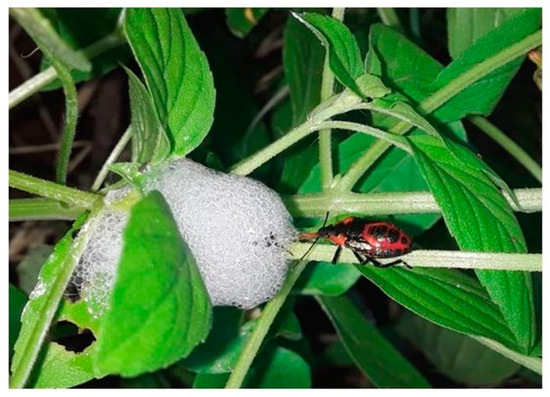
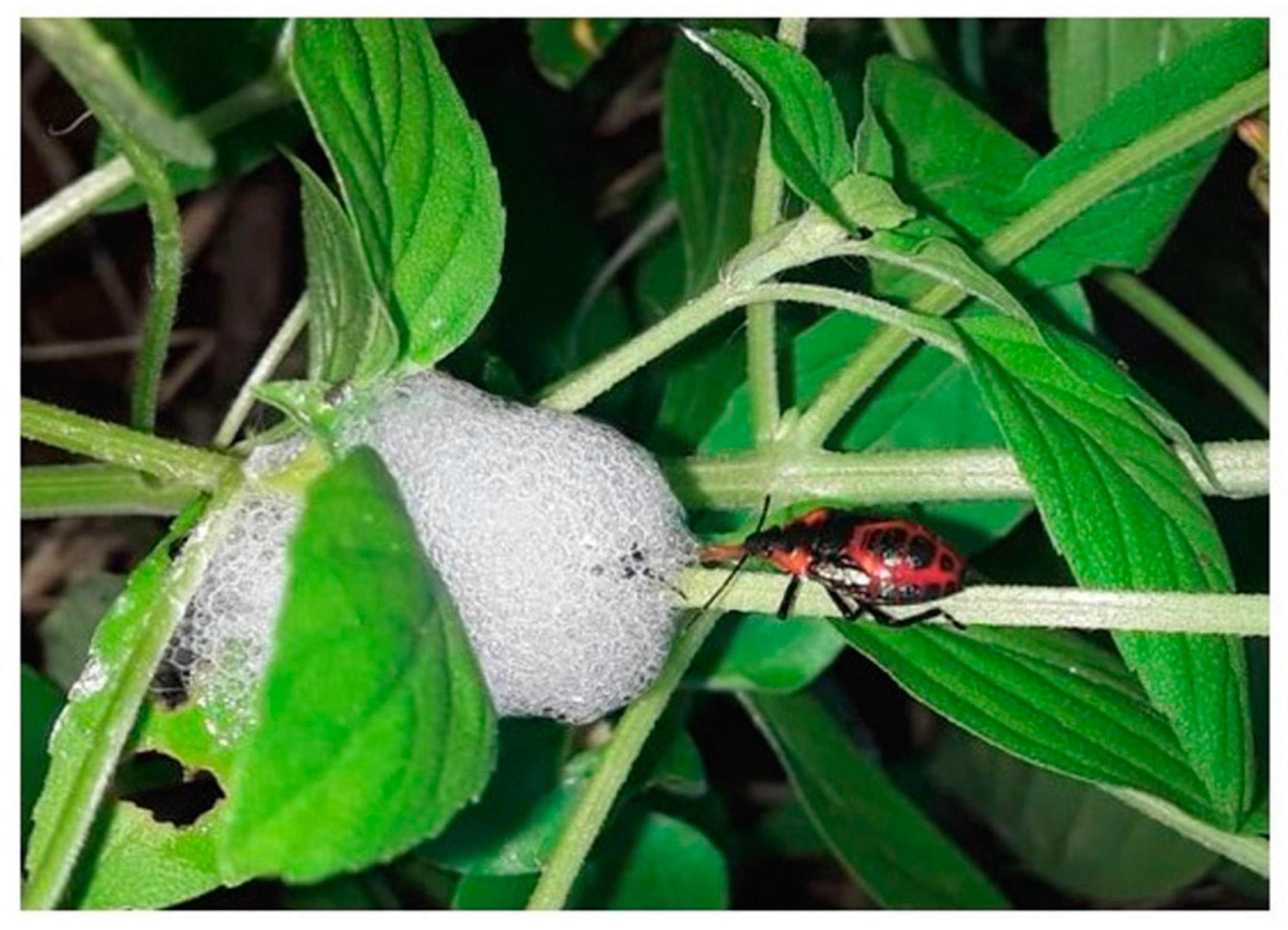
Beneficial arthropods, such as carabids, staphylinids, mites, spiders, tiger beetles, and ants in turf grass habitats have been reported in the literature [38,39]. During our frequent field visits, we observed, for the first time to the best of our knowledge, a Pyrrhocoridae predator Antilochus coqueberti (Heteroptera) nymphs—feeding on P. costalis nymphs, present inside the spittle (Figure 6). Though the foam is produced to protect the spittlebugs from their natural enemies [9], A. coqueberti is thought to predate P. costalis nymphs. Elaborate studies are needed to determine the type of interaction between this pest and this predator.
Figure 6.
Feeding of a Pyrrhocoridae predator, Antilochus coqueberti (Heteroptera) nymph, on P. costalis nymph under field conditions.
Most insects have self-defense systems protecting against invading microorganisms, as recorded in vertebrates. Spittlebug foam also contains many microbes that protect them from surrounding environments [12]. Unique silkworm excretory red fluorescent proteins (SE-RFPs) bearing tetrapyrrole moieties have been reported [40,41]. The authors of [42,43] also showed antibacterial activity in insect and earworm surface excreta, respectively. Xanthomonas citri is a bacterial pathogen that causes citrus canker—a disease that results in heavy economic losses to the citrus industry worldwide, in terms of damage to trees, reduced access to export markets, or the costs of its prevention and control. Interactions between X. citri and antagonistic bacteria including Bacillus subtilis, B. polymyxa, Pseudomonas fluorescens and Serratia marcescens [44], Erwiniaher bicola [45], Pseudomonas sp. [46] and P. fluorescens [47] have been reported in vitroandin vivo. However, the practical usefulness of these bacteria in controlling the pathogen has not been proved. Our results prove that spittlebug foam can be utilized for the management of X. citri (Table 8 and Table 9).
Previous studies have shown that the foam of P. costalis can repress the growth of Fusarium oxysporum [14] due to the presence of three chitinases: β-N-acetylglucosaminidase, chitobiosidase and endochitinase. However, our study revealedthat the foams produced by the nymphs of P. costalis at various tested concentrations did not affect the growth of F. oxysporum or the human pathogen C. albicans. In another study, the antagonistic bacterium Stenotrophomonas maltophilia and Delftia tsuruhatensis isolated from the froth of the spittlebug P. costalis showed antifungal activity against the phytopathogenic fungi F. oxysporum f.sp. pisi and Colletotrichum gloeosporioides Penz. [48]. Xanthomonas axonopodis pv. malvacearum causes bacterial blightin cotton plants [49] and is currently managed with chemicals [50]. However, spittlebug foam is considered a novel material for managing this pathogen.
Pseudomonas fluorescens has been utilized as an antagonistic bacterium against many phytopathogenic bacterium such as X. citri [47] and various Pseudomonas species have been shown to induce plant growth [51]. A number of studies have explored the substantial biological activities of meadow spittlebug Philaenus spumarius (L.) (Cercopide: Homoptera) on Alhagi pseudalhagi (M. Bieb.) Desv. [52]. This study also proves the antimicrobial activity of the spittlebug for both pathogenic and non-pathogenic microbes.
5. Conclusions
Our study showed that P. costalis produced its foam on either monocotyledons or dicot plants in its vicinity and was most commonly observed in T. purpurea and M. budica. The nymphs preferred to feed on stems, followed by nodes and leaves. The foam size varied in relation to the type of plant part selected for production, being larger for L. inermis than the other plants. The temperature inside the foam is lower than the external temperature, which is helpful for development. Chemically speaking, the foam consisted of carbohydrates, amino acids (trypsin), enzymes (protease), and fatty acids (octodecanoicacid) and also contained water collected from the plant sap. The foam showed antibacterial activity against E. coli, X. malvacearum, X. citri, S. aureus and P. fluorescens.
Author Contributions
Conceptualization, K.S.; supervision, K.S.; methodology, B.S. and K.M.; validation, K.S.; formal analysis, K.S., B.S., L.Y.L.E. and S.S.; investigation, B.S. and K.M.; data curation, K.S., L.Y.L.E., S.S., B.S. and K.M.; writing—original draft preparation, K.S., L.Y.L.E. and S.S.; writing—review and editing, K.S., L.Y.L.E. and S.S. All authors have read and agreed to the published version of the manuscript.
Funding
This publication was funded by the Taif University Researchers Supporting Project, number TURSP-2020/92, Taif University, Taif, Saudi Arabia.
Institutional Review Board Statement
Not applicable.
Data Availability Statement
The data presented in this study are available on request from the corresponding author.
Acknowledgments
The use of the laboratory facilities was granted by the authorities of St. Xavier’s College. This publication was also funded by the Taif University Researchers Supporting Project, number TURSP-2020/92, Taif University, Taif, Saudi Arabia.
Conflicts of Interest
The authors declare no conflict of interest.
References
- Shih, H.T.; Tsay, H.C.; Yang, J.T. Notes on the geographic distribution and host plants for Poophilus costalis (Walker, 1851) (Hemiptera: Cercopoidea: Aphrophoridae). Plant Prot. Bull. 2005, 47, 171–178. [Google Scholar]
- Saini, M.S.; Razak, N.; Ahmad, I. Poophilus costalis Walker (Hemiptera: Cercopoidea: Aphrophoridae): A possible constraint to commercial exploitation of Lavendula angustifolia Mill in Kashmir Himalaya with affinity for C3 photosynthetic plants. J. Med. Plant Res. 2012, 5, 2278–2282. [Google Scholar]
- Bhat, D.M. First Report of Some Insect Pests Damaging Rumex acetosa L. in Kashmir Himalaya. Trends Biosci. 2017, 10, 2168–2171. [Google Scholar]
- Razak, N.; Irfan, A. Diversity of insects infesting medicinal and aromatic plants in the Kashmir Valley. In Biodiversity of the Himalaya: Jammu and Kashmir State; Springer: Singapore, 2020; pp. 801–820. [Google Scholar]
- Ajayi, O.; Oboite, F.A. Importance of spittle bugs, Locris rubens (Erichson) and Poophilus costalis (Walker) on sorghum in West and Central Africa, with emphasis on Nigeria. Ann. Appl. Biol. 2000, 136, 9–14. [Google Scholar] [CrossRef] [Scilit]
- Agboyi, L.K.; Kpemoua, K.E.; Negloh, K.; Labare, K. Un nouvel insect ravageurmajeur du sorgho, Poophilus costalis au Togo: Degats et methodes de lutte. J. Rech. Sci. Univ. Lomé. 2017, 19, 189–198. [Google Scholar]
- Chang, S.C.; Shih, H.T.; Lu, K.H. Morphology, feeding and development of the spittlebug Poophilus costalis (Walker, 1851) (Hemiptera: Cercopoidea: Aphrophoridae). J. Taiwan Agric. Res. 2011, 61, 343–354. [Google Scholar]
- Koudamiloro, A.; Nwilene, F.E.; Togola, A.; Akogbeto, M. Insect vectors of rice yellow mottle virus. J. Insects 2015, 2015, 1–12. [Google Scholar] [CrossRef] [Scilit]
- Chen, X.U.; Meyer-Rochow, V.B.; Fereres, A.; Morente, M.; Liang, A.P. The role of biofoam in shielding spittlebug nymphs (Insecta: Hemiptera: Cercopidae) against bright light. Ecol. Entomol. 2018, 43, 273–281. [Google Scholar] [CrossRef] [Scilit]
- Dias, M.L.; Auad, A.M.; Magno, M.C.; Resende, T.T.; Fonseca, M.G.; Silva, S.E.B. Insecticidal activity of compounds of plant origin on Mahanarva spectabilis (Hemiptera: Cercopidae). Insects 2019, 10, 360. [Google Scholar] [CrossRef] [Scilit]
- Del Campo, M.L.; King, J.T.; Gronquist, M.R. Defensive and chemical characterization of the froth produced by the cercopid Aphrophora cribrata. Chemoecology 2011, 21, 1–8. [Google Scholar] [CrossRef] [Scilit]
- Tonelli, M.; Cotta, S.R.; Rigotto, A.; Cavalcante, A.F.D.; Andreote, F.D.; Bento, J.M.S. The composition of the bacterial community in the foam produced by Mahanarva fimbriolata is distinct from those at gut and soil. Braz. J. Microbiol. 2020, 51, 1151–1157. [Google Scholar] [CrossRef] [Scilit]
- Tonelli, M.; Silva, W.D.; Fernandes, D.S.; Bueno, O.C. The Spittlebug Mahanarva fimbriolata Produces Foam as a Chemical Defensive Strategy. Ph.D. Thesis, Luiz de Queiroz College of Agriculture, Piracicaba, Brazil, 2019. [Google Scholar]
- Chang, S.C.; Shih, H.T.; Lu, K.H. Antifungal effect and chitinase activities of the froth of spittlebug Poophilus costalis (Walker) (Hemiptera: Cercopoidea: Aphrophoridae). J. Asia Pac. Entomol. 2019, 22, 269–273. [Google Scholar] [CrossRef] [Scilit]
- Dongiovanni, C.; Cavalieri, V.; Bodino, N.; Tauro, D.; DiCarolo, M.; Fumarola, G.; Altamura, G.; Lasorella, C.; Bosco, D. Plant selection and population trend of spittlebug immatures (Hemiptera: Aphrophoridae) in olive groves of the Apulia region of Italy. J. Econ. Entomol. 2018, 112, 67–74. [Google Scholar] [CrossRef] [Scilit]
- Bodino, N.; Cavalieri, V.; Dongiovanni, C.; Saladini, M.A.; Simonetto, A.; Volani, S.; Bosco, D. Spittlebugs of Mediterranean olive groves: Host-plant exploitation throughout the year. Insects 2020, 11, 130. [Google Scholar] [CrossRef] [Scilit] [PubMed]
- Irwin, O.; Abraham, S. Qualitative determination of amino acids in protein hydrolyzates by circular paper chromatography. Anal. Chem. 1955, 27, 854–856. [Google Scholar]
- Balogun, R.A.; Fisher, O. Studies on the digestive enzymes of the common African toad Bufo regularis Boulenger. Comp. Biochem. Physiol. 1970, 33, 813–820. [Google Scholar] [CrossRef] [Scilit]
- Nigam, S.C. Experimental Animal Physiology and Biochemistry; New Age International (p) Limited: New Delhi, India, 2003. [Google Scholar]
- Álvarez-Benito, M.V.; Jiménez, B.E.; de Fez y Camino, M.I. Manual de Técnicas en Microbiologíaclinica; Asociación Española de Farmacéuticos Analistas: San Sebastian, Spain, 1990. [Google Scholar]
- Kumar, G.; Loganathan, K.; Kokati, V.B.R. In vitro anti-Candida activity of Calotropis gigantea. J. Pharm. Res. 2010, 3, 539–542. [Google Scholar]
- Silva, S.E.B.; Alexander, M.A.; Jair, C.M.; Roberta, A.; Marcy, G.F.; Francisco, A.M.; Nayana, C.S.S.; Noemi, N. Olfactory response of Mahanarva spectabilis (Hemiptera: Cercopidae) to volatile organic compounds from forage grasses. Sci. Rep. 2019, 9, 10284. [Google Scholar] [CrossRef] [Scilit]
- Malysa, K.; Miller, R.; Lunkenheimer, K. Relationship between foam stability and surface elasticity forces: Fatty acid solutions. Col. Surf. 1991, 53, 47–62. [Google Scholar] [CrossRef] [Scilit]
- Murray, B.S.; Ettelaie, R. Foam stability: Proteins and nanoparticles. Curr. Opin. Colloid Interface Sci. 2004, 9, 314–320. [Google Scholar] [CrossRef] [Scilit]
- Tonelli, M.; Gomes, G.; Silva, W.D.; Magri, N.T.; Vieira, D.M.; Aguiar, C.L.; Bento, J.M.S. Spittlebugs produce foam as a thermoregulatory adaptation. Sci. Rep. 2018, 8, 4729. [Google Scholar] [CrossRef] [Scilit]
- Beckett, K.I.S.; Robertson, A.B.; Matthews, P.G.D. Robertson, and Philip GD Matthews. Studies on gas exchange in the meadow spittlebug, Philaenus spumarius: The metabolic cost of feeding on, and living in, xylem sap. J. Exp. Biol. 2019, 222, jeb191973. [Google Scholar] [CrossRef] [Scilit]
- Weaver, C.R.; King, D.R. Meadows Spittlebugs; Research Bulletin 741; Ohi Agricultural Experimentation Station: Wooster, OH, USA, 1954; p. 99. [Google Scholar]
- Eisner, T.; Maria, E.; Melody, S. Secret Weapons: Defenses of Insects, Spiders, Scorpions, and Other Many-Legged Creatures; Harvard University Press: Cambridge, MA, USA, 2005. [Google Scholar]
- Wilson, H.A.; Dorsey, C.K. Studies on the composition and microbiology of insect spittle. Ann. Entomol. Soc. Am. 1957, 50, 399–406. [Google Scholar] [CrossRef] [Scilit]
- Devi, R.B.; Barkath, T.N.; Vijayaraghavan, P.; Rejiniemon, T.S. GC-MS analysis of phytochemical from Psidium guajava Linn leaf extract and their in-vitroantimicrobial activities. Int. J. Pharma Bio Sci. 2019, 8, 583–589. [Google Scholar]
- Sallam, A.A.A.; El-Massry, S.A.; Nasr, I.N. Chemical analysis of mucus from certain land snails under Egyptian conditions. Arch. Phytopathol. Plant Prot. 2009, 42, 874–881. [Google Scholar] [CrossRef] [Scilit]
- Wiegert, R.G. The ingestion of xylem sap by meadow spittlebugs, Philaenus spumarius (L.). Am. Midl. Nat. 1964, 71, 422–428. [Google Scholar] [CrossRef] [Scilit]
- Abdelnabby, H.M.; Abdelrahman, S.M. Nematicidal activity of selected flora of Egypt. Egypt. J. Agronematol. 2012, 11, 106–124. [Google Scholar]
- Mello, M.L.S.; Pimentel, E.R.; Yamada, A.T.A.; Storopoli-Neto, A. Composition and structure of the froth of the spittlebug, Deois sp. Insect Biochem. 1987, 17, 493–502. [Google Scholar] [CrossRef] [Scilit]
- Kanehisa, K.; Kawazu, K. Fatty acid components of the defensive substances in acid-secreting carabid beetles. Appl. Entomol. Zool. 1982, 17, 460–466. [Google Scholar] [CrossRef] [Scilit]
- Stanley-Samuelson, D.W.; Jurenka, R.A.; Cripps, C. Fatty acids in insects: Composition, metabolism, and biological significance. Arch. Insect Biochem. Physiol. 1988, 9, 1–33. [Google Scholar] [CrossRef] [Scilit]
- Tranchida, P.Q.P.D.; Mondello, D.G.L.; Dugo, P. Comprehensive chromatographic methods for the analysis of lipids. Trends Anal. Chem. 2007, 26, 191–205. [Google Scholar] [CrossRef] [Scilit]
- Braman, S.K.; Duncan, R.R.; Hanna, W.W.; Engelke, M.C. Arthropod predator occurrence and performance of Geocoris uliginosus (Say) on pest-resistant and susceptible turfgrasses. Environ. Entomol. 2003, 32, 907–914. [Google Scholar] [CrossRef] [Scilit]
- Nachappa, P.; Guillebeau, L.P.; Braman, S.K.; All, J.N. Susceptibility of two lined spittlebug (Hemiptera: Cercopidae) life stages to entomophagous arthropods in turfgrass. J. Econ. Entomol. 2006, 99, 1711–1716. [Google Scholar] [CrossRef]
- Matti, K.M.; Savanurmath, C.J.; Hinchigeri, S.B. A promising broad spectrum antimicrobial red fluorescent protein present in silkworm excreta. Biol. Pharm. Bull. 2010, 33, 1143–1147. [Google Scholar] [CrossRef] [Scilit] [PubMed]
- Matti, K.M.; Singh, S.S.; Savanurmath, C.J.; Hinchigeri, S.B. A unique red fluorescent protein of silkworm bearing two photochromic moieties. Photochem. Photobiol. Sci. 2009, 8, 1364–1372. [Google Scholar] [CrossRef] [Scilit] [PubMed]
- Costa-Neto, E.M. Entomotherapy, or the medicinal use of insects. J. Ethnobiol. 2005, 25, 93–114. [Google Scholar] [CrossRef] [Scilit]
- Oleynik, A.S.; Byzov, B.A. Response of bacteria to earthworm surface excreta. Microbiology 2008, 77, 765–773. [Google Scholar] [CrossRef] [Scilit]
- Pabitra, K.; Bora, L.C.; Bhagabati, K.N. Phylloplane microflora of citrus and their role in management of citrus canker. Indian Phytopathol. 1996, 49, 234–237. [Google Scholar]
- Goto, M.; Tadauchi, Y.; Okabe, N. Interaction between Xanthomona scitri and Erwinia herbicola in vitro and in vivo. Ann. Phytopathol. Soc. Jpn. 1979, 45, 618–624. [Google Scholar] [CrossRef] [Scilit]
- Ohta, T. Interaction in vitro and in vivo between Xanthomonas camprestris pv. citri and antagonistic Pseudomonas sp. Ann. Phytopathol. Soc. Jpn. 1983, 49, 308–315. [Google Scholar] [CrossRef]
- Unnamalai, N.; Gnanamanickam, S.S. Pseudomonas fluorescens is an antagonist to Xanthomonas citri (Hasse) Dye, the incitant of citrus canker. Curr. Sci. India 1984, 53, 703–704. [Google Scholar]
- Zhang, S. Study on the Anti-Biomass of the Foamy Secretions of the Chrysanthemum Short-Headed Foam Cicada. Ph.D. Thesis, Chung Hsing University, Taichung, Taiwan, 2019. [Google Scholar]
- Akello, B.; Hillocks, R.J. Distribution and races of Xanthomonas axonopodis pv. Malvacearum on cotton (Gossypium hirsutum) in Uganda. J. Phytopathol. 2002, 150, 65–69. [Google Scholar]
- Pathak, A.K.; Shailesh, G. Management of bacterial blight of cotton Xanthomona saxonopodis pv. malvacearum through chemicals. J. Mycol. Plant Pathol. 2006, 36, 35. [Google Scholar]
- Dorjey, S.; Dolkar, D.; Sharma, S. Plant growth promoting Rhizobacteria pseudomonas: A review. Int. J. Curr. Microbiol. Appl. Sci. 2017, 6, 1335–1344. [Google Scholar] [CrossRef] [Scilit]
- Yaghmaee, F. Evaluation of biological activity of meadow spittlebug Philaenus spumarius (L.) (Cercopide: Homoptera) on Alhagi pseudalhagi (M. Bieb.) Desv. camel thorn plant in Mashhad region, Khorasan Razavi province, Iran. Res. J. Biol. Sci. 2008, 3, 845–849. [Google Scholar]

Publisher’s Note: MDPI stays neutral with regard to jurisdictional claims in published maps and institutional affiliations. |
© 2021 by the authors. Licensee MDPI, Basel, Switzerland. This article is an open access article distributed under the terms and conditions of the Creative Commons Attribution (CC BY) license (https://creativecommons.org/licenses/by/4.0/).