The Antennal Pathway of Dragonfly Nymphs, from Sensilla to the Brain




1
Dipartimento di Chimica, Biologia e Biotecnologie, University of Perugia, 06123 Perugia, Italy
2
Dipartimento di Scienze Agrarie, Alimentari e Ambientali, University of Perugia, 06123 Perugia, Italy
3
IGEPP, INRAE, Institut Agro, Univ Rennes, 49045 Angers, France
*
Author to whom correspondence should be addressed.
Insects 2020, 11(12), 886; https://doi.org/10.3390/insects11120886
Submission received: 1 December 2020
/
Revised: 9 December 2020
/
Accepted: 15 December 2020
/
Published: 16 December 2020
(This article belongs to the Collection Insect Sensory Biology)
Simple Summary
The study of the sensory biology in aquatic insects undergoing incomplete metamorphosis, passing from nymphal life in fresh water to adult aerial life, provide great opportunities to understand how Arthropod nervous systems can adapt in response to critical ecological challenges. Here we investigate the antennal sensilla, and the related sensory pathways in the brain, of nymphs of an evolutionarily ancient hemimetabolous aquatic insect, the dragonfly Libellula depressa, and compare them with previous data on adults. While antennal sensilla are dramatically different between L. depressa nymphs and adults, responding to the need to perceive different cues in water and air, the general morphology of the brain and the sensory circuitry remain quite similar during development. That suggests that the same brain centers are able to process highly diverging information, provided through different sensory structures adapted to water and air. This is in agreement with developmental plasticity that serves as a mechanism to maintain functionality throughout ontogenesis, when the lack of a pupal stage does not allow metamorphic changes of the nervous system. The present data also advance the knowledge on the biology of Odonata, threatened insects in fragile ecosystems, and thus present important results from an evolutionary and conservation biology perspective.
Abstract
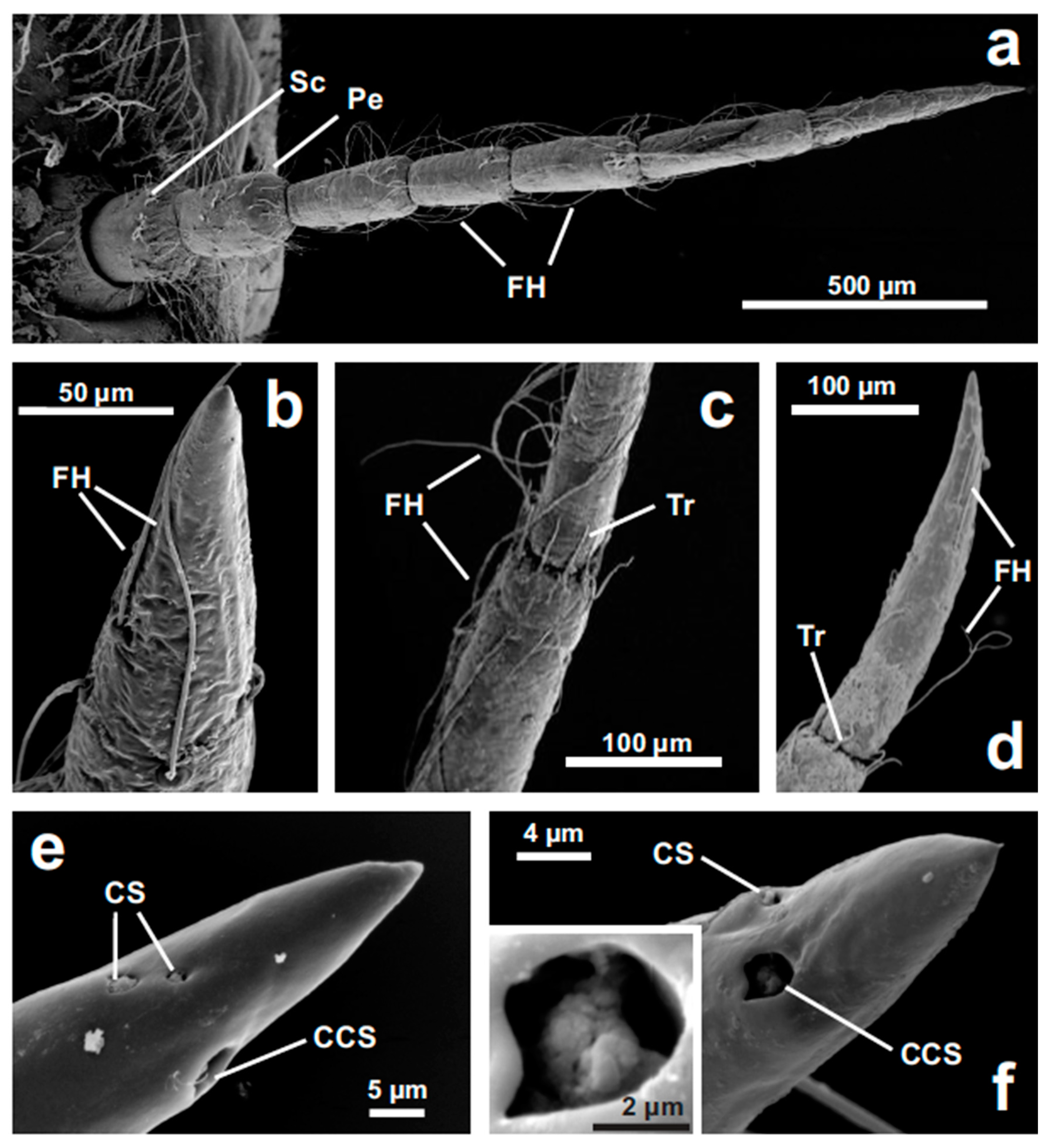
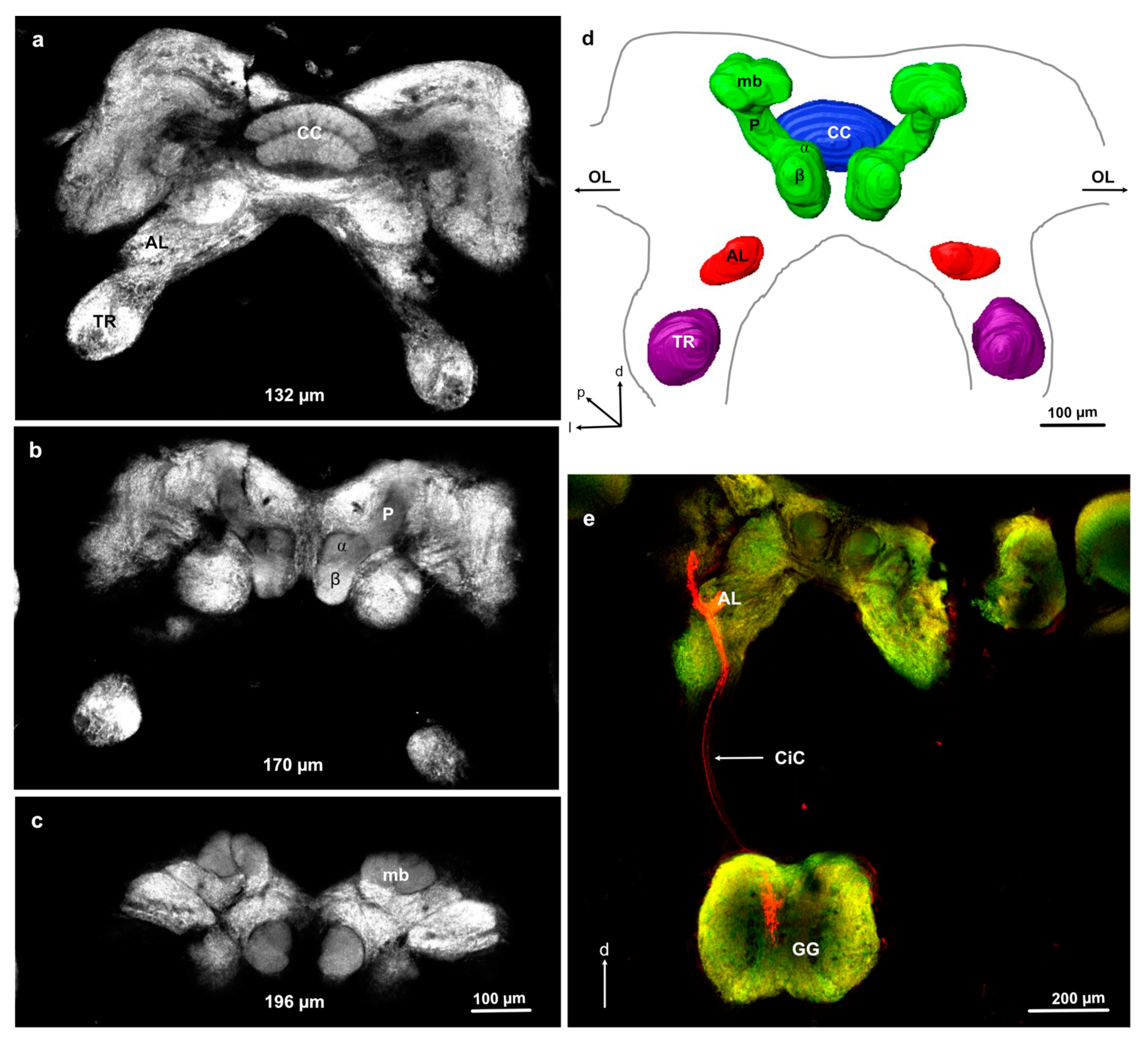
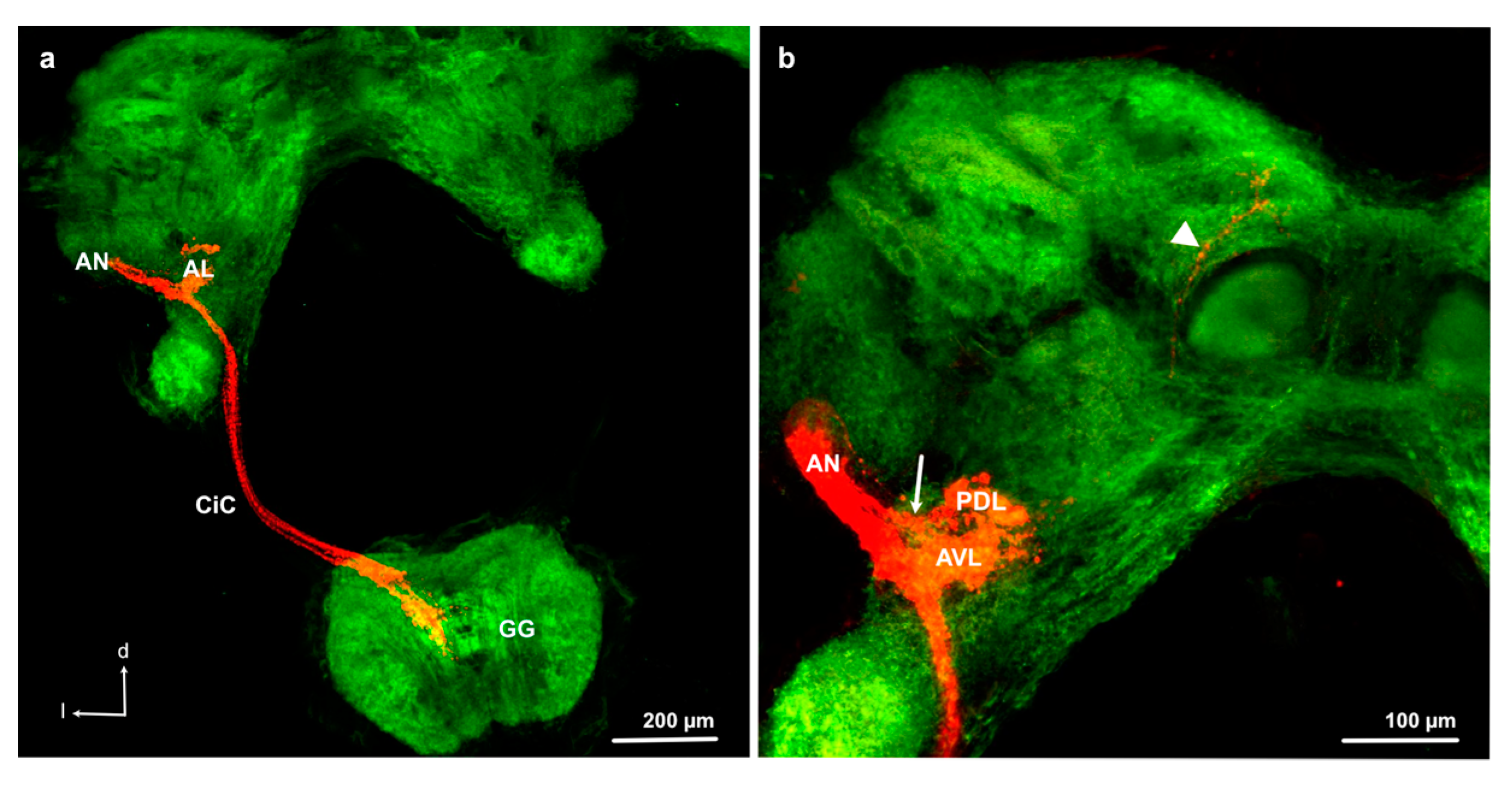
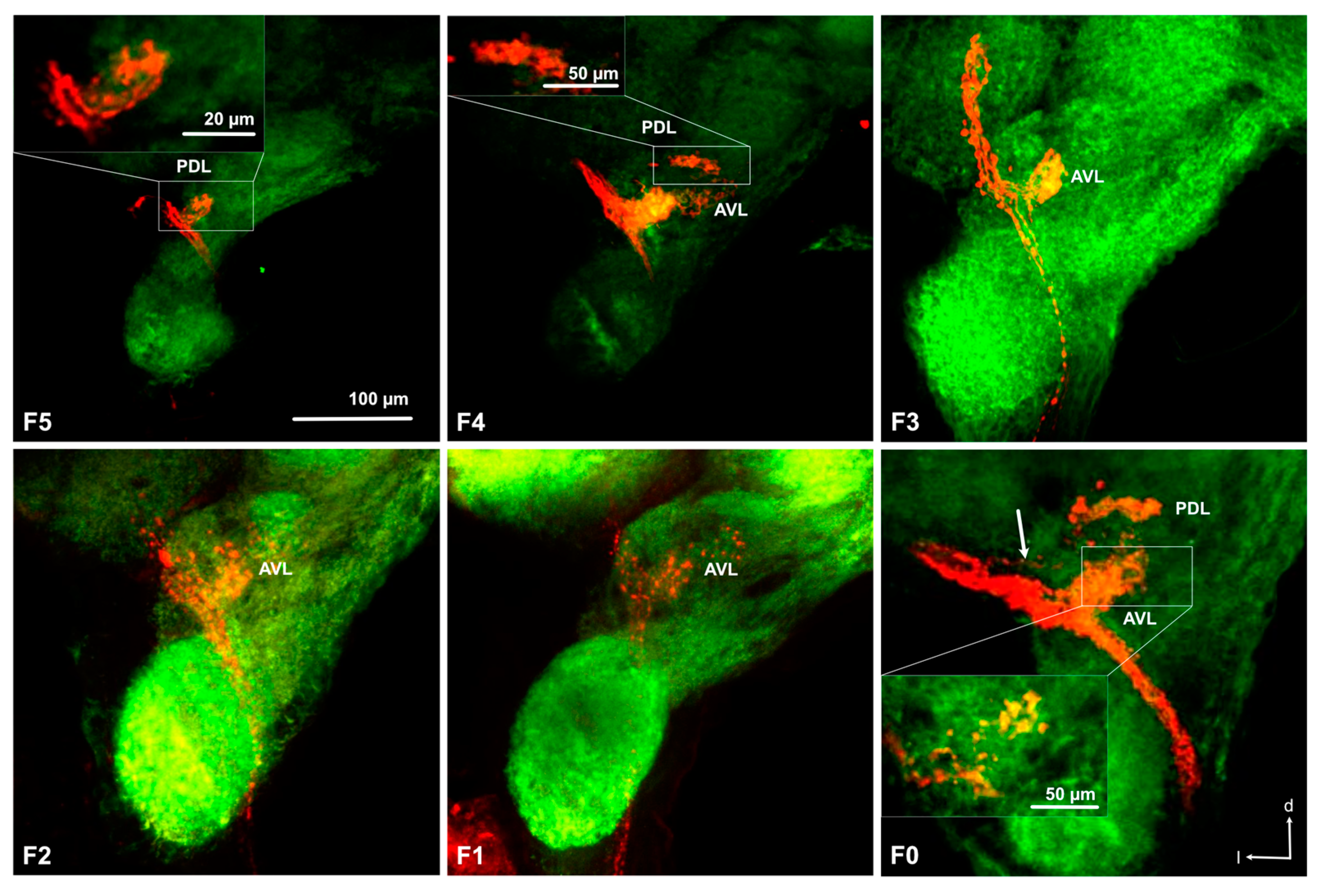
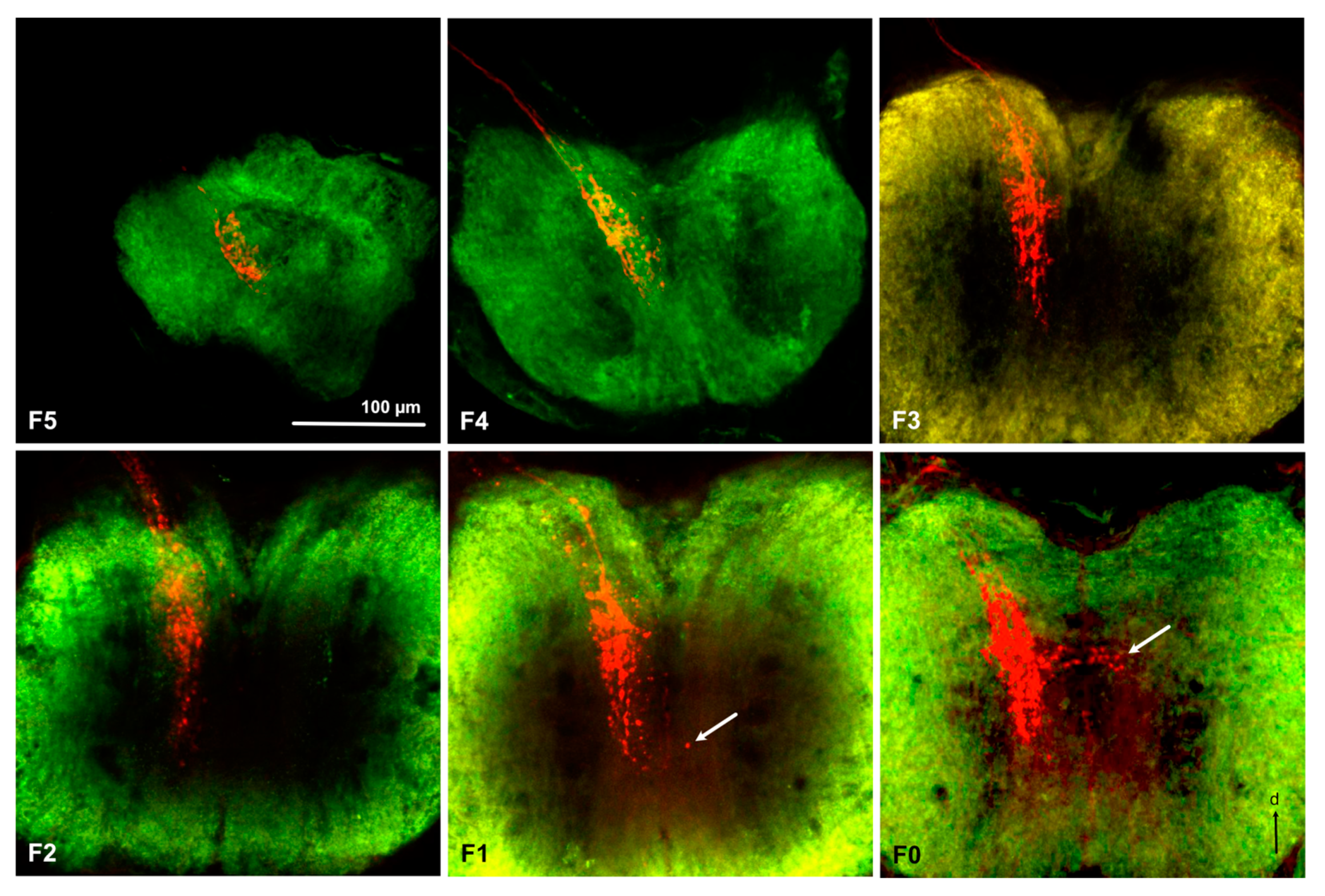
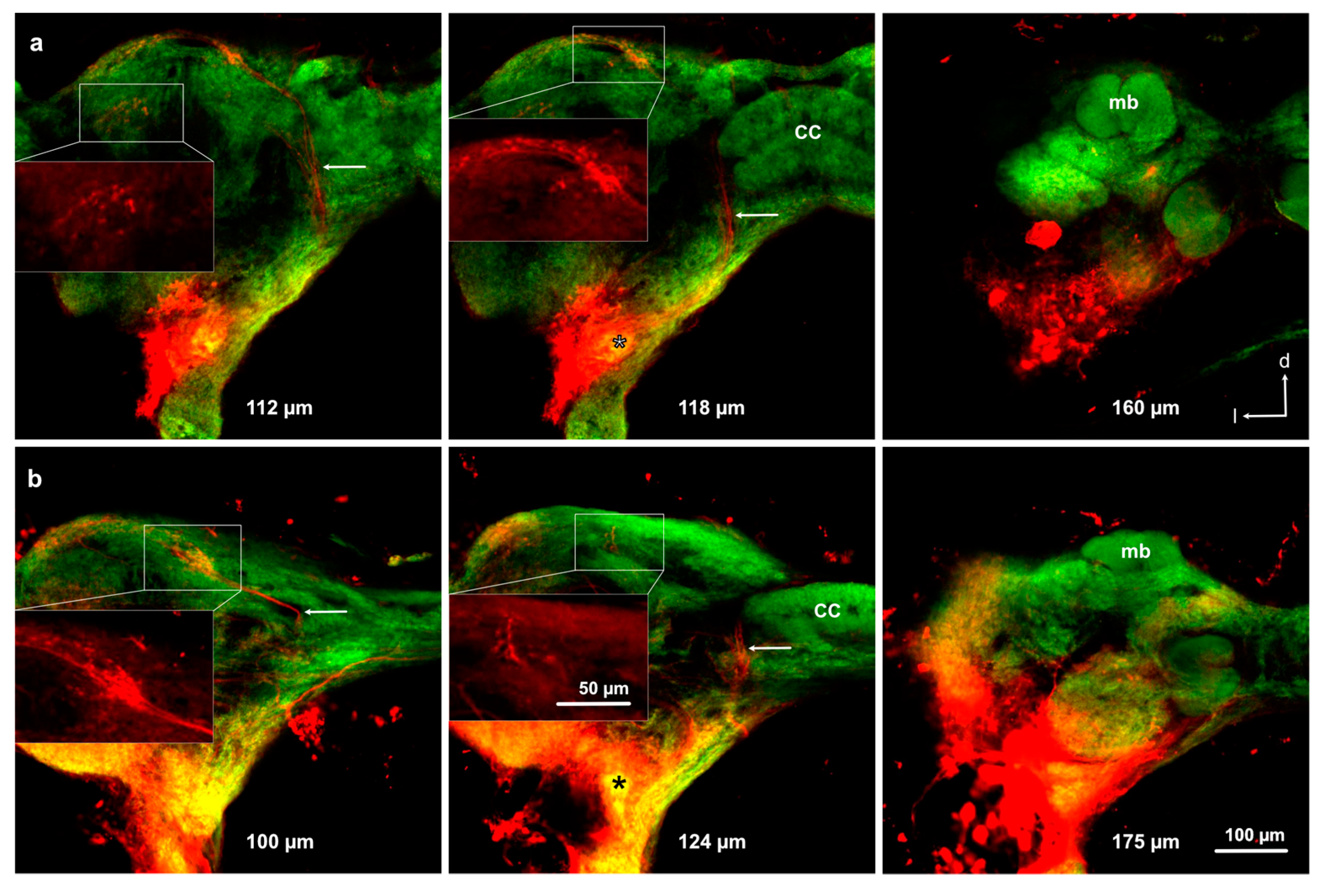
Dragonflies are hemimetabolous insects, switching from an aquatic life style as nymphs to aerial life as adults, confronted to different environmental cues. How sensory structures on the antennae and the brain regions processing the incoming information are adapted to the reception of fundamentally different sensory cues has not been investigated in hemimetabolous insects. Here we describe the antennal sensilla, the general brain structure, and the antennal sensory pathways in the last six nymphal instars of Libellula depressa, in comparison with earlier published data from adults, using scanning electron microscopy, and antennal receptor neuron and antennal lobe output neuron mass-tracing with tetramethylrhodamin. Brain structure was visualized with an anti-synapsin antibody. Differently from adults, the nymphal antennal flagellum harbors many mechanoreceptive sensilla, one olfactory, and two thermo-hygroreceptive sensilla at all investigated instars. The nymphal brain is very similar to the adult brain throughout development, despite the considerable differences in antennal sensilla and habitat. Like in adults, nymphal brains contain mushroom bodies lacking calyces and small aglomerular antennal lobes. Antennal fibers innervate the antennal lobe similar to adult brains and the gnathal ganglion more prominently than in adults. Similar brain structures are thus used in L. depressa nymphs and adults to process diverging sensory information.