1. Introduction
Hydraulic transmission technology, owing to its high power density, precise controllability, and flexible system layout, has been widely adopted across aerospace, heavy machinery, marine engineering, and renewable energy sectors [
1]. As aviation equipment evolves toward higher operating pressures and faster reciprocating speeds, the operating pressure of aircraft hydraulic actuators has continuously increased, which imposes stringent requirements on the tribological performance and long-term reliability of sealing structures and long-term service reliability [
2,
3]. Industry statistics indicate that seal-related failures account for approximately 30% of all hydraulic system incidents, among which dynamic seal failures constitute over 90% of seal-related malfunctions [
4]. Therefore, systematic investigation of the wear mechanisms and performance evolution of high-performance hydraulic dynamic seals under multiple working conditions is of critical engineering significance for ensuring equipment safety and extending seal service life.
Hydraulic reciprocating seals are essential components designed to prevent fluid leakage and external contaminant ingress during piston rod reciprocation. They are typically manufactured from polymeric materials such as polyurethane (PU), nitrile-butadiene rubber (NBR), or polytetrafluoroethylene (PTFE) [
1]. Among various sealing configurations, the VL-type seal-a rubber-polymer composite structure composed of a PTFE V-shaped sliding ring and an NBR O-ring-has gradually replaced conventional O-rings and step seals in aviation actuators due to its superior leakage control capability and favorable friction–wear characteristics [
5,
6]. The VL seal integrates the elasticity of the rubber O-ring with the dimensional stability and wear resistance of the PTFE sliding ring, and has been widely adopted in high-performance aviation hydraulic systems [
7]. Compared with conventional O-rings, the VL seal exhibits more stable friction behavior under high-frequency reciprocation; relative to step seals, it exhibits lower wear severity and eliminates the risk of structural inversion under high pressure [
8].
Significant progress has been achieved in the theoretical and numerical investigation of hydraulic reciprocating seals in recent decades. In the domain of lubrication theory, the elastohydrodynamic lubrication (EHL) model, which couples the Reynolds equation for fluid flow with the elastic deformation equations of the contacting solids describing fluid flow with the elastic deformation equation for the contacting solids, has become a foundational tool for predicting the film thickness and pressure distribution at the sealing interface [
9,
10,
11,
12]. Field and Nau [
13] introduced an early EHL formulation for rectangular seals that integrated experimental pressure distributions with force balance conditions to iteratively determine film thickness. Building upon this work, Ruskell [
14] advanced a Newton–Raphson iterative solution scheme that accounted for the pressure–viscosity dependence of the lubricant, thereby extending the applicability of EHL analysis to higher operating pressures exceeding 30 MPa and capturing both in-stroke and out-stroke conditions. Salant and co-workers [
15] developed a comprehensive mixed-EHL model incorporating surface roughness and cavitation effects, which has served as the theoretical basis for numerous subsequent investigations. Concurrently, the inverse hydrodynamic lubrication (IHL) theory, first introduced by Kanters et al. [
16], has provided an alternative computational route for high-load sealing applications. The mixed lubrication model proposed by Li and Suo [
17] based on IHL theory further incorporated asperity contact pressure and contact friction, offering a more realistic representation of interfacial interactions under mixed lubrication regimes. A recent study by Kim et al. [
18] combined IHL theory with the Greenwood–Williamson contact model and considered frictional thermal effects, systematically examining the influence of ambient temperature and sealing pressure on U-cup seal performance. Addressing extreme operating scenarios, Chen and Li [
19] developed a soft-EHL model considering thermo-structural coupling that accounts for hysteresis heat generation within the seal ring, frictional heat generation at the sealing interface, and the temperature dependence of the material constitutive response, achieving an average prediction error of 5% under reciprocating speeds of 0.05–0.3 m/s and hydraulic pressures of 3–11 MPa. More recently, a reciprocating seal soft EHL model considering surface roughness and cavitation effects was established, and integrated with deep learning algorithms for multi-objective optimization; the optimized design achieved a 12.5% reduction in leakage, a 10.56% reduction in maximum equivalent stress, and an 11.48% reduction in friction force [
20].
The wear behavior of polymeric seals has been extensively studied using the Archard wear model, which postulates that wear volume is proportional to contact pressure and sliding distance [
21,
22,
23]. For PTFE-based sealing components, a performance prediction model combining the Archard wear law with experimental calibration was recently established, enabling accurate simulation of friction torque evolution; the deviation between simulated and experimental data remained within ±5% after a certain amount of wear [
24]. Wang et al. [
25] investigated the friction/wear degradation behavior of seal rings in aircraft flap hydraulic actuators, revealing that the wear mechanism is dominated by abrasive wear, and they developed a back-propagation neural network model for wear depth prediction with high predictive accuracy. In the context of VL seals, Ouyang et al. [
5] conducted an early analysis of the static sealing characteristics of VL seals in aviation actuators. Xu et al. [
8] investigated the effect of wear on the sealing performance of VL structures and identified the reduction in maximum contact pressure as the primary cause of performance degradation. A recent tribology-driven design framework employing finite element analysis, machine learning-assisted screening, and long-stroke bench tests revealed that lip inclination angle and lip-O-ring interface thickness primarily govern stress distribution and lip deformation; the recommended design exhibited a stable lubrication window between 21 and 28 MPa, achieving long-term leakage reduction and friction stabilization [
26]. Fluid–structure interaction-coupled finite element analysis of VL seals under high-pressure conditions further confirmed that friction force increases with oil pressure due to contact width expansion, whereas reciprocating velocity has no significant effect on the pressure-dependent increase in friction force [
27]. A mixed thermoelastohydrodynamic lubrication (TEHL) analysis for VL seals adapted to deep-sea hydraulic systems demonstrated that as environmental and operating pressures increase, stress concentration intensifies and the lip area becomes particularly prone to damage; optimizing the sealing structure can achieve low friction and minimal leakage simultaneously [
28].
Despite these advances, several critical gaps remain in the understanding of VL seal wear behavior, particularly for aerospace applications involving extreme operating envelopes. First, existing studies predominantly focus on single-variable influences, whereas the coupling effects among compression ratio, hydraulic pressure, reciprocating velocity, and temperature on wear evolution have not been systematically investigated. Second, the temperature range considered in most works is limited to moderate conditions; the wide temperature window required for aviation hydraulic actuators (−55–135 °C) and its effect on material properties and wear behavior have received insufficient attention. Third, while parametric analysis of VL seals has been explored, the critical criterion distinguishing single-point from multi-point contact—and its relationship with seal failure—remains to be fully established. Choi et al. [
29] recently demonstrated that NBR seals undergo pronounced embrittlement at elevated temperatures, and proposed a degradation map with hyper-elastic model-switching guidelines; however, such temperature-dependent material responses have not been adequately integrated into wear simulations of VL seals. Furthermore, accelerated thermal aging of PTFE sealing materials under high-temperature conditions has been shown to significantly reduce contact pressure and Von Mises stress, ultimately affecting system reliability [
30]; yet the interplay between thermal degradation and wear progression in the sliding ring of VL seals remains underexplored.
The present study aims to address these gaps by performing a systematic numerical investigation of VL seal wear behavior under multiple working conditions. A finite element model based on the Mooney–Rivlin hyper-elastic constitutive law for NBR and the Archard wear law for PTFE is established using MSC. Marc. The influence of compression ratio (8–20%), hydraulic pressure (4–28 MPa), reciprocating velocity (0.1–0.3 m/s), and temperature (−55–135 °C) on cumulative wear depth, wear rate, and contact state is analyzed. A structural modification strategy—adding height and thickness to the L-ring while reducing the O-ring cross-section diameter and reserving deformation space—is proposed and validated through comparative simulations. The results elucidate the critical compression ratio threshold beyond which single-contact sealing transitions to multi-contact sealing and seal failure occurs, providing theoretical guidance for the optimal design of VL seals in high-pressure aviation hydraulic actuators.
2. Methodology
2.1. Seal Geometry and Finite Element Model
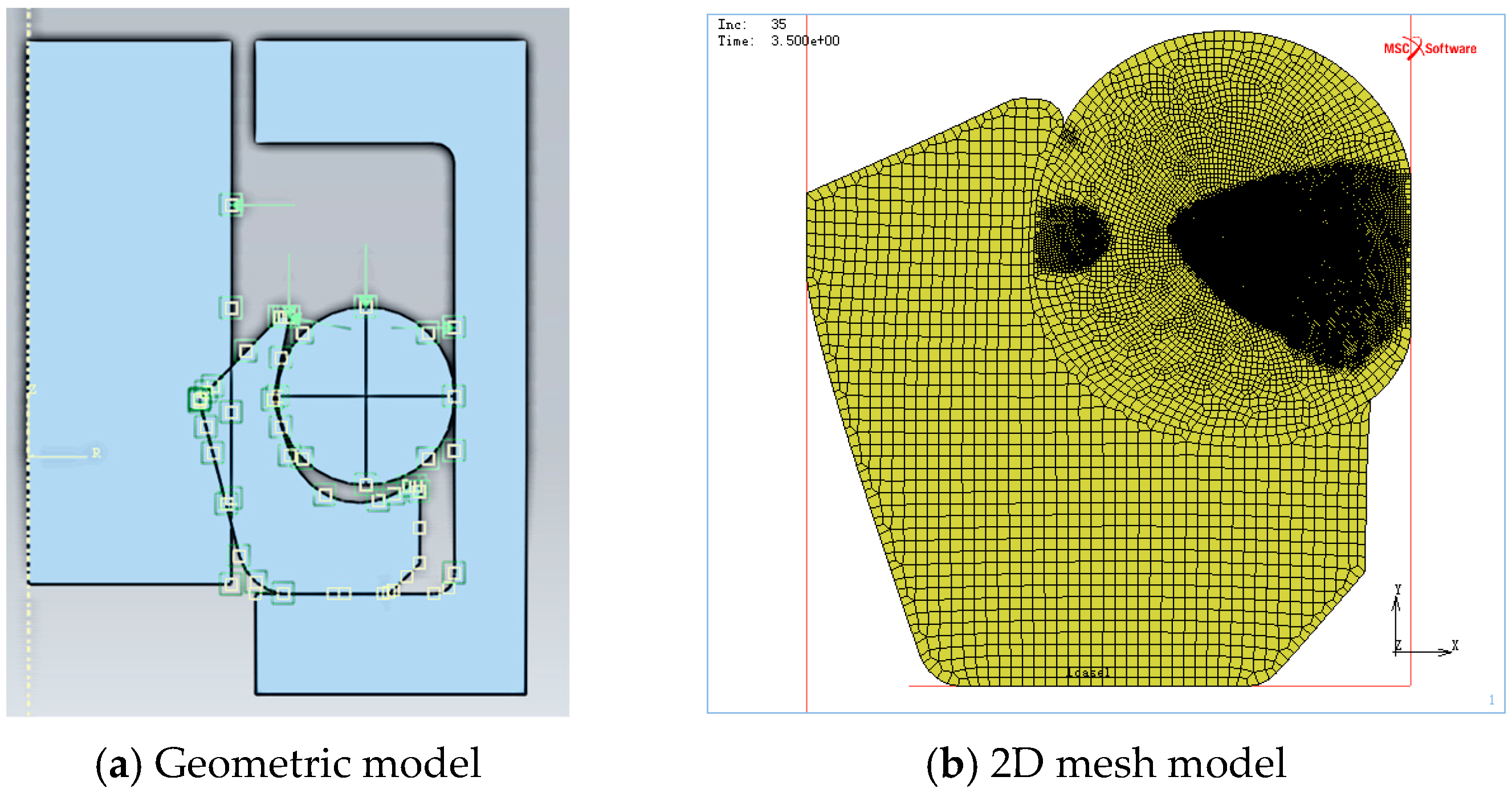
The VL-type seal widely used in aviation hydraulic actuators was selected as the object of investigation. The VL seal is composed of a polytetrafluoroethylene (PTFE) L-ring combined with a nitrile-butadiene rubber (NBR) O-ring. Its structure is simplified into a two-dimensional plane strain model, as shown in
Figure 1.
In the VL seal model shown in
Figure 1, the L-ring serves as the wear-resistant component and contacts the cylinder wall, while the O-ring provides preload and compensates for wear. Deformation of the cylinder wall and the groove is neglected, and they are set as rigid boundaries. The geometric dimensions of the L-ring and O-ring were proportionally scaled based on engineering drawings to facilitate the analysis of wear characteristics.
2.2. Material Constitutive Models
2.2.1. Rubber Material (O-Ring)
The O-ring was modeled as an incompressible NBR elastomer. To capture its nonlinear elastic response under compression, a two-parameter Mooney–Rivlin model was adopted. The strain-energy density used in the finite element model is given by:
In this expression,
and
denote the first and second invariants of the deformation tensor, respectively, whereas
and
are temperature-dependent material coefficients. The Mooney–Rivlin coefficients at different temperatures are set according to ref. [
31]; for example, at 25 °C,
and
. The rubber material is assumed to be incompressible.
2.2.2. L-Ring Material
The L-ring material is polytetrafluoroethylene (PTFE), for which a linear elastic constitutive model is adopted with an elastic modulus of 280 MPa and a Poisson’s ratio of 0.4. The PTFE L-ring was treated as a linear elastic component because its deformation was much smaller than that of the NBR O-ring in the present contact configuration. Its elastic modulus and Poisson’s ratio were set to 280 MPa and 0.40, respectively. A hardness of 193 HV was used in the wear calculation.
In the present model, viscoelasticity, creep, and hysteresis of PTFE and NBR were not explicitly considered. This simplification was adopted because the main purpose of this study is to compare the relative effects of compression ratio, hydraulic pressure, sliding velocity, and temperature on the contact state and wear tendency of the VL seal, rather than to predict the long-term time-dependent deformation of the polymer materials. The temperature effect was introduced through temperature-dependent material parameters, including the Mooney–Rivlin coefficients of NBR and the elastic modulus of PTFE. Nevertheless, it should be noted that neglecting viscoelasticity, creep, and hysteresis may influence the prediction accuracy under high-temperature and dynamic reciprocating conditions. More comprehensive viscoelastic and creep material models will be considered in future work together with experimental validation.
2.3. Wear Model
Wear of the PTFE L-ring was evaluated using the classical Archard law, in which material removal is related to the normal contact load and the accumulated sliding distance.
where
is the wear coefficient and
is the material hardness.
In incremental form, the wear depth rate
is expressed as:
where
is the normal contact stress and
is the relative sliding velocity.
Because the PTFE L-ring is the primary sliding component in contact with the cylinder wall, wear was assigned only to the L-ring surface. The hardness used in the wear model was 193 HV, and the wear coefficient was specified as . The O-ring was not assigned wear because it mainly provides elastic preload and does not directly slide against the counterface.
A Coulomb friction model was adopted, with the friction coefficient set to 0.05. This value was used to represent the relatively low-friction condition of the PTFE L-ring sliding against the metallic counterface under aviation hydraulic oil lubrication. Under this condition, the sealing interface is assumed to operate mainly in a lubricated or mixed-lubrication regime rather than dry sliding. In the present model, the friction coefficient was treated as constant to focus on the relative effects of structural and operating parameters on contact stress and wear evolution. The possible dependence of friction coefficient on temperature, sliding velocity, pressure, lubricant viscosity, and PTFE transfer-film formation was not explicitly considered, which is a limitation of the present study.
2.4. Contact Algorithm and Mesh Generation
Contact between the deformable seal components and the rigid boundaries was handled using the direct-constraint contact formulation available in MSC Marc. Large relative motion along the sealing interface was captured by the finite-sliding option. Contact detection was performed using a finite-sliding algorithm, and the contact status between slave nodes and the master surface is checked at each incremental step.
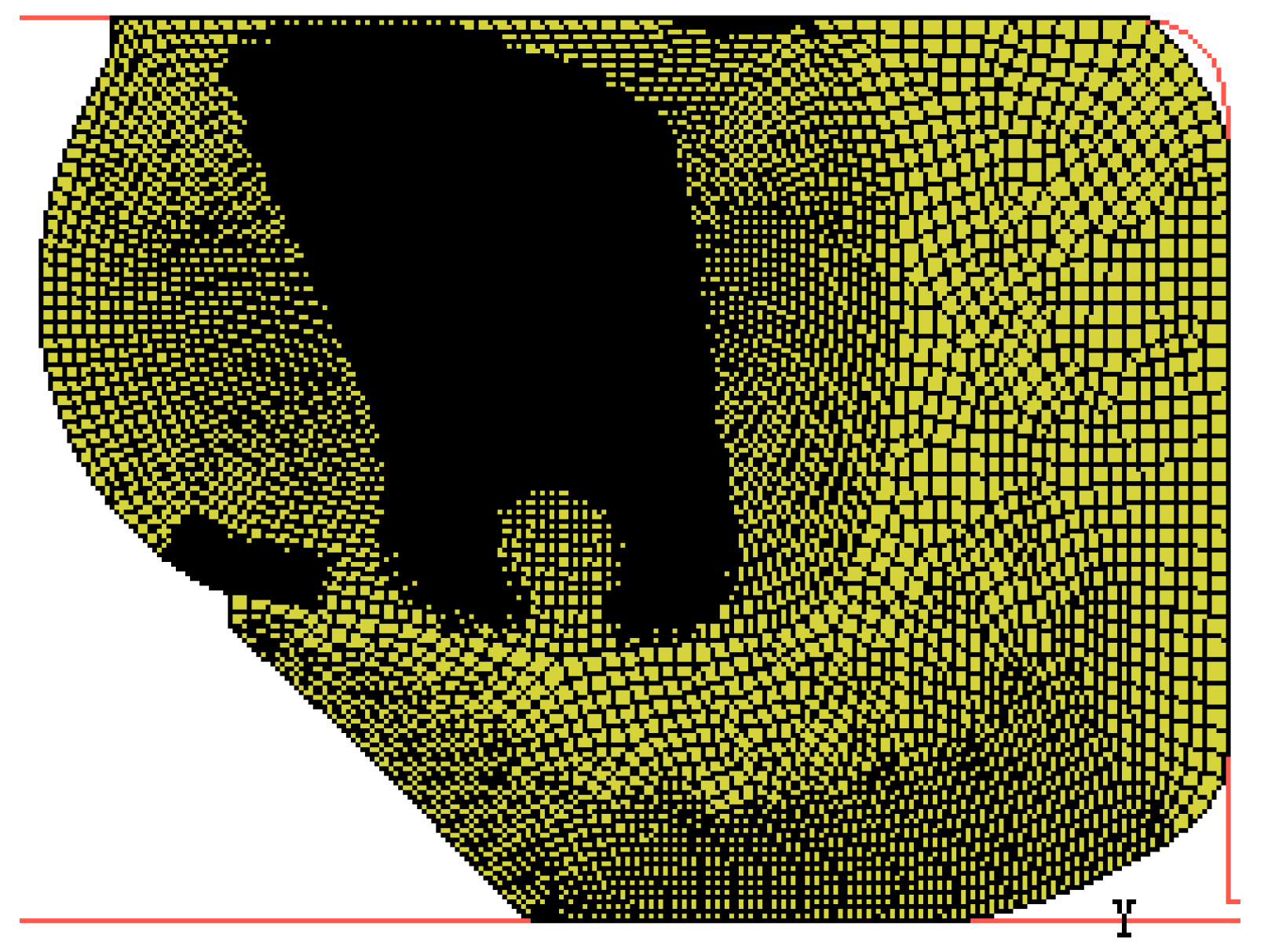
For mesh generation, The L-ring and O-ring are discretized using four-node bilinear quadrilateral elements (Quad4) show as
Figure 2. To prevent element distortion caused by large strains, the local mesh refinement function is activated. Adaptive local remeshing was used to maintain element quality in regions with large deformation and high contact stress. Refinement was triggered when the element equivalent stress exceeded 50% of the global maximum or when contact penetration exceeded 0.01 mm. In both cases, level-3 local refinement was applied automatically during the solution process.
The typical mesh consists of approximately 1859 elements. Mesh sensitivity analysis confirms that, at this density, the error in the maximum tensile stress compared to a finer mesh is less than 0.2%, which satisfies the accuracy requirements.
2.5. Boundary Conditions and Load Application
2.5.1. Compression Ratio
The compression ratio is defined as the percentage reduction in the cross-sectional diameter of the O-ring. Values of 8%, 12%, 16%, and 20% are adopted. The prescribed squeeze was introduced by moving the rigid groove radially toward the seal until the target compression ratio was reached.
2.5.2. Hydraulic Pressure
Hydraulic pressure was applied to represent the sealed aviation hydraulic oil. Four pressure levels, 4, 12, 20, and 28 MPa, were considered, and each target pressure was reached through a linear ramp from 0 MPa within 1 s (the loading position is shown in
Figure 3).
2.5.3. Relative Sliding Velocity
The counterface (cylinder wall) slides relative to the L-ring at a constant velocity of 0.1 m/s. The motion process is divided into three stages:
0–1 s: The counterface is pressed down to complete the assembly.
1–2 s: Pressure was applied to the chamber on the side opposite to the sliding direction.
2–5 s: The counterface moves at a constant speed of 0.1 m/s and completes one reciprocating cycle.
2.5.4. Temperature
The temperature ranges from −55–135 °C, including five operating points: −55 °C, −30 °C, 25 °C, 80 °C, and 135 °C. The temperature effect is implemented by varying the material parameters (Mooney-Rivlin coefficients and PTFE elastic modulus).
2.5.5. Radial Acceleration
Considering that aviation actuators may be subjected to radial acceleration, the mass density of the deformable body is set to unity. Radial accelerations of −0.3, 0, and 0.3 m/s2 were imposed normal to the sealing counterface to examine the influence of transverse inertial loading on the normal contact force and wear response. Gravity influences the wear behavior by altering the normal force.
2.6. Solution Control and Output
The Marc nonlinear solver is used with the large deformation option enabled. Within each incremental step, the change in contact status is first checked. If a change occurs, it is marked as a severe discontinuity iteration, and the contact constraints are reassigned. Only after the contact status stabilizes is the equilibrium convergence check performed.
The output variables include:
Cumulative wear depth: The accumulated wear depth of a node in the normal direction (dimensionless index);
Wear rate: The rate of change of wear depth per unit time;
The wear peak values and their locations are extracted through post-processing, and wear distribution contours and curves are plotted.
2.7. Model Validation and Improvement
To address the possible inversion failure of the VL seal under high-speed, low-pressure conditions, a parametric analysis scheme is proposed: increasing the height of the L-ring lip area, reducing the cross-sectional diameter of the O-ring, and reserving more deformation space for the O-ring. The above simulation procedure is repeated for the improved structure to compare the wear performance.
3. Results and Discussion
3.1. Effect of Compression Ratio on Wear of the VL Seal
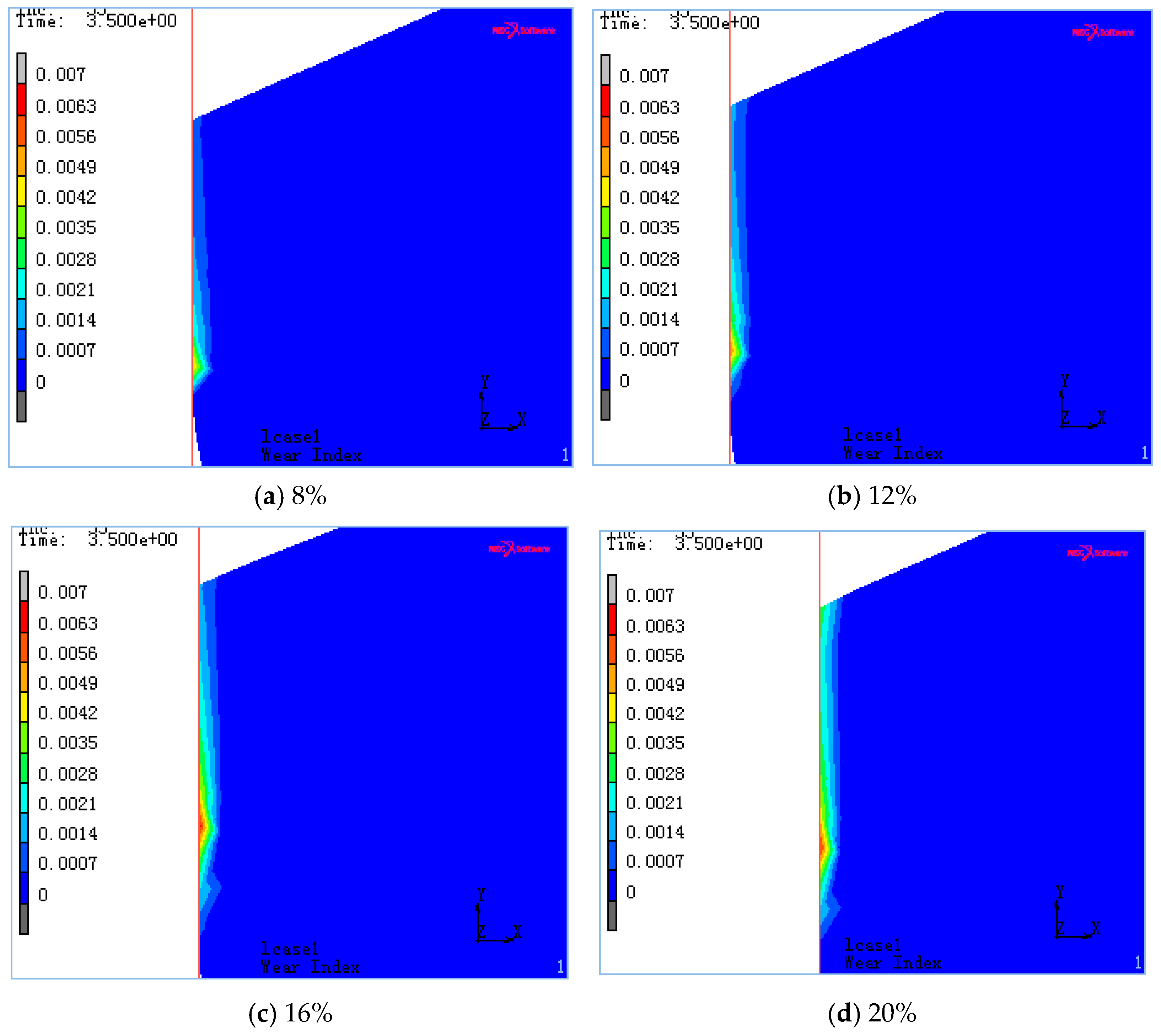
Figure 4 shows the cumulative wear depth contours on the counterface between the L-ring and the cylinder wall at compression ratios of 8%, 12%, 16%, and 20%. At 8% compression ratio, wear is concentrated near the initial contact point in the lower-middle region of the L-ring, forming a narrow localized wear band. When the compression ratio increases to 12%, the wear region widens slightly. At 16%, the wear band expands further toward both sides. At 20%, the wear covers a wider range and two discrete high-wear zones appear. The expansion of the wear region is positively correlated with the compression ratio, because a higher compression ratio increases the preload of the O-ring, pressing the L-ring more tightly against the cylinder wall and thereby increasing the contact area. According to the Archard model, the wear depth is proportional to the contact stress and the sliding distance. An increase in contact area causes the high-stress region to spread from a single contact point toward both sides, manifesting as a broadening of the wear band. Between 16% and 20%, the contour intensity in the central region of the wear band does not increase markedly, but high-wear regions appear near the edges. This indicates that after the compression ratio exceeds a threshold, the wear growth at the original contact point tends to saturate, and the upper edge of the lip begins to participate in contact and generates new wear concentration—indicating the onset of a transition from single-point to multi-contact sealing.
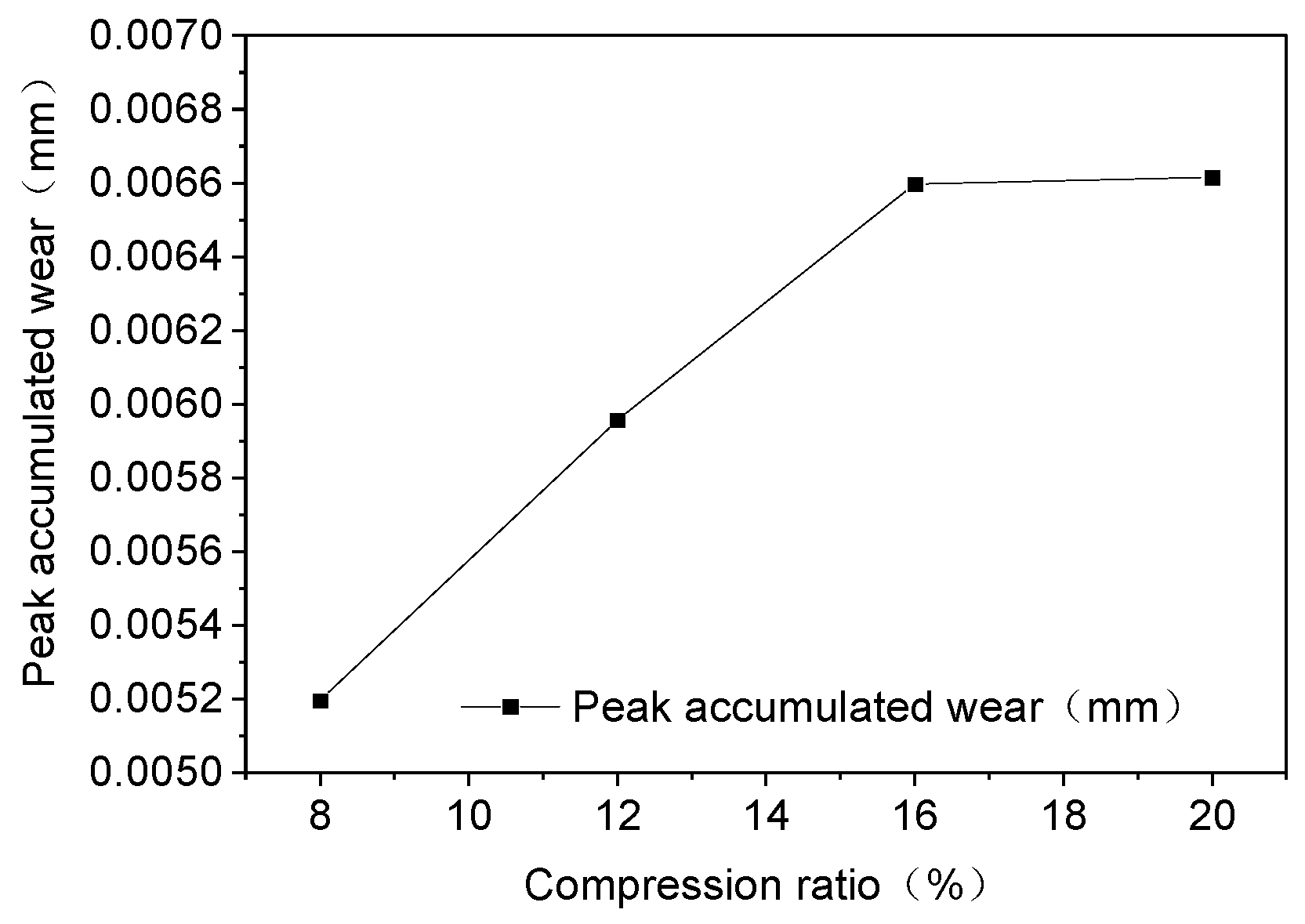
Figure 5 shows that the peak cumulative wear depth values corresponding to compression ratios of 8%, 12%, 16%, and 20% are 0.005196 mm, 0.005957 mm, 0.006597 mm, and 0.006615 mm, respectively. The curve increases approximately linearly in the range of 8–16% and then remains almost flat in the range of 16–20%. The linear segment is consistent with the Archard model expectation: a higher compression ratio increases the normal stress, leading to greater wear. After 16%, the peak no longer increases, indicating a marked change in the contact stress distribution—the upper edge of the L-ring begins to contact the cylinder wall, sharing the normal force and causing the local stress at the original contact point to no longer rise with further compression. This plateau phenomenon has important engineering implications: focusing solely on the wear peak may incorrectly suggest that increasing the compression ratio does not aggravate wear, whereas in reality the seal has transitioned from single-point to double-point contact. The newly added contact point alters the oil film distribution and increases the risk of leakage. Therefore, the stagnation of the peak cumulative wear depth should be regarded as a critical warning rather than a performance improvement.
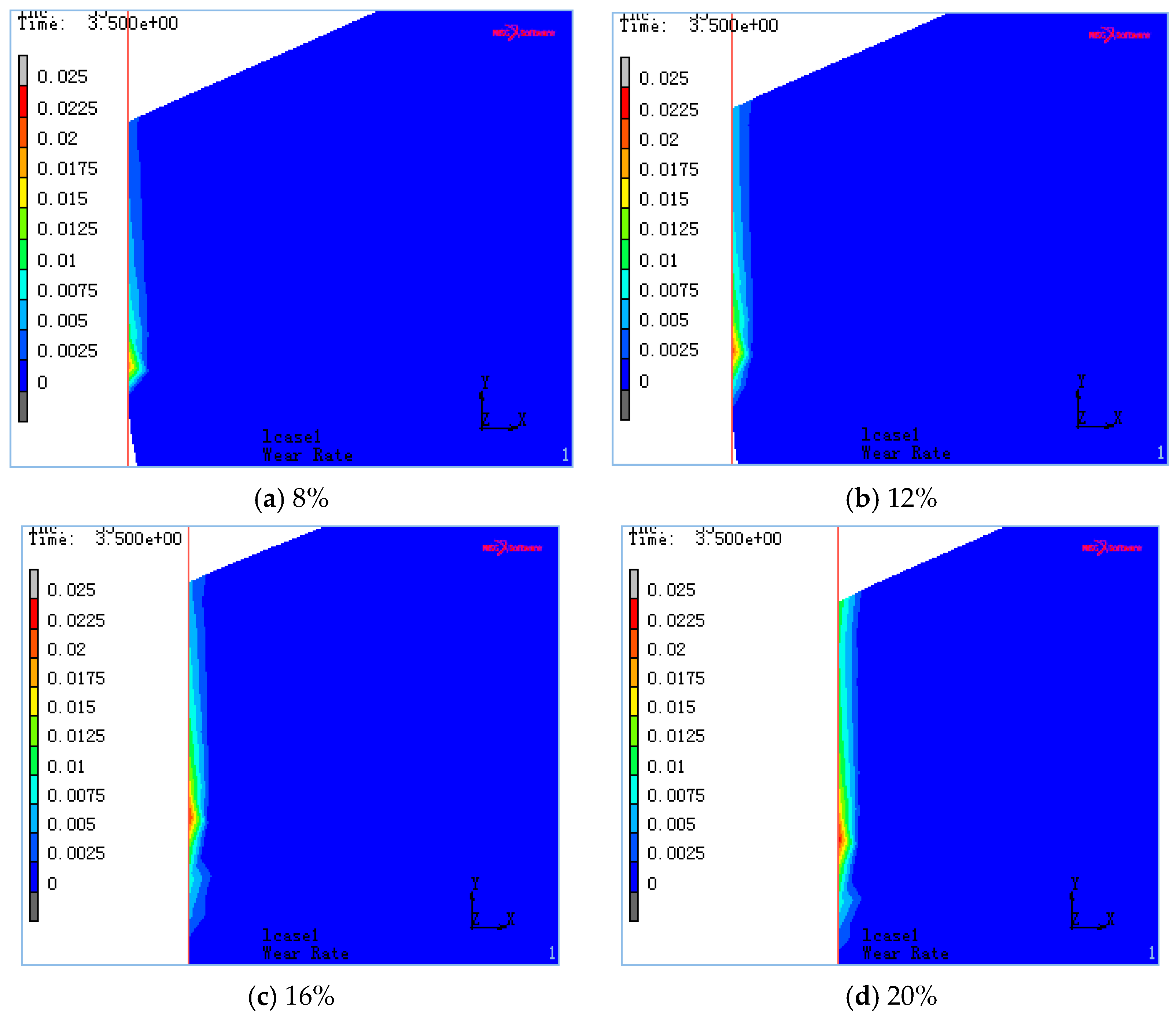
Figure 6 shows the distribution of wear rate at the end of the simulation under various compression ratios. At 8%, a high wear rate appears only at the contact point of the L-ring and its immediately adjacent nodes. At 12%, the high-wear region expands slightly. At 16%, in addition to the original contact point region, the upper edge of the lip begins to exhibit a significant wear rate, forming two separated high-value zones. At 20%, the two high-wear zones become more pronounced, and the peak rate at the original contact point decreases somewhat.
The wear rate reflects the instantaneous wear intensity. During the 8–12% period, the wear rate remains concentrated at the original contact point, indicating that the stress concentration has not been alleviated. When the compression ratio reaches 16%, the nodes on the upper edge begin to participate in wear, demonstrating that the normal contact stress at that location has risen to a level sufficient to produce significant wear. At this stage, the number of nodes involved in wear increases, but the stress at the original contact point is partially relieved, so its wear rate no longer increases and even decreases slightly.
The transition from single-point wear to multi-point wear is a continuous mechanical process: increasing the compression ratio enlarges the deformation of the L-ring, gradually reducing the gap between the upper edge and the cylinder wall until the normal contact stress exceeds a critical value and visible wear occurs. Once double-point contact is formed, the sealing interface loses its ideal single sealing band; multi-point contact often leads to oil film discontinuity and increases the risk of micro-leakage paths. Therefore,
Figure 6 intuitively shows the onset of seal failure—the appearance of a second distinct high-value zone in the wear rate contour.
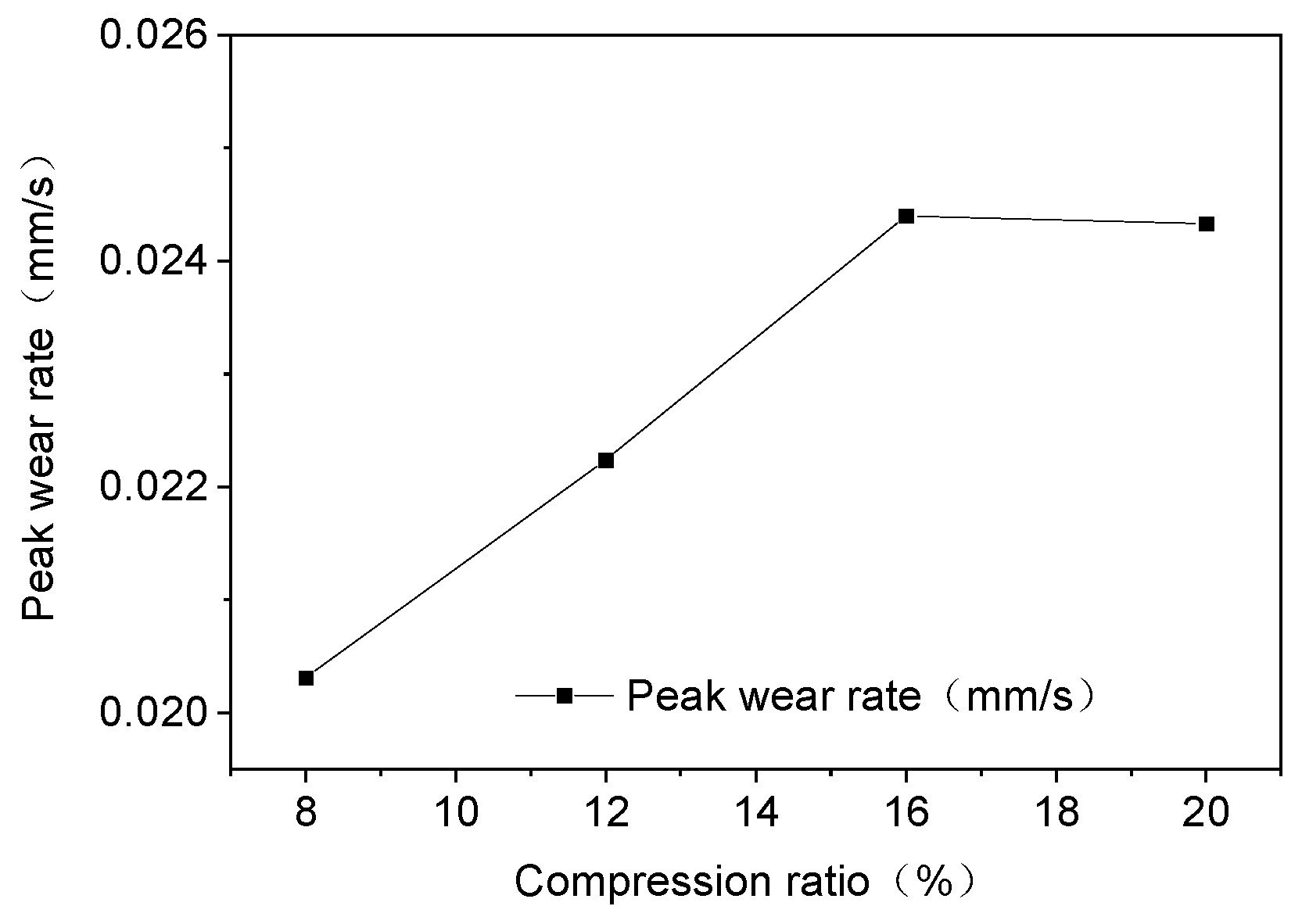
Figure 7 shows that the peak wear rate increases monotonically in the compression ratio range of 8–16%, reaches a maximum at 16%, and then decreases slightly in the range of 16–20%. Simultaneously, a secondary peak gradually appears in the upper region of the L-ring. The decrease in the peak wear rate after 16% is consistent with the plateau phenomenon of the peak cumulative wear depth, both arising from stress sharing by the newly added contact point (the upper edge of the lip). The appearance of the second peak confirms the splitting of the wear region, with the upper edge bearing a considerable proportion of the frictional work. The decrease in the peak wear rate at the original contact point does not imply an improvement in local wear, because the total wear energy is still increasing. The upper edge of the lip is originally a non-contact region; its involvement in contact indicates excessive deformation of the L-ring, which may induce fretting wear or fatigue cracks. Therefore, the slight decrease in the peak wear rate should not be regarded as a favorable change; its essence is a migration of the wear concentration location rather than a reduction in total wear.
In summary, within the compression ratio range of 8–20%, the wear behavior of the VL seal exhibits a non-monotonic evolution: initially a linear increase, followed by saturation and the appearance of a second peak. The mechanism is the dynamic competition between contact stress and contact area. When the compression ratio exceeds approximately 16%, the seal transitions from single-contact sealing to multi-contact sealing, indicating the onset of seal failure. Therefore, the design of VL seals should keep the compression ratio below this critical value to maintain single-point contact and ensure sealing performance and wear life.
3.2. Effect of Hydraulic Pressure on Wear of the VL Seal
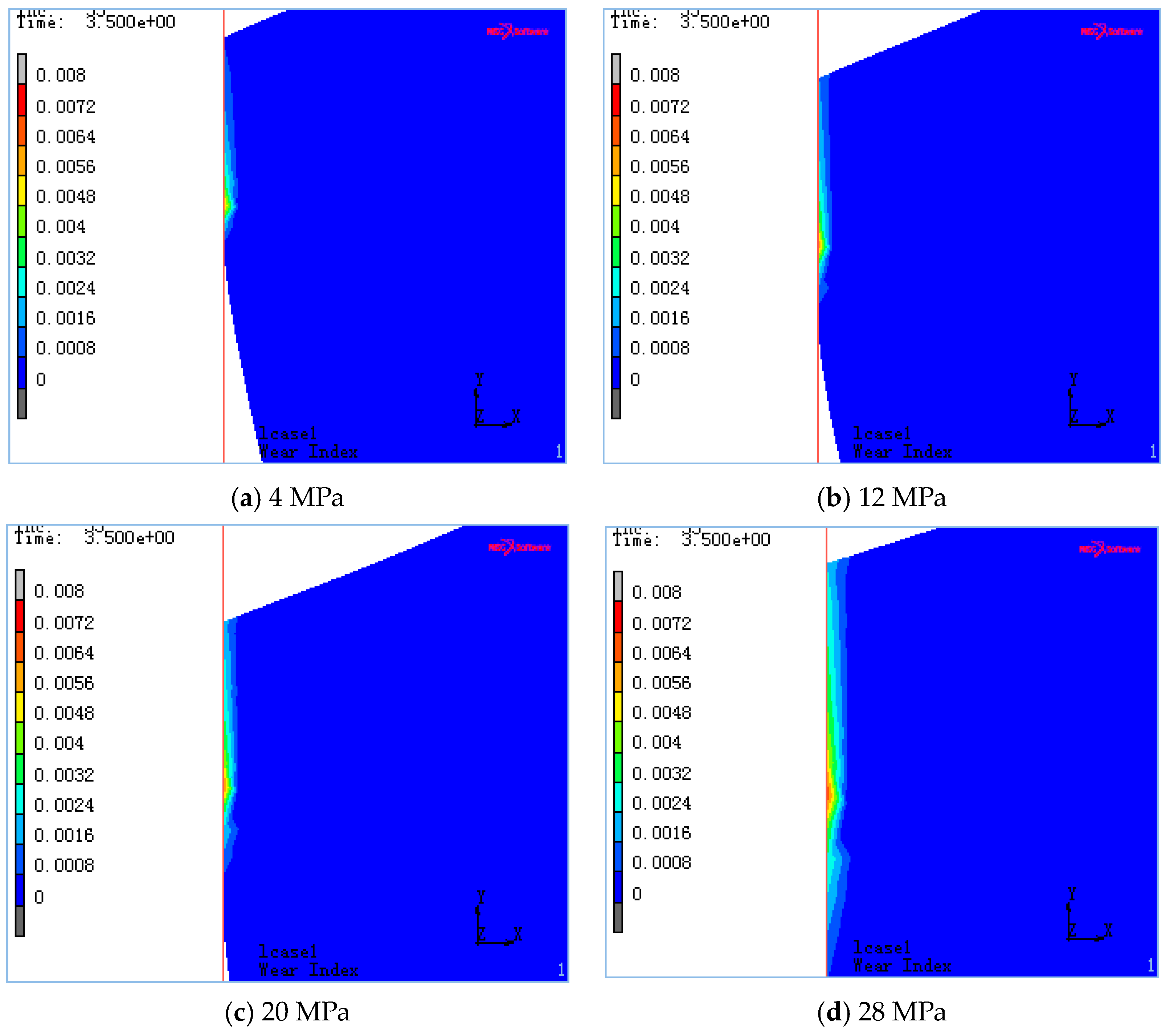
Figure 8 shows the contours of cumulative wear depth on the L-ring counterface at hydraulic pressures of 4 MPa, 12 MPa, 20 MPa, and 28 MPa. At 4 MPa, wear is concentrated in a relatively narrow region in the lower-middle region of the L-ring. As the pressure increases to 12 MPa and 20 MPa, the wear band gradually widens but remains relatively concentrated. At 28 MPa, the wear region significantly exceeds the boundary of the original contact point, and the other tip of the L-ring (the upper edge of the lip) begins to contact the cylinder wall, forming a second wear zone. The effect of hydraulic pressure on the deformation of the L-ring is more significant than that of the compression ratio, because an increase in pressure not only enlarges the thrust on the L-ring through the O-ring but also directly drives the L-ring to undergo elastic bending, gradually bringing the upper edge of the lip closer to the cylinder wall. At 28 MPa, both tips participate in wear simultaneously, yet the wear depth in the original contact region is not significantly lower than that at 20 MPa, indicating that the stress redistribution effect is not fully developed in this pressure range. The total wear depth increases linearly with pressure (from approximately 0.006 mm to 0.007236 mm between 4 MPa and 28 MPa). Thus, the driving effect of hydraulic pressure on wear is direct and sustained, and the resulting change in contact state is more distinct than that caused by variations in compression ratio.
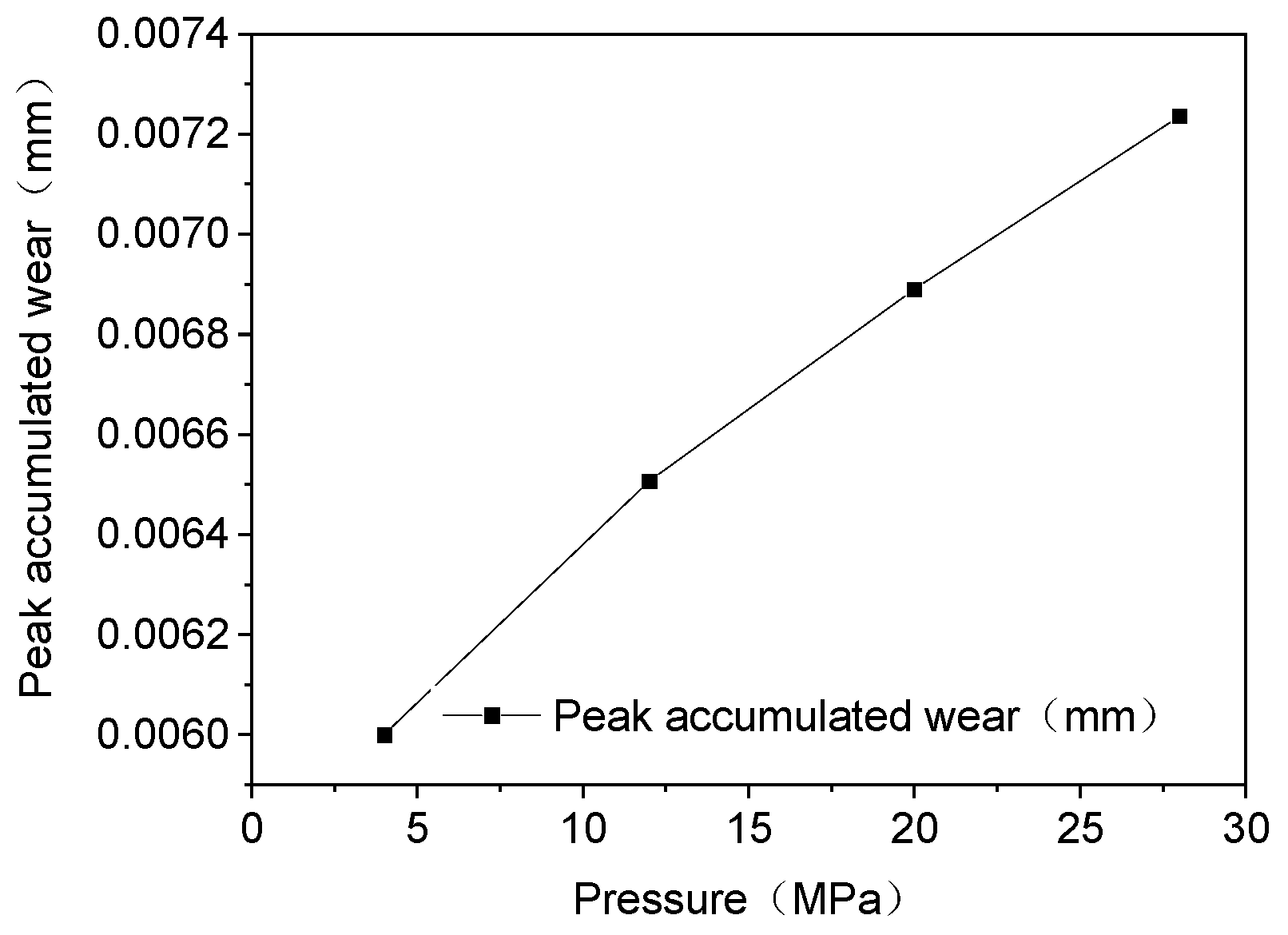
Figure 9 presents the peak cumulative wear depth as a function of hydraulic pressure (the peak values at 4 MPa, 12 MPa, 20 MPa and 28 MPa are approximately 0.006 mm, 0.0062 mm, 0.0066 mm and 0.007236 mm, respectively). The curve increases monotonically and approximately linearly throughout the tested range, without an obvious plateau or inflection point as observed under varying compression ratio. This linear trend is consistent with the Archard model: an increase in pressure directly raises the normal contact stress, thereby linearly increasing the wear. Meanwhile, the wear peak gradually shifts downward with increasing pressure, i.e., the contact point between the lip and the wall migrates toward the back-pressure side. This downward shift can be attributed to the bending deformation of the L-ring under high pressure, which displaces the maximum contact stress point from the initial lip tip toward the back-pressure side. Compared with the effect of compression ratio, hydraulic pressure acts as the dominant driving force for wear deterioration over the entire tested range, without any stress-saturation threshold. However, the continuous drift of the contact position suggests that the effective contact zone of the sealing lip is dynamically unstable, which may exacerbate clearance fluctuations and fretting wear, potentially compromising long-term sealing reliability.
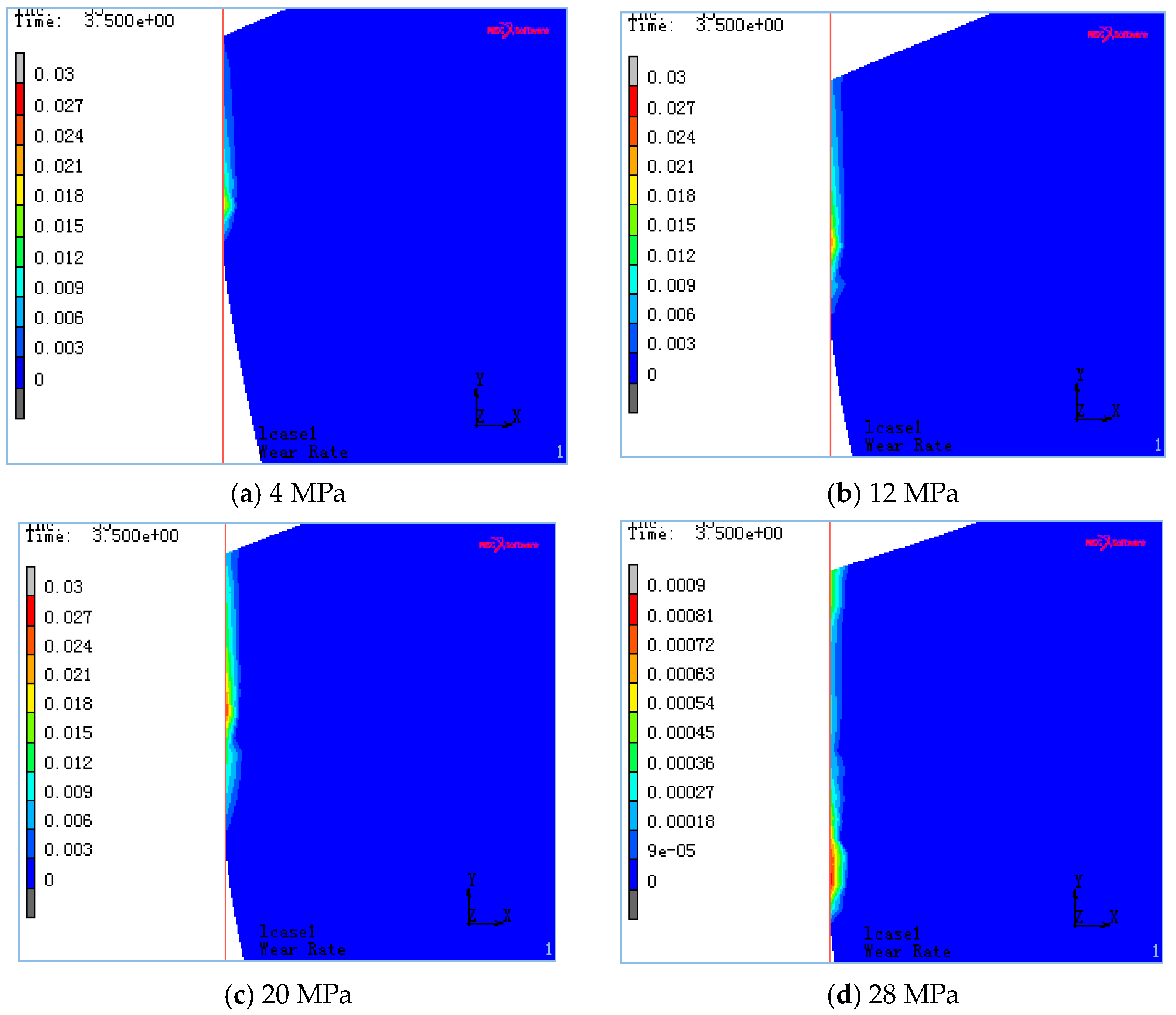
Figure 10 shows the wear rate contours at the end of the simulation under different hydraulic pressures. At 4 MPa, a high wear rate appears only at the original contact point of the L-ring. At 12 MPa and 20 MPa, the high-wear region gradually expands but still remains mainly around the original contact point. At 28 MPa, the contour clearly separates into two distinct high-value zones, located respectively at the original contact point and the upper edge of the lip, indicating that the sealing structure has transitioned from single-contact sealing to double-point sealing.
The wear rate reflects the instantaneous wear intensity. In the low-to-hydraulic pressure range (4–20 MPa), the contact stress is concentrated at the original lip tip; although the upper edge may approach the cylinder wall, it does not yet experience significant wear stress. When the pressure reaches 28 MPa, the deformation of the L-ring causes the normal contact stress at the upper edge to exceed the wear threshold, and this region begins to wear at a relatively high rate.
Unlike the double-point contact induced by compression ratio, the second contact point caused by pressure appears more abruptly (a jump from 20 MPa to 28 MPa), and the wear rate at the original contact point does not decrease significantly, indicating that both regions simultaneously bear considerable contact stress. This transition alters the frictional heat distribution and oil film continuity, accelerating the degradation of sealing performance.
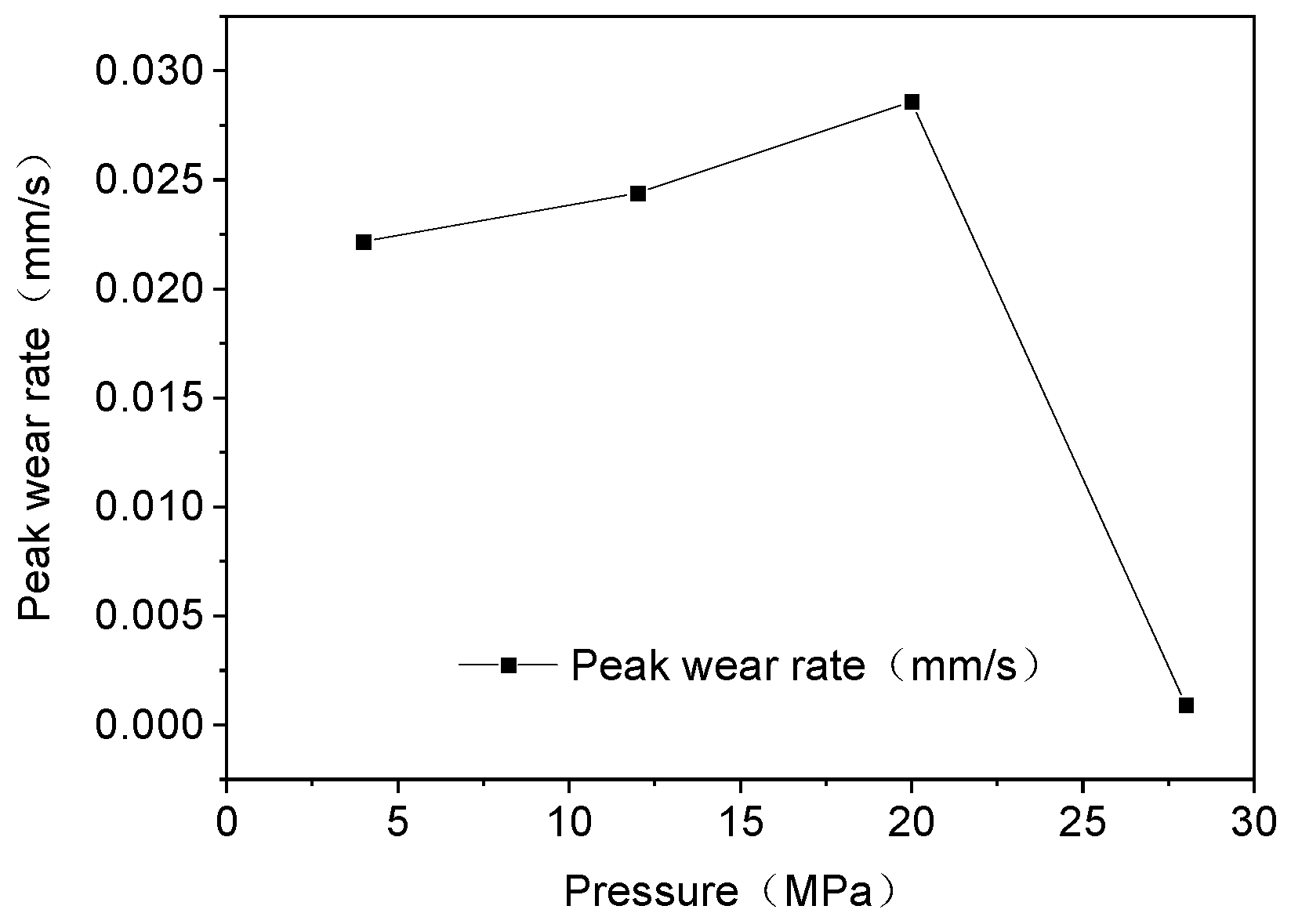
Figure 11 shows the trend of the peak wear rate with hydraulic pressure. In the range of 4–20 MPa, the peak wear rate increases proportionally with pressure. When the pressure rises from 20 MPa to 28 MPa, the peak wear rate drops significantly. At the same time, at 28 MPa, the high-wear region splits into two locations; the original concentration point still exhibits a smaller peak (i.e., a second peak appears and the original peak decreases). The marked drop in the peak wear rate at 28 MPa contrasts with the continued increase in the peak cumulative wear depth. This is because, under high pressure, the total contact area expands significantly (due to the newly added contact zone on the upper edge). Although the total wear energy increases, the local maximum contact stress is distributed over two regions, resulting in a decrease in the instantaneous maximum wear rate in each region. This phenomenon is similar to the “plateau” mechanism observed under the influence of compression ratio, but more pronounced: instead of stagnation, a decrease occurs. However, the drop in the peak wear rate can easily be misinterpreted as an improvement in wear behavior, whereas in fact the total wear continues to increase, and the stress homogenization brought about by multi-point contact comes at the cost of losing the single-interface nature of the seal. Therefore, the decrease in the peak wear rate should not be regarded as a positive signal, but rather as a warning that the seal has entered a multi-point contact state with reduced reliability.
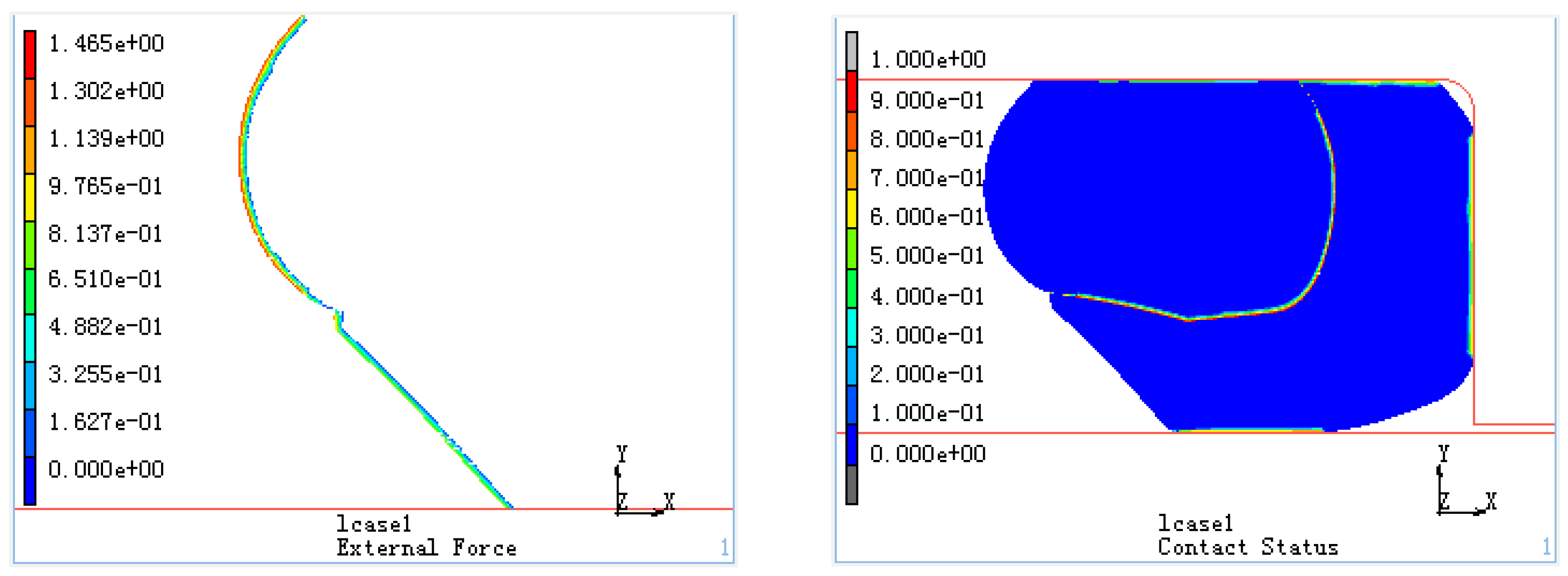
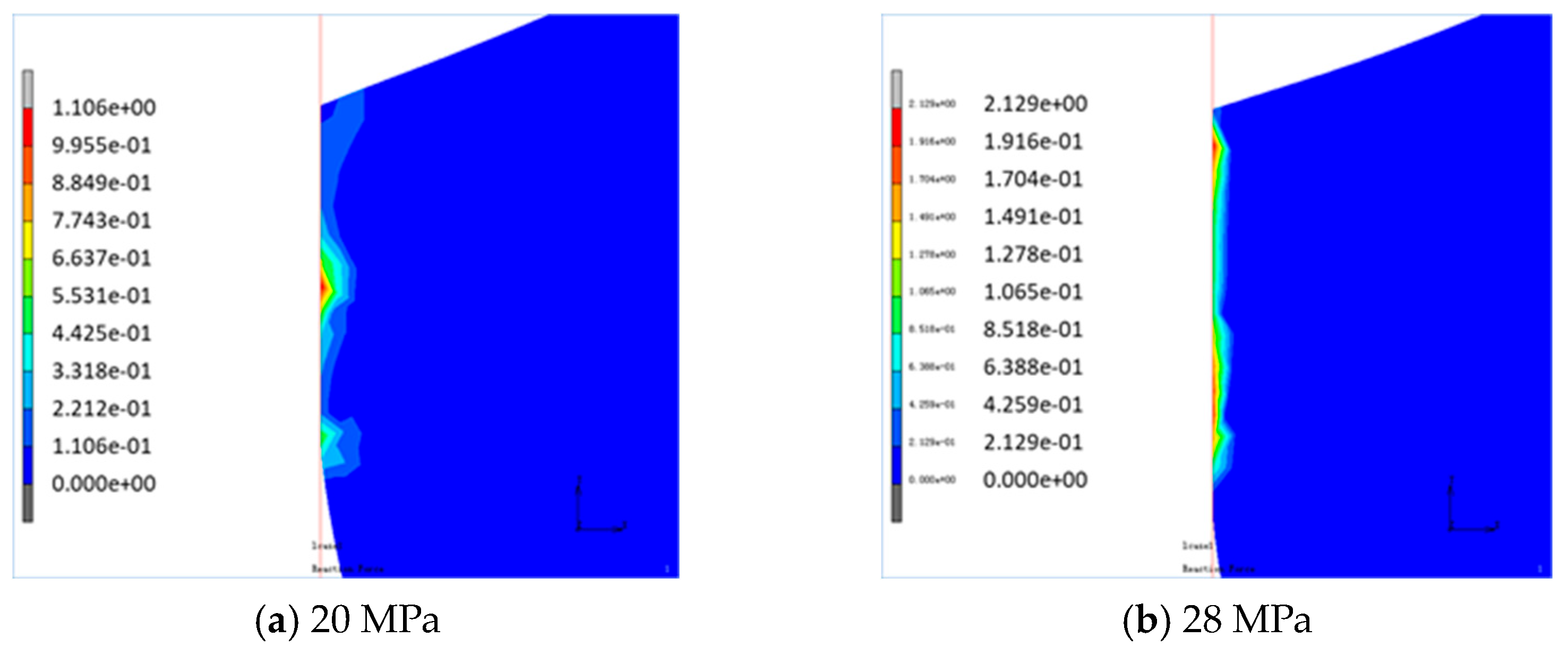
Figure 12 compares the distribution contours of reaction force (contact normal force) at 20 MPa and 28 MPa. At 20 MPa, the reaction force is concentrated in a single region, corresponding to the original contact point of the L-ring. At 28 MPa, the reaction force splits into two regions, located respectively at the original contact point and the upper edge of the lip, and the reaction force values in both regions are relatively high. The reaction force contour directly reflects the spatial distribution of contact pressure and is the most direct evidence for identifying the “multi-contact sealing” failure mode. The two separated high-reaction-force zones at 28 MPa confirm the existence of double-point contact, and both zones bear significant contact loads, indicating that the mechanical state of the sealing structure has transformed from single-point load bearing to two-point co-bearing. Under this condition, local clearance fluctuations in either contact zone may form leakage paths, weakening the sealing effectiveness. Engineering design should avoid exceeding this critical pressure (approximately 20–28 MPa under the present conditions) or raise the critical pressure for double-point contact through parametric analysis (e.g., increasing the height of the L-ring and reserving deformation space) to maintain single-contact sealing stability.
In summary, hydraulic pressure affects VL seal wear through two mechanisms: “stress increase” and “deformation-induced contact zone expansion”. In the low-to-hydraulic pressure range (4–20 MPa), wear increases linearly with pressure. At high pressure (≥28 MPa), although the local peak wear rate decreases, the appearance of double-point contact indicates a transition in the seal failure mode and should be regarded as a critical warning. Optimal design should raise the critical pressure for double-point contact through structural improvements (e.g., increasing the height of the L-ring).
3.3. Effect of Sliding Velocity on Wear of the VL Seal
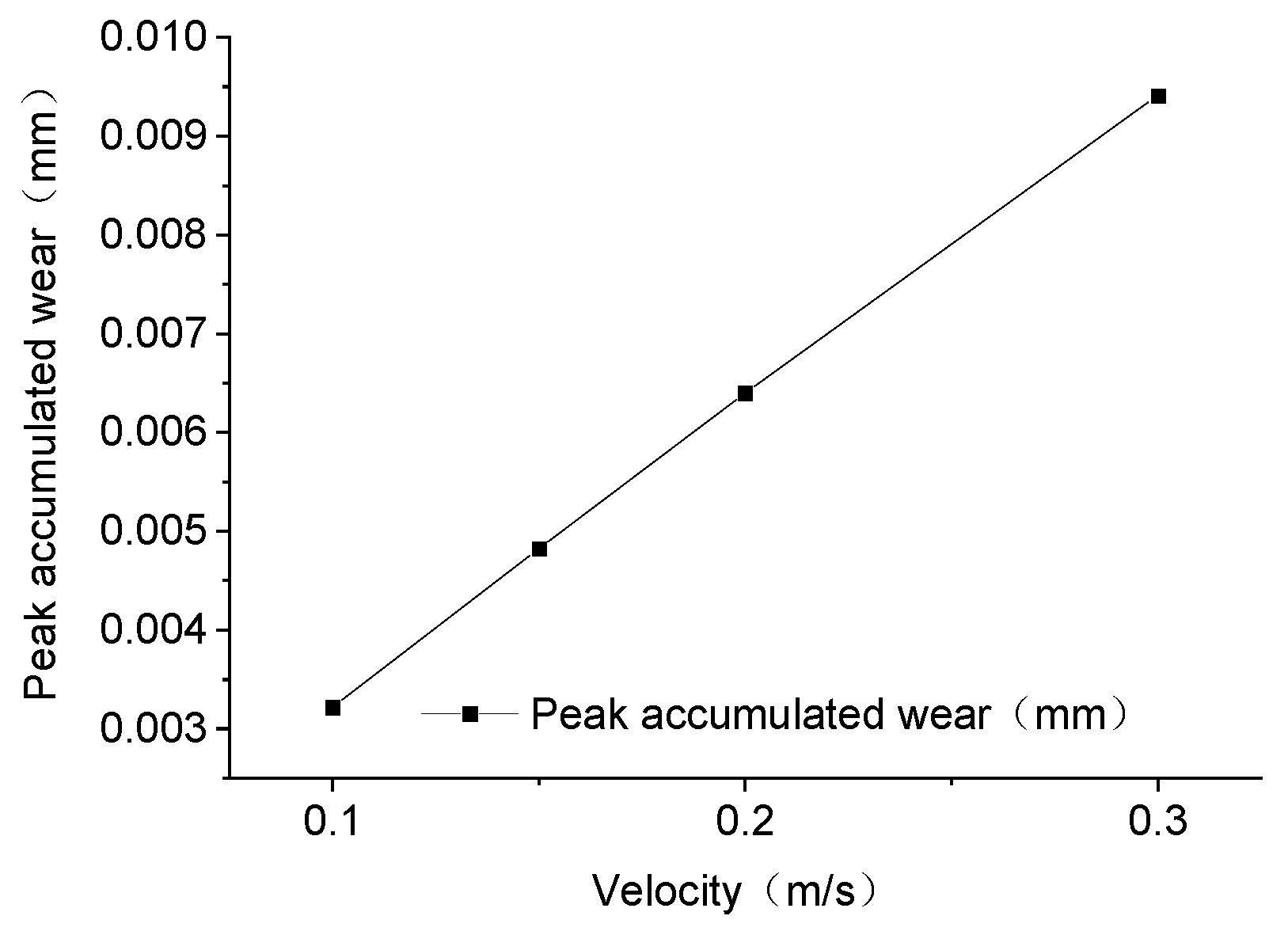
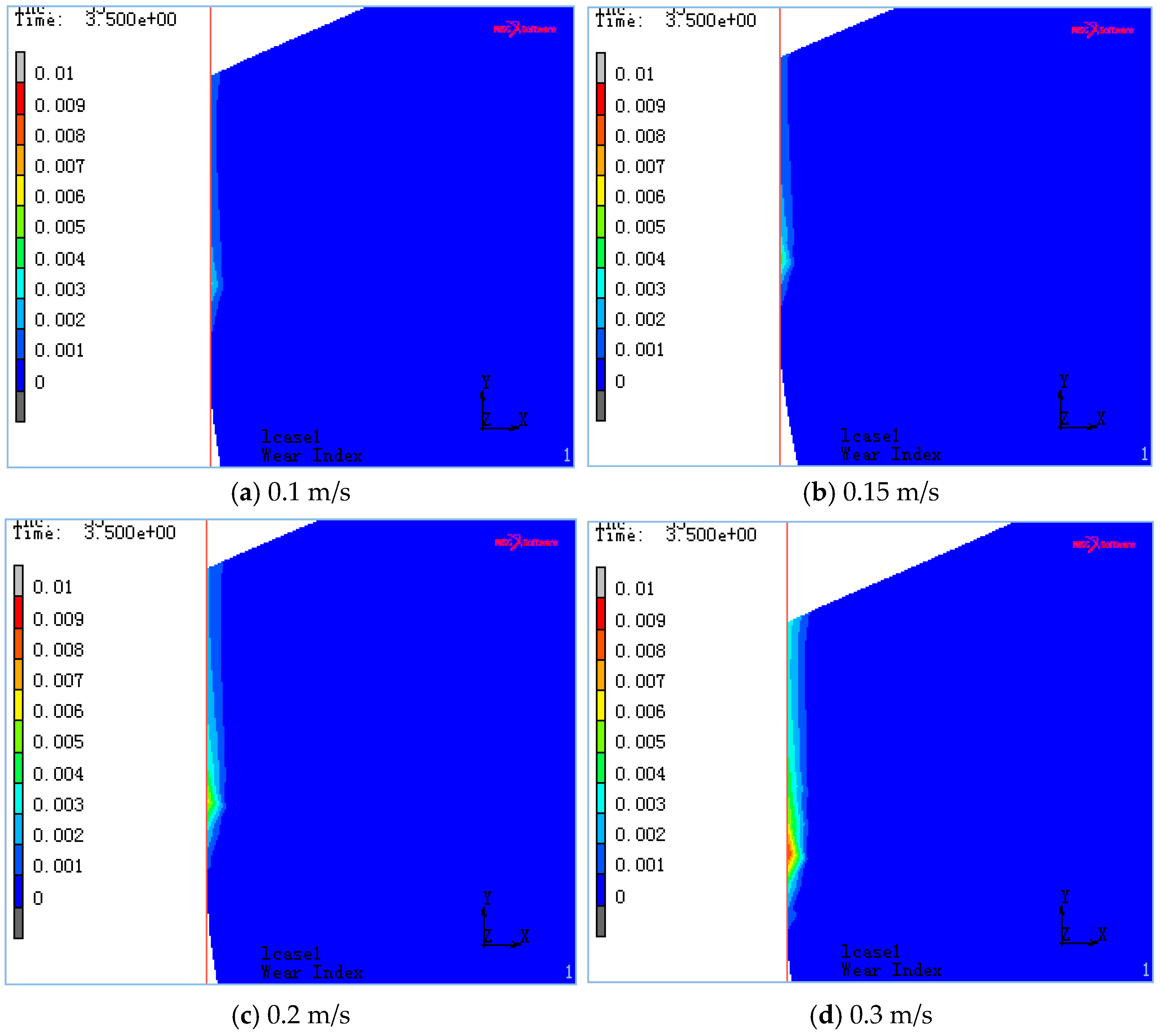
Figure 13 shows the contours of cumulative wear depth on the L-ring counterface at different relative sliding velocities (0.1 m/s, 0.15 m/s, 0.2 m/s, 0.3 m/s). The wear location remains nearly unchanged at all investigated velocities, always concentrated in the middle-lower lip region of the L-ring, without any widening of the wear band or appearance of a second contact point. The wear depth is proportional to the velocity: for the same simulation time, a linear increase in velocity results in a linear increase in the relative sliding distance, and the peak cumulative wear depth also increases linearly, while the number of wear nodes remains unchanged. This phenomenon agrees with the Archard model, which predicts that wear volume is proportional to sliding distance (
). Under constant normal load and material hardness, a higher velocity increases the wear depth only by increasing the sliding distance per unit time, without altering the stress distribution or contact state. No second wear zone (such as that observed with increasing compression ratio or hydraulic pressure) appears in the contours, indicating that, within the velocity range investigated here (0.1–0.3 m/s), velocity changes mainly affect the wear intensity rather than the contact geometry, and the dominant wear mechanism remains unchanged.
Figure 14 presents the peak cumulative wear depth as a function of sliding velocity (0.1 m/s, 0.15 m/s, 0.2 m/s, 0.3 m/s). The peak cumulative wear depth increases with increasing velocity. Under constant pressure and compression ratio, the peak cumulative wear depth is strictly proportional to the sliding velocity, and the wear concentration region remains consistently located below the L-ring. However, as the velocity increases, a tendency for a secondary concentration region to appear above the L-ring can be observed. Although this trend has not yet formed a distinct second peak in the contour plot, it suggests that when the velocity increases further, the dynamic response of the L-ring (such as inertial effects or friction-induced vibration) may cause intermittent contact between the upper edge of the lip and the cylinder wall, thereby generating a new wear concentration zone. Therefore, although the Archard model predicts a linear relationship under constant-velocity sliding, actual seals may deviate from this ideal behavior at high speeds due to dynamic instability; the the linear relationship between velocity and wear should not be extrapolated beyond the tested range.
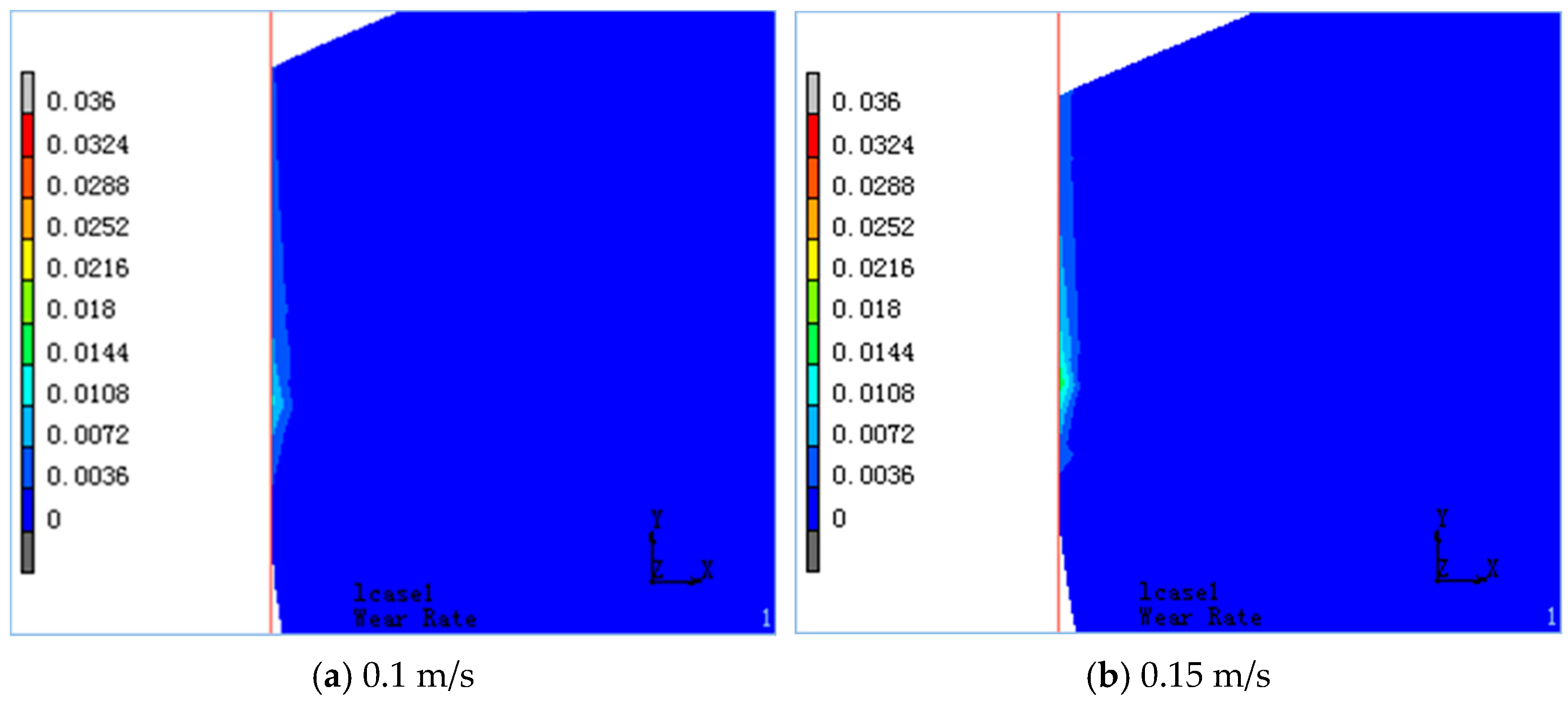
The wear rate contours in
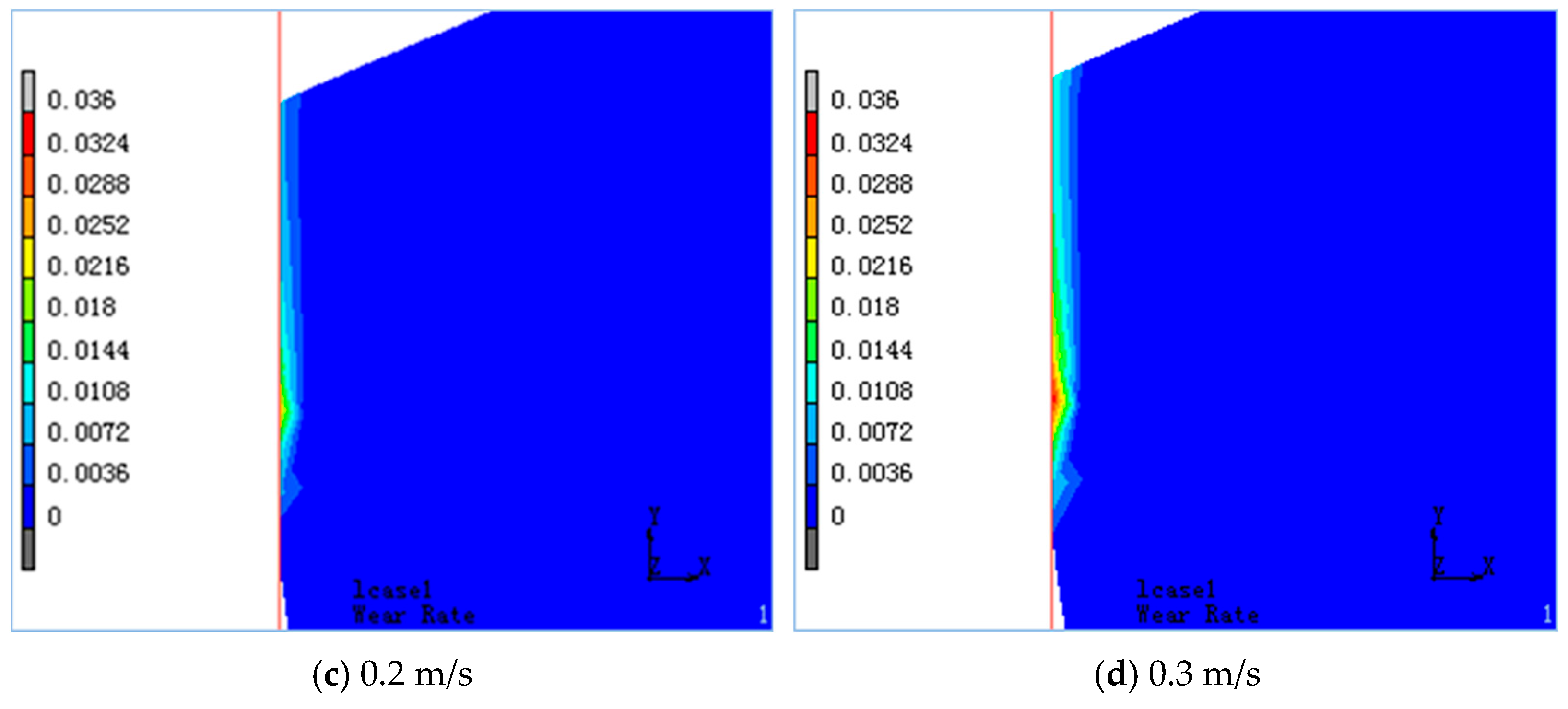
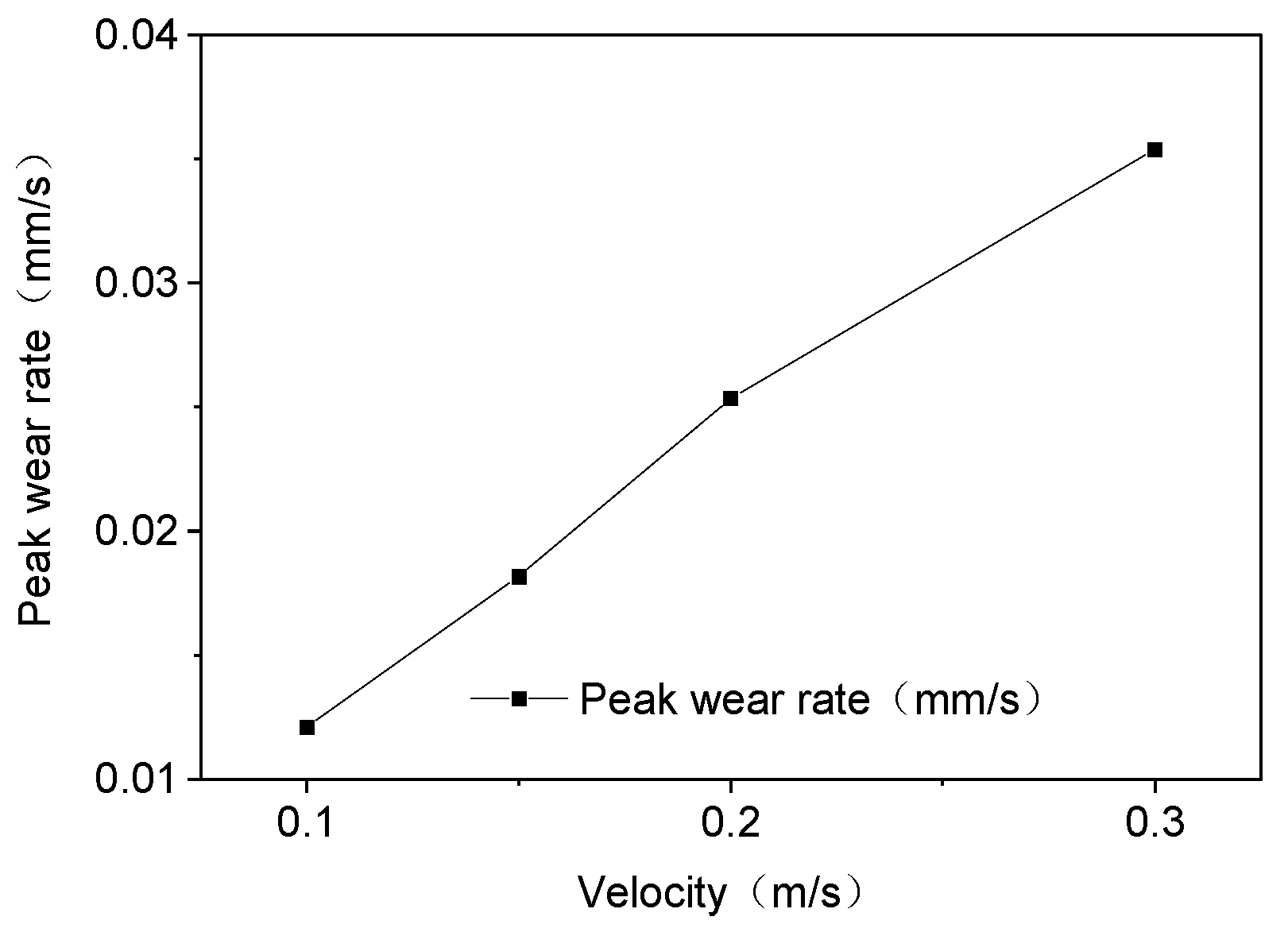
Figure 15 show that the location and shape of the high wear rate region are consistent across different velocities, always concentrated at the original contact point below the L-ring. The peak wear rate curve in
Figure 16 indicates that the peak increases proportionally with velocity, following the same trend as the peak cumulative wear depth. This demonstrates that, during constant-velocity sliding, the instantaneous wear intensity is proportional to velocity (
), and no stress redistribution (as observed with varying compression ratio or hydraulic pressure) occurs. However, the text notes that “as the velocity continuously increases, a trend toward the appearance of a second concentration region above the L-ring emerges”. In the contour plots, this trend may appear as a weak shade change at the upper edge, but has not yet formed an independent high-value zone. The influence of velocity on the contact state is gradual: at low velocities, the deformation of the L-ring is dominated by statics; when the velocity approaches a critical value, the tangential load induced by friction may cause additional elastic deformation or micro-motion of the L-ring, reducing the clearance at the upper edge. Therefore, the effect of velocity on wear follows the Archard model in the main range, but there exists an implied critical threshold beyond which multi-point contact may be induced.
Figure 17 shows the stress contour of the L-ring under inversion at a compression ratio of 20%, a velocity of 0.3 m/s, and a hydraulic pressure of 8 MPa. The insufficient hydraulic pressure (8 MPa) causes the axial friction force between the L-ring and the cylinder wall to exceed the hydraulic thrust, leading to instability of the sealing structure. The excessively high sliding velocity (0.3 m/s) further aggravates the force imbalance, ultimately causing the L-ring to flip over completely, resulting in total seal failure. This phenomenon reveals a key failure mode of the VL seal under high-speed, low-pressure conditions: competition between friction force and hydraulic pressure. Under low pressure, the normal force between the L-ring and the cylinder wall is provided mainly by the initial compression ratio; the friction force (
) increases with velocity (assuming the friction coefficient is positively correlated with velocity or that a stick-slip effect exists), while the hydraulic thrust (
) remains constant. When the friction force exceeds the thrust, the sealing structure becomes unbalanced and the L-ring is dragged into inversion. Therefore, the safe operation of VL seals requires a match between velocity and pressure: the higher the velocity, the higher the minimum required hydraulic pressure.
In summary, the effect of sliding velocity on VL seal wear manifests in two aspects: a linear increase in wear depth and a nonlinear constraint on the stability boundary. The former is accurately described by the Archard model, and the latter is governed by the mechanical balance between friction force and hydraulic thrust. Together, they constitute a complete design criterion for the velocity conditions of VL seals.
3.4. Effect of Temperature on Wear of the VL Seal
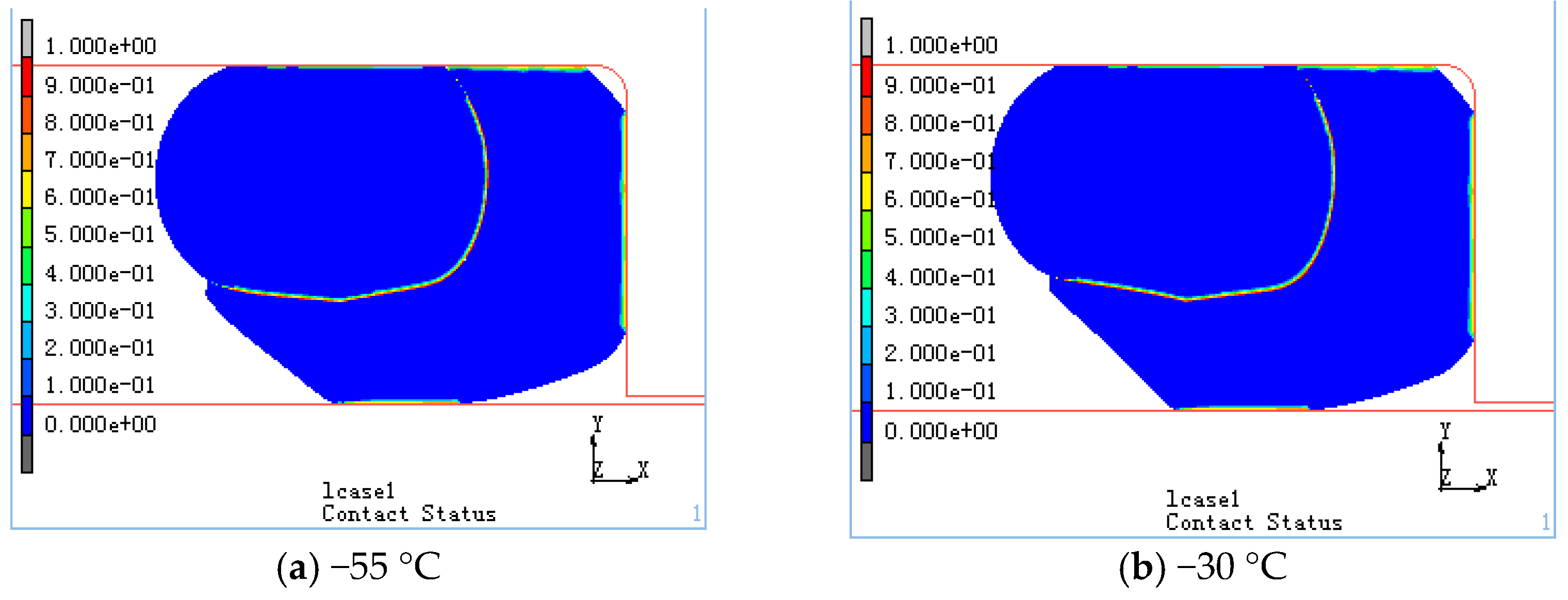
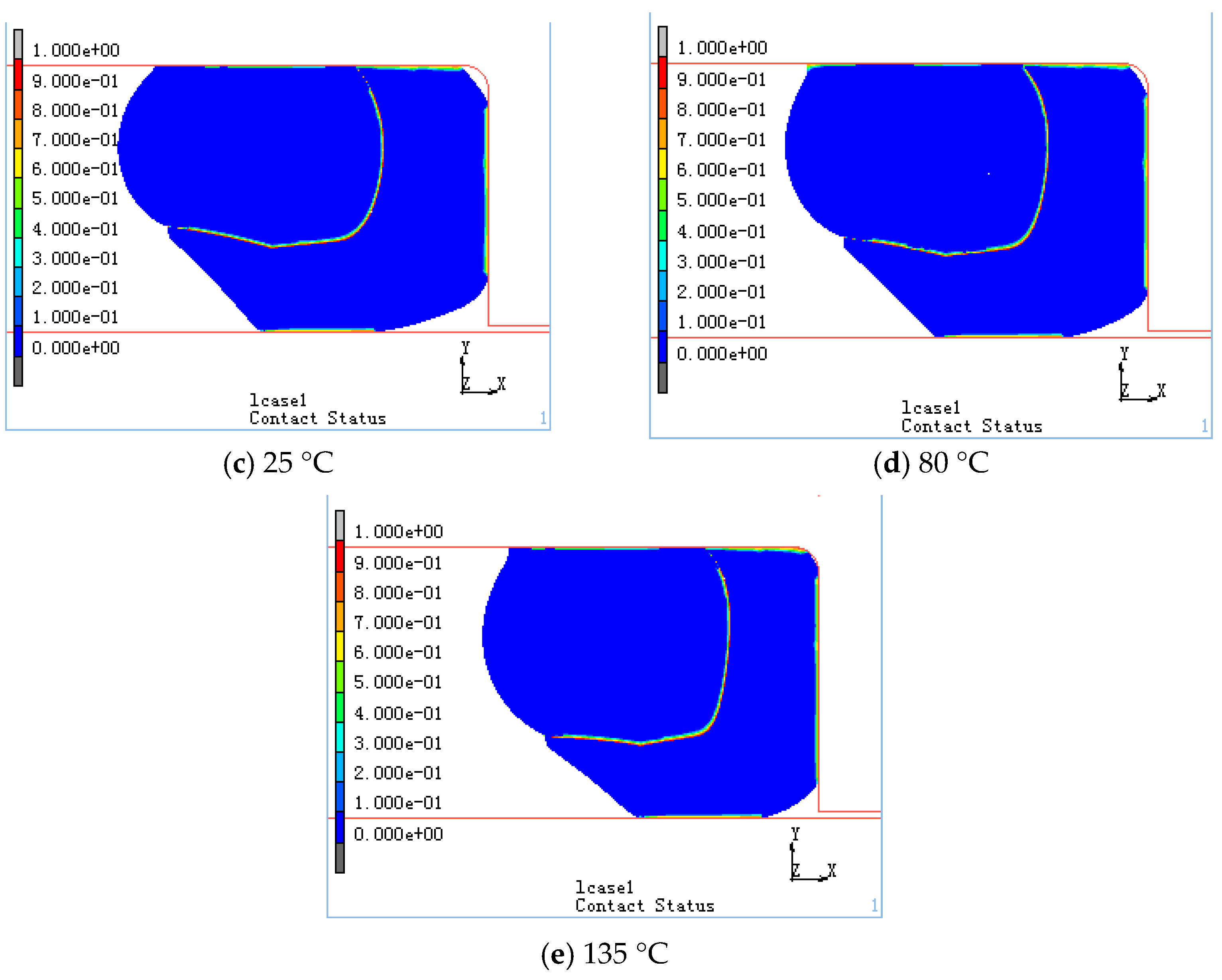
Figure 18 shows the contact state contours of the VL seal at different temperatures (−55 °C, −30 °C, 25 °C, 80 °C, 135 °C). In the range of −55–25 °C, the deformation difference is small, and only a slight displacement of the L-ring caused by O-ring softening can be observed. In the range of 25–135 °C, the deformation difference increases significantly; the deformation of the L-ring increases with temperature, and the occupied space of the deformed seal decreases. Over the entire temperature range, the deformation is positively correlated with temperature. In the range of −55–80 °C, the seal configuration remains relatively stable. When the temperature rises to 135 °C and the sliding direction reverses, the sealing structure exhibits obvious transient deformation. This indicates that at high temperatures, the stiffness and elastic modulus of PTFE and rubber decrease, weakening the overall stiffness of the composite seal, and the L-ring is more prone to compliant deformation under friction; at low temperatures, material hardening helps maintain the structural shape but may impair the required flexible contact.
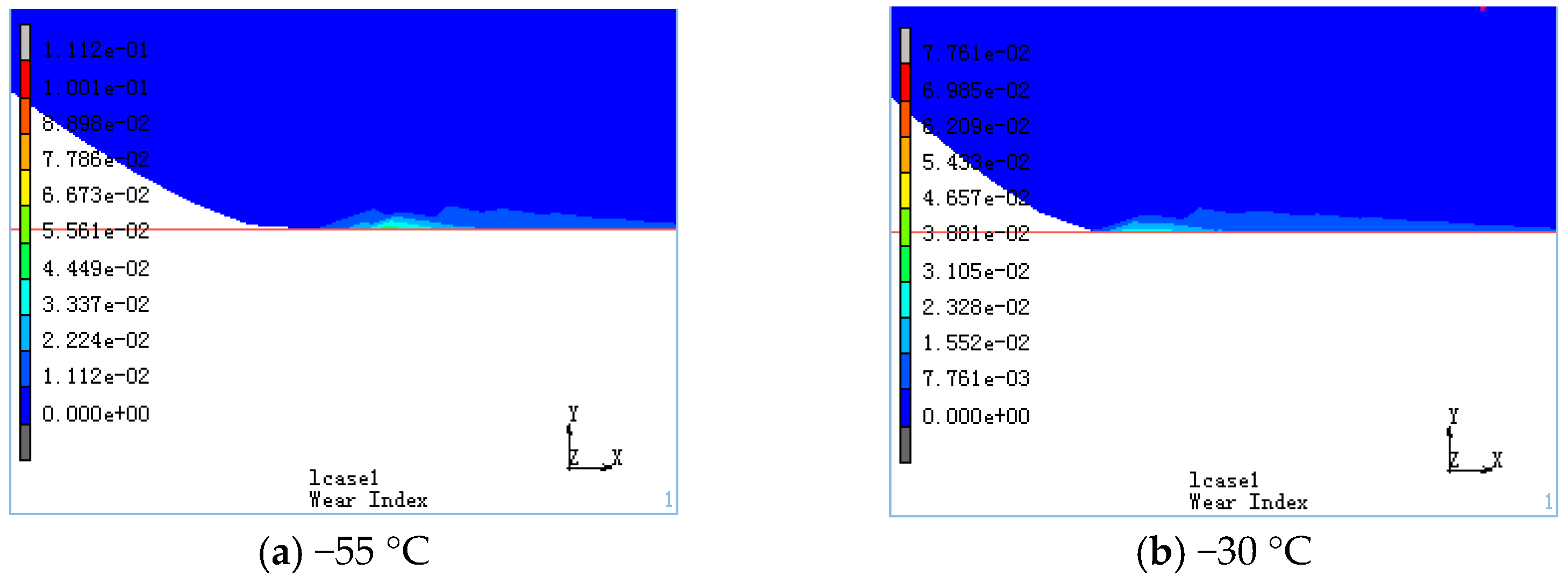
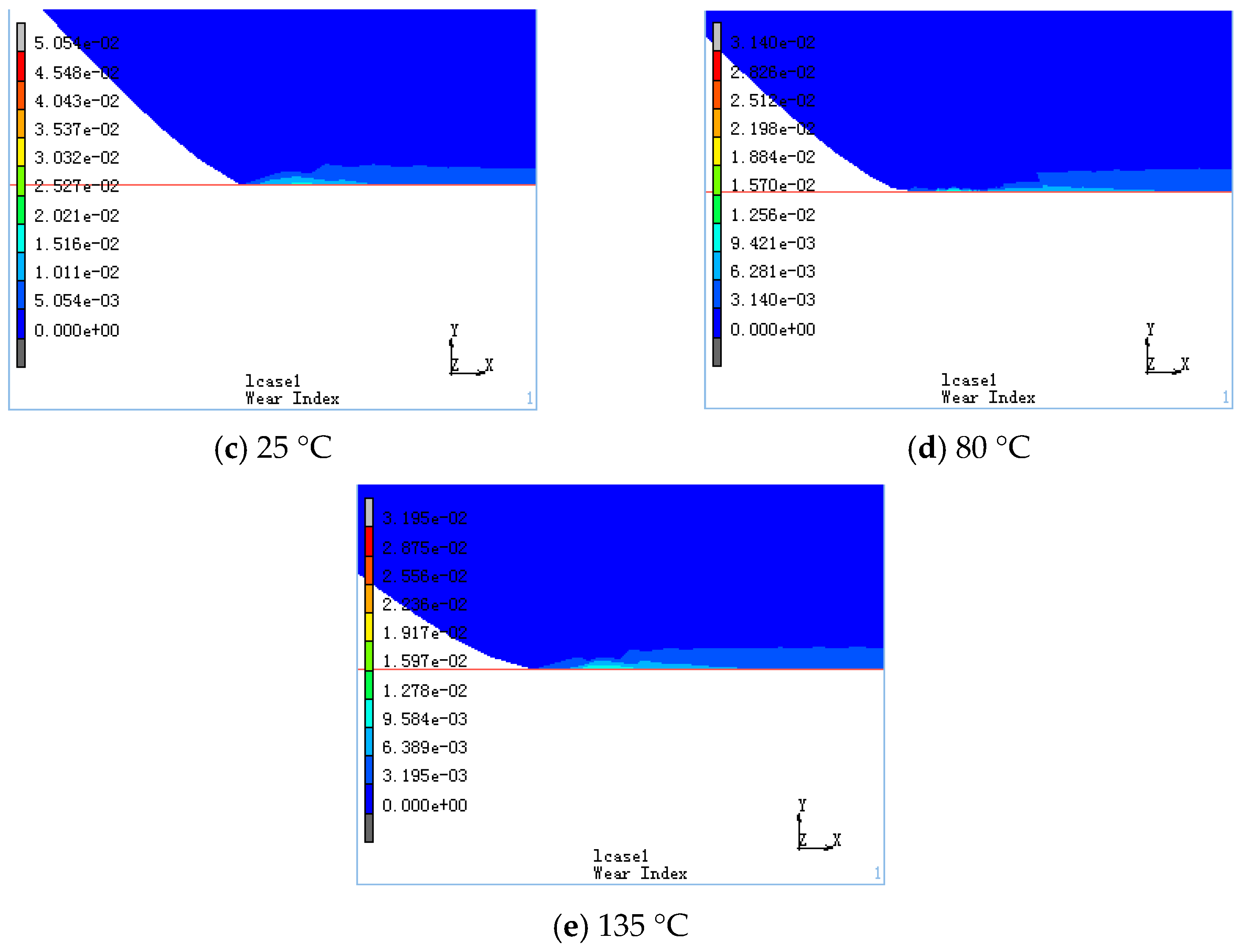
Figure 19 shows the contours of cumulative wear depth on the L-ring counterface at different temperatures (from −55–135 °C). Over the entire temperature range, the wear concentration remains consistently located at the lip of the L-ring without any migration. At −55 °C, the wear band is narrowest and deepest in color, indicating highly concentrated wear. As the temperature rises to −30 °C and 25 °C, the wear band widens and the contour intensity decreases, indicating that wear spreads to the surrounding area. At 80 °C, the wear region expands further and the color contrast at the lip continues to diminish. At 135 °C, the wear region is widest, but the color at the lip is slightly darker than at 80 °C. Quantitatively, in the range of −55–80 °C, the peak cumulative wear depth decreases with increasing temperature; in the range of 80–135 °C, the peak decreases slightly but the rate of decrease narrows.
Mechanistically, at low temperatures, PTFE hardens, the contact area is small, and the stress is highly concentrated at the lip tip, resulting in severe wear. As the temperature rises, the material softens, the counterface undergoes greater compliant deformation, the actual contact area increases, and the normal stress is dispersed. According to the Archard model (), the local wear decreases. At 135 °C, excessive material softening leads to insufficient rigidity of the L-ring; viscoelastic deformation or creep occurs during sliding, causing a partial resurgence of the contact pressure at the lip. Alternatively, the wear mechanism may transition from abrasive wear to adhesive wear, partially offsetting the wear-reducing effect of stress dispersion. Consequently, the wear depth shows a slight rebound.
Figure 19 demonstrates that the effect of temperature on cumulative wear depth is non-monotonic. The optimal temperature range is approximately 25–80 °C. Both extremely low and extremely high temperatures exacerbate or re-intensify wear.
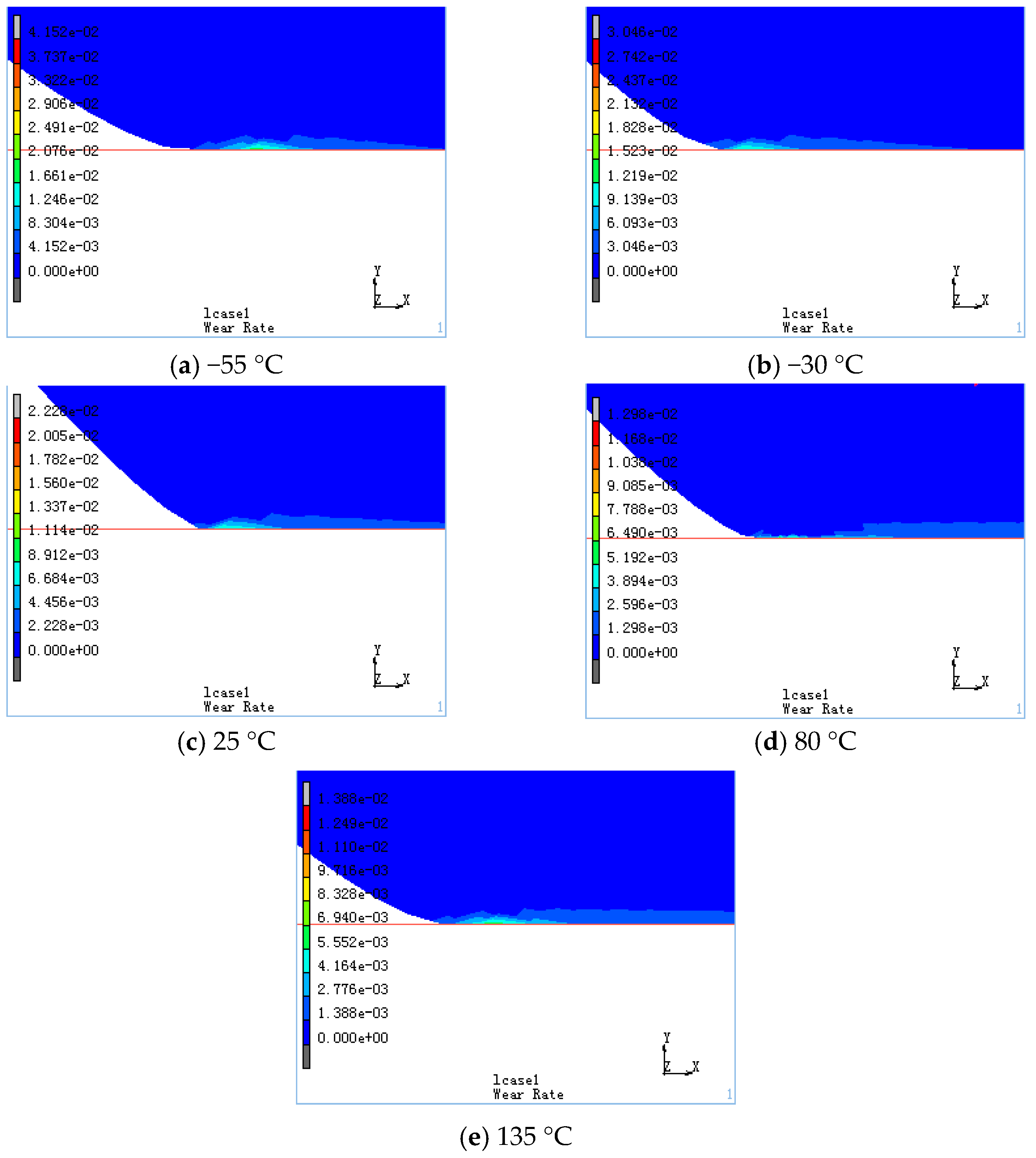
Figure 20 shows the wear rate contours at the end of the simulation under different temperatures. At −55 °C and −30 °C, the high wear rate is concentrated in a narrow band at the lip of the L-ring, with extremely high intensity. At 25 °C, the high-wear region widens slightly, and the peak value decreases significantly compared with the low-temperature range. At 80 °C, the region expands further, the color contrast decreases, and the peak continues to drop. At 135 °C, the overall distribution is similar to that at 80 °C, but the local color shade at the lip deepens and weak non-uniform stripes appear.
The wear rate (
) is most sensitive to the contact stress. At low temperatures, the material has a high modulus and low creep, the contact interface hardly undergoes macroscopic compliant deformation, the real contact area approaches the nominal lower limit, and the lip stress
is extremely high, resulting in a maximum peak wear rate. As the temperature rises, the material softens, the actual contact area increases,
decreases, and the wear rate reduces. However, at 135 °C, excessive softening causes a marked reduction in L-ring stiffness; sliding friction may induce additional bending deformation, reducing the clearance at the upper edge of the lip or even causing intermittent contact. At the same time, high temperature may change the interfacial friction coefficient (e.g., due to formation and destruction of a PTFE transfer film), both factors together leading to a resurgence of the peak wear rate. The weak non-uniform stripes near the lip at 135 °C in the contour indicate a transition of the contact state from single stable contact to complex dynamic contact. Therefore,
Figure 20 not only verifies the stress-dispersion effect of material softening, but also reveals the negative consequences of stiffness loss under very high temperatures.
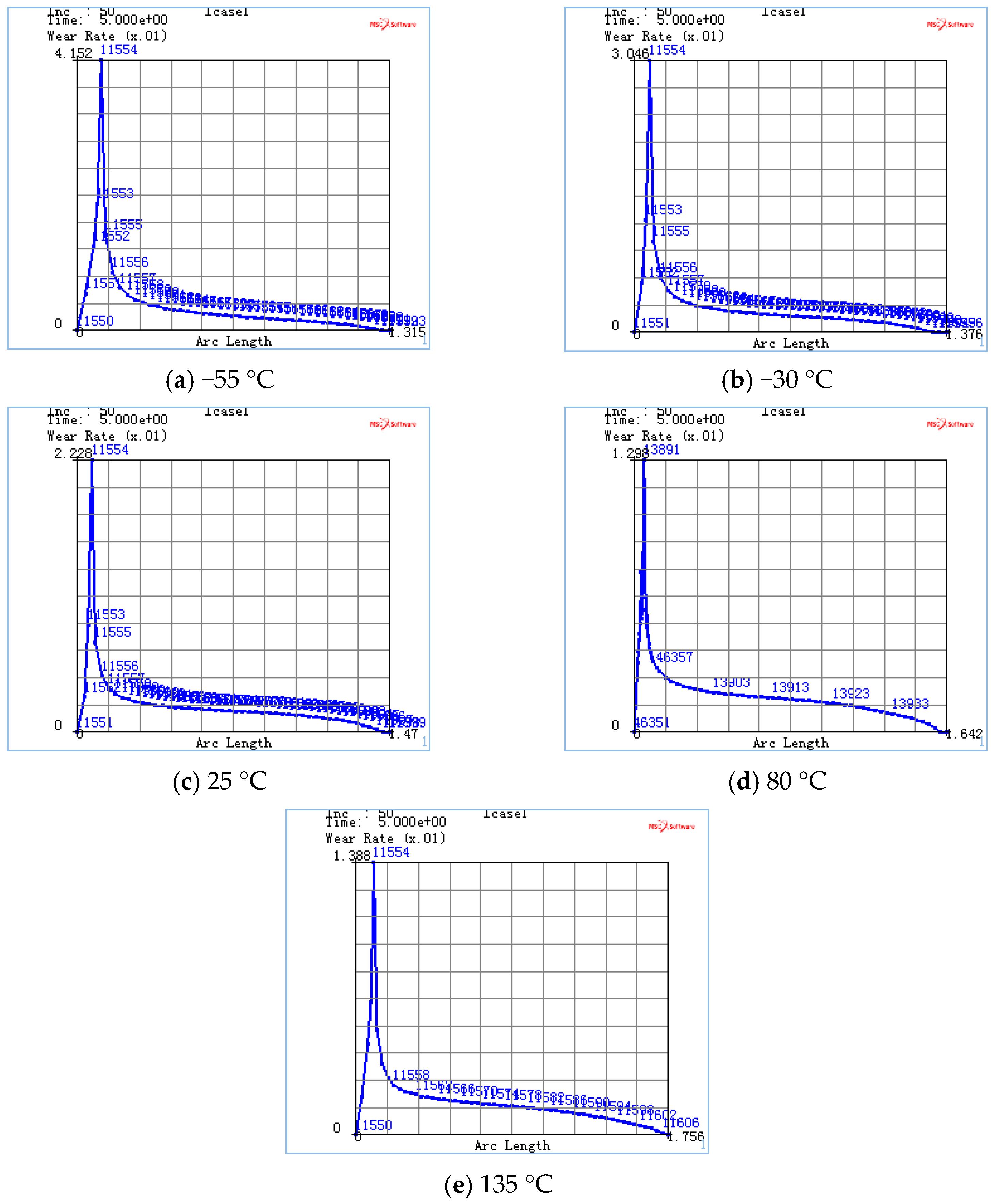
Figure 21 shows the variation of the peak wear rate with temperature (from −55 to 135 °C). The curve exhibits a characteristic of first decreasing and then increasing: from −55 to 25 °C, the peak decreases monotonically with increasing temperature, with a significant reduction; from 25 to 80 °C, the decrease slows down; from 80 to 135 °C, the peak increases again, becoming slightly higher than the value at 80 °C. The peak wear rate is always located at the lip of the L-ring and does not migrate.
This curve reflects the superposition of two competing mechanisms:
Mechanism I (stress dispersion): Increasing temperature reduces the elastic modulus and hardness of the material, enlarges the contact area, and lowers the local stress at the lip, thereby continuously reducing the wear rate.
Mechanism II (stiffness loss): When the temperature exceeds 80 °C, excessive material softening makes the L-ring insufficiently rigid. Friction induces bending deformation, causing a local resurgence of contact pressure. At the same time, high temperature may trigger stick-slip vibration or a transition in the wear mechanism, leading to an increase in the wear rate.
Below 80 °C, Mechanism I dominates; above 80 °C, Mechanism II prevails.
It is worth noting that in the range of 80–135 °C, the peak cumulative wear depth still decreases slightly (
Figure 19), while the peak wear rate rebounds. This decoupling arises because, under very high temperatures, the contact area continues to expand or the wear depth accumulates nonlinearly, so that the total wear depth still declines slightly. This indicates a coupling effect between material viscoelasticity and contact mechanics; engineering life prediction should pay attention to both indices simultaneously.
In summary, the effect of temperature on VL seal wear is governed by the temperature dependence of the material mechanical properties: low-temperature hardening leads to intensified stress concentration and increased wear; medium-temperature softening achieves stress dispersion and reduced wear; excessive softening at very high temperatures causes structural deformation and a resurgence of wear. The VL seal has an optimal operating temperature window (approximately 25–80 °C), within which the wear is minimal and the structure is most stable. Engineering design should comprehensively consider the dual impact of ambient temperature on seal life and avoid long-term high-speed operation at extreme temperatures.
3.5. Wear Simulation of the Structurally Improved VL Seal
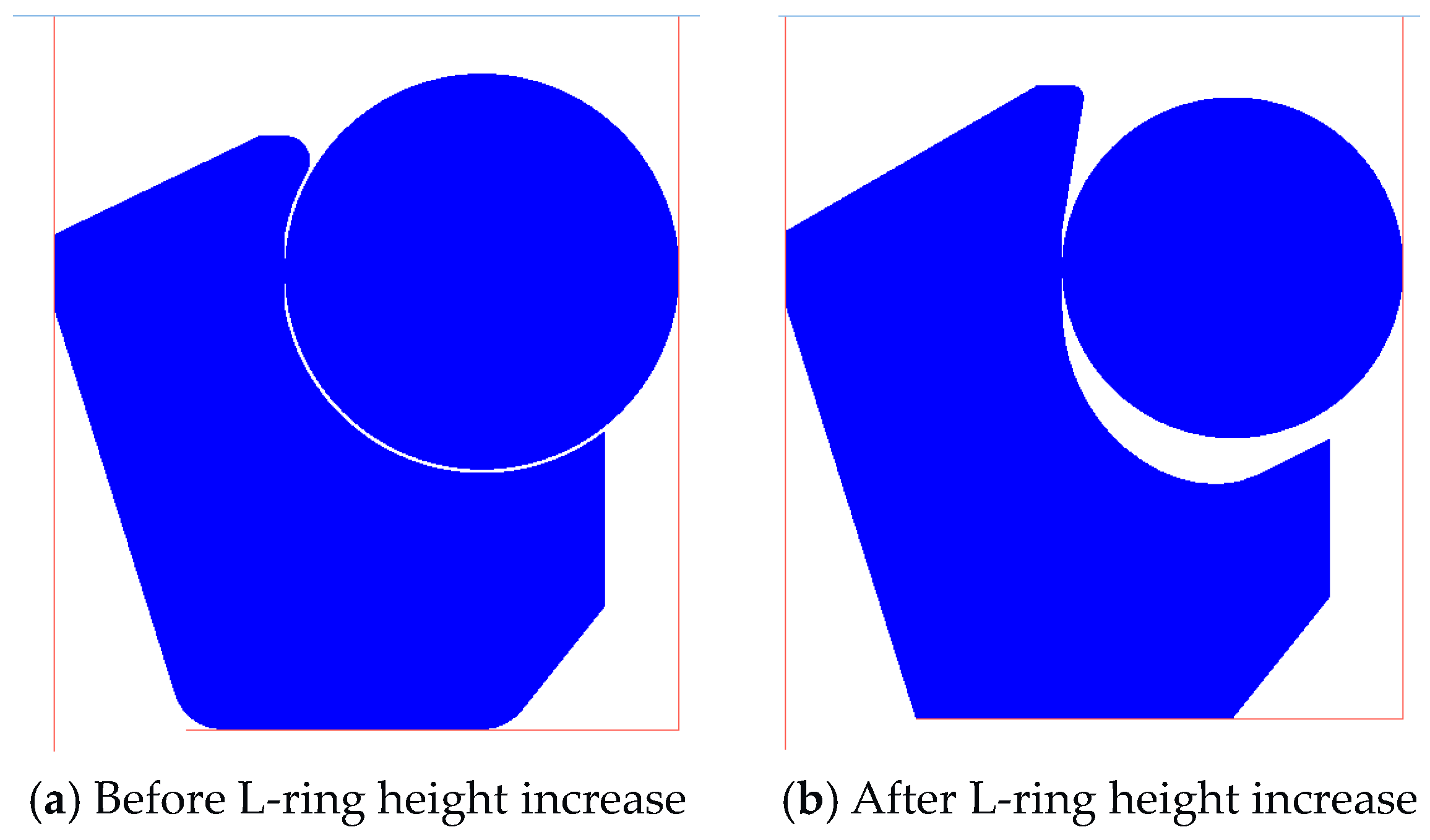
Figure 22 compares the geometric configurations of the VL seal before and after improvement. In the original design, the L-ring has a slender cross-section, the O-ring diameter is relatively large, and the deformation space between them is limited. The improved scheme increases the height and thickness of the L-ring, reduces the O-ring diameter, and reserves a deformation zone. The original structure tends to cause the upper edge of the lip to contact the cylinder wall under high pressure or high compression ratio, leading to a transition from single-contact sealing to multi-contact sealing and subsequent failure. After improvement, the bending stiffness of the L-ring increases, making it more prone to overall compression rather than local bending under load. The reduced O-ring diameter provides greater expansion space, preventing excessive extrusion of the L-ring. This adjustment redistributes the mechanical coupling between the O-ring and the L-ring: the O-ring, as an elastic preload element, provides preload, while the increased-height L-ring transfers the thrust to the lip more uniformly, reducing stress concentration. The reserved deformation zone prevents uncontrolled expansion of the O-ring under high pressure, thereby suppressing abnormal contact at the upper edge.
3.5.1. Effect of Compression Ratio on Wear of the VL Seal with an Increased L-Ring Height
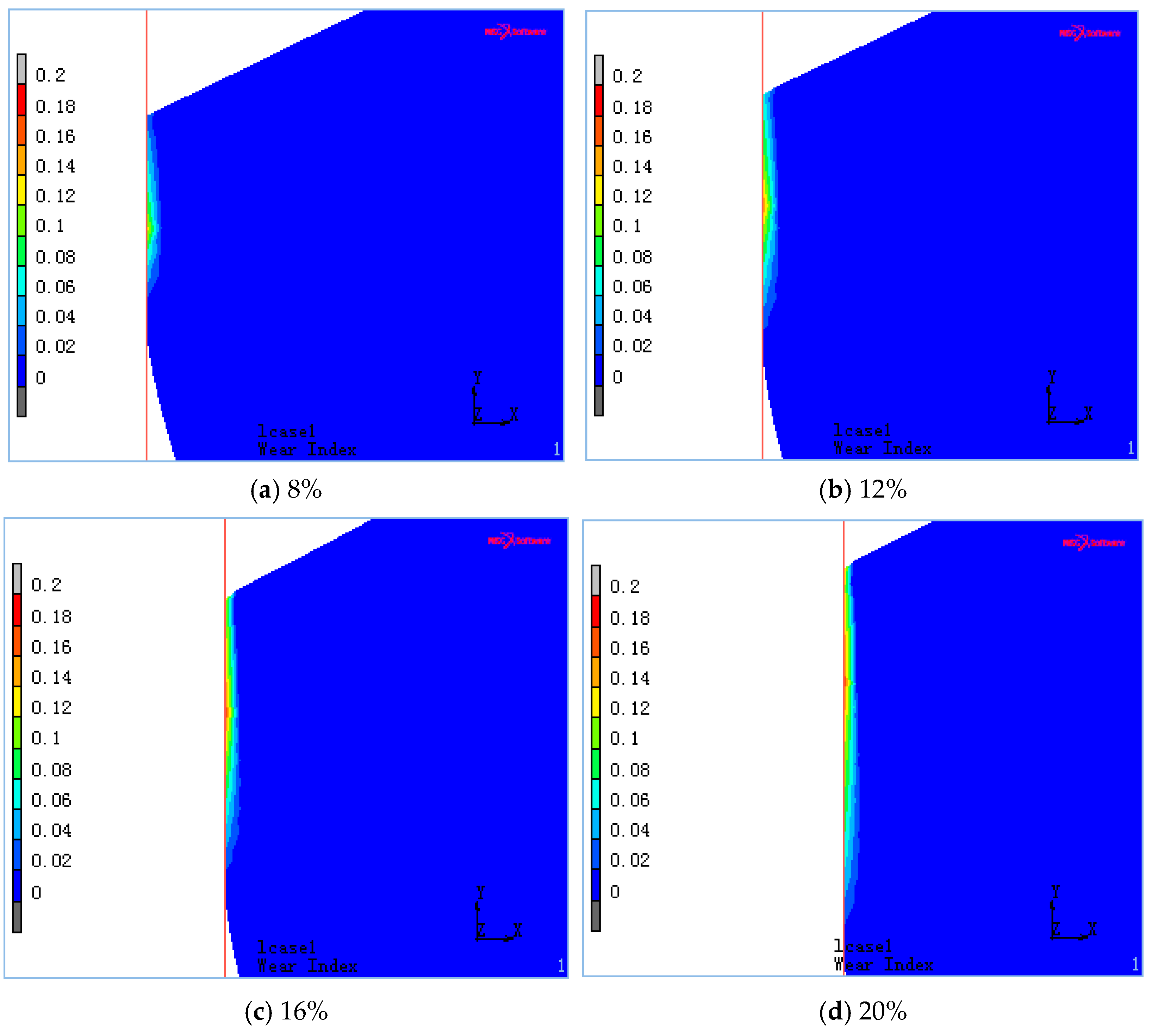
Figure 23 shows the contours of cumulative wear depth of the improved VL seal at compression ratios of 8%, 12%, 16%, and 20%. Compared with the original structure (
Figure 20), the wear distribution of the improved structure exhibits three changes: the wear band is always located in a single region in the lower-middle region of the L-ring, and no observable wear appears on the upper edge of the lip even at 20% compression ratio; the width of the wear band expands uniformly with increasing compression ratio, the color in the middle gradually deepens, and the plateau saturation observed in the original structure in the 16–20% range does not occur; the symmetry of the contour improves, and the wear distribution along the counterface is smoother. After improvement, the cumulative wear and wear-rate curves change smoothly, and no secondary peak appears at higher compression ratios. The improvement effect is attributed to the increased structural stiffness brought about by raising the L-ring height: the section modulus in bending increases, reducing lip bending deformation and maintaining the clearance between the upper edge and the cylinder wall; at the same time, the radial expansion of the reduced-diameter O-ring is constrained, focusing the thrust more on the lip root and preventing overall inversion of the L-ring. Consequently, the improved structure raises the upper limit of the effective compression ratio for single-contact sealing from about 16% to over 20%, ensuring wear stability and predictability.
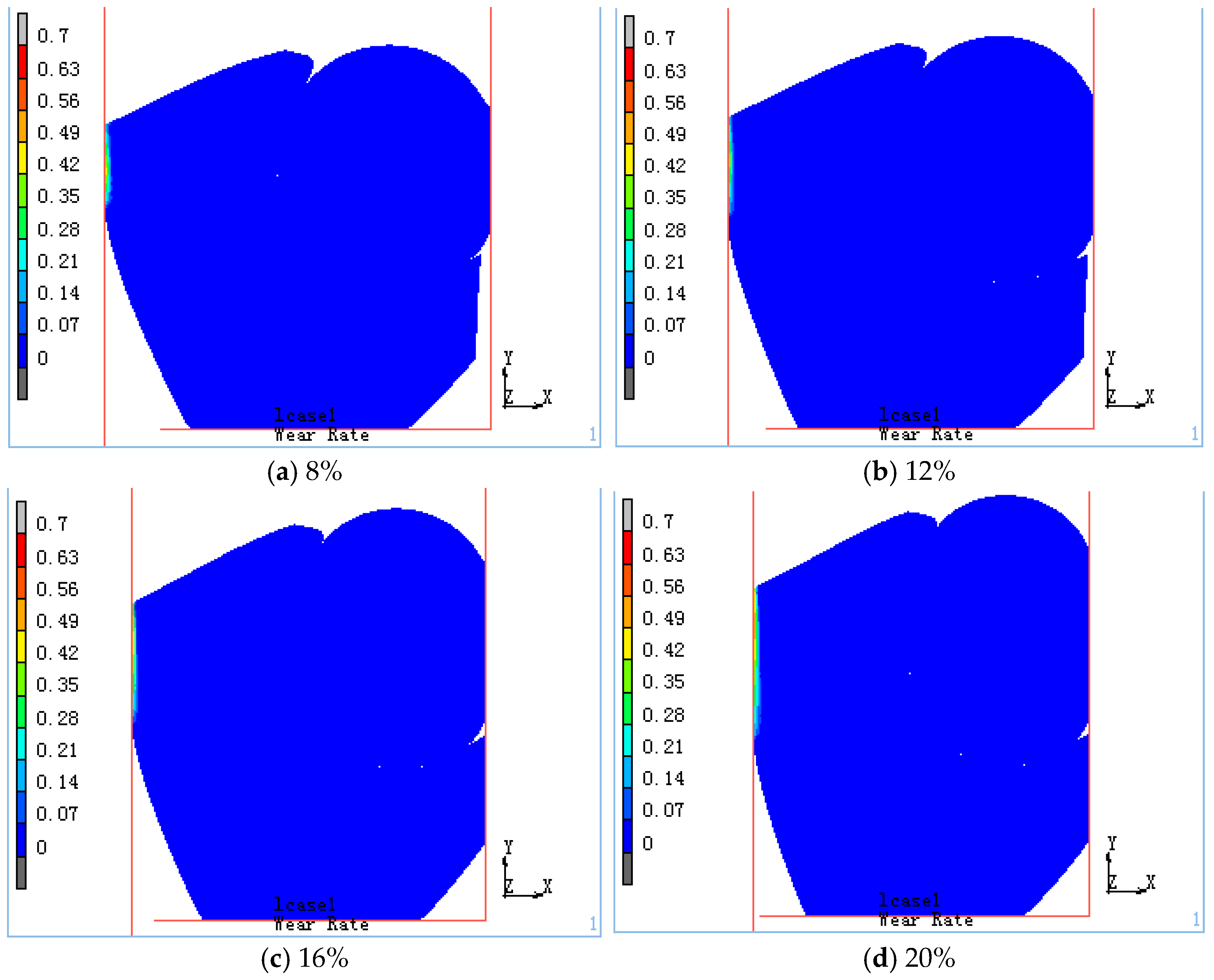
Figure 24 shows the wear rate contours of the improved VL seal at various compression ratios. The high-wear-rate region is always located in the contact band at the lip of the L-ring, with no second concentration zone appearing. As the compression ratio increases from 8% to 20%, the peak wear rate gradually increases, but the width of the peak region increases only slightly, indicating that the stress remains concentrated at the lip tip and does not spread to other areas. This contrasts with the original structure, which exhibited a second peak at 16% compression ratio. From a mechanical perspective, increasing the height and thickness of the L-ring changes its deformation mode under normal load from bending-dominated to compression-dominated; i.e., the L-ring tends to translate as a whole toward the cylinder wall rather than rotating about the lip root. This deformation mode keeps the maximum contact stress always at the initially designed lip tip, preventing it from migrating to the upper edge as the compression ratio increases. At the same time, the reserved deformation space for the O-ring prevents it from being squeezed into the gap between the L-ring and the groove, eliminating a potential source of stress concentration. Therefore, the improved structure maintains a stable single-point wear distribution under different compression ratios, and the increase in the peak wear rate conforms to the linear expectation of the Archard model, without the peak drop or second peak observed in the original structure.
3.5.2. Comparative Simulation
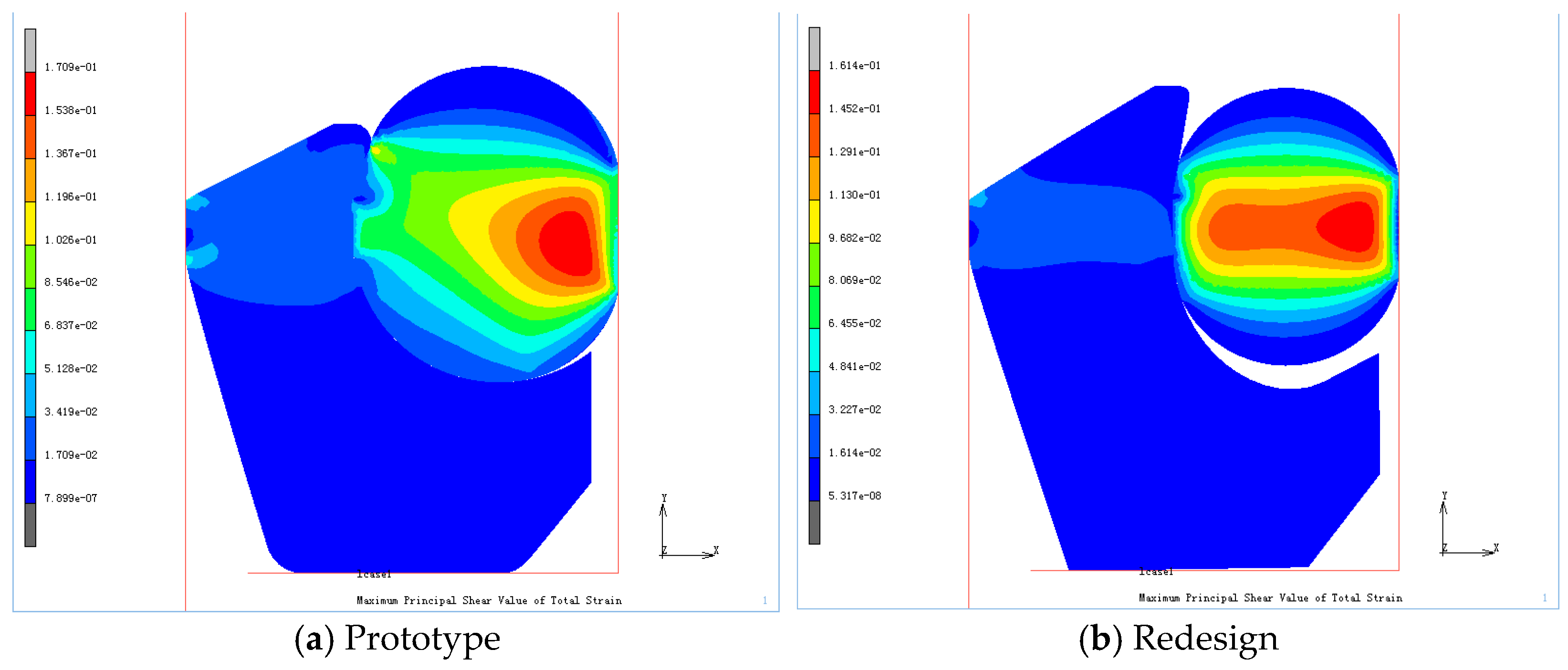
In view of the problems encountered in the simulation of the original VL seal structure, the seal structure was improved by enlarging the peripheral area of the L-ring lip edge, making it less likely for the lip edge to contact the opposing surface. This ensures that the sealing structure does not easily develop a second contact point, thereby maintaining single-contact sealing stability.
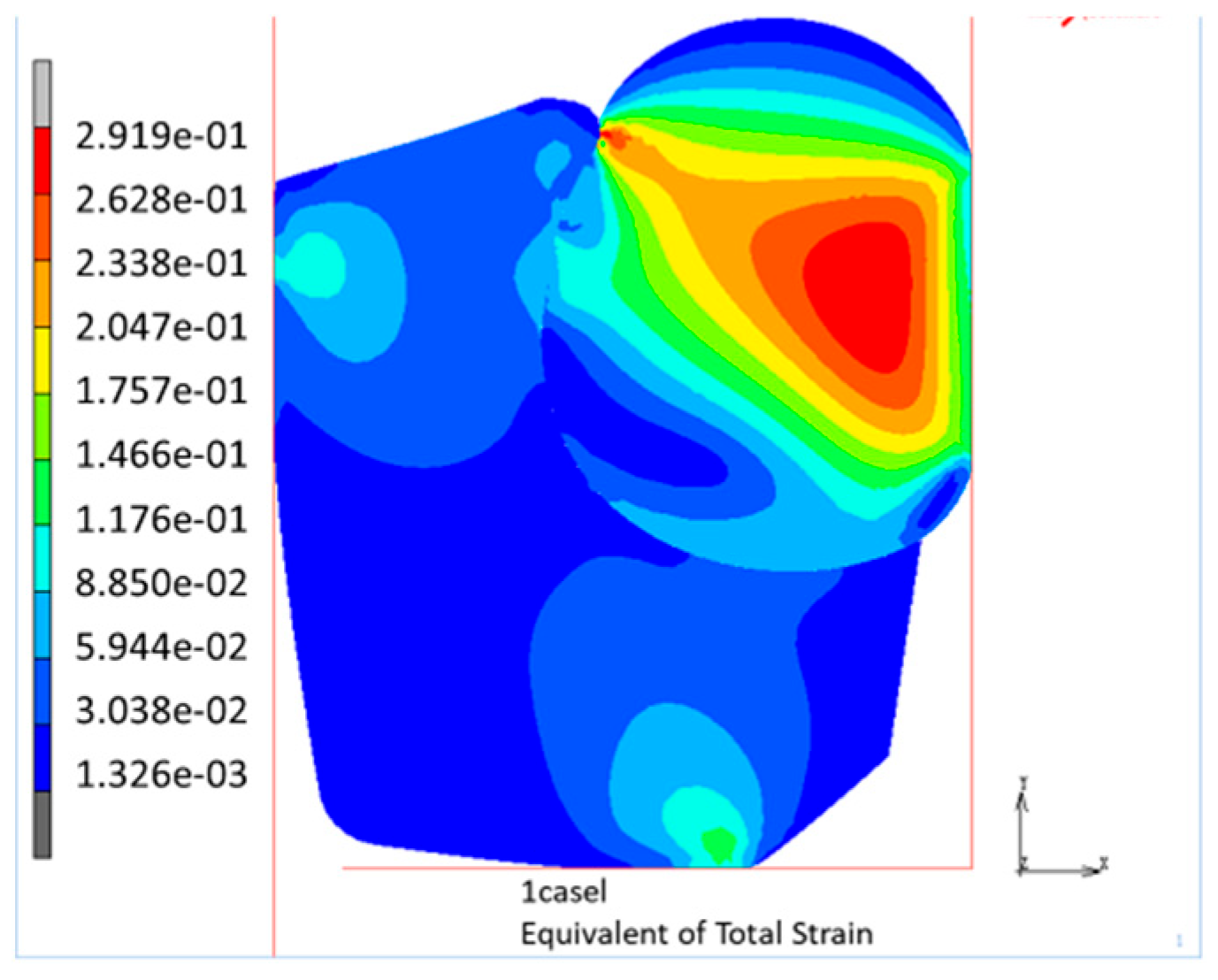
Figure 25 compares the maximum principal shear strain contours of the original and improved VL seals under the initial assembled state. In the original structure, the maximum shear strain is concentrated on the inner side of the contact interface between the O-ring and the L-ring, forming a small high-strain zone; the strain distribution in the L-ring is uneven, and the strain values in the main body are relatively low. After improvement, the high-strain region extends through the entire cross-section of the O-ring, exhibiting a spindle-shaped distribution across the O-ring cross-section, while the strain within the L-ring becomes more uniform with no obvious local concentration. This indicates that the elastic deformation of the O-ring has expanded from a local contact point to the whole cross-section, its energy storage capacity is enhanced, and the preload transfer becomes more uniform. The spindle-shaped strain distribution makes the O-ring subject to more balanced forces during compression, avoiding asymmetric thrust on the L-ring. By increasing the contact area between the L-ring and the O-ring and reserving deformation space, the improved structure changes the load-transfer mode of the O-ring from localized contact to distributed contact, thereby converting the elastic potential energy into sealing pressure more efficiently and uniformly. This reduces the local stress peak in the L-ring, suppresses its tendency to bend, and fundamentally eliminates the formation of a second contact point.
In summary, the parametric analysis scheme of increasing the L-ring height raises the upper limit of the compression ratio for single-contact sealing of the VL seal from 16% to over 20% by enhancing the L-ring stiffness and homogenizing the preload transfer from the O-ring. It eliminates the seal failure risk caused by multi-point contact, makes the wear behavior more stable and predictable, and provides a clear design direction for the parametric analysis of composite seals.
4. Conclusions
Based on the Archard wear model and the Mooney-Rivlin hyperelastic constitutive model, this study systematically investigated the effects of compression ratio, hydraulic pressure, sliding velocity, temperature, and structural improvement on the wear behavior of the VL seal using the finite element method. The wear evolution characteristics and failure mechanisms were clarified. The main conclusions are as follows:
(1) The effect of compression ratio on wear exhibits nonlinear behavior with a critical threshold. When the compression ratio ranges from 8% to 16%, both the peak cumulative wear depth and the peak wear rate increase linearly with compression ratio, and the wear is concentrated at a single contact point in the lower-middle region of the L-ring. When the compression ratio exceeds 16%, the peak wear reaches a plateau, a second wear peak appears at the upper edge of the lip, and the seal transitions from single-point contact to multi-point contact, which is judged as seal failure. The VL seal has a critical compression ratio (approximately 16%), which should preferably be maintained below this value in design to maintain single-contact sealing.
(2) Hydraulic pressure has a sustained driving effect on wear. In the range of 4–28 MPa, the peak cumulative wear depth increases linearly with pressure without the plateau effect observed under varying compression ratio. However, when the pressure rises to 28 MPa, the opposite lip edge of the L-ring becomes involved in contact, and both the wear rate contour and the reaction force contour show a second concentrated zone, weakening the sealing effectiveness. Hydraulic pressure drives wear through two paths: directly increasing the normal stress and inducing bending deformation of the L-ring. The resulting change in contact state is more abrupt than that caused by variation in compression ratio.
(3) The effect of sliding velocity on wear is consistent with the linear expectation of the Archard model, but there exists an inversion failure threshold. In the range of 0.1–0.3 m/s, the wear location remains unchanged, both the peak cumulative wear depth and the peak wear rate are approximately proportional to the sliding velocity, and no second contact point appears. However, when the velocity is excessively high while the hydraulic pressure is insufficient (e.g., 0.3 m/s, 8 MPa), the axial friction force exceeds the hydraulic thrust, causing the L-ring to invert and resulting in complete seal failure. Therefore, the safe operation of VL seals requires that the velocity and pressure satisfy a matching condition.
(4) The effect of temperature on wear is governed by the temperature dependence of the material mechanical properties. In the range of −55–80 °C, material softening increases the contact area and reduces the local stress at the lip, causing both the wear depth and the wear rate to decrease with increasing temperature. When the temperature rises to 135 °C, excessive softening leads to loss of L-ring stiffness; the lip contact pressure recovers, and the peak wear rate rises again, exhibiting a non-monotonic characteristic of first decreasing and then increasing. At −55 °C, material hardening causes severe stress concentration, resulting in the most severe wear. The VL seal has an optimal operating temperature window (approximately 25–80 °C).
(5) The proposed structural improvement significantly enhances sealing performance. By increasing the height and thickness of the L-ring, reducing the O-ring cross-section diameter, and reserving deformation space, the strain distribution in the improved structure changes from local concentration to a spindle shape extending through the entire O-ring cross-section, and the elastic deformation of the O-ring is more fully utilized. In the compression ratio range of 8–20%, the improved structure maintains single-point contact throughout and exhibits no second wear peak; the critical compression ratio is raised from 16% to over 20%, and the wear behavior becomes more stable and conforms to the linear expectation of the Archard model.
(6) The wear mechanism of the VL seal can be summarized as the “contact stress-contact area competition mechanism”. An increase in compression ratio or hydraulic pressure simultaneously increases the normal stress and enlarges the contact area; the competition between these two factors determines the evolution trajectory of the wear peak. Velocity affects the wear depth linearly only through the sliding distance, but affects the structural stability through friction coupling. Temperature regulates the stress distribution and contact morphology by changing the material stiffness. The appearance of multi-point contact is a quantifiable criterion for seal failure and should be regarded as a critical warning signal in engineering design.
In this study, multi-point contact is regarded as an important indicator of abnormal sealing behavior, but it is not used as the only failure criterion. The failure tendency of the VL seal was evaluated by considering the overall contact and wear characteristics, including the loss of the intended single sealing contact state, excessive contact stress concentration, significant increase in cumulative wear depth, abnormal enlargement or migration of the contact area, and possible structural instability such as seal lip inversion. Therefore, the occurrence of multi-point contact indicates an increased risk of seal failure, while the final assessment should be based on the combined evolution of contact stress, contact area, wear depth, and structural stability.
In summary, the VL seal can maintain favorable wear resistance under suitable operating conditions, but its effective working range is limited by the combined action of compression ratio, hydraulic pressure, velocity, and temperature. By optimizing the geometric matching between the L-ring and the O-ring, the stable working range of single-contact sealing can be significantly broadened, providing a theoretical basis for the seal design of aviation hydraulic actuators.
Future work: Further research can be pursued in the following aspects: investigate the wear law under multi-parameter coupling effects (compression ratio, pressure, velocity, and temperature) and establish a multi-condition wear prediction model; systematically measure the hardness, wear coefficient, and constitutive parameters of PTFE and NBR at different temperatures to refine the temperature term in the Archard model; establish the critical velocity-pressure relationship for inversion failure of the VL seal and define the safe operating boundary; simulate the geometric evolution of the L-ring caused by cumulative wear depth and its feedback effect on the contact stress distribution; design bench wear tests to validate the simulation results and calibrate the wear coefficient; and carry out parametric analysis of parameters such as L-ring height, thickness, and O-ring cross-section diameter to minimize wear and maximize sealing reliability.
Future work will also consider lubrication-regime identification and temperature-dependent friction coefficients through dedicated friction and wear experiments under aviation hydraulic oil lubrication.