1. Introduction
Due to the extreme complexity of the marine environment, parts suffer from both corrosive attack and other mechanical actions, including wear during operation and abrasion from repeated wave and gravel impacts, which collectively accelerate material failure. Therefore, offshore equipment usually needs to be made of high-strength, wear-resistant and anticorrosive materials, and protected by wear-resistant and anticorrosive films [
1,
2,
3]. With the rapid development of the marine industry, the requirements for wear-resistant and anticorrosive materials are getting higher, and the research on the theory and application of wear-resistant and anticorrosive materials is becoming increasingly urgent [
4,
5]. Thus, high-performance protective coatings offer an economical and efficient route to enhance material properties. An ideal coating must achieve two goals: (1) effectively isolate corrosive media to boost pitting and crevice corrosion resistance and (2) provide high hardness and wear resistance against mechanical wear. Recent advances in surface engineering have led to the development of various protective coatings, such as carbon-based and hard ceramic-based wear- and corrosion-resistant coatings [
6,
7,
8,
9,
10]. Among various surface-protective coating systems, Diamond-Like Carbon (DLC) film has attracted worldwide attention due to its excellent wear resistance, a low friction coefficient, chemical inertia, high hardness, and other properties. Since 1971, Aisenberg and Chabot [
11] successfully prepared DLC films by ion beam deposition at room temperature for the first time. With the continuous development of preparation technology and the continuous improvement of performance-testing methods, DLC films have gradually become one of the hotspots in the field of material science.
Diamond-like carbon (DLC) films combine high hardness, excellent wear resistance, chemical inertness, and a low friction coefficient, making them promising for surface protection in harsh environments. Subsequent studies [
12,
13] have shown that appropriate doping with metallic or non-metallic elements can effectively tailor and optimize their overall performance. Among various doping strategies, silicon modification has attracted particular attention owing to its unique electronic structure and bonding characteristics with carbon. As an element in the same main group as carbon, Si tends to form covalent Si–C bonds rather than sp
2-hybridized C=C structures, which helps regulate the bonding network and residual stress within the coating [
14,
15]. Raman spectroscopic investigations further reveal that the incorporation of Si extends the chemical bond length and alters atomic force constants, resulting in a gradual downshift of the G peak as the Si content increases, reflecting the evolution of the carbon hybridization state [
15]. Systematic studies have demonstrated that Si doping can effectively reduce the internal stress of DLC coatings, thereby enhancing film adhesion, compactness, and comprehensive mechanical properties [
16,
17]. In terms of tribological performance, the introduction of Si atoms reduces the number of high-stress C–C bonds and relieves local strain accumulation, which significantly improves the mechanical stability and high-temperature tribological properties of DLC coatings [
16]. For corrosion resistance, Si doping decreases film porosity and inhibits the penetration of corrosive media, thereby enhancing the corrosion protection ability of the coatings [
17]. Besides elemental doping, multilayer structural design and the introduction of transition layers have also been proven effective in regulating residual stress and reducing defects such as microcracks and pinholes [
18,
19]. For instance, Ti interlayers and CrN-based gradient structures significantly improve the load-bearing capacity and interfacial stability of DLC coatings, which further optimizes the tribological and corrosion resistance of the coatings [
18,
20]. Such modifications effectively suppress electron migration and charge exchange between the substrate and corrosive medium, reducing corrosion current density and improving passive stability.
Moreover, the wear–corrosion coupling mechanism is highly complex, and the resulting material loss is far greater than the sum of individual wear and corrosion losses. This is because under tribocorrosion conditions, the synergistic effect between wear and corrosion leads to damage that significantly exceeds the sum of the two acting independently. Therefore, the material loss caused by wear–corrosion synergy cannot be ignored. Currently, researchers worldwide have gradually focused on the damage evolution and failure mechanisms of hard films under wear–corrosion coupling. For example, some researchers [
21] studied the tribocorrosion properties of DLC films by applying different constant polarization voltages in a seawater environment. The results show that DLC films have lower corrosion current density under the coupling condition of tribocorrosion, and it is found that DLC films have better tribocorrosion resistance than 316 L stainless steel under this condition. Radi et al. [
22] studied the effect of different concentrations of an ethanol solution on the tribocorrosion properties of DLC films under OCP conditions, and proved that DLC films have tribocorrosion resistance and can play a role in protecting the substrate. Zhang et al. [
23] compared the wear resistance and corrosion resistance of hydrogen-free DLC films and hydrogen-containing DLC films under different loads in a seawater environment under OCP conditions. The results show that hydrogen-containing DLC films fail faster under high-load conditions in seawater. Vicen et al. [
24] studied the tribocorrosion properties of W-DLC films and DLC films under seawater conditions. The results show that the wear rate of W-doped DLC films is lower than that of DLC films, that is, the tribocorrosion properties of W-DLC films are better than DLC films. Hatem et al. [
18] studied the tribocorrosion behavior of a TiSiCN coating in a phosphate buffer solution. The coating reduced the wear rate of a medical F136 titanium alloy by 97%. This improvement stems from its nanocomposite structure—Ti(C)N grains embedded in an amorphous Si
3N
4/carbon dual matrix. Si effectively enhances anti-stripping ability under tribocorrosion. At 4.3–6.9 at.% Si, no coating peeling occurs and the wear scar remains flat; below 4.3 at.%, severe peeling leads to a sharp increase in wear rate. The study further points out that the film with a higher Si doping amount showed a lower friction coefficient during the tribocorrosion process, which is mainly attributed to the formation of a layer of a hydrated silica gel transfer film with a lubricating effect on the surface [
18,
25,
26], thus optimizing the tribological properties of the coating.
Considering the above research, there are few studies on the tribocorrosion properties of doped DLC films, and the mechanism of friction and corrosion has not been studied very clearly. Therefore, this paper studies the tribocorrosion resistance of DLC with different Si doping contents in a seawater environment under OCP conditions and dynamic polarization conditions, and further studies its tribocorrosion mechanism, to provide some theoretical support for the practical application of DLC film materials to complex marine environments.
3. Experimental Results and Analysis
It can be seen from the quantitative analysis of elements that with the increase in HMDSO flux, the content of Si in the film gradually increases, indicating that Si is successfully doped into the carbon-based film, and the content of Si is proportional to the flux of HMDSO. The quantitative analysis of elements and the results of hardness and elastic modulus are shown in
Table 3. The results show that the elastic recovery rate of Si
100 is the worst, and the elastic recovery rates of DLC, Si
50 and Si
75 are better and not much different. The highest hardness is pure DLC film with a value of 22.45 GPa, and the hardness of the film gradually decreases with the incorporation of Si into DLC. When a small amount of Si is doped, the hardness decreases from 21.96 GPa to 19.59 GPa with a change rate of about 2%. With the further doping of Si, the hardness decreases to 17.14 GPa. At the same time, with the increase in Si content in the film, the elastic modulus of the film gradually decreases to 147.27 GPa.
As shown in
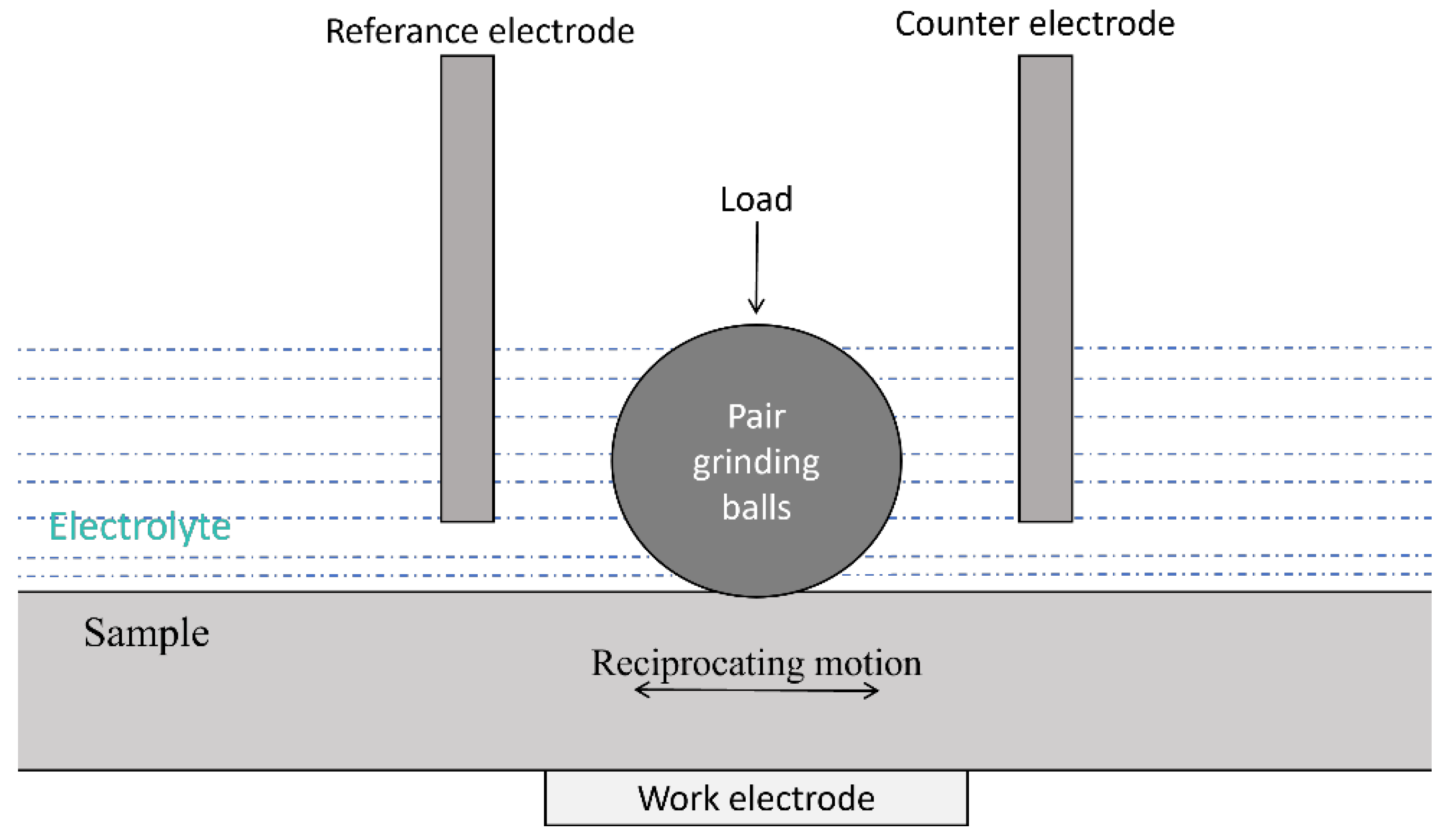
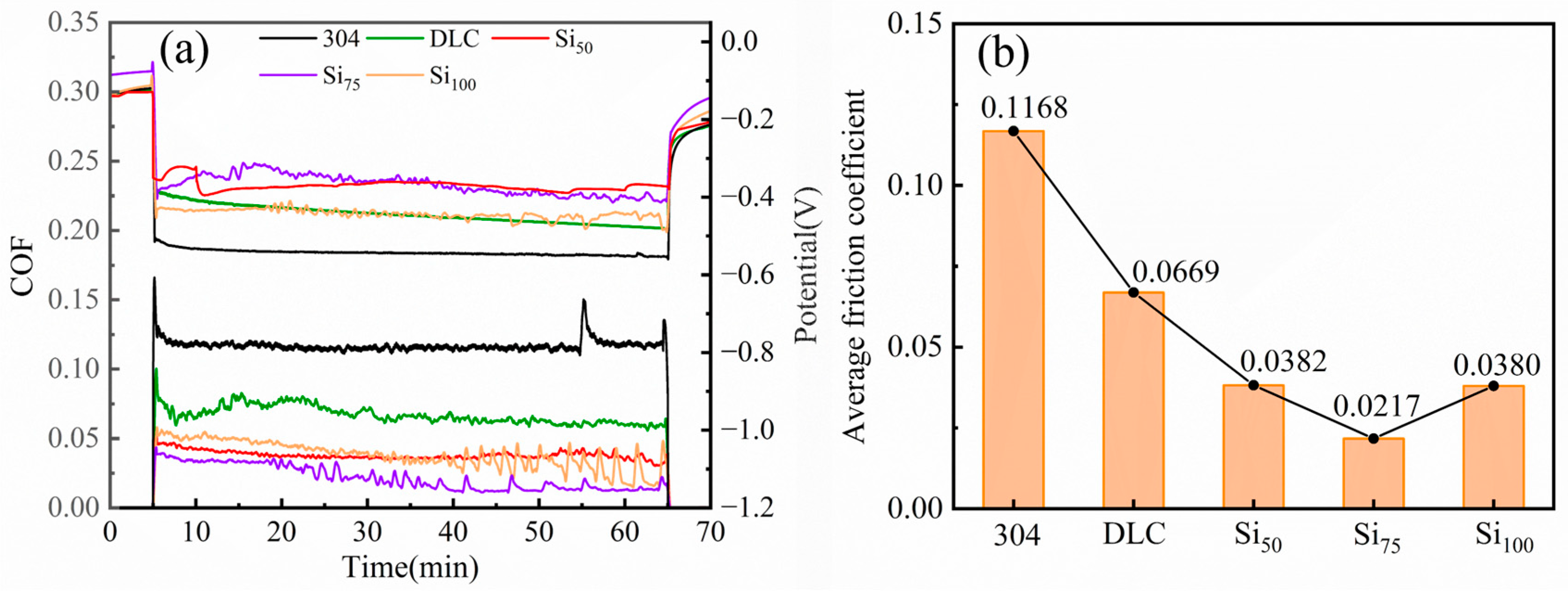
Figure 2a, the variations in OCP and the friction coefficient of five samples with time before, during and after the tribocorrosion test under OCP conditions in a seawater environment are described. The test is divided into three stages: the first part is a static OCP test for 5 min, the middle is a dynamic OCP test for 60 min of tribocorrosion, and the last is a steady-state OCP test for 5 min. The results show that the open-circuit voltage value of the five samples tends to be stable before the wear–corrosion experiment, indicating that the electrochemical state of each sample surface has reached a stable state. At the beginning of the wear–corrosion test, the OCP value of each sample decreases rapidly. This is due to the destruction of the passivation film on the surface of each sample during the friction and wear process, resulting in the destruction of the stable electrochemical state on the surface of each sample [
28]. In the dynamic OCP test, the order of open-circuit voltage is Si
75 (−0.38 V) > Si
50 (−0.39 V) > Si
100 (−0.45 V) > DLC (−0.47 V) > 304 stainless steel (−0.57 V). The results show that the Si
75 film exhibits the best electrochemical response characteristics during the wear–corrosion test, and each film sample is not ground to the substrate during this process. At the same time, the results prove that the DLC film improves the tribocorrosion resistance of the substrate, and the addition of Si further improves the tribocorrosion resistance of the DLC-Si film. In addition, it is worth noting that during the tribocorrosion test, the OCP values of each sample remained stable and fluctuated to some extent, which was due to the dynamic balance of the removal rate and formation rate of the passivation film on the surface of the sample [
29]. After the wear–corrosion test, the OCP value of each sample increased rapidly but did not return to the level before the start of the wear–corrosion test, indicating that the surface of each sample was destroyed during this process, and the friction and wear were interrupted. The surface of each sample re-emerged as a new passivation film. As shown in
Figure 2b, by analyzing the average friction coefficient of each sample during the tribocorrosion test, the results show that the average friction coefficient of each film sample is lower than that of the 304 stainless steel substrate (0.1168), which is due to the graphitization of the DLC film itself. The DLC-Si film has a lower friction coefficient than the DLC film (0.0669), and the lowest friction coefficient of Si
75 is 0.0217. Additionally, tribochemical reactions occur on the surface. Mg
2+ and Ca
2+ in seawater react with H
2O and CO
32− during friction to form sludge-like Mg(OH)
2 and CaCO
3. These products provide a boundary lubrication effect [
30], reducing contact between the film and the ball and lowering the friction coefficient.
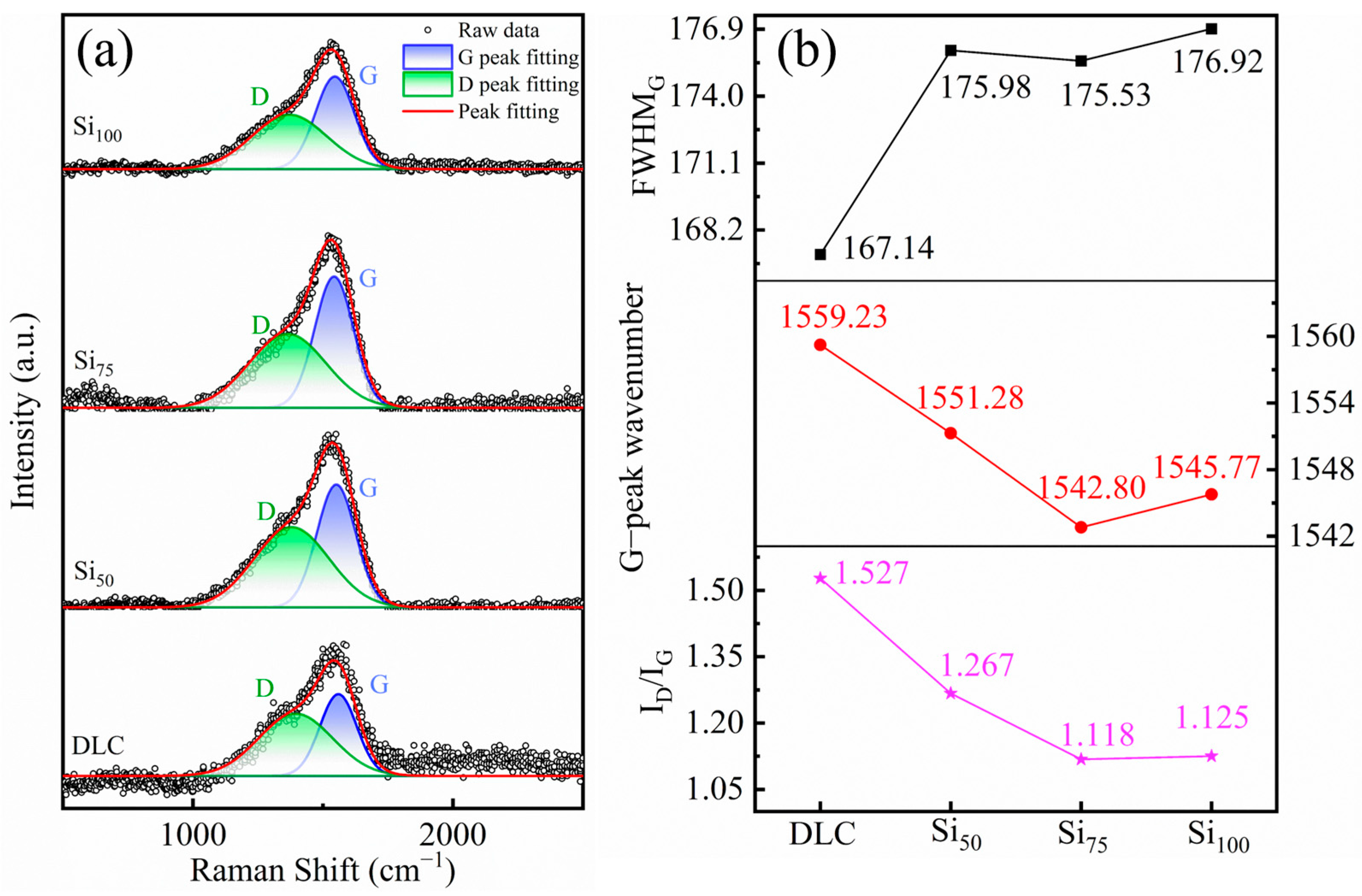
In order to further analyze the effect of tribocorrosion coupling on the properties of the film, Raman characterization analysis was performed on the wear scar area after the tribocorrosion test of each sample. The results after Gaussian fitting are shown in
Figure 3. The results show that the I
D/I
G of each sample after tribocorrosion from low to high are Si
75 (1.118), Si
100 (1.125), Si
50 (1.267) and DLC (1.527). Among them, the lowest I
D/I
G value is still Si
75, so it shows the lowest friction coefficient. Usually, the position of G peak reflects the order degree of sp
2 hybrid carbon [
17]. By comparing and analyzing the position of the G peak before and after tribocorrosion of each film sample, it is found that the position of the G peak (1554.27 cm
−1) of pure DLC film is relatively the highest after the friction–corrosion test, the degree of graphitization is weak, and the average friction coefficient is the highest (0.0669). The G peak of the DLC-Si film is further red-shifted, indicating that Si doping promotes the decrease in the order of sp
2 clusters during the tribocorrosion process; the degree of graphitization increases and the solid lubrication effect is strengthened. Meanwhile, the hydrated reaction formed a synergistic mechanism of graphitized solid lubrication and hydrated silica gel chemical [
18,
25,
26] synergistic lubrication. Among them, the Si
75 film with the most significant red shift in the G peak (1545.58 cm
−1) has the highest degree of graphitization, so the friction coefficient is the lowest (0.0217), and the friction coefficient of the remaining films is maintained at 0.0380~0.0382, but all films are lower than the 304 stainless steel substrate without DLC film protection (0.1168). FWHMG reflects the degree of disorder of the sp
2 hybrid carbon in DLC films [
14,
17]. The larger the peak width, the higher the disorder of the sp
2 cluster structure. The FWHM
G (167.14) of pure DLC film is significantly smaller than that of three DLC-Si films (175.53~176.92). It is speculated that Si doping may strongly inhibit the ordering of the carbon network during tribocorrosion, so that DLC-Si maintains stable I
D/I
G and higher disordering.
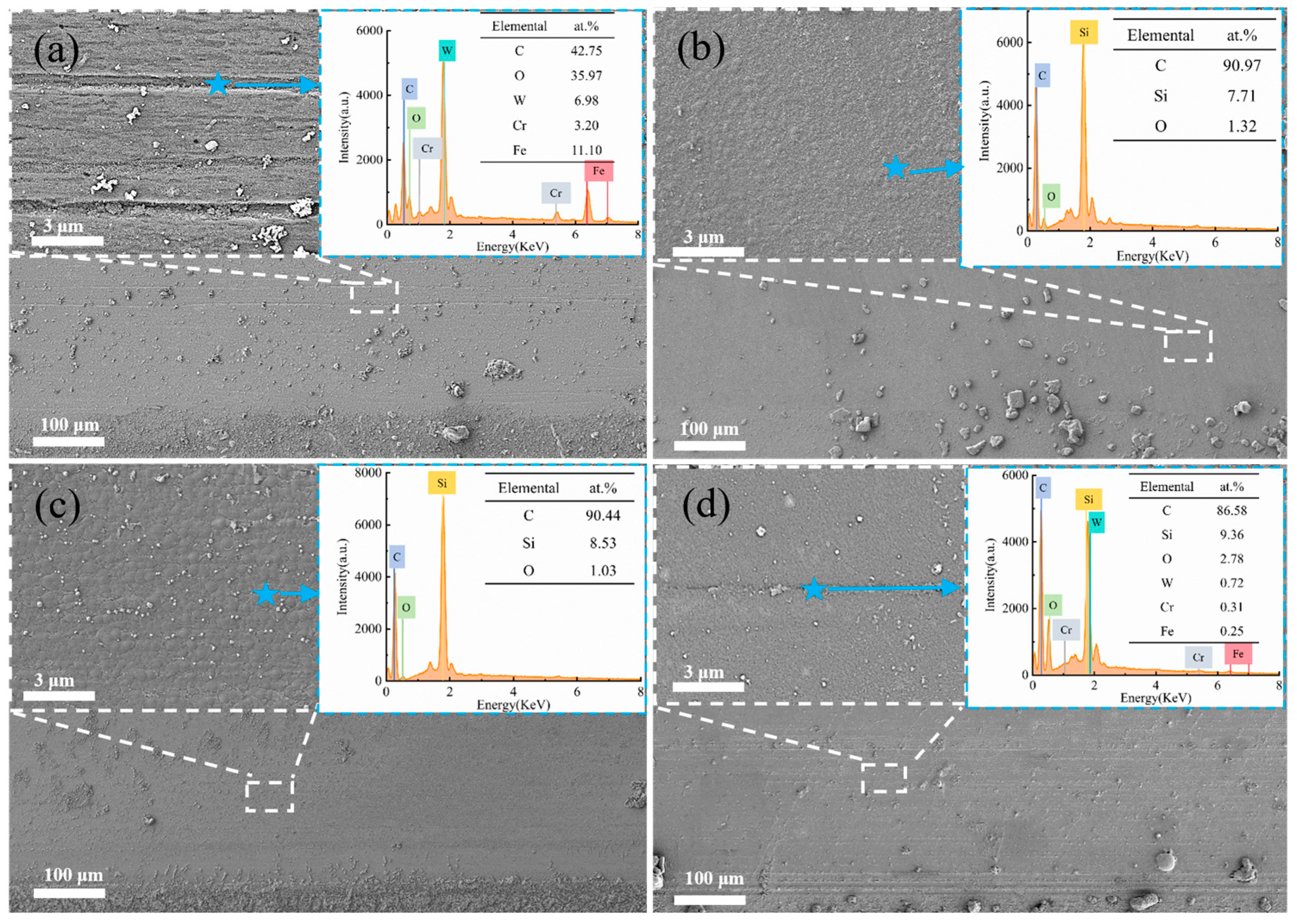
In order to further study the tribocorrosion mechanism of the film,
Figure 4 shows the SEM morphology of the wear scars of DLC, Si
50, Si
75 and Si
100 films after tribocorrosion under open-circuit conditions and the EDS element analysis results in the corresponding region. It can be clearly seen from
Figure 4a that the pure DLC film has serious furrows and defects in the wear scar area after the wear–corrosion test, and there are discrete wear particles around it, which indicates that serious abrasive wear occurs during this process, and the volume damage of the film is large. The corresponding EDS point scan results show that, in addition to C and O elements, W, Cr, Fe and other elements are also detected in the wear scar area, which indicates that some areas of the pure DLC film have been worn out, exposing the transition layer and the substrate. Compared with pure DLC, the tribocorrosion degree of DLC-Si in (b–d) is lower. Among them, the original cluster structure of the DLC-Si film surface can still be observed on the surface of Si
50 and Si
75 in (b,c), while the cluster structure of Si
100 in (d) is completely unobservable, and furrows and some defects are observed in the tribocorrosion area, which indicates that the tribocorrosion performance of the DLC-Si film with higher Si content is poor during the tribocorrosion process. A small amount of W, Cr and Fe elements appear in Si
100, indicating that excessive Si doping may reduce the mechanical properties of the film and cause slight damage to expose a small amount of the transition layer and substrate elements.
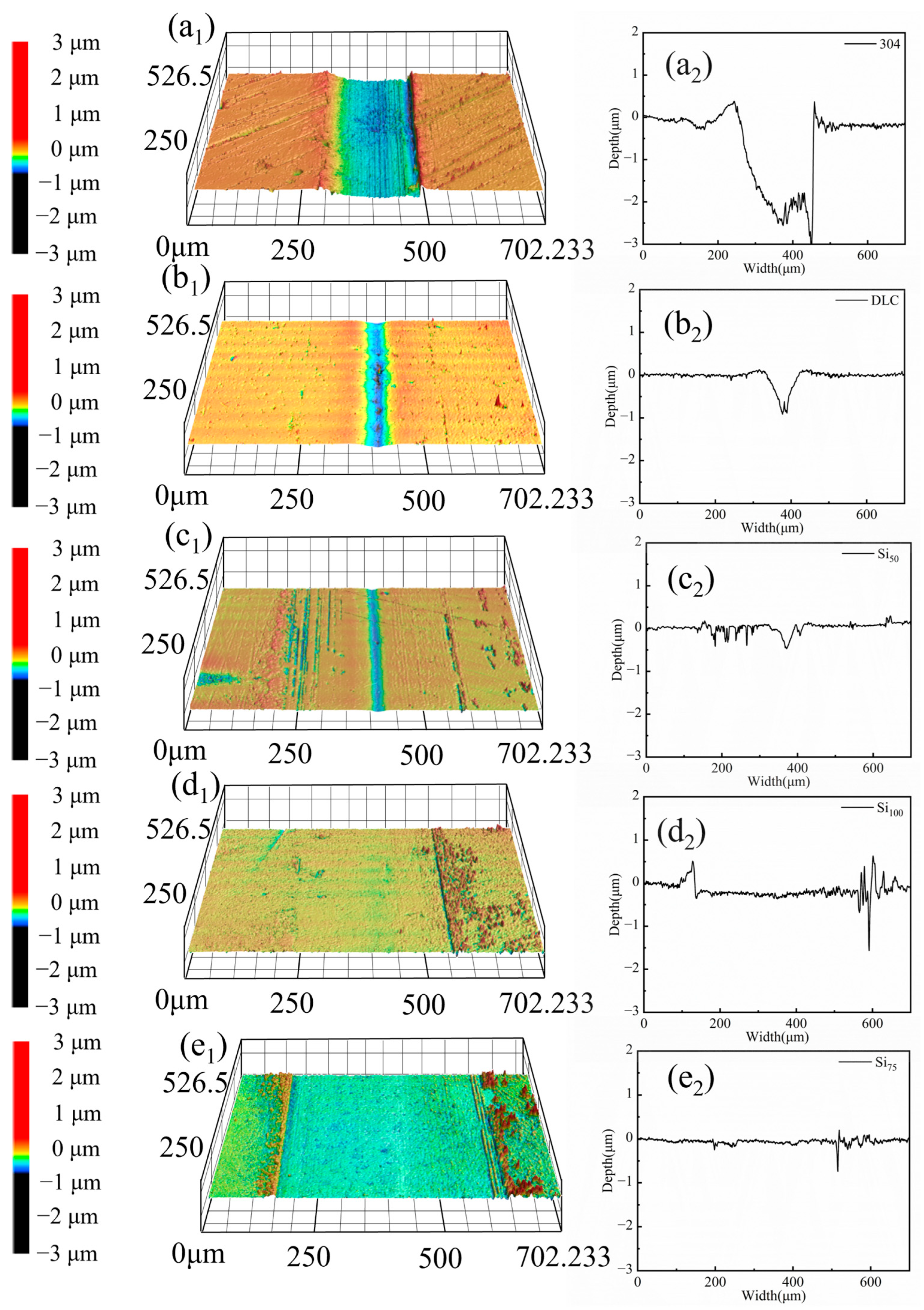
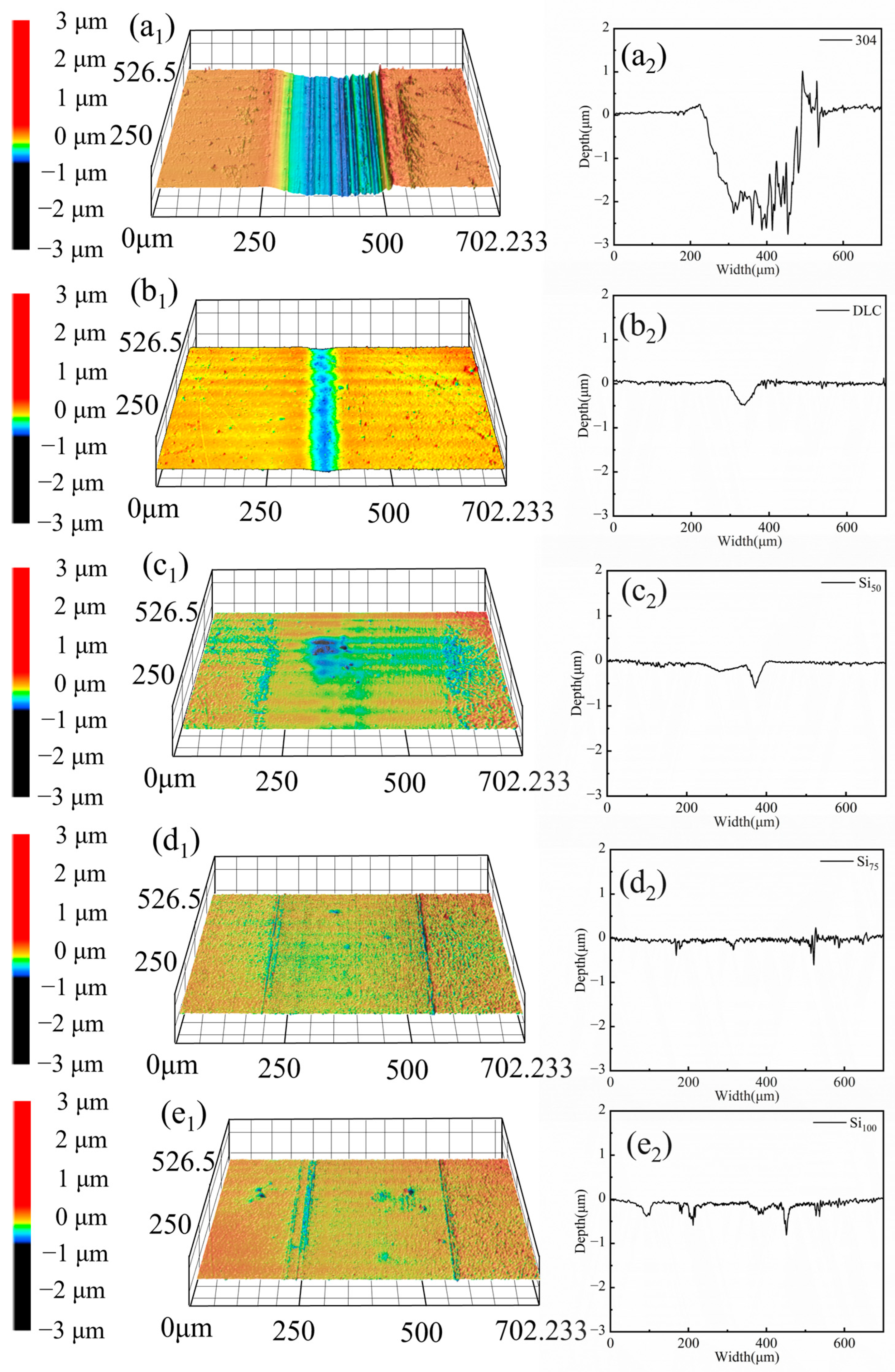
As shown in
Figure 5(b
1,b
2), the wear scar depth of the pure DLC film is reduced to about 1 μm. The wear scar area with the DLC film is smoother than that of 304 stainless steels, and the furrow phenomenon basically disappears. However, there is a small number of deep blue and black depression areas in the pure DLC wear scar area. It is speculated that this may be due to the corrosion pits caused by pitting corrosion, which indicates that the wear–corrosion mechanism changes from abrasive wear to tribochemical wear. Therefore, the contact between the film and the ball is reduced due to the good self-lubrication and graphitization of the DLC film, which reduces the friction coefficient and wear rate. However, the corrosion resistance of pure DLC in a seawater environment is insufficient. Under the synergistic effect of corrosion and wear, the wear area of pure DLC is obviously concave. For Si-doped DLC-Si films, the introduction of Si through the regulation of the bonding structure and interfacial chemical modification is performed in order to achieve the optimization of tribocorrosion performance: as shown in (c
1,c
2), the Si
50 sample exhibits a further reduced maximum wear scar depth of less than 0.5 μm compared to the pure DLC film, along with a smoother wear scar and shallower two-dimensional cross-section. This is because Si influences tribochemistry and plastic transfer, inducing the formation of a transfer film at the friction interface [
31] that provides self-lubrication and wear resistance, thereby reducing tribocorrosion. Moreover, Si doping itself has been reported to lower the friction coefficient during tribocorrosion. I can be inferred that a similar hydration reaction occurred during the sliding process, which further reduces the friction coefficient of the DLC-Si film. However, some dark areas remain in the wear scar of the Si
50 sample, indicating that pitting corrosion—though less severe than in pure DLC—is still unavoidable. As the Si content increases, the Si
75 film exhibits a uniform three-dimensional surface profile with no deep wear marks and few observable pits inside the wear scar, suggesting that pitting corrosion is greatly reduced during tribocorrosion. Moreover, its two-dimensional cross-section depth is the shallowest, reflecting improved tribocorrosion resistance. However, with the further increase in Si content, the mechanical properties of the film decrease, the color change of the wear scar area of the three-dimensional profile of the Si
100 film (e
1) reappears, the smoothness decreases, and the wear scar area is observed again. Part of the dark area can be seen, which means that with the increase in Si content, the pitting degree of the Si
100 film in the process of tribocorrosion is further increased, and its corrosion resistance is reduced. Observing the two-dimensional cross-section (e
2), it was found that the depth of the wear scar area increased and the fluctuation became larger than that of the Si
75 film. Therefore, with the further increase in Si, the tribocorrosion properties of Si
100 films decrease. Combined with the EDS element analysis in
Figure 4, the conclusion shows that with the variation tendency of O was similar to that of Si in the wear area, which confirms the occurrence of the tribo-reaction. The results show that the tribocorrosion performance of the Si
75 film is the best.
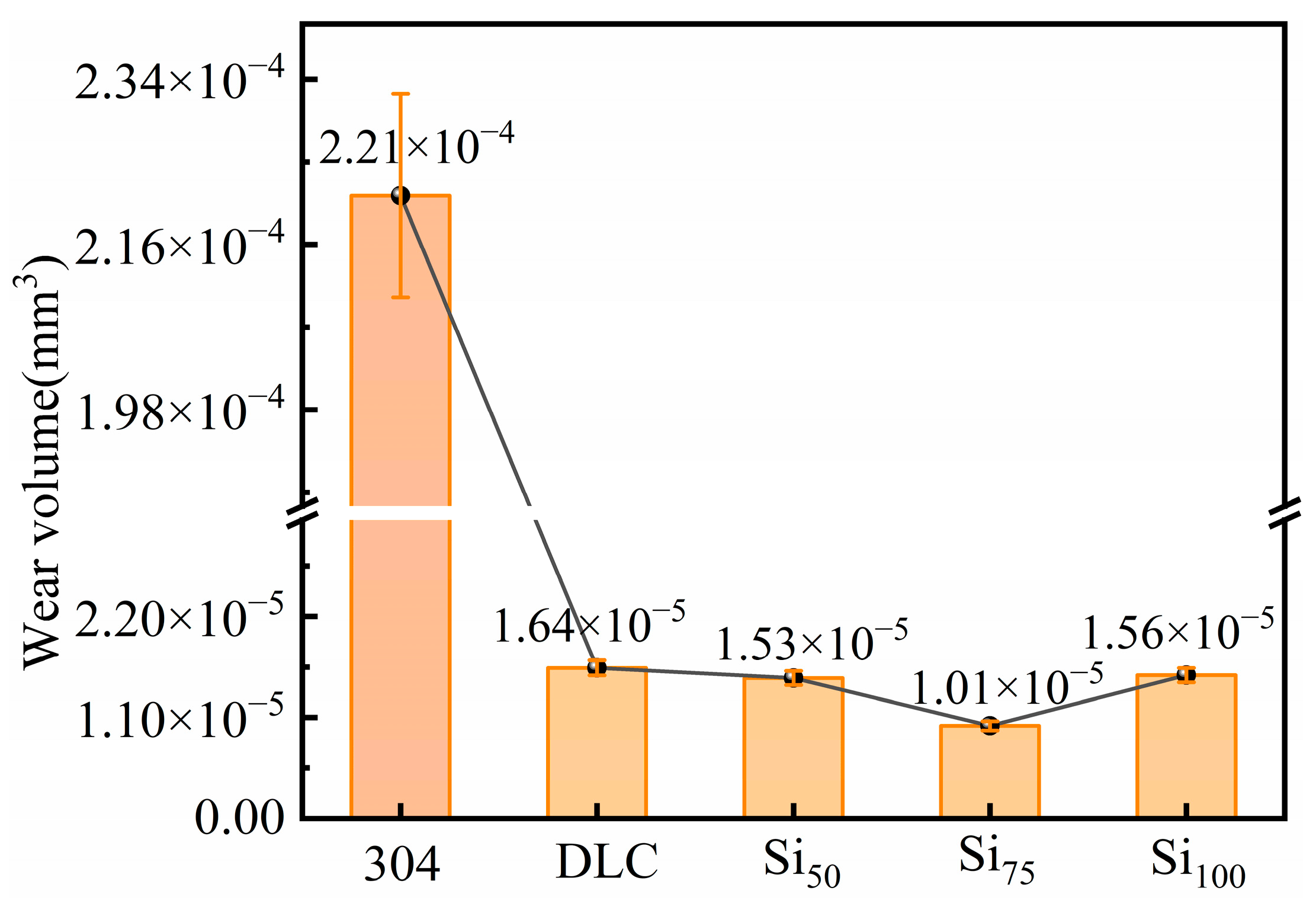
The volume loss data is shown in
Figure 6, which visually shows the degree of wear failure of each sample under dynamic open-circuit conditions, and its change trend is basically consistent with the aforementioned wear scar morphology and element distribution characteristics. The volume loss of 304 stainless steel reaches 2.21 × 10
−4 mm
3 (the maximum value of all samples), corresponding to the deep groove wear marks formed under the cyclic mechanism of Formation and destruction in seawater, which greatly reflects the effect of the corrosion–wear synergistic effect on material failure. The volume loss of pure DLC (1.64 × 10
−5 mm
3) is one order of magnitude lower than that of 304 steel, owing to its high hardness and sp
3 structure. However, oxidative degradation in seawater makes its loss significantly higher than that of Si-doped DLC. Si
50 shows a slightly lower loss (1.53 × 10
−5 mm
3), while Si
75 exhibits the lowest loss (1.01 × 10
−5 mm
3). This is attributed to Si doping, which replaces sp
2-bonded carbon atoms and promotes the formation of a silicon oxide passivation film on the corroded surface [
32]. The formation of the passivation film reduces the number of voids on the surface of the DLC-Si film and forms a physical isolation layer, which effectively prevents ion penetration and slows down the corrosion process. The electrochemical corrosion performance of the DLC-Si film is improved, and the effect of the corrosion–wear synergistic effect on material damage is reduced. However, the loss of the Si
100 film (1.56 × 10
−5 mm
3) increased due to the excessive Si doping, which destroyed the sp
3-dominant structure of DLC, resulting in the decrease in hardness and density, weakening the wear resistance and corrosion resistance.
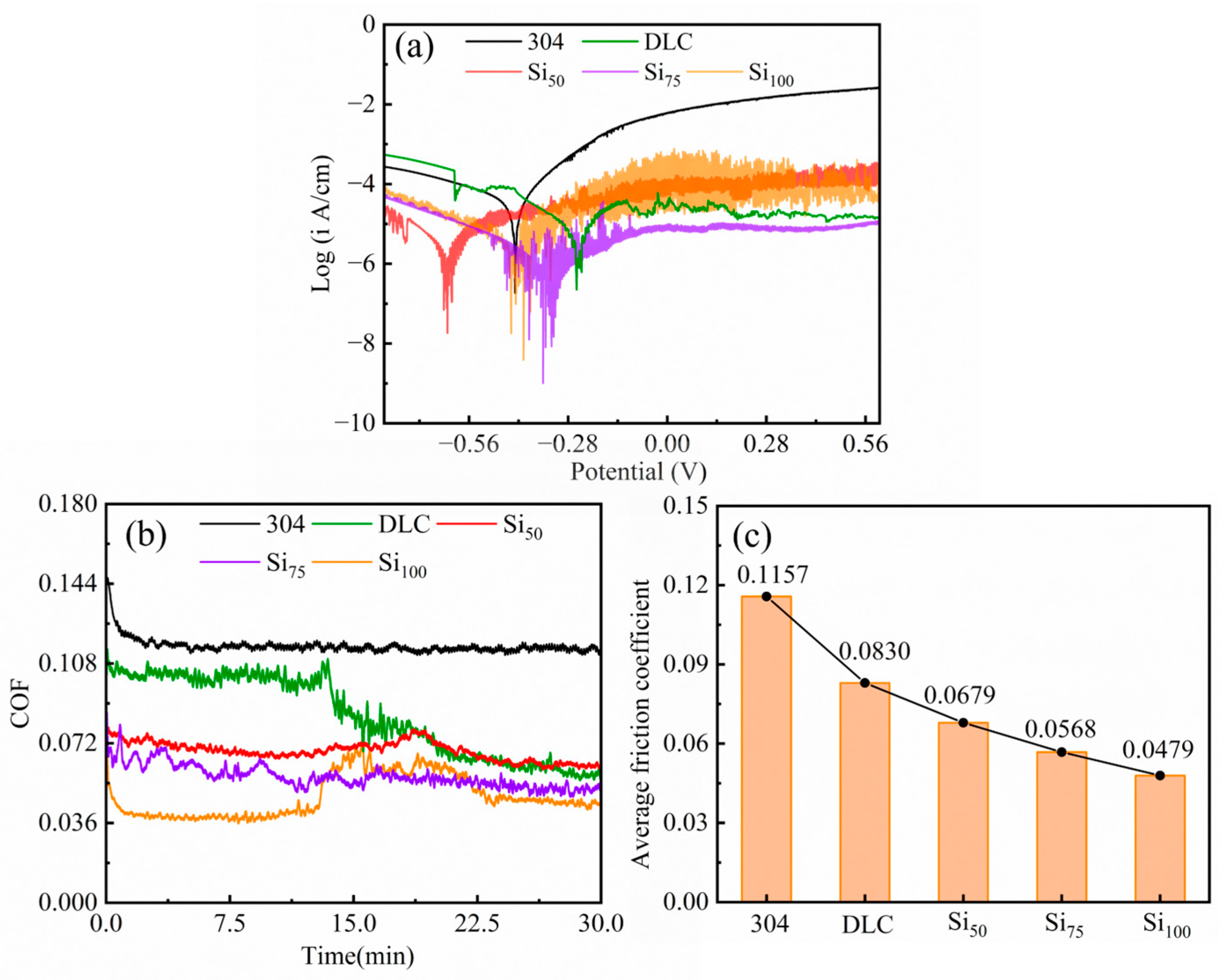
Figure 7 presents the polarization curves, the evolution of the friction coefficient over time, and the average friction coefficient of the five samples under polarization in a seawater environment. The polarization curves exhibit severe signal fluctuation. The core reason is the dynamic coupling between electrochemical reactions and mechanical wear, which continuously alters the electrode surface state. During the wear process, the plowing effect of abrasive particles and the “destruction–self-healing” cycles of the surface passivation film occur repeatedly. Meanwhile, the adhesion and detachment of wear debris dynamically change the active reaction sites and the effective contact area on the electrode surface, causing current density to fluctuate within a small range [
31]. In addition, the friction process will inevitably lead to a certain small vibration, which is difficult to avoid. Environmental vibration will also affect polarization curve signal acquisition stability. In order to more accurately analyze the corrosion potential and self-corrosion current density of the polarization curve during the wear–corrosion test, the Tafel extrapolation method was used for the fitting analysis. The results are shown in
Table 4. During the wear–corrosion test, the passive film on the sample surface is continuously removed by mechanical action as friction proceeds. This results in a decrease in corrosion potential for all samples during the wear–corrosion process [
33]. Meanwhile, the passivation film undergoes repeated cycles of formation and destruction under tribocorrosion conditions. This cyclic process intensifies material loss and consequently leads to an increase in self-corrosion current density. In the electrochemical corrosion system, the decrease in self-corrosion current density directly reflects the decrease in corrosion kinetic rate. Comparing 304 stainless steel and pure DLC samples, it can be seen that the corrosion potential of pure DLC (−0.256 V) is significantly more positive than that of 304 stainless steel (−0.43 V), and its self-corrosion current density (6.31 × 10
−6 A/cm
2) is much lower than that of 304 stainless steel (3.16 × 10
−5 A/cm
2), indicating that the corrosion resistance of pure DLC film under the synergistic effect of friction–corrosion coupling is better than that of the 304 stainless steel substrate. Compared with pure DLC film, the self-corrosion current density of the Si-doped DLC film is further reduced. This is attributed to Si doping, which replaces sp
2-bonded carbon atoms with silicon atoms, significantly reducing the number and size of sp
2 bond clusters in the film. This suggests increased film compactness and reduced porosity [
16,
34]. Additionally, a silicon oxide (SiO
x) film forms on the contact surface [
18]. The formation of these passivation layers effectively prevents ion penetration and slows down the corrosion process. The combined effects enhance the electrochemical performance of the DLC-Si film. The Si
50 film exhibits a corrosion potential of −0.63 V (more negative than that of pure DLC), while its self-corrosion current density (2.95 × 10
−6 A/cm
2) is further reduced. When the Si content increases to 9.26 at.%, the Si
75 film shows a corrosion potential of −0.33 V, and the self-corrosion current density drops by an order of magnitude to 9.12 × 10
−7 A/cm
2. At this point, the self-corrosion current reaches its lowest value, meaning that the Si
75 film possesses the highest wear and corrosion resistance among the five samples. However, when the Si content further increases to 10.32 at.%, the Si
100 film experiences a negative shift in corrosion potential to −0.41 V, and its self-corrosion current density rises to 2.51 × 10
−6 A/cm
2.
Figure 7b shows the variation curve of the friction coefficient with time under the friction–corrosion coupling synergy under dynamic polarization conditions. It can be seen that the friction coefficient of 304 stainless steel is always maintained at a higher range above 0.1, while the friction coefficient of pure DLC is higher at the beginning, and then gradually decreases to a stable level, but the overall friction coefficient is still higher than that of the Si-doped DLC film, and the friction coefficient of DLC-Si film is at a lower level as a whole. The average friction coefficient data in
Figure 7c further quantifies this difference. The highest average friction coefficient is seen in 304 stainless steel (0.1157). Pure DLC shows an average COF of 0.0830, which is approximately 28.2% lower than that of 304 stainless steel. For Si-doped DLC films, the average friction coefficient decreases with increasing Si content: compared to pure DLC, Si
50 (0.0679), Si
75 (0.0568), and Si
100 (0.0479) exhibit reductions of 18.1%, 31.7%, and 42.2%, respectively. Considering the characteristics of wear–corrosion coupling, the low friction of Si-doped DLC films can be explained as follows. On the one hand, silicon significantly influences the tribochemical and plastic transfer behavior of the film, inducing the formation of a transfer film at the friction interface [
14]. This transfer film possesses self-lubricating properties and wear resistance, thereby reducing the degree of tribocorrosion. Moreover, it is inferred that the self-lubricating nature of hydrated silica gel further lowers the friction coefficient during sliding. On the other hand, the excellent corrosion resistance of Si-doped DLC films (as reflected by the low
icorr in
Table 4) prevents the accumulation of corrosion products at the friction interface and reduces abrasive wear. This helps maintain low and stable friction performance under the interaction between electrochemical corrosion and mechanical friction. These results demonstrate that Si doping not only optimizes the corrosion resistance of DLC films but also significantly improves their anti-friction performance under wear–corrosion coupling conditions. Among the samples, the Si
100 film exhibits the best friction-reducing effect under dynamic polarization, while the Si
75 film offers a balanced combination of low friction and high corrosion resistance.
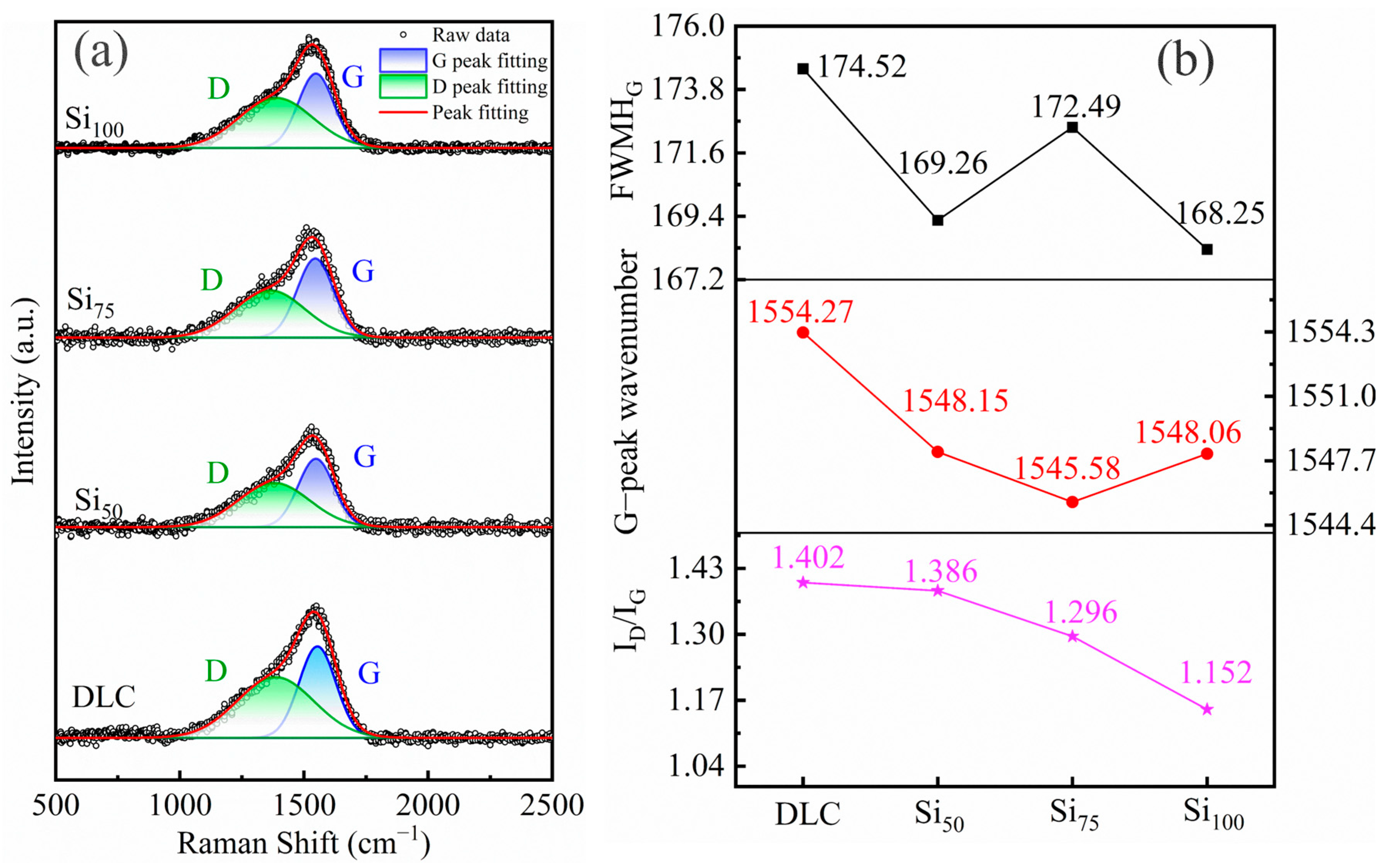
Figure 8 shows the Raman spectra of the samples after friction–corrosion. The I
D/I
G of pure DLC after friction–corrosion is 1.402, while the I
D/I
G of Si-doped samples gradually decrease with the increase in Si content, the degree of graphitization increases with the increase in Si content. Combined with the average friction coefficient in
Figure 7c, it can be found that the change trend of I
D/I
G is consistent with the change trend of average friction coefficient, which further confirms the accuracy of the experimental results. With the increase in Si content, the degree of graphitization of the film increases during tribocorrosion, and the average friction coefficient decreases with the increase in Si content. The fluctuation in FWMH
G (DLC: 174.52; Si
50: 169.26; Si
75: 172.49; Si
100: 168.25) reflects the regulation effect of the Si doping amount on the disorder degree of the sp
2 phase. The wide half-peak width means that the bonding mode in the wear scar area is mainly the sp
2 bond. The high disorder degree maintained by moderate Si doping (Si
75) can enhance the toughness of the film, while the disorder degree of excessive Si content (Si
100) decreases, which is related to the ordered arrangement of Si atoms. By comparing the G peak position of each film sample after tribocorrosion, it was found that the G peak position showed a trend of red shift and then blue shift with the increase in Si content after the friction–corrosion test. Compared with the G peak position before tribocorrosion, it was found that the G peak positions of the four films were significantly red-shifted. It is speculated that this may be due to the synergistic effect of tribocorrosion, which leads to an increase in sp
2 cluster disorder in the film, thus increasing the degree of graphitization [
9]. This shows that the DLC-Si film has favorable tribocorrosion resistance under dynamic polarization conditions.
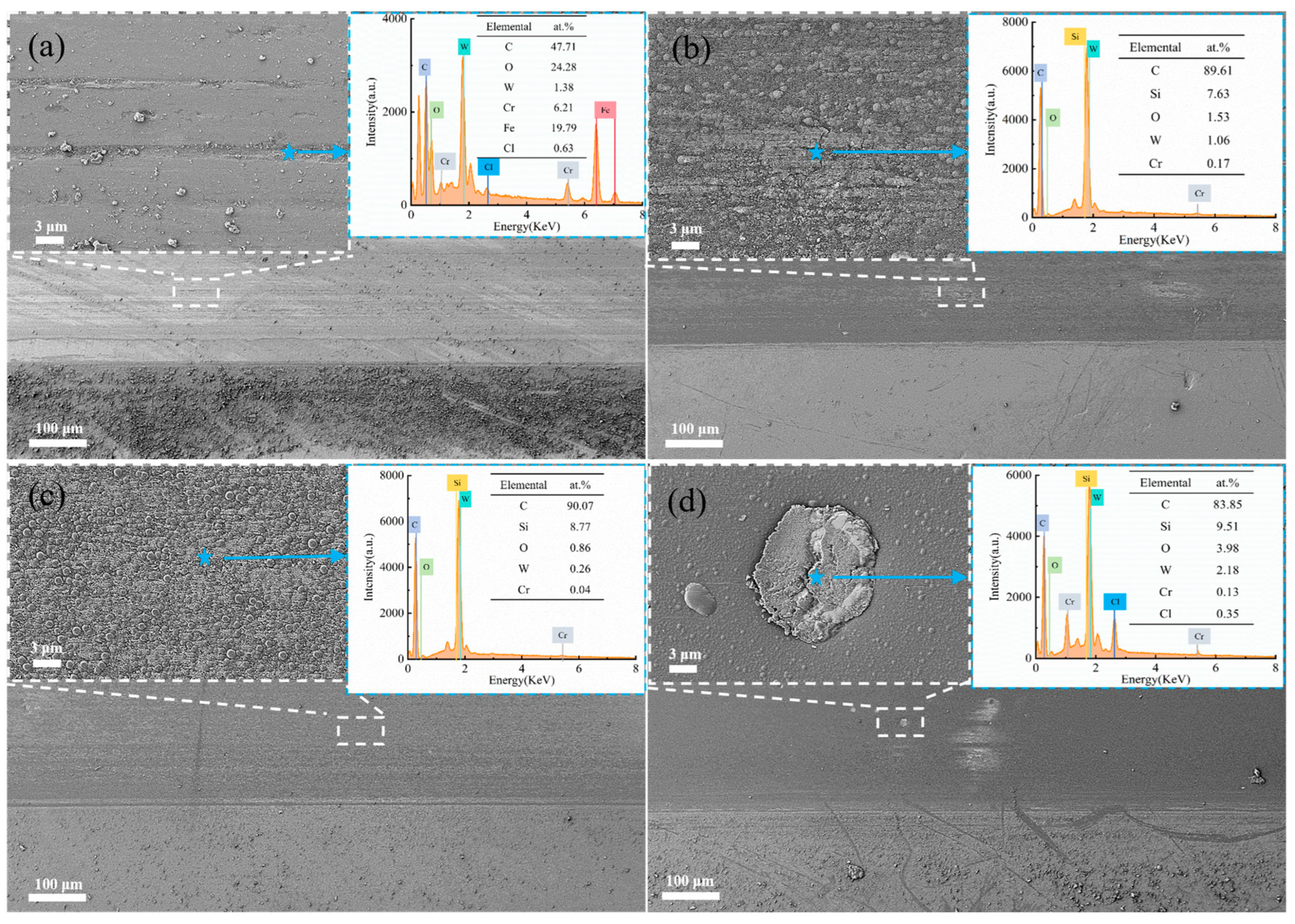
Through SEM morphology and EDS element analysis,
Figure 9 intuitively reveals the wear scar characteristics and film integrity differences in different samples under friction–corrosion coupling conditions, which can be related to friction and electrochemical properties. As shown in
Figure 9a, the wear scar area of the DLC sample shows a significant rough morphology, and the accumulation of wear particles can be seen locally. EDS analysis reveals 19.09 at.% Fe and 0.97 at.% Cr, indicating that parts of the DLC film have been destroyed, exposing the transition layer and the substrate. The presence of Cl further confirms severe film damage caused by the wear–corrosion interaction. Once the substrate is exposed, corrosion and abrasive wear occur, which is consistent with the sample’s higher friction coefficient and relatively poor corrosion resistance. As shown in
Figure 9b, the wear scar of the Si
50 sample exhibits significantly improved surface smoothness, with only slight friction textures remaining. The greatly reduced W and Cr contents in EDS indicate that Si doping enhances the film’s damage resistance. The Si
75 sample shows the smoothest worn surface. The EDS proportions of C and Si reach 90.07 at.% and 8.37 at.%, respectively, while almost no Fe or Cr (substrate elements) are detected, indicating no significant film damage under wear–corrosion coupling. This characterization correlates well with its lowest self-corrosion current density and stable low friction coefficient, confirming that moderate Si doping improves the tribocorrosion resistance of DLC-Si films. For the Si
100 sample, local large-scale damage pits appear in the wear scar, and 3.51 at.% Fe is detected by EDS, indicating partial film removal and substrate exposure. This result is consistent with the observed recovery of its self-corrosion current density, suggesting that excessively high Si content reduces the film’s mechanical properties and the synergy between wear resistance and corrosion resistance.
The three-dimensional surface profile and two-dimensional cross-section profile of
Figure 10 intuitively show the degree of surface damage of each sample under friction–corrosion coupling conditions, which can form a multi-dimensional correlation with the SEM results of wear scars after wear–corrosion tests under the above dynamic polarization conditions: The three-dimensional profile of 304 stainless steel shows that the roughness and depth of the wear area (middle blue area) are significantly higher than those of other samples. The wear depth of the two-dimensional cross-section exceeds 2 μm, and the cross-section profile fluctuates violently, reflecting that it has serious abrasive tribocorrosion interaction damage under the synergistic effect of friction–corrosion coupling, which is highly consistent with its highest friction coefficient and worst corrosion resistance. As shown in
Figure 10b, compared with 304 stainless steel, the three-dimensional wear zone of pure DLC exhibits improved flatness, and the cross-sectional wear depth is reduced to approximately 1 μm. However, obvious concave features remain, indicating that although the DLC film can alleviate damage, its own synergy between wear resistance and corrosion resistance is limited. This corresponds to the local damage observed in the SEM wear scar. With the introduction of Si into the DLC film (
Figure 10c), the wear track of the Si
50 sample becomes smoother, and the wear depth further decreases to below 1 μm. This indicates that initial Si doping enhances the film’s ability to suppress wear–corrosion coupling damage, though slight local damage still occurs. This is consistent with the exposure of a small number of substrate elements in the EDS results of
Figure 9. As the Si content increases further, the Si
75 sample exhibits a flat and uniform wear track, indicating the lowest degree of surface damage under wear–corrosion synergy. This feature perfectly matches the optimal corrosion resistance (low self-corrosion current density), stable low friction coefficient, and intact SEM wear scar morphology of Si
75, confirming that Si doping synergistically inhibits tribocorrosion damage.
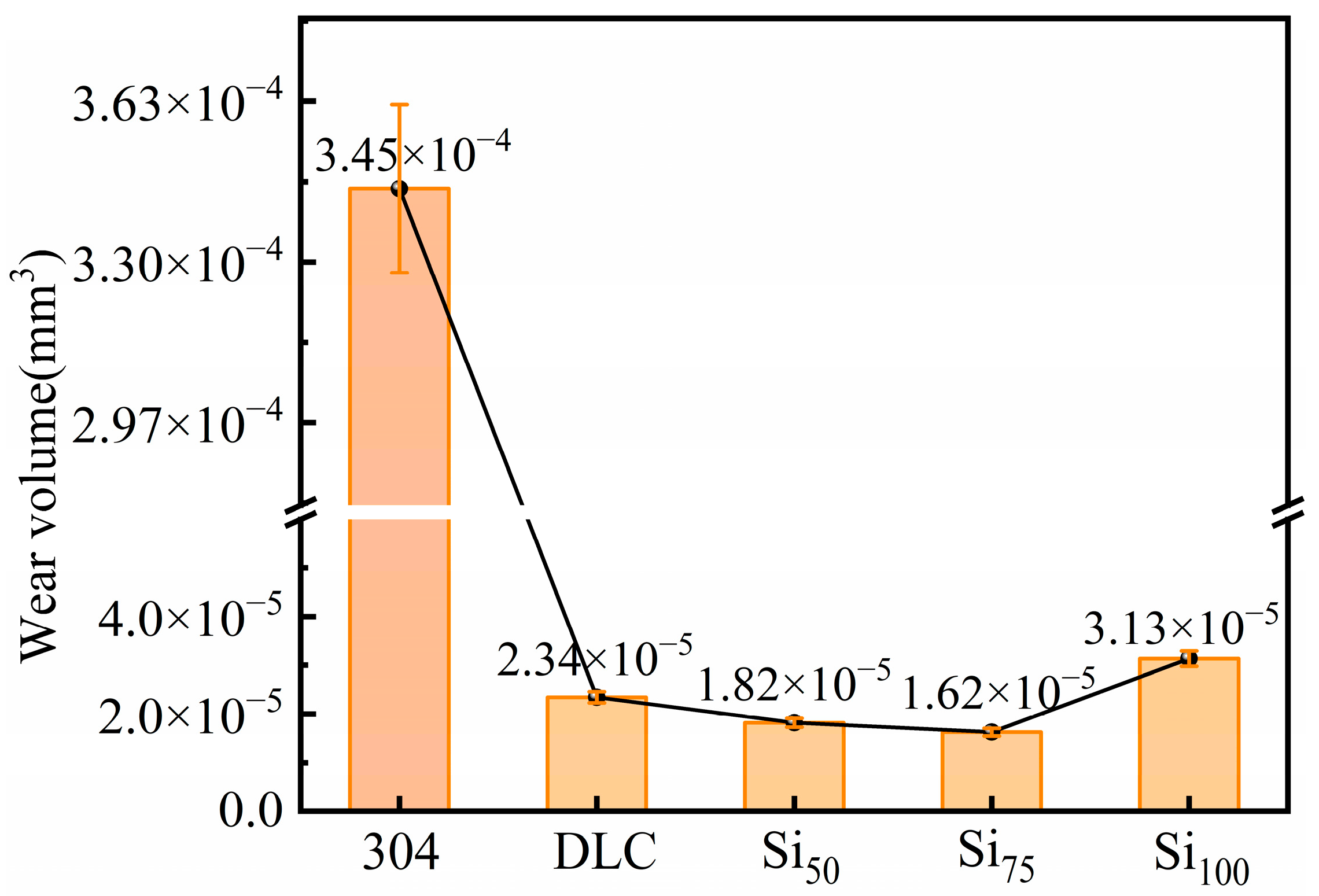
Figure 11 takes the volume loss as the macroscopic quantitative index, which more intuitively reflects the tribocorrosion damage degree of each sample under the friction–corrosion coupling condition. It can be clearly seen that the volume loss of 304 stainless steel (3.45 × 10
−4 mm
3) is significantly higher than that of other samples, which directly corresponds to the serious abrasive wear–corrosion interaction damage caused by a high friction coefficient and poor corrosion resistance. The volume loss of pure DLC is reduced to 2.34 × 10
−5 mm
3, which reflects the protective effect of the DLC film on the substrate, but is higher than that of Si-doped DLC samples. When Si is doped into the DLC film, the volume loss of the Si
50 film decreases to 1.82 × 10
−5 mm
3 compared with that of pure DLC film, which indicates that the doping of Si improves the wear resistance and corrosion resistance of the DLC film. With the further increase in Si content, the volume loss of the Si
100 film increases to 3.13 × 10
−5 mm
3, which is related to the decrease in mechanical properties of the film caused by an excessively high Si content.
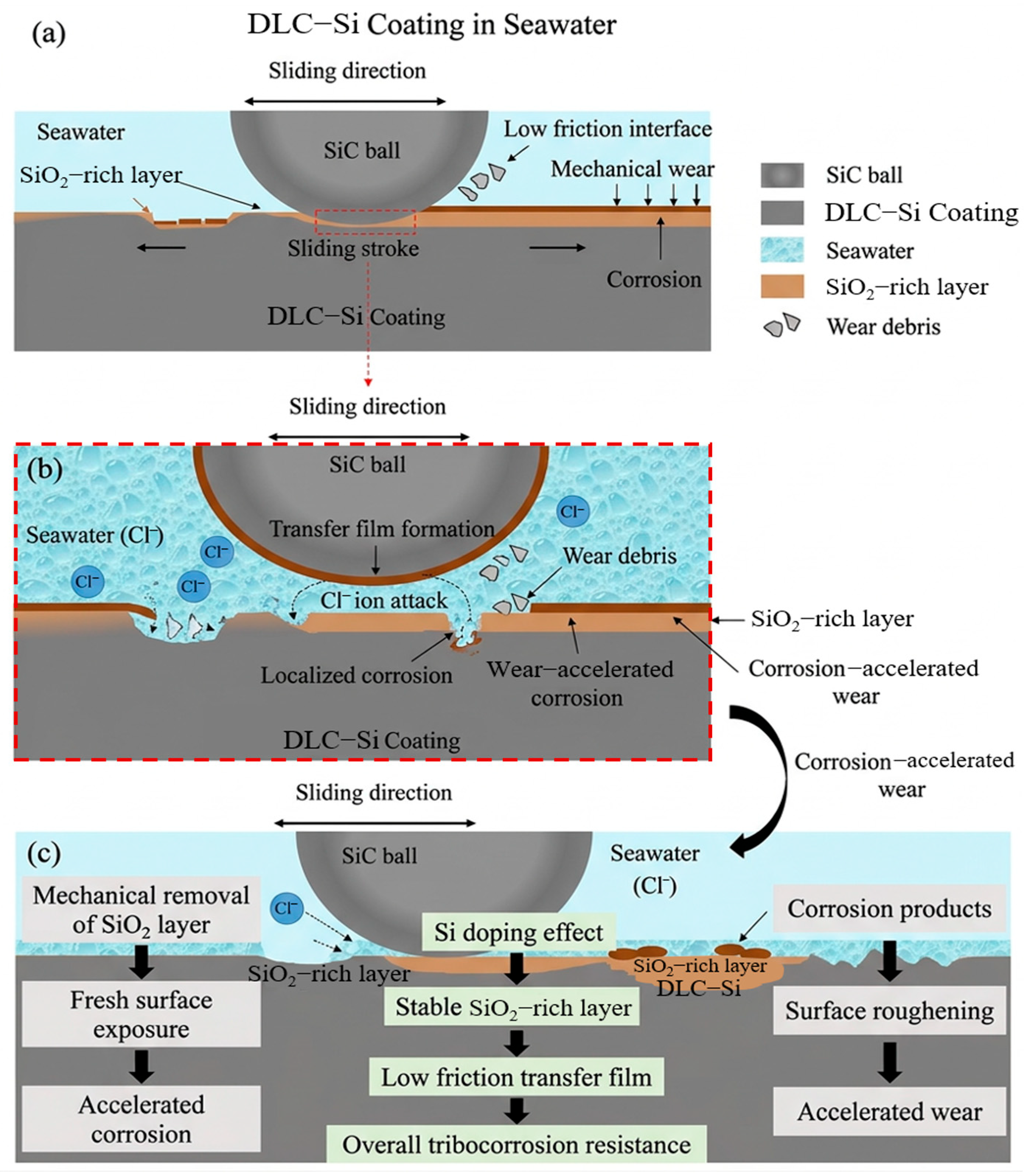
Based on experimental characterization data and performance trends, the wear–corrosion mechanism is analyzed as follows, with the schematic diagram of the mechanism shown in
Figure 12. The damage mechanism of the DLC-Si film is a synergistic coupling effect of abrasion and electrochemical corrosion. This film system achieves enhanced tribocorrosion resistance through the synergistic action of its dense microstructure, interfacial lubrication and corrosion protection; inherent high chemical inertness of the DLC film provides the foundation for corrosion protection, while the incorporation of Si elements regulates the carbon network structure, causing the number and size of sp
2 bond clusters to first decrease and then increase. Among these, the Si
75 sample exhibits the optimal degree of graphitization and density. This not only promotes the plastic transfer of clusters during friction to form a stable lubricating transfer film but also fills micro-pores through the SiO
x oxide film generated on the surface [
35,
36], thereby enhancing the barrier against the penetration of corrosive ions such as Cl
− and Na
+. The synergistic effect of the dense structure and the passivation film enable the Si
75 film to exhibit the lowest corrosion current (3.397 × 10
−8 A/cm
2) and the highest charge transfer resistance (4.401 × 10
6 Ωcm
2), effectively suppressing material loss in the DLC-Si film caused by seawater corrosion. At the interfacial level, SiC suggests that it undergoes a friction-induced chemical reaction with water to form SiO
x(OH)
y in a seawater environment [
18], and with sludge-like substances such as Mg(OH)
2 and CaCO
3 induced by Mg
2+ and Ca
2+ in seawater. The combined action of these substances reduces the contact area between the film and the beads, significantly lowering the friction coefficient. The combined effect of these two mechanisms endows DLC-Si films with superior anti-friction and wear resistance, thereby reducing material loss during the wear–corrosion process. The coupling and amplification effect of tribocorrosion is a key factor affecting film lifespan. On the one hand, mechanical damage caused by friction disrupts the integrity of the passivation layer, exposing fresh surfaces and increasing corrosion-active sites. On the other hand, the penetration of corrosive ions weakens bond strength at film defects, reduces mechanical load-bearing capacity, and exacerbates cluster peeling and abrasive wear. The Si doping level determines film performance by regulating this coupling effect. A low to moderate Si content (8.64–9.26 at.%) simultaneously optimizes lubricity and corrosion resistance, suppressing coupled damage. In contrast, excessive Si doping leads to the formation of large SiO
2 particles, which induces abrasive wear and increases microdefects, accelerating ion penetration and interfacial failure, and causing a rebound in wear rate and corrosion current. In summary, under tribocorrosion conditions, the wear–corrosion mechanism of DLC-Si films is a synergistic process involving interface self-lubrication for wear reduction, passivation/densification for corrosion resistance, and the interaction between wear and corrosion.