Article

Friction and Wear Behavior of Carburized Steels Against Ceramic Balls Under Starved Lubrication


by
Xu Liu
1,
Linye Yu
2,
Ming Zhong
1,
Jin Qian
2,
Jiapeng Dai
2,3,* and
Yongan Min
1,4,*
1
School of Materials Science and Engineering, Shanghai University, Shanghai 200444, China
2
Shanghai Marine Diesel Engine Research Institute, Shanghai 201108, China
3
National Key Laboratory of Marine Engine Science and Technology, Shanghai 201108, China
4
State Key Laboratory of Advanced Special Steel, Shanghai University, Shanghai 200444, China
*
Authors to whom correspondence should be addressed.
Lubricants 2026, 14(4), 157; https://doi.org/10.3390/lubricants14040157
Submission received: 13 March 2026 / Revised: 2 April 2026 / Accepted: 3 April 2026 / Published: 5 April 2026
(This article belongs to the Special Issue Advances in Tribology and Lubrication for Bearing Systems)

Abstract

Starved lubrication poses a critical challenge to hybrid ceramic bearings operating under severe conditions. This study investigates the tribological behavior of carburized 20CrMo steel sliding against Al2O3 ceramic balls and GCr15 steel balls under dry sliding, with oil-lubricated tests as a reference. Under oil lubrication, the 20CrMo/Al2O3 pair exhibits superior wear resistance, attributed to the high hardness of the ceramic counterpart. Under dry sliding, however, this pair shows a slightly lower friction coefficient but a wear rate approximately three times that of the 20CrMo/GCr15 pair. This counterintuitive behavior stems from two mechanisms: lower contact stress and friction-induced work hardening in the GCr15 pair, which together suppress wear. Further analysis reveals that secondary carbides in the carburized layer detach under repeated high shear stress, acting as hard third-body abrasives and accelerating surface damage. These findings highlight that hybrid ceramic bearings are more susceptible to lubrication failure than all-steel bearings. Under heavy loads and poor lubrication, residual compressive stress plays a key role in governing the tribological behavior of carbides on carburized surfaces.

1. Introduction

Bearings are critical transmission components in aircraft engines and electric-vehicle drive motors, operating under high loads and elevated temperatures for extended periods. Their friction and wear performance directly affects equipment reliability and service life [1,2]. Hybrid ceramic bearings, which integrate ceramic rolling elements with steel rings, combine the advantages of both materials. They exhibit high wear resistance under severe conditions, provide electrical insulation, maintain low friction under suitable lubrication, and ensure stable high-speed operation—making them a key direction for advanced bearing development [3]. In practical service, bearings frequently encounter start-stop cycles and alternating loads. These conditions often lead to oil starvation, incomplete lubricant film formation, and local lubrication failure. Consequently, severe wear and fatigue spalling occur on steel raceways, significantly accelerating bearing failure [4,5,6,7,8]. Understanding the tribological behavior and wear mechanisms of bearing steel components in contact with ceramic rolling elements under poor lubrication has thus become a critical research topic [9].
Considerable research has focused on the friction and wear behavior of hybrid ceramic bearing contacts under limited lubrication. Brizmer et al. [10] demonstrated through experiments and modeling that Si3N4 ball/steel contacts exhibit higher pitting resistance than all-steel contacts under boundary lubrication, attributed to the low surface roughness and negatively skewed surface morphology of ceramics, with mild abrasive wear as the dominant mode and a ~50% reduction in friction coefficient. Aramaki et al. [11] reported that hybrid angular contact bearings for high-speed machine-tool spindles reduce friction losses by 30–50% under both grease and oil-air lubrication compared to all-steel bearings, due to the low centrifugal force and gyroscopic torque of low-density Si3N4 balls. Soffritti et al. [12] investigated ceramic/carburized steel tribo-pairs under dry sliding, finding oxidative wear dominant at low loads and fatigue spalling at high loads. Shode et al. [13] observed that M50 steel ring/Si3N4 ball hybrid bearings exhibit nearly twice the lockup time of all-M50 bearings in gas turbine oil-starvation tests, with normal operation resuming after oil recovery—a behavior linked to the low density and low thermal expansion coefficient of Si3N4 balls that help stabilize bearing clearance. Zhao et al. [14] showed that partially replacing GCr15 steel rollers with Si3N4 ceramic rollers under lubricated conditions with white fused alumina contaminants reduces friction and total wear through contaminant fragmentation, raceway polishing, and mild wear-induced self-healing. Li et al. [15] reported that a low-alloy martensitic steel/WC ceramic ball system exhibits clear self-lubricating behavior under reciprocating dry sliding, with the friction coefficient decreasing from 0.53 to ~0.30. These studies show that the wear mechanisms of ceramic/steel pairs vary with lubrication state and material combination.
While these studies underscore the tribological advantages of pairing steel components with Si3N4 ceramic balls, research on carburized steel components paired with Al2O3 ceramic balls under poor lubrication remains limited. Compared with other ceramic rolling elements, Al2O3 balls offer mature fabrication processes and lower cost, thus showing strong application potential under medium-to-low speed, heavy-load conditions [16,17].
In hybrid ceramic bearing systems, the high hardness of ceramic rolling elements provides excellent wear resistance. However, the mating steel raceways are more susceptible to severe abrasive wear under poor lubrication. Carburizing is commonly applied to steel components to enhance surface hardness and wear resistance by forming a gradient high-carbon martensitic microstructure that maintains core toughness while hardening the surface [18]. Carbides, as the primary precipitates in the carburized layer, significantly influence wear behavior. Studies indicate that M3C carbides improve friction stability during sliding wear through dislocation slip and phase transformation [19]. Conversely, large or irregular carbides can induce local stress concentrations and promote crack propagation [20]. Proper control of the carburizing gradient and carbide distribution substantially improves wear resistance [21]. However, under unlubricated and high-load conditions, the beneficial role of carbides may become limited [22,23]. The effect of carbides on wear behavior depends critically on morphology, size, and distribution—and becomes increasingly complex under severe service conditions.
This study investigates the friction and wear behavior of vacuum low-pressure carburized 20CrMo steel plates under reciprocating ball-on-plate sliding. Dry sliding tests were conducted using Al2O3 ceramic balls and GCr15 steel balls as counterbodies, with oil-lubricated tests as a reference. The friction and wear performance of the carburized specimens against different counterbodies was systematically compared. Additionally, gas-carburized specimens with higher secondary carbide precipitation were included to assess the role of carbides in wear resistance under poor lubrication.

2. Materials and Methods

2.1. Sample Preparation

Properly annealed 20CrMo steel bars (φ75 mm) with a ferrite–pearlite microstructure were used, and its chemical composition is given in Table 1. Plate specimens of 60 mm × 40 mm × 4 mm were cut from the steel bar and ground to a surface roughness Ra of approximately 0.8 μm, measured with a TR200 surface roughness tester (Time Group Inc., Beijing, China).
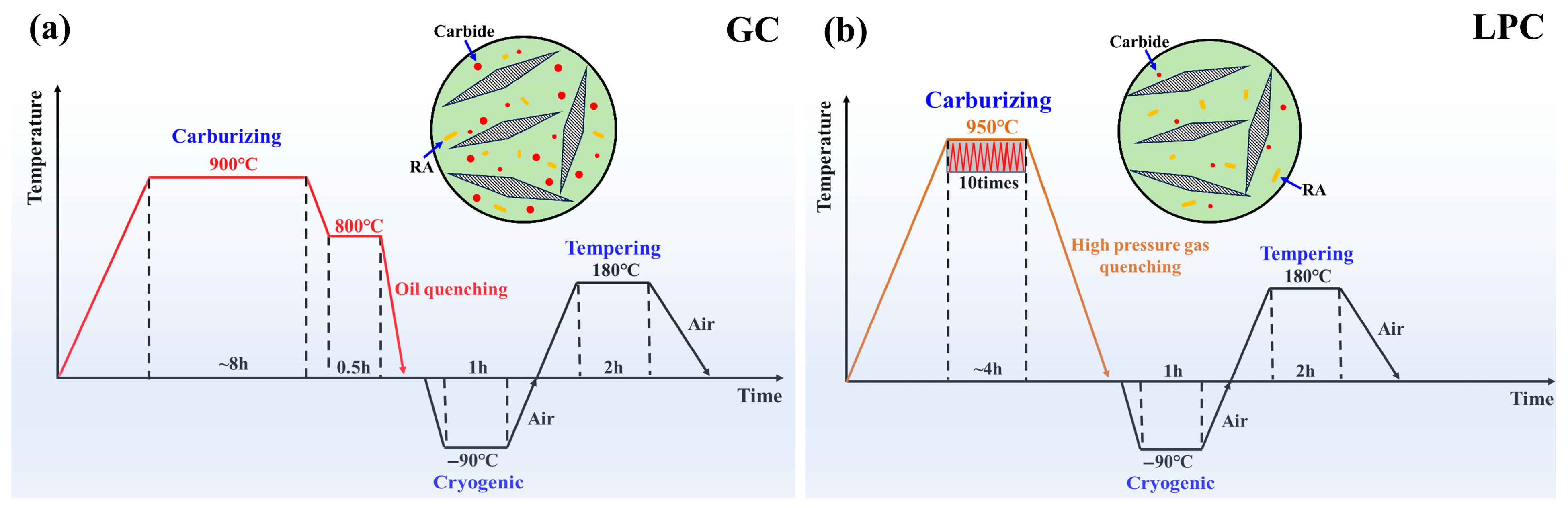
After ultrasonic cleaning, 4 mm-thick plate specimens were subjected to two carburizing processes: gas carburizing (GC) and vacuum low-pressure carburizing (LPC). The adopted processes were based on those used in the actual mass production of carburized components. Gas carburizing was performed in a conventional atmosphere-controlled furnace with a nitrogen–methanol (N2/CH3OH volumetric flow ratio of 5.5:5) atmosphere at 900 °C for 8 h, consisting of a ~5 h boost stage and a ~3 h diffusion stage (Figure 1a). The carburizing potential was maintained at 1.05 wt.% C during the boost stage, followed by a diffusion stage at 0.75 wt.% C. After carburizing, the specimens were precooled to 800 °C, quenched in K2000 fast-quenching oil to room temperature, then cryogenically treated in liquid nitrogen at −90 °C for 1 h, and finally tempered at 180 °C for 2 h. Vacuum low-pressure carburizing was conducted in an ECM vacuum furnace (ECM Group, Grenoble, France) using an acetylene atmosphere at 950 °C for 4 h with 10 carburizing pulses (Figure 1b). Following carburizing, the plate specimens were gas-quenched to room temperature under 1.5 MPa nitrogen. Subsequent cryogenic treatment and tempering procedures were identical to those of GC specimens.

2.2. Microstructure and Hardness Characterization

Metallographic specimens were sectioned from the carburized samples, mounted, polished, and etched with 4 vol.% nital (nitric acid in ethanol). The carburized microstructure was examined using an EPIPHOT300 optical microscope (OM, Nikon Corporation, Tokyo, Japan) and a Sigma 300 scanning electron microscope (SEM, Carl Zeiss AG, Oberkochen, Germany). Phase identification of the carburized surface was performed by X-ray diffraction (XRD) on a D/MAX2500 diffractometer (Rigaku Corporation, Akishima, Tokyo, Japan) with Cu Kα radiation (40 kV, 200 mA), scanning over a 2θ range of 30° to 90° at 5°/min. Carbon concentration profiles across the carburized layer were determined using a JXA iHP200F field emission electron probe microanalyzer (FE-EPMA; JEOL Ltd., Akishima, Tokyo, Japan). Hardness profiles were determined with a VH1102 Vickers hardness tester (Buehler, Lake Bluff, IL, USA) under a load of 300 gf and a dwell time of 10 s.

2.3. Wear Test

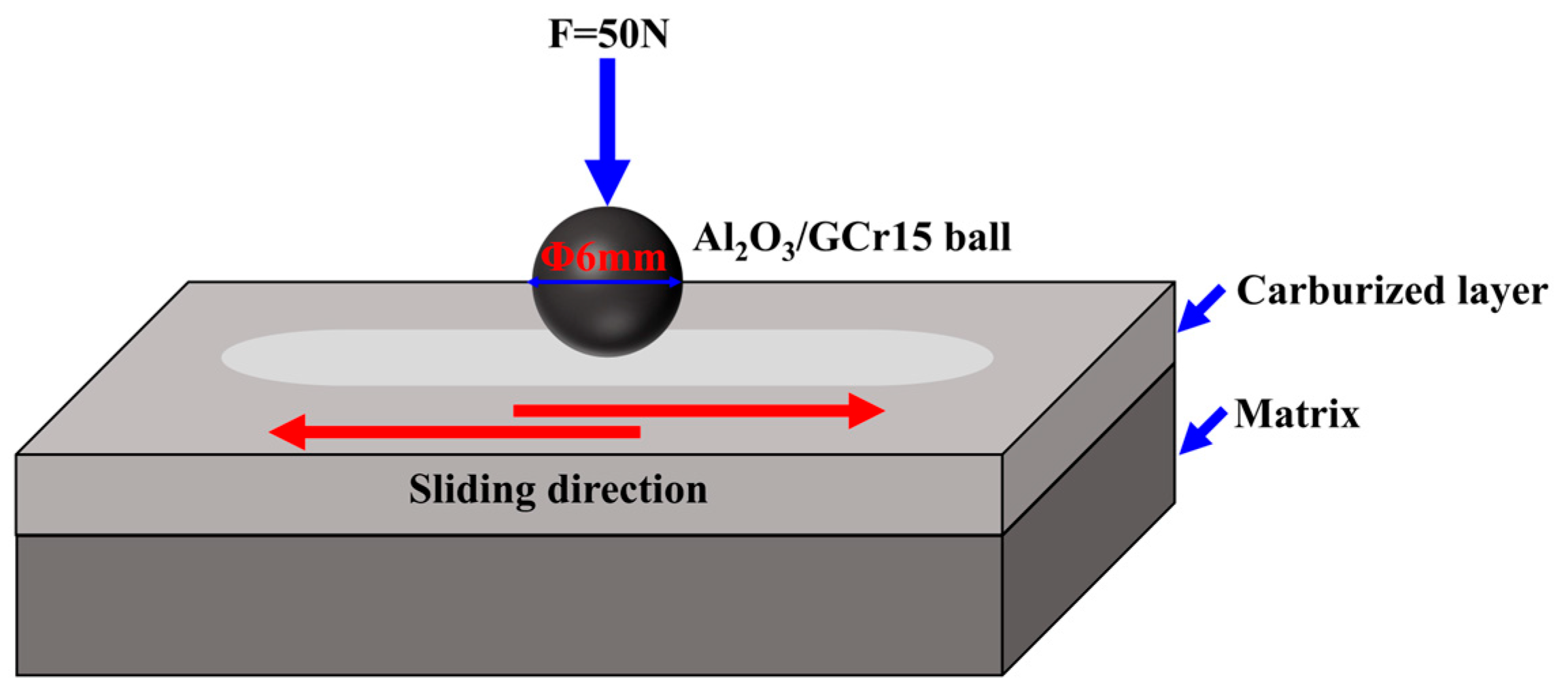
The carburized plate specimens were machined into wear test specimens with dimensions of 20 mm × 15 mm × 4 mm. The wear surfaces were ground and polished to a final surface roughness Ra of approximately 0.02 μm. Reciprocating sliding wear tests were conducted on an MFT 5000 multifunctional tribometer (Rtec Instruments, San Jose, CA, USA) (Figure 2).
Two sets of tests were designed. In the first set, vacuum low-pressure carburized (LPC) specimens were tested against two different counterbodies—φ6 mm Al2O3 ceramic balls and φ6 mm GCr15 steel balls (properties listed in Table 2)—under both oil-lubricated and dry sliding conditions. The lubricant was ISO VG 220 industrial lubricating oil, with a kinematic viscosity of approximately 220 mm2/s at 40 °C, a viscosity index of 95, and a flash point of 240 °C. The test parameters were: normal load of 50 N, stroke length of 6.0 mm, reciprocating frequency of 1 Hz, and test duration of 1 h. All sliding wear tests were conducted in triplicate. The friction coefficient was continuously calculated and recorded from the force sensor signals. For each test, the steady-state friction coefficient was determined by averaging the friction coefficient over the steady-state region of the friction curve, and representative curves are shown. In the second set, φ6 mm Al2O3 ceramic balls were used as the fixed counterbody. Under identical lubrication conditions and test parameters, the wear behaviors of GC and LPC specimens were compared.
After testing, the specimens were ultrasonically cleaned to remove surface contaminants, residual wear debris, and residual lubricant. Wear scar morphologies were observed using a Sigma 300 scanning electron microscope (SEM; Carl Zeiss AG, Oberkochen, Germany) equipped with an energy-dispersive X-ray spectrometer (EDS; Oxford Instruments, Abingdon, UK). Three-dimensional topographies of wear scars were measured via a Bruker Contour GT-K optical profilometer (Bruker Corporation, Tucson, AZ, USA) to determine the wear volume V. The wear rate η (mm3/(N·m)) was calculated as:
η = V/(F·L)
where F is the normal load (N) and L is the total sliding distance (m). Work hardening effects induced by sliding friction were evaluated by micro-area X-ray diffraction on worn surfaces using a Bruker D8 Discover 2D X-ray diffractometer (Bruker Corporation, Karlsruhe, Germany) with a 0.1 mm collimator. Based on microstructural characterization, hardness profiles, friction coefficients, and wear scar analysis, the underlying friction and wear mechanisms of the carburized specimens under the tested conditions are discussed.

3. Results

3.1. Microstructure and Hardness

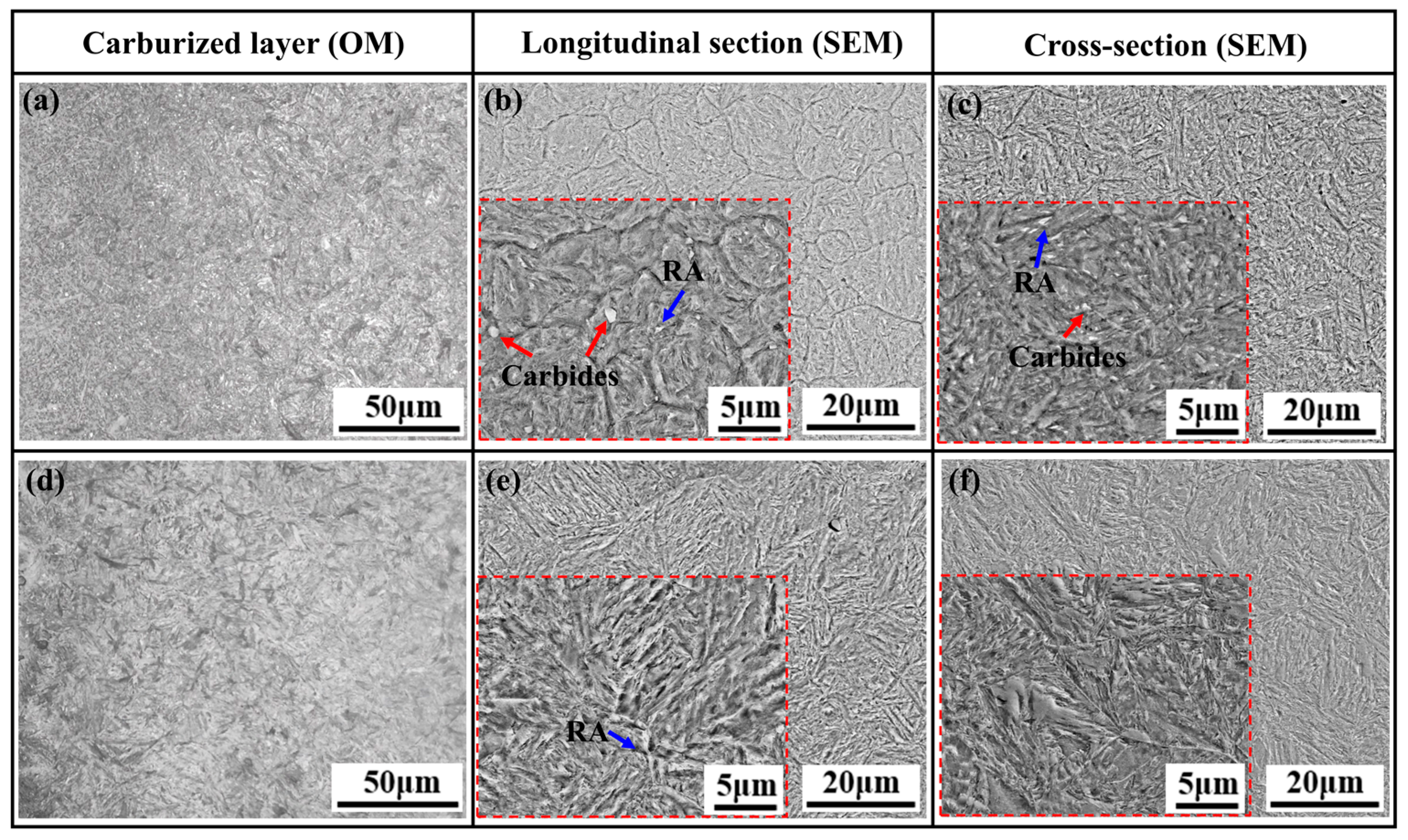
Figure 3 shows the carburized microstructures of 20CrMo steel plates subjected to gas carburizing (GC) and vacuum low-pressure carburizing (LPC). Both treatments yield a carburized layer consisting primarily of acicular martensite with a small amount of retained austenite (RA). In the GC specimens, a dispersion of submicron secondary granular carbides is observed near the surface. By contrast, the LPC specimens exhibit no significant carbide precipitation.
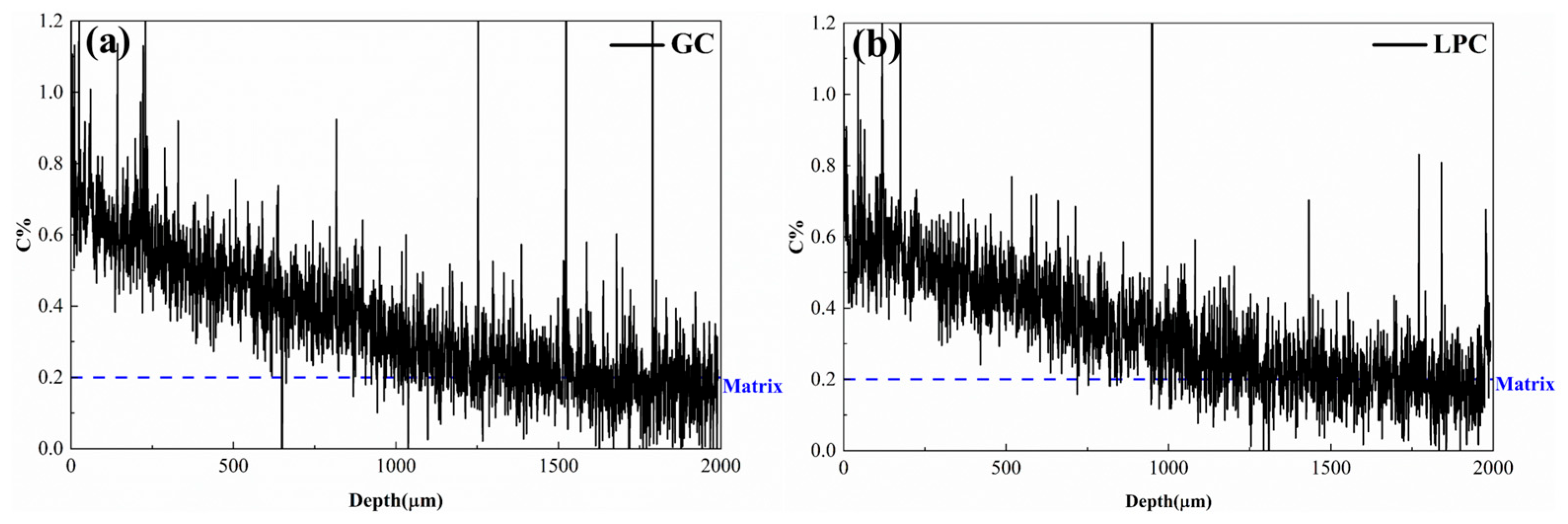
Figure 4 presents the carbon concentration profiles across the carburized layers of the plate specimens as measured by EPMA. The surface carbon content of the GC specimen is about 0.77 wt.%, compared with 0.62 wt.% for the LPC specimen. The corresponding effective case depths are approximately 1520 μm and 1450 μm for GC and LPC, respectively.
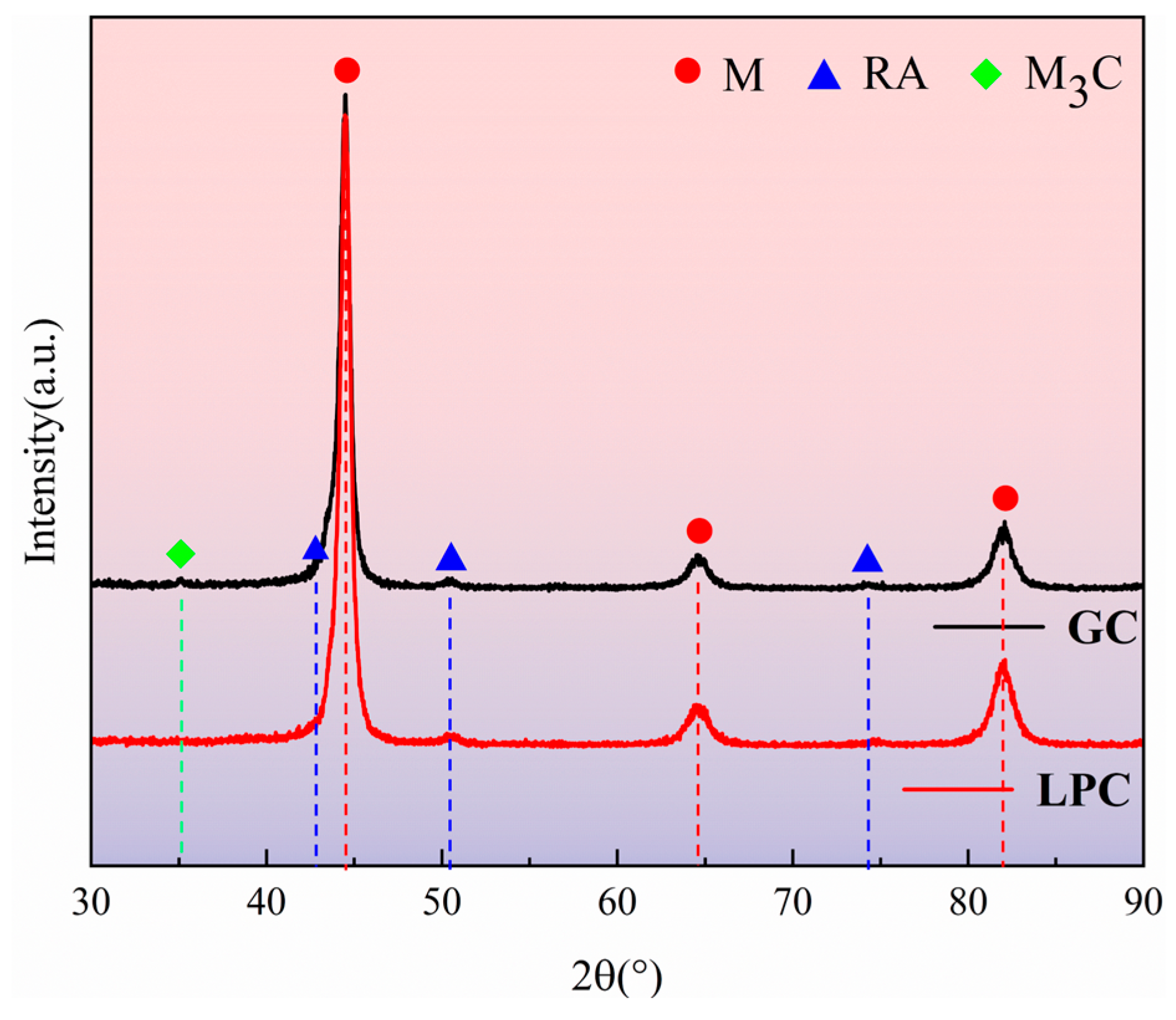
X-ray diffraction patterns of the specimen surfaces are shown in Figure 5. Both surfaces consist mainly of martensite (M, PDF#87-0721) with a minor amount of retained austenite (A, PDF#89-4185). A distinct M3C carbide peak (PDF#72-1110) at 35.16° is detected on the surface of the GC specimen. Quantitative analysis reveals that the retained austenite contents on the surfaces are 12.4% for GC and 10.3% for LPC.
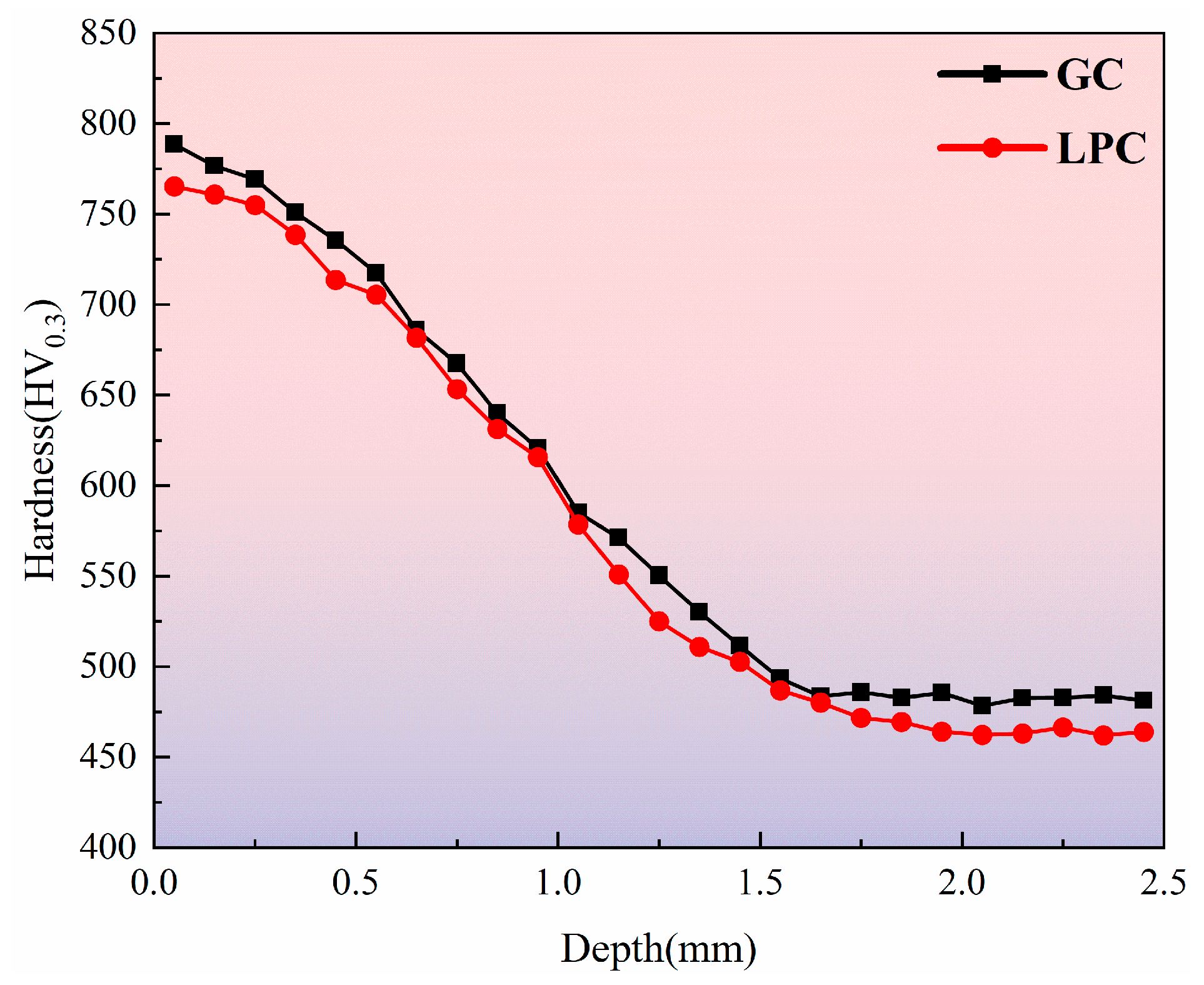
Figure 6 shows the microhardness profiles across the carburized layers. Using 550 HV as the critical hardness threshold, the effective hardened layer depths are 1.3 mm and 1.2 mm for the two specimens. The corresponding surface hardness values reached 788 HV0.3 and 765 HV0.3, respectively. The GC specimen exhibits slightly higher surface hardness. With increasing depth, the hardness gradually decreases. The core hardness values are 483 HV0.3 and 463 HV0.3, respectively.

3.2. Friction Coefficient and Wear Rate

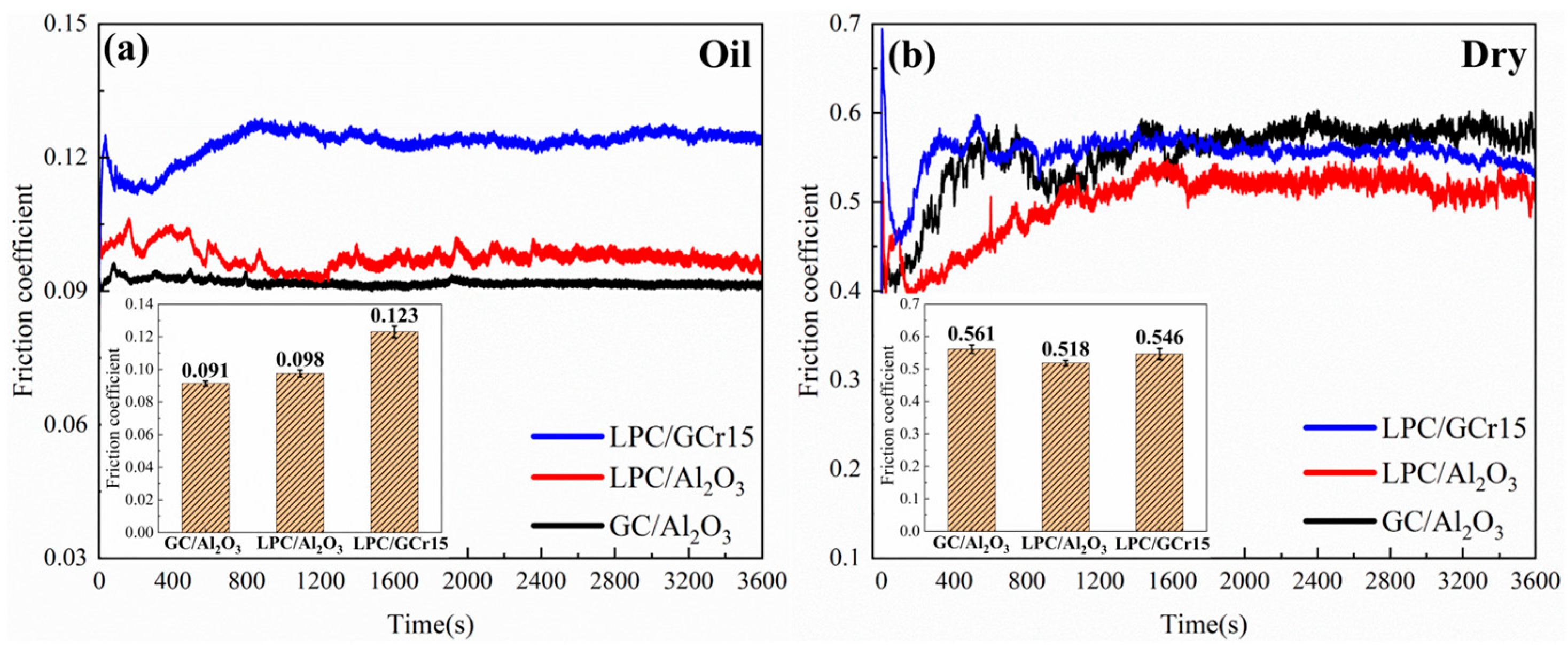
Figure 7 illustrates the evolution of the friction coefficients (COF) over time for the three friction pairs. Under oil-lubricated conditions, the COF of the LPC specimen exhibits pronounced fluctuations during the initial running-in stage when sliding against both counterbodies. The steady-state COF values for the LPC/GCr15, LPC/Al2O3, and GC/Al2O3 pairs are 0.123, 0.098, and 0.091, respectively. As shown in Figure 7a, the COF of the LPC/GCr15 pair is markedly higher than those of the two Al2O3-containing pairs, which is likely associated with the stronger adhesion tendency of the steel–steel tribological pair compared with the steel–ceramic pair [25]. The lowest COF is obtained for the GC/Al2O3 pair, which may be associated with the higher surface hardness and greater amount of secondary carbides in the GC specimen, as described in Section 3.1, providing better support for the contact under oil lubrication. Under dry sliding, COF fluctuations are substantially larger than those under oil lubrication, with continued fluctuations during running-in. The steady-state COF values for the LPC/GCr15, LPC/Al2O3, and GC/Al2O3 friction pairs are 0.546, 0.518, and 0.561, respectively. The lowest COF was obtained for the LPC specimen sliding against the Al2O3 ball, whereas for the LPC specimen sliding against the GCr15 ball, the COF showed a decreasing trend in the later stage of running-in (Figure 7b).
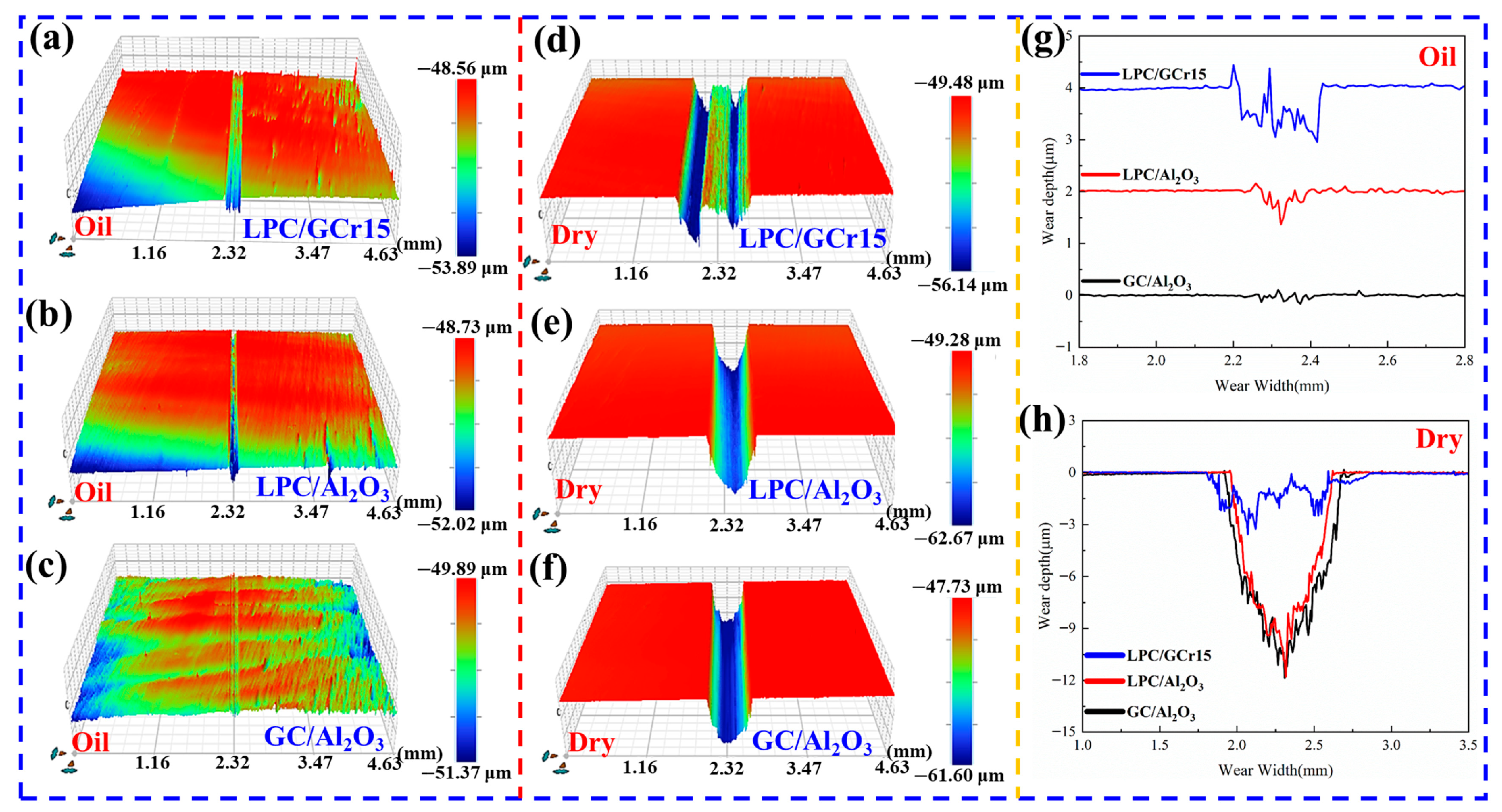
Figure 8 shows the wear scar profiles of the plate specimens. Under oil lubrication, the LPC/GCr15 pair exhibits well-defined wear scars approximately 0.3 mm wide and 1.1 μm deep. The wear scar width of the LPC/Al2O3 pair decreases to about 0.2 mm, while the GC/Al2O3 pair shows shallower wear scars and the lowest wear volume. Under dry sliding, wear widths increase markedly to 0.8–1.1 mm for all pairs, with scar depths reaching 3.6–11.9 μm. Among these, the LPC/GCr15 pair shows the widest wear area but the shallowest depth and lowest wear volume. The two-dimensional wear scar profiles of the LPC/Al2O3 and GC/Al2O3 pairs are similar, with the LPC/Al2O3 pair showing slightly lower wear volume.
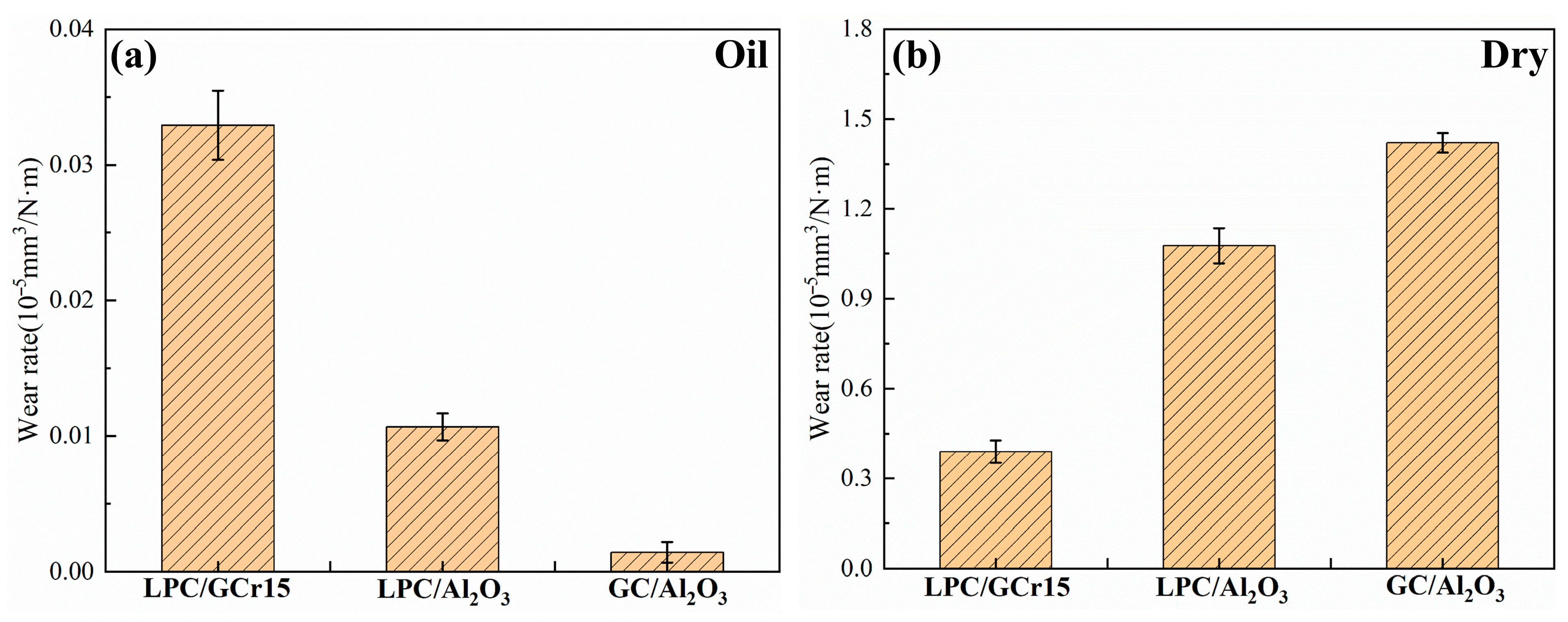
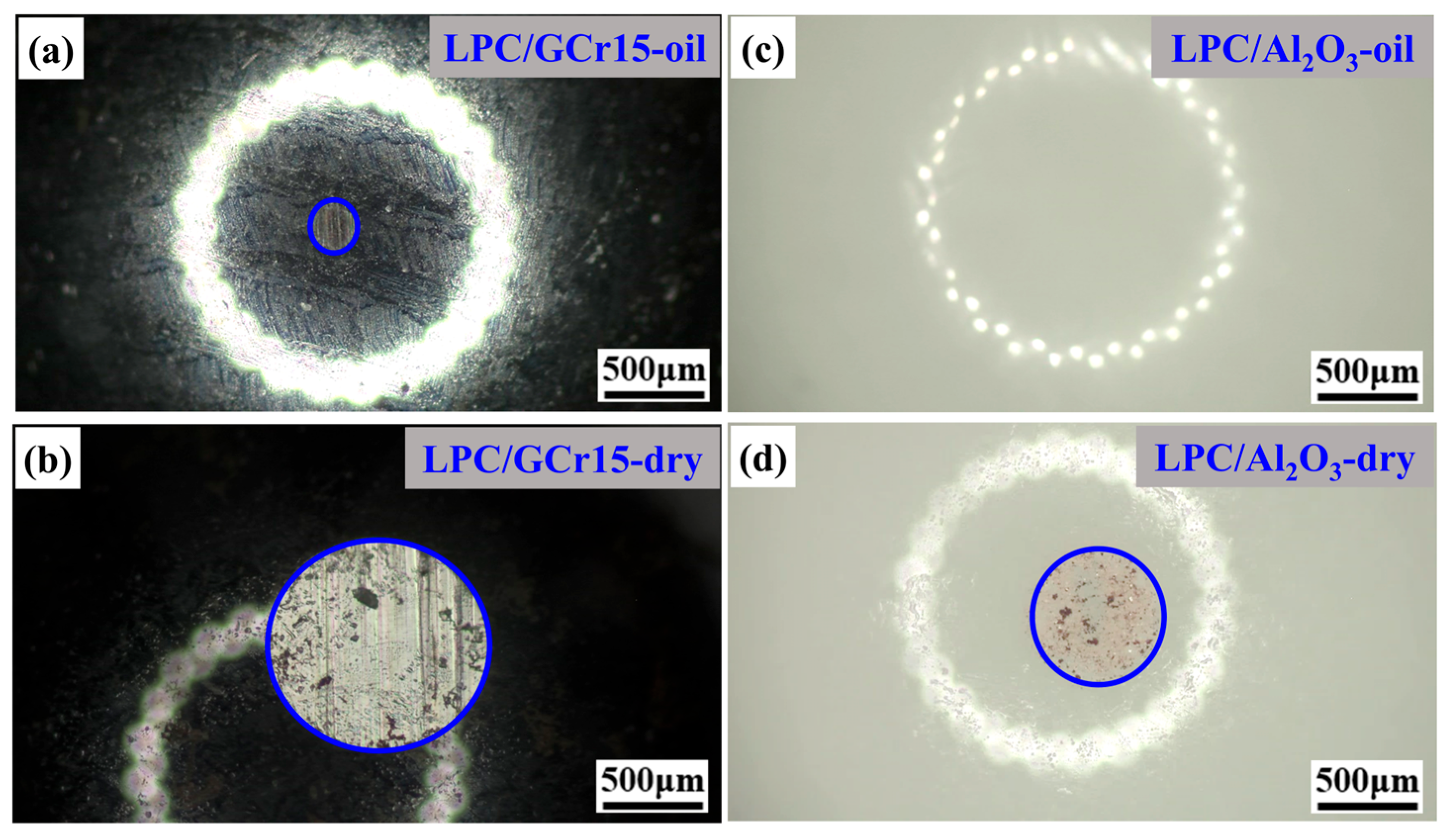
Figure 9 presents the wear rates of the carburized specimens, while Figure 10 shows the corresponding surface morphologies of the counterpart balls. Under oil lubrication, the wear rate of the LPC/GCr15 friction pair reaches 3.29 × 10⁻⁷ mm3/(N·m), approximately twice that of the LPC/Al2O3 pair. This difference arises because both the LPC specimen and the GCr15 ball are metallic materials with comparable hardness. Mild adhesion is observed on the GCr15 ball surface (Figure 10a), indicating the formation of metallic debris at the contact interface, which can intensify abrasive wear and increase both the COF and wear rate [26]. In contrast, the Al2O3 ceramic ball, with substantially higher hardness than the carburized steel surface, retains a smooth and chemically stable surface with little visible wear (Figure 10c). Contact is therefore dominated by micro-cutting of the plate surface, resulting in a lower friction coefficient and wear rate. Notably, the wear rate of the GC/Al2O3 friction pair is approximately one order of magnitude lower than that of the LPC/Al2O3 pair, reaching 1.43 × 10⁻⁸ mm3/(N·m), with negligible surface damage. This improvement is attributed to the lubricating oil film effectively separating the contact surfaces, thereby reducing contact stress and frictional heat. According to the Archard wear relationship, wear resistance generally increases with hardness, and the higher surface hardness of the GC specimen enhances its resistance to micro-cutting [27]. In addition, the abundant secondary carbides precipitated on the GC specimen surface suppress mild plowing and adhesive seizure between the friction pairs, thereby reducing plastic deformation and material spalling.
Under dry sliding, the wear behavior differs markedly from that under oil lubrication. Although the LPC/GCr15 pair exhibits a slightly higher friction coefficient than the LPC/Al2O3 pair, its wear rate is only 0.39 × 10⁻⁵ mm3/(N·m), approximately one-third of that measured for the LPC/Al2O3 pair, indicating significantly reduced wear. After dry sliding, the GCr15 ball surface shows pronounced flattening, while the Al2O3 ball surface primarily exhibits adhered transfer layers (Figure 10b,d). Furthermore, when Al2O3 is used as the counterbody, the LPC specimen exhibits both a lower COF and wear rate than the GC specimen, indicating superior overall tribological performance. This trend is opposite to that observed under oil lubrication.

3.3. Wear Mechanism Analysis

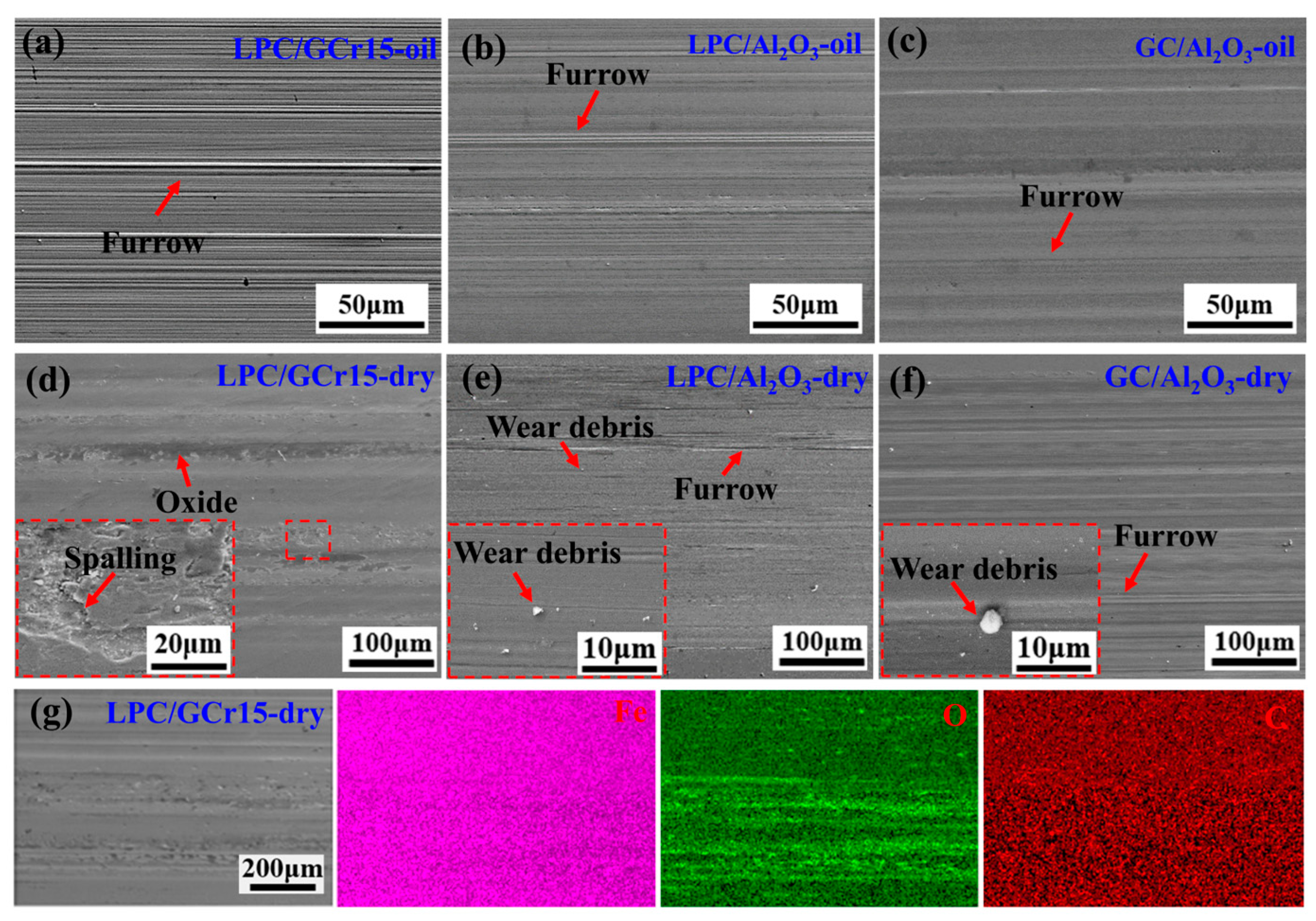
Figure 11 shows the wear scar morphologies of the carburized specimens. Under oil lubrication, all three friction pairs mainly exhibit mild abrasive wear. After sliding against the GCr15 ball, the specimen surface displays numerous parallel plowing grooves with deep furrows and distinct wear features (Figure 11a). In contrast, sliding against the Al2O3 ball produces shallow parallel grooves with smooth bottoms and fewer pronounced wear features (Figure 11b,c). Under dry sliding, the LPC/GCr15 friction pair shows oxidation on the contact surface, which may be associated with the tendency for adhesion in steel–steel contact and frictional heating [28]. The wear scar exhibits material adhesion, fractured oxide films, and shallow spalling pits, indicating a mixed wear mechanism combining adhesive and abrasive wear (Figure 11d,g). The LPC/Al2O3 pair shows shallow plowing grooves with minimal debris, suggesting predominantly abrasive wear (Figure 11e). The GC/Al2O3 pair exhibits wear features similar to those of the LPC/Al2O3 pair, but with slightly deeper plowing grooves and smooth groove bottoms (Figure 11f).

4. Discussion

4.1. Effect of Counterface Material Under Dry Sliding

Under dry sliding, the LPC specimen sliding against the GCr15 ball shows a slightly higher average friction coefficient, mainly due to the stronger adhesive interaction in the steel/steel contact, but a wear rate only one-third that of the LPC/Al2O3 pair. This unexpected result can be explained by two factors: the contact stress state and friction-induced work hardening.
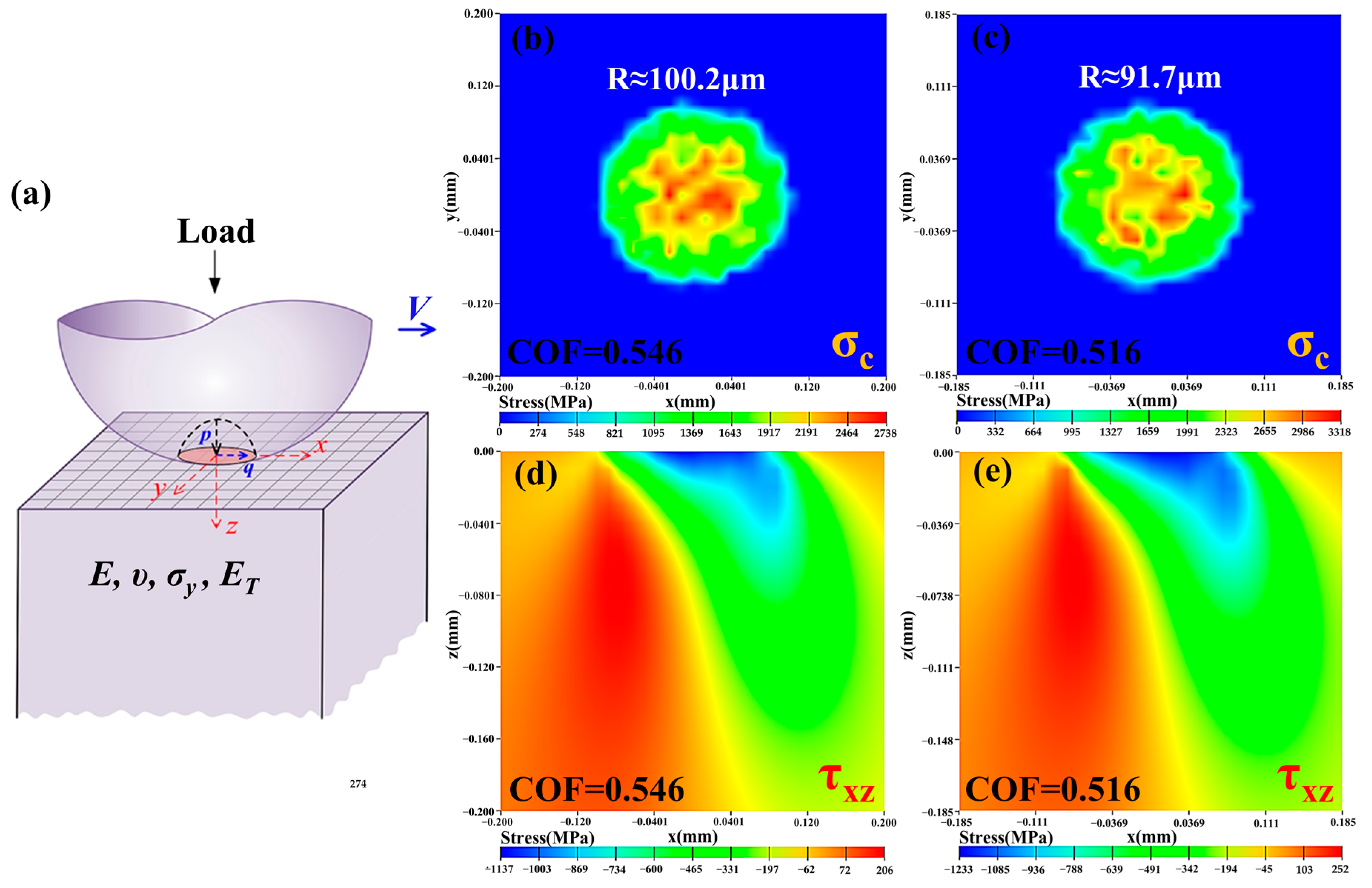
Contact stress analysis using Hertzian theory [29] and elastoplastic simulations [30] reveals distinct stress distributions for the two counterbodies. With material parameters from Table 2, the calculated maximum compressive stresses are 2390 MPa for GCr15 contact and 2815 MPa for Al2O3 contact. Since the yield strength of the LPC specimen is about 2135 MPa (calculated by JMatPro [31]), plastic deformation occurs in both cases. Further simulations incorporating experimental friction coefficients (0.546 for GCr15, 0.518 for Al2O3) show that the LPC/GCr15 pair experiences lower and more uniformly distributed stresses (σc = 2738 MPa, τxz = 1137 MPa) compared to the LPC/Al2O3 pair (σc = 3318 MPa, τxz = 1233 MPa), with stress concentrated in a smaller region (Table 3, Figure 12). This favorable stress state in the LPC/GCr15 pair helps confine plastic deformation near the surface, reducing wear.
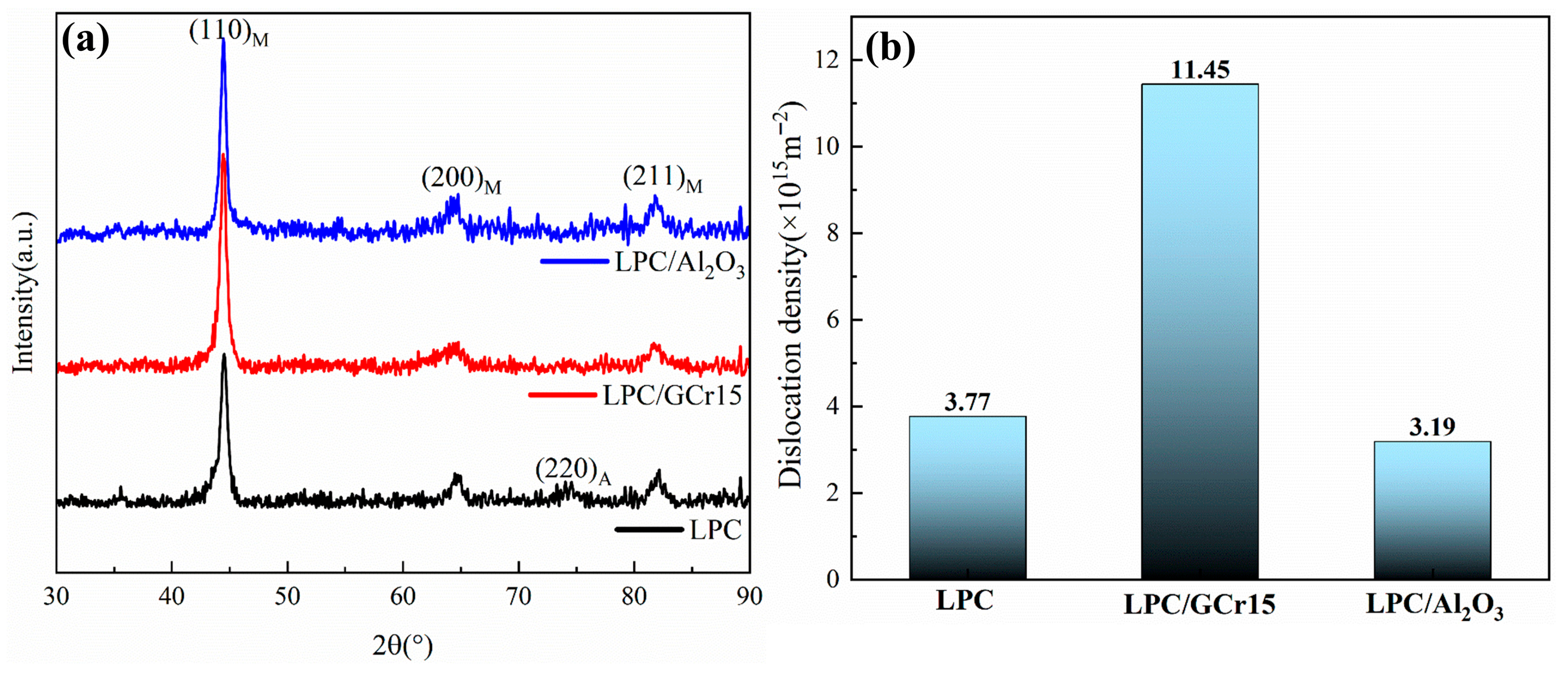
XRD analysis of worn surfaces (Figure 13a) reveals broadening of martensite peaks after sliding against the GCr15 ball, indicating microstrain accumulation. Using the modified Williamson–Hall method [32], the dislocation density on the worn surface of the LPC/GCr15 pair reaches 11.45 × 10¹⁵ m−2, approximately three times that of the unworn region (3.77 × 10¹⁵ m−2), confirming significant work hardening (Figure 13b). In contrast, the LPC/Al2O3 pair shows no notable increase in dislocation density.
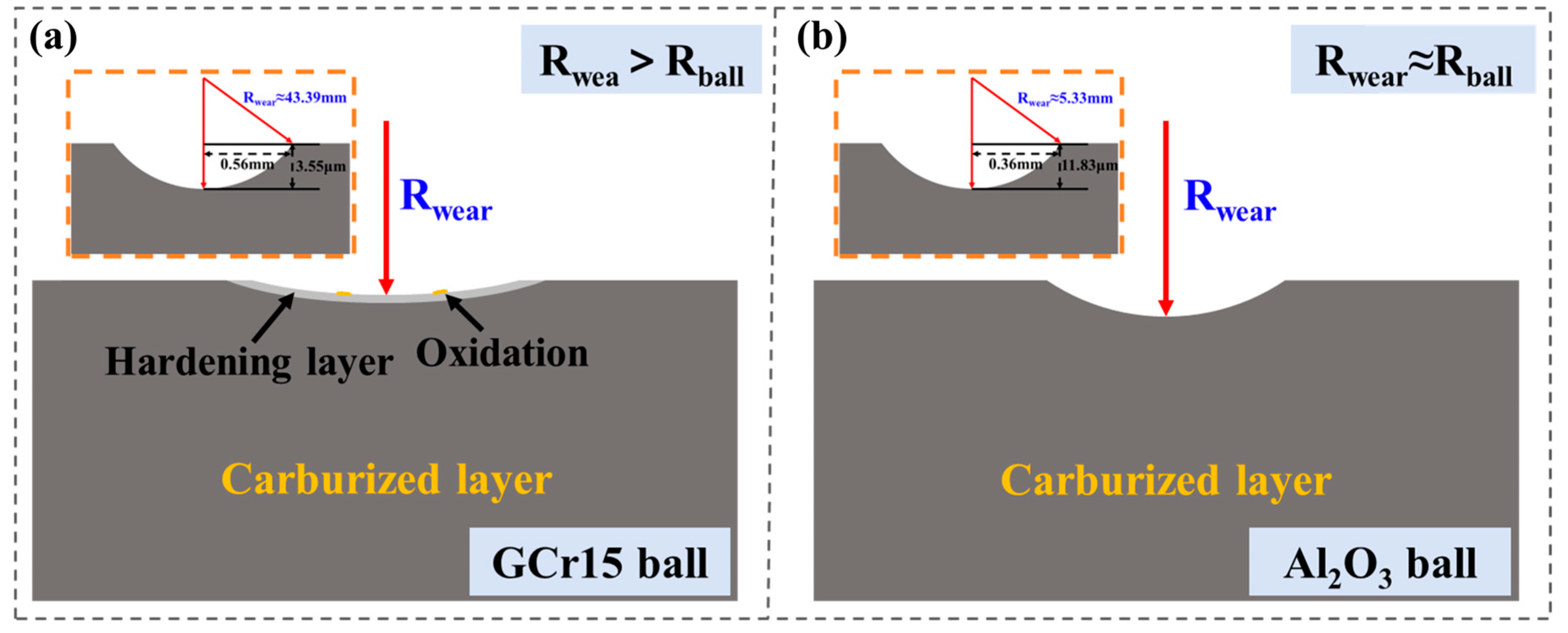
This difference is related to the wear behavior of the counterbodies. The GCr15 ball wears progressively during sliding, increasing its contact area and reducing contact stress (Figure 10b). Oxidation and the formation of transferred/adhered layers between the steel ball and specimen can partially mitigate direct plowing (Figure 11d), leading to a gradual decrease in the COF during the later stage of running-in, although the average COF remains slightly higher than that of the LPC/Al2O3 pair. Conversely, the much harder Al2O3 ball undergoes negligible wear and continuously plows and removes material from the specimen surface, preventing the formation of an effective work-hardened layer. Owing to the weaker adhesion at the steel/Al2O3 interface, the COF remains relatively stable and is slightly lower on average, although the wear is much more severe. As illustrated in Figure 14, the wear scar after GCr15 contact is wider than the ball diameter (Rwear > Rball) with a rougher surface, while after Al2O3 contact, it remains smooth and matches the ball profile (Rwear ≈ Rball).

4.2. Effect of Carbides Under Dry Sliding

Carbides play a dual role in wear resistance depending on lubrication conditions. Under oil lubrication, secondary carbides enhance wear protection, as seen in the superior performance of GC specimens. Under dry sliding, however, GC specimens exhibit poorer tribological behavior than LPC specimens, revealing the detrimental side of carbides.
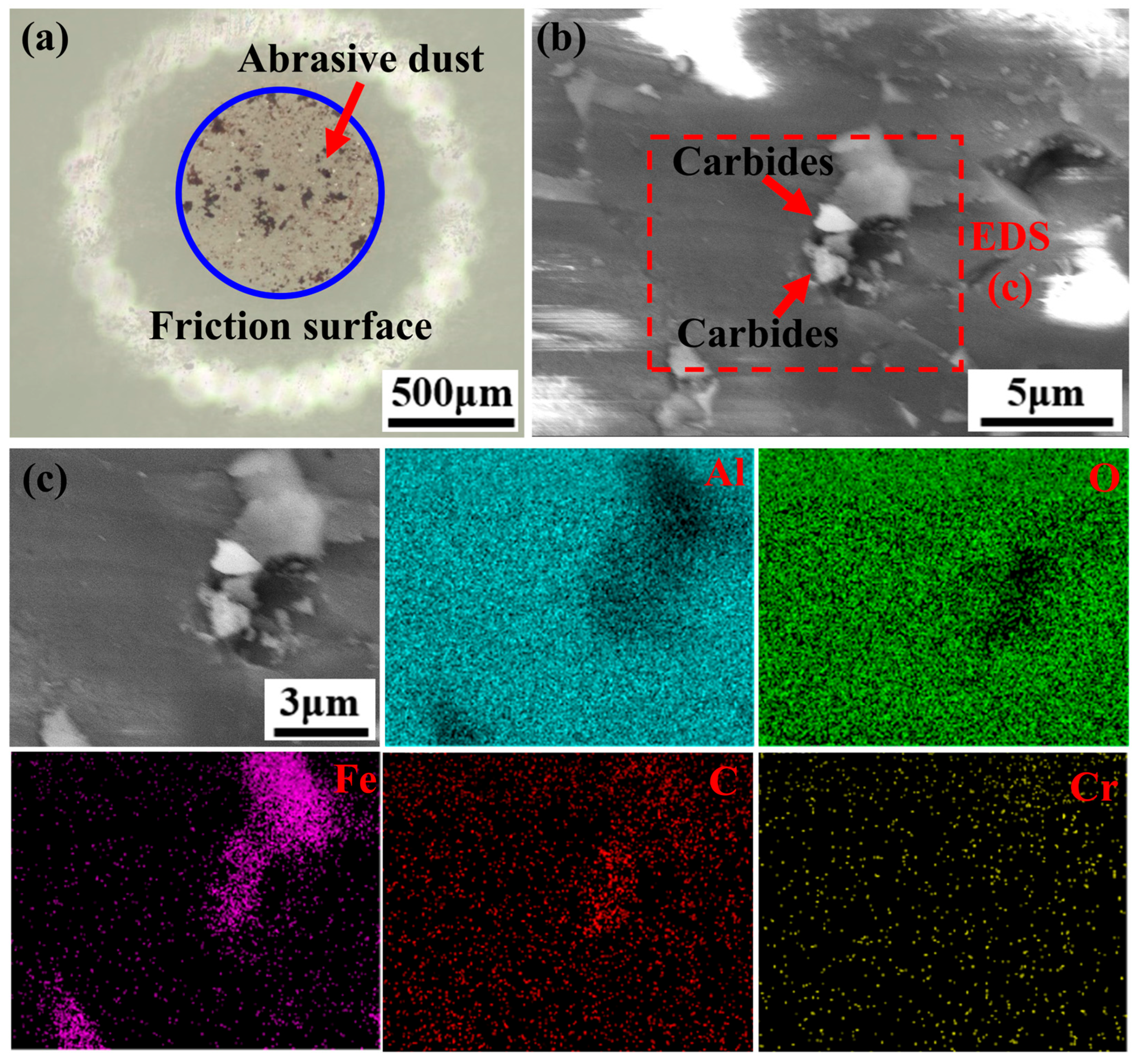
Following dry sliding against the GC specimen, the surface of the Al2O3 ball shows Fe-rich adherent debris indicative of material transfer, along with micron-sized white particles adjacent to the adhered region (Figure 15). EDS mapping confirms that these white particles are secondary carbides and reveals a distinct Fe-rich area associated with the transferred material (Figure 15c). These observations suggest that the white particles are carbide fragments detached from the GC specimen and embedded into the Al2O3 ball surface during sliding. Under dry sliding, contact with the Al2O3 ball generates high stresses (σc ≈ 3.3 GPa, τxz ≈ 1.2 GPa) on the specimen surface (Table 3). Secondary carbides, being brittle and having low fracture toughness, tend to detach from the matrix under such sustained high shear stress [33]. Once detached, these hard particles become third-body abrasives at the contact interface, transforming mild two-body abrasive wear into severe three-body abrasive wear. This third-body abrasion increases the plowing component of friction and the interfacial shear resistance during sliding, thereby contributing to the relatively high COF of the GC/Al2O3 pair [34].
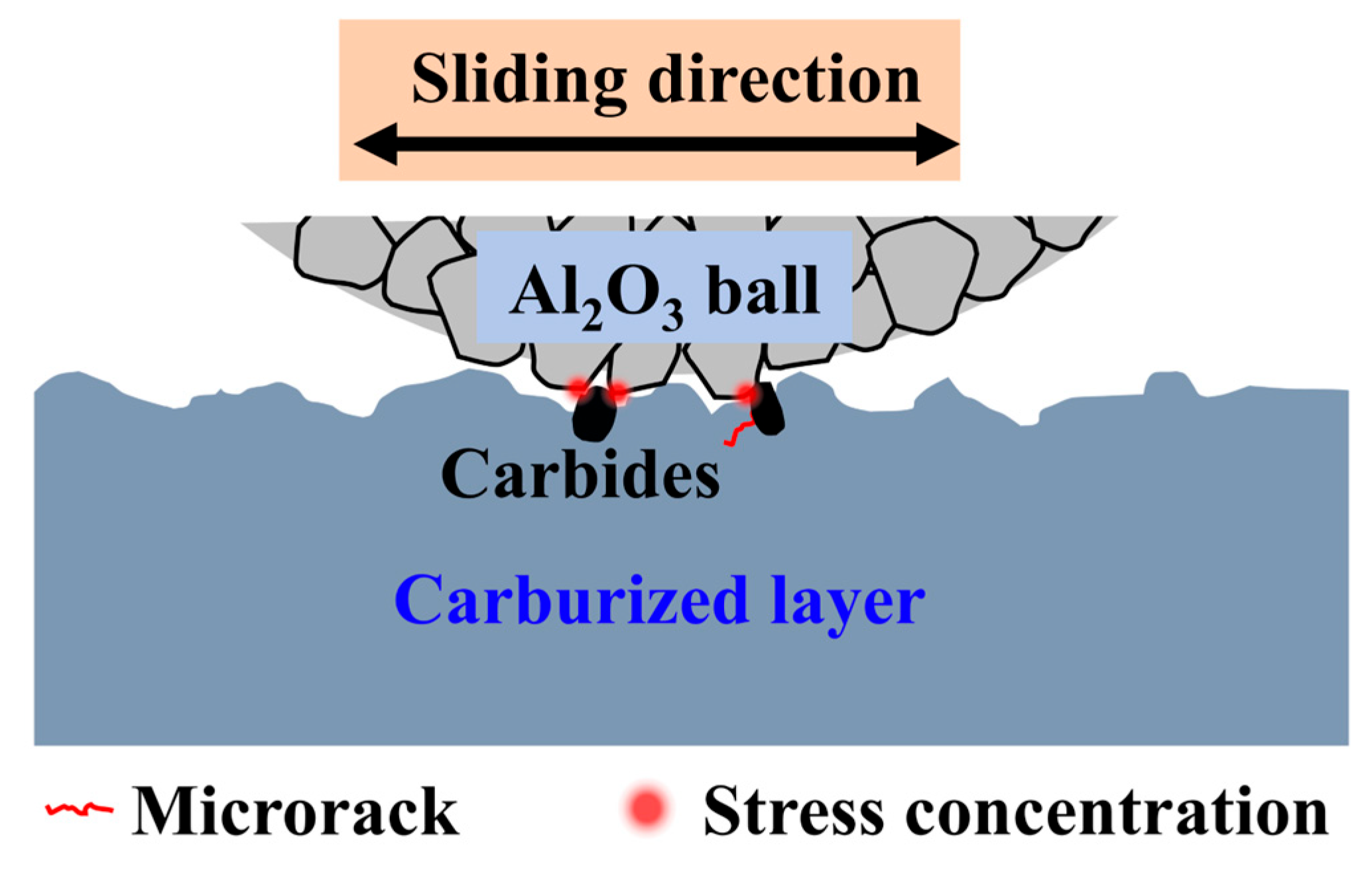
Additionally, the mismatch in plastic deformation between carbides and the martensitic matrix causes stress concentration at carbide–matrix interfaces under cyclic high shear stress, promoting crack initiation and propagation [20,22,35]. Figure 16 schematically illustrates this process: under poor lubrication, direct contact with the hard Al2O3 ball elevates contact stress, exposing subsurface carbides; sustained high shear stress leads to carbide spalling and fragmentation, generating abrasive particles that accelerate wear.

4.3. Engineering Implications

This study offers two practical insights for hybrid ceramic bearing applications.
First, hybrid ceramic bearings are more susceptible to lubrication failure than all-steel bearings. During start-up or after prolonged operation when the lubricant is depleted, direct steel-raceway/ceramic-ball contact becomes more likely, increasing contact stress and wear. Under such starved conditions, lubricants containing extreme-pressure (EP)/anti-wear (AW) additives are essential for maintaining a stable boundary film and mitigate severe abrasive wear.
Second, under poor lubrication and high-wear conditions, secondary carbides in the surface layer tend to detach and accelerate wear. Introducing compressive residual stress through processes such as carburizing, surface rolling, or induction hardening can partially offset contact stress and suppress carbide detachment. This gives carburized bearing steels a distinct wear resistance advantage over traditional through-hardened steels (e.g., GCr15) under starvation conditions.

5. Conclusions

This study investigated the tribological behavior of carburized 20CrMo steel against Al2O3 ceramic and GCr15 steel balls under dry and oil-lubricated conditions. The main findings are summarized as follows:
(1)
Under oil lubrication, the Al2O3 counterpart significantly improves the wear resistance of carburized steel. This improvement can be mainly attributed to the high hardness of the ceramic ball and the low friction coefficient of the Al2O3/steel pair, which jointly reduce surface damage.
(2)
Under dry sliding, the LPC/Al2O3 pair exhibits a slightly lower friction coefficient but a wear rate three times that of the LPC/GCr15 pair. This higher wear is attributed to the lower contact stress and pronounced work hardening in the LPC/GCr15 pair, which together suppress wear.
(3)
Secondary carbides play a dual role depending on the lubrication condition. Under oil lubrication, they enhance wear resistance by mitigating abrasive wear. Under starved lubrication with repeated high shear stresses, however, they detach from the matrix and act as hard third-body abrasives and thereby accelerate surface damage.

Author Contributions

Conceptualization, Y.M.; methodology, Y.M. and J.D.; visualization, X.L. and M.Z.; writing—original draft preparation, X.L.; resources, J.D.; supervision, L.Y., J.Q. and J.D.; writing—review and editing, L.Y. and Y.M.; funding acquisition, Y.M. All authors have read and agreed to the published version of the manuscript.

Funding

This research was Supported by the National Key Laboratory of Marine Engine Science and Technology, grant number No. LAB-2024-02-WD.

Data Availability Statement

The original contributions presented in this study are included in the article. Further inquiries can be directed to the corresponding author.

Conflicts of Interest

The authors declare no conflicts of interest.

References

  1. Rejith, R.; Kesavan, D.; Chakravarthy, P.; Narayana Murty, S.V.S. Bearings for aerospace applications. Tribol. Int. 2023, 181, 108312. [Google Scholar] [CrossRef]
  2. He, F.; Xie, G.; Luo, J. Electrical bearing failures in electric vehicles. Friction 2020, 8, 4–28. [Google Scholar] [CrossRef]
  3. Su, B.; Lu, C.; Li, C. Current status of research on hybrid ceramic ball bearings. Machines 2024, 12, 510. [Google Scholar] [CrossRef]
  4. Liu, R.; Meng, X.; Cui, Y. Influence of numerous start-ups and stops on tribological performance evolution of engine main bearings. Int. J. Engine Res. 2018, 21, 1362–1380. [Google Scholar] [CrossRef]
  5. Dong, Y.F.; Chen, F.F.; Qiu, M.; Wang, H.J.; Yang, C.M. Study of the contact characteristics of machine tool spindle bearings under strong asymmetric loads and high-temperature lubrication oil. Lubricants 2022, 10, 264. [Google Scholar] [CrossRef]
  6. Han, Y.; Wang, J.; Du, H.; Li, W.; Zhao, J.; Bai, Z. Film Thickness decay and wear behavior of grease-lubricated point contact under cyclic variable loads. Lubricants 2024, 12, 42. [Google Scholar] [CrossRef]
  7. Santos, N.D.S.A.; Roso, V.R.; Faria, M.T.C. Review of engine journal bearing tribology in start-stop applications. Eng. Fail. Anal. 2020, 108, 104344. [Google Scholar] [CrossRef]
  8. Shan, W.T.; Chen, Y.; Huang, J.; Wang, X.Y.; Han, Z.H.; Wu, K. A multiphase flow study for lubrication characteristics on the internal flow pattern of ball bearing. Results Eng. 2023, 20, 101429. [Google Scholar] [CrossRef]
  9. Dai, W. In situ measurement of grease capacitive film thickness in bearings: A review. Lubricants 2024, 12, 329. [Google Scholar] [CrossRef]
  10. Brizmer, V.; Gabelli, A.; Vieillard, C.; Morales-Espejel, G.E. An experimental and theoretical study of hybrid bearing micropitting performance under reduced lubrication. Tribol. Trans. 2015, 58, 829–835. [Google Scholar] [CrossRef]
  11. Aramaki, H.; Shoda, Y.; Morishita, Y.; Sawamoto, T. The performance of ball bearings with silicon nitride ceramic balls in high speed spindles for machine tools. J. Tribol. 1988, 110, 693–698. [Google Scholar] [CrossRef]
  12. Soffritti, C.; Merlin, M.; Vazquez, R.; Garagnani, G.L. Tribological behavior of a Cr2O3 ceramic coating/steel couple under dry sliding and heavy loading conditions. J. Mater. Eng. Perform. 2018, 27, 3699–3708. [Google Scholar] [CrossRef]
  13. Shoda, Y.; Ijuin, S.; Aramaki, H.; Yui, H.; Toma, K. The performance of a hybrid ceramic ball bearing under high speed conditions with the under-race lubrication method. Tribol. Trans. 1997, 40, 676–684. [Google Scholar] [CrossRef]
  14. Zhao, X.; Zhang, Y.; Gao, S. Evaluation and analysis of abrasive wear resistance of hybrid roller bearings under lubricant contamination. Wear 2024, 558–559, 205570. [Google Scholar] [CrossRef]
  15. Li, Y.; Jiang, Z.; Li, L.; Wang, P.; Li, D.; Xue, W. Wear behavior and damage characterization for AISI 52100 bearing steels: Effect of hardness and spherical carbides. J. Mater. Res. Technol. 2024, 30, 8359–8370. [Google Scholar] [CrossRef]
  16. Ouyang, Y.; Bai, L.; Sun, Z.; Ding, F.; Yuan, F. A new strategy for dense Al2O3 ceramics by spherical powders prepared via thermal plasma. Ceram. Int. 2019, 45, 2012–2019. [Google Scholar] [CrossRef]
  17. Liao, Y.L.; Zhang, F.L.; Pan, X.Y.; Li, K.J.; Zhou, Y.M. A comparative study on tribological behavior of Al2O3, AlN, Si3N4 and ZrO2 ceramics sliding against polycrystalline diamond ball. Wear 2023, 530–531, 205067. [Google Scholar] [CrossRef]
  18. Guan, J.; Wu, D.; Zhang, L.; Wang, G.; Chen, W.; Lin, W. The friction behavior and wear mechanism of RV reducer gear steel (20CrMo) subjected to three different heat treatment processes from −20 °C to 100 °C. J. Mater. Res. Technol. 2024, 32, 2609–2623. [Google Scholar] [CrossRef]
  19. Tsybenko, H.; Tian, C.; Rau, J.; Breitbach, B.; Schreiber, P.; Greiner, C. Deformation and phase transformation in polycrystalline cementite (Fe3C) during single- and multi-pass sliding wear. Acta Mater. 2022, 227, 117694. [Google Scholar] [CrossRef]
  20. Guo, Q.; Liu, H.; Sun, C.; Cao, Y.; Lu, X.; Du, Y. Dual-gradient structure enhances wear resistance of aero-engine bearing steel by suppressing strain localization. Acta Mater. 2025, 289, 120919. [Google Scholar] [CrossRef]
  21. Qian, D.; Wu, L.; Wang, F.; Deng, S.; Yin, F.; Jiang, S. Tailored carburization gradient microstructure and enhanced wear properties of M50NiL steel via introduced prior cold rolling. Wear 2024, 540–541, 205265. [Google Scholar] [CrossRef]
  22. Coronado, J.J.; Sinatora, A. Load effect in abrasive wear mechanism of cast iron with graphite and cementite. Wear 2009, 267, 6–11. [Google Scholar] [CrossRef]
  23. Iakovakis, E.; Avcu, E.; Roy, M.J.; Gee, M.; Matthews, A. Wear resistance of an additively manufactured high-carbon martensitic stainless steel. Sci. Rep. 2022, 12, 12554. [Google Scholar] [CrossRef]
  24. GB T 3077-2015; Alloy Structure Steels. China Standard Press: Beijing, China, 2015.
  25. Luo, Y.; Liu, C.; Xin, Q.; Xu, W.; Wang, B.; Bai, P. Effect of temperature on the friction performance and mechanisms of Si3N4 and steel interfaces in oil-lubricated term rolling bearing. Ind. Lubr. Tribol. 2025, 77, 1360–1369. [Google Scholar] [CrossRef]
  26. Aghababaei, R. On the origins of third-body particle formation during adhesive wear. Wear 2019, 426–427, 1076–1081. [Google Scholar] [CrossRef]
  27. Ji, Y.P.; Wu, S.J.; Xu, L.J.; Li, Y.; Wei, S.Z. Effect of carbon contents on dry sliding wear behavior of high vanadium high speed steel. Wear 2012, 294–295, 239–245. [Google Scholar] [CrossRef]
  28. Okonkwo, P.C.; Kelly, G.; Rolfe, B.F.; Pereira, M.P. The effect of sliding speed on the wear of steel–tool steel pairs. Tribol. Int. 2016, 97, 218–227. [Google Scholar] [CrossRef]
  29. Tsai, C.; Huang, C. Novel algebraic formula based on Lambert W-function for contact load calculation in Hertzian cylinder–cylinder interactions. J. Mech. 2025, 41, 150–156. [Google Scholar] [CrossRef]
  30. Zhang, H.; Wang, W.; Zhang, S.; Zhao, Z. Semi-analytical solution of three-dimensional steady state thermoelastic contact problem of multilayered material under friction heating. Int. J. Therm. Sci. 2018, 127, 384–399. [Google Scholar] [CrossRef]
  31. Saunders, N.; Guo, U.K.Z.; Li, X.; Miodownik, A.P.; Schillé, J.-P. Using JMatPro to model materials properties and behavior. JOM 2003, 55, 60–65. [Google Scholar] [CrossRef]
  32. HajyAkbary, F.; Sietsma, J.; Böttger, A.J.; Santofimia, M.J. An improved X-ray diffraction analysis method to characterize dislocation density in lath martensitic structures. Mater. Sci. Eng. A 2015, 639, 208–218. [Google Scholar] [CrossRef]
  33. Debras, C.; Dubar, L.; Dubar, M.; Hubert, C.; Dubois, A. Fracture energy based approach for cemented carbides grain debonding. Int. J. Mech. Sci. 2019, 161–162, 105038. [Google Scholar] [CrossRef]
  34. Brink, T.; Milanese, E.; Molinari, J.-F. Effect of wear particles and roughness on nanoscale friction. Phys. Rev. Mater. 2022, 6, 013606. [Google Scholar] [CrossRef]
  35. Zhang, J.; Chen, H.H.; Fu, H.W.; Cui, Y.N.; Wang, C.C.; Chen, H. Retarding effect of submicron carbides on short fatigue crack propagation: Mechanistic modeling and Experimental validation. Acta Mater. 2023, 250, 118875. [Google Scholar] [CrossRef]
Figure 1. Schematic of carburizing processes for plate specimens: (a) GC process; (b) LPC process.
Lubricants 14 00157 g001
Figure 2. Schematic of ball-on-plate reciprocating wear test.
Lubricants 14 00157 g002
Figure 3. Microstructure of carburized plate specimens: (ac) GC specimens; (df) LPC specimens.
Lubricants 14 00157 g003
Figure 4. Carbon concentration profiles across the carburized layers: (a) GC specimen; (b) LPC specimen.
Lubricants 14 00157 g004
Figure 5. Surface XRD patterns of GC and LPC specimens.
Lubricants 14 00157 g005
Figure 6. Microhardness profiles across the carburized layers of plate specimens.
Lubricants 14 00157 g006
Figure 7. Typical friction coefficient curves for the three friction pairs: (a) Oil-lubricated; (b) Dry sliding.
Lubricants 14 00157 g007
Figure 8. Wear scar characteristics of plate specimens: (af) 3D surface morphologies; (g,h) 2D cross-sectional profiles.
Lubricants 14 00157 g008
Figure 9. Wear rates of plate specimens under different lubrication conditions: (a) Oil-lubricated conditions; (b) Dry sliding conditions.
Lubricants 14 00157 g009
Figure 10. Typical surface morphologies of counterbody balls after testing: (a,b) GCr15 balls; (c,d) Al2O3 balls.
Lubricants 14 00157 g010
Figure 11. Wear scar morphologies of carburized plate specimens under different lubrication conditions: (ac) Oil-lubricated; (df) Dry sliding; (g) EDS elemental distribution.
Lubricants 14 00157 g011
Figure 12. Simulated surface stress distributions for direct contact between carburized specimens and two counterbodies: (a) contact model schematic; (b,d) LPC/GCr15 pair; (c,e) LPC/Al2O3 pair.
Lubricants 14 00157 g012
Figure 13. Substructure characterization and dislocation-density analysis of worn carburized surfaces: (a) XRD patterns; (b) dislocation density calculated using the modified W–H method.
Lubricants 14 00157 g013
Figure 14. Schematic 2D wear-track profiles of carburized plate specimens under dry sliding conditions: (a) LPC/GCr15 pair; (b) LPC/Al2O3 pair.
Lubricants 14 00157 g014
Figure 15. Surface morphologies of the Al2O3 ball after dry sliding against the GC specimen: (a) material-transfer region; (b) Fe-rich adherent debris and nearby carbide particles; (c) EDS elemental distribution of the selected region.
Lubricants 14 00157 g015
Figure 16. Schematic of carbide detachment from the carburized layer during reciprocating dry sliding.
Lubricants 14 00157 g016
Table 1. Chemical composition of the investigated 20CrMo steel (wt.%).
CSiMnCrMoPSFe
GB/T 3077-2015 [24]0.17–0.240.17–0.370.40–0.700.80–1.100.15–0.25≤0.030≤0.030Bal.
20CrMo steel0.210.180.681.040.200.0110.014Bal.
Measured by SPECTROMAXxLMM16 spark optical emission spectrometer (SPECTRO Analytical Instruments GmbH, Kleve, Germany).
Table 2. Material properties of the counterbody balls.
Density (g/cm3)Surface Roughness
Ra (μm)
Hardness (HRC)Elastic Modulus (GPa)Poisson’s Ratio
Al2O3 ball3.390.014~933800.27
GCr15 ball7.810.012~632080.30
Table 3. Elasto-plastic simulation results of contact parameters on carburized specimen surfaces.
Contact Radius R (μm)Compressive Stress σc (MPa)Shear Stress τxz (MPa)
LPC/GCr15100.227381137
LPC/Al2O391.733181233
Disclaimer/Publisher’s Note: The statements, opinions and data contained in all publications are solely those of the individual author(s) and contributor(s) and not of MDPI and/or the editor(s). MDPI and/or the editor(s) disclaim responsibility for any injury to people or property resulting from any ideas, methods, instructions or products referred to in the content.