Review

Research Status on Metal Surface Wear and Protection of Grain Combine Harvesters: A Review


1
School of Agricultural Engineering, Jiangsu University, Zhenjiang 212013, China
2
School of Mechanical Engineering, Jiangsu University, Zhenjiang 212013, China
*
Author to whom correspondence should be addressed.
Lubricants 2026, 14(3), 136; https://doi.org/10.3390/lubricants14030136
Submission received: 22 February 2026 / Revised: 15 March 2026 / Accepted: 18 March 2026 / Published: 21 March 2026

Abstract

Combine harvesters are core modern grain production equipment with high reliability, critical for food security. Yet their metal parts suffer severe grain-induced wear during operation, directly reducing efficiency, increasing grain loss, and raising maintenance costs and environmental burdens. This paper clarifies the grain-induced wear source characteristics and the dominant mechanisms and hazards for combine harvester metal surfaces, as well as summarizes the research progress of four key protection strategies: wear-resistant materials, surface engineering, structural and parameter optimization, and maintenance and remanufacturing. Based on the latest research data, the working principles, performance advantages and application scenarios of various protective technologies were analyzed. Current research faces several challenges: insufficient systematic wear data for multiple crops, unclear multi-factor coupled wear mechanisms, limited low-cost and long-lasting protective technologies, and the absence of online wear monitoring techniques. Finally, the directions for future research focus, such as the systematic research on the wear characteristics of multiple crops, the deepening of the wear mechanism of multi-factor coupling, the development of green, low-cost and long-term protection technologies, and the development of online wear monitoring and active control systems, are explored, providing theoretical support and technical reference for the transformation of wear control in combine harvesters, from passive maintenance to active protection throughout the entire life cycle. Such future work supports the high-quality development of agricultural mechanization and ensures food security.

1. Introduction

With the continuous improvement of agricultural mechanization, combine harvesters have been widely used in the harvesting of grains such as rice, wheat and corn. Their operational efficiency and reliability are directly related to agricultural production benefits and food security [1,2,3,4,5]. The core components of the four major systems of combine harvesters, namely cutting, conveying, threshing and cleaning, are mostly made of metal and undergo continuous mechanical contact and interaction with crop stems, grains, etc. during operation [6,7,8,9,10,11,12]. The physical and mechanical properties, as well as biochemical characteristics, of grains make them natural sources of wear, causing various forms of wear on metal parts [13,14].
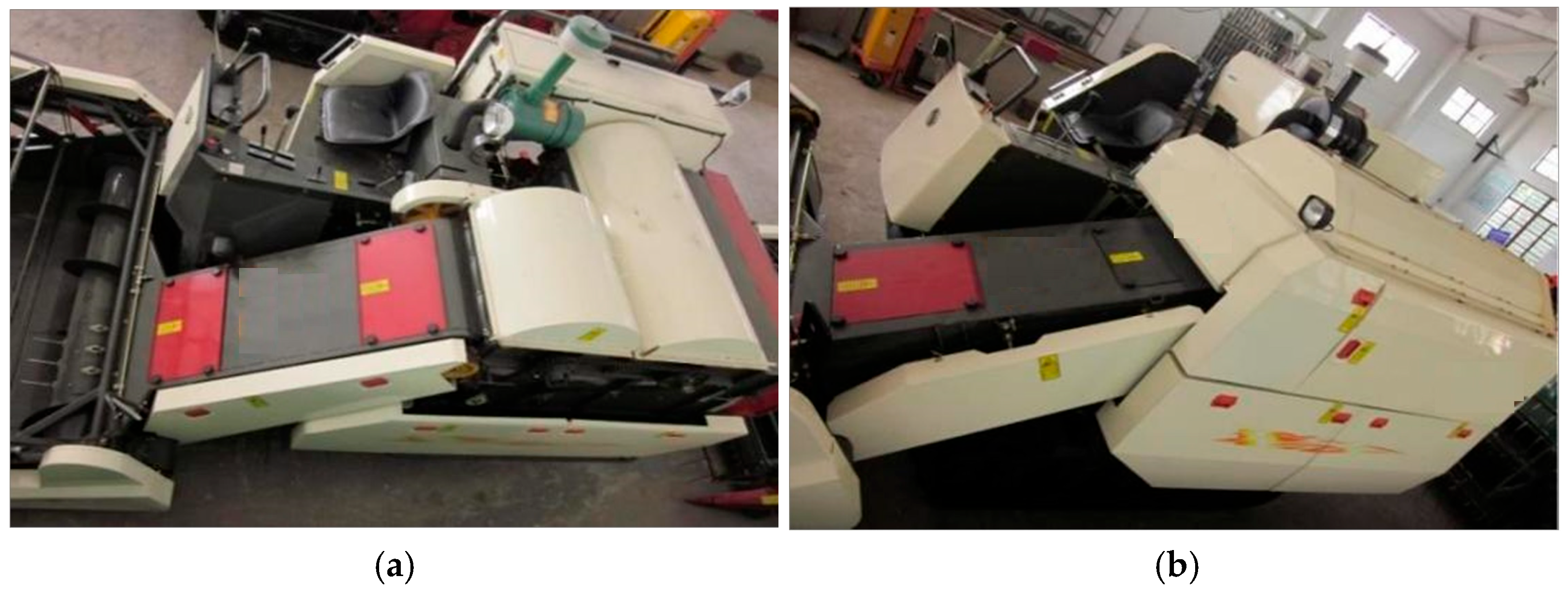
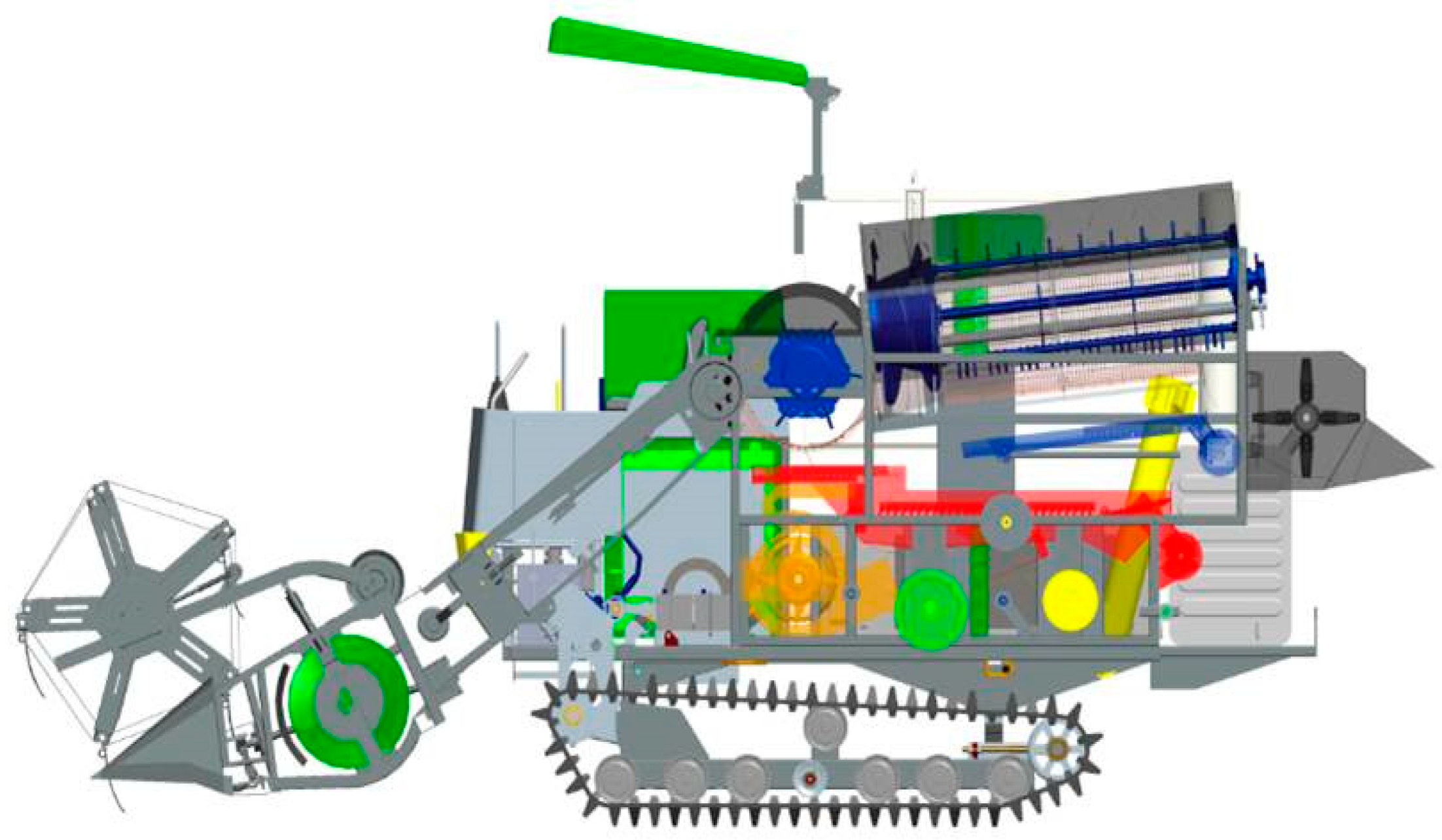
The major crawler rice combine harvesters are shown in Figure 1.
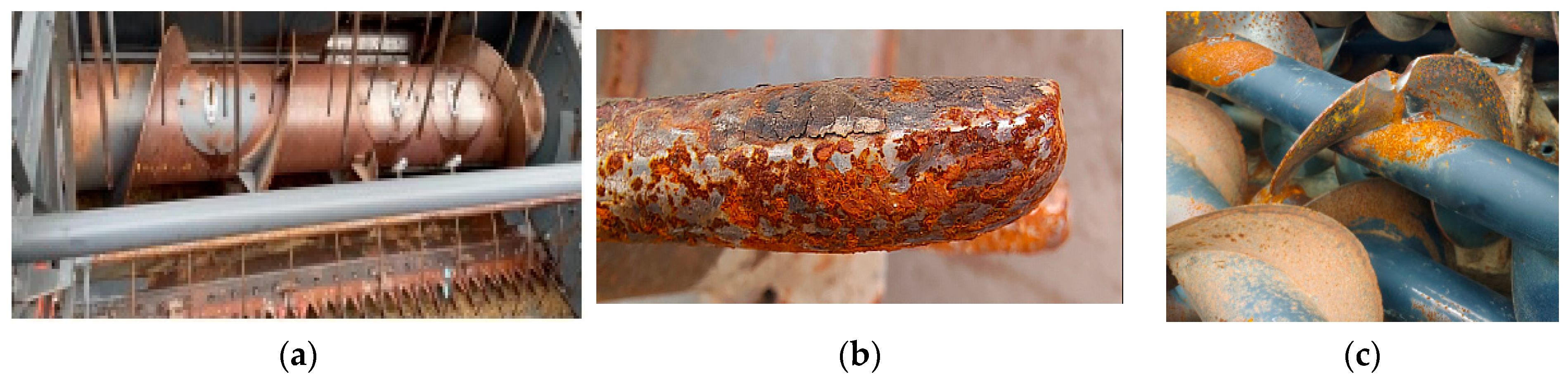
Wear and tear leads to the degradation of the performance of combine harvester components, manifested as the dulling of the cutting blades, the wear on the nail teeth of the threshing drum, the deformation of the sieve, etc., which in turn causes a decrease in operation efficiency, an increase in grain loss, a rise in maintenance costs and a greater environmental burden. The wear characteristics of the main structures on grain combine harvesters are shown in Figure 2.
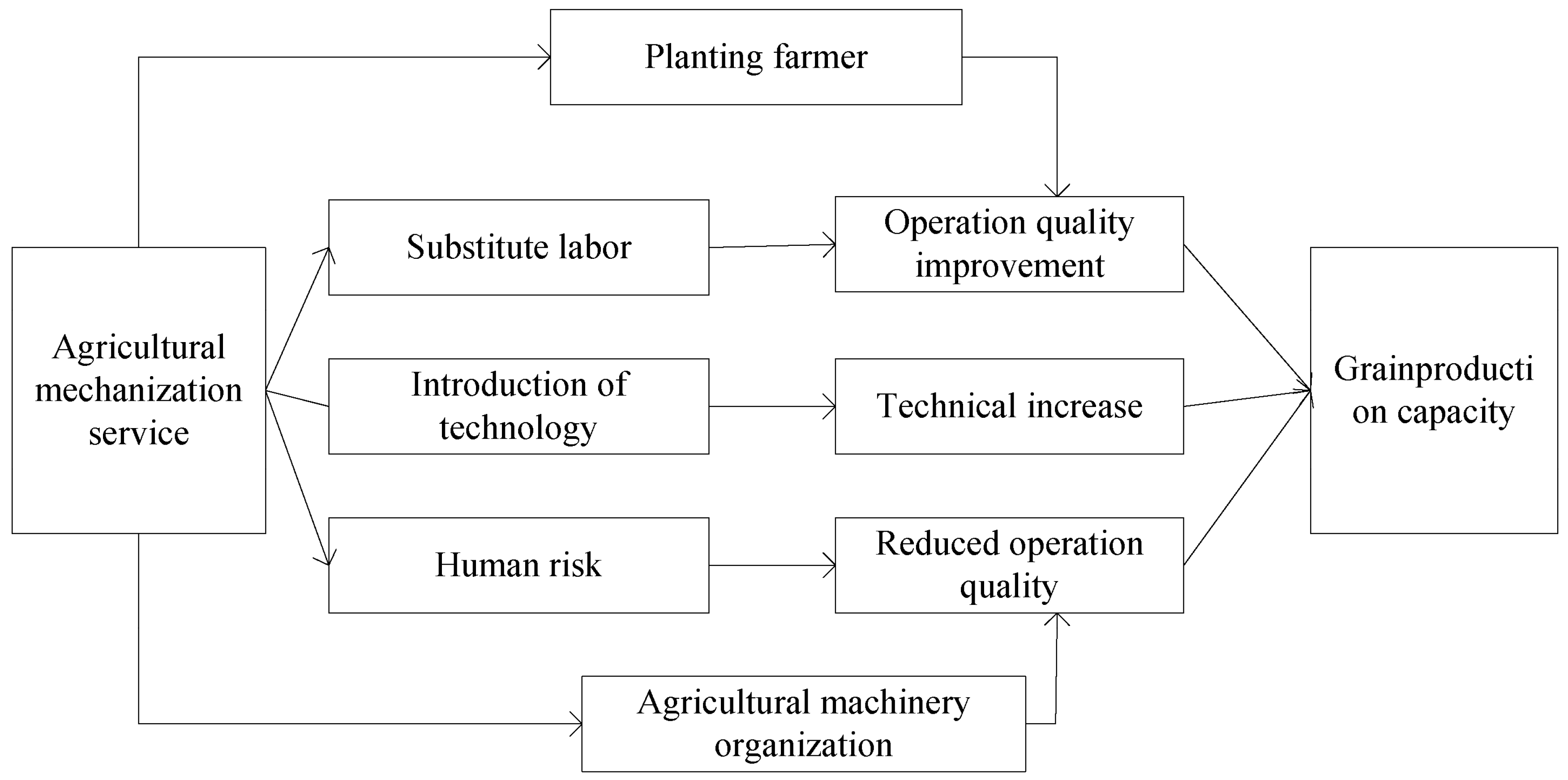
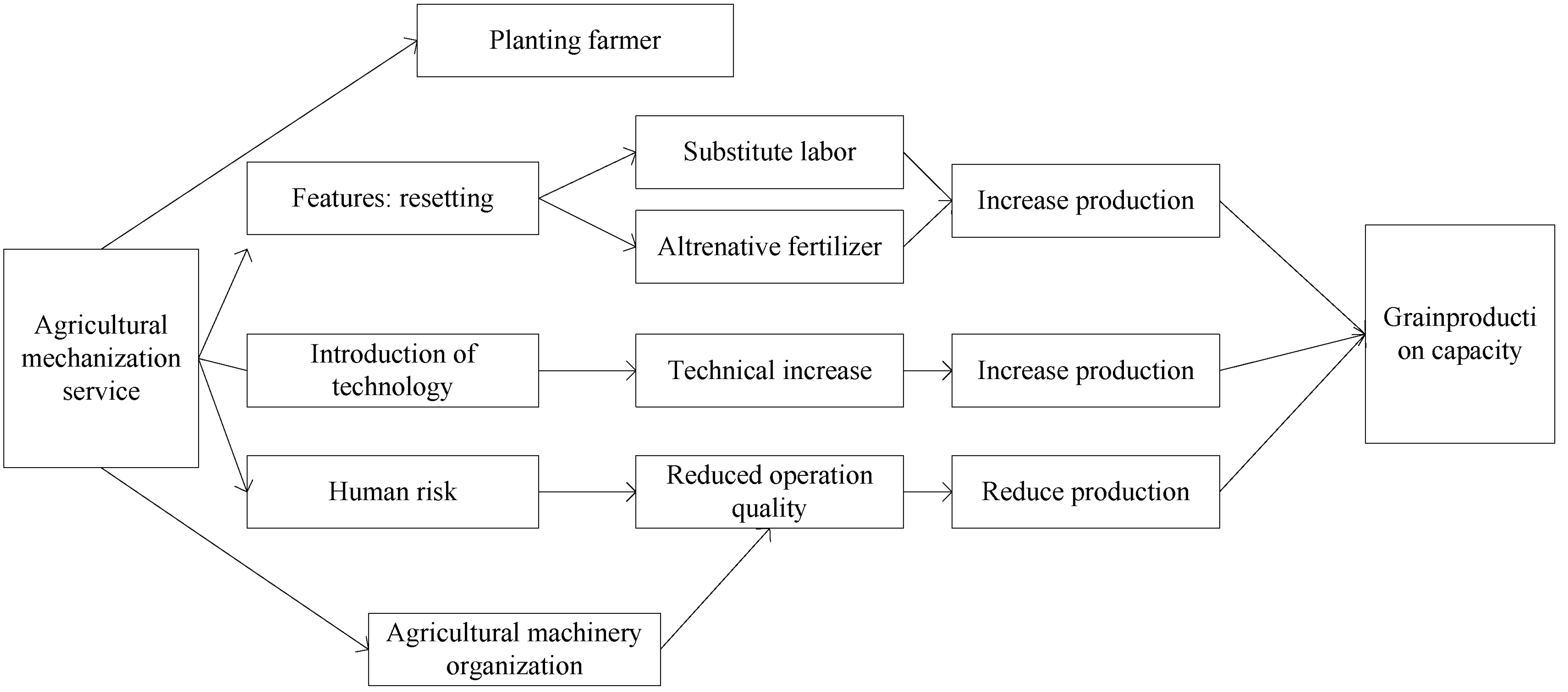
In the context of large-scale and intensive development of agriculture, the wear problem has become the core factor restricting the improvement of operation efficiency, extension of service life and optimization of comprehensive benefits of combine harvesters. The economic losses and technical challenges it brings are increasingly prominent [15,16,17,18,19]. As shown in Figure 3 and Figure 4, agricultural mechanization services have significant impact mechanisms for both grain production capacity and production efficiency, and the reliability and wear resistance of harvesting equipment are key links among them. Therefore, studying the wear mechanism of grains on the metal surface of combine harvesters and developing efficient, long-lasting and low-cost wear protection technologies are of great theoretical significance and practical application value for extending the service life of combine harvesters, reducing agricultural production costs and ensuring food security.
The core object of this review focuses on typical grains such as rice, wheat, and corn and their associated combine harvesters, covering the entire harvesting process and the four core links of cutting, conveying, threshing, and cleaning. The core objectives are to clarify the intrinsic relationship between “crop characteristics–component wear–protective technology”, to systematically analyze the interaction mechanism between crop characteristics and the surface wear of metal components, and to explore customized protection technology paths that are suitable for different working conditions. Essentially, the wear and failure of combine harvesters is not a problem of the material performance of a single component, but a complex process resulting from the coupled effect of multiple factors such as crop characteristics, operating conditions, component structure and material performance. Among them, the hardness and mechanical strength of crop stems, the wear resistance of grains, and biochemical components, such as phytoliths, directly determine the type and intensity of wear [20,21,22]. The contact methods (cutting, extrusion, and friction), load conditions (impact load and cyclic load), and field environmental factors (soil impurities, humidity, and temperature) in different operation links further intensify the complexity and uncertainty of wear behavior [23,24].
Despite extensive research on agricultural machinery wear and phased achievements, existing studies have obvious systematic gaps, failing to meet the high wear-resistance requirements of large-scale agricultural equipment. Specifically, the research limitations are mainly reflected in three aspects: Firstly, the research perspective is relatively isolated, mostly focusing on the wear law of a single component or the modification and optimization of a single material, such as the coating strengthening of cutting blades and the material selection of threshing rollers, etc. [25,26,27,28,29]. There is a lack of a full-chain traceability analysis from “crop characteristics (wear sources)” to “system components (objects of action)” and then to “wear mechanisms (action processes)”. Secondly, the research dimensions are relatively singular. Most studies only focus on the influence of physical and mechanical characteristics of crops on wear, while insufficient research has been conducted on the synergistic wear effect of biochemical characteristics, such as between phytoliths and cellulose/lignin ratio and mechanical actions. This leads to an incomplete understanding of the wear mechanism and makes it difficult to reveal the essential causes of wear failure [30,31]. Thirdly, the existing protection strategies are mainly the application of general technologies, lacking customized designs based on the wear characteristics of different crops and the features of different operation links, which makes it difficult to balance the protection effect and economy [32,33]. These research gaps have prevented the wear problem of combine harvesters from being fundamentally solved, restricting the systematic improvement of the wear resistance of agricultural machinery.
To analyze the deficiencies of existing research, this review constructs a systematic analysis framework of “crop characteristics (wear sources) → operation links and components (action objects) → interface action mechanisms and hazards (action processes) → comprehensive protection strategies (mitigation paths)”, forming a full-chain research logic of “source tracing–process analysis–end protection”. By systematically reviewing the relevant research achievements at home and abroad in the past 20 years, three key aspects are the focus of this study: first, deep analysis of the induction mechanisms of wear caused by the physical and mechanical properties and biochemical properties of grains, and clarify the key wear influencing factors; second, clarification of wear laws and dominant failure mechanisms in the core components in each link between cutting, conveying, threshing and cleaning; third, an integration of multi-dimensional protection measures, such as the application of wear-resistant materials, surface engineering technology, structural parameter optimization design and maintenance remanufacturing, to form a full-chain wear control solution covering “source–process–end”. The implementation of this review not only provides systematic theoretical support and precise technical references for the wear-resistant design of combine harvesters, reducing the economic costs of agricultural production, but also holds significant engineering value and strategic significance for enhancing the reliability of agricultural machinery equipment, ensuring the safety of grain harvesting, and promoting the high-quality development of agricultural mechanization.

2. Materials and Methods

The research began with a comprehensive literature review. The surveyed literature was retrieved from the Web of Science database, and a total of 209 studies were assessed.

2.1. Retrieval Strategy

The search adopts a combination strategy of two groups of keywords “AND”:
Group One (Mechanical types): Grain combine harvesters, rice combine harvesters, wheat combine harvesters, corn harvesters;
Group Two (Research Topics): Friction and wear, wear mechanism, surface protection, wear resistance, physical and mechanical properties, biochemical properties of crops.

2.2. Inclusion Criteria

Research subjects: Rice, wheat, corn and other grains, as well as corresponding combine harvesters or similar agricultural equipment.
Research content: Focus on the wear mechanism or protective technology of metal components in the cutting, conveying, threshing and cleaning processes of grain characteristics and combine harvesters.
Literature types: Peer-reviewed journal papers, high-level international conference papers or doctoral dissertations.

2.3. Exclusion Criteria

Non-academic publications: patent specifications, news reports, product manuals, technical white papers and non-peer-reviewed online resources.
Research irrelevant to the subject: Mainly focusing on agronomy and economics without involving the core mechanism of mechanical wear.
Repeated publication of results (conference and journal editions of the same research): Only the most comprehensive version was retained.

3. Root Causes of Wear: Physical, Mechanical and Biochemical Properties of Grains

Crop characteristics are the core source of wear on the metal parts of combine harvesters. Their physical and mechanical properties (hardness, strength, friction coefficient, etc.) directly determine the wear load and rate [34,35,36], while biochemical properties (silicon dioxide content, cellulose ratio, etc.) aggravate surface failure by influencing the wear mechanism [37,38]. This section systematically analyzes the common characteristics of crops and the environmental synergy factors.
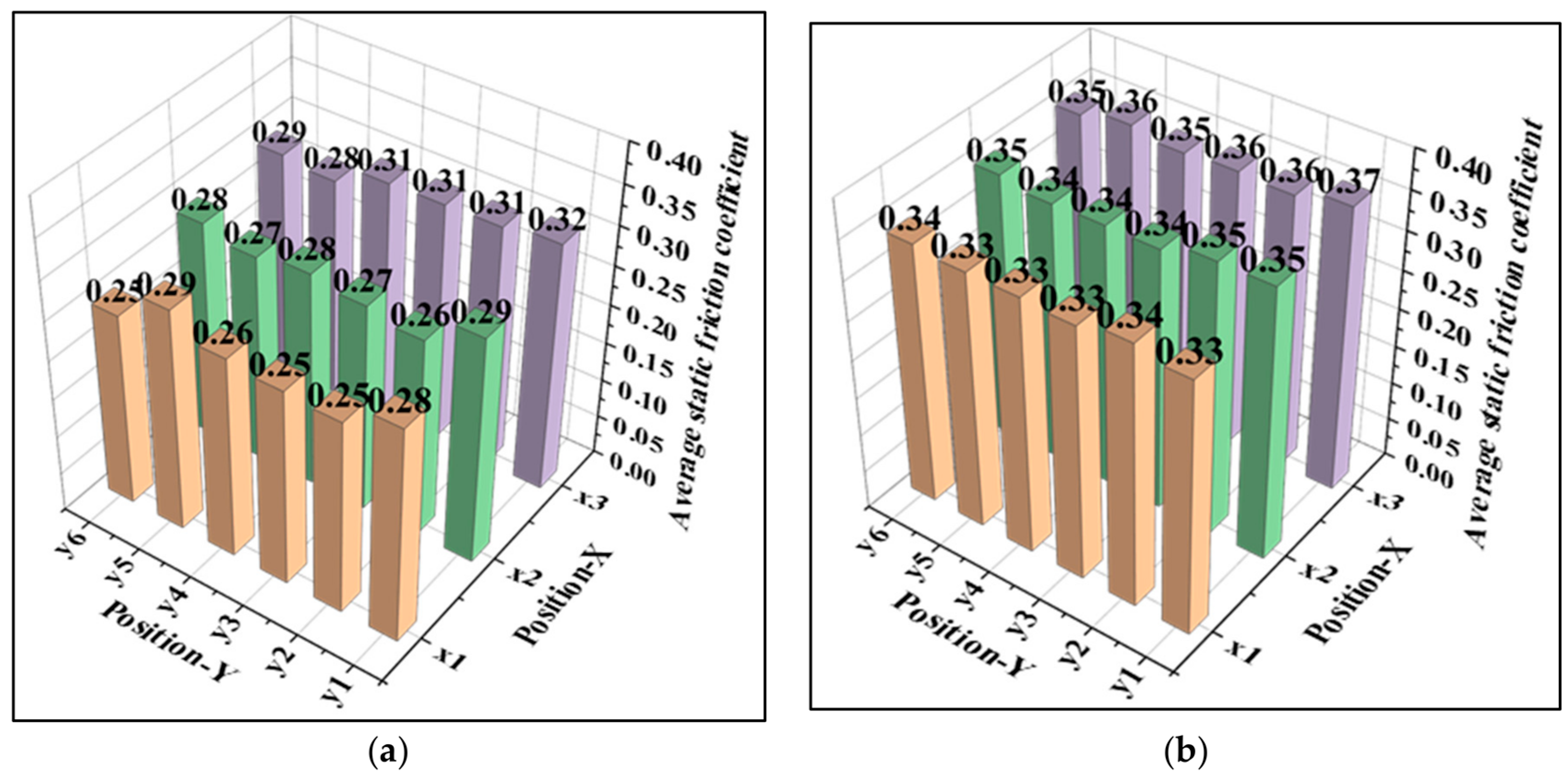
Figure 5 depicts the spatial distribution of average static friction coefficients for rice grains (Figure 5a) and stems (Figure 5b), obtained by averaging data across three measurement periods. The results indicate that rice stems exhibit higher static friction coefficients (0.33–0.37) compared to rice grains (0.25–0.32), suggesting a stronger frictional wear-inducing interaction between stems and harvester components.

3.1. Common Physical, Mechanical and Biochemical Characteristic Parameters

3.1.1. Physical and Mechanical Properties

The physical and mechanical properties of grains, such as stem hardness, grain hardness and moisture content, are the key factors causing abrasive wear of metal parts in combine harvesters [6,13,39,40,41,42,43,44,45], while the fracture toughness of abrasives, such as crop phytophites and hard soil particles themselves, is considered an important influencing dimension of abrasive wear. Fracture toughness is the core parameter that determines the cutting capacity of abrasive particles and the continuous effect of wear, directly related to the severity of abrasive wear [46]. When grain stems come into contact with metal parts, surface wear is caused by cutting and grinding actions. Due to the higher hardness of the grains, they undergo high-frequency collisions and friction with components, such as the threshing drum and concave plate, during the threshing process, which further intensifies the degree of abrasive wear. The difference in fracture toughness among abrasives causes them to exhibit completely different breaking behaviors during the wear process: abrasives with high fracture toughness (such as quartz particles in soil) are not easy to break and can maintain a sharp cutting shape for a long time, exerting a continuous, strong cutting effect on the metal surface. Low fracture toughness abrasives (such as some soft crop phytoliths) are prone to break into blunt particles, with a significant decrease in cutting ability and a weakening of the wear effect [47].
Relevant research cases further confirm the correlation law between the physical and mechanical characteristics of crops and the wear of agricultural machinery. For example, Kruszelnicka et al. confirmed in the grain crushing test of the roller mill that the changes in operating parameters, such as the gap between rollers and angular velocity, would further affect the energy consumption and component wear-related characteristics by altering the interaction intensity between the material and the roller body [48]. Furthermore, in the post-harvest processing scenario of crops, Al-Sandooq et al., through tribological research on roller mills, found that the three-body abrasive load (3BA) during grain processing is the key factor driving the wear of the roller body, and the size of the abrasive sand grains used in the experiment significantly affects the degree of component wear [49]. Pastukho et al. also mentioned in a study on roller cutters that the physical and mechanical properties of crop materials (such as hardness) would directly affect the specific wear rate of the working surface of the roller. The higher the hardness of the material, the greater the wear amount of the corresponding component [50]. These studies have verified the driving effect of the physical and mechanical characteristics of crops on the wear of agricultural machinery from different operation scenarios, such as processing and crushing, and also highlighted the core consideration value of this characteristic in the anti-wear design of agricultural machinery.

3.1.2. Biochemical Characteristics

The biochemical characteristics of grains mainly intensify the failure of metal parts through the synergistic effect of chemical corrosion and mechanical wear. Among them, chloride ions (Cl) and sulfate ions (SO42−) are the core influencing factors of chemical corrosion, while silicon dioxide content and cellulose/lignin ratio are the core influencing factors of mechanical wear [51,52].
During the growth and harvest of grains, organic acids are produced. These components undergo chemical reactions with the surface of the metal parts of the combine harvester, generating easily removable corrosion products (such as metal oxides and salts). After the corrosion products fall off, they become new abrasive grains, causing secondary abrasive wear in the mechanical contact between the components and the crops. At the same time, mechanical wear damages the oxide film on the surface of components, exposing the fresh metal surface, further accelerating the process of chemical corrosion, and ultimately forming a synergistic mechanism of “chemical corrosion–mechanical wear” [53,54,55].
The residual salts in crops (such as soil salts in the harvest environment and potassium salts and sodium salts contained in the crops themselves) accelerate wear through electrochemical corrosion. Salt can form an electrolyte environment on the metal surface, triggering micro-battery reactions and causing pitting corrosion, local corrosion and other damage on the component surface. These corrosion damages reduce the mechanical properties of the metal surface, making the components more prone to wear and peeling during collisions and friction with crops. Moreover, the tiny cracks caused by wear become channels for salt penetration, further amplifying the corrosion effect [56,57].
In addition to the components related to chemical corrosion, the silicon dioxide content and cellulose/lignin ratio in crops form a synergistic effect with corrosion by intensifying mechanical wear. Silicon dioxide exists in crop stems and grains as a typical abrasive material [58]. Studies have shown that crops with high silicon dioxide content have a more significant abrasive wear effect on metal parts [59]. In addition, the cellulose/lignin ratio of crop stems affects their toughness and wear resistance. The higher the cellulose/lignin ratio, the better the toughness of the stems and the less impact wear on metal parts; conversely, the impact wear is more severe [6,60].
Relevant research cases further confirm the correlation between the biochemical characteristics of crops and the wear of agricultural machinery. For instance, Lozr et al. found, in their research on the corrosion of structural materials of sugar beet harvesters, that the complex environment of sugar beet harvesting subjects the equipment to significant corrosion stress. Unprotected steel components were prone to accelerated corrosion due to the wear failure of functional components, and there were significant differences in the corrosion and wear resistance of different types of protective coatings [56]. Limarenko et al. confirmed through salt spray corrosion tests that, in a salt-containing environment, the surface protective layer of agricultural machinery components gradually fails with the increase in exposure time. The surface degradation enters the active period starting from 96 h, which then causes damage such as pitting corrosion and reduces the service performance of the components [57]. Refaai et al. noted that agricultural machinery components generally face the problem of synergistic failure caused by wear and corrosion. The presence of media such as soil, crops, and pesticides in the working conditions aggravates this process. However, nano-composite coatings, with their characteristics of high hardness and low corrosion rate, can simultaneously resist mechanical wear and chemical corrosion, effectively extending the service life of components [61]. These studies have verified the driving mechanisms of the synergistic effect of corrosion and wear on the failure of agricultural machinery from three perspectives: environmental corrosion, damage patterns, and protective technologies. They have also highlighted the significant value of corrosion and wear-resistant protective design in the research and development of agricultural machinery.

3.2. Environmental Synergy Factors

Crop-induced wear is accelerated by environmental factors, mainly soil impurities, operating humidity and chemical residues. The combination of these factors and crop characteristics drastically speeds up the failure of agricultural machinery metal parts [62,63,64,65,66].
Soil impurities are one of the key environmental factors that accelerate wear and tear. During field operations, the hard soil particles carried in crop straw and soil impurities, such as microplastics brought by agricultural production, interact with the phytoliths of crops, forming a multiphase abrasive wear system, which significantly increases the wear rate of metal parts. This mechanism is consistent with conclusions derived by Eremeev et al. In their study, upon analyzing the wear of the tillage handle of the Kuzbass 8.5 seeder, it was found that hard particles in the soil were the main source of abrasive wear [67]. Meanwhile, Buylov, V. N., by analyzing the failure causes of a soil treatment unit, confirmed that the content of soil impurities is positively correlated with the degree of component wear, further confirming the role of soil impurities in accelerating wear [68].
The operating humidity intensifies component failure through the synergistic effect of “corrosion–wear” or “impact–fatigue wear”. A high-humidity environment causes a water film to form on the surface of metal parts, triggering electrochemical corrosion. At the same time, a humid environment intensifies the adhesion between crops and parts, allowing for the corrosion products to interact with the adhered crop tissues, creating a “corrosion–wear” synergistic effect [69,70]. A low-humidity environment increases the brittleness of crop straw, making it more prone to breakage when colliding with components, generating sharp fracture fragments, increasing the impact load, and thereby accelerating the fatigue wear of components [71]. Zhang et al.’s research also confirmed this phenomenon. The study pointed out that the wear of the header platform of the combine harvester was exacerbated by the synergistic effect of abrasive wear caused by rice straw and corrosion caused by field humidity and straw SAP. The actual worn surface presented more complex failure characteristics due to the corrosion–wear coupling effect [72]. Furthermore, Galiev et al. pointed out that humidity, as one of the core natural climatic conditions affecting agricultural machinery operations, directly influences the wear of agricultural machinery components. Moreover, there is a correlation among the wear of various components of agricultural machinery; the wear of one component further affects the service status of other components [73].
Chemical residues further accelerate wear through chemical–mechanical synergistic corrosion. The organic acids, salts and other components contained in crop juice undergo chemical reactions with the metal surface, forming a loose corrosion layer. Meanwhile, chemical substances, such as pesticides and fertilizers that may remain during field operations, further intensify the corrosion reaction [74]. These corrosion layers are prone to peeling off under the friction between agricultural machinery parts and crops, exposing the fresh metal surface. The fresh surface then rapidly undergoes new corrosion reactions, and this cycle forms a chemical–mechanical synergistic corrosion, significantly accelerating the wear of components. Romek, D. discovered that the pH value (a chemical environmental index) of abrasive media has a significant impact on component wear. When pH is 10 (alkaline environment) and moisture content is 10%, the mass loss of components is four times that under the conditions of pH 7 and moisture content of 0%. The study directly confirmed the accelerating effect of the coupling of the chemical environment and humidity on the wear [32]. This conclusion echoes the corrosion effect of organic acids in crops mentioned earlier, further providing theoretical evidence for the synergistic acceleration mechanism of chemical residues.
The coupling effect of the above-mentioned grain characteristics and environmental factors is the core cause of metal wear in combine harvesters. The mechanisms of action and the dominant wear types of each factor are summarized in Table 1. Their synergistic effect significantly increases the complexity and uncertainty of wear and is also the core basis for subsequent research on wear mechanisms.

4. Objects of Wear and Tear: Core Systems and Vulnerable Components of Grain Combine Harvesters

The core metal components of the four major systems of combine harvesters, namely cutting, conveying, threshing and cleaning, are the main objects of wear. There are significant differences in the forms and degrees of wear among different components [75,76]. These components are multiple exciters for rice combines. The structure and multiple exciters of a typical rice combine harvester are shown in Figure 6. All the exciters are installed on the frame of the combine harvester.
When a combine harvester is harvesting in a field, rice stem is cut by the cutter in the front header. Then, rice straw is fed into the threshing cylinder by a conveying device. When the rice is threshed, the rice is fed into the tangential axial threshing cylinder through the mixing and conveying trough for initial separation, and then enters the longitudinal axial threshing cylinder for re-separation, and finally, rice stems are removed from the grass drain.

4.1. Cutting System Components

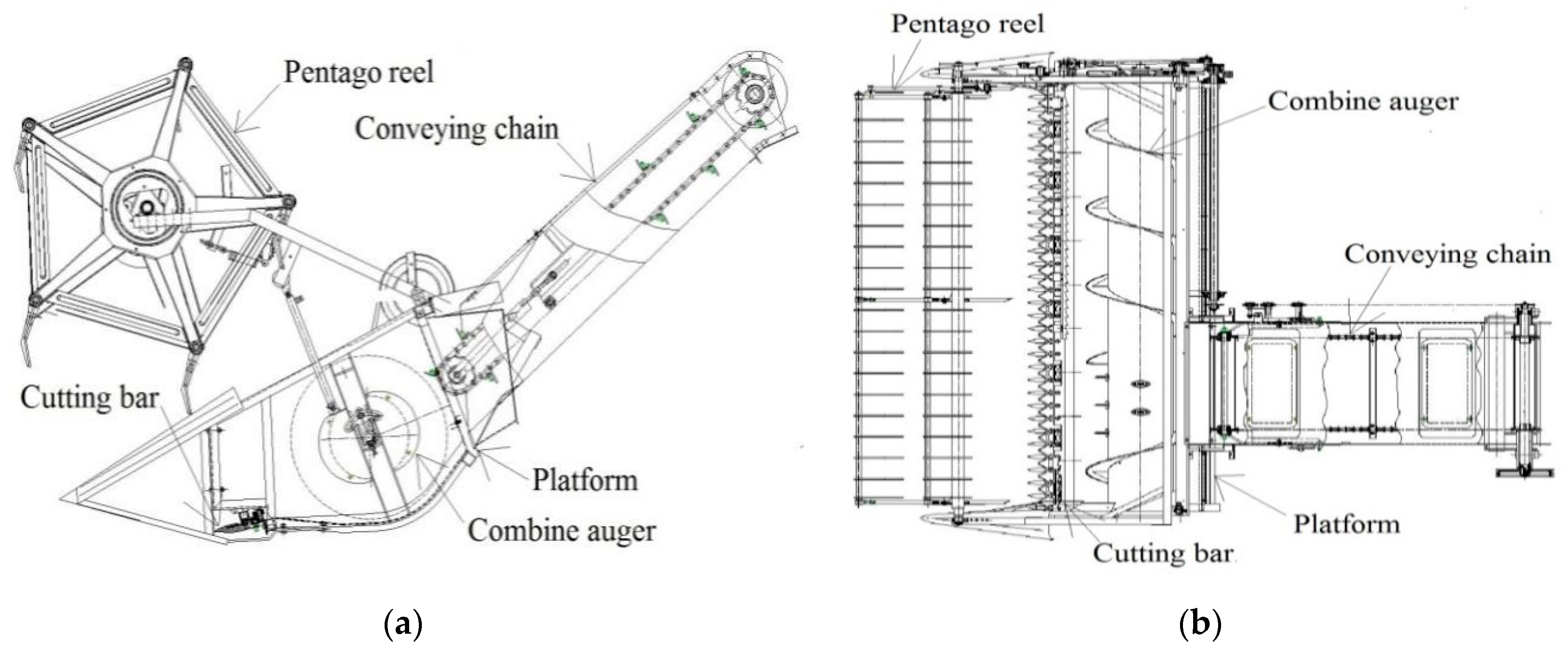
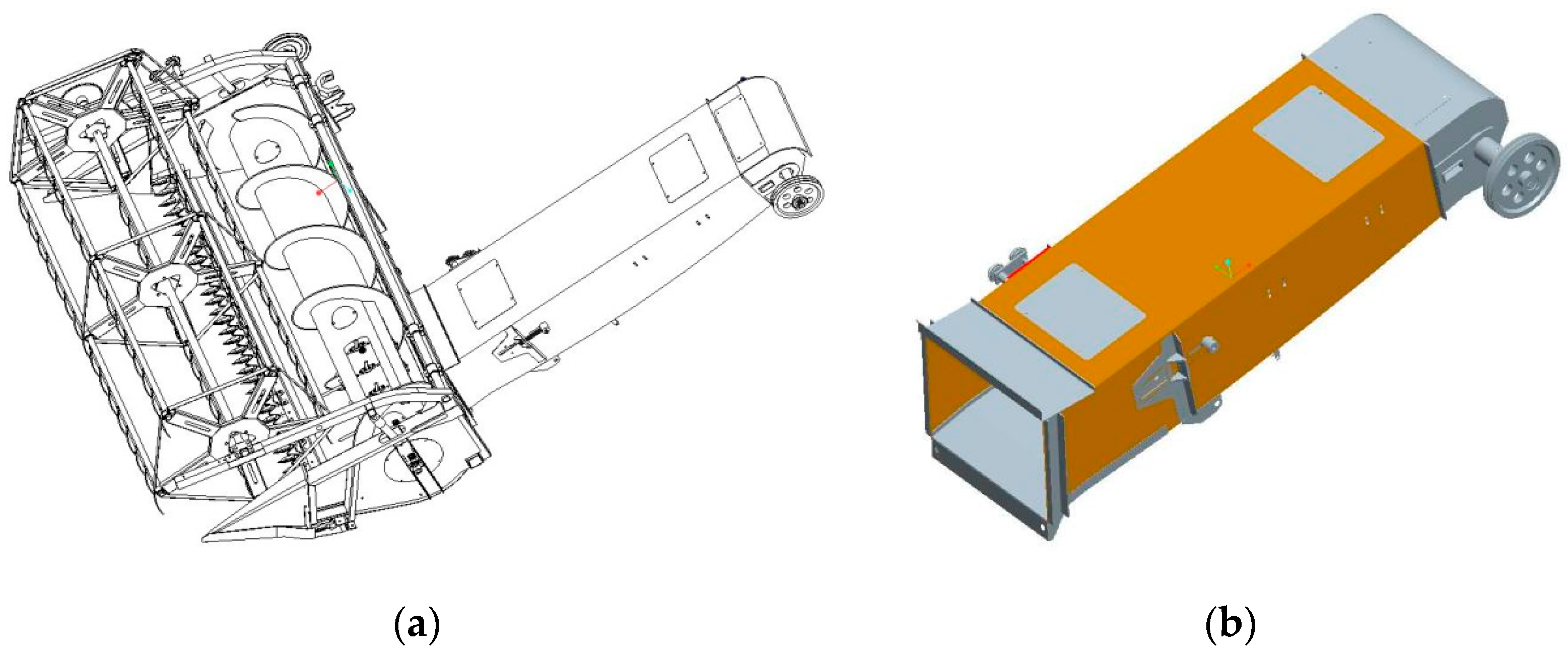
The front head structure and composition of a rice combine harvester comprise a head platform, a cutting rod, a combined screw, a pentagonal roller and a conveying room. The front header is shown in Figure 7.
The cutter of the cutting system is one of the most worn components in a combine harvester, and its material is mostly carbon steel, alloy steel, etc. During the operation process, the cutting knife undergoes continuous cutting action with the crop stems, mainly facing abrasive wear and fatigue wear. When the cutting knife wears and becomes blunt, the cutting resistance increases, the cutting efficiency decreases, and even the phenomenon of missed cutting occurs [78,79].
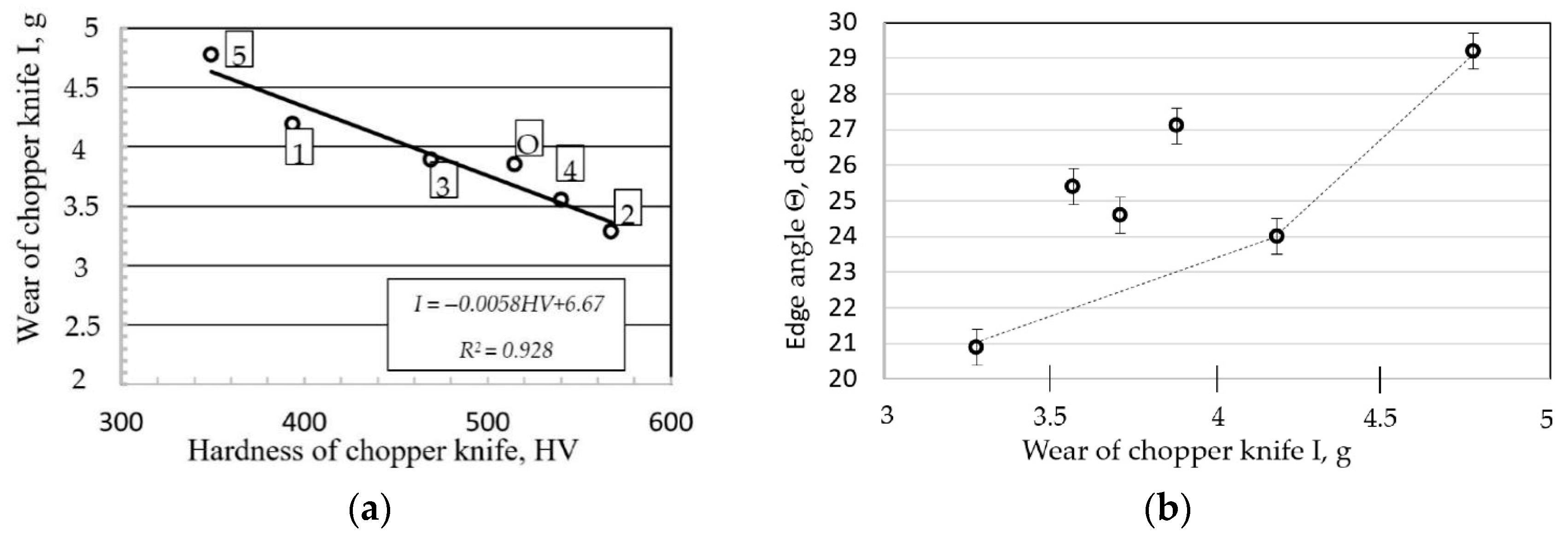
For instance, the research of Lyalyakin et al., through metallographic analysis and X-ray phase analysis, identified the optimal hardening scheme for the cutter, confirming that hardening treatment can effectively enhance the hardness and wear resistance of the cutter. Furthermore, the wear threshold of this type of cutter was determined, needing to be replaced after harvesting 225 hectares of crops [16]. The research of Jankauska et al. further clarified that the hardness of the cutting edge and the angle of the cutting edge are key factors affecting the wear resistance of the cutting knife. The two are inversely proportional and directly proportional to the wear amount, respectively. That is, the higher the hardness and the smaller the angle of the cutting edge, the lower the wear amount [80]. The influence laws regarding tool hardness and cutting edge angle on the wear of the cutting tool is shown in Figure 8a,b. The study also pointed out that the wear of the cutter is not solely caused by the interaction between the straw and the blade, but also by the abrasive wear resulting from the micro-abrasive particles carried in the straw.

4.2. Conveying System Components

The conveyor chain, scraper and other components of the conveying system are mainly used for the transportation of crops, and the materials are mostly stainless steel, alloy steel, etc. These components undergo continuous friction and impact with crop stems and grains during operation, mainly facing adhesive wear, abrasive wear and fatigue wear. Under the action of high contact pressure, the surface oxide film of the chain links and rollers of the conveyor chain is destroyed, and the metal surfaces come into direct contact and bond. Subsequently, during the relative sliding process, the bonding points are torn, resulting in material detachment [81,82,83,84,85,86].
This wear mechanism was confirmed in the research of Krishnasamy, K. and A. S. A. Doss. This study conducted a failure analysis on the roller chain bushings used in heavy-load impact conditions, such as those in combine harvesters, and found that there were a large number of cracks extending to the outer diameter on the inner wall of the failed bushings, and the fracture surface had quasi-cleavage characteristics. It was confirmed that its failure was caused by impact fatigue wear. Moreover, after replacing the original AISI 1020 material with SAE 8620 alloy material, the anti-wear performance of the bushing increased by 16.67%, and the fatigue life increased by 300% [87]. The research of Terentye et al. showed that adding mesocrystalline compounds to the lubricant of the transmission components of the conveying system can reduce the wear intensity of the friction pairs by 1.54–3.39 times and significantly increase the service life of the components of the conveying system [88].
The typical morphology of the front part of the header and the conveyor chain component of the combine harvester is shown in Figure 9a,b.

4.3. Threshing System Components

The threshing drum, concave plate and other components of the threshing system are the core parts of the combine harvester, and the materials are mostly wear-resistant alloy steels, such as high manganese steel and chromium-molybdenum steel. The nails of the threshing drum frequently collide and rub against the grains and stems of crops, mainly facing abrasive wear, fatigue wear and adhesive wear. The Discrete Element Method (DEM) can accurately simulate the movement trajectory, collision speed and contact pressure distribution with nail teeth of grain particles during the threshing process, providing quantitative support for the analysis of wear laws. By adjusting the physical parameters of grain particles (such as hardness and friction coefficient) in the DEM model, the influence of different crop characteristics on the wear rate of threshing components can be further quantified [89,90]. After the nails of the threshing drum wear out, the threshing capacity decreases, and the incomplete threshing rate increases. Research shows that the wear rate of the nail teeth of the threshing drum is closely related to the crop feeding amount and the drum speed. The greater the feeding amount and the higher the speed, the higher the wear rate [91,92,93,94,95,96].
For instance, the research of Yu et al. further confirmed that the wear deformation of the threshing drum during operation can cause dynamic balance problems. Moreover, in a complex vibration environment, the parameter-adaptive variational mode decomposition method can accurately extract the imbalance signal, providing an effective technical means for timely monitoring of the wear state of the drum [97]. Batienkov, V. T. and R. V. Batienkov’s research, focusing on components such as threshing drums made from hot-forged sintered powder billets, proposed that vibrating the billets and applying a lubricating coating before hot-forging could reduce the degree of material decarburization and increase the wear resistance by 1.35 to 1.4 times. This study provides a new path for the wear-resistant manufacturing of threshing system components [98].
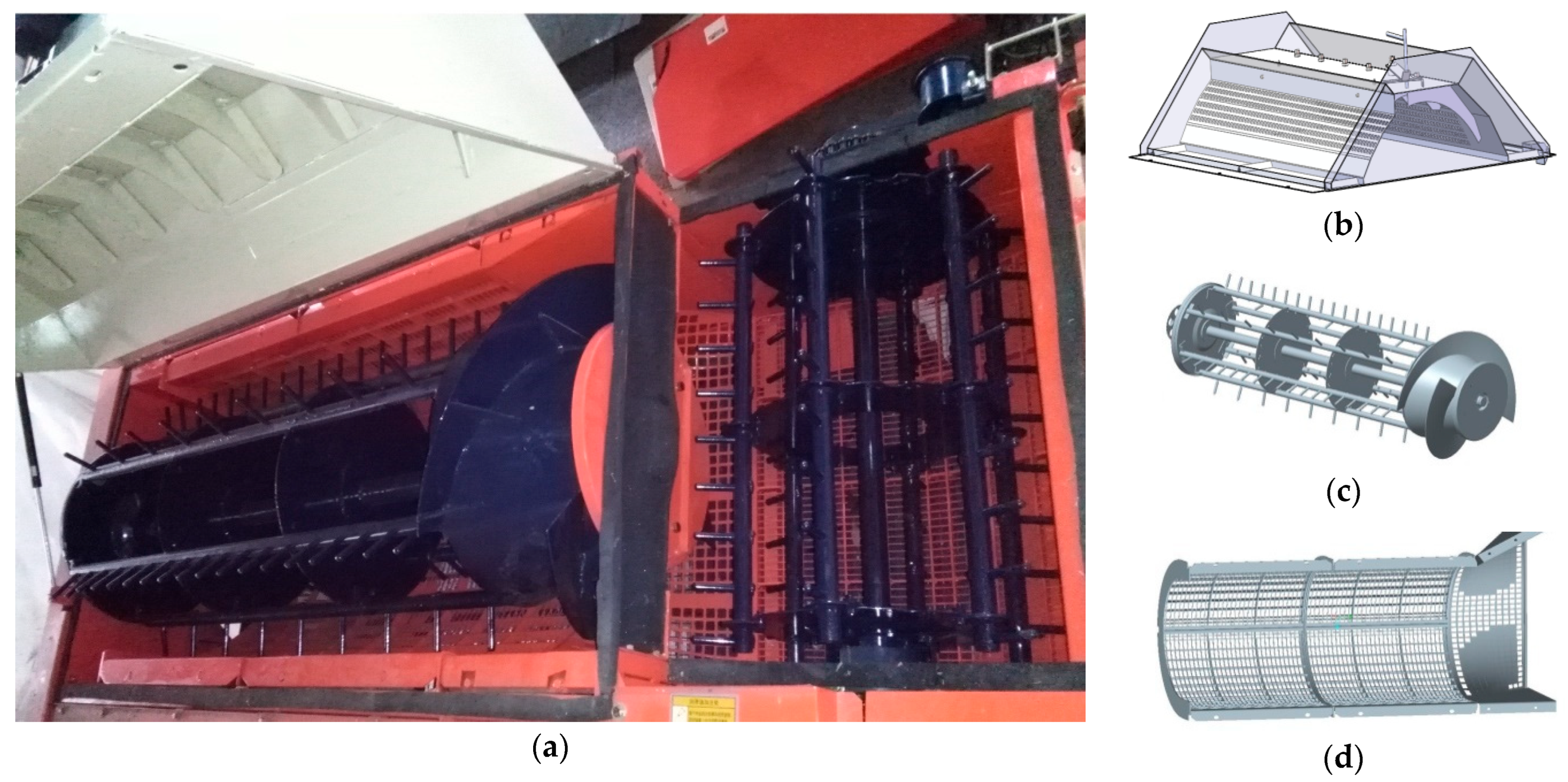
Rice straw was sent to a tangential threshing cylinder to be initially threshed and separated, and then entered a longitudinal axial threshing cylinder to be re-threshed and re-separated. The combined device, demonstrating the tangential and longitudinal axial threshing cylinder intersection, is shown in Figure 10.

4.4. Clean System Components

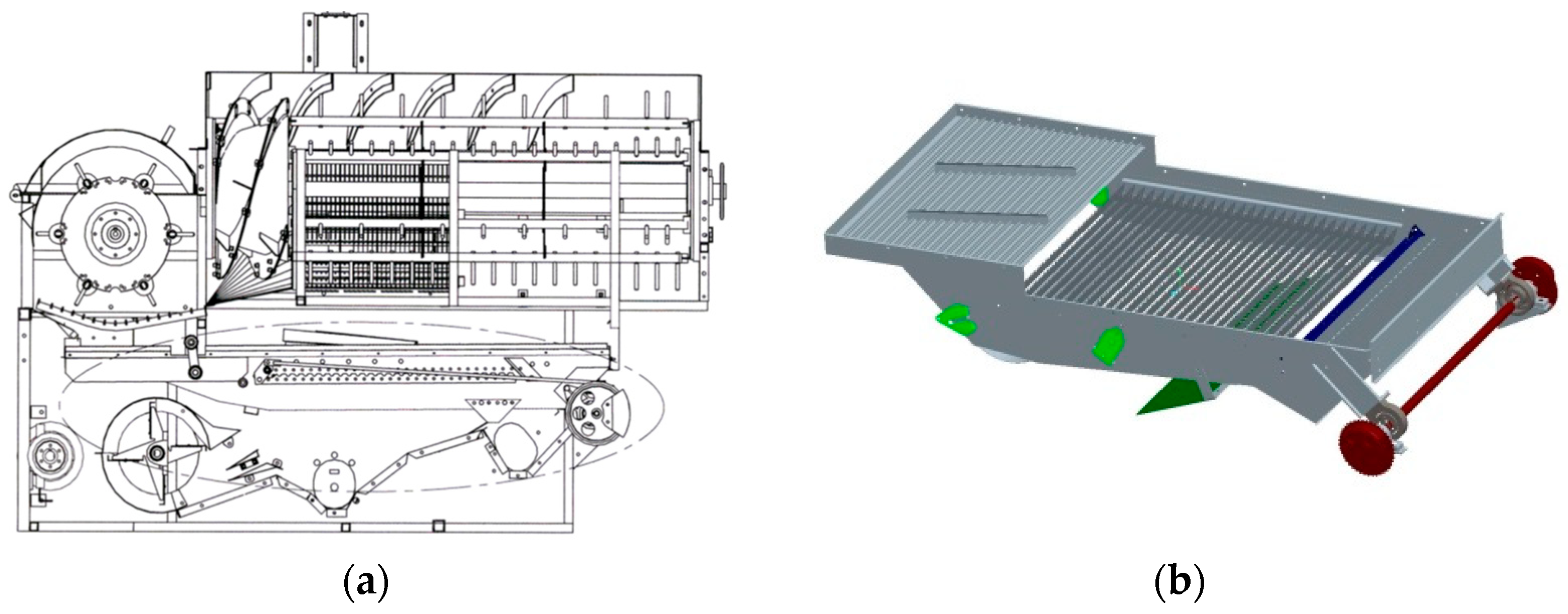
The screen, fan and other components of the cleaning system are mainly used for the cleaning of grains. The materials used in the manufacturing of the screen are mostly stainless steel, carbon steel, etc. During operation, the sieve comes into friction with grains and debris, mainly facing abrasive wear and fatigue wear. After the sieve is worn, the sieve holes deform, the cleaning efficiency decreases, and the impurity rate of the grains increases [7,100,101,102,103,104,105,106,107]. The structure of the threshing and cleaning assembly and that of the vibrating screen of the cleaning system are shown in Figure 11a,b, clearly presenting the installation position and structural features of the cleaning screen in the cleaning system.
For example, Pan et al., taking the crank-slider cleaning system as the object of study, found that the unbalanced vibration of the cleaning screen was mainly distributed at 30.13 Hz, and the vibration intensity was 0.24–0.29 dB. By optimizing the weight of the counterweight block (3650 g) and the eccentricity (136.7 mm), the vibration intensity at this frequency was reduced to 0.11–0.12 dB, with a decrease of 58.62%, effectively slowing down the wear caused by intensified vibration [100]. Zhang et al.’s research found through multi-scale modeling that the wear that occurs between components, such as the cleaning screen, and rice is a composite mechanism. Under high-load and high-speed working conditions, silicon dioxide particles in rice can cause significant soft abrasive micro-cutting wear, and the degree of wear can be quantitatively characterized through fractal analysis. The fractal dimension (Ds) rose from 2.17 before wear to 2.3156 after severe wear, providing a precise quantitative method for the wear assessment of components in the cleaning system [6]. Zhang et al.’s research also confirmed that the crop movement trajectory is the decisive factor for the wear distribution in components such as the cleaning screen. The discrete element model can accurately predict the wear “hotspots”, providing theoretical support for the structural optimization of the cleaning system components [72].
The vulnerable components of the four core systems of combine harvesters show significant differences in wear characteristics due to different operating conditions. The materials and dominant wear types and causes for each component are systematically summarized in Table 2, providing clear areas of action and research targets for the subsequent design of targeted protection strategies.

5. The Dominant Wear Mechanism of the Metal Surface of the Combine Harvester

The wear on the metal surface of combine harvesters is the result of the combined action of multiple mechanisms. According to the conditions, processes and manifestations of wear occurrence, it can be classified into three dominant wear mechanisms: abrasive wear, fatigue wear and chemical–mechanical synergistic corrosion wear.

5.1. Abrasive Wear

Abrasive wear is the most prominent wear type for combine harvester metal components. It is driven primarily by abrasive contamination, with contact speed and pressure further regulating its severity. The three factors jointly determine the rate and failure characteristics of abrasive wear.
  • The main control role of abrasive contamination: The “dual abrasive system” composed of grain vegetates and hard particles in field soil is the core cause of abrasive wear. The hardness, fracture toughness and content of abrasives directly determine the intensity of cutting/grinding action—abrasives with high fracture toughness (such as soil quartz) are not easy to break and can maintain a sharp shape for a long time, providing continuous strong cutting on the metal surface. Low-fracture-toughness abrasives (such as crop phytoliths) are prone to breaking into blunt particles, and their cutting ability rapidly declines [46]. In addition, the mechanical properties and geometric parameters of the components themselves (such as the hardness of the cutting edge and the cutting angle) also change the way abrasive particles interact with the component surface, thereby affecting the wear rate [80]. For the micro-cutting wear by soft abrasives, caused by crop silica particles, the degree of wear can be quantitatively characterized by methods such as fractal analysis [72].
  • The regulatory effect of contact speed: The higher the relative sliding speed between the abrasive and the metal surface, the deeper the furrows/cutting marks left by the abrasive particles on the surface, and the material loss rate increases linearly. The higher the rotational speed (contact speed) of the threshing drum, the faster the relative sliding between the nail teeth and the hard grains, and the more significant the abrasive wear [108].
  • The regulating effect of contact pressure: The greater the contact pressure, the deeper the abrasive grains can be embedded in the metal surface, and the stronger the cutting/grinding force. If the amount of crop feeding were to increase, causing the contact pressure of the threshing drum to rise, the squeezing and cutting effects of abrasive grains on the surface of the nail teeth intensify, and the wear rate increases significantly.
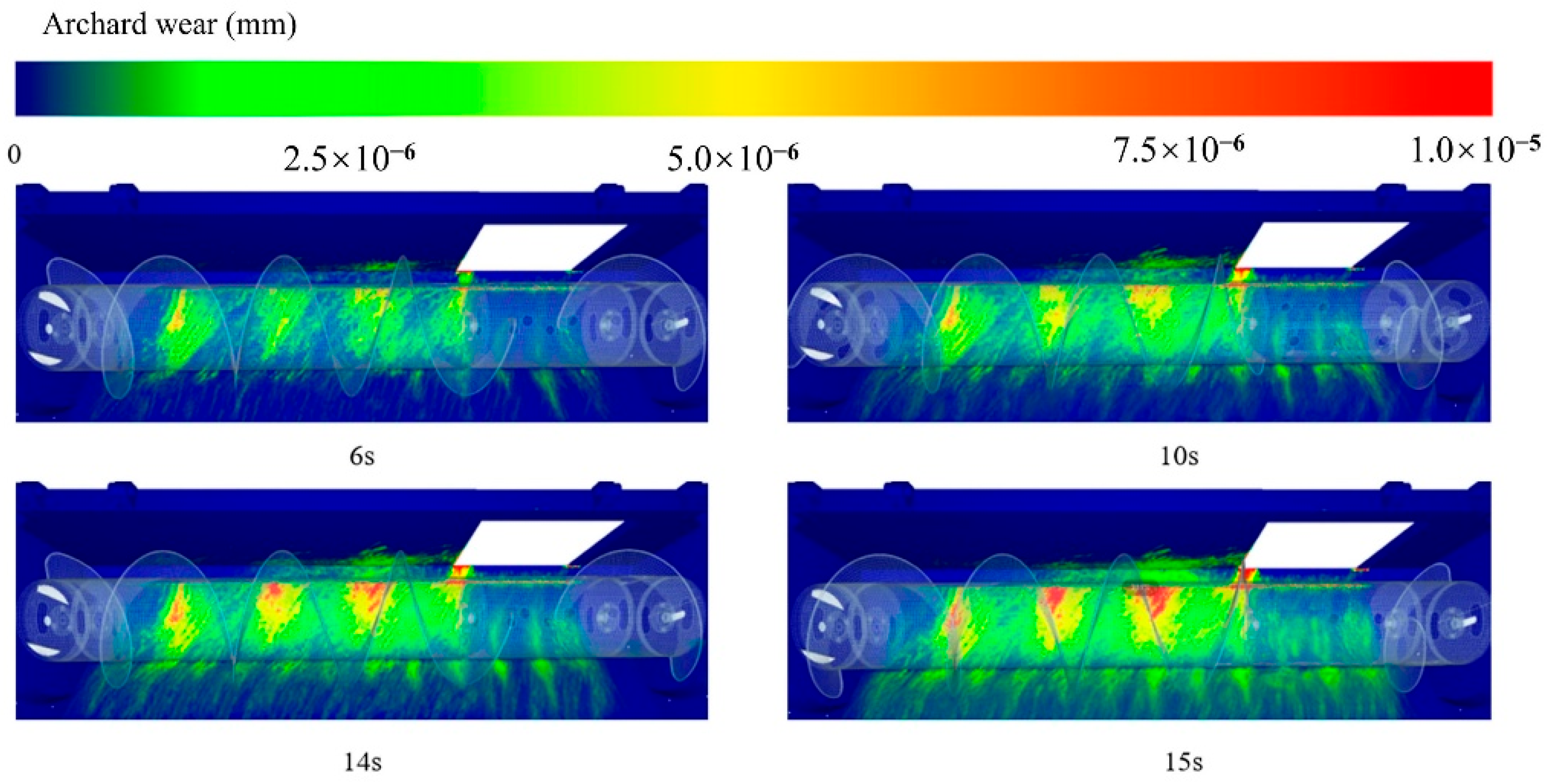
Under these mechanisms, the wear of components, such as the cutting knife, the nails of the threshing drum, and the cleaning screen, all result from the synergistic effect of abrasive contamination and speed/pressure. With the help of the DEM-Wear model, the abrasive wear process under different parameter combinations can be quantitatively simulated [108,109,110,111]. Zhang et al. further coupled the DEM with the wear model to construct a model that can accurately simulate the interaction process between rice (rice stalks, rice grains) and Q235 steel components, and accurately predict the macroscopic wear “hotspots” of the combine harvester header platform. The prediction results have extremely high geometric similarity to the wear profile of the actual service equipment. The model provides a reliable computational tool for the quantitative analysis of soft abrasive wear in agricultural machinery and the prediction of component life [6].
Abrasive wear is widespread and highly harmful in the key operating systems of combine harvesters. In the cutting system, the cutting knife comes into contact with crop stems containing silica particles. The hardness of silica particles is much higher than that of the cutting knife material, causing severe abrasive wear, which manifests as the blade becoming blunt, with furrow-like wear marks on the surface [112]. The teeth of the drum in the threshing system come into contact with crop grains and stem debris. Abrasive wear can cause the teeth to become blunt, resulting in a decrease in threshing efficiency and an increase in the rate of incomplete threshing [92]. The screens in the cleaning system suffer from abrasive wear due to friction with grains and impurities. Once the screen holes are deformed, the cleaning effect decreases, and the impurity content of the grains increases [113]. In addition, the header platform is also subject to abrasive wear from rice straw, and the movement trajectory of the crop is the determining factor for its wear distribution [6,72]. The wear evolution process of the header platform is shown in Figure 12.

5.2. Fatigue Wear

Fatigue wear is a form of surface failure in metal components under periodic alternating loads. Its initiation and propagation are jointly controlled by contact velocity and contact pressure—the two determine the amplitude and frequency of alternating loads and are the core driving factors for the generation and propagation of fatigue cracks. When a combine harvester is in operation, its core components are constantly subjected to alternating stress caused by crop impact, equipment vibration and load fluctuations. After long-term cycling, fatigue damage occurs in the stress concentration areas of the components [76,87,114].
  • The regulating effect of contact speed: The higher the movement speed of the component, the higher the frequency of collision/friction with the medium, and the number of cycles of alternating load increases exponentially. The higher the movement speed of the conveyor chain and the rotational speed of the threshing drum, the more frequent the periodic impacts on the chain links and nail teeth, and the faster the initiation rate of fatigue cracks [115].
  • The regulatory effect of contact pressure: The greater the amplitude of contact pressure (especially cyclic pressure), the more significant the stress concentration on the surface of the component. If the contact pressure fluctuation is caused by equipment vibration, fatigue cracks rapidly initiate in the stress concentration areas of the threshing drum and the cleaning screen box, and the larger the pressure amplitude, the higher the crack propagation rate [116].
The fatigue strength, hardness and alloy composition of materials directly determine their fatigue resistance [87]. The hidden dangers of stress concentration in structural design can significantly aggravate fatigue wear and lead to early failure [117]. The vibration equilibrium state of components also indirectly affects the degree of fatigue. Unbalanced vibrations of components, such as threshing rollers and cleaning screens, amplify the effect of alternating loads and accelerate fatigue damage [18].
Fatigue wear is widely present in the key components of multiple core systems of combine harvesters. For instance, during the high-speed rotation of the threshing drum in the threshing system, it is subjected to the high-frequency periodic impact of crops. Coupled with the unbalanced vibration caused by wear and deformation, the periodic impact intensifies the fatigue damage of the drum body and the nails. The automatic vibration balancing system can reduce the vibration amplitude and effectively alleviate fatigue wear. The screen box of the cleaning system suffers fatigue damage due to the superimposed effect of vibration load and material impact [19]. In addition, the shaft components and key connections of the power transmission system are also prone to fatigue wear due to the periodic torque fluctuations they bear, which significantly affects the reliability of equipment operation [117,118].

5.3. Chemical–Mechanical Synergistic Corrosion and Wear

Chemical–mechanical synergistic corrosion and wear is a coupled failure form of chemical corrosion and mechanical wear. Its core effect is mainly controlled by the medium, and the contact pressure further accelerates the coupling effect. The “corrosion–wear–re-corrosion” vicious cycle formed by the two is the main wear form in humid/multi-chemical medium working conditions [119,120].
  • The main controlling role of medium composition: The composition of the liquid/solid phase medium in contact with the component surface (high humidity environment, grain organic acid/Cl/SO42−, and field chemical residues) is the core inductor of chemical corrosion—the high humidity medium forms an electrochemical corrosion environment, and the organic acid/salt reacts with the metal surface to form a loose corrosion layer, providing new abrasive grains for subsequent mechanical wear. It is the “starting point” of the coupling effect [121].
  • Accelerating effect of contact pressure: The greater the contact pressure, the more severe the damage to the corrosion layer caused by mechanical wear, which rapidly peels off the corrosion layer and exposes the fresh metal surface, further accelerating chemical corrosion. The higher the contact pressure that conveyor chains and cutters are subjected to in high-humidity media, the faster the corrosion layer peels off, the more intense the corrosion reaction on fresh surfaces becomes, and the more significant the coupling wear effect is [122,123].
This mechanism mainly exists in components such as the header, conveyor chain, and cleaning screen in paddy field operations. The composition of the medium determines the type and intensity of corrosion, and the contact pressure determines the degree of damage caused by mechanical wear to corrosion. The material loss resulting from the superposition of the two is much greater than that caused by either corrosion or wear in isolation. In the core operating system of combine harvesters, the manifestation of chemical–mechanical synergistic corrosion wear shows significant component specificity:
  • In the cutting system, when harvesting high-water-content crops such as rice and wheat, the cutting knives not only suffer from mechanical cutting wear of the crop stems but are also subject to chemical corrosion from organic acids in the stems and the humid environment in the field. Corrosion causes tiny corrosion pits to form on the surface of the cutting knife. Under the mechanical load of subsequent cutting, the material around the pits is prone to peeling off, accelerating the blunting of the cutting edge.
  • The screen, fan blades and other components of the cleaning system are constantly in a mixed environment of grains, debris and moist air, making them high-risk areas for synergistic corrosion and wear. The surface of the sieve is prone to electrochemical corrosion in a humid environment, forming corrosion products such as rust. These products, along with grains and impurities, exert a grinding effect on the sieve surface during vibration, accelerating the deformation of the sieve holes. Meanwhile, the mechanical load generated by vibration damages the protective film against corrosion products on the screen’s surface, causing the corrosion to continue to deepen [100].
  • The conveyor chain, scraper and other components of the conveying system are in continuous contact with the stems of crops, which have a high moisture content. The moisture and organic acids in the stems cause corrosion to the surface of the components. Meanwhile, the tensile, bending loads and relative sliding during the conveying process damage the corrosion film, accelerate material loss and significantly shorten the service life of the components [87,98].
  • When the threshing drum, concave plate and other components of the threshing system handle crops with high moisture content, the frictional heat generated by the high-speed rotation of the drum accelerates surface corrosion. Meanwhile, the high-frequency collision between the crop grains and stems damages the corrosion product layer, resulting in mutual promotion between corrosion and wear. For threshing drums made from hot-forged sintered powder billets, the corrosive effect intensifies the expansion of internal pores in the billets. Under mechanical shock loads, cracks are prone to form around the pores, accelerating component failure. By vibration treatment before hot-forging and applying a lubricating coating, not only can the wear resistance be enhanced, but also the corrosion resistance can be strengthened, reducing the rate of synergistic corrosion wear [98,124].
For example, Wang et al. noted that surface coatings (such as ceramic carbides/nitrides, high-entropy alloy coatings) can significantly enhance the anti-synergistic corrosion and wear resistance of steel base components through mechanisms such as forming protective oxide films and increasing surface hardness, providing an effective path for the anti-corrosion and wear-resistant modification of agricultural machinery parts [121]. The research of Yan et al. shows that the iron-based amorphous/high-entropy alloy composite coating prepared by laser cladding can significantly suppress microcouple corrosion and corrosion pit initiation by optimizing the two-phase structure, which also exhibited excellent resistance to synergistic corrosion wear in 3.5 wt.% NaCl solution. This study provides a reference for the design of anti-corrosion and wear-resistant coatings for agricultural machinery parts [125]. The research of Zhou et al. confirmed that, in the material loss of Fe-based amorphous coatings, the synergistic effect of wear and corrosion is significant, and wear is the main contributing factor. The excellent corrosion resistance of the coating can alleviate the synergistic damage to a certain extent, providing theoretical support for the selection of materials used in manufacturing agricultural machinery components [126].

5.4. Coupling Relationship of the Three Major Wear Mechanisms

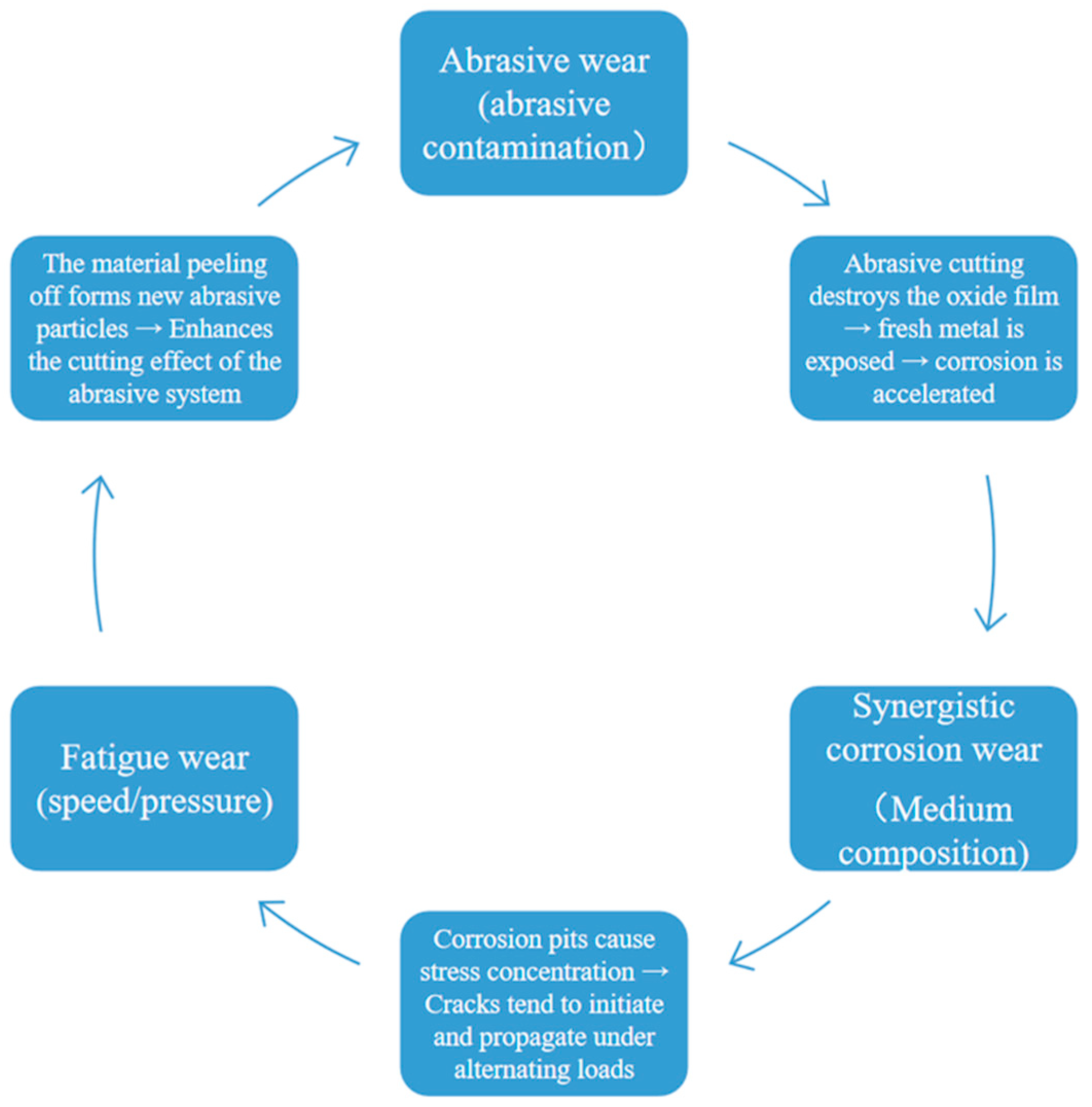
The three major wear mechanisms on the metal surface of combine harvesters do not exist independently but are coupled and mutually reinforcing through the superimposed effects of parameters such as medium composition, speed, pressure, and abrasive contamination. The essence of their coupling relationship is the cross-mechanism effect of the parameters (as shown in Figure 13).
The specific coupling path is as follows:
Abrasive contamination (abrasive wear) → medium composition (synergistic corrosion wear): The cutting/grinding effect of abrasive wear destroys the oxide protective film on the metal surface, exposing fresh metal directly to the corrosive environment corresponding to the medium composition, significantly accelerating chemical corrosion and intensifying synergistic corrosion wear.
Medium composition (synergic corrosion wear) → speed/pressure (fatigue wear): Local corrosion caused by the medium composition forms corrosion pits on the metal surface, which become stress concentration points. Under the alternating load corresponding to speed/pressure, fatigue cracks preferentially initiate and expand around the corrosion pits, accelerating fatigue wear.
Speed/Pressure (fatigue wear) → Abrasive contamination (abrasive grain wear): The material spalling caused by fatigue wear forms new abrasive grains, which are added to the “double abrasive system” contaminated by abrasive grains, further enhancing the cutting effect of abrasive wear.
This mechanism coupling caused by parameter superposition leads to material loss in metal components far exceeding that of a single mechanism superposition, and it is also the central point of complexity of the wear problem in combine harvesters.

6. Hazards of Metal Surface Wear on Combine Harvesters

The wear of metal parts of combine harvesters can cause a series of hazards, not only affecting the operational performance and service life of combine harvesters, but also increasing food loss, maintenance costs and environmental burdens [127].

6.1. Reduce Work Efficiency

Wear and tear lead to a decline in the performance of combine harvester components, thereby reducing operational efficiency. When the cutting knife wears out and becomes blunt, the cutting resistance increases, the cutting efficiency decreases, and even missed cutting may occur. After the nails of the threshing drum wear out, the threshing capacity decreases, and the incomplete threshing rate increases. After the screen of the cleaning system wears out, the screen holes deform, the cleaning efficiency decreases, and the impurity rate of the grains increases [128].

6.2. Increase Grain Loss

The decline in component performance caused by wear and tear can lead to serious food loss. After the threshing drum and the concave plate are worn, the rate of grain breakage increases. After the cleaning system wears out, the grain loss rate increases. In addition, the operation interruption caused by wear and tear prolongs the time that crops stay in the field, making them prone to mold and further increasing food loss [129,130].

6.3. Increase Maintenance Costs

Wear and tear is the main cause of component failure in combine harvesters, leading to a significant increase in maintenance costs. Vulnerable parts, such as cutting knives, roller nail teeth, and sieves, need to be replaced frequently. In addition, the maintenance of faults caused by wear and tear also leads to extended downtime, affects the operation progress and causes indirect economic losses.

6.4. Intensify the Environmental Burden

The process of component replacement and repair caused by wear consumes a large amount of materials and energy, increasing the environmental burden. The production process of components requires the consumption of resources such as steel and non-ferrous metals, and at the same time generates a large amount of energy consumption and pollutant emissions. If the waste parts, waste lubricating oil and other waste generated during the maintenance process are not properly handled, they cause pollution to the environment.

6.5. Threat to the Safety of Operators

Component failure and equipment malfunction caused by wear and tear are important catalysts to accidents surrounding agricultural machinery operation, directly threatening the lives of operators [131]. On the one hand, severely worn components may suddenly break or fall off during operation, generating high-speed flying fragments that can cause mechanical injuries to operators. On the other hand, wear intensifies equipment vibration, which not only affects operational stability but may also risk equipment overturning [132,133]. In addition, the repair process of worn parts also poses safety hazards [134].

6.6. Affect the Stability of Agricultural Production

Equipment failure and operation interruption caused by the wear of metal parts in combine harvesters can disrupt the continuity of agricultural production and further affect production stability, especially during the critical window period of crop harvest, where the losses are more significant [75,135]. Crop harvesting has strict time limits. For instance, if crops like wheat and rice are not harvested in time after they mature, problems such as lodging and grain drop may occur, leading to a decrease in yield and quality. The malfunction of combine harvesters caused by wear and tear can lead to operation interruption and delay the harvesting progress [136].
In order to more easily compare and to summarize the various hazards caused by the wear of the metal surfaces in combine harvesters, the specific manifestations and ultimate impacts are outlined in Table 3.

7. Protection Strategies for Metal Surface Wear of Combine Harvesters

To alleviate the wear problem on the metal surface of combine harvesters, scholars at home and abroad have conducted extensive research and developed four major protection strategies: application of wear-resistant materials, surface engineering technology, optimization of structure and parameters, and maintenance and remanufacturing. All these strategies have achieved remarkable protection effects in different application scenarios and can effectively extend the service life of metal parts of combine harvesters. Reduce the probability of equipment failure during the grain harvesting process.

7.1. Application of Wear-Resistant Materials

By regulating chemical composition and designing microstructures, wear-resistant materials optimize hardness, strength, fracture toughness and corrosion resistance in a coordinated way, fundamentally enhancing the combine harvester metal parts’ resistance to grain-induced abrasive, fatigue and chemical–mechanical synergistic corrosion wear. It is suitable for the operation characteristics where the vulnerable parts of the four major systems of cutting, conveying, threshing, and cleaning are in continuous contact with grain stems, grains and corrosive media in the field [15,137]. The core principle of the application of wear-resistant materials is the coordinated matching of hardness (strength) and fracture toughness—a single increase in hardness leads to an increase in the brittleness of the material, making it prone to brittle fracture and spalling under impact loads and cyclic loads. Good fracture toughness can ensure the structural integrity of high-hardness materials when subjected to grain impact and abrasive cutting. Therefore, the improvement of wear resistance is essentially the balanced optimization of multiple properties rather than the strengthening of a single indicator. This section focuses on elaborating the wear resistance and corrosion resistance mechanisms of composite materials, the adaptability of components to working conditions, and the regulation rules surrounding preparation processes. At the same time, it clarifies the performance logic of alloy wear-resistant materials and the principle of component compatibility [138,139,140].

7.1.1. The Core Wear Resistance and Corrosion Resistance Mechanisms of Composite Materials

Composite materials break through the performance limitations of a single matrix material by constructing a multi-scale synergistic structure of hard reinforcing phase–tough matrix–functional interface phase, achieving a comprehensive improvement in wear resistance, fatigue resistance and corrosion resistance [141]. The core mechanism of action shows differentiated characteristics with the type of reinforcing phase. All are centered on “isolating the source of wear and corrosion, alleviating mechanical damage, and blocking the expansion of failure”, and are adapted to the compound failure conditions of combine harvesters. The specific mechanisms are as follows:
Particle-reinforced composites: With hard particles such as ceramic carbides as the reinforcing phase and steel, aluminum alloys, etc., as the matrix, performance improvement is achieved by relying on three core mechanisms: load transfer, abrasive particle barrier, and interface passivation. The hard reinforcing phase, as the mechanical load-bearing main body, directly undertakes the impact load of grain grains/stems and the abrasive cutting action, transferring the stress from the soft matrix to the hard phase and avoiding direct contact of the matrix with the wear source to prevent material loss. High-hardness carbide particles can break down sharp abrasive grains such as crop phytoliths and soil quartz, depriving them of their continuous cutting ability. At the same time, they can prevent the direct interaction between the abrasive grains and the substrate surface, reducing the formation of furrow-like wear marks. The dense functional interface phase can effectively seal the micro-pores between the matrix and the reinforcing phase, prevent the penetration of corrosive media such as field moisture, organic acids of grains, and soil salts, alleviate the “corrosion–wear” coupling effect, and avoid the problem of secondary abrasive particles formed by the shedding of corrosion products from the source [142,143,144].
Fiber-reinforced composite materials: With carbon fibers, glass fibers, etc. as reinforcing phases and resins, metals, etc. as matrices, they enhance protective effects through three core mechanisms: fiber bridging and crack resistance, low friction and wear reduction, and hydrophobic corrosion resistance. Fibers form a 3D network to inhibit microcrack initiation and propagation. Their bridging effect increases crack propagation energy consumption, enhancing fatigue wear resistance—ideal for components under alternating loads [145]. The low surface energy characteristic of fibers can reduce the friction coefficient between components and grains/straw, decrease the probability of adhesive wear, and simultaneously lower the adhesion degree between crop debris and the component surface [146]. The hydrophobic interface layer can effectively prevent the adhesion and penetration of field moisture and stem SAP, fundamentally alleviating the chemical-mechanical synergistic corrosion and wear. At the same time, it reduces the abrasive wear caused by the accumulation of impurities, taking into account both anti-wear and anti-corrosion requirements.

7.1.2. The Working Condition Compatibility of Composite Materials with Core Components

The wear resistance and corrosion resistance potential of composite materials need to be precisely adapted in combination with the operating conditions, dominant wear types and contact medium characteristics of different components of the combine harvester [146,147,148,149,150,151,152]. Given the service characteristics of the vulnerable components of the four core systems, it is necessary to specifically match particle-reinforced or fiber-reinforced composite materials to ensure that the material structure and performance conform to the failure laws of the components. The detailed matching relationship is summarized in Table 4 below.

7.1.3. Regulation of the Preparation Process of Composite Materials

The wear resistance and corrosion resistance of composite materials not only depend on the compatibility design of the reinforcing phase and the matrix, but are also closely related to the preparation method and molding process of the hard phase. Among them, the in situ generation and non-in situ addition of the hard phase directly affect the interface bonding state between the reinforcing phase and the matrix. Plasma transfer arc (PTA) cladding is a core process that takes into account both the preparation of composite materials and the remanufacturing of combine harvester components. It can precisely match the material performance with the component working conditions through the regulation of process parameters, fully exerting the protective potential of composite materials.
The performance regulation rules of the hard phase preparation method
In situ generation: Through chemical reactions, hard phases, such as carbides, are directly nucleated and grown within the matrix, achieving metallurgical grade bonding between the reinforcing phase and the matrix. The interfacial compatibility is excellent, with no interfacial gaps or microcracks. This effectively prevents abrasive cutting and the invasion of corrosive media from the interface, significantly enhancing the overall wear resistance and corrosion resistance of the composite material. This preparation method is applicable to components such as the nails and cutters of the threshing drum that are subject to strong impact and heavy cutting. It can enable the composite material to maintain structural integrity under complex loads and fully exert the protective potential of multi-phase synergy [153].
Non-in situ addition: Prefabricated carbide hard particles are directly added to the matrix to achieve reinforcement, making it easier to flexibly control the type, content and particle size of the hard phase. The volume fraction of the hard phase can be adjusted according to the wear degree of the components and the characteristics of the medium, which is suitable for components with relatively mild wear, such as conveyor chain scrapers and cleaning screen frames. This preparation method features a simple process and lower engineering application costs. By precisely controlling the content of the hard phase, the hardness and toughness of the material can reach a balanced state suitable for the working conditions, fully exerting its anti-wear potential.
Process control and engineering application of Plasma transfer arc (PTA) cladding
Plasma transfer arc (PTA) cladding is a key process for the preparation and remanufacturing of composite materials in the protection of combine harvester components. Its core advantage lies in the flexible control of the dilution rate of the cladding layer and the substrate by precisely regulating process parameters such as welding current, powder feeding speed, and cladding speed. Furthermore, the volume fraction, distribution state and performance gradient of the second hard phase, such as carbides, are adjusted to precisely match the hardness and toughness of the composite material layer with the wear type of the component surface. Meanwhile, this process also has excellent remanufacturing value. The specific control and application logic is as follows:
Performance gradient regulation: By reducing the dilution rate between the cladding layer and the substrate, the volume fraction of the hard phase in the cladding layer can be increased, significantly enhancing the surface hardness and anti-abrasive cutting ability, which is suitable for strongly worn parts such as the nail teeth of the threshing drum and the cutting edge of the cutting knife. By appropriately increasing the dilution rate, the bonding strength between the cladding layer and the substrate can be enhanced, the overall toughness of the composite material layer can be improved, and it can be adapted to components such as conveyor chains and cleaning screens that are subject to alternating loads, preventing the cladding layer from peeling off under cyclic loads and ensuring the continuous performance of the material [154,155].
Remanufacturing engineering application: The PTA cladding process can directly perform surface cladding repair on the worn and vulnerable parts of combine harvesters. While precisely restoring the dimensional accuracy of the parts, it enhances the surface performance through the cladding composite material layer, making the wear resistance and corrosion resistance of the repaired parts superior to those of the original parts. This process can be applied to the remanufacturing of worn components such as nail teeth, scrapers, cutters, and cleaning screen surfaces, significantly reducing the cost of component replacement, minimizing resource consumption, and meeting the demands of green development in agricultural equipment. At the same time, it realizes the protective value of composite materials throughout the entire life cycle of components [143].
Process complementarity: PTA cladding forms a highly efficient complementarity with processes such as compression molding and layering molding. The former is suitable for the preparation and remanufacturing of composite materials for irregular-shaped and highly worn parts such as threshing drum nails and cutters, and can achieve uniform cladding on complex curved surfaces. The latter is suitable for the preparation of fiber-reinforced composite materials for large-area and flat components, such as the cleaning screen surface and the inner surface of the conveying trough, which can ensure the uniformity of surface performance. The combination of the two can achieve composite material protection coverage for the entire series of vulnerable parts of combine harvesters [156,157].

7.1.4. The Performance of Alloy Wear-Resistant Materials Is Compatible with the Components

Alloy wear-resistant materials, through the solid solution strengthening and dispersion strengthening effects of alloying elements such as chromium, molybdenum, nickel and manganese, regulate the microstructure of the material to achieve the coordinated optimization of hardness, strength, fracture toughness and corrosion resistance. The core performance logic is the precise matching of mechanical properties and corrosion resistance based on the working conditions of the component. That is, based on the load characteristics, wear types and corrosive environments of different components, select the appropriate alloy system to fully exert the inherent properties of the alloy material on the component surface. The specific adaptation principles and performance exertion are as follows:
Components subjected to high-frequency impact loads: Threshing rollers, concave plates and other components are constantly exposed to the high-frequency impact of grains and stems. The dominant failure modes are impact-abrasive wear and fatigue wear. Alloy materials, such as high-manganese steel, which have both work hardening ability and high fracture toughness, are suitable. This type of alloy can rapidly undergo work hardening on its surface under impact, significantly enhancing surface hardness and resistance to abrasive wear. Meanwhile, its high fracture toughness can prevent the brittle fracture of components under impact loads. The corrosion-resistant elements in the alloy can alleviate mild rust caused by field moisture, reduce the coupling effect of corrosion and wear, and enable the performance of work hardening and toughness protection to work in synergy [158,159].
Components subjected to continuous cutting and cyclic loads: Cutting knives, conveyor chains and other components are constantly in contact with the stems for cutting and friction, and are subject to cyclic loads. The main failure modes are abrasive wear, fatigue wear and slight corrosion. It is suitable for alloy materials with high hardness and high fatigue strength, such as chromium-molybdenum steel. The solid solution strengthening effect of alloying elements such as chromium and molybdenum can significantly enhance the surface hardness of materials and resist abrasive cutting from stems and soil particles. The dispersed carbide phase can impede dislocation movement and enhance the material’s resistance to fatigue wear. Meanwhile, chromium can form a dense oxide film on the material surface, blocking the corrosion of organic acids in grains and soil salts, and enabling the anti-wear, anti-fatigue and anti-corrosion properties to work in synergy [144,160,161].
Components subjected to high-temperature, high-humidity and complex environments: The high-temperature transmission components of combine harvesters are constantly in high-speed operation, generating heat through friction and causing the surface temperature to rise. At the same time, they come into contact with the high-humidity environment in the field and grain debris. The main failure modes are high-temperature abrasive wear and oxidation corrosion. Nickel-based alloys and other alloy materials with high temperature resistance, high wear resistance and high corrosion resistance are suitable. The solid solution strengthening effect of nickel can enhance the high-temperature fracture toughness of materials and prevent thermal embrittlement. Hard carbide phases, formed by elements such as chromium and molybdenum, can enhance surface hardness at high temperatures and resist abrasive wear. At the same time, a stable high-temperature passivation film can be formed on the alloy surface, which can prevent the combined corrosion of high-temperature moisture and grain debris, allowing the material’s high-temperature resistance, wear resistance and corrosion resistance to be fully exerted in complex environments [162,163].

7.2. Surface Engineering Technology

Surface engineering technology, by depositing a wear-resistant coating on the surface of metal parts of combine harvesters or altering the chemical composition and microstructure of the surface, can not only significantly enhance the wear resistance of the parts but also improve their anti-rust ability. It effectively isolates the sources of wear and rust, such as grains, straw, sand, and moisture from the metal substrate, making it an important means of wear and rust protection for combine harvesters. The working environment of combine harvesters is complex. The core metal components are constantly in friction with grains and straw for a long time, and at the same time, they are continuously in contact with field sand and moisture, which can easily cause abrasive wear, adhesive wear and chemical–mechanical synergistic corrosion wear. However, surface engineering technology can specifically match the working conditions and protection requirements of different components. To address this composite failure issue from the surface interface level, the commonly used surface engineering techniques mainly fall into two categories: surface coating technology and surface modification technology. Both optimize the protective effect around the core pain points of wear and rust in the grain harvesting scenario. Moreover, its protective performance can be systematically evaluated through means such as friction coefficient tests, coating adhesion scratch tests, impact performance tests, and composition and microstructure analysis, providing a scientific basis for the engineering application of the technology [164].

7.2.1. Surface Coating Technology

Surface coating technology addresses multiple facets of the issue at hand. The core causes of uneven surface wear of combine harvester components—local hard point cutting, fatigue spalling at stress concentration points, and local penetration of corrosive media—are addressed. At the same time, the problem of traditional spray coatings having a porosity of several percent, which easily leads to the penetration of corrosive media into the substrate and internal damage to the coating, is resolved. Surface coating technology achieves the regulation of the uniformity of the worn surface through three major approaches: uniform composition design, interface bonding strengthening, and microstructure densification. Firstly, it eliminates the surface hardness gradient through the uniform distribution of coating components, keeping the material loss rate of the component surface consistent when subjected to abrasive cutting and impact loads, and avoiding the priority wear of local hard and brittle areas or soft areas. Second, it enhances the bonding strength between the coating and the substrate, inhibits local peeling of the coating, and prevents the peeling area from experiencing rapid wear and surface flatness damage due to a lack of protection. Thirdly, through densification structure design and targeted modification to seal the pores of the coating, the local penetration of corrosive media that form corrosion pits is prevented, and the periphery of the corrosion pits becomes the starting point of wear, which may cause uneven surface wear [165].
  • Thermal spraying coatings (plasma/arc spraying)
Plasma spraying and arc spraying technologies are suitable for large-area vulnerable parts such as combine harvester cutters, threshing drum nails, and conveyor chain scrapers. By optimizing the spraying path and controlling the droplet deposition rate, the thickness deviation of the coating is guaranteed, laying a foundation for uniform surface wear from a structural perspective. To address the porosity issue of this type of coating, sealing modification can be used to achieve coating densification, preventing pitting corrosion and coating bulging and peeling caused by local penetration of corrosive media. At the same time, the uniform distribution of the hard phase in the coating can be regulated to keep the anti-abrasive cutting ability of each area on the component surface consistent, suppress local furrow wear and material peeling, and ensure surface uniformity under abrasive wear conditions [166,167].
2.
Magnetron sputtering coating
Magnetron sputtering technology is suitable for high-precision transmission components such as the cleaning screen shaft and roller bearings of combine harvesters. These components have extremely high requirements for surface flatness and uniform wear. This technology can prepare thin film coatings with a density close to 100% and uniform thickness, without local pores or sudden thickness changes. It can effectively prevent local wear failure of high-precision components caused by micro-protrusions and micro-corrosion on the surface, ensuring surface uniformity under mild wear conditions. At the same time, coatings with low friction coefficients can reduce the probability of adhesive wear on the surface of components, decrease material loss caused by local adhesive tearing, and further maintain the uniformity of surface wear [168,169].
3.
Laser cladding coating
Laser cladding coating is the preferred technology to ensure surface uniformity under the combined wear condition of combine harvesters. It achieves metallurgical bonding between the coating and the substrate through a high-energy laser beam, resulting in a dense coating structure without pores. Meanwhile, by precisely controlling the laser path, uniform cladding can be achieved on irregular surfaces such as the tip of nail teeth and the cutting edge of the cutter. To address the issues of uneven preparation and accelerated local wear of traditional coatings for irregular-shaped components, this coating is designed for parts such as the teeth of threshing rollers and cutters that are subject to combined wear of impact, abrasive particles, and corrosion. By uniformly dispersing the hard phase, it enhances the overall wear resistance of the surface while suppressing the local initiation and expansion of fatigue cracks and preventing priority wear around the cracks. Laser cladding technology ensures the uniformity of surface wear throughout the entire life cycle of components. In the repair and strengthening of vulnerable parts of combine harvesters, its role in guaranteeing the uniformity of worn surfaces is particularly prominent. It can precisely clad and restore the flatness of the worn surface for components that have already suffered local wear, while keeping the performance of the repaired layer consistent with that of the original coating/substrate. This helps to avoid the difference in wear rates between the repaired area and the unrepaired area; achieve uniform wear on the surface after repair, significantly extending the service life of components; and reduce the probability of equipment failure caused by local wear [170].
The research and development of new coating technologies, such as nano-coatings, multi-layer coatings, and gradient coatings, all focus on enhancing the uniformity of worn surfaces. Through structural design, the performance uniformity and working condition adaptability of the coatings are further optimized: Nano-coatings reduce surface hardness fluctuations through fine-grained homogenization structures, making material loss during abrasive cutting more uniform [171]. The multi-layer coating alleviates the internal stress concentration of the coating through the collaborative design of “wear-resistant layer–buffer layer–bonding layer”, avoiding uneven wear caused by local coating peeling [172]. Gradient coating eliminates the local stress concentration caused by interface sudden changes through the continuous gradual change in composition and performance, prevents uneven surface wear caused by local failure, and meets the component protection requirements of combine harvesters under complex working conditions [173,174].

7.2.2. Surface Modification Technology

Surface modification technology, by altering the chemical composition and microstructure of the metal parts of combine harvesters, significantly enhances the wear resistance and rust resistance of the parts without changing the properties of the base material. It is suitable for the wear and rust problems faced by combine harvesters during grain harvesting, without the need to replace the base material of the parts. The cost is controllable, and the effect is remarkable. Common surface modification techniques include laser quenching, plasma nitriding, chemical heat treatment, etc. In recent years, new surface modification techniques such as ultrasonic surface modification, surface self-nanosizing, and laser surface texturing have seen an increase in study and application in the fields of wear resistance and anti-rust strengthening of metal parts in combine harvesters, thanks to their unique strengthening advantages. Research in this area further expands the application scope and protective effect of surface modification technology, and can specifically solve the wear and rust pain points of different components [164].
Laser quenching technology: By using the high energy density of a laser to rapidly heat and cool the surface of metal parts of the combine harvester, a martensitic structure is formed on the surface, significantly enhancing the surface hardness, wear resistance and rust resistance. It can effectively resist the friction and wear of grains and straw, as well as the rust caused by field moisture. It is suitable for components that are prone to wear and rust, such as cutting knives and threshing rollers. It can extend the service life of components in the grain harvesting scenario [175,176,177,178].
Plasma nitriding technology: By bombarding the surface of components with nitrogen ions in plasma, nitrogen atoms penetrate the surface to form a nitrided layer. This nitrided layer has high hardness, excellent wear resistance and rust resistance, and can effectively resist the abrasive wear of grains and sand as well as the long-term erosion of field moisture. It can be used to strengthen high-frequency-worn and easily rusted components, such as combine harvester cutters and threshing rollers. It can reduce the wear and rust damage of components during the grain harvesting process, ensuring the stability of the operation.
Chemical heat treatment technology: Through processes such as carburizing and nitriding, carbon or nitrogen atoms penetrate the surface of components, enhancing the hardness, wear resistance and rust resistance of the surface. This is suitable for the long-term contact of combine harvester components with grains, straw and moisture, effectively resisting abrasive wear and rust. It is applicable to the strengthening of various vulnerable components and can extend the service life of the components, reducing the probability of equipment failure during the grain harvesting process [179].
Ultrasonic surface modification technology: As a new type of surface strengthening method, it has shown a promising future in the wear resistance and anti-rust modification of metal parts due to its unique energy transfer mode. Ultrasonic surface rolling processing (USRP) causes plastic deformation on the metal surface through the synergistic effect of ultrasonic energy and high-frequency mechanical vibration, forming gradient nanostructure layers and residual compressive stress. This effectively hinders crack initiation and propagation, while significantly enhancing surface hardness, wear resistance, and rust resistance. It can effectively resist the wear of grains, sand, and rusting caused by field moisture. It is applicable to the strengthening of components such as the conveyor chain and scraper of combine harvesters [180].
Surface self-nanoscale technology: Through intense plastic deformation, a nanocrystalline layer is formed on the surface of the component. By taking advantage of the high hardness and high toughness of the nanocrystals, the wear resistance is enhanced, and the anti-rust ability is also strengthened, effectively resisting wear and rust in the environment of grain harvesting. This technology is applicable to the surface strengthening of lightweight aluminum alloy components of combine harvesters. It significantly enhances the surface wear resistance and rust resistance without reducing the toughness of the base material, meeting the development needs of equipment lightweighting and high efficiency. It can be used for strengthening components such as cleaning screens and conveying troughs [181].
Laser Surface Texturing (LST) technology: By preparing specific microscopic geometric patterns on the surface of components and combining them with coatings to form a synergistic protective system, the interfacial bonding strength and comprehensive wear resistance can be enhanced, further improving the wear resistance and anti-rust performance. The microscopic patterns can reduce the contact area between grains, sand and silt and the surface of the components, while facilitating the removal of debris, isolating moisture, and reducing abrasive wear and rust. This technology features high processing accuracy, strong controllability, and environmental friendliness. Through the oil storage, chip collection, and drag reduction effects of the texture, it can significantly reduce the friction coefficient and wear rate, while enhancing the anti-rust ability. It is suitable for strengthening core vulnerable components, such as the cutting blades and threshing rollers of combine harvesters [164,182,183].
High-entropy alloy coating surface modification technology: With the excellent mechanical properties, wear resistance and anti-rust performance brought by the high-entropy effect, this technology has become a new direction for strengthening the components of combine harvesters. By rationally designing the alloy system and process parameters, laser cladding high-entropy alloy coatings can form coatings with good metallurgical bonding to the surface of titanium alloys, stainless steels and other substrates [152]. The regulation law of its crystal plane structure can provide a theoretical reference for optimizing the impact-abrasive wear resistance of the coating, significantly improving surface hardness, wear resistance and rust resistance. It can effectively resist the wear and tear of grains and sand as well as the rust caused by moisture in the field, and is suitable for strengthening and repairing various vulnerable parts of combine harvesters [184].

7.3. Structure and Parameter Optimization

Optimizing the structure and operating parameters of combine harvesters’ vulnerable parts reduces contact pressure and friction area between grains, straw and the parts, thus mitigating abrasive and adhesive wear. Optimizing the structure and operating parameters of combine harvesters’ vulnerable parts reduces contact pressure and friction area between grains, straw and the parts, thus mitigating abrasive and adhesive wear. At the same time, optimizing the structure of the parts can reduce the accumulation of sand and moisture and alleviate the problem of rust. It is a low-cost and highly effective protective strategy. During the grain harvesting process of combine harvesters, the contact mode between components and grains and straw, as well as the operation parameters, directly affect the degree of wear and rust. Structural and parameter optimization can reduce the risks of wear and rust from the source. When combined with surface modification technology, it can further enhance the wear resistance and anti-rust protection effect of components, ensuring the stable operation of the equipment in the grain harvesting scenario [185,186,187,188,189,190].

7.3.1. Structural Optimization

Structural optimization reduces the contact pressure and friction area between grains, straw and components by improving the geometry, size and arrangement of the components of the combine harvester, thereby lowering the degree of wear. Meanwhile, the optimized structural design facilitates the removal of grain debris and sand from the surface of the components, reduces moisture accumulation, alleviates rust problems, and enhances the wear resistance and rust resistance of the components. In recent years, technologies such as computer-aided design (CAD) and finite element analysis (FEA) have been widely applied in the optimization of component structures. By analyzing the stress distribution, wear conditions and rust risks of components during the grain harvesting process through FEA, the structural design can be optimized in a targeted manner to avoid local excessive wear caused by stress concentration and reduce rust caused by the accumulation of sand and moisture, improving the wear resistance, rust resistance and service life of components [191,192].
In terms of optimizing the structure of the cutting knife, designs such as sawtooth-shaped cutting edges and arc-shaped knife bodies are adopted, which can reduce the resistance when cutting grains, improve cutting efficiency, and at the same time reduce the friction area between the cutting knife and grains and straw, thereby lowering the degree of wear. Optimizing the structure of the knife blade can prevent the accumulation of grain debris and sand, reduce the adhesion of moisture, and alleviate the problem of rust. To address the issues of abrasive wear and rust on cutting components, local gradient steel can be used to manufacture self-sharpening blades, achieving a hardness gradient distribution at different parts of the blade. This approach takes into account both the wear resistance of the cutting edge and the toughness of the blade body, ensuring that the cutting edge remains sharp at all times. At the same time, it enhances the anti-rust ability of the blade body, thereby improving the anti-wear and anti-rust performance and extending the service life of the cutter during the grain cutting process [193,194,195].
In terms of the structural optimization of the threshing drum, designs such as spiral nail tooth arrangement and elastic nail teeth are adopted, which can reduce the impact force between the nail teeth and the grains and straw during the threshing process, improve the threshing efficiency, and reduce impact wear. Meanwhile, the elastic nail teeth can reduce the collision wear with the grains, protecting the integrity of the grains. The spiral arrangement can facilitate the discharge of grain debris and sand, reduce accumulation and alleviate the rusting problem caused by moisture. In addition, by optimizing the structure of the threshing drum through dynamic balance design, the vibration amplitude can be significantly reduced, the fatigue wear caused by vibration can be alleviated, and at the same time, the increase in component clearance due to vibration can be decreased, preventing sand and moisture from entering the clearance and causing rust, thereby further extending the service life of the components [18,97].
In terms of optimizing the structure of the screen in the cleaning system, multi-layer screen mesh and adjustable screen holes are adopted, which can enhance the cleaning efficiency, reduce the friction and wear between the screen and grains and impurities. Meanwhile, multi-layer screen mesh can reduce the load on a single screen mesh, and the adjustable screen holes can be adjusted in size according to the type of crop and the size of the grains, reducing the friction between the screen and the grains and lowering the wear. The adjustable sieve holes can also facilitate the discharge of impurities and silt, reduce accumulation and alleviate rust. Meanwhile, a bionic non-smooth structure is adopted on the surface of the cleaning screen, which can reduce the adhesion of impurities and grain debris, lower adhesive wear and abrasive wear, and at the same time reduce moisture adhesion, alleviate rust, improve cleaning efficiency and component lifespan, and meet the cleaning requirements of different grains [100,196,197].

7.3.2. Parameter Optimization

Parameter optimization reduces the interaction between grains, straw and components by adjusting the operation parameters and component movement parameters of the combine harvester, thereby lowering the degree of wear. Meanwhile, reasonable parameter settings can prevent components from overloading, reduce surface oxidation caused by frictional heat generation, and alleviate rust problems. Combined with structural optimization and surface modification technologies, it forms a comprehensive wear-resistant and anti-rust protection system. Unreasonable operation parameters of combine harvesters can lead to increased friction between components and grains and straw. At the same time, it may cause debris accumulation and moisture retention, accelerating wear and rust. Parameter optimization can specifically solve this problem [198].
In terms of optimizing operation parameters, by reasonably adjusting parameters such as operation speed and feeding amount based on the type of grains (wheat, rice, corn, etc.) and growth status (maturity, humidity), the load on components can be reduced, the friction between grains, straw and components can be lowered, and wear and tear can be decreased. At the same time, a reasonable feeding amount can prevent the accumulation of grains and straw, reduce the retention of debris and the adhesion of moisture, alleviate the problem of rust, and ensure the normal operation of components [199].
In terms of optimizing the movement parameters of components, reasonably adjusting parameters such as cutting speed, roller speed, and fan speed can enhance operational efficiency, reduce the friction time and impact force between grains, straw, and components, and lower wear. At the same time, optimizing the drum speed can prevent the accumulation of debris caused by excessive squeezing of grains, and optimizing the fan speed can promptly remove impurities and moisture, reducing the residue of debris and the adhesion of moisture on the surface of components, and alleviating the problem of rust [200].
The core of parameter optimization lies in establishing a multi-parameter collaborative optimization model based on the characteristics of crops and the wear and rust patterns of components, achieving a balance between operational efficiency and wear resistance and rust resistance. This process can be combined with numerical simulation technology to enhance optimization accuracy, precisely adapt to different grain harvesting scenarios, provide scientific guidance for actual operations, and reduce the risks of wear and rust from the source.

7.4. Maintenance and Remanufacturing

Strengthening the daily maintenance of combine harvesters and the remanufacturing of used parts can promptly detect and handle the wear and rust problems of components, prevent the aggravation of wear and rust, extend the service life of components, reduce the harm of wear and rust, and at the same time, lower the operation and maintenance costs of equipment, which is in line with the large-scale and efficient development needs of the grain harvesting industry. Combine harvesters operate in fields for long periods of time, coming into contact with grains, straw, sand and moisture, which makes them prone to wear and rust. Regular maintenance can promptly identify potential hazards, and remanufacturing can achieve the recycling of used parts. The combination of the two forms a full life-cycle protection system for components.

7.4.1. Daily Maintenance

Daily maintenance, as the fundamental part of the maintenance strategy, encompasses core tasks such as regular inspection, cleaning, and lubrication. It can promptly identify potential wear and rust hazards of combine harvester components, slow down the process of wear and rust, significantly extend the service life of components, and ensure the continuous and stable operation of grain harvesting. It is the most cost-effective and easy-to-implement protective measure.
Cleaning is a key measure to reduce abrasive wear and rust. The working environment of combine harvesters contains a lot of dust, straw debris and sand. Once these impurities adhere to the surface of the components, they generate strong cutting and grinding effects during movement, accelerating the wear of the components. At the same time, the accumulation of impurities absorbs moisture, causing the components to rust, especially damaging the dense structure on the surface of coated components, leading to coating failure and aggravating wear and rust. After the daily operation is completed, a thorough cleaning of key components such as the threshing drum, cleaning screen, and conveying trough should be carried out to remove residual crop residues, sand, and dust on the surface. This can reduce the abrasive wear rate of the components, decrease moisture adsorption, alleviate rust, and especially protect the dense structure on the surface of coated components, preventing impurities from embedding into the pores and causing coating failure, thereby extending the service life of the components.
Regular lubrication can significantly reduce the coefficient of friction, decrease adhesive wear and fatigue wear by forming an oil film on the surface of the moving pair. At the same time, the oil film can isolate moisture and impurities, alleviate rust problems, and meet the protection requirements of the moving parts of the combine harvester. Based on the operating load and motion characteristics of the components, differentiated lubrication schemes should be formulated. For components that frequently come into contact with grains and sand (such as conveyor chains and roller bearings), wear-resistant and anti-rust lubricating greases should be selected. Regular replenishment and replacement can effectively extend the service life of the components [201].
In addition, the automatic adjustment system and the improvement of operator skills are also important directions for operation and maintenance optimization. The automatic adjustment system of modern combine harvesters can optimize the parameter settings of threshing, cleaning and other links in real time, always ensuring the optimal operating state, reducing excessive wear and impurity accumulation caused by parameter mismatch, and at the same time reducing moisture retention and alleviating rust [202]. The operational skills of operators directly affect the productivity of equipment as well as the degree of wear and rust. Qualified assessors can accurately predict the long-term operational efficiency of operators through short-term behavioral observations, providing a basis for operator training and performance incentives. By standardizing operations (such as reasonably controlling operation speed and promptly cleaning impurities), unnecessary wear and rust of components can be reduced, ensuring the normal operation of the equipment [203].

7.4.2. Application of Remanufacturing Technology

Remanufacturing technology, by repairing and modifying the worn and rusted parts of combine harvesters, restores or even enhances the wear resistance and anti-rust performance of the parts. It is a green wear and rust protection method that is both economical and environmentally friendly, complementing the maintenance strategies and surface strengthening technologies mentioned earlier. They jointly form a wear-resistant and anti-rust guarantee system for the entire life cycle of the metal parts of the combine harvester. Commonly used remanufacturing techniques include surfacing, thermal spraying, laser cladding, etc. These techniques can specifically repair different types of worn and rusted parts, restore the size and performance of the parts, extend the service life of the parts while reducing resource consumption, and are in line with the green development trend of the grain harvesting industry [204].
Surfacing technology achieves the dual goals of dimensional restoration and performance enhancement by surfacing wear-resistant and anti-rust alloys on the surface of used, worn and rusted parts. It can effectively repair the wear marks and rusted areas of the parts. The surfacing layer has a high bonding strength with the base material, and the load-bearing capacity of the repaired parts is close to that of the original parts. Moreover, the process cost is relatively low. It is applicable to the repair of structural components with large wear and severe rust, such as threshing rollers, frames and other parts, which can realize the recycling of waste parts and reduce equipment maintenance costs [205,206].
Plasma transfer arc (PTA) cladding technology combines high precision and high adaptability. With the advantages of high energy density, low heat-affected zone and small deformation, it can be used as a complementary technology to surfacing and laser cladding for the remanufacturing of combine harvester components. This process achieves component size restoration and performance enhancement by regulating the dilution rate. The cladding wear-resistant coating can significantly improve the wear resistance of vulnerable components. Its efficiency is higher than that of laser cladding, and its bonding strength is superior to that of traditional surfacing welding. It can precisely repair the “hot spots” of wear on complex components, reduce costs, and is suitable for batch remanufacturing of large-scale agricultural machinery [143].
Thermal spraying technology, as an important means of remanufacturing, can quickly repair the wear and rust defects on the surface of used, worn and rusted parts by spraying wear-resistant and anti-rust coatings, enhancing the wear resistance and anti-rust ability of the parts. It is suitable for the repair needs of various complex-shaped parts, such as cutters and conveyor chains, and can quickly restore the performance of the parts, ensuring the continuous operation of grain harvesting [207].
Laser cladding technology, with its advantages in metallurgical bonding, has become the preferred technology for remanufacturing high-precision and high-performance components. By cladding wear-resistant and anti-rust materials on the surface of used, worn and rusted parts, a wear-resistant and anti-rust layer with high density and excellent hardness can be formed, which can effectively repair the wear and rust defects of the parts, restore or even improve the performance of the parts. It is suitable for the remanufacturing of high-precision parts (such as transmission gears and precisely cut parts), and can ensure the accuracy and service life of the parts [208].
The application of remanufacturing technology can not only significantly reduce the cost of component replacement but also effectively decrease resource consumption and environmental pollution, which is in line with the development trend of green agriculture. Components, such as the cleaning screen and conveyor chain, when repaired by remanufacturing technology, can effectively resist the wear of grains and sand as well as the rust caused by field moisture. Under the premise of ensuring performance, it significantly reduces operation and maintenance costs and environmental load, meeting the needs of large-scale development in the grain harvesting industry.
From the perspective of industrial application, the promotion of remanufacturing technology still needs to be combined with the wear and rust patterns of combine harvester components and the optimization of manufacturing processes. For instance, the assessment of the manufacturing process of combine harvester components based on the BOST method shows that reliable manufacturing technology and quality control are the keys to ensuring the foundation of remanufacturing, which can reduce the initial wear and rust risks of components [205]. The structural optimization of remanufactured components using new materials, such as polymer materials, can further reduce the damage rate of grains, while enhancing the wear resistance and rust resistance of the components and improving the reliability of the equipment [209]. In the future, the integration of remanufacturing technology and intelligent monitoring technology will enable real-time monitoring of the wear and rust status of remanufactured components during the grain harvesting process, achieving a closed-loop management of “precise repair–condition monitoring–life prediction”. This will further enhance the economic efficiency and sustainability of combine harvester operation and maintenance, providing support for the efficient and green development of the grain harvesting industry.

8. Research Challenges and Future Directions

8.1. Current Research Challenges

Although significant progress has been made in metal surface wear and protection technologies for combine harvesters, many challenges still exist, which restrict the further improvement of protection effects and their wide application.

8.1.1. Data on Systemic Wear of Multiple Crops Is Lacking

Most existing studies focus on the impact of a single crop on the wear of combine harvesters, lacking systematic comparative studies on the wear characteristics of different crops (such as rice, wheat, corn, etc.). The physical and mechanical properties, as well as biochemical characteristics, of different crops vary significantly, and their inducing mechanisms and degrees of influence on wear are also different. However, the existing research has yet to establish a complete multi-crop wear database; the absence of such a database impedes development towards a universal design for combine harvesters. For instance, the hardness, silicon dioxide content, and organic acid content of the stems of rice and corn vary significantly, which leads to notable differences in the wear mechanism and degree of wear in the metal parts of combine harvesters. Regardless, there remains a lack of systematic comparative data on the wear characteristics of different crops.

8.1.2. The Mechanism of Multi-Factor Coupled Wear Is Unclear

The wear process of combine harvesters is the result of the combined effect of multiple factors such as crop characteristics, operation parameters, and environmental factors. However, existing research mostly focuses on the influence of a single factor on wear, lacking in-depth studies on the mechanism of multi-factor coupled wear. The laws of synergy and the primary and secondary relationships among multiple factors are still unclear, making it difficult to establish an accurate wear prediction model. For instance, the coupling mechanism of factors such as crop moisture content, operation speed, and contact pressure on wear remains unclear, making it impossible to accurately predict the degree of wear under different operation conditions.

8.1.3. Insufficient Low-Cost and Long-Lasting Protective Technologies

There is a contradiction between cost and effect in the current protective technology. The high cost of wear-resistant alloy materials and composite materials limits their large-scale application. The bonding strength between the coating and the substrate in surface coating technology needs to be improved. The coating is prone to peeling off and has a limited service life. The effect of structure and parameter optimization is greatly influenced by the type of crop and the working environment, and has weak universality.

8.1.4. The Online Wear Monitoring Technology Is Lacking

The current wear monitoring mainly relies on manual inspection and regular maintenance, and is unable to achieve real-time monitoring and early warning of wear conditions. Manual inspection has problems such as strong subjectivity, low efficiency and easy missed detection, making it difficult to detect potential wear faults in a timely manner. Regular maintenance cannot be carried out in a targeted manner based on the actual wear condition of the components, resulting in insufficient or excessive maintenance.

8.2. Future Research Directions

In response to the current research challenges, the following directions should be the focus of future work to promote the innovation and development of wear control technology for combine harvesters.

8.2.1. Conduct Systematic Research on the Wear Characteristics of Multiple Crops

It is necessary to establish a database of wear characteristics covering major grains such as rice, wheat and corn, and systematically study the influence laws of physical and mechanical characteristics and biochemical characteristics of different crops on wear. Through field experiments and indoor simulation tests, the differences and commonalities in the wear characteristics of different crops would be clarified, providing data to support the universal design of combine harvesters. For instance, by systematically testing the relationship between parameters such as stem hardness, silicon dioxide content, and organic acid content of different crops and the wear rate of metal parts, a multi-crop wear prediction model could be established.

8.2.2. Deepen the Research on the Mechanism of Multi-Factor Coupled Wear

By means of experimental design, numerical simulation and other methods, the coupling mechanism of multiple factors such as crop characteristics, operation parameters and environmental factors on wear can be deeply studied. As such, it is necessary to establish a multi-factor coupled wear prediction model, clarify the primary and secondary relationships and the laws of synergy among various factors, and provide theoretical support for the optimization of wear protection strategies. For instance, orthogonal experimental design and finite element simulation methods could be adopted to study the coupling effects of factors such as crop moisture content, operation speed, and contact pressure on wear, thus establishing a high-precision wear prediction model. Meanwhile, new environmental abrasives such as microplastics and heavy metal particles in farmland soil could be included in the research scope of wear sources. The synergistic wear laws of different contents and types of microplastics with crop phytoliths and hard soil particles have already been systematically tested [62,63], and a multi-element prediction model of “crop characteristics–environmental abrasives–wear rate” was established. Future work in this area would fill the research gap of the existing wear databases on the causes of new environmental wear.

8.2.3. Develop Green, Low-Cost and Long-Lasting Protection Technologies

By integrating multi-disciplinary technologies such as materials science and surface engineering, a possible direction would be the development of green, low-cost and long-lasting wear protection technologies. Possible research entry points in this area would be to develop new low-cost alloy materials and composite materials, to optimize surface coating technology and surface modification technology, and to enhance the bonding strength and service life between the coating and the substrate. At the same time, it is necessary to focus on the coordinated regulation of hardness and fracture toughness of wear-resistant materials, develop new alloying formulas and composite material structure design methods, and ensure fracture toughness while enhancing hardness, breaking through the brittleness limitation of a single hardness increase. As such, adapting to the complex impact-abrasive coupling wear conditions of combine harvesters involves focusing on developing customized composite surface materials suitable for the surface conditions of different components of combine harvesters, and developing high-hardness particle-reinforced composite surface layers for the strong abrasive wear conditions of threshing and cutting components. Hydrophobic fiber-reinforced composite surface layers could be developed for the corrosion-wear coupling conditions of cleaning and conveying components. At the same time, the interface structure and surface preparation process of the composite materials could be optimized to balance the long-term effectiveness and economy of protection. In response to the porosity issue of traditional thermal spray coatings, such as plasma spraying and arc spraying, we will focus on developing low-porosity thermal spraying processes and efficient and environmentally friendly sealing technologies. We will also develop organic–inorganic composite sealing agents suitable for agricultural corrosive working conditions. At the same time, we will promote the low-cost research and development of pore-free coating technologies, such as laser cladding and magnetron sputtering. By engaging in the abovementioned prospective research areas, we would realize the engineering application of coating protection with “high density, high adhesion and long-lasting effect”, and verify the actual protective effect of the coating through dual tests of indoor simulation and field real machine, reducing the hypothetical inference in the application of technology.
Lastly, a possible direction for future work would be to explore universal methods for optimizing structures and parameters to enhance the universality of protection technologies. For instance, we could turn our attention to developing low-cost new wear-resistant alloy materials to reduce material costs, or optimizing the technical parameters of laser cladding to enhance the bonding strength between the coating and the substrate. At the same time, future research in this area could improve the parameter optimization and material system research and development of the plasma transfer arc (PTA) cladding process, achieve low-cost in situ preparation of hard phase reinforced composite materials and precise remanufacturing of agricultural machinery parts, and take into account the long-term effectiveness and economy of protective technology.

8.2.4. Develop an Online Wear Monitoring and Active Control System

An additional direction for future work would be to integrate sensor technology, signal processing technology, Internet of Things technology, etc., to develop an online wear monitoring system for combine harvesters. By installing sensors on vulnerable components to collect wear status signals in real time and using signal processing technology to extract wear characteristic parameters, real-time monitoring and early warning of wear status can be achieved. By integrating active regulation technology, the operation parameters and component motion parameters could be automatically adjusted according to the wear state to achieve active control of wear. For instance, wear sensors are installed on components such as cutting knives and threshing drum nails to monitor the degree of wear in real time. When the wear reaches a threshold, the operation speed could be automatically adjusted, or a warning signal could be issued.

9. Summary and Outlook

This paper reviews the research progress on the mechanism and protection strategies of grain wear on the metal surface of combine harvesters, and constructs a full-chain analysis framework of “wear source–object of action–mechanism of action–protection strategy”. The physical and mechanical properties, as well as biochemical characteristics of grains, are the main inducing factors of wear. The core components of the four major systems of combine harvesters, namely, cutting, conveying, threshing and cleaning, are the main objects of wear. Abrasive wear, fatigue wear and chemical–mechanical synergistic corrosion wear are the dominant wear mechanisms, which can lead to reduced operational efficiency, increased food loss, higher maintenance costs and intensified environmental burden. The application of advanced wear-resistant materials, surface engineering technology, structural and parameter optimization, maintenance and remanufacturing are the main protective strategies. All these strategies have achieved remarkable protective effects in different application scenarios.
Current research is confronted with challenges such as the lack of systematic wear data on multiple crops, unclear mechanisms of multi-factor coupled wear, the insufficiency of low-cost and long-lasting protective technologies, and the lack of online wear monitoring technologies. In the future, efforts should be focused on researching multi-crop wear characteristics systems, deepening our understanding of multi-factor coupled wear mechanisms, the development of green, low-cost and long-term protection technologies, and the development of online wear monitoring and active control systems. This will shift combine harvester wear control from passive maintenance to full-life-cycle active protection, supporting the high-quality development of agricultural mechanization and ensuring food security. This will shift combine harvester wear control from passive maintenance to full-life-cycle active protection, supporting the high-quality development of agricultural mechanization and ensuring food security.

Author Contributions

Y.D. conceived the project, consulted the literature and collected the data, wrote the manuscript, and prepared the figures. Y.D., Y.G., Y.Q., Q.H. and Z.T. revised the manuscript. All authors have read and agreed to the published version of the manuscript.

Funding

This research was funded by the national college student innovation training program (project number: 4321064), the Modern Agricultural Machinery Equipment and Technology Promotion Project of Jiangsu Province (NJ2025-16), the 24th batch of college student scientific research project funding project of Jiangsu University (project number: 24B064) and the Key Laboratory of Modern Agricultural Equipment and Technology of Ministry of Education, Jiangsu University (MAET202326).

Data Availability Statement

The data and the related conclusions presented in this article were all derived from the Web of Science database and “CNKI” (China National Knowledge Infrastructure).

Acknowledgments

The authors express their sincere gratitude for the valuable technical support and resources that contributed to this research.

Conflicts of Interest

The authors declare no conflicts of interest.

References

  1. Bomoi, M.I.; Nawi, N.M.; Aziz, S.A.; Kassim, M.S.M. Sensing Technologies for Measuring Grain Loss during Harvest in Paddy Field: A Review. Agriengineering 2022, 4, 292–310. [Google Scholar] [CrossRef]
  2. Cong, C.; Guangqiao, C.; Jinlong, Z.; Jianping, H. Dynamic monitoring of harvester working progress based on traveling trajectory and header status. Eng. Agric. 2023, 43, e20220196. [Google Scholar] [CrossRef]
  3. Gavasso-Rita, Y.L.; Papalexiou, S.M.; Li, Y.; Elshorbagy, A.; Li, Z.; Schuster-Wallace, C. Crop models and their use in assessing crop production and food security: A review. Food Energy Secur. 2024, 13, e503. [Google Scholar] [CrossRef]
  4. Liu, X.; Li, X. The Influence of Agricultural Production Mechanization on Grain Production Capacity and Efficiency. Processes 2023, 11, 487. [Google Scholar] [CrossRef]
  5. Wang, Y.; Liu, J.R.; Zhang, Z.L.; Meng, X.R.; Yang, T.X.; Shi, W.B.; He, R.H.; Ma, H.L. Insights into Ultrasonication Treatment on the Characteristics of Cereal Proteins: Functionality, Conformational and Physicochemical Characteristics. Foods 2023, 12, 971. [Google Scholar] [CrossRef] [PubMed]
  6. Zhang, H.; Tang, Z.; Gu, X.; Zhang, B. Understanding the Lubrication and Wear Behavior of Agricultural Components Under Rice Interaction: A Multi-Scale Modeling Study. Lubricants 2025, 13, 388. [Google Scholar] [CrossRef]
  7. Liang, Z.; Wada, M.E. Development of cleaning systems for combine harvesters: A review. Biosyst. Eng. 2023, 236, 79–102. [Google Scholar] [CrossRef]
  8. Lian, Y.; Wang, B.Z.; Sun, M.Y.; Que, K.X.; Xu, S.J.; Tang, Z.; Huang, Z.L. The Design and Research of the Bolt Loosening Monitoring System in Combine Harvesters Based on Wheatstone Bridge Circuit Sensor. Agriculture 2025, 15, 704. [Google Scholar] [CrossRef]
  9. Chen, J.; Lian, Y.; Zou, R.; Zhang, S.; Ning, X.B.; Han, M.N. Real-time grain breakage sensing for rice combine harvesters using machine vision technology. Int. J. Agric. Biol. Eng. 2020, 13, 194–199. [Google Scholar] [CrossRef]
  10. Xu, L.Z.; Li, Y.; Chai, X.Y.; Wang, G.M.; Liang, Z.W.; Li, Y.M.; Li, B.J. Numerical simulation of gas-solid two-phase flow to predict the cleaning performance of rice combine harvesters. Biosyst. Eng. 2020, 190, 11–24. [Google Scholar] [CrossRef]
  11. Chai, X.Y.; Zhou, Y.; Xu, L.Z.; Li, Y.; Li, Y.M.; Lv, L.Y. Effect of guide strips on the distribution of threshed outputs and cleaning losses for a tangential-longitudinal flow rice combine harvester. Biosyst. Eng. 2020, 198, 223–234. [Google Scholar] [CrossRef]
  12. Chen, S.R.; Zhou, Y.P.; Tang, Z.; Lu, S.N. Modal vibration response of rice combine harvester frame under multi-source excitation. Biosyst. Eng. 2020, 194, 177–195. [Google Scholar] [CrossRef]
  13. Fei, J.; Sun, Z.; Zhao, D.; Li, A.; Jia, F.; Han, Y.; Li, H.; Ji, S.; Li, Z.; Feng, W. Investigation of rice debranning mechanism based on tribological behaviour between rice grains. Biosyst. Eng. 2024, 248, 130–141. [Google Scholar] [CrossRef]
  14. Fan, Y.; Yang, L.; Yin, C.; Song, S.; Wang, D.; Zhang, Y.; Liu, X. Tribological properties and damage behavior of brown rice based on milling process. Tribol. Int. 2022, 167, 107353. [Google Scholar] [CrossRef]
  15. Aramide, B.; Pityana, S.; Sadiku, R.; Jamiru, T.; Popoola, P. Improving the durability of tillage tools through surface modification-a review. Int. J. Adv. Manuf. Technol. 2021, 116, 83–98. [Google Scholar] [CrossRef]
  16. Lyalyakin, V.P.; Aulov, V.F.; Ishkov, A.V.; Kravchenko, I.N.; Rozhkov, Y.N. Study of Wear Resistance of Harvester Knives during Operation and Evaluation of Effective Methods for Hardening. J. Mach. Manuf. Reliab. 2024, 53, 80–87. [Google Scholar] [CrossRef]
  17. Bedolla, P.O.; Vorlaufer, G.; Rechberger, C.; Bianchi, D.; Eder, S.J.; Polak, R.; Pauschitz, A. Combined experimental and numerical simulation of abrasive wear and its application to a tillage machine component. Tribol. Int. 2018, 127, 122–128. [Google Scholar] [CrossRef]
  18. Gu, X.; Wang, B.; Tang, Z.; Zhang, H.; Zhang, H. Automatic Vibration Balancing System for Combine Harvester Threshing Drums Using Signal Conditioning and Optimization Algorithms. Agriculture 2025, 15, 1564. [Google Scholar] [CrossRef]
  19. Pan, Y.; Ma, Z.; Wu, Z.; Wang, S.; Zhu, Y.; Li, Y. Fatigue life analysis for the cleaning sieve box of a combine harvester based on measured loads. Inmateh-Agric. Eng. 2025, 77, 181–192. [Google Scholar] [CrossRef]
  20. Gao, P.; Tian, S.Q.; Chen, Y.Y.; Lu, J. Mechanical properties of corn: Correlation with endosperm hardness. J. Food Process Eng. 2023, 46, e14491. [Google Scholar] [CrossRef]
  21. Chen, Z.P.; Wassgren, C.; Ambrose, R.P.K. Measured damage resistance of corn and wheat kernels to compression, friction, and repeated impacts. Powder Technol. 2021, 380, 638–648. [Google Scholar] [CrossRef]
  22. Chandio, F.A.; Li, Y.M.; Ma, Z.; Ahmad, F.; Syed, T.N.; Shaikh, S.A.; Tunio, M.H. Influences of moisture content and compressive loading speed on the mechanical properties of maize grain orientations. Int. J. Agric. Biol. Eng. 2021, 14, 41–49. [Google Scholar] [CrossRef]
  23. Tunio, M.H.; Gao, J.M.; Talpur, M.A.; Lakhiar, I.A.; Chandio, F.A.; Shaikh, S.A.; Solangi, K.A. Effects of different irrigation frequencies and incorporation of rice straw on yield and water productivity of wheat crop. Int. J. Agric. Biol. Eng. 2020, 13, 138–145. [Google Scholar] [CrossRef]
  24. Shi, Q.; Liu, D.; Mao, H.P.; Shen, B.G.; Li, M.Q. Wind-induced response of rice under the action of the downwash flow field of a multi-rotor UAV. Biosyst. Eng. 2021, 203, 60–69. [Google Scholar] [CrossRef]
  25. Lyalyakin, V.P.; Aulov, V.A.; Ishkov, A.V.; Trokhin, A.Y.; Slinko, D.B. Technology of Borating Hardening of the Chaff-Cutter Drum Knives in a Grain Harvester Combine. Russ. Metall. 2019, 2019, 1492–1496. [Google Scholar] [CrossRef]
  26. Cortes Paredes, R.S.; Nikkel, W.; Sucharski, G.B.; Bites Costa, P.P. Optimization of arc-sprayed iron-based tungsten carbide hard coatings on harvester blades. J. Braz. Soc. Mech. Sci. Eng. 2019, 41, 217. [Google Scholar] [CrossRef]
  27. Litvinov, A.E.; Buzko, V.Y.; Balaev, E.Y.; Goryachko, A.I. Technological aspects of wear-resistant coating treatment on the surface of a cutting tool. Cis Iron Steel Rev. 2021, 22, 111–116. [Google Scholar] [CrossRef]
  28. Guo, X.; Liu, F.; Zhang, K.; Wang, C.; Piao, Z.; Sun, L. Controllable preparation of micro-textures on WC/Co substrate surface by an integrated laser-dry etching process for improving PVD coatings adhesion. Appl. Surf. Sci. 2020, 534, 147580. [Google Scholar] [CrossRef]
  29. Tong, X.; Han, P.; Yang, S. Coating and micro-texture techniques for cutting tools. J. Mater. Sci. 2022, 57, 17052–17104. [Google Scholar] [CrossRef]
  30. Adapa, P.; Tabil, L.; Schoenau, G. Grinding performance and physical properties of non-treated and steam exploded barley, canola, oat and wheat straw. Biomass Bioenergy 2011, 35, 549–561. [Google Scholar] [CrossRef]
  31. Qian, P.; He, Q.; Tang, Z.; Gu, T.; Tian, L. Effect of wet paddy and stalk parameter for DEM simulation based on Hertz-Mindlin with JKR model. Aip Adv. 2025, 15, 105307. [Google Scholar] [CrossRef]
  32. Romek, D.; Selech, J.; Ulbrich, D. Use of Heat-Applied Coatings to Reduce Wear on Agricultural Machinery Components. Materials 2024, 17, 2849. [Google Scholar] [CrossRef] [PubMed]
  33. Sidorov, S.A.; Khoroshenkov, V.K.; Lobachevskii, Y.P.; Akhmedova, T.S. Improving Wear Resistance of Agricultural Machine Components by Applying Hard-Alloy Thick-Layer Coatings Using Plasma Surfacing. Metallurgist 2017, 60, 1290–1294. [Google Scholar] [CrossRef]
  34. Kaliniewicz, Z.; Jadwisienczak, K.; Zuk, Z.; Konopka, S.; Fraczyk, A.; Krzysiak, Z. Effects of Friction Plate Hardness and Surface Orientation on the Frictional Properties of Cereal Grain. Int. J. Food Sci. 2020, 2020, 6639233. [Google Scholar] [CrossRef]
  35. Kaliniewicz, Z.; Markowska-Mendik, A.; Warechowska, M. An analysis of the correlations between the hardness index and selected physicochemical properties of wheat grain. J. Cereal Sci. 2023, 110, 103643. [Google Scholar] [CrossRef]
  36. Ma, Z.; Zhu, Y.L.; Chen, S.R.; Traore, S.N.; Li, Y.M.; Xu, L.Z.; Shi, M.L.; Zhang, Q. Field Investigation of the Static Friction Characteristics of High-Yielding Rice during Harvest. Agriculture 2022, 12, 327. [Google Scholar] [CrossRef]
  37. Pu, J.; Wang, L.; Zhang, W.; Ma, J.; Zhang, X.; Putnis, C.V. Organically-bound silicon enhances resistance to enzymatic degradation and nanomechanical properties of rice plant cell walls. Carbohydr. Polym. 2021, 266, 118057. [Google Scholar] [CrossRef]
  38. Ma, Y.; Wu, S.; Zhuang, J.; Tian, Y.; Qi, H.; Tong, J. The effect of lignin on the physicomechanical, tribological, and morphological performance indicators of corn stalk fiber-reinforced friction materials. Mater. Res. Express 2019, 6, 105325. [Google Scholar] [CrossRef]
  39. Yang, L.; Fan, Y.; Song, S.; Wang, D.; Zhang, Y.; Cao, M. Frictional behavior of brown rice grain during moderate processing. Tribol. Int. 2021, 162, 107123. [Google Scholar] [CrossRef]
  40. Kaliniewicz, Z.; Anders, A.; Markowski, P.; Jadwisienczak, K.; Rawa, T. Influence of Cereal Seed Orientation on External Friction Coefficients. Trans. Asabe 2016, 59, 1073–1081. [Google Scholar] [CrossRef]
  41. Qiu, S.J.; Yu, Y.; Feng, Y.; Tang, Z.; Cui, Q.L.; Yuan, X.Y. Crushing Characteristics of Sorghum Grains Subjected to Compression and Impact Loading at Different Moisture Contents. Agriculture 2022, 12, 1422. [Google Scholar] [CrossRef]
  42. Chen, Z.W.; Xia, Q.; Zha, B.P.; Sun, J.; Xu, B.; Chen, Z.X. Triboelectric separation of wheat bran tissues: Influence of tribo-material, water content, and particle size. J. Food Process Eng. 2020, 43, e13346. [Google Scholar] [CrossRef]
  43. Sun, J.; Lu, X.Z.; Mao, H.P.; Wu, X.H.; Gao, H.Y. Quantitative Determination of Rice Moisture Based on Hyperspectral Imaging Technology and BCC-LS-SVR Algorithm. J. Food Process Eng. 2017, 40, e12446. [Google Scholar] [CrossRef]
  44. Lu, B.; Sun, J.; Yang, N.; Wu, X.H.; Zhou, X.; Shen, J.F. Quantitative detection of moisture content in rice seeds based on hyperspectral technique. J. Food Process Eng. 2018, 41, e12916. [Google Scholar] [CrossRef]
  45. Li, Y.M.; Chandio, F.A.; Ma, Z.; Lakhiar, I.A.; Sahito, A.R.; Ahmad, F.; Mari, I.A.; Farooq, U.; Suleman, M. Mechanical strength of wheat grain varieties influenced by moisture content and loading rate. Int. J. Agric. Biol. Eng. 2018, 11, 52–57. [Google Scholar] [CrossRef]
  46. Pintaude, G. Characteristics of Abrasive Particles and Their Implications on Wear. In New Tribological Ways; Ghrib, T.H., Ed.; IntechOpen: London, UK, 2011. [Google Scholar]
  47. Li, D.P.; Wang, Z.M.; Liang, Z.W.; Zhu, F.Y.; Xu, T.B.; Cui, X.Y.; Zhao, P.G. Analyzing Rice Grain Collision Behavior and Monitoring Mathematical Model Development for Grain Loss Sensors. Agriculture 2022, 12, 839. [Google Scholar] [CrossRef]
  48. Kruszelnicka, W.; Tomporowski, A.; Flizikowski, J.; Mrozinski, A. Analysis of biomaterials comminution process in a roller mill with inter-roll plate in terms of CO2 emissions. Part I. Model components. Przem. Chem. 2020, 99, 934–938. [Google Scholar] [CrossRef]
  49. Al-Sandooq, J.M.; Yousif, B.F.; Jensen, T.A. Tribological consideration in roller mill machines for agriculture applications. Surf. Rev. Lett. 2012, 19, 12500655. [Google Scholar] [CrossRef]
  50. Pastukhov, A.; Vodolazskaya, N.; Minasyan, A.; Kolesnikov, A. Research of wear resistance of working surfaces of shredder rolls. In Proceedings of the 19th International Scientific Conference on Engineering for Rural Development, Jelgava, Latvia, 20–22 May 2020. [Google Scholar]
  51. Zou, J.Y.; Wang, Z.W.; Ma, Y.L.; Tan, L.W. Tribocorrosion Behavior and Degradation Mechanism of 316L Stainless Steel in Alkaline Solution: Effect of Tribo-Film. Acta Metall. Sin.-Engl. Lett. 2022, 35, 1365–1375. [Google Scholar] [CrossRef]
  52. Metalssi, O.O.; Touhami, R.R.; Barberon, F.; de Lacaillerie, J.B.D.; Roussel, N.; Divet, L.; Torrenti, J.M. Understanding the degradation mechanisms of cement-based systems in combined chloride-sulfate attack. Cem. Concr. Res. 2023, 164, 107065. [Google Scholar] [CrossRef]
  53. Tan, L.; Wang, Z.; Ma, Y.; Yan, Y.; Qiao, L. Tribocorrosion investigation of 316L stainless steel: The synergistic effect between chloride ion and sulfate ion. Mater. Res. Express 2021, 8, 086501. [Google Scholar] [CrossRef]
  54. Zhang, G.; Tang, J.; Yang, K.; Wang, R.; Chen, Y.; Xiong, Y.; Wu, C.; Li, Z.; Wang, Y.; Lin, H. Important contributions of metal interfaces on their tribological performances: From influencing factors to wear mechanisms. Compos. Struct. 2024, 337, 118027. [Google Scholar] [CrossRef]
  55. Ghanbarzadeh, A.; Salehi, F.M.; Bryant, M.; Neville, A. A New Asperity-Scale Mechanistic Model of Tribocorrosive Wear: Synergistic Effects of Mechanical Wear and Corrosion. J. Tribol.-Trans. Asme 2019, 141, 021601. [Google Scholar] [CrossRef]
  56. Lozrt, J.; Votava, J.; Kumbar, V.; Smak, R. Ecological possibilities of increasing corrosion resistance of struc tural materials used for sugar beet harvesters. Listy Cukrov. A Reparske 2023, 139, 254–259. [Google Scholar]
  57. Limarenko, N.V.; Savenkov, D.N.; Gladkih, D.I.; Shcherbakov, A.A. Distribution Law of Corrosion of Agricultural Machinery Components under the Influence of Salt Spray. Eng. Technol. Syst. 2025, 35, 529–553. [Google Scholar] [CrossRef]
  58. Sahebi, M.; Hanafi, M.M.; Akmar, A.S.N.; Rafii, M.Y.; Azizi, P.; Tengoua, F.F.; Azwa, J.N.M.; Shabanimofrad, M. Importance of Silicon and Mechanisms of Biosilica Formation in Plants. BioMed Res. Int. 2015, 2015, 396010. [Google Scholar] [CrossRef]
  59. Mueller, C.; Deetz, R.; Schwarz, U.; Thole, V. Agricultural residues in panel production—Impact of silica particle content and morphology on tool wear. Wood Mater. Sci. Eng. 2012, 7, 217–224. [Google Scholar] [CrossRef]
  60. Shan, Z.; Jia, X.; Qiu, Y.; Song, H. Improved wear resistance and recycling of carbon fiber/epoxy composites via incorporation of regenerated lignin cellulose. Mater. Chem. Phys. 2023, 303, 127804. [Google Scholar] [CrossRef]
  61. Refaai, M.; Hamid, Z.A.; El-kilani, R.M.; Nasr, G.E.M. Reducing The Wear and Corrosion of The Agricultural Machinery By Electrodeposition Nanocomposite Coatings—Review. Egypt. J. Chem. 2020, 63, 3075–3096. [Google Scholar] [CrossRef]
  62. Napiorkowski, J.; Ligier, K.; Lemecha, M. Wear Processes of Abrasion-Resistant Materials in Soil Environments of Varying pH. Adv. Sci. Technol.-Res. J. 2023, 17, 269–279. [Google Scholar] [CrossRef]
  63. Khan, I.; Tariq, M.; Alabbosh, K.F.; Rehman, A.; Jalal, A.; Khan, A.A.; Farooq, M.; Li, G.L.; Iqbal, B.; Ahmad, N.; et al. Soil microplastics: Impacts on greenhouse gasses emissions, carbon cycling, microbial diversity, and soil characteristics. Appl. Soil Ecol. 2024, 197, 105343. [Google Scholar] [CrossRef]
  64. Iqbal, B.; Zhao, T.T.; Yin, W.Q.; Zhao, X.; Xie, Q.J.; Khan, K.Y.; Zhao, X.X.; Nazar, M.; Li, G.L.; Du, D.L. Impacts of soil microplastics on crops: A review. Appl. Soil Ecol. 2023, 181, 104680. [Google Scholar] [CrossRef]
  65. Wang, M.L.; Tang, Z.; Zhang, B.; Li, Y. Differences in breaking behavior of rice leaves under microwave and naturally drying processes. Int. J. Agric. Biol. Eng. 2022, 15, 89–100. [Google Scholar] [CrossRef]
  66. Zhou, R.; Yan, H.F.; Zhang, C.; Zhu, X.Y.; Wang, G.Q.; He, B.; Disasa, K.N.; Lakhiar, I.A.; Xue, R.; Zhou, Y.D.; et al. Effects of alternating wet and dry irrigation regimes on rice growth and physiology characteristics in southeast China. Paddy Water Environ. 2025, 23, 301–321. [Google Scholar] [CrossRef]
  67. Eremeev, A.V. Wear factors of tillage machines working tools. In Proceedings of the 4th International Research Conference and Workshop for Beginning Researches, Tomsk Polytechn Univ, Yurga Inst Technol, Yurga, Russia, 23–25 May 2013. [Google Scholar]
  68. Buylov, V.N.; Lyulyakov, I.V.; Pavlov, A.V.; Rusinov, A.V.; Mezhetsky, G.D. Identifying reasons for failure of soil processing units of working bodies. In Proceedings of the 6th Annual International Conference on Agriproducts Processing and Farming (APaF), Voronezh, Russia, 17–18 October 2019. [Google Scholar]
  69. Qian, P.F.; He, Q.; Tang, Z.; Gu, T.W. Biomimetic Structural Design for Reducing the Adhesion Between Wet Rice Leaves and Metal Surfaces. Agriculture 2025, 15, 921. [Google Scholar] [CrossRef]
  70. Tlaiji, G.; Pennec, F.; Ouldboukhitine, S.; Ibrahim, M.; Biwole, P. Hygrothermal performance of multilayer straw walls in different climates. Constr. Build. Mater. 2022, 326, 126873. [Google Scholar] [CrossRef]
  71. Lesk, C.; Coffel, E.; Winter, J.; Ray, D.; Zscheischler, J.; Seneviratne, S.; Horton, R. Stronger temperature-moisture couplings exacerbate the impact of climate warming on global crop yields. Nat. Food 2021, 2, 683–691. [Google Scholar] [CrossRef] [PubMed]
  72. Zhang, H.; Tang, Z.; Tian, L.; Jing, T.; Zhang, B. An Analytical and Numerical Study of Wear Distribution on the Combine Harvester Header Platform: Model Development, Comparison, and Experimental Validation. Lubricants 2025, 13, 482. [Google Scholar] [CrossRef]
  73. Galiev, I.G.; Ziganshin, B.G.; Kalimullin, M.N.; Valeeva, Y.S. Theoretical prerequisites for improving the efficiency of tractor operation in agriculture. In Proceedings of the 9th International Conference on Energy Efficiency and Agricultural Engineering (EE and AE), Ruse, Bulgaria, 27–29 June 2024. [Google Scholar]
  74. Jaddoa, H.A.; Ali, J.M.; Abdulhussein, B.A. A Review of Corrosion Inhibition of Carbon Steel Using Fruit, Vegetable and Rice Husk Extract. Russ. J. Appl. Chem. 2024, 97, 134–146. [Google Scholar] [CrossRef]
  75. Wang, Y.; Li, D.; Nie, C.; Gong, P.; Yang, J.; Hu, Z.; Li, B.; Ma, M. Research Progress on the Wear Resistance of Key Components in Agricultural Machinery. Materials 2023, 16, 7646. [Google Scholar] [CrossRef]
  76. Tang, Z.; Wang, H.; Tian, L.; Lao, L.; Sun, H. Enhancing grain harvester fatigue reliability to support sustainable agriculture: A review of research status and prospects. Sci. Prog. 2025, 108, 368504251400813. [Google Scholar] [CrossRef]
  77. Tang, Z.; Zhang, H.; Zhou, Y.; Li, Y. Effects of stem cutting in rice harvesting by combine harvester front header vibration. Adv. Mater. Sci. Eng. 2019, 1, 6834269. [Google Scholar]
  78. Antil, P.; Saroha, A.; Jakhar, C.; Singh, M.; Singh, R. Optimization of wear behavior of straw combine blade through RSM and ANN models. Int. J. Interact. Des. Manuf. (IJIDeM) 2023, 17, 2237–2246. [Google Scholar] [CrossRef]
  79. Li, Z.Y.; Wu, M.M.; Wang, G.Q.; Dong, X.; Ou, M.X.; Jia, W.D. The physical cutting process of weeds. Weed Sci. 2025, 73, 1–12. [Google Scholar] [CrossRef]
  80. Jankauskas, V.; Abrutis, R.; Zunda, A.; Gargasas, J. Wear Study of Straw Chopper Knives in Combine Harvesters. Appl. Sci. 2023, 13, 7384. [Google Scholar] [CrossRef]
  81. Ma, Z.; Wu, Z.P.; Li, Y.F.; Song, Z.Q.; Yu, J.; Li, Y.M.; Xu, L.Z. Study of the grain particle-conveying performance of a bionic non-smooth-structure screw conveyor. Biosyst. Eng. 2024, 238, 94–104. [Google Scholar] [CrossRef]
  82. Jing, J.P.; Sun, H.Y.; Liang, R.Z.; Chen, S.R.; Tang, Z.; He, X.Y.; Chen, Y.X. Noise Testing of the Conveyor Trough Sprocket and Surface Noise Reduction Performance Evaluation of the Cavity Structure in a Combine Harvester. Agriculture 2025, 15, 1299. [Google Scholar] [CrossRef]
  83. Li, J.X.; Liang, S.W. Friction and wear of the middle trough in scraper conveyors. Ind. Lubr. Tribol. 2018, 70, 1072–1077. [Google Scholar] [CrossRef]
  84. Jiang, S.B.; Huang, S.; Mao, Q.H.; Zeng, Q.L.; Gao, K.D.; Lv, J.W. Dynamic Properties of Chain Drive in a Scraper Conveyor under Various Working Conditions. Machines 2022, 10, 579. [Google Scholar] [CrossRef]
  85. Jing, J.P.; Yan, G.E.; Tang, Z.; Chen, S.R.; Liang, R.Z.; Chen, Y.X.; He, X.Y. Response Prediction and Experimental Validation of Vibration Noise in the Conveyor Trough of a Combine Harvester. Agriculture 2025, 15, 99. [Google Scholar] [CrossRef]
  86. Lian, Y.; Wang, B.Z.; Sun, M.Y.; Que, K.X.; Xu, S.J.; Tang, Z.; Huang, Z.L. Design of a Conveyer Trough Bolt Signal Acquisition System and Bayesian Ensemble Identification Method for Working State. Agriculture 2025, 15, 970. [Google Scholar] [CrossRef]
  87. Krishnasamy, K.; Doss, A.S.A. Metallurgical Failure Analysis and Improved Core Hardness to Enhance Crushing Strength, Wear Resistance and Fatigue Strength of Chain Bush. J. Fail. Anal. Prev. 2020, 20, 967–975. [Google Scholar] [CrossRef]
  88. Terentyev, V.V.; Akopova, O.B.; Telegin, I.A.; Bobrova, N.V. Increasing reliability of agricultural machinery by using plastic lubricant additives with mesogenic copper carboxylates. Liq. Cryst. Their Appl. 2014, 14, 97–102. [Google Scholar]
  89. Dai, F.; Song, X.F.; Zhao, W.Y.; Han, Z.S.; Zhang, F.W.; Zhang, S.L. Motion simulation and test on threshed grains in tapered threshing and transmission device for plot wheat breeding based on CFD-DEM. Int. J. Agric. Biol. Eng. 2019, 12, 66–73. [Google Scholar] [CrossRef]
  90. Qian, Z.J.; Jin, C.Q.; Ni, Y.L.; Zhang, D.G. Modelling threshing using an entropy regularisation approach with frictional contact dynamics and a flexible threshing mechanism. Biosyst. Eng. 2023, 226, 144–154. [Google Scholar] [CrossRef]
  91. Liu, Y.B.; Li, Y.M.; Ji, K.Z.; Yu, Z.W.; Ma, Z.; Xu, L.Z.; Niu, C.H. Development of a hydraulic variable-diameter threshing drum control system for combine harvester part I: Adaptive monitoring method. Biosyst. Eng. 2025, 250, 174–182. [Google Scholar] [CrossRef]
  92. Yu, Y.J.; Li, L.S.; Zhao, J.L.; Wang, X.G.; Fu, J. Optimal Design and Simulation Analysis of Spike Tooth Threshing Component Based on DEM. Processes 2021, 9, 1163. [Google Scholar] [CrossRef]
  93. Liang, Z.W.; Liu, J.; Yang, D.Y.; Ouyang, K.C. Modeling and Simulation of Reel Motion in a Foxtail Millet Combine Harvester. Agriculture 2025, 15, 19. [Google Scholar] [CrossRef]
  94. Liu, Y.B.; Li, Y.M.; Ji, K.Z.; Yu, Z.W.; Ma, Z.; Xu, L.Z.; Niu, C.H. Development of a hydraulic variable-diameter threshing drum control system for combine harvester part II: Controller design and field performance. Biosyst. Eng. 2025, 254, 104160. [Google Scholar] [CrossRef]
  95. Liang, Z.W.; Li, J.; Liang, J.M.; Shao, Y.F.; Zhou, T.F.; Si, Z.Y.; Li, Y.M. Investigation into Experimental and DEM Simulation of Guide Blade Optimum Arrangement in Multi-Rotor Combine Harvesters. Agriculture 2022, 12, 435. [Google Scholar] [CrossRef]
  96. Su, Z.; Li, Y.M.; Dong, Y.H.; Tang, Z.; Liang, Z.W. Simulation of rice threshing performance with concentric and non-concentric threshing gaps. Biosyst. Eng. 2020, 197, 270–284. [Google Scholar] [CrossRef]
  97. Yu, Z.W.; Li, Y.M.; Du, X.X.; Liu, Y.B. Threshing cylinder unbalance detection using a signal extraction method based on parameter-adaptive variational mode decomposition. Biosyst. Eng. 2024, 244, 26–41. [Google Scholar] [CrossRef]
  98. Batienkov, V.T.; Batienkov, R.V. Study of the Effect of Vibration Treatment of Porous Sintered Workpiece Treatment on Structure and Properties of Hot-Forged Powder Object Surface Layer. Metallurgist 2019, 63, 642–650. [Google Scholar] [CrossRef]
  99. Tang, Z.; Li, X.; Chen, X.; Chen, Y. Design of negative pressure spiral feeding device for tangential and longitudinal axial intersection of combine harvester. Adv. Mater. Sci. Eng. 2019, 1, 1647230. [Google Scholar] [CrossRef]
  100. Pang, J.; Lin, Y.; Wang, S.; Du, Z.; Xie, L.; Chen, X. Vibration analysis and structure optimization of grain cleaning screen based on VMD. Trans. Chin. Soc. Agric. Eng. 2023, 39, 1–9. [Google Scholar]
  101. Liang, Z.W.; Li, Y.M.; De Baerdemaeker, J.; Xu, L.Z.; Saeys, W. Development and testing of a multi-duct cleaning device for tangential-longitudinal flow rice combine harvesters. Biosyst. Eng. 2019, 182, 95–106. [Google Scholar] [CrossRef]
  102. Liang, Z.W.; Li, Y.M.; Xu, L.Z.; Zhao, Z. Sensor for monitoring rice grain sieve losses in combine harvesters. Biosyst. Eng. 2016, 147, 51–66. [Google Scholar] [CrossRef]
  103. Liang, Z.W.; Wada, M.E. Parameter optimisation of a centrifugal fan for rice combine harvesters based on airflow resistance coefficients and CFD simulations. Biosyst. Eng. 2025, 259, 104287. [Google Scholar] [CrossRef]
  104. Guo, X.H.; Wang, S.G.; Chen, S.R.; Li, B.; Tang, Z.; Hu, Y.F. Impact of Structural Parameters on the Collision Characteristics and Coefficient of Restitution of Soybean Particles on Harvester’s Cleaning Screens. Agriculture 2024, 14, 1201. [Google Scholar] [CrossRef]
  105. Ding, B.C.; Liang, Z.W.; Qi, Y.Q.; Ye, Z.K.; Zhou, J.H. Improving Cleaning Performance of Rice Combine Harvesters by DEM-CFD Coupling Technology. Agriculture 2022, 12, 1457. [Google Scholar] [CrossRef]
  106. Liu, W.J.; Zeng, S.; Chen, X.G. Vortex Cleaning Device for Rice Harvester: Design and Bench Test. Agriculture 2024, 14, 866. [Google Scholar] [CrossRef]
  107. Xu, L.Z.; Hansen, A.C.; Li, Y.M.; Liang, Z.W.; Yu, L.J. Numerical and experimental analysis of airflow in a multi-duct cleaning system for a rice combine harvester. Trans. Asabe 2016, 59, 1101–1110. [Google Scholar] [CrossRef]
  108. Jankauskas, V.; Abrutis, R.; Zunda, A. Wear and Damage Study of Straw Chopper Knives in Combine Harvesters. Machines 2024, 12, 789. [Google Scholar] [CrossRef]
  109. Chen, S.R.; Ding, H.T.; Tang, Z.; Hao, S.H.; Zhao, Y.F. Influence of rice straw forming factors on ring die wear and improved wear prediction model during briquetting. Biosyst. Eng. 2022, 214, 122–137. [Google Scholar] [CrossRef]
  110. Ma, Z.; Han, M.; Li, M.Y.; Yu, C.S.; Chandio, F.A. Comparing kernel damage of different threshing components using high-speed cameras. Int. J. Agric. Biol. Eng. 2020, 13, 215–219. [Google Scholar] [CrossRef]
  111. Dastgerdi, R.H.; Malinowska, A.A. A Simplified Calibration Procedure for DEM Simulations of Granular Material Flow. Materials 2024, 17, 4833. [Google Scholar] [CrossRef]
  112. Wang, J.C.; Chi, H.R.; Lv, M.Q.; Liu, X.X.; Li, Y.T.; Zhao, Y. Effect of silicon carbide hard particles scratch on the diamond cutting tools groove wear. Proc. Inst. Mech. Eng. Part C J. Mech. Eng. Sci. 2020, 234, 2053–2063. [Google Scholar] [CrossRef]
  113. Ma, Z.; Zhang, Z.L.; Zhang, Z.H.; Song, Z.Q.; Liu, Y.B.; Li, Y.M.; Xu, L.Z. Durable Testing and Analysis of a Cleaning Sieve Based on Vibration and Strain Signals. Agriculture 2023, 13, 2232. [Google Scholar] [CrossRef]
  114. Li, Y.M.; Liu, Y.B.; Ji, K.Z.; Zhu, R.H. A Fault Diagnosis Method for a Differential Inverse Gearbox of a Crawler Combine Harvester Based on Order Analysis. Agriculture 2022, 12, 1300. [Google Scholar] [CrossRef]
  115. Ghatrehsamani, S.; Salehi, S.; Akbarzadeh, S.; Khonsari, M.M. On the wear of coated surfaces under variable speed. Tribol. Int. 2023, 187, 108677. [Google Scholar] [CrossRef]
  116. Li, F.; Liu, S.; Mao, E.; Xie, B.; Tong, J.; Destech Publicati, I. Fatigue Life Analysis of Combine Harvester Frame Based on Load Spectrum. In Proceedings of the 4th International Conference on Materials Engineering for Advanced Technologies (ICMEAT), London, UK, 27–28 June 2015. [Google Scholar]
  117. Pavlyuk, R.; Lebedev, A.; Zacharin, A.; Lebedev, P. Calculation of the transmitted torque upgraded fixed connection. In Proceedings of the 16th International Scientific Conference on Engineering for Rural Development, Latvia Univ Agr, Fac Engn, Jelgava, Latvia, 24–26 May 2017. [Google Scholar]
  118. Vakhrushev, V.V.; Nemtsev, A.E.; Ivanov, N.M.; Melbert, A.A. Evaluation of the main indicators of the reliability of the power transmission of a combine harvester John Deere 9660. In Proceedings of the International Scientific and Practical Conference on Modern Problems of Ecology, Transport and Agricultural Technologies (MPETAT), Barnaul, Russia, 26–27 June 2020. [Google Scholar]
  119. Pondicherry, K.; Fauconnier, D.; De Baets, P. Synergism in multi-asperity abrasion-corrosion of martensitic and dual phase steels in three aqueous electrolytes. Wear 2020, 452, 203286. [Google Scholar] [CrossRef]
  120. Li, Y.F.; Zou, A.N.; Hu, J.; Liu, C.X.; Zhao, S.X.; Li, Q.D.; Zhang, W.; Wang, Y.F. Agricultural Electrostatic Spraying Electrode Corrosion Degradation Mechanisms: A Multi-Parameter Coupling Model. Agriculture 2025, 15, 1348. [Google Scholar] [CrossRef]
  121. Wang, X.; Zhao, W.; Shi, T.; Cheng, L.; Hu, S.; Zhou, C.; Cui, L.; Li, N.; Liaw, P.K. A Review on Tribological Wear and Corrosion Resistance of Surface Coatings on Steel Substrates. Coatings 2025, 15, 1314. [Google Scholar] [CrossRef]
  122. Vynar, V.A.; Pokhmurs’kyi, V.I.; Zin, I.M.; Vasyliv, K.B.; Khlopyk, O.P. Determination of the mechanism of tribocorrosion of D16T alloy according to the electrode potential. Mater. Sci. 2018, 53, 717–723. [Google Scholar] [CrossRef]
  123. Li, S.; Chen, L.; Zhu, L.; Zhang, X.; Ren, X. Comparative research on the microstructure and mechanical properties of traditional and induction heating aided extreme-high-speed laser cladding of Ni60 coatings. Appl. Phys. A Mater. Sci. Process. 2024, 130, 159. [Google Scholar] [CrossRef]
  124. Liu, Y.B.; Li, Y.M.; Chen, L.P.; Zhang, T.; Liang, Z.W.; Huang, M.S.; Su, Z. Study on Performance of Concentric Threshing Device with Multi-Threshing Gaps for Rice Combines. Agriculture 2021, 11, 1000. [Google Scholar] [CrossRef]
  125. Yang, H.; Tan, N.; Lu, B.; Li, Y.; Dong, X.; Wang, T.; Li, G. Tribocorrosion Performance of Fe-Based Amorphous/CoCrFeNi-Based High-Entropy Alloy Composite Coating by Laser Cladding. J. Mater. Eng. Perform. 2025, 1–14. [Google Scholar] [CrossRef]
  126. Zhou, X.; Dong, Q.; Zhu, S.; Tao, X.; Wang, Z.; Zhang, B. Exploration of tribocorrosion behavior of Fe-based amorphous coating in simulated seawater. J. Adhes. Sci. Technol. 2023, 37, 997–1009. [Google Scholar] [CrossRef]
  127. Hao, S.H.; Tang, Z.; Guo, S.B.; Ding, Z.; Su, Z. Model and Method of Fault Signal Diagnosis for Blockage and Slippage of Rice Threshing Drum. Agriculture 2022, 12, 1968. [Google Scholar] [CrossRef]
  128. Chen, J.; Shi, T.; Li, Y.M.; Zhu, Y.H.; Niu, C.Y. A method for monitoring rice seed loss based on woa-bp algorithm. Eng. Agric. 2025, 45, e30. [Google Scholar] [CrossRef]
  129. Shen, Y.H.; Gao, J.M.; Jin, Z.P. Research on Acoustic Signal Identification Mechanism and Denoising Methods of Combine Harvesting Loss. Agronomy 2024, 14, 1816. [Google Scholar] [CrossRef]
  130. Lian, Y.; Chen, J.; Guan, Z.H.; Song, J. Development of a monitoring system for grain loss of paddy rice based on a decision tree algorithm. Int. J. Agric. Biol. Eng. 2021, 14, 224–229. [Google Scholar] [CrossRef]
  131. Deboy, G.R.; Knapp, W.M.; Field, W.E.; Krutz, G.W.; Corum, C.L. Establishing the Need for an Engineering Standard for Agricultural Hitch Pins. J. Agric. Saf. Health 2012, 18, 141–154. [Google Scholar] [CrossRef] [PubMed]
  132. Mayton, A.G.; Kittusamy, N.K.; Ambrose, D.H.; Jobes, C.C.; Legault, M.L. Jarring/jolting exposure and musculoskeletal symptoms among farm equipment operators. Int. J. Ind. Ergon. 2008, 38, 758–766. [Google Scholar] [CrossRef]
  133. Sanderson, W.T.; Madsen, M.D.; Rautiainen, R.; Kelly, K.M.; Zwerling, C.; Taylor, C.D.; Reynolds, S.J.; Stromquist, A.M.; Burmeister, L.F.; Merchant, J.A. Tractor Overturn Concerns in Iowa: Perspectives from the Keokuk County Rural Health Study. J. Agric. Saf. Health 2006, 12, 71–81. [Google Scholar] [CrossRef] [PubMed]
  134. Bunn, T.L.; Liu, Y.; Lee, K.; Robertson, M.; Yu, L. Farmer Exposure to Organic Solvents During the Maintenance and Repair of Farm Machinery: A Pilot Study. Am. J. Ind. Med. 2009, 52, 973–981. [Google Scholar] [CrossRef] [PubMed]
  135. Hao, J.; Liu, T.; Zhao, J.; Wang, X.; Wu, Y.; Bai, Z.; Ma, H. Research progress in surface wear resistance strengthening of soil contact components in tillage and sowing agricultural machinery equipment. Trans. Chin. Soc. Agric. Eng. 2024, 40, 14–25. [Google Scholar]
  136. Jia, Z.; Zhang, L.; Wang, Y.; Pang, J.; Chen, J.; Zhang, T.; Wei, W. Occurrence characteristics, source analysis, and risk assessment of microplastics in agricultural soils: A case study on Shihezi Reclamation Area, Xinjiang, China. Sci. Total Environ. 2025, 1004, 180768. [Google Scholar] [CrossRef]
  137. Bhakat, A.K.; Mishra, A.K.; Mishra, N.S. Characterization of wear and metallurgical properties for development of agricultural grade steel suitable in specific soil conditions. Wear 2007, 263, 228–233. [Google Scholar] [CrossRef]
  138. Li, Z.F.; He, S.; Zhang, J.G.; Liu, X.; Chen, H.; Yang, Z.G.; Zhang, C. SAG usage wear-resistant steel with rare retained austenite achieve trade-off between impact toughness and strength. J. Mater. Res. Technol. 2023, 25, 5855–5870. [Google Scholar] [CrossRef]
  139. Sevim, I.; Eryurek, I. Effect of fracture toughness on abrasive wear resistance of steels. Mater. Des. 2006, 27, 911–919. [Google Scholar] [CrossRef]
  140. Sidorov, S.A.; Lobachevskii, Y.P.; Khoroshenkov, V.K.; Akhmedova, T.S.; Vorob’ev, D.A. Wear and Breakage Resistance of Hard Alloy Coatings Strengthened with Tungsten Carbide. Metallurgist 2018, 61, 1023–1028. [Google Scholar] [CrossRef]
  141. Hu, J.; Li, D.Y.; Llewellyn, R. Synergistic effects of microstructure and abrasion condition on abrasive wear of composites—A modeling study. Wear 2007, 263, 218–227. [Google Scholar] [CrossRef]
  142. Gladkovsky, S.V.; Petrova, S.V.; Savrai, R.A.; Cherkasova, T.S. Influence of the Reinforcement Phase Composition on the Structure and Abrasive Wear Resistance of Aluminum Matrix Composites Reinforced with B4C and SiC. Phys. Mesomech. 2024, 27, 566–577. [Google Scholar] [CrossRef]
  143. Lü, Y.H.; Liu, Y.X.; Xu, F.J.; Xu, B.S. Plasma transferred arc forming technology for remanufacture. Adv. Manuf. 2013, 1, 187–190. [Google Scholar] [CrossRef]
  144. Cao, Z.N.; Sun, J.L.; Meng, L.T.; Zhang, K.G.; Zhao, J.; Huang, Z.F.; Yun, X.L. Progress in densification and toughening of high entropy carbide ceramics. J. Mater. Sci. Technol. 2023, 161, 10–43. [Google Scholar] [CrossRef]
  145. Durgun, I. A comparative study on the mechanical properties of carbon and glass fibre-reinforced epoxy, polyester and vinyl ester-based composites. Int. J. Veh. Des. 2016, 71, 358–363. [Google Scholar] [CrossRef]
  146. Kulkarni, S.; Mulla, M.; Joshi, P.; Mathkar, S.; Deshpande, V. Advances in tribological properties of plain and hybrid fiber reinforced polymer composites—A review. Compos. Mech. Comput. Appl. 2025, 16, 1–28. [Google Scholar] [CrossRef]
  147. Ou, J.; Zhang, G.; Peng, Y.; Chen, W.; Zheng, Z.; Zheng, K. Microstructure and abrasive wear behavior of TiC-Cr7C3-Fe composites fabricated by spark plasma sintering. Int. J. Refract. Met. Hard Mater. 2025, 131, 107228. [Google Scholar] [CrossRef]
  148. Huang, L.; Deng, X.; Jia, Y.; Li, C.; Wang, Z. Effects of using (Ti,Mo)C particles to reduce the three-body abrasive wear of a low alloy steel. Wear 2018, 410, 119–126. [Google Scholar] [CrossRef]
  149. Roscioli, G.; Repka, M.; Pedrazzini, S.; Tasan, C.C. Chemo-mechanical effects on the cutting-induced mixed-mode II-III fracture of martensitic stainless steels: An in-situ investigation. Acta Mater. 2022, 231, 117803. [Google Scholar] [CrossRef]
  150. Kolmykov, V.I.; Romanenko, D.N.; Abyshev, K.I.; Nasteka, V.V. Effect of structural characteristics on abrasive wear resistance and impact strength of facing and carbonitrided coatings. Chem. Pet. Eng. 2015, 50, 610–613. [Google Scholar] [CrossRef]
  151. Moskvichev, E.; Shamarin, N.; Savchenko, N. High temperature tribological properties of additively manufactured WC reinforced CuAl7-W composites. Wear 2024, 556, 205535. [Google Scholar] [CrossRef]
  152. Liu, Y.; Xie, J.; Tang, L. Exploring the Micro-erosion Wear Resistance and Mechanism of (CoCrFeMn0.65Ni0.35 High-Entropy Alloy Coatings with Different Crystals and Crystal Planes Under Fracturing Environment. Tribol. Lett. 2025, 73, 87. [Google Scholar] [CrossRef]
  153. Singh, A.; Kumar, V.; Jyoti; Chaturvedi, R.K.; Singh, M.K.; Katiyar, J.K.; Singh, V.K. Tribological performance and surface morphological analysis of in-situ synthesized BN-Si3N4 reinforced SiC-Al2O3 ceramic matrix composites. Tribol. Int. 2025, 209, 110703. [Google Scholar] [CrossRef]
  154. Zhang, D.K.; Liu, Y.; Yin, Y. Preparation of Plasma Cladding Gradient Wear-Resistant Layer and Study on Its Impact Fatigue Properties. J. Therm. Spray Technol. 2016, 25, 535–545. [Google Scholar] [CrossRef]
  155. Wu, X.; Feng, S.K.; Zhang, W.G. Microstructure, phase composition and wear properties of iron-based gradient coatings by laser cladding on 65Mn steel. Surf. Coat. Technol. 2024, 477, 130290. [Google Scholar] [CrossRef]
  156. Friedrich, D. Additive manufacturing of post-process thermoformed wood-plastic composite cladding. Autom. Constr. 2022, 139, 104322. [Google Scholar] [CrossRef]
  157. Regattieri, A.; Bellomi, G. Innovative lay-up system in plywood manufacturing process. Eur. J. Wood Wood Prod. 2009, 67, 55–62. [Google Scholar] [CrossRef]
  158. Wang, Z.K.; Yang, Y.; Chen, C.; Li, Y.G.; Yang, Z.A.; Lv, B.; Zhang, F.C. Effect of Surface Impacting Parameters on Wear Resistance of High Manganese Steel. Coatings 2023, 13, 539. [Google Scholar] [CrossRef]
  159. Fu, H.; Chen, P.; Huang, X.D.; Zhang, W.A.; Wang, R.; Huang, Q.Y.; Shan, Q. Effect of N and aging treatment on precipitation behavior, mechanical properties and wear resistance of Ti-V-Nb alloyed high manganese steel. J. Mater. Res. Technol. 2024, 29, 1949–1961. [Google Scholar] [CrossRef]
  160. Zhan, Z.D.; Wang, Z.M.; Shi, Z.R.; Yang, Y.; Lu, W.J.; Wang, H.; Wang, Z.Y.; Chai, F.; Luo, X.B. Effect of chromium and molybdenum addition on the matching mechanism of strength-ductility-toughness of low carbonmedium manganese steel. J. Mater. Res. Technol. 2024, 31, 2103–2115. [Google Scholar] [CrossRef]
  161. Çömez, N.; Yurddaskal, M.; Gül, C.; Durmus, H.; Albayrak, S. Fe-Cr-C-V hardfacing coatings with molybdenum addition: Wear, corrosion, and cavitation performances. Surf. Coat. Technol. 2024, 482, 130715. [Google Scholar] [CrossRef]
  162. Krell, J.; Röttger, A.; Theisen, W. Chromium-nickel-alloys for wear application at elevated temperature. Wear 2019, 432, 102924. [Google Scholar] [CrossRef]
  163. Zhang, S.D.; Yang, M.X.; Yuan, F.P.; Zhou, L.L.; Wu, X.L. Extraordinary fracture toughness in nickel induced by heterogeneous grain structure. Mater. Sci. Eng. A-Struct. Mater. Prop. Microstruct. Process. 2022, 830, 142313. [Google Scholar] [CrossRef]
  164. El-Awadi, G.A. Review of effective techniques for surface engineering material modification for a variety of applications. Aims Mater. Sci. 2023, 10, 652–692. [Google Scholar] [CrossRef]
  165. Albagachiev, A.Y.; Stavroskii, M.E.; Sidorov, M.I. Tribological Wear-Preventive Coatings. J. Mach. Manuf. Reliab. 2020, 49, 57–63. [Google Scholar] [CrossRef]
  166. Gao, R.; Huang, Y.; Zhou, X.; Ma, G.; Jin, G.; Li, T.; Wang, H.; Liu, M. Material system and tribological mechanism of plasma sprayed wear resistant coatings: Overview. Surf. Coat. Technol. 2024, 483, 130758. [Google Scholar] [CrossRef]
  167. Wang, S.L.; Chen, S.; Liu, M.; Huang, Q.H.; Liu, Z.M.; Li, X.; Xu, S.F. The Effect of Plasma Spray Parameters on the Quality of Al-Ni Coatings. Coatings 2023, 13, 2063. [Google Scholar] [CrossRef]
  168. Song, L.; Yan, C.; Yang, M.; Tu, G. Investigation on the Cutting Performance of High-Speed Dry Milling for 30CrMnSiNi2A Steel. Steel Res. Int. 2025, 96, 661. [Google Scholar] [CrossRef]
  169. Jia, F.; Miao, Q.; Liang, W.; Wang, S.; Tao, X. Theoretical prediction and wear resistance of ZrC coatings prepared by double glow plasma alloying. Ind. Lubr. Tribol. 2026, 1–11. [Google Scholar] [CrossRef]
  170. Han, T.F.; Zhou, K.X.; Chen, Z.Y.; Gao, Y.S. Research Progress on Laser Cladding Alloying and Composite Processing of Steel Materials. Metals 2022, 12, 2055. [Google Scholar] [CrossRef]
  171. Deng, L.; Gong, X.; Wang, Y.; Jia, J.; Zhou, F.; Wei, F.; Xiao, F.; Zhang, X. Research progress in thermal sprayed nanostructured coatings. Cailiao Gongcheng-J. Mater. Eng. 2025, 53, 11–29. [Google Scholar] [CrossRef]
  172. Wang, M.; Lu, J.; Zhou, Z.; Yan, J.; Dou, H.; Song, C.; Li, F.; Gao, Y.; Li, Y. Corrosion studies of duplex surface-treated M420 stainless steel by plasma nitrocarburizing and WCrAlTiSiN multilayer coating. Results Surf. Interfaces 2024, 16, 100230. [Google Scholar] [CrossRef]
  173. Ahanger, Z.A.; Saleem, S.S.; Dey, A. Physical vapour deposition technologies of functionally graded coatings. Proc. Inst. Mech. Eng. Part L J. Mater. Des. Appl. 2025, 240, 472–528. [Google Scholar] [CrossRef]
  174. Li, C.; Liu, J.; Zhou, L.; Chen, W.; Chen, W.; Chen, J. Research Progress on PVD Wear Resistance Coating on Titanium Alloy Surface and Preparation Technology. Mater. Mech. Eng. 2025, 49, 8–19. [Google Scholar]
  175. Wu, J.; Lin, X.; Lai, Y.; Ding, W.; Zhao, J.; Qiao, H. Effect of laser shock peening on microstructure and wear resistance for 15-5 PH stainless steel. J. Mater. Res. Technol. 2025, 36, 8953–8961. [Google Scholar] [CrossRef]
  176. Zhang, Y.; Chen, W.; Zhang, Y.; Yang, X.; Xie, H.; Feng, J. Research Progress of Cam Tappet Laser Surface Modification and Friction Reduction and Wear Resistance. Mater. Prot. 2025, 58, 32–49. [Google Scholar]
  177. Wang, J.; Xia, J.; Liu, Z.; Xu, L.; Liu, J.; Xiao, Y.; Gao, J.; Ru, H.; Jiao, J. A comprehensive review of metal laser hardening: Mechanism, process, and applications. Int. J. Adv. Manuf. Technol. 2024, 134, 5087–5115. [Google Scholar] [CrossRef]
  178. Guan, C.S.; Fu, J.J.; Cui, Z.C.; Wang, S.L.; Gao, Q.S.; Yang, Y.T. Evaluation of the tribological and anti-adhesive properties of different materials coated rotary tillage blades. Soil Tillage Res. 2021, 209, 104933. [Google Scholar] [CrossRef]
  179. Qiu, J.; Hu, J.; Chen, M.; Yi, Y. Research Progress on Surface Self-nanocrystallization for Medical Metal Materials. Mater. Rev. 2024, 38, 23070239-10. [Google Scholar]
  180. Du, Q.; Hao, J.; Liu, H.; Yang, H. Research Progress of Ultrasonic Rolling in Metal Surface Nano-strengthening and Microstructure Performance Improvement. China Surf. Eng. 2025, 38, 31–56. [Google Scholar]
  181. Wen, Q.; Li, X.; Hua, Y.; Guan, Q.; Cai, J. High-current Pulsed Electron Beam Surface Modification Technology and Its Modifications in Thermal Barrier Coatings. Mater. Rev. 2025, 39, 23090070-11. [Google Scholar]
  182. Sun, X.; Jiang, J.; Guo, F.; Li, X.; Wang, D. Recent advances in laser surface texturing for improving tribological properties of materials (2020–2025). Int. J. Adv. Manuf. Technol. 2025, 141, 3557–3598. [Google Scholar] [CrossRef]
  183. Chen, J.; He, Y.; Ji, J.; Fu, H.; Fu, Y. Research on the cross-scale texture features of submicron-scale connected pores and micro-textures in micro-arc oxidation and their coupled lubrication and friction-reduction gains. Surf. Interfaces 2025, 70, 106832. [Google Scholar] [CrossRef]
  184. Xiang, D.; Liu, Y.; Yu, T.; Wang, D.; Leng, X.; Wang, K.; Liu, L.; Pan, J.; Yao, S.; Chen, Z. Review on wear resistance of laser cladding high-entropy alloy coatings. J. Mater. Res. Technol. 2024, 28, 911–934. [Google Scholar] [CrossRef]
  185. Yuan, L.L.; Tang, Z.; Liu, S.F.; Wang, T.; Ding, Z. Design for Copying Grouser and Bionic Convex Hull Patterns on Track Surfaces of Crawler Combine Harvesters. Agriculture 2024, 14, 1079. [Google Scholar] [CrossRef]
  186. Chai, X.Y.; Xu, L.Z.; Sun, Y.X.; Liang, Z.W.; Lu, E.; Li, Y.M. Development of a cleaning fan for a rice combine harvester using computational fluid dynamics and response surface methodology to optimise outlet airflow distribution. Biosyst. Eng. 2020, 192, 232–244. [Google Scholar] [CrossRef]
  187. Liu, W.J.; Chen, X.G.; Zeng, S. Design and Parameter Optimization of a Rigid-Flexible Coupled Rod Tooth Threshing Device for Ratoon Rice Based on MBD-DEM. Agriculture 2024, 14, 2083. [Google Scholar] [CrossRef]
  188. Liang, Z.W.; Li, D.P.; Li, J.; Tian, K.P. Effects of fan volute structure on airflow characteristics in rice combine harvesters. Span. J. Agric. Res. 2020, 18, e0209. [Google Scholar] [CrossRef]
  189. Liang, Z.W.; Li, Y.M.; Xu, L.Z.; Zhao, Z.; Tang, Z. Optimum design of an array structure for the grain loss sensor to upgrade its resolution for harvesting rice in a combine harvester. Biosyst. Eng. 2017, 157, 24–34. [Google Scholar] [CrossRef]
  190. Liang, Z.W.; Qin, Y.Q.; Su, Z. Establishment of a Feeding Rate Prediction Model for Combine Harvesters. Agriculture 2024, 14, 589. [Google Scholar] [CrossRef]
  191. Xie, C.; Wei, W.; Zhu, Y.; Xiao, M.; Chen, T. Wear reduction damage mitigation and operational reliability analysis of rotary tiller knives based on the self-excited vibration theory. Comput. Electron. Agric. 2025, 231, 109991. [Google Scholar] [CrossRef]
  192. Liang, Z.W. Selecting the proper material for a grain loss sensor based on DEM simulation and structure optimization to improve monitoring ability. Precis. Agric. 2021, 22, 1120–1133. [Google Scholar] [CrossRef]
  193. Rostek, T.; Homberg, W. Locally Graded Steel Materials for Self-Sharpening Cutting Blades. In Proceedings of the International Conference on the Technology of Plasticity (ICTP), Cambridge, UK, 17–22 September 2017. [Google Scholar]
  194. Rostek, T.; Homberg, W. Grading Technologies for the Manufacture of Innovative Cutting Blades. In Proceedings of the 21st International ESAFORM Conference on Material Forming (ESAFORM), Univ Palermo, Palermo, Italy, 23–25 April 2018. [Google Scholar]
  195. Hu, J.P.; Xu, L.Z.; Yu, Y.; Lu, J.; Han, D.L.; Chai, X.Y.; Wu, Q.H.; Zhu, L.J. Design and Experiment of Bionic Straw-Cutting Blades Based on Locusta Migratoria Manilensis. Agriculture 2023, 13, 2231. [Google Scholar] [CrossRef]
  196. Wang, Z.; Liu, Y.; Jiang, B.; Xin, Z.; Jiao, Z. Three-Dimensional-Printed Biomimetic Structural Ceramics with Excellent Tribological Properties. Materials 2025, 18, 1376. [Google Scholar] [CrossRef]
  197. Xu, L.Z.; Ma, Z.; Li, Y.M. Test and Analyses of the Reciprocal Friction Properties between the Rapeseeds Threshing Mixture and Non-smooth Bionic Surface. AMA Agric. Mech. Asia Afr. Lat. Am. 2016, 47, 17–23. [Google Scholar]
  198. Li, Y.; Xu, L.Z.; Lv, L.Y.; Shi, Y.; Yu, X. Study on Modeling Method of a Multi-Parameter Control System for Threshing and Cleaning Devices in the Grain Combine Harvester. Agriculture 2022, 12, 1483. [Google Scholar] [CrossRef]
  199. Huang, J.C.; Tian, K.P.; Shen, C.; Zhang, B.; Liu, H.L.; Chen, Q.M.; Li, X.W.; Ji, A.M. Design and parameters optimization for cutting-conveying mechanism of ramie combine harvester. Int. J. Agric. Biol. Eng. 2020, 13, 94–103. [Google Scholar] [CrossRef]
  200. Zeng, J.; Ma, Y.; Fang, Z.; Wu, M.; Wu, Z.; Lei, M. Process Optimization and Wear Performance of Plasma-Cladding Fe5 Coatings on Rotary Tillage Blades. Appl. Sci. 2025, 15, 77. [Google Scholar] [CrossRef]
  201. Lin, S.C. Friction and Lubrication of Sliding Bearings. Lubricants 2023, 11, 226. [Google Scholar] [CrossRef]
  202. Voecking, H.; Heitmann, C.; Wilken, A. Automatic Adjustments of Combine Harvesters. In Proceedings of the 75th Conference of Land, Technik—AgEng 2017, Hannover, Germany, 10–11 November 2017. [Google Scholar]
  203. Purfuerst, T.; Lindroos, O. The Correlation between Long-Term Productivity and Short-Term Performance Ratings of Harvester Operators. Croat. J. For. Eng. 2011, 32, 509–519. [Google Scholar]
  204. Nakajima, K.; Matsumoto, M.; Murakami, H.; Hayakawa, M.; Matsuno, Y.; Takayanagi, W. Development of multi-value circulation based on remanufacturing. Mater. Tech. 2019, 107, 103. [Google Scholar] [CrossRef]
  205. Borkowski, S.; Jagusiak-Kocik, M.; Ingaldi, M. Evaluation of the manufacturing of components for combine harvesters using bost method. In Proceedings of the 23rd International Conference on Metallurgy and Materials, Brno, Czech Republic, 21–23 May 2014. [Google Scholar]
  206. Igolkin, A.I.; Zelenin, Y.V. Wear-resistant surfacing on the inner surfaces of pipelines and vessels. Chem. Pet. Eng. 2009, 45, 251–254. [Google Scholar] [CrossRef]
  207. Sathish, M.; Radhika, N.; Saleh, B. Duplex and Composite Coatings: A Thematic Review on Thermal Spray Techniques and Applications. Met. Mater. Int. 2023, 29, 1229–1297. [Google Scholar] [CrossRef]
  208. Liu, M.; Cai, Y.J.; Duan, C.Z.; Li, G.H. Key techniques in parts repair and remanufacturing based on laser cladding: A review. J. Manuf. Process. 2024, 132, 994–1014. [Google Scholar] [CrossRef]
  209. Izmailov, A.; Moskovskiy, M.; Podlesniy, D. Development of a set of working units from polymeric materials for the design of combine harvesters. In Proceedings of the International Conference on Modern Trends in Manufacturing Technologies and Equipment (ICMTMTE)—Materials Science, Sevastopol, Russia, 10–14 September 2018. [Google Scholar]
Figure 1. Chinese major crawler rice combine harvesters. (a) Tangential and transverse axial flow rice combine harvester. (b) Single longitudinal axial flow rice combine harvester.
Lubricants 14 00136 g001
Figure 2. Characterization of wear on the main structures of grain combine harvesters. (a) The surface of the cutting table is worn and rusted. (b) The nail teeth are worn and rusted. (c) The grain conveying auger is worn out.
Lubricants 14 00136 g002
Figure 3. Impact mechanisms of agricultural mechanization service on grain production capacity. Reprinted from [4].
Lubricants 14 00136 g003
Figure 4. Impact mechanisms of agricultural mechanization service on grain production efficiency. Reprinted from [4].
Lubricants 14 00136 g004
Figure 5. Average static friction coefficients of rice grains and stems averaged over the three measurement periods: (a) rice grain; (b) rice stem. Reprinted from [36].
Lubricants 14 00136 g005
Figure 6. Integrated status of combine harvester.
Lubricants 14 00136 g006
Figure 7. Structure and composition of front header. (a) Header main view. (b) Header top view. Reprinted from [77].
Lubricants 14 00136 g007
Figure 8. The effect of the carbon amount in the steel of the chopper blade on the hardness HV of the cutting edge (a) and the influence of the edge angle Θ on the wear of chopper blade I. (b): O—original; 1, …, 5—alternatives. Reprinted from [80].
Lubricants 14 00136 g008
Figure 9. Front header (a) and conveying chain (b). Reprinted from [77].
Lubricants 14 00136 g009
Figure 10. Composition and components of transverse and longitudinal cylinders. (a) Tangential and longitudinal axial intersection picture. (b) Straw diversion cap. (c) Axial threshing cylinder. (d) Grid gravure screen. Reprinted from [99].
Lubricants 14 00136 g010
Figure 11. Structure of multiple exciters on threshing frame. (a) Threshing and cleaning assembly structure. (b) Vibrating screen.
Lubricants 14 00136 g011
Figure 12. Evolution of header platform wear. Reprinted from [6].
Lubricants 14 00136 g012
Figure 13. Schematic diagram of the coupling relationship of the three major wear mechanisms on the metal surface of the combine harvester.
Lubricants 14 00136 g013
Table 1. Grain characteristics and environmental synergetic factors for wear.
Type of influencing factorCore parametersWear mechanismDominant wear type
Grain physical and mechanical propertiesStem/Kernel hardness, friction coefficient, abrasive fracture toughnessHard particles cause cutting/grinding; Abrasives with high fracture toughness (e.g., quartz, phytoliths) maintain a sharp morphology for a long time and enhance cuttingAbrasive wear
Grain biochemical propertiesSilicon dioxide content, cellulose/lignin ratio, organic acid/Cl/SO42−Phytoliths form hard abrasives; Organic acids/salts induce chemical corrosion and form a synergistic effect with mechanical wearAbrasive wear + Chemical–mechanical synergistic corrosion wear
Environmental synergetic factor—Soil impuritiesSoil hard particles, microplasticsForm a "Multiple abrasive system”", cause rolling grinding and gap jamming, and accelerate material lossAbrasive wear + Adhesive wear
Environmental synergetic factor—Operating humidityHigh/Low humidity environmentHigh humidity induces electrochemical corrosion and adhesion; Low humidity increases straw brittleness and raises impact loadChemical–mechanical synergistic corrosion wear/Fatigue wear
Environmental synergetic factor—Chemical residuesOrganic acids, pesticide/fertilizer residues, medium pH valueForm a loose corrosion layer that is easy to peel off under friction, exposing fresh metal surface and accelerating corrosionChemical–mechanical synergistic corrosion wear
Table 2. Vulnerable components and wear characteristics in core systems of grain combine harvesters.
Core SystemVulnerable ComponentsMain MaterialsDominant Wear TypeCore Wear Inducement
Cutting SystemCutter, Header PlatformCarbon steel, Alloy steelAbrasive wear + Fatigue wear + Mild corrosionCutting by stem phytoliths; Corrosion by field moisture/organic acids; Alternating cutting loads
Conveying SystemConveyor chain, Scraper, BushingStainless steel, Alloy steel (SAE 8620/AISI 1020)Adhesive wear + Abrasive wear + Impact fatigue wearOxide film damage under high contact pressure; Grinding by stems/sediment; Heavy-duty impact loads
Threshing SystemThreshing cylinder teeth, ConcaveHigh-manganese steel, Cr–Mo steelAbrasive wear + Fatigue wear + Adhesive wearHigh-frequency collision by grains/stems; Excessive feed rate/rotational speed; Vibration caused by dynamic imbalance
Cleaning SystemCleaning sieve, Fan bladesStainless steel, Carbon steelAbrasive wear + Fatigue wear + Chemical-mechanical synergistic corrosion wearGrinding by grains/debris; Vibration loads; Corrosion in humid environments
Table 3. Summary of the specific manifestations and ultimate impacts of metal surface wear hazards in combine harvesters.
Hazard categoryIncorporateFinal impact
Reduce work efficiencyWhen the cutting knife becomes blunt, the resistance increases. The wear of the nails on the threshing drum leads to an increase in the impurity rate. The wear of the sieve leads to an increase in the impurity rate.The overall work efficiency has declined, and the expected work progress cannot be achieved.
Increase grain lossThe wear of the drum causes the grains to break. Grain loss caused by wear and tear of the cleaning system. Work interruption increases the risk of crop mold.The double decline in grain output and quality has led to direct economic losses.
Increase maintenance costsVulnerable parts need to be replaced frequently. The fault repair led to prolonged downtime and affected the continuity of operations.Direct maintenance costs have increased, and at the same time, indirect economic losses have been caused by downtime.
Intensify the environmental burdenThe production of components consumes a large amount of resources and energy. Waste components and waste oil, if not properly handled, can cause environmental pollution.The increase in resource consumption leads to a rise in environmental pressure and pollution risks.
Threat to the safety of operatorsSudden breakage of worn parts generates flying fragments. The vibration of the equipment intensifies, increasing the risk of overturning.It is prone to cause mechanical injuries, equipment overturning and other accidents, which can be life-threatening.
Affect the stability of agricultural productionDuring the critical harvest period, the operation was interrupted due to equipment failure, which delayed the harvest progress.Disrupt the continuity of agricultural production and affect the overall production plan.
Table 4. Matching relationships between core systems of combine harvesters, vulnerable components and composite materials.
Core SystemComponents & Service CharacteristicsDominant Failure ModesAdapted Composite Material TypesPerformance Mechanism (with References)
Threshing SystemTips of threshing drum spike teeth, surfaces of concave sieve teeth: Superposition of severe abrasive wear and high-frequency impact loads; continuous collision and cutting with high-hardness grains and phytolith-containing stems.Abrasive wear, fatigue wearCarbide particle-reinforced composites (e.g., TiC-Cr7C3-Fe, (Ti,Mo)C particle-reinforced low-alloy steel)High-hardness hard phases resist abrasive cutting and grain impact; tough matrix buffers alternating loads to avoid brittle fracture of spike teeth/sieve teeth; interface passivation mechanism alleviates mild corrosion caused by field moisture, reducing corrosion–wear coupling effect and fully exerting the material’s anti-wear and anti-impact potential.
Cutting SystemNon-cutting side of cutter blades: Subjected to dual effects of abrasive wear from stems and organic acid corrosion from stem sap; required to maintain the sharpness of the cutting edge.Abrasive wear, chemical–mechanical synergistic corrosion wearMulti-carbide particle-reinforced low-alloy matrix compositesHard phases effectively resist abrasive wear from stems and entrained soil particles; dense interface phases block the penetration of organic acids and salts to mitigate corrosion damage; material toughness prevents blade edge chipping due to hardening and embrittlement, ensuring full exertion of anti-wear and anti-corrosion performance under cutting conditions.
Conveying SystemWorking surfaces of conveyor chain rollers: Subjected to high contact pressure and high-speed relative sliding; continuous friction and impact with stems and grains.Adhesive wear, coupled abrasive wearWC-reinforced Cu–Al matrix compositesHigh-hardness WC hard phases enhance abrasive wear resistance; self-lubricating properties of Cu-Al matrix significantly reduce the friction coefficient to alleviate adhesive wear; synergistic effect between hard phases and matrix maintains surface structural integrity under high contact pressure, fully exerting the material’s anti-friction and anti-wear potential.
Cleaning SystemSurfaces of cleaning screens, fan blades, and deflectors: Superposition of low-load abrasive wear and impurity adhesion; continuous friction with grains and light impurities; affected by high-humidity field environments; clear lightweight requirements.Mild abrasive wear, fatigue wear, slight corrosionHybrid fiber-reinforced polymer matrix composites, carbon fiber-reinforced Al matrix compositesFiber bridging and crack resistance mechanism improve the material’s fatigue wear resistance; low-friction and hydrophobic properties reduce grain adhesion and moisture attachment to mitigate abrasive wear and corrosion; lightweight characteristics reduce the vibration load of screen bodies/blades, further minimizing fatigue damage and achieving synergistic exertion of anti-wear, anti-adhesion, and lightweight performance.
Disclaimer/Publisher’s Note: The statements, opinions and data contained in all publications are solely those of the individual author(s) and contributor(s) and not of MDPI and/or the editor(s). MDPI and/or the editor(s) disclaim responsibility for any injury to people or property resulting from any ideas, methods, instructions or products referred to in the content.