Article

Investigation on Rolling Seals for Deep-Sea Applications

1
Xi’an Institute of Optics and Precision Mechanics, Chinese Academy of Sciences, Xi’an 710119, China
2
University of Chinese Academy of Sciences, Beijing 100049, China
3
Laoshan Laboratory, Qingdao 266237, China
*
Author to whom correspondence should be addressed.
Lubricants 2026, 14(3), 132; https://doi.org/10.3390/lubricants14030132
Submission received: 8 February 2026 / Revised: 5 March 2026 / Accepted: 17 March 2026 / Published: 18 March 2026

Abstract

The rolling seal is a pivotal sealing technology for marine equipment such as wet-mateable connectors, ensuring operational integrity in deep-sea environments during both static and mating phases. However, its working mechanisms remain inadequately understood, and the effects of sealing parameters and seawater pressure have yet to be systematically studied. To address these issues, a refined model for rolling seals operating in deep-sea pressure-balanced conditions was developed. The model’s accuracy was enhanced by incorporating two key inputs: experimentally measured boundary lubrication friction coefficients (replacing conventional dry friction values) for finite element simulation and torque calculation, and oil pressure under pressure-balanced conditions, derived from shell theory, as a boundary load. Through systematic parametric simulations, the effects of interference fit, rotational speed, and seawater pressure on sealing performance were elucidated. An experimental torque test setup under atmospheric pressure was constructed to validate the numerical model. The results indicate that, while ensuring reliable static sealing, higher rotational speeds and smaller interference fits help reduce rotational torque. Benefiting from the pressure-balanced design, increasing water depth significantly enhances hydrodynamic performance—accounting for over 90% of the total static contact pressure at 1500 m—while leakage shows a decreasing trend. These findings provide theoretical insights for optimizing deep-sea sealing structures.

1. Introduction

The deep ocean abounds with valuable natural resources, including rare minerals, hydrocarbons, and bioactive compounds, which hold significant potential for industrial applications and scientific research. However, the extreme conditions of the deep sea—such as high pressure, highly corrosive environments, and extremely low accessibility—pose severe challenges for the seal reliability and performance of deep-sea equipment. Among these challenges, tribological issues, including wear, friction, and lubrication, are particularly critical in dynamic sealing, where they directly affect the durability and functional integrity of subsea systems [1].
Taking large-scale ocean engineering projects such as seabed observation networks and subsea production systems as examples, these are often constructed in phases. Wet-mateable connectors (WMCs) are critical components for interconnecting equipment installed in different phases, facilitating communication and providing power transmission, with deployment and mating typically performed by a remotely operated vehicle (ROV) [2,3]. It is evident from operational requirements that such connectors must not only maintain static sealing performance but also demonstrate reliable dynamic sealing capability during repeated mating and unmating operations in deep-sea environments.
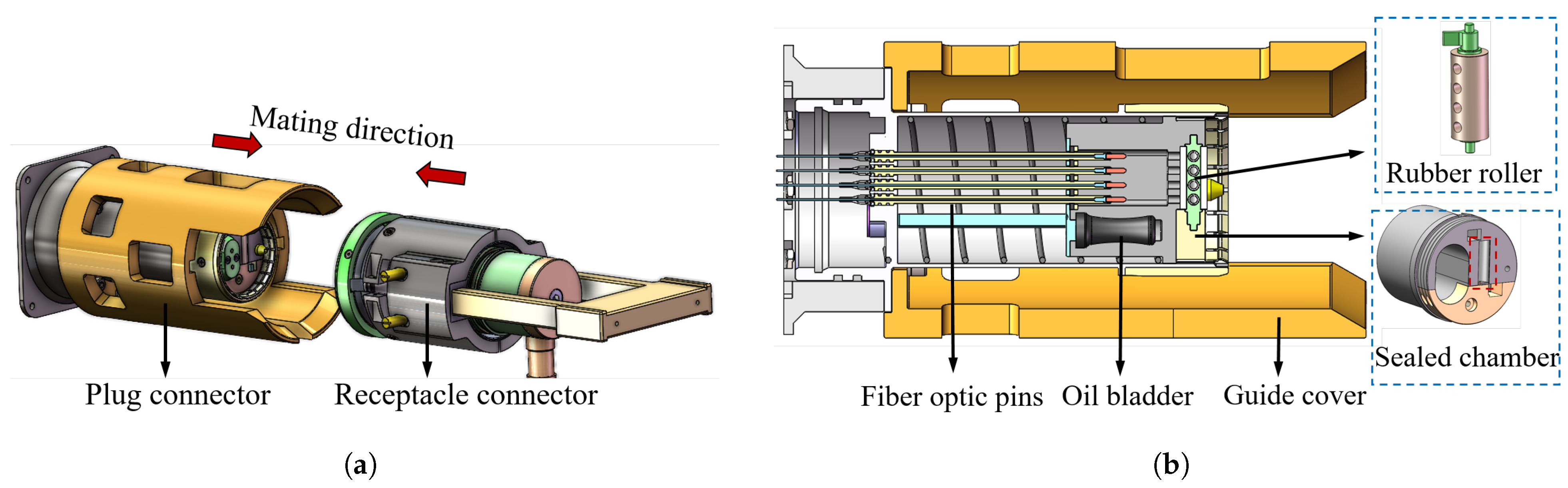
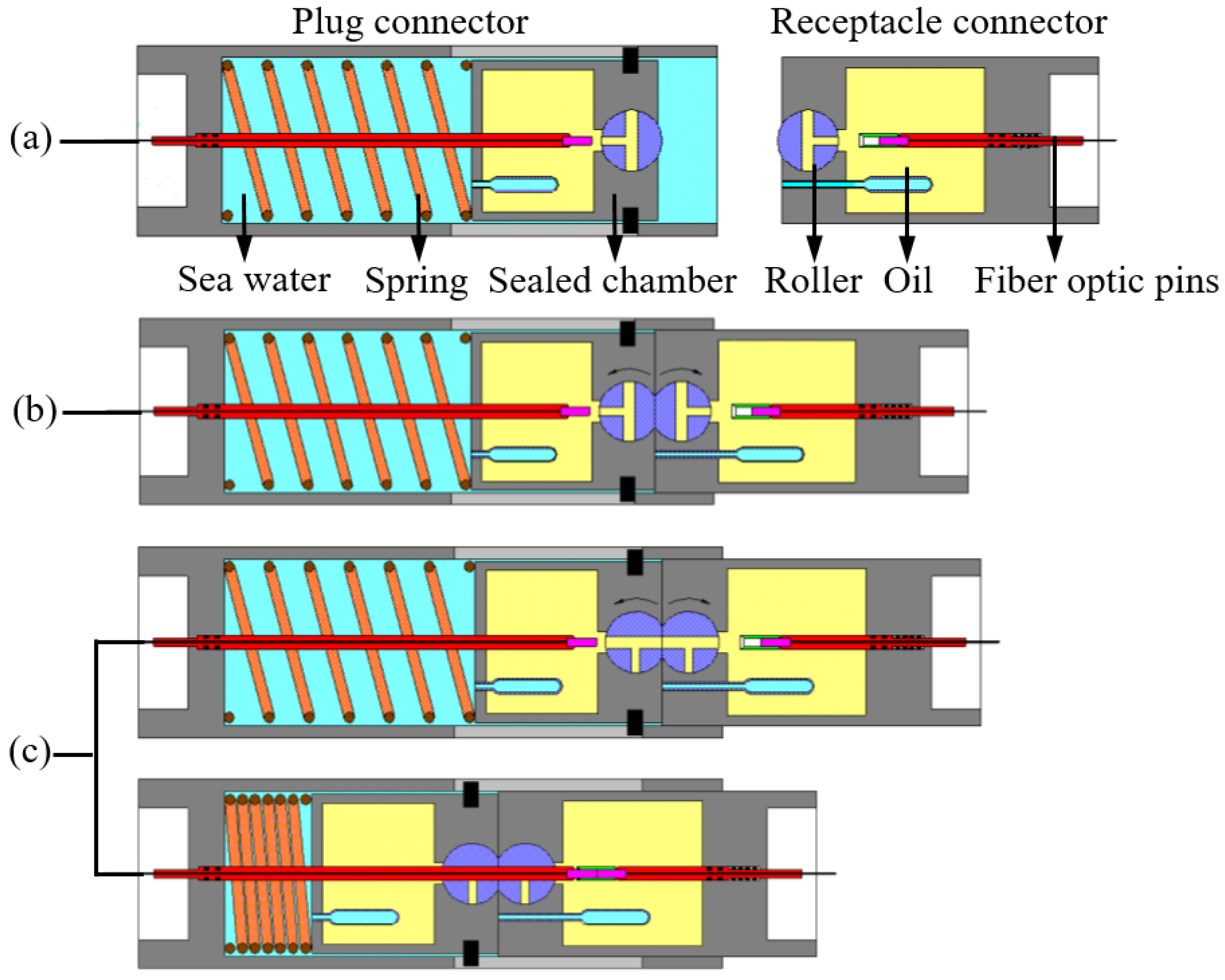
Figure 1 depicts a typical underwater mateable connector, which employs a rolling seal to meet its sealing requirements. The operational principle of this seal is shown in Figure 2 and is described as follows [4,5]: (a) In the unmated state, the channel within the roller is perpendicular to the mating direction to maintain static sealing. (b) During mating, the rollers of the plug and receptacle assemblies compress each other, expelling water from the interface. (c) As insertion continues, both rollers rotate synchronously via an external drive, aligning their channels with the mating direction to establish electrical or optical connectivity. Throughout this rolling rotation, rollers remain under compression both against each other and within their respective sealed chamber, thereby achieving dynamic sealing.
The described operational principle indicates that the roller experiences two primary forms of friction during mating: rolling friction due to mutual compression between the plug and receptacle elastomeric rollers, and sliding friction arising from roller rotation within the sealed chamber. The latter is tribologically analogous to the behavior of rotary oil seals used in land-based hydraulic systems. Owing to the small contact area between the rollers and the inherently low coefficient of rolling friction, sliding friction constitutes the dominant component of the mating force that the ROV must overcome. Furthermore, WMCs commonly employ pressure-balanced oil-filled technology [6,7], which equalizes the internal silicone oil pressure with the external seawater pressure, thereby minimizing the influence of high ambient pressure on sealing performance. In this configuration, the roller is subjected to high pressure from both the silicone oil and seawater. To ensure static sealing, it is installed with an interference value. The required interference increases with water depth to maintain a sealing contact pressure above the hydrostatic pressure. However, excessive interference substantially increases frictional forces during mating, which in turn raises the required ROV operating force and can lead to mating failure. Thus, the key design challenge lies in optimizing parameters such as interference value and mating speed to control the mating force while ensuring reliable deep-sea sealing performance.
Rotary lip seals represent a standard form of traditional rotary sealing, and their mechanisms are frequently investigated based on a combination of numerical lubrication models and finite element analysis. Regarding research on numerical lubrication models, early full-film models, such as the one developed by Salant and Flaherty [8], focused on elastohydrodynamic deformation under smooth surface assumptions. However, recognizing that all engineered surfaces possess roughness, researchers adopted statistical approaches. The pioneering work of Patir and Cheng [9,10] introduced flow factors to modify the Reynolds equation, capturing roughness effects more efficiently compared to computationally expensive deterministic models [11,12,13]. Building on this foundation, a series of mixed lubrication models specifically tailored for rotary lip seals have been developed. These models are frequently employed in conjunction with finite element analysis to explore the lubrication mechanisms of lip seals. For instance, Guo et al. [14] incorporated both roughness and elastic deformation to predict pumping rate and film thickness. Jia et al. [15] validated the influence of radial force, while Jiang et al. [16] improved accuracy by integrating measured boundary friction coefficients. Subsequent parametric studies further enriched the understanding of lip seal behavior under various conditions, including speed, surface texture [17], eccentricity [18], and thermal effects [19]. In finite element analysis research, lip seals are typically simplified as two-dimensional axisymmetric models [14], or alternatively, three-dimensional models are directly employed to extract parameters required for numerical lubrication calculations—such as static contact pressure and influence coefficient matrices—representing a relatively mature and standardized approach.
Although the research methods for the sealing performance of lip seals are well-established, their direct application to rolling seals in deep-sea environments is infeasible and remains largely unexplored [20]. This research gap stems from fundamental differences in the operating principles of these two sealing configurations, which primarily manifest in three aspects: (1) The structural geometry differs. The sealing band profile of a rolling seal, which results from the roller–chamber interaction, is distinct from that of a deflected lip seal. (2) The kinematic pair is reversed. In lip seals, a stationary elastomeric lip seals against a rotating shaft. Conversely, in rolling seals, the elastomeric roller rotates against a stationary chamber. The above two differences lead to different modeling methods and different deformation modes. (3) The loading condition is fundamentally different. Lip seals typically operate under a low to moderate pressure differential. In contrast, deep-sea rolling seals experience an ultra-high, near-balanced pressure environment (up to tens of MPa), where pressure acts on both sides of the seal, with a small differential maintained by a balancing bladder. This extreme hydrostatic pressure significantly influences material deformation and lubricating film thickness—a scenario not typically considered in conventional lip seal models. While Han et al. [21,22] provided valuable insights into O-ring performance in pressure-balanced systems, their model assumed perfect pressure equalization and did not analyze key parameters influencing sealing performance (e.g., compression ratio). Therefore, a comprehensive model that considers the coupled effects of high seawater pressure, reverse kinematics, and rough surface contact—all specific to rolling seals—is urgently required to ensure the reliability of deep-sea applications.
To address these gaps, this paper develops a refined model for the sealing performance of rolling seals in deep-sea environments. The key novelty of the proposed model is the integration of unique deep-sea pressure-balanced conditions into the classical average Reynolds equation framework. To ensure accurate boundary conditions, the oil-side pressure under pressure-balanced states is derived using shell theory. Moreover, experimentally measured boundary lubrication friction coefficients are employed in place of conventional dry-friction values to enable high-precision evaluation of sealing performance. The effects of interference value (s) and rotational speed ( ω ) on sealing performance are systematically investigated under zero seawater pressure ( p s e a ), with the model validated against experimental data. Furthermore, the influence of seawater pressure on interfacial sealing behavior is analyzed in detail.

2. Mathematical Model

2.1. Geometrical Model

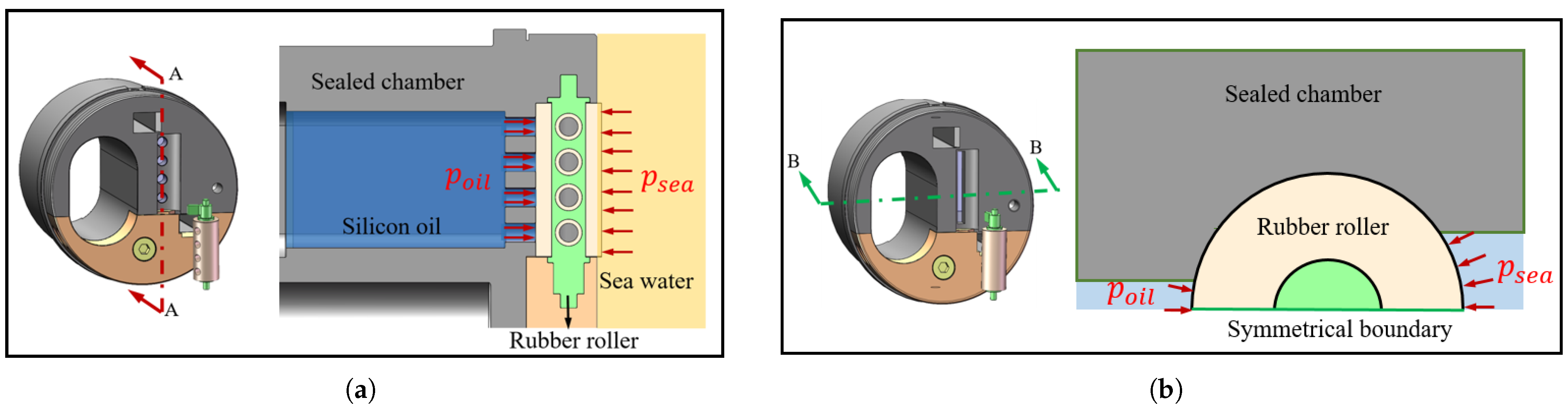
The left panel of Figure 3a presents an exploded schematic of the assembly comprising the roller and the sealed chamber. To reveal the structural details and force distribution on the roller, a cross-sectional view along cutting plane A-A is provided in the right panel of Figure 3a. The left side of the roller contacts silicone oil through four circular channels in the chamber, while the right side is directly exposed to seawater. Based on the principle of equivalent load-bearing area, these four channels are simplified as a single rectangular channel of the same length as the roller—specifically, with dimensions of 1.56 mm × 31 mm . The roller comprises a metal core encapsulated by a compliant rubber layer. Given the significantly higher elastic modulus of both the sealed chamber (made of plastic or metal) and the metal core compared to the rubber, they are modeled as analytical rigid bodies. A two-dimensional plane strain assumption is adopted, with symmetry boundary conditions applied to further simplify the model. The final simplified structure is illustrated in Figure 3b.

2.1.1. Analysis of Geometrical Model Simplification

While the two-dimensional plane strain model is reasonable for capturing the primary physical mechanisms, its potential influence on the predicted results warrants further discussion.
First, the plane strain assumption neglects three-dimensional end effects and any circumferential non-uniformity in seal deformation or pressure distribution. In reality, leakage pathways are inherently three-dimensional and may preferentially develop at the sides or at locations with geometric imperfections. By neglecting these three-dimensional effects, the current model is likely to provide a conservative estimate of leakage—that is, the predicted leakage rates under given conditions probably represent a lower bound, as the two-dimensional assumption may underestimate the number or size of potential leak paths. Similarly, local pressure peaks at the seal edges could be more pronounced in a three-dimensional model due to stress concentrations at the axial ends of the seal; consequently, the two-dimensional model may slightly underestimate the peak contact pressures at the seal lip extremities.
Second, simplifying the oil-side channels from four discrete circular channels to a single continuous rectangular channel alters the local compliance and pressure distribution. The rectangular channel provides more uniform support for the seal, potentially smoothing out local pressure variations that might exist between the original four channels. However, because the total load-bearing area is conserved, the global deformation and the average pressure distribution across the sealing zone are expected to be captured with reasonable accuracy. This simplification primarily affects the local details of the pressure field directly above the channel, but its influence on the overall sealing performance metrics is likely of secondary importance.
In summary, the simplifications employed herein preserve the dominant physical behaviors while enabling computational efficiency. Consequently, the model is well-suited to predicting performance trends under varying operating conditions (e.g., rotational speed, interference, and seawater pressure), which constitutes the primary focus of this work.

2.1.2. Model Applicability and Research Scope

It should be noted that during the mating process of wet-mate connectors, the roller completes a 90° rotation per cycle. However, this study focuses on the rolling seal mechanism and its influencing parameters. Accordingly, all analyses in this work are restricted to the steady-state sealing and friction performance after the roller has attained stable rolling conditions.
Furthermore, in practical engineering applications, a wet-mateable connector remains in long-term service once an initial reliable connection is established, with no subsequent mating or unmating operations. Consequently, the heat generation during a single insertion is negligible. Since the present study focuses only on a single insertion rather than repeated mating cycles, thermal effects are not included in the model.

2.2. Fluid Mechanics

To account for surface roughness, the averaged Reynolds equation is employed in this work to solve for the film thickness and film pressure distribution, assuming an asperity aspect ratio of 1 and an orientation angle of 0°. The governing equation, which includes cavitation effects [23], is given in the following non-dimensional form:
X φ x H 3 e α ¯ F Φ ( F Φ ) X = ζ X 1 + ( 1 F ) Φ H T + F φ s X
where H is the dimensionless film thickness, α ¯ is the dimensionless pressure–viscosity coefficient, F is the cavitation index, Φ represents the dimensionless fluid pressure P f when F = 1 and the dimensionless density when F = 0 , ζ is a dimensionless number, H T is the dimensionless average truncated film thickness, φ x is the pressure flow factor, and φ s is the shear flow factor.
For the liquid region, Φ 0 , F = 1 , P f = Φ ; and for the cavitation region, Φ < 0 , F = 0 , P f = 0 , ρ ¯ = 1 + Φ ;
The boundary conditions are P X = 0 = p o i l / p a , P X = 1 = p s e a / p a , where p o i l is the oil pressure determined from the pressure-balanced condition, and p a denotes the ambient pressure.
This study assumes that the surface roughness of the roller follows a Gaussian distribution. Accordingly, the average truncated oil film thickness is expressed as follows:
H T = H 2 + H 2 erf H 2 + 1 2 π exp H 2 2
The expression for the pressure flow factors φ x is given by [10]:
φ x = 1 0.9 exp ( 0.56 H )
The shear flow factors φ s are given as follows [10]:
φ s = 1.899 H 0.98 exp ( 0.92 H + 0.05 H 2 ) H 5 1.126 exp ( 0.25 H ) H > 5

2.3. Contact Mechanics

The asperity contact pressure at the roller-sealed chamber interface is evaluated using the statistical Greenwood-Williamson (G-W) model [24]. The corresponding contact pressure p c is given by:
p c = 4 3 η R 1 2 E 1 v 2 h 1 2 π σ e z 2 2 σ 2 ( z h ) 3 2 d z
where η is the asperity density, R is the asperity radius (values are given in Table 1), E is the Young’s modulus of the roller, and v is the Poisson’s ratio of the roller.

2.4. Deformation Mechanics

2.4.1. Macro Deformation Analysis

Finite element analysis of the deformation is conducted using the commercial software Abaqus. In the model, the sealed chamber is simplified as an analytical rigid body, and the rubber of the roller is meshed with tetrahedral elements of type CPE4RH. Tangential interactions are modeled using a penalty method, while “hard” contact is defined in the normal direction. To ensure computational accuracy, the boundary lubrication friction coefficient—consistent with established research findings [15]—is adopted in the present model, with its value determined via the experimental setup described in Section 3.
The loading on the roller is divided into two steps: the first step simulates the installation of the roller by applying an interference value in the Y-direction; the second step simulates the effect of seawater pressure on the roller, wherein silicone oil pressure is applied on one side of the roller and seawater pressure on the other side, superimposed on the preload from the first step. For clarity in subsequent discussion, the interference s is defined as follows: when the outer diameter of the roller equals the inner diameter of the sealed chamber, s = 0 . If the outer contour of the roller does not fully engage with the inner contour of the sealed chamber, then s < 0 ; conversely, s > 0 . To accurately represent deep-sea operating conditions, the internal silicone oil pressure corresponding to a specific water depth must be determined through calculation. Furthermore, for a precise evaluation of liquid intrusion at the contact interface under deep-sea conditions, the pressure penetration algorithm in Abaqus is employed [27]. This algorithm stipulates that when the penetration pressure exceeds the contact pressure at any given point, the contact pressure at that location reduces to zero, indicating interface separation. Sealing failure is considered to occur when the penetration pressure from both liquids surpasses the contact pressure across the entire interface, leading to hydraulic connection between the oil and seawater sides.
Both loading steps involve large deformations and require a nonlinear solution procedure. Furthermore, an asymmetric solver is employed in the second step to support the pressure penetration algorithm.

2.4.2. Micro Deformation Analysis

To accurately capture the evolution of the microscopic film thickness within the sealing region, the influence coefficient method can be employed. Based on small deformation theory, this method assumes that the deformation at any location within the sealing zone varies linearly with the applied force at each respective position. This allows for the calculation of changes in oil film thickness resulting from variations in contact pressure across the seal. Considering the operational principle of WMCs, the effect of tangential deformation during rolling on the oil film thickness is neglected. Thus, only the variation in normal oil film thickness within the sealing region needs to be considered. The expression for the film thickness at any point in the seal, derived from the influence coefficient method, is given by:
H i = H s + j = 1 n ( I ) i j P f ( X ) + P c ( X ) P s c ( X )
The initial film thickness H s is calculated from the static contact pressure p s c obtained via finite element analysis, as expressed by [28]:
H s = 1.0641 + ( 3.6305 5.0684 log 10 I ) 1 / 2
where I = p s c 4 3 E 1 ν 2 σ ¯ 3 / 2 , σ ¯ = σ R 1 / 3 η 2 / 3 .

2.4.3. Leakage Rate and Frictional Torque Calculation

The calculation formula of flow rate is:
q = φ x H 3 e α ¯ F Φ ( F Φ ) x + ζ 1 + ( 1 F ) Φ H T + F φ s
The calculation formula of leakage rate is:
Q = q d x d y
Given the characteristics of mixed lubrication, the total friction force F a l comprises both dry friction force F c and viscous friction component F f , and can be calculated using the following equation:
F c = π D f c U | U | p c ( x ) d x
F f = μ U h φ f φ f s φ f p h 2 ( F Φ ) x p a d x d y
F a l = F f + F c
where f c denotes the boundary lubrication friction coefficient, D is the diameter of the roller, and φ f , φ f s , and φ f p are results from Ref. [24].
The frictional torque of the roller is primarily contributed by the compressive friction between the sealed chambers and the roller, which is given by:
T = F a l D

2.4.4. Computational Scheme

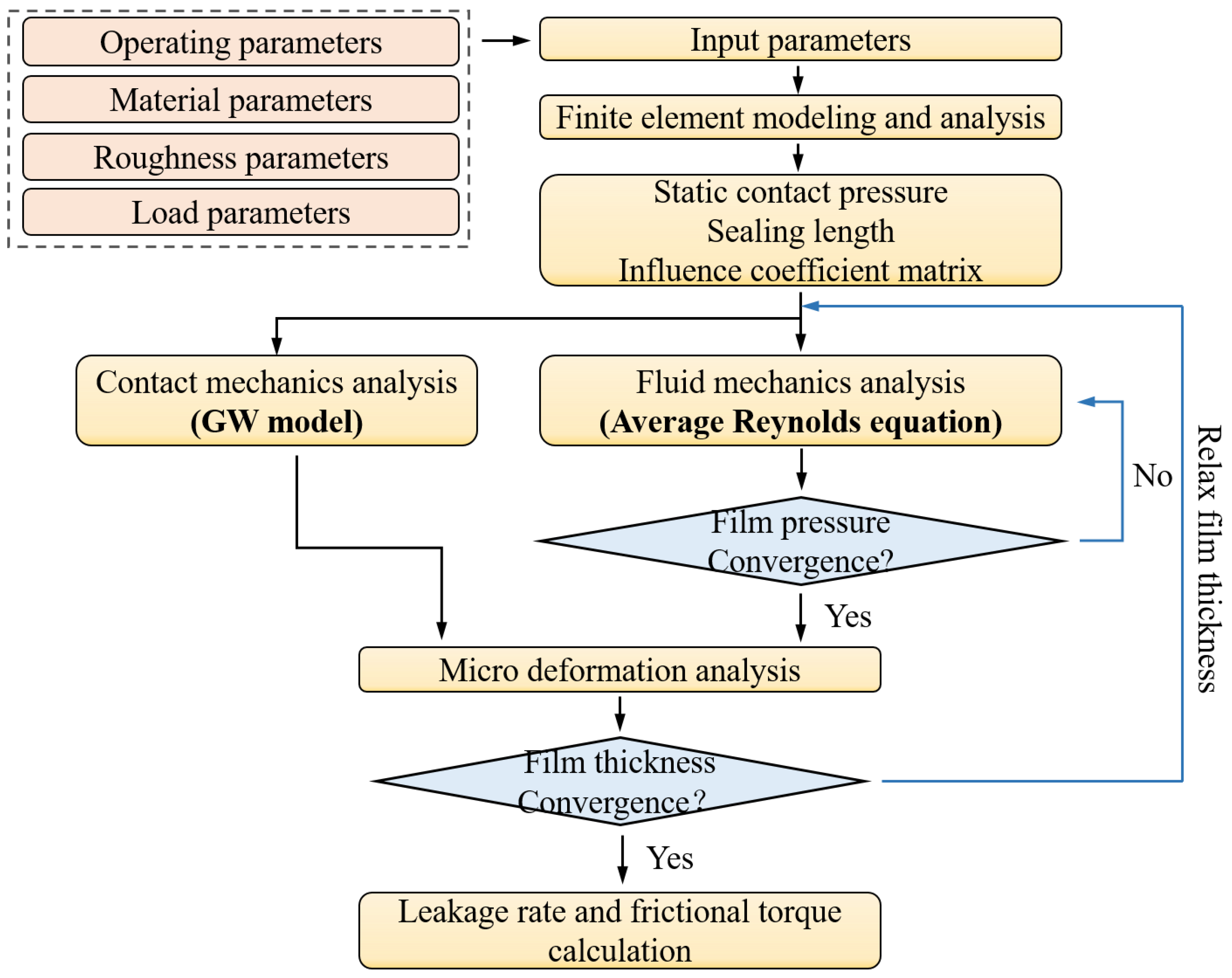
Figure 4 illustrates the overall solution procedure. The necessary computational parameters, which serve as inputs, are first specified, including operating, material, roughness, and load parameters. These parameters are then input into a finite element model for computational analysis to obtain the static contact pressure p s c , the sealing length L x , and the influence coefficient matrix I i j . The dimensionless film pressure P f is computed based on the averaged Reynolds equation and iterated until it satisfies Equation (14) to achieve local convergence. The finite difference method is employed to solve the averaged Reynolds equation. Meanwhile, the dimensionless asperity contact pressure P c is calculated using Equation (5). P f and P c are then substituted into the micro-deformation analysis formula Equation (6) to compute the film thickness increment using the influence coefficient matrix. Equations (1) and (5) are then recalculated iteratively until the film thickness satisfies Equation (15), achieving global convergence. If convergence is not reached, the over-relaxation method is used to iteratively adjust the film thickness, and the computation is repeated.
ε P f = max ( P f ) i ( P f ) i 1 ( P f ) i 1 10 3
ε H = max H i H i 1 H i 1 10 3

3. Experimental Investigation

3.1. Test Apparatus

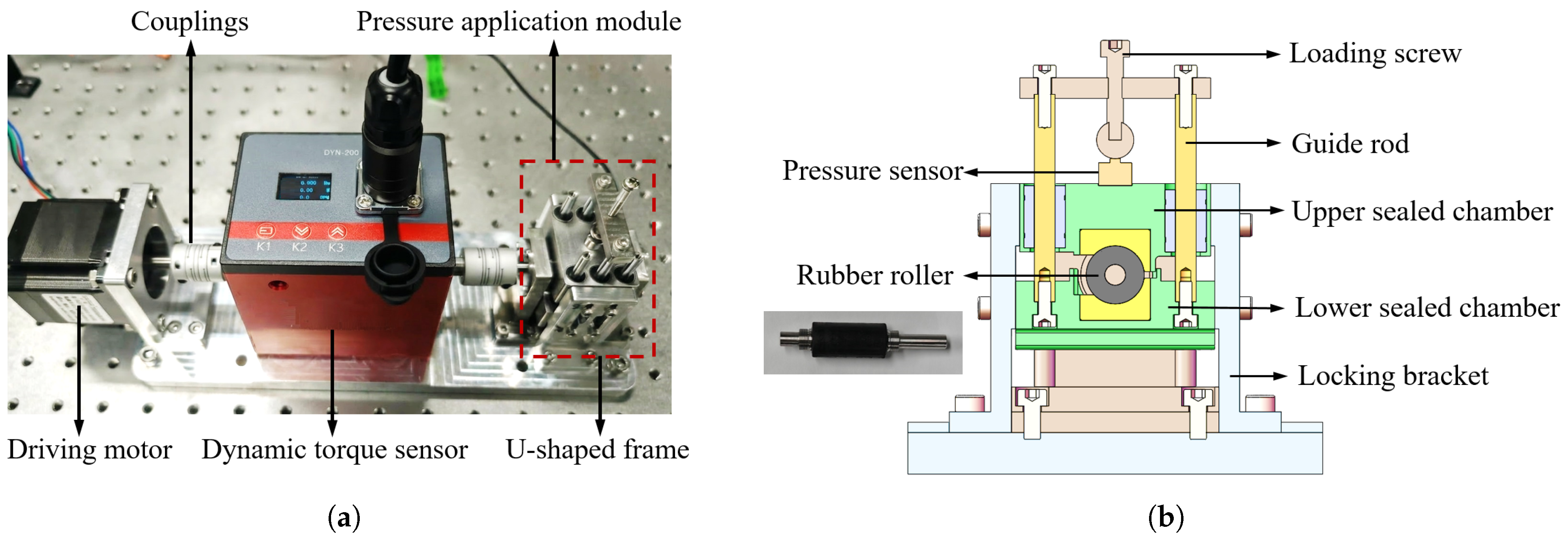
Figure 5a shows the test apparatus designed to evaluate the roller’s tribological performance. The tests are conducted under atmospheric pressure with varying interference values and rotational speeds. The apparatus comprises a roller (shown in Figure 5b), a pressure application module, a U-shaped frame, a drive motor, a dynamic torque sensor, bearings, retaining plates, and couplings. The roller consists of a steel shaft with a vulcanized rubber layer. To approximate plane-strain conditions during deformation, retaining rings are fitted on both sides of the rubber. The driving motor is a stepper motor manufactured by Lvwei Technology Co., Ltd., Foshan City, China, with a rotational speed accuracy of ± 0 . 1 °. The dynamic torque sensor, manufactured by Bengbu Dayang Sensing System Engineering Co., Ltd., Bengbu, China, has a range of 0– 5 N · m and an uncertainty of 0.005 N · m , enabling precise measurement of the roller’s frictional torque.
The pressure application module, as shown in Figure 5b, consists of an upper and a lower sealed chamber, a loading screw, guide rods, a locking bracket, and a pressure sensor. Both chambers feature a composite structure, fabricated as 304 stainless steel recesses with embedded POM (polyoxymethylene) inserts. An oil groove is integrated into the lower chamber to collect the silicone oil used during testing.
Rotating the loading screw drives the upper and lower chambers to slide along the guide rods, applying synchronized compression to the roller. Varying the screw’s feed amount controls the degree of roller deformation. A pressure sensor manufactured by Bengbu Dayang Sensing System Engineering Co., Ltd., China, with a rated capacity of 0– 100   kg and an uncertainty of 0.5 kg, is mounted between the loading screw and the upper chamber to measure the applied compressive force. Once the desired compression is set, the locking bracket is engaged to secure the chambers, ensuring stability and reliability during the subsequent rotation tests.

3.2. Test Procedure

Prior to installing the sealed chambers, the system’s coaxial alignment is verified. This step confirms that the frictional torque reading remains zero when no compression is applied. All tests are conducted at a laboratory temperature of 25 ± 0.5  °C.
The boundary lubrication friction coefficient is determined through measurements conducted at extremely low rotational speeds for each interference condition. According to the Stribeck curve, the friction coefficient remains relatively stable within the boundary lubrication regime. However, due to significant vibrations observed in the test apparatus at rotational speeds below 1 rpm—which could compromise measurement accuracy—a rotational speed of 1 rpm is adopted for measuring the boundary lubrication friction coefficient. To validate the appropriateness of this approach, the film thickness ratio (defined as λ = h min / σ , where h min is the minimum film thickness) is employed to assess whether the lubrication regime at 1 rpm corresponds to boundary lubrication, where λ < 1 indicates boundary lubrication [29]. Using the lubrication model, calculations are performed for three interference conditions: s = 0.05 mm , 0, and 0.05 mm . The resulting film thickness ratios are 0.58, 0.51, and 0.43, respectively, all of which are below unity, confirming that the aforementioned operating conditions fall within the boundary lubrication regime. The above analysis substantiates the validity of employing a rotational speed of 1 rpm for measuring the boundary lubrication friction coefficient.
To minimize the effects of frictional heating on the test results during rotation, the roller is continuously rotated for four cycles under each operating condition, and each condition is repeated three times. Upon completion of all rotational speed tests at a given interference value, the roller specimen is replaced with a new one having the same outer diameter and surface roughness. The contact surfaces are carefully cleaned to remove any debris and oil residue, and silicone oil is reapplied uniformly before subsequent testing.
The cleaning procedure is critical because, according to Hertzian contact theory, if debris is not thoroughly removed, highly localized pressure peaks can occur on the softer elastomer surface. These localized pressures can significantly exceed the nominal contact pressure predicted by normal-surface models, leading to a redistribution of the load: the load originally shared by the fluid film and by distributed asperity contacts becomes concentrated at the debris particles, resulting in considerable deviations in the test results. Therefore, strict cleaning of debris and oil is essential to ensure test accuracy.

3.3. Data Processing

For each test series, the frictional torque data from the intermediate two rotation cycles are averaged to mitigate transient effects during startup and shutdown, and this average value is denoted by T. The corresponding normal compressive force on the chambers is simultaneously recorded and denoted by F for subsequent validation of finite element models.
Additionally, the boundary lubrication friction coefficient is calculated using the following expression:
f c = T ω = 1 rpm D F ω = 1 rpm

4. Results and Discussion

4.1. Determination of Input Parameters

4.1.1. Material Parameters

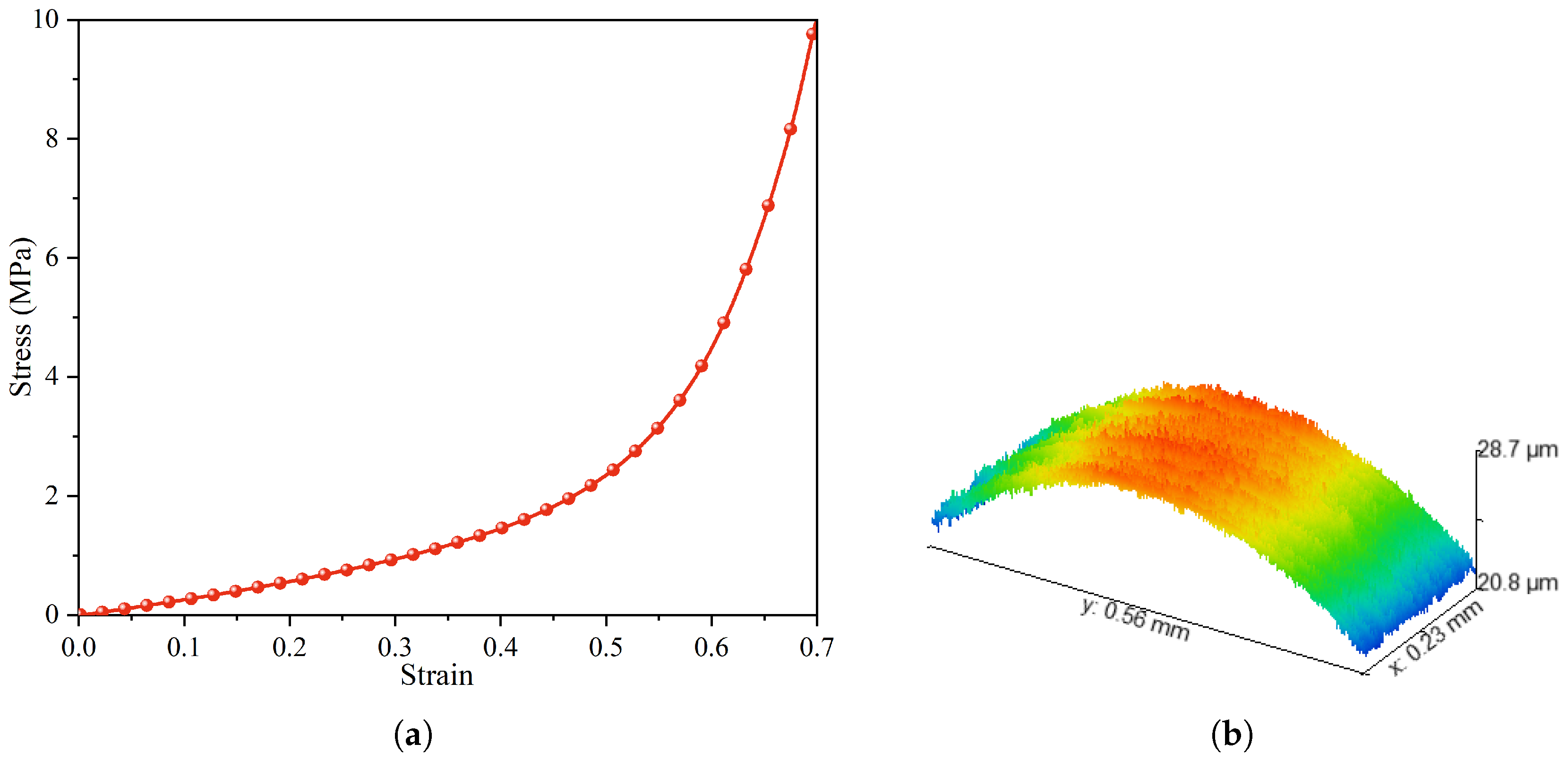
To characterize the mechanical properties of the rubber material, cylindrical specimens (dimensions: Φ 40 mm × 20 mm ) are fabricated from the same compound as the roller. Uniaxial compression tests are conducted using a universal testing machine [30]. The test setup and the obtained stress–strain curve are presented in Figure 6a.
The two-parameter Mooney–Rivlin model, which is well-suited for characterizing the hyperelastic behavior of rubber at small to moderate strains, is employed to simulate the roller’s deformation [31]. The corresponding strain energy function is expressed as:
W = C 10 ( I 1 3 ) + C 01 ( I 2 3 ) + 1 D 1 ( J 1 ) 2
where W is the strain energy density, C 10 and C 01 are hyperelastic material constants, I 1 and I 2 are the first and second deviatoric strain invariants, respectively, and D 1 is the incompressibility parameter.
The measured stress–strain data are fitted using Abaqus 2020, yielding the following material parameters for the Mooney–Rivlin model
C 10 = 0.041 MPa , C 01 = 0.065 MPa , D 1 = 0
Based on a 5 % strain criterion [32], the elastic modulus of the rubber is determined to be 2.4 MPa.

4.1.2. Roughness Parameters

The surface topography of the roller specimen is characterized using white light interferometry [33], as shown in Figure 6b. Quantitative analysis of the three-dimensional profile data yielded a surface roughness ( σ ) of 1.628 μ m.

4.1.3. Loading Parameters

In WMCs, the silicone oil within the oil bladder exhibits a certain degree of compressibility. Meanwhile, the rubber material of the bladder itself possesses a pressure-bearing capacity. Consequently, a pressure difference exists between the silicone oil inside the bladder and the external seawater.
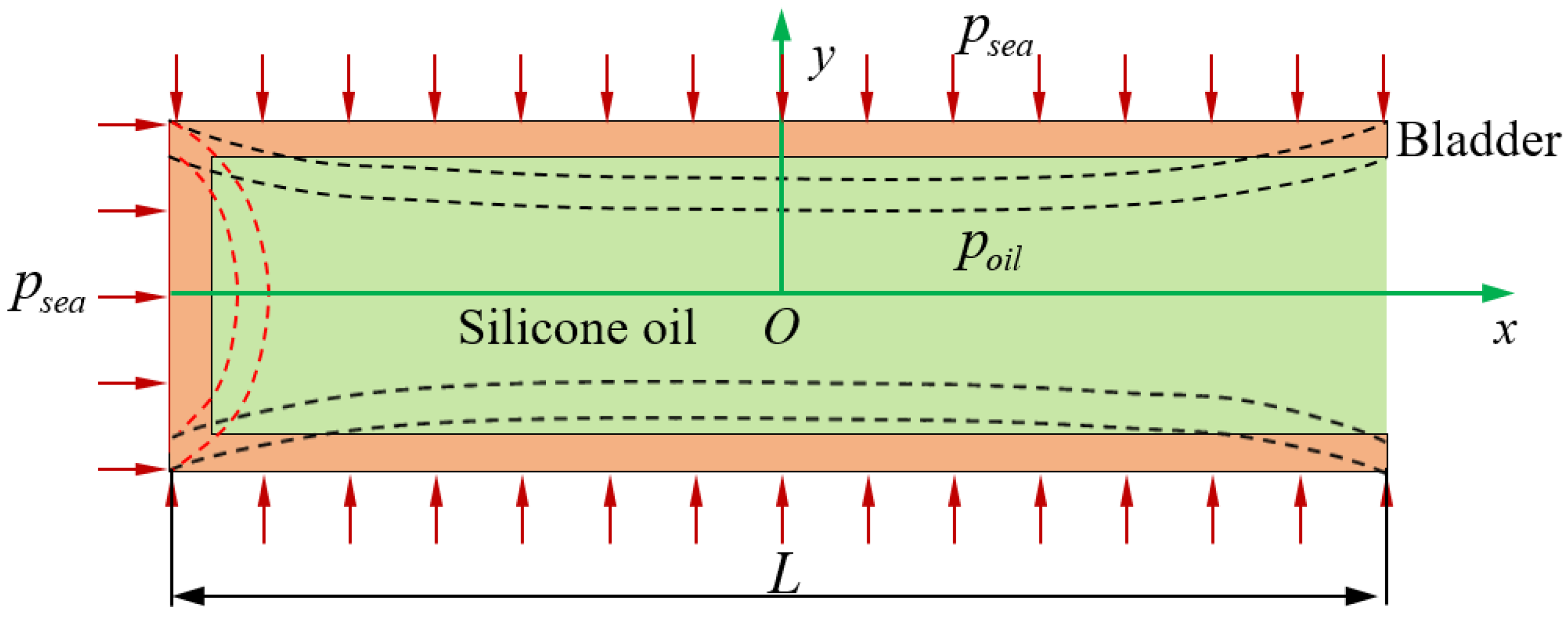
Song et al. [34,35] previously analyzed the pressure difference under pressure-balanced conditions using a model with an open-ended bladder, an assumption inconsistent with real structures. In practical engineering applications; however, the bladder is sealed at one end (by a flat or dished head) to isolate the internal silicone oil from seawater, with only the opposite end open. To address this discrepancy, this section develops a revised formula, based on shell theory [36,37], for calculating the pressure difference in a bladder with a flat head.
According to the study by Kazama et al. [38], the change in filled oil volume caused by the internal–external pressure difference can be determined by the bulk modulus E B , as given in the following equation:
Δ V 1 = π ( a t ) 2 L Δ p E B
where a, t, L, and Δ p are the bladder radius, wall thickness, length, and internal–external pressure difference, respectively.
The oil bladder with a flat head consists of a thin-walled cylindrical shell and a circular end plate. When subjected to an internal–external pressure difference, the structure deforms toward the oil side, while satisfying the deformation compatibility condition at the joint. To simplify the analysis, the joint is assumed to behave as a fixed boundary during deformation, as illustrated in Figure 7. According to elastic shell theory, the deflection of the cylindrical shell is expressed as:
w 1 = Δ p a 2 2 ν b 2 E b t φ ( λ x )
where the parameter λ and the function φ ( λ x ) are defined as
λ = 3 1 ν b 2 4 a t , φ ( λ x ) = 1 e λ x sin λ x + cos λ x ,
with E b and ν b denoting the elastic modulus and Poisson’s ratio of the bladder, respectively.
In the cylindrical coordinate system, the deflection of the flat head is expressed as:
w 2 = 3 Δ p a 2 r 2 2 1 ν b 2 16 E b t 3
The resulting change in the volume of the oil bladder due to this deformation is:
Δ V 2 = 2 π 0 L / 2 2 a w 1 ( x ) w 1 2 ( x ) d x + 2 π 0 a w 2 ( x ) r d r
By equating Δ V 1 and Δ V 2 , the value of Δ p is obtained.
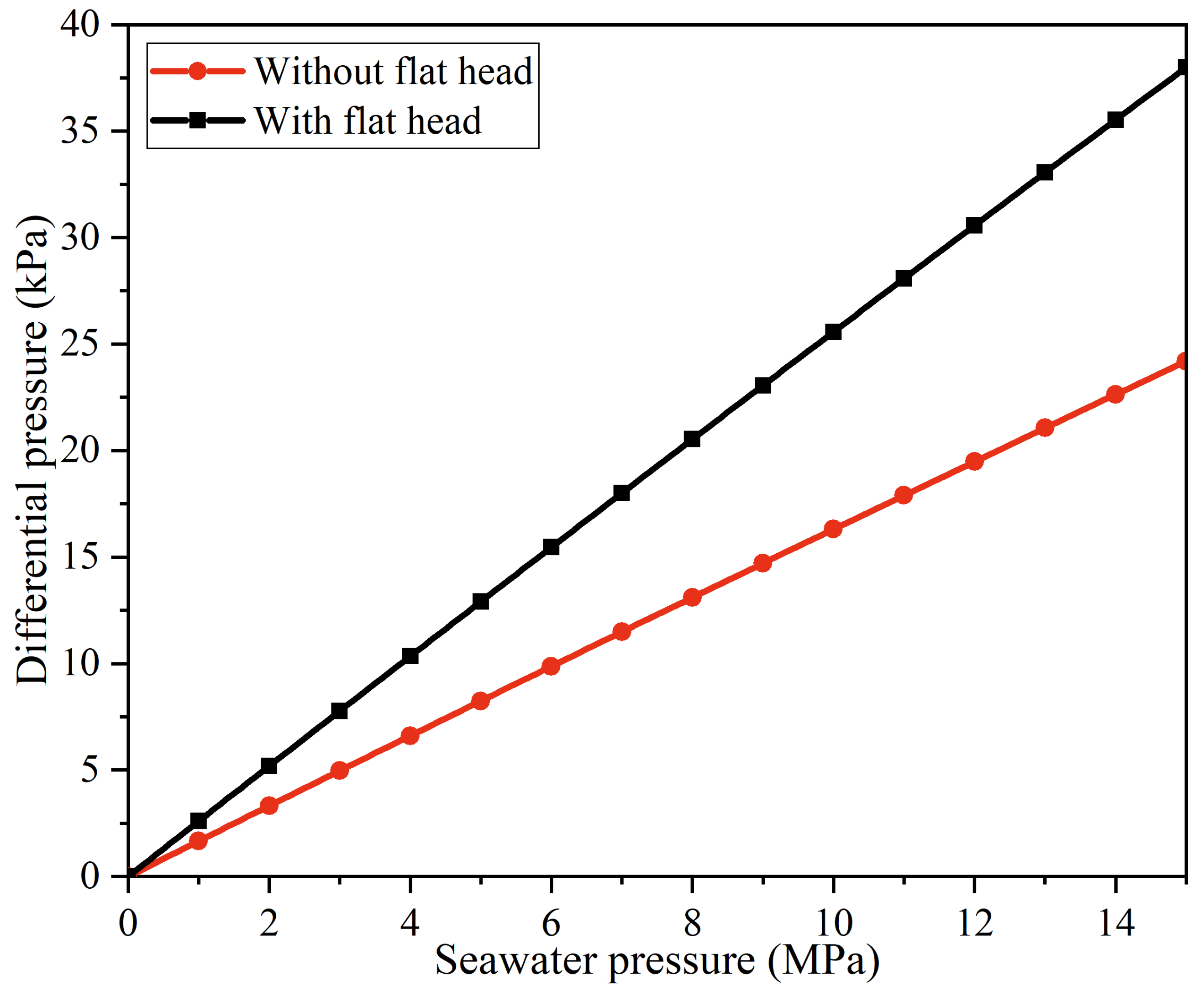
Using the method described above and the parameters in Table 2, the pressure difference is calculated to compare configurations with and without a flat head. As shown in Figure 8, the bladder with a flat head produces a greater internal–external pressure difference under the same seawater pressure, which aligns better with actual engineering conditions. This calculated pressure difference serves as the load input for the subsequent roller stress analysis.

4.1.4. Operating Parameters

The operating parameters include the oil viscosity, pressure–viscosity coefficient, diameter, length, interference value, and rotational speed, as listed in Table 2.

4.1.5. Boundary Lubrication Friction Coefficient

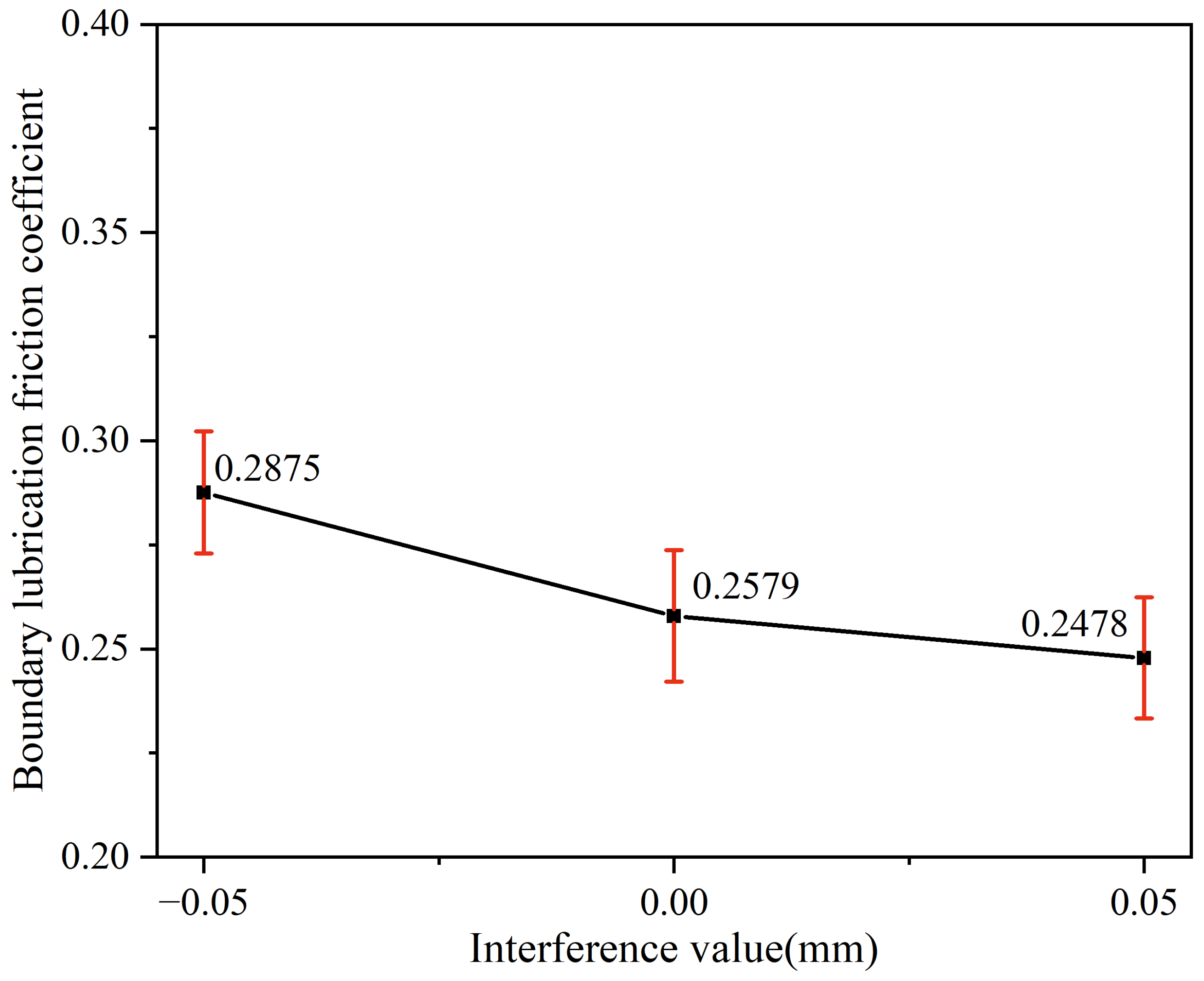
Using the experimental setup described in Section 3, the frictional torque and normal compressive force are measured at a rotational speed of 1 rpm for three interference values. The corresponding boundary lubrication friction coefficients, calculated from Equation (16), are 0.2875, 0.2579, and 0.2478 for interference values of −0.05 mm, 0 mm, and 0.05 mm, with associated uncertainties of 0.019, 0.019, and 0.018 (k = 2), respectively (shown in Figure 9). These results exhibit a clear decreasing trend in boundary lubrication friction coefficient with increasing interference. This trend is attributed to the more pronounced flattening of rubber asperities at higher interference values, which suppresses interlocking and ploughing effects, thereby reducing the boundary lubrication friction coefficient.

4.2. Numerical Simulation and Experimental Validation

4.2.1. Finite Element Results and Validation

Mesh Independence Verification
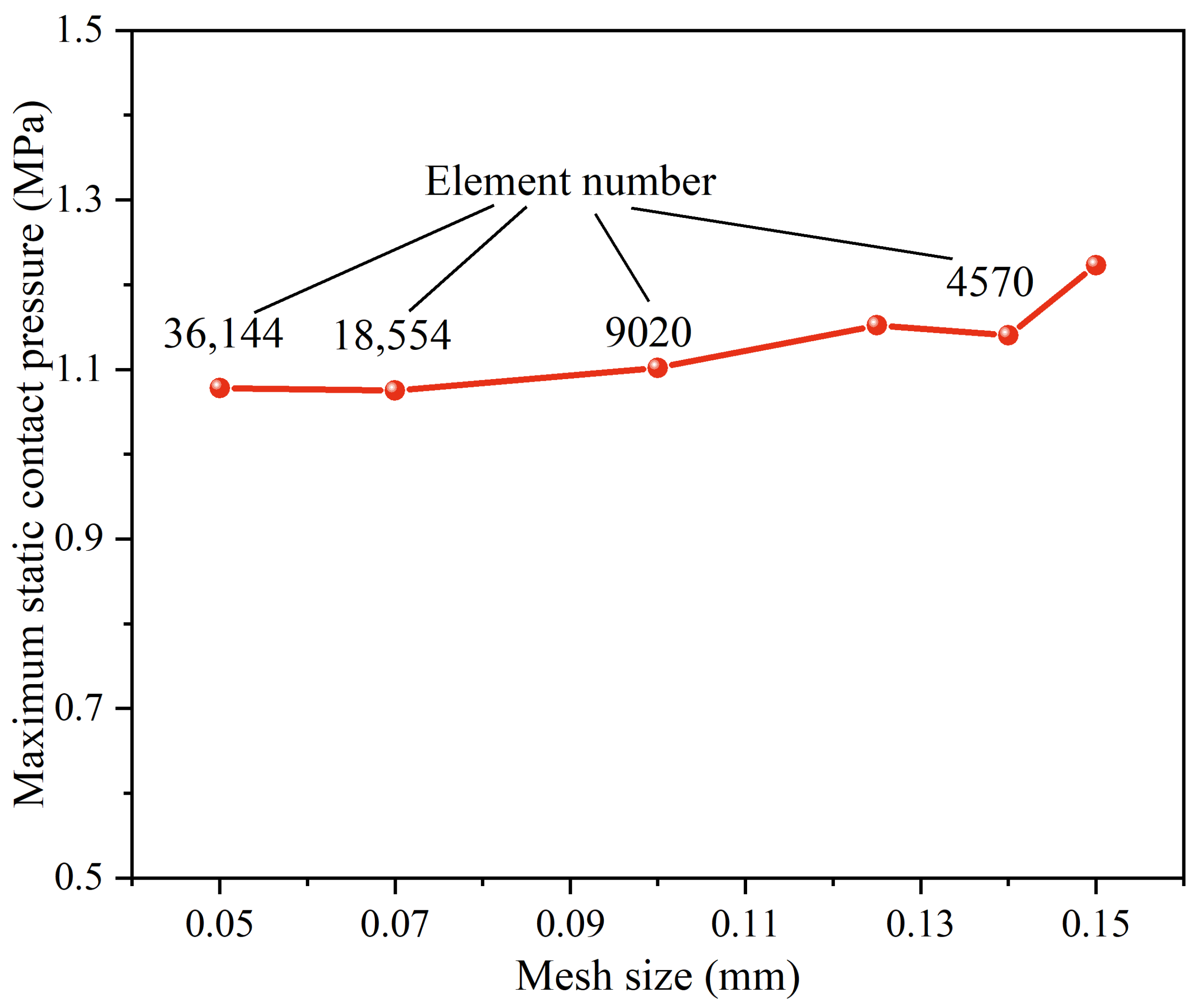
To determine an appropriate mesh size, a sensitivity study is conducted by evaluating the maximum static contact pressure in the roller under zero interference for element sizes ranging from 0.05 mm to 0.15 mm (Figure 10). With a mesh size of 0.1 mm (9020 elements), a convergence test is conducted by refining the mesh to 0.07 mm and 0.05 mm, which doubled and quadrupled the number of elements, respectively. The resulting change in maximum static contact pressure is 2.45 % , confirming sufficient numerical accuracy.
Deformation Analysis of the Roller
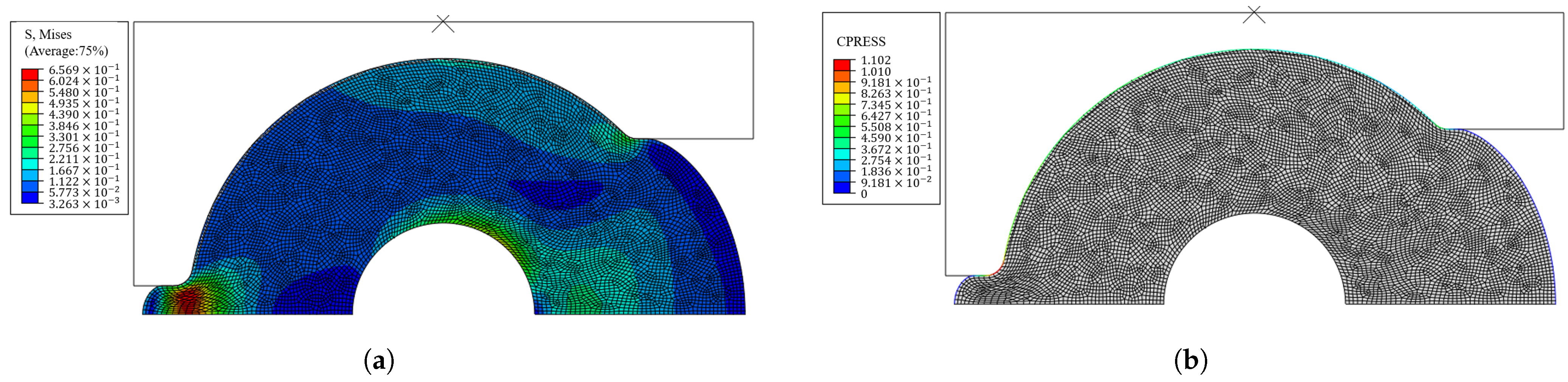
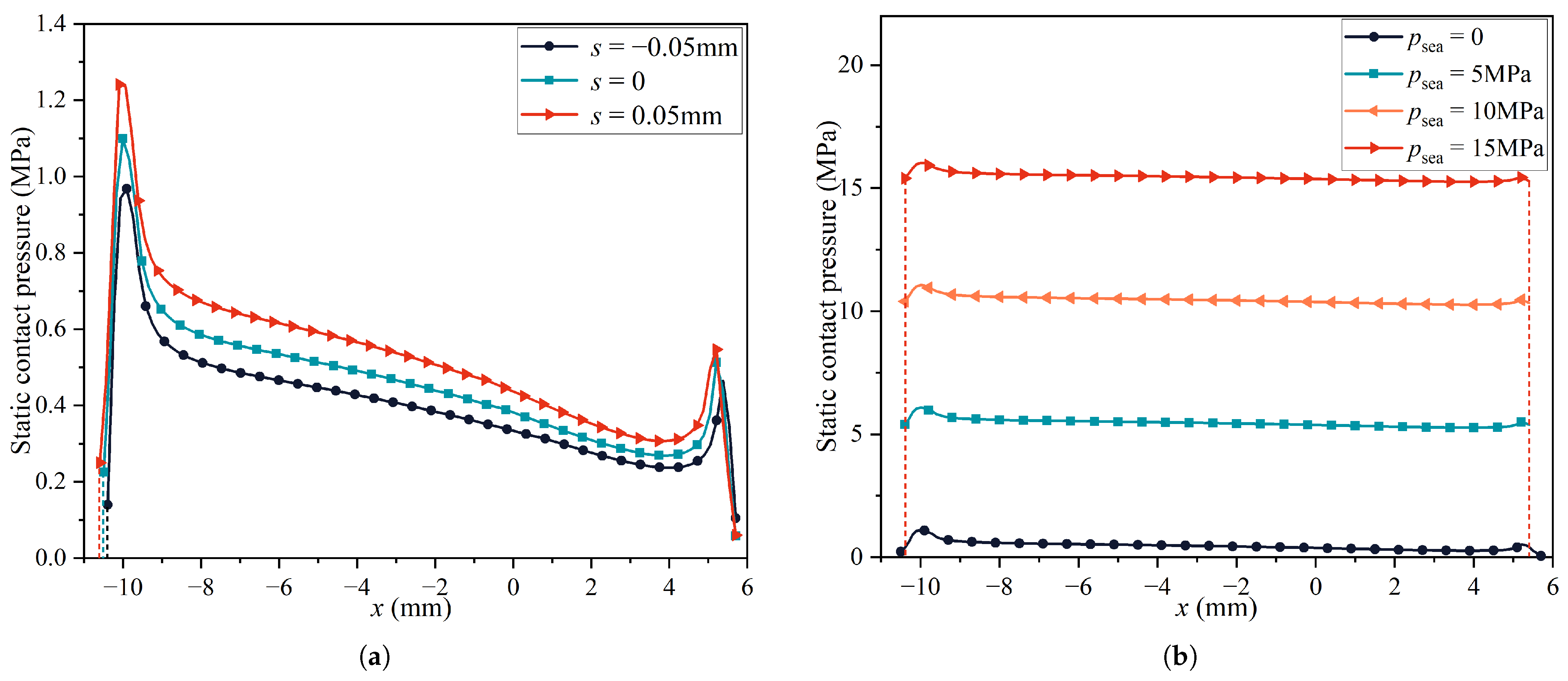
Figure 11 presents the stress contour and static contact pressure distribution of the deformed roller under zero seawater pressure and zero interference. The roller exhibits lateral extrusion of the rubber material under compression from the upper chamber. The maximum contact pressure and the peak von Mises stress both occur in the left-side compression zone, indicating a potential for extrusion-induced failure. The static contact pressure distributions for three interference values are compared in Figure 12a. As can be seen, with an increase in interference value, the three curves exhibit a generally consistent trend. However, the overall contact pressure increases significantly, the contact length on the oil side extends, and the peak static contact pressure on the seawater side shifts leftward. It should be noted that the horizontal axis represents the length of the sealing band, with x = 0 defined as the intersection point between the sealing band and the vertical centerline of the sealed chamber.
Figure 12b illustrates the static contact pressure distribution under various seawater pressures at zero interference. In all cases, the contact pressure between the roller and the sealed chamber remains higher than the applied seawater pressure, thereby validating the static sealing integrity. As the external seawater pressure increases, the static contact pressure rises significantly. Concurrently, the roller undergoes radial contraction, resulting in a reduced effective contact width with the sealed chamber, predominantly on the seawater side.
Comparison of Compressive Forces
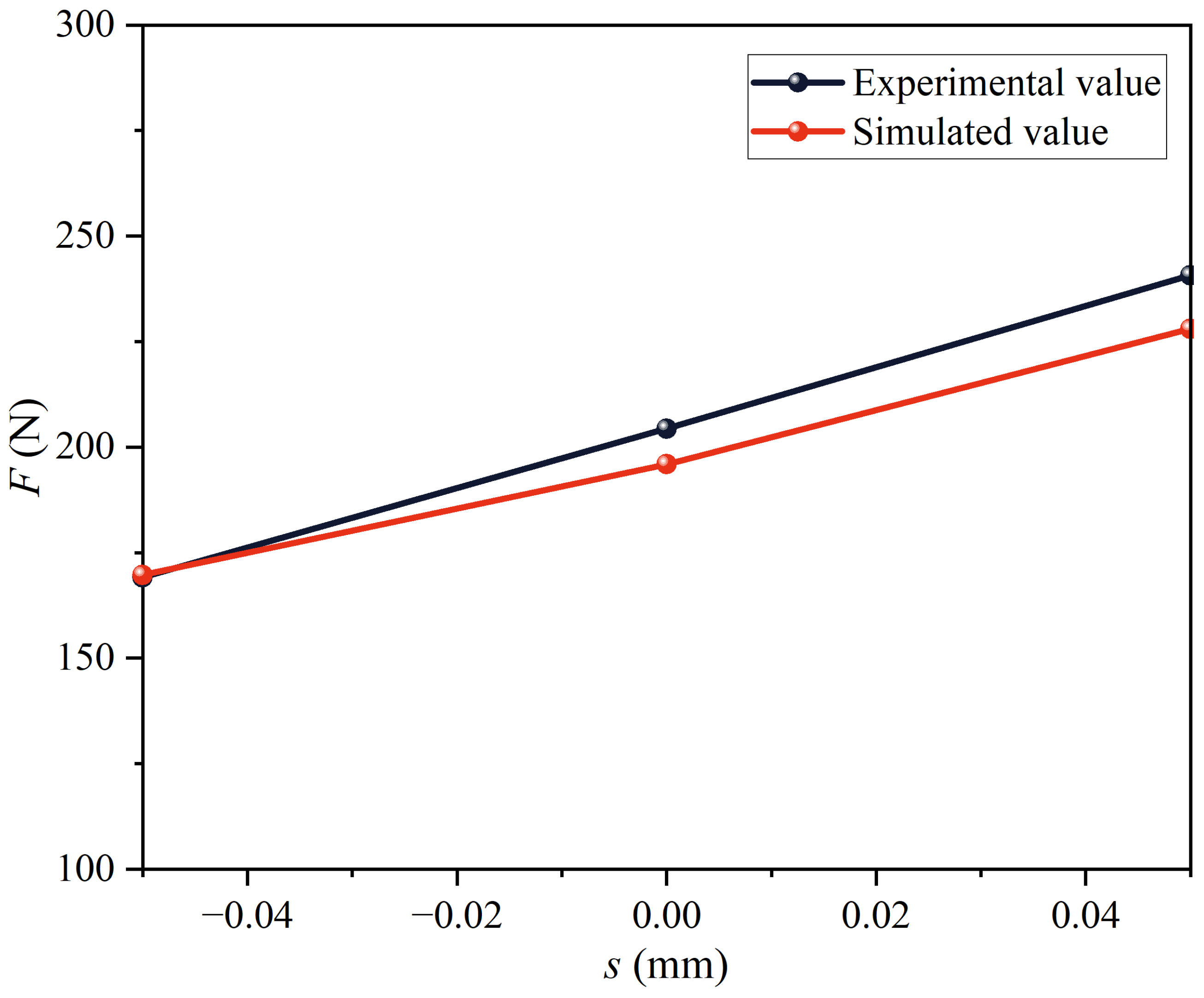
A comparison between the simulated and experimentally measured compressive forces under zero seawater pressure is presented in Figure 13 for three interference values. The results show close agreement in the observed trends, with a maximum discrepancy of only 5.26 % , thereby validating the reliability of the finite element model.

4.2.2. Mixed Lubrication Analysis and Validation Under Zero Seawater Pressure

Numerical Sensitivity Analysis of Operating Parameters
(a)
Effect of rotational speed
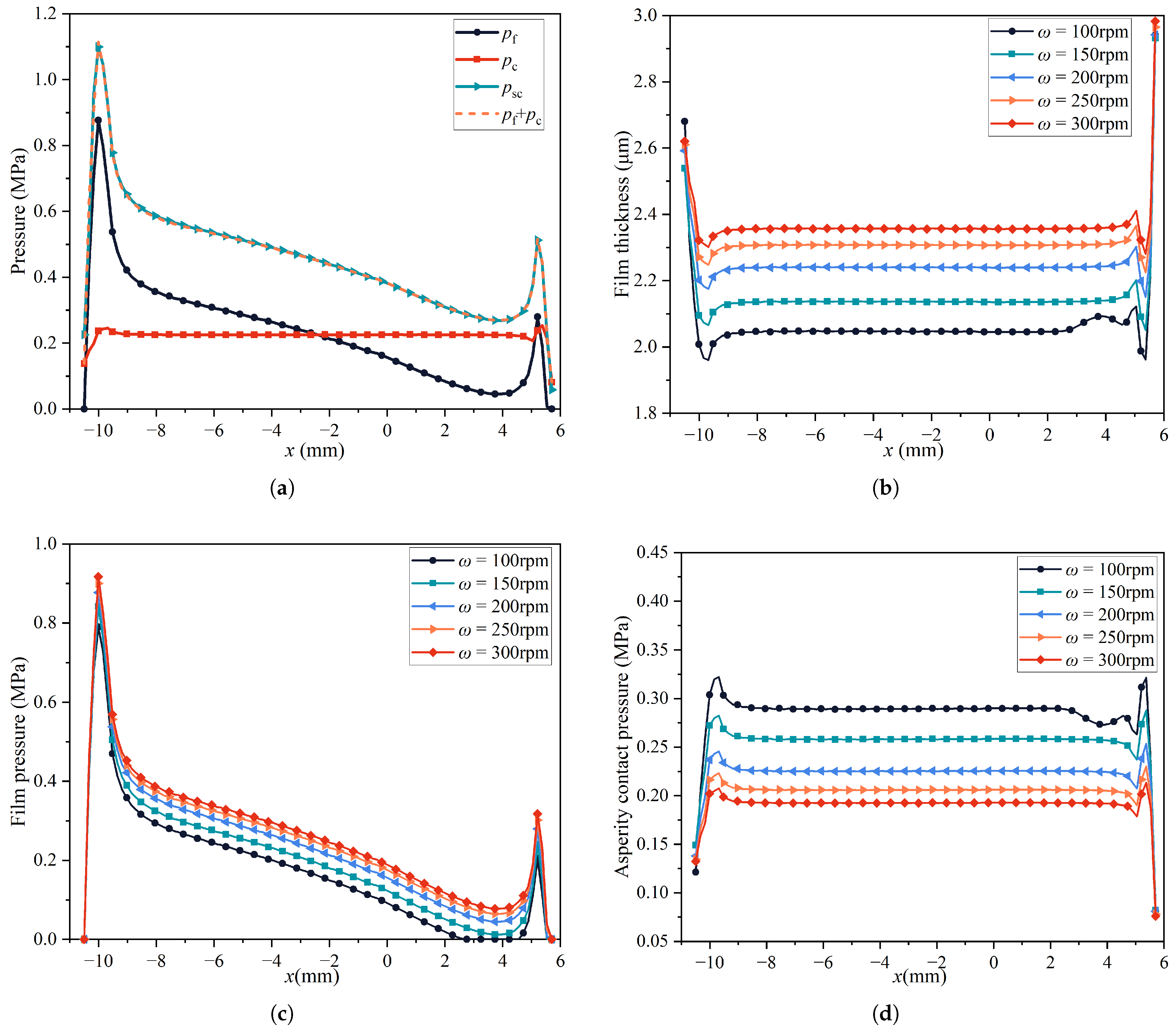
As shown in Figure 14a, under conditions of zero interference, zero seawater pressure, and a rotational speed of 200 rpm, the superposition of the film pressure and the asperity contact pressure closely matches the static contact pressure profile. This agreement validates the load equilibrium condition as dictated by mixed lubrication theory.
The distributions of film thickness, film pressure, and asperity contact pressure under various rotational speeds at zero interference are shown in Figure 14b–d. The film thickness profile reveals that over most of the contact region, the film thickness remains below 3 σ , confirming the presence of mixed lubrication and validating the necessity of employing a mixed lubrication model in this study.
The film pressure profile exhibits a distinct double-peak shape. At a low rotational speed of 100 rpm, cavitation occurs near the right-side pressure peak, causing the film pressure in this region to drop to zero. As the rotational speed increases, the enhanced hydrodynamic effect significantly raises the film pressure. The ratio of hydrodynamic load capacity to total static contact pressure increases from 38.04% (at 100 rpm) to 57.94% (at 300 rpm). However, the rate of this pressure increase diminishes, owing to the slowing growth of film thickness at higher speeds.
Correspondingly, the asperity contact pressure curves indicate that at low rotational speeds, the thin lubricant film leads to a majority of the external load being carried by asperity contact, resulting in high contact pressure. With increasing rotational speed, the lubricant film thickness grows and the hydrodynamic pressure rises, thereby supporting the majority of the external load and resulting in a sharp decrease in asperity contact pressure. The evolving trends of film thickness, film pressure, and asperity contact pressure clearly demonstrate a transition in the lubrication regime from asperity-dominated mixed lubrication to a hydrodynamically dominated state with increasing rotational speed.
(b)
Effect of interference value
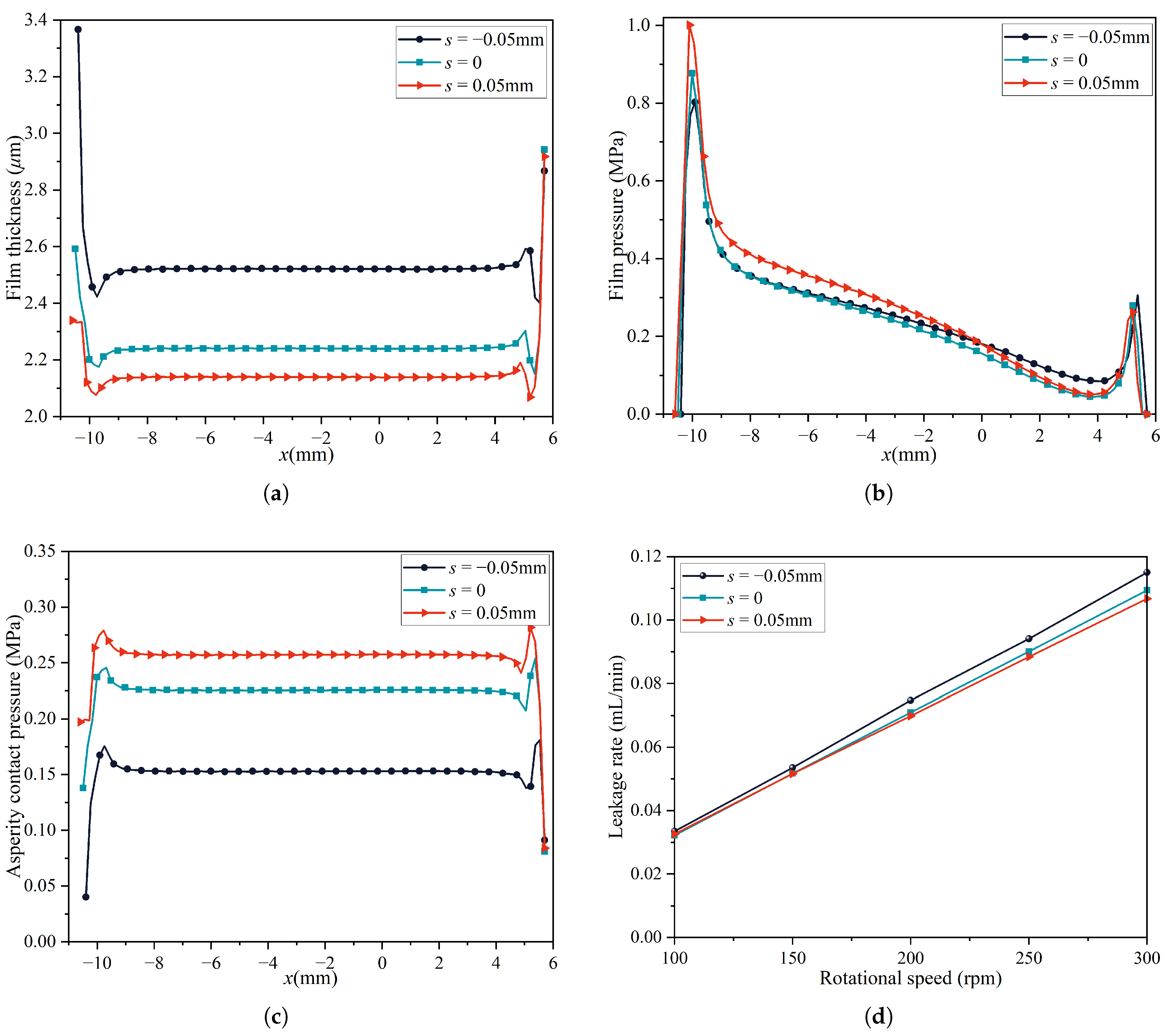
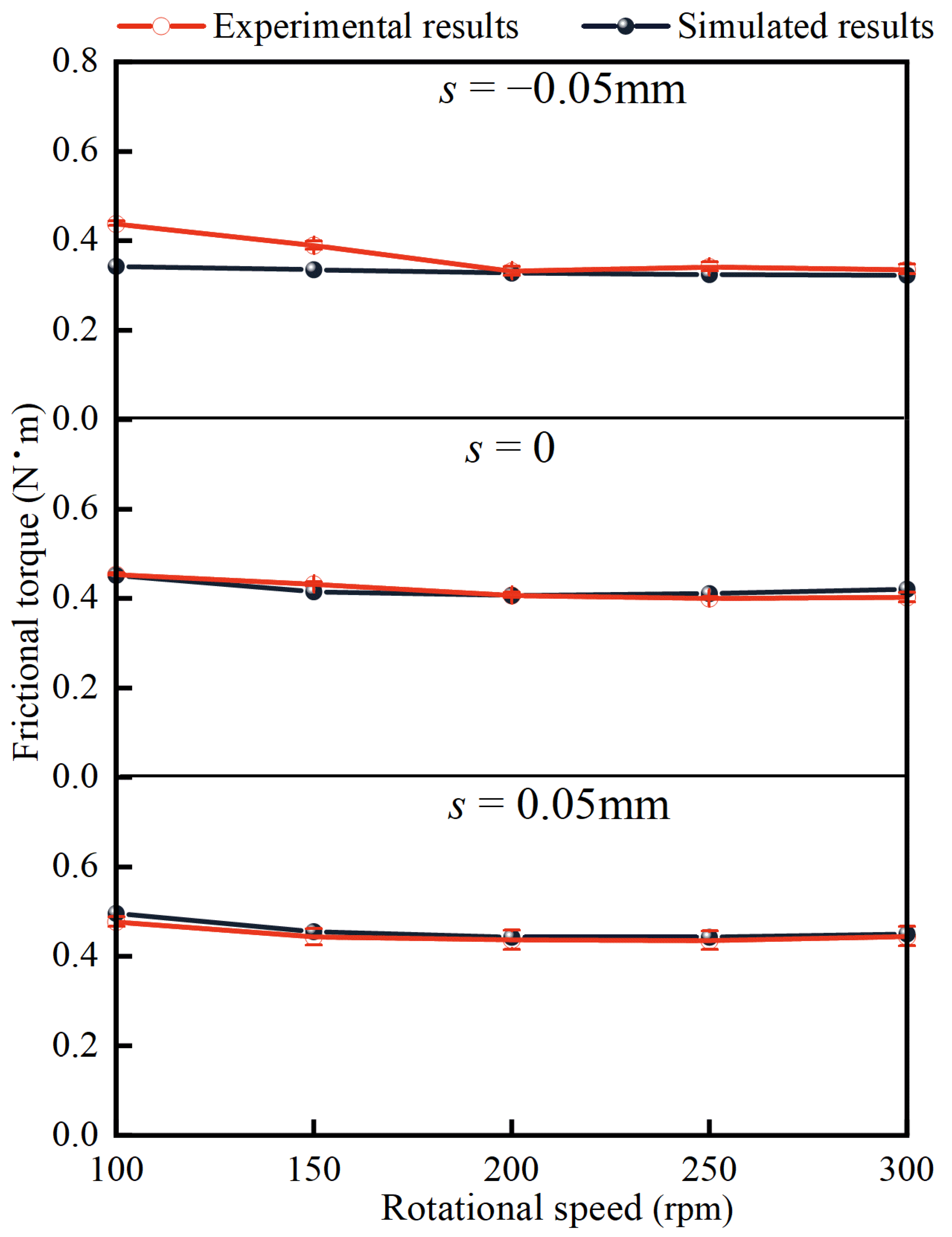
Figure 15a–c show the distributions of film thickness, film pressure, and asperity contact pressure at 200 rpm for different interference values. A larger interference value leads to a reduced film thickness and a substantial increase in asperity contact pressure. In contrast, the film pressure profile remains largely unaffected, exhibiting only a minor elevation at the left peak with greater interference value. Despite a declining boundary lubrication friction coefficient, the frictional torque increases with interference at speeds of 100–300 rpm. This is because the associated, more significant growth in asperity contact pressure becomes the primary factor governing frictional torque.
Comparison with Experimental Results
Figure 16 compares the simulated and experimental frictional torque as a function of rotational speed under three interference conditions. Based on the calculations, within the tested rotational speed range, the mean absolute percentage errors for interferences of −0.05 mm, 0 mm, and 0.05 mm are 10.86%, 4.32%, and 2.12%, respectively. Moreover, the simulated frictional torque trends are consistent with the experimental results, thereby validating the reliability of the numerical model. The analysis indicates that as the rotational speed increases, the experimental and simulated values gradually converge. One possible explanation lies in the vulcanization process used to bond rubber to the roller, which produces a surface asperity distribution differing slightly from the theoretically assumed Gaussian distribution. At lower speeds, where asperity contact pressure dominates, this discrepancy in surface topography leads to a relatively large divergence between simulation and experiment. As the rotational speed rises; however, the hydrodynamic effect becomes progressively more dominant. Under these conditions, the influence of asperity distribution on torque diminishes significantly, resulting in markedly improved agreement between the simulated and experimental results. Additionally, it is worth noting that at an interference of 0.05 mm and rotational speeds of 100 rpm and 150 rpm, the experimental values are approximately 21.64% and 13.93% higher than the simulated values, respectively. This relatively large discrepancy is primarily attributed to the ploughing effect between the asperities on the chamber surface and the rubber surface of the roller, which is not considered in the current numerical model. As the interference increases, the rubber tightly conforms to the microscopic profile of the chamber surface, to the extent that the asperities of the chamber become embedded within the rubber. In this scenario, the relative motion transitions from hard asperities sliding over a soft surface to the stick-slip deformation of an elastomer against a hard surface. Consequently, the ploughing effect is mitigated, and the experimental results align more closely with the simulations.
Furthermore, curves of leakage versus rotational speed under different interference values are obtained. As shown in Figure 15d, the leakage rate decreases with increasing interference, thereby demonstrating an enhancement in the dynamic sealing performance of the roller.

4.2.3. Prediction of Mixed Lubrication Performance in Deep-Sea Environment

Conducting rolling seal performance tests in deep-sea environments poses significant challenges, primarily because ensuring the water tightness of the driving motor and dynamic torque sensor necessitates the use of dynamic sealing measures for the transmission system. Such measures inevitably introduce parasitic torque, which not only varied with rotational speed but also made it impossible to reliably isolate the torque component generated solely by the roller seal, leading to overestimated torque measurements. In view of this, rather than conducting experimental validation, this study employs a numerical model—previously validated under zero seawater pressure conditions—to simulate and predict sealing performance at various water depths.
In the simulation process, given the significant pressure dependence of lubricant viscosity, potential changes in boundary film formation, and the possible ingress of water, the boundary friction coefficient between the roller and the sealed chamber is assumed to vary within a range of 50% to 150% of the friction coefficient f c under the zero seawater pressure condition. Based on this assumption, predictive analyses of mixed lubrication performance in deep-sea environments are performed.
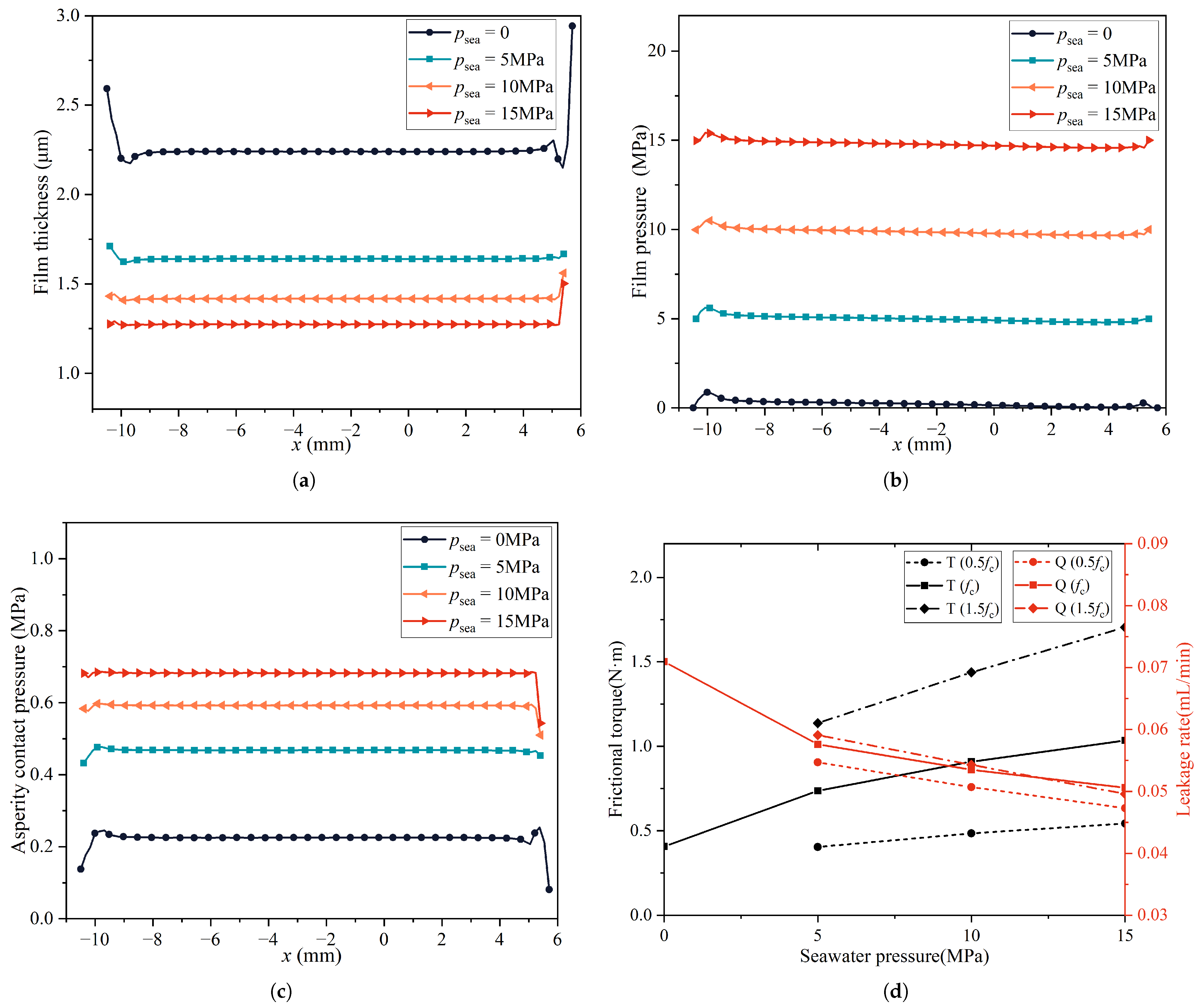
Figure 17a–c present the distribution curves of film thickness, film pressure, and asperity contact pressure at seawater pressures of 5 MPa, 10 MPa, and 15 MPa, obtained with a boundary lubrication friction coefficient f c = 0.2579. The results indicate that increasing seawater pressure leads to a gradual decrease in film thickness and a concurrent increase in both film pressure and asperity contact pressure. Notably, the film pressure closely approaches the respective seawater pressure, accounting for 95.74% of the total static contact pressure at a water depth of 1500 m (with corresponding ratios of approximately 95.53% and 95.29% for boundary lubrication friction coefficients of 0.5 f c and 1.5 f c , both exceeding 90%). An explanation can be found in the minimal pressure differential across the roller and the similar magnitude between static contact pressure and seawater pressure. Under such a near-equilibrium condition, rotation may induce microscale seepage flow between the lubricating film and the surrounding medium, allowing the fluid film to support most of the hydrostatic pressure, while the load carried by asperity contacts remains relatively low. In contrast, in a non-pressure-balanced configuration where seawater pressure substantially exceeds the oil-side pressure, the rubber will be forced into the flow channels of the chamber, hindering rotation and leading to a sharp increase in torque. Therefore, the pressure-balanced structure enhances the hydrodynamic pressurization within the rolling seal, mitigating the rise in frictional torque.
Additionally, Figure 17d presents the frictional torque and leakage rate curves as functions of seawater pressure for the three boundary lubrication friction coefficients. The results show that both frictional torque and leakage rate exhibit consistent trends with increasing seawater pressure across all three friction coefficient values. For a given boundary lubrication friction coefficient, the frictional torque increases with increasing seawater pressure, indicating that greater mating forces will be required for WMCs in deeper marine environments. Simultaneously, the leakage rate gradually decreases due to increased asperity contact pressure. However, this improvement in sealing is relatively limited, especially when compared to the increase in frictional torque.

5. Conclusions

Based on the average Reynolds equation, a refined model for rolling seals operating under deep-sea pressure-balanced conditions is developed. The effects of interference, rotational speed, and seawater pressure on tribological performance are systematically investigated. The model is validated experimentally under zero seawater pressure, leading to the following main conclusions:
(1)
Considering the flat head of the oil bladder in deep-sea pressure-balanced operating conditions significantly improves the calculation accuracy of the internal–external pressure difference;
(2)
Under constant interference, increasing the rotational speed enhances the lubricant film thickness in the contact zone, causing the ratio of hydrodynamic load capacity to total static contact pressure to rise from 38.04% to 57.94% (under zero seawater pressure). Consequently, a transition from mixed lubrication to a fluid lubrication regime occurs, wherein hydrodynamic effects dominate the interfacial behavior;
(3)
An excessively large interference value intensifies asperity interaction, leading to markedly elevated contact pressure and consequently higher frictional torque, which adversely affects the dynamic operational performance of the equipment;
(4)
The pressure-balanced structure enhances the hydrodynamic load capacity with increasing seawater pressure, which accounts for over 90% of the total static contact pressure at 1500 m depth, thereby mitigating the rise in frictional torque, while the leakage rate exhibits a declining trend under the same condition.
A limitation of this work is that, owing to the lack of experimental measurements of the boundary lubrication friction coefficient under deep-sea pressure and validation tests under actual operating conditions, the conclusions regarding deep-sea environments are primarily intended for predictive and trend analysis. Additionally, this study mainly conducts steady-state analysis of rolling seals, while further research will be extended to transient conditions to better understand the lubrication mechanism and guide the design of deep-sea rolling seal equipment.

Author Contributions

Conceptualization, Y.Y. and G.W.; methodology, Y.Y. and L.G.; software, Y.Y. and Y.W.; validation, G.W. and G.H.; formal analysis, Y.Y. and Y.W.; investigation, L.G. and G.H.; resources, G.W.; data curation, Y.Y.; writing—original draft preparation, Y.Y.; writing—review and editing, L.G., Y.W. and G.W.; visualization, G.H.; supervision, L.G. and G.W.; project administration, G.W.; funding acquisition, G.W. All authors have read and agreed to the published version of the manuscript.

Funding

This research was funded by the National Key Research and Development Program of China OF FUNDER grant number 2022XXX2808000.

Data Availability Statement

Data underlying the results presented in this paper are not publicly available at this time but may be obtained from the authors upon reasonable request.

Conflicts of Interest

The authors declare no conflicts of interest.

Nomenclature

aRadius of the bladder
C 10 , C 01 , D 1 Material coefficients of the Mooney–Rivlin model
DDiameter of the roller
EYoung’s modulus of the roller
E B Bulk modulus of the oil
E b Young’s modulus of the bladder
E Equivalent Young’s modulus, E / ( 1 ν 2 )
f c Boundary lubrication friction coefficient
FCavitation index
hFilm thickness
h m i n Minimum film thickness
HDimensionless film thickness, h / σ
H T Dimensionless average truncated film thickness
I i j Influence coefficient matrix
LLength of the bladder
L x Sealing length
p a Ambient pressure
p c Asperity contact pressure
p f Film pressure
p o i l Oil pressure
p s c Static contact pressure
p s e a Seawater pressure
P c Dimensionless contact pressure, p c / p a
P f Dimensionless film pressure, p f / p a
P s c Dimensionless static contact pressure, p s c / p a
QLeakage rate
RAsperity radius
sInterference value
tWall thickness of the bladder
TFrictional torque
ULinear speed, π ω D / 60
WStrain energy
xCircumferential direction coordinate
XDimensionless circumferential coordinate, x / L x
α ¯ Dimensionless pressure–viscosity coefficient, α p a
β Dimensionless asperity radius
γ Dimensionless asperity density
ω Rational speed
η Asperity density
σ Standard deviation of surface heights
ν Poisson’s ratio of the roller
ν b Poisson’s ratio of the bladder
λ Film thickness ratio
ρ ¯ Dimensionless density
ζ Dimensionless number, 6 μ 0 U L x / σ 2 p a
μ Fluid viscosity
Φ Variable representing pressure
φ x Pressure flow factors
φ s Shear flow factors
φ f , φ f s , φ f p Shear stress factors
Δ p Pressure difference

References

  1. Dong, C.; Bai, X.; Yan, X.; Yuan, C. Research status and advances on tribological study of materials under ocean environment. Tribology 2013, 33, 311–320. [Google Scholar]
  2. Zhao, L.; Wu, G.; Yan, Z.; Wang, D.; Hang, D. Current status and trends of wet-mate connectors. Intell. Mar. Technol. Syst. 2025, 3, 4. [Google Scholar] [CrossRef]
  3. Duan, Z.; Zhang, Y.; Hu, J.; He, B.; Yang, C. Research on non-contact wet mateable connector for optical communication and power transmission. Front. Mar. Sci. 2023, 10, 1100653. [Google Scholar] [CrossRef]
  4. Awwad, S. Fiber-optic connectors: An enabling technology for high-noise subsea environments. In Proceedings of the Offshore Technology Conference; OTC: Houston, TX, USA, 2000; p. OTC-12150-MS. [Google Scholar]
  5. Lamare, P.; Vernin, P. Underwater mateable electro-optical connectors: The feedback from ANTARES. Nucl. Instrum. Methods Phys. Res. Sect. A Accel. Spectrometers Detect. Assoc. Equip. 2009, 602, 252–254. [Google Scholar] [CrossRef]
  6. Cairns, J. Hybrid wet-mate connectors: Writing the next chapter. Sea Technol. 1997, 38, 17–22. [Google Scholar]
  7. Brown, G. Operational considerations for underwater-mateable connectors. In Proceedings of the Oceans 2003; IEEE: New York, NY, USA, 2003; Volume 4, pp. 1843–1848. [Google Scholar]
  8. Salant, R.F.; Flaherty, A.L. Elastohydrodynamic analysis of reverse pumping in rotary lip seals with microasperities. Trans. ASME J. Tribol. 1995, 117, 53–59. [Google Scholar] [CrossRef]
  9. Patir, N.; Cheng, H.S. An average flow model for determining effects of three-dimensional roughness on partial hydrodynamic lubrication. Trans. ASME J. Tribol. 1978, 100, 12–17. [Google Scholar] [CrossRef]
  10. Patir, N.; Cheng, H. Application of average flow model to lubrication between rough sliding surfaces. J. Lubr. Technol. 1979, 101, 220–229. [Google Scholar] [CrossRef]
  11. Shi, F.; Salant, R.F. Numerical study of a rotary lip seal with a quasi-random sealing surface. J. Trib. 2001, 123, 517–524. [Google Scholar] [CrossRef]
  12. Kozuch, E.; Nomikos, P.; Rahmani, R.; Morris, N.; Rahnejat, H. Effect of shaft surface roughness on the performance of radial lip seals. Lubricants 2018, 6, 99. [Google Scholar] [CrossRef]
  13. Chen, S.; Guo, F.; Wang, W.; Wang, Y. An improved mixed lubrication model for revealing the mechanism of high speed and frictional heat on sealing performance. Tribol. Int. 2024, 191, 109147. [Google Scholar]
  14. Guo, F.; Jia, X.; Suo, S.; Salant, R.F.; Wang, Y. A mixed lubrication model of a rotary lip seal using flow factors. Tribol. Int. 2013, 57, 195–201. [Google Scholar] [CrossRef]
  15. Jia, X.; Guo, F.; Huang, L.; Wang, L.; Gao, Z.; Wang, Y. Effects of the radial force on the static contact properties and sealing performance of a radial lip seal. Sci. China Technol. Sci. 2014, 57, 1175–1182. [Google Scholar] [CrossRef]
  16. Jiang, B.; Huang, X.; Guo, F.; Jia, X.; Wang, Y. Effect of friction coefficient on the mixed lubrication model of rotary lip seals. Proc. Inst. Mech. Eng. Part J J. Eng. Tribol. 2020, 234, 1746–1754. [Google Scholar]
  17. Li, D.; Yang, X.; Wu, Y. Theoretical analysis and experimental research of surface texture hydrodynamic lubrication. Chin. J. Mech. Eng. 2022, 35, 30. [Google Scholar] [CrossRef]
  18. Tan, G.; Li, J.; Zhou, C.; Luo, Z.; Huang, X.; Guo, F. Numerical simulation study of high-speed lip seal considering eccentricity. Ind. Lubr. Tribol. 2024, 76, 252–261. [Google Scholar] [CrossRef]
  19. Wei, J.; Xue, Y.; Tian, J.; Guo, F. Study on the prediction of high-speed rotary lip seal wear in aero-engine based on heat-fluid-solid coupling. Ind. Lubr. Tribol. 2024, 76, 167–177. [Google Scholar]
  20. Song, W.; Cui, W. An overview of underwater connectors. J. Mar. Sci. Eng. 2021, 9, 813. [Google Scholar] [CrossRef]
  21. Han, Q.; Zhang, Y.; Chen, H.; Yang, J.; Chen, Y. Analysis of reciprocating seals in the wet-mate electrical connectors for underwater applications. Proc. ASME Int. Mech. Eng. Expo. Am. Soc. Mech. Eng. 2018, 52187, V013T05A002. [Google Scholar]
  22. Han, Q.; Chen, H.; Yang, W.; Zhang, Y.; Chen, Y. Analysis of reciprocating O-ring seal in the pressure-balanced oil-filled wet-mate electrical connectors for underwater applications. Lubr. Sci. 2019, 31, 335–345. [Google Scholar] [CrossRef]
  23. Prati, E.; Strozzi, A. A Study of the elastohydrodynamic problem in rectangular elastomeric seals. J. Tribol. 1984, 106, 505. [Google Scholar] [CrossRef]
  24. Greenwood, J.A.; Williamson, J.P. Contact of nominally flat surfaces. Proc. R. Soc. Lond. Ser. Math. Phys. Sci. 1966, 295, 300–319. [Google Scholar]
  25. Huang, Y. Elastohydrodynamic Model of Hydraulic Rod Seals with Various Rod Surfaces; Georgia Institute of Technology: Atlanta, GA, USA, 2014. [Google Scholar]
  26. Streator, J.L. A model of mixed lubrication with capillary effects. Tribology 2002, 40, 121–128. [Google Scholar]
  27. Zhuang, Z. A Beginner’s Guide to ABAQUS Finite Element Software Version 6.4; Tsinghua University Press: Beijing, China, 2004. [Google Scholar]
  28. Salant, R.F.; Maser, N.; Yang, B. Numerical model of a reciprocating hydraulic rod seal. J. Tribol. Trans. ASME 2007, 129, 91–97. [Google Scholar] [CrossRef]
  29. Joyce, T. Theoretical determination of lubrication regimes in two-piece first metatarsophalangeal Prostheses. In Proceedings of the 3rd Kuala Lumpur International Conference on Biomedical Engineering 2006; Springer: Berlin/Heidelberg, Germany, 2007; pp. 651–655. [Google Scholar]
  30. GB/T 7757-2009; Rubber, Vulcanized or Thermoplastic—Determination of Compression Stress-Strain Properties. China Standards Press: Beijing, China, 2009.
  31. Huang, Y.; Salant, R.F. Numerical analysis of a hydraulic rod seal: Flooded vs. starved conditions. Tribol. Int. 2015, 92, 577–584. [Google Scholar] [CrossRef]
  32. Gent, A.N. Engineering with Rubber, 3rd ed.; Carl Hanser Verlag GmbH & Co.: Munich, Germany, 2012; pp. I, III–XV, XVII–XVIII. [Google Scholar]
  33. ISO 25178-2:2012; Geometrical Product Specifications (GPS)—Surface Texture: Areal—Part 2: Terms, Definitions and Surface Texture Parameters. ISO: Geneva, Switzerland, 2012.
  34. Song, W.; Yang, C.; Cui, W.; Lei, Y.; Hong, J.; Wang, Z.; Hu, Z. Study of pressure-balanced oil-filled (PBOF) technology. Ocean. Eng. 2022, 260, 111757. [Google Scholar] [CrossRef]
  35. Song, W.; Yang, C.; Cui, W.; Song, C.; Yang, P.; Hong, J.; Lei, Y.; Liu, Q.; Wang, Z. An underwater wet-mateable electrical connector with dual-bladder pressure-balanced oil-filled (PBOF) technology. J. Mar. Sci. Eng. 2023, 11, 156. [Google Scholar] [CrossRef]
  36. Timoshenko, S.; Woinowsky-Krieger, S. Theory of Plates and Shells, 2nd ed.; McGraw-Hill: New York, NY, USA, 1987; pp. 436–532. [Google Scholar]
  37. Huang, K.; Xia, Z.; Xue, M. Theory of Plates and Shells; Tsinghua University Press: Beijing, China, 1987. [Google Scholar]
  38. Kazama, T.; Totten, G. Physical properties and their determination. In Handbook of Hydraulic Fluid Technology; CRC Press: Boca Raton, FL, USA, 2012. [Google Scholar]
Figure 1. Schematic diagram of a WMC: (a) Plug and receptacle connector. (b) Section view along the roller axis.
Lubricants 14 00132 g001
Figure 2. Illustration of the operational principle in the (a) unmated, (b) initial mating, and (c) fully mated states.
Lubricants 14 00132 g002
Figure 3. Geometrical model analysis: (a) original assembly and (b) simplified assembly.
Lubricants 14 00132 g003
Figure 4. Schematic diagram of the computational scheme, where dotted box represent external input parameters and arrows indicate the calculation sequence and flow.
Lubricants 14 00132 g004
Figure 5. Test apparatus: (a) layout of the physical setup; (b) schematic of the pressure application module.
Lubricants 14 00132 g005
Figure 6. Input parameter testing: (a) material stress–strain curve; (b) roller surface topography measurement.
Lubricants 14 00132 g006
Figure 7. Schematic of the deformation of the bladder under pressure-balanced conditions.
Lubricants 14 00132 g007
Figure 8. Curves of differential pressure under different seawater pressures.
Lubricants 14 00132 g008
Figure 9. Boundary lubrication friction coefficient curves under different interference values, where error bars represent the standard deviation.
Lubricants 14 00132 g009
Figure 10. Mesh independence verification.
Lubricants 14 00132 g010
Figure 11. Contour plots of the roller at zero interference value: (a) stress contour and (b) static contact pressure contour.
Lubricants 14 00132 g011
Figure 12. Variation of static contact pressure with (a) interference value and (b) seawater pressure.
Lubricants 14 00132 g012
Figure 13. Comparison of simulated and experimental results for different interference values.
Lubricants 14 00132 g013
Figure 14. Numerical results under zero seawater pressure: (a) distributions of film thickness, film pressure, and asperity contact pressure at 200 rpm under zero interference; (b) film thickness; (c) film pressure; and (d) asperity contact pressure at various rotational speeds under zero interference.
Lubricants 14 00132 g014
Figure 15. Numerical results for various interferences at zero seawater pressure: (ac) film thickness, film pressure, and asperity contact pressure at 200 rpm; (d) leakage rate curves at different rotational speeds.
Lubricants 14 00132 g015
Figure 16. Comparison of simulated and experimental frictional torque under various interferences and rotational speeds at zero seawater pressure, where error bars represent the standard deviation.
Lubricants 14 00132 g016
Figure 17. Numerical results under zero interference and at 200 rpm for various seawater pressures: (a) film thickness, (b) film pressure, and (c) asperity contact pressure, obtained with a boundary lubrication friction coefficient of f c = 0.2579; (d) frictional torque and leakage rate curves for boundary lubrication friction coefficients of 0.5 f c , f c , and 1.5 f c .
Lubricants 14 00132 g017
Table 1. Rough surface topography parameters.
CoefficientsValuesCoefficientsValues
β 1.75  [25]R β σ  [26]
γ 1 [25] η γ / σ 2  [26]
Table 2. Bladder parameters and operating parameters.
ParametersValues
Outer diameter of the bladder (mm)15
Length of the bladder (mm)41
Wall thickness of the bladder (mm)1
Elastic modulus of the bladder (MPa)22
Poisson’s ratio of the bladder0.5
Rectangular channel dimension (mm × mm)1.56 × 31
Oil viscosity (Pa·s)0.0964 (at 25 °C)
Pressure–viscosity coefficient 2 × 10 8
Outer diameter of the roller (mm)14.6
Length of the roller (mm)31
Inner diameter of the sealed chamber (mm)14
Interference value (mm) 0.05 , 0, 0.05
Rotational speed (rpm)1, 100, 150, 200, 250, 300
Disclaimer/Publisher’s Note: The statements, opinions and data contained in all publications are solely those of the individual author(s) and contributor(s) and not of MDPI and/or the editor(s). MDPI and/or the editor(s) disclaim responsibility for any injury to people or property resulting from any ideas, methods, instructions or products referred to in the content.