Influence of Alumina Abrasive Particles on Wear Behavior of Textured Surfaces Under Heavy-Load Conditions

 , ,
, ,
Abstract
1. Introduction
2. Materials and Methods
2.1. Materials
2.2. Surface Texturing
2.3. Al2O3 Particle Parameters
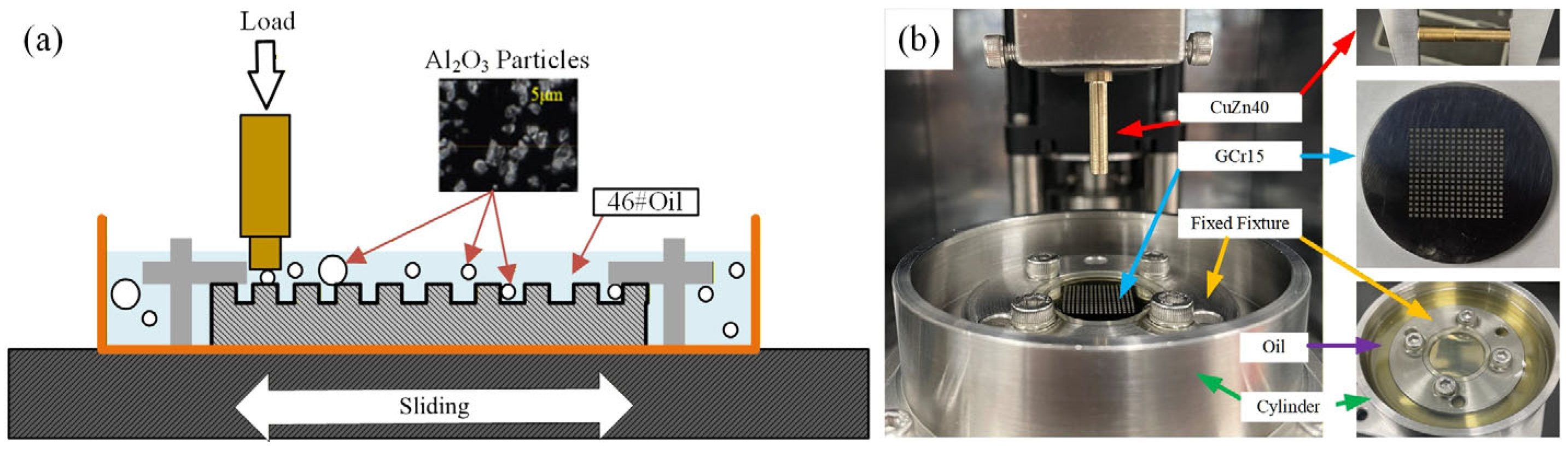
2.4. Wear Testing
3. Results and Discussion
3.1. Coefficient of Friction
3.2. Wear Rate
3.3. Wear Mechanism of Lubrication Containing Abrasive Particles


3.4. Practical Design Guidelines for Texture Selection
4. Conclusions
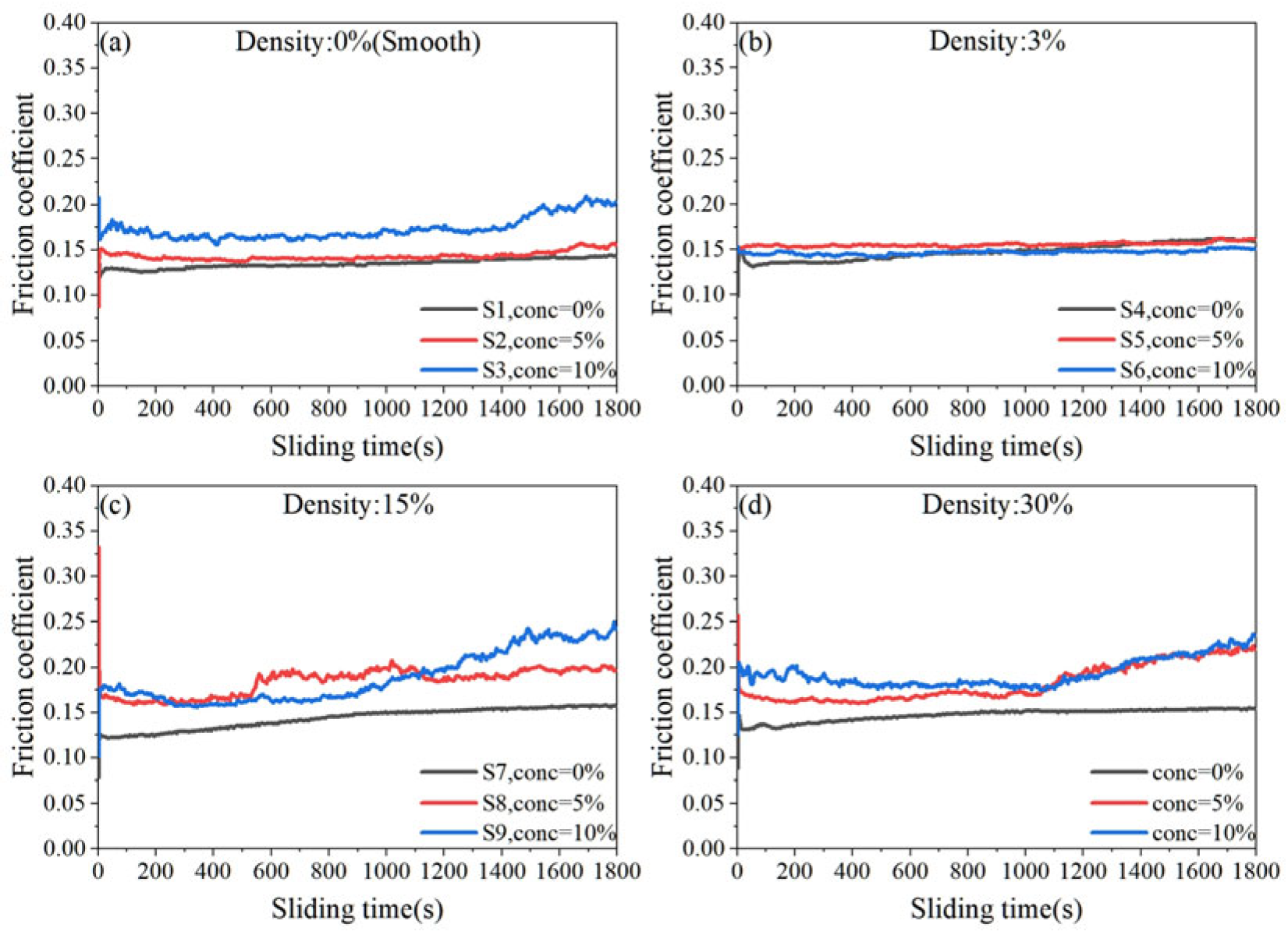
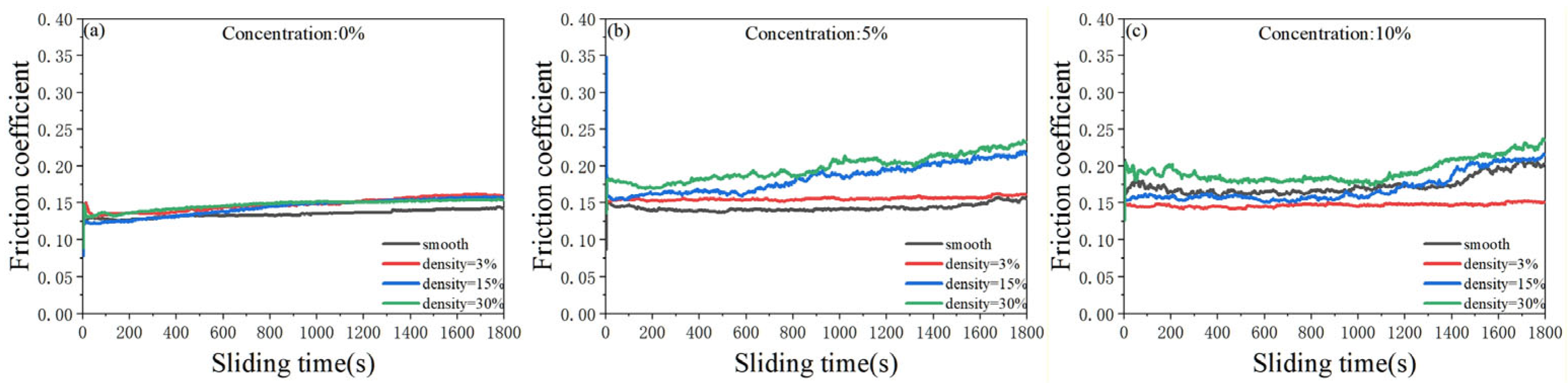
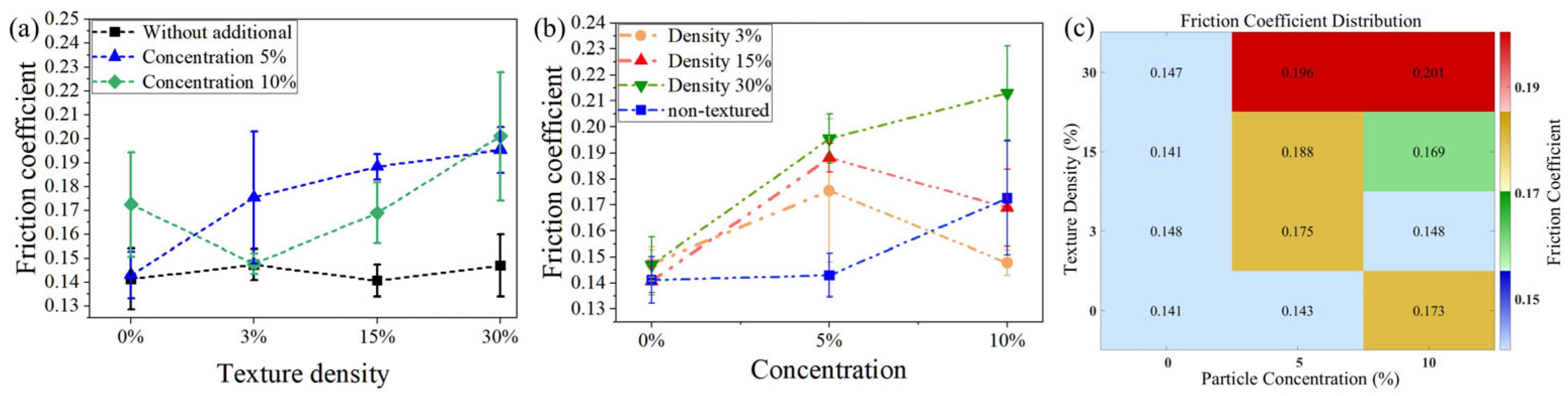
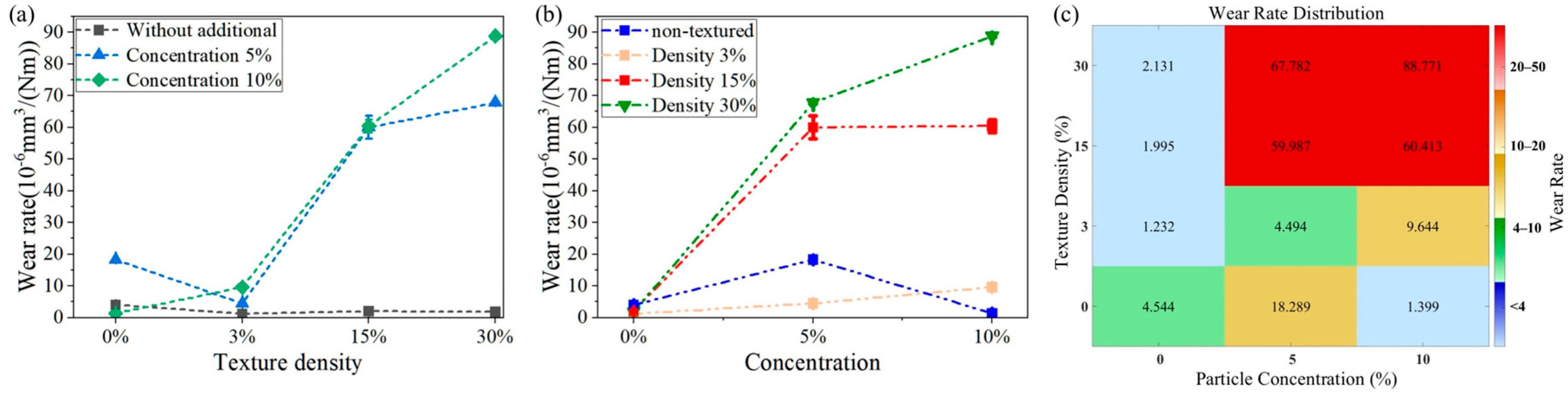
- The synergistic effect between texture density and particle concentration is a critical determining factor for friction performance. Under clean lubrication conditions (0% particles), the effect of texture density on the coefficient of friction was negligible. However, when abrasive particles were present, the coefficient of friction increased significantly with rising texture density. This is attributed to the increased number of texture edges at higher densities, which exacerbate impact wear from particles and reduce the effective load-bearing smooth area. Notably, at high particle concentrations, the wear rate deteriorated sharply with increasing texture density, indicating inherent drawbacks for high-density textures under such operating conditions.
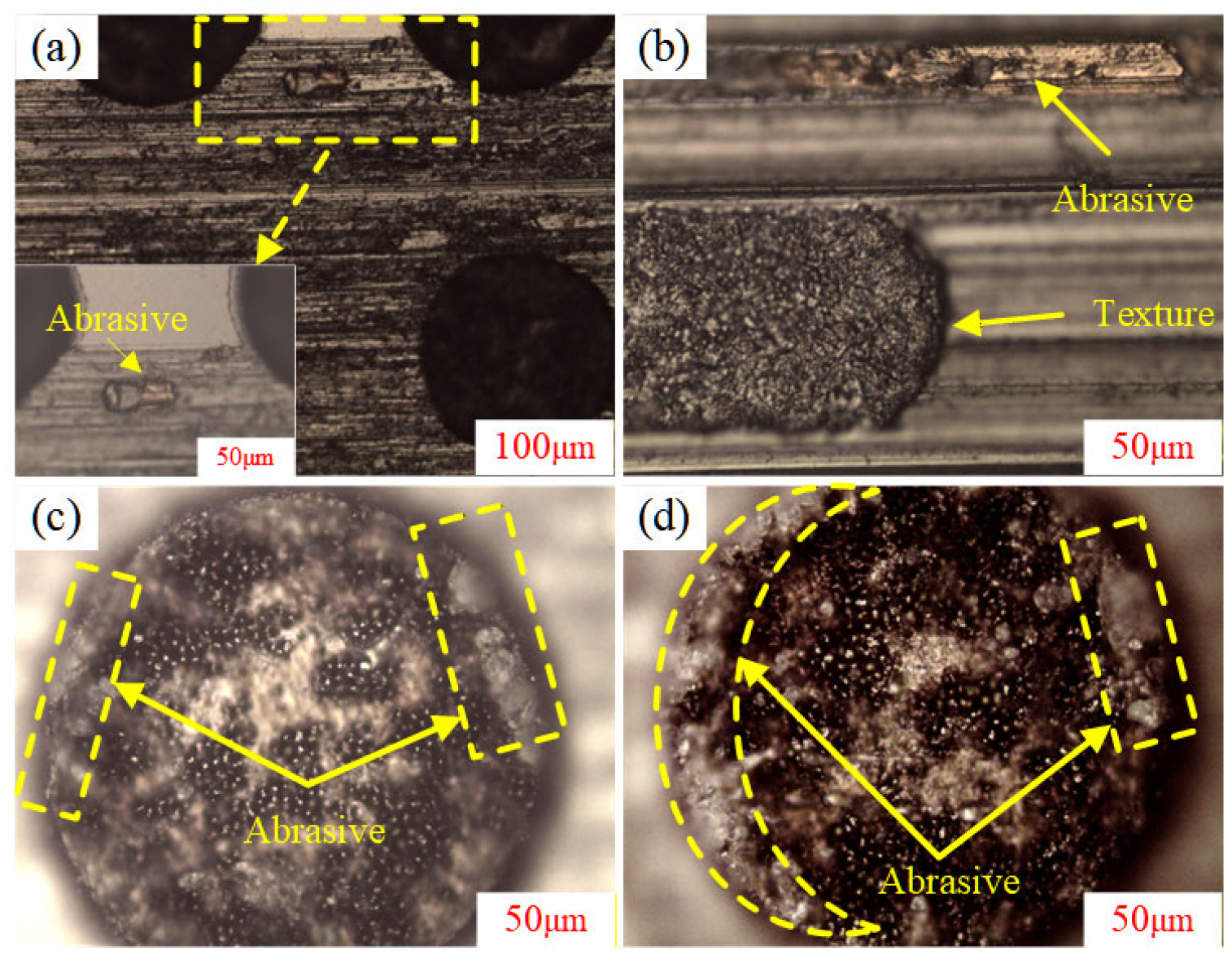
- Textures influence friction behavior through particle entrainment and removal mechanisms. An increase in abrasive particle concentration significantly raised the coefficient of friction on smooth surfaces, as particles acted as a third body to intensify surface plowing. In contrast, textured surfaces exhibited a unique response: their dimple structure could capture and store abrasive particles, effectively removing them from the primary frictional contact interface and thereby reducing the abrasive content in the friction subsurface. Concurrently, the lubricant storage function of the texture, combined with the captured particles and wear debris, formed a mixed lubrication layer. This layer mitigated the friction increase caused by high particle concentrations to a certain extent. However, this beneficial effect is limited by the integrity of the texture.
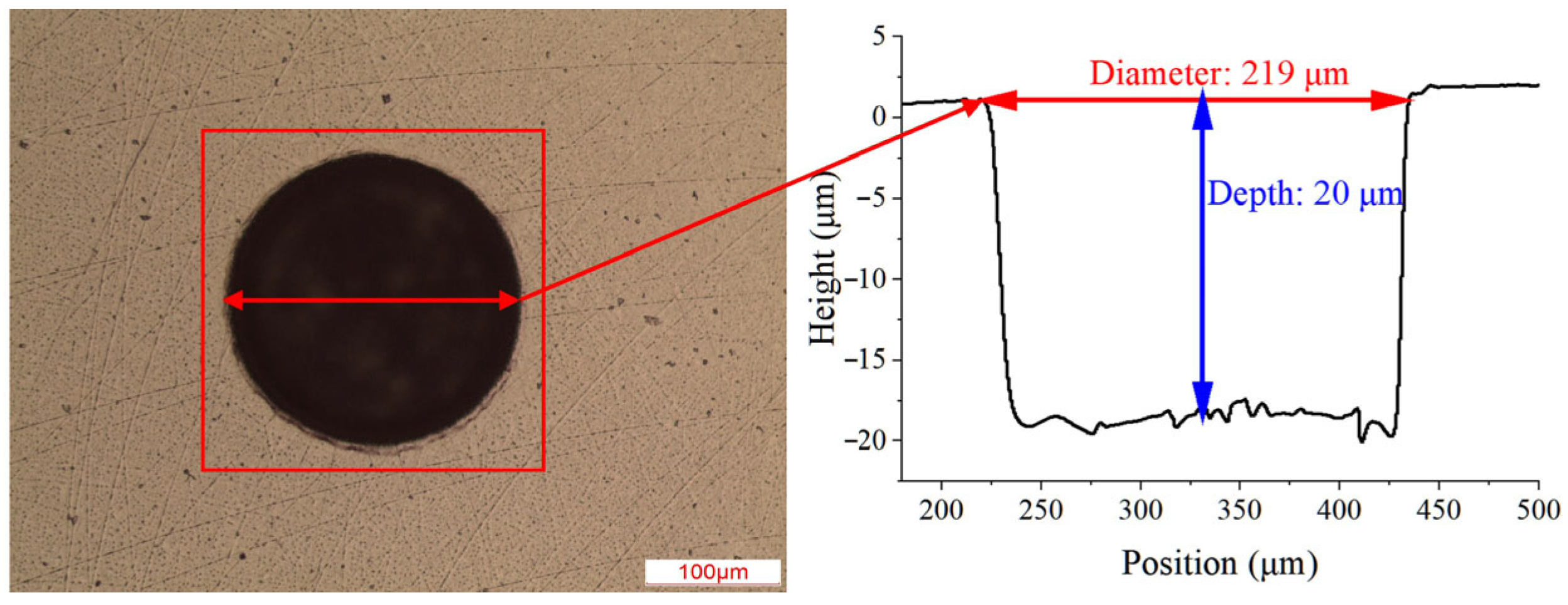
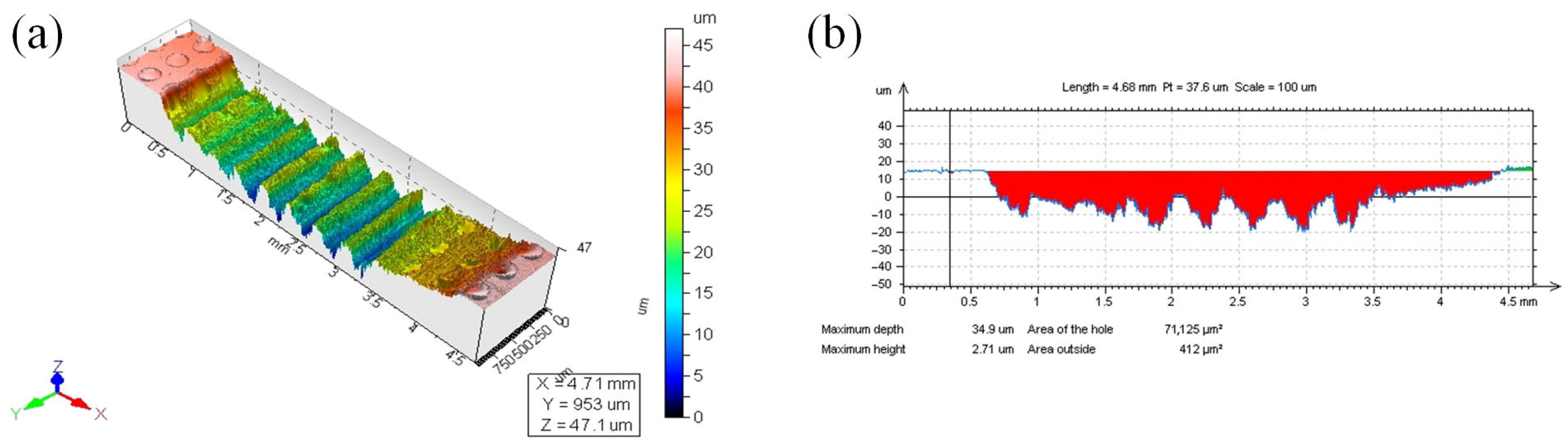
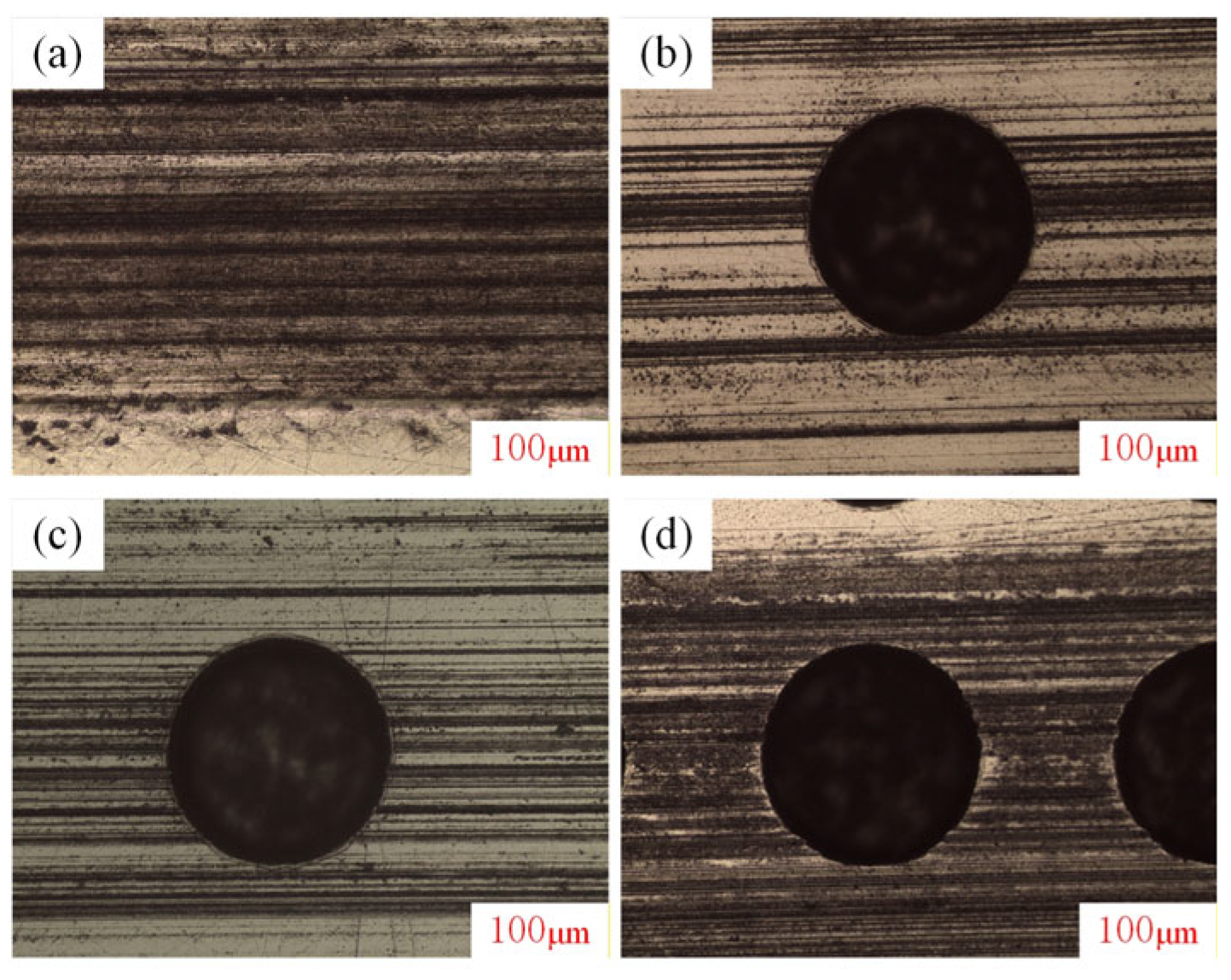
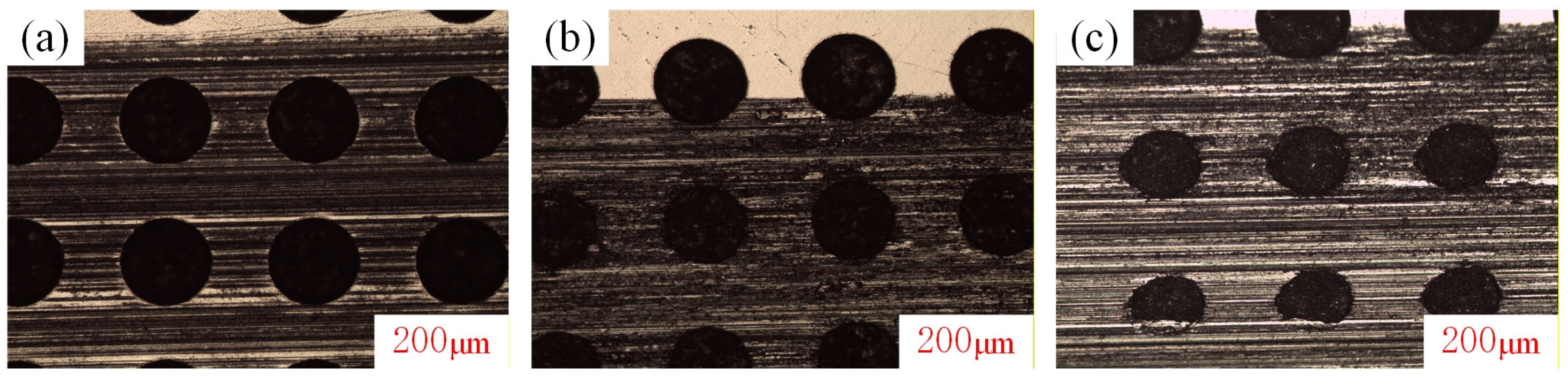
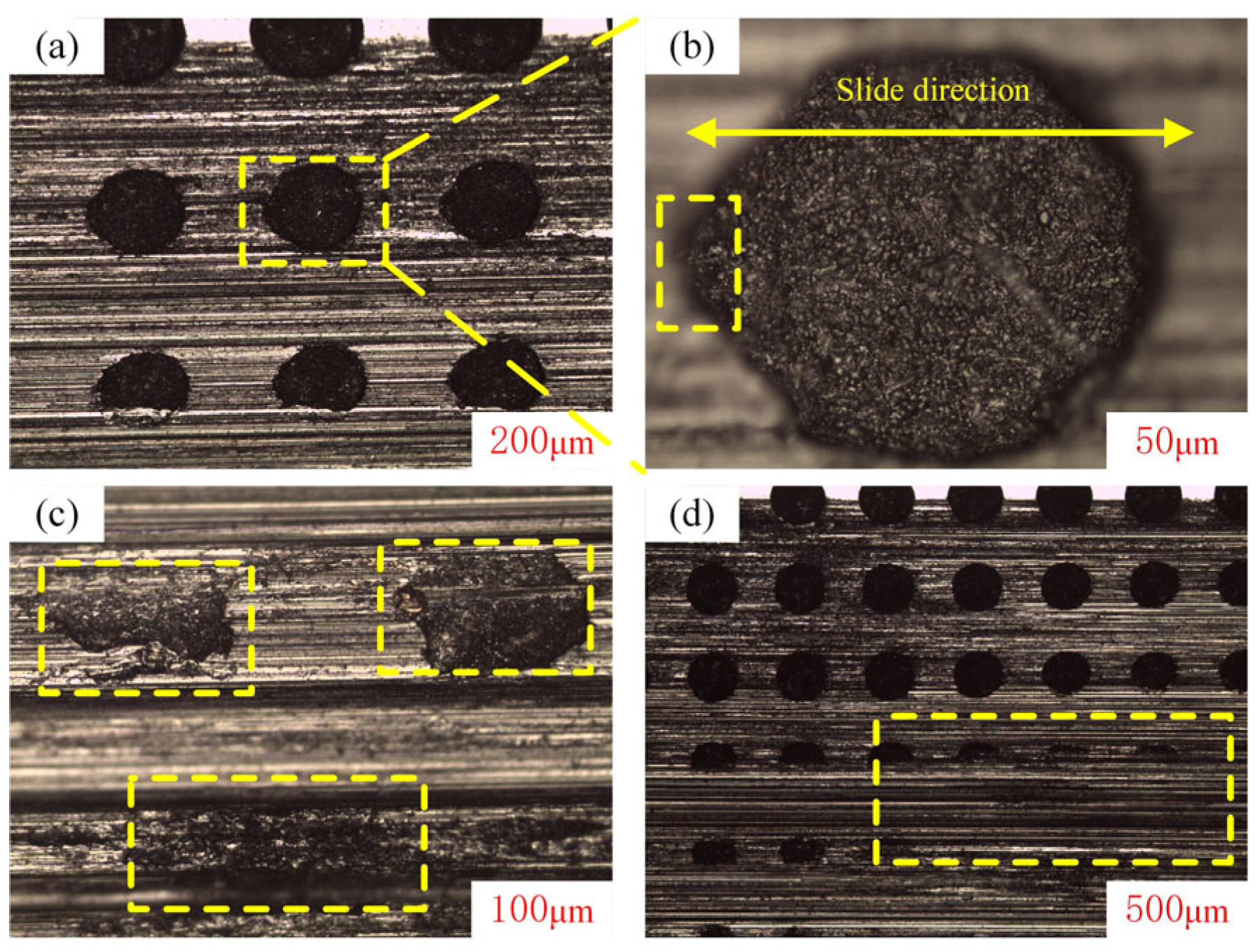
- Texture degradation under severe conditions was observed; heavy loads combined with high particle concentrations caused progressive wear at texture edges, reducing texture depth until complete feature disappearance. This self-accelerating wear process re-exposes trapped particles to the contact surface, ultimately leading to texture failure. The relatively large dimples (diameter 0.219 mm, depth 20 μm) were designed to optimize particle–dimple interaction—the depth was approximately three times the particle diameter (7 μm) for sufficient storage capacity, while the larger diameter prevented clogging. However, this design’s integrity was compromised under severe conditions, leading to degraded friction performance.
Author Contributions
Funding
Data Availability Statement
Conflicts of Interest
References
- Ma, X.; Wang, Q.J.; Lu, X.; Mehta, V.S. Piston surface design to improve the lubrication performance of a swash plate pump. Tribol. Int. 2019, 132, 275–285. [Google Scholar] [CrossRef]
- Li, J.; Zuo, Z.; Jia, B.; Feng, H.; Wei, Y.; Zhang, Z.; Smallbone, A.; Paul Roskilly, A. Comparative analysis on friction characteristics between free-piston engine generator and traditional crankshaft engine. Energy Convers. Manag. 2021, 245, 114630. [Google Scholar] [CrossRef]
- Xiang, Z.; Liu, G.; Xie, S.; Zhang, J.; Xiao, Z.; He, D. The effect of interfacial wear debris on the friction-induced stick-slip vibration. Tribol. Int. 2024, 199, 109999. [Google Scholar] [CrossRef]
- Hao, W.; Larbi, A.; Dong, H.; Wang, D.; Li, S. A comparative investigation on wear behaviors of physical and chemical vapor deposited bronze coatings for hydraulic piston pump. Chin. J. Aeronaut. 2024, 37, 391–403. [Google Scholar] [CrossRef]
- Zum Gahr, K.H.; Schneider, J. Surface modification of ceramics for improved tribological properties. Ceram. Int. 2000, 26, 363–370. [Google Scholar] [CrossRef]
- Gropper, D.; Wang, L.; Harvey, T.J. Hydrodynamic lubrication of textured surfaces: A review of modeling techniques and key findings. Tribol. Int. 2016, 94, 509–529. [Google Scholar] [CrossRef]
- Labiapari, W.d.S.; de Alcântara, C.M.; Costa, H.L.; De Mello, J.D.B. Wear debris generation during cold rolling of stainless steels. J. Mater. Process. Technol. 2015, 223, 164–170. [Google Scholar] [CrossRef]
- Marian, M.; Almqvist, A.; Rosenkranz, A.; Fillon, M. Numerical micro-texture optimization for lubricated contacts—A critical discussion. Friction 2022, 10, 1772–1809. [Google Scholar] [CrossRef]
- Wang, Z.; Ye, R.; Xiang, J. The performance of textured surface in friction reducing: A review. Tribol. Int. 2023, 177, 108010. [Google Scholar] [CrossRef]
- Hamilton, D.B.; Walowit, J.A.; Allen, C.M. A Theory of Lubrication by Microirregularities. J. Basic Eng. 1966, 88, 177–185. [Google Scholar] [CrossRef]
- Tala-Ighil, N.; Fillon, M.; Maspeyrot, P. Effect of textured area on the performances of a hydrodynamic journal bearing. Tribol. Int. 2011, 44, 211–219. [Google Scholar] [CrossRef]
- Zhou, W.; Wei, X.; Haidak, G.; Wang, D. Numerical study on the lubrication performance of oil films in textured piston/cylinder pairs. Phys. Fluids 2023, 35, 073606. [Google Scholar] [CrossRef]
- Zhang, H.; Hua, M.; Dong, G.-N.; Zhang, D.-Y.; Chin, K.-S. A mixed lubrication model for studying tribological behaviors of surface texturing. Tribol. Int. 2016, 93, 583–592. [Google Scholar] [CrossRef]
- Liu, Y.; Zhang, H.; Dai, S.; Dong, G. Designing a bioinspired scaly textured surface for improving the tribological behaviors of starved lubrication. Tribol. Int. 2022, 173, 107594. [Google Scholar] [CrossRef]
- Li, S.; Chen, H.; Luo, T.; Xiao, G.; Yi, M.; Chen, Z.; Zhang, J.; Xu, C. Tribological properties of laser surface texturing modified GCr15 steel under graphene/5CB lubrication. J. Mater. Res. Technol. 2022, 18, 3598–3611. [Google Scholar] [CrossRef]
- Shen, M.-x.; Li, B.; Ji, D.-h.; Xiong, G.-y.; Zhao, L.-z.; Zhang, J.; Zhang, Z.-n. Effect of Particle Size on Tribological Properties of Rubber/Steel Seal Pairs Under Contaminated Water Lubrication Conditions. Tribol. Lett. 2020, 68, 40. [Google Scholar] [CrossRef]
- Faccoli, M.; Provezza, L.; Petrogalli, C.; Ghidini, A.; Mazzù, A. Effects of full-stops on shoe-braked railway wheel wear damage. Wear 2019, 428–429, 64–75. [Google Scholar] [CrossRef]
- Kelley, J.; Poll, G.; Pape, F. Investigation of the possible applications for microtextured rolling bearings. Front. Manuf. Technol. 2022, 2, 1012343. [Google Scholar] [CrossRef]
- Zhang, D.; Zhao, F.; Wei, X.; Gao, F.; Li, P.; Dong, G. Effect of texture parameters on the tribological properties of spheroidal graphite cast iron groove-textured surface under sand-containing oil lubrication conditions. Wear 2019, 428–429, 470–480. [Google Scholar] [CrossRef]
- Zou, H.; Lin, B.; Ren, X.; Li, H.; Diao, Q.; Wang, Y.; Sui, T.; Yan, S. Particle size effects on efficiency of surface texturing in reducing friction. Tribol. Int. 2022, 176, 107895. [Google Scholar] [CrossRef]
- Etsion, I. Modeling of surface texturing in hydrodynamic lubrication. Friction 2013, 1, 195–209. [Google Scholar] [CrossRef]
- He, T.; Zheng, H.; Deng, H.S.; Fang, S.Y.; Wang, C.L.; Luo, G. Study on abrasive wear of textured slider friction pair of horizontal pump. Proc. Inst. Mech. Eng. Part J J. Eng. Tribol. 2025, 239, 1478–1493. [Google Scholar] [CrossRef]
- Liu, Z.; Shen, Y.; Liu, J.; Qu, J.; Xu, J.; Li, C. Effects of double-sided textures matching on friction and wear performance in reciprocating contact interface. Wear 2024, 556–557, 205522. [Google Scholar] [CrossRef]
- Liu, Y.; Liu, Y.; Cheng, Z. Investigating the Effects of Surface Texture Direction and Poisson’s Ratio on Stress Concentration Factors. Materials 2025, 18, 2260. [Google Scholar] [CrossRef]
- Kovalchenko, A.; Ajayi, O.; Erdemir, A.; Fenske, G. Friction and wear behavior of laser textured surface under lubricated initial point contact. Wear 2011, 271, 1719–1725. [Google Scholar] [CrossRef]
- Vladescu, S.-C.; Olver, A.V.; Pegg, I.G.; Reddyhoff, T. The effects of surface texture in reciprocating contacts—An experimental study. Tribol. Int. 2015, 82, 28–42. [Google Scholar] [CrossRef]
- Kingston, J.; Muhr, A.; Stephens, I. The effects of surface texture on natural rubber/metal friction at high pressures. Plast. Rubber Compos. 2003, 32, 431–438. [Google Scholar] [CrossRef]
- Yuan, S.; Lin, N.; Wang, W.; Zhang, H.; Liu, Z.; Yu, Y.; Zeng, Q.; Wu, Y. Correlation between surface textural parameter and tribological behaviour of four metal materials with laser surface texturing (LST). Appl. Surf. Sci. 2022, 583, 152410. [Google Scholar] [CrossRef]
- Montes-Seguedo, J.L.; Dominguez-Lopez, I.; Barceinas-Sanchez, J.D.O. Effect of surface texturing of UHMWPE on the coefficient of friction under arthrokinematic and loading conditions corresponding to the walking cycle. Mater. Lett. 2021, 284, 129039. [Google Scholar] [CrossRef]
- Ding, S.; Wei, H.; Yang, O.; Deng, L.; Mu, D. Tribological behaviors of laser textured surface under different lubrication conditions for rotary compressor. Sci. Rep. 2023, 13, 5378. [Google Scholar] [CrossRef]
- Chen, G.; Wang, Y.; Zhong, N.; Fan, Z.; Wang, G. Design and research of a heavy load fatigue test system based on hydraulic control for full-size marine low-speed diesel engine bearings. Ocean. Eng. 2023, 288, 116174. [Google Scholar] [CrossRef]
- Wang, D.; Yuan, J.; Hu, L.; Lyu, B. Multidimensional Study on the Wear of High-Speed, High-Temperature, Heavy-Load Bearings. Materials 2023, 16, 2714. [Google Scholar] [CrossRef] [PubMed]
- Yu, X.; Tang, B.; Wang, S.; Han, Z.; Li, S.; Chen, M.; Zhang, R.; Wang, J.; Jiao, J.; Jiang, H. High-speed and heavy-load tribological properties of hydrostatic thrust bearing with double rectangular recess. Int. J. Hydrogen Energy 2022, 47, 21273–21286. [Google Scholar] [CrossRef]
- Cui, P.; Li, W.; Liu, P.; Wang, J.; Ma, X.; Zhang, K.; Ma, F.; Chen, X.; Feng, R.; Liaw, P.K. The influence of WS2 layer thickness on microstructures and mechanical behavior of high-entropy (AlCrTiZrNb)N/WS2 nanomultilayered films. Surf. Coat. Technol. 2022, 433, 128091. [Google Scholar] [CrossRef]
- Hua, X.; Puoza, J.C.; Zhang, P. The influence of laser surface texture on the tribological properties of friction layer materials in ultrasound motors. Proc. Inst. Mech. Eng. Part J J. Eng. Tribol. 2022, 236, 1123–1132. [Google Scholar] [CrossRef]
- Liu, X.; Su, G.; Fan, Q.; Zhang, Y.; Chen, H.; Zhang, C. Investigation of the Surface Characteristics of GCr15 in Electrochemical Machining. Micromachines 2024, 15, 1062. [Google Scholar] [CrossRef]
- Braun, D.; Greiner, C.; Schneider, J.; Gumbsch, P. Efficiency of laser surface texturing in the reduction of friction under mixed lubrication. Tribol. Int. 2014, 77, 142–147. [Google Scholar] [CrossRef]
- Hua, X.; Puoza, J.C.; Zhang, P.; Xie, X.; Yin, B. Experimental Analysis of Grease Friction Properties on Sliding Textured Surfaces. Lubricants 2017, 5, 42. [Google Scholar] [CrossRef]
- Zhang, D.; Li, Z.; Zhao, F.; Gao, F.; Gao, Z.; Zhang, H.; Dong, G. Study on tribological behavior of grooved-texture surfaces under sand–oil boundary lubrication conditions. Tribol. Trans. 2021, 64, 167–177. [Google Scholar] [CrossRef]
- Su, L.L.; Gao, F.; Tao, H.L.; Han, X.M.; Fu, R. Correlations between third body evolution and tribological performance of copper-matrix friction material under abrasive paper interference conditions. Proc. Inst. Mech. Eng. Part J J. Eng. Tribol. 2018, 232, 711–721. [Google Scholar] [CrossRef]
- Yang, J.; Fu, H.; Fu, Y.; Jiang, J.; He, Y.; Ji, J. Effects of Micro Dimple’s Topography Parameters on Wear Resistance of Laser Textured AlCrN Coating Under Starved Lubrication Condition. Surf. Topogr. Metrol. Prop. 2021, 9, 045005. [Google Scholar] [CrossRef]
- Chen, D.; Ding, X.; Yu, S.; Zhang, W. Friction performance of DLC film textured surface of high pressure dry gas sealing ring. J. Braz. Soc. Mech. Sci. Eng. 2019, 41, 161. [Google Scholar] [CrossRef]
- Dong, C.L.; Yuan, C.Q.; Bai, X.Q.; Yang, Y.; Yan, X.P. Study on wear behaviours for NBR/stainless steel under sand water-lubricated conditions. Wear 2015, 332–333, 1012–1020. [Google Scholar] [CrossRef]
- Mi, P.; Ye, F. Wear performance of the WC/Cu self-lubricating textured coating. Vacuum 2018, 157, 17–20. [Google Scholar] [CrossRef]



| Element | C | Mn | Cr | Si | P/S |
|---|---|---|---|---|---|
| Content |
| Element | Phosphorus | Cobalt | Iron | Zinc | Copper |
|---|---|---|---|---|---|
| Content | 0.002% | 0.013% | 0.134% | 41.3% | 58.3% |
| Load (N) | Velocity (m/s) | Particle Mass Fraction (Oil/Particle) | Surface Topography |
|---|---|---|---|
| 100 | 0.067 | 60 ML/6 g (About 10%) | Round, 3%, 15%, 30% density, 20 μm depth, Texture diameter 0.219 mm |
| 100 | 0.067 | 60 ML/3 g (About 5%) | |
| 100 | 0.067 | 60 ML/0 g (0%) | |
| 100 | 0.067 | 60 ML/6 g (About 10%) | Non-textured surface |
| 100 | 0.067 | 60 ML/3 g (About 5%) | |
| 100 | 0.067 | 60 ML/0 g (0%) |
| Sample Type | Non-Textured (Smooth, 0%) | Density: 3% | |||||||||||
| Concentration | 1st COF | 2nd COF | 3rd COF | 4th COF | 5th COF | Average | Standard Deviation | 1st COF | 2nd COF | 3rd COF | 4th COF | Average | Standard Deviation |
| 0% | 0.133 | 0.135 | 0.156 | 0.141 | 0.01274 | 0.154 | 0.147 | 0.141 | 0.148 | 0.00651 | |||
| 5% | 0.131 | 0.143 | 0.155 | 0.143 | 0.012 | 0.149 | 0.155 | 0.194 | 0.204 | 0.175 | 0.02755 | ||
| 10% | 0.151 | 0.173 | 0.152 | 0.202 | 0.185 | 0.173 | 0.02185 | 0.154 | 0.147 | 0.142 | 0.148 | 0.00492 | |
| Sample Type | Density: 15% | Density: 30% | |||||||||||
| 0% | 0.143 | 0.133 | 0.146 | 0.141 | 0.00681 | 0.147 | 0.134 | 0.160 | 0.147 | 0.013 | |||
| 5% | 0.184 | 0.196 | 0.185 | 0.188 | 0.00666 | 0.183 | 0.206 | 0.197 | 0.196 | 0.01159 | |||
| 10% | 0.163 | 0.154 | 0.17 | 0.189 | 0.169 | 0.01485 | 0.237 | 0.193 | 0.163 | 0.211 | 0.201 | 0.02212 | |
| Concentration 0% | Concentration 5% | Concentration 10% | |||||||||||||
|---|---|---|---|---|---|---|---|---|---|---|---|---|---|---|---|
| Sample Type (Density) | 1st WR | 2nd WR | 3rd WR | Average WR | Standard Deviation | 1st WR | 2nd WR | 3rd WR | Aver-age WR | Standard Deviation | 1st WR | 2nd WR | 3rd WR | Average WR | Standard Deviation |
| 0% | 3.003 | 4.027 | 5.133 | 4.544 | 1.065 | 18.614 | 18.271 | 17.982 | 18.289 | 0.317 | 1.190 | 1.263 | 1.747 | 1.399 | 0.303 |
| 3% | 1.622 | 1.057 | 1.018 | 1.232 | 0.338 | 4.200 | 4.8183 | 4.463 | 4.494 | 0.310 | 9.882 | 10.028 | 9.023 | 9.644 | 0.543 |
| 15% | 1.700 | 1.700 | 2.586 | 1.995 | 0.512 | 59.781 | 63.7 | 56.479 | 59.987 | 3.615 | 59.050 | 62.798 | 59.392 | 60.413 | 2.073 |
| 30% | 2.334 | 1.874 | 2.184 | 2.131 | 0.688 | 67.978 | 67.286 | 68.081 | 67.782 | 0.431 | 88.445 | 88.950 | 88.919 | 88.771 | 0.283 |
| Particle Concentration | Design Priority | Recommended Surface |
|---|---|---|
| Clean oil (0%) | Manufacturing convenience | Non-textured |
| Light contamination (5%) | Energy efficiency | Non-textured |
| Component durability | 3% texture | |
| Heavy contamination (10%) | Energy efficiency | 3% texture |
| Component durability | Non-textured |
Disclaimer/Publisher’s Note: The statements, opinions and data contained in all publications are solely those of the individual author(s) and contributor(s) and not of MDPI and/or the editor(s). MDPI and/or the editor(s) disclaim responsibility for any injury to people or property resulting from any ideas, methods, instructions or products referred to in the content. |
© 2025 by the authors. Licensee MDPI, Basel, Switzerland. This article is an open access article distributed under the terms and conditions of the Creative Commons Attribution (CC BY) license (https://creativecommons.org/licenses/by/4.0/).
Share and Cite
Wang, D.; Zhang, W.; Dong, H.; Wei, X.; Hao, W.; Yao, X. Influence of Alumina Abrasive Particles on Wear Behavior of Textured Surfaces Under Heavy-Load Conditions. Lubricants 2025, 13, 553. https://doi.org/10.3390/lubricants13120553
Wang D, Zhang W, Dong H, Wei X, Hao W, Yao X. Influence of Alumina Abrasive Particles on Wear Behavior of Textured Surfaces Under Heavy-Load Conditions. Lubricants. 2025; 13(12):553. https://doi.org/10.3390/lubricants13120553
Chicago/Turabian StyleWang, Dongyun, Wenyao Zhang, Hongkang Dong, Xiaofeng Wei, Wei Hao, and Xin Yao. 2025. "Influence of Alumina Abrasive Particles on Wear Behavior of Textured Surfaces Under Heavy-Load Conditions" Lubricants 13, no. 12: 553. https://doi.org/10.3390/lubricants13120553
APA StyleWang, D., Zhang, W., Dong, H., Wei, X., Hao, W., & Yao, X. (2025). Influence of Alumina Abrasive Particles on Wear Behavior of Textured Surfaces Under Heavy-Load Conditions. Lubricants, 13(12), 553. https://doi.org/10.3390/lubricants13120553