


Abstract
In this work, we produced a new polyurea (PU)-based thickener based on serine derivatives (ethanolamine or L-Serine ethyl ester) and 1,5 pentamethylene diisocyanate (PDI), using castor oil as base oil and methylene diphenyl diisocyanate (MDI) as a reference. Polymerization was carried out in a planetary ball mill at room temperature for 75 min. The polymerization degree of the PU thickener was examined via 1H NMR, which ranged between 1.8 and 14.6 repeating units after the extraction of the base oil. Rheological analysis showed gel formation for ten out of twelve samples, which was strongly dependent on the polymerization degree and thickener amount. The decomposition temperature of the MDI-based PU greases was consistently roughly 20 °C higher than that of PDI-based systems. The lubricants were further evaluated through rheology experiments before and after the gels underwent an annealing process at 100 °C for 1 h (amplitude and frequency test), indicating a strong increase in the storage modulus G’, whereas the yield point γF remained constant or decreased.
1. Introduction
Lubricants are used to reduce friction and, thus, the heating or wear between two machine parts, which can lead to their destruction [1,2,3]. Depending on their application, liquid (lubricating oils), semi-solid (lubricating greases), solid, and gaseous lubricants can be distinguished [4]. Lubricating greases are viscoelastic materials which consist of 65–95% base oil, 5–30% thickener, and 0–10% additives [5]. The thickener is of great importance as it is responsible for the formation of fibers and a network structure that encloses the base oil, impacting the consistency of the grease and preventing oil leakage [6,7]. The purpose of the additives is to improve the antioxidant, corrosion-inhibiting, and wear-reducing properties of lubricating greases [8]. Currently, most commercially available greases are based on metal soap thickeners such as lithium, sodium, aluminum, calcium, and barium soaps [9].
In addition, polyurea-based lubricating greases are playing an increasingly important role due to their chemical inertness and resistance to higher temperatures and mechanical stress [10,11,12]. While most raw materials for such greases were of petrochemical origin in the past, bio-based raw materials are increasingly becoming the focus of industry, with the aim of making lubricants more environmentally friendly and sustainable [13,14,15]. Recently, we demonstrated that polyurea-based thickeners, which are typically based on methylene diphenyl diisocyanate (MDI)/4,4′-methylenedianiline (MDA), can also be produced by employing bio-based diamines such as 1,5-diaminopentane or 2,5-bis(aminomethyl)furan (BAMF) and 1,5 pentamethylene diisocanate (PDI) [16]. 1,5-Pentamethylene diisocyanate (PDI) is a commercial product obtained from the gas-phase phosgenation of 1,5-diaminopentane, which itself can be produced from lysine after decarboxylation [17,18]. The resulting PDI has a bio-based carbon content of approximately 70%.
With the aim of further increasing the proportion of bio-based raw materials in polyurea-based lubricants and making the process more sustainable, we employed two serine derivatives—i.e., 2-ethanolamine (SerD) as a decarboxylated serine and L-serine ethylester (SerOEt) as a bifunctional reaction component—and reacted them with 1,5-pentamethylene diisocyanate (PDI); methylene diphenyl diisocyanate (MDI) was used as a reference diisocyanate. Beyond raw materials, a second aspect that has received less attention to date is the manufacturing method of PU-based lubricants. The synthesis of PU-thickening materials typically occurs at high temperatures (e.g., between 100 and 160 °C) [10,11,12,16]. This means that more sustainable methods that are less energy-intensive are of great interest, especially when it is known that individual components of the reaction mixture are highly sensitive to oxidation at temperatures above 100 °C, as is known for castor oil [19]. Although vegetable oils are attracting increasing interest as base oils, they are only of limited use in low-temperature applications because they exhibit very complex crystallization behavior that depends on both the shear rate and the cooling conditions [20].
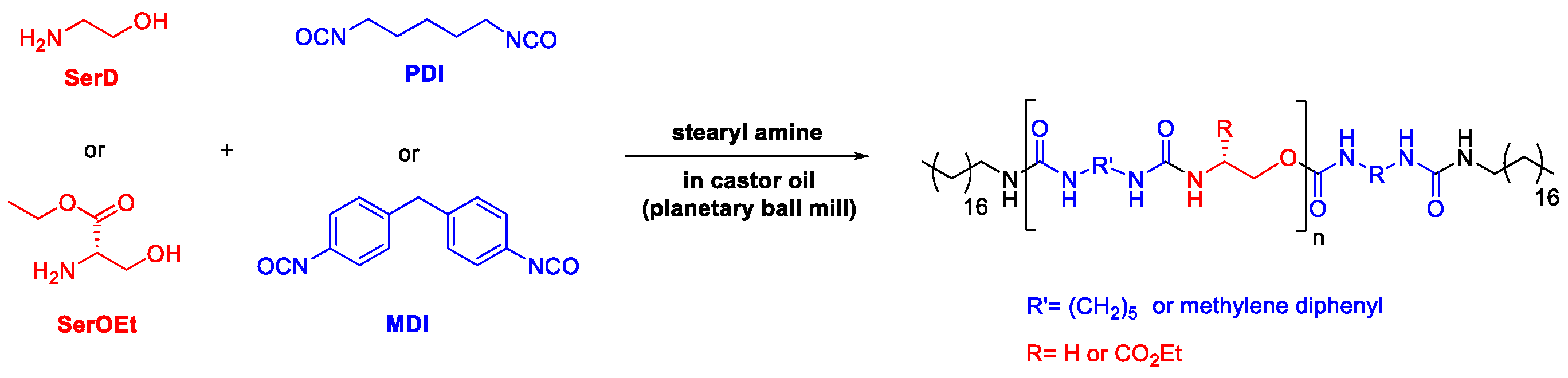
The aim of this research is therefore twofold: Firstly, PU-based thickeners were produced based on bio-based raw materials, i.e., serine derivatives (SerD and SerOEt) and PDI as the biobased diisocyanate in castor oil (as the base oil), for which methylendi(phenylisocyanate) (MDI) will be used as a reference. Secondly, we synthesized these PU-based grease samples through the in situ polymerization of all raw materials in castor oil in a planetary ball mill at room temperature (Scheme 1). To date, a planetary ball mill has only been used to incorporate additives into fats but not to produce the fats themselves [21,22,23]. The resulting PU thickeners were characterized using 1H NMR and infrared spectroscopy. Furthermore, rheological properties (e.g., storage modulus, yield point, sol–gel transition) of the grease samples were investigated before and after annealing at 100 °C for 1 h using amplitude and frequency tests. Finally, regarding thermal analysis, differential scanning calorimetry (DSC) and thermogravimetric analysis (TGA) were carried out on the fats.
Scheme 1.
Synthesis of polyurea thickener materials based on serine derivatives and 1,5 pentamethylene diisocyanate (PDI) or methylendi(phenylisocyanate) (MDI).
2. Materials and Methods
2.1. Materials
2.1.1. Desalination of L-Serine Ethyl Ester Hydrochloride
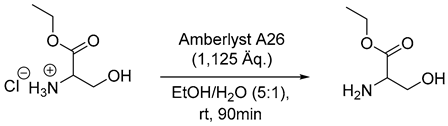
An Amberlyst® A26 ion exchanger (SigmaAldrich, Darmstadt, Germany) was first washed for one hour each with Miili-Q water and ethanol. After filtration using a nutsche filter, the ion exchanger was dried under high vacuum for two days. The dried A26 ion exchanger (14.74 g, 1.125 eq.) was transferred to a 600 mL beaker, suspended in an ethanol/water (5:1) solvent mixture, and stirred for 30 min. The solvent was removed with a syringe, and l-serine ethyl ester hydrochloride (5.0 g, 29.5 mmol, 1 eq.) was dissolved in 100 mL of ethanol/water (5:1) solvent mixture (0.29 mmol/mL). The reaction mixture was stirred for 90 min at RT. The ion exchanger was removed using a nutsche filter and washed with 100 mL of the solvent mixture. The ion exchanger was then stirred again for 30 min in ethanol/water (5:1). After a second filtration, the filtrate was concentrated in a rotary evaporator, and the residue was freeze-dried. The product l-serine ethyl ester (2.32 g, 17.43 mmol, 93%) was obtained as a white solid.
| Elemental Analysis | Carbon: 42.1% (45.1%); hydrogen: 7.9% (8.3%); nitrogen: 11.5% (10.5%) |
| 1 H-NMR | (600 MHz, D2O) δ = 1.25 (t, 3H, CH3), 3.61 (t, 1H, CH), 3.71–3.96 (dd, 2H, CH2), 4.17 (m, 2H, CH2) ppm. |
2.1.2. Preparation of the Fats
All fats examined in this study were prepared in the same manner. First, grinding balls (94.6 g, Ø 6 mm), made of steel, were placed in a 50 mL steel grinding beaker. The reactants were always added in the same order: First, the n-stearylamine and serine derivatives were added. Then, the base oil castor oil was added, and finally, the diisocyanate component was added to avoid premature polymerization. The sealed grinding beaker was circulated in a PM 100 planetary ball mill from Retsch for 75 min at 400 rpm. The fats produced were then homogenized three times using an Exakt roller (type 35). During the first rolling process, the balls were separated from the grease. Finally, the fats were degassed under high vacuum for one hour.
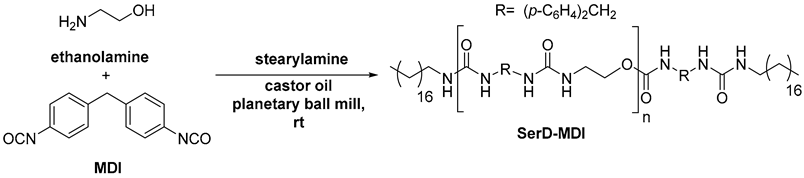
2.1.3. Synthesis of SerD-MDI Greases
Methylenediphenyl isocyanate (MDI) and 2-aminoethanol (SerD) were used as monomers for the SerD-MDI thickening system. The monoamine stearylamine was used as an end group.
 | ||||||
| VA [wt.%] | Theor. | Component | M [g/mol] | Eq | m [g] | n [mmol] |
| 20 | 5 | MDI | 250.26 | 1.00 | 2.560 | 10.23 |
| SerD | 61.08 | 0.83 | 0.521 | 8.53 | ||
| Stearylamine | 269.52 | 0.33 | 0.919 | 3.41 | ||
| Castor oil | 16 | |||||
| 20 | 10 | MDI | 250.26 | 1.00 | 2.822 | 11.27 |
| SerD | 61.08 | 0.91 | 0.626 | 10.25 | ||
| Stearylamine | 269.52 | 0.18 | 0.553 | 2.05 | ||
| Castor oil | 16 | |||||
| 20 | 15 | MDI | 250.26 | 1.00 | 2.934 | 11.72 |
| SerD | 61.08 | 0.94 | 0.671 | 10.99 | ||
| Stearylamine | 269.52 | 0.13 | 0.395 | 1.47 | ||
| Castor oil | 16 | |||||
The NMR spectroscopic data of the 1H NMR spectrum are listed below, and the number of protons is given for a repeating unit.
| 1 H-NMR | (500 MHz, D2O): δ = 0.64 (t, 6H), 0.71–2.00 (m, 64 H), 2.27–3.36 (m, 4H), 3.58 (s, 2H), 3.85 (s, 2H), 4.26 (s, 2H), 5.80 (s, 3H), 6.85–7.78 (m, 8H) ppm. |
2.1.4. Synthesis of SerOEt-MDI Fats
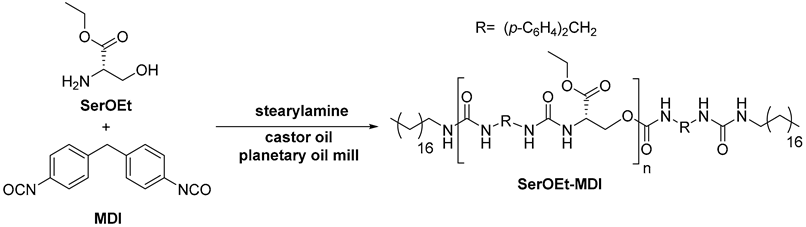 | ||||||
| VA [wt.%] | Theor. | Component | M [g/mol] | Eq. | m [g] | n [mmol] |
| 20 | 5 | MDI | 250.26 | 1.00 | 2.219 | 8.87 |
| SerOEt | 133.15 | 0.83 | 0.984 | 7.39 | ||
| Stearylamine | 269.52 | 0.33 | 0.797 | 2.96 | ||
| Castor oil | 16 | |||||
| 20 | 10 | MDI | 250.26 | 1.00 | 2.382 | 9.52 |
| SerOEt | 133.15 | 0.91 | 1.152 | 8.65 | ||
| Stearylamine | 269.52 | 0.18 | 0.466 | 1.73 | ||
| Castor oil | 16 | |||||
| 20 | 15 | MDI | 250.26 | 1.00 | 2.449 | 9.79 |
| SerOEt | 133.15 | 0.94 | 1.222 | 9.17 | ||
| Stearylamine | 269.52 | 0.13 | 0.330 | 1.22 | ||
| Castor oil | 16 | |||||
The NMR spectroscopic data of the 1H NMR spectrum are listed below, and the number of protons is given for a repeating unit.
| 1 H-NMR | (500 MHz, D2O): δ = 0.64 (t, 6H), 0.71–2.00 (m, 64 H), 2.38–3.34 (m, 4H), 3.63–4.72 (m, 6H), 5.80 (s, 3H), 6.66–7.67 (m, 8H) ppm. |
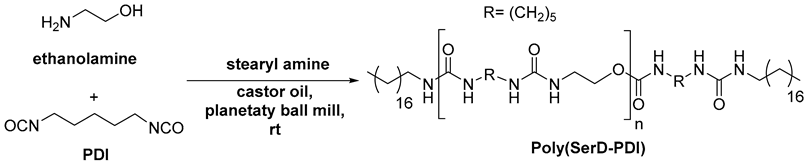
2.1.5. Synthesis of SerD-PDI Fats
 | ||||||
| VA [wt.%] | Theor. | Component | M [g/mol] | Eq. | m [g] | n [mmol] |
| 20 | 5 | PDI | 154.17 | 1.00 | 2.091 | 13.56 |
| SerD | 61.08 | 0.83 | 0.69 | 11.3 | ||
| Stearylamine | 269.52 | 0.33 | 1.219 | 4.52 | ||
| Castor oil | 16 | |||||
| 20 | 10 | PDI | 154.17 | 1.00 | 2.384 | 15.46 |
| SerD | 61.08 | 0.91 | 0.859 | 14.06 | ||
| Stearylamine | 269.52 | 0.18 | 0.758 | 2.81 | ||
| Castor oil | 16 | |||||
| 20 | 15 | PDI | 154.17 | 1.00 | 2.516 | 16.32 |
| SerD | 61.08 | 0.94 | 0.934 | 15.30 | ||
| Stearylamine | 269.52 | 0.13 | 0.550 | 2.04 | ||
| Castor oil | 16 | |||||
The NMR spectroscopic data of the 1H NMR spectrum are listed below, and the number of protons is given for a repeating unit.
| 1 H-NMR | (500 MHz, D2O): δ = 0.65 (t, 6H), 0.70–2.00 (m, 64 H), 3.10 (s, 4H), 3.55 (s, 2H), 4.28 (s, 2H), 5.75 (s, 3H) ppm. |
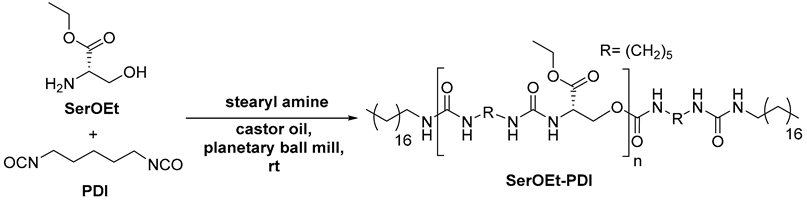
2.1.6. Synthesis of SerOEt-PDI Fats
 | ||||||
| VA [wt.%] | Theor. | Component | M [g/mol] | Eq. | m [g] | n [mmol] |
| 20 | 5 | PDI | 154.17 | 1.00 | 1.173 | 11.27 |
| SerOEt | 133.15 | 0.83 | 1.250 | 9.39 | ||
| Stearylamine | 269.52 | 0.33 | 1.012 | 3.76 | ||
| Castor oil | 16 | |||||
| 20 | 10 | PDI | 154.17 | 1.00 | 1.902 | 12.34 |
| SerOEt | 133.15 | 0.91 | 1.493 | 11.22 | ||
| Stearylamine | 269.52 | 0.18 | 0.607 | 2.24 | ||
| Castor oil | 16 | |||||
| 20 | 15 | PDI | 154.17 | 1.00 | 1.972 | 12.79 |
| SerOEt | 133.15 | 0.94 | 1.597 | 11.99 | ||
| Stearylamine | 269.52 | 0.13 | 0.431 | 1.60 | ||
| Castor oil | 16 | |||||
The NMR spectroscopic data of the 1H NMR spectrum are listed below, and the number of protons is given for a repeating unit.
| 1 H-NMR | (500 MHz, D2O): δ = 0.65 (t, 6H), 0.70–2.10 (m, 64 H), 2.50–3.30 (m, 4H), 4.15–4.73 (m, 3H), 5.08 (s, 2 H), 5.76 (s, 1H), 6.78 (s, 1 H) ppm. |
2.2. Methods
2.2.1. NMR Spectroscopy
The NMR spectra used in this study were measured using Bruker AVANCE-400 (400.28 MHz) and AVANCE-NEO 500 (500 MHz) devices. The samples were measured at room temperature, the spectra were calibrated with D2O (δ = 4.75 ppm), the NMR data were evaluated using the ACD LABS 12.0 1D NMR Processor program, and the chemical shift δ is given in parts per million (ppm). The following abbreviations were used to indicate signal multiplicities: s = singlet, d = doublet, t = triplet, quart = quartet, m = multiplet.
For the NMR spectroscopic analysis of the thickeners, 10 mg of sample was dissolved in 0.5 mL of concentrated H2SO4 and placed in NMR tubes with a D2O-filled capillary as a reference.
For the NMR spectroscopic characterization of the amino acid ester SerOEt, 10 mg of sample was dissolved in 0.6 mL D2O.
2.2.2. Rheology
Oscillation tests were performed on a rheometer from Anton Paar (type: MCR 102). A plate–plate system with a diameter of 25 mm was used. The measuring and trim distances were 1.000 mm and 1.025 mm, respectively. Excess fat was removed with a spatula. All measurements were performed in duplicate, and the evaluation was carried out using the RheoCompass program.
The amplitude measurements were performed at 25 °C with a circular frequency of 1.59 Hz (10 rad/s) in the deformation range γ of 0.01–100%. The yield point was determined in accordance with DIN 51810-2 through the intersection of the storage and loss modulus. Frequency tests were carried out after sample preparation and a 30 min waiting period at an amplitude γ of 0.1% in the frequency range ω of 0.01–100 rad/s at 25 °C.
2.2.3. Thermogravimetric Analysis
Thermogravimetric analysis was performed using a TGA Q50 measuring device from TA Instruments (Hüllhorst, Germany). Under a nitrogen atmosphere, the samples were heated from 20 °C to 800 °C at a heating rate of 20 °C/min. For the measurement, 4–6 mg of sample was applied. The evaluation was performed using the Universal Analysis 2000 Version 4.5A program.
2.2.4. Dynamic Differential Calorimetry
The measurements were performed using the Q200 device (Hüllhorst, Germany) from TA Instruments with the RCS90. For this purpose, 5–7 mg of sample was weighed and placed into an aluminum crucible with a lid (manufacturer: ThePro, Heinsberg, Germany). The measurements were performed under nitrogen purging with an additional empty reference crucible in two heating cycles with a heating and cooling rate of 10 °C/min. The evaluation was performed using the Universal Analysis 2000 Version 4.5A program.
2.2.5. Infrared Spectroscopy
A Tensor 27 FTIR spectrometer (Bruker Optics GmbH, Karlsruhe, Germany) with a platinum diamond ATR unit A225/Q was used for infrared spectroscopy (IR). The evaluation was performed with the corresponding OPUS program (version 7.0). The spectra were recorded in transmission mode at a wave number range of ν = 4000–400 cm−1 with a resolution of 4 cm−1 and 96 scans per sample.
3. Results and Discussion
3.1. Synthesis of PU-Fats in Castor Oil Using a Planetary Ball Mill
The amino acid ester serine ethyl ester (SerOEt) was present as HCl salt and had to be desalted with the ion exchanger Amberlyst®A26 before use as a monomer. The yields obtained were 59–69% for SerOEt with a purity of 89–92%. The decarboxylated serine derivative 2-ethanolamine (SerD) could be used without further pretreatment.
The theoretical molar mass of the polyurea thickener was calculated based on the so-called equivalent approach, which was described by Ren et al. [24]. This approach represents the ratio of the reactants as the stoichiometric ratio of the monomers in the polymer of the desired average polymerization degree. The ratio of functional groups and amount of starting materials are therefore given by Equations (1) and (2), where Pn is the calculated degree of polymerization, and nAA, nBB, and mB represent the molar amounts of the starting compounds, given in Section 2 (Materials and Methods) for theoretical Pn values of 5, 10, and 15 repeating units.
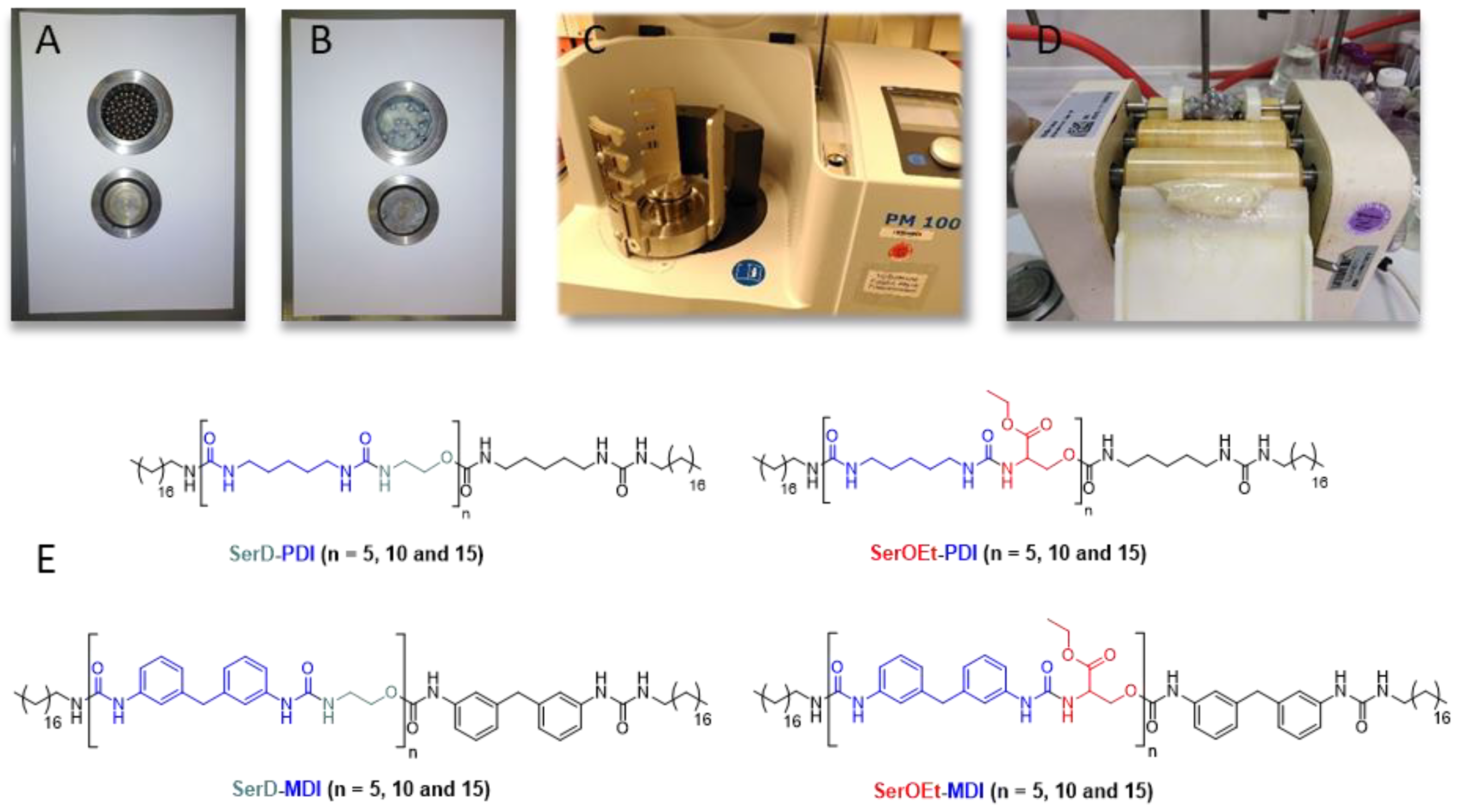
The samples were produced for all serine derivatives through in situ polymerization of the thickener in castor oil, used as the base oil. First, the grinding balls (94.6 g, Ø 6 mm), made of steel, were placed in a 50 mL steel grinding beaker. Stearyl amine and the serine derivatives were then added, followed by castor oil (the base oil) and finally the diisocyanate component to prevent premature polymerization. The sealed grinding beaker was placed in a planetary ball mill and circulated for 75 min at 400 rpm. The samples produced were then homogenized three times using an EXAKT roller (type 35, EXACT Advanced Technologies GmbH, Norderstedt). A thickener content of approx. 20% by weight was targeted for all samples, and the degrees of polymerization were varied. Figure 1 shows the structures of the polyurea thickeners produced with this method.
Figure 1.
(A) Steel balls in a 50 mL container, (B) crude fat after ball mill synthesis (SerD-PDI), (C) planetary ball mill PM100 and (D) EXAKT roller (type 35) to separate and homogenize the fat samples, and (E) structures of the fabricated polyureas, SerD-PDI and SerOEt-PDI, and SerD-MDI and SerOEt-MDI.
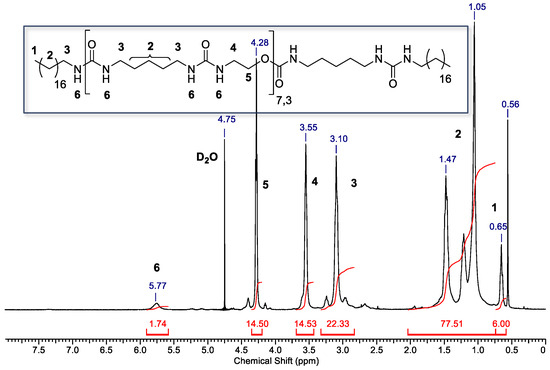
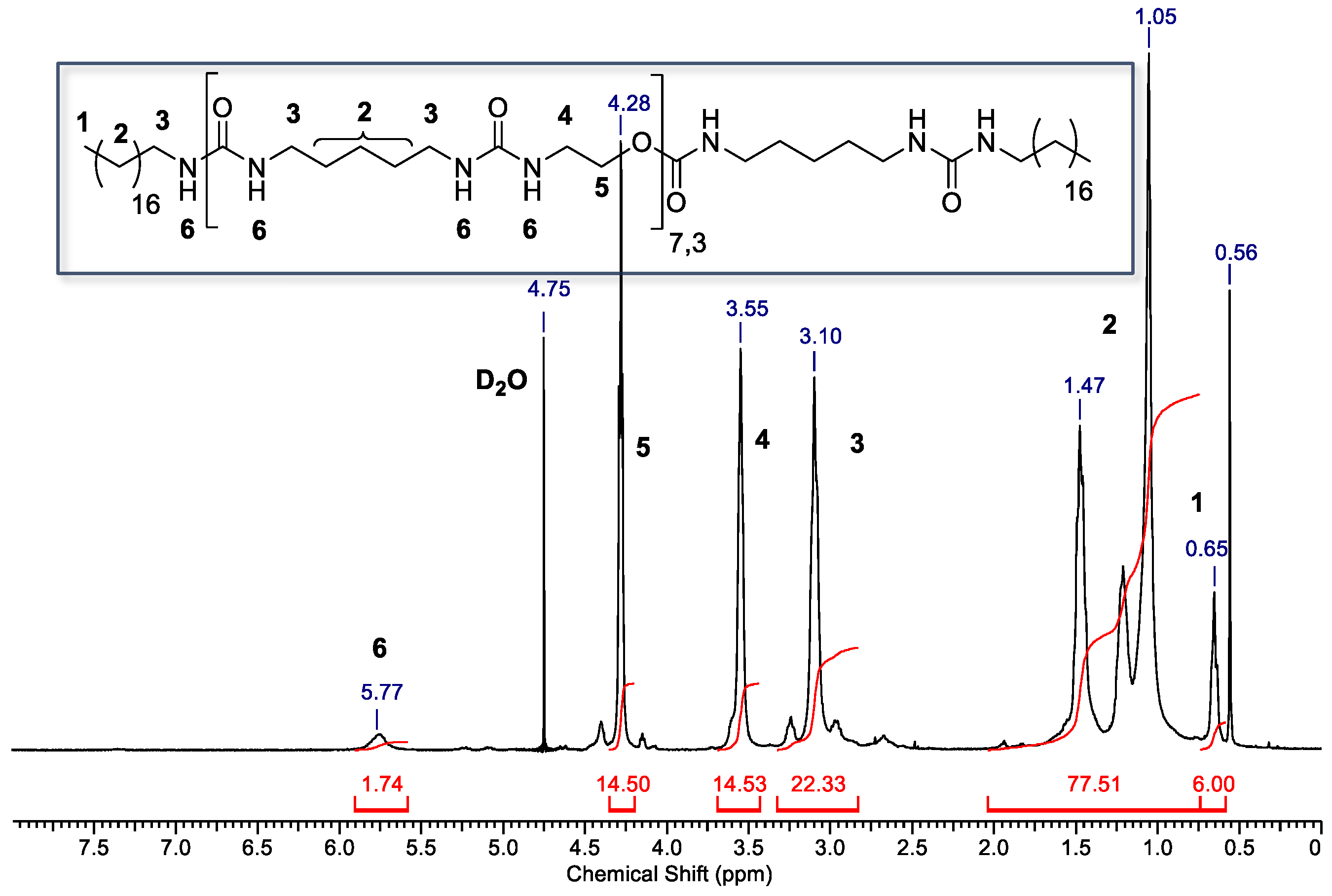
After the extraction of the castor oil, the polymer thickeners of the lubricating greases were examined for their composition and degree of polymerization using 1H NMR spectroscopy. An example of an 1H NMR spectrum for the SerD-PDI-2 thickener with signal assignment is shown in Figure 2.
Figure 2.
1H NMR spectrum of the SerD-PDI-2 thickener with a
of 7.2 and a thickener content of 13.7 wt.%, measured in H2SO4 with D2O as a reference at 500 MHz.
The average degrees of polymerization determined from the 1 H-NMR spectra and the resulting molar masses are summarized in Table 1. The values determined are below the theoretical degrees of polymerization for all thickeners. A reason for this could be the reaction of the diisocyanate monomer with air humidity. Importantly, only a small fraction of the thickener was extracted with ethyl acetate as the solvent, due to the high polarity of the thickener molecule. For most PU greases, thickener content reached between 13 and 17.7 wt%, below the theoretical value of 20 wt%. During the production of SerOEt-MDI greases with theoretical average degrees of polymerization of 10 and 15, larger quantities of solid residues were observed in the grease. An examination of the residues using FTIR spectroscopy showed that the solids were unreacted SerOEt. All 1H NMR spectra are shown in Appendix A, Figure A1, Figure A2, Figure A3, Figure A4, Figure A5, Figure A6, Figure A7, Figure A8, Figure A9, Figure A10 and Figure A11.
Table 1.
Theoretical and experimentally obtained VA thickener proportions, as well as average degrees of polymerization and average molar masses of the thickeners in the fat systems based on serine derivatives with MDI or PDI as diisocyanate.
3.2. Rheological Characterization of Fats
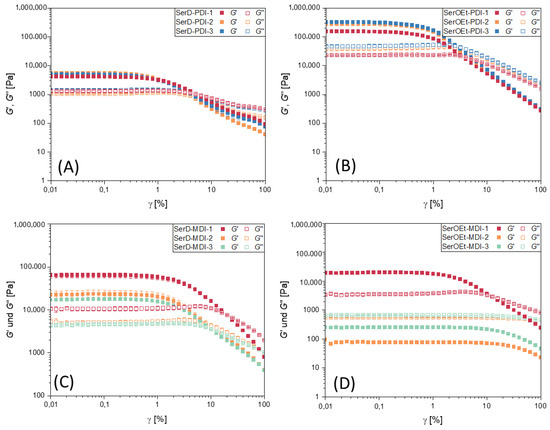
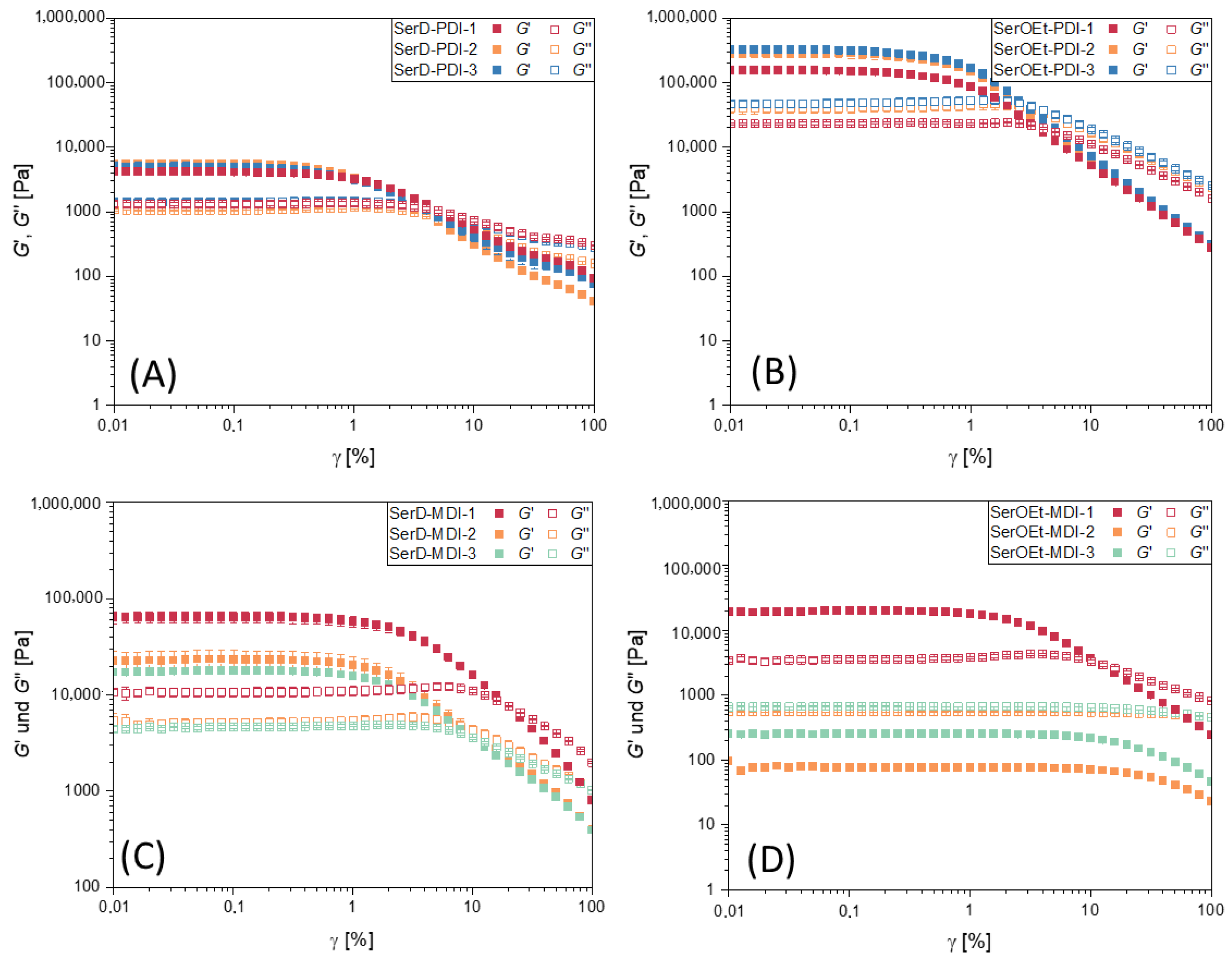
The amplitude and frequency were measured to determine the linear viscoelastic region (LVE) and flow point of the samples (Table 2). In Figure 3, the storage and loss moduli of the amplitude measurements are plotted logarithmically against the applied shear deformation for the grease samples from Table 1.
Figure 3.
Double logarithmic plot of storage and loss modulus G′ and G″ as a function of shear deformation γ for greases based on PDI, SerD-PDI (A) and SerOEt-PDI (B), and on MDI, SerD-MDI (C) and SerOEt-MDI (D), as a function of the average degree of polymerization obtained from the amplitude test.
SerD-PDI(1–3) showed only a slight upward trend in strength with an increasing degree of polymerization, with values for G′LVE between 4.1 and 5.5 kPa. In contrast, when MDI was employed as diisocyanate, the strength was significantly increased compared to the aliphatic PDI-based PUs (G′LVE between 17.7 and 64.4 kPa) and the values for G′LVE decreased with an increasing degree of polymerization. The differences in strength can be attributed to the flexibility of the polymer chain and have also been observed for other polyurea thickeners [12] Aliphatic PDI-based polyureas are significantly more flexible than aromatic MDI-based polyureas. Moreover, the latter may exhibit π-π interactions as an additional effect. When employing the serine ethylester SerOEt, the G’LVE values for the SerOEt-PDI series were significantly higher at 151 to 319 kPa than those for the SerD-PDI series. One reason for this is probably the low degree of polymerization, as short-chain polyureas generally exhibit higher strengths than longer-chain polyureas [12]. In addition, H-bonds can be formed between the ester functionality of serine ethyl ester and the OH-group of castor oil, which could significantly contribute to the strength of the fats. Interestingly, the flow point for the SerD-PDI series and SerOEt-PDI remained nearly constant and independent of the gel strength. The SerOEt-MDI series showed only gel formation for the shortest PU thickener with Pn = 3.9. When the thickener content was only 6.7 and 7.2 wt.%, as determined for SerOEt-MDI-2 and SerOEt-MDI-3, respectively, a viscous sol was obtained (Figure 4). The reason for this could be the rather low thickener content in the samples, as shown in Table 1, which is known to be critical in gel formation [6]. For the SerD-MDI and SerOEt-MDI samples, there was a uniform decrease in strength with an increasing degree of polymerization, suggesting that the strength of these fats was dominated by the distance between the hydrophobic end groups of the thickeners.
Figure 4.
Plot of shear stress τ as a function of shear deformation γ obtained from the amplitude test for samples based on PDI, SerD-PDI (A) and SerOEt-PDI (B), and on MDI, SerD-MDI (C) and SerOEt-MDI (D), as a function of the average degree of polymerization.
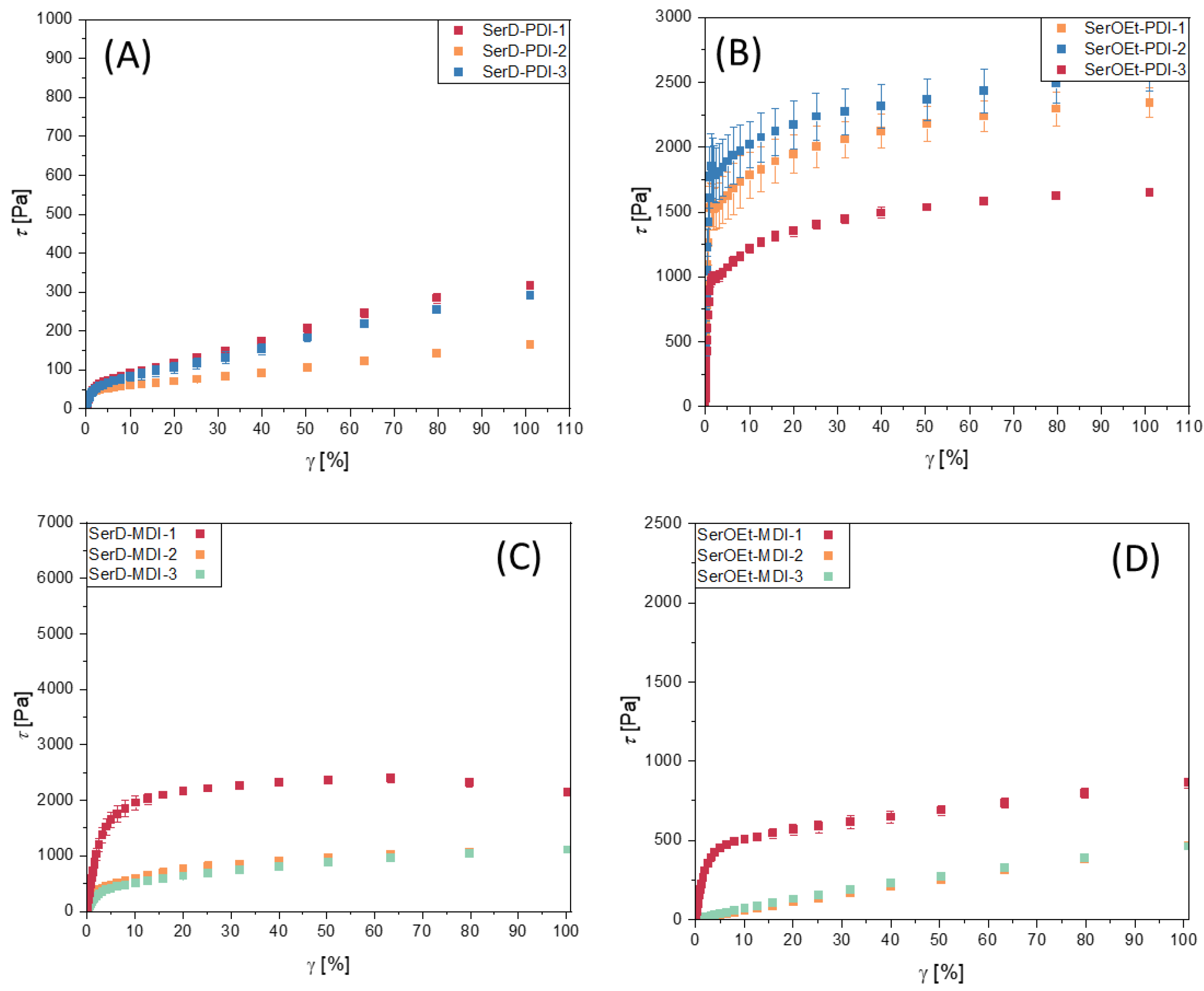
Table 2.
Values of the storage modulus G′ in the LVE range, yield points γF and τF, and the frequency-dependent gel–sol transition ωco of samples SerD-PDI and SerOEt-PDI, SerD-MDI, and SerOEt-MDI as a function of the average degree of polymerization.
3.3. Thermal Analysis of the Greases
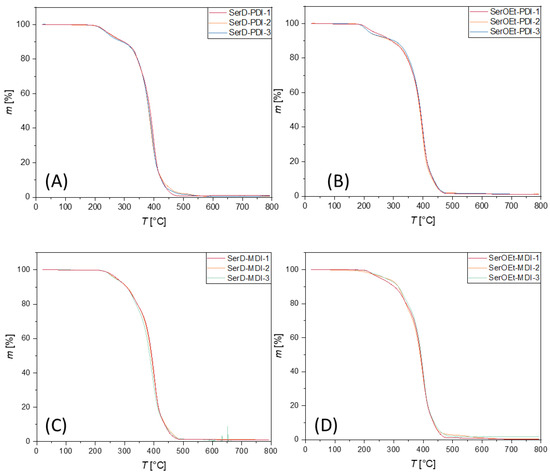
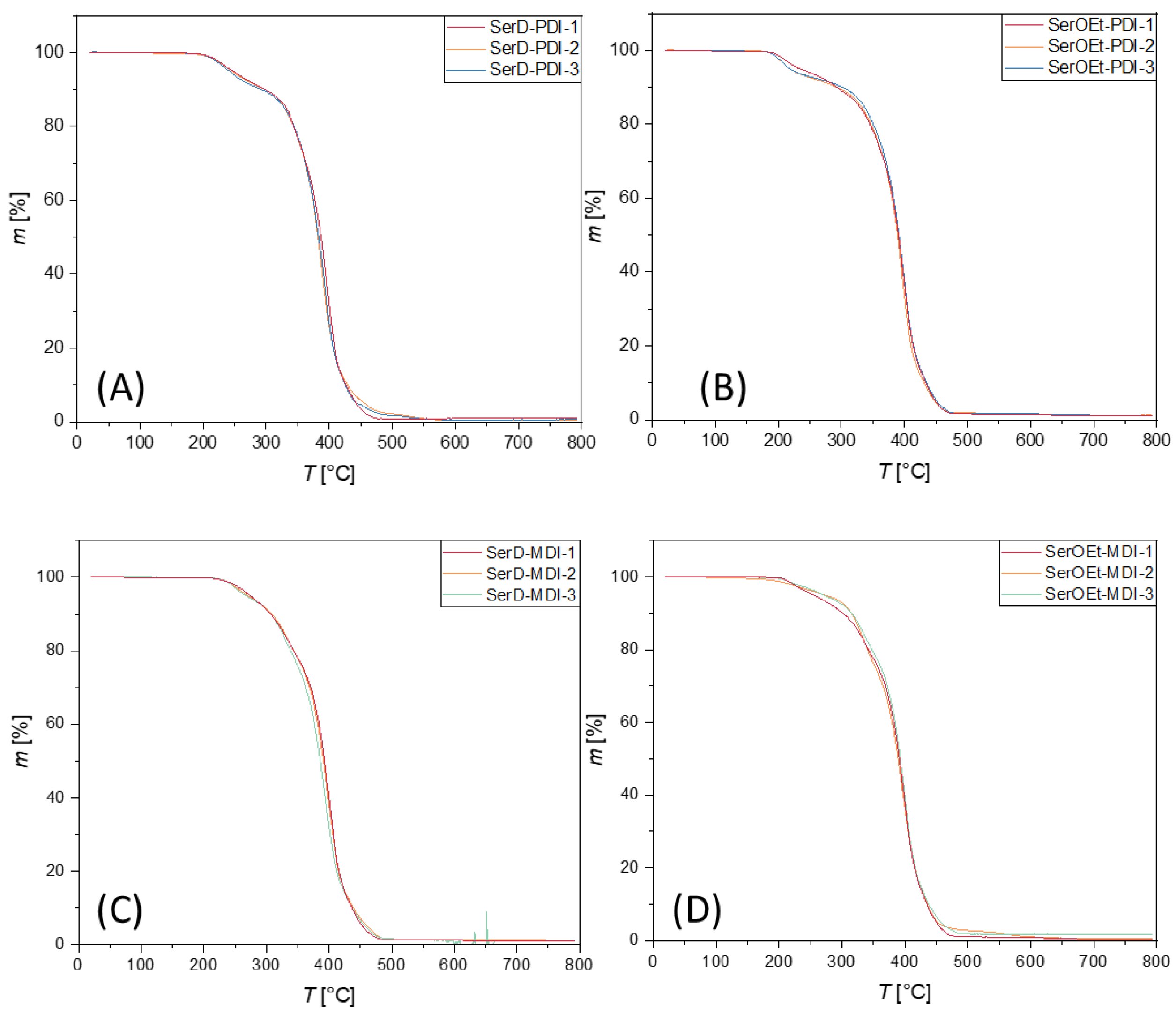
Possible influences of the polymerization degree on the thermal properties of the lubricating greases were investigated using thermogravimetric analysis (TGA) and differential scanning calorimetry (DSC). The decomposition of the grease samples proceeds in two stages. The greases are temperature-resistant up to approximately 200 °C. At higher temperatures, the thickener begins to decompose first, followed by the castor oil, until the samples have decomposed almost completely. When using the diisocyanate PDI (a), decomposition temperatures of 198–230 °C were reached. However, the degree of polymerization had only a minor influence on the determined decomposition temperature. The samples of the SerOEt-PDI series exhibited the lowest decomposition temperatures of 198 to 205 °C, while the SerD-PDI samples exhibited the highest decomposition temperatures of approximately 220 °C (see Figure 5 and Table 3).
Figure 5.
Plot of mass loss m as a function of temperature T as a result of TGA measurements for fats based on PDI, SerD-PDI (A) and SerOEt-PDI (B), and on MDI, SerD-MDI (C) and SerOEt-DDI (D).
Table 3.
Temperature T and enthalpy change ∆H for exothermic (exo) phase transitions from the first cooling, determined via DSC, and decomposition temperatures at a 2% mass loss TZ,2%, determined via TGA, for the different fat samples: SerD-PDI/MDI and SerOEt-PDI/MDI.
In contrast to the PDI-based materials, the SerD-MDI series reached decomposition temperatures of 244–248 °C, which are significantly higher than those of the SerD-PDI series. This is most likely due to the stronger π-π interactions of the aromatic rings.
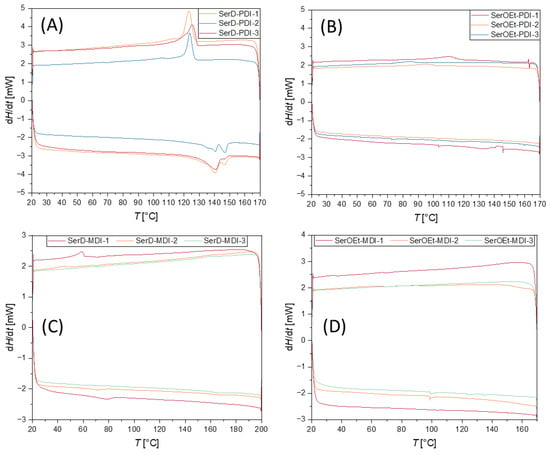
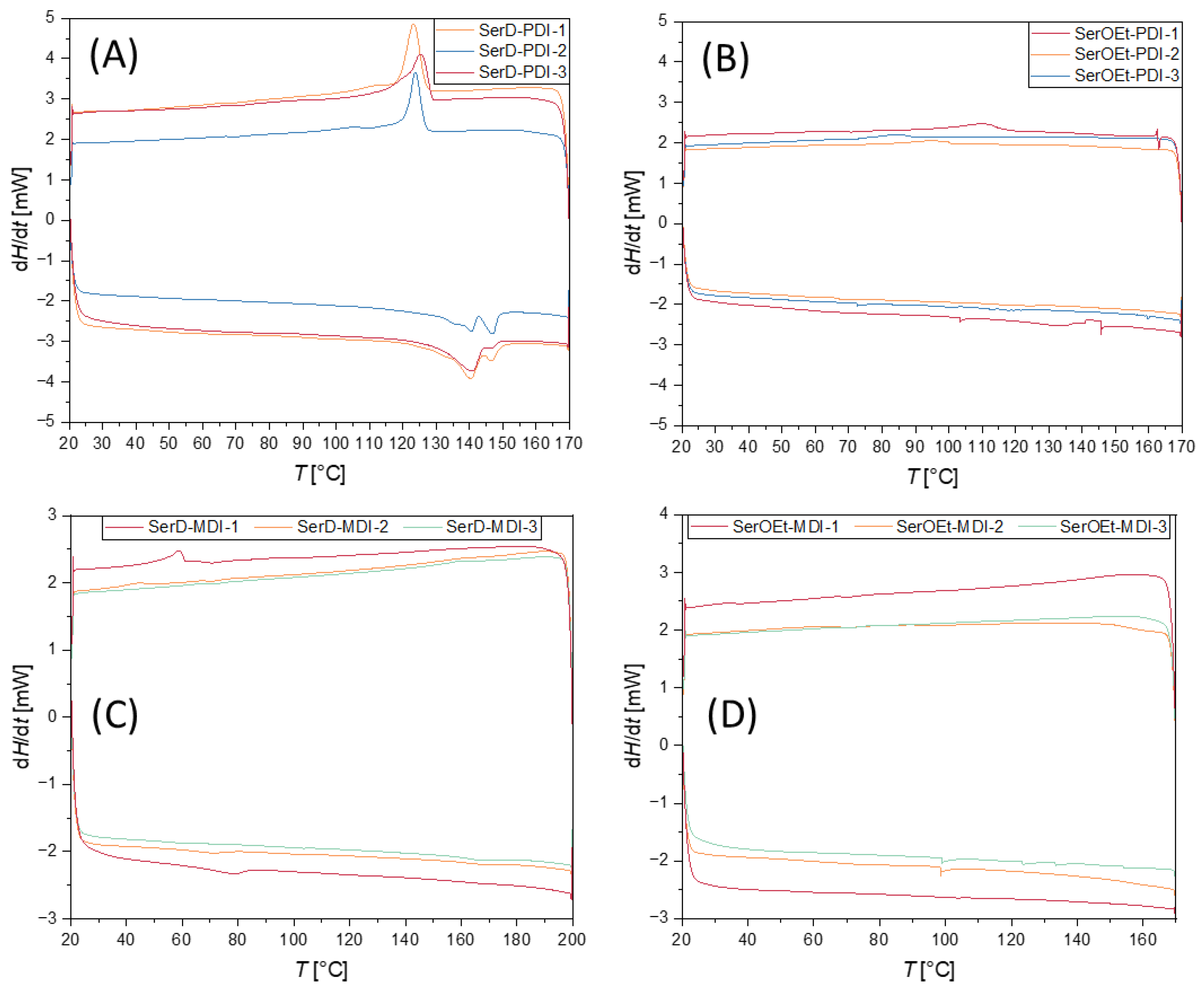
The DSC results show pronounced melting and recrystallisation peaks only for the SerD-PDI-based samples in the temperature range of 105 to 125 °C (Table 3) with an enthalpy of approx. 8–10 J/K.
In some cases, a splitting of the peaks was observed during the exothermic transitions, which is why two temperatures are given in Table 3. The thermal transitions between 40 and 80 °C were rather weak with ΔH ≈ 0.2–2 J/K.
Comparing the peak with the thermal transition of the extracted thickener reveals that this thermal transition can be attributed to the melting and recrystallization process of the polymer thickener (see Figure A12). The MDI-based gels showed only rather weak transitions in the temperature range from 20 to 200 °C (Figure 6C,D) with enthalpies of approx. 0.2 to 1.8 J/K. Clear melting/recrystallisation peaks were not be observed; this is in agreement with the literature that reports melting peaks for segmented polyurea based on MDI at temperatures of 320–340 °C [25].
Figure 6.
Plot of heat flow dQ/dt as a function of temperature T as a result of DSC measurements during the first cooling and second heating for fats based on PDI, SerD-PDI (A) and SerOEt-PDI (B), and on MDI, SerD-MDI (C) and SerOEt-DDI (D), as a function of the average degree of polymerization.
3.4. Temperature Treatment of Fats
The thermoanalytical investigations using DSC showed thermal transitions in the temperature range of 100–160 °C and in the range of 40–80 °C. Since these transitions may influence the flow properties of the fats, the manufactured lubricating greases were subjected to a temperature treatment in which the samples were first heated to 100 °C for one hour and then cooled to 60 °C within one hour. After the greases had been tempered at 60 °C for one hour, they were cooled to room temperature overnight. The greases obtained in this way were then examined rheologically once again using an amplitude test, a frequency test, and infrared spectroscopy. The results are summarized in Table 4.
Table 4.
Values of the storage modulus G′ in the LVE range, yield points γF and τF, and the frequency-dependent gel-sol transition ωco of the SerD-PDI/MDI and SerOEt-PDI/MD fats as a function of the average degree of polymerization before (vT) and after (nT) tempering.
Evidently, the temperature treatment caused a change in the viscoelastic properties of the samples. All fats with short-chain polymer thickeners (Pn = 3.7–5.7) showed a significant increase in the storage modulus in the linear viscoelastic range G′LVE. The value for G′LVE increased by a factor of 6.5 for the grease SerD-PDI-1 (Pn = 4.2) with decreasing G′LVE values as the degree of polymerization increased. For example, although the trends were comparable for the SerD-MDI series, the values for G′LVE were significantly higher than for the SerD-PDI series after the annealing procedure and decreased with an increasing degree of polymerization from 263 kPa to 93 kPa. Conversely, tor the fats of the SerOEt-PDI series, the increases in the storage modulus were significantly lower, ranging from 3.9 to 2.1. SerOEt-MDI samples 2 and 3 remained a sol after the annealing procedure, most likely due to the low thickener content in the sample, as mentioned before. The increase in the storage modulus after the temperature treatment may be due to the polymer chains becoming more flexible at higher temperatures and having more opportunities to form new intermolecular interactions, e.g., through hydrogen bonding, thereby increasing the storage modulus [26]. This effect works particularly well with short-chain polymer thickeners, while the temperature of 100 °C and the duration of 1 h may still be too low and too short for longer-chain polymer thickeners such as SerD-PDI-3 with a degree of polymerization of 14. For the SerOEt-PDI series, a counteracting effect can be observed, because although the storage modulus increases by a factor of 2.1 to 3.9, the yield point remains almost constant or even decreases slightly, i.e., the force required to make the material flow does not change.
Compared to our data, Courtonne et al. reported decomposition temperatures for MDI-based di- and tetraurea lubricants between 240 and 266 °C for 7 wt% and 14 wt. thickener content. Yield stress depends strongly on the thickener content and the number of urea groups decreasing from 680 to 105 Pa when increasing the number of urea groups from 2 to 4 with 7 wt% thickener content. However, it quickly increases from 105 Pa to 980 Pa for the tetraurea sample when the thickener content was increased from 7 to 14 wt%. Also, the storage modulus G’ depends on the number of urea units; it decreased from 21,000 Pa (diurea, 7 wt.%) to 9500 Pa (tetraurea, 7 wt%) and increased again to 22,500 Pa (tetraurea, 14 wt.%) with increasing thickener content [27]. Wang et al. showed an MDI-based diurea thickener with different amine end groups and thickener content of 10 wt%, reporting that the base oil had a dramatic effect on rheological properties, making comparisons difficult. The order of yield stress can be summarized as follows: PG (PAO40) (153.11 Pa, 23%) >AG (Alkyl naphthalene oil) (118.36 Pa, 13.7%) > OG (polyether oil) (73.07 Pa, 7.5%). Decomposition starts at around 225 °C for the PU-OG sample, whereas the two other polyurea samples showed that the decomposition of the sample started at around 280–290 °C for the PG and AG samples. The storage modulus G’LVE for all three samples is rather low with values between 3000 and 5500 Pa [28].
3.5. Infrared Spectroscopy
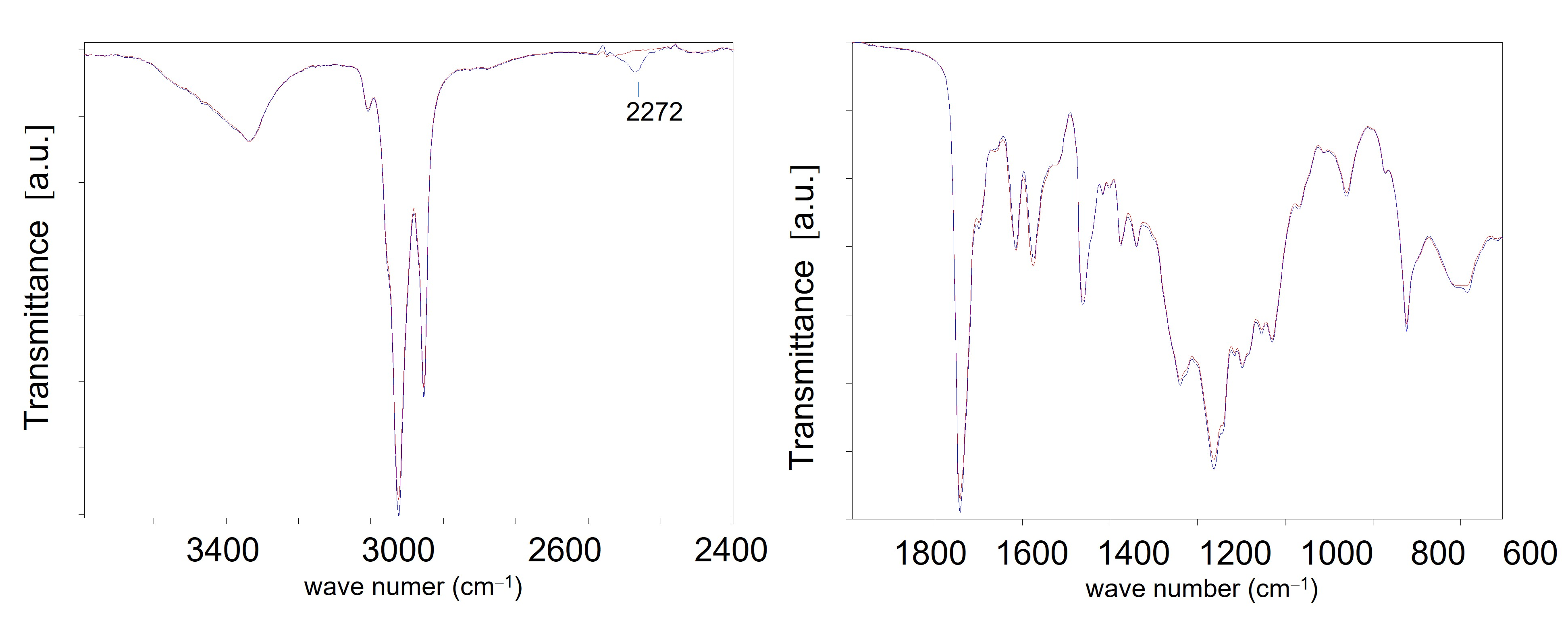
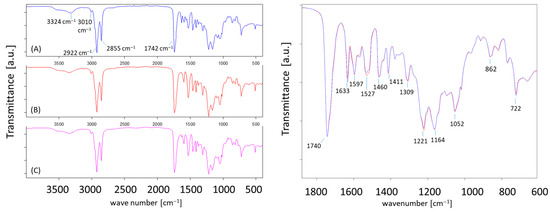
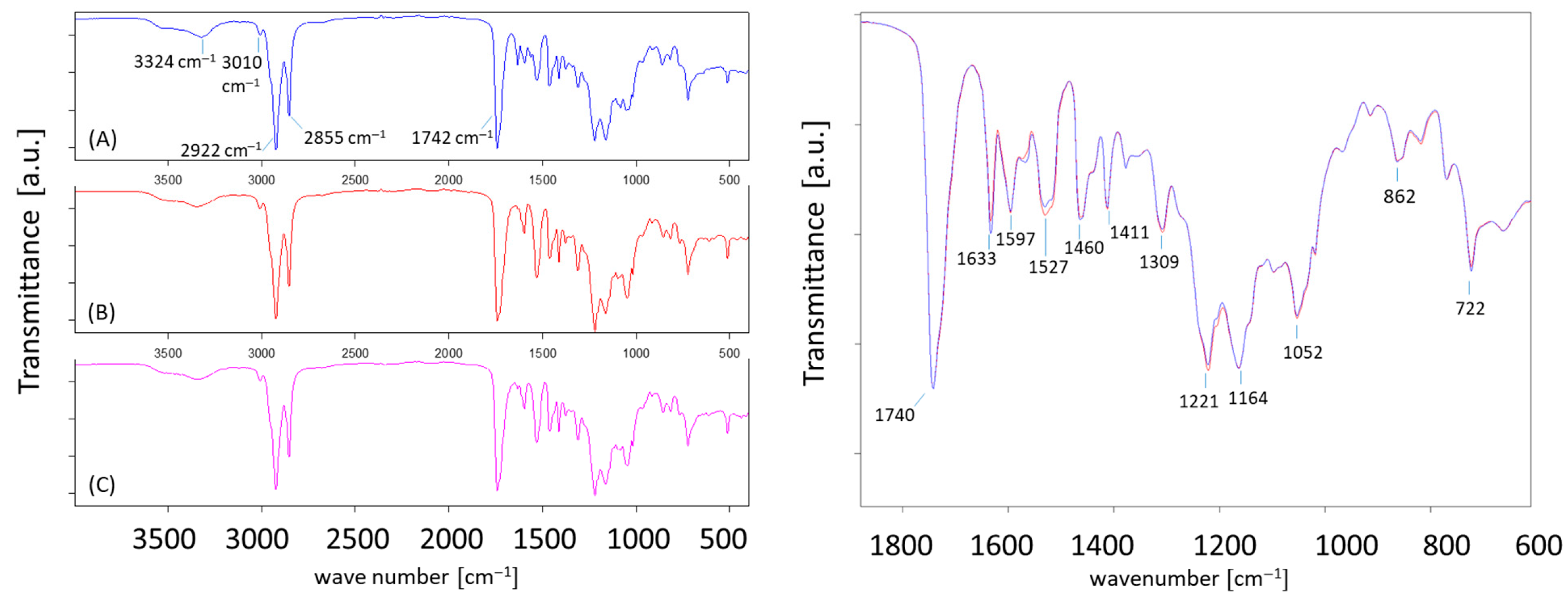
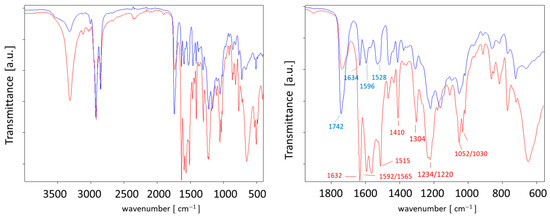
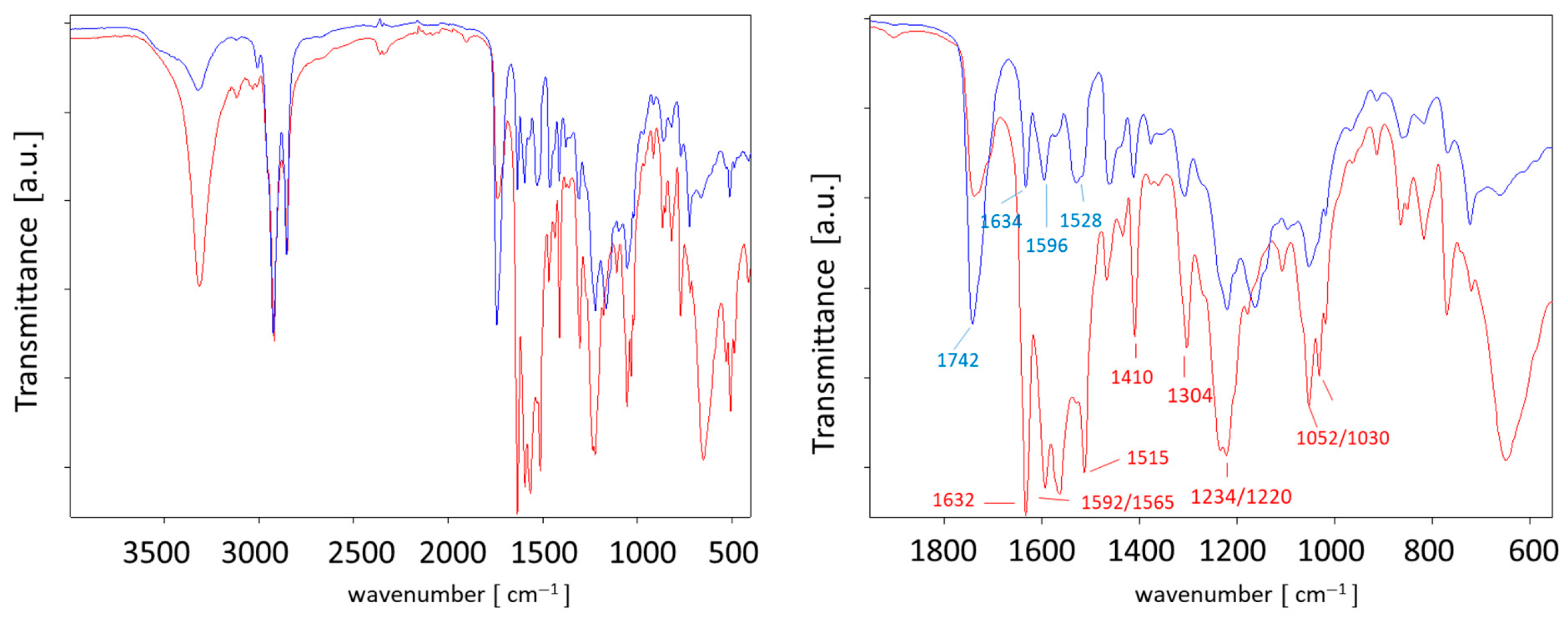
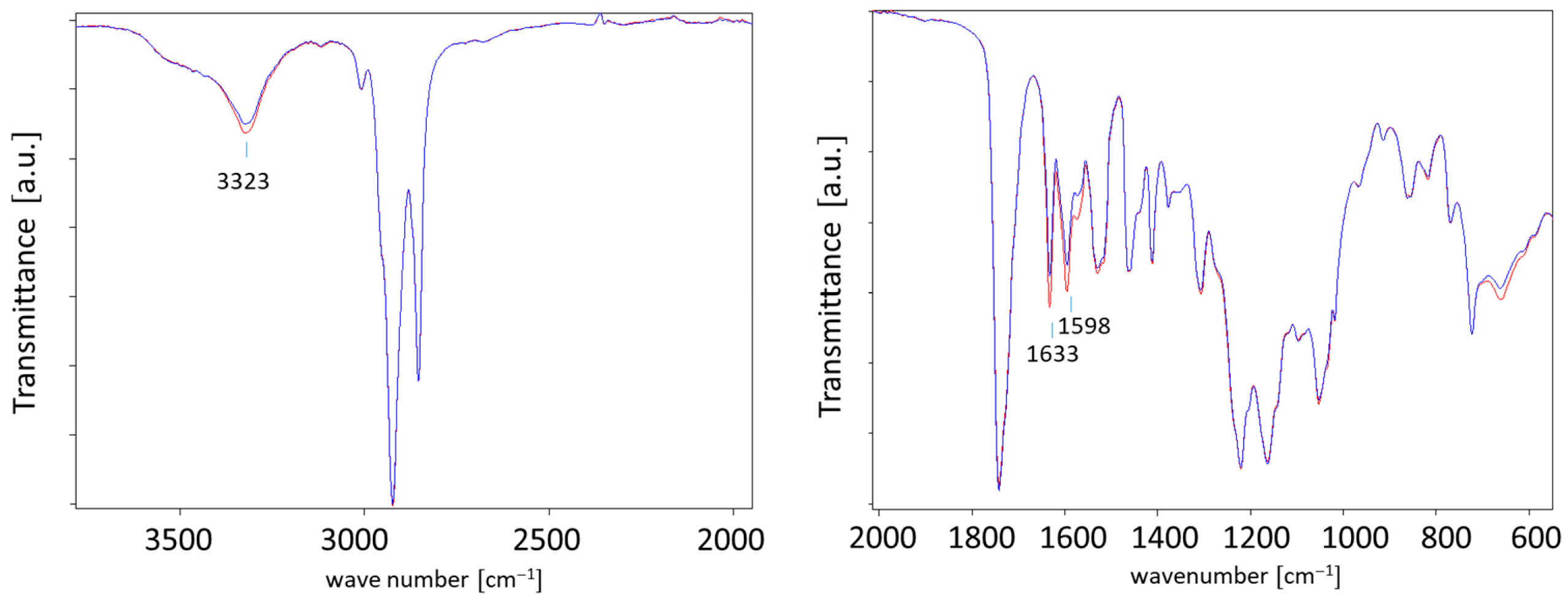
All FTIR spectra were recorded on a Tensor 27 FTIR spectrometer (Bruker Optics GmbH) with a platinum diamond ATR unit A225/Q in transmission mode. Spectra for the SerD-MDI samples are depicted in Figure 7. Since these FTIR spectra are dominated by the base oil (i.e., castor oil), the base oil was removed via extraction and only the thickener is examined in Figure 8. The polymeric thickener is a polyurea urethane molecule. The absence of a signal at 2270 cm−1 indicates complete conversion of the isocyanate groups for the SerD-MDI (Figure 7) and SerOEt-MDI samples (Figure A14). In contrast, PDI-based thickener samples always showed residual isocyanate groups, suggesting an incomplete polymerization reaction (see Figure A13 and Figure A15). The band at 3324 cm−1 can be assigned to the H-bonded N-H stretching vibration, whereas the shoulder at 3440 cm−1 can be assigned to the free N-H bond [29,30]. The band at 3007 cm−1 represents the -C-H stretching vibrations of the cis-double bond from castor oil [29], whereas the bands at 2922 and 2855 cm−1 are characteristic of asymmetrical and symmetrical vibrations of aliphatic –CH2 groups from the fatty acid hydrocarbon chain. The strong carbonyl bond (C = O) at 1741 cm−1 can be assigned to the castor oil ester functional group but also to the free carbonyl group of the urethane functional group (Figure 8) [31]. Moreover, the bands at 1515–1565 cm−1 (amide II, bending N-H and stretching C-N), 1220–1240 cm−1 (amide III, C-N stretching and N-H bending), and 1140–1120 cm−1 (C-O-C asymmetric stretching) confirm the formation of the urethane group [30,32].
Figure 7.
FTIR spectra of the SerD-MDI(1–3, A,B) samples (left) and their superimposed spectra (right).
Figure 8.
FTIR spectra of the SerD-MDI-3 sample (blue) and the pure thickener (red) after base oil extraction.
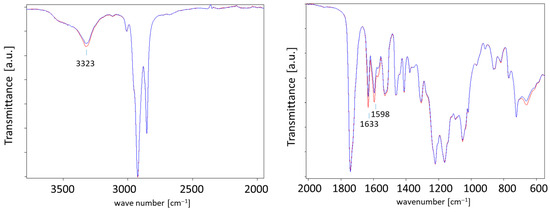
The annealing reaction of the SerD-MDI-3 sample results in a strengthening of the band at 3340 cm−1 (ordered N-H bond) and those at 1633 and 1598 cm-1 (Figure 9). This suggests an increase in ordered N-H bonds and H-bonded urea groups after annealing, which would also explain the increase in stiffness after the annealing reaction (Table 4) [31].
Figure 9.
(Left) FTIR spectra of SerD-MDI-3 before (blue) and after annealing (red) (left) and their superimposed spectra (right).
In the case of the SerD-PDI samples, the band at 2270 cm-1 disappears after the annealing reaction, and the bands at 1614 and 1585 cm−1 display an increase in intensity (Figure A17), which can also be attributed to the increase in ordered H-bound urea groups. However, the SerOEt samples show no change in the FTIR spectrum for either MDI or PDI after annealing (Figure A17 and Figure A18).
4. Conclusions
New polyurea-based greases based on bio-based raw materials (ethanolamine or serine ethylester + 1.5 pentamethylene diisocyanate or methylendi(phenylisocyanate) (MDI)) were successfully produced in castor oil for the first time. The in situ production took place in a planetary ball mill at room temperature for 75 min. After extraction of the base oil, the PU thickeners were examined for their composition and degree of polymerization using 1H NMR spectroscopy. The rheological characterization of the fats showed an almost constant yield point regardless of the degree of polymerization of the PU thickener, while the storage modulus in the linear viscoelastic range remained almost constant for the SerD-PDI series but decreased with an increasing degree of polymerization for the SerD-MDI series. Thermogravimetric analysis (TGA) showed decomposition temperatures of 198–230 °C for the fats with PDI-based thickener, whereas the SerD-MDI series resulted in an even higher decomposition temperature of up to 248 °C. Thermal transitions were observed via DSC analysis, revealing melting and recrystallization processes between 100 and 160 °C for the SerD-PDI samples; thus, the samples were subjected to an annealing process (1 h at 100 °C and then at 60 °C for 1 h). The resulting materials showed a significant increase in storage modulus in the G′LVE range, with the yield point also increasing for the SerD-PDI series and remaining constant or even decreasing slightly for the SerOEt-PDI series with side-chain ester functionalities. In summary, the ball mill represents an interesting alternative to conventional manufacturing processes for PU-based greases. However, further work is needed to optimize the procedure to better control the thickener content and degree of polymerization of the final grease. Moreover, tribology data are necessary to compare the performances of the new materials with those of commercially available materials.
Author Contributions
Conceptualization, R.W. and L.F.; methodology, L.F. and T.S.; validation, R.W. and L.F.; formal analysis, R.W. and L.F.; investigation, T.S. and L.F.; resources, R.W.; data curation, T.S. and L.F.; writing—original draft preparation, R.W.; writing—review and editing, R.W. and L.F.; visualization, L.F.; supervision, R.W. and L.F.; project administration, R.W. All authors have read and agreed to the published version of the manuscript.
Funding
This research received no external funding.
Data Availability Statement
The raw data supporting the conclusions of this article will be made available by the authors on request.
Conflicts of Interest
The authors have no conflicts of interest to declare.
Appendix A
Figure A1.
1H NMR spectrum of the SerD-MDI-1 thickener measured in H2SO4with D2O as a reference at 500 MHz.
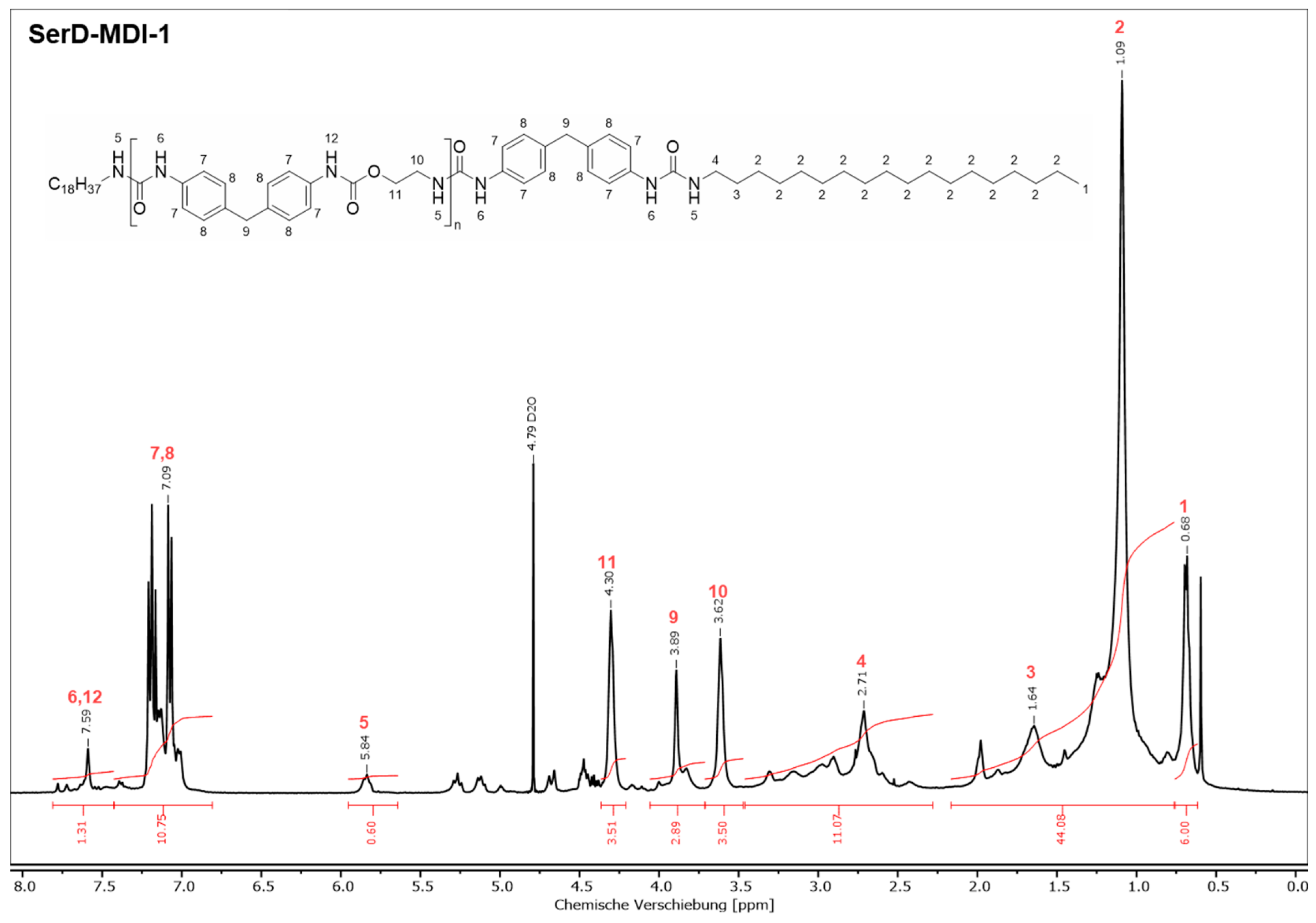
Figure A2.
1H NMR spectrum of the SerD-MDI-2 thickener measured in H2SO4with D2O as a reference at 500 MHz.
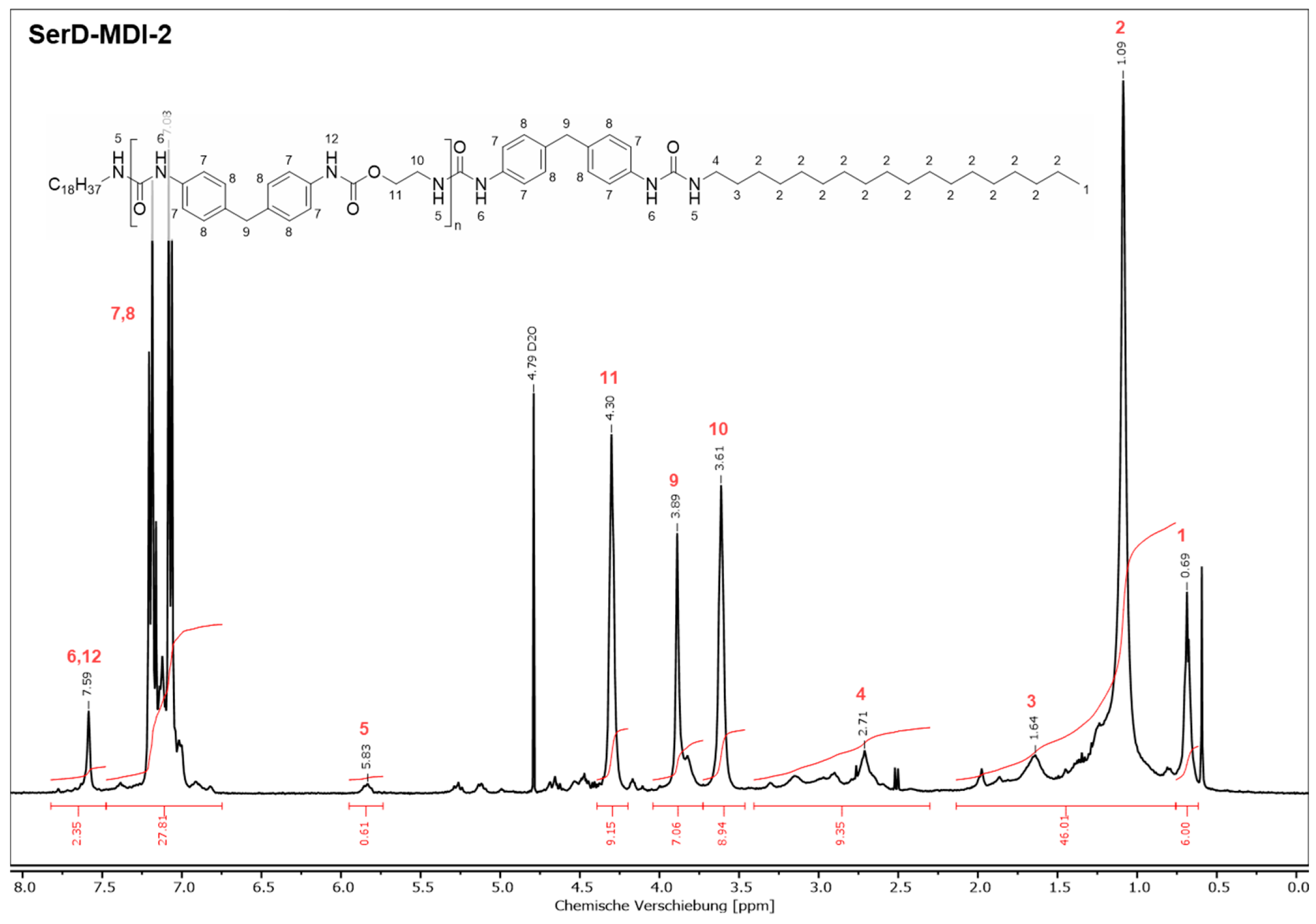
Figure A3.
1H NMR spectrum of the SerD-MDI-3 thickener measured in H2SO4with D2O as a reference at 500 MHz.
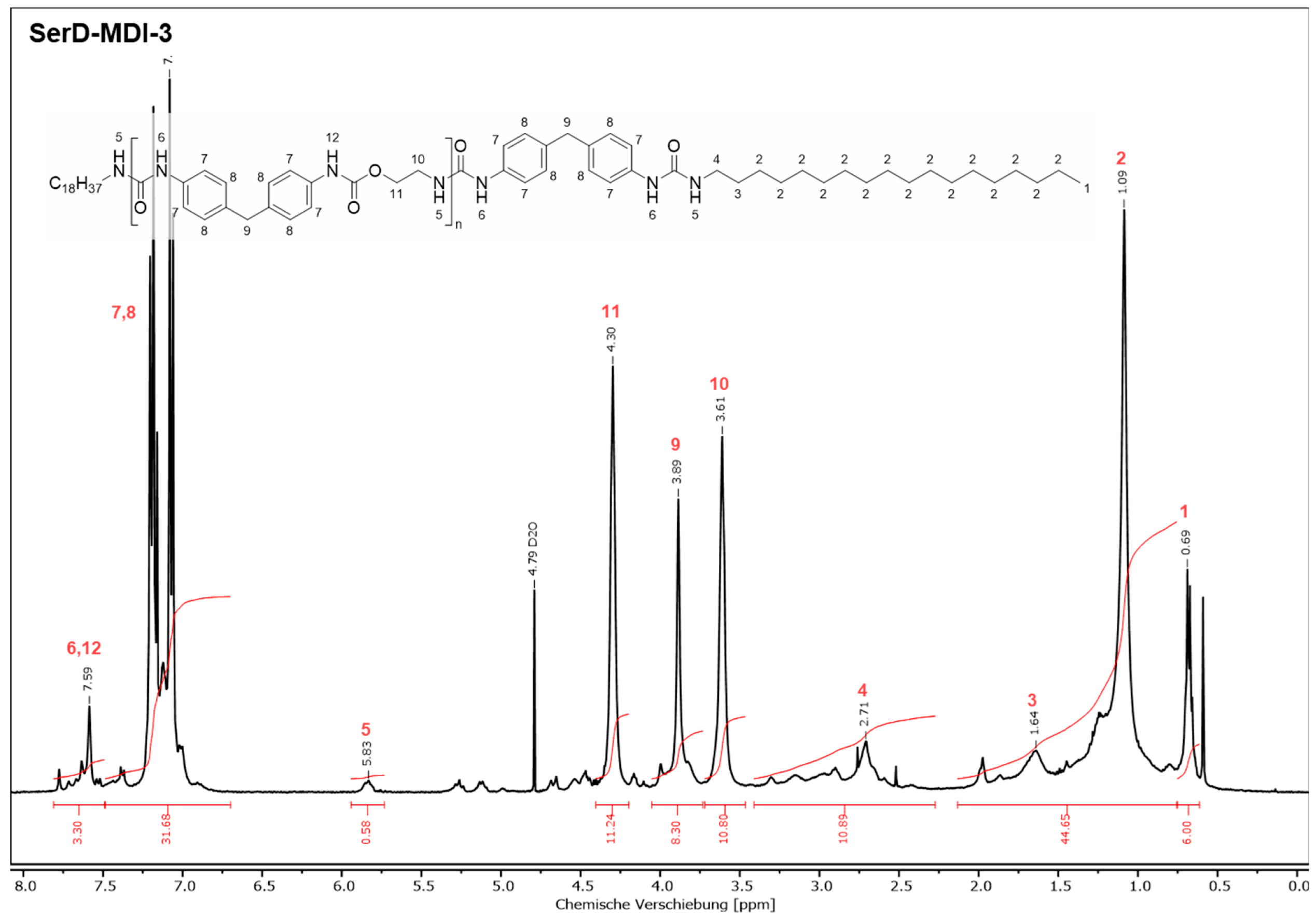
Figure A4.
1H NMR spectrum of the SerOEt-MDI-1 thickener measured in H2SO4with D2O as a reference at 500 MHz.
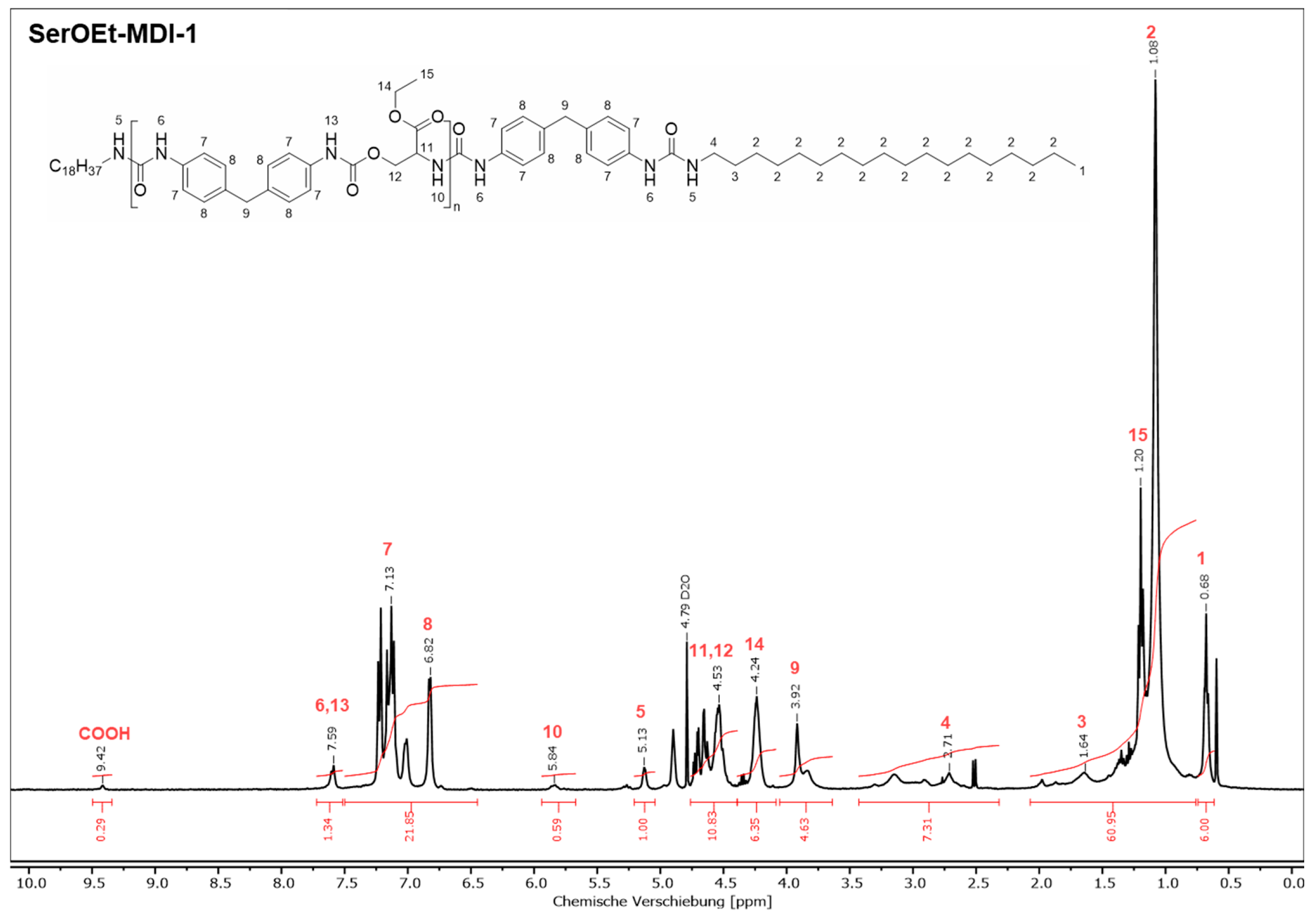
Figure A5.
1H NMR spectrum of the SerOEt-MDI-2 thickener measured in H2SO4with D2O as a reference at 500 MHz.
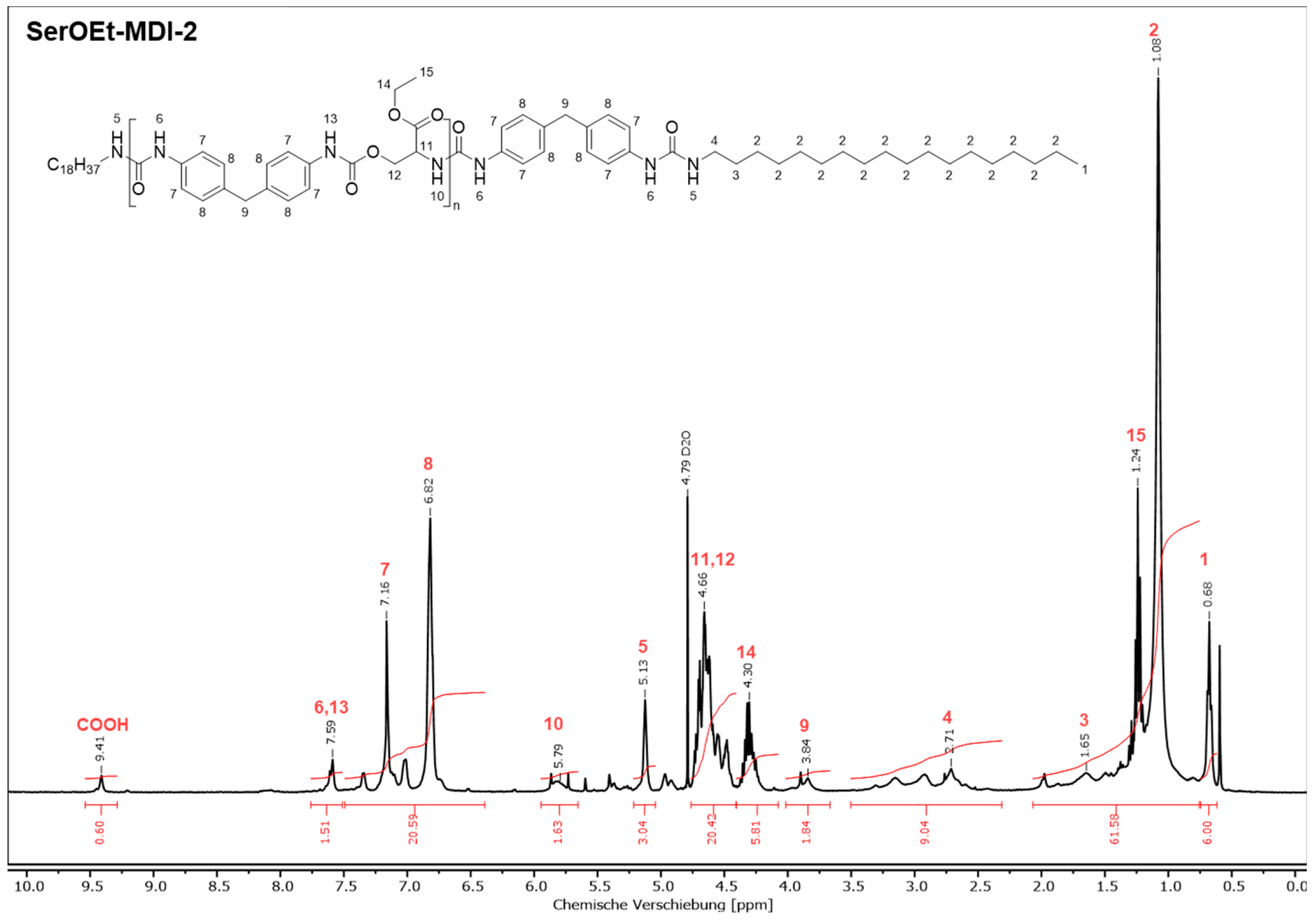
Figure A6.
1H NMR spectrum of the SerOEt-MDI-3 thickener measured in H2SO4with D2O as a reference at 500 MHz.
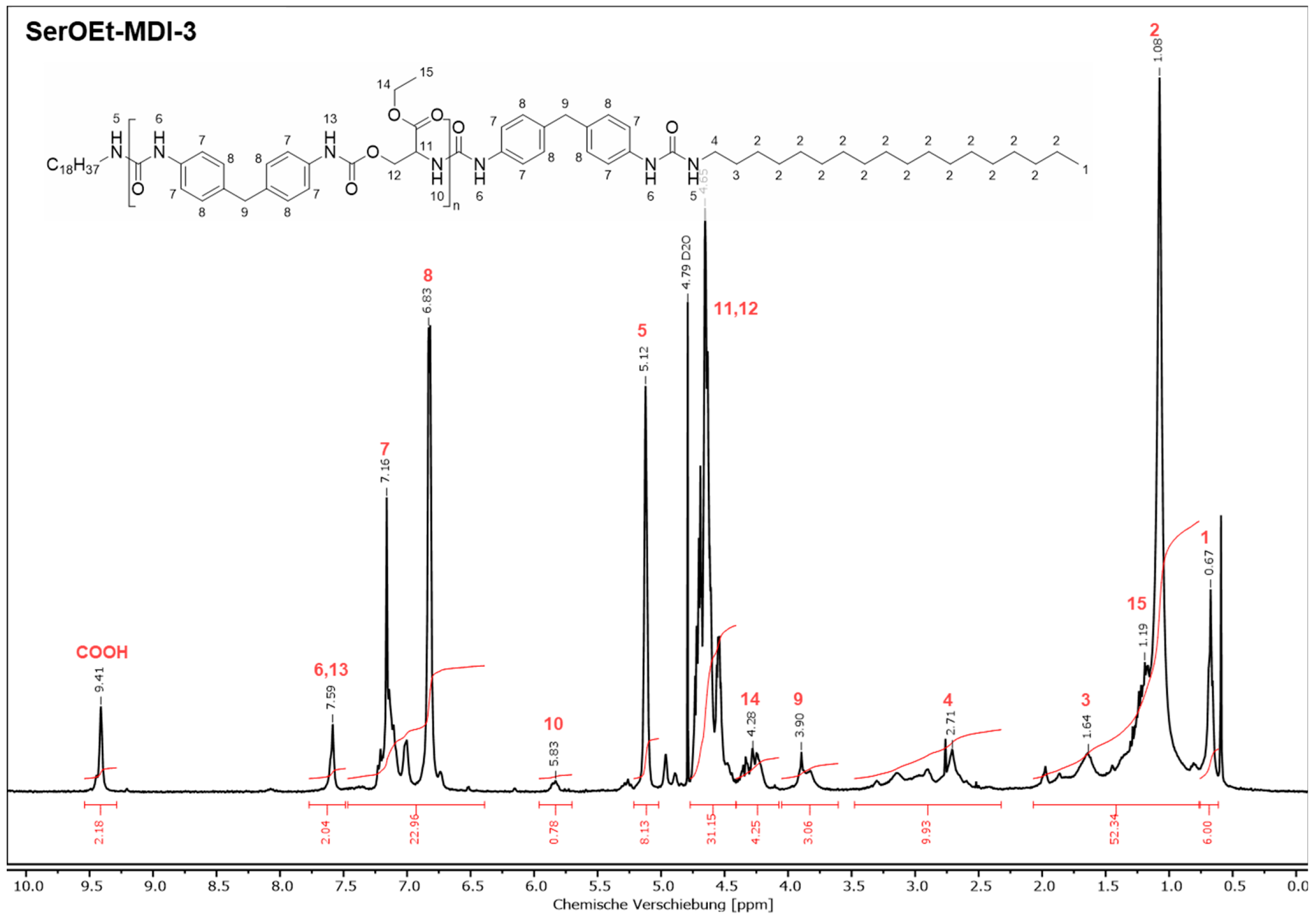
Figure A7.
1H NMR spectrum of the SerD-PDI-1 thickener measured in H2SO4with D2O as a reference at 500 MHz.
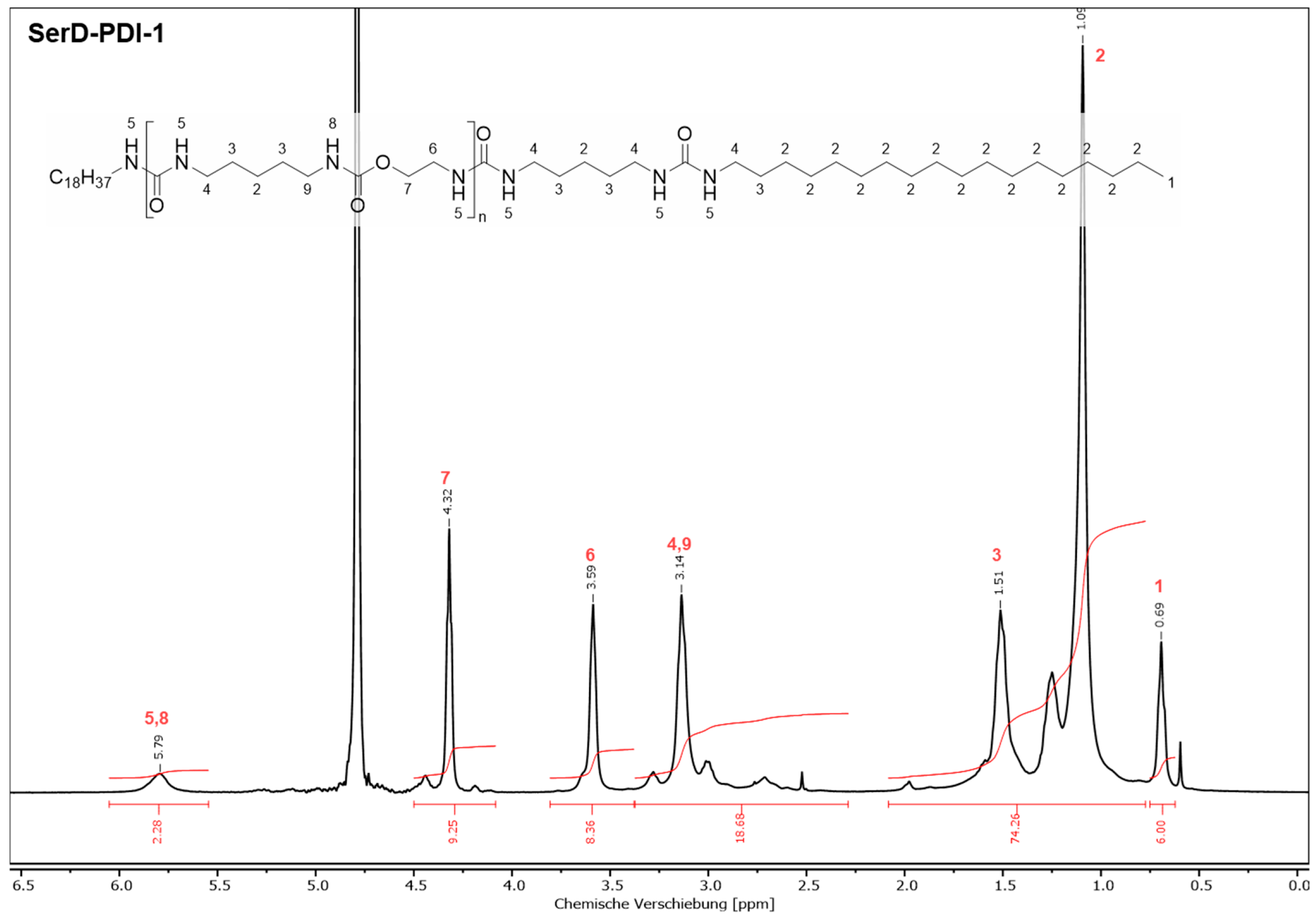
Figure A8.
1H NMR spectrum of the SerD-PDI-3 thickener measured in H2SO4with D2O as a reference at 500 MHz.
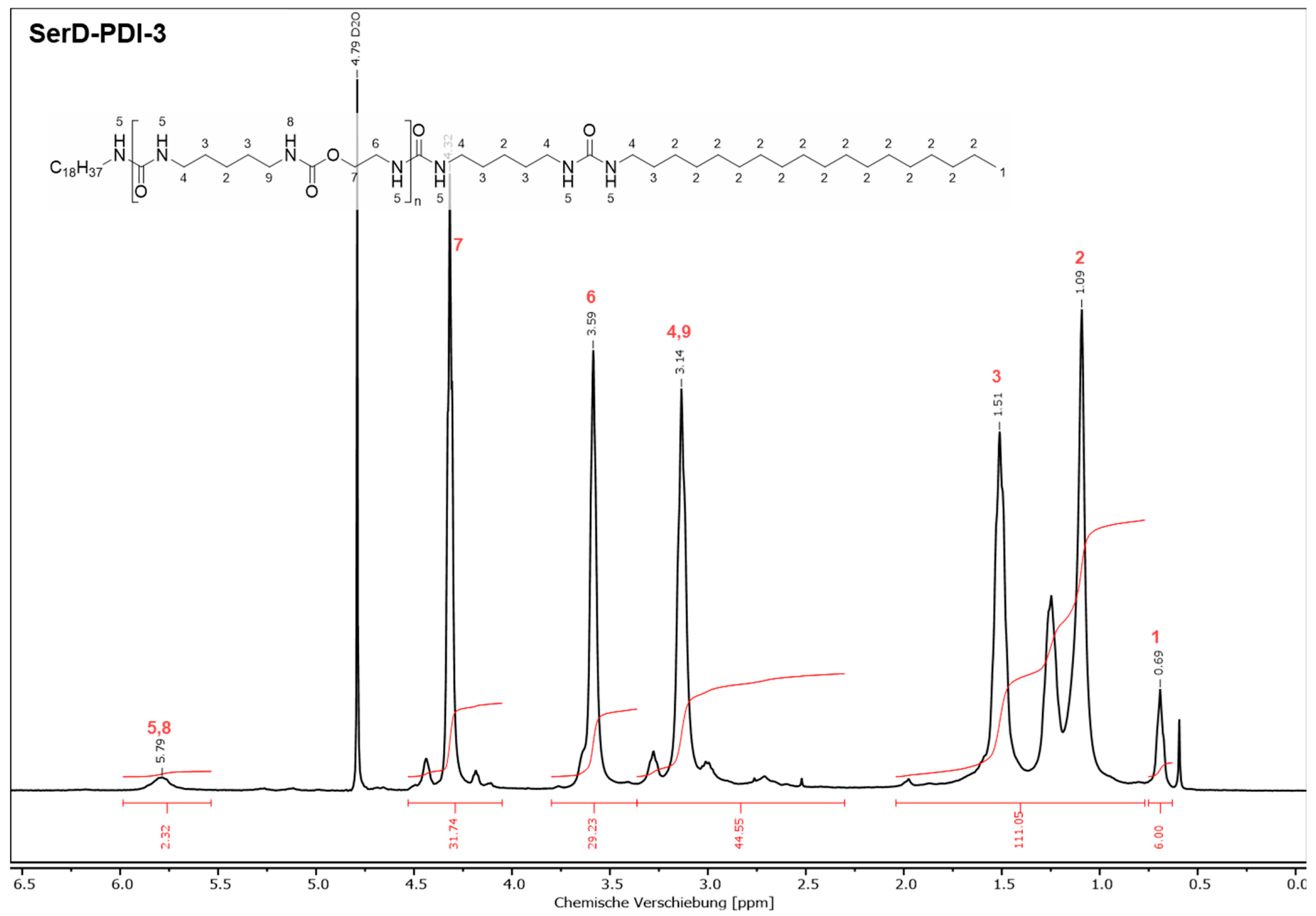
Figure A9.
1H NMR spectrum of the SerOEt-PDI-1 thickener measured in H2SO4with D2O as a reference at 500 MHz.
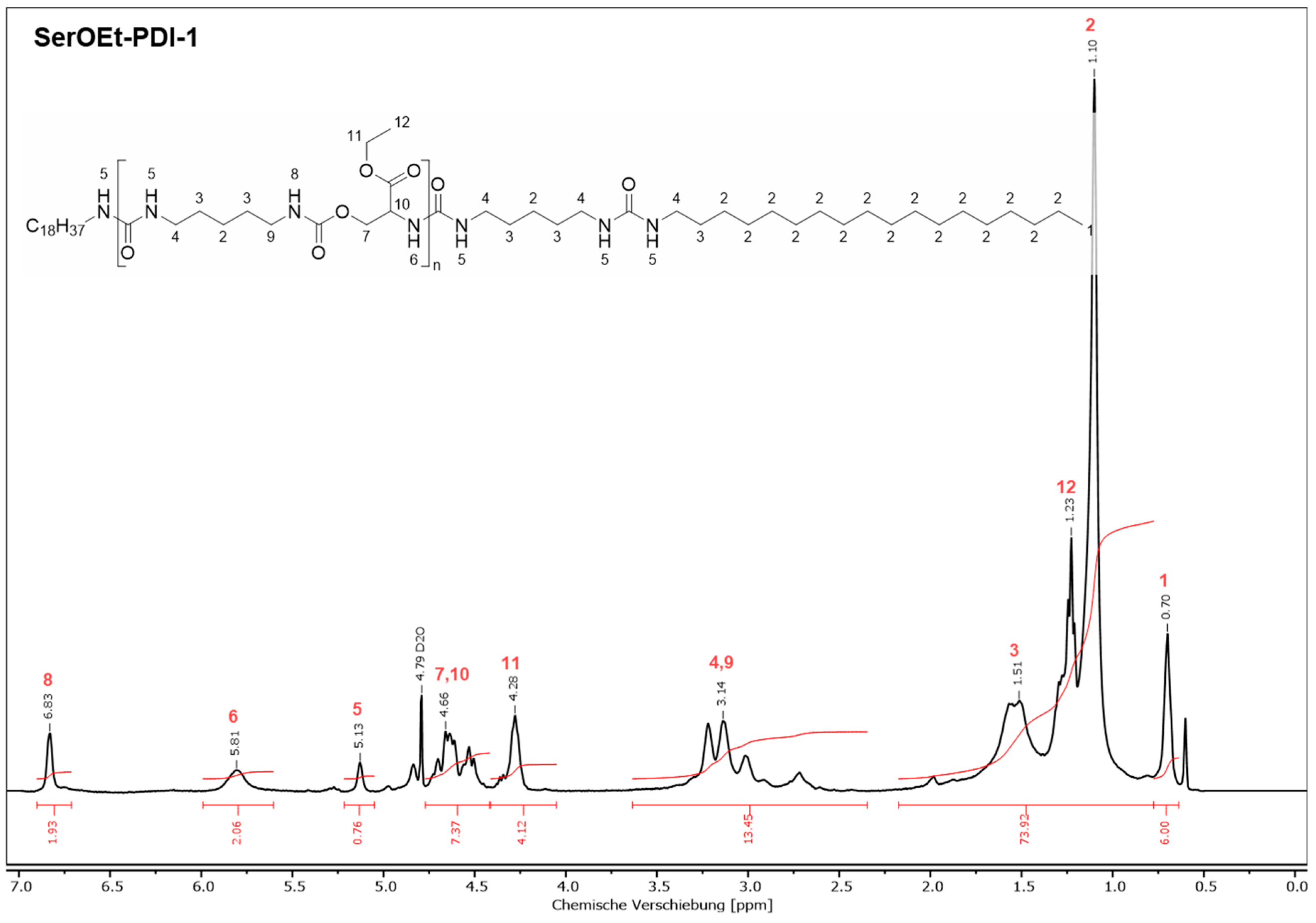
Figure A10.
1H NMR spectrum of the SerOEt-PDI-2 thickener measured in H2SO4with D2O as a reference at 500 MHz. Graphical Abstract.
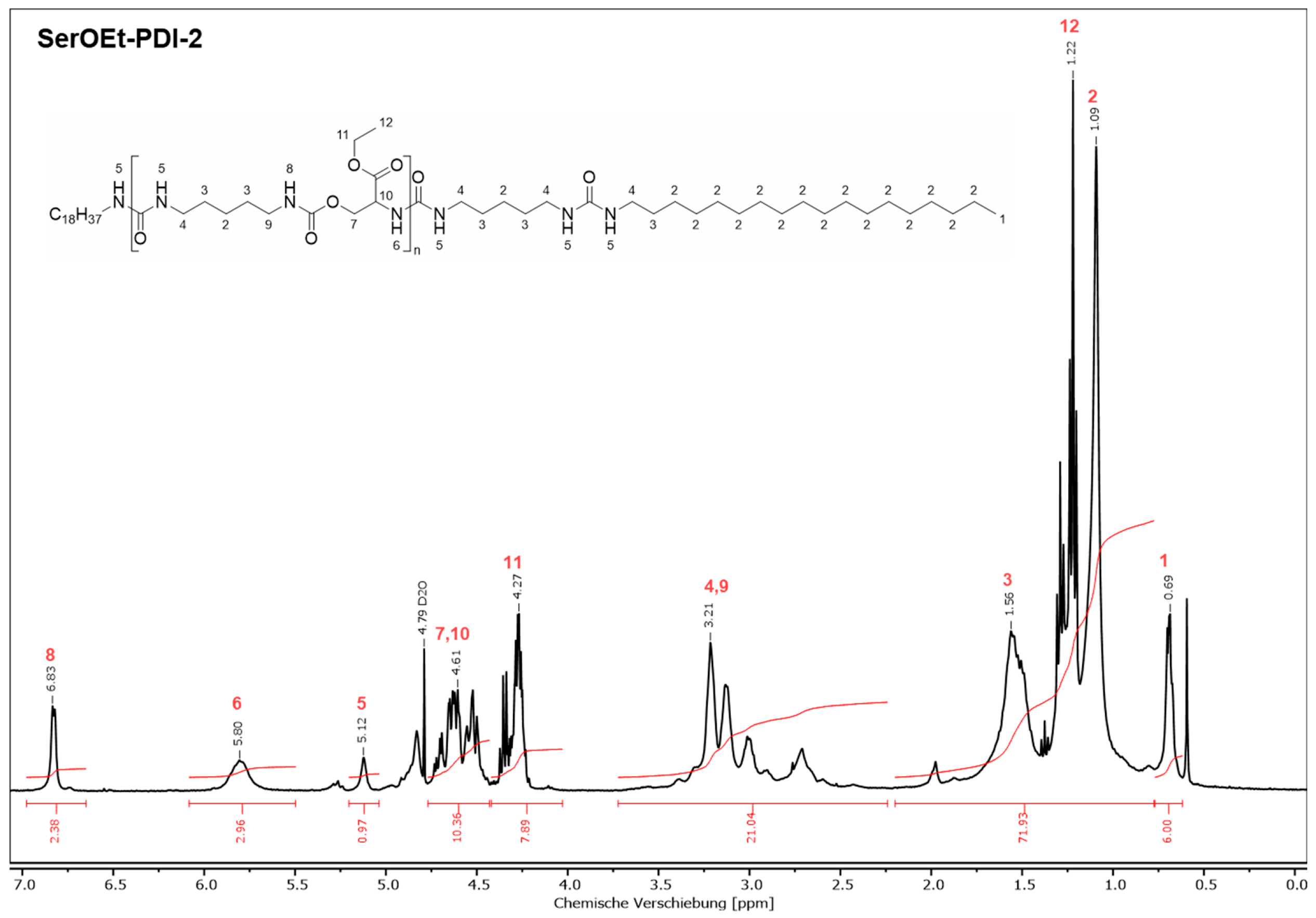
Figure A11.
1H NMR spectrum of the SerOEt-PDI-3 thickener measured in H2SO4with D2O as a reference at 500 MHz.
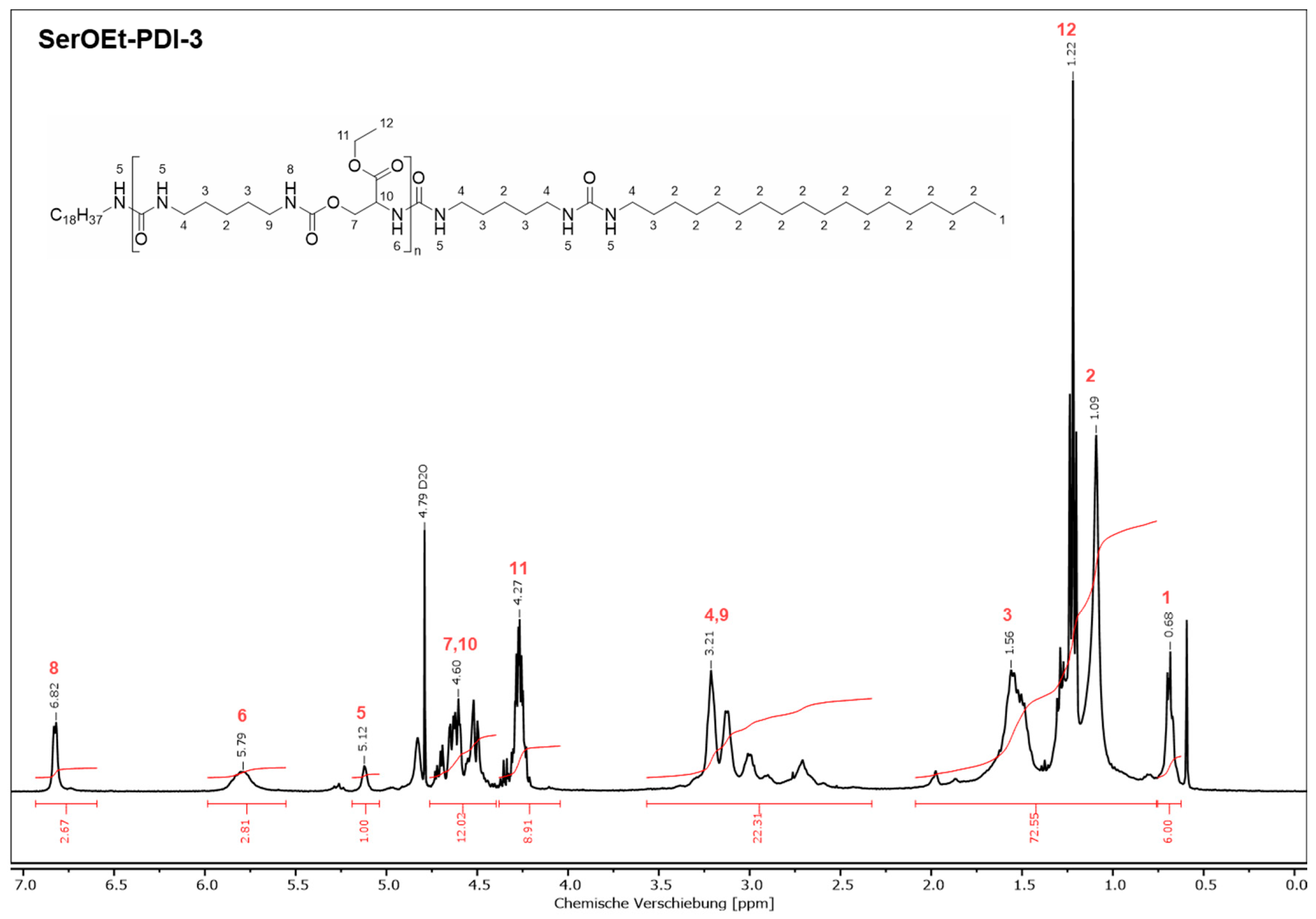
Figure A12.
DSC analysis of sample SerD-PDI-1 and the thickener extracted from sample SerD-PDI.
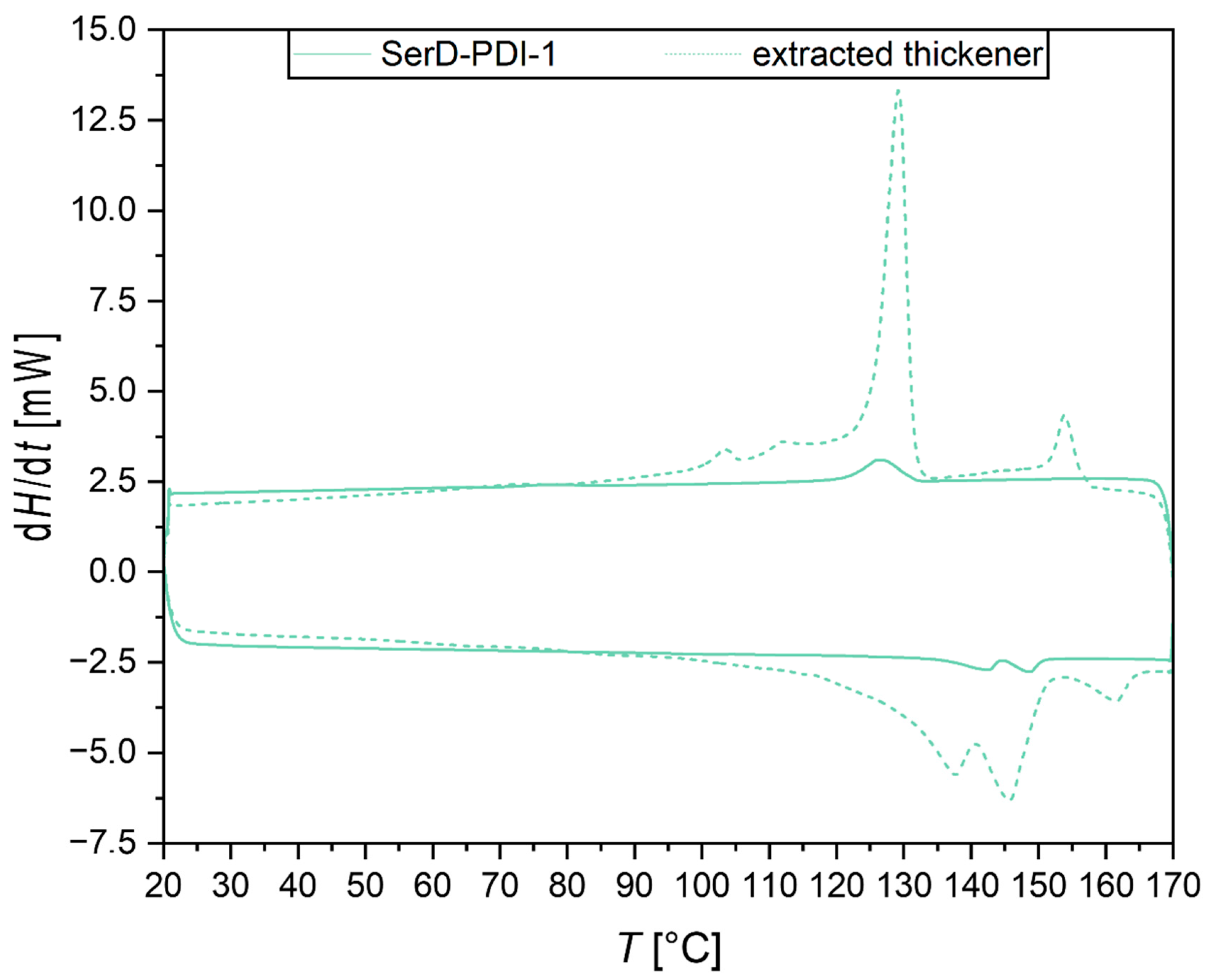
Figure A13.
FTIR spectra of the SerD-PDI(1–3) samples (A–C, left) and their superimposed spectra (right).
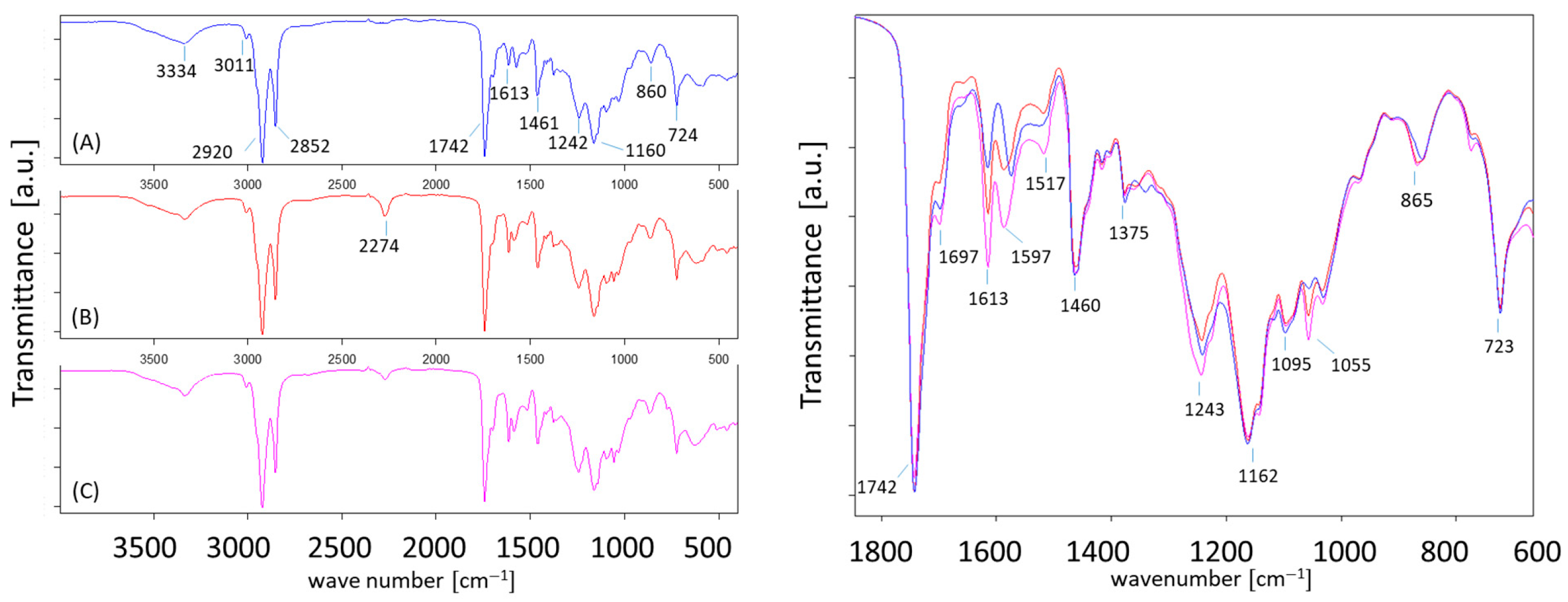
Figure A14.
FTIR spectra of the SerOEt-MDI(1–3) samples (A–C, left) and their superimposed spectra (right).
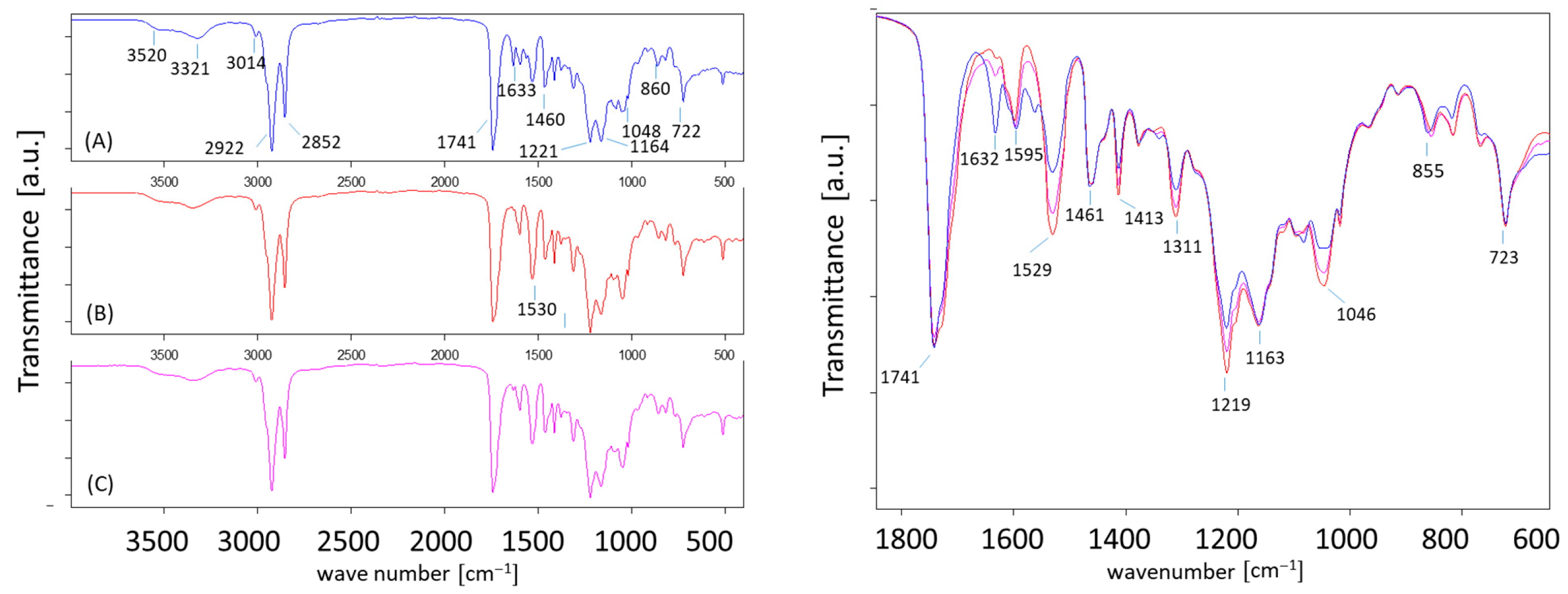
Figure A15.
FTIR spectra of the SerOEt-PDI(1–3) samples (A–C, left) and their superimposed spectra (right).
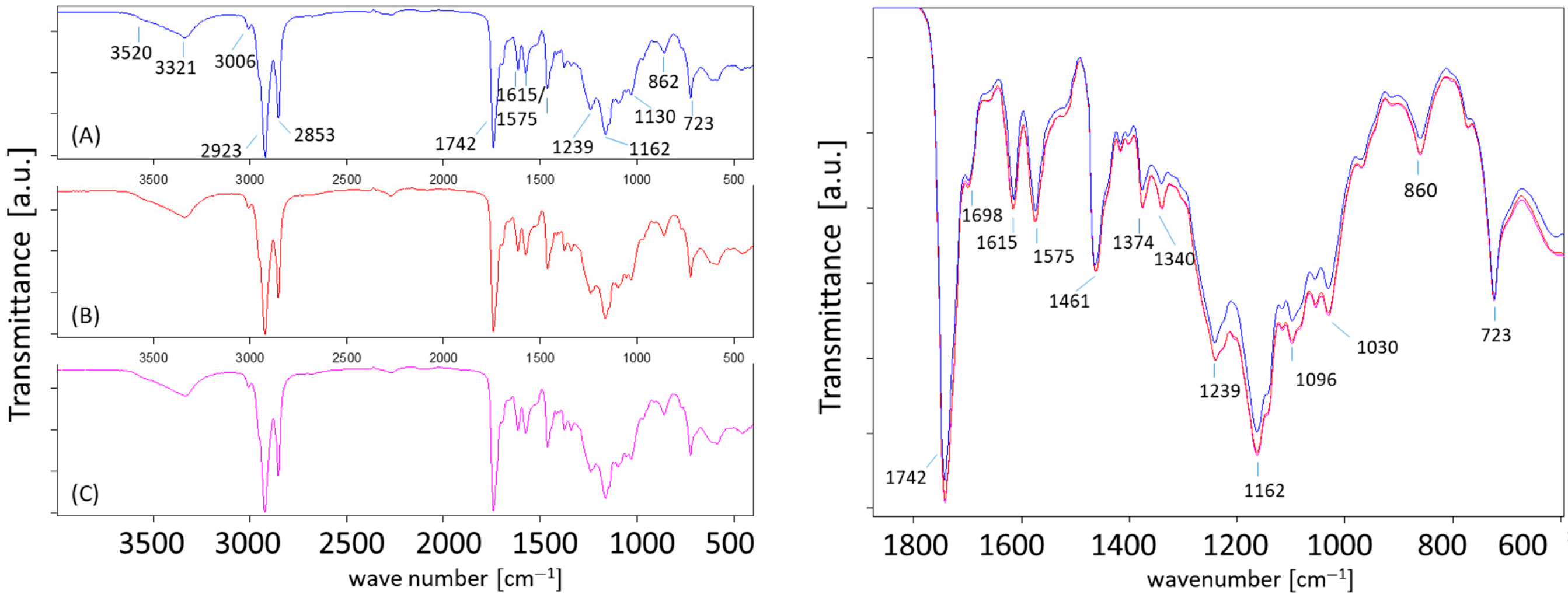
Figure A16.
(Left) FTIR spectra of SerD-PDI-3 before (blue) and after annealing (red) (left) and their superimposed spectra (right).
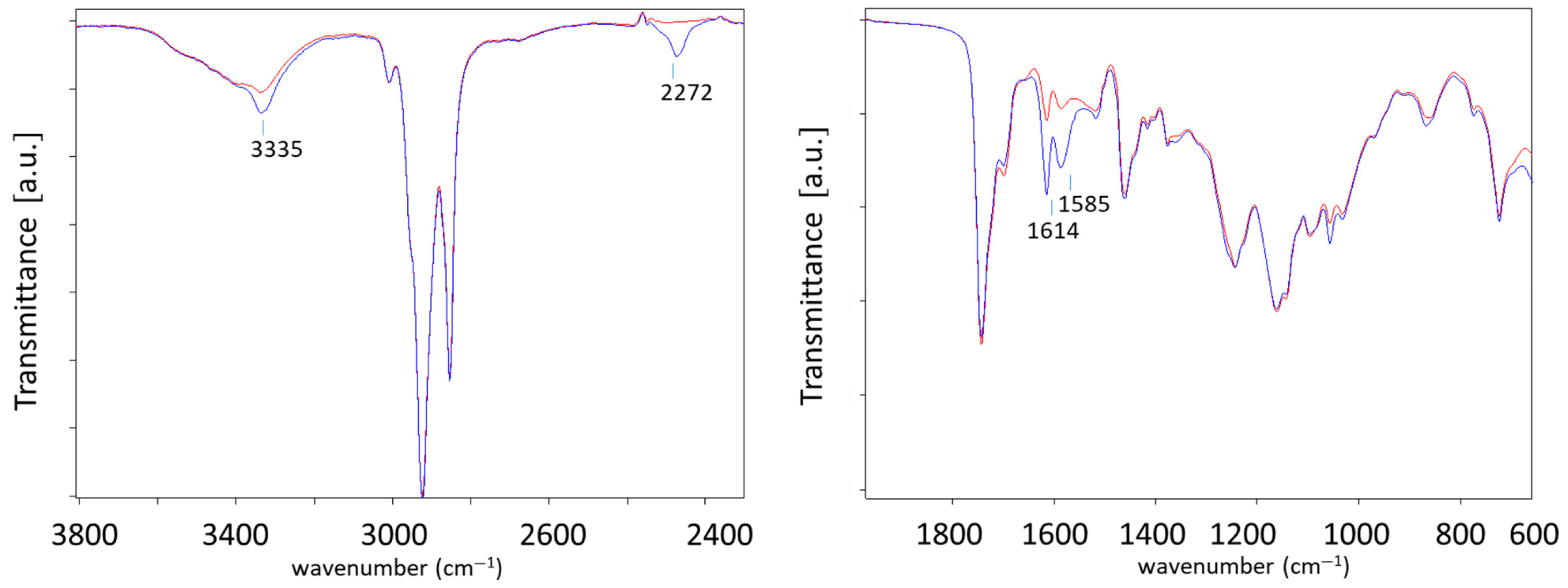
Figure A17.
FTIR spectra of the SerOEt-MDI-3 before (blue) and after annealing (red).
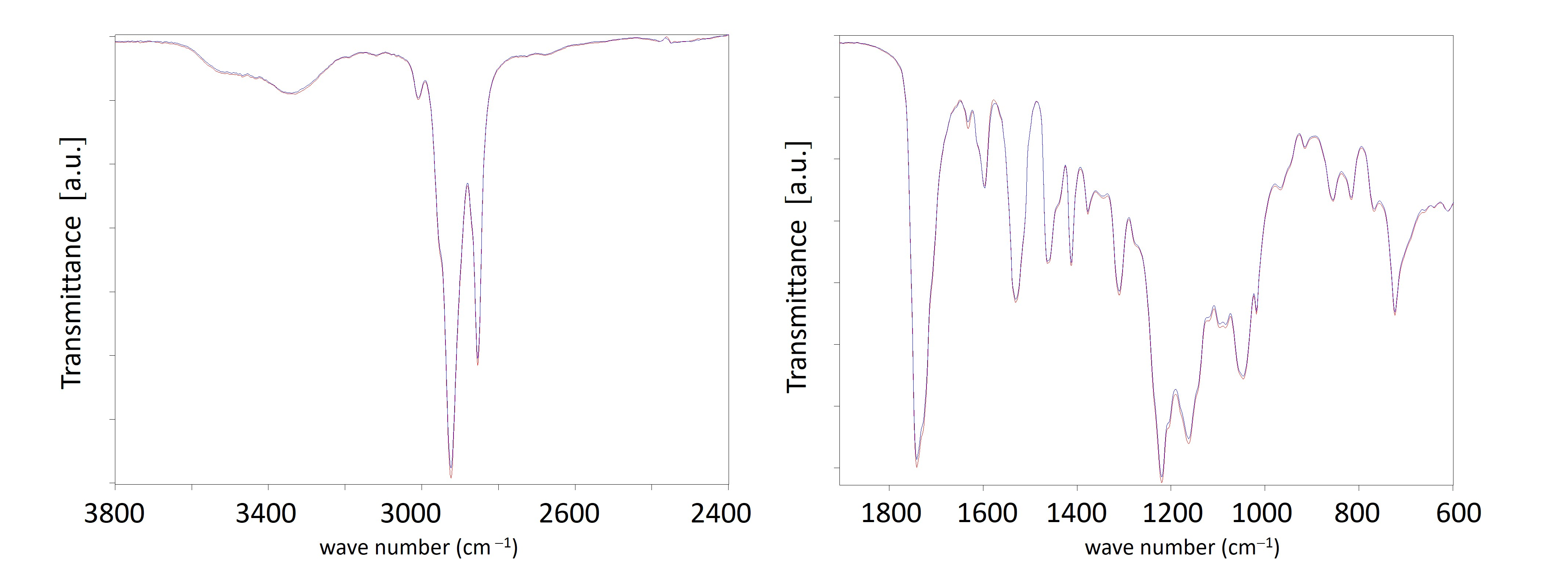
Figure A18.
(Left) FTIR spectra of SerOET-PDI-2 before (blue) and after annealing (red) (left) and their superimposed spectra (right).
References
- Hedayati, H.; Mofidi, A.; Al-Fadhli, A.; Aramesh, M. Solid Lubricants Used in Extreme Conditions Experienced in Machining: A Comprehensive Review of Recent Developments and Applications. Lubricants 2024, 12, 69. [Google Scholar] [CrossRef] [Scilit]
- Li, H.; Zeng, Q.; Fan, M.; Pang, Z.; Wang, J.; Liang, Y. Recent progressin high-temperature greases: Constitutive relationships, mechanisms, and application. Friction 2025, 13, 9440951. [Google Scholar] [CrossRef] [Scilit]
- Huang, A.; Liu, Y.; Cheng, J. Triboelectric behaviors mechanism of continuous rotary friction pairs in liquid lubrication and its potential application. Tribol. Int. 2023, 190, 109035. [Google Scholar] [CrossRef] [Scilit]
- Feßmann, J.; Orth, H. Angewandte Chemie und Umwelttechnik für Ingenieure. Handbuch für Studium und Betriebliche Praxis; Ecomed-Storck GmbH: Landsberg am Lech, Germany, 2002. [Google Scholar]
- Lugt, P.M. Modern advancements in lubricating grease technology. Tribol. Int. 2016, 97, 467–477. [Google Scholar] [CrossRef] [Scilit]
- Dinga, P.; Caoa, W.; Dinga, Q.; Liuc, C.; Zhang, R.; Hua, L. A quantitative analysis on the rheological characteristics of polyurea thickeners with the geometry of helical fiber and nanotube. J. Indust. Eng. Chem. 2023, 124, 232–239. [Google Scholar] [CrossRef] [Scilit]
- Am, A.; Khattab, A.B.; Osman, T.A.; Zaki, M.A. Influence of nano grease composite on rheological behaviour. Int. J. Eng. Res. Appl. 2013, 3, 1126–1131. [Google Scholar]
- Jiang, Z.; Sun, Y.; Liu, B.; Yu, L.; Tong, Y.; Yan, M.; Yang, Z.; Hao, Y.; Shangguan, L.; Zhang, S.; et al. Research progresses of nanomaterials as lubricant additives. Friction 2024, 12, 1347–1391. [Google Scholar] [CrossRef] [Scilit]
- Younes, H.; Christensen, G.; Groven, L.; Hong, H.; Smith, P. Three dimensional (3D) percolation network structure: Key to form stable carbon nano grease. J. Appl. Res. Technol. 2016, 14, 375–382. [Google Scholar] [CrossRef] [Scilit]
- Lyadov, A.S.; Maksimova, Y.M.; Shakhmatova, A.S.; Kirillov, V.V.; Parenago, O.P. Urea (Polyurea) Greases. Russ. J. Appl. Chem. 2018, 91, 885–894. [Google Scholar] [CrossRef] [Scilit]
- Sharma, S.K.; Vasudevan, P.; Tewari, U.S. High temperature lubricants, oils and greases. Tribol. Int. 1983, 16, 213–219. [Google Scholar] [CrossRef] [Scilit]
- Jopen, M.; Degen, P.; Henzler, S.; Grabe, B.; Hiller, W.; Weberskirch, R. Polyurea Thickened Lubricating Grease—The Effect of Degree of Polymerization on Rheological and Tribological Properties. Polymers 2022, 14, 795. [Google Scholar] [CrossRef] [Scilit]
- Hao, Y.; Zhang, K.; Wang, J.; Wang, R.; Zhang, G.; Duan, R.; Li, M.; Ren, Z.; Wang, S.; Wang, X. Bio-based lubricants: Progress in research. BioResources 2025, 20, 8349–8373. [Google Scholar] [CrossRef] [Scilit]
- Rahmadiawan, D.; Shi, S.C.; Aslfattahi, N.; Fauza, A.N.; Fuadi, Z. Advancements in Cellulose for Eco-Friendly Lubricant Applications: A Review on Tribological Properties. ACS Omega 2025, 10, 36878−36889. [Google Scholar] [CrossRef] [Scilit]
- Wilínska, I.; Wilkanowicz, S. Advancements in Environmentally Friendly Lubricant Technologies: Towards Sustainable Performance and Efficiency. Energies 2025, 18, 4006. [Google Scholar] [CrossRef] [Scilit]
- Vafaei, S.; Fischer, D.; Jopen, M.; Jacobs, G.; König, F.; Weberskirch, R. Investigation of Tribological Behavior of Lubricating Greases Composed of Different Bio-Based Polymer Thickeners. Lubricants 2021, 9, 80. [Google Scholar] [CrossRef] [Scilit]
- Li, Y.; Chen, J. Design and control of an energy-saving phosgenation reaction distillation for toluene diisocyanate. Chem. Eng. Process. 2020, 154, 107933. [Google Scholar] [CrossRef] [Scilit]
- Li, W.; Li, H.; Wu, C.; Han, B.; Ouyang, P.; Chen, K. An effective synthesis of bio-based pentamethylene diisocyanate in a jet loop reactor. Chem. Eng. J. 2021, 425, 131527. [Google Scholar] [CrossRef] [Scilit]
- Chauke, N.P.; Mukaya, H.E.; Nkazi, D.B. Chemcial modifications of castor oil: A review. Sci. Progr. 2019, 102, 199–217. [Google Scholar] [CrossRef] [Scilit] [PubMed]
- Conrad, A.; Hodapp, A.; Hochstein, B.; Willenbacher, N.; Jacob, K.-H. Low-Temperature Rheology and Thermoanalytical Investigation of Lubricating Oils: Comparison of Phase Transition, Viscosity, and Pour Point. Lubricant 2021, 9, 99. [Google Scholar] [CrossRef] [Scilit]
- Ren, J.; Cai, H.; Zhao, G.; Xu, Z.; Wang, X. Study of the changes in the microstructures and properties of grease using ball milling to simulate a bearing shear zone on grease. Sci. Rep. 2024, 14, 9734. [Google Scholar] [CrossRef] [Scilit] [PubMed]
- Mai, P.T.; Nguyen, N.P.T.; Nguyen, T.V.; Minh, P.N.; Vu, T.H.T.; Au, H.T.; Bui, T.H. Fabrication and application of graphene-based silicone grease. Mater. Res. Express 2023, 10, 095003. [Google Scholar] [CrossRef] [Scilit]
- Phuong, M.T.; Tu, N.V.; Hau, T.V.; Tuan, D.; Huyen, N.T.; Thanh, C.T.; Son, H.A.; Minh, P.N.; Chuc, N.V.; Trinh, P.V.; et al. Impact of carboxyl functionalization on the thermal conductivity of thermal interface material-based silicone thermal grease containing graphene. Mater. Lett. 2025, 400, 139155. [Google Scholar] [CrossRef] [Scilit]
- Ren, G.; Zhou, C.; Fan, X.; Zheng, M.; Wang, S. Investigating the rheological and tribological properties of polyurea grease via regulating ureido amount. Tribol. Inter. 2022, 173, 107643. [Google Scholar] [CrossRef] [Scilit]
- Samson, N.; Mechin, F.; Pascault, J.P. Relationships Between Synthesis and Mechanical Properties of New Polyurea Materials. J. Appl. Polym. Sci. 1997, 65, 2265–2280. [Google Scholar] [CrossRef]
- Trujillo-Ramirez, D.; Reyes, I.; Lobato-Calleros, C.; Vernon-Carter, E.; Alvarez-Ramirez, J. Chia seed oil-candelilla wax oleogels structural features and viscoelasticity are enhanced by annealing. Lwt 2022, 153, 112433. [Google Scholar] [CrossRef] [Scilit]
- Couronne, I.; Blettner, G.; Vergne, P. Rheological Behavior of Greases: Part I—Effects of Composition and Structure. Tribol. Transact. 2000, 43, 619–626. [Google Scholar] [CrossRef] [Scilit]
- Wang, J.; Guo, Z.; Hu, W.; Lu, H.; Li, J. Investigating the effects of base oil type on microstructure and tribological properties of polyurea grease. Tribol. Int. 2024, 194, 109573. [Google Scholar] [CrossRef] [Scilit]
- Ibrahim, S.; Ahmad, A.; Mohamed, N.S. Characterization of Novel Castor Oil-Based Polyurethane Polymer Electrolytes. Polymers 2015, 7, 747–759. [Google Scholar] [CrossRef] [Scilit]
- Bahadur, A.; Shoaib, M.; Saeed, A.; Iqbal, S. FT-IR spectroscopic and thermal study of waterborne polyurethane-acrylate leather coatings using tartaric acid as an ionomer. e-Polymers 2016, 16, 463–474. [Google Scholar] [CrossRef] [Scilit]
- Mattia, J.; Painter, P. A Comparison of Hydrogen Bonding and Order in a Polyurethane and Poly(urethane-urea) and Their Blends with Poly(ethylene glycol). Macromolecules 2007, 40, 1546–1554. [Google Scholar] [CrossRef] [Scilit]
- Panhwar, T.; Mahesar, S.A.; Kandhro, A.A.; Sheerazi, S.T.H.; Kori, A.H.; Laghari, Z.H.; Memon, J.U.R. Physicochemical composition and FTIR characterization of castor seed oil. Ukr. Food J. 2019, 8, 778–787. [Google Scholar] [CrossRef] [Scilit]

Disclaimer/Publisher’s Note: The statements, opinions and data contained in all publications are solely those of the individual author(s) and contributor(s) and not of MDPI and/or the editor(s). MDPI and/or the editor(s) disclaim responsibility for any injury to people or property resulting from any ideas, methods, instructions or products referred to in the content. |
© 2025 by the authors. Licensee MDPI, Basel, Switzerland. This article is an open access article distributed under the terms and conditions of the Creative Commons Attribution (CC BY) license (https://creativecommons.org/licenses/by/4.0/).