Influence of Oil Injection Lubrication Parameters of High-Speed Internal Meshing Gear Based on the Computational Fluid Dynamics

 ,
,
Abstract
1. Introduction
2. Materials and Methods
2.1. Mathematical Model of Multiphase Model (VOF)
2.1.1. Phase Volume Fraction Calculation Model
2.1.2. Multiphase Model (VOF) Momentum Equation
2.1.3. Multiphase Model (VOF) Energy Equation
2.2. Turbulence Model
2.3. Dynamic Mesh Technology
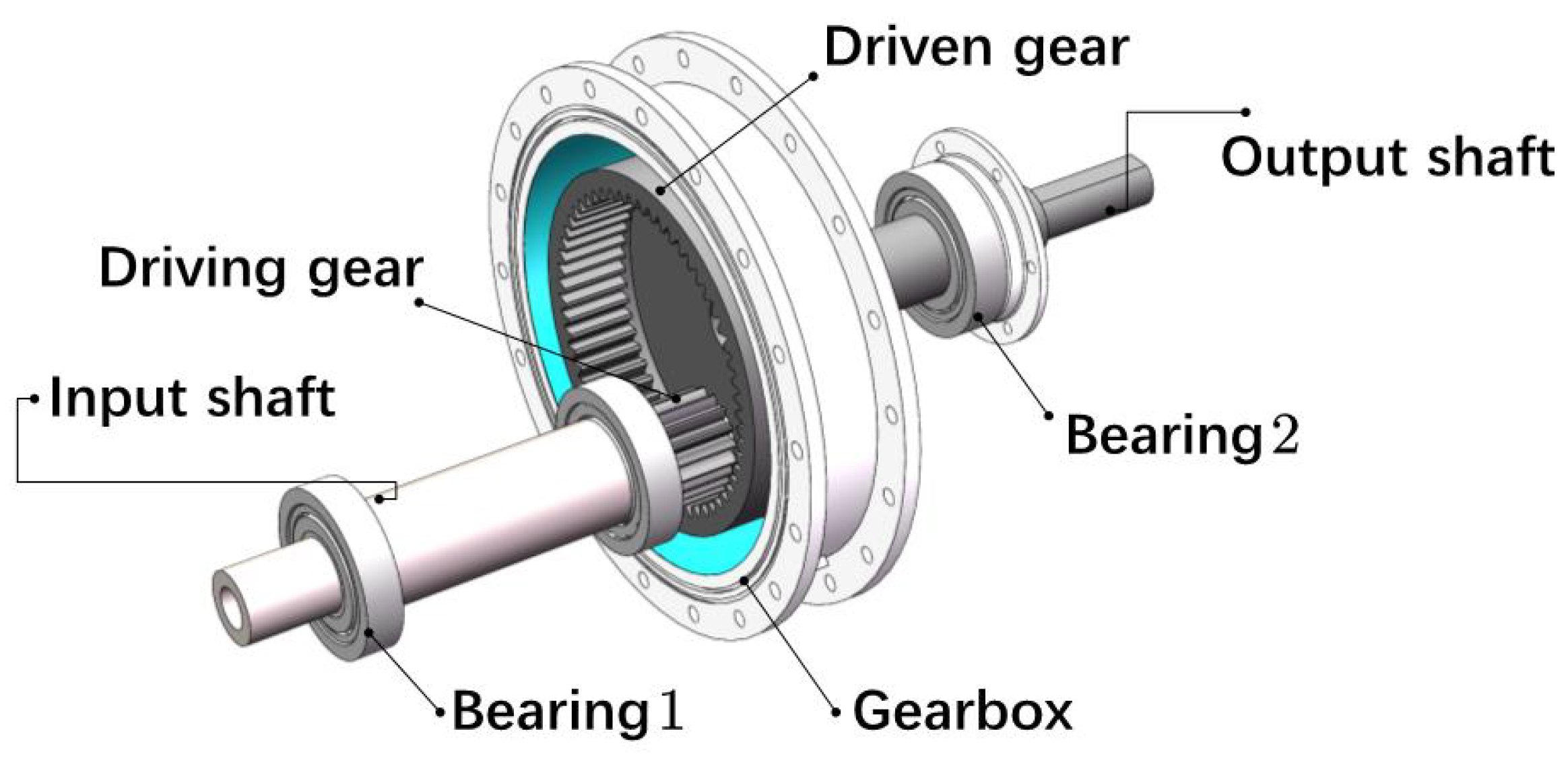
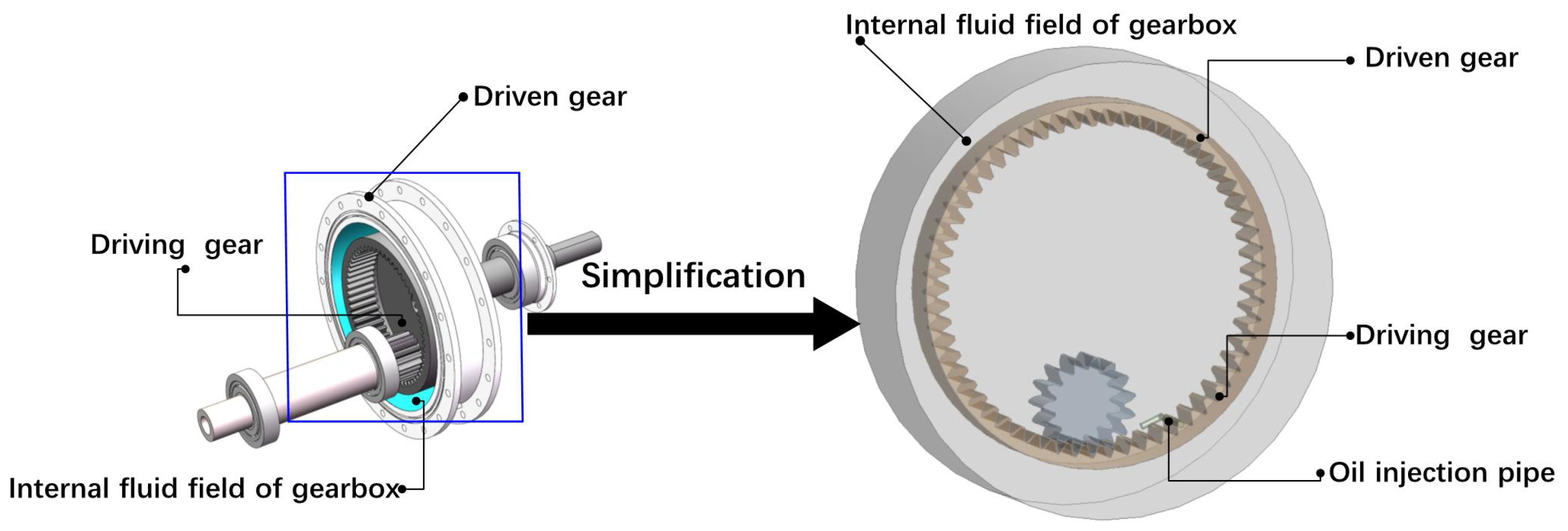
2.4. Computational Domains
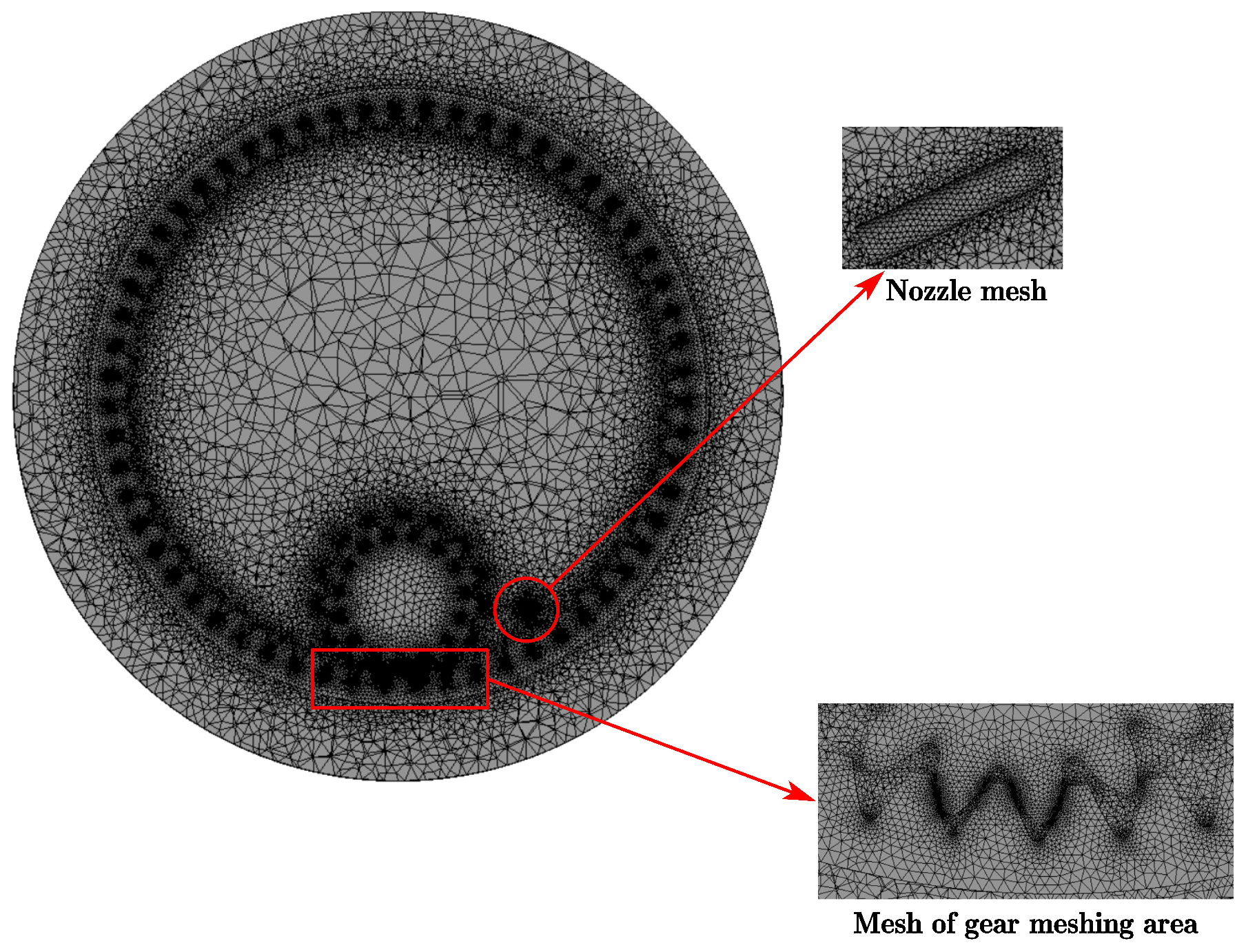
2.5. Meshing of Computational Domains
2.6. Boundary Condition Setting
3. Results and Discussion
3.1. Air Movement Characteristics Under Gear Rotation (No Injection Lubrication)
3.2. Influence of Nozzle Position Parameters on Lubrication of Internal Meshing Gear
3.3. Influence of Nozzle Angular Parameters on Lubrication of Internal Meshing Gear
3.4. Influence of Oil Injection Speed Parameters on Lubrication of Internal Meshing Gear
4. Conclusions
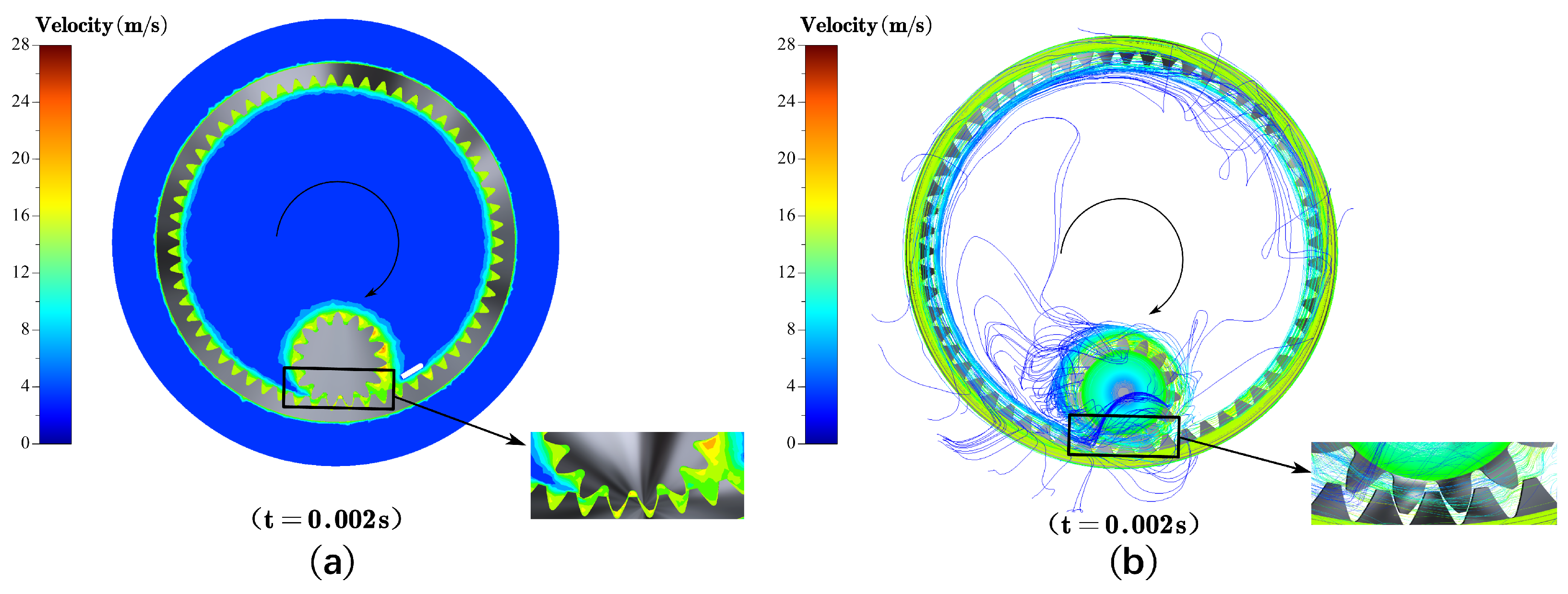
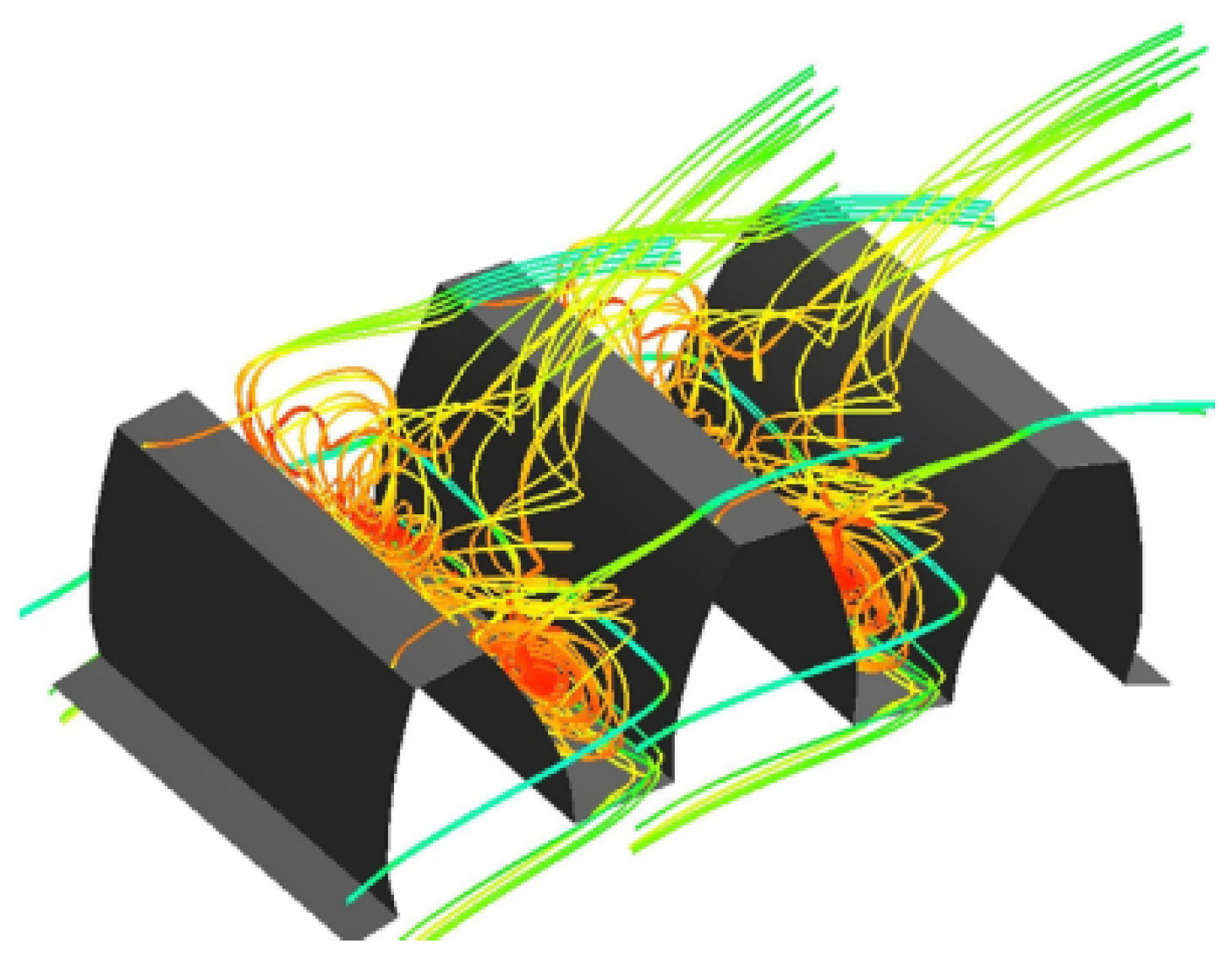
- This study provides an analysis of the airflow characteristics in high-speed internal meshing gears under non-lubricated conditions and examines the distribution and trajectory of air velocity within the gearbox. The overall velocity of air at the meshing intake is larger than the air speed at the meshing exit, which ranges between 13 and 17 m/s (simulation findings). Furthermore, the velocity trajectory at the meshing exit is less predictable than that at the meshing entrance.These findings can help to understand the motion characteristics of internal meshing gear under non-lubricated conditions.
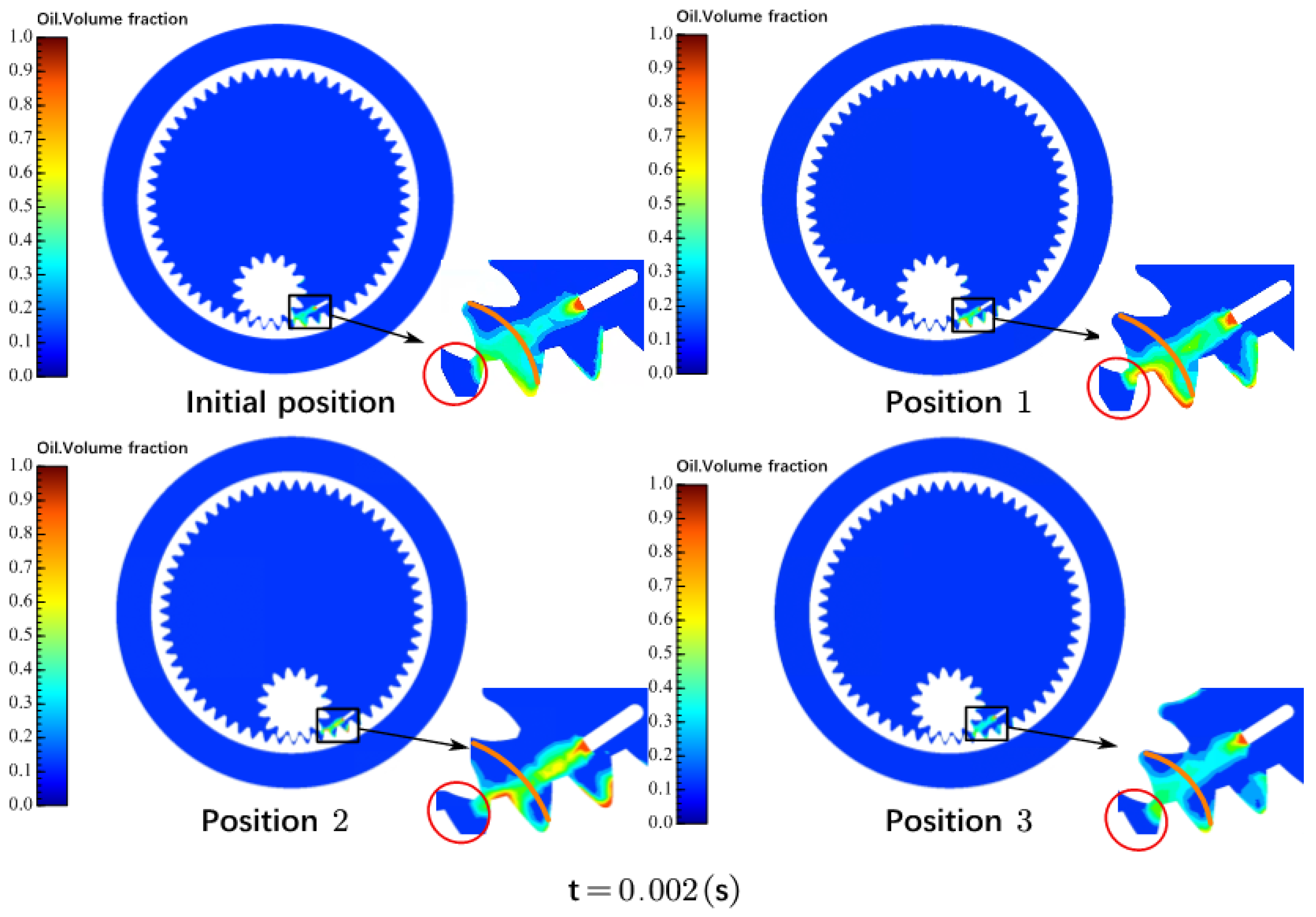
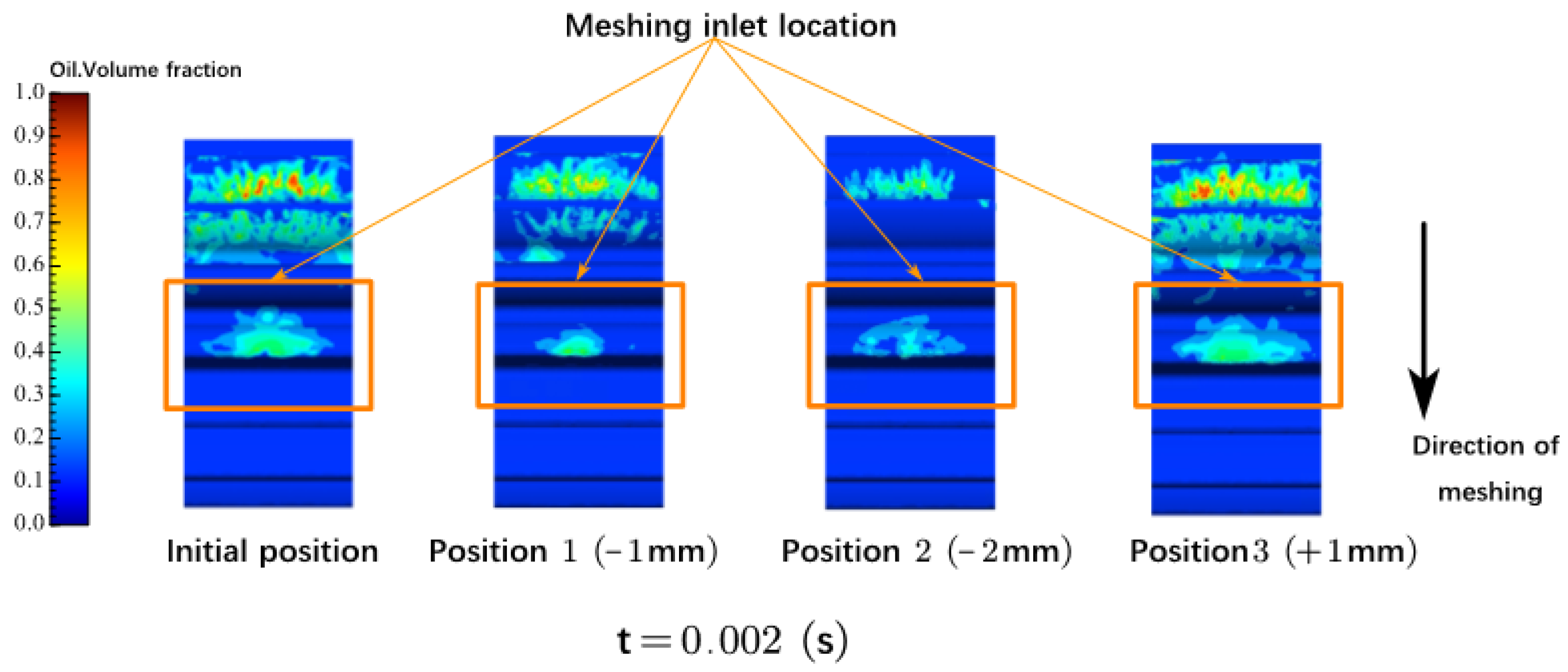
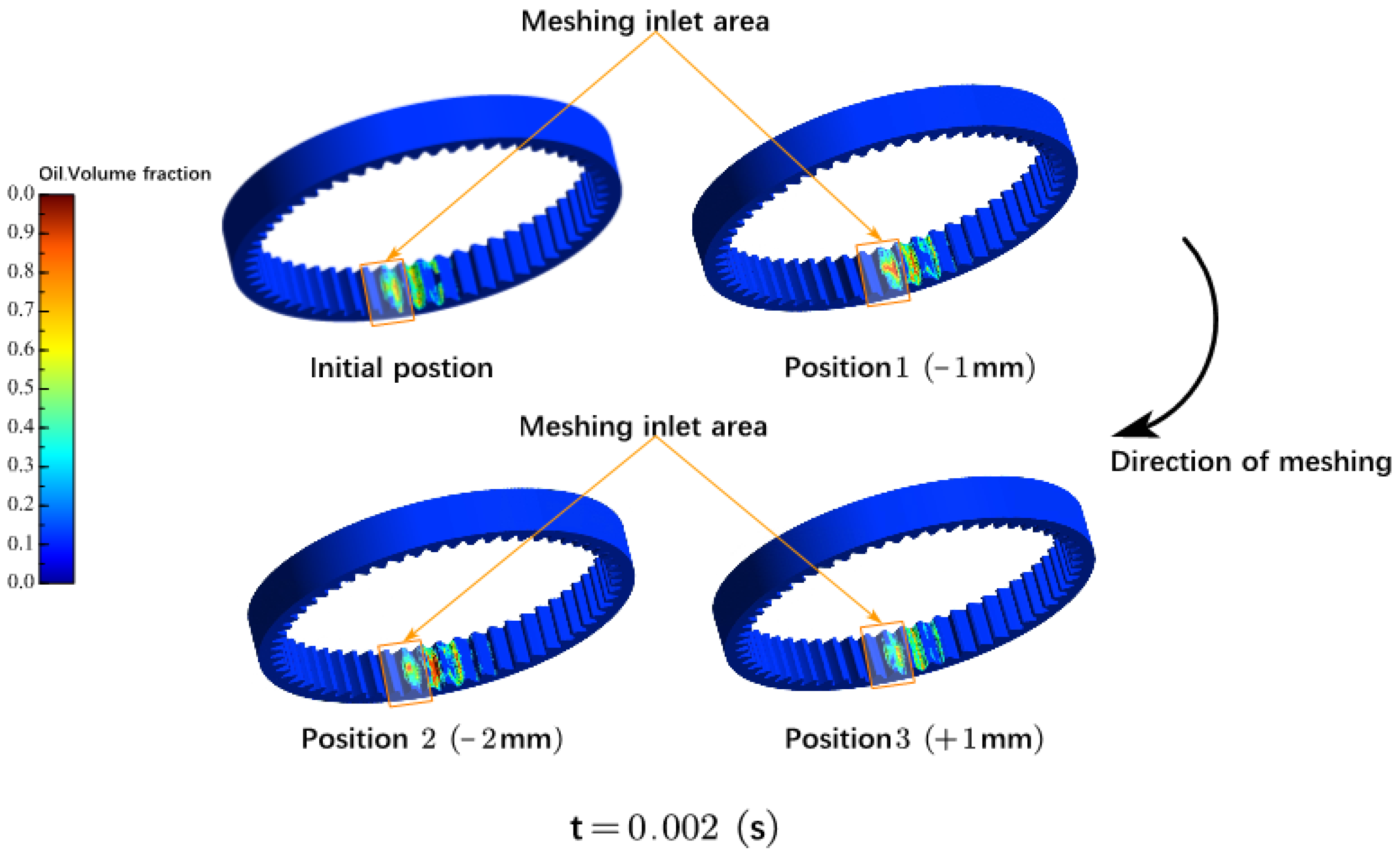
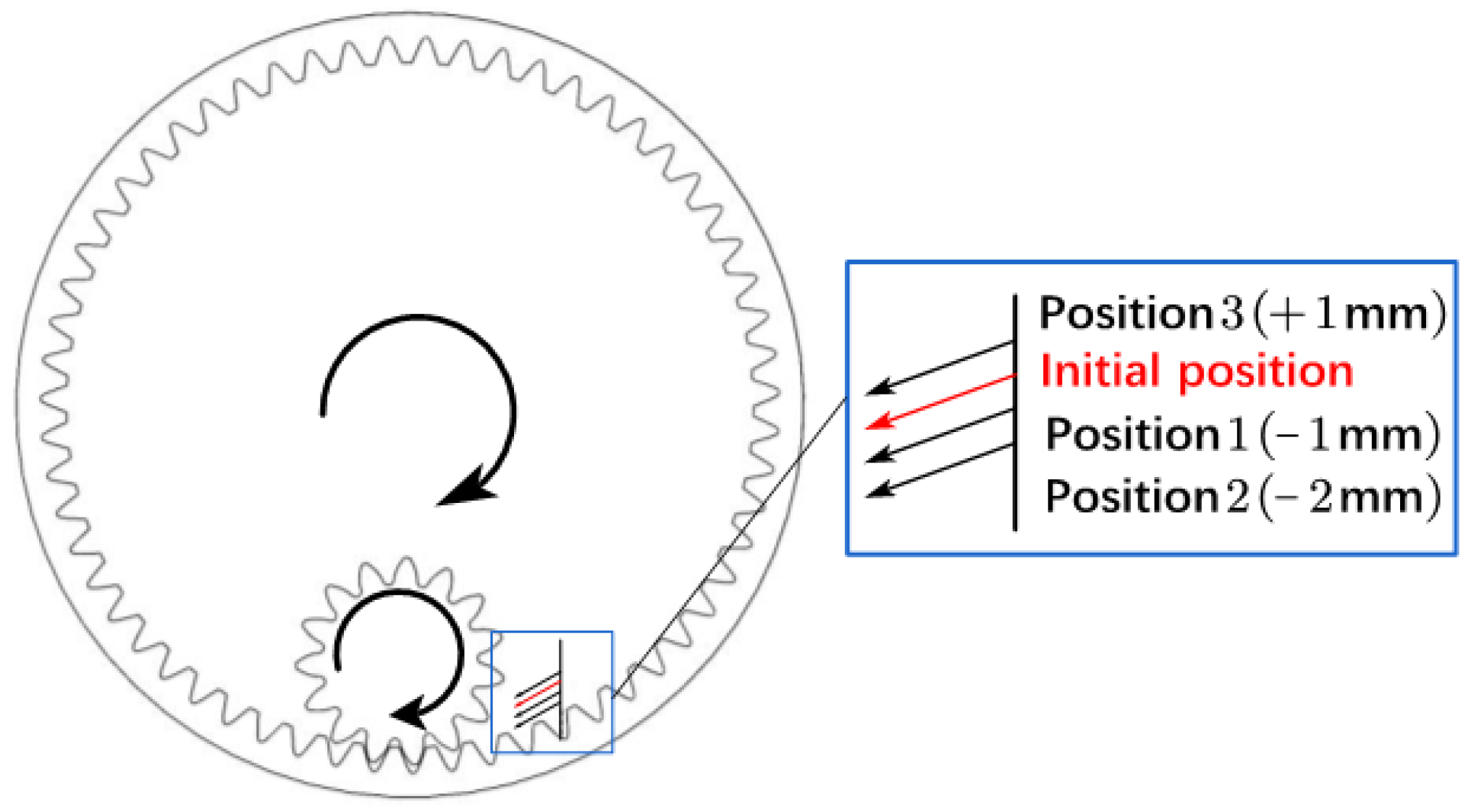
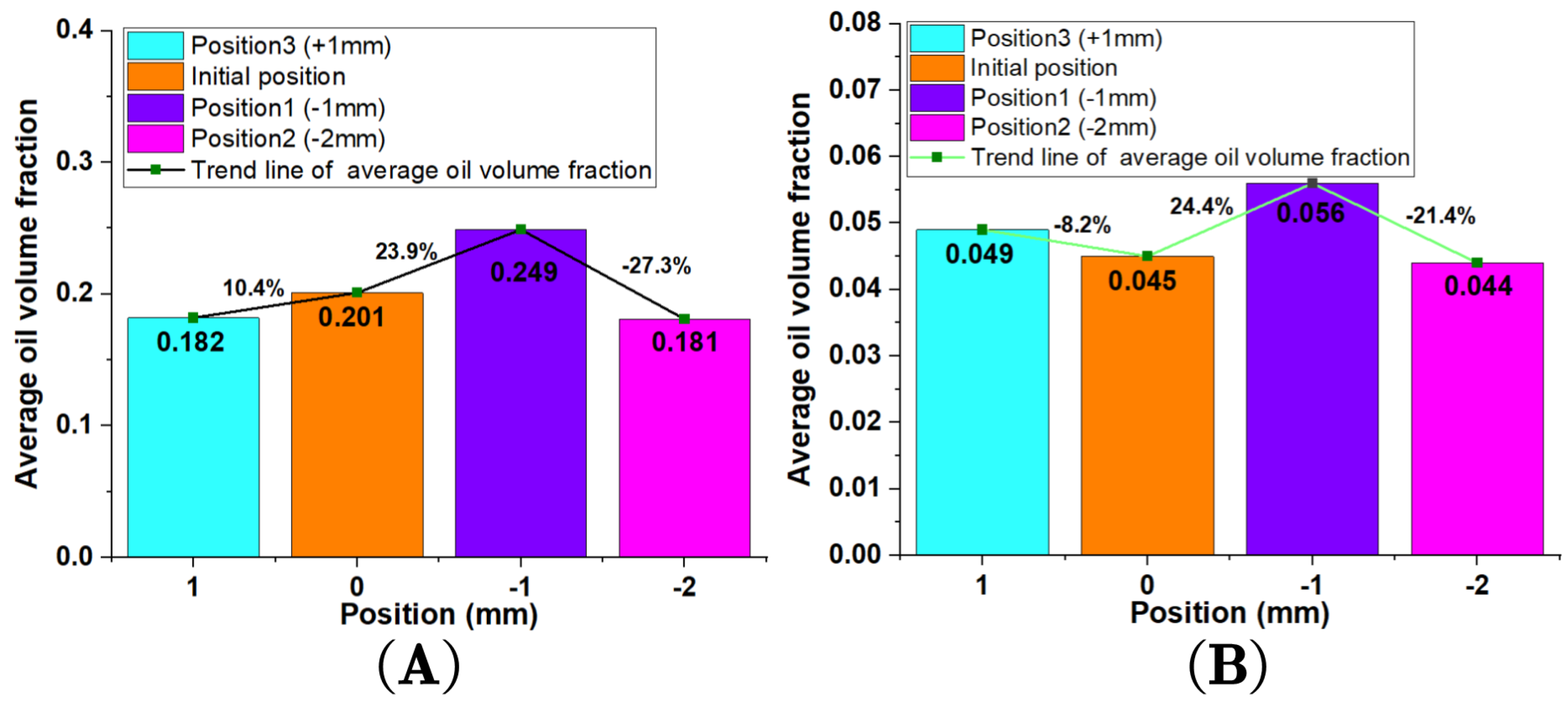
- The lubricating properties of internal meshing gear at various injection points are examined by this model. The findings indicate that moving the nozzle location to a specific range of ring gear can improve the lubricating effect. For instance, the maximum value of the average oil and volume values of the gear surface at the gear meshing inlet region is 0.249 (orange area) and 0.056 (red area), respectively, while the injection tube is at position 1. The average volume portion of the oil grew at the fastest rate, by 23.9% in the orange area and 24.4% in the red area. Excessive nozzle location relative to the ring gear will diminish the lubricating effect. For example, position 2 is 1 mm lower than position 1, resulting in a 27.3% decrease in average oil volume percentage when compared to position 1 (orange area).
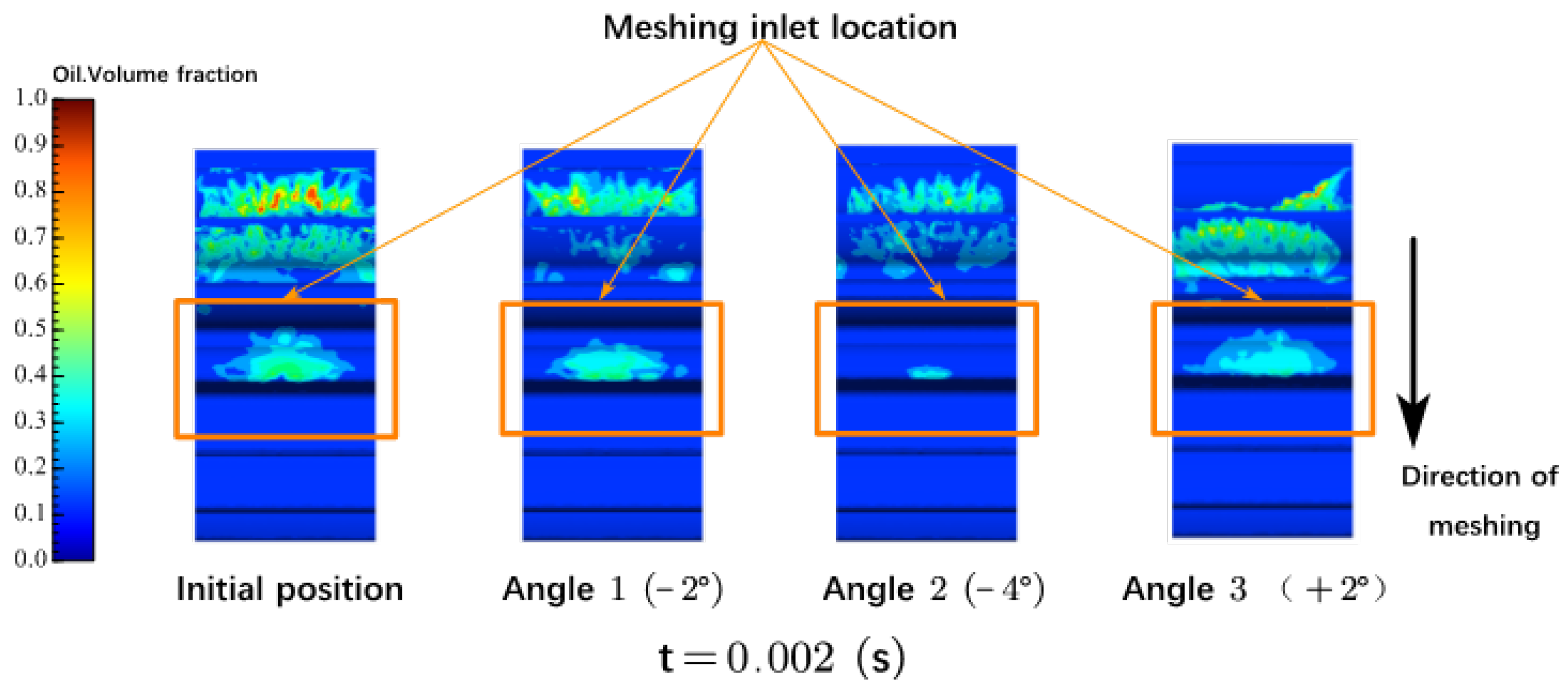
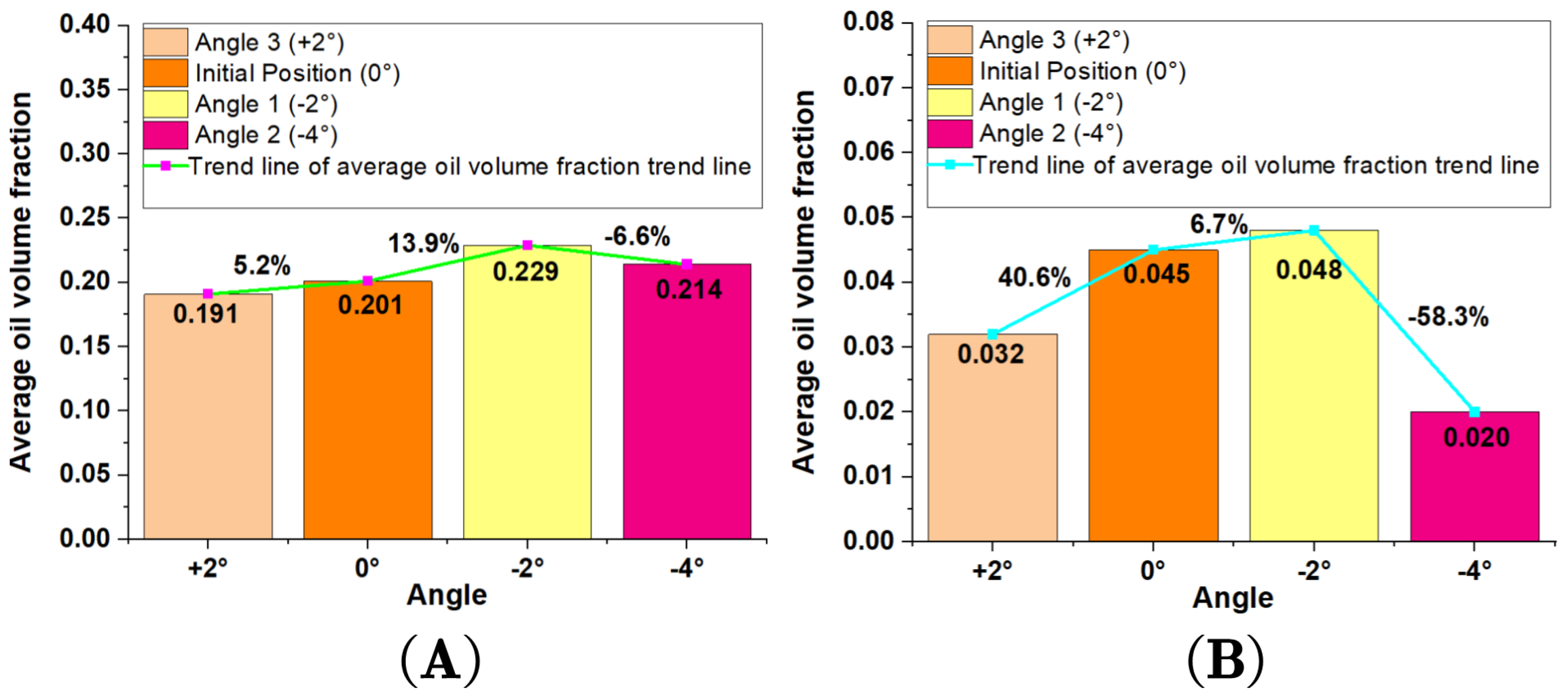
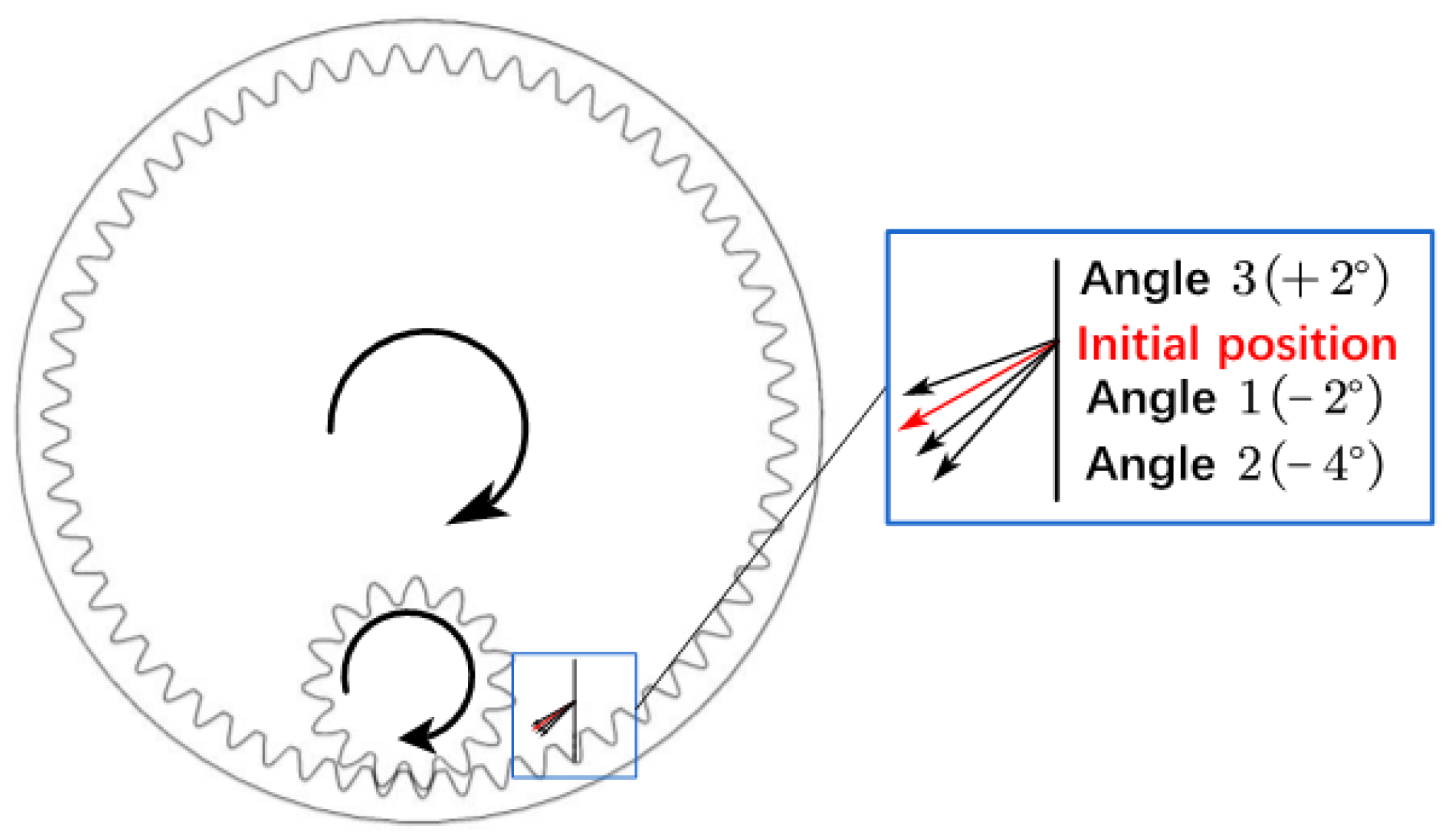
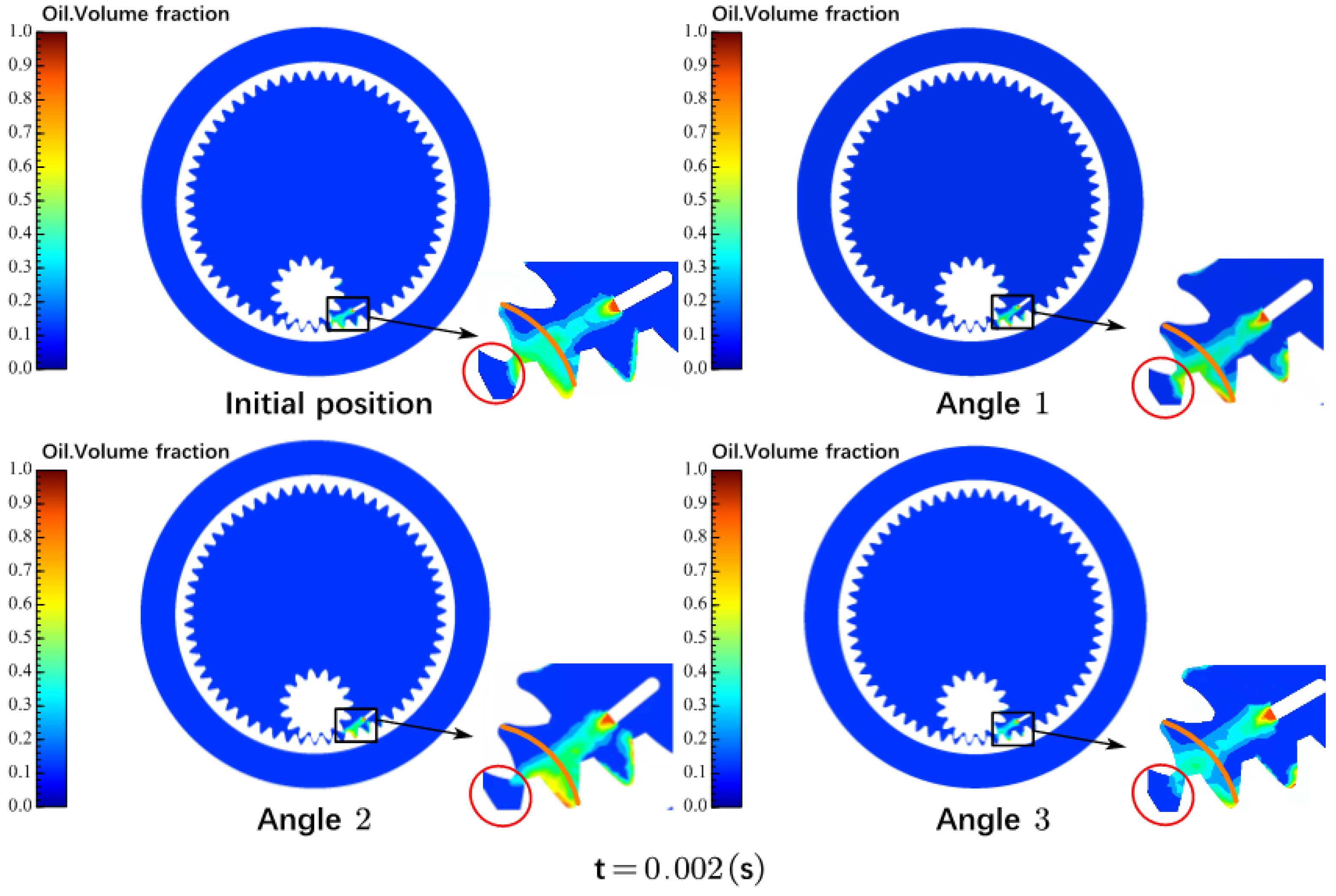
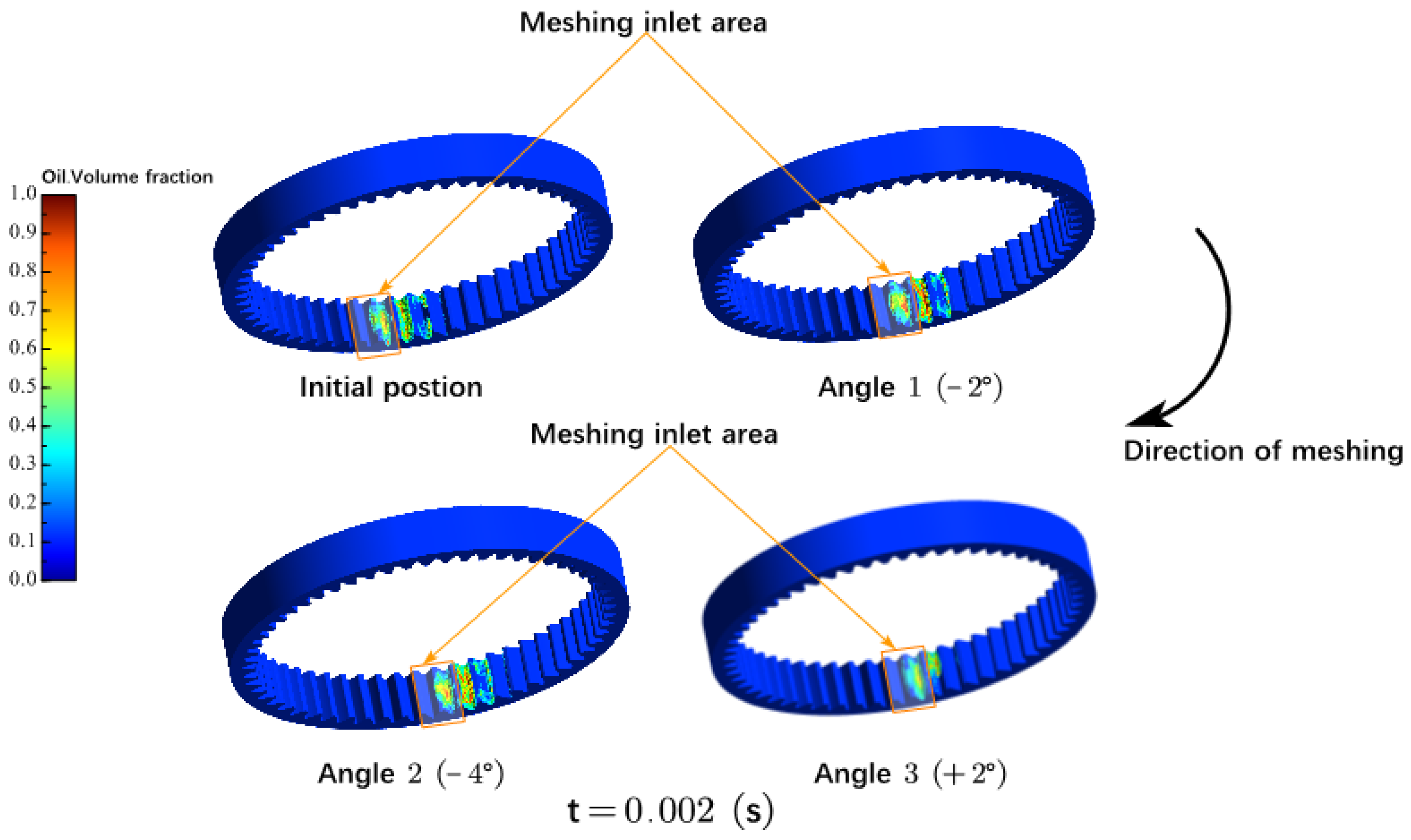
- The lubricating effect can be significantly improved by deflecting the nozzle angle in the direction of the ring gear at an acceptable angle. For example, in the simulation, lubrication is optimal when the deflection Angle is at Angle 1, and the average oil volume percentage is at its highest, with a red region of 0.048 and an orange region of 0.229. However, when the nozzle Angle is close to the gear ring, the oil’s lubricating impact is reduced. For example, the average oil volume percentage of Angle position 2 in the orange area reduces by 6.6%, while the oil volume fraction in the red area decreases by 58.3%.
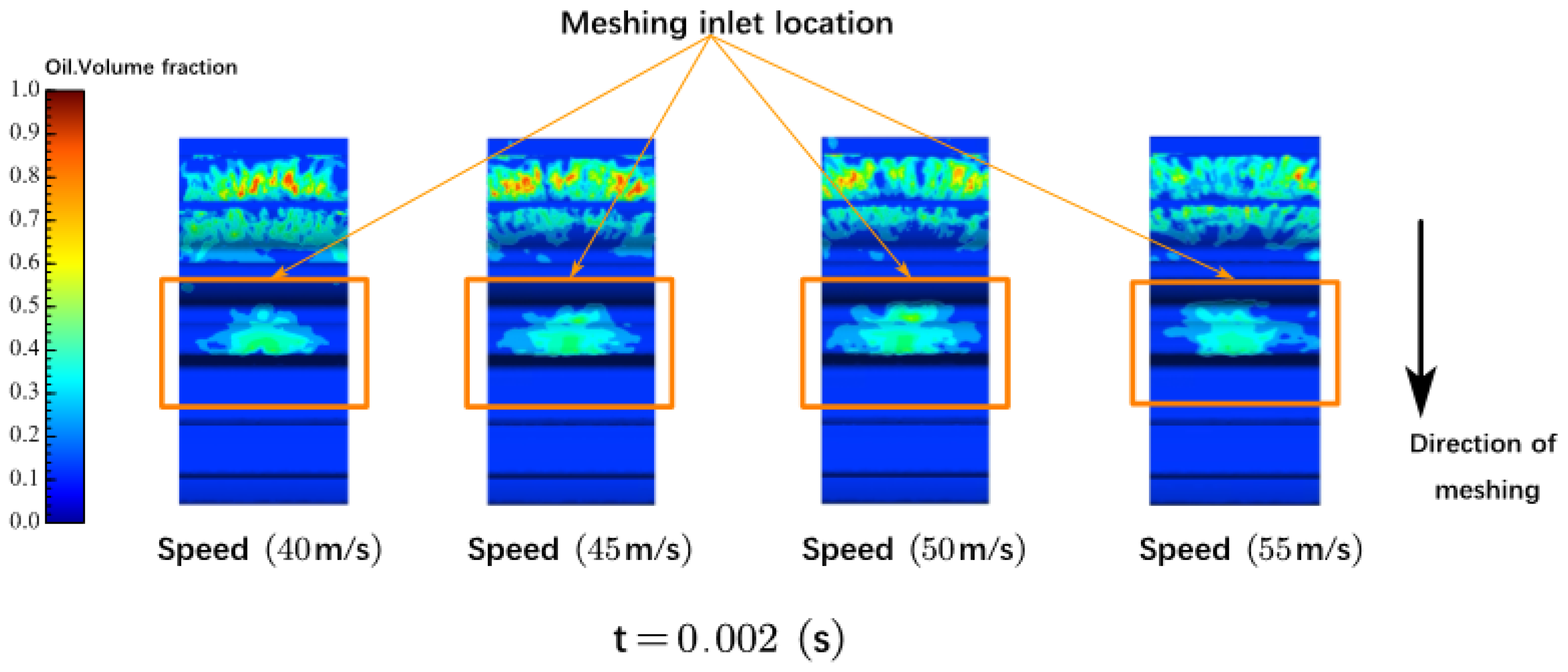
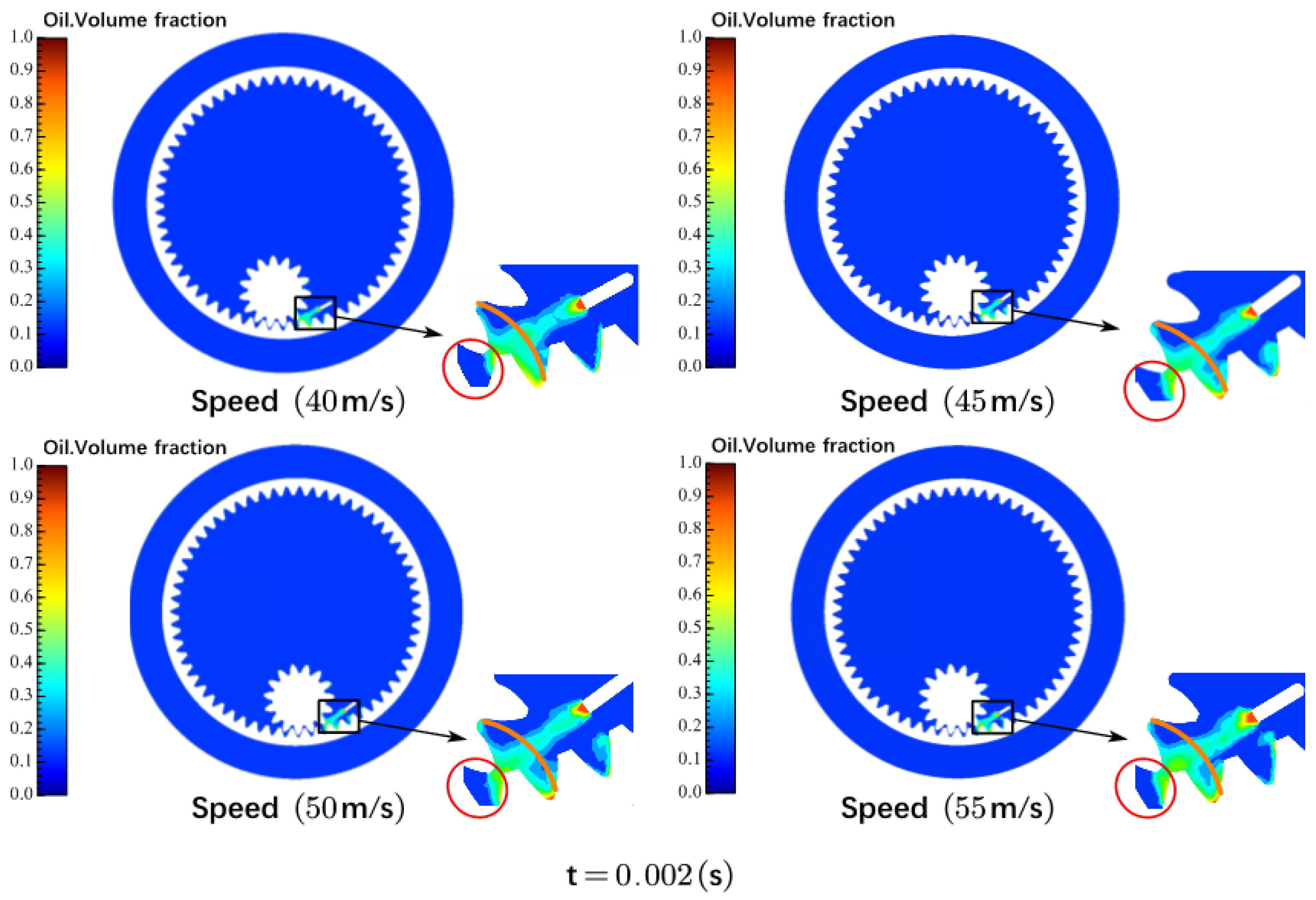
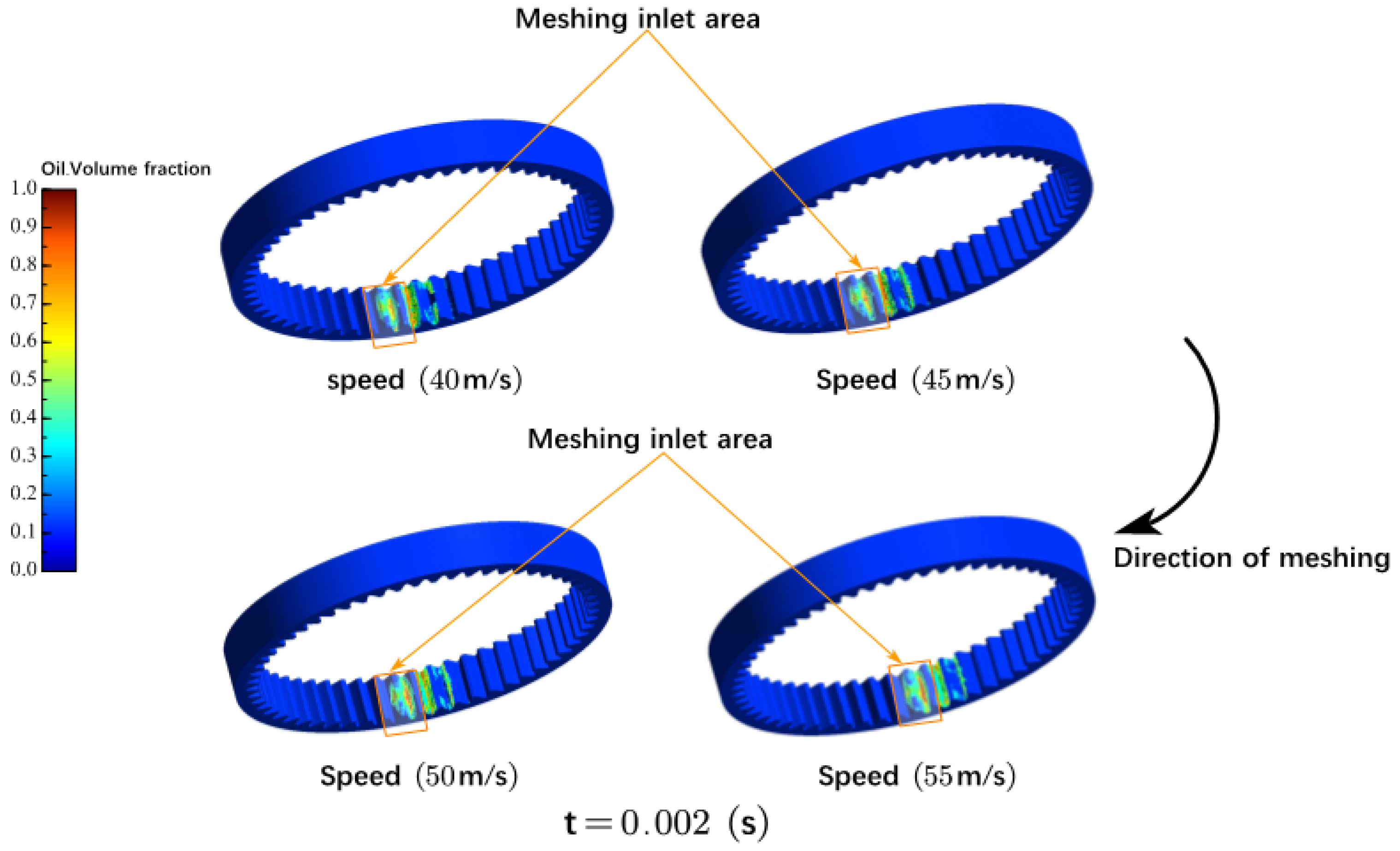
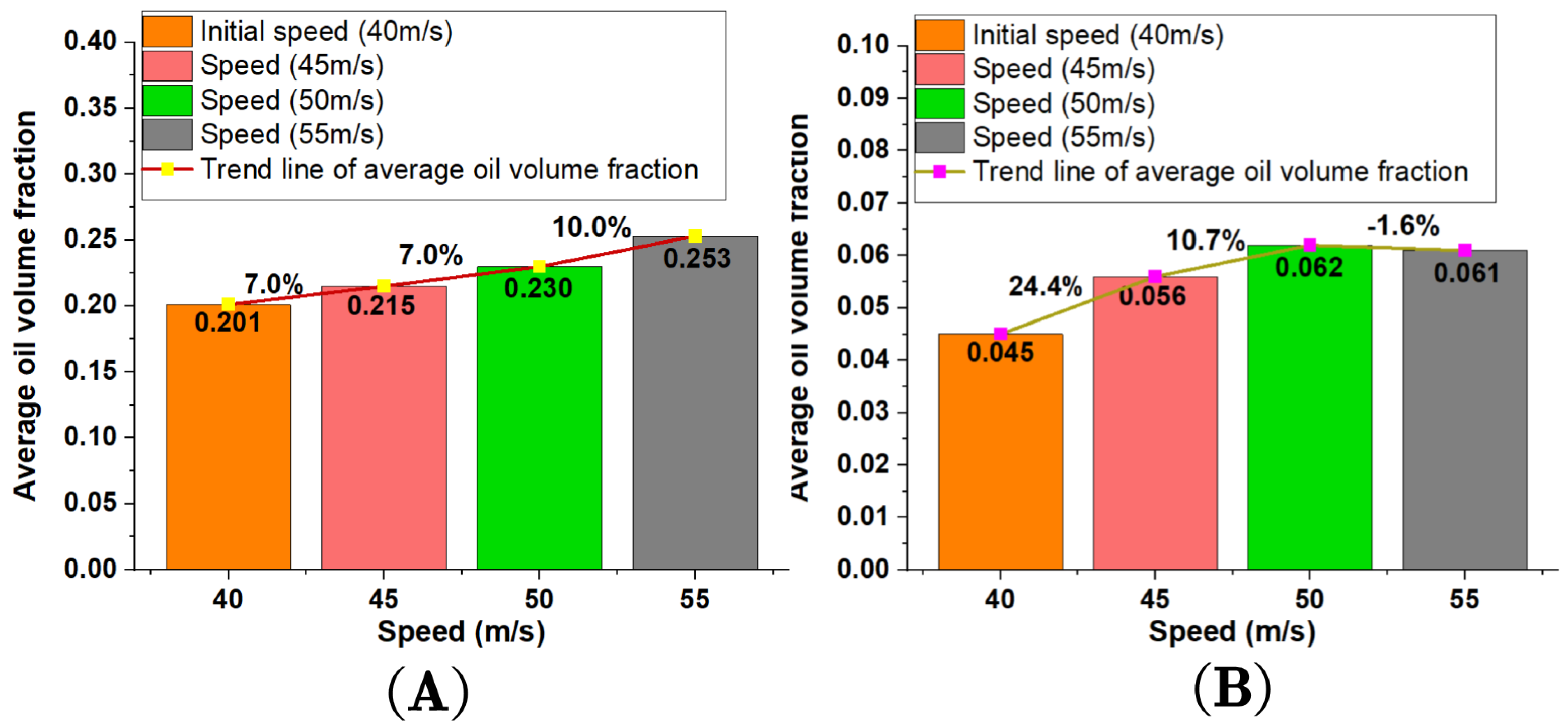
- When the injection speed is increased from 40 m/s to 50 m/s, the oil distribution range on the gear surface increases and the average volume percentage of oil in the orange and red areas shows an upward trend. However, when the injection speed is too fast, the oil is unable to properly stay on the gear surface, resulting in poor lubrication. For example, when the injection speed increases from 50 m/s to 55 m/s, the average oil volume percentage in the orange area rises by 10.0%, whereas the average oil volume fraction in the red area falls by 1.6%. Furthermore, using bright colors on the gear surface tends to reduce the oil volume fraction area, as shown in Figure 19.
Author Contributions
Funding
Data Availability Statement
Conflicts of Interest
References
- Lin, J.; Zhang, Z. Prospects of aeroengine power transmission system in the 21st century. J. Aerosp. Power 2001, 16, 108–114. [Google Scholar]
- Wang, Y.Z.; Niu, W.T.; Tang, W.; Guo, M.; Li, G.Q. Influence of spray orientation parameters on spray lubrication process of aero spur gears. J. Aerosp. Power 2015, 30, 1605–1610. [Google Scholar]
- Salunkhe, V.G.; Khot, S.M.; Jadhav, P.S.; Yelve, N.P.; Kumbhar, M.B. Experimental Investigation Using Robust Deep VMD-ICA and 1D-CNN for Condition Monitoring of Roller Element Bearing. J. Comput. Inf. Sci. Eng. 2024, 24, 124501. [Google Scholar] [CrossRef] [Scilit]
- Salunkhe, V.G.; Desavale, R.G. An intelligent prediction for detecting bearing vibration characteristics using a machine learning model. J. Nondestruct. Eval. Diagn. Progn. Eng. Syst. 2021, 4, 031004. [Google Scholar] [CrossRef] [Scilit]
- Akin, L.S.; Mross, J.J.; Townsend, D.P. Study of lubricant jet flow phenomena in spur gears. J. Lubr. Tech. 1975, 97, 283–288. [Google Scholar] [CrossRef] [Scilit]
- Townsend, D.P.; Akin, L.S. Study of lubricant jet flow phenomena in spur gears—Out of mesh condition. J. Mech. Des. 1978, 100, 61–68. [Google Scholar] [CrossRef] [Scilit]
- Akin, L.S.; Townsend, D.P. Into mesh lubrication of spur gears with arbitrary offset oil jet. Part 1: For jet velocity less than or equal to gear velocity. J. Mech., Trans. Autom. Des. 1983, 105, 713–718. [Google Scholar] [CrossRef] [Scilit]
- Arisawa, H.; Nishimura, M.; Imai, H.; Goi, T. CFD simulation for reduction of oil churning loss and windage loss on aeroengine transmission gears. Turbo Expo Power Land Sea Air 2009, 48821, 63–72. [Google Scholar]
- Diab, Y.; Ville, F.; Velex, P.; Changenet, C. Windage losses in high speed gears—Preliminary experimental and theoretical results. J. Mech. Des. 2004, 126, 903–908. [Google Scholar] [CrossRef] [Scilit]
- Pallas, S.; Marchesse, Y.; Changenet, C.; Ville, F.; Velex, P. A windage power loss model based on CFD study about the volumetric flow rate expelled by spur gears. Mech. Ind. 2012, 13, 317–323. [Google Scholar] [CrossRef] [Scilit]
- Fondelli, T.; Andreini, A.; Soghe, R.D.; Facchini, B.; Cipolla, L. Numerical simulation of oil jet lubrication for high speed gears. Int. J. Aerosp. Eng. 2015, 2015, 752457. [Google Scholar] [CrossRef] [Scilit]
- Hurrell, M.J. Shroud Effects on Load-Independent Power Loss of High-Speed Rotorcraft Gearing. Master’s Thesis, Cleveland State University, Cleveland, OH, USA, 2020. [Google Scholar]
- Li, L.; Wang, S. Experimental study and numerical analysis on windage power loss characteristics of aviation spiral bevel gear with oil injection lubrication. Stroj. Vestn.-J. Mech. Eng. 2023, 69, 235–247. [Google Scholar] [CrossRef]
- Wang, Y.Z.; Niu, W.T.; Wei, S.; Song, G.H. Influence of spin flow on lubricating oil jet: Design method of oil spray parameters to high-speed spur gears. Tribol. Int. 2015, 92, 290–300. [Google Scholar] [CrossRef] [Scilit]
- Wang, Y.; Song, G.; Niu, W.; Chen, Y. Optimized design of spray parameters of oil jet lubricated spur gears. Tribol. Int. 2018, 120, 149–158. [Google Scholar] [CrossRef] [Scilit]
- Jiang, X.; Zhou, C.; Su, J.; Jin, G.; Shen, R. Injection parameter design to improve the high-speed gear heat dissipation: CFD simulation and regression orthogonal experiment. Simul. Model. Pract. Theory 2023, 128, 102795. [Google Scholar] [CrossRef] [Scilit]
- Mo, S.; Zou, Z.; Feng, Z.; Dang, H.; Gao, H.; Cao, X. Research on lubrication characteristics of asymmetric helical gear based on CFD method. Lubr. Sci. 2020, 32, 309–320. [Google Scholar] [CrossRef] [Scilit]
- Zhu, X.; Dai, Y.; Ma, F. Development of a quasi-analytical model to predict the windage power losses of a spiral bevel gear. Tribol. Int. 2020, 146, 106258. [Google Scholar] [CrossRef] [Scilit]
- Zhu, X.; Dai, Y.; Ma, F.; Ouyang, B. Mathematical modeling and numerical simulation for determining an optimized oil jet layout for spiral bevel gear lubrication. Proc. Inst. Mech. Eng. Part J. Eng. Tribol. 2021, 235, 611–628. [Google Scholar] [CrossRef] [Scilit]
- Zhu, X.; Dai, Y.; Ma, F. On the estimation of the windage power losses of spiral bevel gears: An analytical model and CFD investigation. Simul. Model. Pract. Theory 2021, 110, 102334. [Google Scholar] [CrossRef] [Scilit]
- Wei, Y.Q.; Yang, H.J.; Guo, R.; Liu, Y.P.; Dong, C.B. Analysis of Friction Characteristics and Transmission Efficiency of Gear with Variable Hyperbolic Circular-Arc-Tooth-Trace under Mixed Lubrication. Tribology 2024, 44, 1–12. [Google Scholar]
- Hirt, C.W.; Nichols, B.D. Volume of fluid (VOF) method for the dynamics of free boundaries. J. Comput. Phys. 1981, 39, 201–225. [Google Scholar] [CrossRef] [Scilit]
- Hu, X.; Li, P.; Quan, C.; Wang, J. CFD investigation on oil injection lubrication of meshing spur gears via lattice Boltzmann method. Lubricants 2022, 10, 184. [Google Scholar] [CrossRef] [Scilit]
- Crouchez-Pillot, A.; Morvan, H.P. CFD simulation of an aeroengine bearing chamber using an enhanced volume of fluid (VOF) method: An evaluation using adaptive meshing. Turbo Expo Power Land Sea Air. Am. Soc. Mech. Eng. 2014, 45738, V05CT16A033. [Google Scholar]








| Parameter | Gear Box |
|---|---|
| Diameter (mm) | 406 |
| Height (mm) | 55 |
| Nozzle diameter (mm) | 2 |
| Initial oil injection velocity (m/s) | 40 |
| Parameter | Driving Gear | Driven Gear |
|---|---|---|
| Number of teeth | 15 | 59 |
| Modulus (mm) | 2.5 | 2.5 |
| Pressure angle | 22.5° | 22.5° |
| Tooth width (mm) | 35 | 33 |
| Center distance (mm) | 54 | 54 |
| Gear linear velocity (m/s) | 17.37 | 17.37 |
| Parameter | Temperature | Aviation 4106 Oil |
|---|---|---|
| Kinematic viscosity (mm/s2) | 40 °C | 24.40 |
| −40 °C | 8652 | |
| 100 °C | 5.02 | |
| Flash point (°C) | 250 | |
| Pour point (°C) | <−54 | |
| Evaporation loss (%) | (204 °C, 6.5 h) | 4.37 |
Disclaimer/Publisher’s Note: The statements, opinions and data contained in all publications are solely those of the individual author(s) and contributor(s) and not of MDPI and/or the editor(s). MDPI and/or the editor(s) disclaim responsibility for any injury to people or property resulting from any ideas, methods, instructions or products referred to in the content. |
© 2024 by the authors. Licensee MDPI, Basel, Switzerland. This article is an open access article distributed under the terms and conditions of the Creative Commons Attribution (CC BY) license (https://creativecommons.org/licenses/by/4.0/).
Share and Cite
Tang, P.; Li, Z.; Hou, X.; Li, L.; Xi, R.; Chen, Y. Influence of Oil Injection Lubrication Parameters of High-Speed Internal Meshing Gear Based on the Computational Fluid Dynamics. Lubricants 2024, 12, 390. https://doi.org/10.3390/lubricants12110390
Tang P, Li Z, Hou X, Li L, Xi R, Chen Y. Influence of Oil Injection Lubrication Parameters of High-Speed Internal Meshing Gear Based on the Computational Fluid Dynamics. Lubricants. 2024; 12(11):390. https://doi.org/10.3390/lubricants12110390
Chicago/Turabian StyleTang, Peixun, Zhengminqing Li, Xiangying Hou, Letian Li, Rongsheng Xi, and Yiyan Chen. 2024. "Influence of Oil Injection Lubrication Parameters of High-Speed Internal Meshing Gear Based on the Computational Fluid Dynamics" Lubricants 12, no. 11: 390. https://doi.org/10.3390/lubricants12110390
APA StyleTang, P., Li, Z., Hou, X., Li, L., Xi, R., & Chen, Y. (2024). Influence of Oil Injection Lubrication Parameters of High-Speed Internal Meshing Gear Based on the Computational Fluid Dynamics. Lubricants, 12(11), 390. https://doi.org/10.3390/lubricants12110390