Article

Test Study of the Bridge Cable Corrosion Protection Mechanism Based on Impressed Current Cathodic Protection


1
State Key Laboratory of Mountain Bridge and Tunnel Engineering, Chongqing Jiaotong University, Chongqing 400074, China
2
School of Civil Engineering, Chongqing Jiaotong University, Chongqing 400074, China
*
Author to whom correspondence should be addressed.
Lubricants 2023, 11(1), 30; https://doi.org/10.3390/lubricants11010030

Submission received: 30 November 2022 / Revised: 21 December 2022 / Accepted: 11 January 2023 / Published: 12 January 2023
(This article belongs to the Special Issue Wire Rope Lubrication and Corrosion Protection)

Abstract

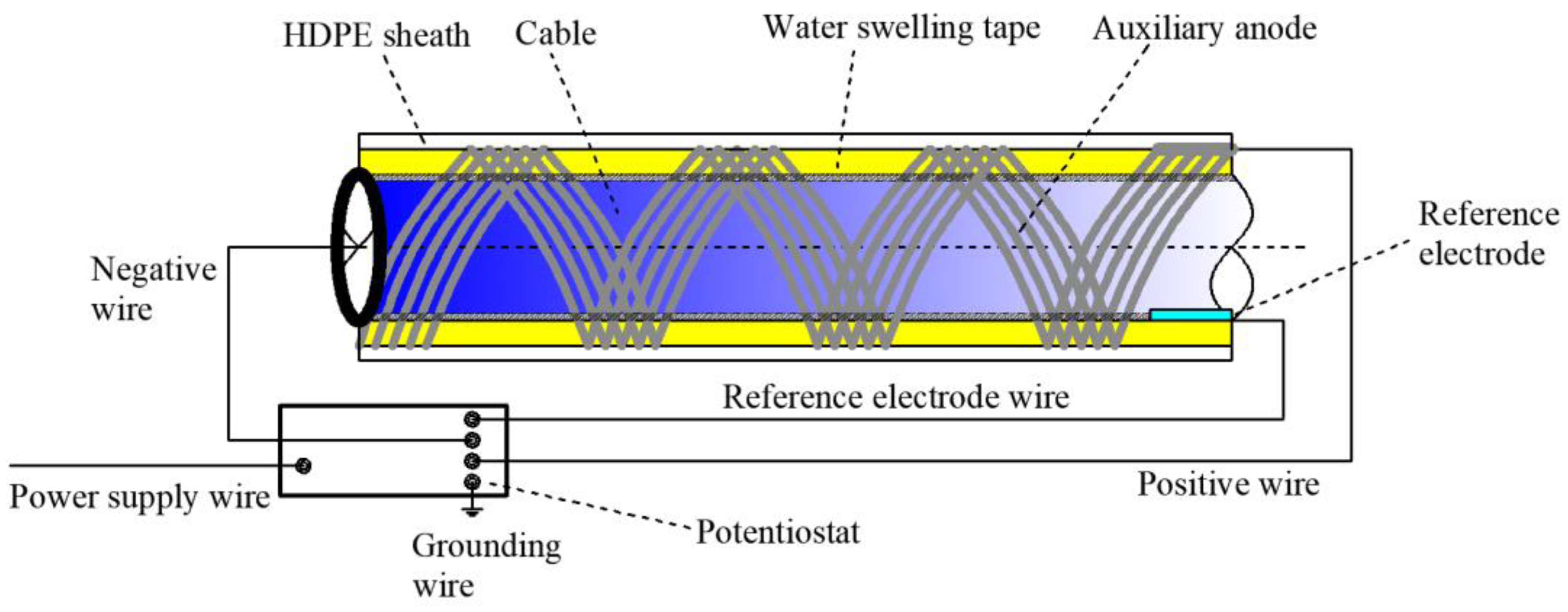
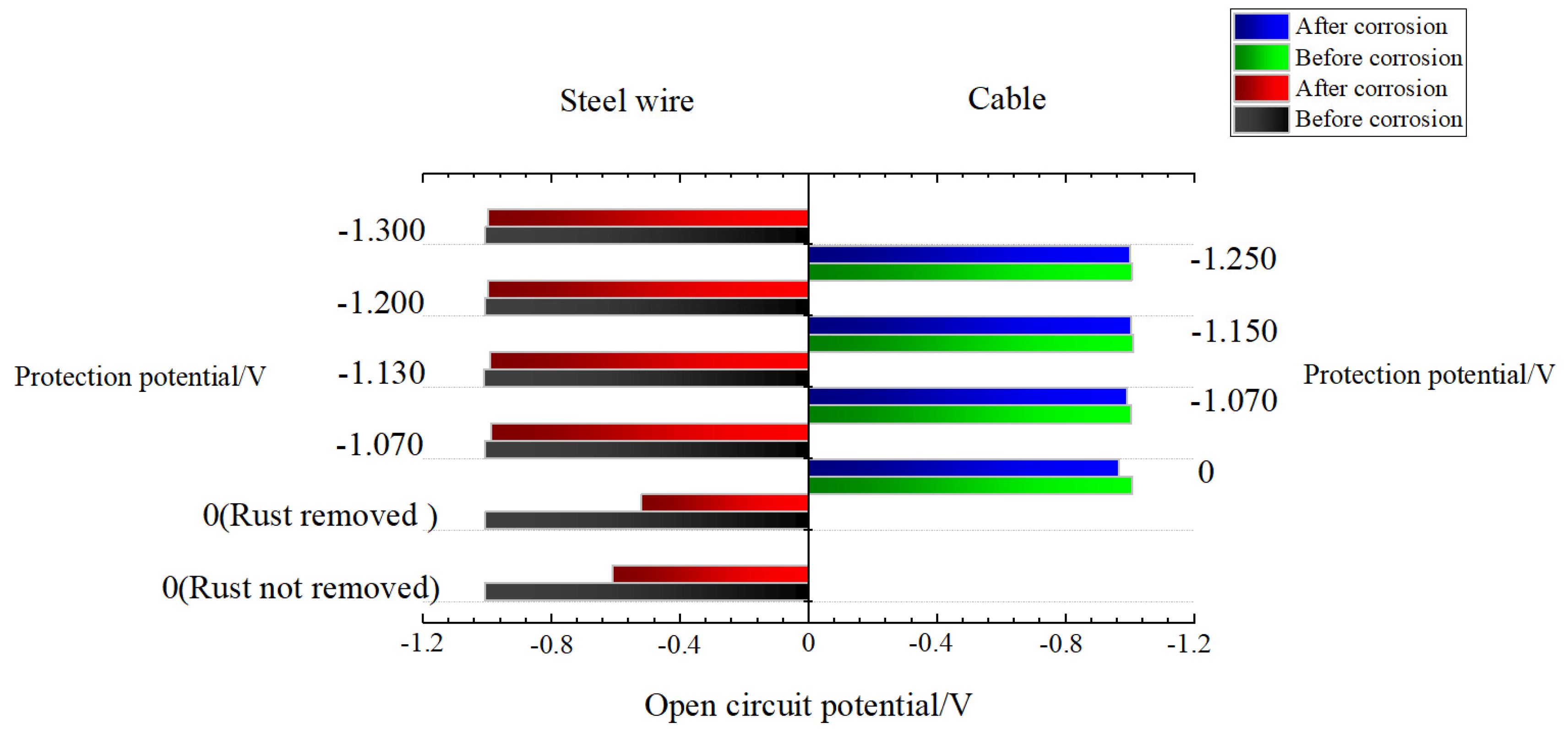
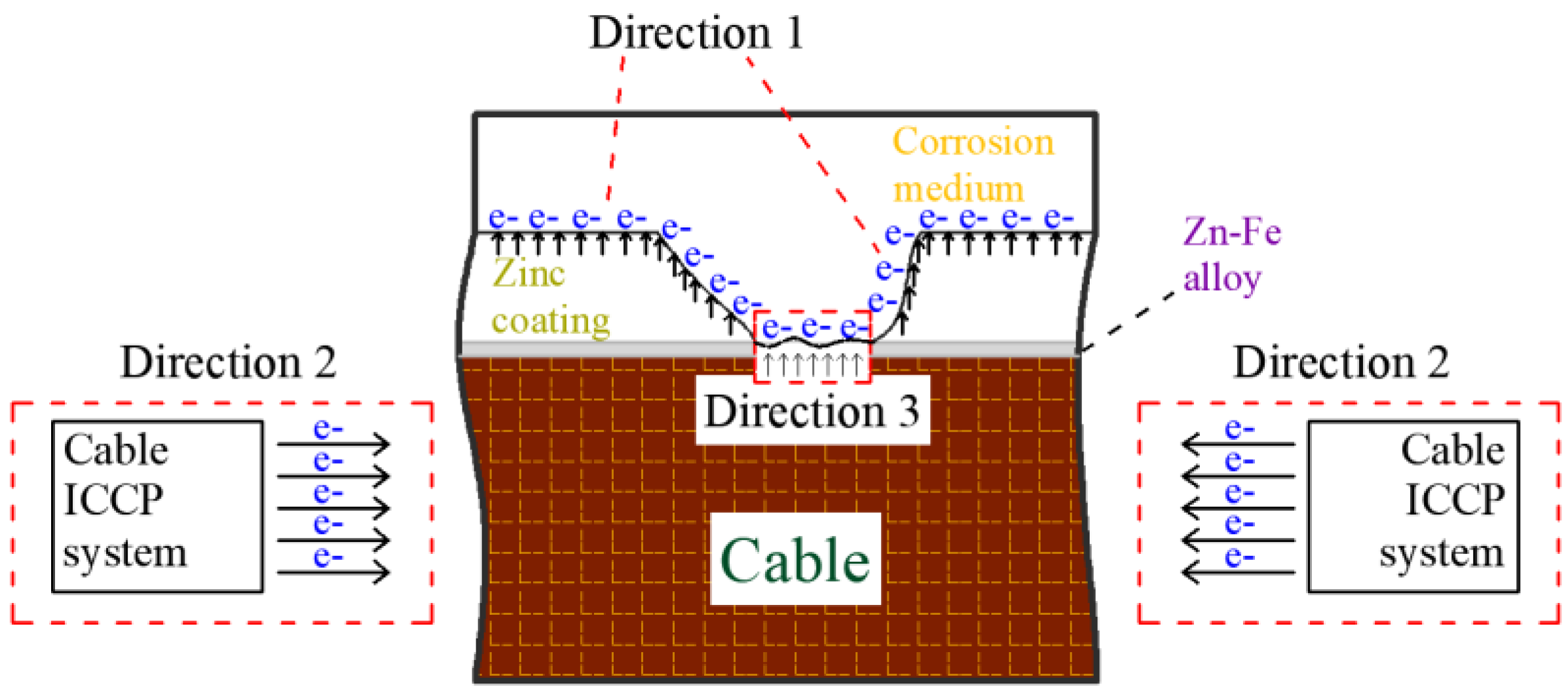
The cable system is an important bearing element of a bridge with stay cables or slings and a matter of major concern in the safety of the bridge structure. Bridge cables are vulnerable to corrosion induced by leakage and soaking during their service life. To solve this problem, and based on the idea of proactive control by means of the impressed current cathodic protection (ICCP) of bridge cables, this study designs and develops an ICCP system device for bridge cable protection. In this study, an accelerated corrosion test was conducted to test the ICCP system of steel wires inside the cables and the cables under acid rain conditions. The corrosion protection behavior of ICCP was analyzed to reveal the corrosion protection mechanism of bridge cable ICCP. The results show that in the cable ICCP system, the impressed current generated by a more negative voltage may improve the efficiency of corrosion protection, but an excessively negative voltage may cause hydrogen embrittlement of the cable steel wire due to overprotection. The rational range of −1.13 V to −1.15 V was set as the result of the overall consideration. Within this range, the cable is subject to the joint protection of ICCP and sacrificial anode cathodic protection (SACP). Corrosive products can delay the development of cable corrosion to a certain degree; the SACP protection efficiency of the galvanized coat reduces gradually with corrosion development; and cable ICCP protection efficiency increases gradually. The ICCP for cable corrosion protection is transformed from joint protection using both a sacrificial anode and impressed current into protection, mainly using an impressed current.
Keywords: bridge engineering; cable steel wire; impressed current cathodic protection; corrosion test bridge engineering; cable steel wire; impressed current cathodic protection; corrosion test