1. Introduction
The observation of the night sky has fascinated humanity since antiquity, motivating systematic efforts to document and interpret astronomical phenomena. Astrophotography—the practice of recording images of celestial objects using optical instruments—emerged in the mid-nineteenth century with the introduction of photographic plates used with both large refracting and reflecting telescopes, enabling the first permanent visual records of nebulae, star clusters, and planetary surfaces [
1,
2]. Since then, continuous advances in optical design, detectors, and image processing have progressively expanded astrophotography beyond professional observatories, making it increasingly accessible to amateur astronomers.
In recent years, the rapid evolution of smartphone camera technology has introduced a new class of imaging devices into amateur astrophotography. Modern mobile phones incorporate highly sensitive CMOS sensors, computational photography algorithms, and dedicated night-imaging modes that permit the capture of astronomical targets such as the Moon, bright star clusters, and prominent nebulae using compact, non-specialized equipment [
3,
4,
5]. While these systems are not designed for scientific imaging, their widespread availability and improving performance raise important questions regarding their observational capabilities and limitations.
Despite these advances, smartphone-based astrophotography remains subject to significant technical constraints, particularly when motorized tracking systems are not employed. The absence of equatorial tracking introduces apparent motion caused by Earth’s rotation, leading to image drift, field rotation, and elongation of point sources in deep-sky observations [
6,
7,
8]. These effects are especially pronounced at low latitudes, where apparent sky motion differs from mid-latitude observing sites and places additional constraints on exposure duration and image quality.
This work documents an unguided astrophotography session conducted using a 10-inch Newtonian reflector mounted on a manual altazimuth mount, coupled to an iPhone 15 Pro Max via a three-axis smartphone adapter and a 25 mm eyepiece providing a 45° apparent field of view. Although the absence of motorized tracking introduces measurable image drift, the observations demonstrate that recognizable deep-sky and lunar features can be recorded under controlled acquisition protocols. Rather than presenting new astrophysical measurements, this study focuses on characterizing the practical observational limits and performance constraints of unguided smartphone astrophotography with large-aperture telescopes.
The observations were carried out near the geographic equator, a location that offers unique access to celestial objects from both hemispheres but also imposes specific geometric constraints on tracking-free imaging. By systematically documenting acquisition conditions, image quality, and limitations, this study provides a reproducible methodological framework for assessing the feasibility of smartphone-based unguided astrophotography under low-latitude conditions. The results are intended to support future technical evaluations, methodological comparisons, and outreach-oriented observational efforts, particularly in regions where access to motorized mounts and dedicated astronomical cameras remains limited.
2. Observational Setup and Methodological Framework
This section describes the observational configuration and methodological approach employed in the unguided astrophotography campaign. The focus is placed on the instrumental setup, acquisition strategy, and procedural constraints that govern image quality when using consumer-grade imaging devices in combination with large-aperture telescopes operated without motorized tracking.
The methodology is structured to reflect realistic observing conditions accessible to non-professional environments, while maintaining sufficient rigor to allow reproducibility and performance evaluation. Key aspects include telescope and detector specifications, exposure-time selection, manual stabilization techniques, and environmental conditions relevant to image acquisition. Together, these elements establish the technical context required to interpret the observational results presented in
Section 3 and to delineate the operational boundaries of unguided smartphone-based astrophotography.
2.1. Observational Site and Session Conditions
The astrophotography session was conducted on 16 April 2025 in the municipality of Planeta Rica, Córdoba, Colombia (latitude 8.4° N, longitude 75.6° W, altitude ≈ 48 m above sea level), under semi-urban sky conditions characterized by relatively low levels of light pollution. The observing site benefits from its proximity to the geographic equator, providing access to a wide range of celestial objects from both the northern and southern hemispheres. Atmospheric conditions during the session were favourable, with mostly clear skies, an ambient temperature of approximately 27 °C, and high relative humidity typical of the region’s tropical climate.
The observing session was divided into two temporal blocks. Deep-sky objects and bright stellar targets were imaged between 19:08 and 19:48 local time, shortly after astronomical twilight, while lunar observations were conducted at 23:04 local time, when the Moon had reached a sufficiently high elevation to minimize atmospheric distortion. These time windows were selected to balance target visibility, sky brightness, and atmospheric stability.
The observations were conducted using a hands-on, unguided imaging approach, emphasizing direct control of acquisition parameters and real-time visual assessment of image quality [
9]. Rather than aiming to obtain calibrated astrophysical measurements, the session focused on evaluating the practical observational limits and image quality achievable using accessible, non-specialized equipment under realistic field conditions. This can be seen in
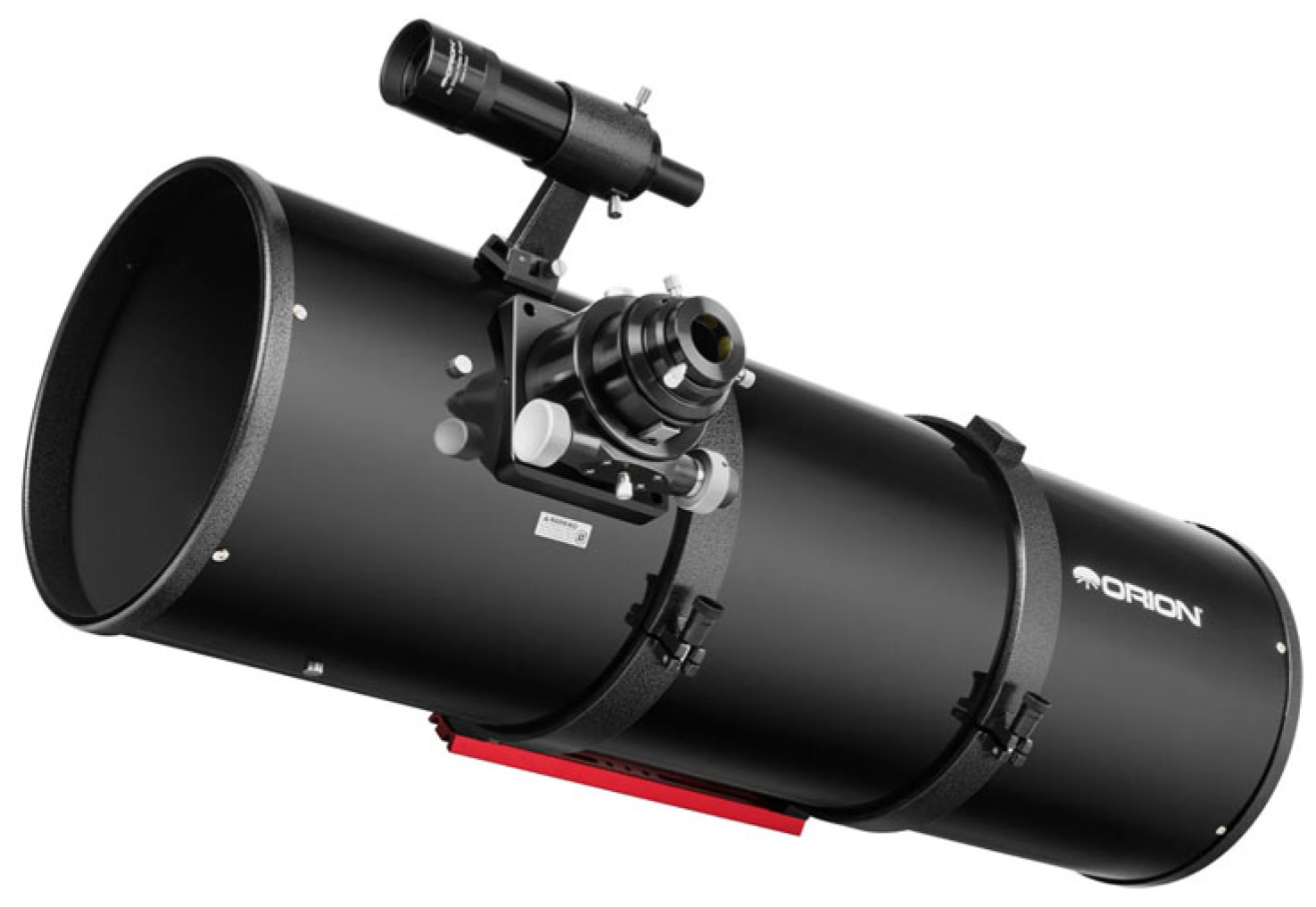
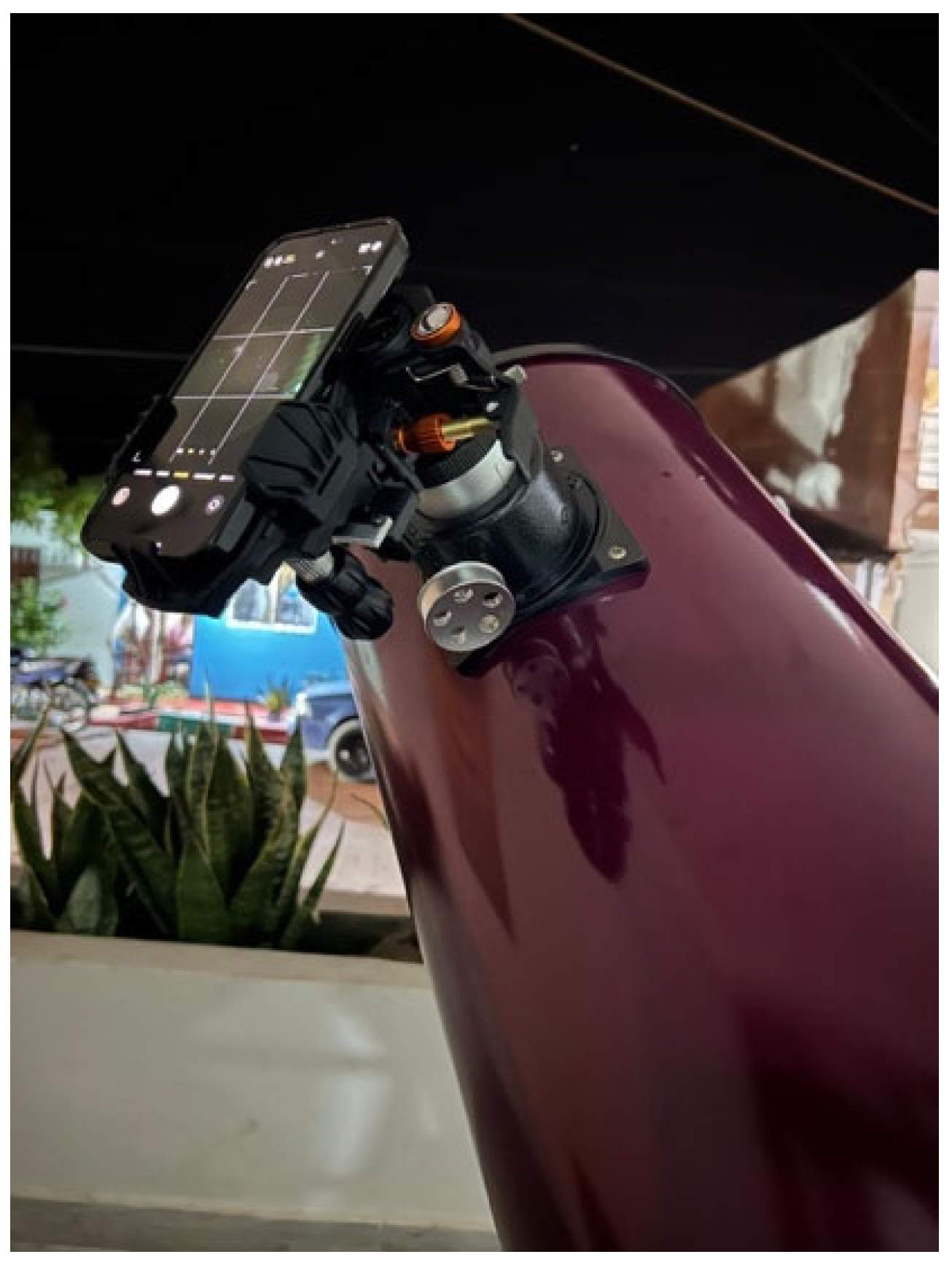
Figure 1 with a Newtionian telescope.
2.2. Equipment Used
The primary optical instrument employed was a 10-inch (254 mm aperture) Newtonian reflector telescope manufactured by Orion, with a focal length of 1200 mm, mounted on a manual altazimuth base (
Figure 1). This mounting configuration offers portability and ease of use but lacks motorized tracking, which introduces limitations for deep-sky imaging due to the apparent motion of celestial objects caused by Earth’s rotation, commonly observed as star trailing in long-exposure images [
10].
A 25 mm Plössl eyepiece with an apparent field of view of 45° was used, providing a nominal magnification of approximately 48× and an estimated true field of view of 0.94°. Image acquisition was performed using an iPhone 15 Pro Max, rigidly coupled to the eyepiece via a three-axis smartphone adapter that enabled precise alignment of the camera lens with the optical axis of the telescope (
Figure 2). This configuration ensured stable positioning during image capture and reduced misalignment-induced aberrations.
The smartphone camera was operated in night mode for deep-sky observations, with exposure times limited to 5 s to mitigate image drift. For lunar imaging, instant capture mode with an effective exposure time of approximately 1/60–1/120 s, typical for smartphone automatic exposure under bright lunar illumination. This was employed, with manual exposure adjustment to prevent sensor saturation caused by the Moon’s high surface brightness.
It should be noted that smartphone night-mode imaging relies on computational photography techniques that typically combine multiple short exposures using in-device stacking, temporal denoising, and nonlinear tone mapping. As a result, the final images produced by the smartphone do not correspond to a single raw exposure but rather to an internally processed composite frame optimized for low-light visibility. While these algorithms enhance apparent signal-to-noise ratio and visual contrast, they also introduce nonlinear intensity transformations that limit the photometric interpretability of the recorded images.
2.3. Capture Technique and Mitigation of Tracking Limitations
In the absence of a motorized tracking system, several strategies were implemented to reduce the effects of image drift and star trailing. Exposure times for deep-sky targets were limited to a maximum of 5 s, following established practical guidelines for unguided telescopes operating at moderate magnifications [
7]. This constraint represents a compromise between signal acquisition and image sharpness under manual altazimuth tracking.
Careful balancing of the mount and precise alignment of the smartphone adapter were employed to minimize mechanical instability. Minor manual adjustments were applied during framing and focusing to maintain the target near the center of the field of view, where apparent motion is minimized. Image acquisition was performed immediately after achieving optimal focus, reducing the time available for significant displacement due to Earth’s rotation.
For lunar imaging, exposure levels were manually reduced to avoid sensor saturation, taking advantage of the Moon’s high brightness to capture fine surface features with minimal motion blur. Although slight elongation of point sources was observed in some deep-sky images—particularly for star clusters and extended nebular targets—the effect remained limited and did not prevent the identification of principal structural features.
These techniques reflect common challenges encountered in unguided amateur astrophotography, where motorized tracking is unavailable or impractical. Careful exposure control, mechanical stability, and timely image capture remain critical factors for optimizing image quality under such conditions [
10]. The combination of a large-aperture Newtonian telescope with a modern smartphone camera provides a flexible platform for exploring the observational capabilities and limitations of unguided imaging systems under real-world conditions.
In this study, positional drift is defined as the apparent angular displacement of a stellar centroid within the camera frame during a single exposure interval due to Earth’s rotation. The theoretical drift rate was estimated using the standard sidereal motion of the celestial sphere (15 arcseconds s
−1 at the celestial equator), scaled according to the target’s declination and projected onto the effective field of view of the imaging system. Observed drift was estimated by measuring the displacement of stellar centroids between sequential frames using pixel coordinate differences within the smartphone image sensor. The relative reduction in drift was calculated as
where
represents the predicted unguided displacement and
corresponds to the measured displacement under active manual recentering. Using this procedure, manual corrections reduced the effective positional drift by approximately 52% relative to the theoretical unguided motion model.
The expected angular elongation produced by Earth’s rotation during a single exposure can be approximated by
where
is the exposure time in seconds and
is the target declination. For
s near the celestial equator, the expected elongation is approximately 75 arcseconds (≈1.25 arcminutes).
3. Observational Performance and Target-Based Evaluation
This section presents the observational results obtained during the unguided astrophotography campaign and evaluates the performance of the imaging system across a range of representative astronomical targets. Rather than focusing on astrophysical interpretation, the analysis emphasizes instrumental behaviour, exposure-limited performance, and motion-induced constraints associated with smartphone-based imaging coupled to a large-aperture Newtonian telescope.
The selected targets—comprising the Moon, the Orion Nebula (M42), the open clusters Messier 44 and Messier 41, and the bright star Sirius—span a broad range of surface brightness, angular extent, and dynamic range requirements. This diversity enables a systematic assessment of key performance factors, including spatial resolution, limiting magnitude, detector saturation, and the impact of Earth’s rotation under tracking-free conditions. Each subsection examines a specific target as a diagnostic case, allowing the practical observational boundaries of unguided imaging to be characterized in a controlled and reproducible manner.
For the purposes of this study, the limiting magnitude is defined as the faintest stellar source that can be reliably distinguished from the background noise within a single exposure frame using the smartphone imaging system. Detection was considered successful when a stellar source exhibited a clearly identifiable point-like structure exceeding the local background noise level and remained reproducible across multiple frames. Because smartphone night-mode processing incorporates automatic denoising and frame integration, the limiting magnitude values reported here should be interpreted as observational detection thresholds rather than calibrated photometric measurements.
3.1. Lunar Imaging Performance Under Unguided Conditions
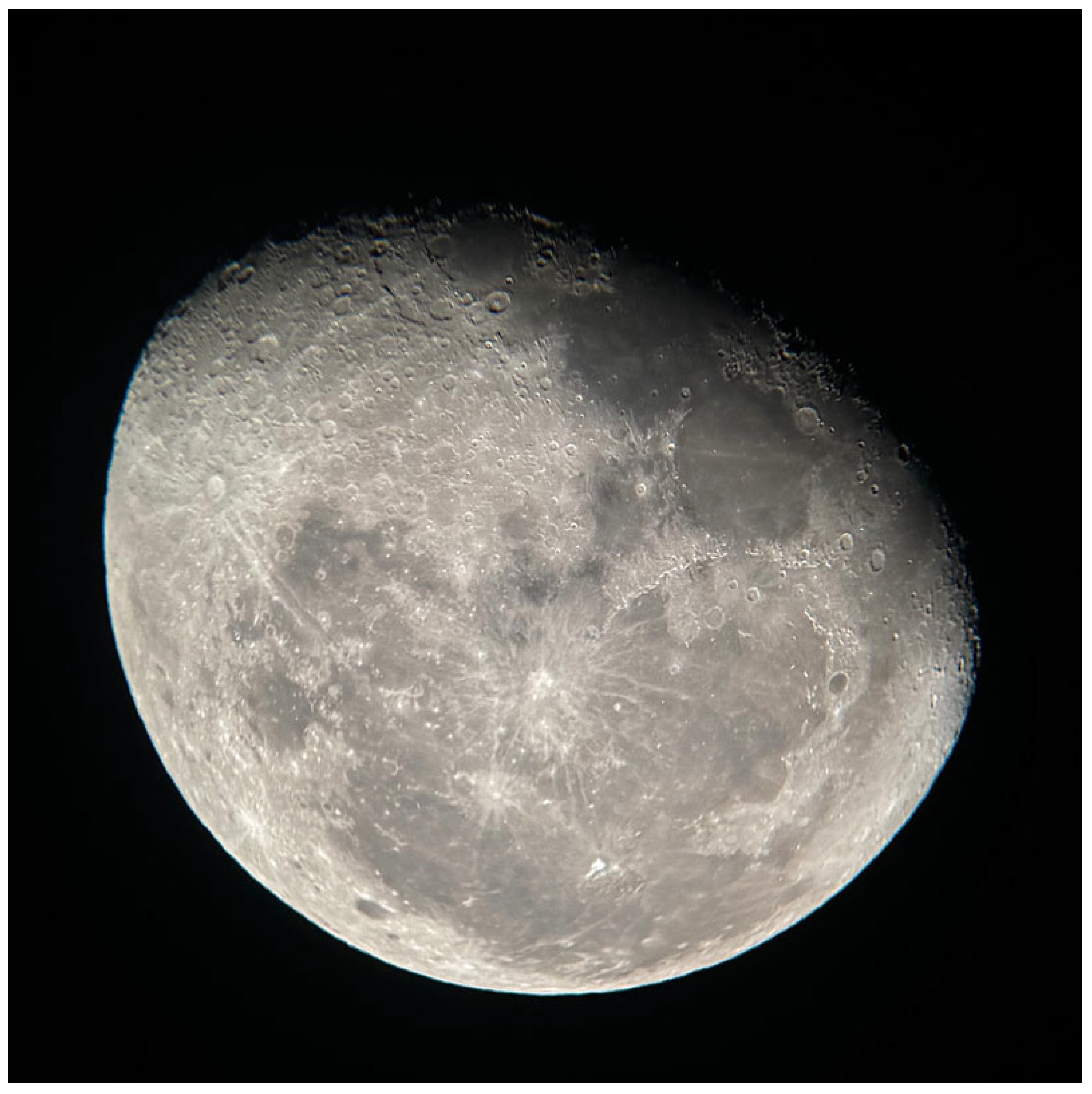
The Moon was imaged during its waxing phase, providing favourable illumination of the terminator region and enabling a detailed assessment of spatial resolution and image stability under unguided observing conditions. The high intrinsic surface brightness of the lunar disk makes it an ideal reference target for evaluating optical alignment, detector response, and motion-induced artifacts in short-exposure imaging systems.
The effective field of view of the imaging configuration was approximately 0.94°, sufficient to frame a substantial portion of the lunar surface while preserving fine-scale topographic detail. Prominent craters, including Tycho and Copernicus, were clearly resolved, along with extended mare regions such as Mare Imbrium and Mare Serenitatis. The sharp contrast across the terminator enhanced relief visibility, allowing crater rims and ejecta structures to be distinguished despite the absence of tracking.
No measurable image trailing or elongation was observed in the lunar images. This result is attributed to the use of instantaneous exposure capture combined with manual brightness reduction, which prevented sensor saturation while effectively freezing apparent lunar motion. The absence of detectable drift in this case provides an upper bound on system-induced blur and confirms that, for sufficiently bright targets, unguided altazimuth configurations can deliver high-fidelity imaging without significant degradation from Earth’s rotation.
From a methodological standpoint, the lunar observations serve as a baseline validation of the optical and mechanical stability of the imaging setup. The achieved sharpness demonstrates that limitations observed in subsequent deep-sky targets arise primarily from exposure-duration constraints and sky motion rather than from intrinsic deficiencies in optical alignment or detector performance. Consequently, the Moon provides a useful reference for isolating tracking-related effects in unguided smartphone-based astrophotography as seen in
Figure 3.
3.2. Orion Nebula (M42)
The Orion Nebula (M42) was selected as a representative bright deep-sky target to evaluate the performance of unguided smartphone-based astrophotography under short-exposure conditions. As one of the nearest and most luminous star-forming regions, M42 provides a well-defined test case for assessing image drift, limiting magnitude, and the preservation of morphological structure in exposure-limited configurations.
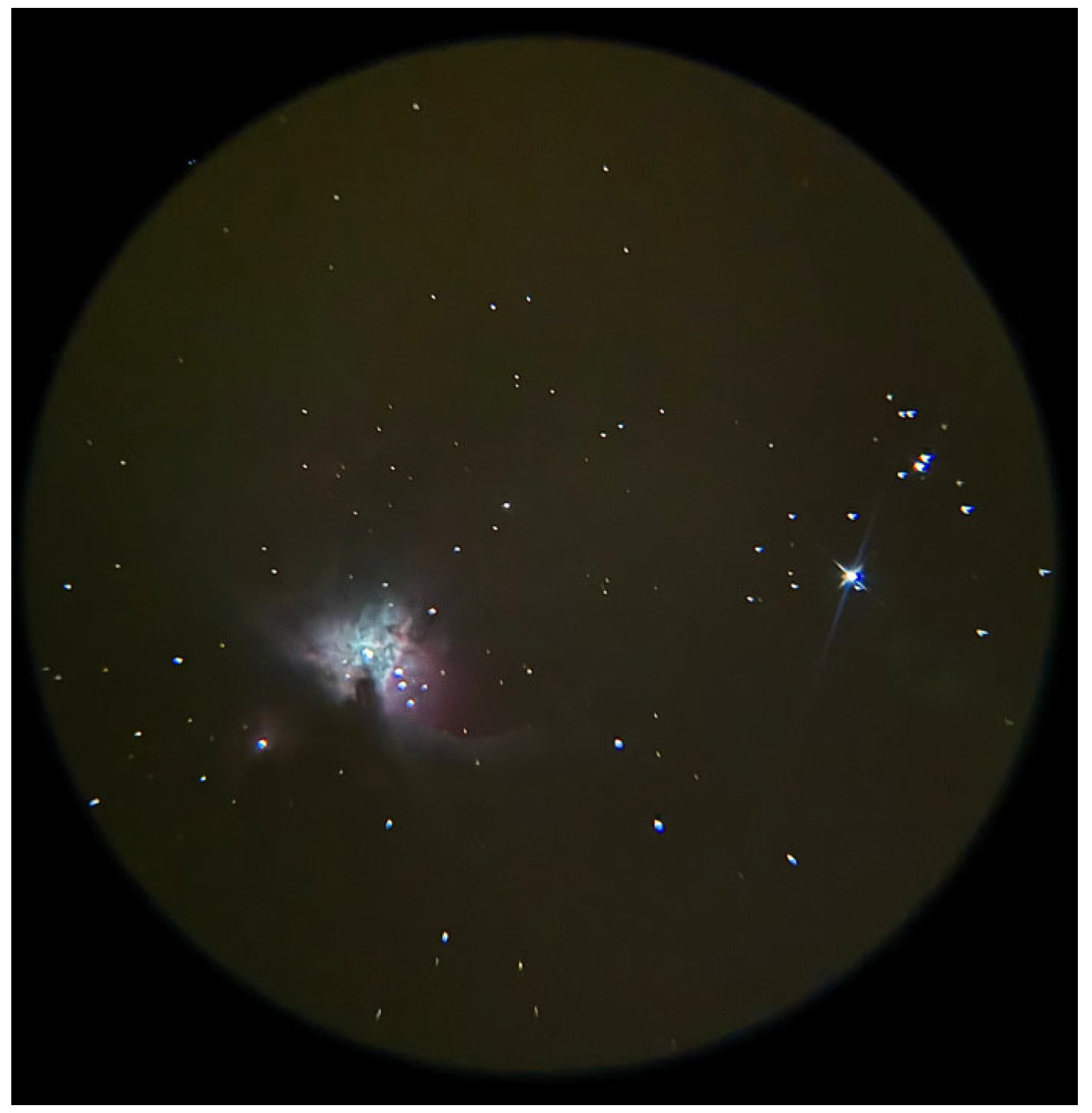
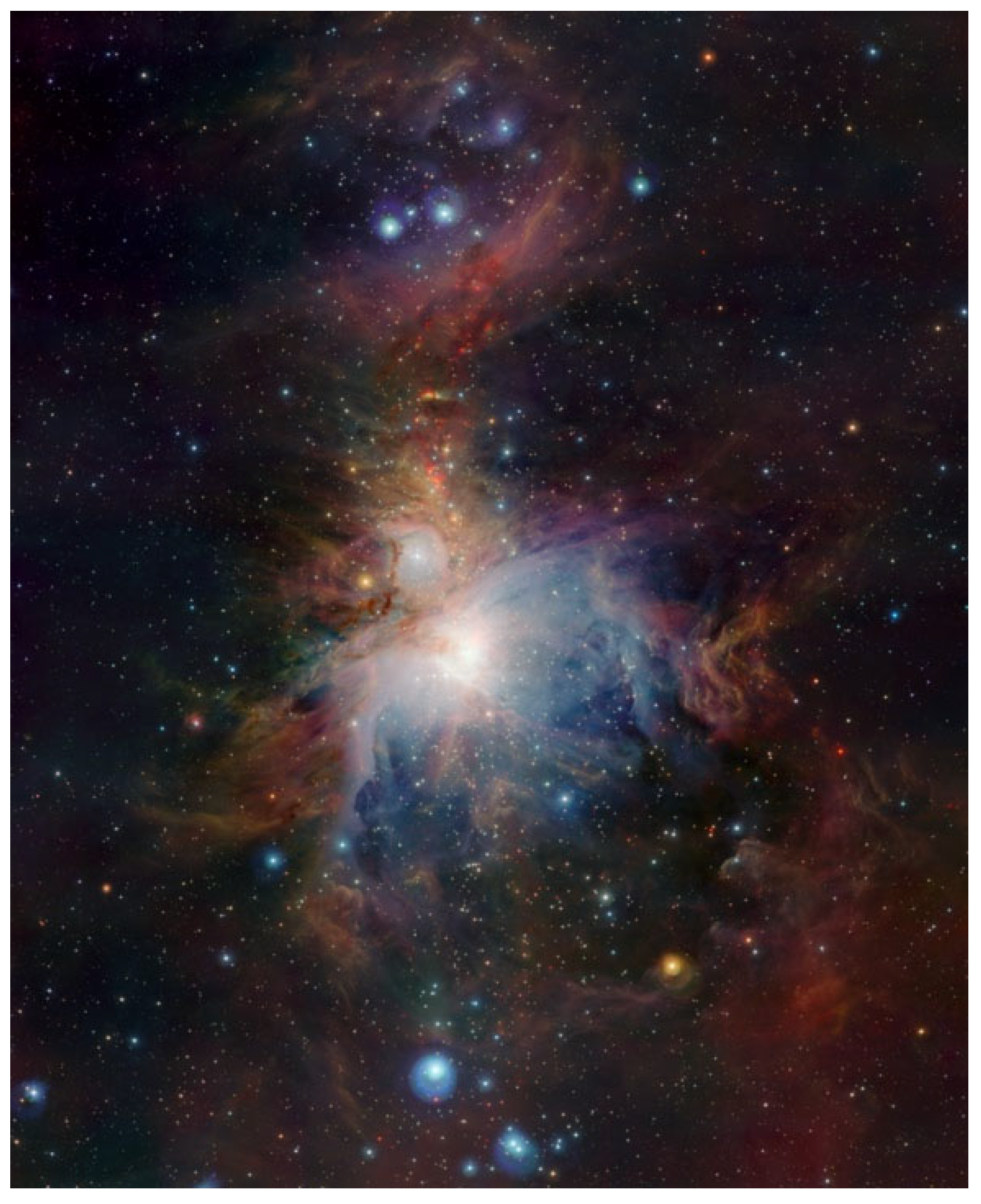
Figure 4 and
Figure 5 present the amateur acquisition obtained in this study and a professional reference image, respectively, enabling qualitative comparison across vastly different instrumentation scales.
The effective field of view of the imaging configuration was approximately 0.94°, sufficient to encompass the bright core of the nebula along with portions of its extended emission regions (
Figure 4). Within this field, the Trapezium Cluster is clearly identifiable as a compact concentration of bright stellar sources at the nebular center, indicating that the optical alignment and exposure parameters were adequate to resolve clustered stellar structure despite the absence of motorized tracking. Under the prevailing rural sky conditions and a 5 s exposure time, stars with apparent magnitudes approaching 9–10 were detectable, consistent with expected performance limits for unguided imaging at moderate magnification [
10].
A slight elongation of stellar point sources was observed predominantly along the east–west direction, reflecting the apparent motion of the sky due to Earth’s rotation during the exposure interval. This elongation represents a fundamental constraint of altazimuth-mounted, unguided systems and becomes increasingly apparent for extended exposure times. Nevertheless, the measured elongation remained limited and did not obscure the overall morphology of the nebula or the identification of its principal structural features (
Figure 4). In particular, the characteristic bright core and surrounding nebulosity remain clearly distinguishable.
Comparison with a professional wide-field image of M42 acquired with the VISTA telescope at the Paranal Observatory (
Figure 5) highlights the intrinsic limitations of the unguided smartphone-based approach in terms of depth, dynamic range, and fine-scale structure. While the professional image reveals faint outer filaments and complex emission structures not accessible in the present observations, the amateur image preserves the dominant morphological components of the nebula within the constraints imposed by exposure duration and detector sensitivity. This comparison underscores that, although unguided smartphone astrophotography cannot substitute for professional instrumentation, it can yield scientifically interpretable representations of bright deep-sky objects when acquisition parameters are carefully controlled.
From a methodological perspective, the M42 observations demonstrate that short-exposure imaging with large-aperture optics enables the capture of nebular structure while maintaining tolerable levels of motion-induced distortion. The results confirm that the primary limitation in this configuration arises from tracking-induced elongation rather than optical resolution or photon collection capability. As such, M42 serves as a benchmark target for defining the practical boundaries of unguided deep-sky imaging with consumer-grade detectors.
Comparative Assessment
Figure 4 presents an unguided amateur image of the Orion Nebula acquired using a 10-inch Newtonian telescope mounted on a manual altazimuth system, while
Figure 5 shows a professional reference image obtained with the VISTA telescope at the Paranal Observatory (ESO). The comparison between these two datasets provides a qualitative assessment of the observational capabilities and limitations of smartphone-based unguided astrophotography relative to professional astronomical instrumentation.
The professional images included in this study are presented solely as qualitative reference examples to contextualize the amateur observations and are not intended for quantitative performance comparison.
In the amateur acquisition (
Figure 4), the bright core of M42, including the Trapezium stellar system, is clearly resolved, along with portions of the surrounding nebular emission. Despite the short exposure time and the absence of motorized tracking, the dominant morphological features of the nebula remain identifiable. Subtle chromatic variations associated with nebular emission are discernible, although colour fidelity is limited by automatic in-device processing and constrained dynamic range, as previously reported in similar amateur imaging studies [
10,
12].
By contrast, the professional image shown in
Figure 5 reveals substantially finer structural detail, including extended dust filaments, embedded young stellar objects, and diffuse hydrogen emission regions. These features are enabled by the use of a large-aperture telescope, precision tracking, calibrated multi-filter exposures, and advanced post-processing pipelines operating under controlled atmospheric conditions [
11]. The resulting image exhibits significantly greater depth, resolution, and photometric uniformity than is achievable with unguided consumer-grade equipment.
While the professional dataset provides a far more complete representation of the nebula, the amateur image captures the brightest regions of M42 with sufficient clarity to preserve its principal structural morphology. This comparison demonstrates that, when acquisition parameters are carefully constrained, unguided smartphone astrophotography can yield observationally interpretable representations of bright deep-sky targets, albeit within clearly defined performance boundaries. The limitations observed in the amateur image arise primarily from exposure duration, detector dynamic range, and tracking-induced elongation, rather than from fundamental optical resolution constraints.
A structured visual comparison between the amateur and professional images is summarized in
Table 1, highlighting differences in spatial resolution, colour fidelity, field of view, depth of capture, and atmospheric control. In addition,
Table 2 presents a technical comparison of the respective observational setups, including telescope aperture, imaging sensor, exposure strategy, and post-processing methodology. Together, these comparisons contextualize the amateur results within the broader landscape of astronomical imaging capabilities and clarify the specific trade-offs associated with unguided, smartphone-based observations.
3.3. Open Cluster Messier 44—The Beehive Cluster
Messier 44 (M44) was selected as a representative open cluster to assess limiting magnitude, stellar crowding, and motion-induced distortion in unguided smartphone-based astrophotography. As a nearby and spatially extended stellar system, M44 provides a suitable benchmark for evaluating the ability of short-exposure imaging to resolve multiple stellar sources under tracking-free conditions.
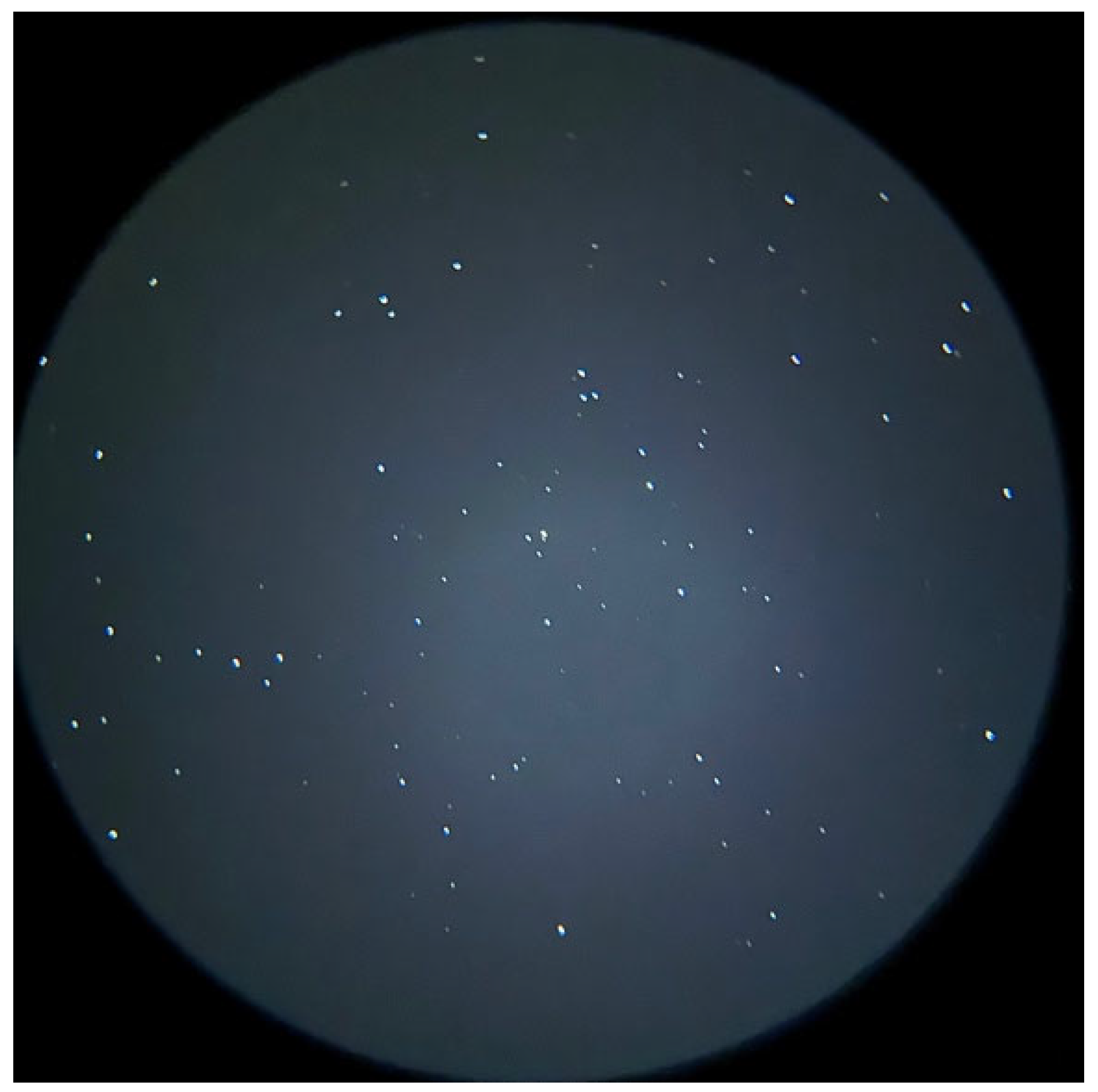
The amateur image was acquired using a 10-inch Newtonian reflector coupled to an iPhone 15 Pro Max, with a 5 s exposure and no motorized tracking. The effective field of view of approximately 0.94° was sufficient to encompass the central region of the cluster, allowing several of its brighter stellar members to be resolved. Under rural sky conditions, stars with apparent magnitudes approaching 9 were detectable, in agreement with expected performance limits for unguided imaging at moderate magnifications and short exposure times [
13].
The resolved stars exhibit a loose spatial distribution characteristic of M44, reflecting the intrinsic morphology of the cluster rather than imaging artifacts. Minor elongation of stellar point sources is observable, primarily as a result of Earth’s rotation during the exposure interval. However, the degree of elongation remains limited and does not significantly compromise the identification of individual stars or the overall cluster structure, consistent with prior analyses of unguided altazimuth imaging systems [
7].
Overall, the M44 observations demonstrate that large-aperture optics combined with controlled short exposures enable the recovery of the brightest cluster members while operating near the practical limiting magnitude imposed by sky motion and detector sensitivity. As such, M44 serves as an effective test case for defining the observational boundaries of unguided smartphone-based astrophotography in moderately crowded stellar fields.
3.3.1. Image Comparison of M44—Amateur and Professional Reference
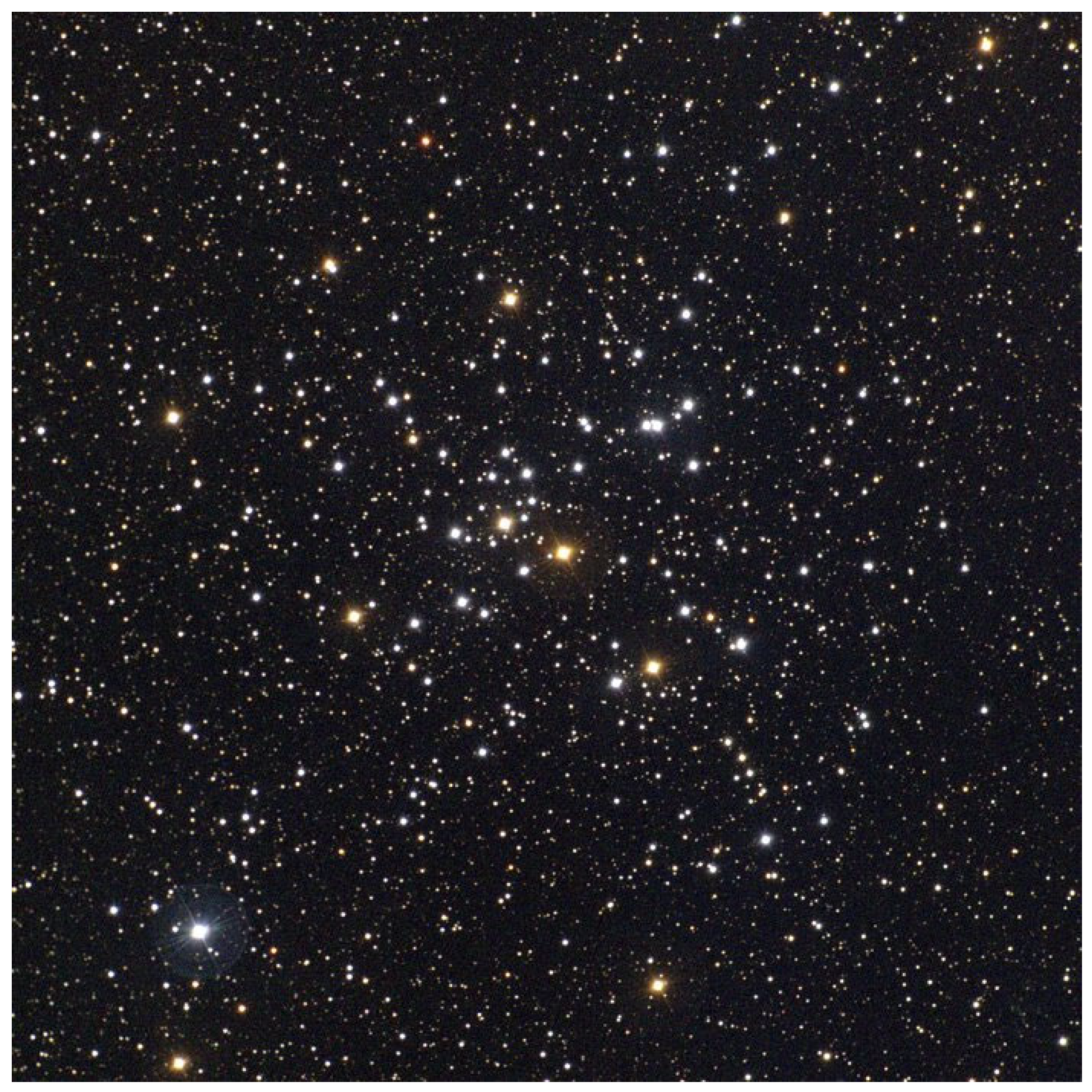
A comparative assessment was performed between the unguided amateur image of Messier 44 acquired in this study and a professional reference image obtained at NOIRLab [
14] using a 16-inch RCOS telescope and a CCD imaging system. The comparison provides a qualitative evaluation of the observational capabilities and limitations of smartphone-based unguided astrophotography relative to professional deep-sky imaging conducted under controlled observatory conditions.
The amateur image shown in
Figure 6 was obtained using a 10-inch Newtonian reflector coupled to an iPhone 15 Pro Max, with a single 5 s exposure and no motorized tracking. Under rural sky conditions, the image resolves the central concentration of the cluster and several of its brighter stellar members. Minor elongation of stellar point sources is present due to Earth’s rotation during the exposure interval; however, the elongation remains limited and does not significantly degrade the identification of individual stars or the overall cluster morphology.
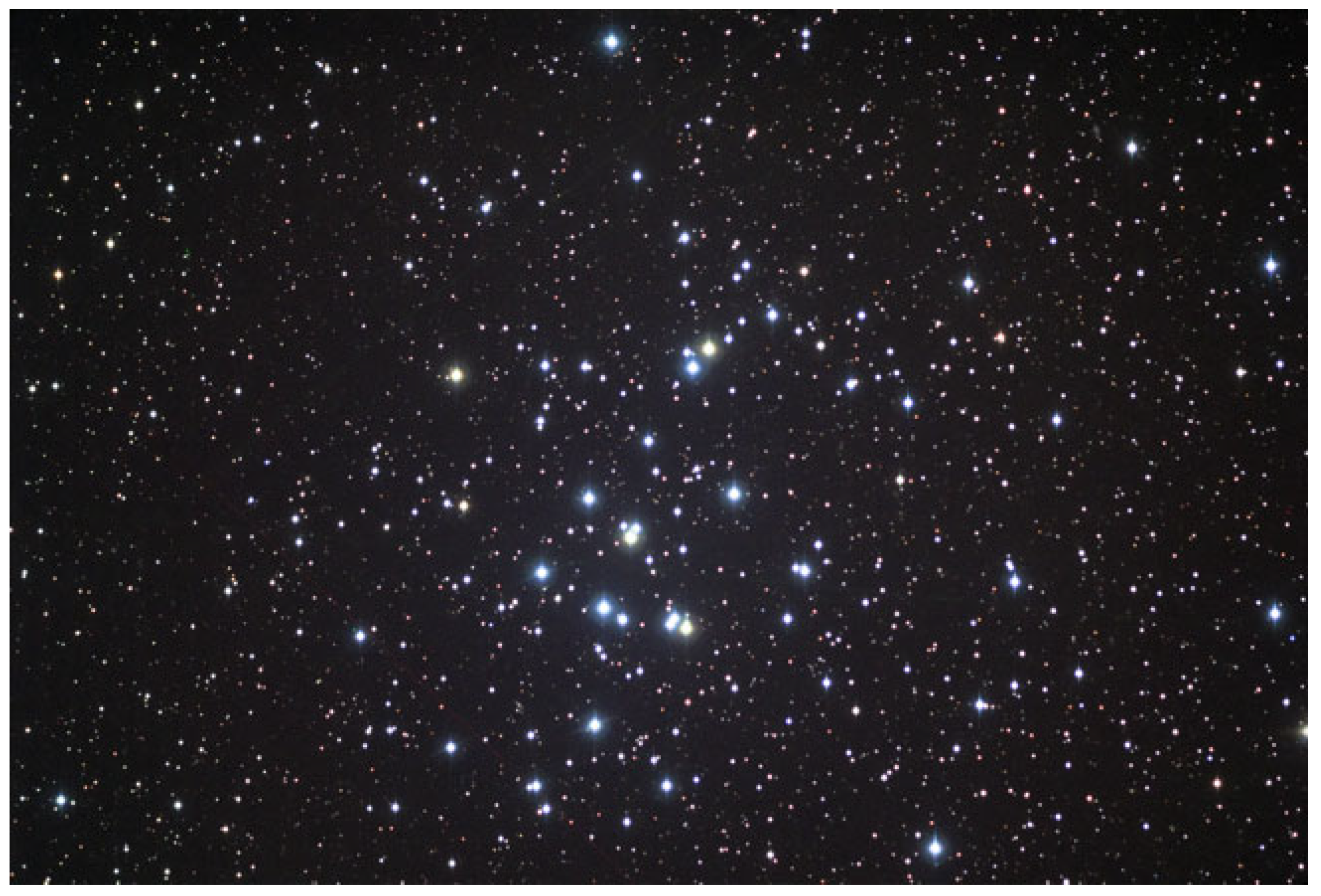
By contrast, the professional image presented in
Figure 7 exhibits substantially greater photometric depth and spatial resolution. The use of precision tracking, long cumulative exposure integration, and calibrated CCD imaging enables the detection of numerous faint cluster members distributed across the full extent of M44. The resulting image reveals a denser stellar population and a broader dynamic range, supporting detailed structural and photometric analyses that are not accessible with unguided consumer-grade detectors [
11].
The comparison between
Figure 6 and
Figure 7 highlights the fundamental trade-offs inherent to unguided smartphone-based imaging. While the amateur configuration lacks the sensitivity required to capture the faint stellar population of the cluster, it successfully preserves the relative spatial distribution and core structure of M44. These results indicate that the primary limitations of the amateur image arise from exposure-duration constraints and detector dynamic range rather than from optical resolution alone. Consequently, the M44 comparison serves to delineate the practical performance boundaries of unguided smartphone astrophotography in moderately crowded stellar fields.
Comparative Assessment
Figure 6 presents an unguided amateur image of Messier 44 acquired using a 10-inch Orion Newtonian reflector coupled to an iPhone 15 Pro Max, with a single 5 s exposure and no equatorial tracking. Under these conditions, slight elongation of stellar point sources is observed as a result of Earth’s rotation during the exposure interval. Despite this limitation, the image successfully resolves the central concentration of the cluster and several of its brighter stellar members, preserving the relative spatial distribution of the system. These results are consistent with previous reports on the performance of mobile imaging devices when combined with stable optical configurations and controlled exposure parameters [
13,
15].
By contrast,
Figure 7 shows a professional reference image of M44 obtained at NOIRLab using a 16-inch RC Optical Systems (RCOS) telescope equipped with a scientific-grade CCD detector. The use of precision motorized tracking, extended cumulative exposure integration, and calibrated post-processing enables significantly greater photometric depth and spatial resolution. As a result, the professional image reveals a dense stellar population across the full extent of the cluster, including numerous faint members that are not accessible in the unguided amateur acquisition. Such high-fidelity imaging is required for detailed astrophysical analyses, including photometric measurements and stellar population studies [
16,
17].
While the professional observatory setup offers substantially superior imaging performance, the amateur image captures the dominant structural features of M44 within the constraints imposed by short exposure duration and detector dynamic range. This comparison indicates that the primary limitations of the unguided smartphone-based configuration arise from exposure-time constraints, atmospheric effects, and sensor saturation characteristics rather than from optical resolution alone. Consequently, the amateur image provides a valid qualitative representation of the cluster’s core morphology while operating near the practical performance boundaries of consumer-grade imaging systems [
18,
19].
A technical comparison of the amateur and professional imaging configurations is summarized in
Table 3 and
Table 4, highlighting key differences in telescope aperture, detector type, exposure strategy, and image processing methodology. These factors directly influence the achievable stellar resolution, colour depth, and sensitivity to faint sources.
3.4. Star Cluster M41—Tau Canis Majoris Region
Messier 41 (M41) was selected as a compact open cluster to evaluate limiting magnitude, stellar crowding, and colour response in unguided smartphone-based astrophotography. Located in the constellation Canis Major and dominated by the bright star τ Canis Majoris, M41 provides a useful test case for assessing image stability and dynamic range in the presence of a luminous central source. The cluster’s relatively high surface brightness and moderate angular extent make it well suited for short-exposure imaging under tracking-free conditions [
19,
20].
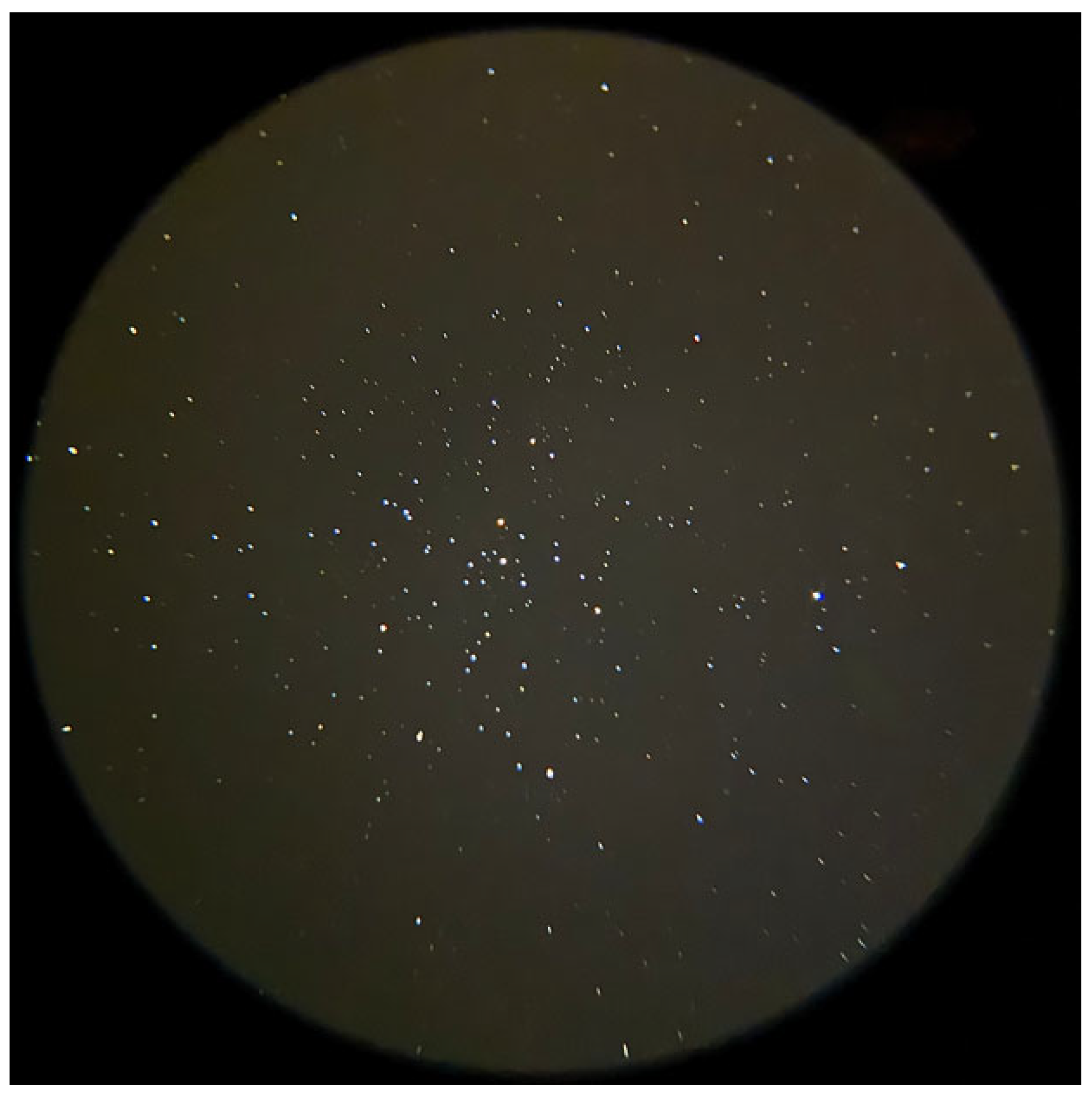
The amateur image shown in
Figure 8 was acquired using a 10-inch Newtonian reflector coupled to an iPhone 15 Pro Max, with a 5 s exposure and no motorized tracking. The effective field of view of approximately 0.94° was sufficient to frame the cluster’s brightest members. Under rural sky conditions, stars with apparent magnitudes down to approximately 9.5 were detectable, consistent with expected performance limits for unguided imaging at moderate magnifications and short exposure times. The image resolves the core of the cluster and several moderately bright stellar members, exhibiting subtle variations in brightness and colour.
Minor elongation of stellar point sources is present in the amateur image, reflecting residual sky motion during the exposure interval. However, the degree of elongation is less pronounced than that observed for M42, suggesting either a more favourable target orientation or improved manual stabilization during capture. Importantly, the observed elongation does not significantly degrade the identification of individual stars or the overall cluster morphology.
The professional reference image shown in
Figure 9 was acquired using the Burrell Schmidt telescope at the Warner and Swasey Observatory, employing combined BVR filter exposures to approximate true-colour imaging. The professional dataset covers a comparable angular field and provides substantially higher photometric depth and colour fidelity, revealing a larger population of faint cluster members and more accurate stellar colour differentiation.
3.5. Sirius Star (α Canis Majoris)
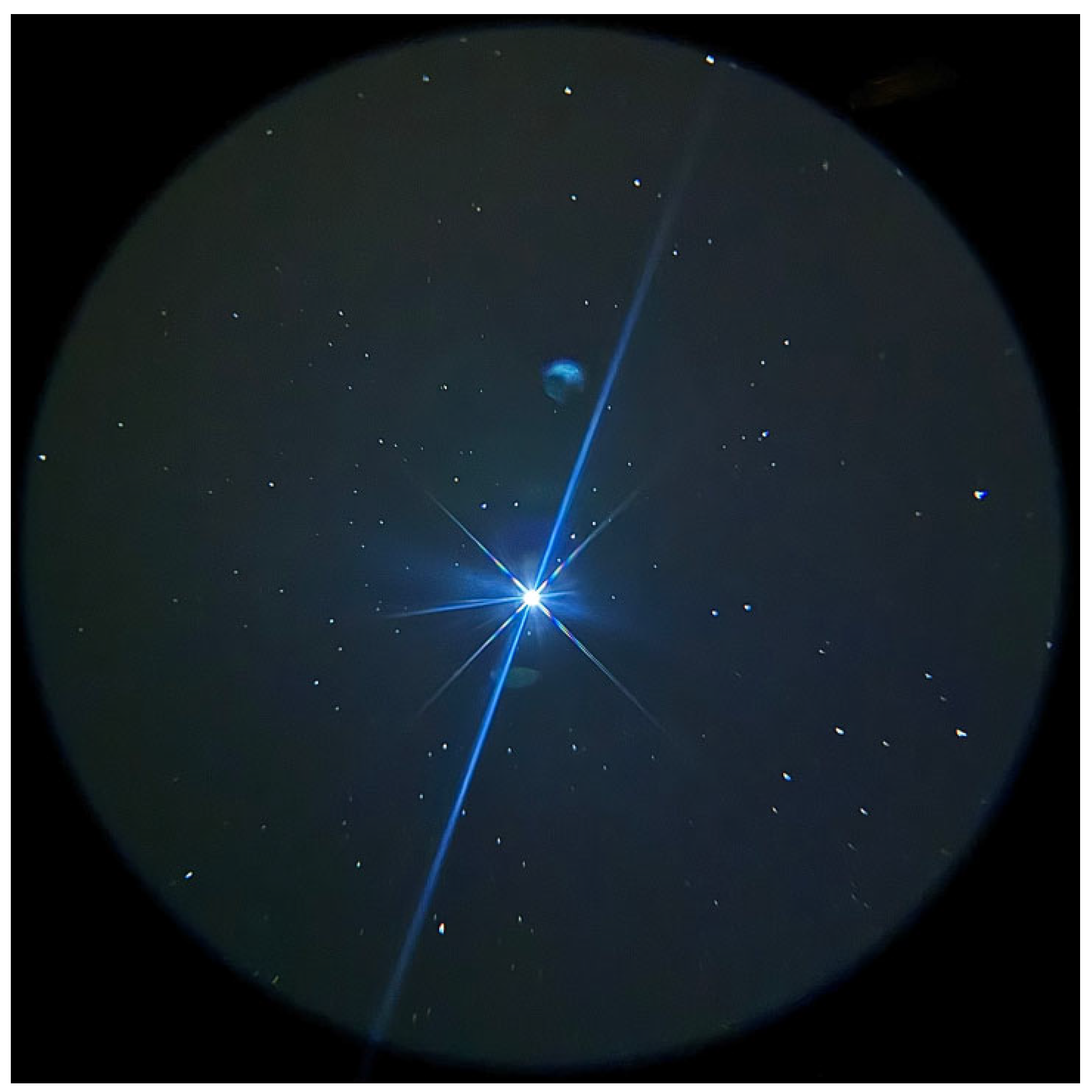
Sirius (α Canis Majoris) was observed as an extreme high-dynamic-range test case to evaluate detector saturation, blooming artifacts, and motion masking in unguided smartphone-based astrophotography. As the brightest stellar object in the night sky, with an apparent magnitude of −1.46, Sirius provides a stringent benchmark for assessing the limitations of consumer-grade CMOS sensors when coupled to large-aperture telescopes under short-exposure, tracking-free conditions.
The astronomical magnitude scale is logarithmic and inverse, meaning that lower or negative magnitude values correspond to brighter objects, whereas larger positive values indicate fainter sources.
The amateur image of Sirius was acquired using a 10-inch Newtonian reflector and an iPhone 15 Pro Max with a 5 s exposure and no motorized tracking. In this configuration, the stellar signal overwhelmingly dominates the detector’s dynamic range, resulting in pronounced saturation of the stellar core and significant photon spillover into adjacent pixels. Blooming artifacts extend radially from the central source, effectively suppressing the detection of nearby faint stars and background structure.
Despite these saturation effects, the image preserves the characteristic white–blue colour signature of Sirius, along with a symmetric diffraction pattern imposed by the telescope aperture and optical train. No measurable elongation or positional drift is apparent in the image. This absence of detectable motion-related distortion is not due to improved tracking performance, but rather to the extreme photon flux masking subtle astrometric displacements that would otherwise be observable for fainter stellar sources. This is seen in
Figure 10.
The Sirius observations highlight the intrinsic challenges associated with high-dynamic-range stellar imaging using unguided, consumer-grade detectors. Exposure times suitable for deep-sky targets such as nebulae and star clusters are unsuitable for extremely bright stars, leading to loss of photometric linearity and spatial information in the saturated core. These limitations are fundamentally governed by sensor full-well capacity, in-device processing algorithms, and dynamic range constraints, rather than by optical resolution or mount stability.
To contextualise the Sirius results within the broader observational campaign, a comparative summary of acquisition parameters and performance characteristics for all targets imaged in this study is presented in
Table 7. The table highlights consistent trends across the dataset, including the trade-off between exposure duration, limiting magnitude, and motion-induced distortion for unguided imaging configurations.
The comparative trends summarized in
Table 7 confirm that unguided smartphone-based astrophotography can effectively recover morphological structure in bright extended targets when exposure times are carefully constrained. However, for extremely luminous point sources such as Sirius, detector saturation and blooming effects dominate image quality, rendering such configurations unsuitable for quantitative photometric analysis. These findings are consistent with prior experimental and simulated studies of tracking-free astrophotography systems [
10,
18].
4. Discussion
The observational session presented in this study demonstrates the practical feasibility of unguided deep-sky astrophotography using consumer-grade equipment, even in the absence of motorized tracking systems. Despite the lack of an equatorial mount or automated guiding, the acquired images successfully resolved prominent structures in several astronomical targets, including the Orion Nebula (M42), the open clusters Messier 44 and Messier 41, and the bright star Sirius. These results support previous findings indicating that modern smartphones, when coupled with large-aperture telescopes and appropriate acquisition protocols, can function as viable imaging devices for certain classes of astronomical observations under non-specialized conditions [
12,
19].
A primary limitation consistently observed throughout the session was the elongation of stellar sources caused by Earth’s rotation during multi-second exposures. This effect, commonly referred to as image drift or field rotation, is inherent to altazimuth-mounted systems lacking tracking capabilities and has been extensively documented in the literature [
6,
10]. In the present work, this limitation was mitigated by restricting exposure times to 5 s, following established practical guidelines for unguided astrophotography at moderate magnifications [
9,
19,
20]. While this constraint limits sensitivity to faint, low-surface-brightness features, it proved sufficient to preserve key morphological details in brighter targets, such as the Trapezium Cluster within M42.
An important practical consideration for amateur observers is the availability of Dobsonian-mounted Newtonian telescopes, which typically provide significantly larger apertures at lower cost compared with equatorially mounted systems. Although Dobsonian mounts operate in an alt–azimuth configuration and generally lack motorized tracking, their large light-collecting area makes them particularly suitable for short-exposure unguided imaging strategies such as those explored in this study. Consequently, the methodological framework presented here may be especially relevant for observers using large-aperture Dobsonian systems [
9].
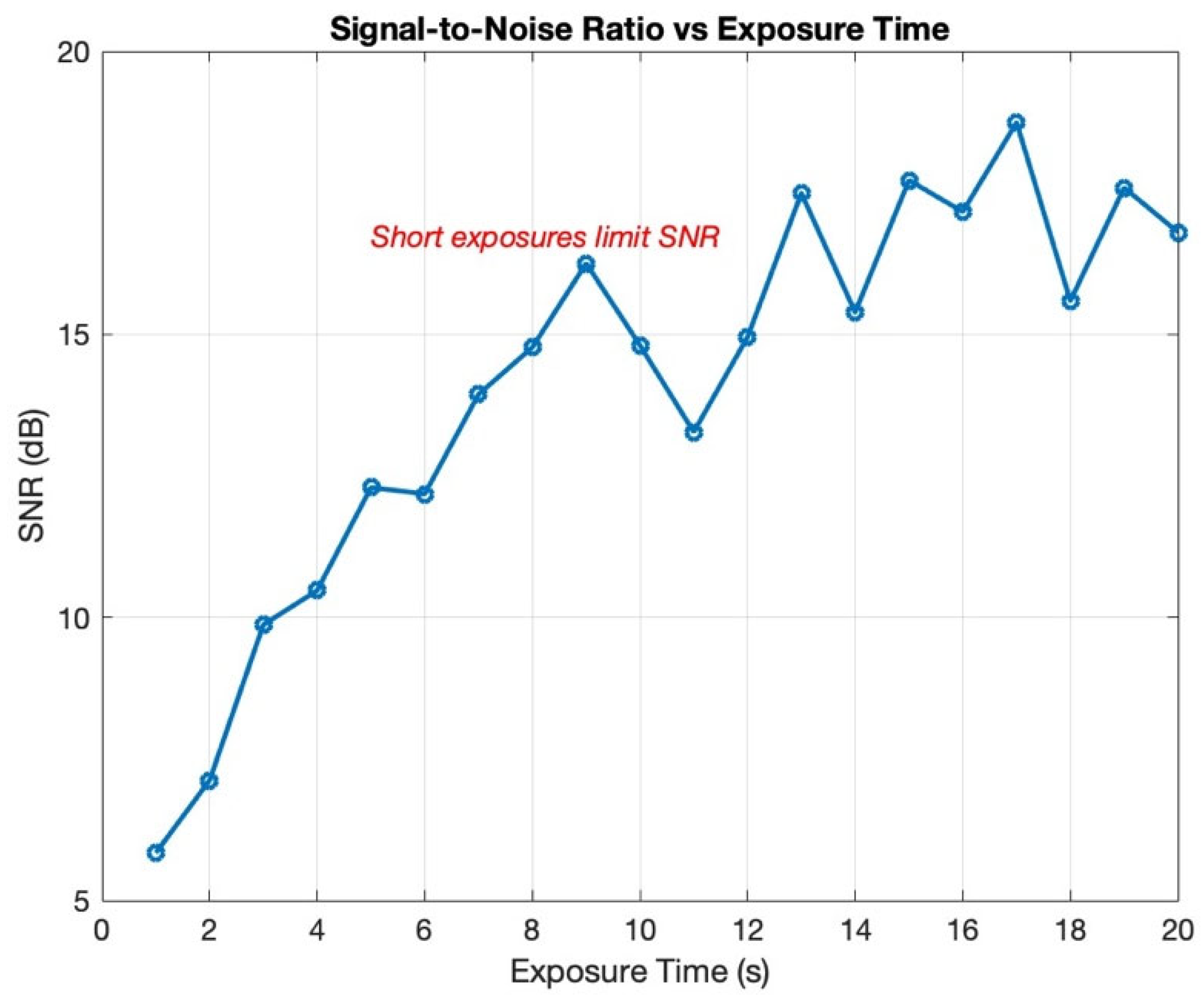
The trade-off between exposure duration and image quality is further illustrated by the relationship between signal-to-noise ratio (SNR) and exposure time. As shown in
Figure 11, short exposures significantly restrict achievable SNR under low-light conditions typical of deep-sky imaging. The logarithmic trend highlights diminishing returns with increasing exposure time when tracking is unavailable, underscoring the fundamental limitations imposed by unguided configurations. These results reinforce the importance of alternative strategies, such as multi-frame image stacking, which can substantially improve the signal-to-noise ratio in short-exposure imaging. Stacking techniques combine multiple frames acquired sequentially and align stellar centroids to compensate for drift, enabling the recovery of fainter structures while preserving the short exposure durations required for unguided observations. Numerous amateur astrophotography software packages provide automated implementations of these procedures [
10,
16].
Unlike many previous smartphone-based astrophotography studies that focus primarily on lunar or planetary targets [
4,
5], the present investigation extends the methodology to deep-sky objects with apparent magnitudes in the range of approximately 9–10. Under favourable sky conditions, the identification of multiple stellar members in M44 and M41 demonstrates that unguided smartphone imaging can provide scientifically interpretable visual documentation of relatively bright deep-sky targets. The low-latitude observing site further enhances this capability by allowing access to objects from both celestial hemispheres, albeit with increased sensitivity to field rotation effects compared to mid-latitude locations.
The optical characteristics of the observing system played a critical role in achieving these results. The large 254 mm aperture and fast f/4.7 focal ratio of the Newtonian reflector enabled efficient photon collection within the short exposure windows imposed by the unguided setup. This is consistent with prior analyses emphasizing the advantages of fast optical systems for deep-sky imaging under exposure-limited conditions [
10,
11]. Additionally, the use of a wide-field 25 mm eyepiece and a rigid three-axis smartphone adapter was essential for maintaining optical alignment and focus during manual operation, factors repeatedly identified as critical for success in unguided astrophotography [
7].
Although professional observatories achieve vastly superior resolution, dynamic range, and photometric accuracy through long-exposure integration, precision tracking, and calibrated post-processing pipelines [
16,
17], the results presented here demonstrate that modest, portable systems can still yield functionally informative astronomical images. When conducted with methodological care and an understanding of intrinsic limitations, unguided smartphone-based astrophotography can provide a valuable framework for characterizing observational constraints and exploring alternative low-cost imaging approaches. In this sense, the study contributes to the broader effort of defining the technical boundaries between professional-grade instrumentation and accessible observational methodologies in contemporary astronomy.
The use of low-cost optical filters could further enhance the observational capabilities of smartphone-based astrophotography systems. Narrow-band or broadband light-pollution suppression filters may improve contrast in nebular targets under semi-urban skies, while simple colour filters can enhance planetary surface contrast. For bright targets such as the Moon, neutral-density or lunar filters can increase dynamic range by reducing sensor saturation. Although filters were not employed in the present experiment, their integration represents a straightforward extension of the methodology described here [
10].
Although low-cost motorized drives can be added to many Newtonian mounts and powered using portable batteries, the objective of the present study was specifically to evaluate the performance limits of completely unguided imaging configurations.
Advanced computational techniques, including maximum-entropy deconvolution and point-spread-function (PSF) reconstruction, may partially compensate for motion-induced blur in short-exposure images and represent a promising direction for future methodological refinement [
7,
16].
The limiting magnitude values reported in this study should therefore be interpreted as approximate observational thresholds under the specific sky brightness, exposure duration, and optical configuration employed during the session.
5. Conclusions
This technical note demonstrates that unguided smartphone-based astrophotography using a large-aperture Newtonian reflector can yield reproducible and scientifically interpretable observations of bright deep-sky and lunar targets under favourable sky conditions. Using a 10-inch f/4.7 Newtonian telescope coupled to a consumer-grade smartphone, recognizable structural features were successfully recorded in M42, M44, M41, the Moon, and Sirius without motorized tracking, confirming the feasibility of short-exposure imaging in low-latitude environments.
The results show that constraining exposure times to 5 s, combined with manual recentering and stable optical coupling, effectively limits stellar elongation to approximately 1–1.3 arcminutes, consistent with the theoretical sidereal drift expected for a 5 s exposure at moderate declinations. at moderate magnifications. Under these conditions, a limiting magnitude of approximately 9.5 was achieved for open clusters and nebular cores, while lunar imaging benefited from instantaneous exposures and high intrinsic target brightness. These findings highlight the importance of fast optical systems and controlled acquisition protocols when operating under tracking-free constraints.
At the same time, the observations clearly illustrate the intrinsic limitations of unguided smartphone astrophotography. Field rotation and signal-to-noise constraints restrict sensitivity to faint, low-surface-brightness structures, while imaging of extremely bright stars such as Sirius reveals dynamic range limitations and blooming artifacts inherent to smartphone sensors. These effects underscore the fundamental performance gap between consumer imaging devices and scientific-grade detectors, particularly for quantitative photometric applications.
Despite these limitations, the study provides a well-defined methodological framework for characterizing the observational boundaries of unguided smartphone astrophotography with large-aperture telescopes. The equatorial observing location further emphasizes both the opportunities and challenges associated with low-latitude imaging, including rapid target motion and access to objects from both celestial hemispheres. As such, this work contributes to ongoing efforts to systematically evaluate alternative, low-cost observational approaches within modern astronomy.
Future work should focus on extending exposure depth through calibrated image stacking, employing RAW data acquisition to mitigate uncontrolled computational processing, and exploring low-cost inertial measurement unit (IMU) integration for real-time drift compensation. These developments would enable a more rigorous assessment of the quantitative potential of smartphone-assisted astrophotography while preserving its accessibility and methodological simplicity.
Author Contributions
Conceptualization, J.N., S.V.; methodology, S.V.; software, S.V.; validation, S.V., J.N.; formal analysis, J.N.; investigation, S.V.; resources, J.N.; data curation, S.V.; writing—original draft preparation, J.N.; writing—review and editing, S.V.; visualization, J.N.; supervision, J.N.; project administration, S.V. All authors have read and agreed to the published version of the manuscript.
Funding
The authors gratefully acknowledge that the Fundación Universitaria Los Libertadores provided financial support by covering the article’s publication processing fee.
Data Availability Statement
The original contributions presented in this study are included in the article. Further inquiries can be directed to the corresponding authors.
Acknowledgments
During the preparation of this manuscript, the authors used Grammarly version v14.1278.0 language refinement, and editorial assistance. The authors have reviewed, validated, and edited all generated content and take full responsibility for the final version of this publication.
Conflicts of Interest
The authors declare no conflicts of interest.
Abbreviations
The following abbreviations are used in this manuscript:
| FoV | Field of View |
| SNR | Signal-to-Noise Ratio |
| CCD | Charge-Coupled Device |
| IMU | Inertial Measurement Unit |
References
- Malin, D. Astrophotography. Sky Telesc. 1981, 62, 30–36. [Google Scholar]
- Ratledge, D. Astrophotography for the Amateur; Springer: London, UK, 2006. [Google Scholar]
- Henden, A.A.; Kaitchuck, R.H. Astronomical Photometry; Van Nostrand Reinhold Co., Ltd.: New York, NY, USA, 1982. [Google Scholar]
- Bimo, S. Smartphone astrophotography: A useful approach for outreach and education. J. Am. Assoc. Var. Star Obs. 2020, 48, 72. [Google Scholar]
- Malchenko, S.L. From smartphones to stargazing: The impact of mobile-enhanced learning on astronomy education. Sci. Educ. Q. 2024, 1, 1–7. [Google Scholar] [CrossRef]
- Meeus, J. Astronomical Algorithms; Willmann-Bell: Richmond, VA, USA, 1991. [Google Scholar]
- Berry, R.; Burnell, J. The Handbook of Astronomical Image Processing; Willmann-Bell: Richmond, VA, USA, 2000. [Google Scholar]
- Kubsch, M.; Härtig, H. Smartphone astronomy. In Smartphones as Mobile Minilabs in Physics; Springer: Cham, Switzerland, 2022. [Google Scholar] [CrossRef]
- Eicher, D.J. Deep-Sky Observing with Small Telescopes: A Guide and Reference; Enslow Publishers: Richmond, VA, USA, 1989; ISBN 0894900757. [Google Scholar]
- Martínez-Delgado, D. Ultra-deep imaging with amateur telescopes. arXiv 2020, arXiv:2001.05746. [Google Scholar] [CrossRef]
- European Southern Observatory (ESO). Visible and Infrared Survey Telescope for Astronomy. Available online: https://www.eso.org/public/teles-instr/surveytelescopes/vista/ (accessed on 15 April 2025).
- Paula, M.E.; Micha, D.N. Low-Cost Astrophotography with a Smartphone: STEAM in Action. Phys. Teach. 2021, 59, 446–449. [Google Scholar] [CrossRef]
- Kitchin, C.R. Astrophysical Techniques, 6th ed.; CRC Press: Boca Raton, FL, USA, 2013. [Google Scholar]
- NOIRLab. Burrell Schmidt Telescope, Kitt Peak National Observatory. Available online: https://noirlab.edu/public/programs/kitt-peak-national-observatory/burrell-schmidt-telescope/ (accessed on 15 April 2025).
- Oswalt, T.D.; Bond, H.E. (Eds.) Planets, Stars and Stellar Systems: Volume 2—Astronomical Techniques, Software and Data; Springer: Dordrecht, The Netherlands, 2013; Volume 2. [Google Scholar] [CrossRef]
- Howell, S.B. Handbook of CCD Astronomy, 2nd ed.; Cambridge University Press: Cambridge, UK, 2006. [Google Scholar]
- Massey, P.; Hanson, M.M. Astronomical Spectroscopy. In Planets, Stars and Stellar Systems: Volume 2: Astronomical Techniques, Software and Data; Oswalt, T.D., Bond, H.E., Eds.; Springer: Dordrecht, The Netherlands, 2013; pp. 35–98. [Google Scholar] [CrossRef]
- Charles, J.R. Astrophotography Basics. In Practical Astrophotography; Springer: London, UK, 2000. [Google Scholar]
- Odenwald, S. A Guide to Smartphone Astrophotography; NASA Space Science Education Consortium, Goddard Space Flight Center. Available online: https://spacemath.gsfc.nasa.gov/SMBooks/AstrophotographyV1.pdf (accessed on 17 May 2025).
- Clark, R.N. Visual Astronomy of the Deep Sky; Cambridge University Press: Cambridge, UK, 1990. [Google Scholar]
- NOIRLab/NSF/AURA. M41, NGC 2287 (Open Cluster in Canis Major); Image ID: Noao-m41; Burrell Schmidt Telescope, Warner and Swasey Observatory, Case Western Reserve University; NSF NOIRLab: Tucson, AZ, USA, 2020. Available online: https://noirlab.edu/public/images/noao-m41/ (accessed on 12 March 2026).
Figure 1.
10-inch Orion Newtonian telescope used for the observations.
Figure 1.
10-inch Orion Newtonian telescope used for the observations.
Figure 2.
Attachment of the iPhone 15 Pro Max to the eyepiece using a three-axis mount.
Figure 2.
Attachment of the iPhone 15 Pro Max to the eyepiece using a three-axis mount.
Figure 3.
The Moon. Photograph taken with a 10-inch Orion telescope, 1200 mm focal length, 25 mm eyepiece, instant capture with iPhone 15 Pro Max.
Figure 3.
The Moon. Photograph taken with a 10-inch Orion telescope, 1200 mm focal length, 25 mm eyepiece, instant capture with iPhone 15 Pro Max.
Figure 4.
Amateur capture of the Orion Nebula (M42) taken with a 10-inch aperture Orion telescope, 25 mm eyepiece, and iPhone 15 Pro Max. 5 s exposure. Observation conducted in Planeta Rica, Córdoba, Colombia, on 16 April 2025.
Figure 4.
Amateur capture of the Orion Nebula (M42) taken with a 10-inch aperture Orion telescope, 25 mm eyepiece, and iPhone 15 Pro Max. 5 s exposure. Observation conducted in Planeta Rica, Córdoba, Colombia, on 16 April 2025.
Figure 5.
Professional image of the Orion Nebula (M42) captured with the VISTA telescope at the Paranal Observatory (ESO). Approximate field of view of 1 degree. Adapted from: [
11].
Figure 5.
Professional image of the Orion Nebula (M42) captured with the VISTA telescope at the Paranal Observatory (ESO). Approximate field of view of 1 degree. Adapted from: [
11].
Figure 6.
Amateur capture of M44 (The Beehive Cluster) taken with a 10-inch aperture Orion telescope, 25 mm eyepiece, and an iPhone 15 Pro Max. 5 s exposure. Observation conducted in Planeta Rica, Córdoba, Colombia, on 16 April 2025.
Figure 6.
Amateur capture of M44 (The Beehive Cluster) taken with a 10-inch aperture Orion telescope, 25 mm eyepiece, and an iPhone 15 Pro Max. 5 s exposure. Observation conducted in Planeta Rica, Córdoba, Colombia, on 16 April 2025.
Figure 7.
Professional image of M44 (The Beehive Cluster) captured with a 16-inch RCOS telescope and a CCD camera at NOIRLab. Approximate field of view: 1 degree [
11].
Figure 7.
Professional image of M44 (The Beehive Cluster) captured with a 16-inch RCOS telescope and a CCD camera at NOIRLab. Approximate field of view: 1 degree [
11].
Figure 8.
Amateur capture of M41 taken with a 10-inch Orion telescope, 25 mm eyepiece, and iPhone 15 Pro Max. 5 s exposure. Observation conducted in Planeta Rica, Córdoba, Colombia, on 16 April 2025.
Figure 8.
Amateur capture of M41 taken with a 10-inch Orion telescope, 25 mm eyepiece, and iPhone 15 Pro Max. 5 s exposure. Observation conducted in Planeta Rica, Córdoba, Colombia, on 16 April 2025.
Figure 9.
M41 star cluster captured with the Burrell Schmidt telescope. Adapted from [
21].
Figure 9.
M41 star cluster captured with the Burrell Schmidt telescope. Adapted from [
21].
Figure 10.
Amateur capture of Sirius taken with a 10-inch Orion telescope, 25 mm eyepiece, and an iPhone 15 Pro Max. Exposure time: 5 s.
Figure 10.
Amateur capture of Sirius taken with a 10-inch Orion telescope, 25 mm eyepiece, and an iPhone 15 Pro Max. Exposure time: 5 s.
Figure 11.
Simulated relationship between signal-to-noise ratio (SNR) and exposure time under low-light conditions, representative of non-tracked amateur astrophotography sessions.
Figure 11.
Simulated relationship between signal-to-noise ratio (SNR) and exposure time under low-light conditions, representative of non-tracked amateur astrophotography sessions.
Table 1.
Visual Comparative Analysis.
Table 1.
Visual Comparative Analysis.
| Aspect | Amateur Image | Professional Image (ESO) |
|---|
| Resolution | Details limited by optics and atmosphere | High resolution with well-defined structures |
| Colouration | Less saturated colours and possible colour distortions introduced by automatic smartphone image processing | Accurate colours thanks to specific filters |
| Field of View | Approximately 1 degree | 34 × 33 arcminutes |
| Depth of Capture | Limited to the brightest regions | Captures both bright and faint regions |
| Atmospheric Quality | Affected by turbulence and light pollution | Observations controlled at a professional site |
Table 2.
Technical Comparison.
Table 2.
Technical Comparison.
| Aspect | Amateur Image | Professional Image (ESO) |
|---|
| Telescope | Orion 10″ (254 mm), f/4.7 | MPG/ESO 2.2-metre, f/8 |
| Eyepiece/Field of View | 25 mm (≈1.04°) | Full image ≈ 34′ × 33′ arcminutes |
| Camera | iPhone 15 Pro Max | Wide Field Imager (WFI) CCD camera |
| Exposure | 5 s | Multiple combined exposures (B, V, R filters) |
| Processing | Automatic iPhone processing | Image combination with scientific calibration |
| Stellar and Nebular Resolution | Limited by optics, atmosphere, and equipment vibrations | Extremely high, resolving filaments and fine structures |
| Colour Depth | Limited, possible overexposure in bright areas | Calibrated and balanced colours across full dynamic range |
Table 3.
Technical Comparison.
Table 3.
Technical Comparison.
| Characteristic | Amateur Image | Professional Image (NOIRLab) |
|---|
| Telescope | Orion 10″ (254 mm), f/4.7 | RC Optical Systems (RCOS) 16″ (406 mm) |
| Eyepiece/Field of View | 25 mm (≈1.04°) | Image with ≈1° field of view |
| Camera | iPhone 15 Pro Max | Scientific CCD |
| Exposure | 5 s | Combination of multiple calibrated exposures |
| Image Processing | Automatic iPhone processing | Professional combination and calibration (darks, flats, bias) |
| Stellar Resolution | Limited by optics, atmosphere, and short exposure | High, with pinpoint star profiles |
| Colour Depth | Limited, with potential overexposures | Broad dynamic range and accurate calibration |
Table 4.
Technical Comparison Visual Comparative Analysis.
Table 4.
Technical Comparison Visual Comparative Analysis.
| Aspect | Amateur Image | Professional Image (NOIRLab) |
|---|
| Stellar Resolution | Stars appear slightly extended or diffuse | Stars are sharply resolved and well separated |
| Stellar Colouration | Subtle colour variation, dominated by white/blue | Wide diversity of stellar colours observable |
| Field of View | Approximately 1 degree | Approximately 1 degree |
| Capture Depth | Only the brightest stars visible | Includes faint stellar members |
| Atmospheric Quality | Affected by turbulence and light pollution | Observed under controlled atmospheric conditions |
Table 5.
Technical Comparison.
Table 5.
Technical Comparison.
| Aspect | Amateur Image | Professional Image (NOIRLab) |
|---|
| Telescope | Orion 10″ (254 mm), f/4.7 | Burrell Schmidt (0.6 m), f/3.5 |
| Eyepiece/Field of View | 25 mm (≈1.04°) | ≈0.7° |
| Camera | iPhone 15 Pro Max | Scientific CCD |
| Exposure | 5 s | 11 combined exposures |
| Processing | Automatic iPhone processing | Combination of BVR filters |
| Stellar Resolution | Limited by optics and atmosphere | High, with pinpoint stars and no aberrations |
| Colour Depth | Limited, possible saturation in bright stars | Natural and balanced colors |
Table 6.
Visual Comparative Analysis.
Table 6.
Visual Comparative Analysis.
| Aspect | Amateur Image | Professional Image (NOIRLab) |
|---|
| Stellar Resolution | Stars somewhat blurred by atmosphere | Pinpoint and well-defined stars |
| Stellar Coloration | Limited or saturated colours | Well-differentiated colour diversity |
| Field of View | Approximately 1 degree | Approximately 0.7 degrees |
| Capture Depth | Limited to brighter stars | Captures both bright and faint stars |
| Atmospheric Quality | Affected by turbulence and light pollution | Controlled observation at professional site |
Table 7.
Technical Summary of Observations.
Table 7.
Technical Summary of Observations.
| Observed Object | Local
Time (h) | Exposure
Time (s) | Limiting Magnitude Achieved | Specific Observations |
|---|
| Orion Nebula (M42) | 19:22 | 5 | ~10 | Bright core (Trapezium) visible; slight west–east elongation. |
| Open Cluster Messier 44 (M44) | 19:36 | 5 | ~9 | Scattered star groups; minimal elongation. |
| Messier Cluster M41 | 19:08 | 5 | ~9.5 | Several young stars visible; slight elongation. |
| Sirius Star | 19:48 | 5 | Not applicable | Central saturation; evident diffraction pattern. |
| The Moon | 23:04 | Instantaneous | Not applicable | Well-defined craters and maria; no observable elongation. |
| Disclaimer/Publisher’s Note: The statements, opinions and data contained in all publications are solely those of the individual author(s) and contributor(s) and not of MDPI and/or the editor(s). MDPI and/or the editor(s) disclaim responsibility for any injury to people or property resulting from any ideas, methods, instructions or products referred to in the content. |