
Article

Numerical Study of Bar Suppression in Galaxy Models Due to Disc Heating
by
Alejandro López Gómez
1,*,
Ruslan Gabbasov
2 and
Isaura Luisa Fuentes-Carrera
1
1
Escuela Superior de Física y Matemáticas, Instituto Politécnico Nacional, U.P. Adolfo López Mateos, Edificio 9, Zacatenco, Ciudad de México 07730, Mexico
2
Departamento de Sistemas, Universidad Autónoma Metropolitana, Av. San Pablo No. 420 Col. Nueva el Rosario Alcaldía Azcapotzalco, Ciudad de México 02128, Mexico
*
Author to whom correspondence should be addressed.
Galaxies 2025, 13(2), 45; https://doi.org/10.3390/galaxies13020045

Submission received: 14 January 2025 / Revised: 6 April 2025 / Accepted: 10 April 2025 / Published: 21 April 2025

Abstract

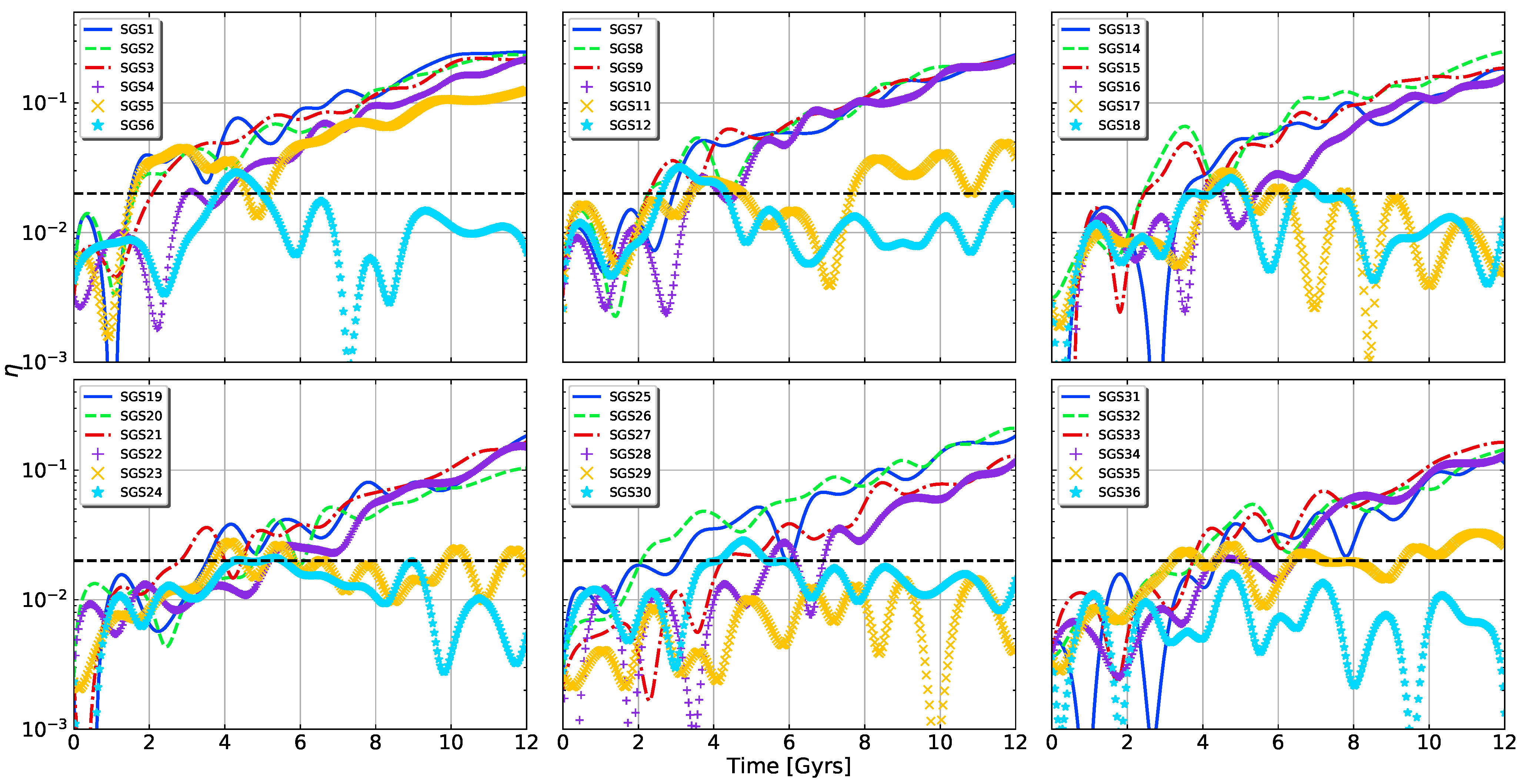
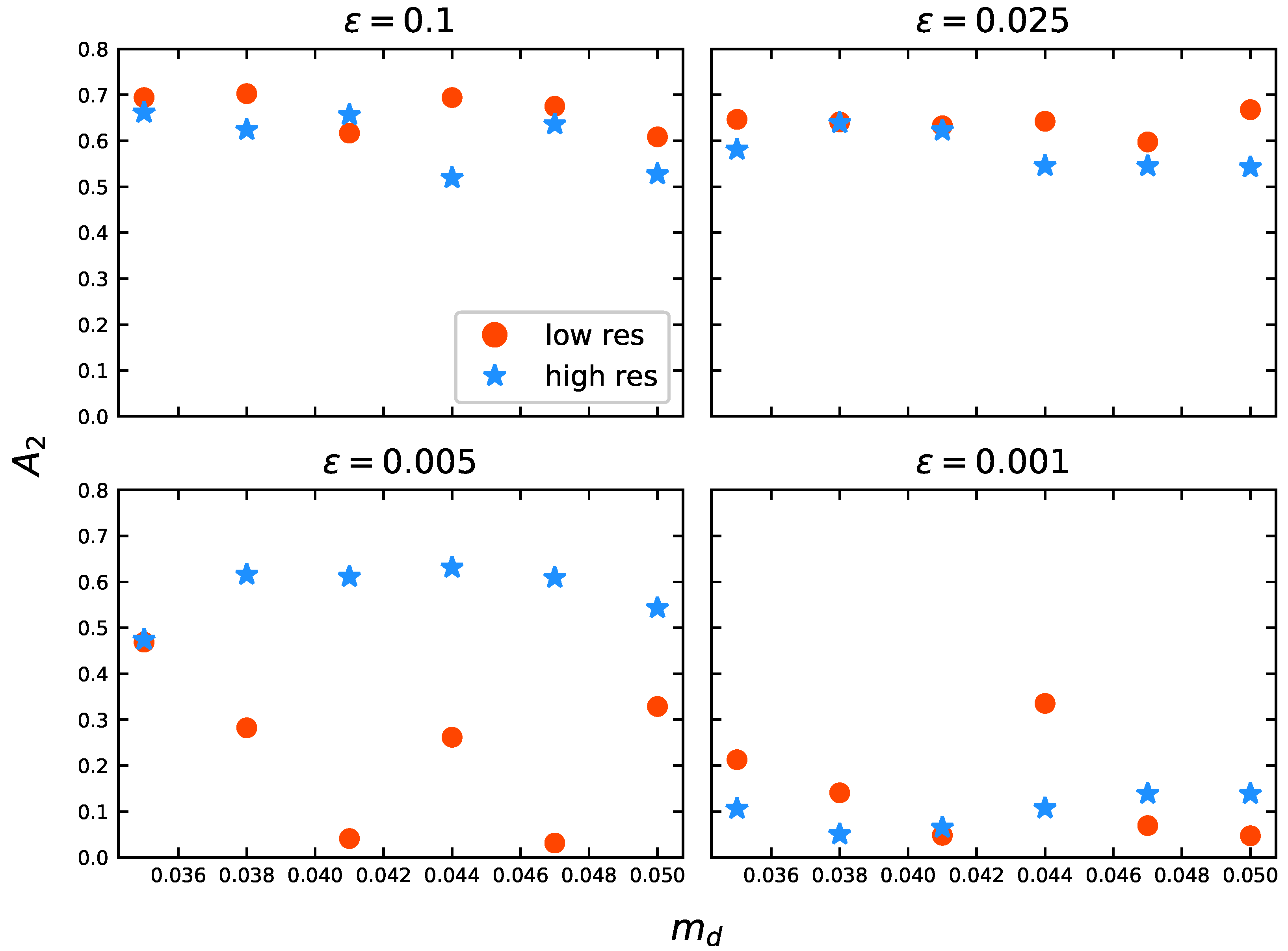
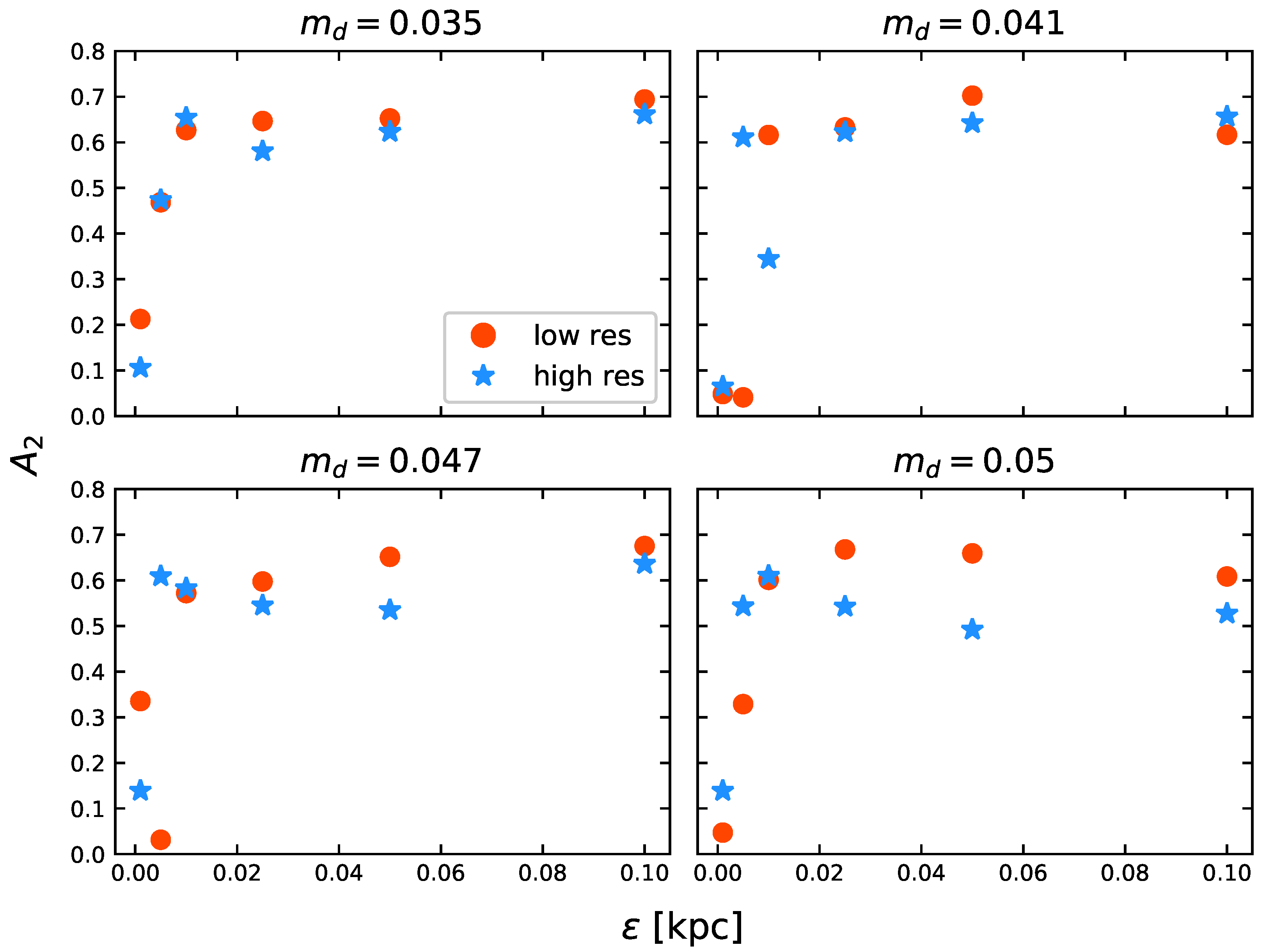
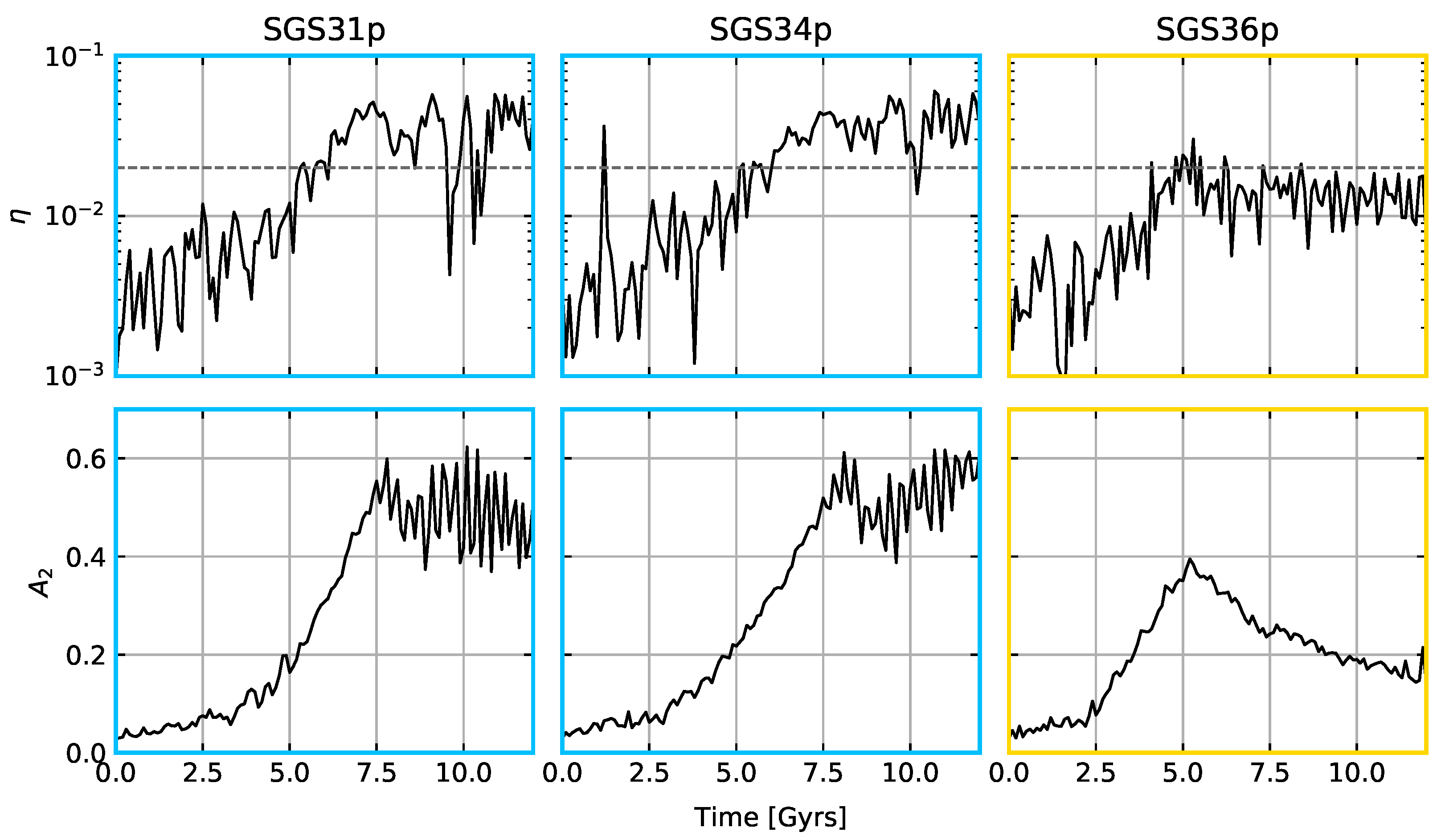
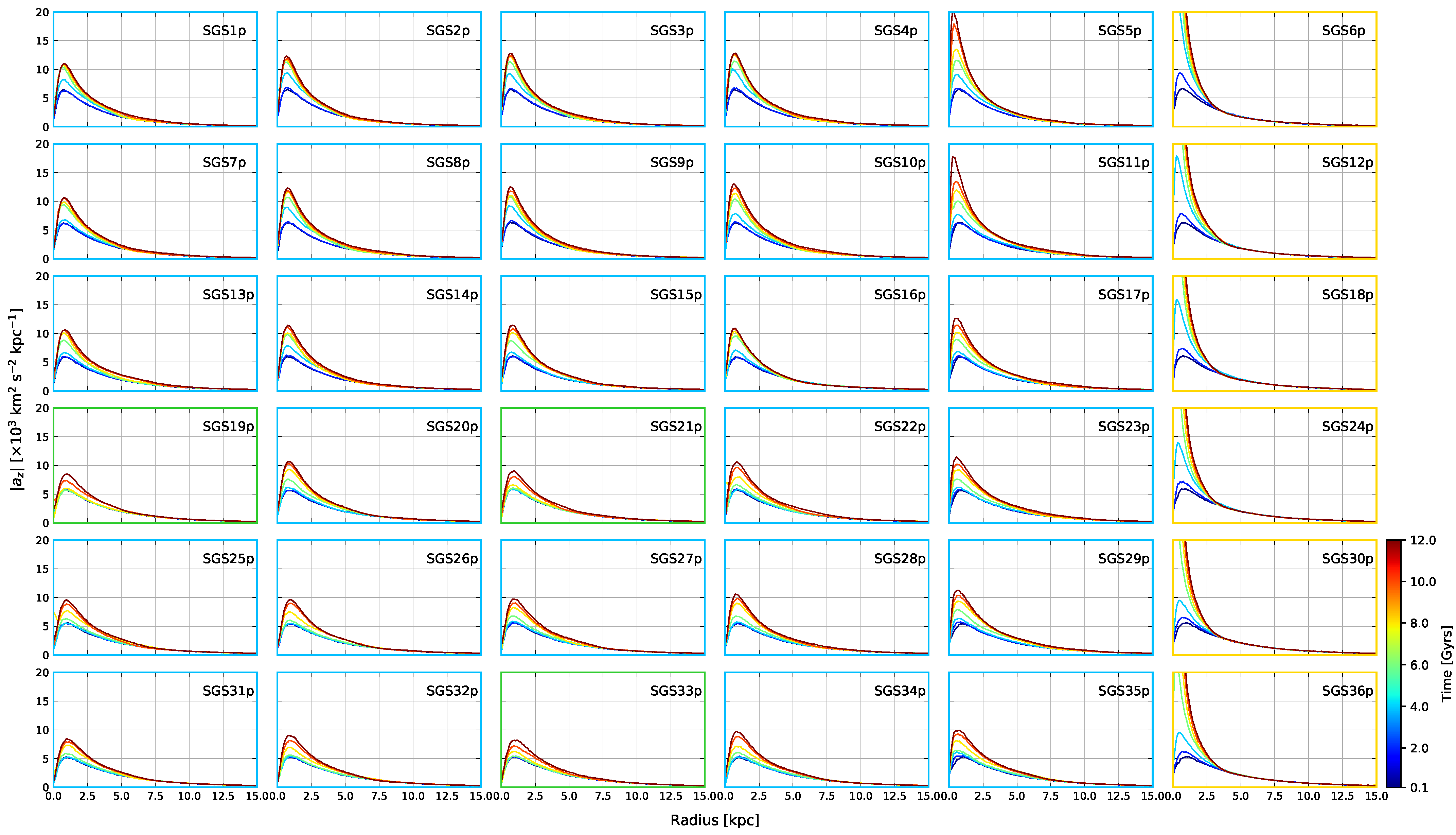
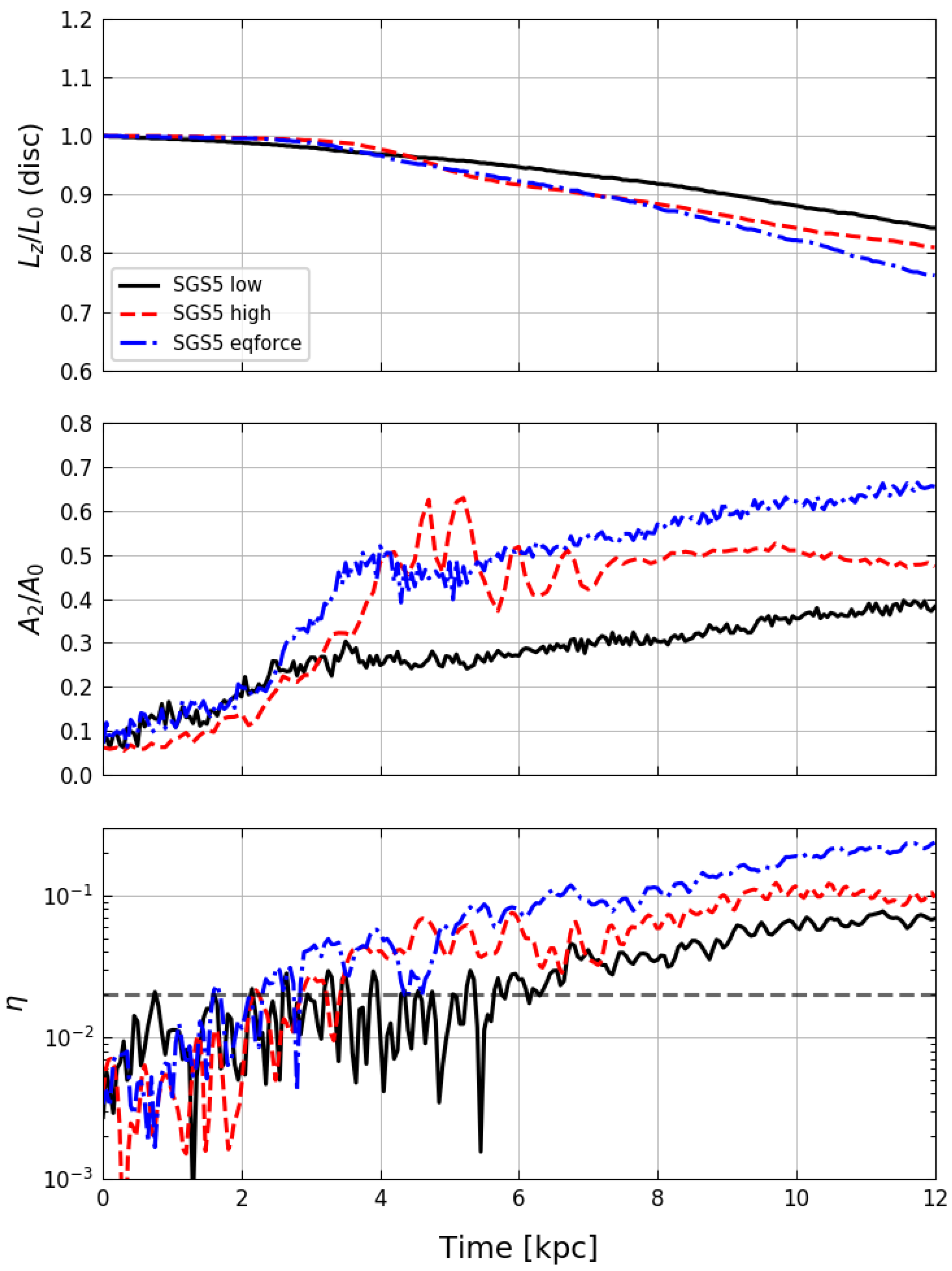
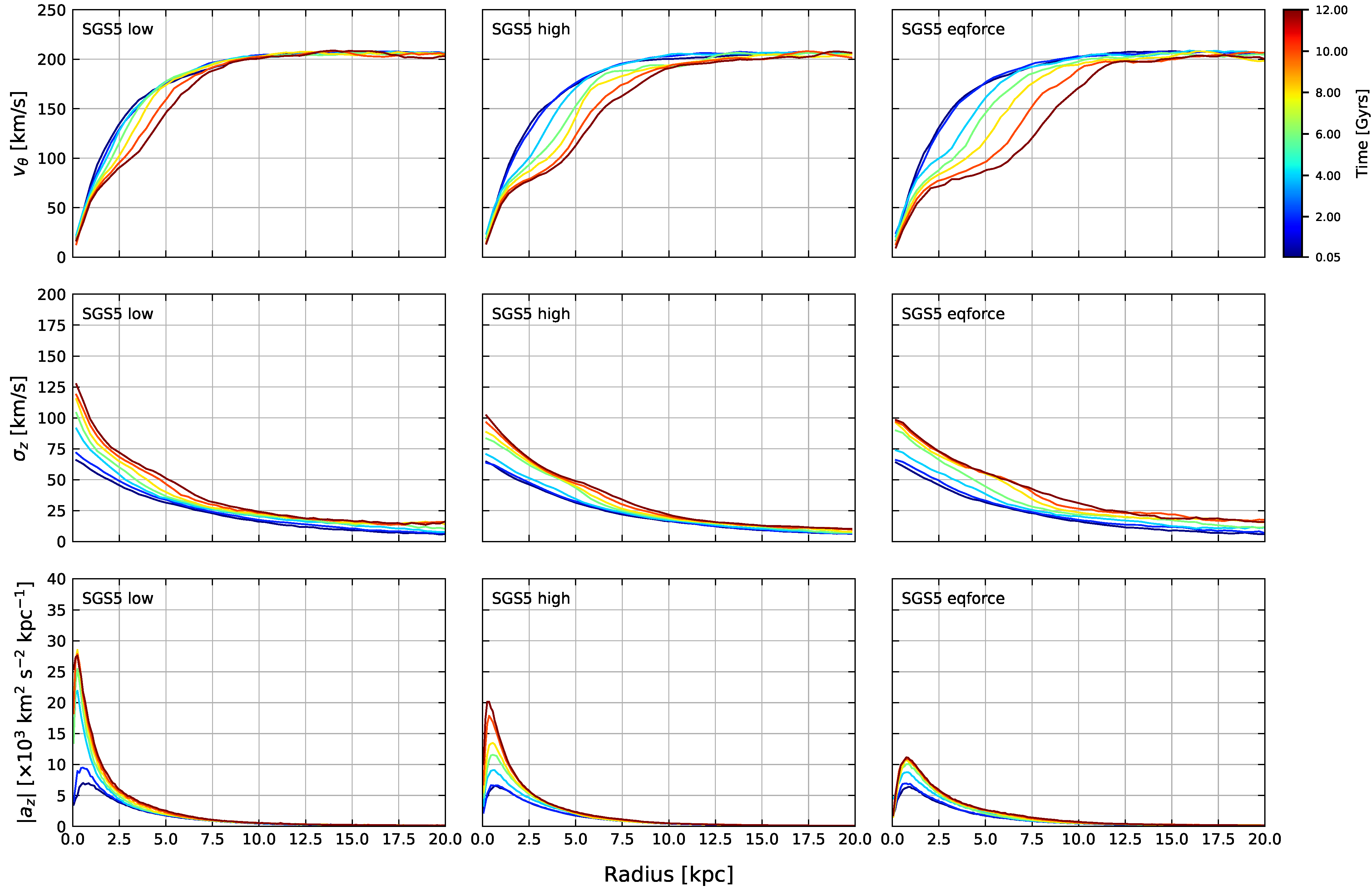
The process of bar formation, evolution and destruction is still a controversial topic regarding galaxy dynamics. Numerical simulations show that these phenomena strongly depend on physical and numerical parameters. In this work, we study the combined influence of the softening parameter, ϵ and disc mass fraction, md, on the formation and evolution of bars in isolated disc-halo models via N-body simulations with different particle resolutions. Previous studies indicate that the bar strength depends on md as md1, which is seen as a delay in bar formation. However, the distorsion parameter, η, which measures the bar’s momentum through time, shows that an increase in md does not always induce a delay in bar formation. This suggests that ϵ interact to either enhance or weaken the bar. Moreover, numerical heating dominates in models with small softening values, creating highly accelerated particles at the centre of discs, regardless of md or resolution. These enhanced particle accelerations produce chaotic orbits for ϵ5 pc, resulting in bar suppression due to collisional dynamics in the centre. In our high-resolution models (N107), small softening values are incapable of reproducing the bar instability. The role of disc mass is as follows: increasing md for moderate ϵ (≥10 pc) reduces the amount of drift in the acceleration profile, without affecting the bar’s behaviour. Models with lower md values, coupled with small softening values, have an excess of highly accelerated particles, introducing unwanted effects into otherwise reliable simulations. Finally, we show that the evolution of the disc’s vertical acceleration profile is a reliable indicator of numerical heating introduced by ϵ and the bar.
Keywords: galactic dynamics; barred galaxies; numerical simulations galactic dynamics; barred galaxies; numerical simulations