
Risk-Guided Personalized Care to Prevent Bronchopulmonary Dysplasia: A Real-World Implementation Study
 , , , , , , ,
Abstract
1. Introduction
1.1. The Burden of BPD—A Major Morbidity and Public Health Concern
1.2. Local Problem, Magnitude, and Context
1.3. Limitations of Prior BPD Prevention Interventions
1.4. Study Objectives
Hypothesis
2. Materials and Methods
2.1. Study Setting
2.1.1. Baseline Team Structure and Continuity of Care
2.1.2. Baseline Process for Implementing Clinical Interventions
2.2. Intervention: A Quality Improvement Initiative to Reduce BPD
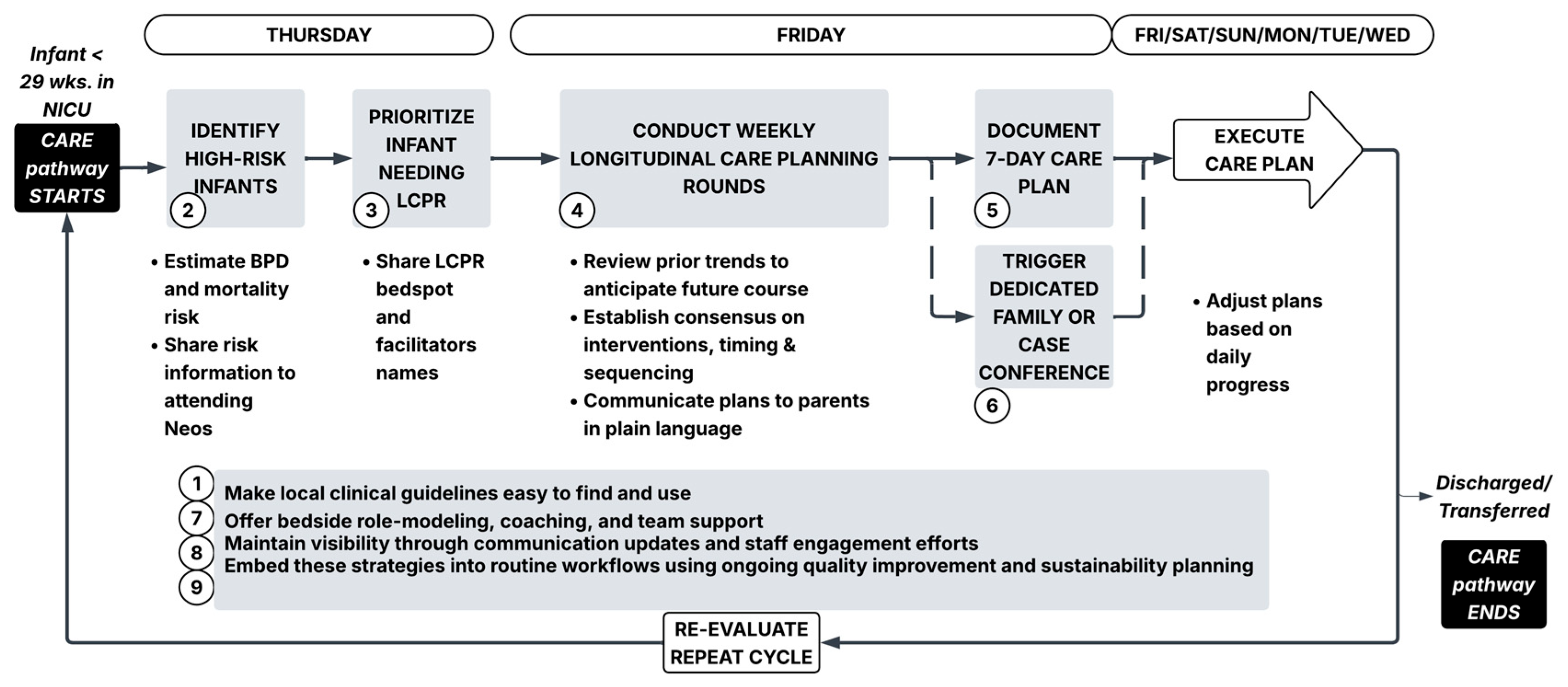
2.2.1. Clinical Interventions and Design of Implementation Strategies
2.2.2. Multi-Component Implementation Strategy
2.3. Study Design and Eligibility
2.4. Rollout/Implementation
2.5. Measures and Outcomes
2.6. Consent, Ethics and Approval
2.7. Data Collection
2.8. Sample Size
2.9. Statistical Analysis
2.10. Safety Considerations
3. Results
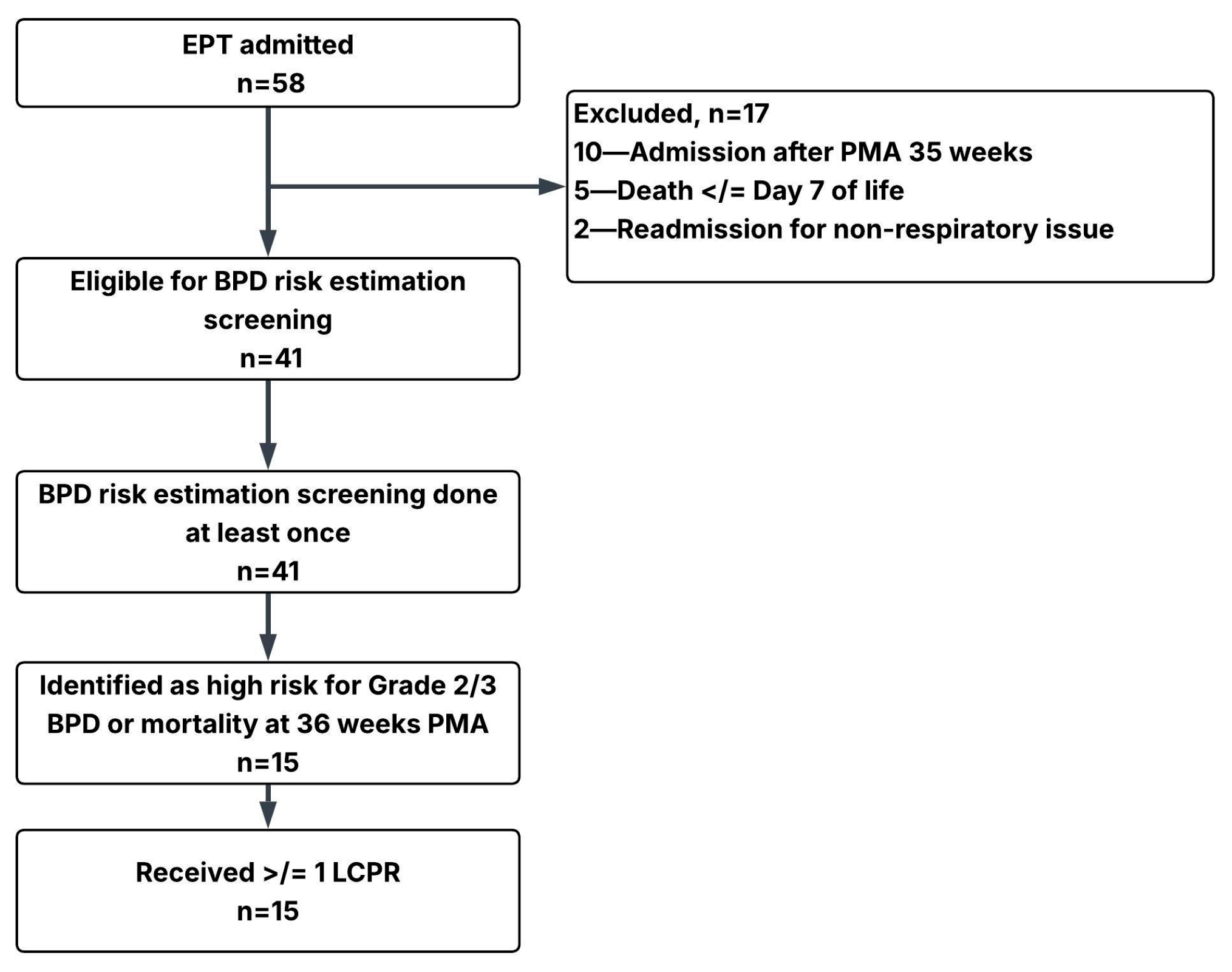
3.1. Study Demographics and Interventions Received
3.2. Infant Characteristics and Interventions by LCPR Status
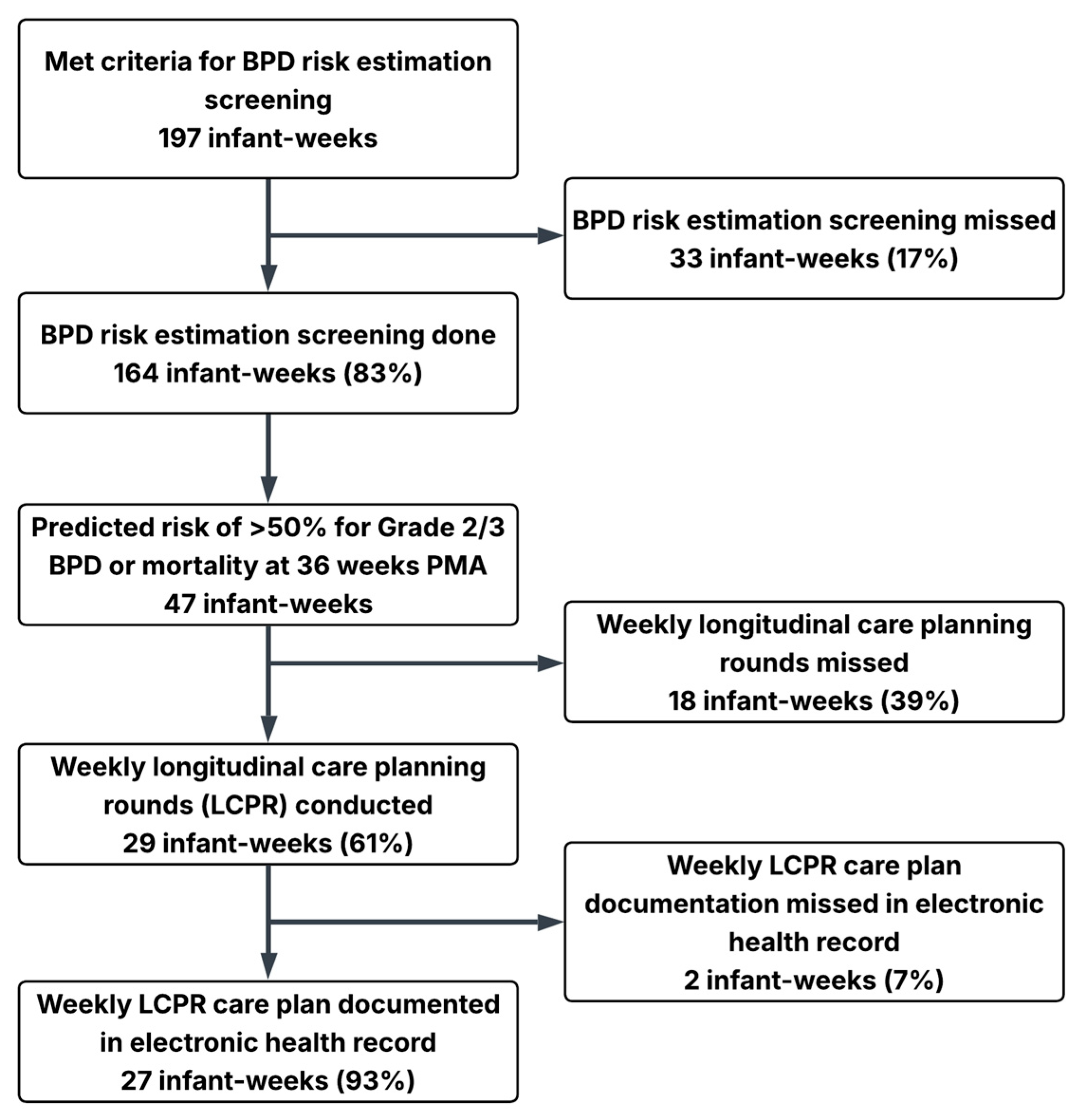
3.3. Implementation Exposure and Fidelity
3.4. RE-AIM Evaluation of Implementation
3.5. Exploratory Clinical Outcomes by LCPR Status
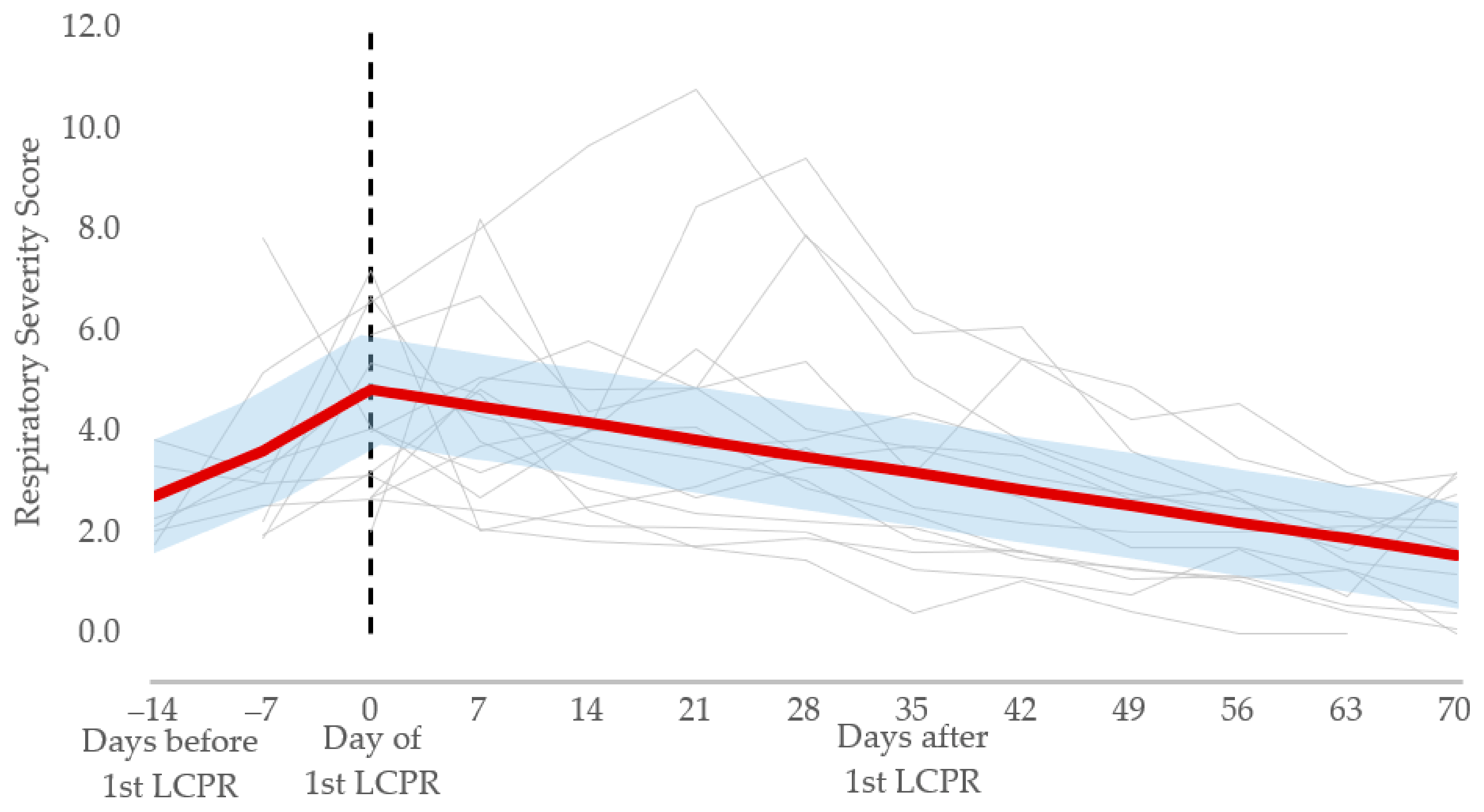
Respiratory Severity Score Trajectory
4. Discussion
4.1. Implementation Outcomes and Practice Standardization
4.2. Implementation Challenges and Adaptations
4.3. Comparison with the Prior Literature
4.4. Strengths and Limitations
5. Conclusions
Supplementary Materials
Author Contributions
Funding
Institutional Review Board Statement
Informed Consent Statement
Data Availability Statement
Acknowledgments
Conflicts of Interest
Abbreviations
| EPT | Extreme preterm |
| BPD | Bronchopulmonary dysplasia |
| PMA | Postmenstrual age |
| BCWH | BC Women’s Hospital + Health Centre |
| NICHD | National Institute of Child Health and Human Disease |
| AIMDs | Aim, ingredients, mechanism, and delivery |
| RE-AIM | Reach, effectiveness, adoption, implementation, and maintenance |
| LCPRs | Longitudinal care planning rounds |
| EHR | Electronic health record |
| NIV-NAVA | Non-invasive ventilation with neurally adjusted ventilatory assist |
| CAT | Critically appraised topic |
| RSS | Respiratory severity score |
| DOL | Day of life |
| sPNSs | Systemic postnatal steroids |
| MRP | Most responsible provider |
References
- Lee, S.K.; Shah, P.S.; Singhal, N.; Aziz, K.; Synnes, A.; McMillan, D.; Seshia, M.M. Association of a Quality Improvement Program with Neonatal Outcomes in Extremely Preterm Infants: A Prospective Cohort Study. CMAJ Can. Med. Assoc. J. 2014, 186, E485–E494. [Google Scholar] [CrossRef]
- Walsh, M.C.; Bell, E.F.; Kandefer, S.; Saha, S.; Carlo, W.A.; D’angio, C.T.; Laptook, A.R.; Sanchez, P.J.; Stoll, B.J.; Shankaran, S.; et al. Neonatal Outcomes of Moderately Preterm Infants Compared to Extremely Preterm Infants. Pediatr. Res. 2017, 82, 297–304. [Google Scholar] [CrossRef] [PubMed]
- Shah, P.S.; Dunn, M.; Aziz, K.; Shah, V.; Deshpandey, A.; Mukerji, A.; Ng, E.; Mohammad, K.; Ulrich, C.; Amaral, N.; et al. Sustained Quality Improvement in Outcomes of Preterm Neonates with Gestational Age Less than 29 Weeks: Results from the EPIQ Phase 3. Can. J. Physiol. Pharmacol. 2019, 97, 213–221. [Google Scholar] [CrossRef]
- Public Health Agency of Canada. Perinatal Health Indicators for Canada. 2013. Available online: https://www.canada.ca/en/public-health/services/injury-prevention/health-surveillance-epidemiology-division/maternal-infant-health/perinatal-health-indicators-2013.html (accessed on 30 September 2025).
- Jensen, E.A.; Zhang, H.; Feng, R.; Dysart, K.; Nilan, K.; Munson, D.A.; Kirpalani, H.; Laughon, M.M.; Poindexter, B.B.; Duncan, A.F.; et al. The Diagnosis of Bronchopulmonary Dysplasia in Very Preterm Infants: An Evidence-Based Approach. Am. J. Respir. Crit. Care Med. 2019, 200, 751–759. [Google Scholar] [CrossRef]
- Mukerji, A.; Read, B.; Su, Y.-C.; Barbosa de Oliveira, C.; Louis, D.; Makary, H.; Zwicker, J.; Thomas, K.; Dunn, M.; Shah, P.S.; et al. Severity of Bronchopulmonary Dysplasia Using a Contemporary Canadian Definition and Early Childhood Outcomes: A Population-Based Cohort Study. J. Pediatr. 2025, 287, 114763. [Google Scholar] [CrossRef]
- Lim, G.; Tracey, J.; Boom, N.; Karmakar, S.; Wang, J.; Berthelot, J.M.; Heick, C. Hospital Costs for Preterm and Small-for-Gestational-Age Babies in Canada. Healthc. Q. 2009, 12, 20–24. [Google Scholar] [CrossRef] [PubMed]
- Kusters, C.D.; Pal, S.M.; Steenbrugge, G.J.; Ouden, L.S.; Kollée, L.A. The Impact of a Premature Birth on the Family; Consequences Are Experienced Even after 19 Years. Ned. Tijdschr. Geneeskd. 2013, 157, A5449. [Google Scholar]
- Rolnitsky, A.; Urbach, D.; Unger, S. Regional Variation in Cost of Neonatal Intensive Care for Extremely Preterm Infants. BMC Pediatr. 2021, 21, 134. [Google Scholar] [CrossRef] [PubMed]
- Rolnitsky, A.; Unger, S.; Urbach, D.; Bell, C.M. The Price of Neonatal Intensive Care Outcomes: In-Hospital Costs of Morbidities Related to Preterm Birth. Front. Pediatr. 2023, 11, 1068367. [Google Scholar] [CrossRef]
- Lapcharoensap, W.; Lee, H.C.; Nyberg, A.; Dukhovny, D. Health Care and Societal Costs of Bronchopulmonary Dysplasia. Neoreviews 2018, 19, 211–223. [Google Scholar] [CrossRef]
- Lapcharoensap, W.; Bennett, M.V.; Xu, X. Hospitalization Costs Associated with Bronchopulmonary Dysplasia in the First Year of Life. J. Perinatol. 2020, 40, 130–137. [Google Scholar] [CrossRef]
- Cummings, D. Canadian Hospital Rates. 2019. Available online: https://www.david-cummings.com/documents/canadian_hospital_rates.htm (accessed on 30 September 2025).
- Children’s and Women’s Hospital of British Columbia. Patient Rate List: Effective April 1 2024. Available online: https://pod.phsa.ca/workplace-resources/fiance/accounts-receivable/patient-accounts/Documents/Rates/CW%20Internal%20Fee%20Schedule.pdf (accessed on 30 September 2025).
- Kieran, E.; Sara, R.; Claydon, J.; Hait, V.; Salaberry, J.; Osiovich, H.; Shivananda, S. Outcomes of Neonates with Complex Medical Needs. Adv. Neonatal Care 2019, 19, 275–284. [Google Scholar] [CrossRef]
- Mukerji, A.; Read, B. Lung Health Working Group: BPD Bundle Revision. In Proceedings of the EPIQ IV, Toronto, ON, Canada, 11 February 2019. [Google Scholar]
- Poets, C.; Zimmermann, L.; Hellstrom-Westas, L.; Buonocore, G.; Hallman, M.; Lista, G.; van Kaam, A.; Kramer, B. Prevention of bronchopulmonary dysplasia (BPD). In European Standards of Care for Newborn Health, 2nd ed.; Global Foundation for the Care of Newborn Infants: Munich, Germany, 2022; Available online: https://newborn-health-standards.org/wp-content/uploads/2022/08/2022_09_01_Prevention_of_BPD_second-edition.pdf (accessed on 30 September 2025).
- Bauer, M.S.; Damschroder, L.; Hagedorn, H.; Smith, J.; Kilbourne, A.M. An Introduction to Implementation Science for the Non-Specialist. BMC Psychol. 2015, 3, 32. [Google Scholar] [CrossRef] [PubMed]
- University of Washington. Implementation Strategies: The “How” of Implementation. The Implementation Science Resource Hub. Available online: https://impsciuw.org/implementation-science/research/implementation-strategies/ (accessed on 30 September 2025).
- Proctor, E.; Silmere, H.; Raghavan, R.; Hovmand, P.; Aarons, G.; Bunger, A.; Griffey, R.; Hensley, M. Outcomes for Implementation Research: Conceptual Distinctions, Measurement Challenges, and Research Agenda. Adm. Policy Ment. Health Ment. Health Serv. Res. 2011, 38, 65–76. [Google Scholar] [CrossRef] [PubMed]
- Fixsen, D.; Blase, K.; Metz, A.; Van Dyke, M. Implementation Science. In International Encyclopedia of the Social and Behavioral Sciences, 2nd ed.; Wright, J.D., Ed.; Elsevier: Oxford, UK, 2015; Volume 11, pp. 695–702. [Google Scholar]
- National Implementation Research Network (NIRN). Active Implementation Hub: Five Overarching Frameworks (Active Implementation Frameworks)—Modules, Lessons, and Resources. Available online: https://implementation.fpg.unc.edu/ (accessed on 30 September 2025).
- Shivananda, S.; Osiovich, H.; Salaberry, J.; Hait, V.; Gautham, K.S. Improving Efficiency of Multidisciplinary Bedside Rounds in the NICU: A Single Centre QI Project. Pediatr. Qual. Saf. 2022, 7, e511. [Google Scholar] [CrossRef]
- D’Agata, A.L.; McGrath, J.M. A Framework of Complex Adaptive Systems: Parents as Partners in the Neonatal Intensive Care Unit. Adv. Nurs. Sci. 2016, 39, 244–256. [Google Scholar] [CrossRef]
- Powell, B.J.; Fernandez, M.E.; Williams, N.J.; Aarons, G.A.; Beidas, R.S.; Lewis, C.C.; McHugh, S.M.; Weiner, B.J. Enhancing the Impact of Implementation Strategies in Healthcare: A Research Agenda. Front. Public Health 2019, 7, 3. [Google Scholar] [CrossRef] [PubMed]
- Kaplan, H.C.; Walsh, K.E. Context in Implementation Science. Pediatrics 2022, 149, e2020045948C. [Google Scholar] [CrossRef]
- EPIQ Lung Health Group. Evidence-Based Practices for Improving Quality. 2025. Available online: https://www.epiq.ca/lhg (accessed on 30 September 2025).
- Kanagaraj, U.; Tan, J.; Soraisham, A.; Lodha, A.; Shah, P.; Kulkarni, T.; Shivananda, S. Postnatal Steroids Use for Bronchopulmonary Dysplasia in a Quaternary Care NICU. Am. J. Perinatol. 2024, 41, 1858–1866. [Google Scholar] [CrossRef]
- Kanagaraj, U.K.; Kulkarni, T.; Kwan, E.; Zhang, Q.; Bone, J.; Shivananda, S. Validation of the NICHD Bronchopulmonary Dysplasia Outcome Estimator 2022 in a Quaternary Canadian NICU-A Single-Center Observational Study. J. Clin. Med. 2025, 14, 696. [Google Scholar] [CrossRef]
- Cane, J.; O’Connor, D.; Michie, S. Validation of the Theoretical Domains Framework for Use in Behaviour Change and Implementation Research. Implement Sci. 2012, 7, 37. [Google Scholar] [CrossRef] [PubMed]
- Michie, S.; Stralen, M.M.; West, R. The Behaviour Change Wheel: A New Method for Characterising and Designing Behaviour Change Interventions. Implement. Sci. 2011, 6, 42. [Google Scholar] [CrossRef]
- Bragge, P.; Grimshaw, J.M.; Lokker, C.; Colquhoun, H. AIMD—A Validated, Simplified Framework of Interventions to Promote and Integrate Evidence into Health Practices, Systems, and Policies. BMC Med. Res. Methodol. 2017, 17, 38. [Google Scholar] [CrossRef]
- Gaglio, B.; Shoup, J.A.; Glasgow, R.E. The RE-AIM Framework: A Systematic Review of Use over Time. Am. J. Public Health 2013, 103, 38–46. [Google Scholar] [CrossRef]
- Doyle, L.W.; Davis, P.G.; Morley, C.J.; McPhee, A.; Carlin, J.B. DART Study Investigators. Low-Dose Dexamethasone Facilitates Extubation among Chronically Ventilator-Dependent Infants: A Multicenter, International, Randomized, Controlled Trial. Pediatrics 2006, 117, 75–83. [Google Scholar] [CrossRef]
- Onland, W.; Offringa, M.; Cools, F.; De Jaegere, A.P.; Rademaker, K.; Blom, H.; Cavatorta, E.; Debeer, A.; Dijk, P.H.; van Heijst, A.F.; et al. Systemic Hydrocortisone to Prevent Bronchopulmonary Dysplasia in Preterm Infants (the SToP-BPD Study); a Multicenter Randomized Placebo Controlled Trial. BMC Pediatr. 2011, 11, 102. [Google Scholar] [CrossRef]
- Mitra, S.; Hébert, A.; Castaldo, M.; Disher, T.; El-Naggar, W.; Dhillon, S.; Alhassen, Z.; Koo, J.; Katheria, A.C.; Hyderi, A.; et al. Selective Early Medical Treatment of the Patent Ductus Arteriosus in Extremely Low Gestational Age Infants: A Pilot Randomised Controlled Trial Protocol (SMART-PDA). BMJ Open 2024, 14, e087998. [Google Scholar] [CrossRef]
- Scandiffio, J.; Zhang, M.; Karsan, I.; Charow, R.; Anderson, M.; Salhia, M.; Wiljer, D. The Role of Mentoring and Coaching of Healthcare Professionals for Digital Technology Adoption and Implementation: A Scoping Review. Digit. Health 2024, 10, 20552076241238075. [Google Scholar] [CrossRef]
- Jansen, E.J.; Czabanowska, K.; de Pagter, A.P.J.; de Koeijer, R.J. Implementing Coaching Programmes for Healthcare Professionals-A Review of the Barriers and Facilitators. Int. J. Health Plan. Manag. 2024, 39, 860–878. [Google Scholar] [CrossRef] [PubMed]
- Schrijvers, G.; Hoorn, A.; Huiskes, N. The Care Pathway: Concepts and Theories—An Introduction. Int. J. Integr. Care 2012, 12, 192. [Google Scholar] [CrossRef] [PubMed]
- Rotter, T.; Jong, R.B.J.; Kinsman, L.; James, E.L.; Machotta, A. Clinical Pathways as a Quality Strategy. In Improving Healthcare Quality in Europe: Characteristics, Effectiveness and Implementation of Different Strategies; Palm, P., Busse, R., McKee, D., Eds.; European Observatory on Health Systems and Policies: Brussels, Belgium, 2019; pp. 35–55. [Google Scholar]
- Callander, J.; Anstey, A.V.; Ingram, J.R.; Limpens, J.; Flohr, C.; Spuls, P.I. How to Write a Critically Appraised Topic: Evidence to Underpin Routine Clinical Practice. Br. J. Dermatol. 2017, 177, 1007–1013. [Google Scholar] [CrossRef] [PubMed]
- Moberg, J.; Oxman, A.D.; Rosenbaum, S. The GRADE Evidence to Decision (EtD) Framework for Health System and Public Health Decisions. Health Res. Policy Syst. 2018, 16, 45. [Google Scholar] [CrossRef] [PubMed]
- Canadian Institutes of Health Research; Natural Sciences and Engineering Research Council of Canada; Social Sciences and Humanities Research Council of Canada. Tri-Council Policy Statement: Ethical Conduct for Research Involving Humans—TCPS 2; 2022; Available online: https://ethics.gc.ca/eng/policy-politique_tcps2-eptc2_2022.html (accessed on 30 September 2025).
- Qualtrics. Qualtrics XM Platform; Qualtrics: Provo, UT, USA, 2025; Available online: https://www.qualtrics.com (accessed on 30 January 2026).
- Hsieh, H.F.; Shannon, S.E. Three Approaches to Qualitative Content Analysis. Qual. Health Res. 2005, 15, 1277–1288. [Google Scholar] [CrossRef]
- R Core Team. R: A Language and Environment for Statistical Computing; R Core Team: Vienna, Austria, 2024. [Google Scholar]
- R Core Team. Posit Team RStudio: Integrated Development Environment for R 2024. R Core Team: Vienna, Austria, 2024.
- Leotsakos, A.; Zheng, H.; Croteau, R. Standardization in Patient Safety: The WHO High 5s Project. Int. J. Qual. Health Care 2014, 26, 109–116. [Google Scholar] [CrossRef]
- Lavelle, J.; Schast, A.; Keren, R. Standardizing Care Processes and Improving Quality Using Pathways Andcontinuous Quality Improvement. Curr. Treat. Options Pediatr. 2015, 1, 347–358. [Google Scholar] [CrossRef]
- Sant’Anna, G.M.; Keszler, M. Developing a Neonatal Unit Ventilation Protocol for the Preterm Baby. Early Hum. Dev. 2012, 88, 925–929. [Google Scholar] [CrossRef]
- Greenberg, R.G.; McDonald, S.A.; Laughon, M.M.; Tanaka, D.; Jensen, E.; Meurs, K.; Eichenwald, E.; Brumbaugh, J.E.; Duncan, A.F.; Walsh, M.; et al. National Institute of Child Health and Human Development Neonatal Research Network. Online Clinical Tool to Estimate Risk of Bronchopulmonary Dysplasia in Extremely Preterm Infants. Arch. Child. Fetal Neonatal Ed. 2022, 107, 638–643. [Google Scholar] [CrossRef] [PubMed]
- O’Brien, K.; Bracht, M.; Macdonell, K.; McBride, T.; Robson, K.; O’Leary, L. A Pilot Cohort Analytic Study of Family Integrated Care in a Canadian Neonatal Intensive Care Unit. BMC Pregnancy Childbirth 2013, 13, S12. [Google Scholar] [CrossRef]
- Latour, J.M.; Hazelzet, J.A.; Duivenvoorden, H.J.; Goudoever, J.B. Perceptions of Parents, Nurses, and Physicians on Neonatal Intensive Care Practices. J. Pediatr. 2010, 157, 215–220. [Google Scholar] [CrossRef]
- Gooding, J.S.; Cooper, L.G.; Blaine, A.I.; Franck, L.S.; Howse, J.L.; Berns, S.D. Family support and family-centered care in the neonatal intensive care unit: Origins, advances, impact. Semin. Perinatol. 2011, 35, 20–28. [Google Scholar] [CrossRef]
- Abiramalatha, T.; Ramaswamy, B.; Bandyopadhyay, T.; Somanath, S.H.; Shaik, N.B.; Pullattayil, A.K.; Weiner, G.M. Interventions to Prevent Bronchopulmonary Dysplasia in Preterm Neonates. JAMA Pediatr. 2022, 176, 502–516. [Google Scholar] [CrossRef] [PubMed]
- Poets, C.F.; Lorenz, L. Prevention of Bronchopulmonary Dysplasia in Extremely Low Gestational Age Neonates: Current Evidence. Arch. Dis. Child.-Fetal Neonatal Ed. 2018, 103, F285–F291. [Google Scholar] [CrossRef] [PubMed]
- Ramaswamy, V.V.; Bandyopadhyay, T.; Nanda, D.T.; Bandiya, P.; Ahmed, J.; Garg, A.; Roehr, C.C.; Nangia, S. Assessment of Postnatal Corticosteroids for the Prevention of Bronchopulmonary Dysplasia in Preterm Neonates: A Systematic Review and Network Meta-Analysis. JAMA Pediatr. 2021, 175, e206826. [Google Scholar] [CrossRef]
- Chen, X.; Yuan, L.; Jiang, S.; Gu, X.; Lei, X.; Hu, L.; Xiao, T.; Zhu, Y.; Dang, D.; Li, W.; et al. Chinese Neonatal Network. Synergistic Effects of Achieving Perinatal Interventions on Bronchopulmonary Dysplasia in Preterm Infants. Eur. J. Pediatr. 2024, 183, 1711–1721. [Google Scholar] [CrossRef]
- Villosis, M.F.B.; Barseghyan, K.; Ambat, M.T.; Rezaie, K.K.; Braun, D. Rates of Bronchopulmonary Dysplasia Following Implementation of a Novel Prevention Bundle. JAMA Netw. Open 2021, 4, e2114140. [Google Scholar] [CrossRef] [PubMed]



| Characteristics | LCPR (n = 15) | No LCPR (n = 26) | p-Value |
|---|---|---|---|
| Gestational age, weeks, median (IQR) | 24 (23–25) | 27 (24–28) | 0.002 |
| Birth weight, g, median (IQR) | 690 (562–736) | 938 (706–1106) | 0.003 |
| Female | 6 (40.0) | 15 (57.7) | 0.340 |
| Outborn | 4 (26.7) | 10 (38.5) | 0.510 |
| Antenatal steroids (partial or complete) | 14 (93.3) | 21 (80.8) | 0.380 |
| Suspected chorioamnionitis | 3 (20.0) | 3 (11.5) | 0.650 |
| Cesarean delivery | 9 (60.0) | 19 (73.1) | 0.490 |
| Intubation at resuscitation | 12 (80.0) | 10 (38.5) | 0.020 |
| SNAPPE-II, median (IQR) | 53 (45.5–56.5) | 42.5 (22–50.5) | 0.050 |
| Apgar 5 min, median (IQR) | 6 (5–7) | 7 (6–9) | 0.020 |
| Estimated risk of Grade 2/3 BPD or mortality (%) | |||
| Timepoint | LCPR | No LCPR | p-value |
| Day 1, median (IQR) | 53.8 (42.8–65.7) | 14.9 (9.9–32.7) | <0.001 |
| Day 3, median (IQR) | 49.7 (34.3–63.3) | 12.6 (7.6–21.0) | <0.001 |
| Day 7, median (IQR) | 54.2 (37.7–63.8) | 11.3 (9.2–31.5) | <0.001 |
| Day 14, median (IQR) | 48.7 (29.6–63.4) | 12.2 (8.7–19.2) | <0.001 |
| Day 28, median (IQR) | 22.2 (16.2–34.8) | 13.5 (9.7–16.4) | 0.001 |
| Highest risk in first 28 days, median (IQR) | 65.9 (49.6–73.5) | 15.5 (12.4–33.8) | <0.001 |
| Risk > 50% at any time point | 11 (73.3) | 4 (15.4) | <0.001 |
| Interventions Received | LCPR | No LCPR | p-value |
| Peripheral arterial line | 0 (0) | 3 (11.5) | — |
| Parenteral nutrition days, median (IQR) | 40 (29.5–66.5) | 10.5 (8–24.2) | <0.001 |
| High-frequency ventilation | 15 (100.0) | 10 (38.5) | <0.001 |
| Surfactant (any) | 15 (100.0) | 17 (65.4) | 0.010 |
| Surfactant >1 dose | 3 (20.0) | 5 (19.2) | 1.000 |
| Narcotic infusion | 11 (73.3) | 4 (15.4) | <0.001 |
| Sedatives | 8 (53.3) | 1 (3.8) | <0.001 |
| Muscle relaxants | 3 (20.0) | 1 (3.8) | 0.130 |
| Inhaled nitric oxide | 3 (20.0) | 1 (3.8) | 0.130 |
| Inotropes | 9 (60.0) | 6 (23.1) | 0.040 |
| Any sPNS | 10 (66.6) | 4 (15.4) | 0.001 |
| Dexamethasone as first course of sPNS | 10 (66.6) | 4 (15.4) | 0.001 |
| >1 sPNS course | 3 (20.0) | 0 (0.0) | 0.040 |
| Total sPNS days, median (IQR) | 10 (10–21) | 10 (9–11) | 0.360 |
| Day of first sPNS course, median (IQR) | 15 (11–20) | 21 (19–25) | 0.150 |
| Dexamethasone course followed by immediate hydrocortisone course to prevent reintubation | 2 (13.3) | 0 (0.0) | |
| Inhaled steroids | 5 (33.3) | 2 (7.7) | 0.070 |
| Transpyloric feeds | 6 (40.0) | 3 (11.5) | 0.050 |
| NIV-NAVA | 7 (46.7) | 4 (15.4) | 0.060 |
| Reach | |
| Proportion of providers exposed to guidelines and LCPR in education days | 179/200 (90%) |
| Proportion of providers exposed to LCPR during the study period | All respiratory therapists (n = 35), physicians (n = 32), dieticians (n = 4), pharmacists (n = 4), charge nurses (n = 16), managers (n = 2); 22/218 (10%) nurses |
| Proportion of neonatologists exposed to risk estimate weekly screening report, during the study period | 14/14 (100%) |
| Proportion of parents joining LCPR at least once during the study period | 3/15 (20%) |
| Effectiveness | |
| Trend of weekly median (95% CI) respiratory scores over time for infants who received weekly care planning rounds. | See Figure 4 |
| Perceived teamwork, care coordination, self-efficacy/confidence | See Table 3 |
| Variation in practice: practices during the study period | |
| 14/14 (100%); |
| 10 (10–15); |
| 3/14 (21%). |
| Timing of initiation of interventions—time to initiation of first course of sPNS, median (IQR) days of life | 16 (12–21) |
| Proportion of infants who received interventions with low or moderate certainty of evidence: | |
| 9/41 (22%); |
| 7/41 (17%); |
| 11/41 (27%). |
| Recognize situations where ethical/moral/social issues need structured team and/or family conversations among infants who received LCPR | 3/15 (20%) |
| Adoption | |
| Participation rate/LCPR- Med(IQR) | |
| 16 (14–18); |
| 5 (3–6). |
| Proportion of LCPR where parents were present | 9/29 (31%) |
| Proportion of RT educators/instructors who co-facilitated LCPR at least once | 4/4 (100%) |
| Proportion of neonatologists who co-facilitated LCPR at least once | 8/14 (57%) |
| Implementation | |
| Proportion of LCPR where sPNS use according to unit guidelines were discussed | 10/29 (34%) |
| Proportion of weeks when neonatologists or their delegates received the risk-estimation screening report. | 24/26 (88%) |
| Proportion of weeks where LCPR was followed by a documented weekly care plan in the electronic health record | 27/29 (93%) |
| Quality of documented LCPR care plan—proportion of documented care plans in EHR that had essential elements. | 26/27 (96%) |
| Proportion of planned items in LCPR care plan, completed by the care team within a specified time window across all LCPR occasions, Med (IQR) | |
| 100% (50–100); |
| 75% (50–100). |
| Proportion of suggested contingency actions executed per LCPR applicable occasion within 7 days by the care team across all LCPR occasions, Med (IQR) | 38% (31–50) |
| Barriers: time burden, poor visibility/awareness of care plans, inconsistent adherence over time, unpredictable patient changes derailing execution, communication gaps between providers, provider variability and differing opinions, delay in facilitators signing-up, lack of outcome data | |
| Facilitators: clear structured care plans, shared mental model, accessible documentation, contingency planning, consistency across handovers, strong team buy-in, effective facilitation, perceived clinical benefit | |
| Maintenance | |
| Proportion of weeks when neonatologists or their delegates received the risk-estimation screening report in the six months beyond the study period | 26/26 (100%) |
| Proportion of weeks where LCPR occurred in the six months beyond the study period | 21/26 (81%) |
| Proportion of clinicians reporting participation in LCPR at least once in the six months beyond the study period | 45/62 (73%) |
| Proportion of neonatologists who co-facilitated LCPR at least once | 14/14 (100%) |
| Proportion of clinicians reporting the spread of study interventions and strategies beyond the target population | 34/44 (77%) |
| Study toolkit posted on hospital intranet for easy access | Yes |
| Domains and Statements | n/N (%) |
|---|---|
| 1. Teamwork and team culture | |
| Enhanced shared decision-making with the care team | 41/51 (80%) |
| Improved interprofessional collaboration and communication | 42/51 (82%) |
| Fostered psychological safety and supportive environment | 39/51 (77%) |
| Encouraged reflection and shared team learning | 42/50 (84%) |
| Strengthened shared accountability and trust | 38/46 (83%) |
| Improved overall teamwork and communication | 36/45 (80%) |
| Strengthened shared learning and collaboration | 38/45 (84%) |
| Domain summary (median % agreement across items): | 82% |
| 2. Care Coordination and Reliability | |
| Improved coordination of care for high-risk infants | 44/51 (86%) |
| Improved sequencing of interventions | 40/50 (80%) |
| Supported contingency planning | 40/49 (81%) |
| Enabled time-limited trials | 34/48 (70%) |
| Reduced variability and promoted consistent care | 36/49 (73%) |
| Documentation improved continuity and clarity of care | 35/46 (76%) |
| Documentation standardized communication during handovers | 37/46 (80%) |
| Care plans consistently followed | 27/46 (59%) |
| Reduced variation and improved reliability of care (overall) | 34/45 (76%) |
| Weekly risk assessment helped identify high-risk infants | 38/44 (86%) |
| Domain summary (median % agreement across items): | 80% |
| 3. Self-Efficacy and Confidence | |
| Improved confidence in managing high-risk infants | 36/51 (71%) |
| Increased confidence in evidence-based decisions | 31/45 (69%) |
| Improved ability to apply evidence-based practices to other infants | 40/51 (78%) |
| Confident implementing and adjusting care plans | 27/45 (60%) |
| Applied learning from LCPR to other infants | 34/44 (77%) |
| Domain summary (median % agreement across items): | 71% |
| Characteristics | LCPR (n = 15) | No LCPR (n = 26) | p-Value |
|---|---|---|---|
| Mortality (anytime) | 1 (7.7) | 2 (7.4) | 1.000 |
| Mortality by 36 weeks PMA | 0 | 1 (3.8) | 1.000 |
| Mortality or Grade 2/3 BPD at 36 weeks PMA | 12 (80.0) | 19 (73.1) | 0.710 |
| BPD grade 1 at 36 weeks PMA among survivors | |||
| Grade 1/2/3 | 13 (86.6) | 19 (73.1) | 0.470 |
| Grade 2 | 12 (80.0) | 18 (69.2) | 0.510 |
| Grade 3 | 0 (0) | 1 (3.8) | 1.000 |
| ROP-treated | 7 (50.0) | 2 (8.3) | 0.006 |
| PDA-treated | 11 (73.3) | 8 (30.8) | 0.010 |
| NEC ≥ Stage 2 | 2 (13.3) | 2 (7.7) | 0.610 |
| IVH ≥ Grade 3 | 5 (33.3) | 6 (23.1) | 0.410 |
| Culture positive sepsis | 7 (46.7) | 8 (30.7) | 0.330 |
| Spontaneous intestinal perforation | 0 (0.0) | 2 (7.7) | 0.520 |
| PVL | 2 (13.3) | 2 (7.7) | 0.610 |
| Pneumothorax | 1 (6.7) | 2 (7.7) | 1.000 |
| Discharged with gastrostomy tube | 4 (28.6) | 0 (0.0) | 0.001 |
| Discharged home on non-invasive ventilation | 2 (14.3) | 0 (0.0) | 0.040 |
| Survival to discharge or transfer without major morbidity 2 | 2 (14.3) | 6 (25.0) | 0.680 |
| Length of stay (days), median (IQR) | 124 (93–219) | 65 (49–95.5) | <0.001 |
| Invasive ventilation days, median (IQR) | 18 (13–34) | 2 (0–10.3) | <0.001 |
| Oxygen days, 3 median (IQR) | 80 (60–185) | 55 (45–82.8) | 0.010 |
Disclaimer/Publisher’s Note: The statements, opinions and data contained in all publications are solely those of the individual author(s) and contributor(s) and not of MDPI and/or the editor(s). MDPI and/or the editor(s) disclaim responsibility for any injury to people or property resulting from any ideas, methods, instructions or products referred to in the content. |
© 2026 by the authors. Licensee MDPI, Basel, Switzerland. This article is an open access article distributed under the terms and conditions of the Creative Commons Attribution (CC BY) license.
Share and Cite
Shack, A.R.; Kulkarni, T.; Hawley, A.; Jagpal, J.; Janda, M.; Glegg, S.; Kanagaraj, U.K.; Castaldo, M.; Charlton, J.K.; van Dyk, J.; et al. Risk-Guided Personalized Care to Prevent Bronchopulmonary Dysplasia: A Real-World Implementation Study. J. Pers. Med. 2026, 16, 303. https://doi.org/10.3390/jpm16060303
Shack AR, Kulkarni T, Hawley A, Jagpal J, Janda M, Glegg S, Kanagaraj UK, Castaldo M, Charlton JK, van Dyk J, et al. Risk-Guided Personalized Care to Prevent Bronchopulmonary Dysplasia: A Real-World Implementation Study. Journal of Personalized Medicine. 2026; 16(6):303. https://doi.org/10.3390/jpm16060303
Chicago/Turabian StyleShack, Avram R., Tapas Kulkarni, Alyssa Hawley, Jessy Jagpal, Maninder Janda, Stephanie Glegg, Uthaya Kumaran Kanagaraj, Michael Castaldo, Julia K. Charlton, Jessie van Dyk, and et al. 2026. "Risk-Guided Personalized Care to Prevent Bronchopulmonary Dysplasia: A Real-World Implementation Study" Journal of Personalized Medicine 16, no. 6: 303. https://doi.org/10.3390/jpm16060303
APA StyleShack, A. R., Kulkarni, T., Hawley, A., Jagpal, J., Janda, M., Glegg, S., Kanagaraj, U. K., Castaldo, M., Charlton, J. K., van Dyk, J., Kieran, E., Mitra, S., Osiovich, H., Manhas, D., Gautham, K. S., & Shivananda, S. (2026). Risk-Guided Personalized Care to Prevent Bronchopulmonary Dysplasia: A Real-World Implementation Study. Journal of Personalized Medicine, 16(6), 303. https://doi.org/10.3390/jpm16060303