Coronary Microvascular Dysfunction and Lipid Molecules: Pathophysiological Mechanisms, Clinical Assessment, and Therapeutic Implications

 , ,
, ,  , , , , ,
Abstract
1. Introduction
2. Core Mechanisms of Microvascular Injury: Structural and Molecular Alterations
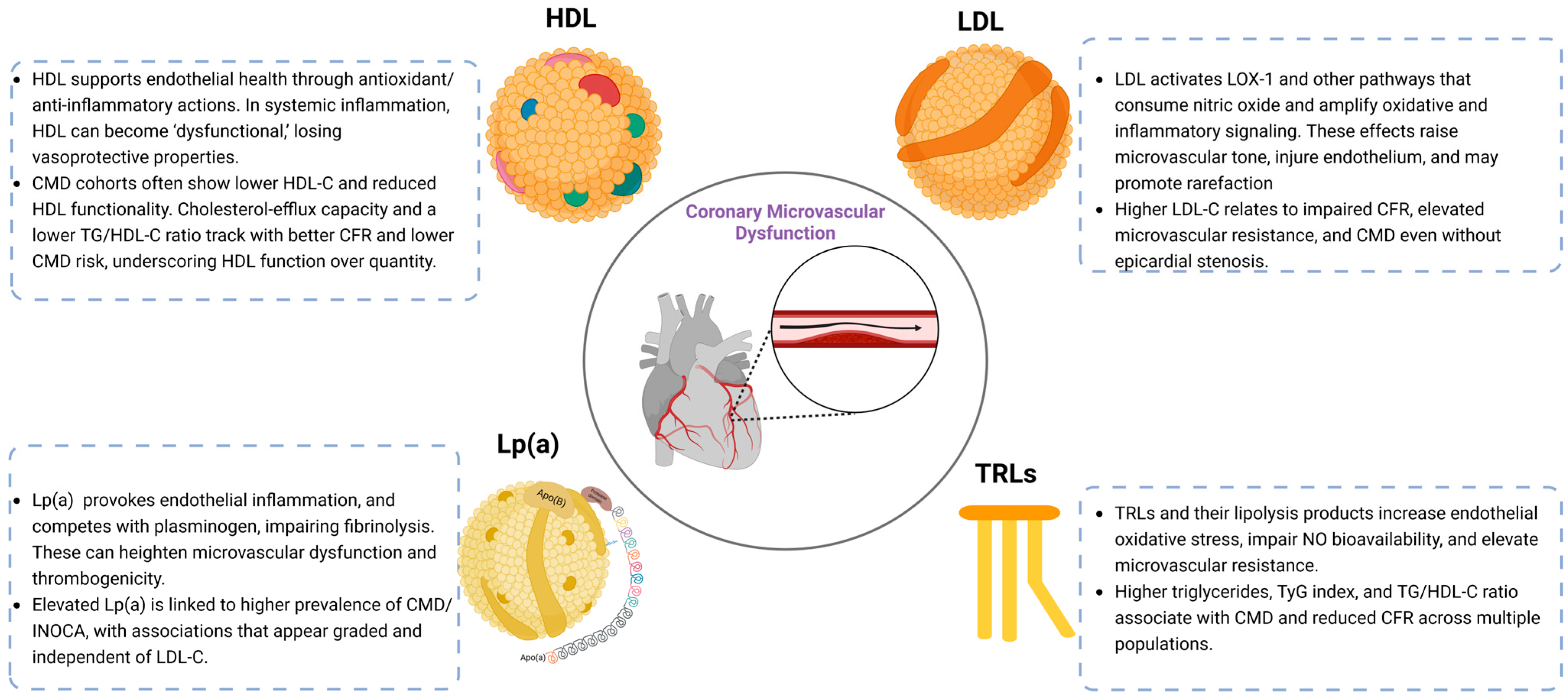
2.1. Low-Density Lipoprotein (LDL) Cholesterol and Endothelial Damage
2.2. HDL Cholesterol: Protective Mechanisms and Dysfunction
2.3. Lipoprotein(a): An Emerging Risk Factor
2.4. Triglycerides and Metabolic Dysfunction
3. Novel Lipid Molecules and Coronary Microvascular Dysfunction
3.1. Apolipoprotein B and Particle Number
3.2. Oxidized LDL and Advanced Glycation End Products
4. Special Populations
5. Clinical Assessment of Lipid-Mediated Coronary Microvascular Dysfunction
6. Therapeutic Strategies
6.1. Lipid-Lowering Therapies
6.2. Targeted Microvascular Therapies
6.3. Metabolic and Lifestyle Interventions
7. Current Guidelines and Clinical Recommendations
7.1. 2024. ESC Guidelines Updates
7.2. Personalized Medicine Approaches
7.2.1. Genetic Insights and Pharmacogenomics
7.2.2. Deep Phenotyping with Advanced Lipid and Inflammatory Biomarkers
7.3. Clinical Implications and Practice Points
7.3.1. Personalized Therapeutic Mapping of Coronary Microvascular Dysfunction
7.3.2. Monitoring and Follow-Up
8. Knowledge Gap and Critical Appraisal
9. Conclusions
Author Contributions
Funding
Institutional Review Board Statement
Informed Consent Statement
Data Availability Statement
Conflicts of Interest
Abbreviations
| CMD | Coronary Microvascular Dysfunction |
| INOCA | Ischemia with Non-Obstructive Coronary Arteries |
| eNOS | Endothelial Nitric Oxide Synthase |
| LDL-C | Low-Density Lipoprotein Cholesterol |
| HDL-C | High-Density Lipoprotein Cholesterol |
| Lp(a) | Lipoprotein(a) |
| ApoB | Apolipoprotein B |
| TyG | Triglyceride-Glucose Index |
| IMR | Index of Microvascular Resistance |
| CFR | Coronary Flow Reserve |
| PET | Positron Emission Tomography |
| MFR | Myocardial Flow Reserve |
| MACE | Major Adverse Cardiovascular Events |
| HDL-CEC | HDL Cholesterol Efflux Capacity |
| oxLDL | Oxidized Low-Density Lipoprotein |
| BH4 | Tetrahydrobiopterin |
| ADMA | Asymmetric Dimethylarginine |
| NF-κB | Nuclear Factor Kappa-B |
| NLRP3 | NOD-Like Receptor Pyrin Domain-Containing 3 (Inflammasome) |
| PON1 | Paraoxonase-1 |
| TRL | Triglyceride-Rich Lipoproteins |
| sdLDL | Small Dense Low-Density Lipoprotein |
| EVOCATION | Evolocumab for the Prevention of Coronary Microvascular Dysfunction Trial |
| FITTER | Evolocumab Clinical Trial (Future Investigation Targeting Triglycerides and Endothelial Reserve) |
| LOX-1 | Lectin-Like Oxidized LDL Receptor-1 |
| AGE | Advanced Glycation End Product |
| RAGE | Receptor for Advanced Glycation End Products |
| MINOCA | Myocardial Infarction with Non-Obstructive Coronary Arteries |
| TNF-α | Tumor Necrosis Factor-Alpha |
| PCSK9 | Proprotein Convertase Subtilisin/Kexin Type 9 |
| ACEi | Angiotensin-Converting Enzyme Inhibitor |
| ARB | Angiotensin Receptor Blocker |
| SGLT2 | Sodium-Glucose Cotransporter-2 |
| GLP-1 RA | Glucagon-Like Peptide-1 Receptor Agonist |
| ESC | European Society of Cardiology |
| ASCVD | Atherosclerotic Cardiovascular Disease |
References
- Yin, J.; Wang, S.; Liu, Y.; Chen, J.; Li, D.; Xu, T. Coronary microvascular dysfunction pathophysiology in COVID-19. Microcirculation 2021, 28, e12718. [Google Scholar] [CrossRef]
- Scarica, V.; Rinaldi, R.; Animati, F.M.; Manzato, M.; Montone, R.A. Coronary microvascular dysfunction: Pathophysiology, diagnosis, and therapeutic strategies across cardiovascular diseases. EXCLI J. 2025, 24, 454–478. [Google Scholar] [CrossRef]
- La Vecchia, G.; Fumarulo, I.; Caffè, A.; Chiatto, M.; Montone, R.A.; Aspromonte, N. Microvascular Dysfunction across the Spectrum of Heart Failure Pathology: Pathophysiology, Clinical Features and Therapeutic Implications. Int. J. Mol. Sci. 2024, 25, 7628. [Google Scholar] [CrossRef]
- Cook, J. Fundamentals of coronary interventional complications. Interv. Cardiol. 2024, 16, 573–587. [Google Scholar] [CrossRef]
- Jan, Y.-K.; Kelhofer, N.; Tu, T.; Mansuri, O.; Onyemere, K.; Dave, S.; Pappu, S. Diagnosis, Pathophysiology and Management of Microvascular Dysfunction in Diabetes Mellitus. Diagnostics 2024, 14, 2830. [Google Scholar] [CrossRef]
- Kei, C.Y.; Singh, K.; Dautov, R.F.; Nguyen, T.H.; Chirkov, Y.Y.; Horowitz, J.D. Coronary “Microvascular Dysfunction”: Evolving Understanding of Pathophysiology, Clinical Implications, and Potential Therapeutics. Int. J. Mol. Sci. 2023, 24, 11287. [Google Scholar] [CrossRef]
- Jan, Y.-K. Advances in Diagnosis and Pathophysiology of Microvascular Dysfunction. Diagnostics 2022, 12, 620. [Google Scholar] [CrossRef] [PubMed]
- Crea, F.; Montone, R.A. Pathophysiology of coronary microvascular dysfunction. Vasc. Pharmacol. 2023, 153, 107239. [Google Scholar] [CrossRef] [PubMed]
- Marano, P.; Wei, J.; Merz, C.N.B. Coronary Microvascular Dysfunction: What Clinicians and Investigators Should Know. Curr. Atheroscler. Rep. 2023, 25, 435–446. [Google Scholar] [CrossRef]
- Okada, T.; Kurihara, O.; Takano, M. Takotsubo syndrome during percutaneous coronary intervention: The role of myocardial ischaemia and microvascular dysfunction in pathophysiology. Eur. Heart J. 2025, 46, 1078. [Google Scholar] [CrossRef] [PubMed]
- Alatta, A.; Das, R.; Mohammed, A.; Spray, L.; Purcell, I.; Spyridopoulos, I. The role of arginine vasopressin in the patho-physiology of microvascular dysfunction after ST-elevation myocardial infarction. Eur. Heart J. 2023, 44. [Google Scholar] [CrossRef]
- Bilak, J.M.; Alam, U.; Miller, C.A.; McCann, G.P.; Arnold, J.R.; Kanagala, P. Microvascular Dysfunction in Heart Failure with Preserved Ejection Fraction: Pathophysiology, Assessment, Prevalence and Prognosis. Card. Fail. Rev. 2022, 8, e24. [Google Scholar] [CrossRef] [PubMed]
- Masi, S.; Rizzoni, D.; Taddei, S.; Widmer, R.J.; Montezano, A.C.; Lüscher, T.F.; Schiffrin, E.L.; Touyz, R.M.; Paneni, F.; Lerman, A.; et al. Assessment and pathophysiology of microvascular disease: Recent progress and clinical implications. Eur. Heart J. 2020, 42, 2590–2604. [Google Scholar] [CrossRef] [PubMed]
- La, S.; Tavella, R.; Pasupathy, S.; Beltrame, J.F. Clinico-pathophysiological considerations in coronary microvascular disorders. Vessel Plus 2022, 6. [Google Scholar] [CrossRef]
- Mayala, H.A.; Yan, W.; Jing, H.; Shuang-Ye, L.; Gui-Wen, Y.; Chun-Xia, Q.; Xiao-Li, L.; Zhao-Hui, W. Clinical characteristics and biomarkers of coronary microvascular dysfunction and obstructive coronary artery disease. J. Int. Med. Res. 2019, 47, 6149–6159. [Google Scholar] [CrossRef]
- Mangiacapra, F.; De Bruyne, B.; Peace, A.J.; Melikian, N.; Wijns, W.; Barbato, E. High cholesterol levels are associated with coronary microvascular dysfunction. J. Cardiovasc. Med. 2012, 13, 439. [Google Scholar] [CrossRef]
- E Kosmas, C.; Martinez, I.; Sourlas, A.; Bouza, K.V.; Campos, F.N.; Torres, V.; Montan, P.D.; Guzman, E. High-density lipoprotein (HDL) functionality and its relevance to atherosclerotic cardiovascular disease. Drugs Context 2018, 7, 212525. [Google Scholar] [CrossRef]
- Franczyk, B.; Rysz, J.; Ławiński, J.; Rysz-Górzyńska, M.; Gluba-Brzózka, A. Is a High HDL-Cholesterol Level Always Beneficial? Biomedicines 2021, 9, 1083. [Google Scholar] [CrossRef]
- Tran-Dinh, A.; Diallo, D.; Delbosc, S.; Varela-Perez, L.M.; Dang, Q.B.; Lapergue, B.; Burillo, E.; Michel, J.B.; Levoye, A.; Martin-Ventura, J.L.; et al. HDL and endothelial protection. Br. J. Pharmacol. 2013, 169, 493–511. [Google Scholar] [CrossRef]
- Bonacina, F.; Pirillo, A.; Catapano, A.L.; Norata, G.D. HDL in Immune-Inflammatory Responses: Implications beyond Cardiovascular Diseases. Cells 2021, 10, 1061. [Google Scholar] [CrossRef] [PubMed]
- Liao, L.P.; Wu, L.; Yang, Y. The relationship between triglyceride/high-density lipoprotein cholesterol ratio and coronary microvascular disease. BMC Cardiovasc. Disord. 2023, 23, 228. [Google Scholar] [CrossRef] [PubMed]
- Zanatta, E.; Colombo, C.; D’amico, G.; D’humières, T.; Lin, C.D.; Tona, F. Inflammation and Coronary Microvascular Dysfunction in Autoimmune Rheumatic Diseases. Int. J. Mol. Sci. 2019, 20, 5563. [Google Scholar] [CrossRef]
- Maldonado, C.; Nguyen, M.-D.; Bauer, P.; Nakamura, S.; Khundmiri, S.J.; Perez-Abadia, G.; Stowers, H.L.; Wu, W.-J.; Tang, X.-L. Rapid Lipid Modification of Endothelial Cell Membranes in Cardiac Ischemia/Reperfusion Injury: A Novel Therapeutic Strategy to Reduce Infarct Size. Cardiovasc. Drugs Ther. 2020, 35, 113–123. [Google Scholar] [CrossRef] [PubMed]
- Prasad, M.; Sara, J.; Widmer, R.J.; Lennon, R.; Lerman, L.O.; Lerman, A. Triglyceride and Triglyceride/HDL (High Density Lipoprotein) Ratio Predict Major Adverse Cardiovascular Outcomes in Women with Non-Obstructive Coronary Artery Disease. J. Am. Heart Assoc. 2019, 8, e009442. [Google Scholar] [CrossRef] [PubMed]
- Khovidhunkit, W. Lipoprotein(a). In Endotext [Internet]; MDText.com, Inc.: South Dartmouth, MA, USA, 2023. [Google Scholar]
- Reyes-Soffer, G.; Ginsberg, H.N.; Berglund, L.; Duell, P.B.; Heffron, S.P.; Kamstrup, P.R.; Lloyd-Jones, D.M.; Marcovina, S.M.; Yeang, C.; Koschinsky, M.L.; et al. Lipoprotein(a): A Genetically Determined, Causal, and Prevalent Risk Factor for Athero-sclerotic Cardiovascular Disease: A Scientific Statement from the American Heart Association. Arterioscler. Thromb. Vasc. Biol. 2022, 42, e48–e60. [Google Scholar] [CrossRef]
- Wodaje, T.; Mahdi, A.; Venkateshvaran, A.; Häbel, H.; Zenlander, R.; Gaylard, B.; Angelin, B.; Pernow, J.; Brinck, J. Higher prevalence of coronary microvascular dysfunction in asymptomatic individuals with high levels of lipoprotein(a) with and without heterozygous familial hypercholesterolaemia. Atherosclerosis 2024, 389, 117439. [Google Scholar] [CrossRef]
- Yao, M.; Dickeson, S.K.; Dhanabalan, K.; Solomevich, S.; Dennewitz, C.; Gailani, D.; Song, W.-L. Investigation of the Influence of Lipoprotein(a) and Oxidized Lipoprotein(a) on Plasminogen Activation and Fibrinolysis. J. Lipid Atheroscler. 2025, 14, 229–235. [Google Scholar] [CrossRef]
- Xu, R.; Wang, Z.; Dong, J.; Yu, M.; Zhou, Y. Lipoprotein(a) and panvascular disease. Lipids Health Dis. 2025, 24, 186. [Google Scholar] [CrossRef]
- Budoff, M. Triglycerides and Triglyceride-Rich Lipoproteins in the Causal Pathway of Cardiovascular Disease. Am. J. Cardiol. 2016, 118, 138–145. [Google Scholar] [CrossRef]
- Tao, L.-C.; Xu, J.-N.; Wang, T.-T.; Hua, F.; Li, J.-J. Triglyceride-glucose index as a marker in cardiovascular diseases: Landscape and limitations. Cardiovasc. Diabetol. 2022, 21, 68. [Google Scholar] [CrossRef]
- Zhang, W.; Liu, L.; Chen, H.; Li, S.; Wan, M.; Mohammed, A.-Q.; Xu, B.; Yin, G.; Lv, X.; Shi, T.; et al. Association between the triglyceride-glucose index and the presence and prognosis of coronary microvascular dysfunction in patients with chronic coronary syndrome. Cardiovasc. Diabetol. 2023, 22, 113. [Google Scholar] [CrossRef] [PubMed]
- Ormazabal, V.; Nair, S.; Elfeky, O.; Aguayo, C.; Salomon, C.; Zuñiga, F.A. Association between insulin resistance and the development of cardiovascular disease. Cardiovasc. Diabetol. 2018, 17, 122. [Google Scholar] [CrossRef]
- Hexeberg, S.; Hessevik, I.; Hexeberg, E. Intravenous lipid infusion results in myocardial lipid droplet accumulation combined with reduced myocardial performance in heparinized rabbits. Acta Physiol. Scand. 1995, 153, 159–168. [Google Scholar] [CrossRef] [PubMed]
- Xu, D.; Xie, L.; Cheng, C.; Xue, F.; Sun, C. Triglyceride-rich lipoproteins and cardiovascular diseases. Front. Endocrinol. 2024, 15, 1409653. [Google Scholar] [CrossRef] [PubMed]
- Stehr, S.N.; Ziegeler, J.C.; Pexa, A.; Oertel, R.; Deussen, A.; Koch, T.; Hübler, M. The Effects of Lipid Infusion on Myocardial Function and Bioenergetics in l-Bupivacaine Toxicity in the Isolated Rat Heart. Anesth. Analg. 2007, 104, 186–192. [Google Scholar] [CrossRef]
- De Oliveira-Gomes, D.; Joshi, P.H.; Peterson, E.D.; Rohatgi, A.; Khera, A.; Navar, A.M. Apolipoprotein B: Bridging the Gap Between Evidence and Clinical Practice. Circulation 2024, 150, 62–79. [Google Scholar] [CrossRef]
- Yang, L.; Zhang, J.; Han, J.; Jiang, X. Relationship between lipoprotein B and the severity of coronary microvascular dys-function. Clin. Exp. Hypertens. 2025, 41, 2477651. [Google Scholar] [CrossRef]
- Witt, C.; Renfroe, L.G.; Lyons, T.S. Discordance between serum cholesterol concentration and atherogenic lipoprotein particle number in people with metabolic disease: A systematic review. Diabetes Obes. Metab. 2025, 27, 2940–2954. [Google Scholar] [CrossRef]
- Hukportie, D.N.; Li, F.; Zhou, R.; Zheng, J.; Wu, X.; Zou, M.; Wu, X. Lipid variability and risk of microvascular complications in Action to Control Cardiovascular Risk in Diabetes (ACCORD) trial: A post hoc analysis. J. Diabetes 2022, 14, 365–376. [Google Scholar] [CrossRef]
- Xu, L.; Wang, S.; Li, B.; Sun, A.; Zou, Y.; Ge, J. A protective role of ciglitazone in ox- LDL -induced rat microvascular endothelial cells via modulating PPAR γ-dependent AMPK/eNOS pathway. J. Cell. Mol. Med. 2014, 19, 92–102. [Google Scholar] [CrossRef]
- Chen, M.; Masaki, T.; Sawamura, T. LOX-1, the receptor for oxidized low-density lipoprotein identified from endothelial cells: Implications in endothelial dysfunction and atherosclerosis. Pharmacol. Ther. 2002, 95, 89–100. [Google Scholar] [CrossRef]
- Lee, J.; Yun, J.-S.; Ko, S.-H. Advanced Glycation End Products and Their Effect on Vascular Complications in Type 2 Diabetes Mellitus. Nutrients 2022, 14, 3086. [Google Scholar] [CrossRef]
- Vithian, K.; Hurel, S. Microvascular complications: Pathophysiology and management. Clin. Med. 2010, 10, 505–509. [Google Scholar] [CrossRef] [PubMed]
- Jha, R.; Lopez-Trevino, S.; Kankanamalage, H.R.; Jha, J.C. Diabetes and Renal Complications: An Overview on Pathophysiology, Biomarkers and Therapeutic Interventions. Biomedicines 2024, 12, 1098. [Google Scholar] [CrossRef]
- Namkoong, J.; McCarthy, M.; Toleva, O.; Nield, L.; Rinfret, S.; Miner, S. Abstract 4138528: Clinical Characteristics of Five Different Endotypes from Coronary Reactivity Testing, and the Emergence of Sex Patterns in Coronary Microvascular Dys-function. Circulation 2024, 150. [Google Scholar] [CrossRef]
- Mohan, A.; Rajotia, A.; Bagheri, S.; Bhattar, K.; Reddy, S.; Reddy, K.T.; Ho, A. Abstract 4140648: Wake up call for the need of standardized medical management for Myocardial Infarction with non-obstructive coronary arteries (MINOCA): A Meta-analysis. Circulation 2024, 150. [Google Scholar] [CrossRef]
- Weber, B.; Weisenfeld, D.; Massarotti, E.; Seyok, T.; Cremone, G.; Lam, E.; Golnik, C.; Brownmiller, S.; Liu, F.; Huang, S.; et al. Interplay Between Systemic Inflammation, Myocardial Injury, and Coronary Microvascular Dysfunction in Rheumatoid Arthritis: Results from the LiiRA Study. J. Am. Hear. Assoc. 2024, 13, e030387. [Google Scholar] [CrossRef] [PubMed]
- Caraba, A.; Stancu, O.; Crișan, V.; Georgescu, D. Anti TNF-Alpha Treatment Improves Microvascular Endothelial Dysfunction in Rheumatoid Arthritis Patients. Int. J. Mol. Sci. 2024, 25, 9925. [Google Scholar] [CrossRef]
- Weber, B.; Weisenfeld, D.; Seyok, T.; Huang, S.; Massarotti, E.; Barrett, L.; Bibbo, C.; Solomon, D.H.; Plutzky, J.; Bolster, M.; et al. Relationship Between Risk of Atherosclerotic Cardiovascular Disease, Inflammation, and Coronary Microvascular Dysfunction in Rheumatoid Arthritis. J. Am. Hear. Assoc. 2022, 11, e025467. [Google Scholar] [CrossRef]
- Liao, K.P.; Huang, J.; He, Z.; Cremone, G.; Lam, E.; Hainer, J.M.; Morgan, V.; Bibbo, C.; Di Carli, M. Coronary Microvascular Dysfunction in Rheumatoid Arthritis Compared to Diabetes Mellitus and Association with All-Cause Mortality. Arthritis Care Res. 2021, 73, 159–165. [Google Scholar] [CrossRef]
- Weber, B.N.; Stevens, E.; Perez-Chada, L.M.; Brown, J.M.; Divakaran, S.; Bay, C.; Bibbo, C.; Hainer, J.; Dorbala, S.; Blankstein, R.; et al. Impaired Coronary Vasodilator Reserve and Adverse Prognosis in Patients with Systemic Inflammatory Disorders. Cardiovasc. Imaging 2021, 14, 2212–2220. [Google Scholar] [CrossRef] [PubMed]
- Schindler, T.H.; Fearon, W.F.; Pelletier-Galarneau, M.; Ambrosio, G.; Sechtem, U.; Ruddy, T.D.; Patel, K.K.; Bhatt, D.L.; Bateman, T.M.; Gewirtz, H.; et al. Myocardial Perfusion PET for the Detection and Reporting of Coronary Microvascular Dysfunction. Cardiovasc. Imaging 2023, 16, 536–548. [Google Scholar] [CrossRef]
- Gurgoglione, F.L.; Vignali, L.; Montone, R.A.; Rinaldi, R.; Benatti, G.; Solinas, E.; Leone, A.M.; Galante, D.; Campo, G.; Biscaglia, S.; et al. Coronary Spasm Testing with Acetylcholine: A Powerful Tool for a Personalized Therapy of Coronary Vasomotor Disorders. Life 2024, 14, 292. [Google Scholar] [CrossRef]
- Lee, J.J.; Chi, G.; Fitzgerald, C.; Kazmi, S.H.A.; Kalayci, A.; Korjian, S.; Duffy, D.; Shaunik, A.; Kingwell, B.; Yeh, R.W.; et al. Cholesterol Efflux Capacity and Its Association with Adverse Cardiovascular Events: A Systematic Review and Meta-Analysis. Front. Cardiovasc. Med. 2021, 8, 774418. [Google Scholar] [CrossRef]
- Hisauchi, I.; Ishikawa, T.; Yamada, K.; Ukaji, T.; Shimura, M.; Tamura, Y.; Kondo, Y.; Takeyama, T.; Mori, K.; Arai, M.; et al. Association between the High-density Lipoprotein Cholesterol Efflux Capacity and the Long-term Prognosis in Patients with Coronary Artery Disease: A Meta-analysis. J. Atheroscler. Thromb. 2025, 32, 491–501. [Google Scholar] [CrossRef] [PubMed]
- Monette, J.S.; Hutchins, P.M.; Ronsein, G.E.; Wimberger, J.; Irwin, A.D.; Tang, C.; Sara, J.D.; Shao, B.; Vaisar, T.; Lerman, A.; et al. Patients with Coronary Endothelial Dysfunction Have Impaired Cholesterol Efflux Capacity and Reduced HDL Particle Concentration. Circ. Res. 2016, 119, 83–90. [Google Scholar] [CrossRef]
- Tsimikas, S.; Fazio, S.; Ferdinand, K.C.; Ginsberg, H.N.; Koschinsky, M.L.; Marcovina, S.M.; Moriarty, P.M.; Rader, D.J.; Remaley, A.T.; Reyes-Soffer, G.; et al. NHLBI Working Group Recommendations to Reduce Lipoprotein(a)-Mediated Risk of Cardiovascular Disease and Aortic Stenosis. J. Am. Coll. Cardiol. 2018, 71, 177–192. [Google Scholar] [CrossRef]
- Kurniawan, L.B. Triglyceride-Glucose Index As A Biomarker Of Insulin Resistance, Diabetes Mellitus, Metabolic Syndrome, And Cardiovascular Disease: A Review. EJIFCC 2024, 35, 44–51. [Google Scholar]
- Soleymani, M.; Masoudkabir, F.; Shabani, M.; Vasheghani-Farahani, A.; Behnoush, A.H.; Khalaji, A. Updates on Pharmacologic Management of Microvascular Angina. Cardiovasc. Ther. 2022, 2022, 6080258. [Google Scholar] [CrossRef]
- Fatima, A.; Rasool, S.; Devi, S.; Talha, M.; Waqar, F.; Nasir, M.; Khan, M.R.; Jaffari, S.M.I.A.; Haider, A.; Shah, S.U.; et al. Exploring the Cardiovascular Benefits of Sodium-Glucose Cotransporter-2 (SGLT2) Inhibitors: Expanding Horizons Beyond Diabetes Management. Cureus 2023, 15, e46243. [Google Scholar] [CrossRef] [PubMed]
- Luna-Marco, C.; Iannantuoni, F.; Hermo-Argibay, A.; Devos, D.; Salazar, J.D.; Víctor, V.M.; Rovira-Llopis, S. Cardiovascular benefits of SGLT2 inhibitors and GLP-1 receptor agonists through effects on mitochondrial function and oxidative stress. Free. Radic. Biol. Med. 2024, 213, 19–35. [Google Scholar] [CrossRef]
- Yang, Y.; Li, S.; Ren, Q.; Qiu, Y.; Pan, M.; Liu, G.; Zheng, R.; An, Z.; Li, S. The interaction between triglyceride-glucose index and visceral adiposity in cardiovascular disease risk: Findings from a nationwide Chinese cohort. Cardiovasc. Diabetol. 2024, 23, 427. [Google Scholar] [CrossRef] [PubMed]
- Huang, B.; Han, X.; Pan, Y.; Chen, D. A systematic review and meta-analysis of the effect of high-intensity statin on coronary microvascular dysfunction. BMC Cardiovasc. Disord. 2023, 23, 370. [Google Scholar] [CrossRef]
- Oesterle, A.; Laufs, U.; Liao, J.K. Pleiotropic Effects of Statins on the Cardiovascular System. Circ. Res. 2017, 120, 229–243. [Google Scholar] [CrossRef]
- Baller, D.; Notohamiprodjo, G.; Gleichmann, U.; Holzinger, J.; Weise, R.; Lehmann, J. Improvement in Coronary Flow Reserve Determined by Positron Emission Tomography After 6 Months of Cholesterol-Lowering Therapy in Patients with Early Stages of Coronary Atherosclerosis. Circulation 1999, 99, 2871–2875. [Google Scholar] [CrossRef]
- Chen, H.; Chen, X. PCSK9 inhibitors for acute coronary syndrome: The era of early implementation. Front. Cardiovasc. Med. 2023, 10, 1138787. [Google Scholar] [CrossRef]
- Ishihara, M.; Asakura, M.; Hibi, K.; Okada, K.; Shimizu, W.; Takano, H.; Suwa, S.; Fujii, K.; Okumura, Y.; Mano, T.; et al. Evolocumab for prevention of microvascular dysfunction in patients undergoing percutaneous coronary intervention: The randomised, open-label EVOCATION trial. EuroIntervention 2022, 18, e647–e655. [Google Scholar] [CrossRef]
- Ballantyne, C.M.; Houri, J.; Notarbartolo, A.; Melani, L.; Lipka, L.J.; Suresh, R.; Sun, S.; LeBeaut, A.P.; Sager, P.T.; Veltri, E.P. Effect of Ezetimibe Coadministered with Atorvastatin in 628 Patients with Primary Hypercholesterolemia. Circulation 2003, 107, 2409–2415. [Google Scholar] [CrossRef] [PubMed]
- Banach, M.; Reiner, Ž.; Surma, S.; Bajraktari, G.; Bielecka-Dabrowa, A.; Bunc, M.; Bytyçi, I.; Ceska, R.; Cicero, A.F.G.; Dudek, D.; et al. 2024 Recommendations on the Optimal Use of Lipid-Lowering Therapy in Established Atherosclerotic Cardiovascular Disease and Following Acute Coronary Syndromes: A Position Paper of the International Lipid Expert Panel (ILEP). Drugs 2024, 84, 1541–1577. [Google Scholar] [CrossRef] [PubMed]
- Mather, K.J.; Verma, S.; Anderson, T.J. Improved endothelial function with metformin in type 2 diabetes mellitus. J. Am. Coll. Cardiol. 2001, 37, 1344–1350. [Google Scholar] [CrossRef]
- Hong, J.; Park, Y. Microvascular Function and Exercise Training: Functional Implication of Nitric Oxide Signaling and Ion Channels. Pulse 2024, 12, 27–33. [Google Scholar] [CrossRef] [PubMed]
- Bruning, R.S.; Sturek, M. Benefits of Exercise Training on Coronary Blood Flow in Coronary Artery Disease Patients. Prog. Cardiovasc. Dis. 2015, 57, 443–453. [Google Scholar] [CrossRef]
- McEvoy, J.W.; McCarthy, C.P.; Bruno, R.M.; Brouwers, S.; Canavan, M.D.; Ceconi, C.; Christodorescu, R.M.; Daskalopoulou, S.S.; Ferro, C.J.; Gerdts, E.; et al. 2024 ESC Guidelines for the management of elevated blood pressure and hypertension. Eur. Hear. J. 2024, 45, 3912–4018. [Google Scholar] [CrossRef]
- Ray, K.K.; Reeskamp, L.F.; Laufs, U.; Banach, M.; Mach, F.; Tokgözoğlu, L.S.; Connolly, D.L.; Gerrits, A.J.; Stroes, E.S.G.; Masana, L.; et al. Combination lipid-lowering therapy as first-line strategy in very high-risk patients. Eur. Hear. J. 2022, 43, 830–833. [Google Scholar] [CrossRef]
- Cannon, C.P.; Blazing, M.A.; Giugliano, R.P.; McCagg, A.; White, J.A.; Théroux, P.; Darius, H.; Lewis, B.S.; Ophuis, T.O.; Jukema, J.W.; et al. Ezetimibe Added to Statin Therapy after Acute Coronary Syndromes. N. Engl. J. Med. 2015, 372, 2387–2397. [Google Scholar] [CrossRef]
- Khan, S.U.; Yedlapati, S.H.; Lone, A.N.; Hao, Q.; Guyatt, G.; Delvaux, N.; Bekkering, G.E.; Vandvik, P.O.; Bin Riaz, I.; Li, S.; et al. PCSK9 inhibitors and ezetimibe with or without statin therapy for cardiovascular risk reduction: A systematic review and network meta-analysis. BMJ 2022, 377, e069116. [Google Scholar] [CrossRef] [PubMed]
- Ang, D.T.Y.; Berry, C.; Kaski, J.-C. Phenotype-based management of coronary microvascular dysfunction. J. Nucl. Cardiol. 2022, 29, 3332–3340. [Google Scholar] [CrossRef]
- Maas, A.M.; Damman, P. Some endotypes of microvascular dysfunction may be more worrisome than others. EuroIntervention 2022, 18, 703–704. [Google Scholar] [CrossRef] [PubMed]
- Wayne, N.; Singamneni, V.S.; Venkatesh, R.; Cherlin, T.; Verma, S.S.; Guerraty, M.A. Genetic Insights Into Coronary Micro-vascular Disease. Microcirculation 2025, 32, e12896. [Google Scholar] [CrossRef]
- Stein, A.P.; Harder, J.; Holmes, H.R.; Merz, C.N.B.; Pepine, C.J.; Keeley, E.C. Single Nucleotide Polymorphisms in Coronary Microvascular Dysfunction. J. Am. Heart Assoc. 2024, 13, e032137. [Google Scholar] [CrossRef]
- Sheikhy, A.; Fallahzadeh, A.; Meybodi, H.R.A.; Hasanzad, M.; Tajdini, M.; Hosseini, K. Personalized medicine in cardiovascular disease: Review of literature. J. Diabetes Metab. Disord. 2021, 20, 1793–1805. [Google Scholar] [CrossRef]
- Yow, H.-Y.; Hamzah, S.; Abdul Rahim, N.; Suppiah, V. Pharmacogenomics of response to statin treatment and susceptibility to statin-induced adverse drug reactions in Asians: A scoping review. Asian Biomed. Res. Rev. News 2023, 17, 95–114. [Google Scholar] [CrossRef] [PubMed]
- Zhu, D.; Vernon, S.T.; D’agostino, Z.; Wu, J.; Giles, C.; Chan, A.S.; Kott, K.A.; Gray, M.P.; Gholipour, A.; Tang, O.; et al. Lipidomics Profiling and Risk of Coronary Artery Disease in the BioHEART-CT Discovery Cohort. Biomolecules 2023, 13, 917. [Google Scholar] [CrossRef] [PubMed]
- Lindner, J.R.; Davidson, B.P.; Song, Z.; Maier, C.S.; Minnier, J.; Stevens, J.F.; Ferencik, M.; Taqui, S.; Belcik, J.T.; Moccetti, F.; et al. Plasma Lipidomic Patterns in Patients with Symptomatic Coronary Microvascular Dysfunction. Metabolites 2021, 11, 648. [Google Scholar] [CrossRef]
- Liu, H.; Yao, Y.; Wang, Y.; Ji, L.; Zhu, K.; Hu, H.; Chen, J.; Yang, J.; Cui, Q.; Geng, B.; et al. Association between high-sensitivity C-reactive protein, lipoprotein-associated phospholipase A2 and carotid atherosclerosis: A cross-sectional study. J. Cell. Mol. Med. 2018, 22, 5145–5150. [Google Scholar] [CrossRef]
- Alfaddagh, A.; Martin, S.S.; Leucker, T.M.; Michos, E.D.; Blaha, M.J.; Lowenstein, C.J.; Jones, S.R.; Toth, P.P. Inflammation and cardiovascular disease: From mechanisms to therapeutics. Am. J. Prev. Cardiol. 2020, 4, 100130. [Google Scholar] [CrossRef]
- Kunadian, V.; Chieffo, A.; Camici, P.G.; Berry, C.; Escaned, J.; Maas, A.H.E.M.; Prescott, E.; Karam, N.; Appelman, Y.; Fraccaro, C.; et al. An EAPCI Expert Consensus Document on Ischaemia with Non-Obstructive Coronary Arteries in Collaboration with European Society of Cardiology Working Group on Coronary Pathophysiology & Microcirculation Endorsed by Coronary Vasomotor Disorders International Study Group. Eur. Hear. J. 2020, 41, 3504–3520. [Google Scholar] [CrossRef]
- Araújo, S.P.; Juvanhol, L.L.; Bressan, J.; Hermsdorff, H.H.M. Triglyceride glucose index: A new biomarker in predicting cardiovascular risk. Prev. Med. Rep. 2022, 29, 101941. [Google Scholar] [CrossRef] [PubMed]
- Millán, J.; Pintó, X.; Muñoz, A.; Zúñiga, M.; Rubiés-Prat, J.; Pallardo, L.F.; Masana, L.; Mangas, A.; Hernández-Mijares, A.; González-Santos, P.; et al. Lipoprotein ratios: Physiological significance and clinical usefulness in cardiovascular prevention. Vasc. Health Risk Manag. 2009, 5, 757–765. [Google Scholar] [CrossRef]
- Katsi, V.; Argyriou, N.; Fragoulis, C.; Tsioufis, K. The Role of Non-HDL Cholesterol and Apolipoprotein B in Cardiovascular Disease: A Comprehensive Review. J. Cardiovasc. Dev. Dis. 2025, 12, 256. [Google Scholar] [CrossRef]
- Taqueti, V.R.; Di Carli, M.F. Coronary Microvascular Disease Pathogenic Mechanisms and Therapeutic Options. J. Am. Coll. Cardiol. 2018, 72, 2625–2641. [Google Scholar] [CrossRef] [PubMed]
- Shapiro, M.D.; Minnier, J.; Tavori, H.; Kassahun, H.; Flower, A.; Somaratne, R.; Fazio, S. Relationship Between Low-Density Lipoprotein Cholesterol and Lipoprotein(a) Lowering in Response to PCSK9 Inhibition with Evolocumab. J. Am. Hear. Assoc. 2019, 8, e010932. [Google Scholar] [CrossRef] [PubMed]
- Greco, A.; Finocchiaro, S.; Spagnolo, M.; Faro, D.C.; Mauro, M.S.; Raffo, C.; Sangiorgio, G.; Imbesi, A.; Laudani, C.; Mazzone, P.M.; et al. Lipoprotein(a) as a Pharmacological Target: Premises, Promises, and Prospects. Circulation 2025, 151, 400–415. [Google Scholar] [CrossRef] [PubMed]
- Nissen, S.E.; Wang, Q.; Nicholls, S.J.; Navar, A.M.; Ray, K.K.; Schwartz, G.G.; Szarek, M.; Stroes, E.S.G.; Troquay, R.; Dorresteijn, J.A.N.; et al. Zerlasiran—A Small-Interfering RNA Targeting Lipoprotein(a). JAMA 2024, 332, 1992. [Google Scholar] [CrossRef]
- Mller, A. Adherence to Long-Term Therapy—A Model of Assessment Into Primary Care. In Primary Care at a Glance—Hot Topics and New Insights; INTECH Open Access Publisher: London, UK, 2012. [Google Scholar] [CrossRef]


| Assessment Category | Method/Biomarker | Purpose and What It Measures | Clinical Utility in CMD |
|---|---|---|---|
| Invasive Functional Testing [54] | Coronary Function Testing (e.g., with Acetylcholine) | Directly assesses endothelium-dependent and independent vasodilation and measures coronary flow reserve (CFR) and index of microcirculatory resistance (IMR). | Gold standard for diagnosing and phenotyping CMD (e.g., high- vs. low-resistance subtypes). |
| Non-Invasive Imaging [53] | Quantitative PET Perfusion | Ratio that normalizes methodological variability; integrates resting and stress flow to reflect coronary vasodilator reserve. | Universal diagnostic cutoff Myocardial Flow Reserve (MFR) < 2.0 for CMD; <1.7 or <1.5 identifies markedly elevated risk of MACE. |
| Standard Lipid Panel | LDL-C, HDL-C, Triglycerides | Measures cholesterol and triglyceride concentrations within lipoproteins. | Foundational for cardiovascular risk assessment; high LDL-C and TG are associated with CMD. |
| Advanced Lipid Biomarkers [38] | Apolipoprotein B (ApoB) | Measures the total number of atherogenic lipoprotein particles (LDL, VLDL, Lp(a)). | Superior risk predictor than LDL-C, especially in metabolic syndrome; correlates with microvascular resistance. |
| Lipoprotein(a) [Lp(a)] | Measures the concentration of a distinct, highly atherogenic particle. | Identifies a significant genetic risk factor for CMD, independent of other lipids. Recommended for screening. | |
| Metabolic Biomarkers | Triglyceride-Glucose (TyG) Index | A surrogate marker for insulin resistance. | A simple, accessible tool that independently predicts CMD and vulnerable plaques. |
| TG/HDL-C Ratio | A marker of atherogenic dyslipidemia and insulin resistance. | Strong association with reduced CFR and is an independent predictor of microvascular dysfunction. |
| Therapeutic Class | Specific Agent(s) | Primary Mechanism of Action in CMD | Key Clinical Benefit |
|---|---|---|---|
| Lipid-Lowering Therapies | Statins | ↓ LDL-C; Pleiotropic effects: improves endothelial function, ↓ inflammation, ↑ nitric oxide bioavailability. | First-line therapy for risk reduction, with possible benefit on CFR. |
| Ezetimibe | Inhibits cholesterol absorption, providing incremental LDL-C reduction. | Used in combination with statins to achieve LDL-C goals. | |
| PCSK9 Inhibitors | Potently ↓ LDL-C and Lp(a) by increasing LDL receptor recycling. | Significant LDL-C reduction, with possible benefit on CFR. | |
| Lp(a)-Targeted Therapies | Antisense Oligonucleotides (e.g., Zerlasiran) | Specifically inhibits the production of apolipoprotein(a). | |
| Targeted Microvascular Therapies | Calcium Channel Blockers | Causes coronary vasodilation and reduces microvascular spasm. | Symptom relief (angina) and improved exercise tolerance. |
| Ranolazine | Anti-ischemic effects through inhibition of the late sodium current, improving diastolic function. | Symptom improvement and enhanced quality of life. | |
| Nebivolol | Beta-blockade with added nitric oxide-mediated vasodilation. | Reduces heart rate while potentially improving endothelial function. | |
| RAS Inhibitors (ACEi/ARBs) | Prevent angiotensin II-mediated vasoconstriction and inflammation; protect against free fatty acid-induced dysfunction. | Long-term endothelial protection and blood pressure control. | |
| Metabolic and Lifestyle Interventions | SGLT2 Inhibitors/GLP-1 RAs | Glucose-lowering with added anti-inflammatory, anti-fibrotic, and direct cardiovascular benefits. | Reduce cardiovascular events and may improve microvascular function in diabetes. |
| Metformin | Enhances insulin sensitivity and improves endothelial function. | Foundational therapy for type 2 diabetes with microvascular benefits. | |
| Structured Exercise Training | ↑ Nitric oxide bioavailability, promotes angiogenesis, ↓ oxidative stress. | Powerful non-pharmacological tool to improve CFR and quality of life. |
| CMD Endotype (Phenotyping Anchor) | Typical Testing Modality [53,54,78,92] | Biomarker [53,54,78,92] | Potential First-Line Management Consideration | Possible Add-On Strategies |
|---|---|---|---|---|
| Endothelial dysfunction/microvascular spasm [9,54,60] | ACh: spasm or impaired dilation; variable CFR; symptoms at low ACh dose | Often Lp(a) ↑, ApoB ↑; inflammation signal | Long-acting CCBs; RAS inhibition for endothelial support | Ranolazine for symptoms; consider statin + ezetimibe/PCSK9 to hit LDL-C/ApoB targets; address Lp(a) where high (PCSK9 now; ASO/siRNA emerging) |
| Impaired microvascular dilation [64,65,66] | CFR ↓, MFR < 2.0; IMR elevated or normal | ApoB ↑, sdLDL burden, TG/HDL-C ↑ | High-intensity statin ± ezetimibe; ACEi/ARB; exercise prescription | PCSK9 inhibitor if targets unmet; SGLT2i/GLP-1RA in diabetes/metabolic syndrome; Ranolazine for persistent angina |
| High-resistance/structural remodeling [16,53,54] | IMR ↑, minimal vasodilator reserve; PET MFR often <1.7 | ApoB ↑; may see TyG ↑ | Aggressive LDL/ApoB lowering (statin ± ezetimibe ± PCSK9) and BP control; exercise | Consider cardiac rehab; evaluate for lipidomics/inflammation panel if refractory |
| Metabolic CMD (insulin resistance dominant) [31,32] | Flow depression under stress; slow flow phenomenon | TyG ≥ 9.2, TG/HDL-C ↑, HDL-CEC often low | SGLT2 inhibitor or GLP-1RA (if T2D), statin per risk, weight loss interventions | Intensify statin; add fibrate only for severe hypertriglyceridemia; focus on lifestyle and CRF gains |
| Lp(a)-driven risk [26,27,93,94,95] | May have discordant risk vs. LDL-C; structural/functional changes | Lp(a) ≥ 125 nmol/L | PCSK9 inhibitor (modest Lp(a) lowering) + strict LDL-C/ApoB targets | Consider ongoing trials for ASO/siRNA (e.g., zerlasiran) when available; apheresis in extreme cases |
Disclaimer/Publisher’s Note: The statements, opinions and data contained in all publications are solely those of the individual author(s) and contributor(s) and not of MDPI and/or the editor(s). MDPI and/or the editor(s) disclaim responsibility for any injury to people or property resulting from any ideas, methods, instructions or products referred to in the content. |
© 2026 by the authors. Licensee MDPI, Basel, Switzerland. This article is an open access article distributed under the terms and conditions of the Creative Commons Attribution (CC BY) license.
Share and Cite
Hafez, A.; Farina, J.M.; Awad, K.; Pietri, M.P.; Scalia, I.G.; Sheashaa, H.; Abdelfattah, F.E.; Razaghi, M.; Ahmed, S.; Ibrahim, R.; et al. Coronary Microvascular Dysfunction and Lipid Molecules: Pathophysiological Mechanisms, Clinical Assessment, and Therapeutic Implications. J. Pers. Med. 2026, 16, 254. https://doi.org/10.3390/jpm16050254
Hafez A, Farina JM, Awad K, Pietri MP, Scalia IG, Sheashaa H, Abdelfattah FE, Razaghi M, Ahmed S, Ibrahim R, et al. Coronary Microvascular Dysfunction and Lipid Molecules: Pathophysiological Mechanisms, Clinical Assessment, and Therapeutic Implications. Journal of Personalized Medicine. 2026; 16(5):254. https://doi.org/10.3390/jpm16050254
Chicago/Turabian StyleHafez, Abdelrahman, Juan M. Farina, Kamal Awad, Milagros Pereyra Pietri, Isabel G. Scalia, Hesham Sheashaa, Fatmaelzahraa E. Abdelfattah, Mahshad Razaghi, Sherif Ahmed, Ramzi Ibrahim, and et al. 2026. "Coronary Microvascular Dysfunction and Lipid Molecules: Pathophysiological Mechanisms, Clinical Assessment, and Therapeutic Implications" Journal of Personalized Medicine 16, no. 5: 254. https://doi.org/10.3390/jpm16050254
APA StyleHafez, A., Farina, J. M., Awad, K., Pietri, M. P., Scalia, I. G., Sheashaa, H., Abdelfattah, F. E., Razaghi, M., Ahmed, S., Ibrahim, R., Simper, D., Lester, S. J., Tamarappoo, B., Ayoub, C., & Arsanjani, R. (2026). Coronary Microvascular Dysfunction and Lipid Molecules: Pathophysiological Mechanisms, Clinical Assessment, and Therapeutic Implications. Journal of Personalized Medicine, 16(5), 254. https://doi.org/10.3390/jpm16050254