Article

Personalizing Relapsing–Remitting Multiple Sclerosis Monitoring: Patient Acceptance of Serum Neurofilament Light Chain and the Role of Disease Knowledge


by
Ángel Pérez-Sempere
1,
Elena García-Arcelay
2,
Jacobo Caruncho Pérez
3,
Antonio Candeliere-Merlicco
4,
Aida Orviz
5,
Jesús Martín-Martínez
6,
Raquel Piñar-Morales
7,
Elena Álvarez-Rodríguez
8,
Eva M. Pacheco-Cortegana
9,
Laura Borrega
10,
Ignacio Casanova
11,
Ana Belén Caminero
12,
José Luis Sánchez-Menoyo
13,
Montserrat Gómez-Gutiérrez
14,
Olga Carmona
15,
Carmen Calles
16,
Miguel Ángel Hernández
17,
Pablo López-Muñoz
18,
Fabien Bakdache
19,
Enric Monreal
20,
Inés González-Suárez
8 and
Jorge Maurino
2,*
add Show full author list remove Hide full author list
1
Department of Neurology, Hospital Universitario General de Alicante, Universidad Miguel Hernández, 03010 Alicante, Spain
2
Medical Department, Roche Farma, 28042 Madrid, Spain
3
AVEMPO (Asociación Viguesa de Esclerosis Múltiple de Pontevedra), 36208 Vigo, Spain
4
Department of Neurology, Hospital Rafael Méndez, 30813 Lorca, Spain
5
Department of Neurology, Hospital Universitario Fundación Jiménez Díaz, 28040 Madrid, Spain
6
Department of Neurology, Hospital Universitario Miguel Servet, 50009 Zaragoza, Spain
7
Department of Neurology, Hospital Universitario Clínico San Cecilio, 18007 Granada, Spain
8
Department of Neurology, Hospital Universitario Álvaro Cunqueiro, 36312 Vigo, Spain
9
Department of Neurology, Hospital Universitario Juan Ramón Jiménez, 21005 Huelva, Spain
10
Department of Neurology, Hospital Universitario Fundación Alcorcón, 28922 Madrid, Spain
11
Department of Neurology, Hospital Universitario de Torrejón, 28850 Madrid, Spain
12
Department of Neurology, Complejo Asistencial de Ávila, 05071 Ávila, Spain
13
Department of Neurology, Galdakao-Usansolo University Hospital, Osakidetza (Basque Health Service), 48960 Usansolo, Spain
14
Department of Neurology, Hospital San Pedro de Alcántara, 10003 Cáceres, Spain
15
Department of Neurology, Fundació Salut Empordà, 17600 Figueres, Spain
16
Department of Neurology, Hospital Universitari Son Espases, 07120 Palma, Spain
17
Department of Neurology, Hospital Nuestra Señora de la Candelaria, 38010 Tenerife, Spain
18
Department of Neurology, Hospital Llíria Arnau, 46160 Llíria, Spain
19
Medical Department, Hoffmann-La Roche Limited, Mississauga, ON, ON L5N 5M8, Canada
20
Department of Neurology, Hospital Universitario Ramón y Cajal, 28034 Madrid, Spain
*
Author to whom correspondence should be addressed.
J. Pers. Med. 2026, 16(4), 185; https://doi.org/10.3390/jpm16040185
Submission received: 25 February 2026 / Revised: 11 March 2026 / Accepted: 26 March 2026 / Published: 29 March 2026
(This article belongs to the Section Personalized Medical Care)

Abstract

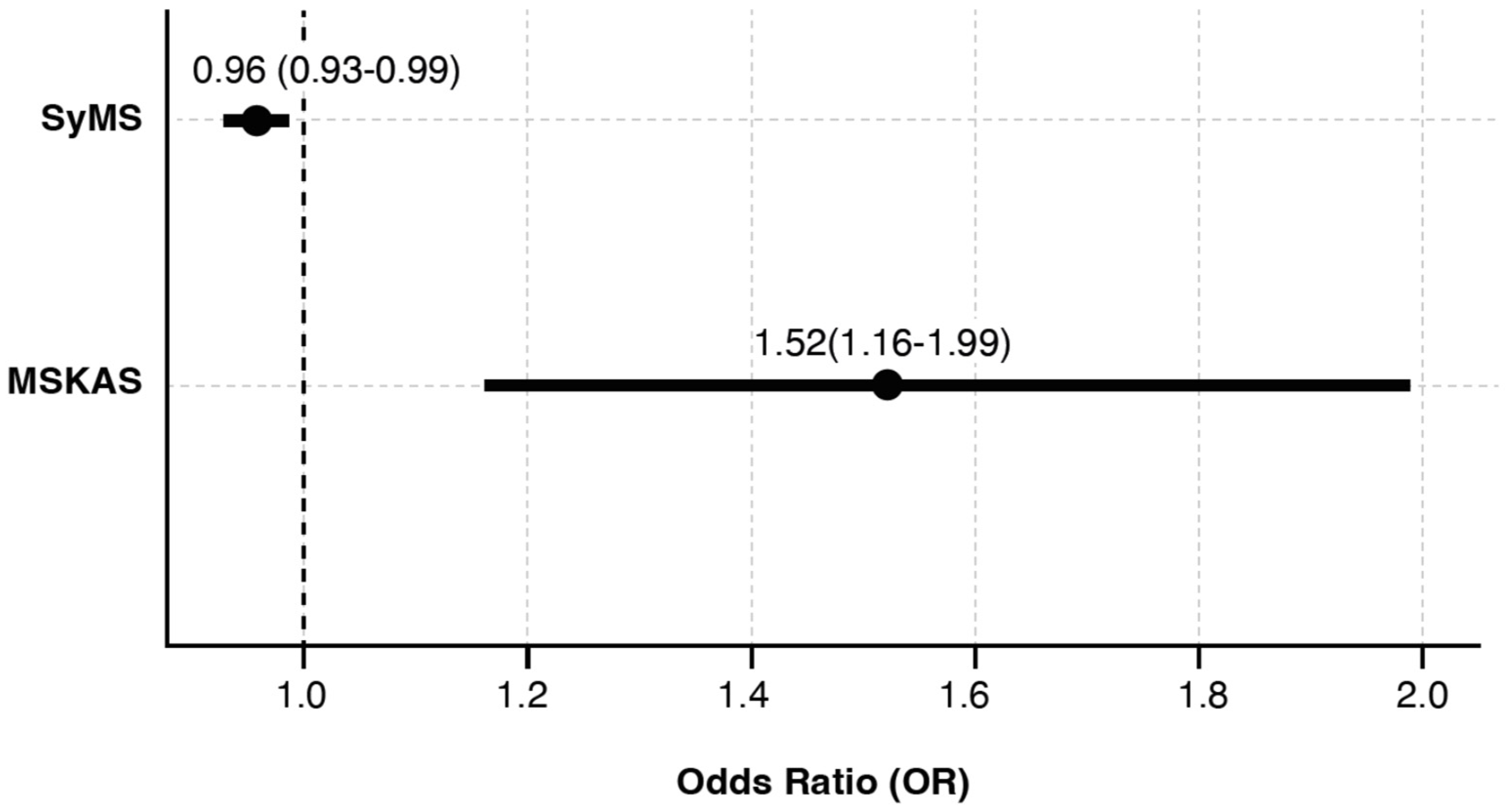
Background: Serum neurofilament light chain (sNfL) is an established biomarker of neuroaxonal damage in multiple sclerosis (MS). Despite its prognostic utility, patient awareness of its clinical application remains poorly characterized. The objective of this study was to assess the acceptance of sNfL monitoring among patients with early-stage relapsing–remitting MS (RRMS) and identify factors predicting their willingness to adopt this tool. Methods: This non-interventional, cross-sectional study was conducted across 16 neuroimmunology clinics. We included RRMS patients with a disease duration of ≤3 years receiving disease-modifying therapy. Acceptance was assessed following a standardized educational tutorial. Multivariable logistic regression was employed to identify predictors of patient acceptance. Results: The study included 144 patients (mean age 37.6 [SD 10.3] years, 69.4% female). Only 19.4% (n = 28) had prior awareness of sNfL. However, after the tutorial, 84.0% (n = 121) expressed willingness to adopt sNfL testing. Furthermore, 62.5% (n = 90) indicated that normal sNfL levels would provide emotional reassurance between clinical visits. Patients willing to undergo testing showed higher disease knowledge, less treatment regret, and better physical quality of life and cognitive performance. In the multivariable analysis, higher disease knowledge (OR = 1.52, 95%CI 1.16–1.99; p = 0.002) and lower symptom burden (OR = 0.96, 95%CI 0.93–0.99; p = 0.038) were associated with greater acceptance. Conclusions: Patients demonstrate high receptivity to sNfL monitoring when provided with adequate clinical context. Because disease knowledge is a primary driver of acceptance, personalized educational initiatives may be a complementary strategy to facilitate the integration of precision biomarkers into MS management.
Keywords: serum neurofilament light chain; multiple sclerosis; biomarker; patient preference; personalized medicine; shared decision-making serum neurofilament light chain; multiple sclerosis; biomarker; patient preference; personalized medicine; shared decision-making