Article

Personalizing Relapsing–Remitting Multiple Sclerosis Monitoring: Patient Acceptance of Serum Neurofilament Light Chain and the Role of Disease Knowledge


by
Ángel Pérez-Sempere
1,
Elena García-Arcelay
2,
Jacobo Caruncho Pérez
3,
Antonio Candeliere-Merlicco
4,
Aida Orviz
5,
Jesús Martín-Martínez
6,
Raquel Piñar-Morales
7,
Elena Álvarez-Rodríguez
8,
Eva M. Pacheco-Cortegana
9,
Laura Borrega
10,
Ignacio Casanova
11,
Ana Belén Caminero
12,
José Luis Sánchez-Menoyo
13,
Montserrat Gómez-Gutiérrez
14,
Olga Carmona
15,
Carmen Calles
16,
Miguel Ángel Hernández
17,
Pablo López-Muñoz
18,
Fabien Bakdache
19,
Enric Monreal
20,
Inés González-Suárez
8 and
Jorge Maurino
2,*
add Show full author list remove Hide full author list
1
Department of Neurology, Hospital Universitario General de Alicante, Universidad Miguel Hernández, 03010 Alicante, Spain
2
Medical Department, Roche Farma, 28042 Madrid, Spain
3
AVEMPO (Asociación Viguesa de Esclerosis Múltiple de Pontevedra), 36208 Vigo, Spain
4
Department of Neurology, Hospital Rafael Méndez, 30813 Lorca, Spain
5
Department of Neurology, Hospital Universitario Fundación Jiménez Díaz, 28040 Madrid, Spain
6
Department of Neurology, Hospital Universitario Miguel Servet, 50009 Zaragoza, Spain
7
Department of Neurology, Hospital Universitario Clínico San Cecilio, 18007 Granada, Spain
8
Department of Neurology, Hospital Universitario Álvaro Cunqueiro, 36312 Vigo, Spain
9
Department of Neurology, Hospital Universitario Juan Ramón Jiménez, 21005 Huelva, Spain
10
Department of Neurology, Hospital Universitario Fundación Alcorcón, 28922 Madrid, Spain
11
Department of Neurology, Hospital Universitario de Torrejón, 28850 Madrid, Spain
12
Department of Neurology, Complejo Asistencial de Ávila, 05071 Ávila, Spain
13
Department of Neurology, Galdakao-Usansolo University Hospital, Osakidetza (Basque Health Service), 48960 Usansolo, Spain
14
Department of Neurology, Hospital San Pedro de Alcántara, 10003 Cáceres, Spain
15
Department of Neurology, Fundació Salut Empordà, 17600 Figueres, Spain
16
Department of Neurology, Hospital Universitari Son Espases, 07120 Palma, Spain
17
Department of Neurology, Hospital Nuestra Señora de la Candelaria, 38010 Tenerife, Spain
18
Department of Neurology, Hospital Llíria Arnau, 46160 Llíria, Spain
19
Medical Department, Hoffmann-La Roche Limited, Mississauga, ON, ON L5N 5M8, Canada
20
Department of Neurology, Hospital Universitario Ramón y Cajal, 28034 Madrid, Spain
*
Author to whom correspondence should be addressed.
J. Pers. Med. 2026, 16(4), 185; https://doi.org/10.3390/jpm16040185
Submission received: 25 February 2026 / Revised: 11 March 2026 / Accepted: 26 March 2026 / Published: 29 March 2026
(This article belongs to the Section Personalized Medical Care)

Abstract

Background: Serum neurofilament light chain (sNfL) is an established biomarker of neuroaxonal damage in multiple sclerosis (MS). Despite its prognostic utility, patient awareness of its clinical application remains poorly characterized. The objective of this study was to assess the acceptance of sNfL monitoring among patients with early-stage relapsing–remitting MS (RRMS) and identify factors predicting their willingness to adopt this tool. Methods: This non-interventional, cross-sectional study was conducted across 16 neuroimmunology clinics. We included RRMS patients with a disease duration of ≤3 years receiving disease-modifying therapy. Acceptance was assessed following a standardized educational tutorial. Multivariable logistic regression was employed to identify predictors of patient acceptance. Results: The study included 144 patients (mean age 37.6 [SD 10.3] years, 69.4% female). Only 19.4% (n = 28) had prior awareness of sNfL. However, after the tutorial, 84.0% (n = 121) expressed willingness to adopt sNfL testing. Furthermore, 62.5% (n = 90) indicated that normal sNfL levels would provide emotional reassurance between clinical visits. Patients willing to undergo testing showed higher disease knowledge, less treatment regret, and better physical quality of life and cognitive performance. In the multivariable analysis, higher disease knowledge (OR = 1.52, 95%CI 1.16–1.99; p = 0.002) and lower symptom burden (OR = 0.96, 95%CI 0.93–0.99; p = 0.038) were associated with greater acceptance. Conclusions: Patients demonstrate high receptivity to sNfL monitoring when provided with adequate clinical context. Because disease knowledge is a primary driver of acceptance, personalized educational initiatives may be a complementary strategy to facilitate the integration of precision biomarkers into MS management.

1. Introduction

Despite the transformative introduction of high-efficacy disease-modifying therapies over the past decade, patients with multiple sclerosis (MS) continue to face significant uncertainty regarding their disease trajectory and long-term prognosis [1,2]. This uncertainty is a common phenomenon in MS, frequently manifesting as a fear of progression, and is correlated with psychological distress, including anxiety, depressive symptoms, and a lower quality of life [1,3,4]. Furthermore, high levels of uncertainty are reported by patients who have lower disease knowledge and poorer self-management abilities, highlighting a critical need for objective monitoring and enhanced education [1,5].
The field of neurology is increasingly integrating innovative fluid biomarkers to provide objective, quantifiable measures of disease activity [6,7,8]. Among these, serum neurofilament light chain (sNfL), a structural protein released into the cerebrospinal fluid and subsequently the blood following neuroaxonal damage, has emerged as a robust marker of neural injury across a broad spectrum of neurological disorders [7,8].
In the management of MS, sNfL functions as a clinically actionable biomarker that facilitates the detection of subclinical disease activity [8,9,10,11]. This neuroaxonal injury often precedes both clinical relapses and traditional changes detectable by means of magnetic resonance imaging (MRI) [5,12]. While clinical assessments and annual MRI scans remain the standard of care, these tools are temporally limited and may only identify damage after irreversible neurological injury has occurred. The sensitivity of sNfL allows clinicians to react more rapidly to poor disease control and facilitates timely therapeutic adjustments [8,9,10,11,13,14]. From the patient’s perspective, sNfL testing offers the potential to mitigate uncertainty by providing objective evidence of disease stability between routine follow-up visits. However, the successful integration of sNfL relies on robust scientific evidence but also equally on the perspectives and behaviors of patients and healthcare professionals [15,16,17]. While initial studies have begun to explore factors influencing neurologists’ openness to sNfL adoption, the patient perspective remains the least explored variable in the successful clinical integration pathway [18,19]. Therefore, the objective of this study was to assess the acceptance of sNfL testing among patients with early-stage relapsing–remitting MS (RRMS) and to identify the clinical, psychological, and behavioral factors associated with their willingness to adopt this new monitoring tool.

2. Methods

2.1. Study Design and Participants

This was an observational, cross-sectional study conducted at 16 hospital-based neuroimmunology clinics in Spain. Participants were enrolled consecutively during routine follow-up visits between 29 October 2024 and 4 April 2025. Every patient meeting the inclusion criteria, a diagnosis of RRMS, disease duration ≤ 3 years, and current use of disease-modifying therapy, was invited to participate in the study. This multicenter design was intended to capture clinical diversity across various regions in Spain. The study was approved by the research review board of Euskadi (CEIm-E), Spain. All participants provided written informed consent.

2.2. Study Procedure

Patient participation involved a single-visit, two-stage procedure using an electronic survey. Patients first completed an assessment of their prior sNfL awareness using a five-option Likert scale (Appendix A). Awareness was defined by the sum of participants who reported having some understanding or higher (Likert options 3, 4, and 5). Patients then received a brief educational tutorial that explained the mechanism of sNfL and its role in detecting ongoing disease activity (Appendix A). Immediately following the tutorial, the primary outcome, patient acceptance of sNfL testing, was assessed using the question “After reading this information, would you accept the use of NfL in blood to monitor your disease activity?” Responses to this 5-point Likert scale question were dichotomized for analysis as “willing to accept” (agreed/strongly agreed) versus “unwilling to accept” (neither agree nor disagree/disagree/strongly disagree) (Appendix A). The survey also assessed their perceived emotional reassurance (e.g., feeling more at ease).

2.3. Outcome Measures

All participants completed a comprehensive battery of patient-reported outcome measures and the Symbol Digit Modalities Test (SDMT) [20].
Disease knowledge: assessed using the Multiple Sclerosis Knowledge Assessment Scale (MSKAS) (22 items, true/false; higher scores indicate greater knowledge) [21]. This section also included the question: “Has your long-term prognosis ever been discussed during your neurology appointments?” to assess patient-physician communication regarding future disease trajectory.
Illness-related uncertainty: measured by the Mishel Uncertainty of Illness Scale (MUIS) (17-item scale, 5-point Likert scale; higher scores reflect greater uncertainty) [22].
Decisional Conflict: assessed using the Decisional Conflict Scale (SURE) (4 items; score < 4 indicates decisional conflict) [23].
Decision regret: measured by the Decision Regret Scale (DRS) (5 items, 5-point Likert scale; higher scores indicate greater regret related to a past treatment decision) [24].
Symptom severity: assessed using the SymptomMScreen questionnaire (SyMS) (12 items, 7-point Likert scale; higher scores reflect overall symptom severity) [25].
Quality of life: measured by the Multiple Sclerosis Impact Scale (MSIS-29) (29 items, Physical and Psychological Impact subscales; lower scores indicate higher health-related quality of life) [26].
Psychological impact: included the Hospital Anxiety and Depression Scale (HADS), the short-form State Anxiety subscale of the Spielberger State-Trait Anxiety Inventory (STAI) for anticipatory anxiety, and the Beck Hopelessness Scale (BHS) for measuring negative expectations regarding the future [27,28,29].
Cognitive Function: assessed using the SDMT. This test requires participants to match geometric symbols to corresponding numbers using a key [20]. The final score is the total number of correct substitutions completed within 90 s.

2.4. Statistical Analysis

Descriptive statistics were used for continuous (mean, standard deviation [SD], 95% confidence intervals [CI]) and categorical (frequencies and percentages) variables. Differences between the two groups (willing vs. unwilling to accept sNfL) were compared using independent samples t-tests or Mann-Whitney tests (continuous data) and Chi-square or Fisher’s exact tests (categorical data). Multivariable logistic regression analysis was performed to determine the association between patient characteristics and the primary outcome (willingness to accept sNfL testing). The statistical analysis was performed using Stata Statistical Software 17.0 (StataCorp., College Station, TX, USA).

3. Results

The study cohort consisted of 144 patients. The mean age was 37.6 (SD 10.3) years, with a female predominance (69.4%). Most patients (75.9%, n = 107) were employed. Median disease duration was 1.3 years (interquartile range [IQR] 0.8–2.1), and the median Expanded Disability Status score was 1.5 (IQR 0.0–2.0). Table 1 shows the main characteristics of the sample.

3.1. Awareness and Acceptance

Only 19.4% (n = 28) of patients had prior awareness of sNfL testing (Table 2). Following a standardized educational tutorial, acceptance rates were high, with 84.0% (n = 121) agreeing or strongly agreeing to use sNfL for disease monitoring.
Symptoms indicative of anticipatory anxiety prior to the appointment were reported by 30.3% (n = 44) of the cohort. Overall, 62.5% (n = 90) reported that they would feel more at ease while awaiting their follow-up visit if their sNfL levels were below the age-adjusted upper reference limit (Table 2).

3.2. Predictors of Acceptance

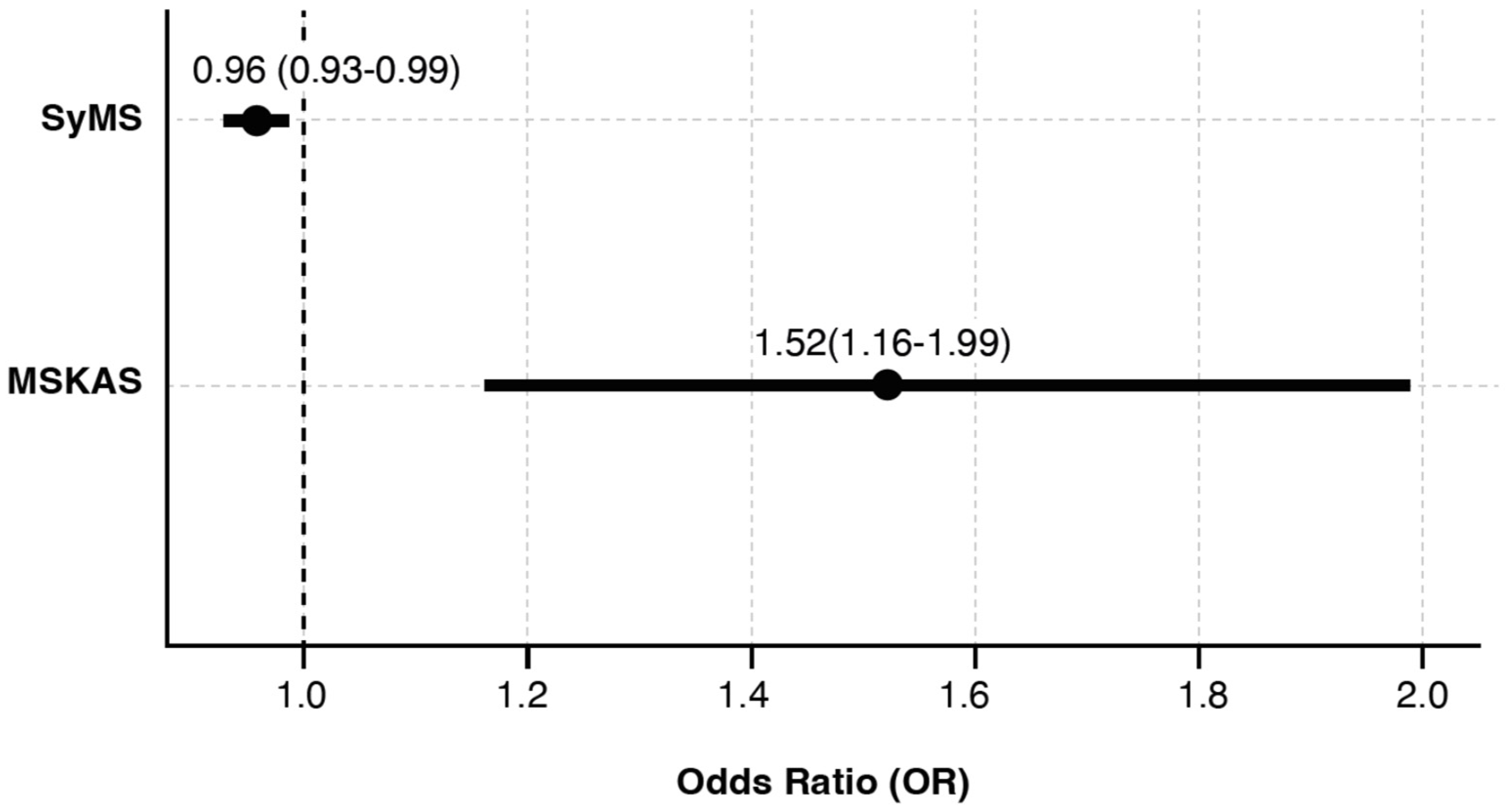
Patients willing to accept sNfL testing had higher knowledge of the disease, less treatment decision regret, better physical quality of life, and better SDMT performance in univariate comparisons (Table 1). Multivariable logistic regression analysis identified two independent predictors of greater acceptance: higher disease knowledge (OR = 1.52, 95%CI 1.16–1.99; p = 0.002) and a less severe symptom endorsement (OR = 0.96, 95%CI 0.93–0.99; p = 0.038) (Figure 1).

4. Discussion

The field of demyelinating diseases is undergoing a substantial transformation driven by the availability of high-efficacy disease-modifying therapies and the rapid advancement of fluid biomarkers [2,6,8,30]. Within the context of precision medicine, sNfL is recognized as a clinically relevant marker of neuroaxonal damage, providing objective, quantifiable data essential for personalized MS care [9,10,11,17]. Furthermore, shared decision-making has become a cornerstone of care, requiring the individualization of treatment based on clinical data, radiological indicators, and patient preferences [31,32,33].
Our study reports a high willingness (84.0% agreed or strongly agreed) to accept sNfL testing among patients with early RRMS and low physical disability after receiving a brief educational tutorial. This acceptance rate is consistent with the positive attitudes observed toward blood-based biomarkers for Alzheimer’s disease, reinforcing the general public’s receptiveness to objective, low-invasive neurodiagnostic tools [34,35].
The high acceptance was strongly linked to perceived psychological benefits: 62.5% of patients reported feeling significantly more at ease while awaiting routine follow-up if their sNfL levels were known to be within the normal limit. This finding is particularly salient given that anticipatory anxiety regarding the neurological appointment was reported by 30.3% of the cohort, and illness-related uncertainty is common in the MS population [1,3,4,36,37]. Uncertainty about prognosis, which only 41% of patients had discussed with their neurologist, is consistently associated with psychological distress [36]. Therefore, the high acceptance, driven by a desire to be “more at ease,” suggests sNfL is perceived as a valuable tool to objectively alleviate a patient’s uncertainty regarding the degree of disease control by providing complementary, quantifiable information on neuroaxonal damage between clinical visits.
In multivariable analysis, higher disease knowledge and lower symptom burden emerged as independent predictors of patient willingness to adopt sNfL testing. While baseline awareness of sNfL was low (19.4%), the rate of informed acceptance was high, catalyzed by a desire for objective data to mitigate the profound illness-related uncertainty inherent in MS. Patient engagement appears fundamentally linked to health literacy. Although MS populations often demonstrate suboptimal disease and risk knowledge, higher levels of such information are associated with improved medication adherence and a greater readiness to initiate therapy [38,39]. Factors such as advanced education, prior experience with disease-modifying therapies, and superior data interpretation skills correlate with higher risk knowledge, whereas a greater fear of disability (e.g., wheelchair dependency) is negatively associated [39]. Informed patients are better able to integrate complex medical evidence and embrace innovations that address the core problem of disease unpredictability. These findings underscore the critical role of targeted education in fostering patient acceptance of innovative monitoring tools. Interestingly, the association between lower symptom endorsement and greater acceptance contrasts with previous research suggesting that poor clinical status perception drives risk-seeking behavior toward high-efficacy treatments [40]. This discrepancy may indicate that patients with lower physical impact are more psychologically prepared to engage with proactive monitoring, perceiving a higher “capacity to respond” to results. Conversely, individuals experiencing severe symptomatic distress may prioritize immediate symptom management over long-term prognostic biomarkers [41].
Our study has several limitations. First, the cross-sectional design prevents us from establishing temporal relationships or causality between variables, such as whether high knowledge precedes or results from acceptance. Second, relying exclusively on self-reported measures introduces potential response bias regarding sensitive topics. Third, the cohort of patients with early-stage RRMS and low physical disability (median EDSS 1.5) limits the generalizability of these findings to the entire MS spectrum. Furthermore, we acknowledge a potential selection bias, as more motivated individuals may have enrolled. Beyond these study-specific factors, the clinical utility of sNfL is constrained by its lack of disease specificity, as it reflects general neuroaxonal injury and can be elevated in various other neurological conditions [8]. Its levels are also significantly influenced by physiological confounders such as age, Body Mass Index, and renal function [42,43]. Collectively, these hurdles, including age and comorbidity confounding, lesion-related variability, and the current lack of assay non-standardization, contribute to a delayed clinical integration of sNfL into the management of individual patients [43,44]. Consequently, while we found high willingness, the study did not assess the long-term sustainability of this acceptance or account for real-world barriers like healthcare system constraints, costs, or long-term adherence, including the unmeasured influence of the treating neurologist’s opinion [15,43,44].

5. Conclusions

The management of MS is rapidly evolving toward personalized therapeutic strategies that necessitate continuous, objective monitoring. Our findings provide essential patient-perspective information, demonstrating a robust acceptance rate for sNfL testing when supported by adequate educational context. This high level of receptivity emphasizes the necessity of anchoring precision medicine in the principles of shared decision-making. By incorporating patient preferences for objective surveillance and prioritizing targeted educational interventions to address existing knowledge deficits, multidisciplinary teams can improve overall health literacy and ensure that management is optimized according to each patient’s cognitive and psychological readiness. Ultimately, integrating sNfL into routine care facilitates a more proactive, patient-centered approach that aligns biological data with individual patient needs.

Author Contributions

Conceptualization, Á.P.-S., E.G.-A., J.C.P., I.G.-S., and J.M.; Methodology, E.G.-A. and J.M.; Project Administration, E.G.-A.; Investigation, A.C.-M., A.O., J.M.-M., R.P.-M., E.Á.-R., E.M.P.-C., L.B., I.C., A.B.C., J.L.S.-M., M.G.-G., O.C., C.C., M.Á.H., P.L.-M.; Formal Analysis, E.G.-A. and J.M.; Validation, J.C.P., E.M. and F.B.; Writing—original draft, Á.P.-S., E.G.-A., F.B., I.G.-S., and J.M.; Writing—review and editing, Á.P.-S., E.G.-A., A.C.-M., A.O., J.M.-M., R.P.-M., E.Á.-R., E.M.P.-C., L.B., I.C., A.B.C., J.L.S.-M., M.G.-G., O.C., C.C., M.Á.H., P.L.-M., F.B., E.M., J.C.P., I.G.-S., and J.M. All authors have read and agreed to the published version of the manuscript.

Funding

This study was funded by the Roche Medical Department, Spain (ML45454). The funding source had no role in the design, analysis and interpretation of the data, review or approval of the manuscript, or the decision to submit for publication.

Institutional Review Board Statement

The study was approved by the research review board of Euskadi (CEIm-E), Spain (protocol code PI2024132, October 2, 2024).

Informed Consent Statement

Participants gave their consent through an informed consent form before taking part in the study.

Data Availability Statement

The datasets generated during the analysis of the study are available from the corresponding author upon reasonable request.

Acknowledgments

The authors are most grateful to all patients, nurses and neurologists who participated in the study.

Conflicts of Interest

Ángel Pérez-Sempere has received consulting and speaking fees from Merck, Novartis, Teva, and Roche. Raquel Piñar has received compensation for consulting services and speaking fees from Biogen, Genzyme, Johnson & Johnson, Merck, Novartis, Roche, and Sanofi. Ignacio Casanova has received payments for consulting services from Novartis and Merz, speaking honoraria from Merck, Novartis, Sanofi, and Neuraxpharm, support for attending meetings from Merck, and research grants from TEVA and Sanofi. Antonio Candeliere-Merlicco has received honoraria for the past three years as a speaker at meetings from Merck, Sanofi, Novartis, Almirall, Neuroaxpharm, and Roche, honoraria for attending conferences from Merck, Neuroaxpharm, and Roche, and has participated in clinical trials for BMS and Roche. Ana B Caminero has received honoraria for speaking/moderating meetings, courses, and symposia organized by Alter, Almirall Prodesfarma S.A, Bayer Schering Pharma, Bial, Biogen Idec Inc, Bristol-Myers-Squibb, Lilly, Merck-Serono, Mylan, Novartis Pharmaceutical, Roche, Sanofi-Genzyme, Teva Pharmaceuticals, and UCB, and support for attending congresses from Biogen Idec Inc, Bial, Merck-Serono, Novartis Pharmaceutical, Roche, Sanofi-Genzyme, and Teva Pharmaceuticals. Aida Orvíz has received research grants, travel support, advisory activities, and honoraria for speaking engagements from Almirall, Biogen, BMS, Merck, Mylan, Novartis, Roche, Sanofi, and Teva. José L Sánchez-Menoyo has accepted travel compensation from Novartis, Merck, and Biogen, speaking honoraria from Biogen, Novartis, Sanofi, and Merck, and has participated in clinical trials by Merck and Roche outside the submitted work. Montserrat Gómez-Gutiérrez has received honoraria for speaking/moderating meetings, courses, and symposia organized by Biogen Idec Inc, Bristol-Myers-Squibb, Merck-Serono, Mylan, Novartis Pharmaceutical, Roche, Sanofi-Genzyme, and Bial. Laura Borrega gas received compensation for consulting services, speaking honoraria, and support to attend scientific meetings from Bayer, Celgene, Biogen, Genzyme, Merck, Novartis, Roche, Almirall, and Teva. Carmen Calles has received compensation for consulting services, speaking honoraria, and support to attend scientific meetings and courses from Merck, Teva, Sanofi-Genzyme, Novartis, Biogen, Roche, and Bristol-Myers-Squibb. Olga Carmona has participated in advisory boards for Neuraxpharm, Sanofi, and Bristol, and as a speaker for Novartis, Sanofi, and Juvise. Miguel A Hernández has served as a speaker/moderator in meetings and/or symposia organized by Biogen Idec Inc, Merck Serono, Sanofi-Aventis, Roche, Novartis, and BMS. He has received funding for research projects from Biogen Idec, Novartis, Merck Serono, Teva, Sanofi Genzyme S.A., Roche, and BMS. Elena Álvarez-Rodríguez has participated as a speaker or consultant for Almirall, Bayer, Biogen, Genzyme, Roche, Merck, Novartis, and Teva. Enric Monreal reports receiving research grants, travel support, and honoraria for speaking engagements from Almirall, Merck, Roche, Sanofi, Bristol Myers Squibb, Biogen, Janssen, and Novartis. Inés González-Suárez reports personal fees for speaking from Bristol Myers Squibb, Biogen, Sanofi, Merck, Novartis, Roche, and Neuraxpharm. Additionally, the author has received personal fees for participating in advisory boards for Biogen, Merck, Sanofi, Novartis, and Neuraxpharm. Jacobo Caruncho, Eva M Pacheco, and Pablo López-Muñoz declare they have no competing interests. Elena García-Arcelay and Jorge Maurino are employees of Roche Farma Spain. Fabien Bakdache is an employee of Hoffmann-La Roche Limited, Canada.

Appendix A

The following contextual information was provided before the initial assessment:
“Your condition is routinely monitored using magnetic resonance imaging (MRI) and follow-up testing (blood tests). Advances are currently being explored in new monitoring techniques, such as measuring neurofilament light chain (NfL) in the blood, a determination that could potentially provide more precise and less invasive information about MS status”.
(a)
How much do you understand about how this biomarker based on serum NfL works? Please, select one option:
(1)
I never heard about it
(2)
I have heard about it, but I don’t understand it
(3)
I have some understanding about it
(4)
I understand quite well about it
(5)
I understand it and I could explain it to others
Educational Tutorial Text
“Neurofilaments (NfL) are proteins that are part of the cellular skeleton of neurons (the cytoskeleton). When there is cellular damage to these cells, NfL are released into the cerebrospinal fluid (CSF) and subsequently reach the blood. Their presence indicates ongoing axonal damage, suggesting significant deterioration of nerve cells and potentially more active disease. The generally accepted threshold for elevation is NfL > 10 pg/mL. Researchers are investigating this biomarker to provide clues about the long-term evolution of MS. It is already known to predict acute inflammatory phenomena, such as flares and short-term disability progression. The potential to predict the level of long-term disability is currently under investigation. The goal of measuring NfL in the blood is to enable the early detection of patients who may be at risk of MS worsening. This technique typically involves blood sampling every 3 to 6 months”.
Post Tutorial Test
(b)
After reading this information, would you accept the use of NfL in blood to monitor your disease activity?
(1)
Strongly agree
(2)
Agree
(3)
Neither agree nor disagree
(4)
Disagree
(5)
Strongly disagree
(c)
In the case of knowing the result of serum NfL <10 pg/mL, would you feel more at ease while waiting for the follow-up visit?
(1)
Yes
(2)
No
(3)
I don’t know

References

  1. Sabin, J.; Salas, E.; Martín-Martínez, J.; Candeliere-Merlicco, A.; Barrero, F.J.; Alonso, A.; Sánchez-Menoyo, J.L.; Borrega, L.; Rodríguez-Rodríguez, M.; Gómez-Gutiérrez, M.; et al. Perceived illness-related uncertainty among patients with mid-stage relapsing-remitting multiple sclerosis. Mult. Scler. Relat. Disord. 2024, 91, 105861. [Google Scholar] [CrossRef] [Scilit] [PubMed]
  2. Filippi, M.; Amato, M.P.; Centonze, D.; Gallo, P.; Gasperini, C.; Inglese, M.; Patti, F.; Pozzilli, C.; Preziosa, P.; Trojano, M. The use of high-efficacy disease-modifying therapies in multiple sclerosis: Recommendations from an expert Delphi consensus. J. Neurol. 2025, 272, 565. [Google Scholar] [CrossRef] [Scilit]
  3. Nielsen, J.; Saliger, J.; Montag, C.; Markett, S.; Nöhring, C.; Karbe, H. Facing the Unknown: Fear of Progression Could Be a Relevant Psychological Risk Factor for Depressive Mood States among Patients with Multiple Sclerosis. Psychother. Psychosom. 2018, 87, 190–192. [Google Scholar] [CrossRef] [Scilit]
  4. Akboğa, Y.E.; Türkel, N.N.; Demirci, A.; Ertek, İ.E. Fear of relapse in multiple sclerosis: Examining the roles of perfectionism and intolerance of uncertainty. Neurol. Sci. 2025, 46, 6669–6677. [Google Scholar] [CrossRef] [Scilit]
  5. Jakimovski, D.; Bittner, S.; Zivadinov, R.; Morrow, S.A.; Benedict, R.H.; Zipp, F.; Weinstock-Guttman, B. Multiple sclerosis. Lancet 2024, 403, 183–202. [Google Scholar] [CrossRef] [Scilit]
  6. Hampel, H.; Gao, P.; Cummings, J.; Toschi, N.; Thompson, P.M.; Hu, Y.; Cho, M.; Vergallo, A. The foundation and architecture of precision medicine in neurology and psychiatry. Trends Neurosci. 2023, 46, 176–198. [Google Scholar] [CrossRef] [Scilit] [PubMed]
  7. Khalil, M.; Teunissen, C.E.; Lehmann, S.; Otto, M.; Piehl, F.; Ziemssen, T.; Bittner, S.; Sormani, M.P.; Gattringer, T.; Abu-Rumeileh, S.; et al. Neurofilaments as biomarkers in neurological disorders—Towards clinical application. Nat. Rev. Neurol. 2024, 20, 269–287. [Google Scholar] [CrossRef] [Scilit] [PubMed]
  8. Daponte, A.; Koros, C.; Skarlis, C.; Siozios, D.; Rentzos, M.; Papageorgiou, S.G.; Anagnostouli, M. Neurofilament Biomarkers in Neurology: From Neuroinflammation to Neurodegeneration, Bridging Established and Novel Analytical Advances with Clinical Practice. Int. J. Mol. Sci. 2025, 26, 9739. [Google Scholar] [CrossRef] [Scilit]
  9. Bar-Or, A.; Nicholas, J.; Feng, J.; Sorrell, F.; Cascione, M. Exploring the Clinical Utility of Neurofilament Light Chain Assays in Multiple Sclerosis Management. Neurol. Neuroimmunol. Neuroinflamm. 2025, 12, e200427. [Google Scholar] [CrossRef] [Scilit]
  10. Freedman, M.S.; Abdelhak, A.; Bhutani, M.K.; Freeman, J.; Gnanapavan, S.; Hussain, S.; Madiraju, S.; Paul, F. The role of serum neurofilament light (sNfL) as a biomarker in multiple sclerosis: Insights from a systematic review. J. Neurol. 2025, 272, 400. [Google Scholar] [CrossRef] [Scilit]
  11. Sahoo, S.; Harper, C.; Tsui, A.K.Y.; Nakhaei-Nejad, M.; Fong, T.; Blevins, G.; Giuliani, F. Serum neurofilament light chain as a biomarker in multiple sclerosis: A cross-sectional observation in real-world clinical practice. Mult. Scler. Relat. Disord. 2025, 103, 106637. [Google Scholar] [CrossRef] [Scilit]
  12. Cagol, A.; Benkert, P.; Schaedelin, S.; Ocampo-Pineda, M.; Montobbio, N.; Lu, P.J.; Ayci, B.; Wenger, A.; Shukur, A.A.; Kaim, K.; et al. Assessing the Relative Importance of Imaging and Serum Biomarkers in Capturing Disability, Cognitive Impairment, and Clinical Progression in Multiple Sclerosis. Adv. Sci. 2026, 13, e12946. [Google Scholar] [CrossRef] [Scilit]
  13. Monreal, E.; Ruiz, P.D.; Román, I.L.S.; Rodríguez-Antigüedad, A.; Moya-Molina, M.Á.; Álvarez, A.; García-Arcelay, E.; Maurino, J.; Shepherd, J.; Cabrera, Á.P.; et al. Value contribution of blood-based neurofilament light chain as a biomarker in multiple sclerosis using multi-criteria decision analysis. Front. Public Health 2024, 12, 1397845. [Google Scholar] [CrossRef] [Scilit] [PubMed]
  14. Yaldizli, Ö.; Benkert, P.; Achtnichts, L.; Bar-Or, A.; Bohner-Lang, V.; Bridel, C.; Comabella, M.; Findling, O.; Disanto, G.; Finkener, S.; et al. Personalized treatment decision algorithms for the clinical application of serum neurofilament light chain in multiple sclerosis: A modified Delphi Study. Mult. Scler. 2025, 31, 932–943. [Google Scholar] [CrossRef] [Scilit]
  15. Moccia, M.; Terracciano, D.; Morra, V.B.; Castaldo, G. Neurofilament in clinical practice: Is the multiple sclerosis community ready? Mult. Scler. 2024, 30, 643–645. [Google Scholar] [CrossRef] [Scilit]
  16. Saposnik, G.; Monreal, E.; Medrano, N.; García-Domínguez, J.M.; Querol, L.; Meca-Lallana, J.E.; Landete, L.; Salas, E.; Meca-Lallana, V.; García-Arcelay, E.; et al. Does serum neurofilament light chain measurement influence therapeutic decisions in multiple sclerosis? Mult. Scler. Relat. Disord. 2024, 90, 105838. [Google Scholar] [CrossRef] [Scilit] [PubMed]
  17. Coker, J.; Doshi, A.; Gnanapavan, S. The practical uses of serum neurofilament light chain as a biomarker in multiple sclerosis. Mult. Scler. Relat. Disord. 2025, 100, 106550. [Google Scholar] [CrossRef] [Scilit] [PubMed]
  18. Stefanicka-Wojtas, D.; Kurpas, D. Barriers and Facilitators to the Implementation of Personalised Medicine across Europe. J. Pers. Med. 2023, 13, 203. [Google Scholar] [CrossRef] [Scilit]
  19. Monreal, E.; Gómez-Ballesteros, R.; Meca-Lallana, V.; Caminero, A.B.; Meca-Lallana, J.E.; Martínez-Yélamos, S.; Landete, L.; García-Domínguez, J.M.; Agüera, E.; García-Arcelay, E.; et al. Neurologists’ Openness to Evidence-Based Innovation in Multiple Sclerosis Care: Individual and Structural Determinants. Neuropsychiatr. Dis. Treat. 2025, 21, 1523–1531. [Google Scholar] [CrossRef] [Scilit]
  20. Sandry, J.; Simonet, D.V.; Brandstadter, R.; Krieger, S.; Sand, I.K.; Graney, R.A.; Buchanan, A.V.; Lall, S.; Sumowski, J.F. The Symbol Digit Modalities Test (SDMT) is sensitive but non-specific in MS: Lexical access speed, memory, and information processing speed independently contribute to SDMT performance. Mult. Scler. Relat. Disord. 2021, 51, 102950. [Google Scholar] [CrossRef] [Scilit]
  21. Bessing, B.; Honan, C.A.; van der Mei, I.; Taylor, B.V.; Claflin, S.B. Development and psychometric properties of the Multiple Sclerosis Knowledge Assessment Scale: Rasch analysis of a novel tool for evaluating MS knowledge. Mult. Scler. 2021, 27, 767–777. [Google Scholar] [CrossRef] [Scilit]
  22. Sabin, J.; Salas, E.; Martín-Martínez, J.; Candeliere-Merlicco, A.; Barrero, F.J.; Alonso, A.; Sánchez-Menoyo, J.L.; Borrega, L.; Rodríguez-Rodríguez, M.; Gómez-Gutiérrez, M.; et al. Assessing illness-related uncertainty in relapsing-remitting multiple sclerosis: A psychometric analysis of the Mishel Uncertainty of Illness Scale. Mult. Scler. J. Exp. Transl. Clin. 2024, 10, 20552173241247680. [Google Scholar] [CrossRef] [Scilit]
  23. Légaré, F.; Kearing, S.; Clay, K.; Gagnon, S.; D’Amours, D.; Rousseau, M.; O’Connor, A. Are you SURE?: Assessing patient decisional conflict with a 4-item screening test. Can. Fam. Physician 2010, 56, e308–e314. [Google Scholar]
  24. Brehaut, J.C.; O’Connor, A.M.; Wood, T.J.; Hack, T.F.; Siminoff, L.; Gordon, E.; Feldman-Stewart, D. Validation of a decision regret scale. Med. Decis. Mak. 2003, 23, 281–292. [Google Scholar] [CrossRef] [Scilit] [PubMed]
  25. Meca-Lallana, J.; Maurino, J.; Hernández-Pérez, M.Á.; Sempere, Á.P.; Brieva, L.; García-Arcelay, E.; Terzaghi, M.; Saposnik, G.; Ballesteros, J. Psychometric Properties of the SymptoMScreen Questionnaire in a Mild Disability Population of Patients with Relapsing-Remitting Multiple Sclerosis: Quantifying the Patient’s Perspective. Neurol. Ther. 2020, 9, 173–179. [Google Scholar] [CrossRef] [Scilit] [PubMed]
  26. Hobart, J.; Lamping, D.; Fitzpatrick, R.; Riazi, A.; Thompson, A. The Multiple Sclerosis Impact Scale (MSIS-29): A new patient-based outcome measure. Brain 2001, 124, 962–973. [Google Scholar] [CrossRef] [Scilit] [PubMed]
  27. Edwards, R.; Suresh, R.; Lynch, S.; Clarkson, P.; Stanley, P. Illness perceptions and mood in chronic fatigue syndrome. J. Psychosom. Res. 2001, 50, 65–68. [Google Scholar] [CrossRef] [Scilit]
  28. Marteau, T.M.; Bekker, H. The development of a six-item short-form of the state scale of the Spielberger State-Trait Anxiety Inventory (STAI). Br. J. Clin. Psychol. 1992, 31, 301–306. [Google Scholar] [CrossRef] [Scilit]
  29. Beck, A.T.; Weissman, A.; Lester, D.; Trexler, L. The measurement of pessimism: The hopelessness scale. J. Consult. Clin. Psychol. 1974, 42, 861–865. [Google Scholar] [CrossRef] [Scilit]
  30. Chitnis, T.; Magliozzi, R.; Abdelhak, A.; Kuhle, J.; Leppert, D.; Bielekova, B. Blood and CSF biomarkers for multiple sclerosis: Emerging clinical applications. Lancet Neurol. 2025, 24, 1066–1078. [Google Scholar] [CrossRef] [Scilit]
  31. Ubbink, D.T.; Damman, O.C.; de Jong, B.A. Shared decision-making in patients with multiple sclerosis. Front. Neurol. 2022, 13, 1063904. [Google Scholar] [CrossRef] [Scilit]
  32. Eskyte, I.; Manzano, A.; Pepper, G.; Pavitt, S.; Ford, H.; Bekker, H.; Chataway, J.; Schmierer, K.; Meads, D.; Webb, E.; et al. Understanding treatment decisions from the perspective of people with relapsing remitting multiple Sclerosis: A critical interpretive synthesis. Mult. Scler. Relat. Disord. 2019, 27, 370–377. [Google Scholar] [CrossRef] [Scilit]
  33. Gasperini, C.; Battaglia, M.A.; Balzani, F.; Chiarini, E.; Pani, M.; Pasqualetti, P.; Morra, V.B.; Filippi, M. Unveiling preferences in multiple sclerosis care: Insights from an Italian discrete-choice experiment with patients and healthcare professionals. J. Neurol. 2024, 272, 27. [Google Scholar] [CrossRef] [Scilit]
  34. Fair, H.; Pavkovic, S.; Roccati, E.; Alty, J.; King, A.; Collins, J. Presymptomatic blood tests to detect neurodegeneration: Perceptions of potential consumers across the life course. Alzheimer’s Dement. 2025, 1, e70022. [Google Scholar] [CrossRef] [Scilit]
  35. Bolsewig, K.; Blok, H.; Willemse, E.A.J.; Zwaaftink, R.B.M.G.; Kooistra, M.; Smets, E.M.A.; Teunissen, C.E.; Visser, L.N.C. Caregivers’ attitudes toward blood-based biomarker testing for Alzheimer’s disease. Alzheimer’s Dement. 2024, 16, e12549. [Google Scholar] [CrossRef] [Scilit]
  36. Castillo-Triviño, T.; Gómez-Ballesteros, R.; Borges, M.; Martín-Martínez, J.; Sotoca, J.; Alonso, A.; Caminero, A.B.; Borrega, L.; Sánchez-Menoyo, J.L.; Barrero-Hernández, F.J.; et al. Long-term prognosis communication preferences in early-stage relapsing-remitting multiple sclerosis. Mult. Scler. Relat. Disord. 2022, 64, 103969. [Google Scholar] [CrossRef] [Scilit]
  37. Gómez-Ballesteros, R.; de la Maza, S.S.; Borges, M.; Martín-Martínez, J.; Sotoca, J.; Alonso, A.; Caminero, A.B.; Borrega, L.; Sánchez-Menoyo, J.L.; Barrero-Hernández, F.J.; et al. Threatening illness perception and associated factors in early-stage relapsing-remitting multiple sclerosis. Front. Psychiatry 2025, 16, 1565150. [Google Scholar] [CrossRef] [Scilit]
  38. Smith, E.; Langdon, D. A systematic review to explore patients’ MS knowledge and MS risk knowledge. Neurol. Sci. 2024, 45, 4185–4195. [Google Scholar] [CrossRef] [Scilit] [PubMed]
  39. Giordano, A.; Liethmann, K.; Köpke, S.; Poettgen, J.; Rahn, A.C.; Drulovic, J.; Beckmann, Y.; Sastre-Garriga, J.; Galea, I.; Heerings, M.; et al. Risk knowledge of people with relapsing-remitting multiple sclerosis—Results of an international survey. PLoS ONE 2018, 13, e0208004. [Google Scholar] [CrossRef] [Scilit] [PubMed]
  40. Maurino, J.; Sotoca, J.; Sempere, Á.P.; Brieva, L.; de Silanes, C.L.; Caminero, A.B.; Terzaghi, M.; Gracia-Gil, J.; Saposnik, G. High-Efficacy Disease-Modifying Therapies in People with Relapsing-Remitting Multiple Sclerosis: The Role of Risk Attitude in Treatment Decisions. Patient 2021, 14, 241–248. [Google Scholar] [CrossRef] [Scilit] [PubMed]
  41. Saposnik, G.; Sotoca, J.; Sempere, Á.P.; Candeliere-Merlicco, A.; Díaz-Abós, P.; Tobler, P.N.; Terzaghi, M.; Maurino, J. Therapeutic status quo in patients with relapsing-remitting multiple sclerosis: A sign of poor self-perception of their clinical status? Mult. Scler. Relat. Disord. 2020, 45, 102354. [Google Scholar] [CrossRef] [Scilit]
  42. Freedman, M.S.; Gnanapavan, S.; Booth, R.A.; Calabresi, P.A.; Khalil, M.; Kuhle, J.; Lycke, J.; Olsson, T.; Consortium of Multiple Sclerosis Centers. Guidance for use of neurofilament light chain as a cerebrospinal fluid and blood biomarker in multiple sclerosis management. EBioMedicine 2024, 101, 104970. [Google Scholar] [CrossRef] [Scilit] [PubMed]
  43. Centonze, D.; Di Sapio, A.; Morra, V.B.; Colombo, E.; Inglese, M.; Paolicelli, D.; Salvetti, M.; Furlan, R. Steps toward the implementation of neurofilaments in multiple sclerosis: Patient profiles to be prioritized in clinical practice. Front. Neurol. 2025, 16, 1571605. [Google Scholar] [CrossRef] [Scilit] [PubMed]
  44. Lycke, J.; Fox, R.J. Using serum neurofilament-light in clinical practice: Growing enthusiasm that may need bridling. Mult. Scler. 2024, 30, 1575–1577. [Google Scholar] [CrossRef] [Scilit] [PubMed]
Figure 1. Predictors of acceptance. Note. Forest plot illustrating results from a multivariable logistic regression analysis (n = 144). The vertical line at an Odds Ratio (OR) = 1 denotes the null hypothesis (no association). MSKAS = Multiple Sclerosis Knowledge Assessment Scale; SyMS = SymptoMScreen questionnaire.
Jpm 16 00185 g001
Table 1. Main characteristics of the participants.
Total
n = 144
Willing to Accept sNfL Testing
n = 121
Unwilling
n = 23
p-Value
Age, years, mean (SD)37.6 (10.3)37.3 (10.3)38.8 (10.6)0.529
Sex, female, n (%)100 (69.4)82 (67.8)18 (78.3)0.317
Type of education, university, n (%)63 (43.8)55 (45.5)8 (34.8)0.453
Employed, n (%)107 (75.9)90 (75.6)17 (77.3)0.749
Disease duration, years, median (IQR)1.3 (0.8–2.1)1.3 (0.8–2.2)1.3 (0.8–1.9)0.717
Number of relapses, mean (SD)1.5 (0.7)1.4 (0.7)1.7 (0.8)0.131
EDSS score, median (IQR)1.5 (0.0–2.0)1.5 (0.0–2.0)1.5 (0.0–2.0)0.798
SyMS score, median (IQR)10.0 (4.0–20.0)9.0 (4.0–19.0)12.0 (6.0–31.0)0.092
HADS Anxiety score, mean (SD)8.3 (5.3)8.1 (5.3)9.6 (5.7)0.274
HADS Depression score, mean (SD)4.5 (3.8)4.3 (3.7)5.9 (4.3)0.090
BHS score, mean (SD)4.1 (3.6)3.8 (3.3)5.5 (4.9)0.232
MSIS-29, Physical score, median (IQR)8.3 (1.7–30.0)8.3 (0.8–27.5)16.7 (7.5–45.0)0.034
MSIS-29, Psychological score, median (IQR)25.9 (11.1–48.1)25.9 (11.1–48.1)37.0 (14.8–75.9)0.153
SDMT score, mean (SD) 49.9 (12.5)50.8 (12.2)44.9 (13.5)0.045
MSKAS score, mean (SD) 18.4 (2.1)18.7 (2.0)16.8 (1.8)<0.001
MUIS score, mean (SD) 28.3 (8.5)27.8 (8.2)31.3 (1.0)0.109
LTP communication, yes, n (%)59 (41.0)52 (43.0)7 (30.4)0.262
DRS score, median (IQR) 10.0 (0.0–25.0)5.0 (0.0–20.0)25.0 (5.0–40.0)<0.001
SURE < 4, n (%)35 (26.5)31 (28.2)4 (18.2)0.332
Note. BHS = Beck Hopelessness Scale; DRS = Decision Regret Scale; EDSS = Expanded Disability Status Scale; HADS = Hospital Anxiety and Depression Scale; IQR = Interquartile range; LTP = Long-term prognosis communication; MSIS-29 = Multiple Sclerosis Impact Scale; MSKAS = Multiple Sclerosis Knowledge Assessment Scale; MUIS = Mishel Uncertainty of Illness Scale; SD = Standard deviation; SDMT = Symbol Digital Modalities Test; SURE = 4-item Decisional Conflict Scale; SyMS = SymptoMScreen questionnaire.
Table 2. Knowledge and attitudes toward sNfL (n = 144).
(a) How much do you understand about how this biomarker based on serum NfL works? n (%)
1. I never heard about it: 87 (60.4)
2. I have heard about it, but I don’t understand it: 29 (20.1)
3. I have some understanding about it: 16 (11.1)
4. I understand quite well about it: 8 (5.5)
5. I understand it and I could explain it to others: 4 (2.8)
(b) After reading this information, would you accept the use of NfL in blood to monitor your disease activity? n (%)
1. Strongly agree: 88 (61.1), 2. Agree: 33 (22.9), 3. Neither agree nor disagree: 15 (10.4), 4. Disagree: 2 (1.4), 5. Strongly disagree: 6 (4.2)
(c) In the case of knowing the result of serum NfL < 10 pg/mL, would you feel more at ease while waiting for the next follow-up visit? n (%)
1. Yes: 90 (62.5), 2. No: 6 (4.2), 3. I don’t know: 48 (33.3)
Note. sNfL = Serum neurofilament light chain.
Disclaimer/Publisher’s Note: The statements, opinions and data contained in all publications are solely those of the individual author(s) and contributor(s) and not of MDPI and/or the editor(s). MDPI and/or the editor(s) disclaim responsibility for any injury to people or property resulting from any ideas, methods, instructions or products referred to in the content.