
The Environmental and Global Impact of Pharmacogenomics: Advancing Green Pharmacy Toward Sustainable and Inclusive Precision Medicine


Abstract
1. Introduction
2. Research Gap and Strategic Objectives
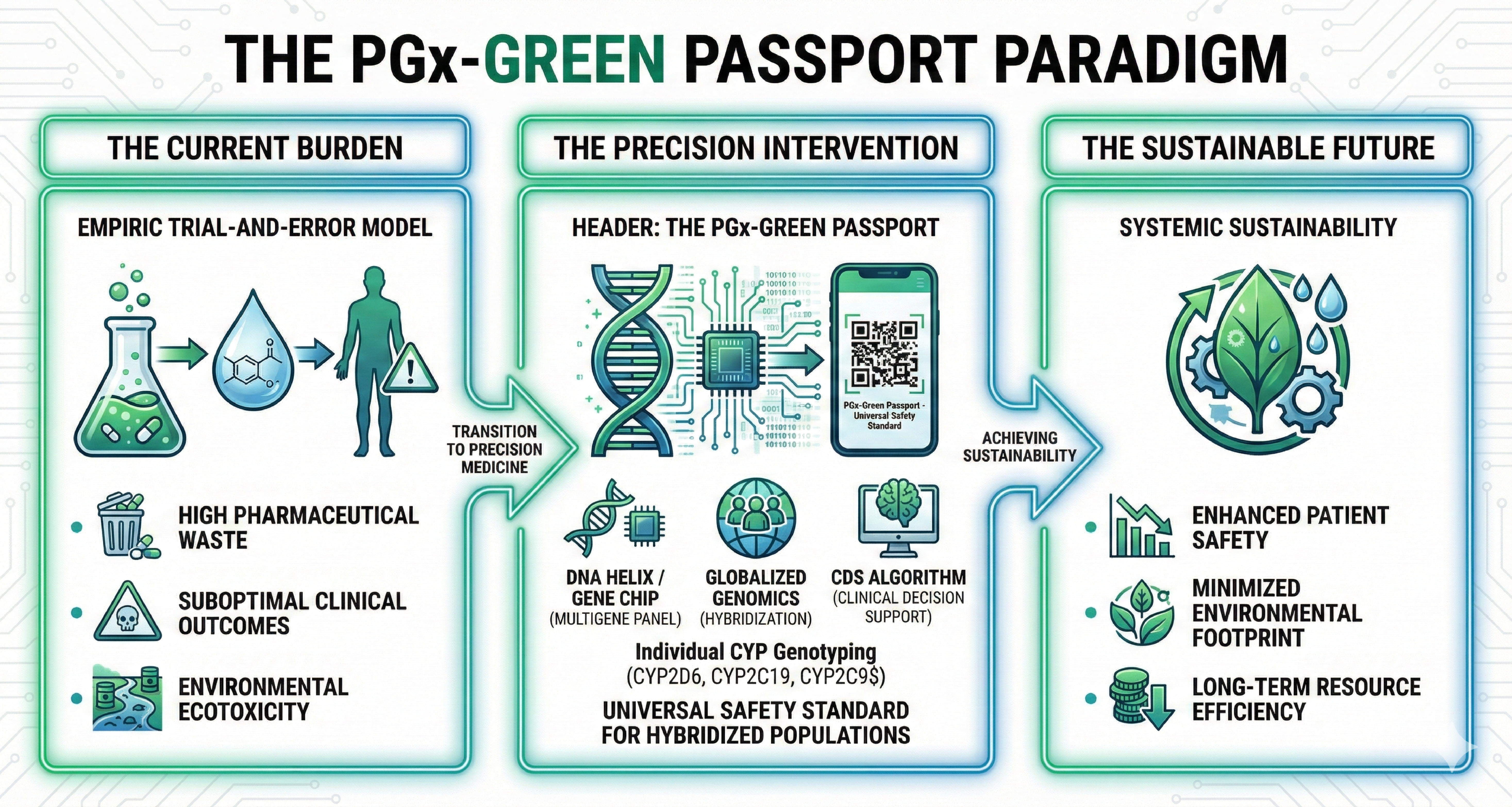
- PGx is a pillar of green pharmacy, complementing patient safety with ecosystem accountability. Metabolic optimization reduces pharmaceutical ecotoxicity.
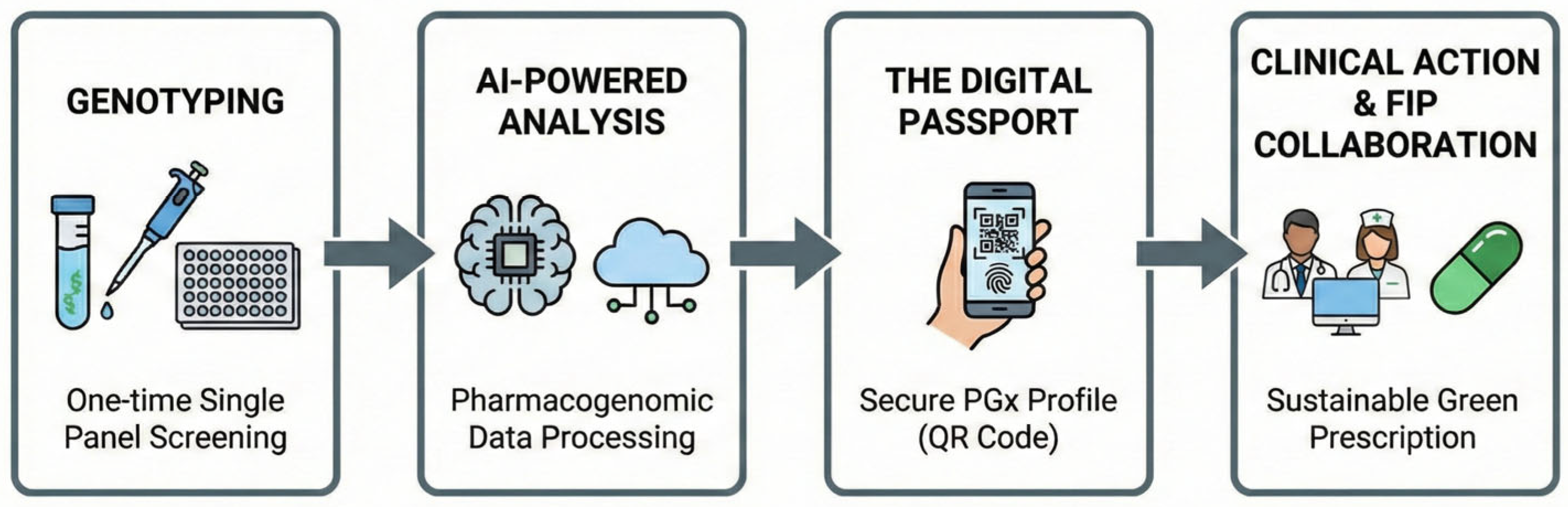
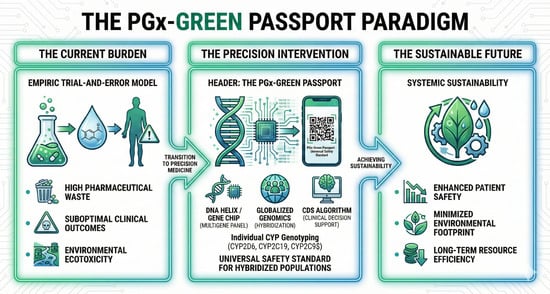
- The PGx Green Passport is proposed as a lifelong standard containing genotype data, which can trigger ethnic dosing and enable precise therapy for different populations.
- This new methodology assigns ecological indices to genetic data using the Eco-gene Matrix and the Eco Score. This links metabolic profiles to environmental impact and guides sustainable drug selection.
3. Methods
4. Results
4.1. Pharmaceutical Waste and Ecotoxicity: The Environmental Cost of Clinical Inefficiency
4.2. Obsolescence of the Evidence-Based Model
4.3. Typical Examples of Adverse Reactions Caused by CYP Polymorphisms
4.4. Comprehensive Multigene PGx Panels
4.5. CYP-Based PGx as a Sustainable Alternative
4.5.1. One Test, Lifetime Utility
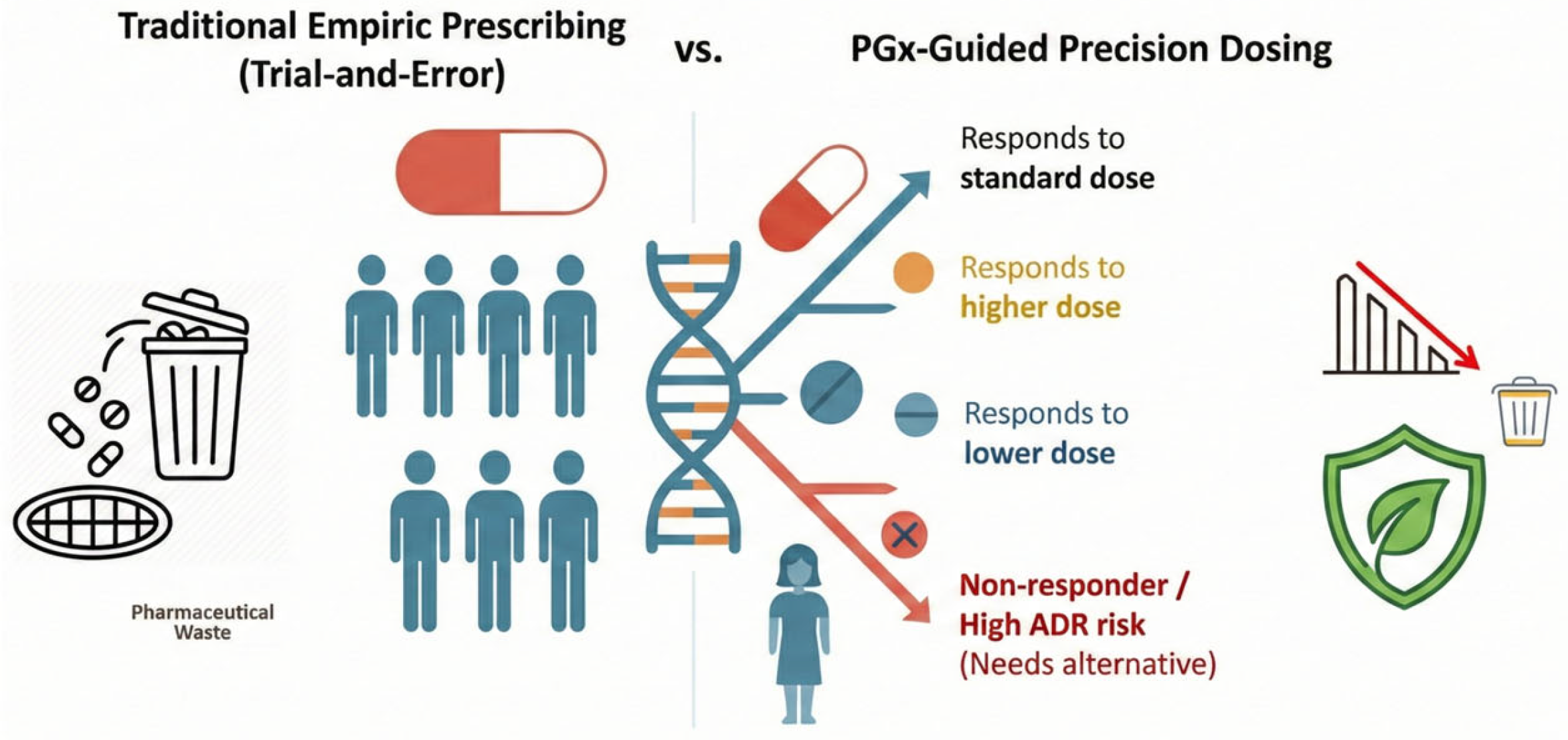
- Precision dosing is a critical strategy to reduce the overall chemical burden on the patient and the ecosystem. Traditional one-size-fits-all dosing often leads to excessive drug delivery in individuals who, due to their genetic makeup (e.g., IM or PM), require significantly lower doses to achieve therapeutic efficacy [2,66]. By tailoring the initial dose to the patient’s specific metabolic capacity, PGx avoids systemic drug overdose. This optimization ensures that only the minimum amount required for efficacy is delivered to the patient, thereby reducing the burden on the body.
- The environmental importance of CYP-mediated metabolism is a key part of this framework. CYP-catalyzed molecular oxygenation is a crucial first step in the environmental breakdown of synthetic xenobiotics. When a drug is administered to an individual with a PM phenotype, the phase I. oxidative biotransformation pathway is bypassed, leading to excretion of the persistent, unmetabolized parent compound rather than a more polar, biodegradable metabolite.
4.5.2. Long-Term Resource Allocation
4.5.3. Limitations of Ethnicity-Based Dosing
4.6. The Challenge of Global Diversity and Genetic Admixture
4.6.1. The Hybridization Gap
4.6.2. Molecular Mosaicism: The Impact of Compound Heterozygous Variants in Mixed Ancestry Populations
4.6.3. Genetic Admixture and Metabolic Unpredictability
Bridging the Hybridization Gap
4.7. The PGx-Green Passport: A Universal Safety Standard for a Rapidly Changing World
4.8. Global Policy Frameworks and the Evolution of Green Pharmacy
4.9. Technological and Educational Barriers to Implementation
5. Discussion and Future Perspectives
5.1. The Convergence of Clinical Excellence and Ecological Ethics
- Resource Optimization: As evidenced by the Kentucky Medicare Advantage program, PGx-informed interventions can reduce hospitalizations by 15% and generate over $37 million in savings, proving that economic viability and patient safety are synergistic [68]. Within a sustainability framework, these savings represent a massive reduction in the high-resource medical waste and energy-intensive logistics associated with acute clinical failures.
5.2. The PGx-Green Passport: Navigating Genetic Admixture
5.3. A Pragmatic Approach to Green Pharmacy
6. Conclusions
Funding
Institutional Review Board Statement
Informed Consent Statement
Data Availability Statement
Acknowledgments
Conflicts of Interest
Abbreviations
| ADR | Adverse Drug Reaction |
| AI | Artificial Intelligence |
| API | Active Pharmaceutical Ingredient |
| CDS | Clinical Decision Support |
| CPIC | Clinical Pharmacogenetics Implementation Consortium |
| CYP | Cytochrome P450 enzyme |
| DPWG | Dutch Pharmacogenetics Working Group |
| EHR | Electronic Health Record |
| FIP | International Pharmaceutical Federation |
| IM | Intermediate Metabolizer |
| NGS | Next-Generation Sequencing |
| NSAID | Non-Steroidal Anti-Inflammatory Drugs |
| PGx | Pharmacogenomics |
| PM | Poor Metabolizer |
| SNP | Single Nucleotide Polymorphism |
| SSRI | Selective Serotonin Reuptake Inhibitors |
| STR | Short Tandem Repeats |
| UM | Ultrarapid Metabolizer |
| WHO | World Health Organization |
| WWTP | Wastewater Treatment Plant |
References
- Sissung, T.M.; McKeeby, J.W.; Patel, J.; Lertora, J.J.; Kumar, P.; Flegel, W.A.; Adams, S.D.; Eckes, E.J.; Mickey, F.; Plona, T.M.; et al. Pharmacogenomics Implementation at the National Institutes of Health Clinical Center. J. Clin. Pharmacol. 2017, 57, S67–S77. [Google Scholar] [CrossRef] [PubMed] [PubMed Central]
- Hughes, C.M. One Size Fits All? How to Optimize the Prescribing of Appropriate Polypharmacy in Chronic Diseases, Using a Behavioral Approach—A United Kingdom Perspective. Expert Rev. Clin. Pharmacol. 2022, 15, 497–499. [Google Scholar] [CrossRef] [PubMed]
- Schwaederle, M.; Zhao, M.; Lee, J.J.; Eggermont, A.M.; Schilsky, R.L.; Mendelsohn, J.; Lazar, V.; Kurzrock, R. Impact of Precision Medicine in Diverse Cancers: A Meta-Analysis of Phase II Clinical Trials. J. Clin. Oncol. 2015, 33, 3817–3825. [Google Scholar] [CrossRef] [PubMed]
- Caudle, K.E.; Klein, T.E.; Hoffman, J.M.; Muller, D.J.; Whirl-Carrillo, M.; Gong, L.; McDonagh, E.M.; Sangkuhl, K.; Thorn, C.F.; Schwab, M.; et al. Incorporation of Pharmacogenomics into Routine Clinical Practice: The Clinical Pharmacogenetics Implementation Consortium (CPIC) Guideline Development Process. Curr. Drug Metab. 2014, 15, 209–217. [Google Scholar] [CrossRef]
- Roden, D.M.; McLeod, H.L.; Relling, M.V.; Williams, M.S.; Mensah, G.A.; Peterson, J.F.; Van Driest, S.L. Pharmacogenomics. Lancet 2019, 394, 521–532. [Google Scholar] [CrossRef]
- Lakshmi, K.; Nagarajan, B.; Dabburu, K.; Roy, C.; Shanthi, B.; Das, G.; Chakraborty, T.; Syed, S.; Albert, J.; Prabha, K.S. Pharmacogenomics for Sustainable Drug Development: A Narrative Review of Precision Medicine, Green Chemistry, and Multi-Omics Innovation. J. Appl. Pharm. Sci. 2026, 16, 070–083. [Google Scholar] [CrossRef]
- Relling, M.V.; Evans, W.E. Pharmacogenomics in the Clinic. Nature 2015, 526, 343–350. [Google Scholar] [CrossRef]
- Swen, J.J.; Nijenhuis, M.; de Boer, A.; Grandia, L.; Maitland-van der Zee, A.H.; Mulder, H.; Rongen, G.A.P.J.M.; van Schaik, R.H.N.; Schalekamp, T.; Touw, D.J.; et al. Pharmacogenetics: From Bench to Byte—An Update of Guidelines. Clin. Pharmacol. Ther. 2011, 89, 662–673. [Google Scholar] [CrossRef]
- Hicks, J.K.; Bishop, J.R.; Sangkuhl, K.; Müller, D.J.; Ji, Y.; Leckband, S.G.; Leeder, J.S.; Graham, R.L.; Chiulli, D.L.; LLerena, A.; et al. Clinical Pharmacogenetics Implementation Consortium (CPIC) Guideline for CYP2D6 and CYP2C19 Genotypes and Dosing of Selective Serotonin Reuptake Inhibitors. Clin. Pharmacol. Ther. 2015, 98, 127–134. [Google Scholar] [CrossRef]
- Crews, K.R.; Gaedigk, A.; Dunnenberger, H.M.; Leeder, J.S.; Klein, T.E.; Caudle, K.E.; Haidar, C.E.; Shen, D.D.; Callaghan, J.T.; Sadhasivam, S.; et al. Clinical Pharmacogenetics Implementation Consortium guidelines for cytochrome P450 2D6 genotype and codeine therapy: 2014 update. Clin. Pharmacol. Ther. 2014, 95, 376–382. [Google Scholar] [CrossRef]
- Lima, J.J.; Thomas, C.D.; Barbarino, J.; Desta, Z.; Van Driest, S.L.; El Rouby, N.; Johnson, J.A.; Cavallari, L.H.; Shakhnovich, V.; Thacker, D.L.; et al. Clinical Pharmacogenetics Implementation Consortium (CPIC) Guideline for CYP2C19 and Proton Pump Inhibitor Dosing. Clin. Pharmacol. Ther. 2020, 109, 1417–1423. [Google Scholar] [CrossRef]
- Bousman, C.A.; Stevenson, J.M.; Ramsey, L.B.; Sangkuhl, K.; Hicks, J.K.; Strawn, J.R.; Singh, A.B.; Ruaño, G.; Mueller, D.J.; Tsermpini, E.E.; et al. Clinical Pharmacogenetics Implementation Consortium (CPIC) Guideline for CYP2D6, CYP2C19, CYP2B6, SLC6A4, and HTR2A Genotypes and Serotonin Reuptake Inhibitor Antidepressants. Clin. Pharmacol. Ther. 2023, 114, 51–68. [Google Scholar] [CrossRef] [PubMed]
- Baum, M.L.; Widge, A.S.; Carpenter, L.L.; McDonald, W.M.; Cohen, B.M.; Nemeroff, C.B.; On behalf of the American Psychiatric Association (APA) Workgroup on Biomarkers Novel. Pharmacogenomic Clinical Support Tools for the Treatment of Depression. Am. J. Psychiatry 2024, 181, 591–607. [Google Scholar] [CrossRef] [PubMed]
- Jiang, S.; Mathias, P.C.; Hendrix, N.; Shirts, B.H.; Tarczy-Hornoch, P.; Veenstra, D.; Malone, D.; Devine, B. Implementation of Pharmacogenomic Clinical Decision Support for Health Systems: A Cost-Utility Analysis. Pharmacogenomics J. 2022, 22, 188–197. [Google Scholar] [CrossRef]
- van der Wouden, C.H.; Cambon-Thomsen, A.; Cecchin, E.; Cheung, K.C.; Dávila-Fajardo, C.L.; Deneer, V.H.; Dolžan, V.; Ingelman-Sundberg, M.; Jönsson, S.; Karlsson, M.O.; et al. Implementing Pharmacogenomics in Europe: Design and Implementation Strategy of the Ubiquitous Pharmacogenomics Consortium. Clin. Pharmacol. Ther. 2017, 101, 341–358. [Google Scholar] [CrossRef] [PubMed]
- Phillips, K.A.; Veenstra, D.L.; Oren, E.; Lee, J.K.; Sadee, W. Potential Role of Pharmacogenomics in Reducing Adverse Drug Reactions: A Systematic Review. JAMA 2001, 286, 2270–2279. [Google Scholar] [CrossRef]
- Caudle, K.E.; Dunnenberger, H.M.; Freimuth, R.R.; Peterson, J.F.; Burlison, J.D.; Whirl-Carrillo, M.; Scott, S.A.; Rehm, H.L.; Williams, M.S.; Klein, T.E.; et al. Standardizing Terms for Clinical Pharmacogenetic Test Results: Guidance from the Clinical Pharmacogenetics Implementation Consortium (CPIC). Genet. Med. 2017, 19, 215–223. [Google Scholar] [CrossRef]
- Daughton, C.G.; Ruhoy, I.S. Reducing the Ecological Footprint of Pharmaceutical Usage: Linkages Between Healthcare Practices and the Environment. In Green and Sustainable Pharmacy; Springer: Berlin/Heidelberg, Germany, 2010. [Google Scholar]
- Salei, E.; Persson, C.L.; Håkonsen, H. Green Pharmacy Practice—A Multi Method Study of Environmental Sustainability Measures Implemented in Swedish Pharmacies. J. Pharm. Policy Pract. 2025, 18, 2512983. [Google Scholar] [CrossRef]
- Khetan, S.K.; Collins, T.J. Human Pharmaceuticals in the Aquatic Environment: A Challenge to Green Chemistry. Chem. Rev. 2007, 107, 2319–2364. [Google Scholar] [CrossRef]
- Relling, M.V.; Klein, T.E. CPIC: Clinical Pharmacogenetics Implementation Consortium of the Pharmacogenomics Research Network. Clin. Pharmacol. Ther. 2011, 89, 464–467. [Google Scholar] [CrossRef]
- Daughton, C.G. Cradle-to-Cradle Stewardship of Drugs for Minimizing Their Environmental Disposition While Promoting Human Health. II. Drug Disposal, Waste Reduction, and Future Directions. Environ. Health Perspect. 2003, 111, 775. [Google Scholar] [CrossRef] [PubMed]
- Tibben, B.M.; Gaedigk, A.; Gong, L.; Sangkuhl, K.; Whirl-Carrillo, M.; Relling, M.V.; Donnelly, R.S.; Klein, T.E.; Caudle, K.E. The Clinical Pharmacogenetics Implementation Consortium’s Consensus-Based Framework for Assigning Allele Function. Am. J. Hum. Genet. 2025, 112, 2842–2859. [Google Scholar] [CrossRef] [PubMed]
- Environmentally Sustainable Health Systems: A Strategic Document. Available online: https://www.who.int/publications/i/item/WHO-EURO-2017-2241-41996-57723 (accessed on 6 February 2026).
- Wheeler, H.E.; Maitland, M.L.; Dolan, M.E.; Cox, N.J.; Ratain, M.J. Cancer Pharmacogenomics: Strategies and Challenges. Nat. Rev. Genet. 2013, 14, 23–34. [Google Scholar] [CrossRef] [PubMed]
- Evans, W.E.; McLeod, H.L. Pharmacogenomics—Drug Disposition, Drug Targets, and Side Effects. N. Engl. J. Med. 2003, 348, 538–549. [Google Scholar] [CrossRef]
- Alshemari, A.; Breen, L.; Quinn, G.; Sivarajah, U. Can We Create a Circular Pharmaceutical Supply Chain (CPSC) to Reduce Medicines Waste? Pharmacy 2020, 8, 221. [Google Scholar] [CrossRef]
- Dunnenberger, H.M.; Crews, K.; Hoffman, J.; Caudle, K.; Broeckel, U.; Howard, S.; Hunkler, R.; Klein, T.; Evans, W.; Relling, M. Preemptive Clinical Pharmacogenetics Implementation: Current Programs in Five US Medical Centers. Annu. Rev. Pharmacol. Toxicol. 2014, 55, 89–106. [Google Scholar] [CrossRef]
- Whirl-Carrillo, M.; McDonagh, E.; Hebert, J.; Gong, L.; Sangkuhl, K.; Thorn, C.; Altman, R.; Klein, T. Pharmacogenomics Knowledge for Personalized Medicine. Clin. Pharmacol. Ther. 2012, 92, 414–417. [Google Scholar] [CrossRef]
- van der Wouden, C.H.; van Rhenen, M.H.; Jama, W.O.M.; Ingelman-Sundberg, M.; Lauschke, V.M.; Konta, L.; Schwab, M.; Swen, J.J.; Guchelaar, H.-J. Development of the PGx-Passport: A Panel of Actionable Germline Genetic Variants for Pre-Emptive Pharmacogenetic Testing. Clin. Pharmacol. Ther. 2019, 106, 866–873. [Google Scholar] [CrossRef]
- Hamzic, S.; Aebi, S.; Joerger, M.; Montemurro, M.; Ansari, M.; Amstutz, U.; Largiadr, C. Fluoropyrimidine Chemotherapy: Recommendations for DPYD Genotyping and Therapeutic Drug Monitoring of the Swiss Group of Pharmacogenomics and Personalised Therapy. Swiss Med. Wkly. 2020, 150, w20375. [Google Scholar] [CrossRef]
- Dunnenberger, H.M.; Biszewski, M.; Bell, G.C.; Sereika, A.; May, H.; Johnson, S.G.; Hulick, P.J.; Khandekar, J. Implementation of a multidisciplinary pharmacogenomics clinic in a community health system. Am. J. Health Syst. Pharm. 2016, 73, 1956–1966. [Google Scholar] [CrossRef] [PubMed]
- Lauschke, V.M.; Ingelman-Sundberg, M. Precision Medicine and Rare Genetic Variants. Trends Pharmacol. Sci. 2016, 37, 85–86. [Google Scholar] [CrossRef] [PubMed]
- Zinken, J.F.; Pasmooij, A.M.G.; Ederveen, A.G.H.; Hoekman, J.; Bloem, L.T. Environmental Risk Assessment in the EU Regulation of Medicines for Human Use: An Analysis of Stakeholder Perspectives on Its Current and Future Role. Drug Discov. Today 2024, 29, 104213. [Google Scholar] [CrossRef] [PubMed]
- Lattanzio, S.; Stefanizzi, P.; D’ambrosio, M.; Cuscianna, E.; Riformato, G.; Migliore, G.; Tafuri, S.; Bianchi, F.P. Waste Management and the Perspective of a Green Hospital—A Systematic Narrative Review. Int. J. Environ. Res. Public Health 2022, 19, 15812. [Google Scholar] [CrossRef] [PubMed]
- Evans, W.E.; Relling, M.V. Moving towards Individualized Medicine with Pharmacogenomics. Nature 2004, 429, 464–468. [Google Scholar] [CrossRef]
- Mosch, R.; van der Lee, M.; Guchelaar, H.J.; Swen, J.J. Pharmacogenetic Panel Testing: A Review of Current Practice and Potential for Clinical Implementation. Annu. Rev. Pharmacol. Toxicol. 2025, 65, 91–109. [Google Scholar] [CrossRef]
- Jeyavani, J.; Sibiya, A.; Stalin, T.; Vigneshkumar, G.; Al-Ghanim, K.A.; Riaz, M.N.; Govindarajan, M.; Vaseeharan, B. Biochemical, Genotoxic and Histological Implications of Polypropylene Microplastics on Freshwater Fish Oreochromis Mossambicus: An Aquatic Eco-Toxicological Assessment. Toxics 2023, 11, 282. [Google Scholar] [CrossRef]
- Occurrence, Ecotoxicological Effects and Risk Assessment of Antihypertensive Pharmaceutical Residues in the Aquatic Environment—A Review. Available online: https://www.researchgate.net/publication/278676558_Occurrence_ecotoxicological_effects_and_risk_assessment_of_antihypertensive_pharmaceutical_residues_in_the_aquatic_environment_-_A_review (accessed on 11 March 2026).
- Samuel, G.; Lucassen, A.M. The Environmental Impact of Data-Driven Precision Medicine Initiatives. Camb. Prism. Precis. Med. 2022, 1, e1. [Google Scholar] [CrossRef]
- Wilkinson, G.R. Drug Metabolism and Variability among Patients in Drug Response. N. Engl. J. Med. 2005, 352, 2211–2221. [Google Scholar] [CrossRef]
- Reeve, J.; Maden, M.; Hill, R.; Turk, A.; Mahtani, K.; Wong, G.; Lasserson, D.; Krska, J.; Mangin, D.; Byng, R.; et al. Deprescribing Medicines in Older People Living with Multimorbidity and Polypharmacy: The TAILOR Evidence Synthesis. Health Technol. Assess. Winch. Engl. 2022, 26, 1–148. [Google Scholar] [CrossRef]
- Zhou, S.-F.; Liu, J.-P.; Chowbay, B. Polymorphism of Human Cytochrome P450 Enzymes and Its Clinical Impact. Drug Metab. Rev. 2009, 41, 89–295. [Google Scholar] [CrossRef]
- Pirmohamed, M.; Park, B.K. Genetic Susceptibility to Adverse Drug Reactions. Trends Pharmacol. Sci. 2001, 22, 298–305. [Google Scholar] [CrossRef]
- Onder, G.; Lattanzio, F.; Battaglia, M.; Cerullo, F.; Sportiello, R.; Bernabei, R.; Landi, F. The Risk of Adverse Drug Reactions in Older Patients: Beyond Drug Metabolism. Curr. Drug Metab. 2011, 12, 647–651. [Google Scholar] [CrossRef] [PubMed]
- Swen, J.J.; van der Wouden, C.H.; Manson, L.E.; Abdullah-Koolmees, H.; Blagec, K.; Blagus, T.; Böhringer, S.; Cambon-Thomsen, A.; Cecchin, E.; Cheung, K.-C.; et al. A 12-Gene Pharmacogenetic Panel to Prevent Adverse Drug Reactions: An Open-Label, Multicentre, Controlled, Cluster-Randomised Crossover Implementation Study. Lancet 2023, 401, 347–356. [Google Scholar] [CrossRef] [PubMed]
- Scott, S.A.; Sangkuhl, K.; Stein, C.M.; Hulot, J.-S.; Mega, J.L.; Roden, D.M.; Klein, T.E.; Sabatine, M.S.; Johnson, J.A.; Shuldiner, A.R.; et al. Clinical Pharmacogenetics Implementation Consortium Guidelines for CYP2C19 Genotype and Clopidogrel Therapy: 2013 Update. Clin. Pharmacol. Ther. 2013, 94, 317–323. [Google Scholar] [CrossRef] [PubMed]
- Cavallari, L.H.; Lee, C.R.; Beitelshees, A.L.; Cooper-DeHoff, R.M.; Duarte, J.D.; Voora, D.; Kimmel, S.E.; McDonough, C.W.; Gong, Y.; Dave, C.V.; et al. Multi-Site Investigation of Outcomes with Implementation of CYP2C19 Genotype-Guided Antiplatelet Therapy after Percutaneous Coronary Intervention. JACC Cardiovasc. Interv. 2018, 11, 181–191. [Google Scholar] [CrossRef]
- Zhou, Y.; Nevosadová, L.; Eliasson, E.; Lauschke, V.M. Global Distribution of Functionally Important CYP2C9 Alleles and Their Inferred Metabolic Consequences. Hum. Genom. 2023, 17, 15. [Google Scholar] [CrossRef]
- Desta, Z.; Gammal, R.S.; Gong, L.; Whirl-Carrillo, M.; Gaur, A.H.; Sukasem, C.; Hockings, J.; Myers, A.; Swart, M.; Tyndale, R.F.; et al. Clinical Pharmacogenetics Implementation Consortium (CPIC) Guideline for CYP2B6 and Efavirenz-Containing Antiretroviral Therapy. Clin. Pharmacol. Ther. 2019, 106, 726–733. [Google Scholar] [CrossRef] [PubMed] [PubMed Central]
- Brixner, D.; Biltaji, E.; Bress, A.; Unni, S.; Ye, X.; Mamiya, T.; Ashcraft, K.; Biskupiak, J. The Effect of Pharmacogenetic Profiling with a Clinical Decision Support Tool on Healthcare Resource Utilization and Estimated Costs in the Elderly Exposed to Polypharmacy. J. Med. Econ. 2016, 19, 213–228. [Google Scholar] [CrossRef]
- Peters, B.J.M.; Klungel, O.H.; de Boer, A.; Ch Stricker, B.H.; Maitland-van der Zee, A.-H. Pharmacogenetics of Cardiovascular Drug Therapy. Clin. Cases Miner. Bone Metab. 2009, 6, 55–65. [Google Scholar]
- Challenges in Clinical Implementation of CYP2D6 Genotyping: Choice of Variants to Test Affects Phenotype Determination—Genetics in Medicine. Available online: https://www.gimjournal.org/article/S1098-3600(21)01108-4/fulltext (accessed on 6 February 2026).
- Zhang, L.; Tholkes, A.J.; Jones, K.C.; Yang, L.J.; Sieger, G.K.; Cullen, K.R.; Gunlicks-Stoessel, M.L.; Mroz, P.; Farley, J.F.; Johnson, S.G.; et al. Real-World Characterization of Psychiatric Pharmacogenomic Test Ordering and Clinical Relevance in Adults and Children. Clin. Transl. Sci. 2025, 18, e70297. [Google Scholar] [CrossRef]
- Molla, G.; Bitew, M. Revolutionizing Personalized Medicine: Synergy with Multi-Omics Data Generation, Main Hurdles, and Future Perspectives. Biomedicines 2024, 12, 2750. [Google Scholar] [CrossRef]
- Daughton, C.; Ruhoy, I. Green Pharmacy and pharmEcovigilance: Prescribing and the Planet. Expert Rev. Clin. Pharmacol. 2011, 4, 211–232. [Google Scholar] [CrossRef] [PubMed]
- El Rouby, N.; Allen, J.D.; Koep, T.; McIntyre, P.; Kelly, J.; Ramesh, A.; Desai-Naik, A.; Chiang, J.; Patel, S.; Brueckner, C.; et al. Multi-Gene Pharmacogenomic Testing in a Community-Based Setting Is Feasible and Reduces Total Healthcare Costs. Clin. Transl. Sci. 2025, 18, e70418. [Google Scholar] [CrossRef] [PubMed]
- Table of Pharmacogenomic Biomarkers in Drug Labeling. Available online: https://www.fda.gov/drugs/science-and-research-drugs/table-pharmacogenomic-biomarkers-drug-labeling (accessed on 6 February 2026).
- de Leon, J.; Susce, M.T.; Murray-Carmichael, E. The AmpliChip CYP450 Genotyping Test: Integrating a New Clinical Tool. Mol. Diagn. Ther. 2006, 10, 135–151. [Google Scholar] [CrossRef] [PubMed]
- Barbarino, J.M.; Whirl-Carrillo, M.; Altman, R.B.; Klein, T.E. PharmGKB: A Worldwide Resource for Pharmacogenomic Information. Wiley Interdiscip. Rev. Syst. Biol. Med. 2018, 10, e1417. [Google Scholar] [CrossRef]
- GeneSight Testing: Your DNA Holds the Key to Finding the Right Antidepressant. Available online: https://www.reviveholisticpsychiatry.com/post/genesight-testing-your-dna-holds-the-key-to-finding-the-right-antidepressant (accessed on 6 February 2026).
- Klomp, S.D.; Manson, M.L.; Guchelaar, H.-J.; Swen, J.J. Phenoconversion of Cytochrome P450 Metabolism: A Systematic Review. J. Clin. Med. 2020, 9, 2890. [Google Scholar] [CrossRef]
- Michaud, V.; Dow, P.; Turgeon, J. Illustrative and historic cases of phenoconversion. Am. J. Transl. Res. 2021, 13, 13328–13335. [Google Scholar] [PubMed] [PubMed Central]
- Auwerx, C.; Sadler, M.C.; Reymond, A.; Kutalik, Z. From Pharmacogenetics to Pharmaco-Omics: Milestones and Future Directions. Hum. Genet. Genom. Adv. 2022, 3, 100100. [Google Scholar] [CrossRef]
- de Jong, L.M.; Boussallami, S.; Sánchez-López, E.; Giera, M.; Tushuizen, M.E.; Hoekstra, M.; Hawinkels, L.J.A.C.; Rissmann, R.; Swen, J.J.; Manson, M.L. The Impact of CYP2C19 Genotype on Phenoconversion by Concomitant Medication. Front. Pharmacol. 2023, 14, 1201906. [Google Scholar] [CrossRef]
- Turner, R.M.; Park, B.K.; Pirmohamed, M. Parsing Interindividual Drug Variability: An Emerging Role for Systems Pharmacology. Wiley Interdiscip. Rev. Syst. Biol. Med. 2015, 7, 221–241. [Google Scholar] [CrossRef]
- Real-World Impact of a Pharmacogenomics-Enriched Comprehensive Medication Management Program. Available online: https://www.mdpi.com/2075-4426/12/3/421 (accessed on 6 February 2026).
- Pharmaceutical Waste Management: A Comprehensive Analysis of Romanian Practices and Perspectives. Available online: https://www.mdpi.com/2071-1050/16/15/6571 (accessed on 6 February 2026).
- Ortega, V.E.; Meyers, D.A. Pharmacogenetics: Implications of Race and Ethnicity on Defining Genetic Profiles for Personalized Medicine. J. Allergy Clin. Immunol. 2014, 133, 16–26. [Google Scholar] [CrossRef] [PubMed]
- Popejoy, A.B.; Fullerton, S.M. Genomics Is Failing on Diversity. Nature 2016, 538, 161–164. [Google Scholar] [CrossRef] [PubMed]
- Lettieri, M.; Rodda, M.; Carlucci, V. Machine Learning in Early Prediction of Metabolism of Drugs. Methods Mol. Biol. 2025, 2834, 275–291. [Google Scholar] [CrossRef] [PubMed]
- Zhou, Y.; Ingelman-Sundberg, M.; Lauschke, V. Worldwide Distribution of Cytochrome P450 Alleles: A Meta-analysis of Population-scale Sequencing Projects. Clin. Pharmacol. Ther. 2017, 102, 688–700. [Google Scholar] [CrossRef]
- Narasimhan, S.; Lohoff, F.W. Pharmacogenetics of antidepressant drugs: Current clinical practice and future directions. Pharmacogenomics 2012, 13, 441–464. [Google Scholar] [CrossRef] [PubMed] [PubMed Central]
- McLeod, H.L.; Krynetski, E.Y.; Relling, M.V.; Evans, W.E. Genetic Polymorphism of Thiopurine Methyltransferase and Its Clinical Relevance for Childhood Acute Lymphoblastic Leukemia. Leukemia 2000, 14, 567–572. [Google Scholar] [CrossRef]
- Esperón, P.; Martínez, M.F.; Redal, M.A.; Lazarowski, A.; López-Cortés, A.; Varela, N.M.; Quiñones, L.A. Editorial: Pharmacogenetics and Pharmacogenomics in Latin America: Ethnic Variability, New Insights in Advances and Perspectives: A RELIVAF-CYTED Initiative. Front. Pharmacol. 2022, 12, 833000. [Google Scholar] [CrossRef]
- Salyakina, D.; Roy, S.; Wang, W.; Oliva, M.; Akhouri, R.; Sotto, I.; Mulas, N.; Solano, R.; Fernandez, J.; Sanchez, S.; et al. Results and Challenges of Cytochrome P450 2D6 (CYP2D6) Testing in an Ethnically Diverse South Florida Population. Mol. Genet. Genom. Med. 2019, 7, e922. [Google Scholar] [CrossRef]
- Anwarullah; Aslam, M.; Badshah, M.; Abbasi, R.; Sultan, A.; Khan, K.; Ahmad, N.; von Engelhardt, J. Further Evidence for the Association of CYP2D6*4 Gene Polymorphism with Parkinson’s Disease: A Case Control Study. Genes Environ. 2017, 39, 18. [Google Scholar] [CrossRef]
- Wei, H.; Zhao, Q. CYP2D6 Polymorphism Rs1065852 Significantly Increases the Risk of Type 2 Diabetes. Ann. Med. 2025, 57, 2470956. [Google Scholar] [CrossRef]
- Bagheri, A.; Kamalidehghan, B.; Haghshenas, M.; Azadfar, P.; Akbari, L.; Sangtarash, M.H.; Vejdandoust, F.; Ahmadipour, F.; Meng, G.Y.; Houshmand, M. Prevalence of the CYP2D6*10 (C100T), *4 (G1846A), and *14 (G1758A) alleles among Iranians of different ethnicities. Drug Des. Dev. Ther. 2015, 9, 2627–2634. [Google Scholar] [CrossRef] [PubMed] [PubMed Central]
- van der Wouden, C.H.; Marck, H.; Guchelaar, H.-J.; Swen, J.J.; van den Hout, W.B. Cost-Effectiveness of Pharmacogenomics-Guided Prescribing to Prevent Gene-Drug-Related Deaths: A Decision-Analytic Model. Front. Pharmacol. 2022, 13, 918493. [Google Scholar] [CrossRef] [PubMed]
- Magliocco, G.; Desmeules, J.; Matthey, A.; Quirós-Guerrero, L.; Bararpour, N.; Joye, T.; Marcourt, L.; Queiroz, E.; Wolfender, J.-L.; Gloor, Y.; et al. Metabolomics Reveals Biomarkers in Human Urine and Plasma to Predict Cytochrome P450 2D6 (CYP2D6) Activity. Br. J. Pharmacol. 2021, 178, 4708–4725. [Google Scholar] [CrossRef] [PubMed]
- Fip Statement of Policy: Environmental Sustainability within Pharmacy. Available online: https://www.researchgate.net/publication/377599848_FIP_STATEMENT_OF_POLICY_Environmental_sustainability_within_pharmacy (accessed on 6 February 2026).
- Sonaji, P.; Subramanian, L.; Rajesh, M. Artificial Intelligence-Driven Drug Interaction Prediction. World J. Biol. Pharm. Health Sci. 2024, 17, 297–305. [Google Scholar] [CrossRef]
- Crews, K.R.; Cross, S.J.; McCormick, J.N.; Baker, D.K.; Molinelli, A.R.; Mullins, R.; Relling, M.V.; Hoffman, J.M. Development and Implementation of a Pharmacist-Managed Clinical Pharmacogenetics Service. Am. J. Health-Syst. Pharm. AJHP Off. J. Am. Soc. Health-Syst. Pharm. 2011, 68, 143–150. [Google Scholar] [CrossRef]
- Johnson, K.B.; Wei, W.-Q.; Weeraratne, D.; Frisse, M.E.; Misulis, K.; Rhee, K.; Zhao, J.; Snowdon, J.L. Precision Medicine, AI, and the Future of Personalized Health Care. Clin. Transl. Sci. 2021, 14, 86–93. [Google Scholar] [CrossRef]
- Samuel, G.; Lucassen, A.M. The Environmental Sustainability of Data-Driven Health Research: A Scoping Review. Digit. Health 2022, 8, 20552076221111297. [Google Scholar] [CrossRef]
- Griffiths, J.; Fox, L.; Williamson, P.R. Quantifying the Carbon Footprint of Clinical Trials: Guidance Development and Case Studies. BMJ Open 2024, 14, e075755. [Google Scholar] [CrossRef]
- The Fate of Medicines after Use and Their Role in Environmental Pollution—Pharmacy English Site 2026. Available online: https://pharmacy.uokerbala.edu.iq/wp/en/blog/2026/01/28/the-fate-of-medicines-after-use-and-their-role-in-environmental-pollution/ (accessed on 6 February 2026).



| Gene/Variant | Clinical Phenotype | Target Compounds | Environmental Excretion Mechanism | Ecotoxicological Impact | Eco-Score |
|---|---|---|---|---|---|
| CYP3A4*22 | PM/IM | Synthetic Steroids (EE2, Dexamethasone) | Increased parent compound density in urine | Endocrine disruption: Reproductive failure in fish; feminization of aquatic species. | 10 |
| CYP2C9*3 | PM | NSAIDs (Diclofenac, Celecoxib) | Failure to oxidize; excretion of persistent parent drug. | Aquatic Toxicity: Renal/hepatic damage in vultures and fish; high persistence. | 9 |
| UGT1A1*28 | Reduced Conjugation | Estrogens, Irinotecan | Shift from water-soluble conjugates to lipophilic forms. | Bioaccumulation: Higher bioaccumulation Factor in adipose tissues. | 8 |
| CYP2D6*4/5 | Loss of Function (PM) | SSRIs (Fluoxetine), Beta-blockers | Higher concentration of neuroactive molecules in wastewater. | Behavioral Ecotox: Altered predator-prey response and migration patterns. | 7 |
| ABCB1 3435T | Altered Transport | Corticosteroids, Digoxin | Altered ratio between renal (urine) and biliary (fecal) excretion. | Environmental Fate: Challenges in wastewater filtration efficiency. | 6 |
| Feature | Conventional CDS | Proposed PGx-Green Passport |
|---|---|---|
| Primary Focus | Patient safety and clinical efficacy. | Patient safety integrated with environmental sustainability. |
| Core Metric | Pharmacokinetic status (e.g., PM/UM). | Integrated Eco-Score (Metabolism + Persistence + Potency). |
| Risk Driving Factor | ADRs in patients. | Ecological ADRs in non-target species and ecosystems. |
| Operational Logic | Reactive: Point-of-care clinical alerts. | Proactive: Life-long metabolic and ecological blueprint. |
| Resource Impact | Clinical cost and hospital stay reduction. | Source-reduction of pharmaceutical and medical waste. |
| Population Scope | Demographic and ethnic statistical proxies. | Individual genetic architecture (Admixture-ready). |
Disclaimer/Publisher’s Note: The statements, opinions and data contained in all publications are solely those of the individual author(s) and contributor(s) and not of MDPI and/or the editor(s). MDPI and/or the editor(s) disclaim responsibility for any injury to people or property resulting from any ideas, methods, instructions or products referred to in the content. |
© 2026 by the author. Licensee MDPI, Basel, Switzerland. This article is an open access article distributed under the terms and conditions of the Creative Commons Attribution (CC BY) license.
Share and Cite
Porrogi, P. The Environmental and Global Impact of Pharmacogenomics: Advancing Green Pharmacy Toward Sustainable and Inclusive Precision Medicine. J. Pers. Med. 2026, 16, 183. https://doi.org/10.3390/jpm16040183
Porrogi P. The Environmental and Global Impact of Pharmacogenomics: Advancing Green Pharmacy Toward Sustainable and Inclusive Precision Medicine. Journal of Personalized Medicine. 2026; 16(4):183. https://doi.org/10.3390/jpm16040183
Chicago/Turabian StylePorrogi, Pálma. 2026. "The Environmental and Global Impact of Pharmacogenomics: Advancing Green Pharmacy Toward Sustainable and Inclusive Precision Medicine" Journal of Personalized Medicine 16, no. 4: 183. https://doi.org/10.3390/jpm16040183
APA StylePorrogi, P. (2026). The Environmental and Global Impact of Pharmacogenomics: Advancing Green Pharmacy Toward Sustainable and Inclusive Precision Medicine. Journal of Personalized Medicine, 16(4), 183. https://doi.org/10.3390/jpm16040183