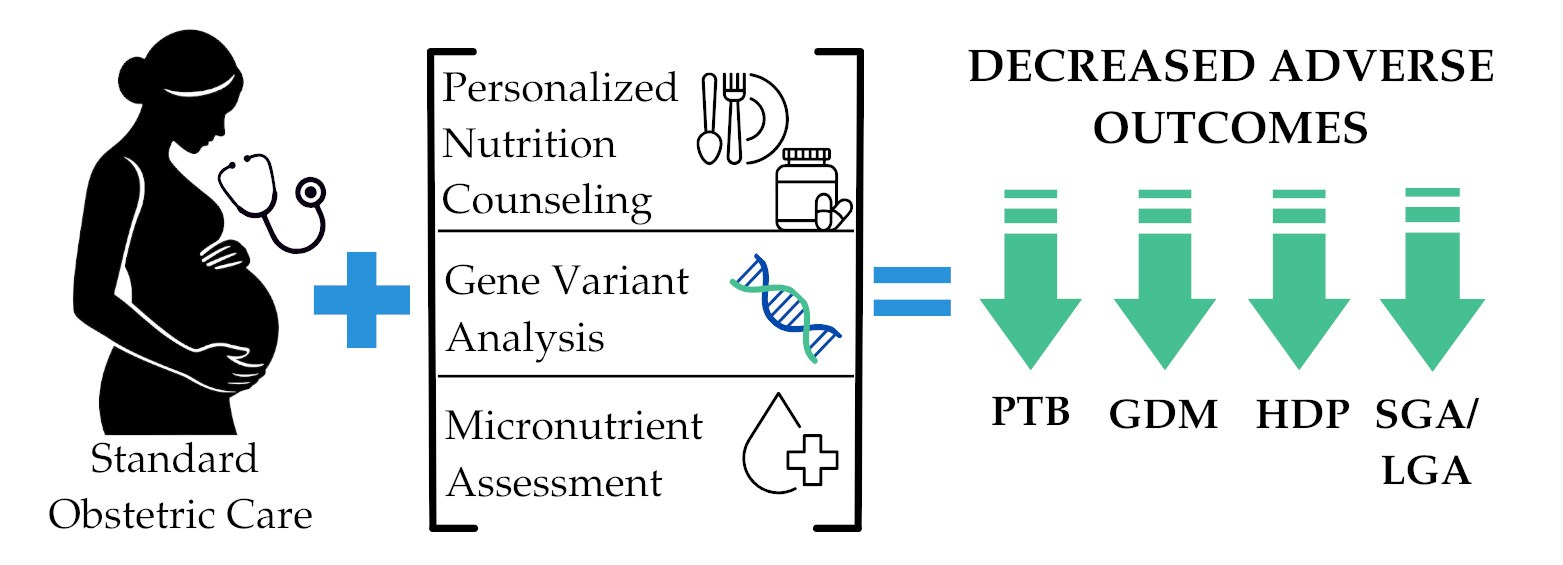

A ‘Standard of Care PLUS’ Model for Preterm Birth Prevention: Integrating Nutrient and Gene Variant Analysis with Targeted Interventions



Abstract
1. Introduction
1.1. Nutrition
1.2. Epigenetics
- Strength of association with maternal and neonatal adverse outcomes under study;
- Overlapping association with SNPs implicated in risk for chronic disease;
- SNP frequency in the population;
- Modifiability of the gene or gene product through nutrition, nutrient supplementation, and lifestyle modification.
1.3. Probiotic Mechanisms in Pregnancy
1.4. A Personalized and Proactive Approach
2. Materials and Methods
2.1. Primary Application
2.2. Secondary Application
- Nutritionist care consisting of 60 min per trimester delivered by phone or video conferencing;
- Serum micronutrients zinc, carnitine, and 25(OH)D obtained at intake, 24–28-week gestation, and 6–8 weeks postpartum;
- Dried blood spot DHA levels measured at intake, 24–28-week gestation, and breast milk DHA at 6–8 weeks postpartum;
- Buccal swab collection for a 42-gene variant panel obtained at intake.
2.3. Interventions
2.4. Primary and Secondary Outcomes
- The Oregon State SOC population, as reported by the March of Dimes (2022), representing the regional standard of care comparator.
- The Nevada PLUS population, representing the PLUS program comparator in a different geographic region and delivered through a different care model.
- The Clark County, Nevada Medicaid SOC population, as reported by healthysouthernnevada.org (2021), representing the regional standard of care comparator.
- The Oregon PLUS population, representing the program comparator in a different geographic region and delivered through a different care model.
3. Results
3.1. Baseline and Comparative Characteristics
3.2. Primary Application (Oregon PLUS vs. SOC)
3.3. Secondary and Pooled Analyses
3.3.1. Nevada PLUS Descriptive Outcomes
3.3.2. State-Stratified CMH Analysis (Pooled PLUS vs. SOC)
3.3.3. Numbers Needed to Treat
3.4. Micronutrient and Macronutrient Analysis
3.5. Compliance, Adherence, and Engagement
4. Discussion
5. Conclusions
Author Contributions
Funding
Institutional Review Board Statement
Informed Consent Statement
Data Availability Statement
Acknowledgments
Conflicts of Interest
Abbreviations
| APC | Article Processing Charge |
| BCHN | Board-Certified Holistic Nutritionist |
| BMI | Body mass index |
| CDC | Centers for Disease Control and Prevention |
| CFU | Colony forming units |
| CMH | Cochran–Mantel–Haenszel |
| CNP | Certified nutrition professional |
| DHA | Docosahexaenoic acid |
| DM | Diabetes mellitus |
| EGWG | Excessive gestational weight gain |
| GDM | Gestational diabetes mellitus |
| HDP | Hypertensive disorders of pregnancy |
| HTN | Hypertension |
| IRB | Institutional Review Board |
| LGA | Large for gestational age |
| MDHc | Master of Digital Health Candidate |
| NCD | Non-communicable disease |
| NNT | Numbers needed to treat |
| OGTT | Oral glucose tolerance test |
| PLUS | Standard of Care PLUS |
| PTB | Preterm birth (<37 weeks’ gestation) |
| SGA | Small for gestational age |
| SMM | Severe maternal morbidity |
| SOC | Standard of care |
| SNP | Single-nucleotide polymorphism |
| US | United States |
| 25(OH)D | 25-Hydroxyvitamin cholecalciferol |
Appendix A

| Trimester | Fetal Development Emphasis | Maternal Emphasis |
|---|---|---|
| 1 | Protein: Methionine, cysteine Fats: DHA Minerals: Iron, Magnesium Vitamins: A, D, B Complex, Choline | Protein: Carnitine Carbohydrates: Soluble & insoluble fiber Minerals: Iodine, Iron, Magnesium, Selenium Vitamins: A, C, D, B6 Phytonutrients: Rainbow of foods |
| 2 | Fat: DHA Minerals: Boron, Calcium, Iron, Magnesium, Molybdenum, Phosphorous Vitamins: A, D, E, B Complex Phytonutrients: Rainbow of foods carotenoids | Protein: Carnitine, glycine, lysine Carbohydrates: Soluble & insoluble fiber Minerals: Iron, Magnesium, Zinc Vitamins: A, C, D, B Complex Phytonutrients: Rainbow of foods, carotenoids |
| 3 | Fats: EPA & DHA Minerals: Copper, Iodine, Iron, Magnesium, Selenium, Zinc Vitamins: Choline, A, D, E, B Complex Phytonutrients: Rainbow, Carotenoids | Protein: Carnitine, glycine, lysine Carbohydrates: Soluble & insoluble fiber Fats: EPA, DHA, SPMs Minerals: Copper, Iodine, Iron, Magnesium, Selenium Vitamins: Choline, A, D, E, B Complex Phytonutrients: Rainbow of foods, carotenoids Probiotics: L. Gasseri, L. Fermentum, L. Reuteri, L. Salivarius, L. Helveticus, B. Longum |
| 4 | Fat: DHA Minerals: Calcium, Copper, Iron, Magnesium, Selenium, Zinc Vitamins: Choline, A, D, E, B Complex Phytonutrients: Rainbow of foods, Lutein, Zeaxanthin Probiotics: L. Reuteri, L. Rhamnosus, B. lactis, B. Longum | Fat: DHA & SPMs Minerals: Iron, Magnesium Vitamins: Choline, Inositol, D, B Complex Phytonutrients: Rainbow of foods, carotenoids Probiotics: L. Gasseri, L. Fermentum, L. Reuteri, L. Salivarius, L. Helveticus, B. Longum |
| Trimester | Select Symptoms of Pregnancy/Postpartum | Nutrition and Lifestyle Recommendations | Select Supplement Recommendations |
|---|---|---|---|
| 1 | Nausea | Eating frequency, small meals, protein emphasis, limit high histamine foods | Ginger root, B6 |
| Fatigue | Protein emphasis, iron metabolism support, and sleep support | Carnitine, iron, vitamin C, vitamin A, B vitamins | |
| 2 | Constipation | Adequate fiber, hydrating foods/fluid/kiwi fruit, phytonutrient intake, pre/probiotic rich foods | Magnesium, fiber |
| Restless Legs | Magnesium-rich foods, iron rich foods, electrolyte replenishment, coconut water | Magnesium, iron | |
| Heartburn | Limit antagonists: spicy, processed, gluten, dairy, sugar, caffeine and focus on alkaline rich foods/fluid, positional recommendations, almonds, apple cider vinegar, increase foods high in digestive enzymes (pineapple, papaya) as tolerated | Digestive enzymes | |
| 3 | Insomnia | Limit stimulants sugar/caffeine, meal timing, support healthy melatonin secretion habits during daytime | Magnesium |
| 4 | Mastitis | Hydration, lymphatic support, anti-inflammatory foods | Lecithin, SPMs, L. Gasseri, L. Fermentum, L. Salivarius |
| Nutrient | Amount per Serving | % Daily Value for Pregnant and Lactating Women |
|---|---|---|
| Calories | 10 | — |
| Total Fat | 1 g | 2% |
| Vitamin A (Natural mixed carotenoids) | 5000 IU | 100% |
| Vitamin C (Ascorbic acid) | 250 mg | 417% |
| Vitamin D3 (Cholecalciferol) | 2000 IU | 500% |
| Vitamin E (d-Alpha tocopheryl acid succinate; d-Alpha and mixed tocopherols) | 110 IU | 367% |
| Thiamine/Vitamin B1 (Thiamine mono nitrate) | 5 mg | 333% |
| Riboflavin/Vitamin B2 (Riboflavin-5-phosphate) | 5 mg | 294% |
| Niacin/Vitamin B3 (Niacinamide) | 25 mg | 125% |
| Vitamin B6 (Pyridoxine HCl and Pyridoxal-5-phosphate) | 15 mg | 750% |
| Folate (L-5-Methyltetrahydrofolate, glucosamine salt) | 1000 mcg | 250% |
| Vitamin B12 (Methylcobalamin) | 800 mcg | 13.333% |
| Biotin (Biotin) | 100 mcg | 33% |
| Pantothenic Acid/Vitamin B5 (d-Calcium pantothenate) | 25 mg | 250% |
| Iron (Iron bis-glycinate) | 25 mg | 139% |
| Iodine (Potassium iodide) | 150 mcg | 100% |
| Zinc (Zinc citrate) | 25 mg | 167% |
| Selenium (L-Selenomethionine) | 100 mcg | 143% |
| Copper (Copper gluconate) | 1.5 mg | 75% |
| Manganese (Manganese gluconate) | 5 mg | 250% |
| Chromium (Chromium niacinate) | 200 mcg | 167% |
| Molybdenum (Molybdenum glycinate) | 25 mcg | 33% |
| Omega-3 Fatty Acids (Fish oil) | 700 mg | ** |
| EPA (Eicosapentaenoic acid) | 500 mg | ** |
| DHA (Docosahexaenoic acid) | 200 mg | ** |
| L-Carnitine (L-Carnitine tartrate) | 1000 mg | ** |
| Probiotic Blend (Freeze-dried cultures) | 60 billion CFU | ** |
| Probiotic Strain (Form) | Amount per Serving | % Daily Value |
|---|---|---|
| Lactobacillus acidophilus (La-14) | † | ** |
| Bifidobacterium lactis (Bl-04) | † | ** |
| Lactobacillus plantarum (Lp-115) | † | ** |
| Lactobacillus salivarius (Ls-33) | † | ** |
| Streptococcus thermophilus (St-21) | † | ** |
| Nutrient | Amount per Serving | % Daily Value for Pregnant and Lactating Women |
|---|---|---|
| Vitamin A (from mixed carotenoids and retinyl palmitate) | 1650 mcg | 127% |
| Vitamin C (as ascorbic acid and niacinamide ascorbate) | 250 mg | 208% |
| Vitamin D (as cholecalciferol) | 25 mcg (1000 IU) | 167% |
| Vitamin E (from mixed tocopherols and d-alpha tocopherol succinate) | 90 mcg | 528% |
| Vitamin K (as phytonadione (ISP) | 90 mcg | 100% |
| Thiamin (as thiamin mononitrate) | 3.4 mg | 243% |
| Riboflavin | 3.4 mg | 213% |
| Niacin (as niacinamide ascorbate) | 35 mg | 194% |
| Vitamin B6 (as pyridoxine HCl and pyridoxal-5-phosphate) | 20 mg | 1000% |
| Folate (as calcium L-5-methyltetrahydrofolate) | 1700 mcg DFE | 283% |
| Vitamin B12 (as methyl cobalamin) | 800 mcg | 28,571% |
| Biotin | 300 mcg | 857% |
| Pantothenic Acid (as calcium D-pantothenate) | 20 mg | 286% |
| Choline (as choline bitartrate) | 450 mg | 82% |
| Iron (as ferrous bis-glycinate) | 30 mg | 111% |
| Iodine (as potassium iodide) | 176 mcg | 61% |
| Zinc (as zinc citrate) | 25 mg | 192% |
| Selenium (as seleno-methionine) | 200 mcg | 286% |
| Copper (as copper citrate) | 2 mg | 154% |
| Manganese (as manganese citrate) | 2 mg | 77% |
| Chromium (as chromium citrate) | 200 mcg | 444% |
| Molybdenum (as molybdenum aspartate complex) | 25 mcg | 50% |
| DHA (Docosahexaenoic acid) | 1 g | ** |
| EPA (Eicosapentaenoic acid) | 670 mg | ** |
| L-Carnitine (as L-carnitine L-tartrate) | 500 mg | ** |
| Lutein | 6 mg | ** |
| Zeaxanthin | 2 mg | ** |
| Ingredient | Amount per Capsule | Daily Value |
|---|---|---|
| Serving Size: 1 capsule | ||
| Lactobacillus rhamnosus GR-1 | 1 billion CFU 1 | ** |
| Lactobacillus reuteri RC-14 | 1 billion CFU 1 | ** |
| First trimester: Initial comprehensive blood work (blood type, Rh factor, CBC, infectious disease screening like HIV, Hepatitis B, Syphilis, Rubella immunity, urine culture). Third trimester: Glucose screening for gestational diabetes (typically 24–28 weeks), repeat CBC if indicated. Third trimester: Group B Strep (GBS) screening (typically 36–38 weeks), repeat labs if indicated (e.g., for preeclampsia concerns). |
| Biological Process † | Genes | Primary Biological Function |
|---|---|---|
| Lipid metabolism | APOE | Lipoprotein catabolism and receptor binding; isoforms alter lipid transport, placental lipid delivery, and oxidative stress response [69,70,71,72,73,74]. |
| Inflammation | IL-6 | Encodes interleukin-6, a pro-inflammatory cytokine regulating CRP expression; mediates implantation, placental development, and fetal growth; dysregulation is associated with pathological pregnancy [75,76,77]. |
| Detoxification—Phase I | AhR, CYP1A1, CYP1A2 | Xenobiotic sensing (AhR) and cytochrome P450–mediated Phase I biotransformation; activates environmental procarcinogens and metabolizes estrogens and caffeine [72,78,79,80]. |
| Detoxification—Phase II | GSTA1, GSTP1, GSTM1, GSTT1 | Glutathione S-transferase–mediated conjugation and neutralization of reactive intermediates and products of oxidative stress [81,82,83]. |
| Methylation | CBS, CHDH, COMT, MTHFR, MTHFD1, MTRR, PEMT, TCN2 | One-carbon metabolism, homocysteine regulation, DNA methylation, neurotransmitter catabolism, choline/phosphatidylcholine synthesis, and vitamin B12 transport [32,33,84,85,86,87,88]. |
| Monoamine oxidase metabolism | MAO-A | Degradation of monoamine neurotransmitters (dopamine, serotonin, norepinephrine); modulates maternal stress regulation; placental MAO expression is implicated in oxidative stress pathways in preeclampsia [89,90]. |
| Neurotrophic pathway | BDNF | Brain-derived neurotrophic factor supports neuronal survival, differentiation, and synaptic plasticity; modulates maternal mood, stress response, and fetal neurodevelopment; maternal serum levels vary across pregnancy [91,92,93]. |
| Progesterone metabolism | PROGINS | Encodes the progesterone receptor; PROGINS variants diminish progesterone response, affecting uterine function and implantation; effects may be modified by ethnic background, nutritional status, and gene–environment interactions [94,95,96]. |
| Melatonin receptor metabolism | MTNR1B, MIR194-2 near MTNR1B | Melatonin receptor 1B mediates circadian and reproductive actions of melatonin; variants influence glucose regulation and insulin secretion in accordance with diurnal cycles [97]. |
| Insulin sensitivity, secretion and metabolism | ENPP1, GCK, IGF2BP2, SLC30A8 | Glucose phosphorylation (GCK), insulin receptor signaling (ENPP1), IGF2 mRNA regulation (IGF2BP2), and zinc-mediated insulin secretion (SLC30A8) [72,98,99]. |
| Vitamin D requirements | VDR | Vitamin D receptor regulates calcium homeostasis, immune modulation, cell proliferation, and placental function; VDR polymorphisms modify maternal vitamin D concentration and neonatal outcomes [25,26,27,28,100,101,102]. |
| Gene | rs Number | SNP | Outcome Association | Prevalence | ||||
|---|---|---|---|---|---|---|---|---|
| PTB | HDP | GDM | SGA | LGA | (%) | |||
| AhR | 2,066,853 | Arg554Lys (G/A) | X | X | X | 61 | ||
| APOE | 7412 | E2/E2 | X | X | X | 0 | ||
| APOE | 429,358 | E2/E3 | X | X | 30 | |||
| E2/E4 | X | X | 11 | |||||
| E3/E3 | 39 | |||||||
| E3/E4 | X | X | 6 | |||||
| E4/E4 | X | X | 11 | |||||
| BDNF | 6265 | Val66Met (C/T) | 22 | |||||
| CBS | 4,920,037 | G>A | 11 | |||||
| CBS | 234,715 | G>T | 11 | |||||
| CHDH | 12,676 | Leu78Arg(A/C) | 44 | |||||
| COMT | 4818 | C>G | 100 | |||||
| COMT | 6269 | A>G | 94 | |||||
| COMT | 4633 | C>T | 72 | |||||
| CYP1A1 | 4,646,903 | T>C | X | X | X | 67 | ||
| CYP1A1 | 1,048,943 | A>G | X | X | X | 33 | ||
| ENPP1 | 997,509 | C>T | X | X | 6 | |||
| GCK | 1,799,884 | -30G>A | X | X | 50 | |||
| GSTA1 | 3,957,357 | C>T | X | 50 | ||||
| GSTP1 | 1695 | Ile105Val (A>G) | X | 50 | ||||
| GSTM1 | 1,065,411 | Insertion/Deletion | X | 17 (deletion) | ||||
| GSTT1 | 1,130,990 | Insertion/Deletion | X | 6 (deletion) | ||||
| IGF2BP2 | 4,402,960 | G>T | X | 50 | ||||
| IL6 | 1,548,216 | G>C | X | 33 | ||||
| IL6 | 2,069,843 | G>A | X | 33 | ||||
| IL6 | 6,963,444 | A>G | X | 22 | ||||
| IL6 | 7,784,987 | G>A | X | 22 | ||||
| IL6 | 3,087,221 | C>T | X | 17 | ||||
| MAO-A | 1,137,070 | C>T | 78 | |||||
| MAO-A | 6323 | G>T | 37 | |||||
| MTHFR | 1,801,131 | 1298A>C | X | X | 44 | |||
| MTHFR | 1,801,133 | 677C>T | X | X | 39 | |||
| MTHFD1 | 2,236,225 | Arg653zGln (G/A) | X | 61 | ||||
| MTNR1B | 10,830,963 | C>G | X | X | 44 | |||
| MIR194-2 near MTNR1B | 1,387,153 | C>T | X | X | 50 | |||
| MTRR | 1,801,394 | 66 A>G | X | X | 67 | |||
| PEMT | 1,108,579 | C>T | X | 56 | ||||
| PR | 11,224,592 | C>T | X | 55 (not protective) | ||||
| PR | 10,895,068 | 331G>A | X | 6 (not protective) | ||||
| TCN2 | 1,801,198 | G>C | 61 | |||||
| VDR | 2,228,570 | Fokl T>C | X | X | X | X | 44 | |
| VDR | 11,568,820 | C>T | X | X | X | 56 | ||
| VDR | 2,853,559 | A>G | X | X | X | 89 | ||
| SLC30A8 | 11,558,471 | G>A | X | 94 | ||||
| Hypertensive disorders of pregnancy diagnosis and management based on American Academy of Obstetricians and Gynecologists (ACOG) Practice Bulletin No. 222. Obstet Gynecol June 2020; Vol 135(6): e-237-e260. Gestational diabetes mellitus diagnosis and management based on ACOG Practice Bulletin No. 190. Obstet Gynecol Feb 2018; Vol 131 (2): e49-e64. Small for gestational age condition defined by American Academy of Pediatrics gestational age condition defined by AAP standard as growth greater than or equal to the 90th percentile based on gestational age at delivery. |
| The 5-food frequency questionnaire has been used in the SOC PLUS model since its inception (2011): Do you eat protein with every meal? Do you eat at least three times daily? Do you eat 3–5 servings of vegetables daily? Do you eat 1–2 servings of fruit daily? Do you drink sugar-sweetened beverages daily or weekly? To ensure clarity, definitions of terms like protein, serving, and sugar-sweetened beverage were provided by a BCHN through nutrition education. |
References
- Healthcare Cost and Utilization Project. 2006–2015. Available online: https://hcup-us.ahrq.gov/reports/statbriefs/sb243-Severe-Maternal-Morbidity-Delivery-Trends-Disparities.jsp (accessed on 24 May 2025).
- Ely, D.M.; Driscoll, A.K. Infant mortality in the United States, 2022: Data from the period linked birth/infant death file. Natl. Vital Stat. Rep. 2024, 73, 1–18. Available online: https://www.cdc.gov/nchs/data/nvsr/nvsr73/nvsr73-05.pdf (accessed on 24 May 2025).
- Crump, C.; Sundquist, J.; Sundquist, K. Preterm or early term birth and risk of attention-deficit/hyperactivity disorder: A national cohort and co-sibling Study. Ann. Epidemiol. 2023, 86, 119–125.e4. [Google Scholar] [CrossRef] [Scilit] [PubMed]
- Lu, D.; Yu, Y.; Ludvigsson, J.F.; Oberg, A.S.; Sørensen, H.T.; László, K.D.; Li, J.; Cnattingius, S. Birth weight, gestational age, and risk of cardiovascular disease in early adulthood: Influence of familial factors. Am. J. Epidemiol. 2023, 192, 866–877. [Google Scholar] [CrossRef] [Scilit]
- Zamojska, J.; Niewiadomska-Jarosik, K.; Wosiak, A.; Gruca, M.; Smolewska, E. Serum adipocytokines profile in children born small and appropriate for gestational age-a comparative study. Nutrients 2023, 15, 868. [Google Scholar] [CrossRef] [Scilit] [PubMed]
- Hirai, A.H.; Owens, P.L.; Reid, L.D.; Vladutiu, C.J.; Main, E.K. Trends in severe maternal morbidity in the US across the transition to ICD-10-CM/PCS from 2012–2019. JAMA Netw. Open 2022, 5, E2222966. [Google Scholar] [CrossRef] [Scilit]
- Emmerich, S.; Fryar, C.; Stierman, B. Obesity and Severe Obesity Increasing Prevalence in Adults: United States, August 2021–August 2023. Available online: https://stacks.cdc.gov/view/cdc/159281 (accessed on 24 May 2025).
- Leonard, S.A.; Siadat, S.; Main, E.K.; Huybrechts, K.F.; El-Sayed, Y.Y.; Hlatky, M.A.; Atkinson, J.; Sujan, A.; Bateman, B.T. Chronic hypertension during pregnancy: Prevalence and treatment in US 2008–2021. Hypertension 2024, 81, 1716–1723. [Google Scholar] [CrossRef] [Scilit] [PubMed]
- Luu, T.M.; Katz, S.L.; Leeson, P.; Thébaud, B.; Nuyt, A.-M. Preterm birth: Risk factor for early-onset chronic disease. CMAJ 2016, 188, 736–746. [Google Scholar] [CrossRef] [Scilit]
- Korede, K.; Yusef, D.D. Temporal trends and risk of small for gestational age (SGA) infants among Asian American mothers by ethnicity. Ann. Epidemiol. 2021, 63, 79–85. [Google Scholar] [CrossRef] [Scilit]
- Sridhar, S.B.; Ferrara, A.; Ehrlich, S.F.; Brown, S.D.; Hedderson, M.M. Risk of large for gestational age infants in women with GDM by race, ethnicity and BMI categories. Obstet. Gynecol. 2013, 121, 1255–1262. [Google Scholar] [CrossRef] [Scilit]
- Ng, S.-K.; Olog, A.; Spinks, A.B.; Cameron, C.M.; Searle, J.; McClure, R.J. Risk factors and obstetric complications of large for gestational age with adjustments for community effects: Results from a new cohort study. BMC Public Health 2010, 10, 460. [Google Scholar] [CrossRef] [Scilit]
- Maternal Vulnerability in the US—A Shameful Problem for One of the World’s Wealthiest Countries. Surgo Ventures. 2020. Available online: https://mvi.surgoventures.org (accessed on 10 April 2024).
- Stone, L.P.; Stone, P.M.; Rydbom, E.A.; Stone, L.A.; Stone, T.E.; Wilkens, L.E.; Reynolds, K. Customized nutritional enhancement for pregnant women appears to lower incidence of certain common maternal and neonatal complications: An observational study. Glob. Adv. Health Med. 2014, 3, 50–55. [Google Scholar] [CrossRef] [Scilit] [PubMed]
- Stephenson, J.; Heslehurst, N.; Hall, J.; Schoenaker, D.A.J.M.; Hutchinson, J.; Cade, J.E.; Poston, L.; Barrett, G.; Crozier, S.R.; Barker, M.; et al. Before the beginning: Nutrition and lifestyle in the preconception period and its importance for future health. Lancet 2018, 391, 1830–1841. [Google Scholar] [CrossRef] [Scilit] [PubMed]
- Marshall, N.E.; Abrams, B.; Barbour, L.A.; Catalano, P.; Christian, P.; Friedman, J.E.; Hay, W.W.; Hernandez, T.L.; Krebs, N.F.; Oken, E.; et al. The importance of nutrition in pregnancy and lactation: Lifelong consequences. Am. J. Obstet. Gynecol. 2022, 226, 607–632. [Google Scholar] [CrossRef] [Scilit] [PubMed]
- Perkins, A.V.; Vanderlelie, J.J. Multiple micronutrient supplementation and birth outcomes: The potential importance of selenium. Placenta 2016, 48, S61–S65. [Google Scholar] [CrossRef] [Scilit]
- Bailey, R.L.; Pac, S.G.; Fulgoni, V.L., III; Reidy, K.C.; Catalano, P.M. Estimation of total usual dietary intakes of pregnant women in the United States. JAMA Netw. Open 2019, 2, e195967. [Google Scholar] [CrossRef] [Scilit]
- Benson, A.E.; Shatzel, J.J.; Ryan, K.S.; Hedges, M.A.; Martens, K.; Aslan, J.E.; Lo, J.O. The incidence, complications, and treatment of iron deficiency in pregnancy. Eur. J. Haematol. 2022, 109, 633–642. [Google Scholar] [CrossRef] [Scilit]
- Lee, H.S.; Kim, S.; Kim, M.H.; Kim, J.; Kim, W.Y. Iron status and pregnancy outcomes in Korean pregnant women. Eur. J. Clin. Nutr. 2006, 60, 1130–1135. [Google Scholar] [CrossRef] [Scilit]
- Srour, M.A.; Aqel, S.S.; Srour, K.M.; Younis, K.R.; Samarah, F. Prevalence of anemia and iron-def. anemia among Palestinian pregnant women and association with fetal outcome. Anemia 2018, 2018, 9135625. [Google Scholar] [CrossRef] [Scilit]
- Lohninger, A.; Radler, U.; Jinniate, S.; Lohninger, S.; Karlic, H.; Lechner, S.; Mascher, D.; Tammaa, A.; Salzer, H. Carnitine supplementation decreases rise in FFA, insulin resistance and gestational diabetes in pregnant women. Gynakol. Geburtschilfliche Rundsch. 2009, 49, 230–235. [Google Scholar] [CrossRef] [Scilit]
- King, J.C.; Cousins, R.J.; Ziegler, T.R. Nutrition during pregnancy and lactation. In Modern Nutrition in Health and Disease, 11th ed.; Ross, A.C., Caballero, B., Cousins, R.J., Tucker, K.L., Ziegler, T.R., Eds.; Lippincott Williams & Wilkins: Baltimore, MD, USA, 2014; pp. 189–205. [Google Scholar]
- Mercer, J.G. Nutrition and Development: Short- and Long-Term Consequences for Health: Neurologic Development; Wiley-Blackwell: Hoboken, NJ, USA, 2013; pp. 87–115. [Google Scholar]
- Karras, S.; Paschou, S.A.; Kandaraki, E.; Anagnostis, P.; Annweiler, C.; Tarlatzis, B.C.; Hollis, B.W.; Grant, W.B.; Goulis, D.G. Hypovitaminosis D in pregnancy in the Mediterranean region: A systematic review. Eur. J. Clin. Nutr. 2016, 70, 979–986. [Google Scholar] [CrossRef] [Scilit]
- Sharma, S.; Kumar, A.; Prasad, S.; Sharma, S. Current Scenario of Vitamin D Status During Pregnancy in North Indian Population. J. Obstet. Gynaecol. India 2016, 66, 93–100. [Google Scholar] [CrossRef] [Scilit]
- Palacios, C.; Gonzalez, L. Is vitamin D deficiency a major global public health problem? J. Steroid Biochem. Mol. Biol. 2014, 144, 138–145. [Google Scholar] [CrossRef] [Scilit] [PubMed]
- Chien, M.-C.; Huang, C.-Y.; Wang, J.-H.; Shih, C.L.; Wu, P. Effects of vitamin D in pregnancy on maternal and offspring health-related outcomes: An umbrella review of systematic review and meta-analyses. Nutr. Diabetes 2024, 14, 35. [Google Scholar] [CrossRef] [Scilit] [PubMed]
- Keats, E.C.; Haider, B.A.; Tam, E.; Bhutta, Z.A. Multiple-micronutrient supplementation for women during pregnancy. Cochrane Database Syst. Rev. 2019, CD004905. [Google Scholar] [CrossRef] [Scilit]
- Cetin, I.; Devlieger, R.; Maternal Nutrition Delphi Study Group; Isolauri, E.; Obeid, R.; Parisi, F.; Pilz, S.; van Rossem, L.; Steegers-Theunissen, R. Maternal nutrition and pregnancy outcomes: A position paper on nutritional strategies before and during pregnancy. BMC Pregnancy Childbirth 2025, 25, 44. [Google Scholar] [CrossRef] [Scilit]
- Jiang, Y.; Chen, Y.; Wei, L.; Zhang, H.; Zhang, J.; Zhou, X.; Zhu, S.; Du, Y.; Su, R.; Fang, C.; et al. DHA supplementation and pregnancy complications. J. Transl. Med. 2023, 21, 394. [Google Scholar] [CrossRef] [Scilit]
- Jirtle, R.L.; Tyson, F.L. (Eds.) Environmental Epigenomics in Health and Disease: Epigenetics and Complex Diseases; Springer: Berlin/Heidelberg, Germany, 2013; pp. 199–210. [Google Scholar] [CrossRef] [Scilit]
- Schmidt, R.J.; Hansen, R.L.; Hartiala, J.; Allayee, H.; Schmidt, L.C.; Tancredi, D.J.; Tassone, F.; Hertz-Picciotto, I. Prenatal vitamins, one-carbon metabolism gene variants, and risk for autism. Epidemiology 2011, 22, 476–485. [Google Scholar] [CrossRef] [Scilit]
- Godfrey, K.M.; Costello, P.; El-Heis, S. Nutrition in early life, epigenetics and lifelong health—Evidence from cohort and intervention studies. Proc. Nutr. Soc. 2025, 1–6. [Google Scholar] [CrossRef] [Scilit]
- Andonotopo, W.; Bachnas, M.A.; Dewantiningrum, J.; Pramono, M.B.A.; Sulistyowati, S.; Sanjaya, I.N.H.; Stanojevic, M.; Kurjak, A. Nutriepigenomics in perinatal medicine: Maternal nutrition as a modulator of fetal gene expression and long-term health. J. Perinat. Med. 2025. [Google Scholar] [CrossRef] [Scilit]
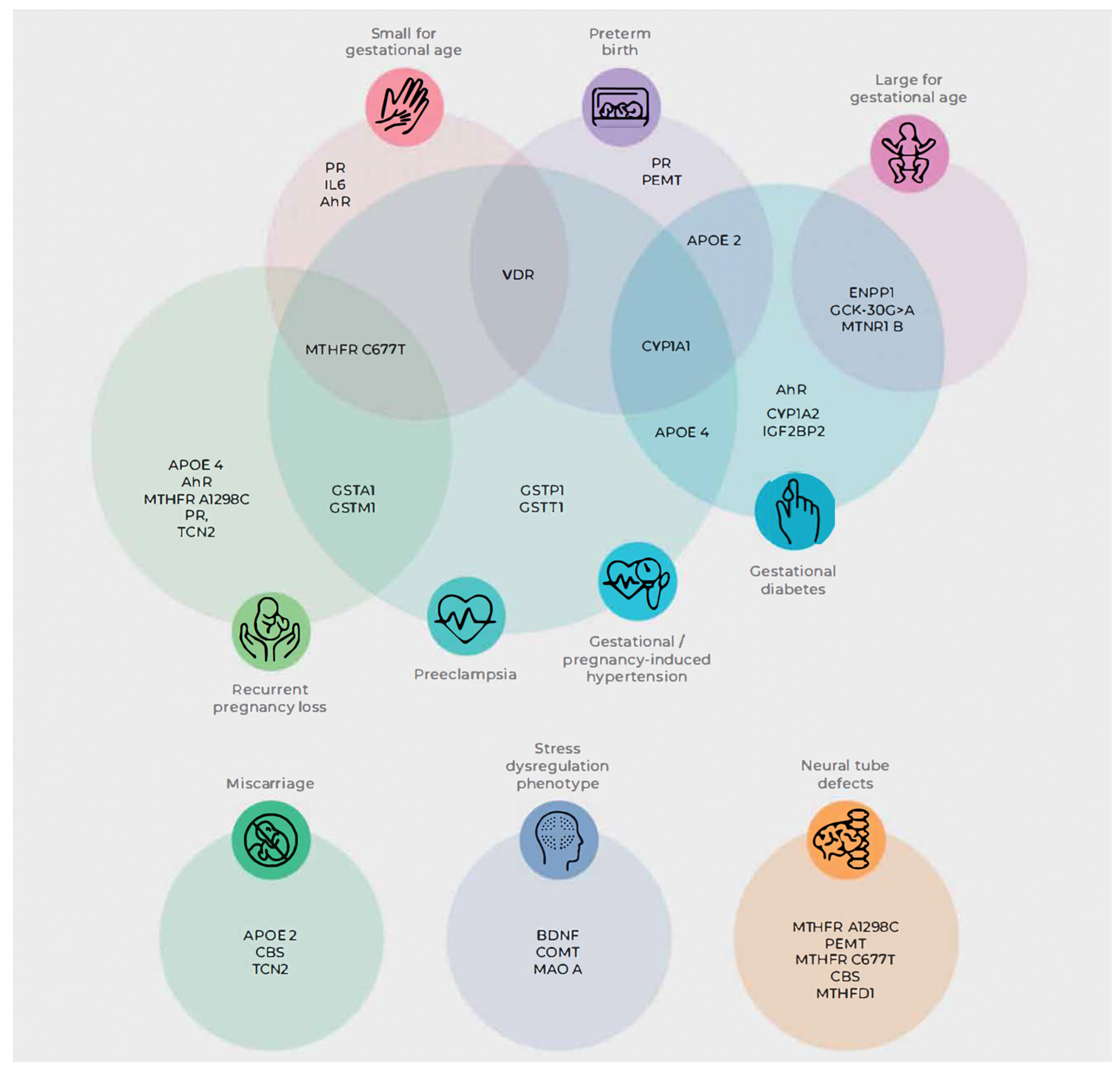
- Rydbom, E.S. Venn Diagram of Overlapping Effects of Gene Variants in Maternal and Neonatal Adverse Outcomes [Unpublished Figure]. 2018. Modified from DNALife GrowBaby Sample Report. Available online: https://app.box.com/s/9g1d9wrosa6ueli9horjcs8j8h9srt12 (accessed on 24 May 2025).
- Michita, R.T.; Jimenez, N.; Herbst-Kralovetz, M.M.; Mysorekar, I.U. Underexplored maternal microbiomes: Immune, metabolic, and microbial pathways shaping pregnancy outcomes. Infect. Immun. 2025, e00608-25. [Google Scholar] [CrossRef] [Scilit]
- Koren, O.; Konnikova, L.; Brodin, P.; Mysorekar, I.U.; Collado, M.C. The maternal gut microbiome in pregnancy: Implications for the developing immune system. Nat. Rev. Gastroenterol. Hepatol. 2024, 21, 35–45. [Google Scholar] [CrossRef] [Scilit]
- Ventura, E.F.; Lane, J.A.; Turjeman, S.; Vidra, N.; Weiss, G.A.; Gross, G.; Chang, C.-Y.; Koren, O. ILSI Europe perspective review: Site-specific microbiota changes during pregnancy associated with biological consequences and clinical outcomes. Gut Microbes 2025, 17, 2501186. [Google Scholar] [CrossRef] [Scilit] [PubMed]
- Lu, X.; Shi, Z.; Jiang, L.; Zhang, S. Maternal gut microbiota in the health of mothers and offspring: From the perspective of immunology. Front. Immunol. 2024, 15, 1362784. [Google Scholar] [CrossRef] [Scilit]
- Lopez-Tello, J.; Schofield, Z.; Kiu, R.; Dalby, M.J.; van Sinderen, D.; Le Gall, G.; Sferruzzi-Perri, A.N.; Hall, L.J. Maternal gut microbiota Bifidobacterium promotes placental morphogenesis, nutrient transport and fetal growth in mice. Cell. Mol. Life Sci. 2022, 79, 386. [Google Scholar] [CrossRef] [Scilit] [PubMed]
- Sajdel-Sulkowska, E.M. The impact of maternal gut microbiota during pregnancy on fetal gut–brain axis development and life-long health outcomes. Microorganisms 2023, 11, 2199. [Google Scholar] [CrossRef] [Scilit]
- Gomes, A.M.; Encarnação, C.; Azevedo, C.F.R.; Nunes, C.; Ribeiro, I.P.; Guimarães, L.; Costa, A.R. The influences of oral probiotics on the immunometabolic response during pregnancy and lactation: A systematic review. Nutrients 2025, 17, 1535. [Google Scholar] [CrossRef] [Scilit]
- Ding, M.; Li, H.; Wang, Y.; Zhang, T.; Liu, X.; Chen, Y. Microbiota-targeted interventions and clinical implications for maternal-offspring health: An umbrella review of systematic reviews and meta-analyses of randomized controlled trials. J. Glob. Health 2024, 14, 04177. [Google Scholar] [CrossRef] [Scilit]
- Healthy Southern Nevada. Healthy Southern Nevada: Community Health Data and Resources [Internet]. 2021. Available online: https://www.healthysouthernnevada.org/ (accessed on 25 May 2024).
- Han, X.; Ding, S.; Lu, J.; Li, Y. Global, regional, and national burdens of common micronutrient deficiencies from 1990 to 2019: A secondary trend analysis based on the Global Burden of Disease 2019 study. EClinicalMedicine 2022, 44, 101299. [Google Scholar] [CrossRef] [Scilit]
- Cristófalo, M.M.; de Almeida Garcia, J.O.; Aldrighi, J.F.S.; Cristófalo, R.M.; França, M.L.M.; Luzia, L.A.; Vasconcelos, S.P.; Aldrighi, J.M. Prevalence of vitamin D deficiency in pregnant women: Systematic review and meta-analysis. Nutr. Rev. 2025, 84, 600–614. [Google Scholar] [CrossRef] [Scilit]
- Beck, C.; Blue, N.R.; Silver, R.M.; Na, M.; Grobman, W.A.; Steller, J.; Parry, S.; Scifres, C.; Gernand, A.D. Maternal vitamin D status, fetal growth patterns, and adverse pregnancy outcomes in a multisite prospective pregnancy cohort. Am. J. Clin. Nutr. 2025, 121, 376–384. [Google Scholar] [CrossRef] [Scilit]
- Miliku, K.; Vinkhuyzen, A.; Blanken, L.M.E.; McGrath, J.J.; Eyles, D.W.; Burne, T.H.; Hofman, A.; Tiemeier, H.; Steegers, E.A.P.; Gaillard, R.; et al. Maternal vitamin D concentrations during pregnancy, fetal growth patterns, and risks of adverse birth outcomes. Am. J. Clin. Nutr. 2016, 103, 1514–1522. [Google Scholar] [CrossRef] [Scilit] [PubMed]
- Zhao, R.; Zhou, L.; Wang, S.; Xiong, G.; Hao, L. Association between maternal vitamin D levels and risk of adverse pregnancy outcomes: A systematic review and dose-response meta-analysis. Food Funct. 2022, 13, 2016–2030. [Google Scholar] [CrossRef] [Scilit]
- Jung, C.; Lu, Z.; Litonjua, A.A.; Loscalzo, J.; Weiss, S.T.; Mirzakhani, H. The association of early pregnancy vitamin D and BMI status with composite adverse pregnancy outcomes: An ancillary analysis of the Vitamin D Antenatal Asthma Reduction Trial. Am. J. Clin. Nutr. 2025, 122, 324–334. [Google Scholar] [CrossRef] [Scilit]
- Herrick, K.A.; Storandt, R.J.; Afful, J.; Pfeiffer, C.L.; Schleicher, M.E.; Looker, A.C.; Moshfegh, A.J. Vitamin D status in the United States, 2011–2014. Am. J. Clin. Nutr. 2019, 110, 150–157. [Google Scholar] [CrossRef] [Scilit]
- Alzaman, N.S.; Dawson-Hughes, B.; Nelson, J.; D’Alessio, D.; Pittas, A.G. Vitamin D status of Black and White Americans and changes in vitamin D metabolites after varied doses of vitamin D supplementation. Am. J. Clin. Nutr. 2016, 104, 205–214. [Google Scholar] [CrossRef] [Scilit]
- Murphy, R.A.; Devarshi, P.P.; Ekimura, S.; Marshall, K.; Mitmesser, S.H. Long-chain Omega-3 Fatty Acid Serum Concentrations Across the Life Stages in the USA: An analysis of NHANES 2011–2012. BMJ Open 2021, 11, e043301. [Google Scholar] [CrossRef] [Scilit]
- National Institutes of Health, Office of Dietary Supplements. Carnitine: Health Professional Fact Sheet; NIH: Bethesda, MD, USA, 2023. Available online: https://ods.od.nih.gov/factsheets/Carnitine-HealthProfessional/ (accessed on 8 July 2023).
- Mayer, A.B.; Rayns, L.F.T. Historical changes in the mineral content of fruit and vegetables in the UK from 1940 to 2019: A concern for human nutrition and agriculture. Int. J. Food Sci. Nutr. 2022, 73, 315–326. [Google Scholar] [CrossRef] [Scilit]
- Debnath, S.; Dey, A.; Khanam, R.; Saha, S.; Sarkar, D.; Saha, J.K.; Coumar, M.V.; Patra, B.C.; Biswas, T.; Ray, M.; et al. Historical shifting in grain mineral density of landmark rice and wheat cultivars released over the past 50 years in India. Sci. Rep. 2023, 13, 21164. [Google Scholar] [CrossRef] [Scilit]
- Zhu, C.; Kobayashi, K.; Loladze, I.; Zhu, J.; Jiang, Q.; Xu, X.; Liu, G.; Seneweera, S.; Ebi, K.L.; Drewnowski, A.; et al. Carbon dioxide (CO2) levels this century will alter the protein, micronutrients, and vitamin content of rice grains with potential health consequences for the poorest rice-dependent countries. Sci. Adv. 2018, 4, eaaq1012. [Google Scholar] [CrossRef] [Scilit] [PubMed]
- Aronica, L.; Fessler, S.; Rydbom, E.S.; Jirtle, R.L. Perinatal nutrition as a key regulator of genomic imprinting: A new paradigm for maternal-child health. Front. Nutr. 2025, 12, 1681847. [Google Scholar] [CrossRef] [Scilit] [PubMed]
- Jima, D.D.; Skaar, D.A.; Planchart, A.; Motsinger-Reif, A.; Cevik, S.E.; Park, S.S.; Cowley, M.; Wright, F.; House, J.; Liu, A.; et al. Genomic map of candidate human imprint control regions: The imprintome. Epigenetics 2022, 17, 1920–1943. [Google Scholar] [CrossRef] [Scilit] [PubMed]
- Jirtle, R.L.; Skaar, D.A.; Li, Y.; Bernal, A.J.; Hoyo, C.; Murphy, S.K. The human imprintome: Regulatory mechanisms, methods of ascertainment, and roles in disease susceptibility. ILAR J. 2012, 53, 341–358. [Google Scholar] [CrossRef] [Scilit]
- Price, K. U Economists Tally Societal Cost of Preterm Birth. Deseret News [Internet]. 2019. Available online: https://www.deseret.com/utah/2019/11/9/20948701/premature-births-cost-society-billions-university-of-utah-economists-say/ (accessed on 28 July 2025).
- Dall, T.M.; Yang, W.; Gillespie, K.; Mocarski, M.; Byrne, E.; Cintina, I.; Beronja, K.; Semilla, A.P.; Iacobucci, W.; Hogan, P.F. The economic burden of elevated blood glucose levels in 2017: Diagnosed and undiagnosed diabetes, gestational diabetes mellitus, and prediabetes. Diabetes Care 2019, 42, 1661–1668. [Google Scholar] [CrossRef] [Scilit]
- Hao, J.; Hassen, D.; Hao, Q.; Graham, J.; Paglia, M.J.; Brown, J.; Cooper, M.; Schlieder, V.; Snyder, S.R. Maternal and infant health care costs related to preeclampsia. Obstet. Gynecol. 2019, 134, 1227–1233. [Google Scholar] [CrossRef] [Scilit]
- Lenoir-Wijnkoop, I.; van der Beek, E.M.; Garssen, J.; Nuijten, M.J.C.; Uauy, R.D. Health economic modeling to assess short-term costs of maternal overweight, gestational diabetes, and related macrosomia—A pilot evaluation. Front. Pharmacol. 2015, 6, 103. [Google Scholar] [CrossRef] [Scilit]
- Marzouk, A.; Filipovic-Pierucci, A.; Baud, O.; Zieleskiewicz, C.; Fresson, P.; Cottenet, J.; Quantin, C.; Rozenberg, P.; Elie, J.F.; Patural, O.; et al. Prenatal and post-natal cost of small for gestational age infants: A national study. BMC Health Serv. Res. 2017, 17, 221. [Google Scholar] [CrossRef] [Scilit]
- Stevens, W.; Shih, T.; Incerti, D.; Ton, T.G.N.; Gonzales, R.; Zhou, W.H.; Staveley, M.J.; Hurley, W.E.; Moy, E.; Kuppermann, J.M.; et al. Short-term costs of preeclampsia to the United States health care system. Am. J. Obstet. Gynecol. 2017, 217, 237–248.e16. [Google Scholar] [CrossRef] [Scilit]
- Osterman, M.J.; Hamilton, B.E.; Martin, J.A.; Driscoll, A.K.; Matthews, T.J. Births: Final Data for 2022. Natl. Vital Stat. Rep. 2024, 73, 1–56. [Google Scholar] [PubMed]
- McGladdery, S.H.; Frohlich, J.J. Lipoprotein lipase and apoE polymorphisms: Relationship to hypertriglyceridemia during pregnancy. J. Lipid Res. 2001, 42, 1905–1912. [Google Scholar] [CrossRef] [Scilit]
- Kalinderi, K.; Kalinderis, M.; Papaliagkas, V.; Chatzikyriakidou, A.; Fidani, L. Apolipoprotein E and its possible role in the pathogenesis of gestational diabetes mellitus: Fact or fiction? Genet. Test. Mol. Biomarks. 2025, 29, 99–101. [Google Scholar] [CrossRef] [Scilit] [PubMed]
- Chen, L.; Tan, K.M.L.; Leow, M.K.S.; Tan, K.H.; Chan, J.K.Y.; Chan, S.Y.; Chong, Y.S.; Gluckman, P.D.; Eriksson, J.G.; Wenk, M.R.; et al. Characterization of pregnancy-induced alterations in apolipoproteins and their associations with maternal metabolic risk factors and offspring birth outcomes. EBioMedicine 2025, 112, 105562. [Google Scholar] [CrossRef] [Scilit]
- Stiefel, P.; Miranda, M.L.; Bellido, L.M.; Luna, J.; Jiménez, L.; Pamies, E.; de Frutos, P.G.; Villar, J. Genotype of the CYBA promoter –930A/G, polymorphism C677T of the MTHFR and APOE genotype in patients with hypertensive disorders of pregnancy. Med. Clin. 2009, 133, 657–661. [Google Scholar] [CrossRef] [Scilit]
- Barbitoff, Y.A.; Tsarev, A.A.; Vashukova, E.S.; Nezhentsev, V.I.; Korostelev, S.A.; Freidin, A.V.; Ignatieva, E.V.; Lapin, K.V.; Afanasyeva, M.A.; Tvorogova, T.V.; et al. A data-driven review of the genetic factors of pregnancy complications. Int. J. Mol. Sci. 2020, 21, 3384. [Google Scholar] [CrossRef] [Scilit] [PubMed]
- Nie, M.; Wang, Y.; Li, W.; Ping, F.; Liu, J.; Wu, X.; Mao, J.; Wang, X.; Ma, L. The association between six genetic variants and blood lipid levels in pregnant Chinese Han women. J. Clin. Lipidol. 2017, 11, 1406–1415. [Google Scholar] [CrossRef] [Scilit] [PubMed]
- Calderón-Garcidueñas, L.; de la Monte, S.M. Apolipoprotein E4, gender, body mass index, inflammation, insulin resistance, and air pollution interactions: Recipe for Alzheimer’s disease development in Mexico City young females. J. Alzheimers Dis. 2017, 58, 613–630. [Google Scholar] [CrossRef] [Scilit]
- Vilotić, A.; Nacka-Aleksić, M.; Pirković, A.; Soldatović, M.; Krnjaja, B.; Kostić, M.; Žikić, O.; Vuković, D.; Tomašević-Todorović, T.; Rančić, M.; et al. IL-6 and IL-8: An overview of their roles in healthy and pathological pregnancies. Int. J. Mol. Sci. 2022, 23, 14574. [Google Scholar] [CrossRef] [Scilit]
- Urbanek, M.; Hayes, M.G.; Lee, H.; Freathy, R.M.; Lowe, L.P.; Ackerman, C.; Jafari, N.; Dyer, A.R.; Cox, N.J.; Dunger, D.B.; et al. The role of inflammatory pathway genetic variation on maternal metabolic phenotypes during pregnancy. PLoS ONE 2012, 7, e32958. [Google Scholar] [CrossRef] [Scilit]
- Reyes-Aguilar, S.S.; Poblete-Naredo, I.; Rodríguez-Yáñez, Y.; Corona-Núñez, R.O.; Ortiz-Robles, C.D.; Calderón-Aranda, E.S.; Albores, A. CYP1A1, GSTT1, IL-6 and IL-8 transcription and IL-6 secretion on umbilical endothelial cells from hypertensive pregnant women. Pregnancy Hypertens 2019, 18, 63–66. [Google Scholar] [CrossRef] [Scilit] [PubMed]
- Sata, F.; Yamada, H.; Suzuki, K.; Sekiguchi, M.; Kato, E.H.; Minakami, H.; Kishi, R. CYP1A1 and AhR gene polymorphisms and recurrent pregnancy loss. Reprod. Toxicol. 2016, 65, 295–301. [Google Scholar] [CrossRef] [Scilit]
- Park, S.; Chon, S.W.; Park, S.Y.; Kim, H.J.; Jeong, H.M.; So, I.; Song, Y.M.; Park, Y.H.; Chung, H.W.; Kim, S.K.; et al. Association of aryl hydrocarbon receptor transactivating activity, a potential biomarker for persistent organic pollutants, with the risk of gestational diabetes mellitus. Sci. Rep. 2021, 11, 4516. [Google Scholar] [CrossRef] [Scilit]
- Iorio, A.; Spinelli, M.; Polimanti, R.; Lorenzi, F.; Valensise, H.; Manfellotto, D.; Fuciarelli, M. GSTA1 gene variation associated with gestational hypertension and its involvement in pregnancy-related pathogenic conditions. Eur. J. Obstet. Gynecol. Reprod. Biol. 2015, 194, 34–37. [Google Scholar] [CrossRef] [Scilit]
- Akther, L.; Rahman, M.M.; Bhuiyan, M.E.S.; Hosen, M.B.; Nesa, A.; Kabir, Y. Association of glutathione S-transferase theta 1 and glutathione S-transferase mu 1 gene polymorphism with the risk of pre-eclampsia during pregnancy in Bangladesh. J. Obstet. Gynaecol. Res. 2019, 45, 113–118. [Google Scholar] [CrossRef] [Scilit]
- Guan, L.; Fan, P.; Liu, X.; Liu, R.; Chen, Y.; Ye, L.; Chen, J.; Zhu, Y.; Liu, Y.; Bai, H. Association study between GSTT1 and GSTM1 polymorphisms and risk of preeclampsia in Chinese population. Eur. J. Obstet. Gynecol. Reprod. Biol. 2016, 204, 31–35. [Google Scholar] [CrossRef] [Scilit] [PubMed]
- Pangilinan, F.; Molloy, A.M.; Mills, J.L.; Troendle, J.F.; Parle-McDermott, A.; Signore, C.; O’Leary, V.B.; Chines, P.; Seay, J.M.; Geiler-Samerotte, K.; et al. Evaluation of common genetic variants in 82 candidate genes as risk factors for neural tube defects. BMC Med. Genet. 2012, 13, 62. [Google Scholar] [CrossRef] [Scilit]
- Allen, L.H.; Miller, J.W.; de Groot, L.; Rosenberg, I.H.; Smith, A.D.; Refsum, H.; Raiten, D.J. Biomarkers of Nutrition for Development (BOND): Vitamin B-12 review. J. Nutr. 2018, 148, 1995S–2027S. [Google Scholar] [CrossRef] [Scilit] [PubMed]
- Wang, X.; Wu, H.; Qiu, X. Methylenetetrahydrofolate reductase (MTHFR) gene C677T polymorphism and risk of preeclampsia: An updated meta-analysis based on 51 studies. Arch. Med. Res. 2013, 44, 159–168. [Google Scholar] [CrossRef] [Scilit]
- Wu, W.; Luo, D.; Ji, C.; Zhang, Q.; Li, J.; Liu, X.; Wang, L.; Zhang, Y. Interaction effects of MTHFR C677T and A1298C polymorphisms with maternal glycated haemoglobin levels on adverse birth outcomes. Diabetes Metab. Res. Rev. 2024, 40, e3794. [Google Scholar] [CrossRef] [Scilit]
- Wang, W.J.; Huang, R.; Zheng, T.; Li, Y.; Chen, J.; Zhang, W.; Xu, H.; Luo, X. Genome-wide placental gene methylations in gestational diabetes mellitus, fetal growth and metabolic health biomarkers in cord blood. Front. Endocrinol. 2022, 13, 875180. [Google Scholar] [CrossRef] [Scilit]
- Bînă, A.M.; Sturza, A.; Iancu, I.; Dănilă, D.; Popescu, C.D.; Suciu, D.V.; Muntean, M.R. Placental oxidative stress and monoamine oxidase expression are increased in severe preeclampsia: A pilot study. Mol. Cell. Biochem. 2022, 477, 2851–2861. [Google Scholar] [CrossRef] [Scilit] [PubMed]
- Nilsen, F.; Frank, J.; Tulve, N.S. A systematic review and meta-analysis investigating the relationship between exposures to chemical and non-chemical stressors during prenatal development and childhood externalizing behaviors. Int. J. Environ. Res. Public Health 2020, 17, 2361. [Google Scholar] [CrossRef] [Scilit] [PubMed]
- Christian, L.M.; Mitchell, A.M.; Gillespie, S.L.; Palettas, M. Serum brain-derived neurotrophic factor (BDNF) across pregnancy and postpartum: Associations with race, depressive symptoms, and low birth weight. Psychoneuroendocrinology 2016, 74, 69–76. [Google Scholar] [CrossRef] [Scilit]
- Dhobale, M.; Mehendale, S.; Pisal, H.; D’Souza, V.; Joshi, S. Association of brain-derived neurotrophic factor and tyrosine kinase B receptor in pregnancy. Neuroscience 2012, 216, 31–37. [Google Scholar] [CrossRef] [Scilit]
- Zhang, Y.R.; Liu, Y.P.; Wu, X.M.; Yan, Y.; Lou, Y.F.; Ni, J. Association of brain-derived neurotrophic factor levels at different trimesters and new-onset depressive symptom in the third trimester among pregnant women: A longitudinal study. Front. Psychiatry 2025, 16, 1618041. [Google Scholar] [CrossRef] [Scilit]
- Tiwari, D.; Bose, S.K.; Prasad, S.K.; Kumar, S.; Chaudhary, G. PROGINS polymorphism and pregnancy outcomes: A meta-analysis. Meta Gene 2015, 3, 31–42. [Google Scholar] [CrossRef] [Scilit]
- Romano, A.; Delvoux, B.; Fischer, D.C.; Groothuis, P. The PROGINS polymorphism of the human progesterone receptor diminishes the response to progesterone. J. Mol. Endocrinol. 2007, 38, 331–350. [Google Scholar] [CrossRef] [Scilit]
- Rowe, E.J.; Eisenstein, T.K.; Meissler, J.; Rockwell, L.C. Gene × environment interactions impact endometrial function and the menstrual cycle: PROGINS, life history, anthropometry, and physical activity. Am. J. Hum. Biol. 2013, 25, 681–694. [Google Scholar] [CrossRef] [Scilit] [PubMed]
- Kashyap, N.; Begum, A.; Ray Das, C.; Datta, R.; Verma, M.K.; Dongre, A.; Husain, S.A.; Ahmad Khan, L.; Deka Bose, P. Aberrations in the progesterone pathway and the Th1/Th2 cytokine dichotomy—An evaluation of RPL predisposition in the northeast Indian population. Am. J. Reprod. Immunol. 2023, 90, e13745. [Google Scholar] [CrossRef] [Scilit] [PubMed]
- Firneisz, G.; Rosta, K.; Al-Aissa, Z.; Hadarits, O.; Harreiter, J.; Nádasdi, Á.; Bancher-Todesca, D.; Németh, L.; Igaz, P.; Rigó, J., Jr.; et al. The MTNR1B rs10830963 variant in interaction with pre-pregnancy BMI is a pharmacogenetic marker for the initiation of antenatal insulin therapy in gestational diabetes mellitus. Int. J. Mol. Sci. 2018, 19, 3734. [Google Scholar] [CrossRef] [Scilit] [PubMed]
- Wang, Y.; Nie, M.; Li, W.; Zhang, J.F.; Zhang, W.; Wang, C.; Wang, L.; Wang, X.; Hao, Y. Association of six single nucleotide polymorphisms with gestational diabetes mellitus in a Chinese population. PLoS ONE 2011, 6, e26953. [Google Scholar] [CrossRef] [Scilit]
- Lin, Z.; Wang, Y.; Zhang, B.; Jin, Z. Association of type 2 diabetes susceptible genes GCKR, SLC30A8, and FTO polymorphisms with gestational diabetes mellitus risk: A meta-analysis. Endocrine 2018, 62, 34–45. [Google Scholar] [CrossRef] [Scilit]
- Javorski, N.; Lima, C.A.D.; Silva, L.V.C.; Crovella, S.; de Azêvedo Silva, J. Vitamin D receptor (VDR) polymorphisms are associated to spontaneous preterm birth and maternal aspects. Gene 2018, 642, 58–63. [Google Scholar] [CrossRef] [Scilit] [PubMed]
- Pereira-Santos, M.; Carvalho, G.Q.; Louro, I.D.; Dos Santos, D.B.; Oliveira, A.M. Polymorphism in the vitamin D receptor gene is associated with maternal vitamin D concentration and neonatal outcomes: A Brazilian cohort study. Am. J. Hum. Biol. 2019, 31, e23250. [Google Scholar] [CrossRef] [Scilit] [PubMed]


| Component | SOC | PLUS Oregon | PLUS Nevada |
|---|---|---|---|
| Routine Nutrition Professional | None | In-person group: 90 min per trimester plus additional 30 min as needed | Virtual sessions 60 min per trimester plus additional 30 min as needed |
| Meal Plan | None | Initiated at any trimester upon first intake, with individual needs adjusted throughout pregnancy. | Initiated up to 22 weeks gestational age consistent with eligibility criteria, with individual needs adjusted throughout pregnancy |
| Prenatal Vitamins | Prenatal with iron and folic acid | Prenatal nutrient packet (Appendix A Table A3) taken daily from the 1st trimester (or earliest possible) through postpartum | Prenatal nutrient packet (Appendix A Table A5) taken daily from first trimester or earliest possible through postpartum |
| Probiotic | None | Probiotic (Appendix A Table A4) taken daily from the 1st trimester (or earliest possible) through postpartum | Probiotic (Appendix A Table A6) taken daily from first trimester or earliest possible through postpartum |
| Standard Labs | 1st, 2nd, 3rd Trimesters (Appendix A Table A7) | SOC Labs | SOC Labs |
| Micronutrient Labs | None | Serum zinc, carnitine (free, total, acyl), 25(OH)D drawn at intake, 24–28-week gestation, and 6–8 weeks postpartum. | Serum zinc, carnitine, and 25(OH)D were tested at intake, 24–28 weeks, and 6–8 weeks postpartum; DHA was measured from dried blood spots (intake) and breast milk (6–8 weeks postpartum) |
| Nutrigenomics | None | MTHFR C677T and MTHFR A1298C | 42 SNPs across 27 genes (Appendix A Table A9) |
| Characteristic | Nevada PLUS (n = 15) | Oregon PLUS (n = 387) | p-Value |
|---|---|---|---|
| Age (years) | 25.4 (SD 5.187) | 31.6 (SD 5.378) | 0.00038 |
| Advanced Maternal Age (%) | 0 | 29 | |
| Teen (%) | 20 | 0.74 | |
| Gravidity | 2.4 (SD 1.665) | 2.97 (SD 1.76) | 0.214 |
| Parity | 1 (SD 1.264) | 1.13 (SD 1.17) | 0.7 |
| Race (%) | |||
| Black | 33 | <1 | |
| Hispanic | 28 | 5 | |
| Asian | 11 | <1 | |
| Native American | 0 | <1 | |
| Not Specified | 11 | 0 | |
| Caucasian | 17 | 93.3 | |
| Smoking, alcohol, drug history (%) | 22 | 21.7 | |
| Payer Source | 100% Medicaid | 50% Medicaid |
| Characteristic | Nevada PLUS | Oregon PLUS |
|---|---|---|
| BMI at First Visit | ||
| Mean | 25.37 (4.716) | 24.8 (SD 5.3) |
| Minimum | 17.72 | 17 |
| Maximum | 35.1 | 54 |
| BMI Ranges: | ||
| 25–30 | 27% | 33% |
| >30 | 20% | 11% |
| EGWG > 40 lbs | 31% | 25.4% |
| Outcome | Oregon PLUS (n = 387) | Oregon SOC (n = 553) | p-Value | Relative Risk (PLUS vs. SOC) | Inverse RR (SOC vs. PLUS) |
|---|---|---|---|---|---|
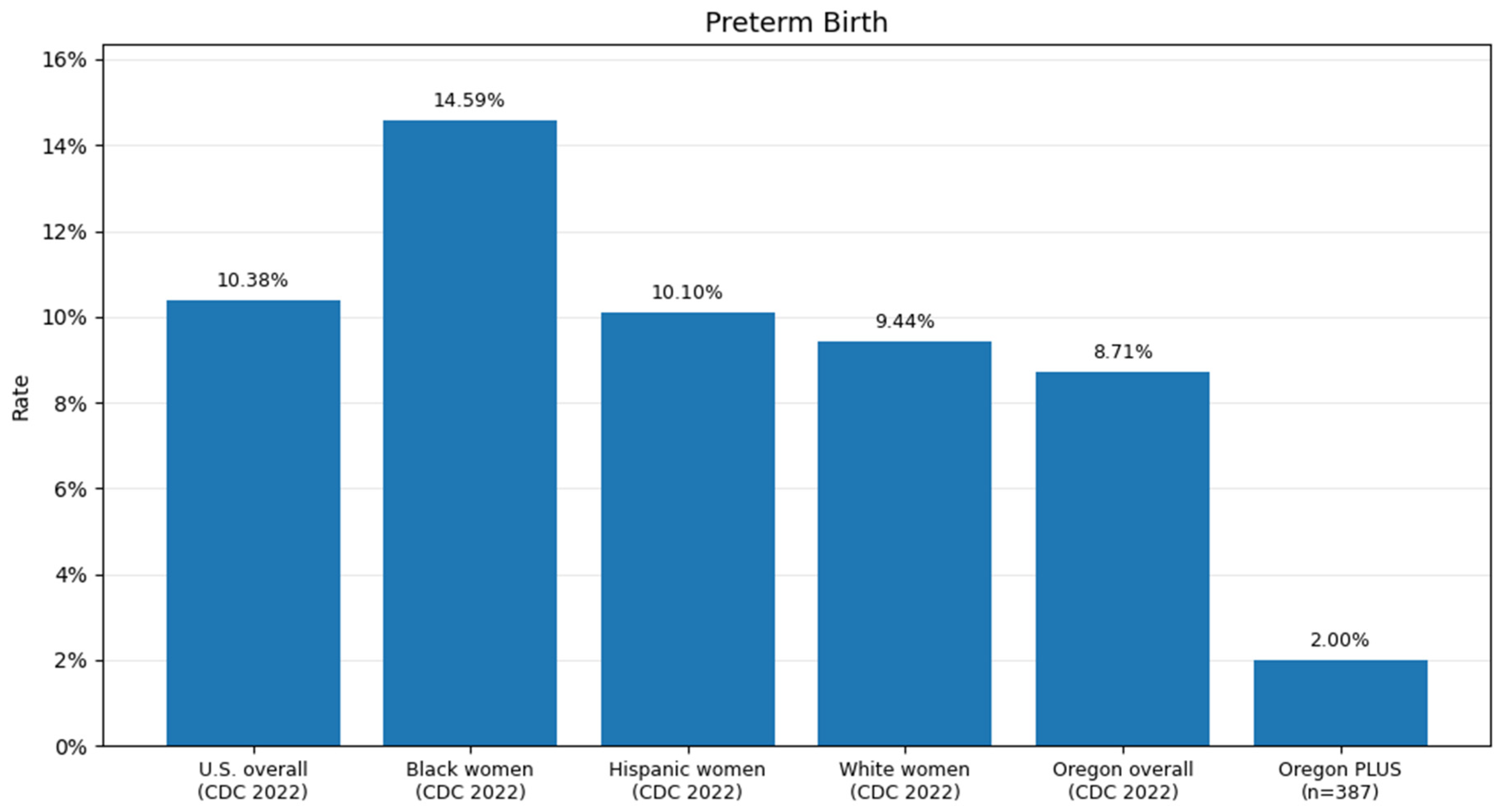
| Preterm Birth | 2.0% (8/402) | 8.7% 1 | <0.0001 | 0.238 | 4.20 |
| Hypertensive Disorders | 1.0% (4/402) | 4.5% 2 | 0.0023 | 0.229 | 4.37 |
| Gestational DM | 0.5% (2/402) | 3.7% 2 | 0.0006 | 0.071 | 14.00 |
| Small for Gestational Age | 1.5% (6/402) | 6.1% 1 | 0.0006 | 0.252 | 3.97 |
| Large for Gestational Age | 3.5% (14/402) | 9.4% 1 | 0.0003 | 0.357 | 2.80 |
| Outcome | PLUS (n = 402) | SOC | NNT |
|---|---|---|---|
| Preterm birth | 1.99% | 8.7% 1 | 15 |
| Hypertensive disorders of pregnancy | 1.00% | 4.5% 2 | 29 |
| Gestational diabetes mellitus | 0.50% | 3.7% 2 | 31 |
| Small for gestational age | 1.49% | 6.1% 1 | 22 |
| Large for gestational age | 3.48% | 9.4% 1 | 17 |
Disclaimer/Publisher’s Note: The statements, opinions and data contained in all publications are solely those of the individual author(s) and contributor(s) and not of MDPI and/or the editor(s). MDPI and/or the editor(s) disclaim responsibility for any injury to people or property resulting from any ideas, methods, instructions or products referred to in the content. |
© 2026 by the authors. Licensee MDPI, Basel, Switzerland. This article is an open access article distributed under the terms and conditions of the Creative Commons Attribution (CC BY) license.
Share and Cite
Stone, L.P.; Rydbom, E.S.; Stone, P.M.; Kim, D. A ‘Standard of Care PLUS’ Model for Preterm Birth Prevention: Integrating Nutrient and Gene Variant Analysis with Targeted Interventions. J. Pers. Med. 2026, 16, 134. https://doi.org/10.3390/jpm16030134
Stone LP, Rydbom ES, Stone PM, Kim D. A ‘Standard of Care PLUS’ Model for Preterm Birth Prevention: Integrating Nutrient and Gene Variant Analysis with Targeted Interventions. Journal of Personalized Medicine. 2026; 16(3):134. https://doi.org/10.3390/jpm16030134
Chicago/Turabian StyleStone, Leslie P., Emily Stone Rydbom, P. Michael Stone, and Daniel Kim. 2026. "A ‘Standard of Care PLUS’ Model for Preterm Birth Prevention: Integrating Nutrient and Gene Variant Analysis with Targeted Interventions" Journal of Personalized Medicine 16, no. 3: 134. https://doi.org/10.3390/jpm16030134
APA StyleStone, L. P., Rydbom, E. S., Stone, P. M., & Kim, D. (2026). A ‘Standard of Care PLUS’ Model for Preterm Birth Prevention: Integrating Nutrient and Gene Variant Analysis with Targeted Interventions. Journal of Personalized Medicine, 16(3), 134. https://doi.org/10.3390/jpm16030134