
Review

The Dawn of Precision Medicine in Pediatric Nephrology: Lumasiran and the Era of siRNA Therapies for Primary Hyperoxaluria Type 1


Third Department of Pediatrics, Aristotle University of Thessaloniki, Hippokration Hospital, 54642 Thessaloniki, Greece
*
Author to whom correspondence should be addressed.
J. Pers. Med. 2026, 16(1), 15; https://doi.org/10.3390/jpm16010015
Submission received: 24 November 2025 / Revised: 10 December 2025 / Accepted: 30 December 2025 / Published: 2 January 2026

Abstract

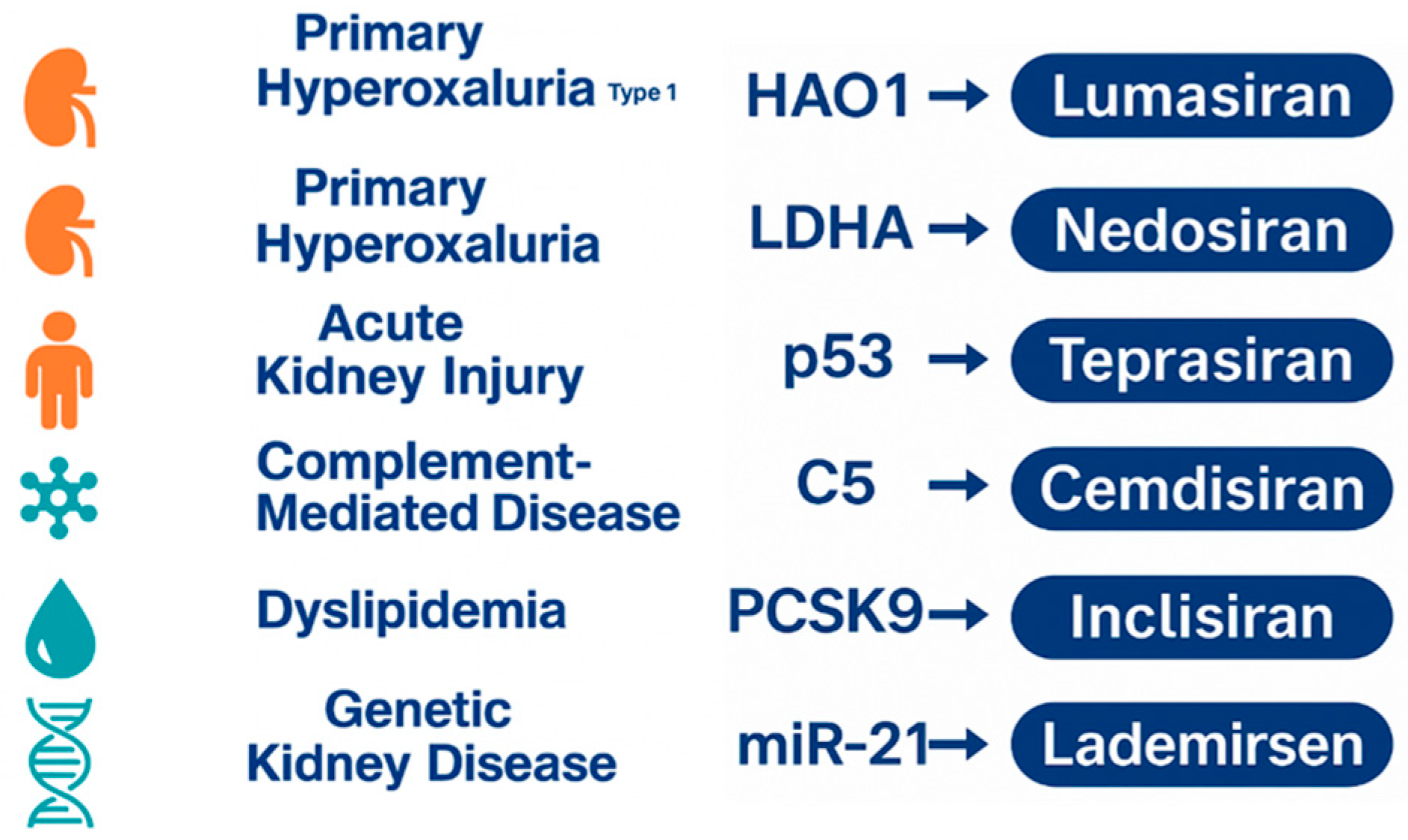
Primary hyperoxaluria type 1 (PH1) is a rare autosomal recessive disorder that causes progressive renal failure, nephrolithiasis, and nephrocalcinosis in children. It is characterized by hepatic overproduction of oxalate. Conventional management, which involves combined liver–kidney transplantation, vitamin B6 supplementation, and intense hydration, does not address the underlying metabolic defect for most patients and it generally provides only supportive care. The first approved disease-modifying treatment for pediatric PH1 is Lumasiran, a small interfering RNA (siRNA) therapeutic. By specifically inhibiting the hepatic glycolate oxidase mRNA, Lumasiran lowers the production of oxalate at its origin. Along with fewer kidney stone events and stabilization of nephrocalcinosis, clinical trials (ILLUMINATE-A/B/C) showed significant decreases in urinary oxalate excretion. The most frequently reported adverse event is mild injection-site reactions, which are generally well tolerated. The molecular mechanism, pharmacokinetics, and clinical effectiveness of Lumasiran in children with PH1 are compiled in this review. We go over possible long-term safety concerns, the impact of early intervention on renal outcomes, and the function of siRNA therapies in pediatric precision medicine. Furthermore, we highlight Lumasiran’s importance as a model for targeted treatment in uncommon pediatric kidney diseases by considering it in the larger context of RNAi-based therapies. A paradigm shift in pediatric nephrology is signaled by Lumasiran, which changes the therapeutic approach from supportive care to precision, targeted medicine. Further research and empirical data will clarify its long-term advantages, the best ways to treat it, and the possible use of siRNA technologies for other genetic renal disorders.
Keywords: primary hyperoxaluria type 1; Lumasiran; siRNA therapeutics; pediatric nephrology; precision medicine primary hyperoxaluria type 1; Lumasiran; siRNA therapeutics; pediatric nephrology; precision medicine
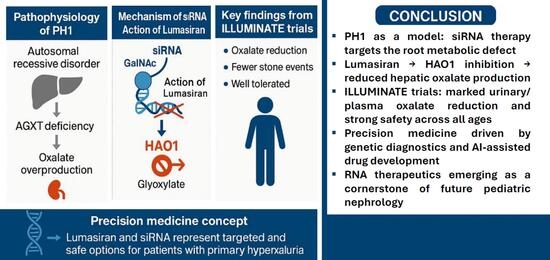
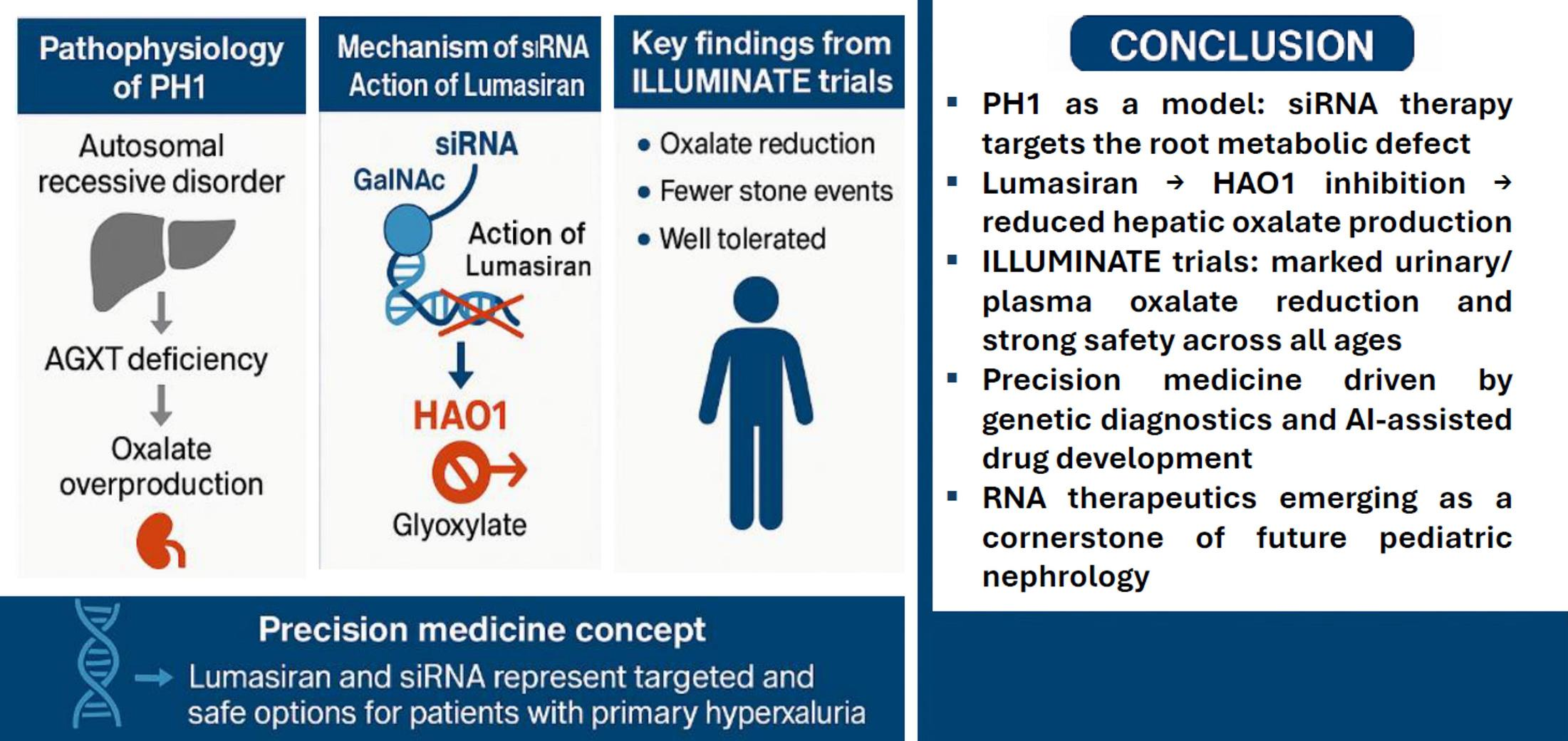
Graphical Abstract