Article

Late Prevalence of Typical and Atypical Symptoms of Frey’s Syndrome after Parotidectomy for Benign Tumor

by
Maria Raffaella Marchese
1,
Federica Rossi
2,
Stefano Settimi
1,2,* and
Jacopo Galli
1,2
1
Otolaryngology Division, Department of Neurosciences, Sensory Organs and Thorax, Fondazione Policlinico Universitario “A. Gemelli” IRCCS, 00168 Rome, Italy
2
Section of Otolaryngology, Head-Neck and Sense Organs Department, Catholic University of the Sacred Heart, 00168 Rome, Italy
*
Author to whom correspondence should be addressed.
J. Pers. Med. 2024, 14(1), 96; https://doi.org/10.3390/jpm14010096
Submission received: 29 October 2023 / Revised: 7 January 2024 / Accepted: 11 January 2024 / Published: 16 January 2024

Abstract

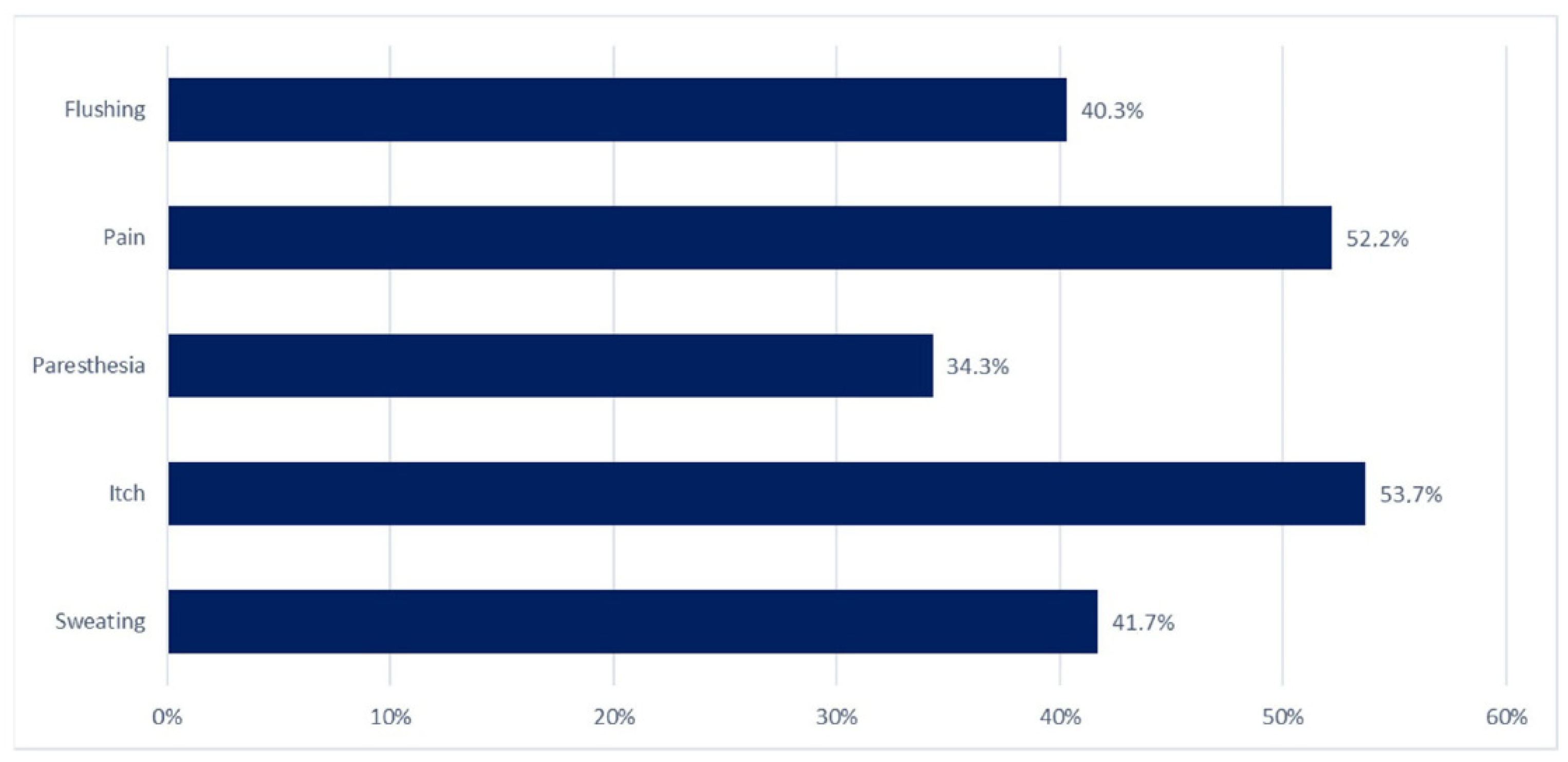
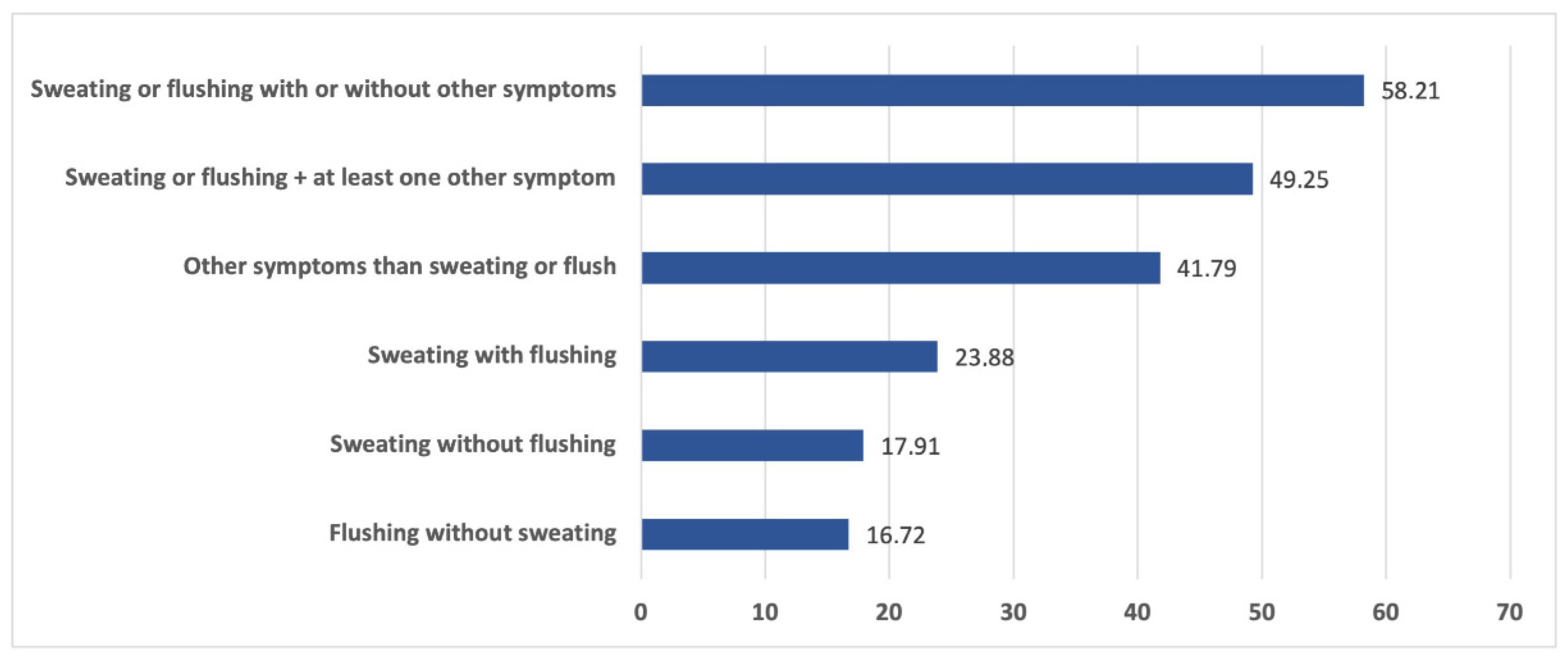
Background: The treatment of choice for tumors located in the parotid gland is surgery. Nevertheless, postoperative complications are not infrequent. Regardless of the type of surgical procedure, the most common complication is Frey’s syndrome (FS). Traditionally, FS includes unilateral gustatory sweating and flushing of the facial skin lining the parotid compartment. Recent research describes atypical discomfort associated with FS. The aim of this study was to assess the late prevalence and severity of both usual and atypical symptoms after parotidectomy for benign tumors. Methods: We conducted a cross-sectional study involving 86 subjects who underwent superficial parotidectomy at least one year before the study. The questionnaire included the sweating–flushing–itch–paresthesia–pain (SFIPP) Frey scale supplemented by specific questions about symptoms. Results: Sixty-seven out of eighty-six (77.9%) cases reported almost one symptom. The most frequent symptom was itch (36/67—53.7%), followed by pain (35/67—52.2%), while 28/67 (41.8%) subjects complained of atypical symptoms without flushing or sweating. A desire to treat the discomfort was reported by 50/67 (74.6%) subjects. Conclusions: Late postparotidectomy local discomfort is not infrequent and includes both usual and “unusual” symptoms almost equally. Our results suggest the importance of informing patients about the occurrence of the syndrome and the available treatment options during pre- and postoperative counseling.
Keywords: Frey’s syndrome; parotidectomy; itch; flushing; gustatory sweating Frey’s syndrome; parotidectomy; itch; flushing; gustatory sweating