
Perspective

Linking the Extended Autonomic System with the Homeostat Theory: New Perspectives about Dysautonomias

by
David S. Goldstein
Autonomic Medicine Section, Clinical Neurosciences Program, Division of Intramural Research, National Institute of Neurological Disorders and Stroke, National Institutes of Health, Bethesda, MD 20892, USA
J. Pers. Med. 2024, 14(1), 123; https://doi.org/10.3390/jpm14010123
Submission received: 28 December 2023 / Revised: 14 January 2024 / Accepted: 20 January 2024 / Published: 22 January 2024
(This article belongs to the Special Issue New Challenges and Perspectives in Neurology and Autonomic Disorders)

Abstract

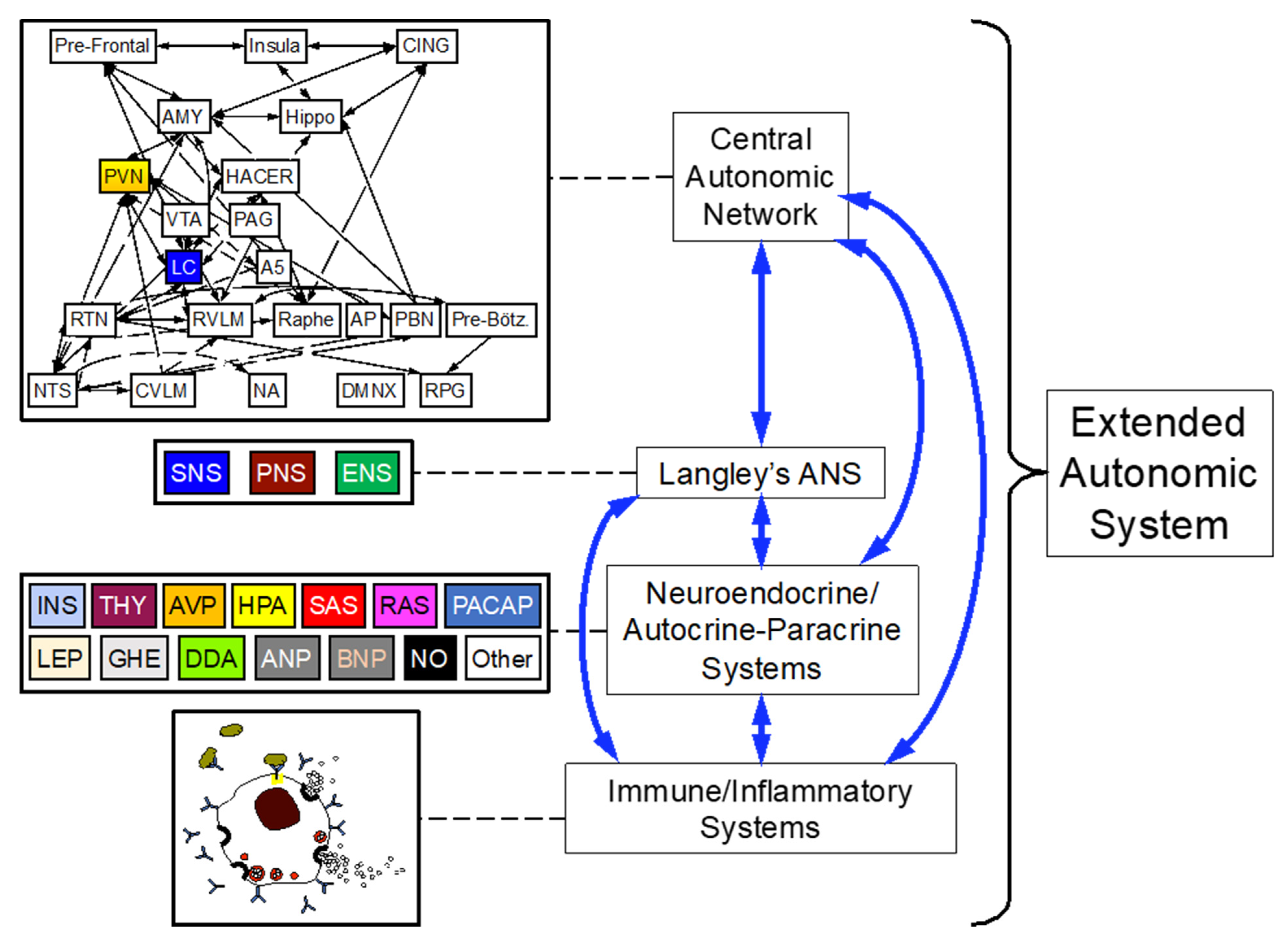
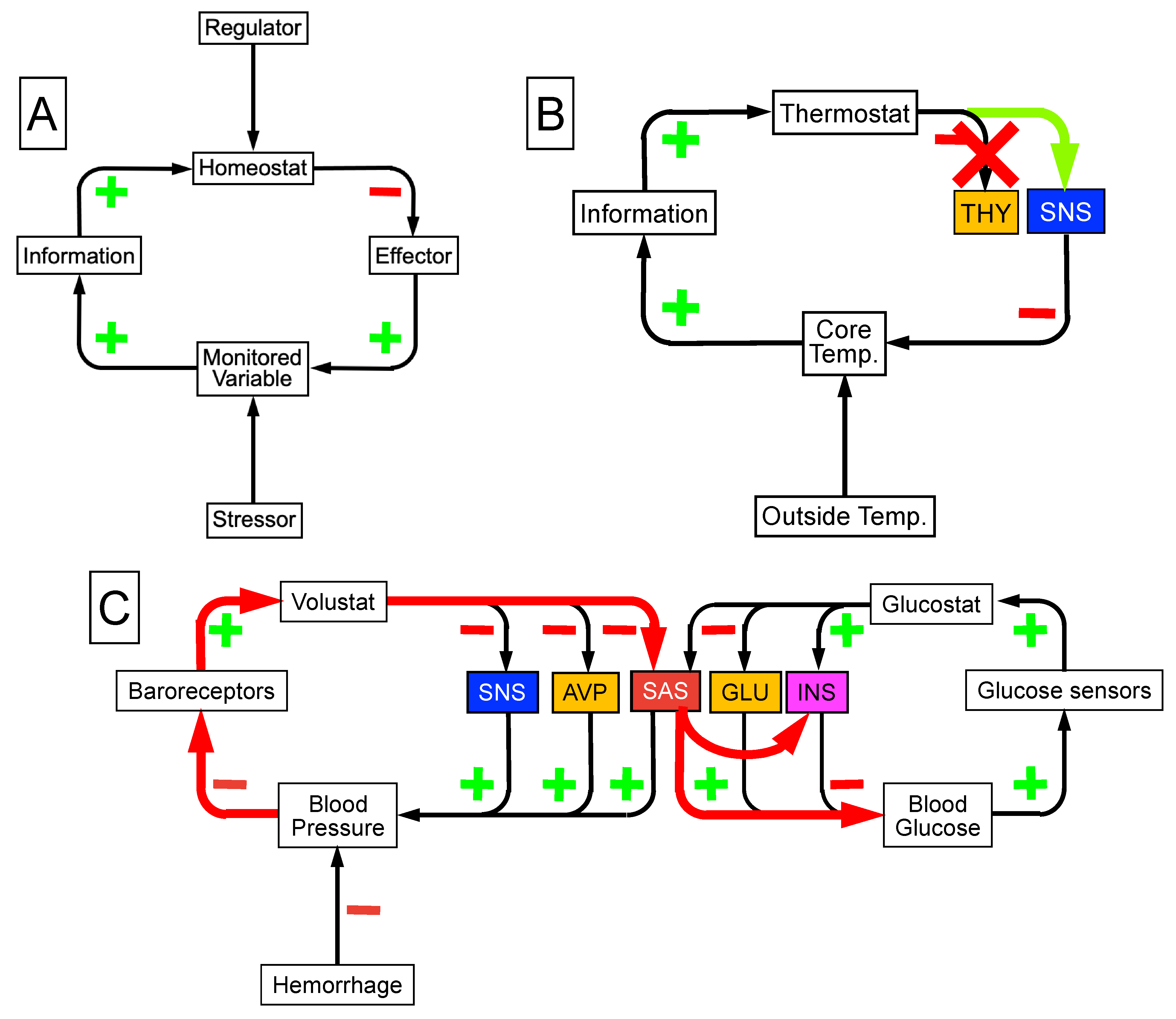
Dysautonomias are conditions in which altered functions of one or more components of the autonomic nervous system (ANS) adversely affect health. This essay is about how elucidating mechanisms of dysautonomias may rationalize personalized treatments. Emphasized here are two relatively new ideas—the “extended” autonomic system (EAS) and the “homeostat” theory as applied to the pathophysiology and potential treatments of dysautonomias. The recently promulgated concept of the EAS updates Langley’s ANS to include neuroendocrine, immune/inflammatory, and central components. The homeostat theory builds on Cannon’s theory of homeostasis by proposing the existence of comparators (e.g., a thermostat, glucostat, carbistat, barostat) that receive information about regulated variables (e.g., core temperature, blood glucose, blood gases, delivery of blood to the brain). Homeostats sense discrepancies between the information and response algorithms. The presentation links the EAS with the homeostat theory to understand pathophysiological mechanisms of dysautonomias. Feed-forward anticipatory processes shift input–output curves and maintain plateau levels of regulated variables within different bounds of values—“allostasis”. Sustained allostatic processes increase long-term wear-and-tear on effectors and organs—allostatic load. They decreaseing thresholds for destabilizing and potentially fatal positive feedback loops. The homeostat theory enables mathematical models that define stress, allostasis, and allostatic load. The present discussion applies the EAS and homeostat concepts to specific examples of pediatric, adolescent/adult, and geriatric dysautonomias—familial dysautonomia, chronic orthostatic intolerance, and Lewy body diseases. Computer modeling has the potential to take into account the complexity and dynamics of allostatic processes and may yield testable predictions about individualized treatments and outcomes.
Keywords: autonomic; dysautonomia; homeostat; homeostasis; allostasis autonomic; dysautonomia; homeostat; homeostasis; allostasis