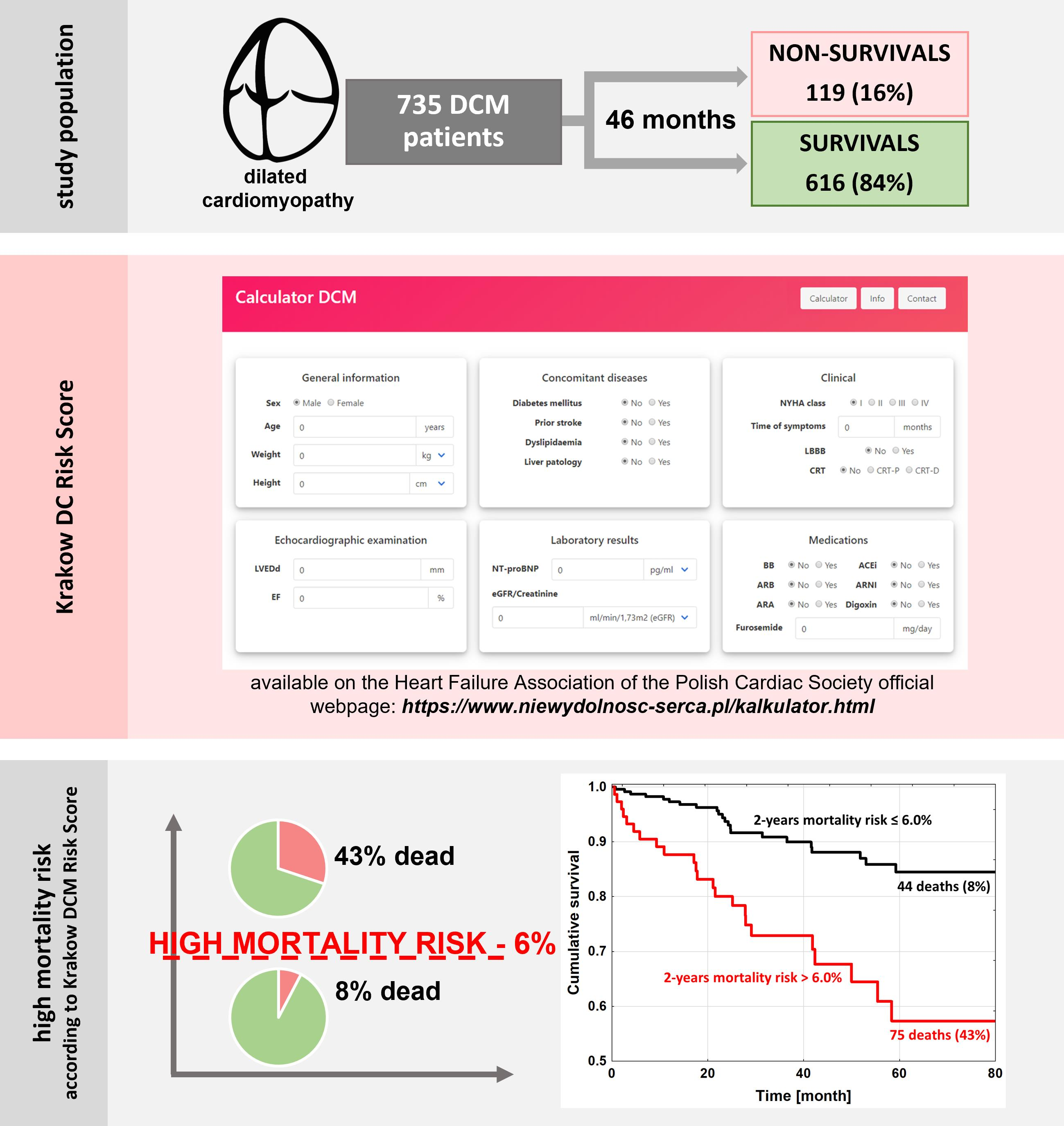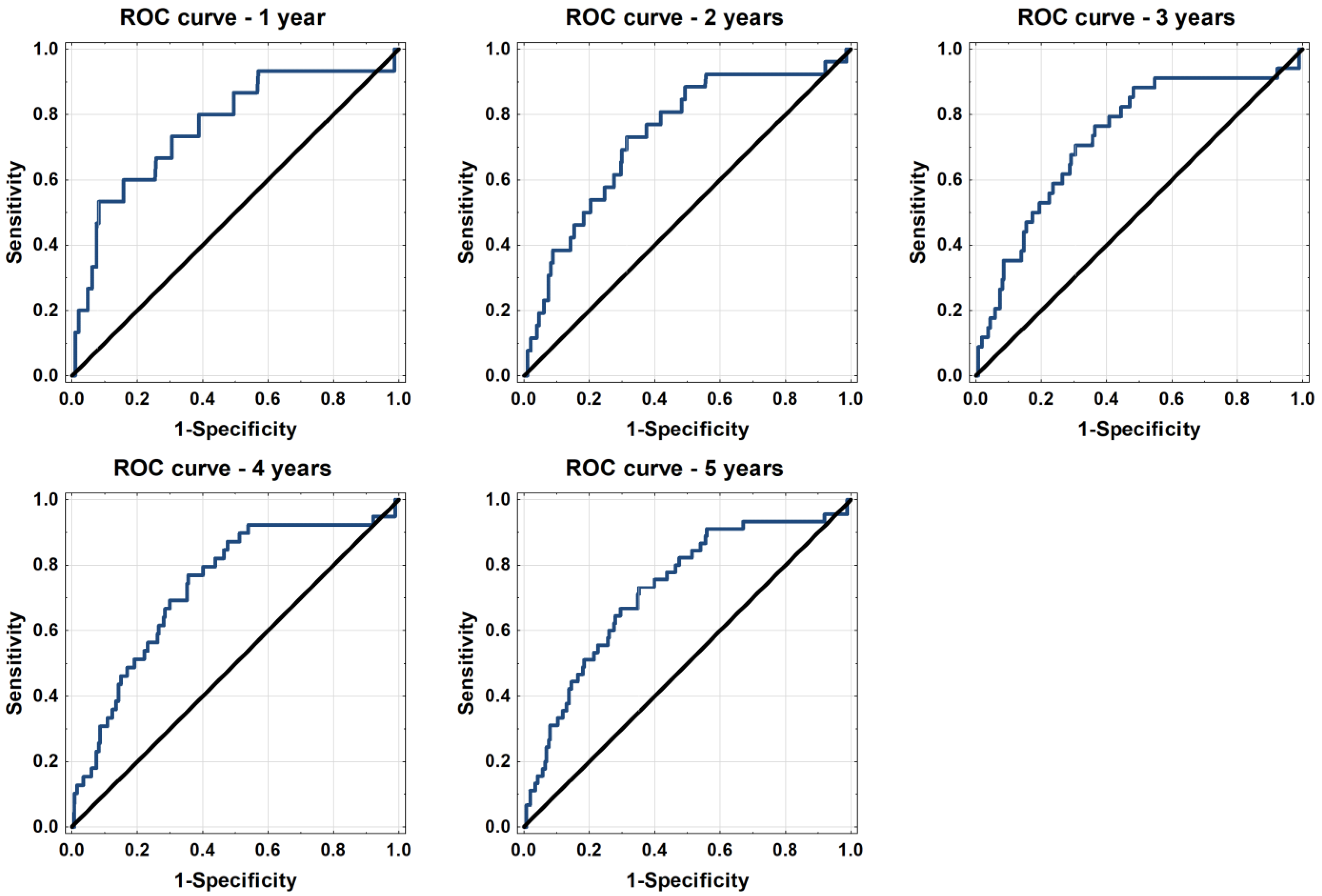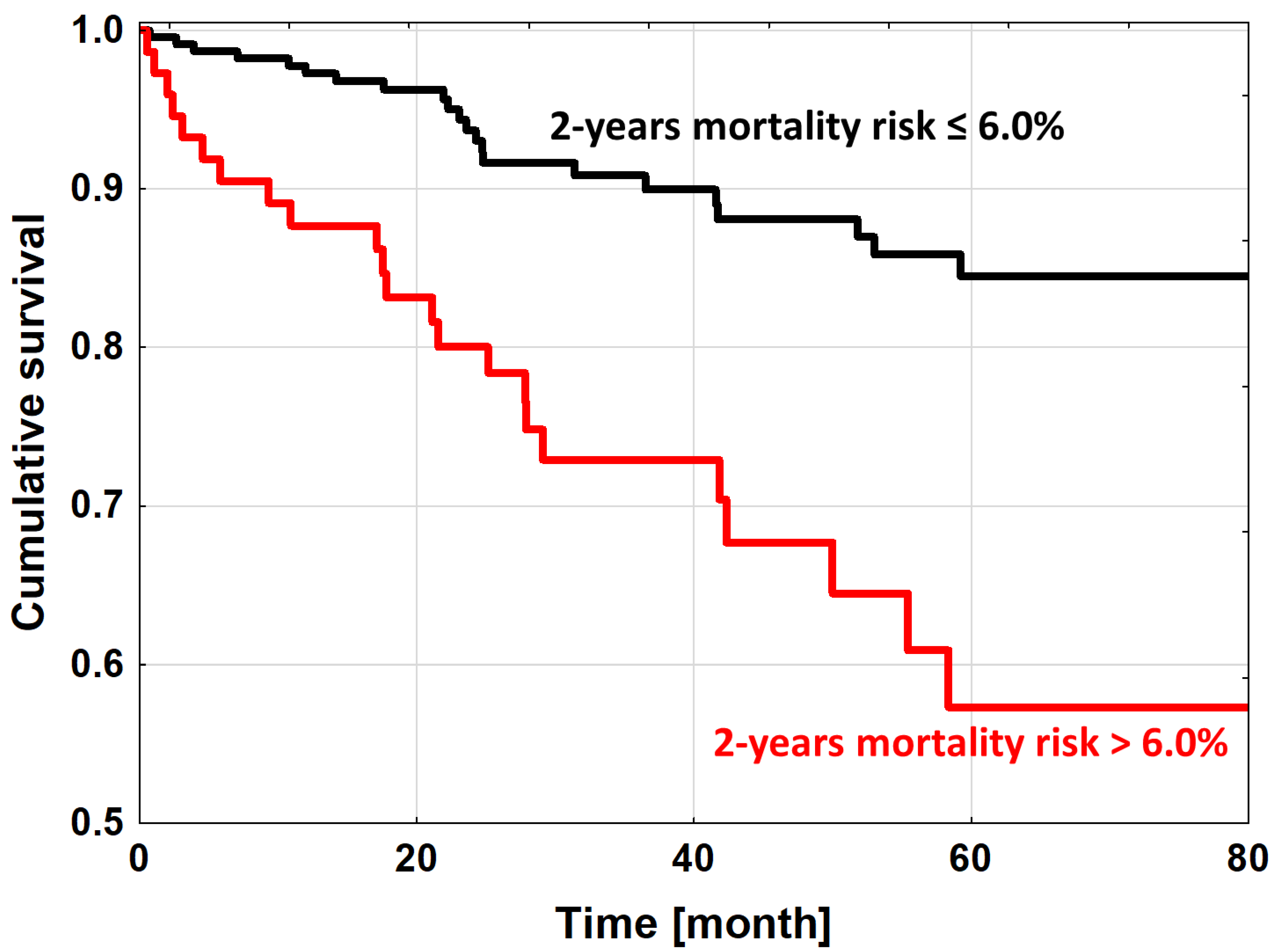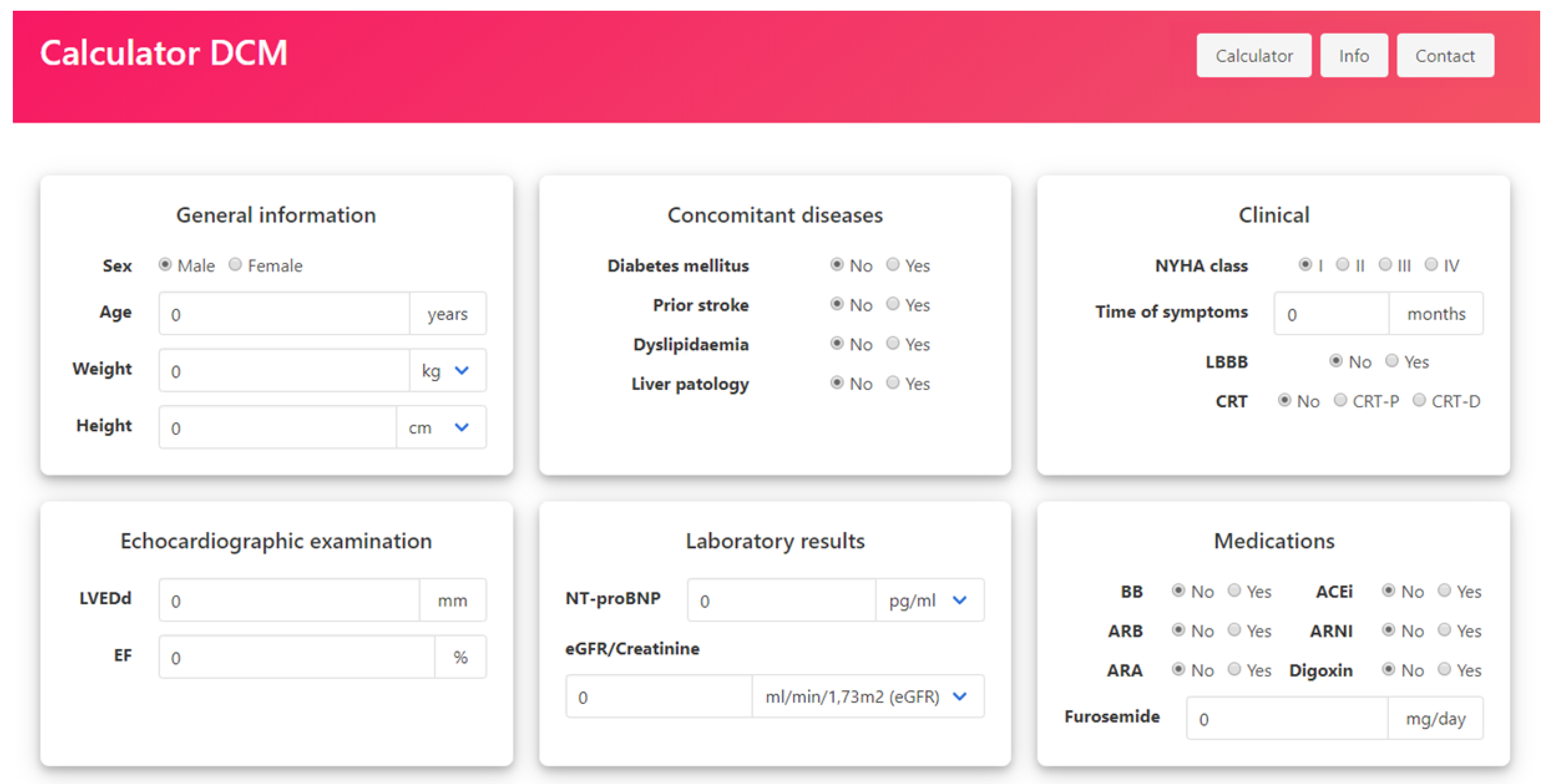

Clinical Utility and Validation of the Krakow DCM Risk Score—A Prognostic Model Dedicated to Dilated Cardiomyopathy

 , , , , ,
Abstract
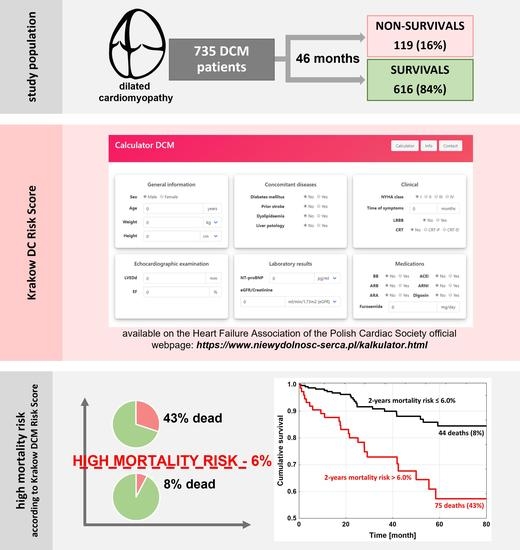
Share and Cite
Dziewięcka, E.; Winiarczyk, M.; Wiśniowska-Śmiałek, S.; Karabinowska-Małocha, A.; Gliniak, M.; Robak, J.; Kaciczak, M.; Leszek, P.; Celińska-Spodar, M.; Dziewięcki, M.; et al. Clinical Utility and Validation of the Krakow DCM Risk Score—A Prognostic Model Dedicated to Dilated Cardiomyopathy. J. Pers. Med. 2022, 12, 236. https://doi.org/10.3390/jpm12020236
Dziewięcka E, Winiarczyk M, Wiśniowska-Śmiałek S, Karabinowska-Małocha A, Gliniak M, Robak J, Kaciczak M, Leszek P, Celińska-Spodar M, Dziewięcki M, et al. Clinical Utility and Validation of the Krakow DCM Risk Score—A Prognostic Model Dedicated to Dilated Cardiomyopathy. Journal of Personalized Medicine. 2022; 12(2):236. https://doi.org/10.3390/jpm12020236
Chicago/Turabian StyleDziewięcka, Ewa, Mateusz Winiarczyk, Sylwia Wiśniowska-Śmiałek, Aleksandra Karabinowska-Małocha, Matylda Gliniak, Jan Robak, Monika Kaciczak, Przemysław Leszek, Małgorzata Celińska-Spodar, Marcin Dziewięcki, and et al. 2022. "Clinical Utility and Validation of the Krakow DCM Risk Score—A Prognostic Model Dedicated to Dilated Cardiomyopathy" Journal of Personalized Medicine 12, no. 2: 236. https://doi.org/10.3390/jpm12020236
APA StyleDziewięcka, E., Winiarczyk, M., Wiśniowska-Śmiałek, S., Karabinowska-Małocha, A., Gliniak, M., Robak, J., Kaciczak, M., Leszek, P., Celińska-Spodar, M., Dziewięcki, M., & Rubiś, P. (2022). Clinical Utility and Validation of the Krakow DCM Risk Score—A Prognostic Model Dedicated to Dilated Cardiomyopathy. Journal of Personalized Medicine, 12(2), 236. https://doi.org/10.3390/jpm12020236