
Review

Gastrointestinal Dysfunction in Parkinson’s Disease: Current and Potential Therapeutics

by
Myat Noe Han
1,2,3,
David I. Finkelstein
4,
Rachel M. McQuade
1,2,3,*,† and
Shanti Diwakarla
1,2,3,†
1
Gut-Axis Injury and Repair Laboratory, Department of Medicine Western Health, University of Melbourne, Melbourne, VIC 3021, Australia
2
The Florey Institute of Neuroscience and Mental Health, Parkville, VIC 3010, Australia
3
Australian Institute of Musculoskeletal Science (AIMSS), Melbourne, VIC 3021, Australia
4
Parkinson’s Disease Laboratory, The Florey Institute of Neuroscience and Mental Health, Parkville, VIC 3010, Australia
*
Author to whom correspondence should be addressed.
These authors contributed equally to this work.
J. Pers. Med. 2022, 12(2), 144; https://doi.org/10.3390/jpm12020144
Submission received: 24 December 2021 / Revised: 17 January 2022 / Accepted: 18 January 2022 / Published: 21 January 2022
(This article belongs to the Special Issue Optimizing Treatment of Parkinson’s Disease)

Abstract

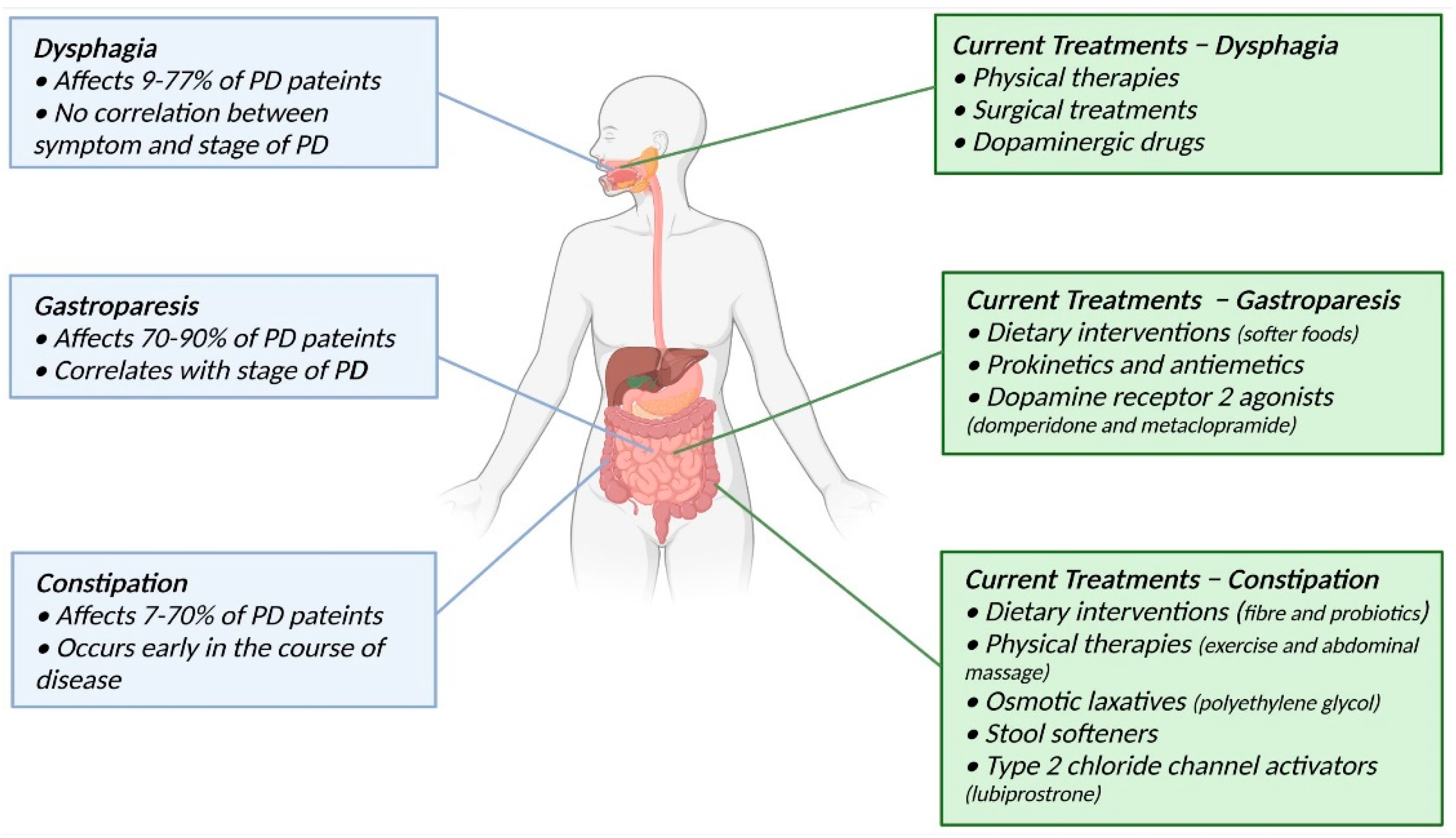
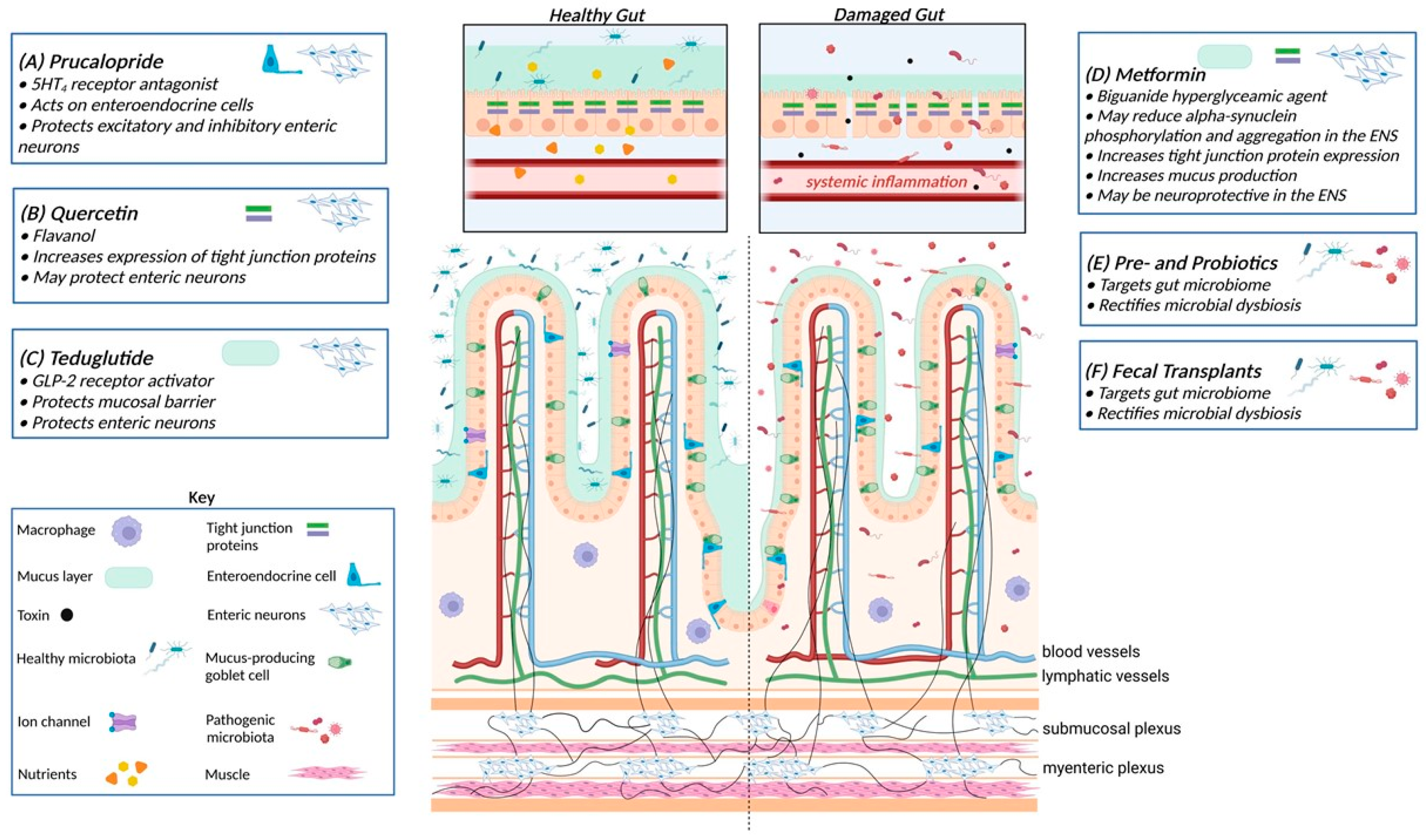
Abnormalities in the gastrointestinal (GI) tract of Parkinson’s disease (PD) sufferers were first reported over 200 years ago; however, the extent and role of GI dysfunction in PD disease progression is still unknown. GI dysfunctions, including dysphagia, gastroparesis, and constipation, are amongst the most prevalent non-motor symptoms in PD. These symptoms not only impact patient quality of life, but also complicate disease management. Conventional treatment pathways for GI dysfunctions (i.e., constipation), such as increasing fibre and fluid intake, and the use of over-the-counter laxatives, are generally ineffective in PD patients, and approved compounds such as guanylate cyclase C agonists and selective 5-hyroxytryptamine 4 receptor agonists have demonstrated limited efficacy. Thus, identification of potential targets for novel therapies to alleviate PD-induced GI dysfunctions are essential to improve clinical outcomes and quality of life in people with PD. Unlike the central nervous system (CNS), where PD pathology and the mechanisms involved in CNS damage are relatively well characterised, the effect of PD at the cellular and tissue level in the enteric nervous system (ENS) remains unclear, making it difficult to alleviate or reverse GI symptoms. However, the resurgence of interest in understanding how the GI tract is involved in various disease states, such as PD, has resulted in the identification of novel therapeutic avenues. This review focuses on common PD-related GI symptoms, and summarizes the current treatments available and their limitations. We propose that by targeting the intestinal barrier, ENS, and/or the gut microbiome, may prove successful in alleviating PD-related GI symptoms, and discuss emerging therapies and potential drugs that could be repurposed to target these areas.
Keywords: Parkinson’s disease; gastrointestinal dysfunction; enteric nervous system; enteric neuropathy; constipation; gastroparesis; dysphagia; unmet therapeutic need Parkinson’s disease; gastrointestinal dysfunction; enteric nervous system; enteric neuropathy; constipation; gastroparesis; dysphagia; unmet therapeutic need