Review

Predictive and Preventive Mucosal Communications in Particulate Matter Exposure-Linked Renal Distress


Laboratory of Mucosal Exposome and Biomodulation, Department of Integrative Biomedical Sciences, Biomedical Research Institute, Pusan National University, Yangsan 50612, Korea
J. Pers. Med. 2021, 11(2), 118; https://doi.org/10.3390/jpm11020118
Submission received: 21 January 2021 / Revised: 4 February 2021 / Accepted: 8 February 2021 / Published: 11 February 2021
(This article belongs to the Section Mechanisms of Diseases)

Abstract

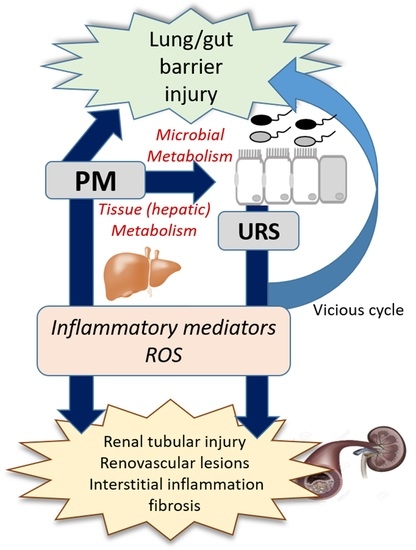
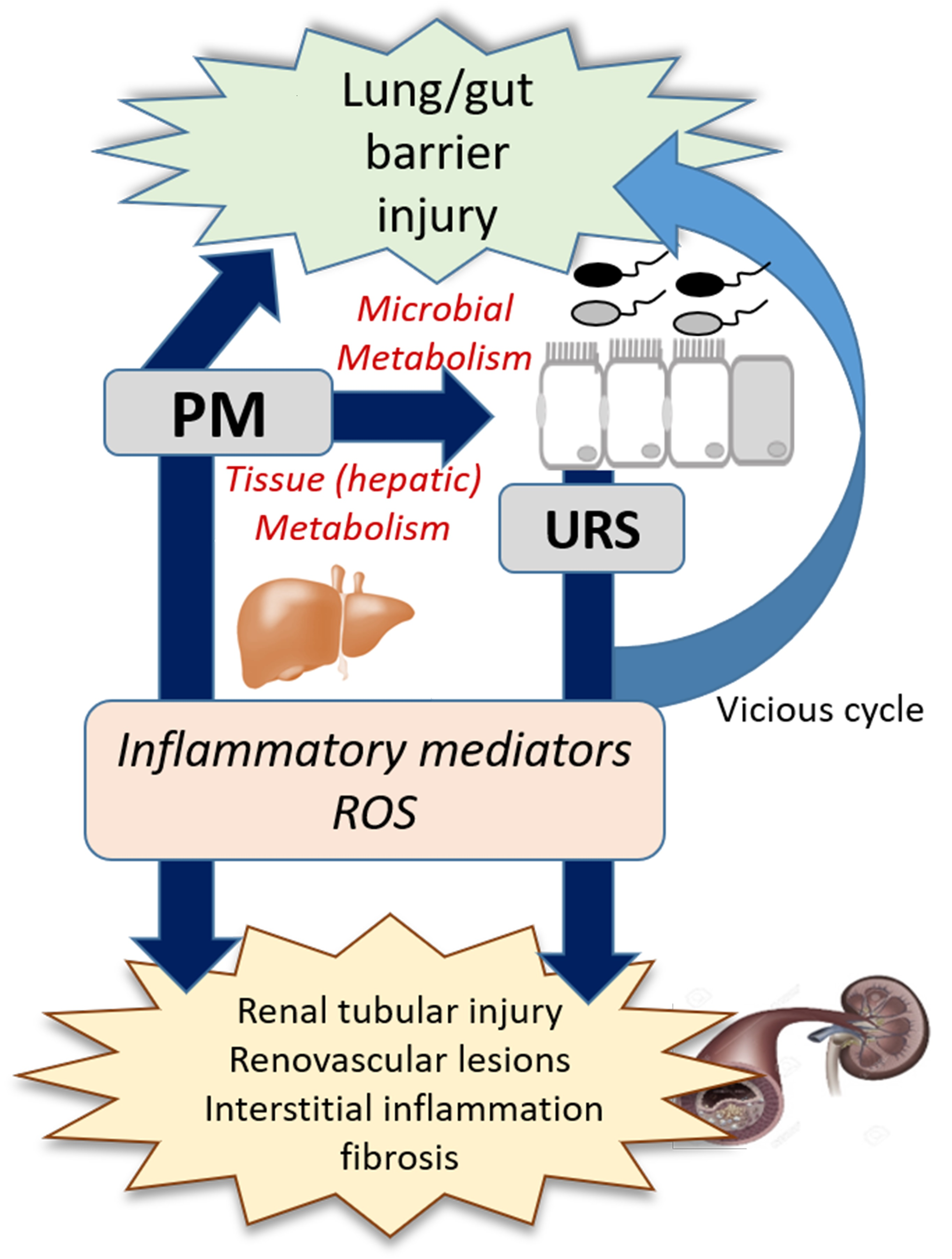
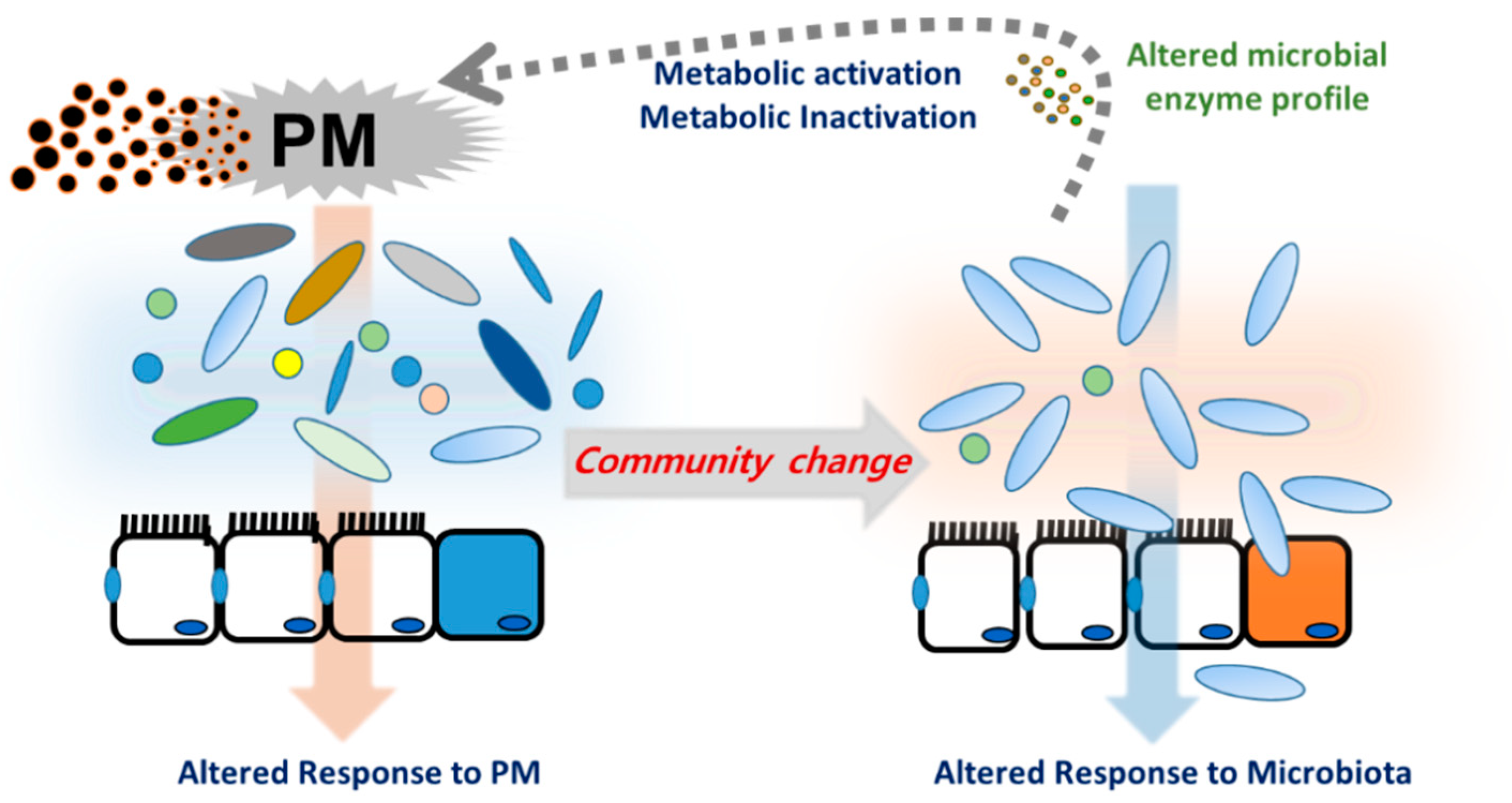
Despite research into the epidemiological link between exposure to particulate matter (PM) and renal disorder, there is limited information available on the etiological complexity and molecular mechanisms. Among the early responsive tissues to PM exposure, the mucosal barrier of the airway and alimentary tract may be a crucial source of pathologic mediators leading to inflammatory renal diseases, including chronic kidney disease (CKD). Given that harmful responses and products in mucosa exposed to PM may enter the circulation and cause adverse outcomes in the kidney, the aim of the present review was to address the impact of PM exposure on the mucosal barrier and the vicious feedback cycle in the mucosal environment. In addition to the PM-induced alteration of mucosal barrier integrity, the microbial community has a pivotal role in the xenobiotic metabolism and individual susceptibility to PM toxicity. The dysbiosis-induced deleterious metabolites of PM and nutrients are introduced systemically via a disrupted mucosal barrier, contributing to renal injuries and pathologic severity. In contrast, the progress of mucosa-associated renal disease is counteracted by endogenous protective responses in the mucosa. Along with direct elimination of the toxic mediators, modulators of the mucosal microbial community should provide a promising platform for mucosa-based personalized interventions against renal disorders caused by air pollution.
Keywords: particulate matter; mucosal exposure; microbiota; chronic kidney disease; mucosal barrier particulate matter; mucosal exposure; microbiota; chronic kidney disease; mucosal barrier
Graphical Abstract