Combined Measure of Hand Grip Strength and Body Mass Index for Predicting Excess Body Fat in a University Population in Kentucky, USA



Abstract
1. Introduction
2. Materials and Methods
2.1. BMI and BMI Categorizations
2.2. Hand Grip Dynamometer Strength Measurements
2.3. Body Fat Measurements and Sex-Based Body Fat Classifications
2.4. Statistical Analysis
3. Results
3.1. Summary Statistics
3.2. Obesity Prevalence by BMI- and Body Fat-Based Obesity Definitions
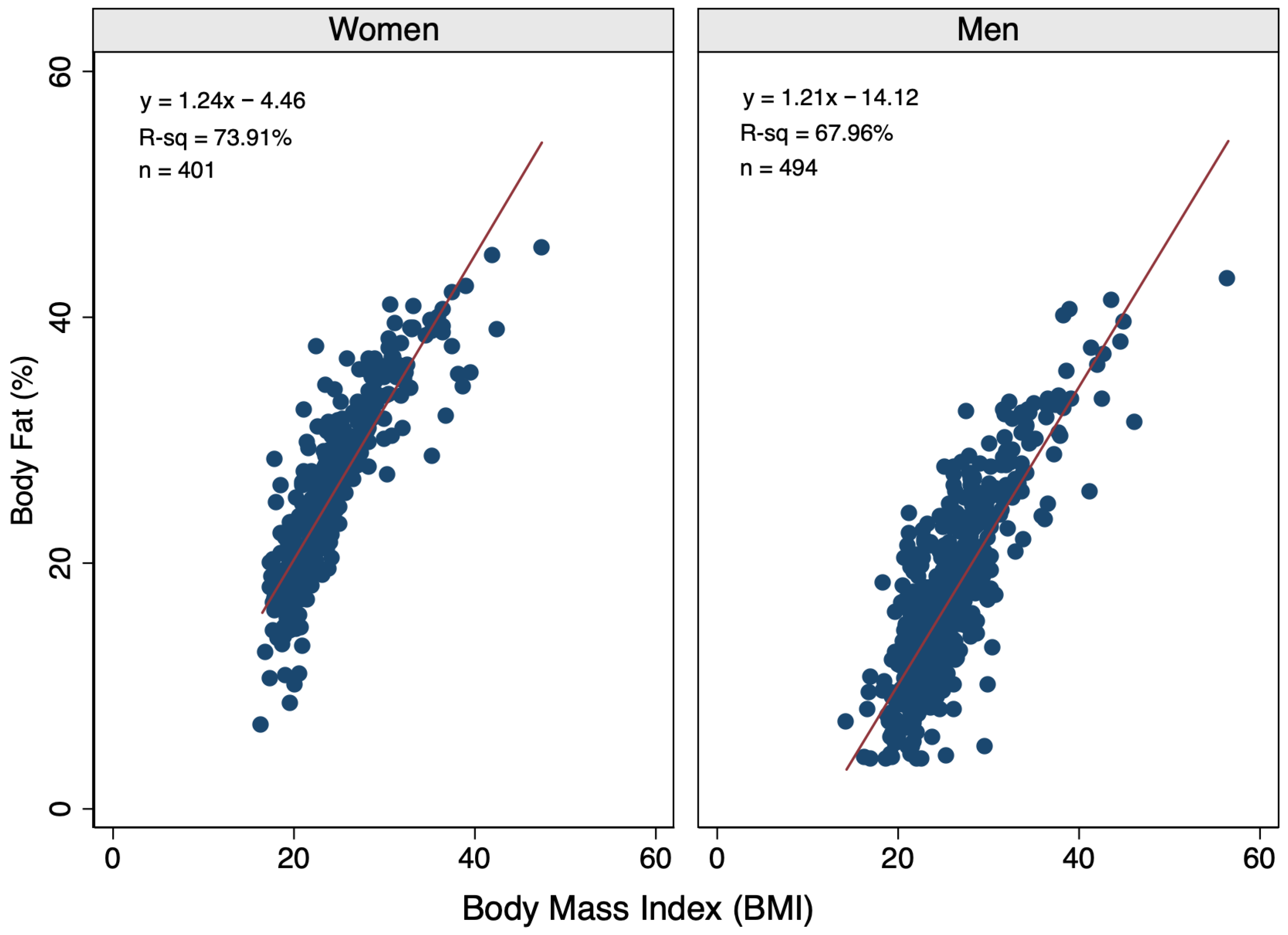
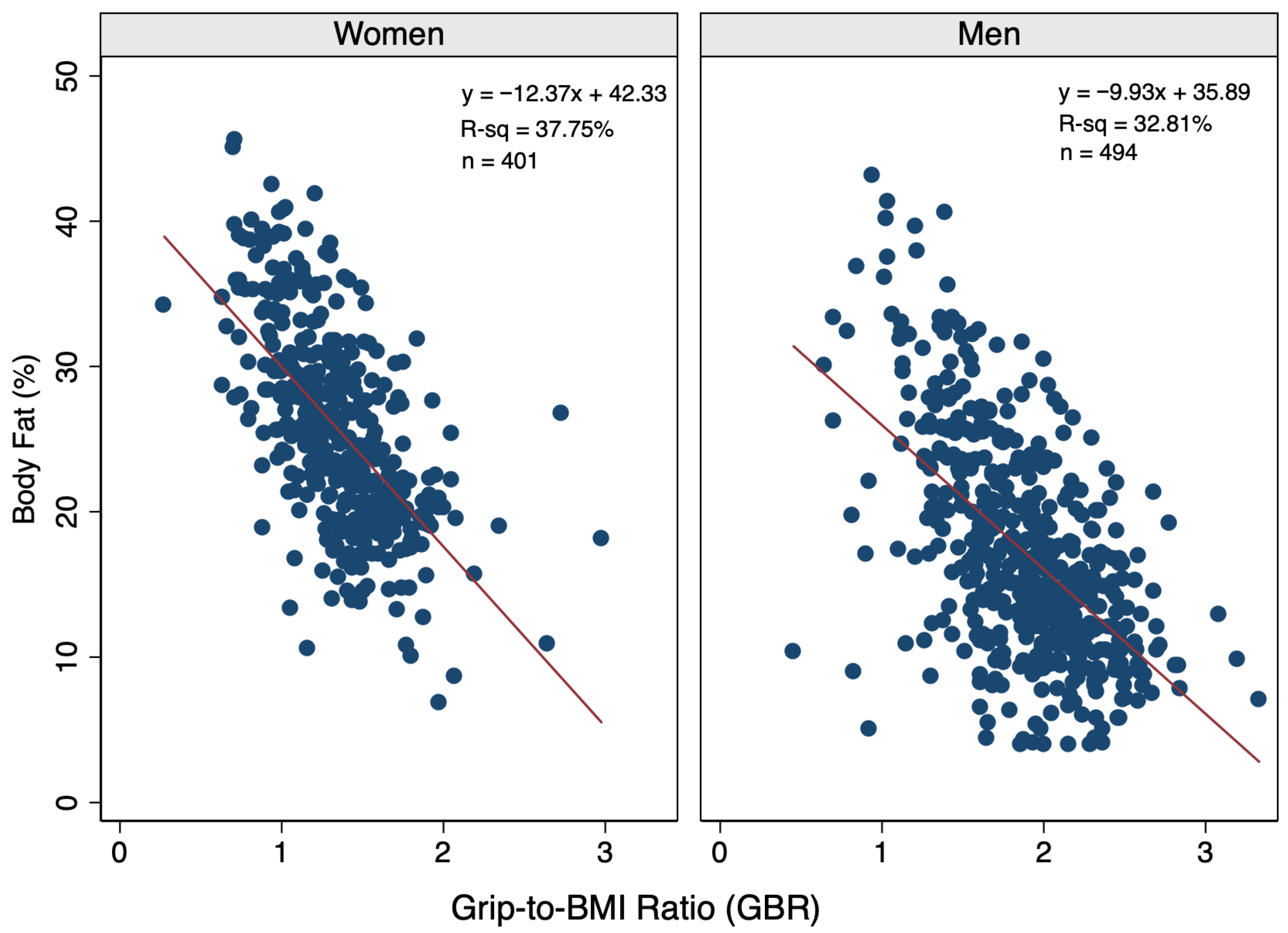
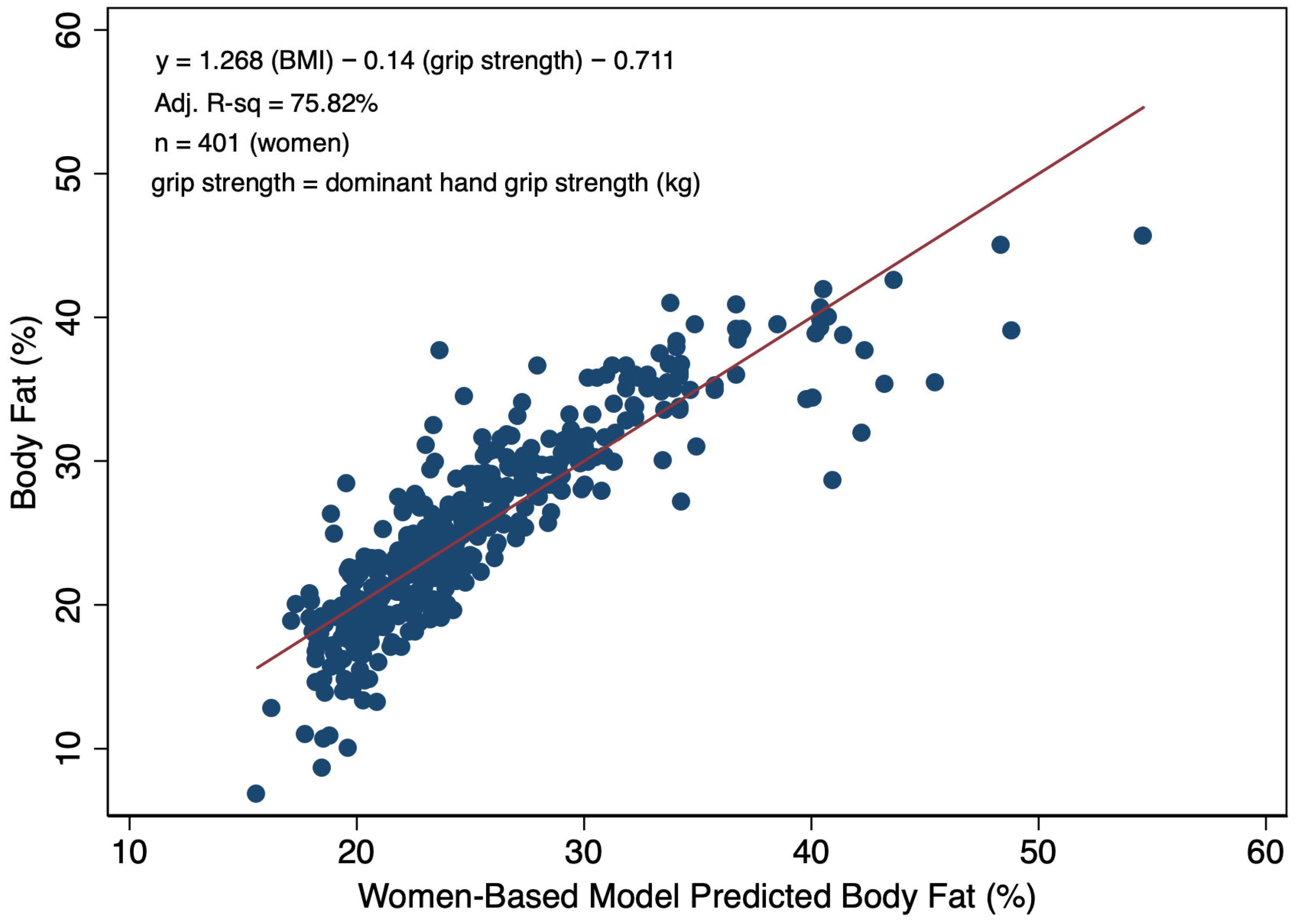
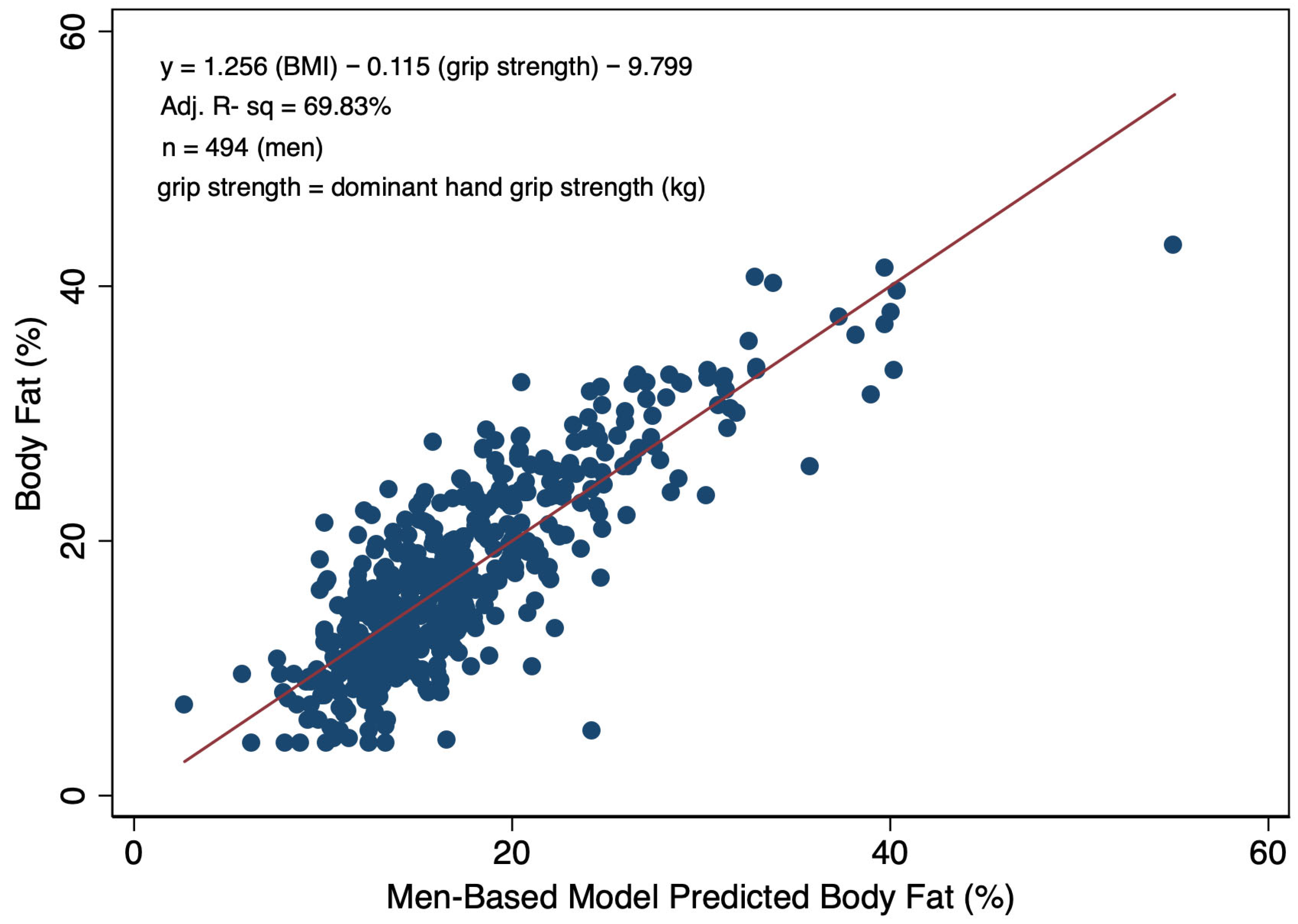
3.3. Linear Regression Analyses for Predicting Body Fat Percentages
3.4. Logistic Regression Analyses for Predicting Body Fat-Based Obesity
4. Discussion
4.1. Grip Strength Possibly Inadequate as a Sole Predictor of Adiposity for Young Adults
4.2. Age and Sex Implications for Health-Relevant Grip Strength Criteria
4.3. Implausibly Low Body Fat Percentage Estimates and BIA Instrument Limitations
4.4. Assessment of Generalizability to University Populations
4.5. Study Limitations
5. Conclusions
Supplementary Materials
Author Contributions
Funding
Institutional Review Board Statement
Informed Consent Statement
Data Availability Statement
Conflicts of Interest
Abbreviations
| BF% | Body Fat Percentage |
| AACE | American Association of Clinical Endocrinologists |
| ACE | American College of Endocrinology |
| AIC | Akaike information criterion |
| aOR | Adjusted odds ratio |
| AUC | Area under the receiver operating characteristic curve |
| BF | Body fat |
| BF_obese | Body fat-based obesity classification |
| BIA | Bioelectrical impedance analysis |
| BMI | Body mass index |
| CI | Confidence interval |
| DXA | Dual-energy X-ray absorptiometry |
| GBR | Grip-to-BMI ratio |
| NIH | National Institutes of Health |
| OR | Odds ratio |
| R2 | Coefficient of determination |
| ROC | Receiver operating characteristic |
| SD | Standard deviation |
| WHO | World Health Organization |
References
- Ng, M.; Dai, X.; Cogen, R.M.; Abdelmasseh, M.; Abdollahi, A.; Abdullahi, A.; Aboagye, R.G.; Abukhadijah, H.J.; Adeyeoluwa, T.E.; Afolabi, A.A.; et al. National-level and state-level prevalence of overweight and obesity among children, adolescents, and adults in the USA, 1990–2021, and forecasts up to 2050. Lancet 2024, 404, 2278–2298. [Google Scholar] [CrossRef]
- Speakman, J.R.; Sørensen, T.I.; Hall, K.D.; Allison, D.B. Unanswered questions about the causes of obesity. Science 2023, 381, 944–946. [Google Scholar] [CrossRef]
- Prentice, A.M.; Jebb, S.A. Beyond body mass index. Obes. Rev. 2001, 2, 141–147. [Google Scholar] [CrossRef] [PubMed]
- Keys, A.; Fidanza, F.; Karvonen, M.J.; Kimura, N.; Taylor, H.L. Indices of relative weight and obesity. J. Chronic Dis. 1972, 25, 329–343. [Google Scholar] [CrossRef] [PubMed]
- Eknoyan, G. Adolphe Quetelet (1796–1874)—The average man and indices of obesity. Nephrol. Dial. Transplant. 2008, 23, 47–51. [Google Scholar] [CrossRef] [PubMed]
- Pray, R.; Riskin, S.; Riskin, S.I. The history and faults of the body mass index and where to look next: A literature review. Cureus 2023, 15, e48230. [Google Scholar] [CrossRef]
- Nuttall, F.Q. Body mass index: Obesity, BMI, and health: A critical review. Nutr. Today 2015, 50, 117–128. [Google Scholar] [CrossRef]
- Stamler, J. Epidemic obesity in the United States. Arch. Intern. Med. 1993, 153, 1040–1044. [Google Scholar] [CrossRef]
- Manson, J.E.; VanItallie, T.B. America’s obesity epidemic and women’s health. J. Womens Health 1996, 5, 329–334. [Google Scholar] [CrossRef]
- Egger, G.; Swinburn, B. An “ecological” approach to the obesity pandemic. BMJ 1997, 315, 477–480. [Google Scholar] [CrossRef]
- Kannel, W.B.; Cupples, L.A.; Ramaswami, R.; Stokes, J., III; Kreger, B.E.; Higgins, M. Regional obesity and risk of cardiovascular disease: The Framingham Study. J. Clin. Epidemiol. 1991, 44, 183–190. [Google Scholar] [PubMed]
- Manson, J.E.; Colditz, G.A.; Stampfer, M.J.; Willett, W.C.; Rosner, B.; Monson, R.R.; Speizer, F.E.; Hennekens, C.H. A prospective study of obesity and risk of coronary heart disease in women. N. Engl. J. Med. 1990, 322, 882–889. [Google Scholar] [CrossRef] [PubMed]
- Ford, E.S.; Williamson, D.F.; Liu, S. Weight change and diabetes incidence: Findings from a national cohort of US adults. Am. J. Epidemiol. 1997, 146, 214–222. [Google Scholar] [CrossRef] [PubMed]
- World Health Organization. Obesity: Preventing and Managing the Global Epidemic; WHO: Geneva, Switzerland, 2000. [Google Scholar]
- Expert Panel on the Identification, Evaluation, and Treatment of Overweight and Obesity in Adults (US); National Heart, Lung, and Blood Institute; National Institute of Diabetes and Digestive and Kidney Diseases (US). Clinical Guidelines on the Identification, Evaluation, and Treatment of Overweight and Obesity in Adults: The Evidence Report; National Institutes of Health: Bethesda, MD, USA, 1998.
- Gallagher, D.; Heymsfield, S.B.; Heo, M.; Jebb, S.A.; Murgatroyd, P.R.; Sakamoto, Y. Healthy percentage body fat ranges: An approach for developing guidelines based on body mass index. Am. J. Clin. Nutr. 2000, 72, 694–701. [Google Scholar] [CrossRef]
- Tan, K.C.B. Appropriate body-mass index for Asian populations and its implications for policy and intervention strategies. Lancet 2004, 363, 157–163. [Google Scholar] [CrossRef]
- Deurenberg, P.; Deurenberg-Yap, M.; Guricci, S. Asians are different from Caucasians and from each other in their body mass index/body fat per cent relationship. Obes. Rev. 2002, 3, 141–146. [Google Scholar] [CrossRef]
- Fernández, J.R.; Heo, M.; Heymsfield, S.B.; Pierson, R.N., Jr.; Pi-Sunyer, F.X.; Wang, Z.M.; Wang, J.; Hayes, M.; Allison, D.B.; Gallagher, D. Is percentage body fat differentially related to body mass index in Hispanic Americans, African Americans, and European Americans? Am. J. Clin. Nutr. 2003, 77, 71–75. [Google Scholar] [CrossRef]
- Deurenberg, P.; Andreoli, A.; Borg, P.; Kukkonen-Harjula, K.; De Lorenzo, A.; van Marken Lichtenbelt, W.D.; Testolin, G.; Viganò, R.; Vollaard, N. The validity of predicted body fat percentage from body mass index and from impedance in samples of five European populations. Eur. J. Clin. Nutr. 2001, 55, 973–979. [Google Scholar] [CrossRef]
- Stevens, J.; Cai, J.; Jones, D.W. The effect of decision rules on the choice of a body mass index cutoff for obesity: Examples from African American and white women. Am. J. Clin. Nutr. 2002, 75, 986–992. [Google Scholar] [CrossRef]
- Lassale, C.; Tzoulaki, I.; Moons, K.G.; Sweeting, M.; Boer, J.; Johnson, L.; Huerta, J.M.; Agnoli, C.; Freisling, H.; Weiderpass, E.; et al. Separate and combined associations of obesity and metabolic health with coronary heart disease: A pan-European case-cohort analysis. Eur. Heart J. 2018, 39, 397–406. [Google Scholar] [CrossRef]
- Mainous, A.G.; Yin, L.; Wu, V.; Sharma, P.; Jenkins, B.M.; Saguil, A.A.; Nelson, D.S.; Orlando, F.A. Body mass index vs body fat percentage as a predictor of mortality in adults aged 20–49 years. Ann. Fam. Med. 2025, 23, 337–343. [Google Scholar] [CrossRef] [PubMed]
- Celis-Morales, C.A.; Lyall, D.M.; Anderson, J.; Iliodromiti, S.; Fan, Y.; Ntuk, U.E.; Mackay, D.F.; Pell, J.P.; Sattar, N.; Gill, J.M. The association between physical activity and risk of mortality is modulated by grip strength and cardiorespiratory fitness: Evidence from 498 135 UK Biobank participants. Eur. Heart J. 2017, 38, 116–122. [Google Scholar] [CrossRef] [PubMed]
- Mearns, B.M. Hand grip strength predicts cardiovascular risk. Nat. Rev. Cardiol. 2015, 12, 379. [Google Scholar] [CrossRef] [PubMed]
- Prasitsiriphon, O.; Pothisiri, W. Associations of grip strength and change in grip strength with all-cause and cardiovascular mortality in a European older population. Clin. Med. Insights Cardiol. 2018, 12, 1179546818771894. [Google Scholar] [CrossRef]
- Chainani, V.; Shaharyar, S.; Dave, K.; Choksi, V.; Ravindranathan, S.; Hanno, R.; Jamal, O.; Abdo, A.; Abi Rafeh, N. Objective measures of the frailty syndrome (hand grip strength and gait speed) and cardiovascular mortality: A systematic review. Int. J. Cardiol. 2016, 215, 487–493. [Google Scholar] [CrossRef]
- Gale, C.R.; Martyn, C.N.; Cooper, C.; Sayer, A.A. Grip strength, body composition, and mortality. Int. J. Epidemiol. 2007, 36, 228–235. [Google Scholar] [CrossRef]
- Sasaki, H.; Kasagi, F.; Yamada, M.; Fujita, S. Grip strength predicts cause-specific mortality in middle-aged and elderly persons. Am. J. Med. 2007, 120, 337–342. [Google Scholar] [CrossRef]
- Bohannon, R.W. Grip strength: An indispensable biomarker for older adults. Clin. Interv. Aging 2019, 14, 1681–1691. [Google Scholar] [CrossRef]
- Arvandi, M.; Strasser, B.; Meisinger, C.; Volaklis, K.; Gothe, R.M.; Siebert, U.; Ladwig, K.H.; Grill, E.; Horsch, A.; Laxy, M.; et al. Sex differences in the association between grip strength and mortality in older adults: Results from the KORA-Age study. BMC Geriatr. 2016, 16, 201. [Google Scholar] [CrossRef]
- Park, K.N.; Kim, S.H. Comparison of grip strength, gait speed, and quality of life among obese, overweight, and nonobese older adults: A cross-sectional study. Top. Geriatr. Rehabil. 2022, 38, 88–92. [Google Scholar] [CrossRef]
- Stenholm, S.; Sallinen, J.; Koster, A.; Rantanen, T.; Sainio, P.; Heliövaara, M.; Koskinen, S. Association between obesity history and hand grip strength in older adults—Exploring the roles of inflammation and insulin resistance as mediating factors. J. Gerontol. A Biol. Sci. Med. Sci. 2011, 66, 341–348. [Google Scholar] [CrossRef]
- Celis-Morales, C.A.; Welsh, P.; Lyall, D.M.; Steell, L.; Petermann, F.; Anderson, J.; Iliodromiti, S.; Sillars, A.; Graham, N.; Mackay, D.F.; et al. Associations of grip strength with cardiovascular, respiratory, and cancer outcomes and all-cause mortality: Prospective cohort study of half a million UK Biobank participants. BMJ 2018, 361, k1651. [Google Scholar] [CrossRef] [PubMed]
- Chai, L.; Zhang, D.; Fan, J. Comparison of grip strength measurements for predicting all-cause mortality among adults aged 20+ years from the NHANES 2011–2014. Sci. Rep. 2024, 14, 29245. [Google Scholar] [CrossRef] [PubMed]
- López-Bueno, R.; Andersen, L.L.; Calatayud, J.; Casaña, J.; Grabovac, I.; Oberndorfer, M.; del Pozo Cruz, B. Associations of handgrip strength with all-cause and cancer mortality in older adults: A prospective cohort study in 28 countries. Age Ageing 2022, 51, afac117. [Google Scholar] [CrossRef] [PubMed]
- Wang, Y.; Liu, Y.; Hu, J.; Guan, H.; Wang, Y.; Liu, M.; He, L.; Sun, N.; Yang, W.; Ma, Y. Association of handgrip strength with all-cause mortality: A nationally longitudinal cohort study in China. J. Sci. Med. Sport 2022, 25, 878–883. [Google Scholar] [CrossRef] [PubMed]
- Laukkanen, J.A.; Voutilainen, A.; Kurl, S.; Araujo, C.G.S.; Jae, S.Y.; Kunutsor, S.K. Handgrip strength is inversely associated with fatal cardiovascular and all-cause mortality events. Ann. Med. 2020, 52, 109–119. [Google Scholar] [CrossRef]
- Kim, J. Handgrip strength to predict the risk of all-cause and premature mortality in Korean adults: A 10-year cohort study. Int. J. Environ. Res. Public Health 2021, 19, 39. [Google Scholar] [CrossRef]
- Linge, J.; Petersson, M.; Forsgren, M.F.; Sanyal, A.J.; Dahlqvist Leinhard, O. Adverse muscle composition predicts all-cause mortality in the UK Biobank imaging study. J. Cachexia Sarcopenia Muscle 2021, 12, 1513–1526. [Google Scholar] [CrossRef]
- Pettersson-Pablo, P.; Nilsson, T.K.; Hurtig-Wennlöf, A. Relative handgrip strength correlates inversely with increased body fat, inflammatory markers and increased serum lipids in young, healthy adults: The LBA study. Diabetes Res. Clin. Pract. 2024, 207, 111057. [Google Scholar] [CrossRef]
- Garcia-Hermoso, A.; Tordecilla-Sanders, A.; Correa-Bautista, J.E.; Peterson, M.D.; Izquierdo, M.; Prieto-Benavides, D.; Sandoval-Cuellar, C.; González-Ruíz, K.; Ramírez-Vélez, R. Handgrip strength attenuates the adverse effects of overweight on cardiometabolic risk factors among collegiate students but not in individuals with higher fat levels. Sci. Rep. 2019, 9, 6986. [Google Scholar] [CrossRef]
- Abdelnour, D.; Grove, M., II; Pulford-Thorpe, K.; Windhurst, K.; LeCrone, C.; Kerr, E., III; Hew-Butler, T. Associations between absolute and relative handgrip strength with fitness and fatness. Sports Med. Int. Open 2025, 9, a25377537. [Google Scholar] [CrossRef] [PubMed]
- Bahat, G.; Tufan, A.; Tufan, F.; Kilic, C.; Akpinar, T.S.; Kose, M.; Erten, N.; Karan, M.A.; Cruz-Jentoft, A.J. Cut-off points to identify sarcopenia according to European Working Group on Sarcopenia in Older People (EWGSOP) definition. Clin. Nutr. 2016, 35, 1557–1563. [Google Scholar] [CrossRef] [PubMed]
- Camry. User Manual: EH101 Digital Hand Dynamometer Grip Strength Meter; Camry: South El Monte, CA, USA, 2025; Available online: https://www.camryscalestore.com/pages/manuals-catalog-and-downloads (accessed on 20 December 2025).
- Dhar, D.P.; Purwar, B. Effect of body fat and BMI on muscle strength and endurance in young adults: A cross-sectional study. J. Clin. Diagn. Res. 2023, 17, CC12–CC16. [Google Scholar] [CrossRef]
- Dickey, R.A.; Bartuska, D.; Bray, G.W.; Callaway, C.W.; Davidson, E.T.; Feld, S.; Ferraro, R.T.; Hodgson, S.F.; Jellinger, P.S.; Kennedy, F.P.; et al. AACE/ACE position statement on the prevention, diagnosis, and treatment of obesity (1998 revision). Endocr. Pract. 1998, 4, 297–350. [Google Scholar]
- Yogesh, M.; Mody, M.; Makwana, N.; Patel, J. Exploring the silent epidemic: Investigating the hidden burden of normal weight obesity in type 2 diabetes mellitus in India—A cross-sectional study. Clin. Diabetes Endocrinol. 2024, 10, 47. [Google Scholar] [CrossRef]
- Mondal, H.; Mishra, S.P. Effect of BMI, body fat percentage and fat free mass on maximal oxygen consumption in healthy young adults. J. Clin. Diagn. Res. 2017, 11, CC17–CC20. [Google Scholar] [CrossRef]
- Lohman, T.G. Advances in Body Composition Assessment: Current Issues in Exercise Science; Human Kinetics: Champaign, IL, USA, 1992; pp. 57–63. [Google Scholar]
- Dorwart, L. Body Fat Percentage: Charting Averages in Men and Women. American Council on Exercise. 26 February 2024. Available online: https://www.acefitness.org/about-ace/press-room/in-the-news/8602/body-fat-percentage-charting-averages-in-men-and-women-very-well-health/ (accessed on 19 December 2025).
- Hosmer, D.W., Jr.; Lemeshow, S.; Sturdivant, R.X. Applied Logistic Regression, 3rd ed.; Wiley: Hoboken, NJ, USA, 2013. [Google Scholar]
- Richardson, C.G.; Opotowsky, A.R.; Chin, C.; Mays, W.A.; Knecht, S.K.; Powell, A.W. The relationship of handgrip strength to body composition and cardiopulmonary fitness in children and young adults. J. Pediatr. Clin. Pract. 2025, 16, 200144. [Google Scholar] [CrossRef]
- Moncada-Jiménez, J.; Dicker, E.E.; Chacón-Araya, Y.; Peralta-Brenes, M.; Briceño-Torres, J.M.; Villarreal-Ángeles, M.; Salazar-Villanea, M.; Vidoni, E.D.; Burns, J.M.; Johnson, D.K. Exploring handgrip strength as a cross-cultural correlate of body composition and upper body strength in older adults from Costa Rica and Kansas. J. Cross-Cult. Gerontol. 2023, 38, 223–244. [Google Scholar] [CrossRef]
- Nickerson, B.S.; Esco, M.R.; Bishop, P.A.; Fedewa, M.V.; Snarr, R.L.; Kliszczewicz, B.M.; Park, K.S. Validity of BMI-based body fat equations in men and women: A four-compartment model comparison. J. Strength Cond. Res. 2018, 32, 121–129. [Google Scholar] [CrossRef]
- Steffl, M.; Chrudimsky, J.; Tufano, J.J. Using relative handgrip strength to identify children at risk of sarcopenic obesity. PLoS ONE 2017, 12, e0177006. [Google Scholar] [CrossRef]
- Laitinen, T.T.; Saner, C.; Nuotio, J.; Sabin, M.A.; Fraser, B.J.; Harcourt, B.; Juonala, M.; Burgner, D.P.; Magnussen, C.G. Lower grip strength in youth with obesity identifies those with increased cardiometabolic risk. Obes. Res. Clin. Pract. 2020, 14, 286–289. [Google Scholar]
- Ko, D.H.; Kim, Y.K. The prevalence of metabolic syndrome according to grip strength in teenagers. Children 2021, 8, 108. [Google Scholar] [CrossRef]
- Cao, M.Y.; Yan, W.; Shi, Y.N.; Peng, L.T.; Zheng, Q.Q.; Gao, S.H.; Zhao, M.; Wang, L.; Li, X.N. Relationship between skeletal muscle mass and strength with metabolic syndrome in children. Zhonghua Er Ke Za Zhi 2025, 63, 498–504. [Google Scholar]
- Jung, H.W.; Lee, J.; Kim, J. Handgrip strength is associated with metabolic syndrome and insulin resistance in children and adolescents: Analysis of Korea National Health and Nutrition Examination Survey 2014–2018. J. Obes. Metab. Syndr. 2022, 31, 334–343. [Google Scholar] [CrossRef] [PubMed]
- DeHondt, B.G.; Madi, S.A.; Drignei, D.; Buchan, D.S.; Brown, E.C. Handgrip strength cut-points for cardiometabolic risk identification in US younger population. Meas. Phys. Educ. Exerc. Sci. 2023, 27, 224–233. [Google Scholar]
- Wang, Y.C.; Bohannon, R.W.; Li, X.; Sindhu, B.; Kapellusch, J. Hand-grip strength: Normative reference values and equations for individuals 18 to 85 years of age residing in the United States. J. Orthop. Sports Phys. Ther. 2018, 48, 685–693. [Google Scholar] [CrossRef]
- Romero-Corral, A.; Somers, V.K.; Sierra-Johnson, J.; Thomas, R.J.; Collazo-Clavell, M.L.; Korinek, J.E.C.; Allison, T.G.; Batsis, J.A.; Sert-Kuniyoshi, F.H.; Lopez-Jimenez, F. Accuracy of body mass index in diagnosing obesity in the adult general population. Int. J. Obes. 2008, 32, 959–966. [Google Scholar] [CrossRef]
- Sawyer, S.M.; Azzopardi, P.S.; Wickremarathne, D.; Patton, G.C. The age of adolescence. Lancet Child Adolesc. Health 2018, 2, 223–228. [Google Scholar]
- Burns, R.D.; Fu, Y.; Constantino, N. Measurement agreement in percent body fat estimates among laboratory and field assessments in college students: Use of equivalence testing. PLoS ONE 2019, 14, e0214029. [Google Scholar]
- Olson, K.L. Body Composition Methods. Master’s Thesis, The Ohio State University, Columbus, OH, USA, 2019. [Google Scholar]
- Doğan, G.; Tokaç Er, N.; Öztürk, M.E.; Meriç, Ç.S.; Yilmaz, H.Ö.; Yabanci Ayhan, N. Hand grip strength in young adults: Association with obesity-related anthropometric variables. J. Public Health 2025, 33, 805–811. [Google Scholar]
- National Center for Education Statistics. College Navigator. Eastern Kentucky Univeristy. Available online: https://nces.ed.gov/collegenavigator/?q=eastern+kentucky&s=all&id=156620#finaidA (accessed on 19 December 2025).
- Royer, M.F.; Ojinnaka, C.O.; Bruening, M. Food insecurity is related to disordered eating behaviors among college students. J. Nutr. Educ. Behav. 2021, 53, 951–956. [Google Scholar] [CrossRef]
- El Zein, A.; Colby, S.E.; Zhou, W.; Shelnutt, K.P.; Greene, G.W.; Horacek, T.M.; Olfert, M.D.; Mathews, A.E. Food insecurity is associated with increased risk of obesity in US college students. Curr. Dev. Nutr. 2020, 4, nzaa120. [Google Scholar] [CrossRef]
- American College Health Association. National College Health Assessment: Fall 2016 Reference Group Executive Summary. 2017. Available online: https://www.acha.org/wp-content/uploads/2024/07/NCHA-II_FALL_2016_REFERENCE_GROUP_EXECUTIVE_SUMMARY.pdf (accessed on 19 December 2025).
- Khan, S.; Xanthakos, S.A.; Hornung, L.; Arce-Clachar, C.; Siegel, R.; Kalkwarf, H.J. Relative accuracy of bioelectrical impedance analysis for assessing body composition in children with severe obesity. J. Pediatr. Gastroenterol. Nutr. 2020, 70, e129–e135. [Google Scholar] [CrossRef]
- Quick, V.; Byrd-Bredbenner, C.; Shoff, S.; White, A.A.; Lohse, B.; Horacek, T.; Kattelmann, K.; Phillips, B.; Hoerr, S.L.; Greene, G. Concordance of self-report and measured height and weight of college students. J. Nutr. Educ. Behav. 2015, 47, 94–98. [Google Scholar] [CrossRef]



| Covariate | Sex | Mean | SD | Median | Range |
|---|---|---|---|---|---|
| BMI | Women | 24.3 | 4.8 | 23.4 | 16.5–47.4 |
| BMI | Men | 25.8 | 5.1 | 24.8 | 14.3–56.5 |
| BMI | Combined | 25.1 | 5.0 | 24.1 | 14.3–56.5 |
| Body Fat (%) | Women | 25.6 | 6.9 | 25.2 | 6.8–45.6 |
| Body Fat (%) | Men | 17.2 | 7.5 | 15.9 | 4.0–43.1 |
| Body Fat (%) | Combined | 21.0 | 8.4 | 20.4 | 4.0–45.6 |
| Dominant Grip (kg) | Women | 32.0 | 7.1 | 31.8 | 9.1–72.6 |
| Dominant Grip (kg) | Men | 47.5 | 9.4 | 47.6 | 8.4–79.4 |
| Dominant Grip (kg) | Combined | 40.5 | 11.4 | 38.6 | 8.4–79.4 |
| Grip-to-BMI Ratio (GBR) | Women | 1.4 | 0.3 | 1.3 | 0.3–3.0 |
| Grip-to-BMI Ratio (GBR) | Men | 1.9 | 0.4 | 1.9 | 0.5–3.3 |
| Grip-to-BMI Ratio (GBR) | Combined | 1.6 | 0.5 | 1.6 | 0.3–3.3 |
| Age (years) | Women | 19.8 | 4.2 | 19 | 18–53 |
| Age (years) | Men | 20.1 | 4.0 | 19 | 18–59 |
| Age (years) | Combined | 19.9 | 4.1 | 19 | 18–59 |
| Adult BMI Category | Women | Men |
|---|---|---|
| Underweight (<18.5 kg/m2) | 17 (4.2%) | 8 (1.6%) |
| Normal (18.5–24.9 kg/m2) | 253 (63.1%) | 243 (49.2%) |
| Overweight (25.0–29.9 kg/m2) | 80 (20.0%) | 159 (32.2%) |
| Obese Class I (30.0–34.9 kg/m2) | 33 (8.2%) | 56 (11.3%) |
| Obese Class II & III (≥35.0 kg/m2) | 18 (4.5%) | 28 (5.7%) |
| Body Fat Category | ||
| Below 20% | 92 (22.9%) | 335 (67.8%) |
| 20% to 24.99% | 105 (22.9%) | 77 (15.6%) |
| 25% to 29.99% | 104 (25.9%) | 47 (9.5%) |
| 30% to 34.99% | 51 (12.7%) | 25 (5.1%) |
| 35% or Greater | 49 (12.2%) | 10 (2.0%) |
| Dominant Hand Grip Strength | ||
| Below 23.0 kg | 29 (7.2%) | 5 (1.0%) |
| 23.0–32.0 kg | 205 (51.0%) | 22 (4.4%) |
| 32.1 to 36.0 kg | 58 (14.4%) | 19 (3.8) |
| 36.1 to 43.0 kg | 88 (21.9%) | 118 (23.7%) |
| 43.1. to 50.0 kg | 17 (4.2%) | 158 (31.7%) |
| 50.1 kg or 57.0 kg | 2 (0.5%) | 112 (22.4%) |
| 57.1 kg or Greater | 3 (0.7%) | 65 (13.0%) |
| Grip-to-BMI Ratio (GBR) | ||
| GBR < 1.0 | 57 (14.2%) | 12 (2.4%) |
| GBR 1.0–1.49 | 222 (55.4%) | 83 (16.8%) |
| GBR 1.5–1.99 | 112 (27.9%) | 199 (40.2%) |
| GBR 2.0 or Greater | 10 (2.5%) | 200 (40.5%) |
| Age Category | ||
| 18 to 19 (years) | 293 (73.3%) | 313 (63.4%) |
| 20 to 24 (years) | 93 (23.3%) | 158 (32.8%) |
| 25 to 59 (years) | 14 (3.5%) | 23 (4.7%) |
| Sex | Obese by Body Fat Method 1 | Obese by BMI Method 2 | Chi-Sq p |
|---|---|---|---|
| Women | 69/401 (17.2%) | 51/401 (12.7%) | 0.075 |
| Men | 82/494 (16.6%) | 84/494 (17.0%) | 0.865 |
| Combined | 151/895 (16.9%) | 135/895 (15.1%) | 0.302 |
| Classification Group by Body Fat % | Classification by BMI (Obese ≥ 30 kg/m2) | Classification Agreement | ||
|---|---|---|---|---|
| Not Obese | Obese | n/N (%) | Statistic Type | |
| Women—Not Obese | 325 | 7 | 325/332 (97.9%) | Specificity |
| Women—Obese (>32%) | 25 | 44 | 44/69 (63.7% | Sensitivity |
| Men—Not Obese | 390 | 22 | 390/412 (94.6%) | Specificity |
| Men—Obese (>25%) | 20 | 62 | 62/82 (75.6%) | Sensitivity |
| Total—Not Obese | 715 | 29 | 715/744 (96.1%) | Specificity |
| Total—Obese | 45 | 106 | 106/151 (70.2%) | Sensitivity |
| Classification Group by Body Fat % | Linear Model Body Fat Classification | Classification Agreement | ||
|---|---|---|---|---|
| Not Obese | Obese | n/N (%) | Statistic Type | |
| Women—Not Obese | 327 | 5 | 327/332 (98.5%) | Specificity |
| Women—Obese (>32%) | 18 | 51 | 51/69 (73.9%) | Sensitivity |
| Men—Not Obese | 408 | 4 | 408/412 (99.0%) | Specificity |
| Men—Obese (>25%) | 39 | 43 | 43/82 (52.4%) | Sensitivity |
| Model | Covariate | b | S.E. b 1 | p | OR 2 | OR 95% CI |
|---|---|---|---|---|---|---|
| Women F1 | BMI (kg/m2) | 0.639 | 0.075 | <0.001 | 1.89 | 1.63–2.20 |
| Constant | −18.561 | 2.084 | ||||
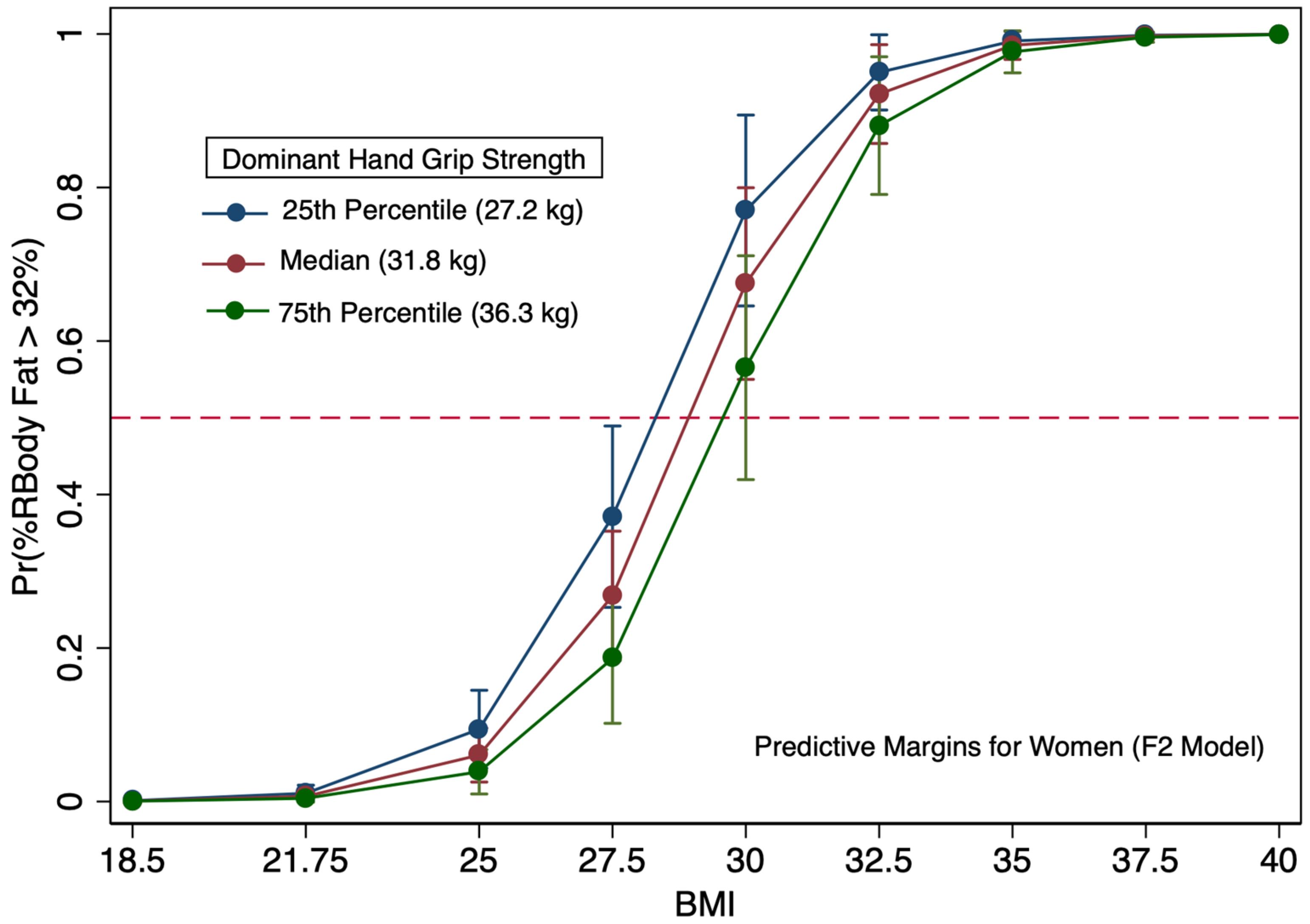
| Women F2 | BMI (kg/m2) | 0.694 | 0.083 | <0.001 | 2.00 | 1.70–2.36 |
| Grip Strength (kg) | −0.104 | 0.035 | 0.003 | 0.90 | 0.84–0.97 | |
| Constant | −16.795 | 2.154 | ||||
| Men M1 | BMI (kg/m2) | 0.592 | 0.065 | <0.001 | 1.81 | 1.59–2.05 |
| Constant | −18.342 | 1.900 | ||||
| Men M2 | BMI | 0.623 | 0.068 | <0.001 | 1.86 | 1.63–2.12 |
| Grip Strength (kg) | −0.056 | 0.021 | 0.007 | 0.95 | 0.91–0.98 | |
| Constant | −16.507 | 1.959 | ||||
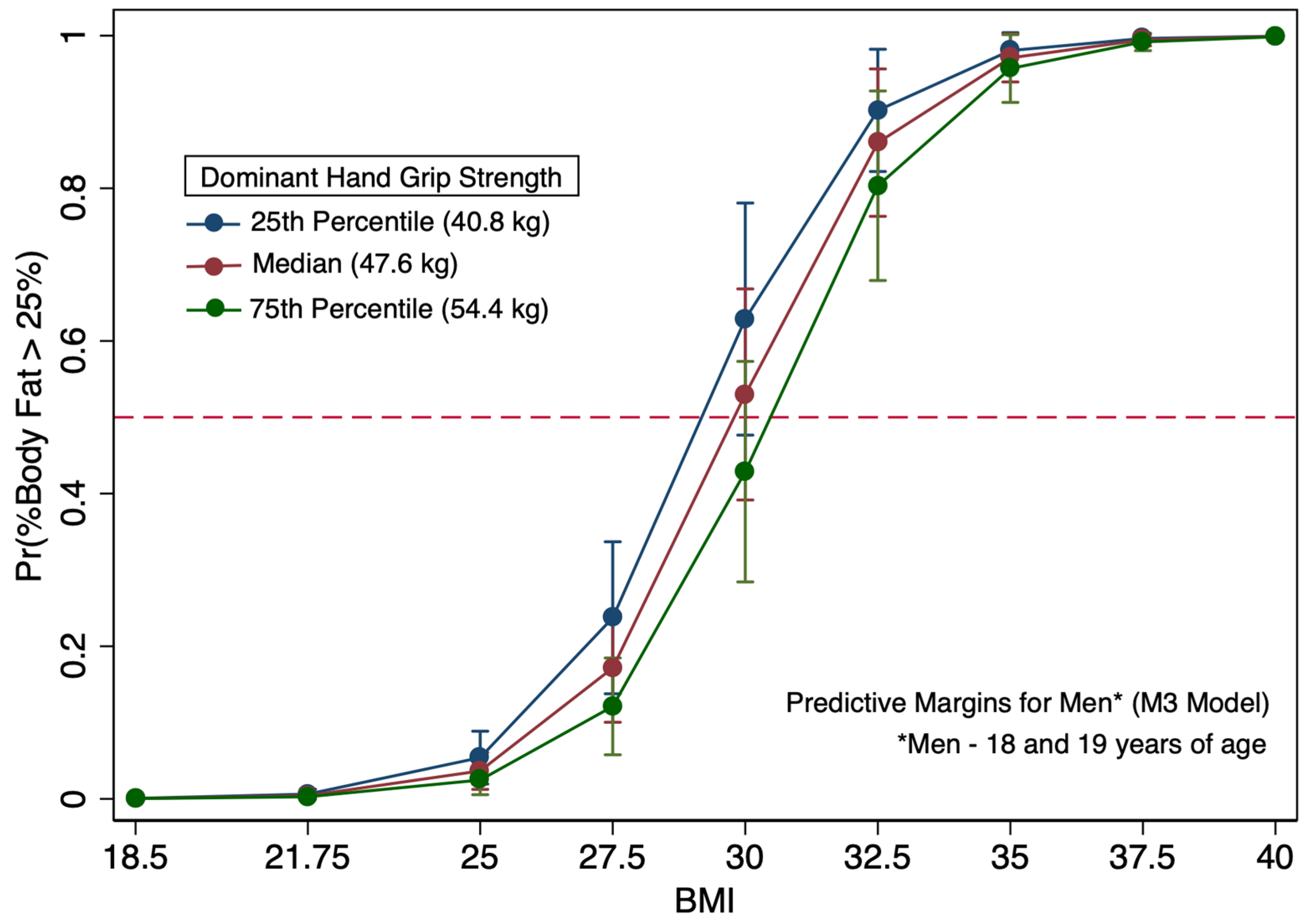
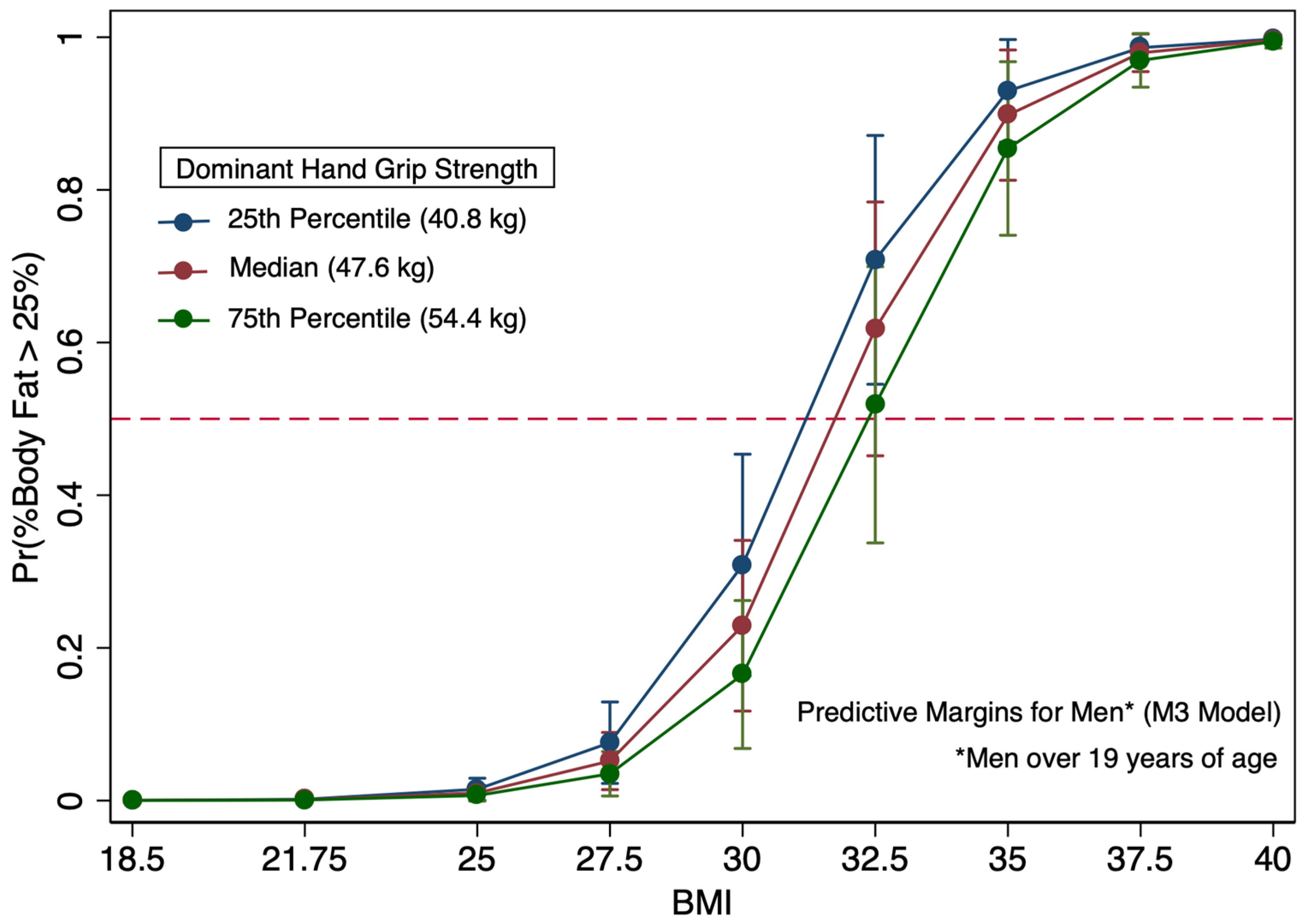
| Men M3 | BMI (kg/m2) | 0.678 | 0.076 | <0.001 | 1.97 | 1.69–2.29 |
| Grip Strength (kg) | −0.060 | 0.021 | 0.004 | 0.94 | 0.90–0.98 | |
| Age 18 or 19 (years) | −1.333 | 0.439 | 0.002 | 3.79 | 1.61–8.96 | |
| Constant | −18.697 | 2.233 |
| Model Diagnostic | Model | ||||
|---|---|---|---|---|---|
| F1 | F2 | M1 | M2 | M3 | |
| Area Under ROC Curve (%) | 95.51 | 96.47 | 95.47 | 95.99 | 96.66 |
| Sensitivity (%) | 72.46 | 81.16 | 68.29 | 68.29 | 70.73 |
| Specificity (%) | 97.59 | 98.19 | 98.06 | 96.84 | 97.33 |
| Positive Predictive Value (%) | 86.21 | 90.32 | 87.5 | 81.16 | 84.06 |
| Correct Classification (%) | 93.27 | 95.26 | 93.12 | 92.11 | 92.91 |
| Goodness-of-Fit p | 0.597 | 0.243 | 0.789 | 0.778 | 0.421 |
| Akaike Information Criterion | 156.98 | 148.96 | 198.53 | 192.62 | 184.25 |
Disclaimer/Publisher’s Note: The statements, opinions and data contained in all publications are solely those of the individual author(s) and contributor(s) and not of MDPI and/or the editor(s). MDPI and/or the editor(s) disclaim responsibility for any injury to people or property resulting from any ideas, methods, instructions or products referred to in the content. |
© 2026 by the authors. Licensee MDPI, Basel, Switzerland. This article is an open access article distributed under the terms and conditions of the Creative Commons Attribution (CC BY) license.
Share and Cite
Marion, J.W.; Shenkel, M.C.; Larkin, L.J.; Larkin, J.M. Combined Measure of Hand Grip Strength and Body Mass Index for Predicting Excess Body Fat in a University Population in Kentucky, USA. Diagnostics 2026, 16, 1210. https://doi.org/10.3390/diagnostics16081210
Marion JW, Shenkel MC, Larkin LJ, Larkin JM. Combined Measure of Hand Grip Strength and Body Mass Index for Predicting Excess Body Fat in a University Population in Kentucky, USA. Diagnostics. 2026; 16(8):1210. https://doi.org/10.3390/diagnostics16081210
Chicago/Turabian StyleMarion, Jason W., Michael C. Shenkel, Laurie J. Larkin, and Jim M. Larkin. 2026. "Combined Measure of Hand Grip Strength and Body Mass Index for Predicting Excess Body Fat in a University Population in Kentucky, USA" Diagnostics 16, no. 8: 1210. https://doi.org/10.3390/diagnostics16081210
APA StyleMarion, J. W., Shenkel, M. C., Larkin, L. J., & Larkin, J. M. (2026). Combined Measure of Hand Grip Strength and Body Mass Index for Predicting Excess Body Fat in a University Population in Kentucky, USA. Diagnostics, 16(8), 1210. https://doi.org/10.3390/diagnostics16081210