Optimization-Driven Hybrid Machine Learning Framework for Brain Tumor Classification in MRI with Metaheuristic Feature Selection


Abstract
1. Introduction
2. Background and Related Works
2.1. Deep Learning Approaches for Brain Tumor Classification
2.2. Optimization-Enhanced Deep Learning Frameworks
2.3. Hybrid Deep Learning-Machine Learning Models
2.4. Research Gaps and Motivations
- •
- Most CNN-based studies rely solely on end-to-end deep learning, which often results in high dimensionality, redundant features and increased computational costs.
- •
- Although hybrid frameworks exist, they frequently lack an optimization-driven mechanism to systematically reduce feature redundancy while preserving discriminative information.
- •
- Feature selection is often neglected or handled sub-optimally, leading to unnecessary complexity and reduced generalizability.
- •
- The dominance of DL classifiers means there has been limited exploration of efficient, lightweight ML classifiers (e.g., kNN) integrated with optimized feature subsets.
- •
- There is a lack of comparative studies involving multiple metaheuristic algorithms, particularly in the context of MRI-based tumor classification.
2.5. Contribution of the Proposed Method
- •
- Yolov11-based tumor localization reduces manual intervention and ensures robust region extraction.
- •
- Entropy-based feature engineering captures meaningful structural and textural information from MRI scans.
- •
- SFOA is introduced as the primary feature selection mechanism to reduce feature dimensionality and maximize discriminative power.
- •
- kNN is adopted as the main classifier, offering computational simplicity, high interpretability, and strong performance when paired with optimized feature subsets.
- •
- PSO, HHO, PO and SVM are used solely for comparative evaluation, enabling a rigorous benchmarking against existing optimization and classification strategies.
3. Material and Methods
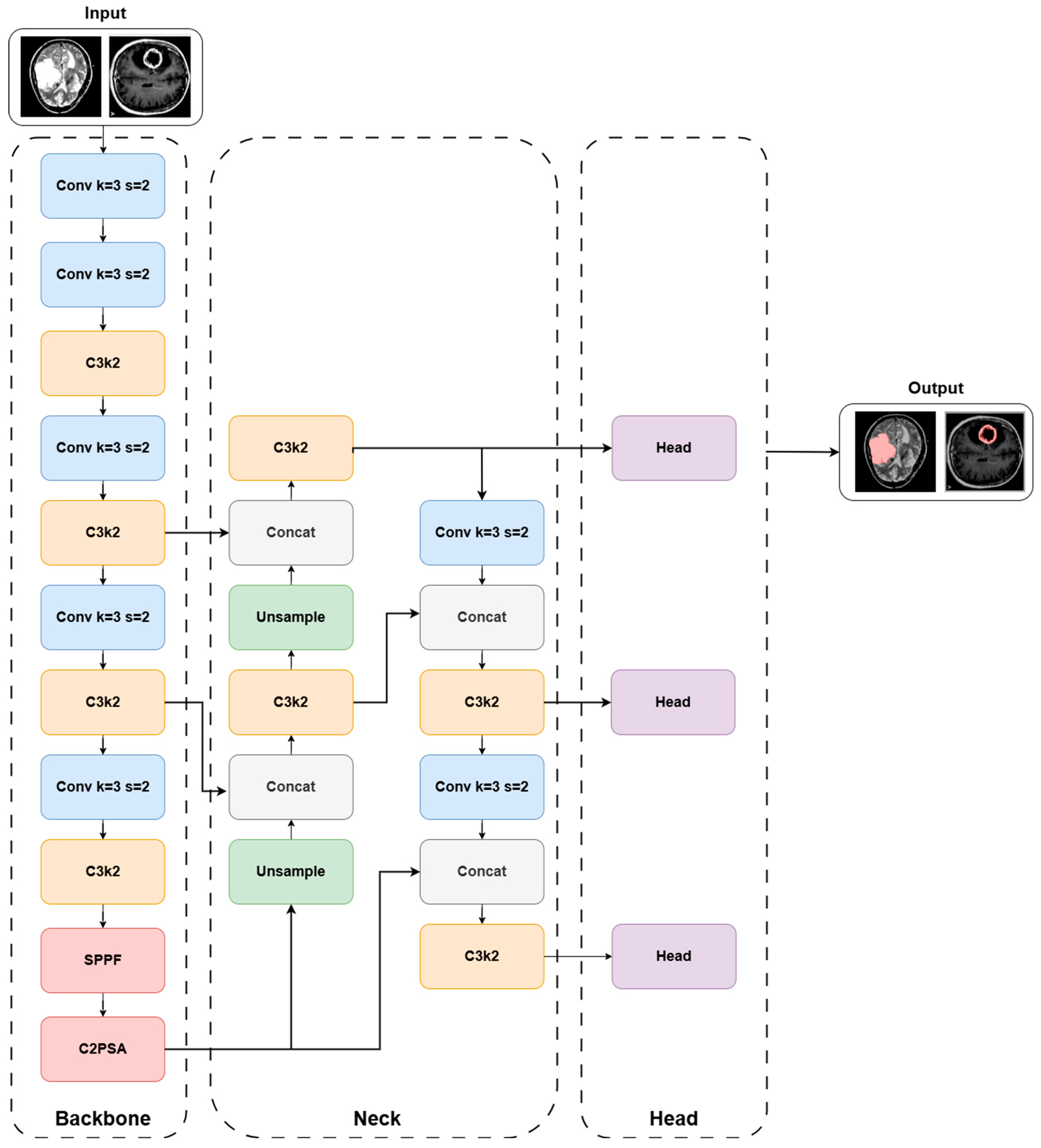
3.1. YOLOv11-Based Tumor Localization
3.2. Feature Extraction
3.3. Superb Fairy-Wren Optimization Algorithm
3.3.1. Young Birds Growth Stage
3.3.2. Breeding and Feeding Stage
3.3.3. Avoiding Natural Enemies Stage
3.3.4. Implementation of SFOA
3.4. k-Nearest Neighbors (kNN) Classifier
3.5. Performance Metrics for Classification
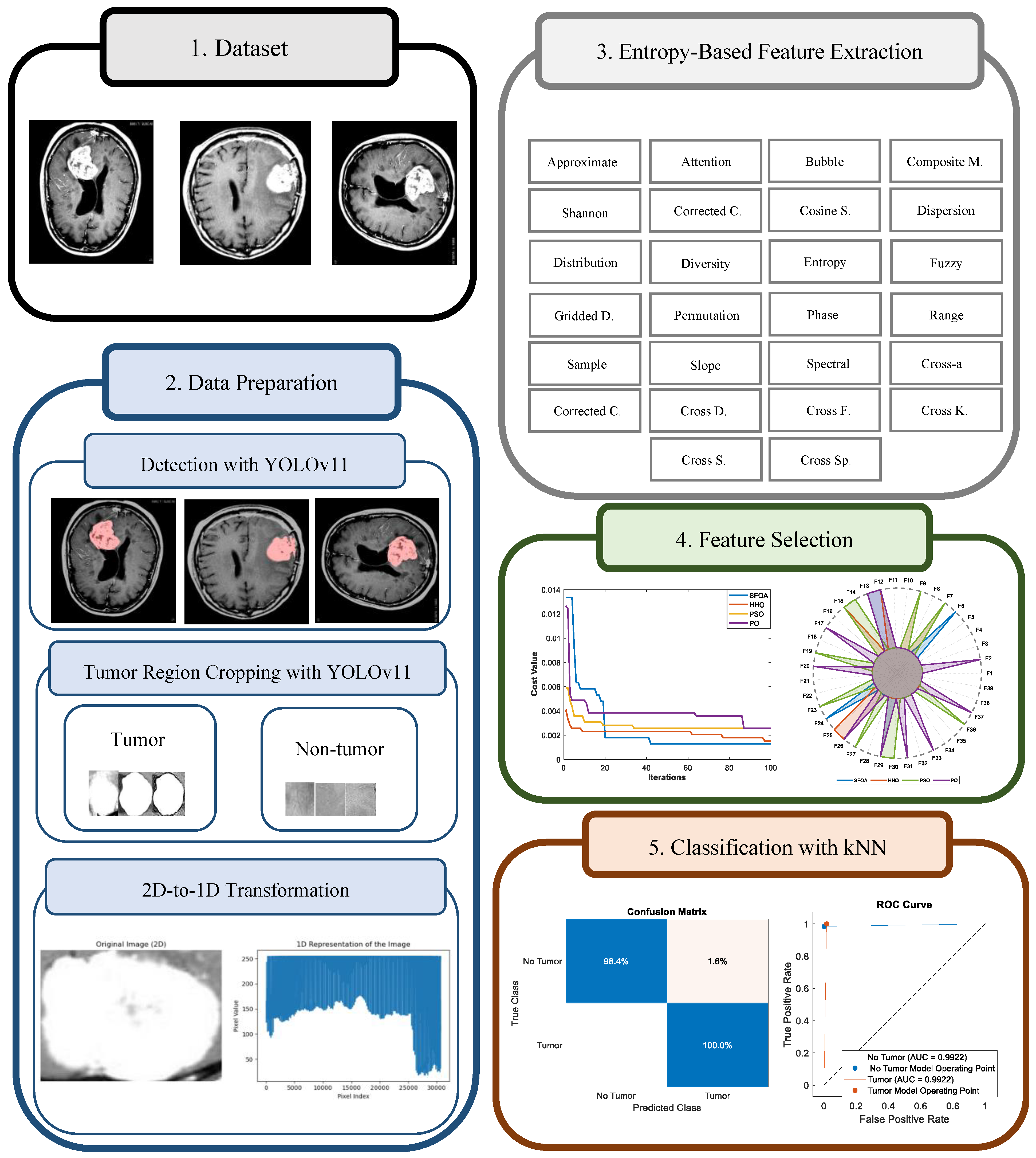
3.6. Framework of the Proposed Brain Tumor Classification Model
4. Results and Discussion
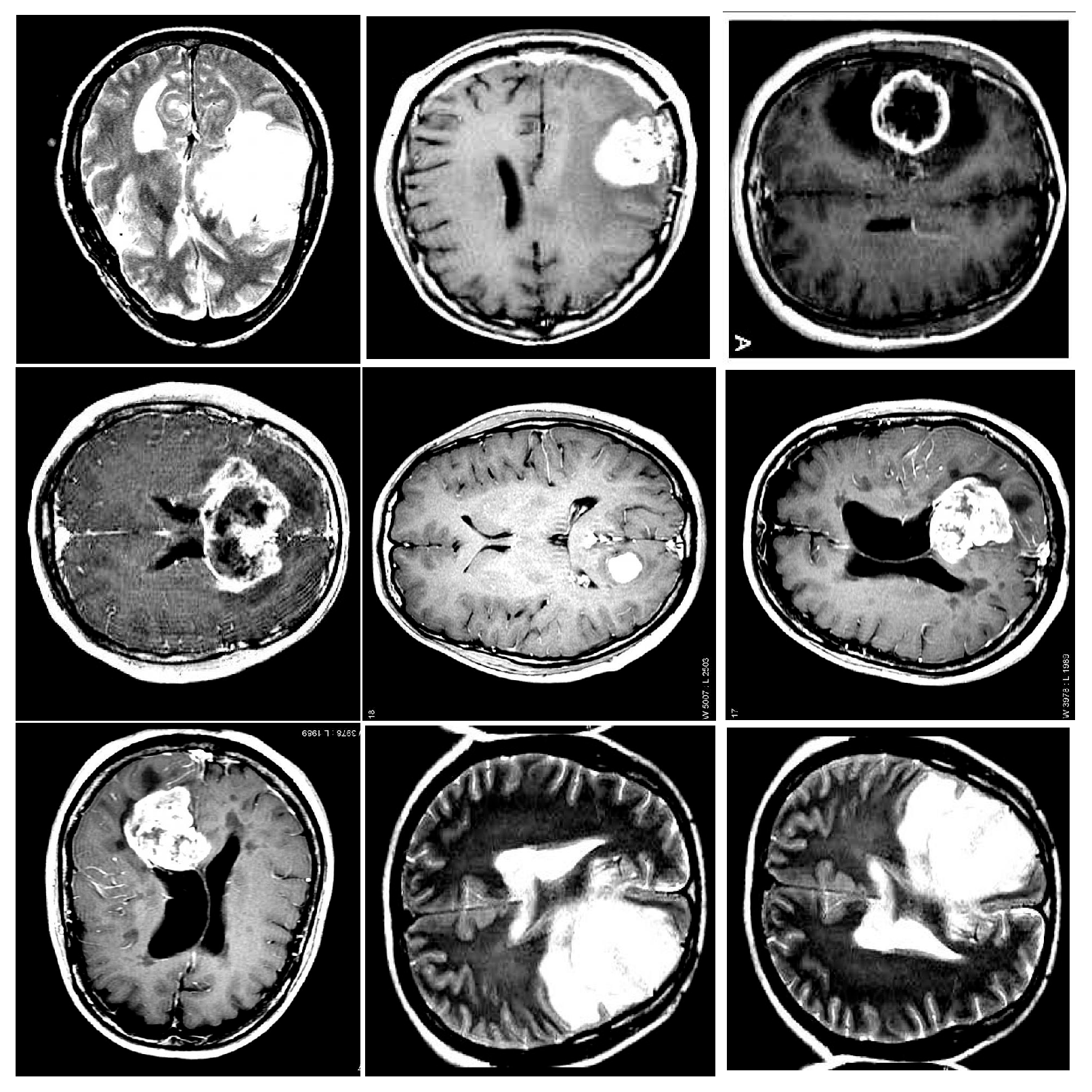
4.1. Dataset
4.2. YOLOv11 Detection Performance Analysis
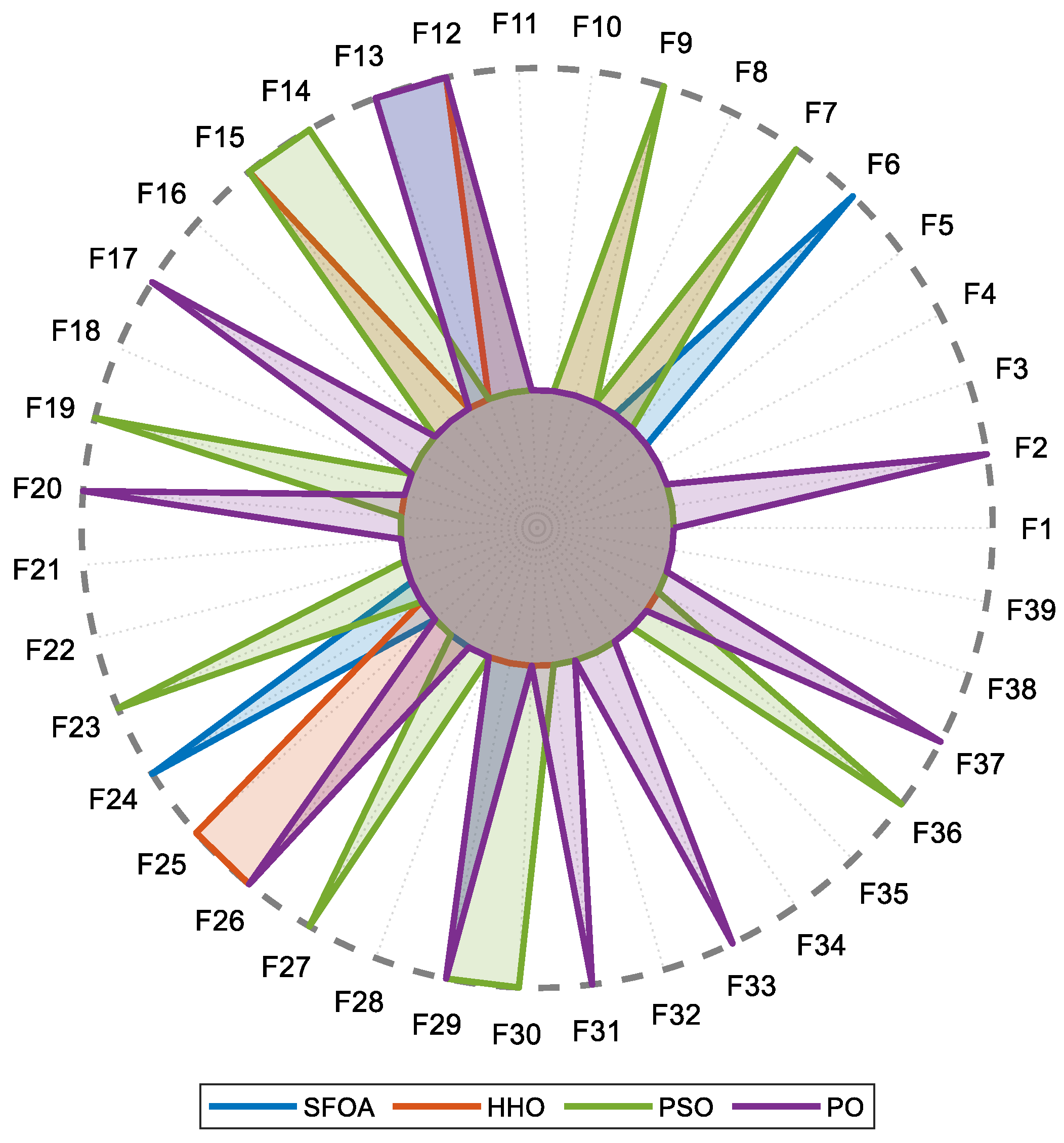
4.3. Feature Selection with SFOA-kNN
4.4. Evaluation and Discussion of Classification Models
4.5. Comparative Analysis with Previous Studies Using the Same Dataset
5. Conclusion and Future Research
Author Contributions
Funding
Institutional Review Board Statement
Informed Consent Statement
Data Availability Statement
Conflicts of Interest
References
- Louis, D.N.; Perry, A.; Reifenberger, G.; Deimling, A.; Branger, D.F.; Cavenee, W.K.; Ohgaki, H.; Wiestler, O.D.; Kleihues, P.; Ellison, D.W. The 2016 World Health Organization classification of tumors of the central nervous system: A summary. Acta Neuropathol. 2016, 131, 803–820. [Google Scholar] [CrossRef]
- Yildirim, M.; Cengil, E.; Eroglu, Y.; Cinar, A. Detection and classification of glioma, meningioma, pituitary tumor, and normal in brain magnetic resonance imaging using deep learning-based hybrid model. Iran J. Comput. Sci. 2023, 6, 455–464. [Google Scholar] [CrossRef]
- Yu, D.; Wang, J.; Hu, L.; Wu, Y.; Wang, T.; Li, Z.; Zefen, W.; Ding, Q.; Sun, Y.; Li, Z. Knowledge structures and research hotspots of immunotherapy for brain metastasis, glioma, meningioma, and pituitary adenoma: A bibliometric and visualization review. Chin. Chem. Lett. 2025, 36, 110995. [Google Scholar] [CrossRef]
- Aurna, N.F.; Yousuf, M.A.; Taher, K.A.; Azad, A.K.M.; Moni, M.A. A classification of MRI brain tumor based on two stage feature level ensemble of deep CNN models. Comput. Biol. Med. 2022, 146, 105539. [Google Scholar] [CrossRef] [PubMed]
- D’Antoni, F.; Russo, F.; Ambrosio, L.; Bacco, L.; Vollero, L.; Vadalà, G.; Merone, M.; Papalia, R.; Denaro, V. Artificial intelligence and computer aided diagnosis in chronic low back pain: A systematic review. Int. J. Environ. Res. Public Health 2022, 19, 5971. [Google Scholar] [CrossRef] [PubMed]
- Deepak, S.; Ameer, P.M. Brain tumor classification using deep CNN features via transfer learning. Comput. Biol. Med. 2019, 111, 103345. [Google Scholar] [CrossRef]
- Raza, A.; Ayub, H.; Khan, J.A.; Ahmad, I.; Salama, A.S.; Daradkeh, Y.I.; Javeed, D.; Rehman, A.U.; Hamam, H. A hybrid deep learning-based approach for brain tumor classification. Electronics 2022, 11, 1146. [Google Scholar] [CrossRef]
- Rinesh, S.; Maheswari, K.; Arthi, B.; Sherubha, P.; Vijay, A.; Sridhar, S.; Rajendran, T.; Waji, Y.A. Investigations on brain tumor classification using hybrid machine learning algorithms. J. Healthc. Eng. 2022, 2022, 2761847. [Google Scholar] [CrossRef] [PubMed]
- Ayadi, W.; Charfi, I.; Elhamzi, W.; Atri, M. Brain tumor classification based on hybrid approach. Vis. Comput. 2022, 38, 107–117. [Google Scholar] [CrossRef]
- Shanthi, S.; Saradha, S.; Smitha, J.A.; Prasath, N.; Anandakumar, H. An efficient automatic brain tumor classification using optimized hybrid deep neural network. Int. J. Intell. Netw. 2022, 3, 188–196. [Google Scholar] [CrossRef]
- Başaran, E. A new brain tumor diagnostic model: Selection of textural feature extraction algorithms and convolution neural network features with optimization algorithms. Comput. Biol. Med. 2022, 148, 105857. [Google Scholar] [CrossRef]
- Celik, M.; Inik, O. Development of hybrid models based on deep learning and optimized machine learning algorithms for brain tumor multi-classification. Expert Syst. Appl. 2024, 238, 122159. [Google Scholar] [CrossRef]
- Kumar, R.L.; Kakarla, J.; Isunuri, B.V.; Singh, M. Multi-class brain tumor classification using residual network and global average pooling. Multimed. Tools Appl. 2021, 80, 13429–13438. [Google Scholar] [CrossRef]
- Srinivas, C.; KS, N.P.; Zakariah, M.; Alothaibi, Y.A.; Shaukat, K.; Partibane, B.; Awal, H. Deep transfer learning approaches in performance analysis of brain tumor classification using MRI images. J. Healthc. Eng. 2022, 2022, 3264367. [Google Scholar] [CrossRef] [PubMed]
- Kumar, S.; Choudhary, S.; Jain, A.; Singh, K.; Ahmadian, A.; Bajuri, M.Y. Brain tumor classification using deep neural network and transfer learning. Brain Topogr. 2023, 36, 305–318. [Google Scholar] [CrossRef] [PubMed]
- Özkaraca, O.; Bağrıaçık, O.İ.; Gürüler, H.; Khan, F.; Hussain, J.; Khan, J.; Laila, U.E. Multiple brain tumor classification with dense CNN architecture using brain MRI images. Life 2023, 13, 349. [Google Scholar] [CrossRef]
- Nayak, D.R.; Padhy, N.; Mallick, P.K.; Zymbler, M.; Kumar, S. Brain Tumor Classification Using Dense Efficient-Net. Axioms 2022, 11, 34. [Google Scholar] [CrossRef]
- Elhadidy, M.S.; Elgohr, A.T.; El-Geneedy, M.; Akram, S.; Kasem, H.M. Comparative analysis for accurate multi-classification of brain tumor based on significant deep learning models. Comput. Biol. Med. 2025, 188, 109872. [Google Scholar] [CrossRef]
- Mehnatkesh, H.; Jalali, S.M.J.; Khosravi, A.; Nahavandi, S. An intelligent driven deep residual learning framework for brain tumor classification using MRI images. Expert Syst. Appl. 2023, 213, 119087. [Google Scholar] [CrossRef]
- Emam, M.M.; Samee, N.A.; Jamjoom, M.M.; Houssein, E.H. Optimized deep learning architecture for brain tumor classification using improved hunger games search algorithm. Comput. Biol. Med. 2023, 160, 106966. [Google Scholar] [CrossRef]
- Abd El Kader, I.; Xu, G.; Shuai, Z.; Saminu, S.; Javaid, I.; Salim Ahmad, I. Differential deep convolutional neural network model for brain tumor classification. Brain Sci. 2021, 11, 352. [Google Scholar] [CrossRef] [PubMed]
- Nassar, S.E.; Yasser, I.; Amer, H.M.; Mohamed, M.A. A robust MRI-based brain tumor classification via a hybrid deep learning technique. J. Supercomput. 2024, 80, 2403–2427. [Google Scholar] [CrossRef]
- Kibriya, H.; Amin, R.; Alshehri, A.H.; Masood, M.; Alshamrani, S.S.; Alshehri, A. A novel and effective brain tumor classification model using deep feature fusion and famous machine learning classifiers. Comput. Intell. Neurosci. 2022, 2022, 7897669. [Google Scholar] [CrossRef] [PubMed]
- Sharif, M.I.; Khan, M.A.; Alhussein, M.; Aurangzeb, K.; Raza, M. A decision support system for multimodal brain tumor classification using deep learning. Complex Intell. Syst. 2022, 8, 3007–3020. [Google Scholar] [CrossRef]
- Semwal, T.; Jain, S.; Mohanta, A.; Jain, A. A hybrid CNN-SVM model optimized with PSO for accurate and non-invasive brain tumor classification. Neural Comput. Appl. 2025, 37, 27901–27930. [Google Scholar] [CrossRef]
- Sharif, M.I.; Li, J.P.; Khan, M.A.; Kadry, S.; Tariq, U. M3BTCNet: Multi-model brain tumor classification using metaheuristic deep neural network features optimization. Neural Comput. Appl. 2024, 36, 95–110. [Google Scholar] [CrossRef]
- Nayeem, N.I.; Mahbuba, S.; Disha, S.I.; Buiyan, M.R.H.; Rahman, S.; Abdullah-Al-Wadud, M.; Uddin, J. A YOLOv11-based deep learning framework for multi-class human action recognition. Comput. Mater. Continua 2025, 85, 1541–1557. [Google Scholar] [CrossRef]
- He, L.H.; Zhou, Y.Z.; Liu, L.; Cao, W.; Ma, J. Research on object detection and recognition in remote sensing images based on YOLOv11. Sci. Rep. 2025, 15, 14032. [Google Scholar] [CrossRef]
- Chourib, I. From detection to diagnosis: An advanced transfer learning pipeline using YOLO11 with morphological post-processing for brain tumor analysis in MRI images. J. Imaging 2025, 11, 282. [Google Scholar] [CrossRef]
- Chen, S.; Peng, Y.; Liu, Y.; Wang, P.; Liu, T. Enhancing YOLOv11 with large kernel attention and multi-scale fusion for accurate small and multi-lesion bone tumor detection in radiographs. Diagnostics 2025, 15, 1988. [Google Scholar] [CrossRef]
- Jia, H.; Zhou, X.; Zhang, J.; Mirjalili, S. Superb fairy-wren optimization algorithm: A novel metaheuristic algorithm for solving feature selection problems. Cluster Comput. 2025, 28, 246. [Google Scholar] [CrossRef]
- Yuan, T.; Zhang, H.; Jin, J.; Chen, Z.; Cai, S. A novel adaptive superb fairy-wren (Malurus cyaneus) optimization algorithm for solving numerical optimization problems. Biomimetics 2025, 10, 496. [Google Scholar] [CrossRef]
- Sharma, S.; Chaudhary, H.; Mahapatra, R.P. Enhanced performance of high-speed MANET utilizing variational relation vector graph neural network optimized with superb fairy wren optimization algorithm. Knowl.-Based Syst. 2026, 331, 114798. [Google Scholar] [CrossRef]
- Zhang, S.; Li, X.; Zong, M.; Zhu, X.; Wang, R. Efficient kNN classification with different numbers of nearest neighbors. IEEE Trans. Neural Netw. Learn. Syst. 2017, 29, 1774–1785. [Google Scholar] [CrossRef] [PubMed]
- Halder, R.K.; Uddin, M.N.; Uddin, M.A.; Aryal, S.; Khraisat, A. Enhancing K-nearest neighbor algorithm: A comprehensive review and performance analysis of modifications. J. Big Data 2024, 11, 113. [Google Scholar] [CrossRef]
- Altman, N.S. An introduction to kernel and nearest-neighbor nonparametric regression. Am. Stat. 1992, 46, 175–185. [Google Scholar] [CrossRef]
- Shouman, M.; Turner, T.; Stocker, R. Applying k-nearest neighbour in diagnosing heart disease patients. Int. J. Inf. Educ. Technol. 2012, 2, 220–223. [Google Scholar] [CrossRef]
- Xing, W.; Bei, Y. Medical health big data classification based on KNN classification algorithm. IEEE Access 2020, 8, 28808–28819. [Google Scholar] [CrossRef]
- Saçlı, B.; Aydınalp, C.; Cansız, G.; Joof, S.; Yilmaz, T.; Çayören, M.; Önal, B.; Akduman, I. Microwave dielectric property based classification of renal calculi: Application of a kNN algorithm. Comput. Biol. Med. 2019, 112, 103366. [Google Scholar] [CrossRef]
- Jiang, S.; Pang, G.; Wu, M.; Kuang, L. An improved K-nearest-neighbor algorithm for text categorization. Expert Syst. Appl. 2012, 39, 1503–1509. [Google Scholar] [CrossRef]
- IOTSEECS BRAIN-TUMOR Dataset (v1). Available online: https://universe.roboflow.com/deeplearning-ifwnf/brain-tumor-yzzav-srhft/dataset/1 (accessed on 2 March 2026).
- Pasunoori, K.C.; Prasad, C.R.; Kumar, K.R. Leveraging CNNs and Transformers: The hybrid model for brain tumor detection and segmentation. In Proceedings of the 7th International Conference on Signal Processing, Computing and Control (ISPCC), Solan, India, 6–8 March 2025. [Google Scholar] [CrossRef]
- Gündoğdu, G.; Akın, E. Beyin Tümörü MR Görüntülerinin YOLOv8-Seg ve YOLOv11-Seg Modelleri ile Segmentasyonu ve Performans Analizi. Eng. Sci. 2025, 20, 33–49. [Google Scholar] [CrossRef]



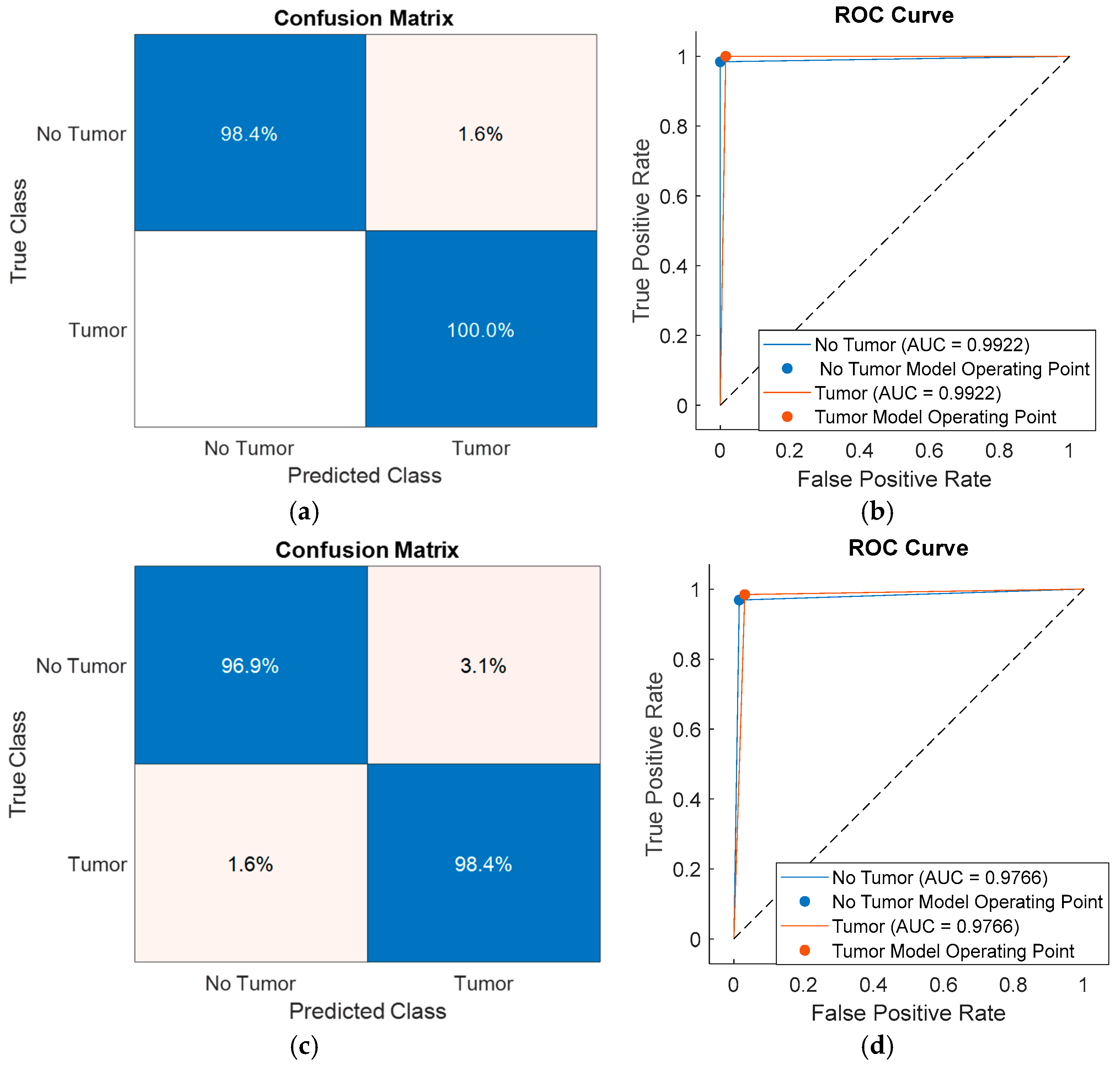
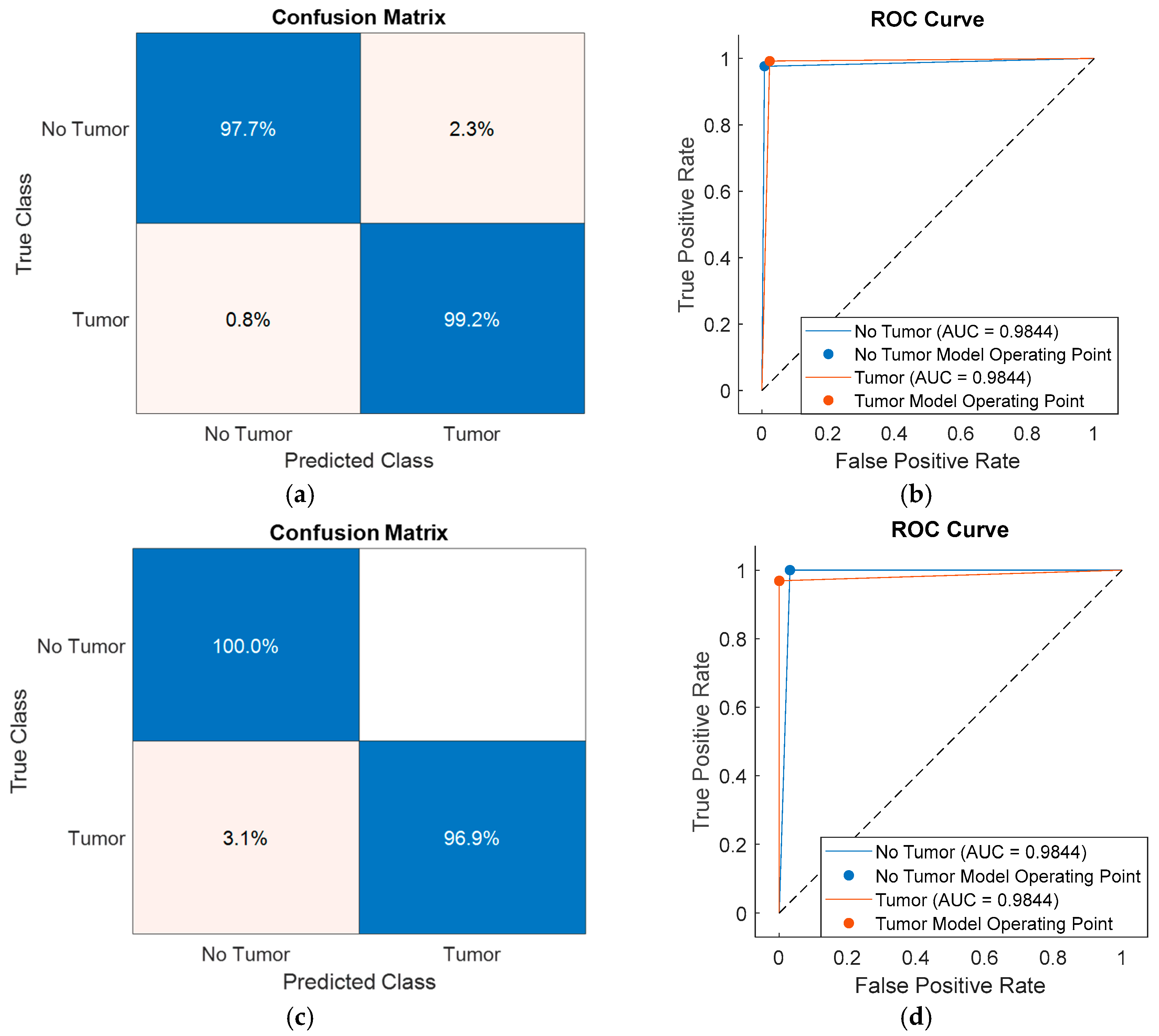



| Parameter | SFOA | PSO | HHO | PO |
|---|---|---|---|---|
| Population size | 50 | 50 | 50 | 50 |
| Maximum iterations | 100 | 100 | 100 | 100 |
| Search space dimension | 39 | 39 | 39 | 39 |
| Lower bound | 0 | 0 | 0 | 0 |
| Upper bound | 1 | 1 | 1 | 1 |
| Fitness evaluation | kNN-based accuracy | kNN-based accuracy | kNN-based accuracy | kNN-based accuracy |
| Feature encoding | Binary | Binary | Binary | Binary |
| ) | - | 0.9 → 0.4 (linear decrease) | - | - |
| Threshold | 0.8 | 0.8 | 0.8 | 0.8 |
| ) | - | 2.0 | - | - |
| ) | - | 2.0 | - | - |
| ) | - | - | Linearly decreasing | - |
| Randomization mechanism | Lévy-like movement | Uniform random | Adaptive random | Uniform random |
| Termination criterion | Max iterations | Max iterations | Max iterations | Max iterations |
| Optimization Algorithm | Total Running Time (s) |
|---|---|
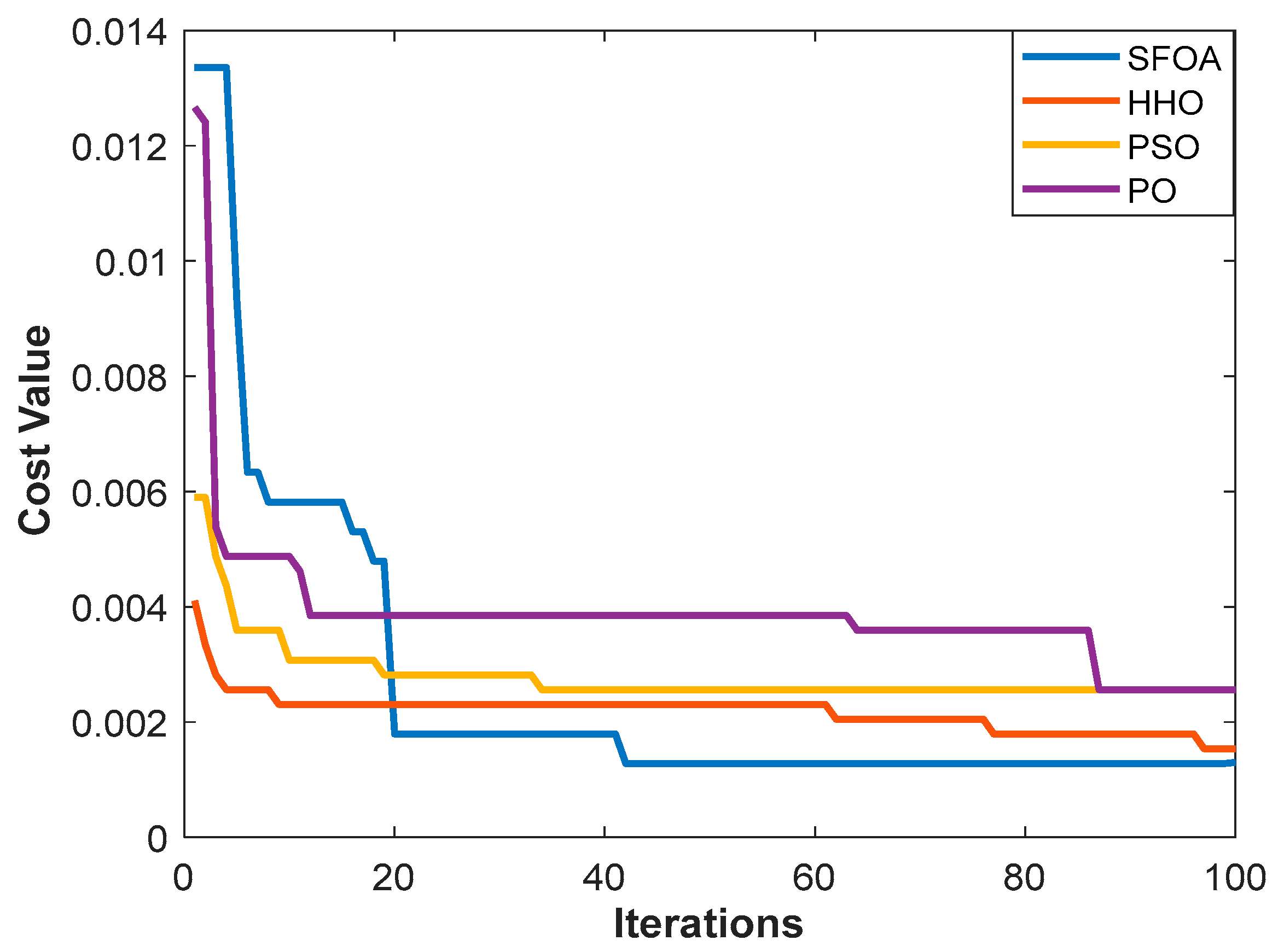
| SFOA | 0.8233 |
| HHO | 25.4099 |
| PSO | 16.9748 |
| PO | 10.8722 |
| Feature ID | Feature Name |
|---|---|
| F1 | |
| F2 | |
| F3 | |
| F4 | Attention Entropy |
| F5 | Bubble Entropy |
| F6 | Composite Multiscale Entropy (time scale 1) |
| F7 | Composite Multiscale Entropy (time scale 2) |
| F8 | Composite Multiscale Entropy (time scale 3) |
| F9 | Shannon Entropy |
| F10 | Corrected Conditional Entropy |
| F11 | Cosine Similarity Entropy |
| F12 | Dispersion Entropy |
| F13 | Distribution Entropy |
| F14 | Diversity Entropy |
| F15 | Entropy of Entropy |
| F16 | |
| F17 | |
| F18 | Gridded Distribution Entropy |
| F19 | Permutation Entropy |
| F20 | Phase Entropy |
| F21 | Range Entropy |
| F22 | |
| F23 | |
| F24 | |
| F25 | Slope Entropy |
| F26 | Spectral Entropy |
| F27 | |
| F28 | |
| F29 | |
| F30 | Corrected Cross-conditional Entropy |
| F31 | Cross-distribution Entropy |
| F32 | |
| F33 | |
| F34 | |
| F35 | |
| F36 | |
| F37 | |
| F38 | |
| F39 | Cross-spectral Entropy |
| Classifier | Parameter | Value |
|---|---|---|
| kNN | Distance metric | Euclidean |
| Number of neighbors | 1 | |
| Distance weighting | Uniform | |
| Feature standardization | Enabled | |
| SVM | Kernel function | Linear |
| Box constraint | 1 | |
| Kernel scale | Auto | |
| Feature standardization | Enabled |
| Model | Accuracy (%) | Precision (%) | Recall (%) | F1-Score (%) |
|---|---|---|---|---|
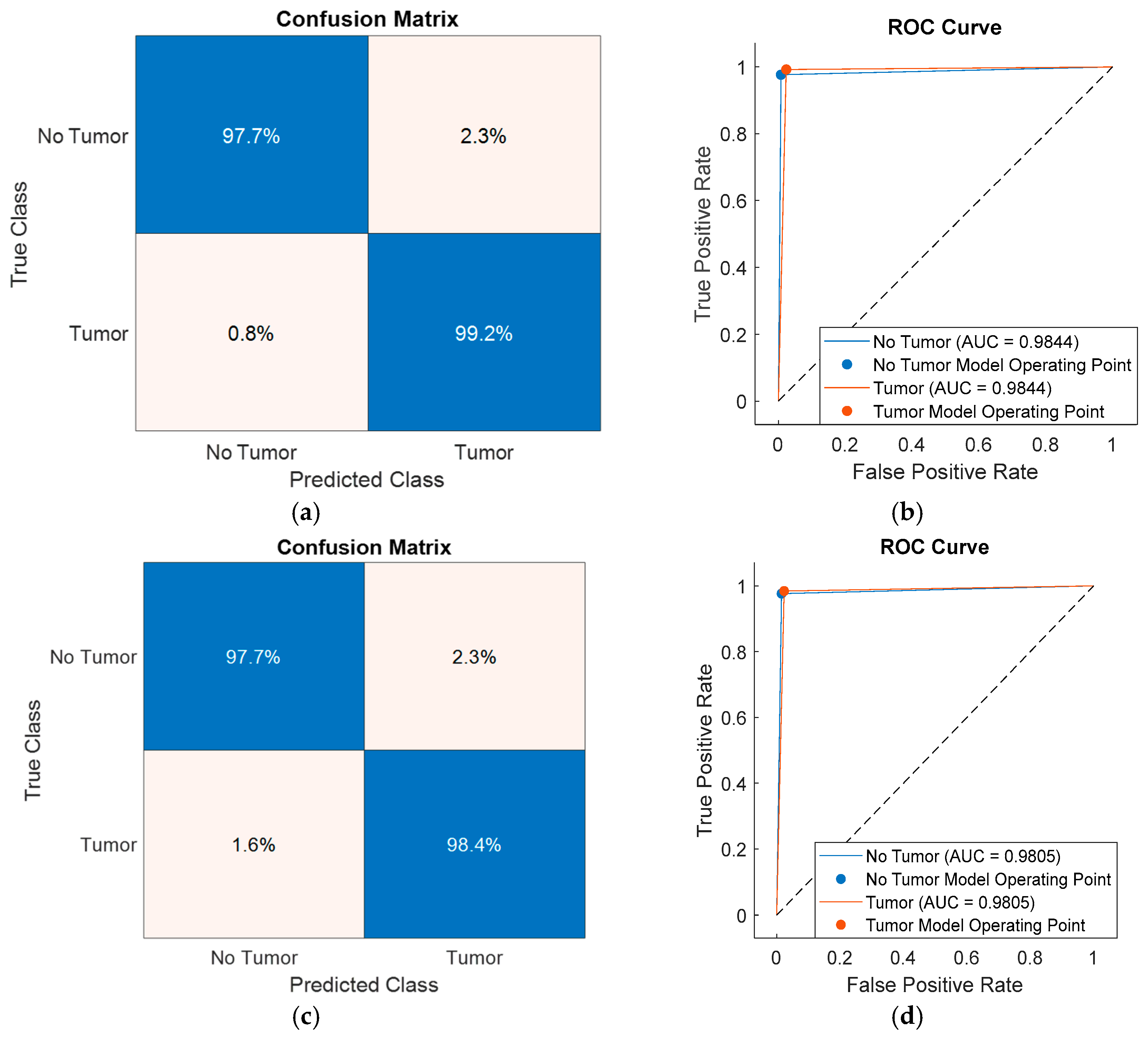
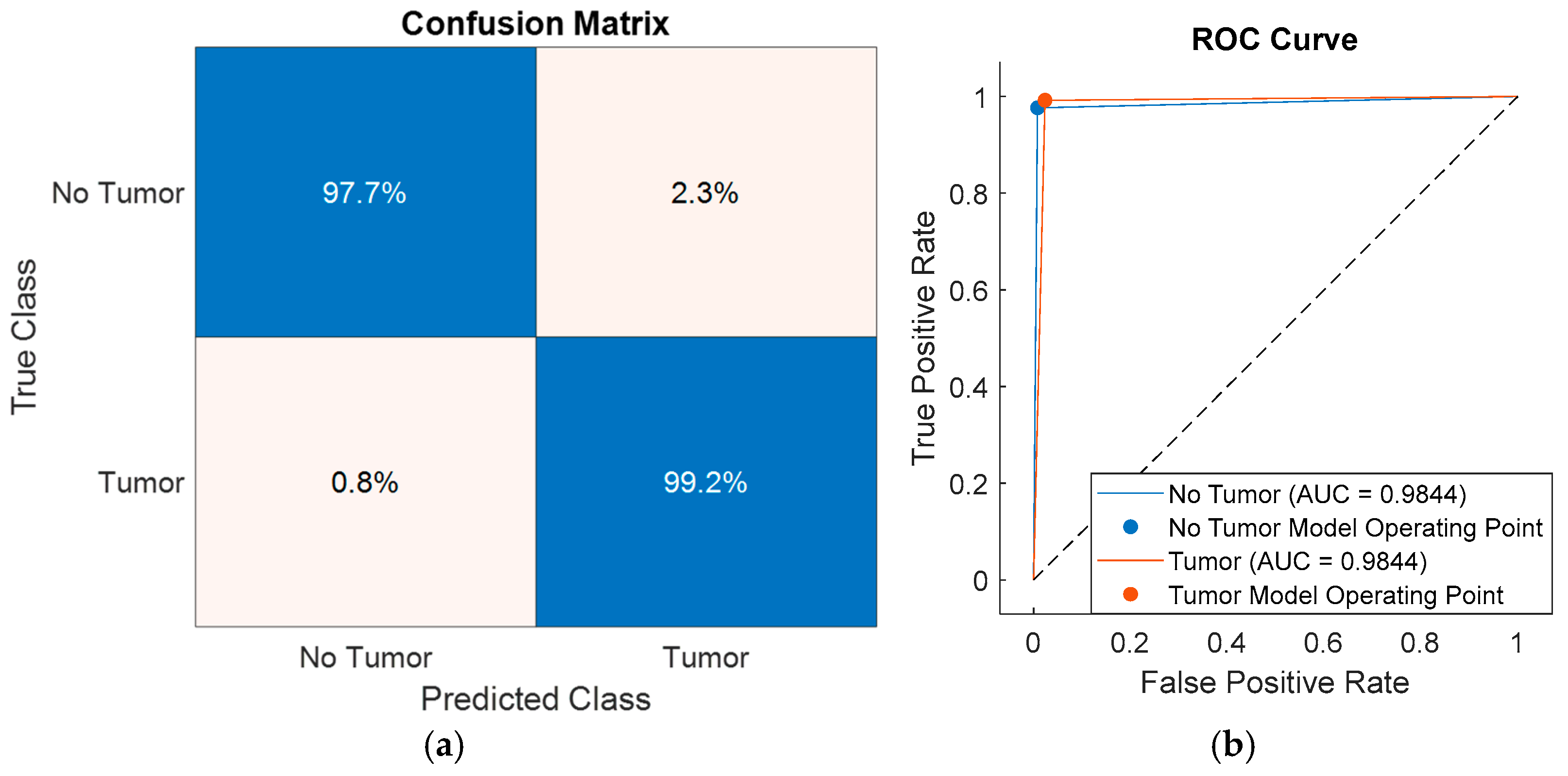
| SFOA-kNN | 99.20 | 99.21 | 99.20 | 99.20 |
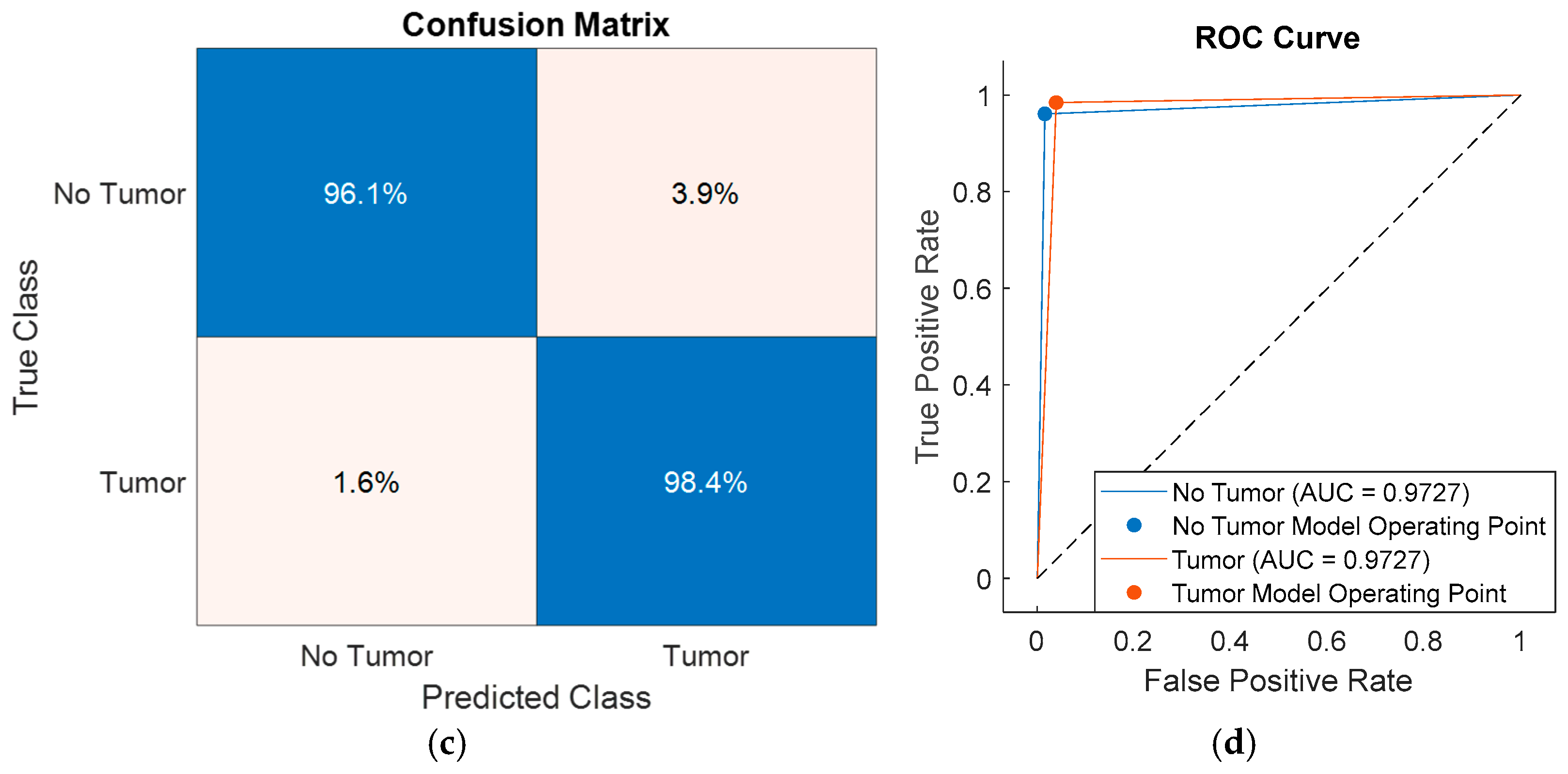
| SFOA-SVM | 97.65 | 97.66 | 97.65 | 97.65 |
| HHO-kNN | 98.45 | 98.46 | 98.45 | 98.45 |
| HHO-SVM | 98.45 | 98.49 | 98.45 | 98.45 |
| PSO-kNN | 98.45 | 98.46 | 98.45 | 98.45 |
| PSO-SVM | 98.05 | 98.05 | 98.05 | 98.05 |
| PO-kNN | 98.45 | 98.46 | 98.45 | 98.45 |
| PO-SVM | 97.25 | 97.27 | 97.25 | 97.26 |
| Study | Task | Model | Feature Optimization | Accuracy/Map | Classification |
|---|---|---|---|---|---|
| [42] | Detection + Segmentation | YOLO11n + SAM | No | mAP@50: 99.41% | No |
| [43] | Segmentation | YOLOv8-seg/YOLOv11-seg | No | High mAP@0.5 | No |
| Proposed Study | Detection + Feature-based Classification | YOLOv11 + SFOA + kNN | Yes (SFOA) | 99.20% Accuracy | Yes |
Disclaimer/Publisher’s Note: The statements, opinions and data contained in all publications are solely those of the individual author(s) and contributor(s) and not of MDPI and/or the editor(s). MDPI and/or the editor(s) disclaim responsibility for any injury to people or property resulting from any ideas, methods, instructions or products referred to in the content. |
© 2026 by the authors. Licensee MDPI, Basel, Switzerland. This article is an open access article distributed under the terms and conditions of the Creative Commons Attribution (CC BY) license.
Share and Cite
Özkan, Y.; Özçelik, Y.B.; Altan, A. Optimization-Driven Hybrid Machine Learning Framework for Brain Tumor Classification in MRI with Metaheuristic Feature Selection. Diagnostics 2026, 16, 819. https://doi.org/10.3390/diagnostics16050819
Özkan Y, Özçelik YB, Altan A. Optimization-Driven Hybrid Machine Learning Framework for Brain Tumor Classification in MRI with Metaheuristic Feature Selection. Diagnostics. 2026; 16(5):819. https://doi.org/10.3390/diagnostics16050819
Chicago/Turabian StyleÖzkan, Yasin, Yusuf Bahri Özçelik, and Aytaç Altan. 2026. "Optimization-Driven Hybrid Machine Learning Framework for Brain Tumor Classification in MRI with Metaheuristic Feature Selection" Diagnostics 16, no. 5: 819. https://doi.org/10.3390/diagnostics16050819
APA StyleÖzkan, Y., Özçelik, Y. B., & Altan, A. (2026). Optimization-Driven Hybrid Machine Learning Framework for Brain Tumor Classification in MRI with Metaheuristic Feature Selection. Diagnostics, 16(5), 819. https://doi.org/10.3390/diagnostics16050819