Technical Note

Bifurcated Networks for Breast Density & Cancer Risk: A Technical Framework

by
Graziella Di Grezia
1,*,
Teresa Iannaccone
2 and
Antonio Nazzaro
3
1
Department of Life Sciences, Health and Healthcare Professions, Link Campus University, Via del Casale di S. Pio V, 44, 00165 Rome, Italy
2
Independent Researcher, 83100 Avellino, Italy
3
Independent Researcher, 83100 Avellino, Italy
*
Author to whom correspondence should be addressed.
Diagnostics 2026, 16(5), 770; https://doi.org/10.3390/diagnostics16050770

Submission received: 22 January 2026 / Revised: 19 February 2026 / Accepted: 26 February 2026 / Published: 4 March 2026
(This article belongs to the Special Issue Frontline of Breast Imaging)

Abstract

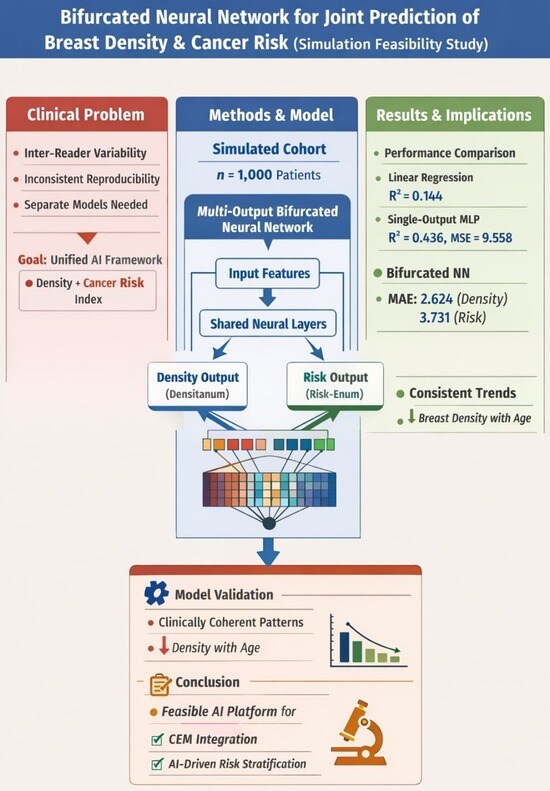
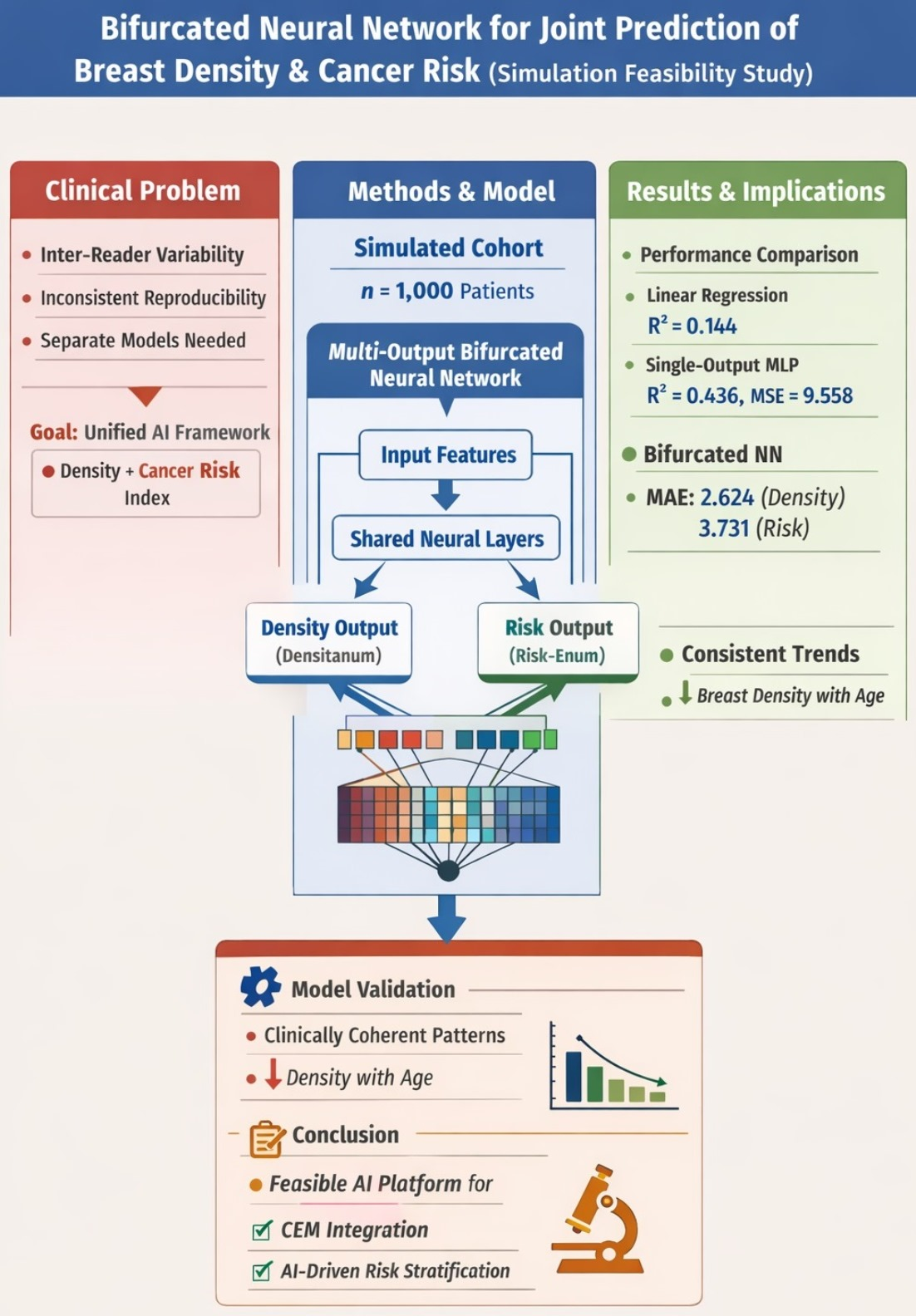
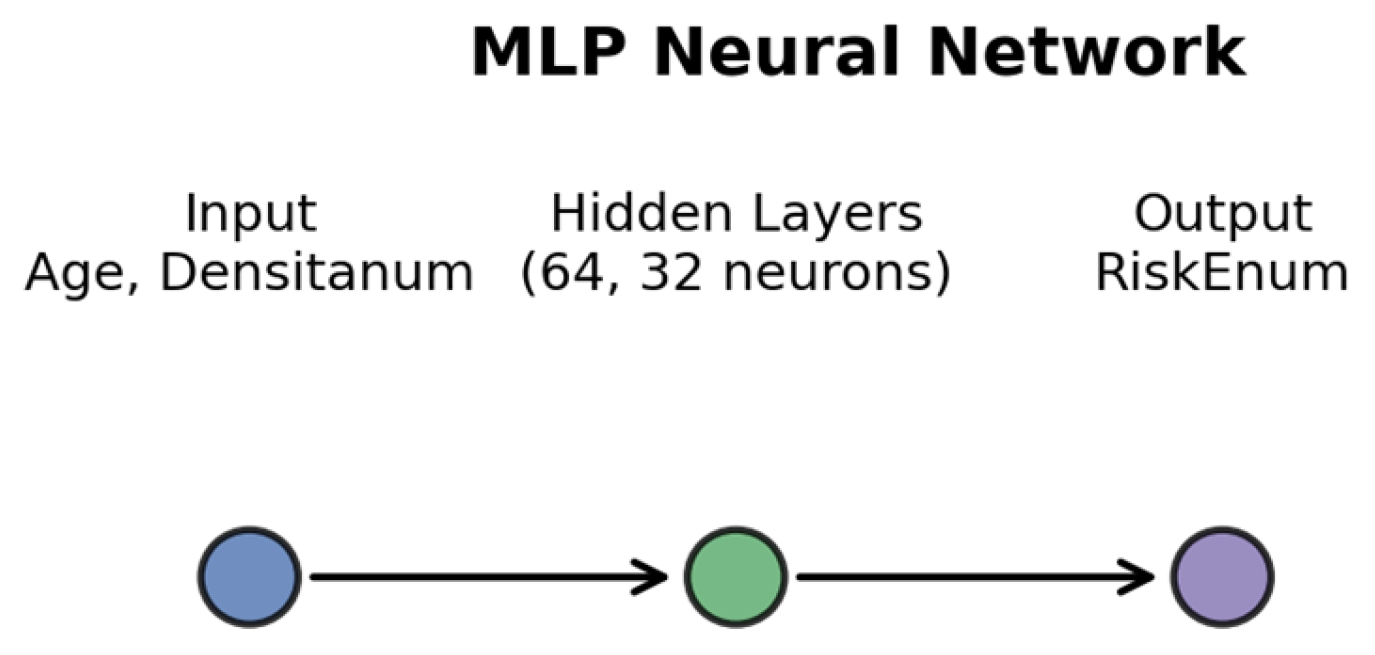
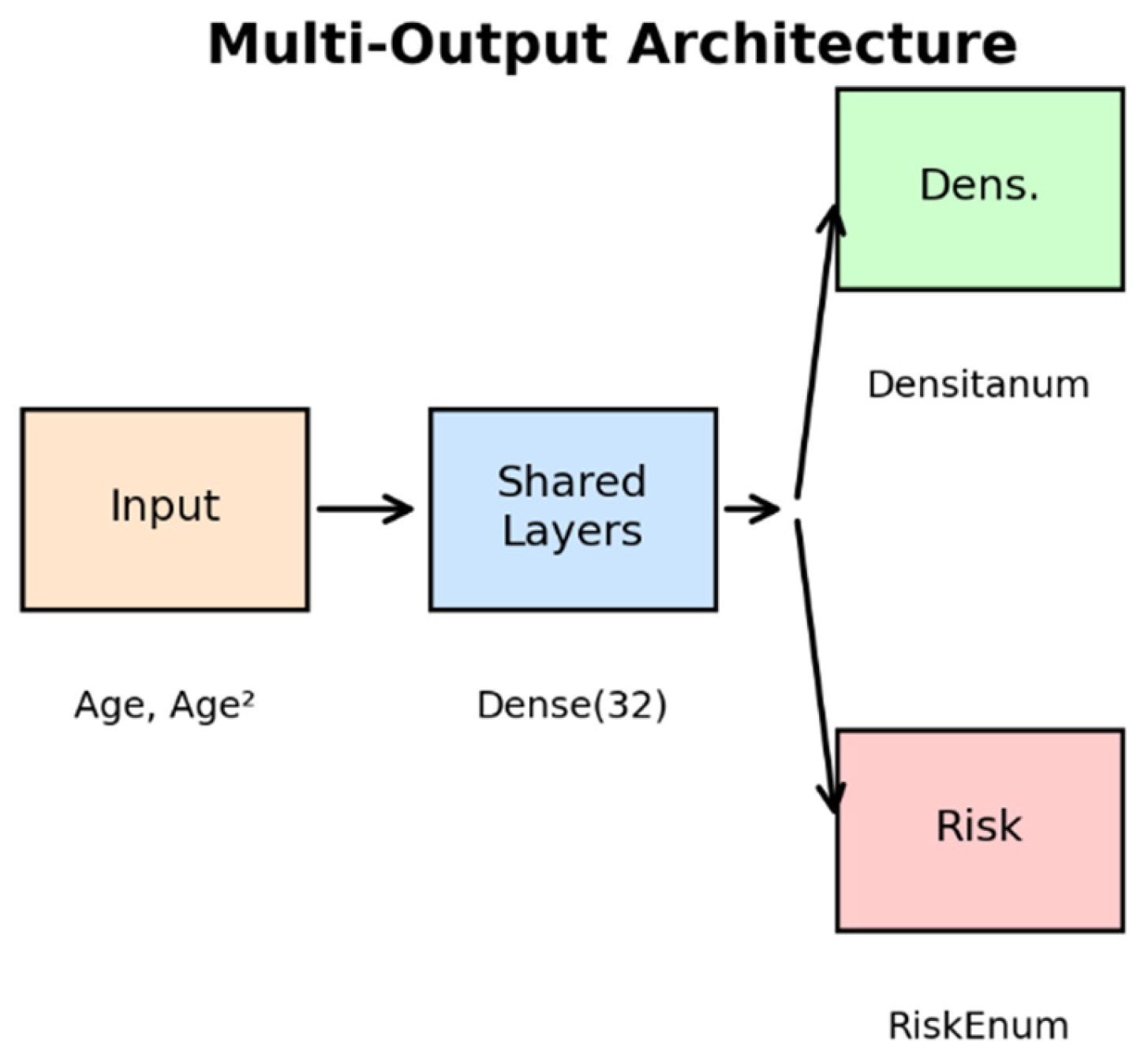
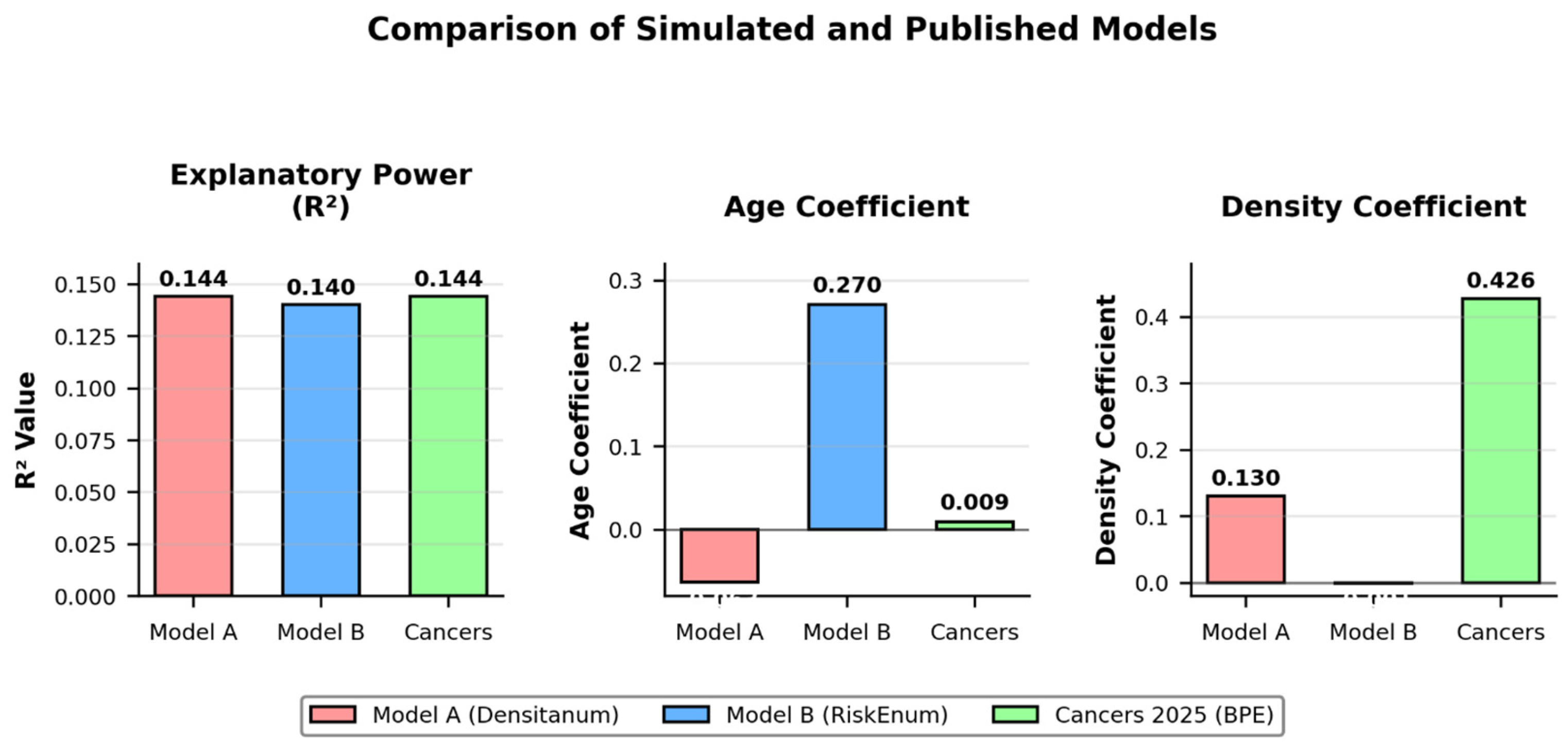
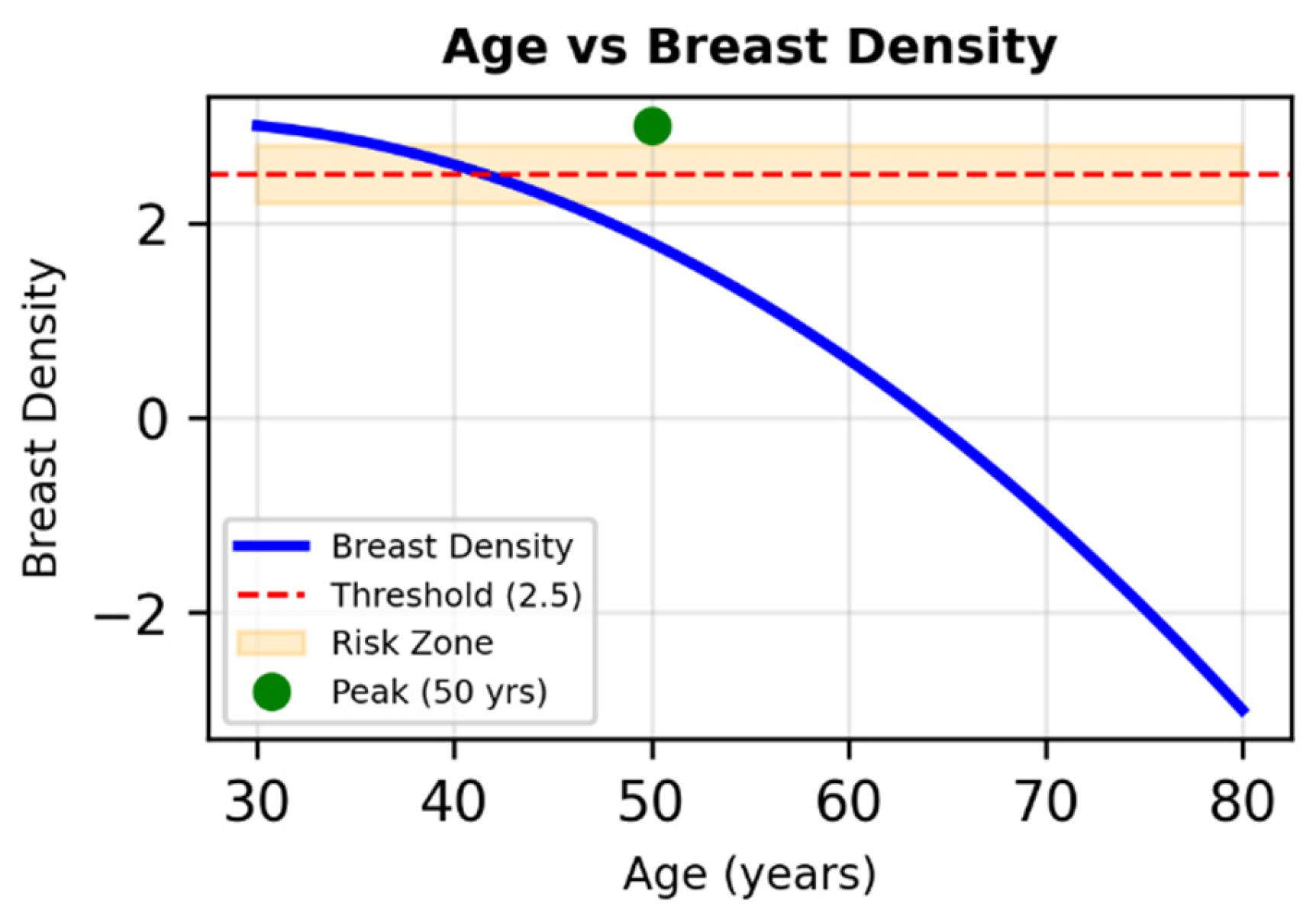
Background/Objective: Breast density and cancer risk are key imaging-derived biomarkers, yet their assessment is limited by inter-reader variability and inconsistent reproducibility. This Technical Note evaluates the feasibility of a bifurcated neural network designed to simultaneously predict breast density and a composite cancer risk index, providing a methodological foundation for future integration into contrast-enhanced mammography (CEM) workflows. Materials and Methods: A simulated cohort of 1000 patients was generated to reproduce clinically plausible variability in breast density (Densitanum) and cancer risk (RiskEnum). A multi-output neural network was developed and compared with two baselines: multiple linear regression and a single-output multilayer perceptron (MLP). Performance was assessed using R2, mean squared error (MSE), and mean absolute error (MAE). Learned trends were examined for consistency with established physiological and epidemiologic patterns. Results: Linear regression showed limited explanatory power (R2 ≈ 0.144). The single-output MLP improved prediction of the cancer risk index (R2 = 0.436; MSE = 9.558). The bifurcated neural network achieved MAE values below 4 for both outputs (2.624 for Densitanum; 3.731 for RiskEnum), demonstrating robust performance and the advantage of simultaneous multi-target prediction. The model reproduced clinically coherent patterns, including the expected age-related decline in breast density. Conclusions: This simulation-based feasibility study demonstrates that bifurcated neural networks can jointly model correlated breast imaging biomarkers with high internal consistency. The proposed architecture provides a reproducible methodological platform that can be directly tested on real CEM datasets to support future AI-enhanced risk stratification and personalized screening pathways.
Keywords: breast density; cancer risk prediction; contrast-enhanced mammography; multi-task learning; neural networks; imaging biomarkers; risk stratification breast density; cancer risk prediction; contrast-enhanced mammography; multi-task learning; neural networks; imaging biomarkers; risk stratification
Graphical Abstract