Menstrual Effluent in the Pathogenesis and Diagnosis of Endometriosis—A Systematic Review

 ,
,  ,
,  , ,
, ,  , , ,
, , ,  and
and
Abstract
1. Introduction
2. Materials and Methods
2.1. Protocol and Registration
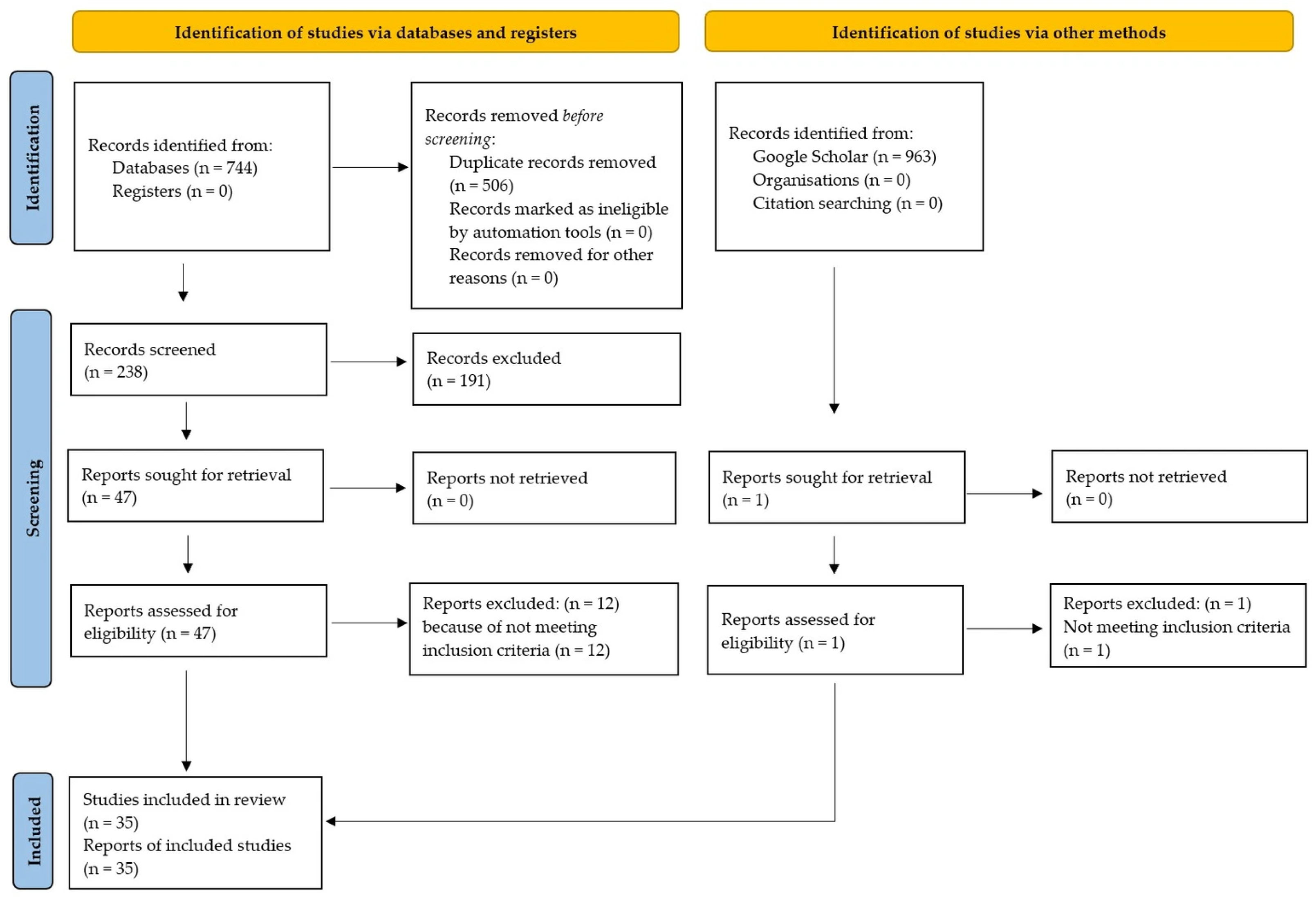
2.2. Information Sources and Search Strategy
- •
- 230 records in PubMed
- •
- 347 records via EBSCOhost
- •
- 167 records in Semantic Scholar
2.3. Study Selection
- •
- 35 studies met all inclusion criteria and were included in the final synthesis.
- •
- 12 were excluded due to (i) insufficient use of ME or menstrual blood, (ii) absence of comparative data between endometriosis and control groups, (iii) use of unrelated cellular models, or (iv) insufficient reporting for reproducible data extraction.
2.4. Eligibility Criteria
2.5. Data Extraction
2.6. Risk of Bias and Methodological Quality Assessment
2.7. Data Synthesis
- •
- Diagnostic markers were synthesized narratively and tabulated including reported sensitivity, specificity, AUC, and cut-offs where available. AUC 95% confidence intervals were extracted from the original publications where reported; otherwise, they were approximated from the AUC and case/control sample sizes using the Hanley–McNeil method, implemented in R via the JASP R-syntax module (JASP statistical software version 0.95.4; JASP Team, 2025)
- •
- Mechanistic studies were grouped according to biological domains: stromal decidualization/progesterone resistance, immune dysregulation, extracellular remodeling and angiogenesis, metabolic elements (lipidomics), and multi-omic integration.
- •
- When findings overlapped across platform types (e.g., reduced IGFBP1+ stromal cells seen both in ME culture and scRNA-seq), this was highlighted to enhance trans-method validation.
3. Results
3.1. Study Characteristics
3.2. Diagnostic Findings
- (a)
- Molecular markers of hormonal regulation
- (b)
- Functional stromal-cell assays
- (c)
- Protein-based markers
- (d)
- Lipidomic signatures
- •
- Two-lipid model (CL 16:0_18:0_22:5_22:6 + PE P-16:0/18:1) from dried menstrual blood spots (AUC 0.87, sens 81%, spec 85%, threshold 0.59) [56].
3.3. Mechanistic Findings
3.3.1. Impaired Decidualization and Progesterone Resistance
3.3.2. Immune Dysregulation and Inflammatory Signaling
3.3.3. Angiogenesis and Extracellular Matrix (ECM) Remodeling
3.3.4. Stem/Progenitor Cell Populations
3.3.5. Cellular Adhesion and Peritoneal Interaction
3.3.6. Cellular Senescence and DNA Damage Accumulation
3.3.7. Cellular and Molecular Heterogeneity in ME
4. Discussion
4.1. Diagnostic Performance
4.2. Clinical Implications
4.3. Economic Aspects
4.4. Strengths and Limitations
4.5. Future Directions
5. Conclusions
Supplementary Materials
Author Contributions
Funding
Institutional Review Board Statement
Informed Consent Statement
Data Availability Statement
Conflicts of Interest
Appendix A

| First Author (Year) | Study Type | Risk-of-Bias Tool | Overall Risk of Bias | Key Methodological Limitations |
|---|---|---|---|---|
| Cadle, et al. (2025) [48] | Mechanistic case–control (ME-derived stromal cells) | NIH | Moderate | Small sample (3/4); convenience sampling; limited reporting on blinding; lab endpoints only |
| Wilson, et al. (2025a) [49] | Mechanistic (flow cytometry, proteomics) | NIH | Moderate | Moderate cohort (14/19); possible selection bias; confounders (age, race) not fully adjusted |
| Delenko, et al. (2025) [50] | Mechanistic senescence (ME stromal cells) | NIH | Moderate | Sample size not explicitly stated (total n of participants = 8); no blinding reported; external validity limited |
| Wang, et al. (2025) [51] | Exploratory multiplex biomarker panel | NIH | Moderate–High | Cross-sectional; small sample (20/20); exploratory biomarker discovery; no diagnostic validation or threshold definition planned |
| Gurung, et al. (2025) [52] | Mechanistic EV study (ME sEVs) | NIH | Moderate | Small sample (8/9); symptomatic controls; limited clinical characterization |
| Wilson, et al. (2025b) [53] | Immune mechanistic (neutrophils in ME) | NIH | Moderate | Case–control (10/13); cross-sectional; no functional validation in humans |
| Delenko, et al. (2024) [54] | In vitro intervention (quercetin; ME stromal cells) | NIH | Moderate | In vitro model; n = 3–8 per assay; no clinical outcomes |
| Amanda, et al. (2024) [55] | Diagnostic molecular (RT-qPCR) | QUADAS-2 | High | Case–control (20/20); no prospective validation; threshold derived internally; unclear blinding |
| Starodubtseva, et al. (2024) [56] | Diagnostic lipidomics (dried spots) | QUADAS-2 | High | Case–control (23/16); AUC 0.87 reported; internal model without external validation; risk of overfitting |
| Wang, et al. (2024) [57] | Mechanistic OPN study (ME stromal cells) | NIH | Moderate | Case–control (20/10); functional assays only; no diagnostic validation |
| Febriyeni, et al. (2024) [58] | Molecular biomarker (CXCL16 mRNA/promoter methylation) | NIH | Moderate-High | Case–control (18/17); no ROC; internal threshold |
| Schwalie, et al. (2024) [59] | scRNA-seq mechanistic (ME) | NIH | Moderate | Small cohort (7/11); no replication |
| Effendi, et al. (2023) [60] | Diagnostic (TGF-β1 ELISA) | QUADAS-2 | Moderate | Case–control design with a small and imbalanced control group (40/10). |
| Ji, et al. (2023) [61] | Proteomics exploratory (ME) | NIH | Moderate-High | Discovery cohort (8/8); no validation cohort; numerical AUC/sensitivity/specificity not reported |
| Davoodi Asl, et al. (2023) [62] | Experimental (exosome treatment of E-MenSCs) | NIH | Moderate-High | Small endometriosis group (n = 5); in vitro model only (no in vivo/clinical validation) |
| Shih, et al. (2022) [63] | scRNA-seq (menstrual endometrial tissue) | NIH | Moderate | Very small (11/9); selection bias likely |
| Miller, et al. (2022) [64] | Immune mechanistic (Th17/macrophages) | NIH | Moderate | Small sample (14/19); single-center |
| Sahraei, et al. (2022) [65] | Gene expression (ME stromal cells) | NIH | Moderate-High | Very small n (3/3); no correction for multiple comparisons |
| Schmitz, et al. (2021) [66] | Immune cytotoxicity (CD8+ perforin+) | NIH | Moderate | Case–control (12/11); cross-sectional |
| Masuda, et al. (2021) [67] | Stem/progenitor-cell study (ME + PF) | NIH | Moderate | Case–control (32/29); mechanistic ME+PF stem/progenitor-cell assays; not designed as diagnostic accuracy study |
| Anwar, et al. (2021) [68] | Diagnostic ICC (VEGF H-score) | QUADAS-2 | High | Case–control (30/30); imbalanced groups; low sensitivity (40%); internal threshold |
| Manan, et al. (2021) [69] | Diagnostic ELISA (VEGF-A) | QUADAS-2 | High | Case–control (38/7); AUC based on 38/7 for ROC → very small control group; histologic confirmation missing (endometriosis only based on clinical symptoms) |
| Nayyar, et al. (2020) [70] | Diagnostic functional assay (IGFBP1) | QUADAS-2 | High | Case–control (24/23); no external validation; internal threshold |
| Madjid, et al. (2020) [71] | ICC (MMP-9/TIMP-1) | NIH | Moderate-High | Case–control (30/38); semi-quantitative; no ROC |
| Mangalonggak, et al. (2020) [72] | ELISA (Endoglin/CD105) | NIH | Moderate-High | Case–control (27/25); significant group differences in endoglin levels; no ROC analysis or diagnostic thresholds reported |
| Madjid, et al. (2019) [73] | ICC (cytology/morphology) | NIH | Moderate-High | Case–control (63/86); exploratory; no accuracy metrics |
| Warren, et al. (2018) [74] | Functional decidualization assay | NIH | High | Very small (7/7); no blinding; no diagnostic framework |
| Anwar, et al. (2018) [75] | Diagnostic qRT-PCR (PR-B) | QUADAS-2 | High | Case–control (21/21); internal threshold; no validation. Outcome reporting inconsistent (PR-B qRT-PCR described, but results reported in µg/dL and figures refer to progesterone): limited interpretability. |
| Madjid, et al. (2015) [76] | ICC (caspases, MMPs) | NIH | Moderate-High | Case–control (34/48); semi-quantitative; no correction for multiplicity |
| da Silva, et al. (2014) [77] | Cytokines/angiogenesis markers | NIH | Moderate | Case–control (10/7); early study; limited confounder control |
| Nikoo, et al. (2014) [78] | Mechanistic (MenSC phenotyping) | NIH | Moderate | Small sample (6/6); multiple validated methods (flow cytometry, qRT-PCR, functional assays); comprehensive reporting; no blinding |
| Griffith, et al. (2010) [79] | Mechanistic (in vitro adherence/CD44) | NIH | Moderate | Case–control (21/8); small control group; in vitro model; CD44 variant analysis on subset only (9 vs. 5 for ESCs); no clinical validation |
| Malik, et al. (2006) [80] | Exploratory (biomarker) | NIH | High | Case–control (16/16); pad-extract method; no significant differences; no blinding |
| Abu-Musa, et al. (1992) [81] | Diagnostic (CA-125) | QUADAS-2 | High | Case–control (28/27); highly selected chronic pelvic pain population; no blinding; no ROC; outdated methodology |
| Takahashi, et al. (1990) [82] | Diagnostic (CA-125) | QUADAS-2 | High | Case–control (38/66; controls: 30 healthy + 36 other pelvic pathology); no blinding; no ROC; threshold (100,000 U/mL) derived post hoc; outdated methodology |
| First Author (Year) | Diagnostic Target/Assay | Control Type | Findings with Diagnostic Relevance (No ROC Metrics) | Reason for Exclusion from Table 2 |
|---|---|---|---|---|
| Wang, et al. (2025) [51] | Multiplex ME biomarker panel (OPN, IL-10, IL-6) | Healthy | Several biomarkers differ between groups, but panel was exploratory; no thresholds or accuracy metrics | No ROC, no Sens/Spec, no cut-offs |
| Wang, et al. (2024) [57] | OPN in ME | Healthy | ↑ OPN in cases; functional relevance shown in vitro; no diagnostic modeling | No ROC metrics |
| Febriyeni, et al. (2024) [58] | CXCL16 mRNA & DNA methylation | Healthy | ↑ CXCL16 mRNA expression, DNA hypomethylation; group differences only | No ROC analysis |
| Schwalie, et al. (2024) [59] | scRNA-seq profiling (immune–stromal states) | Healthy | Altered ME cellular composition; no classifier or diagnostic output | No accuracy metrics |
| Ji, et al. (2023) [61] | DIA proteomics (CXCL5, IL1RN) | Healthy | Differentially expressed proteins between cases and controls; ROC mentioned but AUC/sensitivity/specificity not reported | No extractable diagnostic metrics |
| Schmitz, et al. (2021) [66] | Perforin+ CD8+ T-cell frequency | Healthy | ↓ Cytotoxic T cells in endometriosis; biological difference only | No diagnostic performance data |
| Masuda, et al. (2021) [67] | Stem/progenitor cell clonogenicity (ME + PF) | Healthy | Increased clonogenic potential in ME cells of cases; mechanistic finding, no diagnostic model | Mechanistic; no ROC |
| Madjid, et al. (2020) [71] | MMP-9/TIMP-1 immunocytochemistry | Healthy | Altered MMP-9/TIMP-1 balance; non-quantitative cytology | No accuracy metrics |
| Mangalonggak, et al. (2020) [72] | Endoglin (CD105) ELISA | Healthy | ↑ Endoglin levels in cases vs. controls; ↑ endoglin levels in severe vs. mild endometriosis, but no ROC or thresholds | No Sens/Spec; no AUC |
| Madjid, et al. (2019) [73] | Cytomorphology (ICC) | Healthy | No significant differences for caspase-3, caspase-9 and MMP-9 between cases and controls, but increased caspase-3/caspase-9 ratio in endometriosis. | No diagnostic quantification |
| Warren, et al. (2018) [74] | Decidualization response (IGFBP1) | Healthy | Impaired decidualization in endometriosis; very small n (7/7) | No ROC; small sample size |
| Madjid (2015) [76] | Caspase-3, Caspase-9, MMP-9 | Healthy | ↓ Caspase-3, caspase-9 and ↑ MMP-9 in cases | No validation as diagnostic assay |
| da Silva, et al. (2014) [77] | ME enzymes/cytokines (MPO, NGO, TNF-α, VEGF) | Healthy | ↑ Local increase in NAG and MPO; no inter-group difference | No ROC analysis |
| Malik, et al. (2006) [80] | ME VEGF/MMPs; menstrual volume | Healthy | No significant differences between groups | No diagnostic signal |
References
- Zondervan, K.T.; Becker, C.M.; Missmer, S.A. Endometriosis. N. Engl. J. Med. 2020, 382, 1244–1256. [Google Scholar] [CrossRef] [Scilit]
- Yan, H.; Li, X.; Dai, Y.; Shi, J.; Wu, Y.; Gu, Z.; Zhang, C.; Li, Q.; Zhang, B.; Lyu, S.; et al. Global, Regional, and National Burdens of Endometriosis from 1990 to 2021: A Trend Analysis. Front. Med. 2025, 12, 1562196. [Google Scholar] [CrossRef] [Scilit] [PubMed]
- Taylor, H.S.; Kotlyar, A.M.; Flores, V.A. Endometriosis Is a Chronic Systemic Disease: Clinical Challenges and Novel Innovations. Lancet 2021, 397, 839–852. [Google Scholar] [CrossRef] [Scilit] [PubMed]
- Carvalho, L.; Podgaec, S.; Bellodi-Privato, M.; Falcone, T.; Abrão, M.S. Role of Eutopic Endometrium in Pelvic Endometriosis. J. Minim. Invasive Gynecol. 2011, 18, 419–427. [Google Scholar] [CrossRef] [Scilit] [PubMed]
- Liu, H.; Lang, J.H. Is Abnormal Eutopic Endometrium the Cause of Endometriosis? The Role of Eutopic Endometrium in Pathogenesis of Endometriosis. Med. Sci. Monit. 2011, 17, RA92–RA99. [Google Scholar] [CrossRef] [Scilit]
- Riaz, M.A.; Mecha, E.O.; Omwandho, C.O.A.; Zeppernick, F.; Meinhold-Heerlein, I.; Konrad, L. The Different Gene Expression Profile in the Eutopic and Ectopic Endometrium Sheds New Light on the Endometrial Seed in Endometriosis. Biomedicines 2024, 12, 1276. [Google Scholar] [CrossRef] [Scilit]
- Leyendecker, G.; Wildt, L. A New Concept of Endometriosis and Adenomyosis: Tissue Injury and Repair (TIAR). Horm. Mol. Biol. Clin. Investig. 2011, 5, 125–142. [Google Scholar] [CrossRef] [Scilit]
- Wu, L.; Huang, X.; Wang, R.; Li, Y.; Zhu, H.; Ouyang, Y.; Huang, W. Increased Expression of TGF-Β1 Contributes to the Downregulation of Progesterone Receptor Expression in the Eutopic Endometrium of Infertile Women with Minimal/Mild Endometriosis. Reprod. Sci. 2023, 30, 3578–3589. [Google Scholar] [CrossRef] [Scilit]
- Szymanowski, K.; Mikołajczyk, M.; Wirstlein, P.; Dera-Szymanowska, A. Matrix Metalloproteinase-2 (MMP-2), MMP-9, Tissue Inhibitor of Matrix Metalloproteinases (TIMP-1) and Transforming Growth Factor-Β2 (TGF-Β2) Expression in Eutopic Endometrium of Women with Peritoneal Endometriosis. Ann. Agric. Environ. Med. 2016, 23, 649–653. [Google Scholar] [CrossRef] [Scilit]
- Olkowska-Truchanowicz, J.; Sztokfisz-Ignasiak, A.; Zwierzchowska, A.; Janiuk, I.; Dąbrowski, F.; Korczak-Kowalska, G.; Barcz, E.; Bocian, K.; Malejczyk, J. Endometriotic Peritoneal Fluid Stimulates Recruitment of CD4+CD25highFOXP3+ Treg Cells. J. Clin. Med. 2021, 10, 3789. [Google Scholar] [CrossRef] [Scilit]
- Zhou, W.-J.; Yang, H.-L.; Shao, J.; Mei, J.; Chang, K.-K.; Zhu, R.; Li, M.-Q. Anti-Inflammatory Cytokines in Endometriosis. Cell Mol. Life Sci. 2019, 76, 2111–2132. [Google Scholar] [CrossRef] [Scilit] [PubMed]
- Mariadas, H.; Chen, J.-H.; Chen, K.-H. The Molecular and Cellular Mechanisms of Endometriosis: From Basic Pathophysiology to Clinical Implications. Int. J. Mol. Sci. 2025, 26, 2458. [Google Scholar] [CrossRef] [Scilit] [PubMed]
- Petraglia, F.; Vannuccini, S.; Donati, C.; Jeljeli, M.; Bourdon, M.; Chapron, C. Endometriosis and Comorbidities: Molecular Mechanisms and Clinical Implications. Trends Mol. Med. 2025. Online now. [Google Scholar] [CrossRef] [Scilit]
- Tulandi, T.; Vercellini, P. Growing Evidence That Endometriosis Is a Systemic Disease. Reprod. Biomed. Online 2024, 49, 104292. [Google Scholar] [CrossRef] [Scilit] [PubMed]
- Dückelmann, A.M.; Rolke, R.; Möller, K.; Magerl, W.; Mechsner, S.; Kopf, A. Quantitative Sensory Testing in Endometriosis Patients With Cyclic vs. Non-Cyclic Pain-A Case-Control Study. Eur. J. Pain. 2025, 29, e70163. [Google Scholar] [CrossRef] [Scilit]
- Gentles, A.; Goodwin, E.; Bedaiwy, Y.; Marshall, N.; Yong, P.J. Nociplastic Pain in Endometriosis: A Scoping Review. J. Clin. Med. 2024, 13, 7521. [Google Scholar] [CrossRef] [Scilit]
- Gruber, T.M.; Mechsner, S. Pathogenesis of Endometriosis: The Origin of Pain and Subfertility. Cells 2021, 10, 1381. [Google Scholar] [CrossRef] [Scilit]
- Velho, R.V.; Werner, F.; Mechsner, S. Endo Belly: What Is It and Why Does It Happen?—A Narrative Review. J. Clin. Med. 2023, 12, 7176. [Google Scholar] [CrossRef] [Scilit]
- Netzl, J.; Gusy, B.; Voigt, B.; Sehouli, J.; Mechsner, S. Physical and Psychosocial Factors Are Crucial for Maintaining Physical and Mental Health in Endometriosis: A Longitudinal Analysis. Psychol. Health 2025, 40, 1156–1177. [Google Scholar] [CrossRef] [Scilit]
- Candan, A.; Kohl Schwartz, A.; Birchler, K.; Leeners, B. Psychosomatic Comorbidity in Endometriosis: A Multi-Center, Cross-Sectional Study Identifying an Underestimated Factor in Current Medical Support. J. Psychosom. Res. 2025, 196, 112346. [Google Scholar] [CrossRef] [Scilit]
- Günther, V.; Allahqoli, L.; Gitas, G.; Maass, N.; Tesch, K.; Ackermann, J.; Rosam, P.; Mettler, L.; von Otte, S.; Alkatout, I. Impact of Adenomyosis on Infertile Patients-Therapy Options and Reproductive Outcomes. Biomedicines 2022, 10, 3245. [Google Scholar] [CrossRef] [Scilit]
- Watrowski, R.; Kostov, S.; Palumbo, M.; Rosati, A.; Sparić, R.; Alkatout, I.; Juhasz-Böss, I.; Vitale, S.G.; Mereu, L. Non-Coding RNAs (microRNAs, lncRNAs, circRNAs) in Adenomyosis: A Systematic Review of Mechanistic and Translational Evidence. Int. J. Mol. Sci. 2025, 26, 10713. [Google Scholar] [CrossRef] [Scilit] [PubMed]
- Guo, S.-W. The Pathogenesis of Adenomyosis Vis-à-Vis Endometriosis. J. Clin. Med. 2020, 9, 485. [Google Scholar] [CrossRef] [Scilit] [PubMed]
- Grundström, H.; Hammar Spagnoli, G.; Lövqvist, L.; Olovsson, M. Healthcare Consumption and Cost Estimates Concerning Swedish Women with Endometriosis. Gynecol. Obstet. Investig. 2020, 85, 237–244. [Google Scholar] [CrossRef] [Scilit] [PubMed]
- Nisenblat, V.; Bossuyt, P.M.M.; Farquhar, C.; Johnson, N.; Hull, M.L. Imaging Modalities for the Non-Invasive Diagnosis of Endometriosis. Cochrane Database Syst. Rev. 2016, 2, CD009591. [Google Scholar] [CrossRef] [Scilit]
- Becker, C.M.; Bokor, A.; Heikinheimo, O.; Horne, A.; Jansen, F.; Kiesel, L.; King, K.; Kvaskoff, M.; Nap, A.; Petersen, K.; et al. ESHRE Guideline: Endometriosis. Hum. Reprod. Open 2022, 2022, hoac009. [Google Scholar] [CrossRef] [Scilit]
- Keckstein, J.; Hoopmann, M.; Merz, E.; Grab, D.; Weichert, J.; Helmy-Bader, S.; Wölfler, M.; Bajka, M.; Mechsner, S.; Schäfer, S.; et al. Expert Opinion on the Use of Transvaginal Sonography for Presurgical Staging and Classification of Endometriosis. Arch. Gynecol. Obstet. 2023, 307, 5–19. [Google Scholar] [CrossRef] [Scilit]
- Ribeiro, F.; Ferreira, H. Novel Minimally Invasive Surgical Approaches to Endometriosis and Adenomyosis: A Comprehensive Review. J. Clin. Med. 2024, 13, 6844. [Google Scholar] [CrossRef] [Scilit]
- Brulport, A.; Bourdon, M.; Vaiman, D.; Drouet, C.; Pocate-Cheriet, K.; Bouzid, K.; Marcellin, L.; Santulli, P.; Abo, C.; Jeljeli, M.; et al. An Integrated Multi-Tissue Approach for Endometriosis Candidate Biomarkers: A Systematic Review. Reprod. Biol. Endocrinol. 2024, 22, 21. [Google Scholar] [CrossRef] [Scilit]
- O’Leary, M.; Neary, C.; Lawrence, E. The Diagnostic Accuracy of Magnetic Resonance Imaging Versus Transvaginal Ultrasound in Deep Infiltrating Endometriosis and Their Impact on Surgical Decision-Making: A Systematic Review. Diagnostics 2025, 15, 2856. [Google Scholar] [CrossRef] [Scilit]
- Hudelist, G.; Montanari, E.; Salama, M.; Dauser, B.; Nemeth, Z.; Keckstein, J. Comparison between Sonography-Based and Surgical Extent of Deep Endometriosis Using the Enzian Classification—A Prospective Diagnostic Accuracy Study. J. Minim. Invasive Gynecol. 2021, 28, 1643–1649.e1. [Google Scholar] [CrossRef] [Scilit]
- Daniilidis, A.; Grigoriadis, G.; Dalakoura, D.; D’Alterio, M.N.; Angioni, S.; Roman, H. Transvaginal Ultrasound in the Diagnosis and Assessment of Endometriosis-An Overview: How, Why, and When. Diagnostics 2022, 12, 2912. [Google Scholar] [CrossRef] [Scilit] [PubMed]
- Mak, J.N.; Uzuner, C.; Espada, M.; Eathorn, A.; Reid, S.; Leonardi, M.; Armour, M.; Condous, G.S. Inter-Observer Reproducibility of the 2021 AAGL Endometriosis Classification. Aust. N. Z. J. Obstet. Gynaecol. 2025, 65, 101–106. [Google Scholar] [CrossRef] [Scilit] [PubMed]
- Parikh, S.; Barbaresso, R.; Brown, V.; Gaskins, J.T.; Pasic, R. Correlation of Sonographic and Intraoperative Findings of Deep-Infiltrating Endometriosis. J. Ultrasound Med. 2026, 45, 31–39. [Google Scholar] [CrossRef] [Scilit] [PubMed]
- Watrowski, R.; Zeillinger, R. Simple Laboratory Score Improves the Preoperative Diagnosis of Adnexal Mass. Tumour Biol. 2016, 37, 4343–4349. [Google Scholar] [CrossRef] [Scilit]
- Watrowski, R.; Obermayr, E.; Wallisch, C.; Aust, S.; Concin, N.; Braicu, E.I.; Van Gorp, T.; Hasenburg, A.; Sehouli, J.; Vergote, I.; et al. Biomarker-Based Models for Preoperative Assessment of Adnexal Mass: A Multicenter Validation Study. Cancers 2022, 14, 1780. [Google Scholar] [CrossRef] [Scilit]
- Burghaus, S.; Drazic, P.; Wölfler, M.; Mechsner, S.; Zeppernick, M.; Meinhold-Heerlein, I.; Mueller, M.D.; Rothmund, R.; Vigano, P.; Becker, C.M.; et al. Multicenter Evaluation of Blood-Based Biomarkers for the Detection of Endometriosis and Adenomyosis: A Prospective Non-Interventional Study. Int. J. Gynaecol. Obstet. 2024, 164, 305–314. [Google Scholar] [CrossRef] [Scilit]
- Azeze, G.G.; Wu, L.; Alemu, B.K.; Lee, W.F.; Fung, L.W.Y.; Cheung, E.C.W.; Zhang, T.; Wang, C.C. Proteomics Approach to Discovering Non-Invasive Diagnostic Biomarkers and Understanding the Pathogenesis of Endometriosis: A Systematic Review and Meta-Analysis. J. Transl. Med. 2024, 22, 685. [Google Scholar] [CrossRef] [Scilit]
- Campara, K.; Rodrigues, P.; Viero, F.T.; da Silva, B.; Trevisan, G. Nitric Oxide as a Biomarker for Patients with Endometriosis: A Systematic Review and Meta-Analysis. Nitric Oxide 2025, 158, 106–115. [Google Scholar] [CrossRef] [Scilit]
- Loy, S.L.; Zhou, J.; Cui, L.; Tan, T.Y.; Ee, T.X.; Chern, B.S.M.; Chan, J.K.Y.; Lee, Y.H. Discovery and Validation of Peritoneal Endometriosis Biomarkers in Peritoneal Fluid and Serum. Reprod. Biomed. Online 2021, 43, 727–737. [Google Scholar] [CrossRef] [Scilit]
- Warzecha, D.; Załęcka, J.; Mańka, G.; Kiecka, M.; Lipa, M.; Spaczyński, R.; Piekarski, P.; Banaszewska, B.; Jakimiuk, A.; Issat, T.; et al. Plasma and Peritoneal Fluid Fibronectin and Collagen IV Levels as Potential Biomarkers of Endometriosis. Int. J. Mol. Sci. 2022, 23, 15669. [Google Scholar] [CrossRef] [Scilit]
- May, K.E.; Conduit-Hulbert, S.A.; Villar, J.; Kirtley, S.; Kennedy, S.H.; Becker, C.M. Peripheral Biomarkers of Endometriosis: A Systematic Review. Hum. Reprod. Update 2010, 16, 651–674. [Google Scholar] [CrossRef] [Scilit] [PubMed]
- Bendifallah, S.; Roman, H.; Suisse, S.; Spiers, A.; Petit, E.; Delbos, L.; Dabi, Y.; Touboul, C.; Dennis, T.; Merlot, B.; et al. Validation of a Saliva Micro-RNA Signature for Endometriosis. NEJM Evid. 2025, 4, EVIDoa2400195. [Google Scholar] [CrossRef] [Scilit]
- Tindal, K.; Filby, C.E.; Cousins, F.L.; Ellery, S.J.; Vollenhoven, B.; Palmer, K.; Gordon, A.; Gargett, C.E.; Davies-Tuck, M. The Composition of Menstrual Fluid, Its Applications, and Recent Advances to Understand the Endometrial Environment: A Narrative Review. F&S Rev. 2024, 5, 100075. [Google Scholar] [CrossRef] [Scilit]
- Feng, Y.; He, Y. The Secrets of Menstrual Blood: Emerging Frontiers from Diagnostic Tools to Stem Cell Therapies. Front. Cell Dev. Biol. 2025, 13, 1623959. [Google Scholar] [CrossRef] [Scilit] [PubMed]
- Bouzid, K.; Bourdon, M.; Bartkowski, R.; Verbanck, M.; Chapron, C.; Marcellin, L.; Batteux, F.; Santulli, P.; Doridot, L. Menstrual Blood Donation for Endometriosis Research: A Cross-Sectional Survey on Women’s Willingness and Potential Barriers. Reprod. Sci. 2024, 31, 1617–1625. [Google Scholar] [CrossRef] [Scilit]
- Page, M.J.; McKenzie, J.E.; Bossuyt, P.M.; Boutron, I.; Hoffmann, T.C.; Mulrow, C.D.; Shamseer, L.; Tetzlaff, J.M.; Akl, E.A.; Brennan, S.E.; et al. The PRISMA 2020 Statement: An Updated Guideline for Reporting Systematic Reviews. BMJ 2021, 372, n71. [Google Scholar] [CrossRef] [Scilit]
- Cadle, K.; Thomas, G.; Schweiger, H.E.; Menendez, J.; Molinuevo, R.; Hinck, L. Defects in the DNA Damage Response of Patient-Derived Endometriosis Stromal Cells. bioRxiv 2025. bioRxiv:2025.10.29.685406. [Google Scholar] [CrossRef] [Scilit]
- Wilson, T.R.; Morris, S.A.; Deford, P.L.; Starostanko, A.; Kasper, S.; Venkatraman, S.; Morrison, C.F.; Friend, K.; Thomas, S.Y.; Burns, K.A. Analysis of Menstrual Effluent Uncovers Endometriosis-Specific Cell Populations and Impaired Cellular Pathway Processes. bioRxiv 2025. bioRxiv:2025.08.21.671582. [Google Scholar] [CrossRef] [Scilit]
- Delenko, J.; Hyman, N.; Chatterjee, P.K.; Safaric Tepes, P.; Shih, A.J.; Xue, X.; Gurney, J.; Baker, A.G.; Wei, C.; Munoz Espin, D.; et al. Targeting Cellular Senescence to Enhance Human Endometrial Stromal Cell Decidualization and Inhibit Their Migration. Biomolecules 2025, 15, 873. [Google Scholar] [CrossRef] [Scilit]
- Wang, H.; Gan, Z.; Wang, Y.; Hu, D.; Zhang, L.; Ye, F.; Duan, P. A Noninvasive Menstrual Blood-Based Diagnostic Platform for Endometriosis Using Digital Droplet Enzyme-Linked Immunosorbent Assay and Single-Cell RNA Sequencing. Research 2025, 8, 0652. [Google Scholar] [CrossRef] [Scilit]
- Gurung, S.; Piskopos, J.; Steele, J.; Schittenhelm, R.; Shah, A.; Cousins, F.L.; Tapmeier, T.T.; Gargett, C.E. Potential Role of Menstrual Fluid-Derived Small Extracellular Vesicle Proteins in Endometriosis Pathogenesis. J. Extracell. Vesicle 2025, 14, e70048. [Google Scholar] [CrossRef] [Scilit]
- Wilson, T.R.; Peterson, K.R.; Morris, S.A.; Kuhnell, D.; Kasper, S.; Burns, K.A. Neutrophils Initiate Proinflammatory Immune Responses in Early Endometriosis Lesion Development. JCI Insight 2025, 10, e186133. [Google Scholar] [CrossRef] [Scilit]
- Delenko, J.; Xue, X.; Chatterjee, P.K.; Hyman, N.; Shih, A.J.; Adelson, R.P.; Safaric Tepes, P.; Gregersen, P.K.; Metz, C.N. Quercetin Enhances Decidualization through AKT-ERK-P53 Signaling and Supports a Role for Senescence in Endometriosis. Reprod. Biol. Endocrinol. 2024, 22, 100. [Google Scholar] [CrossRef] [Scilit] [PubMed]
- Amanda, C.R.; Asmarinah; Hestiantoro, A.; Tulandi, T.; Febriyeni. Gene Expression of Aromatase, SF-1, and HSD17B2 in Menstrual Blood as Noninvasive Diagnostic Biomarkers for Endometriosis. Eur. J. Obstet. Gynecol. Reprod. Biol. 2024, 301, 95–101. [Google Scholar] [CrossRef] [Scilit] [PubMed]
- Starodubtseva, N.; Chagovets, V.; Tokareva, A.; Dumanovskaya, M.; Kukaev, E.; Novoselova, A.; Frankevich, V.; Pavlovich, S.V.; Sukhikh, G. Diagnostic Value of Menstrual Blood Lipidomics in Endometriosis: A Pilot Study. Biomolecules 2024, 14, 899. [Google Scholar] [CrossRef] [Scilit] [PubMed]
- Wang, H.; Wang, B.; Wu, M.; Lu, J.; Duan, P. Targeting Osteopontin Alleviates Endometriosis and Inflammation by Inhibiting the RhoA/ROS Axis and Achieves Non-Invasive In Vitro Detection via Menstrual Blood. Hum. Reprod. 2024, 39, 1057–1071. [Google Scholar] [CrossRef] [Scilit]
- Febriyeni, F.; Hestiantoro, A.; Tulandi, T.; Muharam, M.; Asmarinah, A.; Sandra, F. mRNA Expression and DNA Methylation of CXCL16 in Menstrual Blood and Endometrium Tissue of Subjects with Endometriosis and Pelvic Pain. Indones. Biomed. J. 2024, 16, 180–188. [Google Scholar] [CrossRef] [Scilit]
- Schwalie, P.C.; Bafligil, C.; Russeil, J.; Zachara, M.; Biocanin, M.; Alpern, D.; Aasna, E.; Deplancke, B.; Canny, G.; Goncalves, A. Single-Cell Characterization of Menstrual Fluid at Homeostasis and in Endometriosis. eLife 2024, 13, RP99558. [Google Scholar]
- Effendi, K.Y.; Nasrul, E.; Zulqarnain, I.; Theodorus; Amran, R.; Manan, H.; Abadi, A.; Usman, F.; Kesty, C. Diagnostic Test of Transforming Growth Factor-Beta 1 (TGF-Β1) in Menstrual Blood with Endometriosis. Obstet. Gynecol. Int. 2023, 2023, 9970818. [Google Scholar] [CrossRef] [Scilit]
- Ji, S.; Liu, Y.; Yan, L.; Zhang, Y.; Li, Y.; Zhu, Q.; Xia, W.; Ge, S.; Zhang, J. DIA-Based Analysis of the Menstrual Blood Proteome Identifies Association between CXCL5 and IL1RN and Endometriosis. J. Proteom. 2023, 289, 104995. [Google Scholar] [CrossRef] [Scilit]
- Davoodi Asl, F.; Sahraei, S.S.; Kalhor, N.; Fazaeli, H.; Sheykhhasan, M.; Soleimani Moud, S.; Naserpour, L.; Sheikholeslami, A. Promising Effects of Exosomes from Menstrual Blood-Derived Mesenchymal Stem Cells on Endometriosis. Reprod. Biol. 2023, 23, 100788. [Google Scholar] [CrossRef] [Scilit] [PubMed]
- Shih, A.J.; Adelson, R.P.; Vashistha, H.; Khalili, H.; Nayyar, A.; Puran, R.; Herrera, R.; Chatterjee, P.K.; Lee, A.T.; Truskinovsky, A.M.; et al. Single-Cell Analysis of Menstrual Endometrial Tissues Defines Phenotypes Associated with Endometriosis. BMC Med. 2022, 20, 315. [Google Scholar] [CrossRef] [Scilit] [PubMed]
- Miller, J.E.; Lingegowda, H.; Sisnett, D.J.; Metz, C.N.; Gregersen, P.K.; Koti, M.; Tayade, C. T Helper 17 Axis and Endometrial Macrophage Disruption in Menstrual Effluent Provides Potential Insights into the Pathogenesis of Endometriosis. F S Sci. 2022, 3, 279–287. [Google Scholar] [CrossRef] [Scilit] [PubMed]
- Sahraei, S.S.; Davoodi Asl, F.; Kalhor, N.; Sheykhhasan, M.; Fazaeli, H.; Moud, S.S.; Sheikholeslami, A. A Comparative Study of Gene Expression in Menstrual Blood-Derived Stromal Cells between Endometriosis and Healthy Women. Biomed. Res. Int. 2022, 2022, 7053521. [Google Scholar] [CrossRef] [Scilit]
- Schmitz, T.; Hoffmann, V.; Olliges, E.; Bobinger, A.; Popovici, R.; Nößner, E.; Meissner, K. Reduced Frequency of Perforin-Positive CD8+ T Cells in Menstrual Effluent of Endometriosis Patients. J. Reprod. Immunol. 2021, 148, 103424. [Google Scholar] [CrossRef] [Scilit]
- Masuda, H.; Schwab, K.E.; Filby, C.E.; Tan, C.S.C.; Tsaltas, J.; Weston, G.C.; Gargett, C.E. Endometrial Stem/Progenitor Cells in Menstrual Blood and Peritoneal Fluid of Women with and without Endometriosis. Reprod. Biomed. Online 2021, 43, 3–13. [Google Scholar] [CrossRef] [Scilit]
- Anwar, R.; Sunardi, S.; Salima, S.; Irianti, S.; Purwara, B.H.; Djuwantono, T.; Permadi, W.; Madjid, T.H. Comparison of Menstrual Effluent Vascular Endothelial Growth Factor Immunocytochemistry Expression Between Endometriosis and Non-Endometriosis Patients. Int. J. Women’s Health Reprod. Sci. 2020, 9, 182–189. [Google Scholar] [CrossRef] [Scilit]
- Manan, H.; Edward, E.R. Sensitivity and Specificity of Vascular Endothelial Growth Factor A (VEGF-A) Against Endometriosis. Biosci. Med. J. Biomed. Transl. Res. 2021, 5, 702–708. [Google Scholar]
- Nayyar, A.; Saleem, M.I.; Yilmaz, M.; DeFranco, M.; Klein, G.; Elmaliki, K.M.; Kowalsky, E.; Chatterjee, P.K.; Xue, X.; Viswanathan, R.; et al. Menstrual Effluent Provides a Novel Diagnostic Window on the Pathogenesis of Endometriosis. Front. Reprod. Health 2020, 2, 3. [Google Scholar] [CrossRef] [Scilit]
- Madjid, T.H.; Ardiansyah, D.F.; Permadi, W.; Hernowo, B. Expression of Matrix Metalloproteinase-9 and Tissue Inhibitor of Metalloproteinase-1 in Endometriosis Menstrual Blood. Diagnostics 2020, 10, 364. [Google Scholar] [CrossRef] [Scilit]
- Mangalonggak, J.; Mappaware, N.A.; Chalid, S.M.T.; Rambulangi, J.; Arifuddin, S. Comparison of Endoglin Levels (CD 105) in Women’s Menstrual Blood Endometriosis and without Endometriosis. Gynecol. Reprod. Health 2020, 4, 1–4. [Google Scholar] [CrossRef] [Scilit]
- Madjid, T.H.; Hernowo, B.S. Simple Immunocytochemistry from Menstrual Blood in Diagnosis of Endometriosis. J. South Asian Fed. Obstet. Gynaecol. 2019, 11, 309–314. [Google Scholar] [CrossRef] [Scilit]
- Warren, L.A.; Shih, A.; Renteira, S.M.; Seckin, T.; Blau, B.; Simpfendorfer, K.; Lee, A.; Metz, C.N.; Gregersen, P.K. Analysis of Menstrual Effluent: Diagnostic Potential for Endometriosis. Mol. Med. 2018, 24, 1. [Google Scholar] [CrossRef] [Scilit] [PubMed]
- Anwar, R.; Soenggono, A.I.; Zulvayanti; Madjid, T.H.; Permadi, W.; Effendi, J.S. Correlation of Progesterone Receptor B in Endometrial Tissue of Menstrual Blood in Patients with and Without Endometriosis. J. S. Asian Fed. Obstet. Gynaecol. 2018, 10, 310–315. [Google Scholar] [CrossRef] [Scilit]
- Madjid, T.H.; Hernowo, B.; Maskoen, A.M.; Achmad, T.H.; Jacoeb, T.Z.; Biben, A. The relationship of caspase-3, caspase-9, matrixmetalloproteinase-9 protein expression and C–1562T MMP-9 gene polymorphism in menstrual blood as the etiopathogenesis marker to clinical endometriosis manifestation in the establishment of its diagnosis. Am. J. Res. Commun. 2015, 3, 100–124. [Google Scholar]
- da Silva, C.M.; Vilaça Belo, A.; Passos Andrade, S.; Peixoto Campos, P.; Cristina França Ferreira, M.; Lopes da Silva-Filho, A.; Mendonça Carneiro, M. Identification of Local Angiogenic and Inflammatory Markers in the Menstrual Blood of Women with Endometriosis. Biomed. Pharmacother. 2014, 68, 899–904. [Google Scholar] [CrossRef] [Scilit]
- Nikoo, S.; Ebtekar, M.; Jeddi-Tehrani, M.; Shervin, A.; Bozorgmehr, M.; Vafaei, S.; Kazemnejad, S.; Zarnani, A.-H. Menstrual Blood-Derived Stromal Stem Cells from Women with and without Endometriosis Reveal Different Phenotypic and Functional Characteristics. Mol. Hum. Reprod. 2014, 20, 905–918. [Google Scholar] [CrossRef] [Scilit]
- Griffith, J.S.; Liu, Y.-G.; Tekmal, R.R.; Binkley, P.A.; Holden, A.E.C.; Schenken, R.S. Menstrual Endometrial Cells from Women with Endometriosis Demonstrate Increased Adherence to Peritoneal Cells and Increased Expression of CD44 Splice Variants. Fertil. Steril. 2010, 93, 1745–1749. [Google Scholar] [CrossRef] [Scilit]
- Malik, S.; Day, K.; Perrault, I.; Charnock-Jones, D.S.; Smith, S.K. Menstrual Effluent in Endometriosis Shows No Difference in Volume, VEGF-A, MMP2 and MMP9 or sFLT. Reprod. Biomed. Online 2006, 12, 174–181. [Google Scholar] [CrossRef] [Scilit]
- Abu-Musa, A.; Takahashi, K.; Nagata, H.; Yamasaki, H.; Mizoguchi, S.; Kitao, M. CA-125 in Menstrual Discharge in Patients with Chronic Pelvic Pain. Int. J. Gynaecol. Obstet. 1992, 37, 111–114. [Google Scholar] [CrossRef] [Scilit]
- Takahashi, K.; Nagata, H.; Musa, A.A.; Shibukawa, T.; Yamasaki, H.; Kitao, M. Clinical Usefulness of CA-125 Levels in the Menstrual Discharge in Patients with Endometriosis. Fertil. Steril. 1990, 54, 360–362. [Google Scholar] [CrossRef] [Scilit] [PubMed]
- Ek, M.; Roth, B.; Ekström, P.; Valentin, L.; Bengtsson, M.; Ohlsson, B. Gastrointestinal Symptoms Among Endometriosis Patients—A Case-Cohort Study. BMC Womens Health 2015, 15, 59. [Google Scholar] [CrossRef] [Scilit] [PubMed]
- Tirlapur, S.A.; Kuhrt, K.; Chaliha, C.; Ball, E.; Meads, C.; Khan, K.S. The “Evil Twin Syndrome” in Chronic Pelvic Pain: A Systematic Review of Prevalence Studies of Bladder Pain Syndrome and Endometriosis. Int. J. Surg. 2013, 11, 233–237. [Google Scholar] [CrossRef] [Scilit] [PubMed]
- Ghasemi, F.; Alemzadeh, E.; Allahqoli, L.; Alemzadeh, E.; Mazidimoradi, A.; Salehiniya, H.; Alkatout, I. MicroRNAs Dysregulation as Potential Biomarkers for Early Diagnosis of Endometriosis. Biomedicines 2022, 10, 2558. [Google Scholar] [CrossRef] [Scilit]
- Tsui, N.B.; Ng, E.K.; Lo, Y.M. Stability of endogenous and added RNA in blood specimens, serum, and plasma. Clin. Chem. 2002, 48, 1647–1653. [Google Scholar] [CrossRef] [Scilit]
- Heinze, N.R.; Götz, T.; Rohloff, N.; Schaller, L.; Spelsberg, R.; Schäfer, S.D. Self-Reported Costs of Endometriosis Patients in Germany. Geburtshilfe Frauenheilkd. 2024, 84, 1143–1149. [Google Scholar] [CrossRef] [Scilit]
- Katayama, E.S.; Hue, J.J.; Loftus, A.W.; Ali, S.A.; Graor, H.J.; Rothermel, L.D.; Londin, E.; Zarei, M.; Winter, J.M. Stability of microRNAs in Serum and Plasma Reveal Promise as a Circulating Biomarker. Noncoding RNA Res. 2025, 15, 132–141. [Google Scholar] [CrossRef] [Scilit]
- Zaheer, A.; Komel, A.; Abu Bakr, M.B.; Singh, A.K.; Saji, A.S.; Kharal, M.M.; Ahsan, A.; Khan, M.H.; Akbar, A. Potential for and Challenges of Menstrual Blood as a Non-Invasive Diagnostic Specimen: Current Status and Future Directions. Ann. Med. Surg. 2024, 86, 4591–4600. [Google Scholar] [CrossRef] [Scilit]
- Whitbread, A.L.; Mittelmeier, L.; Rao, R.P.; Mittelmeier, W.; Osmanski-Zenk, K. Menstrual Blood as a Non-Invasive Alternative for Monitoring Vitamin Levels. J. Clin. Med. 2024, 13, 7212. [Google Scholar] [CrossRef] [Scilit]
- Yang, H.; Butler, E.; Monier, S.; Almubarak, I.; Siegel, D. Identification of Menstrual Blood Markers by Proteomic Mass Spectrometry. Int. J. Legal Med. 2025. Online ahead of print. [Google Scholar] [CrossRef] [Scilit]
- Voros, C.; Chatzinikolaou, F.; Sapantzoglou, I.; Papadimas, G.; Polykalas, S.; Mavrogianni, D.; Koulakmanidis, A.-M.; Athanasiou, D.; Kanaka, V.; Kanaka, M.; et al. Non-Invasive Extracellular Vesicle Biomarkers in Endometriosis, Molecular Signatures Linking Pelvic Inflammation, Oocyte Quality, and IVF Outcomes. Curr. Issues Mol. Biol. 2025, 47, 956. [Google Scholar] [CrossRef] [Scilit]

| First Author (Year) | Study Design | Cases/Controls | Confirmation | ME Collection & Timing | Analytical Methods | Main Focus | Summary of Key Findings |
|---|---|---|---|---|---|---|---|
| Cadle, et al. (2025) [48] | Case–control | 3/4 | LSC | Day 2; menstrual cup | Stromal cell isolation; γH2AX; alkaline comet assay; WB | Mechanistic | Impaired DNA damage response and genomic instability in eutopic endometrial stromal cells |
| Wilson, et al. (2025a) [49] | Case–control | 14/19 | LSC | Day 1 and 2; menstrual cup | Spectral flow cytometry, cytology, proteomics | Mechanistic | ↑ aged neutrophils, ↑ anti-inflammatory macrophages, impaired clearance pathways |
| Delenko, et al. (2025) [50] | Case–control | Total n = 8 * | LSC | Not reported; menstrual cup | Stromal culture, senescence markers (NanoJagg), WB | Mechanistic | ↑ cellular senescence in endometriosis eSCs; senolytics (e.g., quercetin) restore function |
| Wang, et al. (2025) [51] | Case–control | 20/20 | LSC | Day 2 (2 h collection); menstrual cup (2 mL) | ddELISA, scRNA-seq | Diagnostic (exploratory) | ↑ OPN, IL-10, IL-6 in ME; ddELISA platform developed |
| Gurung, et al. (2025) [52] | Case–control | 8/9 | Self-reported LSC (cases) | Day 2 (4–6 h); menstrual cup | sEV isolation, TMT proteomics, functional assays | Mechanistic | Altered sEV proteome; ↑ immune activation (↑ CD86) in ME-sEVs; decrease in cellular resistance and junctional protein expression |
| Wilson, et al. (2025b) [53] | Case–control + mouse model ** | 10/13 | LSC | Day 1 (6–10 h); menstrual cup | Neutrophil immunophenotyping (flow cytometry) | Mechanistic | ↑ aged & proangiogenic neutrophils; NETs promote early lesion adhesion |
| Delenko, et al. (2024) [54] | Case–control | n = 3–8 per assay | LSC | Day 1; Not reported | Phosphokinase arrays; WB; flow cytometry; ELISA; scRNA-seq | Mechanistic | Quercetin enhances decidualization in control/endometriosis eSCs via AKT/ERK suppression, p53 activation, senescent-cell apoptosis |
| Amanda, et al. (2024) [55] | Case–control | 20/20 | LSC + US | Day 2–3; pad → dried blood spots | RT-qPCR | Diagnostic | Aromatase AUC 0.977; SF-1 AUC 0.862, HSD17B2 AUC 0.807 |
| Starodubtseva, et al. (2024) [56] | Case–control | 23/16 | LSC | Day 2–3; Cusco speculum → dried blood spots | Lipidomics (HPLC-MS) | Diagnostic | 2-lipid panel (PE P-16:0/18:1 + CL 16:0_18:0_22:5_22:6): sens 81%, spec 85% |
| Wang, et al. (2024) [57] | Case–control | 20/10 | LSC | Day 2; menstrual cup | Functional assays, WB | Mechanistic | ↑ OPN in EM eSCs; OPN knockdown inhibits necroptosis and inflammatory factor release via RhoA-ROS (therapeutic potential) |
| Febriyeni, et al. (2024) [58] | Case–control | 18/17 | LSC | Day 2–3; pad → dried blood | RT-qPCR + pyrosequencing (methylation) | Diagnostic | ↑ CXCL16 mRNA expression (2.42 times); ↓ CXCL16 DNA methylation in endometriosis-ME |
| Schwalie, et al. (2024) [59] | Case–control | 7/11 | LSC | Day 2; menstrual cup | scRNA-seq (CD45+/CD45− sorted) | Mechanistic (proof of principle) | ↓ decidualisation, ↓ apoptosis, ↑ proliferation, altered immune-stromal crosstalk |
| Effendi, et al. (2023) [60] | Case–control | 40/10 | LSC | Day 1–3; menstrual cup | ELISA (TGF-β1) | Diagnostic | AUC = 0.973 at 515 ng/mL (cut-off); sens 80%, spec 90% §§ |
| Ji, et al. (2023) [61] | Case–control | 8/8 | LSC | Day 1–3; syringe (2 mL ME from Cx) | DIA-proteomics, ELISA validation | Diagnostic (exploratory); mechanistic | ↑ CXCL5; ↑ IL1RN in endometriosis; no metrics of diagnostic accuracy |
| Davoodi Asl, et al. (2023) [62] | Case–control + Experimental-therapeutic | 5/10 | LSC | Day 2–3; Pipelle catheter | Exosome isolation; RT-qPCR; ELISA; ICC; Annexin V/PI; scratch assay | Mechanistic (therapeutic) | NE-MenSC-derived exosomes ↓ inflammation, ↓ proliferation, ↓ migration, ↓ angiogenesis, ↓ β-catenin, ↑ stemness markers, ↑ apoptosis |
| Shih, et al. (2022) [63] | Case–control | 11/9 *** | LSC | Day 1–2 (4–8 h); menstrual cup/sponge (2.5–10 mL) | scRNA-seq (CD45− stromal) | Mechanistic | ↓ NK cells; ↑ pro-inflammatory, ↑ senescent phenotypes, ↓ IGFBP1, ↓ decidualization of eSCs in endometriosis |
| Miller, et al. (2022) [64] | Case–control | 14/19 | LSC | Day 1–2; menstrual cup | Multiparameter flow cytometry; transcriptomic analysis | Mechanistic | ↓ Th17 cells, ↓ macrophage, ↓ TGF α in ME (endometriosis); dysregulated expression of 47 genes of the Th17 axis and macrophage signaling/activation axis |
| Sahraei, et al. (2022) [65] | Case–control | 3/3 | LSC | Day 2–3; sampling catheter (2 mL from Cx) | Flow cytometry + RT-qPCR | Mechanistic | ↑ CD10, ↓ CD9; ↑ Cyclin D1, MMP-2, MMP-9, VEGF, IL-1β, IL-6, IL-8, NF-κB; ↓ β-catenin § |
| Schmitz, et al. (2021) [66] | Case–control | 12/11 | LSC | Day 1–2 (2 × 12 h); menstrual cup | Flow cytometry (perforin+ CD8+ T cells) | Mechanistic | ↓ cytotoxic potential of T-cell function in ME → reduced elimination of endometriotic cells at ectopic locations |
| Masuda, et al. (2021) [67] | Case–control | 32/29 | LSC | Day 2–3; syringe (5 mL ME from Cx) | In vitro assay, ICC, flow cytometry | Mechanistic | Retrograde shedding of clonogenic endometrial cells, SUSD2+ mesenchymal stem cells and N-cadherin+ epithelial progenitor cells into the pelvic cavity as the initial step of endometriosis |
| Anwar, et al. (2021) [68] | Case–control | 30/30 | LSC | Day 3; syringe (ME from the posterior fornix) | ICC (VEGF H-score) | Diagnostic | Supports the role of VEGF in endometriosis; but low diagnostic accuracy: AUC 0.672, sens 40%, spec 93.3% |
| Manan, et al. (2021) [69] | Case–control | 38/7 | Self-reported/(symptom profile) | Not reported | ELISA (VEGF-A) | Diagnostic | Supports the role of VEGF in endometriosis; Good diagnostic accuracy of VEGF-A: AUC 0.853, sens 84.2%, spec 85.7%. |
| Nayyar, et al. (2020) [70] | Case–control | 24/23 **** | LSC | Day 1–2; menstrual cup/sponge | Functional decidualization assay (IGFBP1 ELISA) | Diagnostic | ↓ IGFBP1/↓ decidualization capacity of ME-derived stromal fibroblast cells; Accuracy: AUC 0.92; sens 87.5%, spec 91.7% |
| Madjid, et al. (2020) [71] | Case–control | 30/38 | LSC | Day 2–3; 20 drops; collection method not reported | ICC (MMP-9/TIMP-1) | Mechanistic | ↑ MMP-9 in endometriosis; TIMP-1 expression inversely related to endometriosis |
| Mangalonggak, et al. (2020) [72] | Case–control | 27/25 | LSC or open surgery | Day 1 or 3; menstrual cup | ELISA (Endoglin) | Diagnostic (explorative) | ↑ Endoglin in endometriosis; diagnostic potential; role of angiogenesis in EM |
| Madjid, et al. (2019) [73] | Case–control | 63/86 | LSC | Day 1–3; 20 drops; collection method not reported | ICC (MMP-9, caspase-3, caspase-9) | Diagnostic (explorative) | No significant differences for caspase-3, caspase-9 and MMP-9 between cases and controls, but increased caspase-3/caspase-9 ratio in endometriosis. |
| Warren, et al. (2018) [74] | Case–control | 7/7 | Self-reported LSC (cases) | Day 1–3; menstrual cup | Flow cytometry; scRNA-seq; decidualization assay (IGFBP1) | Mechanistic | ↓ uterine uNK cells; ↓ decidualization of stromal fibroblasts in endometriosis |
| Anwar, et al. (2018) [75] | Case–control | 21/21 | LSC | Day 1–2; not reported | RT-qPCR (PR-B mRNA) | Diagnostic | ↓ PR-B in ME of cases vs. controls; ↓ PR-B in advanced vs. mild endometriosis; Diagnostic utility: sens 90.5%, spec 81.0% |
| Madjid, et al. (2015) [76] | Case–control | 34/48 | LSC or open surgery | Day 1–2; not reported | ICC (caspase-3/9, MMP-9) | Mechanistic | ↓ caspase-3/9 (reduced apoptosis), trend to ↑ MMP-9 |
| da Silva, et al. (2014) [77] | Case–control | 10/7 | LSC | Day 1–4; syringe (aspiration from Cx) | ELISA (TNF-α, VEGF), enzymatic methods (NAG, MPO) | Mechanistic | ↑ local NAG and MPO activity in cases (ME > peripheral blood), but not in controls; no differences for TNF-α, VEGF, NAG, and MPO between cases and controls |
| Nikoo, et al. (2014) [78] | Case–control | 6/6 | LSC | Day 2; menstrual cup | Flow cytometry; RT-qPCR; proliferation, invasion, adhesion assays; WB; ELISA (cytokines) | Mechanistic | E-MenSCs morphologically different (circular, formed 3D aggregates). ↑ CD9, CD10, CD29 expression. ↑ proliferation, ↑ invasion. ↑ IDO1/COX-2; ↓ FOXP3. ↑ IFN-γ, ↑ IL-10, ↑ MCP-1 in co-cultures. |
| Griffith, et al. (2010) [79] | Case–control (in vitro) | 21/8 | LSC or open surgery | Day 1–2; Pipelle aspiration | Adherence assay; dot-blot (CD44 splice variants) | Mechanistic | ESCs from endometriosis show significantly ↑ adherence to PMCs (43% vs. 32%, p < 0.002). EECs show ↑ adherence (23% vs. 15%, p = 0.07). Endometriosis cells more likely to express CD44v6, v7, v8, v9. |
| Malik, et al. (2006) [80] | Case–control | 16/16 | LSC | Day 2; menstrual cup | ELISA (VEGF-A, MMP2/9, sFlt) | Mechanistic | No differences between cases and controls; ↑ VEGF-A and MMP in the peritoneal fluid and endometriotic lesions interpreted as “secondary event” unrelated to the endometrium (contradictory to later studies). |
| Abu-Musa, et al. (1992) [81] | Case–control | 28/27 | LSC or open surgery | Day 3; syringe (1 mL vaginal aspiration) | RIA | Diagnostic | CA-125 ≥ 72,000 U/mL: sens 89.3%, spec 96.3% for endometriosis in chronic pelvic pain patients. Stage-specific sens: Stage I 85.7%, Stage II 85.7%, Stages III/IV 92.8%. |
| Takahashi, et al. (1990) [82] | Case–control | 38/66 | LSC or open surgery | Day 3; syringe (1 mL vaginal aspiration) | RIA | Diagnostic | CA-125 in ME significantly ↑ in all endometriosis stages vs. controls. CA-125 > 100,000 U/mL: sens 65.7%, spec 89.3%. |
| First Author (Year) | Biomarker(s) | Analytical Platform | Cut-Off | AUC (95% CI) | Sensitivity (%) | Specificity (%) | Sample Size (Cases/Controls) |
|---|---|---|---|---|---|---|---|
| Amanda, et al. (2024) [55] | Aromatase | RT-qPCR | >1.63 (ΔΔCt) | 0.977 (0.929–1.000) * | 95 | 90 | 20/20 |
| Amanda, et al. (2024) [55] | SF-1 | RT-qPCR | >1.71 (ΔΔCt) | 0.862 (0.744–0.980) * | 90 | 80 | 20/20 |
| Amanda, et al. (2024) [55] | HSD17B2 | RT-qPCR | >1.83 (ΔΔCt) | 0.807 (0.670–0.944) * | 80 | 75 | 20/20 |
| Starodubtseva, et al. (2024) [56] | Two-lipid predictive model (CL 16:0_18:0_22:5_22:6 + PE P-16:0/18:1) | HPLC-MS lipidomics | Probability > 0.59 | 0.870 (0.759–0.981) * | 81 | 85 | 23/16 |
| Effendi, et al. (2023) [60] | TGF-β1 | ELISA | ≥515 ng/mL | 0.973 (0.928–1.000) | 80 | 90 § | 40/10 |
| Anwar, et al. (2021) [68] | VEGF | ICC (VEGF H-score) | H-score threshold > 6 | 0.672 (0.535–0.809) * | 40 | 93.3 | 30/30 |
| Manan, et al. (2021) [69] | VEGF-A (menstrual blood) | ELISA | 347 pg/mL | 0.853 (0.716–0.941) | 84.2 | 85.7 | 38/7 |
| Nayyar, et al. (2020) [70] | IGFBP1 (functional decidualization assay) | ELISA (functional assay on ME-SFCs) | Not reported | 0.920 (0.838–1.000) * | 87.5 | 91.7 | 24/23 |
| Anwar, et al. (2018) [75] | PR-B mRNA (relative expression) | RT-qPCR | ≤1.1355 (μg/dL) † | Not reported | 90.5 | 81.0 | 21/21 |
| Abu-Musa, et al. (1992) [81] | CA-125 | RIA | ≥72,000 U/mL | Not reported | 89.3 | 96.3 | 28/27 |
| Takahashi, et al. (1990) [82] | CA-125 | RIA | >100,000 U/mL | Not reported | 65.7 | 89.3 | 38/66 §§ |
| First Author (Year) | Pathobiological Mechanism | Key Mechanistic Findings | Implications for Pathogenesis |
|---|---|---|---|
| Cadle, et al. (2025) [48] | DNA damage & genomic instability | ↑ γH2AX foci; impaired comet assay repair; altered ATM/ATR/BRCA1 signaling | Genomic instability in eutopic endometrium may facilitate establishment of endometriotic lesions |
| Wilson, et al. (2025a) [49] | Innate/adaptive immune dysregulation | ↑ aged neutrophils (CXCR4+), ↑ anti-inflammatory macrophages, ↑ T helper cells; ↓ cytotoxic T cells; ↓ proinflammatory antigen-presenting macrophages; altered proteomic pathways | Immune imbalance with premature neutrophil aging and macrophage polarization may alter the microenvironment of the peritoneal cavity promoting endometriosis development |
| Delenko, et al. (2025) [50] | Cellular senescence | ↑ SA-β-gal, p16, p21; impaired p53 response; rescued by quercetin/senolytics | Premature senescence contributes to stromal dysfunction and impaired decidualization |
| Wang, et al. (2025) [51] | Multi-protein inflammatory signature | ddELISA: ↑ OPN, IL-10, IL-6 in endometriosis | Reflects systemic and local immune dysregulation; supports ME as surrogate for endometrial status |
| Gurung, et al. (2025) [52] | EV-mediated signaling | 5000+ proteins identified; ↓ immune/repair proteins (e.g., complement, integrins); ↑ IgM, CD86 | EVs may propagate pro-inflammatory and barrier-disruptive signals to peritoneum |
| Wilson, et al. (2025b) [53] | Innate immune activation | ↑ aged (CD16−CXCR2+) & pro-angiogenic (VEGFR1+) neutrophils; ↑ NET markers (MPO, ELA2); ↑ fibrinogen-mediated adhesion | Neutrophils contribute to a permissive proinflammatory peritoneal microenvironment and promote early lesion attachment/adhesion |
| Delenko, et al. (2024) [54] | Decidualization & stress signaling | Quercetin ↑ decidualization via ↓ AKT/ERK, ↑ p53; selectively targets senescent-like cells | Decidualization defect is partially reversible; links senescence to progesterone resistance |
| Amanda, et al. (2024) [55] | Steroidogenesis & progesterone resistance | ↑ Aromatase, ↑ SF-1; ↑ HSD17B2 in ME | Local dysregulation of estrogen synthesis in endometriosis: ↑expression of aromatase, SF-1, and HSD17B2 in ME, but not in endometrial biopsy—highlights the role of ME, which is non-identical with eutopic endometrium |
| Starodubtseva, et al. (2024) [56] | Altered plasmalogen and cardiolipin composition | Significant shifts in ether-linked PE species and cardiolipins | Suggests mitochondrial lipid disturbance and altered membrane dynamics |
| Wang, et al. (2024) [57] | Osteopontin-driven invasion | ↑ OPN → activates RhoA/ROS → ↑ migration/invasion; inhibition reduces phenotype | OPN is a key driver of invasive behavior in eutopic endometrium |
| Febriyeni, et al. (2024) [58] | Chemokine signaling & epigenetics | ↑ CXCL16 mRNA; ↓ DNA methylation | Epigenetic dysregulation of CXCL16 (hypomethylation with increased expression) may contribute to inflammatory/chemokine signaling in endometriosis |
| Schwalie, et al. (2024) [59] | Immune-stromal crosstalk | Altered uNK, macrophage, and stromal states; disrupted ligand-receptor networks | Reflects chronic inflammatory microenvironment in eutopic endometrium |
| Effendi, et al. (2023) [60] | TGF-β signaling | ↑ TGF-β1 (515 ng/mL cut-off) | Higher expression of ↑ TGF-β1 can be associated with altered proliferation, apoptosis, differentiation, and immune response in endometriosis |
| Ji, et al. (2023) [61] | Inflammatory mediators | ↑ CXCL5; ↑ IL1RN | Imbalance in neutrophil recruitment vs. anti-inflammatory regulation; suggests CXCL5 and IL1RN as potential biomarkers |
| Davoodi Asl, et al. (2023) [62] | Exosome-mediated therapeutic modulation | NE-MenSC exosomes → ↓ E-MenSC expression of: inflammation (IL-6, IL-8, IL-1β, COX-2, NF-κB, HIF1α, TNF-α), proliferation (cyclin D1, Ki67), migration (MMP-2, MMP-9), angiogenesis (VEGF), β-catenin. Induced apoptosis (↑ BAX/BCL-2); ↑ stemness (OCT-4, NANOG, SOX-2). | Proof-of-concept that NE-MenSC-derived exosomes can reverse the pathological phenotype of E-MenSCs; therapeutic potential for ME-derived cell-free approaches |
| Shih, et al. (2022) [63] | Stromal decidualization defect | ↓ NK cells; ↑ pro-inflammatory and senescent phenotypes; ↓ IGFBP1 and LEFTY2, DCN, MDK and other progesterone sensitive gene markers in eSCs in endometriosis | Pro-inflammatory and senescent eSC phenotypes in endometriosis; conversely, decidualized eSCs show abundant IGFBP1 mRNA plus LEFTY2, DCN, LUM, MDK, C1QTNF6, APOE/D and other progesterone-sensitive decidualization/fertility markers. |
| Miller, et al. (2022) [64] | Th17-macrophage axis | ↓ Th17 cells; ↓ tissue-resident macrophages; altered polarization | Adaptive-innate immune imbalance promotes chronic inflammation |
| Sahraei, et al. (2022) [65] | Inflammatory gene expression | ↑ IL-1β, IL-6, IL-8, NF-κB, SOX-2, MMP-2, MMP-9, VEGF; ↓ β-catenin; ↓ BAX/BCL-2 ratio (reduced apoptosis) | Differential expression of genes associated with inflammation, apoptosis, migration, and angiogenesis in eSCs prior to retrograde menstruation |
| Schmitz, et al. (2021) [66] | Cytotoxic T-cell dysfunction | ↓ perforin+ CD8+ T cells in endometriosis | ↓ cytotoxic potential of T-cell function in ME → impaired local immune surveillance at ectopic locations |
| Masuda, et al. (2021) [67] | Stem/progenitor cells | Clonogenic endometrial cells represented with ↑ frequency (eMSC 76.9% vs. 44.4%; eEPC 60.0% vs. 25.0%) and at ↑ concentrations in peritoneal fluid of women with endometriosis. No clonogenic eSCs in peripheral blood. | Supports the role of shed clonogenic endometrial cells, eMSCs and eEPCs, in the pathogenesis of endometriosis |
| Anwar, et al. (2021) [68] | Angiogenesis (VEGF) | ↑ VEGF H-score in endometriosis | Supports angiogenic priming of shed endometrium |
| Manan, et al. (2021) [69] | Angiogenesis (VEGF-A) | ↑ VEGF-A | Confirms pro-angiogenic state in ME |
| Nayyar, et al. (2020) [70] | Decidualization defect | ↓ IGFBP1 and ↓ ALDH1A1 gene expression, ↑ podoplanin surface expression; shift of normal eSCs to endometriosis-like phenotype when stimulated with TNF and IL-1b | Endometriosis-like ME phenotype is characterized by ↓ decidualization capacity, ↑ cell migration and can be reproduced in normal stromal cells by exposure to inflammatory cytokines |
| Madjid, et al. (2020) [71] | ECM remodeling | ↑ MMP-9, ↓ TIMP-1 in endometriosis | Matrix remodeling as a part of endometriosis pathogenesis; vague predictive potential of MMP-9/TIMP-1 ratio |
| Mangalonggak, et al. (2020) [72] | Angiogenesis (Endoglin) | ↑ Endoglin in endometriosis | Adds to evidence of vascular activation in endometriosis |
| Madjid, et al. (2019) [73] | Cytomorphology | Altered cell morphology and marker expression | Supports cellular-level abnormalities detectable via simple cytology |
| Warren, et al. (2018) [74] | Decidualization defect | ↓ uterine uNK cells; ↓ decidualization potential of stromal fibroblasts; ↓ IGFBP-1 production following cAMP- and vehicle-treatment in endometriosis | Impaired decidualization of eSCs in endometriosis |
| Anwar, et al. (2018) [75] | Progesterone resistance (PR-B) | ↓ PR-B expression in cases vs. controls; ↓ PR-B expression in advanced vs. mild endometriosis | Molecular correlate of impaired progesterone signaling |
| Madjid, et al. (2015) [76] | Apoptosis & ECM | ↓ Caspase-3, Caspase-9, ↑ MMP-9 | Combined apoptosis and matrix dysregulation in shed tissue |
| da Silva, et al. (2014) [77] | Inflammation & angiogenesis | ↑ IL-6, TNF-α, VEGF, MCP-1 | Confirms pro-inflammatory, pro-angiogenic ME milieu |
| Nikoo, et al. (2014) [78] | Stem cell phenotype, invasion, immunomodulation | E-MenSCs: ↑ CD9, CD10, CD29; more circular morphology; formed 3D aggregates; ↑ proliferation; ↑ invasion; ↑ IDO1/COX-2 gene & protein; ↓ FOXP3; ↑ IFN-γ, IL-10, MCP-1 in co-cultures | Inherent phenotypic and functional differences in E-MenSCs support both the retrograde menstruation and stem cell theories; E-MenSCs exhibit a biological program combining invasiveness, immune evasion, and inflammatory activation |
| Griffith, et al. (2010) [79] | Cellular adhesion & CD44 splice variants | ↑ ESC adherence to PMCs (43% vs. 32%, p < 0.002); ↑ EEC adherence (23% vs. 15%, p = 0.07); ↑ expression of CD44v6, v7, v8, v9 in endometriosis endometrial cells | Increased eutopic endometrial-peritoneal adherence may contribute to the formation of endometriotic lesions; CD44 splice variant expression may facilitate initial attachment to mesothelium via hyaluronan binding |
| Malik, et al. (2006) [80] | Angiogenesis & proteolysis | No significant differences in VEGF-A, MMP-2, MMP-9, sFlt | Highlights heterogeneity/contradictory to later studies; not all studies replicate angiogenic findings. |
Disclaimer/Publisher’s Note: The statements, opinions and data contained in all publications are solely those of the individual author(s) and contributor(s) and not of MDPI and/or the editor(s). MDPI and/or the editor(s) disclaim responsibility for any injury to people or property resulting from any ideas, methods, instructions or products referred to in the content. |
© 2026 by the authors. Licensee MDPI, Basel, Switzerland. This article is an open access article distributed under the terms and conditions of the Creative Commons Attribution (CC BY) license.
Share and Cite
Watrowski, R.; Kostov, S.; Tsoneva, E.; Schäfer, S.D.; Sparić, R.; Palumbo, M.; Günther, V.; Akšam, S.; Yordanov, A.; Chieppa, P.; et al. Menstrual Effluent in the Pathogenesis and Diagnosis of Endometriosis—A Systematic Review. Diagnostics 2026, 16, 677. https://doi.org/10.3390/diagnostics16050677
Watrowski R, Kostov S, Tsoneva E, Schäfer SD, Sparić R, Palumbo M, Günther V, Akšam S, Yordanov A, Chieppa P, et al. Menstrual Effluent in the Pathogenesis and Diagnosis of Endometriosis—A Systematic Review. Diagnostics. 2026; 16(5):677. https://doi.org/10.3390/diagnostics16050677
Chicago/Turabian StyleWatrowski, Rafał, Stoyan Kostov, Eva Tsoneva, Sebastian D. Schäfer, Radmila Sparić, Mario Palumbo, Veronika Günther, Slavica Akšam, Angel Yordanov, Pierluigi Chieppa, and et al. 2026. "Menstrual Effluent in the Pathogenesis and Diagnosis of Endometriosis—A Systematic Review" Diagnostics 16, no. 5: 677. https://doi.org/10.3390/diagnostics16050677
APA StyleWatrowski, R., Kostov, S., Tsoneva, E., Schäfer, S. D., Sparić, R., Palumbo, M., Günther, V., Akšam, S., Yordanov, A., Chieppa, P., Juhasz-Böss, I., Vitale, S. G., & Alkatout, I. (2026). Menstrual Effluent in the Pathogenesis and Diagnosis of Endometriosis—A Systematic Review. Diagnostics, 16(5), 677. https://doi.org/10.3390/diagnostics16050677