Article

Baseline Chronic Obstructive Pulmonary Disease Identifies a High-Risk Cardiopulmonary Phenotype in Patients with Heart Failure Undergoing SGLT2 Inhibitor Therapy


1
Clinic of Cardiology, University Hospital Dubrava, 10000 Zagreb, Croatia
2
University Center Varaždin, University North, 42000 Varaždin, Croatia
3
Department of Internal Medicine, Division of Pulmonology, University Hospital Dubrava, 10000 Zagreb, Croatia
4
School of Medicine, University of Zagreb, 10000 Zagreb, Croatia
5
Faculty of Pharmacy and Biochemistry, University of Zagreb, 10000 Zagreb, Croatia
*
Author to whom correspondence should be addressed.
These authors contributed equally to this work.
Diagnostics 2026, 16(11), 1606; https://doi.org/10.3390/diagnostics16111606

Submission received: 8 April 2026 / Revised: 11 May 2026 / Accepted: 18 May 2026 / Published: 25 May 2026
(This article belongs to the Special Issue Diagnosis and Management of Lung Diseases)

Abstract

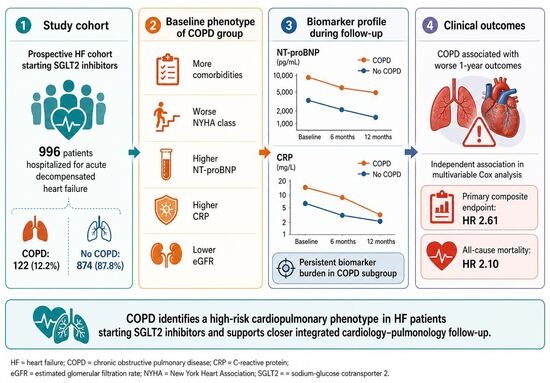
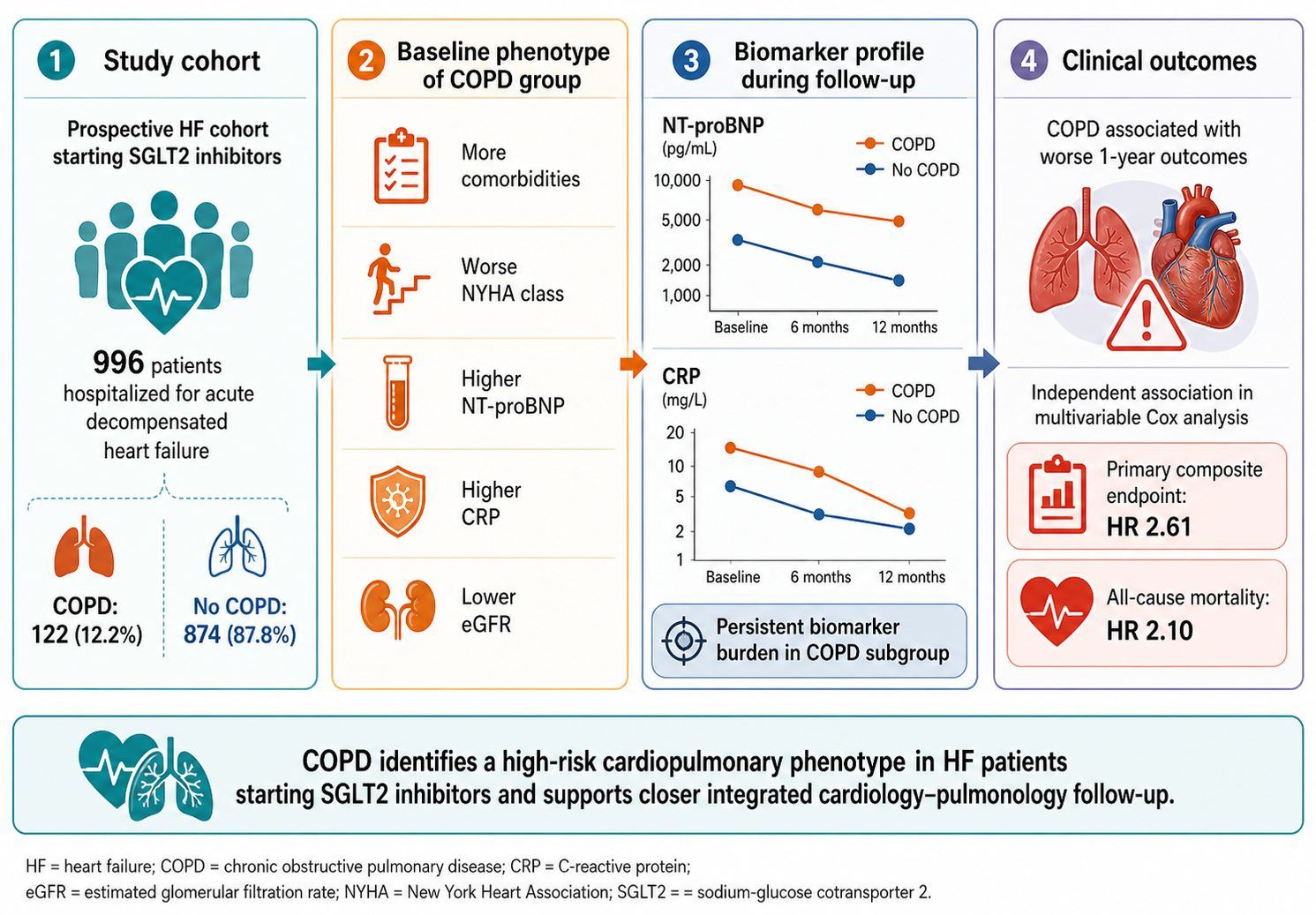
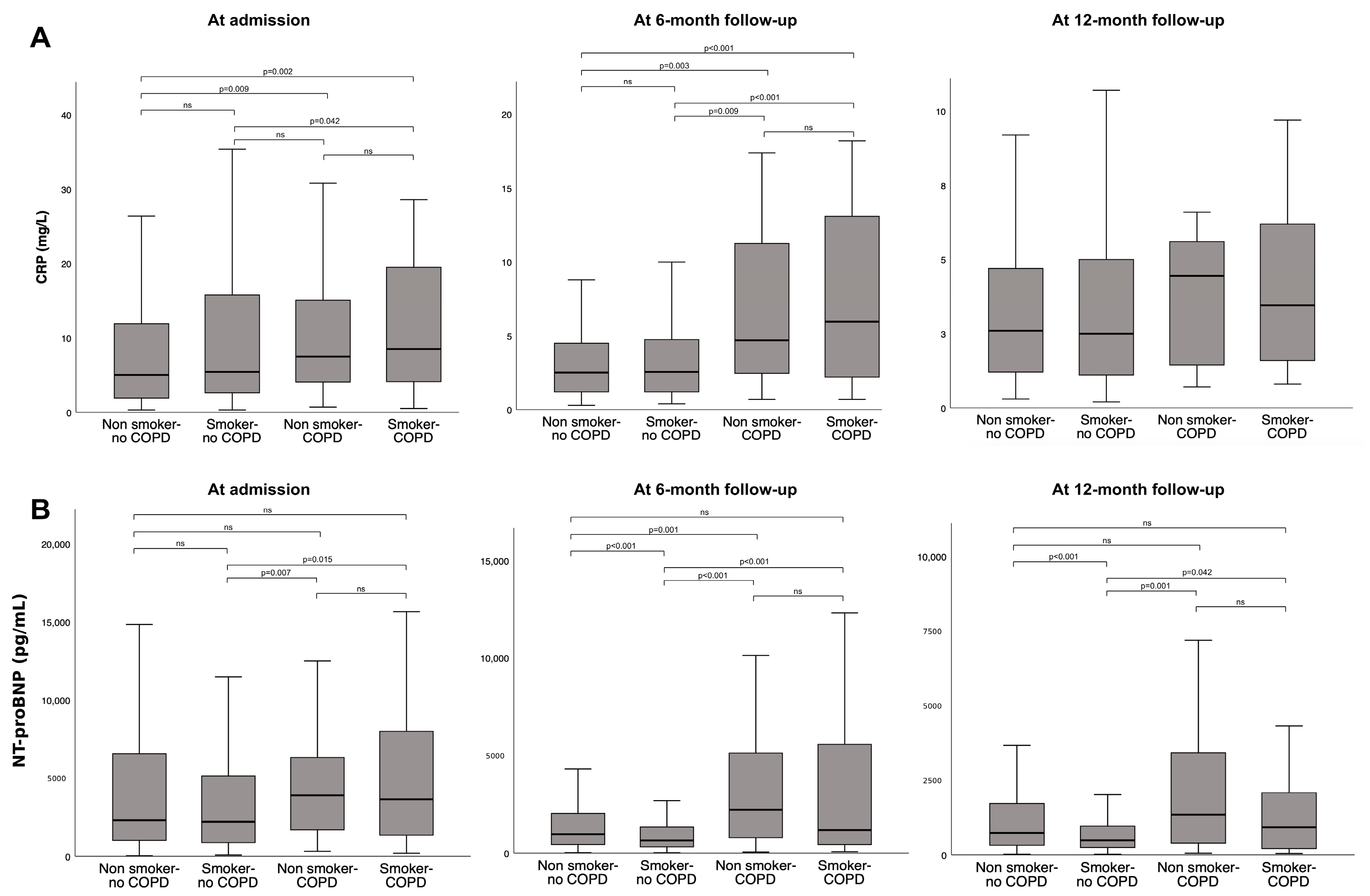
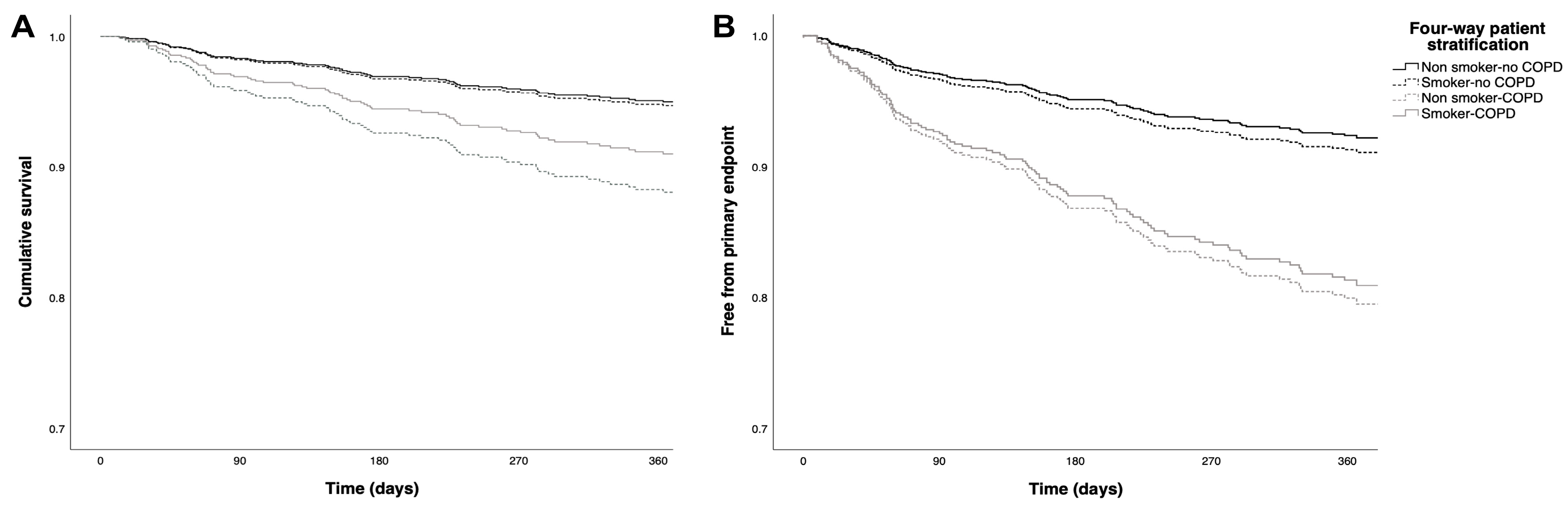
Background/Objectives: Chronic obstructive pulmonary disease (COPD) often coexists with heart failure (HF) and can complicate the interpretation of symptoms, biomarker profiles, and clinical deterioration. Its prognostic significance at the time of sodium-glucose cotransporter 2 inhibitor (SGLT2i) initiation remains incompletely defined. We therefore evaluated whether baseline COPD was associated with a greater biomarker burden and worse 12-month outcomes in a real-world HF cohort at the time of SGLT2i initiation. Methods: This prospective single-centre observational cohort included patients with HF enrolled in a tertiary registry between May 2022 and November 2024 in whom SGLT2i therapy was initiated. HF was diagnosed according to contemporary European Society of Cardiology (ESC) criteria on the basis of compatible symptoms and/or signs, objective structural or functional cardiac abnormalities on echocardiography, and elevated N-terminal pro-B-type natriuretic peptide (NT-proBNP). COPD status was defined by a documented pre-existing diagnosis at baseline. The primary endpoint was the 12-month time-to-first composite of all-cause death or unplanned hospitalization for acute decompensated HF. Results: Among 996 patients, 122 (12.2%) had COPD. Compared with patients without COPD, those with COPD more often had a smoking history, a higher comorbidity burden, a worse New York Heart Association (NYHA) class, higher baseline N-terminal pro-B-type natriuretic peptide (NT-proBNP) and C-reactive protein (CRP) levels, and a lower estimated glomerular filtration rate (eGFR), whereas baseline HF pharmacotherapy was broadly similar. NT-proBNP remained higher at 6 and 12 months, whereas CRP remained higher at 6 months but not at 12 months. In multivariable Cox analysis adjusting for age, sex, major comorbidities, left ventricular ejection fraction (LVEF), renal function, high-density lipoprotein cholesterol (HDL-C), glycated haemoglobin (HbA1c), CRP, and log NT-proBNP, COPD remained independently associated with the primary endpoint (hazard ratio [HR] 2.610, 95% confidence interval [CI] 1.707–3.991; p < 0.001) and all-cause death (HR 2.097, 95% CI 1.246–3.532; p = 0.005). Conclusions: Among patients with HF starting SGLT2i therapy, baseline COPD identified a higher-risk cardiopulmonary phenotype characterized by a greater comorbidity burden, higher inflammatory and natriuretic biomarker levels, and worse 1-year outcomes. These observational findings support closer integrated cardiology–pulmonology follow-up.
Keywords: chronic obstructive pulmonary disease; heart failure; SGLT2 inhibitors; cardiopulmonary phenotype; systemic inflammation chronic obstructive pulmonary disease; heart failure; SGLT2 inhibitors; cardiopulmonary phenotype; systemic inflammation
Graphical Abstract