A Novel Framework for Cardiovascular Disease Detection Using a Hybrid CWT-SIFT Image Representation and a Lightweight Residual Attention Network

Abstract
1. Introduction
Etiologies of CVDs
- Congestive heart failure (CHF) refers to a condition that occurs when the heart is unable to pump blood properly through the body [5], which is generally the result of a range of underlying reasons, including myocardial infarction, valvular heart disease, coronary artery disease, cardiomyopathy, and hypertension.
- Valvular heart disease (VHD) refers to a dysfunction in any of the four valves, namely the tricuspid, pulmonary, aortic, or mitral valve. This results in restricted blood flow or blood leaking back into the ventricles. The defects in these valves are usually due to congenital malformations or acquired from other factors such as aging or infections [6].
- Coronary artery disease (CAD) refers to the blockage of the coronary arteries responsible for delivering oxygen and nutrients to the heart muscle. This obstruction arises from the accumulation of fatty materials such as fat and cholesterol [7].
- Myocardial infarction (MI), or a heart attack, occurs due to a blockage of blood circulation to part of the heart, leading to irreversible damage to the cardiac muscle. This interruption of blood circulation is due to the blockage of a coronary artery by a ruptured atherosclerotic plaque, which is a buildup of cholesterol and other substances in the artery walls [8].
- Cardiomyopathy is a condition that impacts the cardiac muscles and walls. This often results from a thickening of the walls of the heart between the two ventricles, particularly the left ventricle, leading to several problems that affect the heart’s function [9].
- Bundle Branch Block (BBB) is a condition where the normal conduction of electrical impulses in the heart is slowed or interrupted. It is classified into Right Bundle Branch Block (RBBB) and Left Bundle Branch Block (LBBB) [10].
- Myocarditis is an inflammatory condition that affects the myocardium, the middle layer of the heart wall. This inflammation can be triggered by diverse factors, most commonly viral infections such as influenza, coxsackievirus, and parvovirus B19. Other pathogens, including viruses, bacteria, fungi, and parasites, can also lead to myocarditis. Non-infectious causes include autoimmune disorders, exposure to certain toxins or medications, and hypersensitivity reactions. This condition impairs the heart’s ability to pump blood, which can lead to serious complications such as heart failure and arrhythmias [11].
- Dysrhythmia is a disturbance in the normal electrical activity of the heart, which generally manifests as the heart beating too fast, known as tachycardia, or beating too slow, referred to as bradycardia. The etiology of dysrhythmias can be associated with various underlying heart diseases, including coronary artery disease, cardiomyopathy, or valvular heart disease. It may also be caused by electrolyte imbalances in the blood, injury to the heart muscle from a myocardial infarction, or as a consequence of cardiac surgery [12].
- To the best of our knowledge, this study is the first to introduce an automated system for classifying nine distinct classes of cardiovascular diseases in addition to a normal class.
- To the best of our knowledge, this study is the first to utilize a combination of Multi-Resolution Wavelet Features with Scale-Invariant Feature Transform (SIFT) keypoint density maps to capture the most discriminative spectral features, thereby enhancing classification performance.
- We developed a lightweight residual attention neural network (ResAttNet) to effectively enhance diagnostic performance.
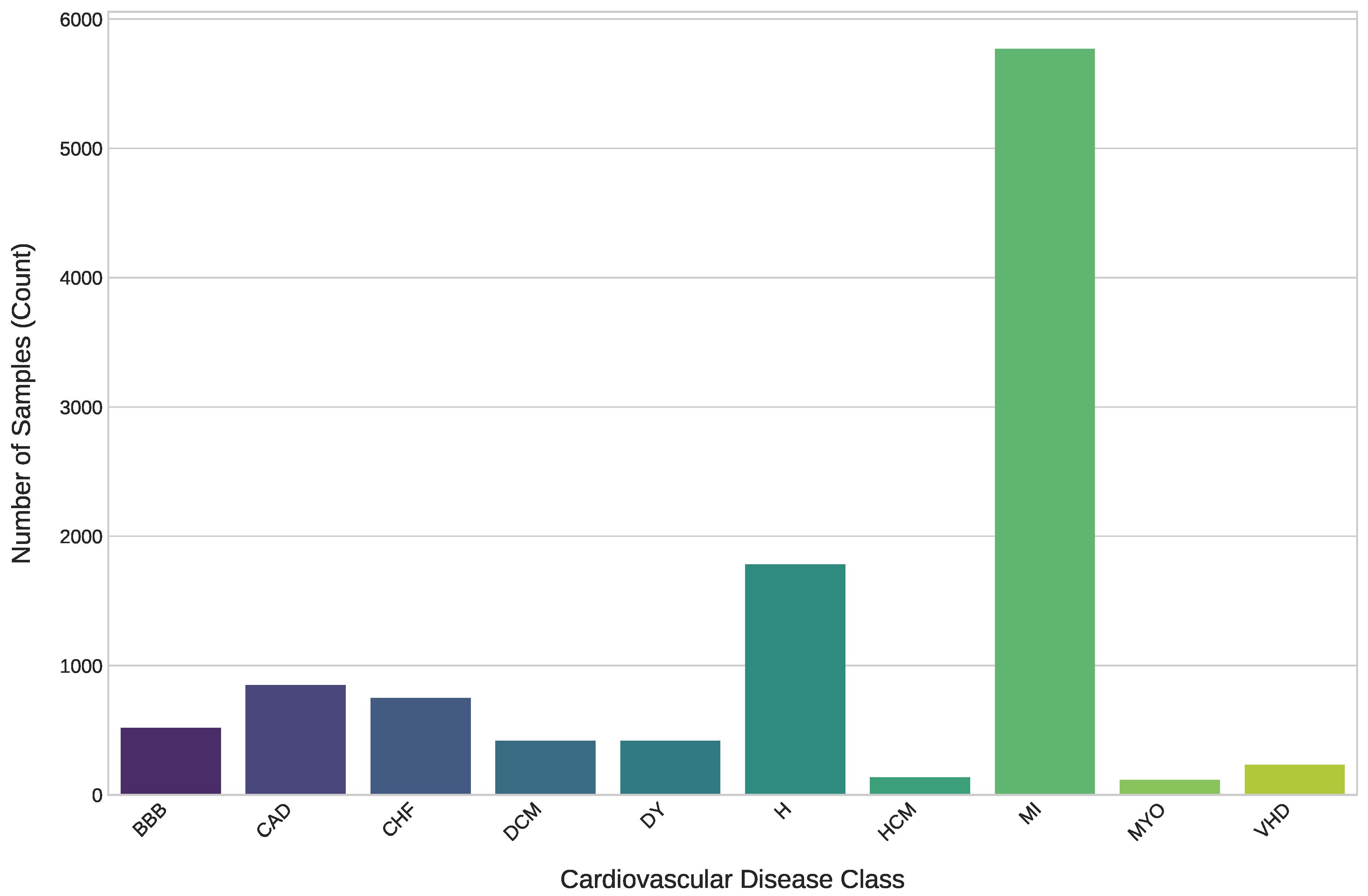
- To alleviate the issue of class imbalance and mitigate the risk of biased learning, we adopt a multi-faceted strategy. Specifically, we employed a hybrid technique combining the Synthetic Minority Over-sampling Technique (SMOTE) with Edited Nearest Neighbors (ENN) to enhance class distribution and improve data quality, while Focal Loss is adopted to assign higher weights to minority classes and reduce weights for majority classes.
2. Related Works
3. Materials and Methods
3.1. Dataset Description
- The PTB Diagnostic ECG database, obtained from the Physikalisch-Technische Bundesanstalt (Germany), is widely recognized as one of the largest publicly available databases, comprising 12-lead ECG recordings with various profile information, such as gender, age, and health information. The database includes 549 ECG recordings obtained from 290 participants, with 209 men and an average age of 57.2 years. Within the database, 52 subjects are classified as healthy, whereas 148 subjects present various cardiac conditions. Each subject contributes one to five ECG records, with each record containing 12-lead ECG signals. Only lead II was employed in this study. Eight disease types, including myocardial infarction, dysrhythmia, valvular heart disease, bundle branch block, dilated cardiomyopathy, myocarditis, hypertrophic cardiomyopathy, and the normal (N) class, were extracted from the PTB diagnostic database.
- The St. Petersburg Institute of Cardiological Technics 12-lead Arrhythmia (INCART) database contains 75 annotated recordings derived from 32 Holter records and obtained from 32 distinct individuals (17 males; 15 females; aged 18–80). The database was similarly recorded using a 12-lead ECG configuration, wherein 73 ECG recordings have a duration of 30 min and a sampling frequency of 275 Hz. Coronary Artery Disease patients were derived from this database.
- The BIDMC Congestive Heart Failure database consists of 15 subjects with severe congestive heart failure, classified under New York Heart Association (NYHA) functional classes III and IV. Among the participants, there are eleven male patients ranging in age from 22 to 71 years and four female patients ranging in age from 54 to 63 years. The recordings have a duration of approximately 20 h and contain two-channel ECG recordings with a sampling rate of 250 Hz. Congestive heart failure patients were extracted from this database.
3.2. Data Preprocessing
3.2.1. Resampling
3.2.2. Noise Removal
3.2.3. Heartbeat Segmentation
3.2.4. Normalization
3.3. Feature Extraction
3.3.1. Continuous Wavelet Transform
3.3.2. Scale-Invariant Feature Transform (SIFT) Algorithm
- Scale-Space Extrema DetectionThis initial stage detects candidate keypoints by searching for local extrema across multiple scales of the image. The process is achieved through a convolution between the input image, which in our study represents the scalogram image created using the Morlet wavelet, and Gaussian filters at different scales, as expressed in the following equations:is the scale-space image created by convolving the Gaussian function with the image function , which forms a scale-space representation that is prominent for identifying pertinent features across multiple scales. The Gaussian function represents a key component in the convolution process. It consists of a two-dimensional distribution across spatial coordinates a and b, with its spread controlled by the standard deviation . The Gaussian function’s ability to smooth and blur is a vital step for detecting features across varying scales.Keypoints are then effectively identified by searching for local maxima and minima in the Difference of Gaussians (DoG) function, which pinpoints significant image parts, enabling robust detection of keypoints at different scales. The DoG function is created by subtracting the blurred image at a larger scale, , from the blurred image at a smaller scale , as expressed in the following equation:where represents the convolution interaction between the original image with the Gaussian blur at scale .
- Keypoint Localization After identifying potential keypoints at the extrema of the DoG scale-space in the previous stage, they are refined for precision. This refinement is achieved by applying a Taylor expansion , a mathematical technique that helps reject weak and unstable points with low contrast by analyzing the function’s value D and its derivatives and . This step is fundamental for creating robust and effective scale-invariant descriptors for feature extraction. This is given as follows:
- Orientation AssignmentTo ensure rotation invariance, each keypoint is assigned a specific orientation according to the most dominant directions of local image gradients. A histogram of these gradients is created from the pixels surrounding the keypoint. The most dominant peaks in this gradient histogram are assigned as the main orientation of the keypoint. All subsequent operations are performed on image data standardized relative to the scale, location, and orientation of the keypoint, ensuring the final descriptor is invariant to these transformations.
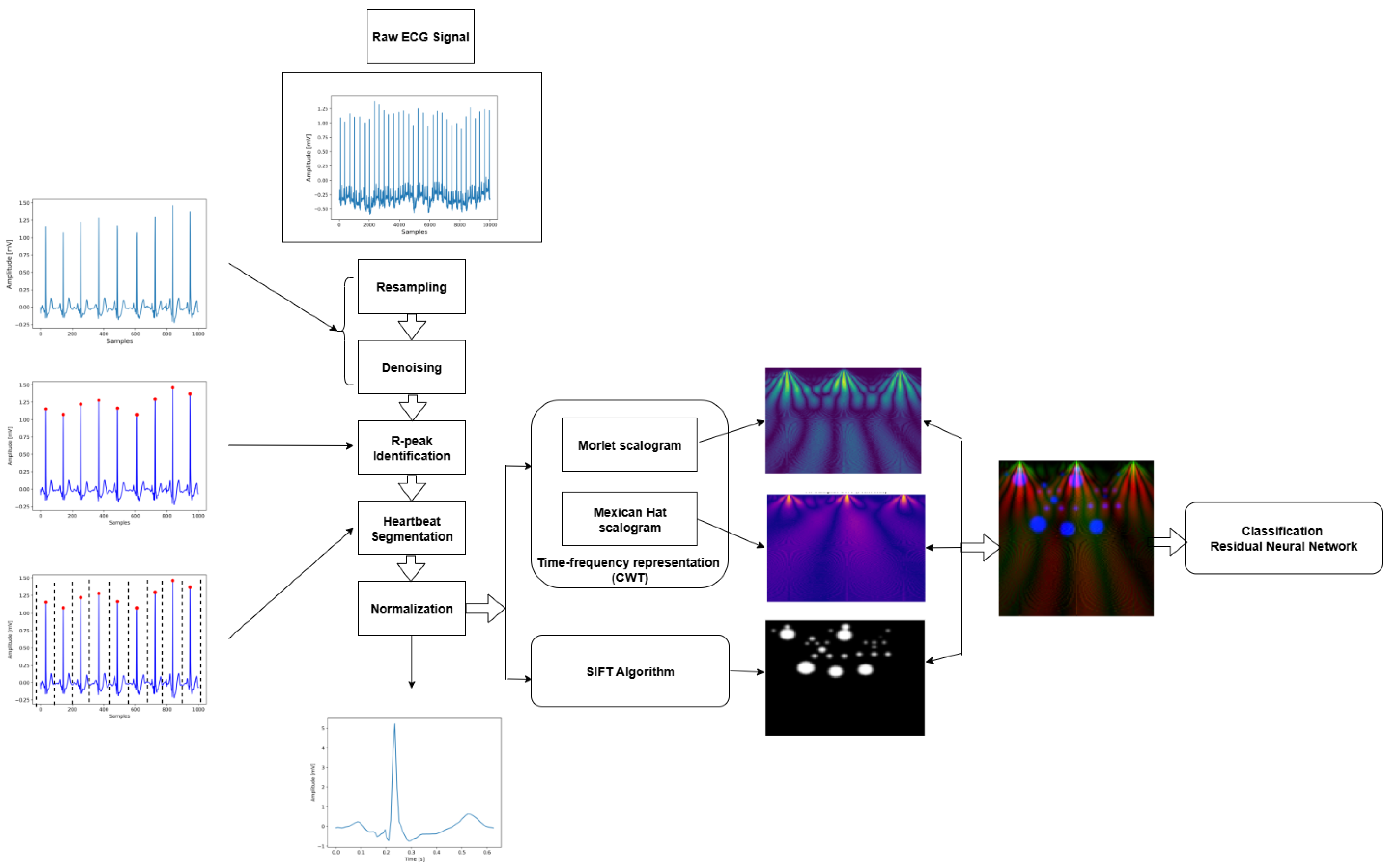
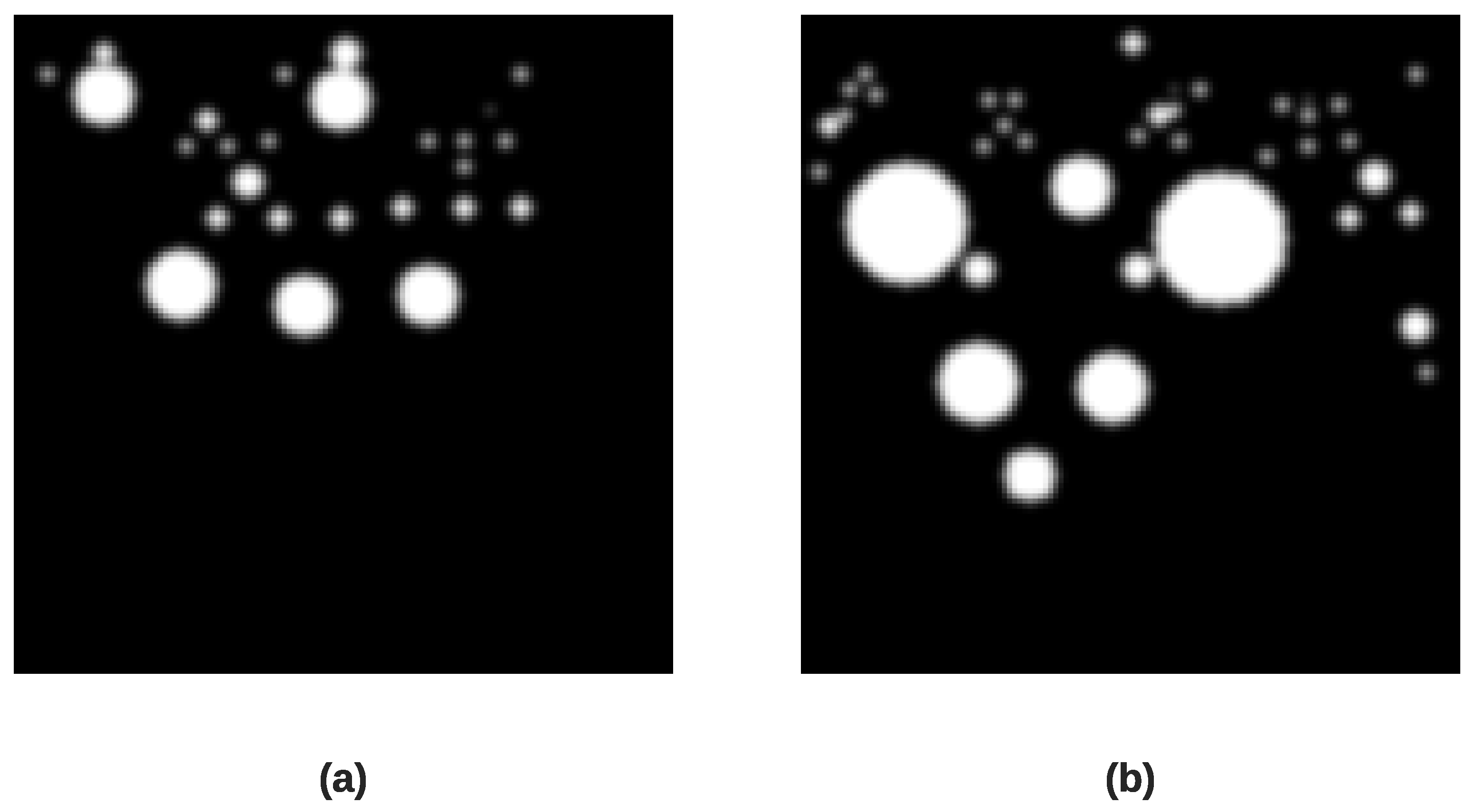
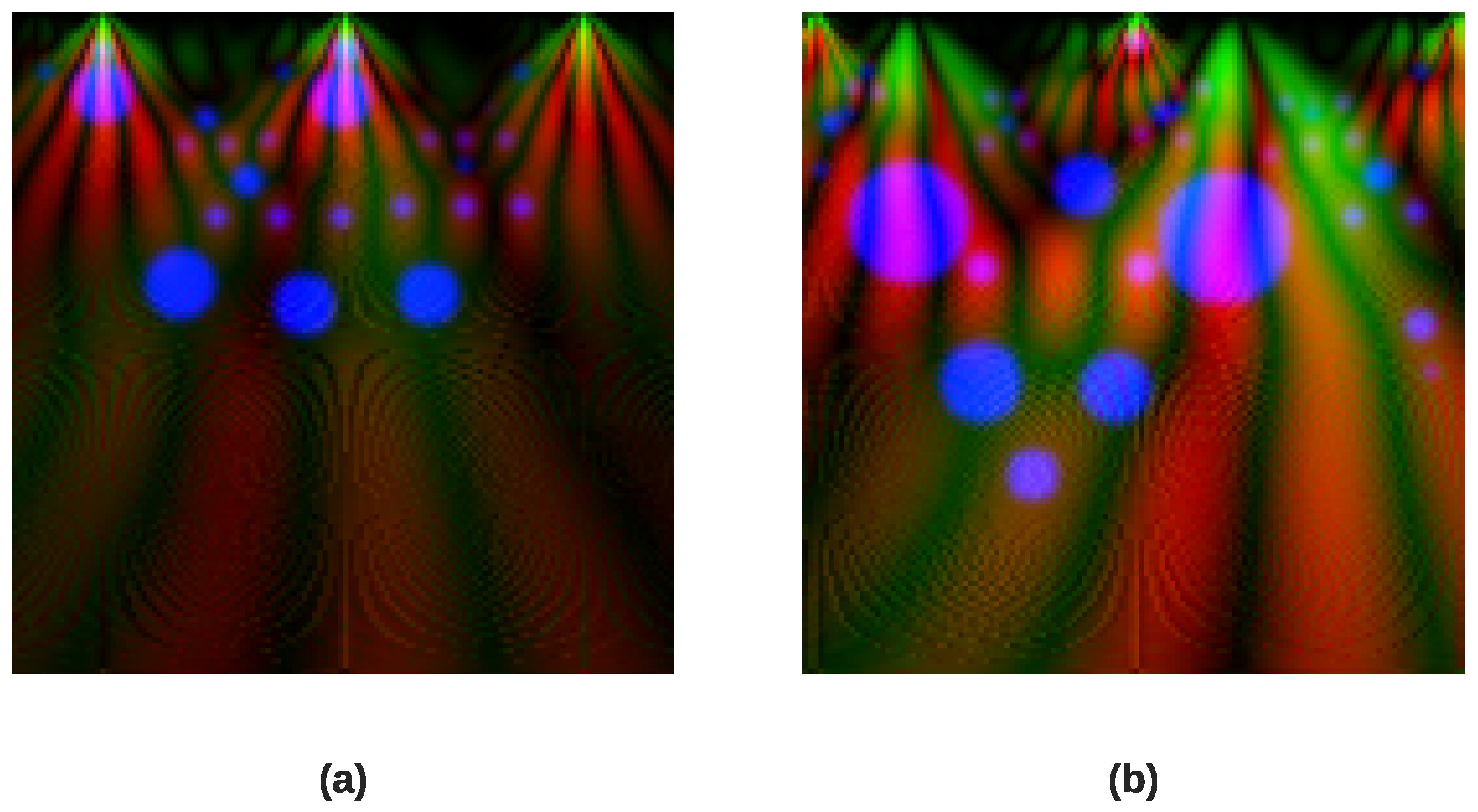
- SIFT-based Attention Map GenerationTo guide our CNN model to focus on the most relevant features of the scalogram images, we created a SIFT-based attention map. Our approach uses the locations and scales of keypoints in a novel way to create a third channel for our input image, called the SIFT attention map. Specifically, we create this map by plotting a filled circle on a blank 5 × 128 pixel map for each identified keypoint, where the location of the circle is determined by the coordinates of the keypoint and its radius is directly proportional to its detected scale. The resulting map is then smoothed with a 3 × 3 Gaussian filter to reduce noise and create a more continuous representation of keypoint density before being normalized. This new input channel effectively pinpoints the most information-rich regions in the time-frequency representation, creating a data-driven attention mechanism for the CNN.
| Algorithm 1 CWT-SIFT Feature Fusion Process. |
|
3.4. Classification
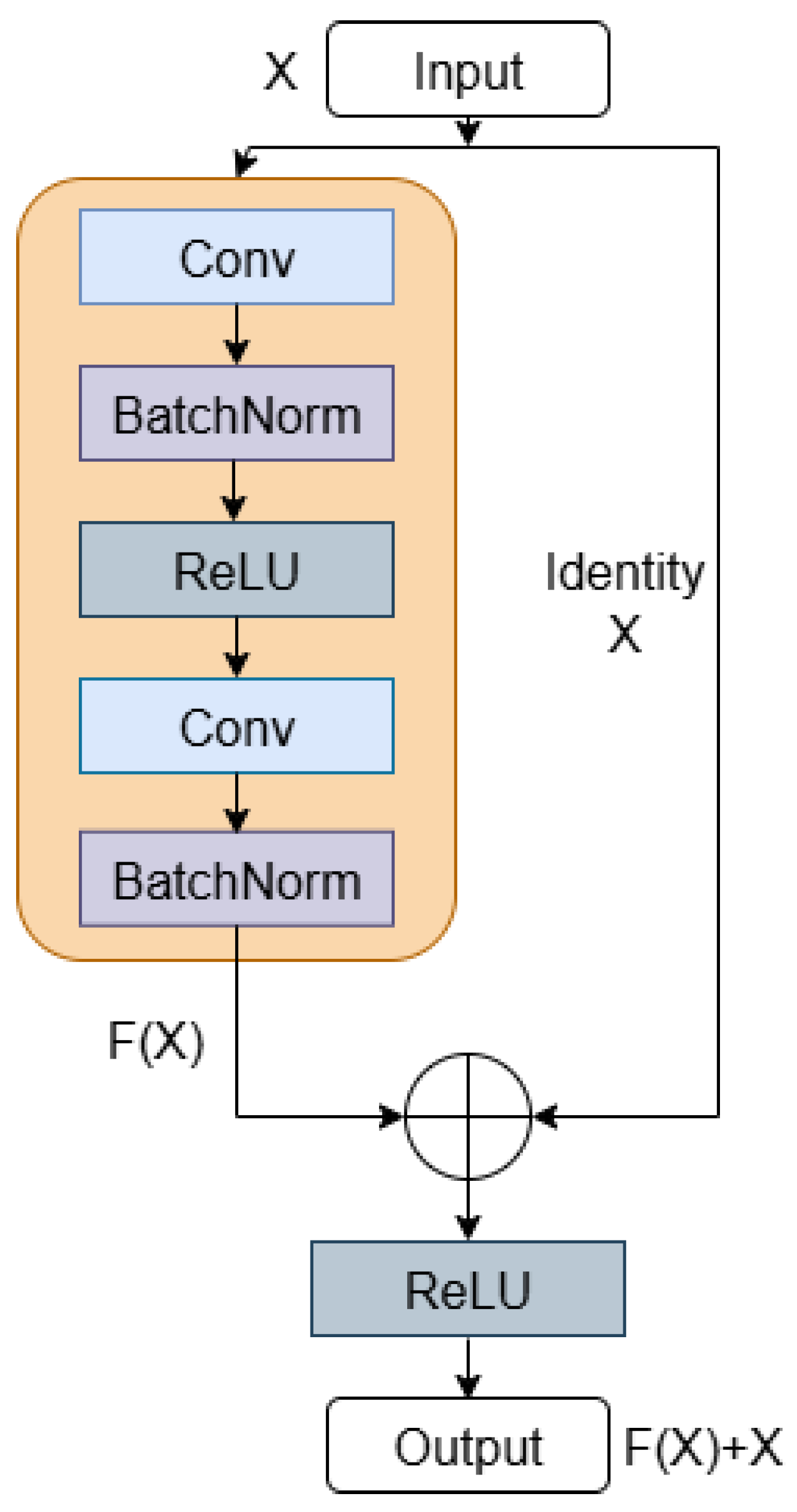
3.4.1. Residual Network
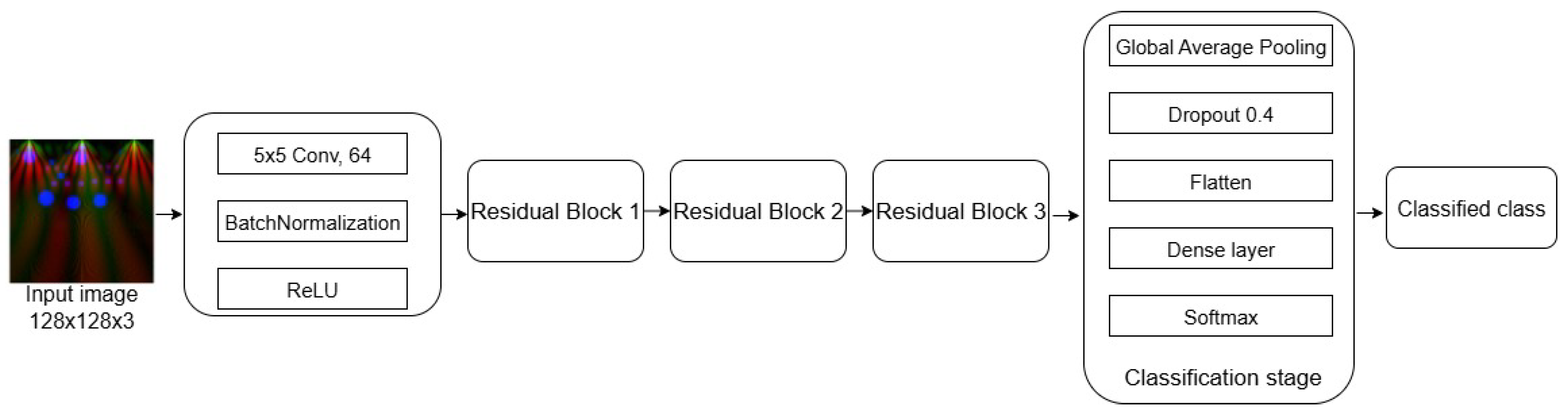
3.4.2. Proposed Lightweight Residual Attention Network (Light-ResAttNet)
3.5. Experimental Setup and Evaluation Metrics
3.5.1. Evaluation Parameters
3.5.2. Experimental Setup
3.5.3. Computational Cost
4. Results and Discussion
4.1. Ablation Experiments
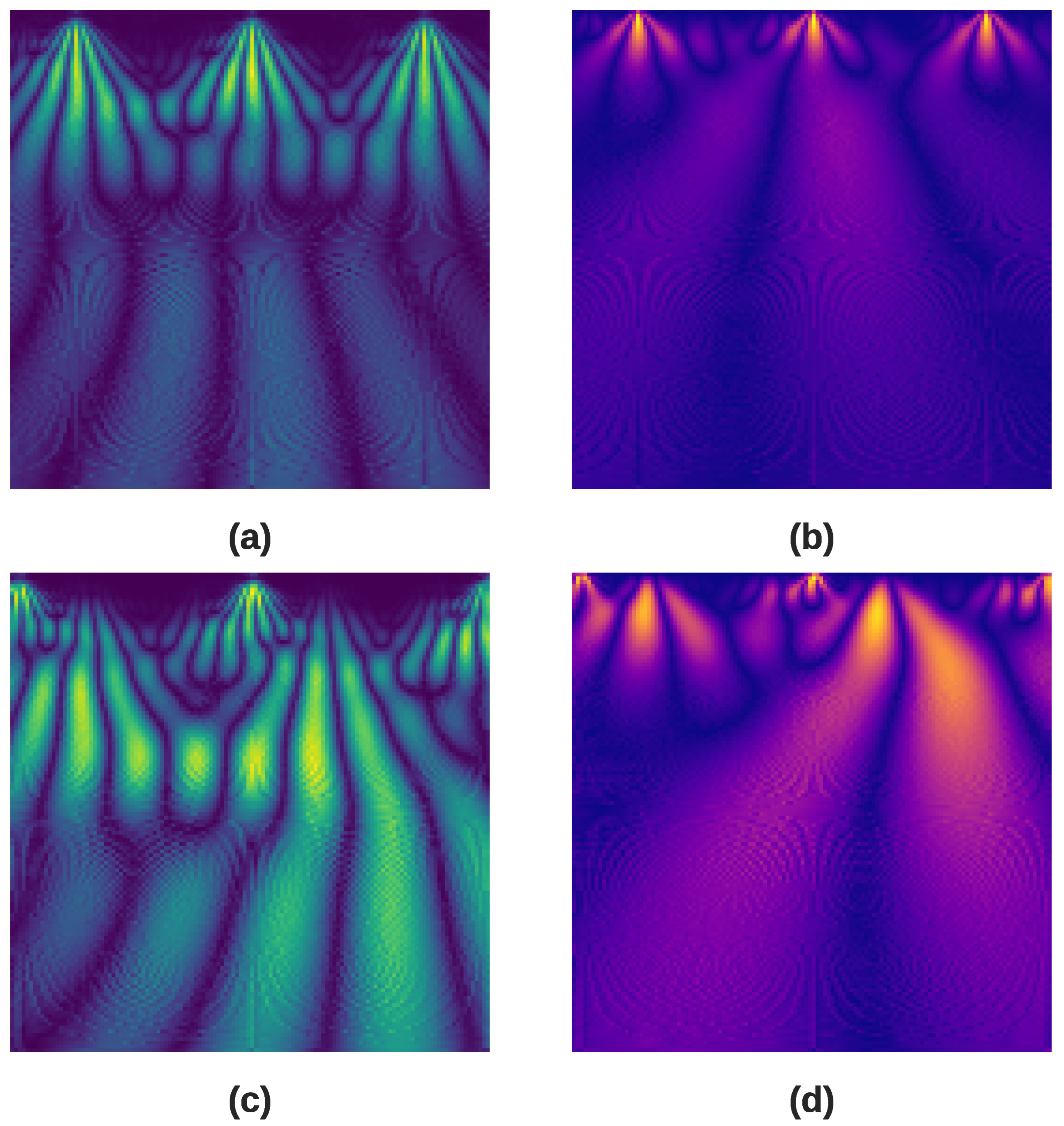
- CWT with Morlet Wavelet: The model is trained and tested using the time-frequency representation generated by the CWT with the Morlet wavelet.
- CWT with Mexican Hat Wavelet: The model is trained and tested using the time-frequency representation generated by the CWT with the Mexican Hat wavelet.
- SIFT Density Map: The model is trained and tested using the grayscale image that represents the SIFT keypoint density map.
- Proposed Hybrid Method: The model is trained and tested on the final three-channel image, obtained by combining the two CWT channels with the SIFT density map.
4.2. Comparison with States-of-Arts Studies
5. Conclusions
Funding
Institutional Review Board Statement
Informed Consent Statement
Data Availability Statement
Conflicts of Interest
Abbreviations
| ECG | Electrocardiogram |
| CVD | Cardiovascular Disease |
| CWT | Continuous Wavelet Transform |
| ResNet | Residual Neural Network |
| CNN | Convolutional Neural Network |
| SIFT | Scale-Invariant Feature Transform |
| SMOTE | Synthetic Minority Oversampling Technique |
| MI | Myocardial Infarction |
| N | Normal |
| VHD | Valvular Heart Disease |
| DY | Dysrhythmia |
| CAD | Coronary Artery Disease |
| CHF | Congestive Heart Failure |
| DCM | Dilated Cardiomyopathy |
| HCM | Hypertrophic Cardiomyopathy |
| MYO | Myocarditis |
| BBB | Bundle Branch Block |
References
- Alkhodari, M.; Fraiwan, L. Convolutional and recurrent neural networks for the detection of valvular heart diseases in phonocardiogram recordings. Comput. Methods Programs Biomed. 2021, 200, 105940. [Google Scholar] [CrossRef] [Scilit]
- Buttar, H.S.; Li, T. Prevention of cardiovascular diseases: Role of exercise, dietary interventions, obesity and smoking cessation. Exp. Clin. Cardiol. 2005, 10, 229. [Google Scholar]
- López-Mejías, R.; Castañeda, S. Cardiovascular risk assessment in patients with rheumatoid arthritis: The relevance of clinical, genetic and serological markers. Autoimmun. Rev. 2016, 15, 1013–1030. [Google Scholar] [CrossRef] [Scilit]
- Hajar, R. Risk factors for coronary artery disease: Historical perspectives. Heart Views Off. J. Gulf Heart Assoc. 2017, 18, 109. [Google Scholar] [CrossRef] [Scilit] [PubMed]
- Sutton, G.C. Epidemiologic aspects of heart failure. Am. Heart J. 1990, 120, 1538–1540. [Google Scholar] [CrossRef] [Scilit] [PubMed]
- Zeng, Y.; Sun, R. Pathophysiology of valvular heart disease. Exp. Ther. Med. 2016, 11, 1184–1188. [Google Scholar] [CrossRef] [Scilit]
- Elkhodiry, M.A.; Bashth, O. A bifunctional surface modification strategy for the biomimetic recruitment of circulating endothelial colony forming cells. Recruit. Endothel. Colony Form. Cells Surf. Regen. Vasc. Implant. 2021, 2021, 113. [Google Scholar]
- Hall, J.E.; Hall, M.E. Guyton and Hall Textbook of Medical Physiology; (e-Book); Elsevier Health Sciences: Amsterdam, The Netherlands, 2020. [Google Scholar]
- Burstein, C.; Waldman, A. A plain language summary of the EXPLORER-HCM study: Mavacamten for obstructive hypertrophic cardiomyopathy. Future Cardiol. 2021, 17, 1269–1275. [Google Scholar] [CrossRef] [Scilit]
- McAnulty, J.H.; Rahimtoola, S.H. Bundle branch block. Prog. Cardiovasc. Dis. 1984, 26, 333–354. [Google Scholar] [CrossRef] [Scilit] [PubMed]
- Al-Akchar, M.; Shams, P.; Kiel, J. Acute Myocarditis. In StatPearls; [Internet]; StatPearls Publishing: Treasure Island, FL, USA, 2023. [Google Scholar]
- Fisch, C. Relation of electrolyte disturbances to cardiac arrhythmias. Circulation 1973, 47, 408–419. [Google Scholar] [CrossRef] [Scilit]
- Patrick, M.K.; Adekoya, A.F.; Mighty, A.A.; Edward, B.Y. Capsule networks—A survey. J. King Saud-Univ.—Comput. Inf. Sci. 2022, 34, 1295–1310. [Google Scholar] [CrossRef] [Scilit]
- Masetic, Z.; Subasi, A. Congestive heart failure detection using random forest classifier. Comput. Methods Programs Biomed. 2016, 130, 54–64. [Google Scholar] [CrossRef] [Scilit]
- Acharya, U.R.; Sudarshan, V.K. Application of higher-order spectra for the characterization of coronary artery disease using electrocardiogram signals. Biomed. Signal Process. Control 2017, 31, 31–43. [Google Scholar] [CrossRef] [Scilit]
- Sharma, M.; Tan, R.S. A novel automated diagnostic system for classification of myocardial infarction ECG signals using an optimal biorthogonal filterbank. Comput. Biol. Med. 2018, 102, 341–356. [Google Scholar] [CrossRef] [Scilit] [PubMed]
- Altan, G. Diagnosis of coronary artery disease using deep belief networks. Eur. J. Eng. Nat. Sci. 2017, 2, 29–36. [Google Scholar]
- Acharya, U.R.; Fujita, H. Automated characterization of coronary artery disease, myocardial infarction, and congestive heart failure using contourlet and shearlet transforms of electrocardiogram signal. Knowl.-Based Syst. 2017, 132, 156–166. [Google Scholar] [CrossRef] [Scilit]
- Li, F.; Tang, H.; Shang, S.; Mathiak, K.; Cong, F. Classification of heart sounds using convolutional neural network. Appl. Sci. 2020, 10, 3956. [Google Scholar] [CrossRef] [Scilit]
- Rahman, Q.A.; Tereshchenko, L.G. Utilizing ECG-based heartbeat classification for hypertrophic cardiomyopathy identification. IEEE Trans. Nanobiosci. 2015, 14, 505–512. [Google Scholar] [CrossRef] [Scilit]
- Sudarshan, V.K.; Acharya, U.R.; Oh, S.L.; Adam, M.; Tan, J.H.; Chua, C.K.; Chua, K.P.; Tan, R.S. Automated diagnosis of congestive heart failure using dual tree complex wavelet transform and statistical features extracted from 2s of ECG signals. Comput. Biol. Med. 2017, 83, 48–58. [Google Scholar] [CrossRef] [Scilit]
- Han, C.; Shi, L. ML–ResNet: A novel network to detect and locate myocardial infarction using 12-leads ECG. Comput. Methods Programs Biomed. 2020, 185, 105138. [Google Scholar] [CrossRef] [Scilit]
- Liu, W.; Zhang, M.; Zhang, Y.; Liao, Y.; Huang, Q.; Chang, S.; Wang, H.; He, J. Real-time multilead convolutional neural network for myocardial infarction detection. IEEE J. Biomed. Health Inform. 2017, 22, 1434–1444. [Google Scholar] [CrossRef] [Scilit] [PubMed]
- Acharya, U.R.; Fujita, H.; Oh, S.L.; Hagiwara, Y.; Tan, J.H.; Adam, M.; Tan, R.S. Deep convolutional neural network for the automated diagnosis of congestive heart failure using ECG signals. Appl. Intell. 2019, 49, 16–27. [Google Scholar]
- Jahmunah, V.; Ng, E.Y.K.; Tan, R.S.; Acharya, U.R. Automated detection of coronary artery disease, myocardial infarction and congestive heart failure using Gabor CNN model with ECG signals. Comput. Biol. Med. 2021, 134, 104457. [Google Scholar] [CrossRef] [Scilit]
- Dai, H.; Hwang, H.-G.; Tseng, V.S. Convolutional neural network-based automatic screening tool for cardiovascular diseases using different intervals of ECG signals. Comput. Methods Programs Biomed. 2021, 203, 106035. [Google Scholar] [CrossRef] [Scilit]
- Ko, W.-Y.; Siontis, K.C.; Attia, Z.I.; Carter, R.E.; Kapa, S.; Ommen, S.R.; Demuth, S.J.; Ackerman, M.J.; Gersh, B.J.; Arruda-Olson, A.M.; et al. Detection of hypertrophic cardiomyopathy using a convolutional neural network-enabled electrocardiogram. J. Am. Coll. Cardiol. 2020, 75, 722–733. [Google Scholar] [CrossRef] [Scilit]
- Lih, O.S.; Jahmunah, V.; Tan, R.S.; Ciaccio, E.J.; Yamakawa, T.; Tanabe, M.; Kobayashi, M.; Faust, O.; Acharya, U.R. Comprehensive electrocardiographic diagnosis based on deep learning. Artif. Intell. Med. 2020, 103, 101789. [Google Scholar] [CrossRef] [Scilit]
- Martis, R.J.; Acharya, U.R.; Adeli, H. Current methods in electrocardiogram characterization. Comput. Biol. Med. 2014, 48, 133–149. [Google Scholar] [CrossRef] [Scilit]
- Liu, W.; Wang, F.; Huang, Q.; Chang, S.; Wang, H.; He, J. MFB-CBRNN: A hybrid network for MI detection using 12-lead ECGs. IEEE J. Biomed. Health Inform. 2019, 24, 503–514. [Google Scholar] [CrossRef] [Scilit] [PubMed]
- Darmawahyuni, A.; Nurmaini, S.; Yuwandini, M.; Rachmatullah, M.N.; Firdaus, F.; Tutuko, B. Congestive heart failure waveform classification based on short time-step analysis with recurrent network. Inform. Med. Unlocked 2020, 21, 100441. [Google Scholar] [CrossRef] [Scilit]
- Chen, R.; Lu, A. Using machine learning to predict one-year cardiovascular events in patients with severe dilated cardiomyopathy. Eur. J. Radiol. 2019, 117, 178–183. [Google Scholar] [CrossRef] [Scilit] [PubMed]
- Ahmad, M.; Ahmed, A.; Hashim, H.; Farsi, M.; Mahmoud, N. Enhancing Heart Disease Diagnosis Using ECG Signal Reconstruction and Deep Transfer Learning Classification with Optional SVM Integration. Diagnostics 2025, 15, 1501. [Google Scholar] [CrossRef] [Scilit] [PubMed]
- Khan, A.; Khan, A.; Khan, M.M.; Farid, K.; Alam, M.M.; Su’ud, M.B.M. Cardiovascular and Diabetes Diseases Classification Using Ensemble Stacking Classifiers with SVM as a Meta Classifier. Diagnostics 2022, 12, 2595. [Google Scholar] [CrossRef] [Scilit] [PubMed]
- Atwa, A.E.M.; Atlam, E.S.; Ahmed, A.; Atwa, M.A.; Abdelrahim, E.M.; Siam, A.I. Interpretable Deep Learning Models for Arrhythmia Classification Based on ECG Signals Using PTB-X Dataset. Diagnostics 2025, 15, 1950. [Google Scholar] [CrossRef] [Scilit]
- Brás, S.; Pinho, A.J. ECG biometric identification: A compression based approach. In Proceedings of the 2015 37th Annual International Conference of the IEEE Engineering in Medicine and Biology Society (EMBC), Milan, Italy, 25–29 August 2015; pp. 5838–5841. [Google Scholar]
- Feng, K.; Pi, X.; Liu, H.; Sun, K. Myocardial infarction classification based on convolutional neural network and recurrent neural network. Appl. Sci. 2019, 9, 1879. [Google Scholar] [CrossRef] [Scilit]
- El Boujnouni, I.; Harouchi, B.; Tali, A.; Rachafi, S.; Laaziz, Y. Automatic diagnosis of cardiovascular diseases using wavelet feature extraction and convolutional capsule network. Biomed. Signal Process. Control 2023, 81, 104497. [Google Scholar] [CrossRef] [Scilit]
- Goldberger, A.L.; Amaral, L.A.; Glass, L.; Hausdorff, J.M.; Ivanov, P.C.; Mark, R.G.; Mietus, J.E.; Moody, G.B.; Peng, C.-K.; Stanley, H.E. PhysioBank, PhysioToolkit, and PhysioNet: Components of a new research resource for complex physiologic signals. Circulation 2000, 101, e215–e220. [Google Scholar] [CrossRef] [Scilit]
- Zhang, D. Wavelet approach for ECG baseline wander correction and noise reduction. In Proceedings of the 2005 IEEE Engineering in Medicine and Biology 27th Annual Conference, Shanghai, China, 17–18 January 2006; pp. 1212–1215. [Google Scholar]
- Singh, B.N.; Tiwari, A.K. Optimal selection of wavelet basis function applied to ECG signal denoising. Digit. Signal Process. 2006, 16, 275–287. [Google Scholar] [CrossRef] [Scilit]
- He, K.; Zhang, X.; Ren, S.; Sun, J. Deep residual learning for image recognition. In Proceedings of the IEEE Conference on Computer Vision and Pattern Recognition, Las Vegas, NV, USA, 27–30 June 2016; pp. 770–778. [Google Scholar]
- Lin, T.-Y.; Goyal, P.; Girshick, R.; He, K.; Dollár, P. Focal loss for dense object detection. In Proceedings of the IEEE International Conference on Computer Vision, Venice, Italy, 22–29 October 2017; pp. 2980–2988. [Google Scholar]
- Yang, F.; Liu, J.; Zhang, Q.; Wang, Y.; Li, X. A hybrid sampling algorithm combining synthetic minority over-sampling technique and edited nearest neighbor for missed abortion diagnosis. Bmc Med. Inform. Decis. Mak. 2022, 22, 344. [Google Scholar] [CrossRef] [Scilit]






| Database | ECG Condition | Number of Participants | Sampling Rate (Hz) | Channels |
|---|---|---|---|---|
| PTB diagnostic | N | 52 | 1000 | 12-lead |
| MYO | 4 | |||
| MI | 148 | |||
| DY | 14 | |||
| BBB | 15 | |||
| VHD | 6 | |||
| PTB diagnostic | HCM | 8 | 1000 | 12-lead |
| DCM | 7 | |||
| BIDMC Congestive Heart Failure | CHF | 15 | 250 | 12-lead |
| INCART | CAD | 32 | 257 | Two-channel |
| Layer (Type) | Output Shape | Parameters |
|---|---|---|
| Input Layer | (128, 128, 3) | 0 |
| Conv2D (5 × 5, stride 2) | (64, 64, 32) | 2432 |
| BatchNormalization, ReLU | (64, 64, 32) | 128 |
| Stage 1: Res-Block | ||
| Pre-Activation Res-Block | (64, 64, 64) | 57,728 |
| Stage 2: Res-Block | ||
| Pre-Activation Res-Block (stride 2) | (32, 32, 128) | 229,632 |
| Stage 3: Res-Block + Attention | ||
| Pre-Activation Res-Block (stride 2) | (16, 16, 256) | 918,016 |
| Spatial Attention | (16, 16, 256) | 99 |
| Classification Head | ||
| Global Average Pooling 2D | (256) | 0 |
| Dropout (0.5) | (256) | 0 |
| Dense (Softmax) | (10) | 2570 |
| Total Trainable Parameters | 1,212,077 |
| Class | Samples Before Balancing | Samples After Balancing |
|---|---|---|
| BBB | 415 | 4614 |
| CAD | 680 | 4613 |
| CHF | 600 | 4614 |
| DCM | 334 | 4614 |
| DY | 334 | 4614 |
| H | 1426 | 4612 |
| HCM | 108 | 4614 |
| MI | 4614 | 4612 |
| MYO | 93 | 4614 |
| VHD | 185 | 4614 |
| Total | 8789 | 46,135 |
| Component | Parameter | Value | Justification |
|---|---|---|---|
| CWT | Mother Wavelet (Channel 1) | mexh (Mexican Hat) | Selected as it is highly effective for localizing sharp, transient events like the QRS complex. |
| Mother Wavelet (Channel 2) | morl (Morlet) | Chosen to identify oscillatory patterns and harmonic components within the ECG signal. | |
| Scales | 1 to 64 | Chosen to capture a broad range of clinically relevant frequency components in ECG signals. | |
| SIFT | Contrast Threshold | 0.04 | Standard value proposed in the original SIFT algorithm to ensure feature robustness. |
| Edge Threshold | 10 | Standard value proposed in the original SIFT algorithm to eliminate unstable edge features. | |
| SMOTE | Number of Neighbors (k) | 5 | A commonly used value as recommended in the original SMOTE paper [44]. |
| ENN | Number of Neighbors (k) | 3 | A standard value for effective data cleaning, based on original nearest neighbor editing rules [44]. |
| Focal Loss | Focusing Parameter () | 2.0 | As proposed for optimal performance in the original paper [43] |
| Alpha () | 0.25 | As proposed to balance class importance in the original paper [43] |
| Experiment | Accuracy (%) | Precision (%) | Recall (%) | F1-Score (%) |
|---|---|---|---|---|
| Scalogram-Based Morlet Wavelet | 96.5 | 96.2 | 95.6 | 96.5 |
| Scalogram-Based Mexican Hat Wavelet | 96.3 | 95.2 | 95.5 | 96.5 |
| SIFT Keypoint Density Map | 96.70 | 96.40 | 95.53 | 95.64 |
| Hybrid Method | 99.60 | 97.38 | 98.53 | 97.37 |
| Class | Accuracy (%) | Precision (%) | Recall (%) | F1-Score (%) |
|---|---|---|---|---|
| BBB | 99.54 | 92.73 | 98.08 | 95.33 |
| CAD | 99.95 | 100.00 | 99.40 | 99.70 |
| CHF | 99.86 | 100.00 | 100.00 | 100.00 |
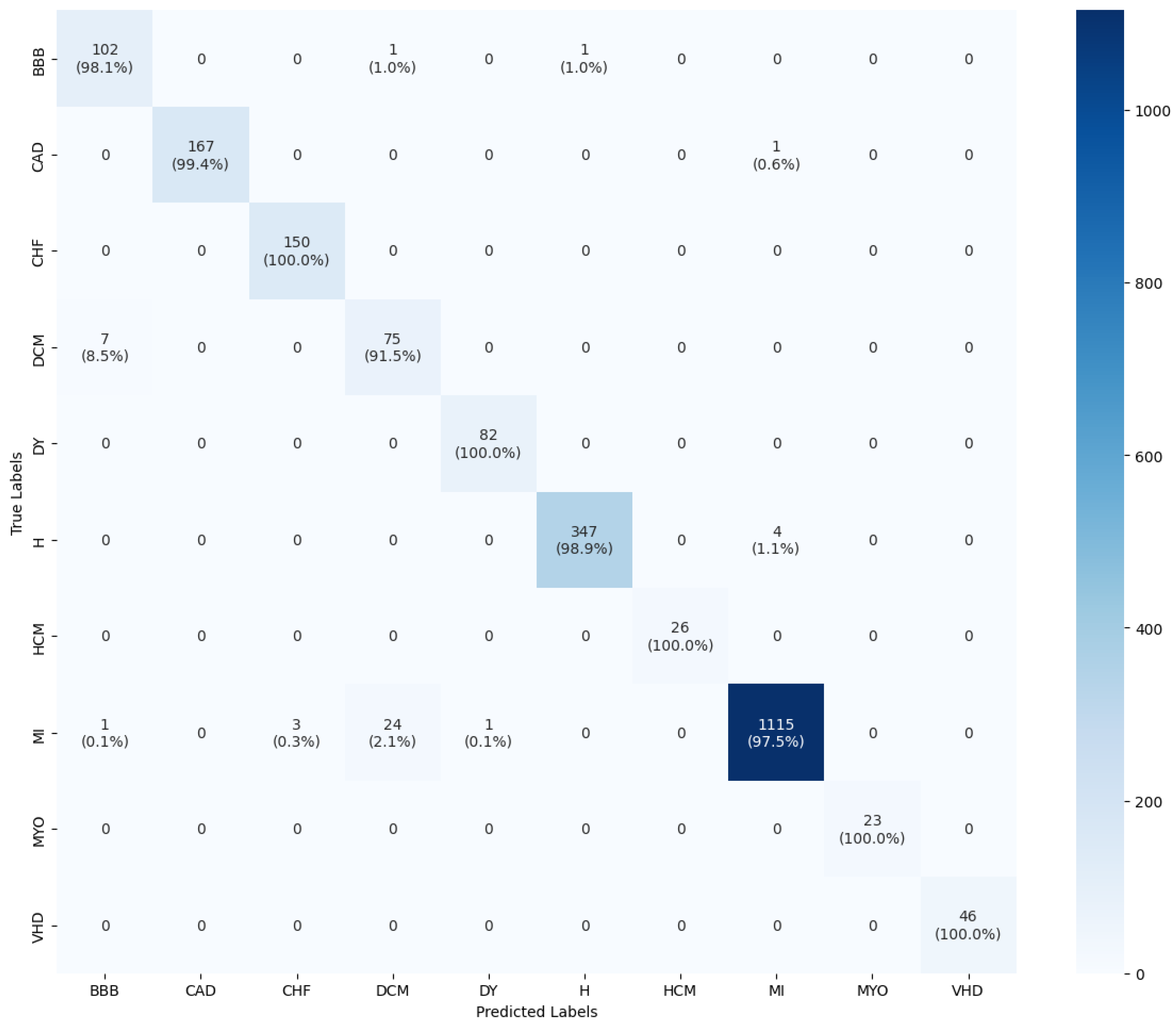
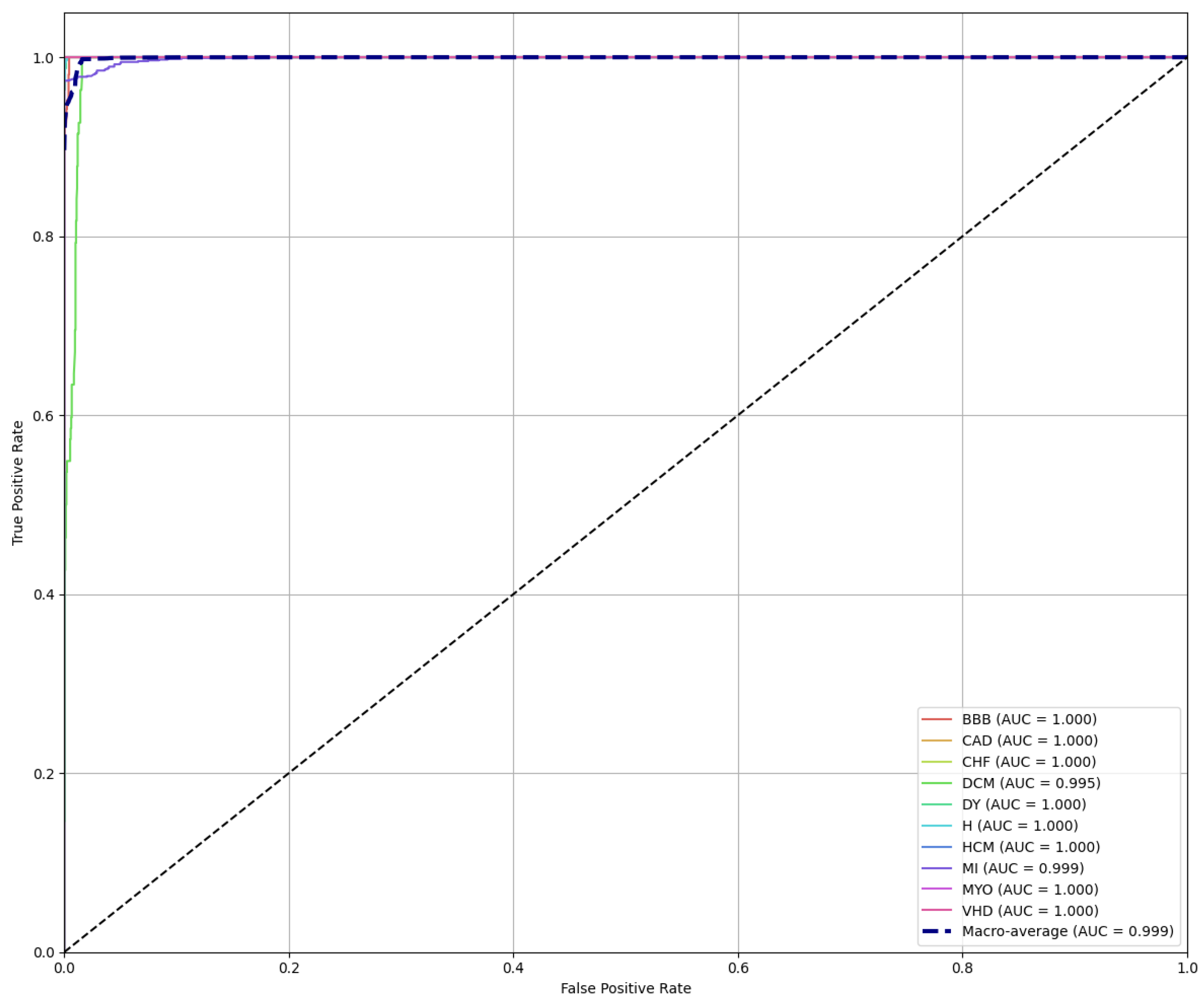
| DCM | 98.53 | 70.75 | 91.46 | 79.89 |
| DY | 99.95 | 98.80 | 100.00 | 99.40 |
| N | 99.77 | 98.58 | 98.86 | 98.72 |
| HCM | 100.00 | 100.00 | 100.00 | 100.00 |
| MI | 98.44 | 99.46 | 97.46 | 98.45 |
| MYO | 100.00 | 100.00 | 100.00 | 100.00 |
| VHD | 100.00 | 100.00 | 97.87 | 98.92 |
| Average | 99.60 | 97.38 | 98.53 | 97.37 |
| Study Ref. | Class Distribution | Seg. Type | Length (s) | Model Architecture | Evaluation Results |
|---|---|---|---|---|---|
| [26] | MI = 148 BBB = 14 N = 52 VHD = 6 HCM = 7 DCM = 6 | Blind | 3 s | Standard CNN with min–max Normalization | Accuracy = 99.50% Precision = 97.33% Sensitivity = 99.30% |
| [38] | MI = 148 VHD = 6 N = 52 CHF = 15 BBB = 15 CAD = 7 C = 18 | Heartbeat | 0.64 | Combination of Continuous Wavelet Transform, 2D Wavelet Transform, and Capsule Networks | Accuracy = 98.3% Precision = 98.9% Sensitivity = 99.4% F1-Score = 99.2% |
| [25] | MI = 148 N = 92 CHF = 15 CAD = 7 | Blind | 2 s | Gabor-Filtered Convolutional Neural Network | Accuracy = 98.74% Precision = 97.50% Sensitivity = 98.74% |
| [28] | MI = 148 N = 92 CAD = 7 CHF = 15 | Blind | 2 s | Hybrid CNN-LSTM (Sequential Deep Learning) | Accuracy = 98.51% Specificity = 97.89% Sensitivity = 99.30% |
| Present Work | MI = 148 VHD = 6 BBB = 15 N = 52 CAD = 7 HCM = 5 CHF = 15 MYO = 4 DCM = 13 | Heartbeat | 0.64 | Fusion of CWT and SIFT features, and Light-ResAttNet 2D CNN | Accuracy = 99.60% Precision = 97.38% Sensitivity = 99.53% F1-Score = 97.37% |
Disclaimer/Publisher’s Note: The statements, opinions and data contained in all publications are solely those of the individual author(s) and contributor(s) and not of MDPI and/or the editor(s). MDPI and/or the editor(s) disclaim responsibility for any injury to people or property resulting from any ideas, methods, instructions or products referred to in the content. |
© 2025 by the author. Licensee MDPI, Basel, Switzerland. This article is an open access article distributed under the terms and conditions of the Creative Commons Attribution (CC BY) license.
Share and Cite
El Boujnouni, I. A Novel Framework for Cardiovascular Disease Detection Using a Hybrid CWT-SIFT Image Representation and a Lightweight Residual Attention Network. Diagnostics 2026, 16, 5. https://doi.org/10.3390/diagnostics16010005
El Boujnouni I. A Novel Framework for Cardiovascular Disease Detection Using a Hybrid CWT-SIFT Image Representation and a Lightweight Residual Attention Network. Diagnostics. 2026; 16(1):5. https://doi.org/10.3390/diagnostics16010005
Chicago/Turabian StyleEl Boujnouni, Imane. 2026. "A Novel Framework for Cardiovascular Disease Detection Using a Hybrid CWT-SIFT Image Representation and a Lightweight Residual Attention Network" Diagnostics 16, no. 1: 5. https://doi.org/10.3390/diagnostics16010005
APA StyleEl Boujnouni, I. (2026). A Novel Framework for Cardiovascular Disease Detection Using a Hybrid CWT-SIFT Image Representation and a Lightweight Residual Attention Network. Diagnostics, 16(1), 5. https://doi.org/10.3390/diagnostics16010005